U R O L O G Y
Tumor Board:
PSA history, biochemistry and measurement
February 13th, 2017
U R O L O G Y
Learning objectives
1. Review biochemistry and history of PSA
2. Define “normal” PSA values
3. Understand causes of elevated PSA
U R O L O G Y
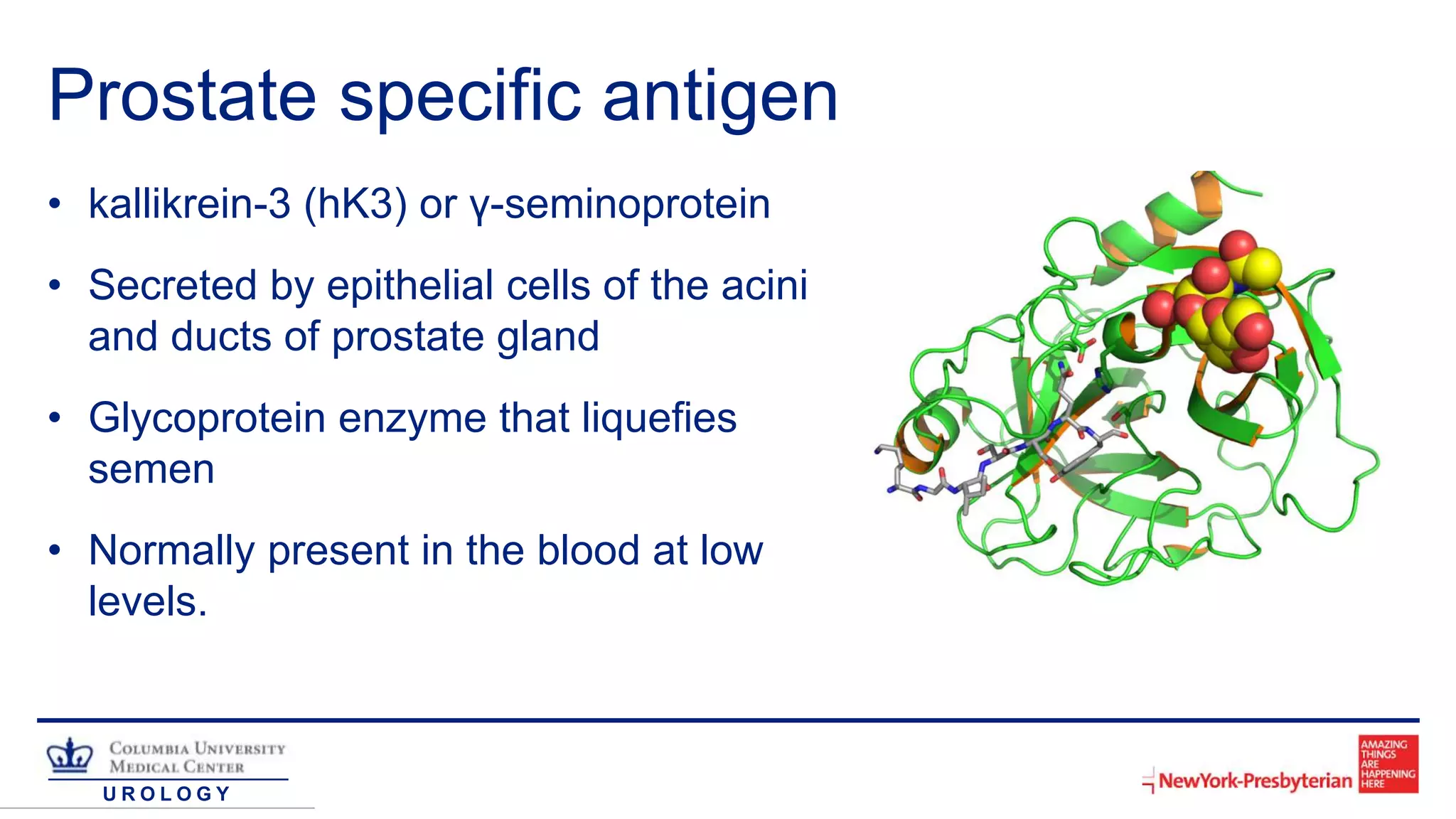
Prostate specific antigen
• kallikrein-3 (hK3) or γ-seminoprotein
• Secreted by epithelial cells of the acini
and ducts of prostate gland
• Glycoprotein enzyme that liquefies
semen
• Normally present in the blood at low
levels.
U R O L O G Y
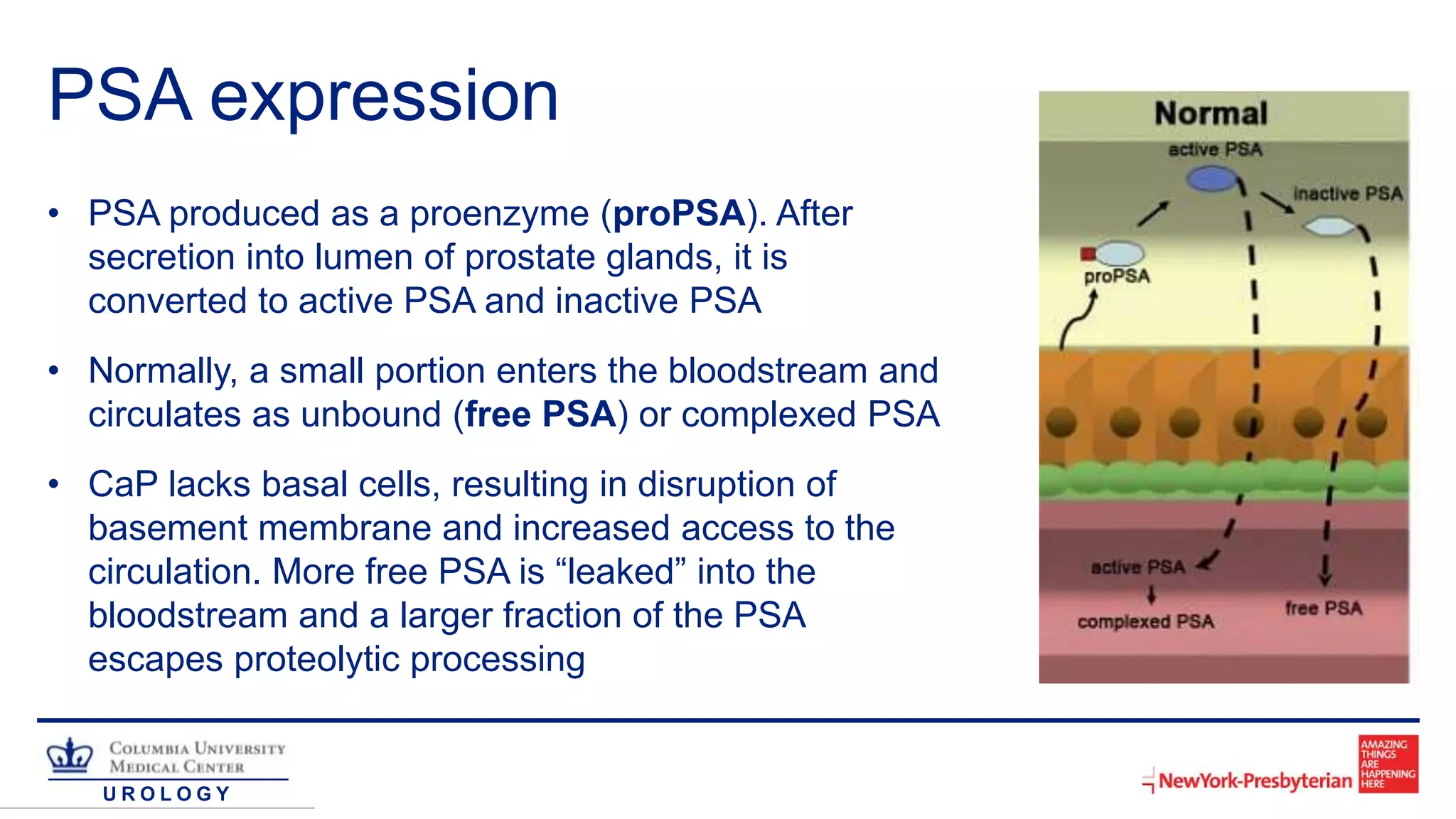
PSA expression
• PSA produced as a proenzyme (proPSA). After
secretion into lumen of prostate glands, it is
converted to active PSA and inactive PSA
• Normally, a small portion enters the bloodstream and
circulates as unbound (free PSA) or complexed PSA
• CaP lacks basal cells, resulting in disruption of
basement membrane and increased access to the
circulation. More free PSA is “leaked” into the
bloodstream and a larger fraction of the PSA
escapes proteolytic processing
U R O L O G Y
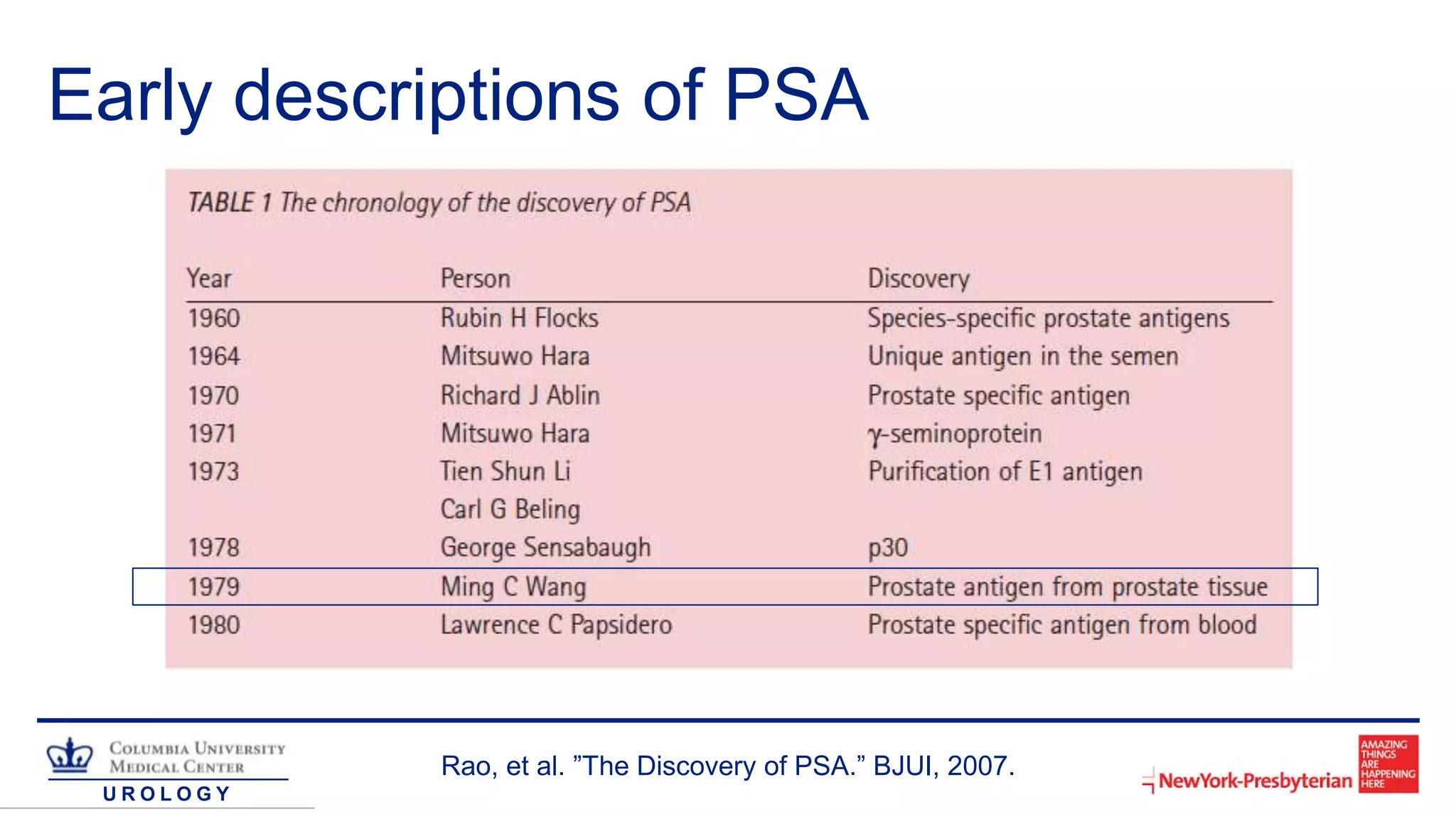
Early descriptions of PSA
Rao, et al. ”The Discovery of PSA.” BJUI, 2007.
U R O L O G Y
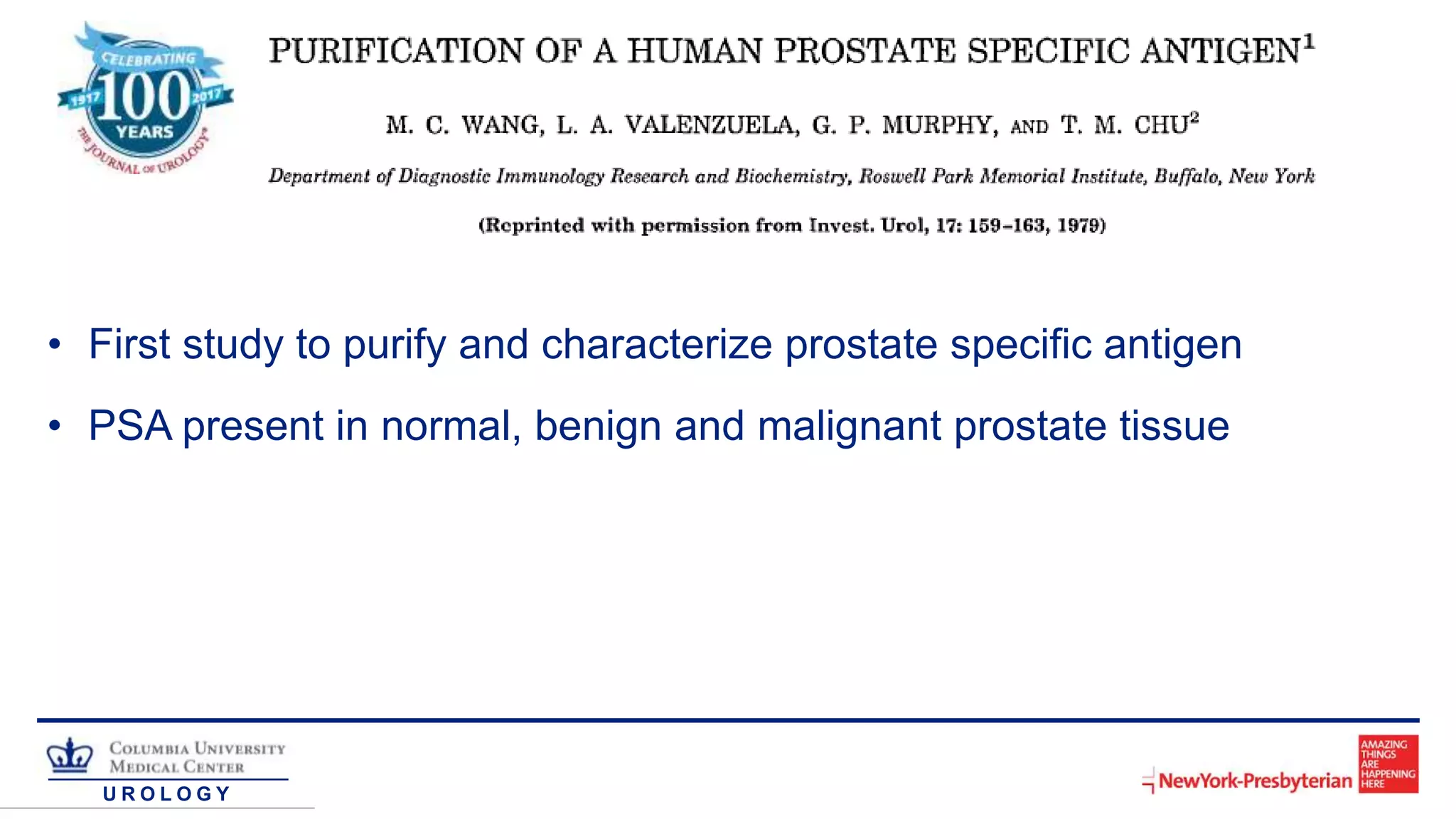
• First study to purify and characterize prostate specific antigen
• PSA present in normal, benign and malignant prostate tissue
U R O L O G Y
U R O L O G Y
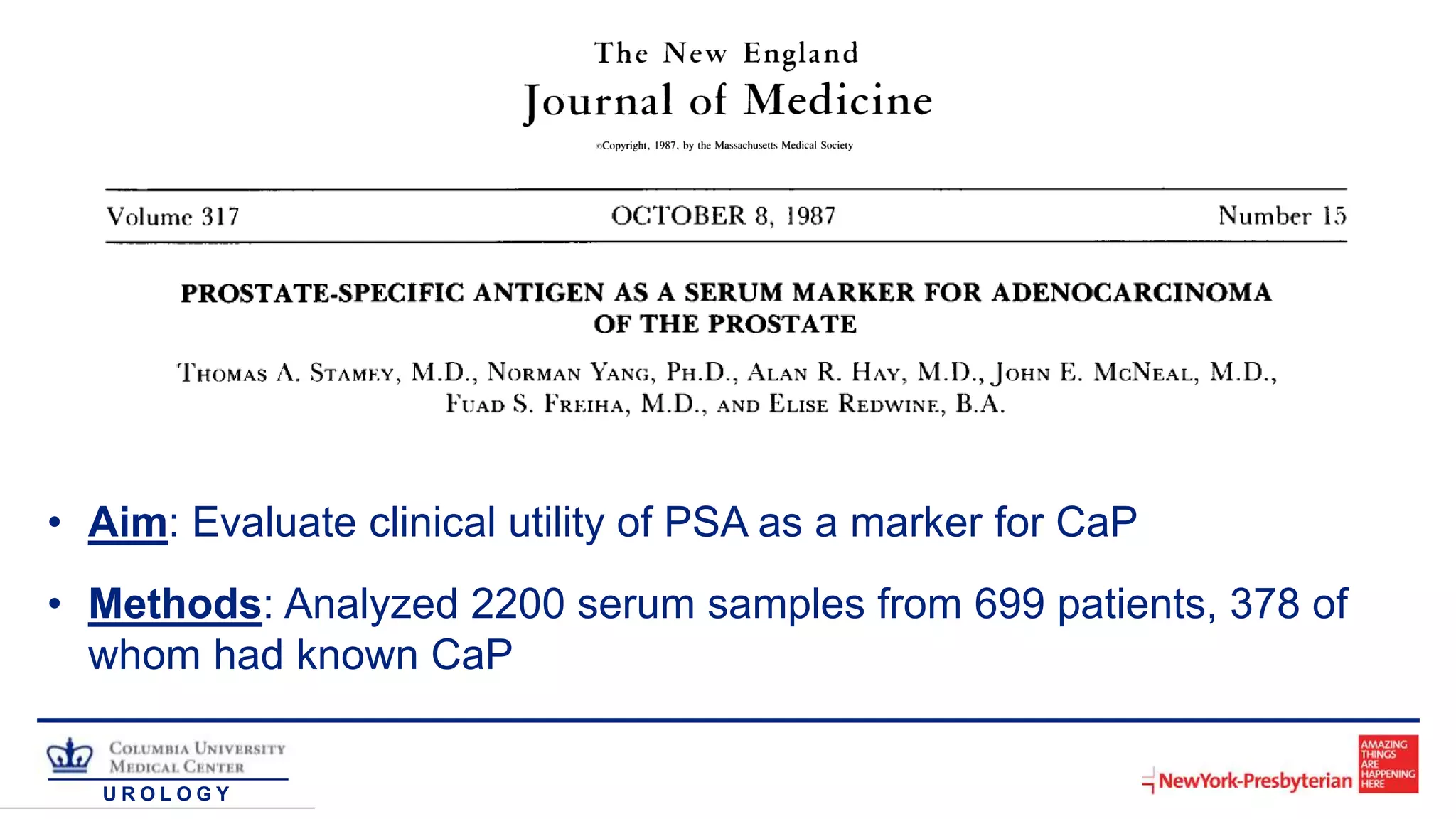
• Aim: Evaluate clinical utility of PSA as a marker for CaP
• Methods: Analyzed 2200 serum samples from 699 patients, 378 of
whom had known CaP
U R O L O G Y
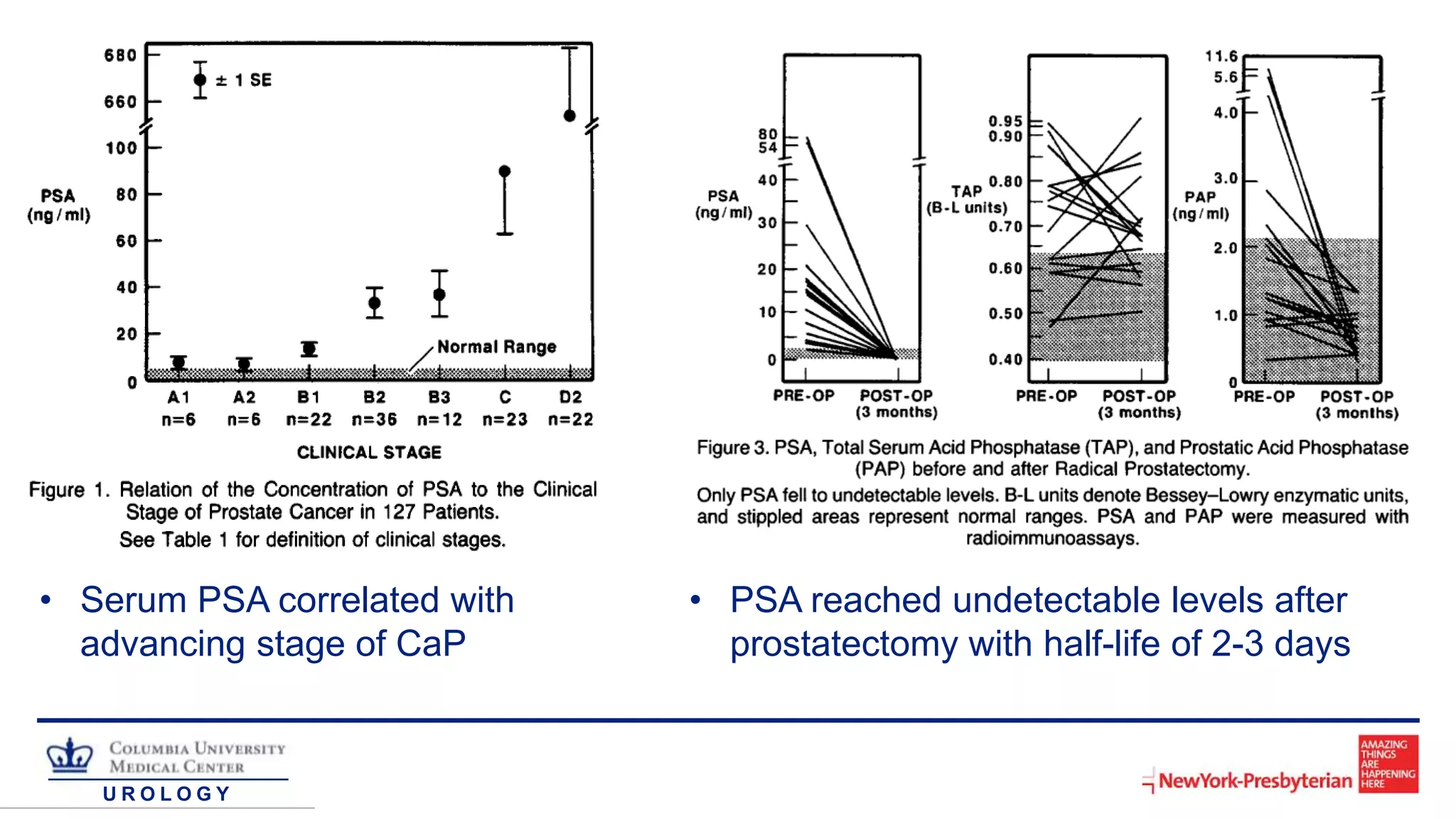
• Serum PSA correlated with
advancing stage of CaP
• PSA reached undetectable levels after
prostatectomy with half-life of 2-3 days
U R O L O G Y
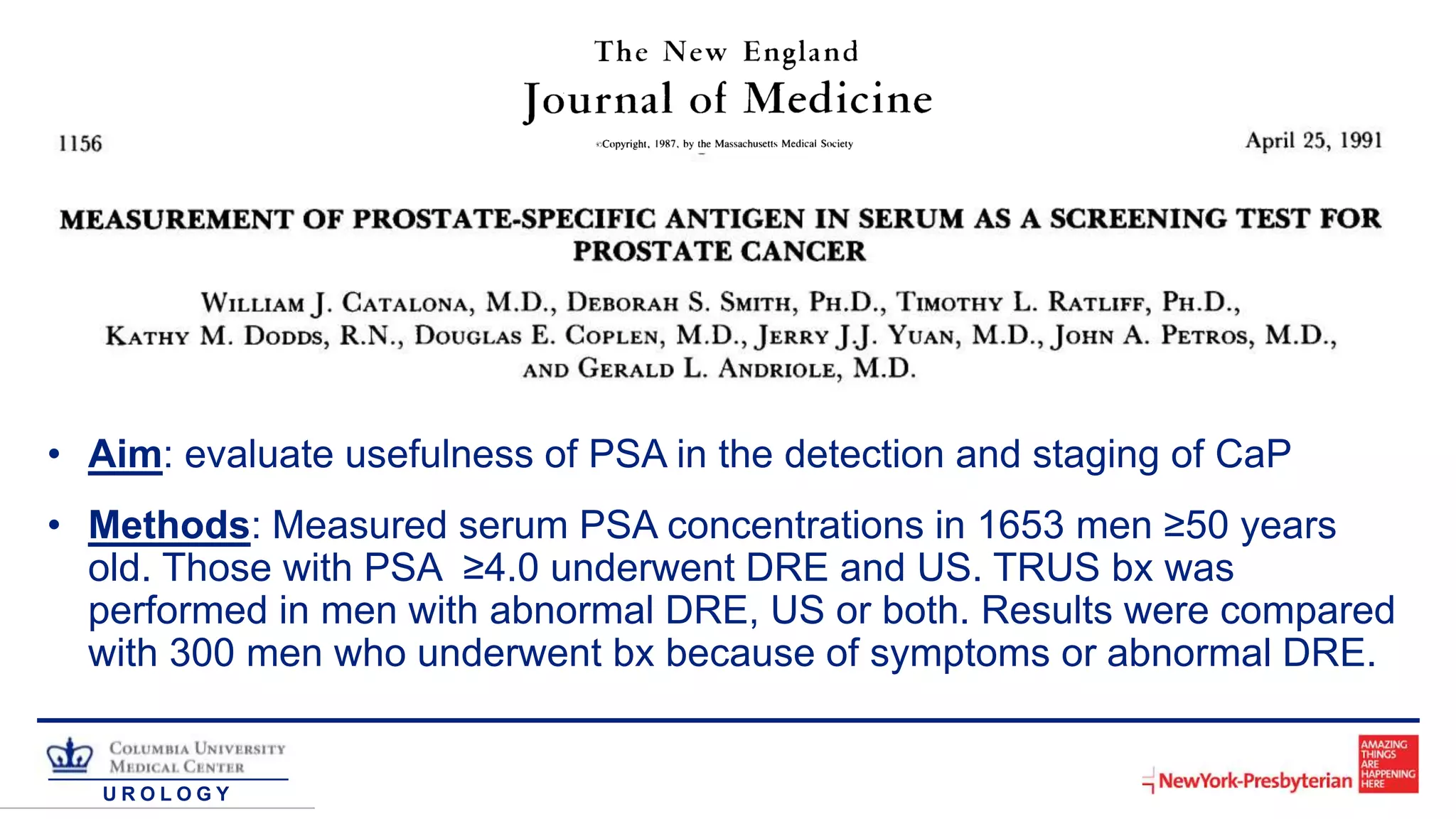
• Aim: evaluate usefulness of PSA in the detection and staging of CaP
• Methods: Measured serum PSA concentrations in 1653 men ≥50 years
old. Those with PSA ≥4.0 underwent DRE and US. TRUS bx was
performed in men with abnormal DRE, US or both. Results were compared
with 300 men who underwent bx because of symptoms or abnormal DRE.
U R O L O G Y
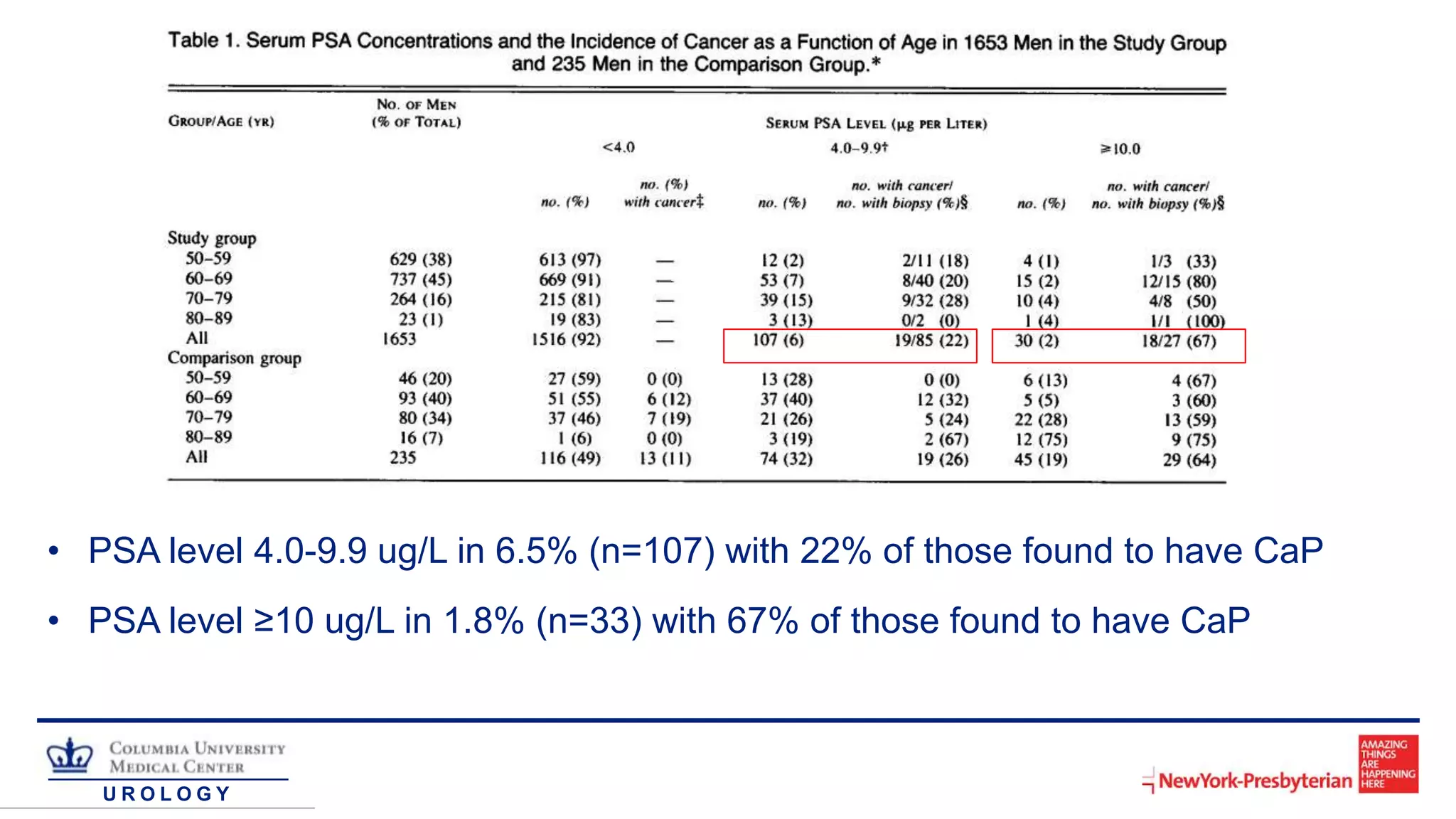
• PSA level 4.0-9.9 ug/L in 6.5% (n=107) with 22% of those found to have CaP
• PSA level ≥10 ug/L in 1.8% (n=33) with 67% of those found to have CaP
U R O L O G Y
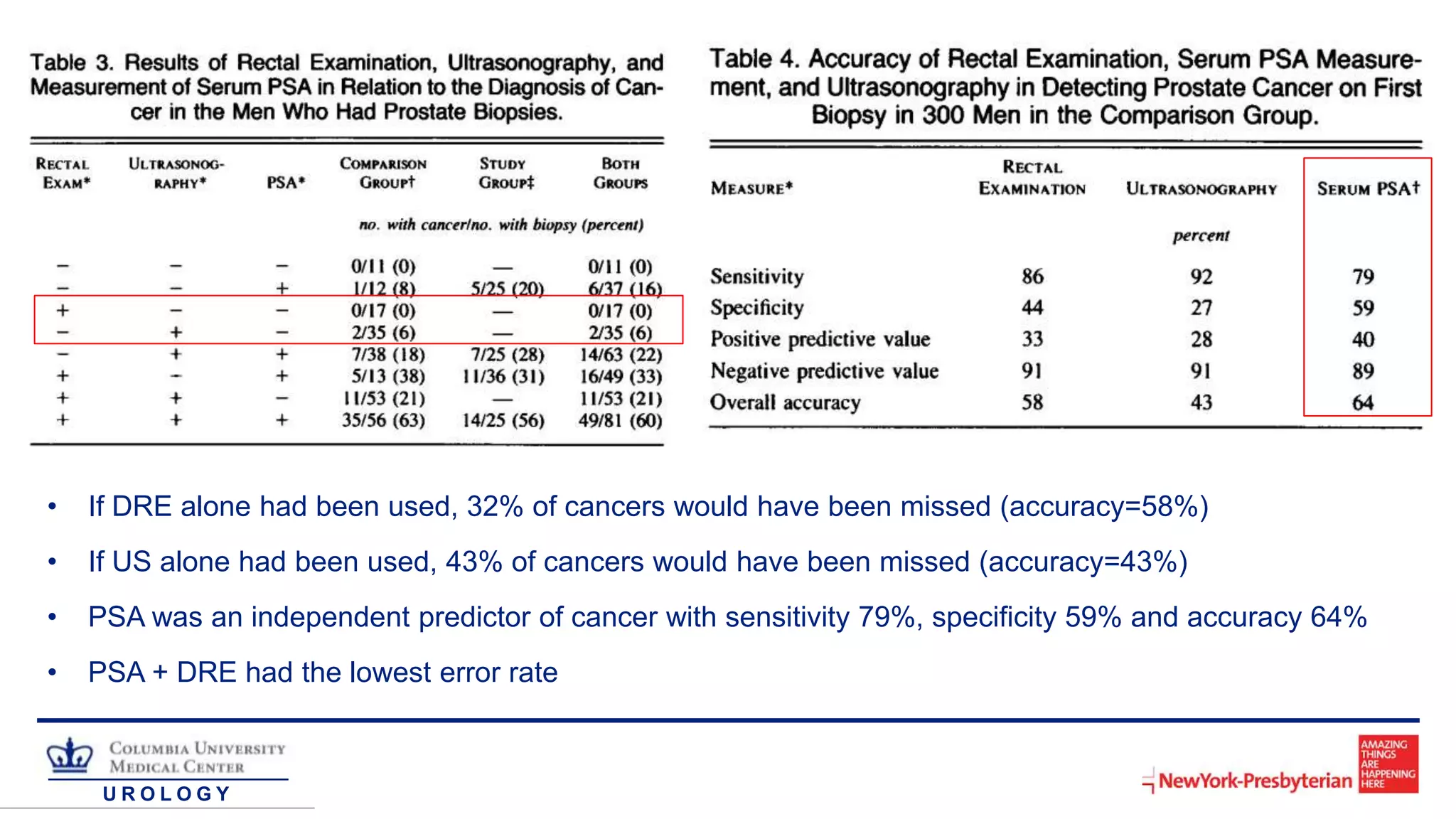
• If DRE alone had been used, 32% of cancers would have been missed (accuracy=58%)
• If US alone had been used, 43% of cancers would have been missed (accuracy=43%)
• PSA was an independent predictor of cancer with sensitivity 79%, specificity 59% and accuracy 64%
• PSA + DRE had the lowest error rate
U R O L O G Y
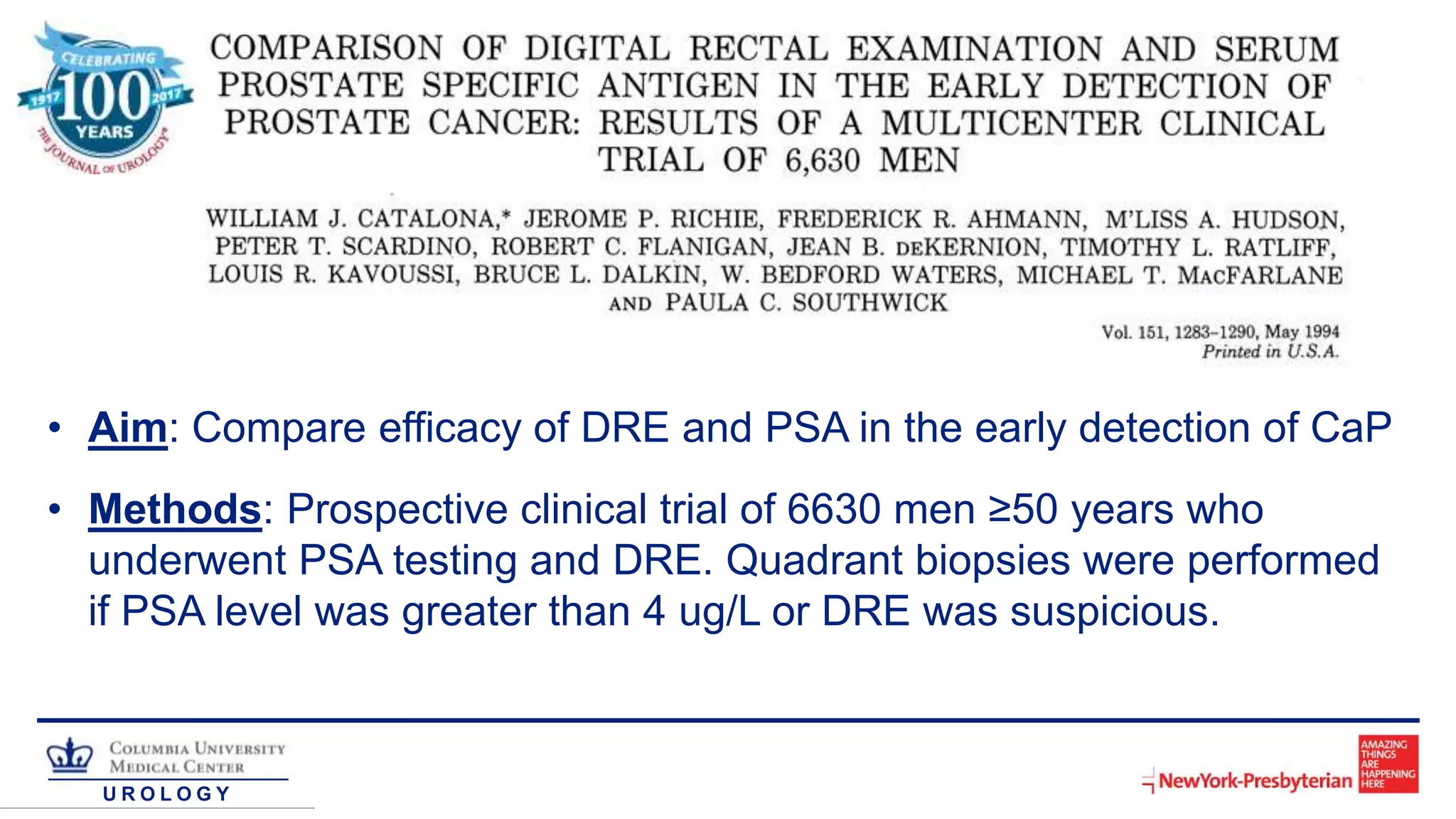
• Aim: Compare efficacy of DRE and PSA in the early detection of CaP
• Methods: Prospective clinical trial of 6630 men ≥50 years who
underwent PSA testing and DRE. Quadrant biopsies were performed
if PSA level was greater than 4 ug/L or DRE was suspicious.
U R O L O G Y
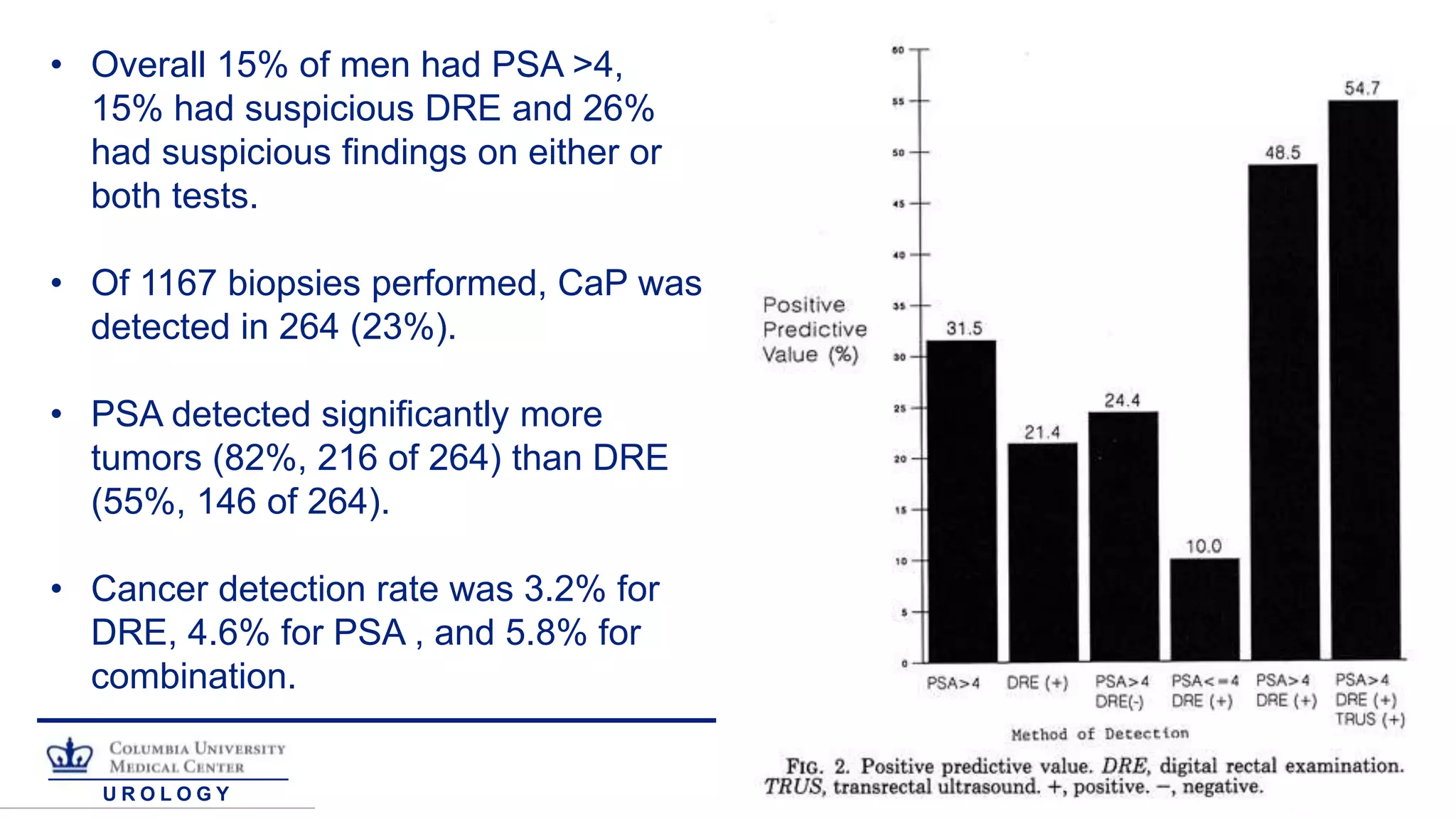
• Overall 15% of men had PSA >4,
15% had suspicious DRE and 26%
had suspicious findings on either or
both tests.
• Of 1167 biopsies performed, CaP was
detected in 264 (23%).
• PSA detected significantly more
tumors (82%, 216 of 264) than DRE
(55%, 146 of 264).
• Cancer detection rate was 3.2% for
DRE, 4.6% for PSA , and 5.8% for
combination.
U R O L O G Y
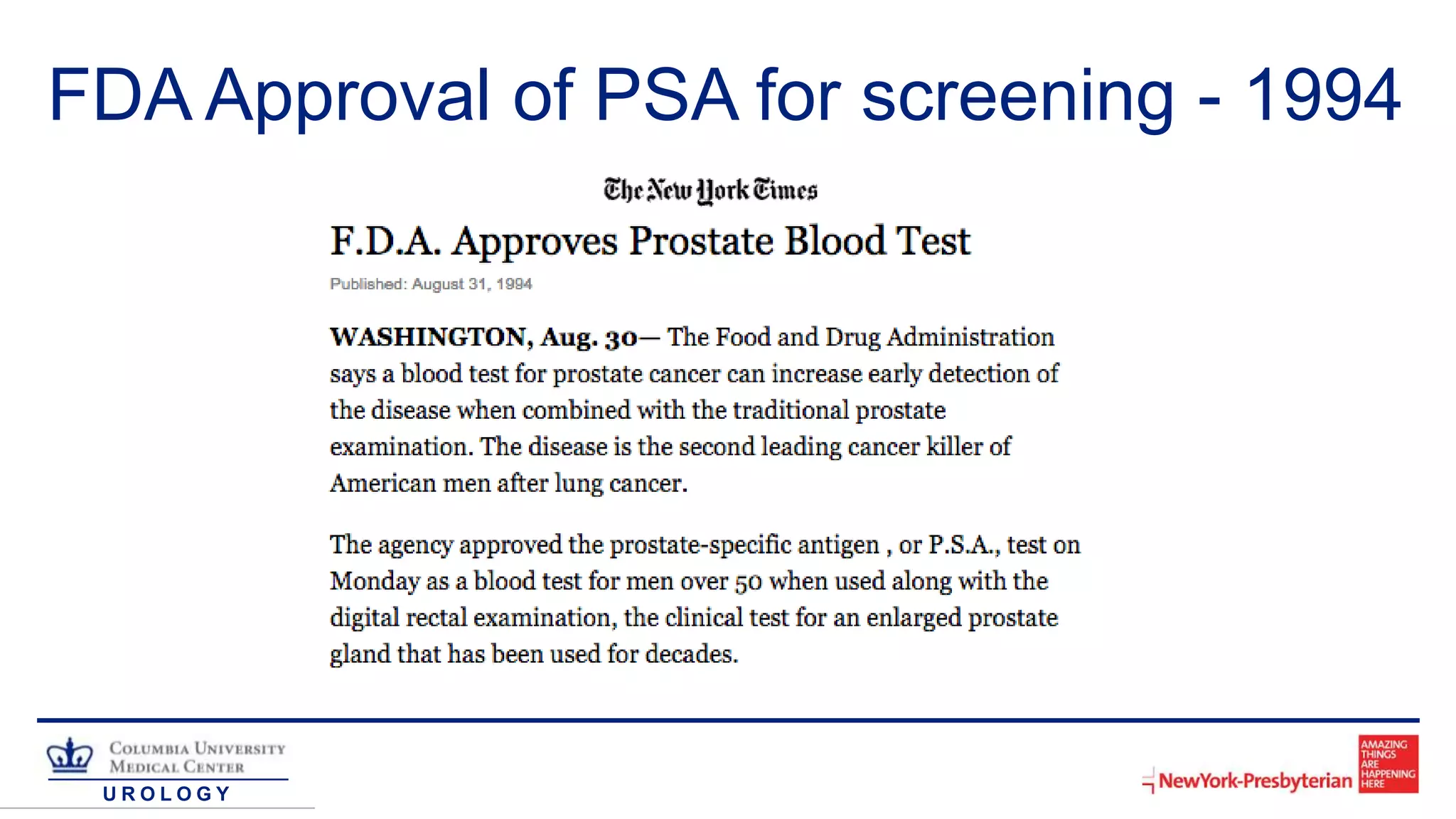
FDA Approval of PSA for screening - 1994
U R O L O G Y
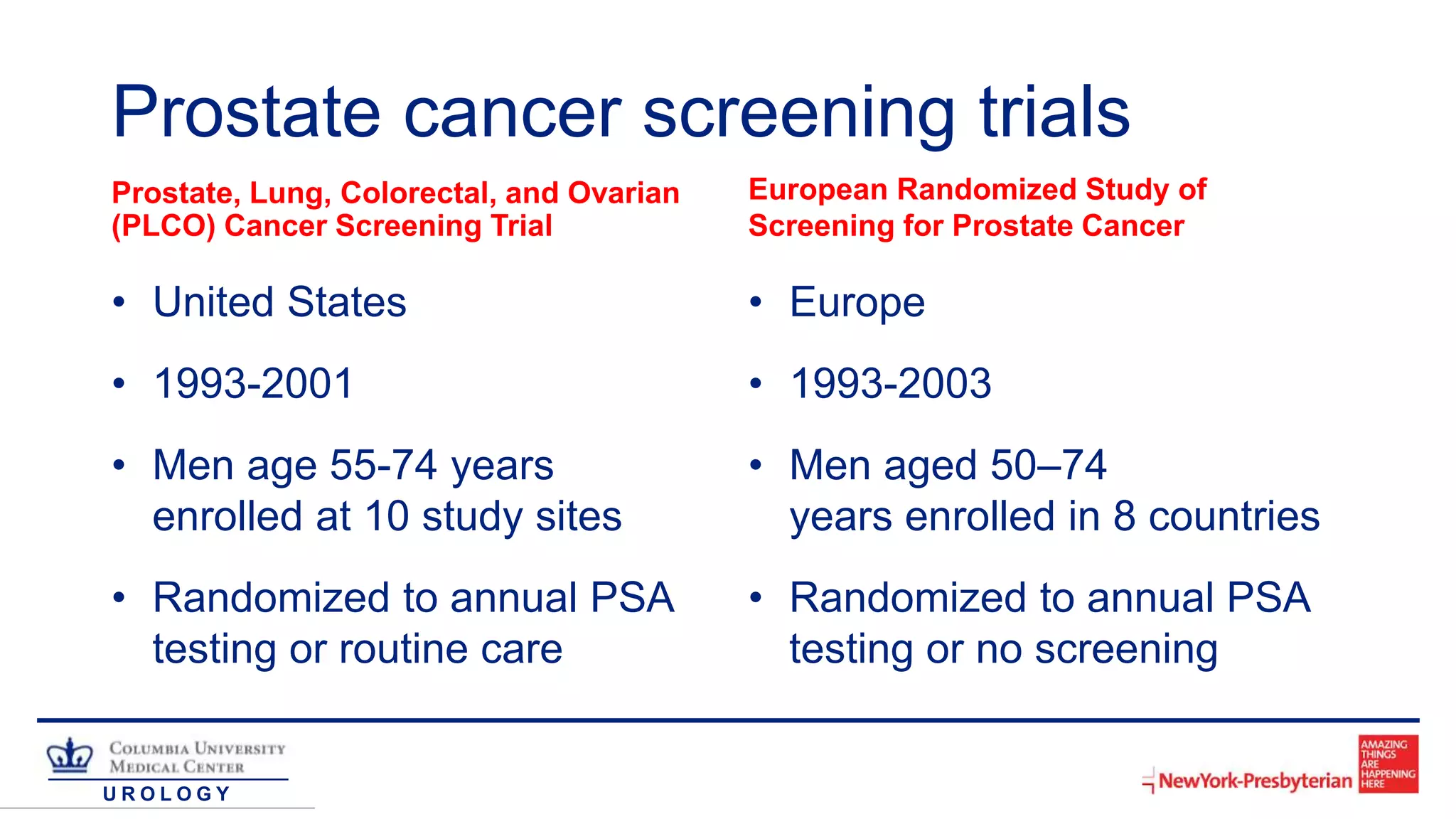
Prostate cancer screening trials
Prostate, Lung, Colorectal, and Ovarian
(PLCO) Cancer Screening Trial
• United States
• 1993-2001
• Men age 55-74 years
enrolled at 10 study sites
• Randomized to annual PSA
testing or routine care
European Randomized Study of
Screening for Prostate Cancer
• Europe
• 1993-2003
• Men aged 50–74
years enrolled in 8 countries
• Randomized to annual PSA
testing or no screening
U R O L O G Y
What is a “normal” PSA?
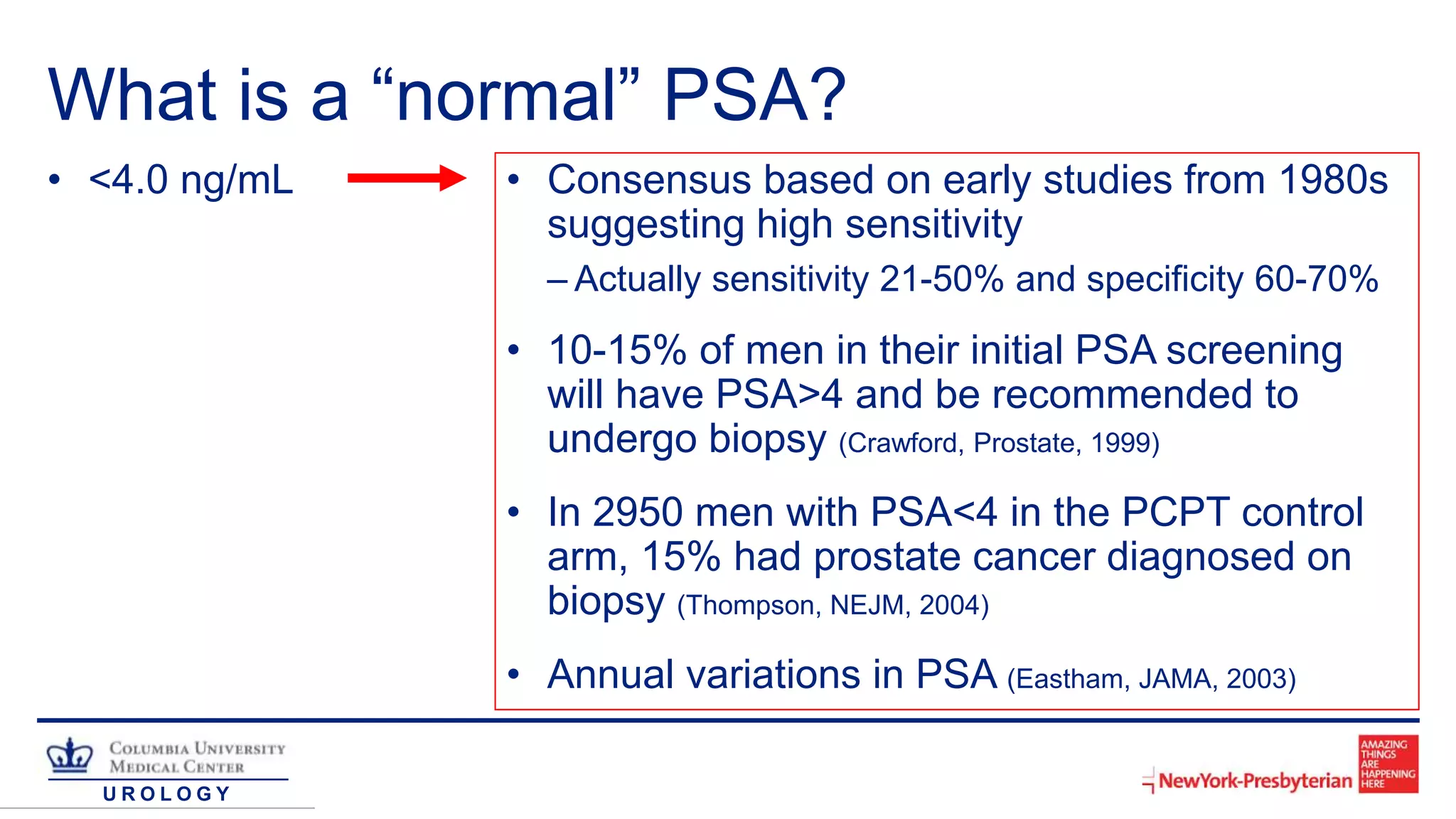
• <4.0 ng/mL • Consensus based on early studies from 1980s
suggesting high sensitivity
– Actually sensitivity 21-50% and specificity 60-70%
• 10-15% of men in their initial PSA screening
will have PSA>4 and be recommended to
undergo biopsy (Crawford, Prostate, 1999)
• In 2950 men with PSA<4 in the PCPT control
arm, 15% had prostate cancer diagnosed on
biopsy (Thompson, NEJM, 2004)
• Annual variations in PSA (Eastham, JAMA, 2003)
U R O L O G Y
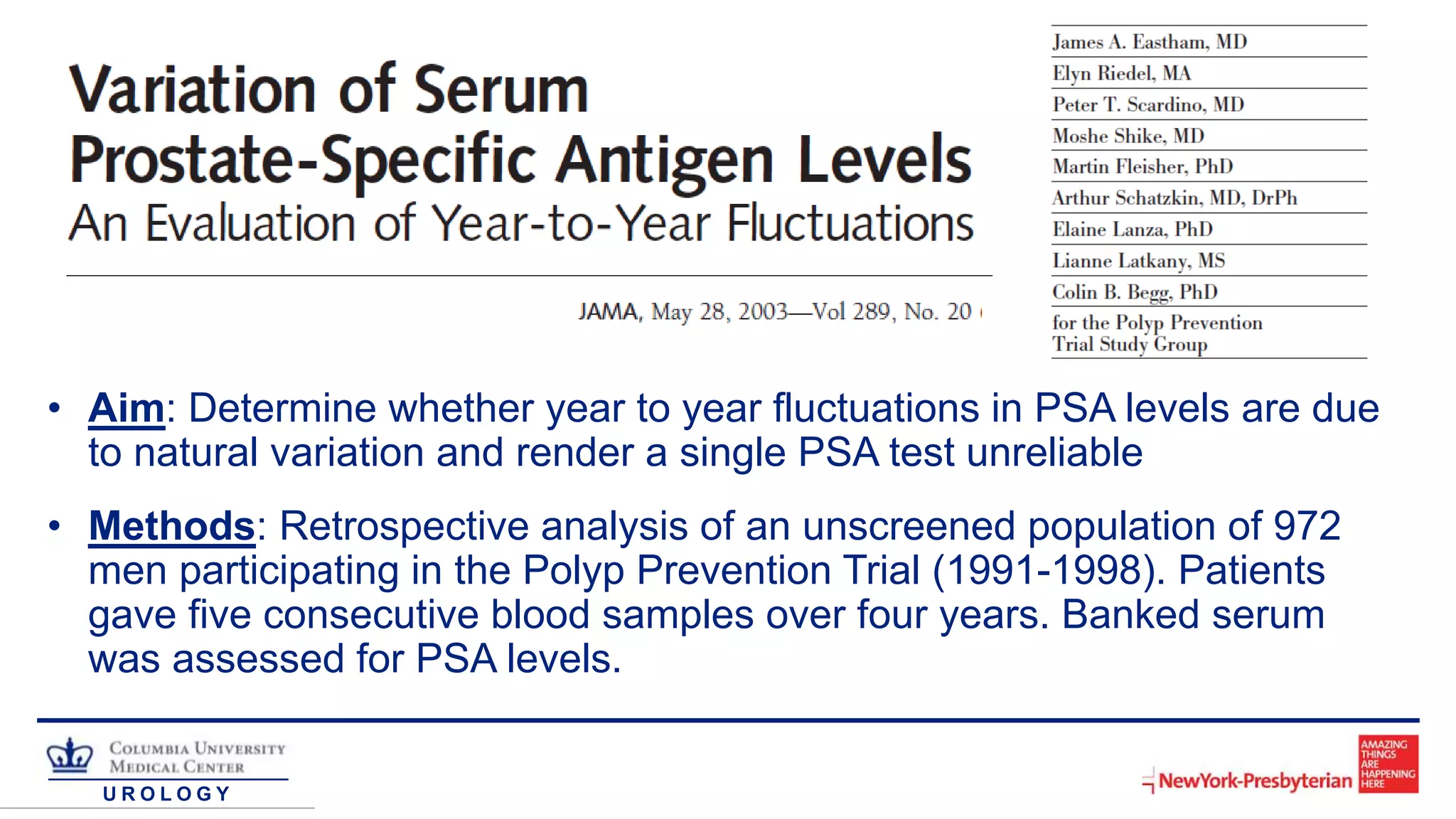
• Aim: Determine whether year to year fluctuations in PSA levels are due
to natural variation and render a single PSA test unreliable
• Methods: Retrospective analysis of an unscreened population of 972
men participating in the Polyp Prevention Trial (1991-1998). Patients
gave five consecutive blood samples over four years. Banked serum
was assessed for PSA levels.
U R O L O G Y
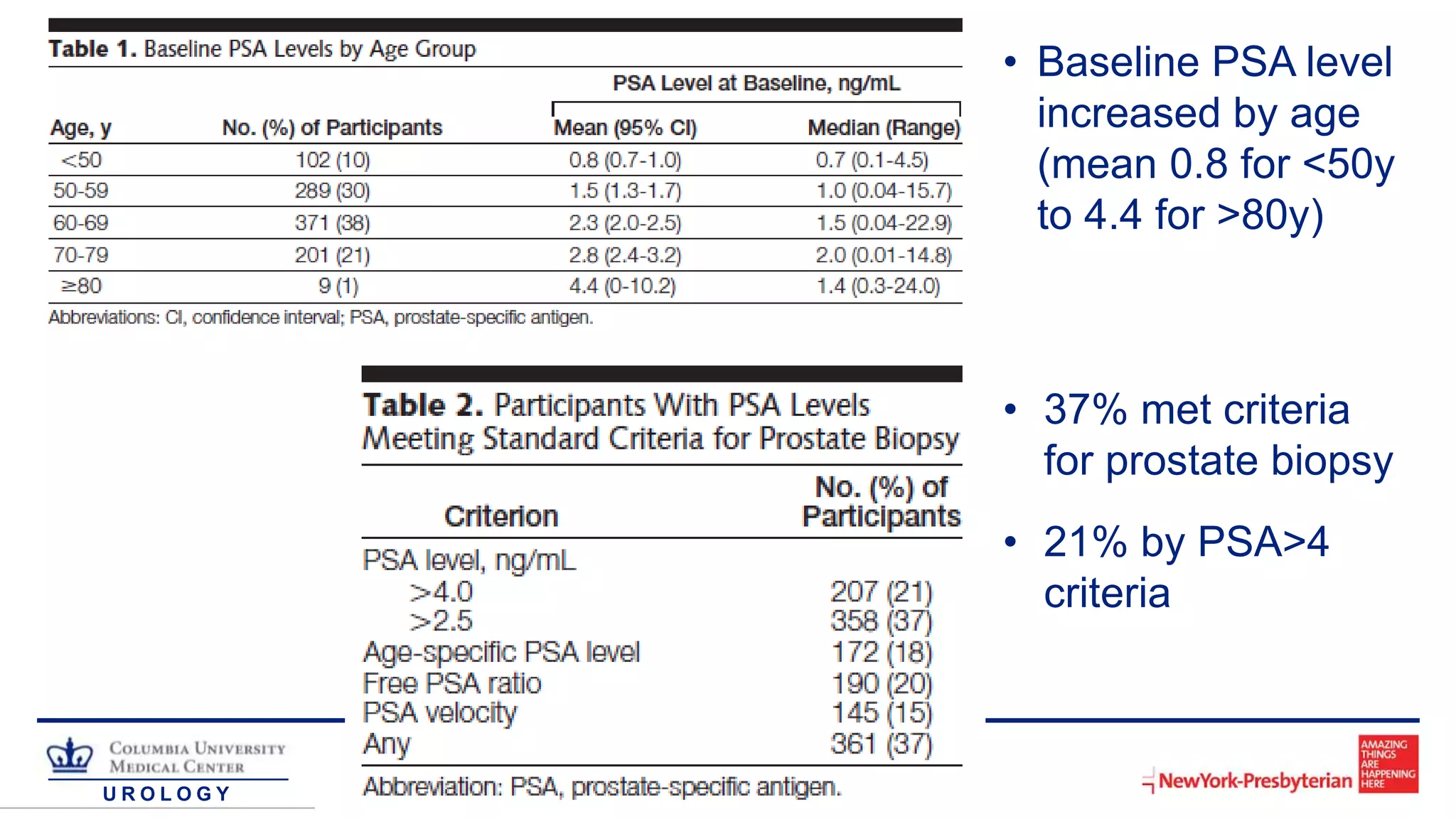
• 37% met criteria
for prostate biopsy
• 21% by PSA>4
criteria
• Baseline PSA level
increased by age
(mean 0.8 for <50y
to 4.4 for >80y)
U R O L O G Y
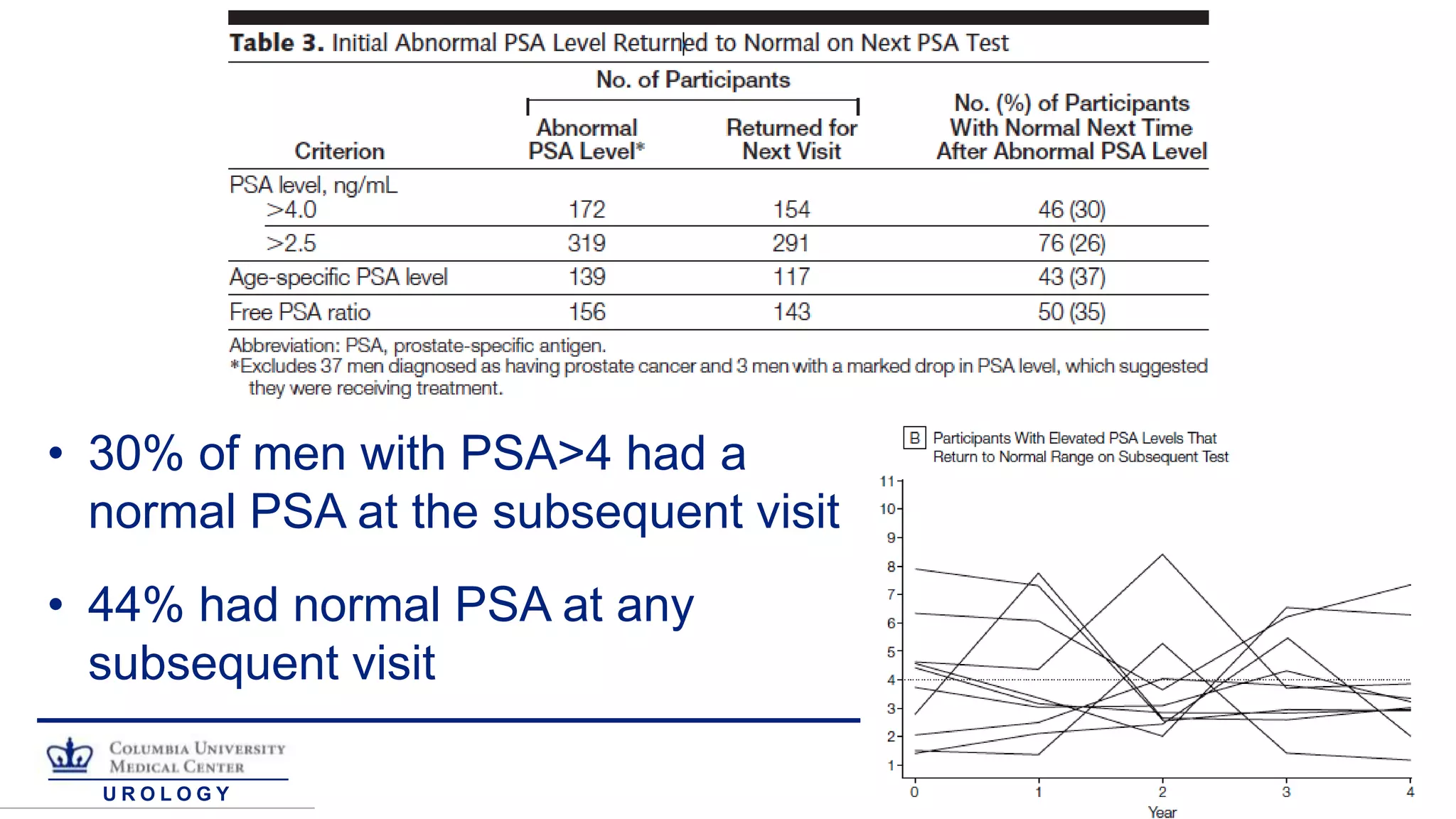
• 30% of men with PSA>4 had a
normal PSA at the subsequent visit
• 44% had normal PSA at any
subsequent visit
U R O L O G Y
What is a “normal” PSA?
• <4.0 ng/mL
• Age-specific
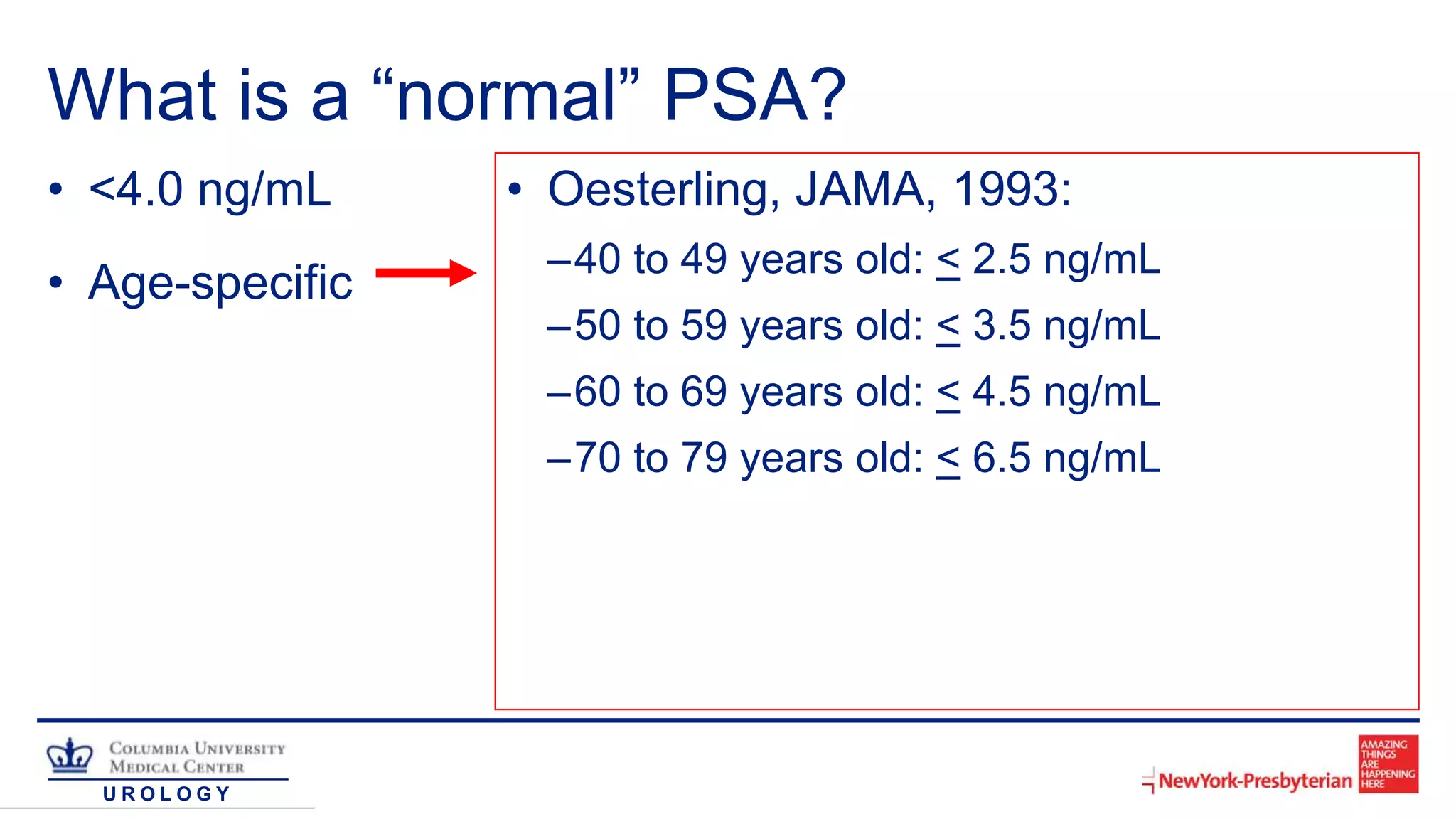
• Oesterling, JAMA, 1993:
–40 to 49 years old: < 2.5 ng/mL
–50 to 59 years old: < 3.5 ng/mL
–60 to 69 years old: < 4.5 ng/mL
–70 to 79 years old: < 6.5 ng/mL
U R O L O G Y
What is a “normal” PSA?
• <4.0 ng/mL
• Age-specific
• Race-specific
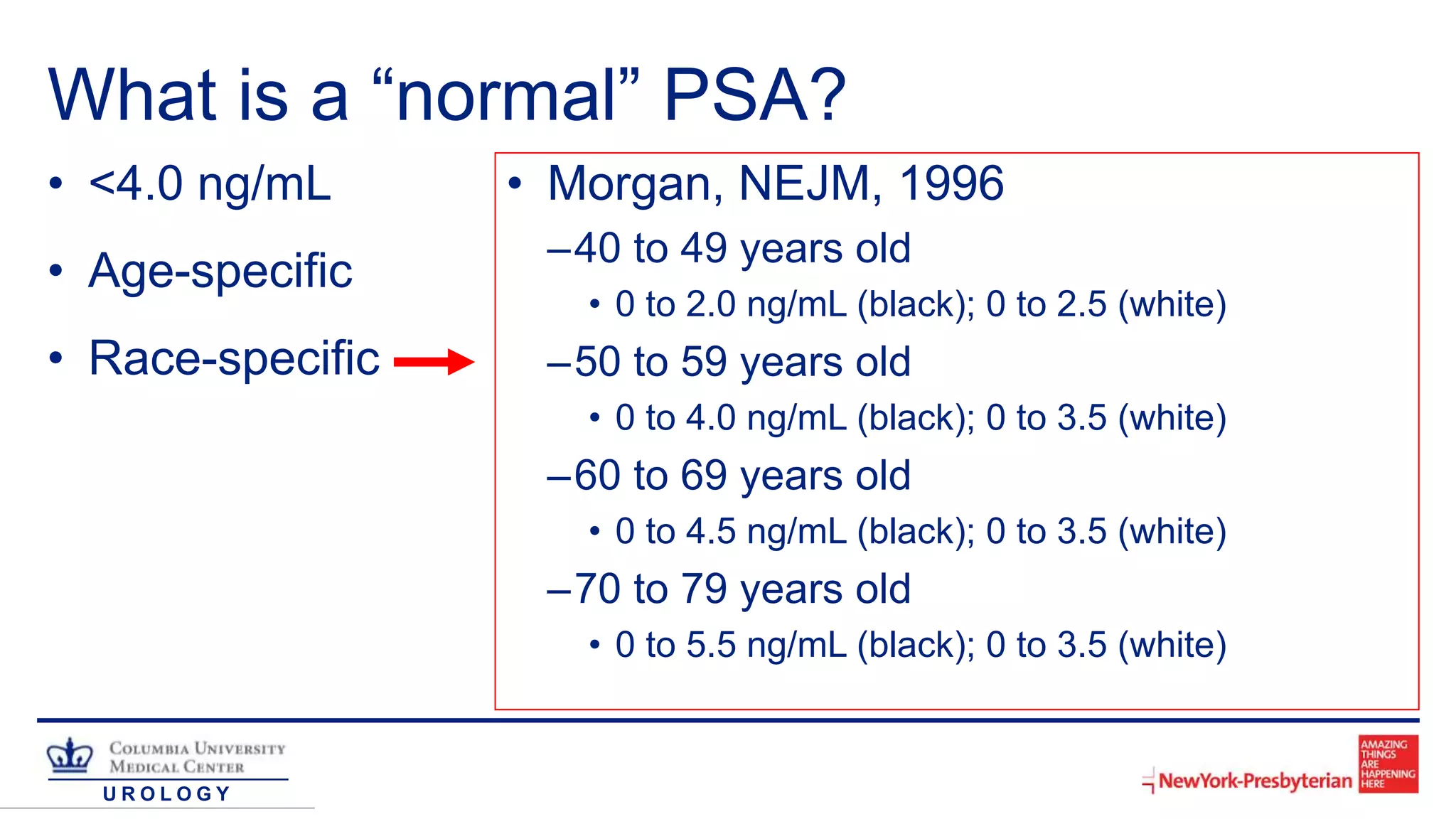
• Morgan, NEJM, 1996
–40 to 49 years old
• 0 to 2.0 ng/mL (black); 0 to 2.5 (white)
–50 to 59 years old
• 0 to 4.0 ng/mL (black); 0 to 3.5 (white)
–60 to 69 years old
• 0 to 4.5 ng/mL (black); 0 to 3.5 (white)
–70 to 79 years old
• 0 to 5.5 ng/mL (black); 0 to 3.5 (white)
U R O L O G Y
What is a “normal” PSA?
• <4.0 ng/mL
• Age-specific
• Race-specific
• Medications
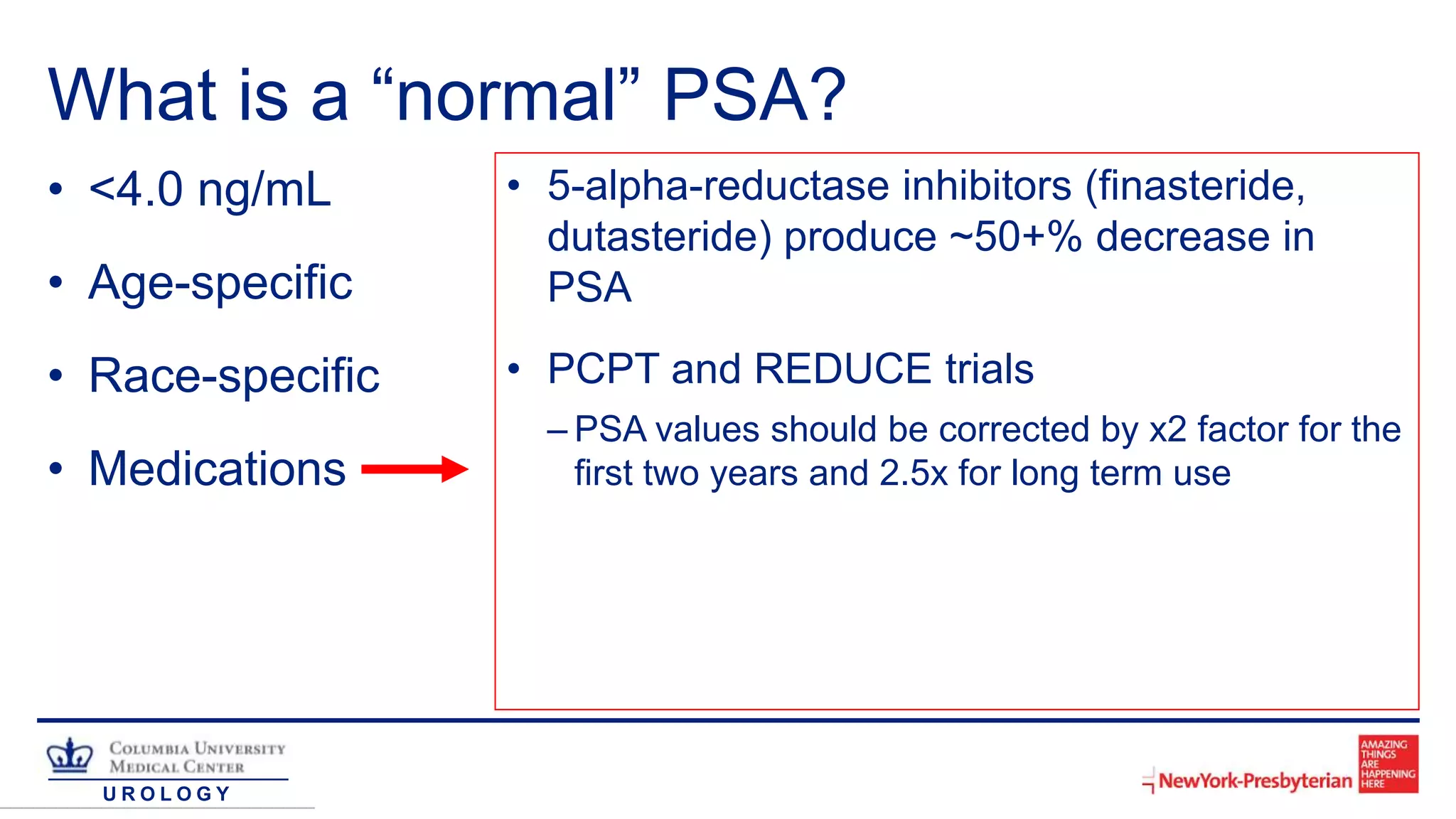
• 5-alpha-reductase inhibitors (finasteride,
dutasteride) produce ~50+% decrease in
PSA
• PCPT and REDUCE trials
– PSA values should be corrected by x2 factor for the
first two years and 2.5x for long term use
U R O L O G Y
Causes of elevated PSA
• Prostate cancer
U R O L O G Y
Causes of elevated PSA
• Prostate cancer
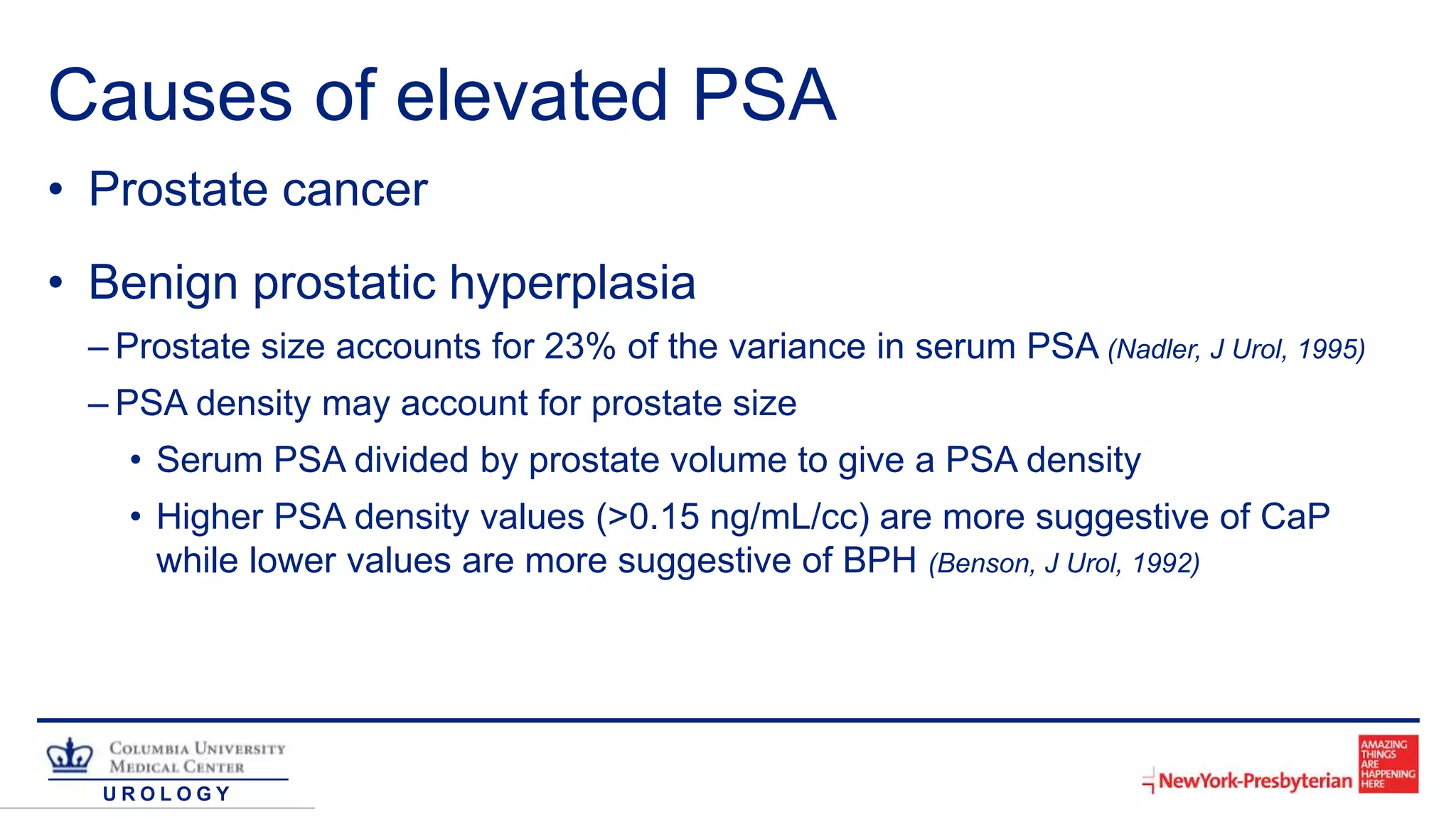
• Benign prostatic hyperplasia
– Prostate size accounts for 23% of the variance in serum PSA (Nadler, J Urol, 1995)
– PSA density may account for prostate size
• Serum PSA divided by prostate volume to give a PSA density
• Higher PSA density values (>0.15 ng/mL/cc) are more suggestive of CaP
while lower values are more suggestive of BPH (Benson, J Urol, 1992)
U R O L O G Y
Causes of elevated PSA
• Prostate cancer
• Benign prostatic hyperplasia
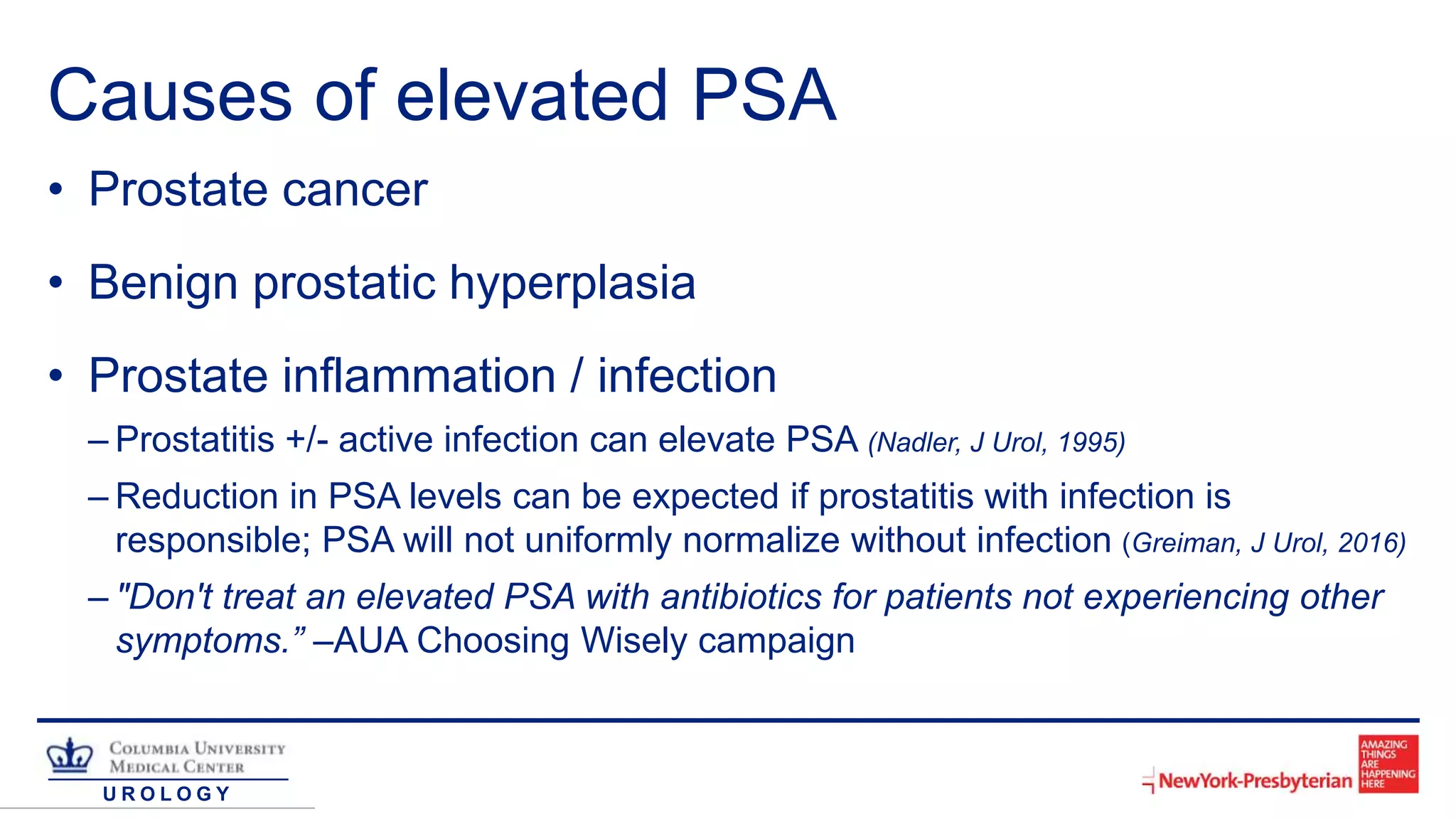
• Prostate inflammation / infection
– Prostatitis +/- active infection can elevate PSA (Nadler, J Urol, 1995)
– Reduction in PSA levels can be expected if prostatitis with infection is
responsible; PSA will not uniformly normalize without infection (Greiman, J Urol, 2016)
– "Don't treat an elevated PSA with antibiotics for patients not experiencing other
symptoms.” –AUA Choosing Wisely campaign
U R O L O G Y
Causes of elevated PSA
• Prostate cancer
• Benign prostatic hyperplasia
• Prostate inflammation / infection
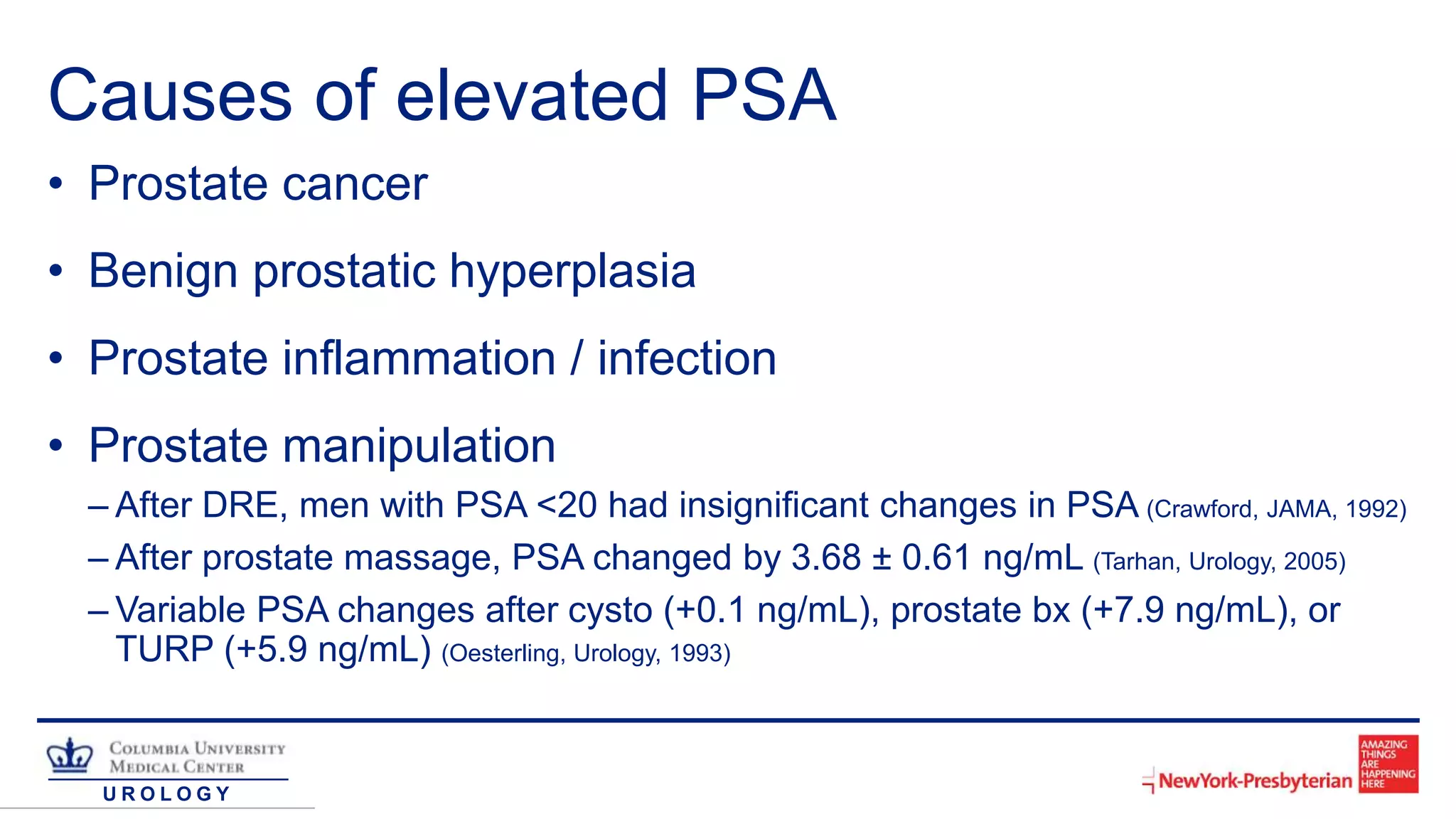
• Prostate manipulation
– After DRE, men with PSA <20 had insignificant changes in PSA (Crawford, JAMA, 1992)
– After prostate massage, PSA changed by 3.68 ± 0.61 ng/mL (Tarhan, Urology, 2005)
– Variable PSA changes after cysto (+0.1 ng/mL), prostate bx (+7.9 ng/mL), or
TURP (+5.9 ng/mL) (Oesterling, Urology, 1993)
U R O L O G Y
Causes of elevated PSA
• Prostate cancer
• Benign prostatic hyperplasia
• Prostate inflammation / infection
• Prostate manipulation
• Sexual activity
– Mild elevation in PSA (0.4-0.5 ng/mL) for 48-72 hours after ejaculation
(Tchetgen, Urology, 1996)
U R O L O G Y
Summary
1. Review biochemistry and history of PSA
– The discovery of PSA, its purification and its clinical use is the
collective contribution of many physicians and scientists
– Serum PSA is a valuable biomarker for prostate cancer
2/3. Define “normal” PSA values; Understand causes of
elevated PSA
– PSA has a wide range of “normal” values and multiple factors that
may elevate PSA, making it an imperfect screening tool
U R O L O G Y
Next week…
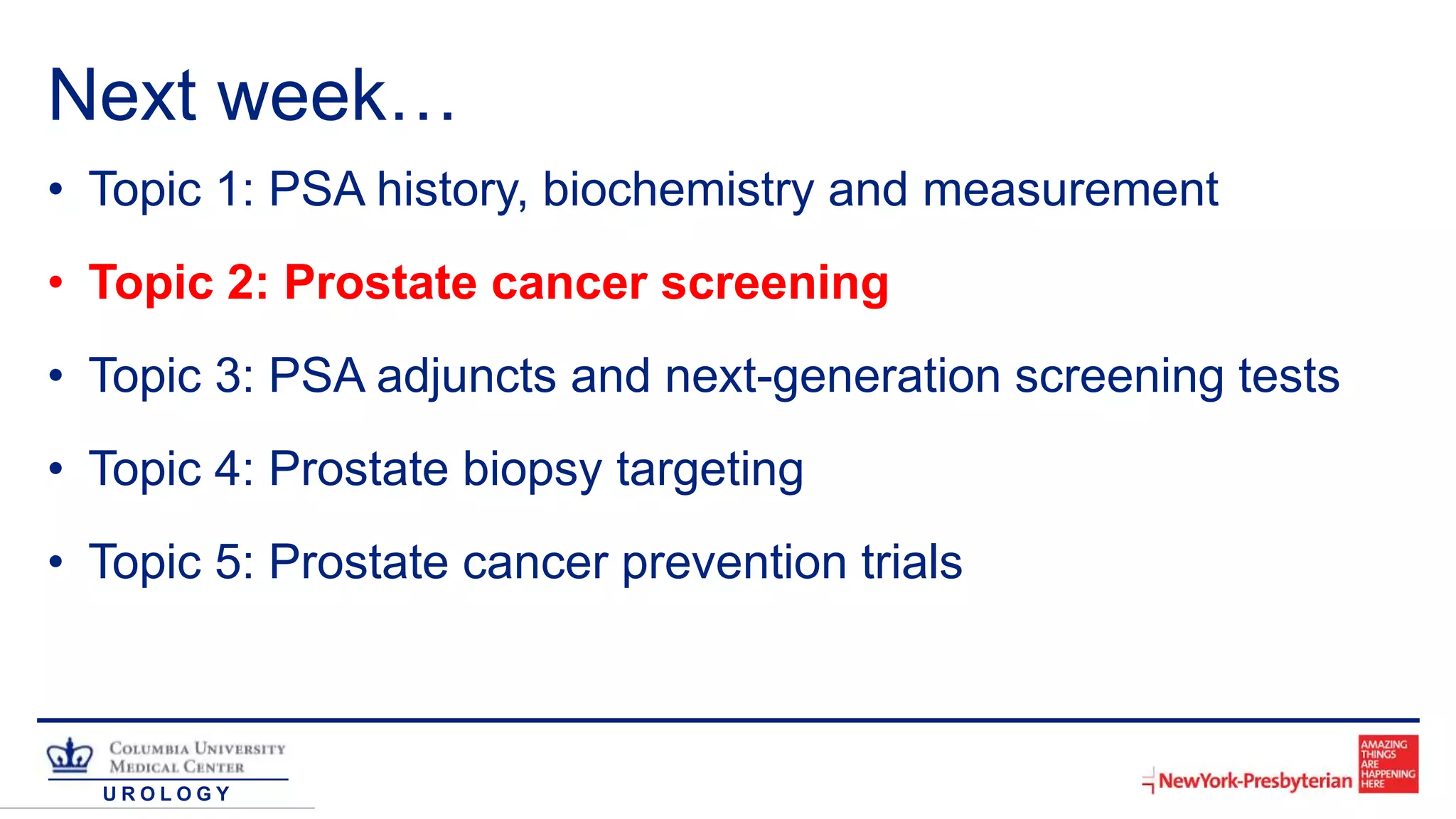
• Topic 1: PSA history, biochemistry and measurement
• Topic 2: Prostate cancer screening
• Topic 3: PSA adjuncts and next-generation screening tests
• Topic 4: Prostate biopsy targeting
• Topic 5: Prostate cancer prevention trials

PSA history and measurement

  • 1.
    U R OL O G Y Tumor Board: PSA history, biochemistry and measurement February 13th, 2017
  • 2.
    U R OL O G Y Learning objectives 1. Review biochemistry and history of PSA 2. Define “normal” PSA values 3. Understand causes of elevated PSA
  • 3.
    U R OL O G Y Prostate specific antigen • kallikrein-3 (hK3) or γ-seminoprotein • Secreted by epithelial cells of the acini and ducts of prostate gland • Glycoprotein enzyme that liquefies semen • Normally present in the blood at low levels.
  • 4.
    U R OL O G Y PSA expression • PSA produced as a proenzyme (proPSA). After secretion into lumen of prostate glands, it is converted to active PSA and inactive PSA • Normally, a small portion enters the bloodstream and circulates as unbound (free PSA) or complexed PSA • CaP lacks basal cells, resulting in disruption of basement membrane and increased access to the circulation. More free PSA is “leaked” into the bloodstream and a larger fraction of the PSA escapes proteolytic processing
  • 5.
    U R OL O G Y Early descriptions of PSA Rao, et al. ”The Discovery of PSA.” BJUI, 2007.
  • 6.
    U R OL O G Y • First study to purify and characterize prostate specific antigen • PSA present in normal, benign and malignant prostate tissue
  • 7.
    U R OL O G Y
  • 8.
    U R OL O G Y • Aim: Evaluate clinical utility of PSA as a marker for CaP • Methods: Analyzed 2200 serum samples from 699 patients, 378 of whom had known CaP
  • 9.
    U R OL O G Y • Serum PSA correlated with advancing stage of CaP • PSA reached undetectable levels after prostatectomy with half-life of 2-3 days
  • 10.
    U R OL O G Y • Aim: evaluate usefulness of PSA in the detection and staging of CaP • Methods: Measured serum PSA concentrations in 1653 men ≥50 years old. Those with PSA ≥4.0 underwent DRE and US. TRUS bx was performed in men with abnormal DRE, US or both. Results were compared with 300 men who underwent bx because of symptoms or abnormal DRE.
  • 11.
    U R OL O G Y • PSA level 4.0-9.9 ug/L in 6.5% (n=107) with 22% of those found to have CaP • PSA level ≥10 ug/L in 1.8% (n=33) with 67% of those found to have CaP
  • 12.
    U R OL O G Y • If DRE alone had been used, 32% of cancers would have been missed (accuracy=58%) • If US alone had been used, 43% of cancers would have been missed (accuracy=43%) • PSA was an independent predictor of cancer with sensitivity 79%, specificity 59% and accuracy 64% • PSA + DRE had the lowest error rate
  • 13.
    U R OL O G Y • Aim: Compare efficacy of DRE and PSA in the early detection of CaP • Methods: Prospective clinical trial of 6630 men ≥50 years who underwent PSA testing and DRE. Quadrant biopsies were performed if PSA level was greater than 4 ug/L or DRE was suspicious.
  • 14.
    U R OL O G Y • Overall 15% of men had PSA >4, 15% had suspicious DRE and 26% had suspicious findings on either or both tests. • Of 1167 biopsies performed, CaP was detected in 264 (23%). • PSA detected significantly more tumors (82%, 216 of 264) than DRE (55%, 146 of 264). • Cancer detection rate was 3.2% for DRE, 4.6% for PSA , and 5.8% for combination.
  • 15.
    U R OL O G Y FDA Approval of PSA for screening - 1994
  • 16.
    U R OL O G Y Prostate cancer screening trials Prostate, Lung, Colorectal, and Ovarian (PLCO) Cancer Screening Trial • United States • 1993-2001 • Men age 55-74 years enrolled at 10 study sites • Randomized to annual PSA testing or routine care European Randomized Study of Screening for Prostate Cancer • Europe • 1993-2003 • Men aged 50–74 years enrolled in 8 countries • Randomized to annual PSA testing or no screening
  • 17.
    U R OL O G Y What is a “normal” PSA? • <4.0 ng/mL • Consensus based on early studies from 1980s suggesting high sensitivity – Actually sensitivity 21-50% and specificity 60-70% • 10-15% of men in their initial PSA screening will have PSA>4 and be recommended to undergo biopsy (Crawford, Prostate, 1999) • In 2950 men with PSA<4 in the PCPT control arm, 15% had prostate cancer diagnosed on biopsy (Thompson, NEJM, 2004) • Annual variations in PSA (Eastham, JAMA, 2003)
  • 18.
    U R OL O G Y • Aim: Determine whether year to year fluctuations in PSA levels are due to natural variation and render a single PSA test unreliable • Methods: Retrospective analysis of an unscreened population of 972 men participating in the Polyp Prevention Trial (1991-1998). Patients gave five consecutive blood samples over four years. Banked serum was assessed for PSA levels.
  • 19.
    U R OL O G Y • 37% met criteria for prostate biopsy • 21% by PSA>4 criteria • Baseline PSA level increased by age (mean 0.8 for <50y to 4.4 for >80y)
  • 20.
    U R OL O G Y • 30% of men with PSA>4 had a normal PSA at the subsequent visit • 44% had normal PSA at any subsequent visit
  • 21.
    U R OL O G Y What is a “normal” PSA? • <4.0 ng/mL • Age-specific • Oesterling, JAMA, 1993: –40 to 49 years old: < 2.5 ng/mL –50 to 59 years old: < 3.5 ng/mL –60 to 69 years old: < 4.5 ng/mL –70 to 79 years old: < 6.5 ng/mL
  • 22.
    U R OL O G Y What is a “normal” PSA? • <4.0 ng/mL • Age-specific • Race-specific • Morgan, NEJM, 1996 –40 to 49 years old • 0 to 2.0 ng/mL (black); 0 to 2.5 (white) –50 to 59 years old • 0 to 4.0 ng/mL (black); 0 to 3.5 (white) –60 to 69 years old • 0 to 4.5 ng/mL (black); 0 to 3.5 (white) –70 to 79 years old • 0 to 5.5 ng/mL (black); 0 to 3.5 (white)
  • 23.
    U R OL O G Y What is a “normal” PSA? • <4.0 ng/mL • Age-specific • Race-specific • Medications • 5-alpha-reductase inhibitors (finasteride, dutasteride) produce ~50+% decrease in PSA • PCPT and REDUCE trials – PSA values should be corrected by x2 factor for the first two years and 2.5x for long term use
  • 24.
    U R OL O G Y Causes of elevated PSA • Prostate cancer
  • 25.
    U R OL O G Y Causes of elevated PSA • Prostate cancer • Benign prostatic hyperplasia – Prostate size accounts for 23% of the variance in serum PSA (Nadler, J Urol, 1995) – PSA density may account for prostate size • Serum PSA divided by prostate volume to give a PSA density • Higher PSA density values (>0.15 ng/mL/cc) are more suggestive of CaP while lower values are more suggestive of BPH (Benson, J Urol, 1992)
  • 26.
    U R OL O G Y Causes of elevated PSA • Prostate cancer • Benign prostatic hyperplasia • Prostate inflammation / infection – Prostatitis +/- active infection can elevate PSA (Nadler, J Urol, 1995) – Reduction in PSA levels can be expected if prostatitis with infection is responsible; PSA will not uniformly normalize without infection (Greiman, J Urol, 2016) – "Don't treat an elevated PSA with antibiotics for patients not experiencing other symptoms.” –AUA Choosing Wisely campaign
  • 27.
    U R OL O G Y Causes of elevated PSA • Prostate cancer • Benign prostatic hyperplasia • Prostate inflammation / infection • Prostate manipulation – After DRE, men with PSA <20 had insignificant changes in PSA (Crawford, JAMA, 1992) – After prostate massage, PSA changed by 3.68 ± 0.61 ng/mL (Tarhan, Urology, 2005) – Variable PSA changes after cysto (+0.1 ng/mL), prostate bx (+7.9 ng/mL), or TURP (+5.9 ng/mL) (Oesterling, Urology, 1993)
  • 28.
    U R OL O G Y Causes of elevated PSA • Prostate cancer • Benign prostatic hyperplasia • Prostate inflammation / infection • Prostate manipulation • Sexual activity – Mild elevation in PSA (0.4-0.5 ng/mL) for 48-72 hours after ejaculation (Tchetgen, Urology, 1996)
  • 29.
    U R OL O G Y Summary 1. Review biochemistry and history of PSA – The discovery of PSA, its purification and its clinical use is the collective contribution of many physicians and scientists – Serum PSA is a valuable biomarker for prostate cancer 2/3. Define “normal” PSA values; Understand causes of elevated PSA – PSA has a wide range of “normal” values and multiple factors that may elevate PSA, making it an imperfect screening tool
  • 30.
    U R OL O G Y Next week… • Topic 1: PSA history, biochemistry and measurement • Topic 2: Prostate cancer screening • Topic 3: PSA adjuncts and next-generation screening tests • Topic 4: Prostate biopsy targeting • Topic 5: Prostate cancer prevention trials

Editor's Notes

  • #4 Prostate specific antigen is also called kallikrein-3 or gamma-seminioprotein Kallikreins are a subgroup of serine proteases, enzymes capable of cleaving peptide bonds in proteins. Tissue kallikreins are expressed throughout the human body and perform various physiological roles. There are 15 known human tissue kallikreins – some participate in the regulation of blood pressure, others are involved in the nervous system, and kallikrein-3 (or PSA) is thought to be responsible for regulating semen liquefaction.
  • #5 Under normal conditions, PSA is produced as a proenzyme (proPSA) by the secretory cells that line the prostate glands (acini). It is secreted into the glandular lumen, where the propeptide is removed to generate active PSA. The active PSA can either enter the bloodstream directly or undergo proteolysis to generate inactive PSA where it circulates in an unbound state (free PSA). Prostate cancer lacks basal cells, resulting in the disruption of the basement membrane and normal lumen architecture. As a result, the secreted proPSA and several truncated forms have direct access to the circulation resulting in more PSA "leaked" into the blood with a larger fraction of the PSA produced by malignant tissue escaping proteolytic processing. The ratio of serum Free-to-Bound PSA, complexed PSA and percent proPSA have all been studied as enhancements in PSA testing.
  • #6 The discovery of PSA was controversial since it was independently discovered by different scientists and given different names through the 60s and 70s. In 1960, Flocks was the first to experiment with antigens in the prostate and 10 years later Ablin coined the term “prostate specific antigen.” Through the 70s, research focused on purifying and characterizing these proteins. Credit for the “discovery” of PSA often goes to Ming Wang and Tsan Ming Chu who were working at Roswell Park in the late 1970s…
  • #7 Wang and Chu were the first to purify and characterize a tissue-specific antigen from the prostate, and their study showed that PSA was present in normal benign and malignant prostate tissue. Their report was published in the journal Investigational Urology, and was republished this year in the AUA centennial edition of important articles. Alan Partin wrote a funny comment in an accompanying editorial, saying “We refer to these types of discoveries as “seminal” and, owing to the source of this important antigen, this one truly was seminal.”
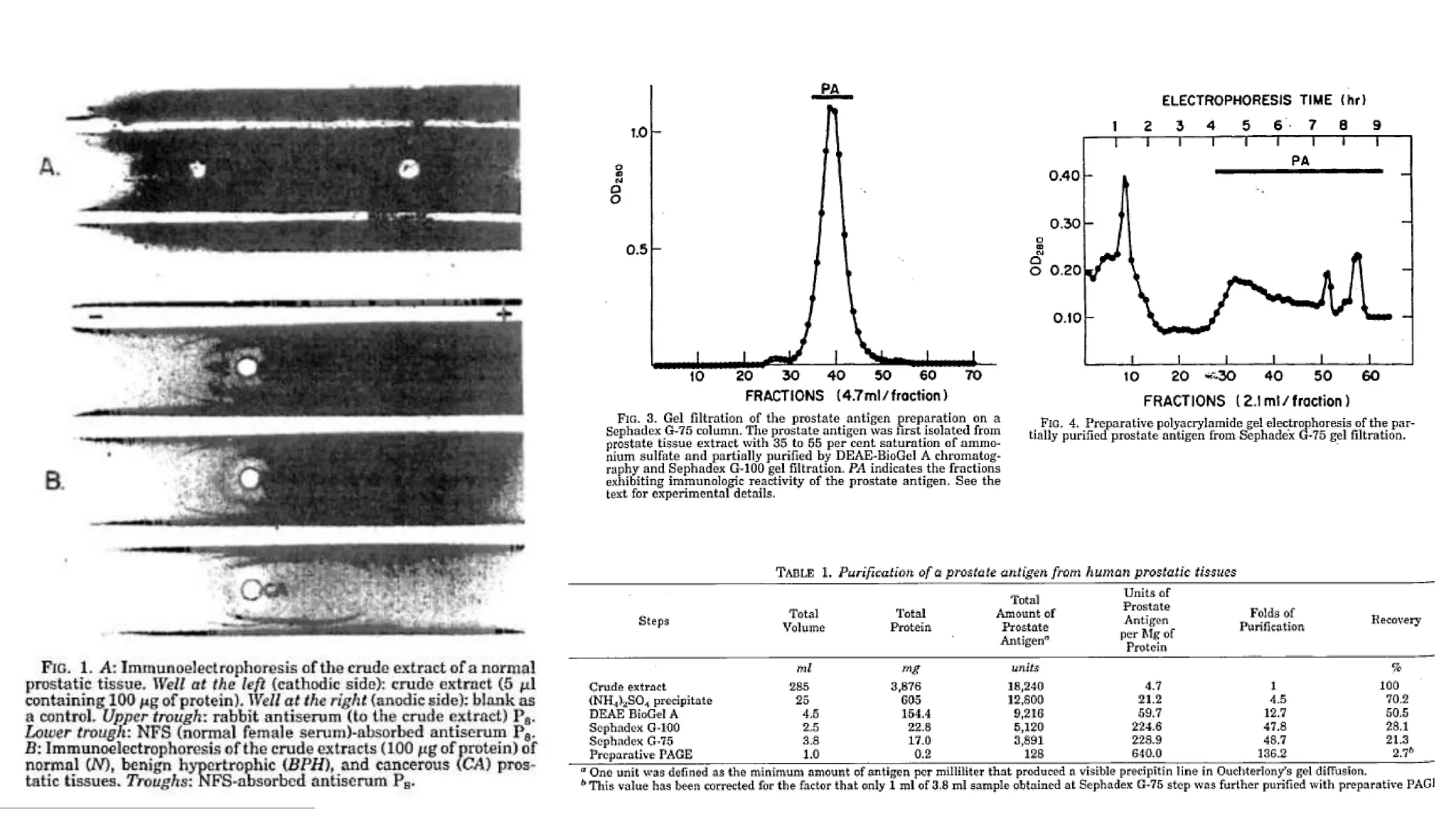
  • #8 Here are some figures from that original article. Briefly, the authors collected normal, benign and malignant human prostate tissue from men at autopsy and from the operating room. Tissue extracts were used to immunize female rabbits. The resulting antibodies were purified and found to identify a single protein band on immuno-gel analysis (LEFT). The protein was characterized with chromatography and electrophoresis and purified through various methods (RIGHT). Importantly, Wang and Chu showed that PSA differed immunologically and chemically from prostatic acid phosphatase (PAP), which had been used since the late 1930s.
  • #9 Stamey from Stanford University carried out the initial work on the clinical use of PSA as a marker of prostate cancer, and published his landmark study in the New England Journal in 1987. This study used the newly released first commercial PSA test, the Hybritech Tandem, which came out in 1986. This group analysed 2200 serum samples from 699 patients, 378 of whom had known prostate cancer.
  • #10 In men with prostate cancer (LEFT), Stamey showed that serum PSA levels correlated with the advancing stage of disease and was proportional to the estimated volume of the tumor. They also showed that PSA reached undetectable levels in the serum after radical prostatectomy with a half-life of ≈ 2 days (RIGHT) and seemed to be a better tumor marker than prostatic acid phosphatase. They suggested that PSA could be a useful marker to monitor the response of prostate cancer to therapy, and could serve as a marker for residual or recurrent disease.
  • #11 With the knowledge that PSA is secreted exclusively by prostatic epithelial cells and its serum concentration is increased in men with prostate cancer, Catalona and Andriole set out to evaluate its usefulness in screening of prostate cancer. To do this, they measured serum PSA concentrations in 1653 healthy men >50 years old. Those with PSA >4.0 underwent rectal exam and ultrasound. TRUS prostate biopsy (unclear # of cores) was performed in men with abnormal DRE, US or both. The results were compared with those in 300 men who underwent biopsy because of symptoms or abnormal DRE.
  • #13 The study concluded that combination of PSA and DRE provided the best method of detecting prostate cancer. Accuracy is the proportion of true results (both true positives and true negatives) among the total number of cases examined.
  • #14 Catalona’s next study, conducted 1991-1992 and published in 1994 looked closer at PSA’s emerging role as a cancer screening test. He aimed to compare the efficacy of DRE and PSA for the early detection of CaP. This was a prospective clinical trial of 6630 men ≥50 years old recruited at 6 centers who underwent PSA testing and DRE. Ultrasound guided Quadrant biopsies were performed if PSA level was greater than 4 ug/L or DRE was suspicious.
  • #15 Of those 6630 men, overall 15% of men had PSA >4, 15% had suspicious DRE and 26% had suspicious findings on either or both tests. Of 1167 biopsies performed (68% of those with suspicious findings) and CaP was detected in 264 (23%). PSA detected significantly more tumors (82%, 216 of 264) than DRE (55%, 146 of 264). Overall cancer detection rate was 3.2% for DRE, 4.6% for PSA , and 5.8% for combination. That translates to a postive predictive value (RIGHT) was 31.5% for PSA>4, 21.4% for DRE alone and 54.7% for the combination. The study concluded that the use of PSA with DRE enhanced early CaP detection and that biopsy should be considered if PSA is >4 or DRE is suspciious. Positive predictive value is the probability that subjects with a positive screening test truly have the disease (=True postiives / total postive calls)
  • #16 These findings led to the FDA approval of PSA for prostate cancer screening in men over 50 in 1994.
  • #17 Meanwhile, the two major trials for prostate cancer population screening using PSA were just getting of the ground… Next time we’ll get into the weeds on these two trials and review the study details, results and controversies…
  • #19 Polyp prevention trial – randomized multicenter trial designed to study effects of a low fat / high fiber diet on development of colon adenomas.
  • #21 The authors concluded that an isolated elevation in PSA>4 should be confirmed several weeks later before proceeding to biopsy or further testing.
  • #22 In men without prostate cancer, serum PSA reflects the amount of glandular epithelium, which in turn reflects prostate size. So as prostate size increases with increasing age, the PSA concentration also rises, and it increases at a faster rate in elderly men. Oesterling looked at the population in Olmsted County at Mayo Clinic and found for a healthy 60-year-old man with no evidence of prostate cancer, the serum PSA concentration increases by approximately 3.2% per year (0.04 ng/mL per year). This paper lead to the suggestion of age-specific PSA reference ranges. Of course, use of a higher upper range of normal for older men reduces the sensitivity of serum PSA testing for the detection of early prostate cancer, while increasing specificity. 
  • #23 Men without cancer from different ethnic and racial groups have different average PSA concentrations. In particular, black men without prostate cancer tend to have higher PSA values than white men without prostate cancer.  Morgan studied men with and without known prostate cancer to determine age and race-specific reference ranges. The utility of this approach remains unclear and it is not commonly used in practice.
  • #24 5-alpha-reductase Inhibitors (Finasteride and dutasteride) produce a 50% or greater decrease in serum PSA during the first three to six months of therapy, which persists as long as the drug is continued. The PCPT and REDUCE prostate cancer prevention trials, which will be discussed in more detail in a couple of weeks, suggested that PSA values should be corrected by a factor of 2 for the first two years after starting 5ARI and a factor of 2.5 for long term use.
  • #26 The most common explanation for an elevated serum PSA is BPH because of the very high prevalence of this condition in men over the age of 50. One study determined that prostate size accounted for 23 percent of the variance in serum PSA concentration. Unfortunately, serum PSA levels overlap considerably in men with BPH and those with prostate cancer.