Enactus HK Workshop Series:
Prototyping and
Piloting
Organized by Funded by Supported by
2020-01-13
Speaker
Mr Kyle SI
Co-founder, Equinox Education
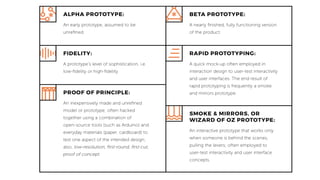
Prototyping
• Prototyping for products
• Prototyping for services
Some definitions…
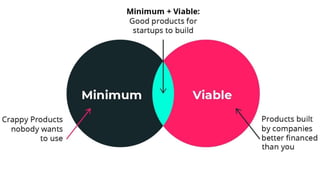
• Compared to the minimum viable product (MVP), which is a
minimum usable version of the product and includes the core
functionality, the prototype doesn’t perform anything. It is just an
image of your future app.
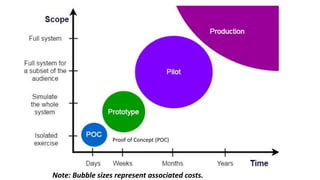
Note: Bubble sizes represent associated costs.
Proof of Concept (POC)
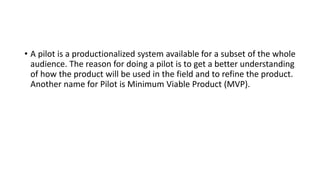
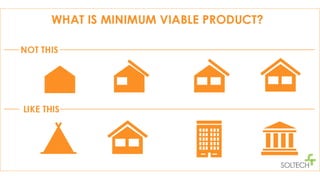
• A pilot is a productionalized system available for a subset of the whole
audience. The reason for doing a pilot is to get a better understanding
of how the product will be used in the field and to refine the product.
Another name for Pilot is Minimum Viable Product (MVP).
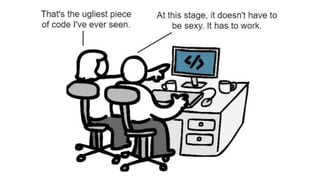
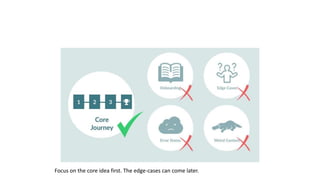
Focus on the core idea first. The edge-cases can come later.
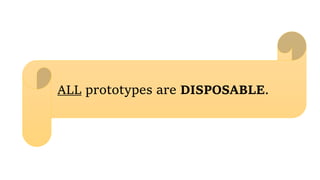
ALL prototypes are DISPOSABLE.
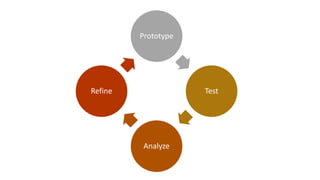
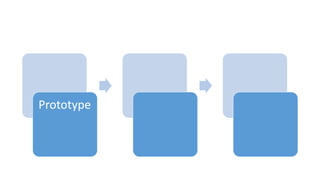
Prototype
Test
Analyze
Refine
Prototype
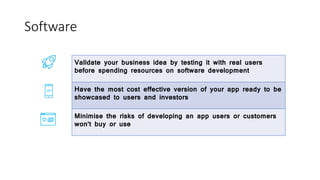
Software
Validate your business idea by testing it with real users
before spending resources on software development
Have the most cost effective version of your app ready to be
showcased to users and investors
Minimise the risks of developing an app users or customers
won’t buy or use
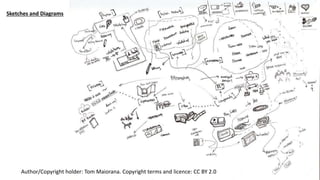
Author/Copyright holder: Tom Maiorana. Copyright terms and licence: CC BY 2.0
Sketches and Diagrams
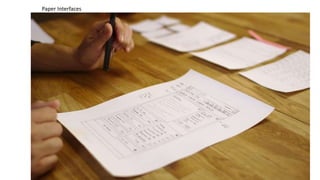
Paper Interfaces
Storyboards
Role-Playing
User-Driven Prototypes
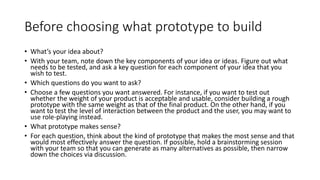
Before choosing what prototype to build
• What’s your idea about?
• With your team, note down the key components of your idea or ideas. Figure out what
needs to be tested, and ask a key question for each component of your idea that you
wish to test.
• Which questions do you want to ask?
• Choose a few questions you want answered. For instance, if you want to test out
whether the weight of your product is acceptable and usable, consider building a rough
prototype with the same weight as that of the final product. On the other hand, if you
want to test the level of interaction between the product and the user, you may want to
use role-playing instead.
• What prototype makes sense?
• For each question, think about the kind of prototype that makes the most sense and that
would most effectively answer the question. If possible, hold a brainstorming session
with your team so that you can generate as many alternatives as possible, then narrow
down the choices via discussion.
• People – including those whom you are testing and the observers
• Objects – static and interactive, including the prototype and other
objects the people and/or prototype interact/s with
• Location – places and environments
• Interactions – digital or physical, between people, objects and the
location
• “It’s impossible to be awesome at everything all the time, so it’s
critical to identify the key moments that matter in the experience.”
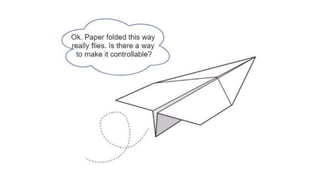
• A prototype is an early sample, model, or release of a product built to
test a concept or process, or to act as a thing to be replicated or
learned from
• We can apply this definition to the information technology sphere as
well. Compared to the minimum viable product (MVP), which is a
minimum usable version of the product and includes the core
functionality, the prototype doesn’t perform anything. It is just an
image of your future app.
•
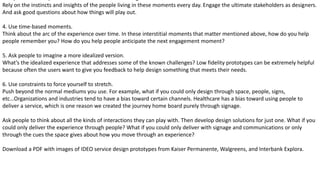
Rely on the instincts and insights of the people living in these moments every day. Engage the ultimate stakeholders as designers.
And ask good questions about how things will play out.
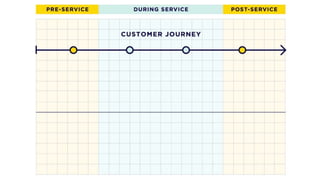
4. Use time-based moments.
Think about the arc of the experience over time. In these interstitial moments that matter mentioned above, how do you help
people remember you? How do you help people anticipate the next engagement moment?
5. Ask people to imagine a more idealized version.
What’s the idealized experience that addresses some of the known challenges? Low fidelity prototypes can be extremely helpful
because often the users want to give you feedback to help design something that meets their needs.
6. Use constraints to force yourself to stretch.
Push beyond the normal mediums you use. For example, what if you could only design through space, people, signs,
etc…Organizations and industries tend to have a bias toward certain channels. Healthcare has a bias toward using people to
deliver a service, which is one reason we created the journey home board purely through signage.
Ask people to think about all the kinds of interactions they can play with. Then develop design solutions for just one. What if you
could only deliver the experience through people? What if you could only deliver with signage and communications or only
through the cues the space gives about how you move through an experience?
Download a PDF with images of IDEO service design prototypes from Kaiser Permanente, Walgreens, and Interbank Explora.
Wireframe
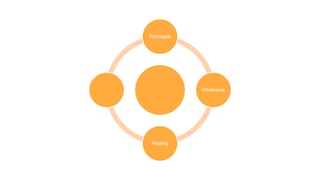
Prototype
Wireframe
Piloting
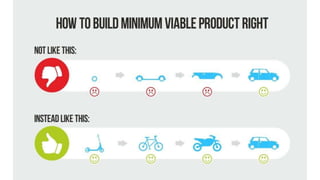
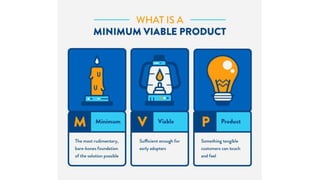
An MVP has three key characteristics:
It has enough value that people are willing to use it or buy
it initially.
It demonstrates enough future benefit to retain early
adopters.
It provides a feedback loop to guide future development.
SWEETWORXX Brings Car Repair Mobile
https://www.youtube.com/watch?v=44JjJcJLK5Q
https://www.youtube.com/watch?v=_xKLW6xYukc
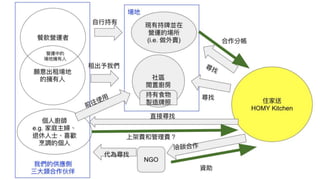
行多步實驗室 @深水埗 預告 Healthy Street Lab @Shum
Shui Po Trailer
https://www.ted.com/talks/lian_pin_koh_a_drone_s_eye_v
iew_of_conservation/transcript#t-713412
A Drone-eye’s view of conservation
8:16-11:27
2:02-
0:53-3:53
Build a tower, build a team
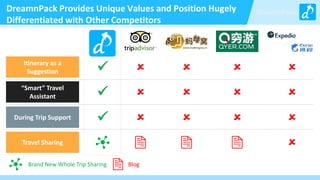
DreamnPackDreamnPack Provides Unique Values and Position Hugely
Differentiated with Other Competitors
 
 
Brand New Whole Trip Sharing Blog
 
Itinerary as a
Suggestion
During Trip Support
“Smart” Travel
Assistant
Travel Sharing










青兒教育 Equinox Education

Prototyping and Piloting

  • 1.
    Enactus HK WorkshopSeries: Prototyping and Piloting Organized by Funded by Supported by 2020-01-13 Speaker Mr Kyle SI Co-founder, Equinox Education
  • 3.
    Prototyping • Prototyping forproducts • Prototyping for services
  • 4.
    Some definitions… • Comparedto the minimum viable product (MVP), which is a minimum usable version of the product and includes the core functionality, the prototype doesn’t perform anything. It is just an image of your future app.
  • 5.
    Note: Bubble sizesrepresent associated costs. Proof of Concept (POC)
  • 8.
    • A pilotis a productionalized system available for a subset of the whole audience. The reason for doing a pilot is to get a better understanding of how the product will be used in the field and to refine the product. Another name for Pilot is Minimum Viable Product (MVP).
  • 10.
    Focus on thecore idea first. The edge-cases can come later.
  • 11.
    ALL prototypes areDISPOSABLE.
  • 12.
  • 13.
  • 14.
    Software Validate your businessidea by testing it with real users before spending resources on software development Have the most cost effective version of your app ready to be showcased to users and investors Minimise the risks of developing an app users or customers won’t buy or use
  • 15.
    Author/Copyright holder: TomMaiorana. Copyright terms and licence: CC BY 2.0 Sketches and Diagrams
  • 16.
  • 17.
  • 18.
  • 19.
  • 20.
    Before choosing whatprototype to build • What’s your idea about? • With your team, note down the key components of your idea or ideas. Figure out what needs to be tested, and ask a key question for each component of your idea that you wish to test. • Which questions do you want to ask? • Choose a few questions you want answered. For instance, if you want to test out whether the weight of your product is acceptable and usable, consider building a rough prototype with the same weight as that of the final product. On the other hand, if you want to test the level of interaction between the product and the user, you may want to use role-playing instead. • What prototype makes sense? • For each question, think about the kind of prototype that makes the most sense and that would most effectively answer the question. If possible, hold a brainstorming session with your team so that you can generate as many alternatives as possible, then narrow down the choices via discussion.
  • 21.
    • People –including those whom you are testing and the observers • Objects – static and interactive, including the prototype and other objects the people and/or prototype interact/s with • Location – places and environments • Interactions – digital or physical, between people, objects and the location
  • 22.
    • “It’s impossibleto be awesome at everything all the time, so it’s critical to identify the key moments that matter in the experience.”
  • 23.
    • A prototypeis an early sample, model, or release of a product built to test a concept or process, or to act as a thing to be replicated or learned from
  • 24.
    • We canapply this definition to the information technology sphere as well. Compared to the minimum viable product (MVP), which is a minimum usable version of the product and includes the core functionality, the prototype doesn’t perform anything. It is just an image of your future app. •
  • 26.
    Rely on theinstincts and insights of the people living in these moments every day. Engage the ultimate stakeholders as designers. And ask good questions about how things will play out. 4. Use time-based moments. Think about the arc of the experience over time. In these interstitial moments that matter mentioned above, how do you help people remember you? How do you help people anticipate the next engagement moment? 5. Ask people to imagine a more idealized version. What’s the idealized experience that addresses some of the known challenges? Low fidelity prototypes can be extremely helpful because often the users want to give you feedback to help design something that meets their needs. 6. Use constraints to force yourself to stretch. Push beyond the normal mediums you use. For example, what if you could only design through space, people, signs, etc…Organizations and industries tend to have a bias toward certain channels. Healthcare has a bias toward using people to deliver a service, which is one reason we created the journey home board purely through signage. Ask people to think about all the kinds of interactions they can play with. Then develop design solutions for just one. What if you could only deliver the experience through people? What if you could only deliver with signage and communications or only through the cues the space gives about how you move through an experience? Download a PDF with images of IDEO service design prototypes from Kaiser Permanente, Walgreens, and Interbank Explora.
  • 27.
  • 28.
  • 29.
    An MVP hasthree key characteristics: It has enough value that people are willing to use it or buy it initially. It demonstrates enough future benefit to retain early adopters. It provides a feedback loop to guide future development.
  • 35.
    SWEETWORXX Brings CarRepair Mobile https://www.youtube.com/watch?v=44JjJcJLK5Q
  • 36.
  • 37.
  • 38.
  • 39.
    DreamnPackDreamnPack Provides UniqueValues and Position Hugely Differentiated with Other Competitors     Brand New Whole Trip Sharing Blog   Itinerary as a Suggestion During Trip Support “Smart” Travel Assistant Travel Sharing          
  • 41.

Editor's Notes

  • #3 https://www.quora.com/What-is-a-prototype-in-startup
  • #10 https://justuxdesign.com/blog/the-art-of-efficient-prototyping
  • #16 https://www.interaction-design.org/literature/article/prototyping-learn-eight-common-methods-and-best-practices
  • #27 https://www.ideou.com/blogs/inspiration/6-tips-for-how-to-prototype-a-service
  • #28 https://justuxdesign.com/blog/wireframe-fidelity
  • #30 https://www.techopedia.com/definition/27809/minimum-viable-product-mvp
  • #32 https://www.ideo.com/blog/3-tips-to-help-you-prototype-a-service
  • #39 https://www.ted.com/talks/tom_wujec_build_a_tower_build_a_team/transcript#t-51930