


PROTOCOL
Presented by;
Aiswarya . A. T,
First year M.Pharm,
Department of Pharmacy Practice,
Grace college of Pharmacy.
A research protocol is a document that
describes the background, rationale,
objectives, design, methodology, statistical
considerations, and organization of a
clinical research project.
The protocol contains a study plan on
which the clinical trial is based.
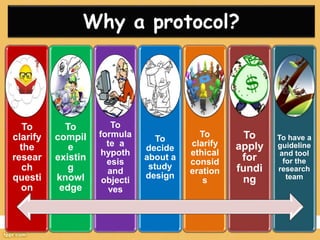
Why a protocol?
To
clarify
the
resear
ch
questi
on
To
compil
e
existin
g
knowl
edge
To
formula
te a
hypoth
esis
and
objecti
ves
To
decide
about a
study
design
To
clarify
ethical
consid
eration
s
To
apply
for
fundi
ng
To have a
guideline
and tool
for the
research
team
1. General Information
Protocol
Sponsor
Persons authorized to sign the protocol
Sponsor's medical expert
Investigator
Clinical laboratory and other medical &
technical departments & institutions involved
in the trial.
2. Background Information
Investigational product
Summary of findings from nonclinical studies
Risks and benefits
Description
GCP
Population
References to literature and data that are relevant
3. Trial Objectives and Purpose
Hypothesis
Primary Objectives
Secondary Objectives
Potential Risks and benefits
4. Trial Design
Endpoints
Type/design of trial to be conducted
a) Randomization.
b) Blinding
Trial treatment
Duration of subject participation
Stopping rules" or "discontinuation criteria
Accountability procedures
5. Selection and Withdrawal
of Subjects
Subject inclusion criteria
Subject exclusion criteria
Subject withdrawal criteria
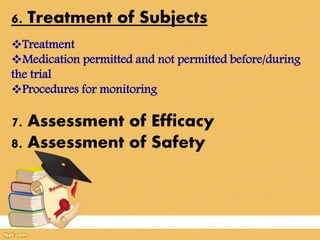
6. Treatment of Subjects
Treatment
Medication permitted and not permitted before/during
the trial
Procedures for monitoring
7. Assessment of Efficacy
8. Assessment of Safety
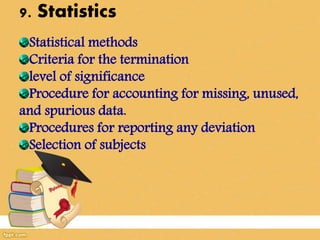
9. Statistics
Statistical methods
Criteria for the termination
level of significance
Procedure for accounting for missing, unused,
and spurious data.
Procedures for reporting any deviation
Selection of subjects
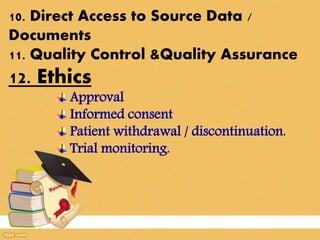
10. Direct Access to Source Data /
Documents
11. Quality Control &Quality Assurance
12. Ethics
Approval
Informed consent
Patient withdrawal / discontinuation.
Trial monitoring.
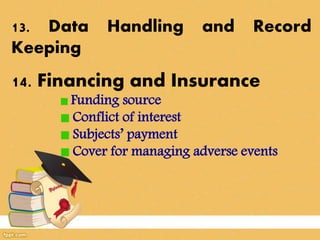
13. Data Handling and Record
Keeping
14. Financing and Insurance
Funding source
Conflict of interest
Subjects’ payment
Cover for managing adverse events
16. Project timetable/ Flowchart
17. References
18. Supplements/ Appendices
Protocol ppt

Protocol ppt

  • 1.
    PROTOCOL Presented by; Aiswarya .A. T, First year M.Pharm, Department of Pharmacy Practice, Grace college of Pharmacy.
  • 2.
    A research protocolis a document that describes the background, rationale, objectives, design, methodology, statistical considerations, and organization of a clinical research project. The protocol contains a study plan on which the clinical trial is based.
  • 3.
    Why a protocol? To clarify the resear ch questi on To compil e existin g knowl edge To formula tea hypoth esis and objecti ves To decide about a study design To clarify ethical consid eration s To apply for fundi ng To have a guideline and tool for the research team
  • 4.
    1. General Information Protocol Sponsor Personsauthorized to sign the protocol Sponsor's medical expert Investigator Clinical laboratory and other medical & technical departments & institutions involved in the trial.
  • 5.
    2. Background Information Investigationalproduct Summary of findings from nonclinical studies Risks and benefits Description GCP Population References to literature and data that are relevant
  • 6.
    3. Trial Objectivesand Purpose Hypothesis Primary Objectives Secondary Objectives Potential Risks and benefits
  • 7.
    4. Trial Design Endpoints Type/designof trial to be conducted a) Randomization. b) Blinding Trial treatment Duration of subject participation Stopping rules" or "discontinuation criteria Accountability procedures
  • 8.
    5. Selection andWithdrawal of Subjects Subject inclusion criteria Subject exclusion criteria Subject withdrawal criteria
  • 9.
    6. Treatment ofSubjects Treatment Medication permitted and not permitted before/during the trial Procedures for monitoring 7. Assessment of Efficacy 8. Assessment of Safety
  • 10.
    9. Statistics Statistical methods Criteriafor the termination level of significance Procedure for accounting for missing, unused, and spurious data. Procedures for reporting any deviation Selection of subjects
  • 11.
    10. Direct Accessto Source Data / Documents 11. Quality Control &Quality Assurance 12. Ethics Approval Informed consent Patient withdrawal / discontinuation. Trial monitoring.
  • 12.
    13. Data Handlingand Record Keeping 14. Financing and Insurance Funding source Conflict of interest Subjects’ payment Cover for managing adverse events
  • 13.
    16. Project timetable/Flowchart 17. References 18. Supplements/ Appendices

Editor's Notes

  • #4 Study design – causal relationship between exposure and outcome is relevant Ethical considerations - in new TB drugs I still need to cure the patients Order is not relevant