Clinical Biochemistry
Dr. Ali Raza
Senior Lecturer
Centre for Human Genetics and Molecular Medicine (CHGMM),
Sindh Institute of Medical Sciences (SIMS), SIUT.
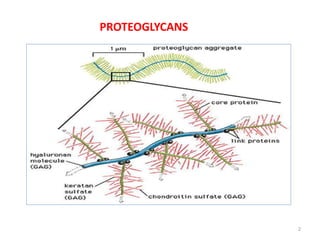
PROTEOGLYCANS
2
• Carbohydrate content varies in combination with proteins.
• Carbohydrate is > 4 per cent, called Mucoproteins
• Carbohydrate is < 4 per cent, called Glycoproteins
• The amount of carbohydrates is ~ 95%, Proteoglycan
3
PROTEOGLYCANS
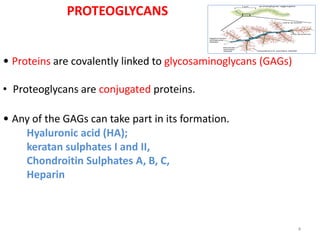
• Proteins are covalently linked to glycosaminoglycans (GAGs)
• Proteoglycans are conjugated proteins.
• Any of the GAGs can take part in its formation.
Hyaluronic acid (HA);
keratan sulphates I and II,
Chondroitin Sulphates A, B, C,
Heparin
4
Proteoglycan (Linkages)
Three types of linkages between GAG and protein is observed.
• O-glycosidic linkage: between N-acetyl galactosamine and serine or
threonine of the protein.
Example: keratan SO4 II
• O-glycosidic linkage: Formed between xylose and serine of the
protein.
This bond is unique to proteoglycans.
• N-glycosylamine linkage: Formed between N-acetyl glucosamine
and amide N of asparagine (ASn) of core protein.
Example: keratan SO4I and N-linked glycoproteins.
5
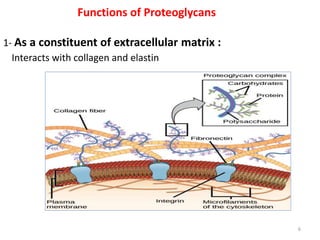
Functions of Proteoglycans
1- As a constituent of extracellular matrix :
Interacts with collagen and elastin
6
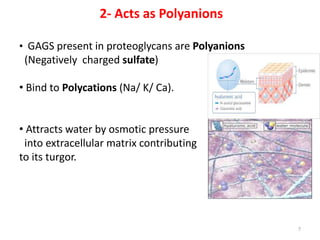
2- Acts as Polyanions
• GAGS present in proteoglycans are Polyanions
(Negatively charged sulfate)
• Bind to Polycations (Na/ K/ Ca).
• Attracts water by osmotic pressure
into extracellular matrix contributing
to its turgor.
7
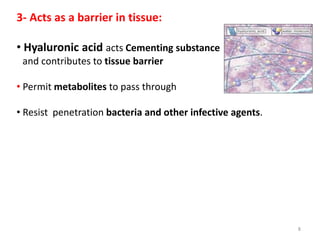
3- Acts as a barrier in tissue:
• Hyaluronic acid acts Cementing substance
and contributes to tissue barrier
• Permit metabolites to pass through
• Resist penetration bacteria and other infective agents.
8
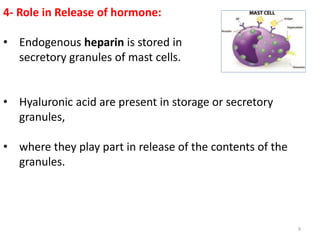
4- Role in Release of hormone:
• Endogenous heparin is stored in
secretory granules of mast cells.
• Hyaluronic acid are present in storage or secretory
granules,
• where they play part in release of the contents of the
granules.
9
5- Role in cell migration in embryonic tissues:
• Hyaluronic acid is present in high conc. in embryonic
tissues
• Role in cell migration during Morphogenesis
and Wound repair.
10
6- Role in Glomerular filtration:
• Hyaluronic acid is present in basement membrane (BM) of
glomerulus of kidney
• where it plays important role in charge selectiveness of glomerular
filtration.
11
7- Role as anticoagulant
• heparin is an important anticoagulant
• It binds with factor IX and XI, plasma antithrombin III
• fibrinogen is not converted to fibrin.
12
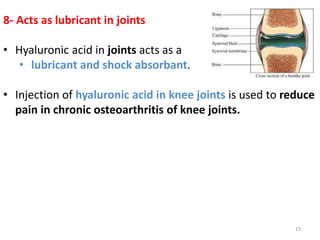
8- Acts as lubricant in joints
• Hyaluronic acid in joints acts as a
• lubricant and shock absorbant.
• Injection of hyaluronic acid in knee joints is used to reduce
pain in chronic osteoarthritis of knee joints.
13
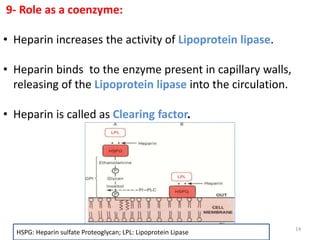
9- Role as a coenzyme:
• Heparin increases the activity of Lipoprotein lipase.
• Heparin binds to the enzyme present in capillary walls,
releasing of the Lipoprotein lipase into the circulation.
• Heparin is called as Clearing factor.
HSPG: Heparin sulfate Proteoglycan; LPL: Lipoprotein Lipase
14
10- As a Receptor of cell
• Proteoglycans like heparan sulphate are components of plasma
membrane of cells
• They act as receptors and participate in cell adhesion and cell-cell
interactions.
15
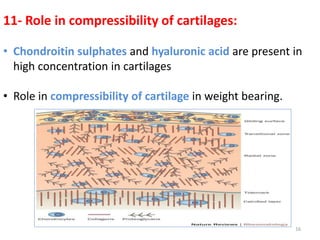
11- Role in compressibility of cartilages:
• Chondroitin sulphates and hyaluronic acid are present in
high concentration in cartilages
• Role in compressibility of cartilage in weight bearing.
16
12- Role in sclera of eye:
• Dermatan sulphate is present in sclera of the eye
• Maintaining overall shape of the eye.
17
18
Reference:
Textbook Medical Biochemistry by Chatterjea,
Eight Edition, Chapter 3
https://www.amazon.com/Textbook-Medical-Biochemistry-M-D-
Chatterjea/dp/9350254840

Proteoglycan

  • 1.
    Clinical Biochemistry Dr. AliRaza Senior Lecturer Centre for Human Genetics and Molecular Medicine (CHGMM), Sindh Institute of Medical Sciences (SIMS), SIUT.
  • 2.
  • 3.
    • Carbohydrate contentvaries in combination with proteins. • Carbohydrate is > 4 per cent, called Mucoproteins • Carbohydrate is < 4 per cent, called Glycoproteins • The amount of carbohydrates is ~ 95%, Proteoglycan 3
  • 4.
    PROTEOGLYCANS • Proteins arecovalently linked to glycosaminoglycans (GAGs) • Proteoglycans are conjugated proteins. • Any of the GAGs can take part in its formation. Hyaluronic acid (HA); keratan sulphates I and II, Chondroitin Sulphates A, B, C, Heparin 4
  • 5.
    Proteoglycan (Linkages) Three typesof linkages between GAG and protein is observed. • O-glycosidic linkage: between N-acetyl galactosamine and serine or threonine of the protein. Example: keratan SO4 II • O-glycosidic linkage: Formed between xylose and serine of the protein. This bond is unique to proteoglycans. • N-glycosylamine linkage: Formed between N-acetyl glucosamine and amide N of asparagine (ASn) of core protein. Example: keratan SO4I and N-linked glycoproteins. 5
  • 6.
    Functions of Proteoglycans 1-As a constituent of extracellular matrix : Interacts with collagen and elastin 6
  • 7.
    2- Acts asPolyanions • GAGS present in proteoglycans are Polyanions (Negatively charged sulfate) • Bind to Polycations (Na/ K/ Ca). • Attracts water by osmotic pressure into extracellular matrix contributing to its turgor. 7
  • 8.
    3- Acts asa barrier in tissue: • Hyaluronic acid acts Cementing substance and contributes to tissue barrier • Permit metabolites to pass through • Resist penetration bacteria and other infective agents. 8
  • 9.
    4- Role inRelease of hormone: • Endogenous heparin is stored in secretory granules of mast cells. • Hyaluronic acid are present in storage or secretory granules, • where they play part in release of the contents of the granules. 9
  • 10.
    5- Role incell migration in embryonic tissues: • Hyaluronic acid is present in high conc. in embryonic tissues • Role in cell migration during Morphogenesis and Wound repair. 10
  • 11.
    6- Role inGlomerular filtration: • Hyaluronic acid is present in basement membrane (BM) of glomerulus of kidney • where it plays important role in charge selectiveness of glomerular filtration. 11
  • 12.
    7- Role asanticoagulant • heparin is an important anticoagulant • It binds with factor IX and XI, plasma antithrombin III • fibrinogen is not converted to fibrin. 12
  • 13.
    8- Acts aslubricant in joints • Hyaluronic acid in joints acts as a • lubricant and shock absorbant. • Injection of hyaluronic acid in knee joints is used to reduce pain in chronic osteoarthritis of knee joints. 13
  • 14.
    9- Role asa coenzyme: • Heparin increases the activity of Lipoprotein lipase. • Heparin binds to the enzyme present in capillary walls, releasing of the Lipoprotein lipase into the circulation. • Heparin is called as Clearing factor. HSPG: Heparin sulfate Proteoglycan; LPL: Lipoprotein Lipase 14
  • 15.
    10- As aReceptor of cell • Proteoglycans like heparan sulphate are components of plasma membrane of cells • They act as receptors and participate in cell adhesion and cell-cell interactions. 15
  • 16.
    11- Role incompressibility of cartilages: • Chondroitin sulphates and hyaluronic acid are present in high concentration in cartilages • Role in compressibility of cartilage in weight bearing. 16
  • 17.
    12- Role insclera of eye: • Dermatan sulphate is present in sclera of the eye • Maintaining overall shape of the eye. 17
  • 18.
    18 Reference: Textbook Medical Biochemistryby Chatterjea, Eight Edition, Chapter 3 https://www.amazon.com/Textbook-Medical-Biochemistry-M-D- Chatterjea/dp/9350254840

Editor's Notes

  • #16 Syndecans are single transmembrane domain proteins that are thought to act as coreceptors, especially for G protein-coupled receptors.
  • #17 The sclera, also known as the white of the eye, is the opaque, fibrous, protective, outer layer of the eye containing mainly collagen and some elastic fiber.
  • #18 The sclera, also known as the white of the eye, is the opaque, fibrous, protective, outer layer of the eye containing mainly collagen and some elastic fiber.