SPAIN
Where’s Spain?
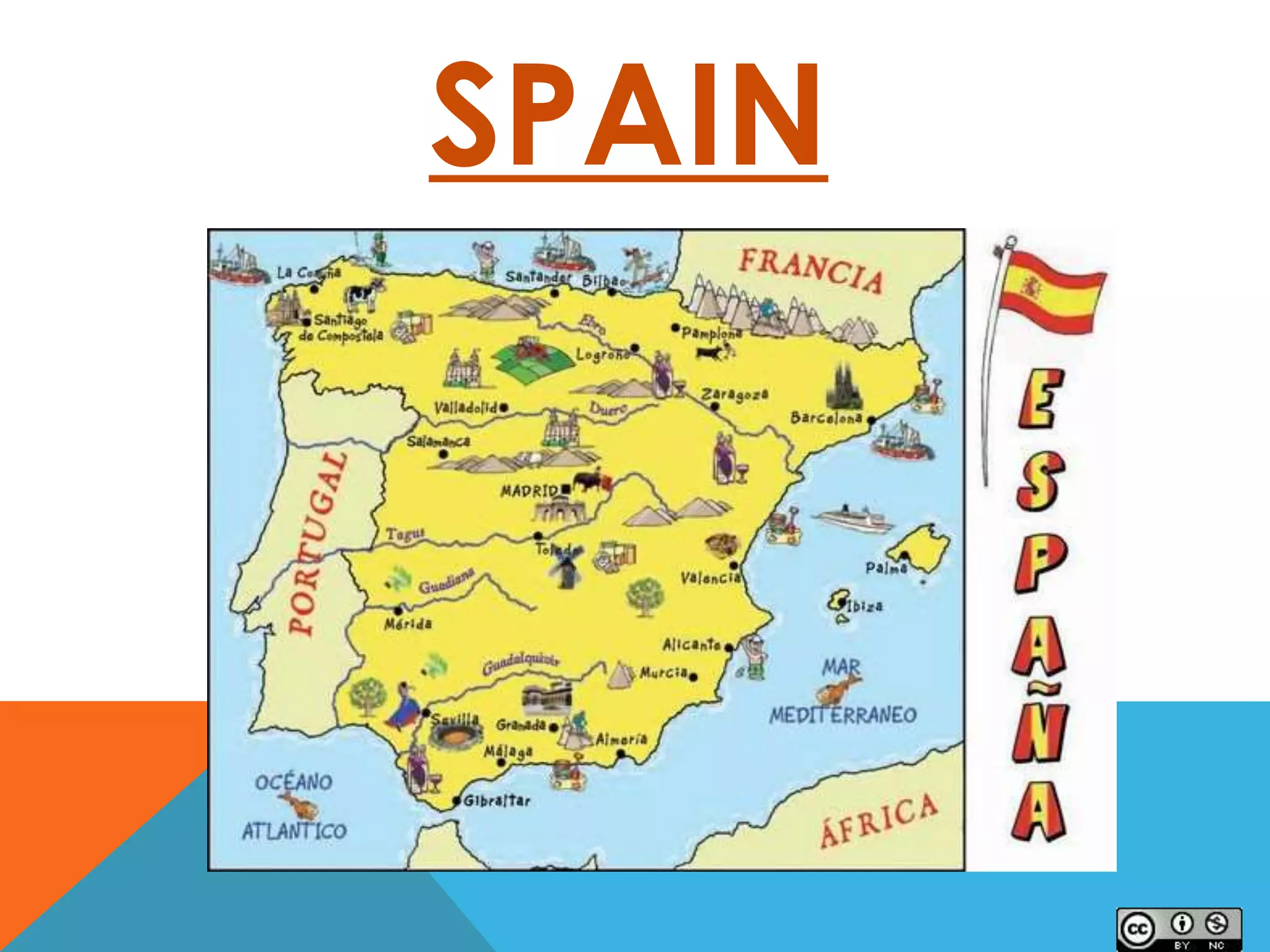
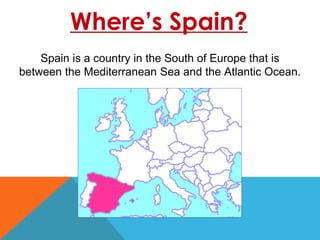
Spain is a country in the South of Europe that is
between the Mediterranean Sea and the Atlantic Ocean.
History
● Spain was inhabited by the Iberians, Celts,
Phoenicians, Greeks, Carthaginians, Romans,
Visigoths, Muslims…
● In Spain apart from Spanish, there are several co-
official languages such as Galician, Basque and
Catalan.
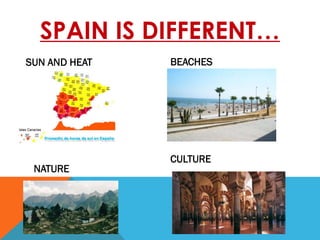
SPAIN IS DIFFERENT…
SUN AND HEAT BEACHES
NATURE
CULTURE
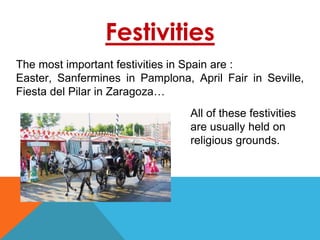
Festivities
The most important festivities in Spain are :
Easter, Sanfermines in Pamplona, April Fair in Seville,
Fiesta del Pilar in Zaragoza…
All of these festivities
are usually held on
religious grounds.
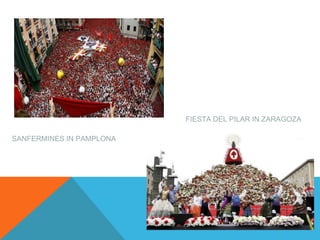
SANFERMINES IN PAMPLONA
FIESTA DEL PILAR IN ZARAGOZA
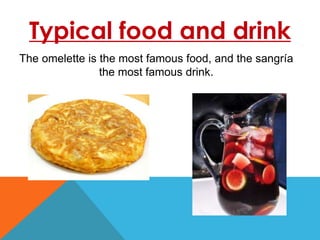
Typical food and drink
The omelette is the most famous food, and the sangría
the most famous drink.
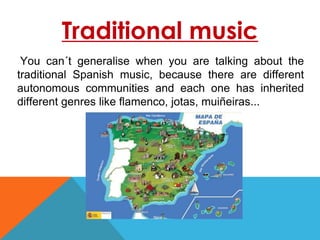
Traditional music
You can´t generalise when you are talking about the
traditional Spanish music, because there are different
autonomous communities and each one has inherited
different genres like flamenco, jotas, muiñeiras...
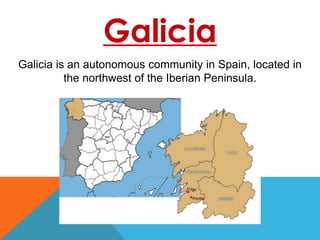
Galicia
Galicia is an autonomous community in Spain, located in
the northwest of the Iberian Peninsula.
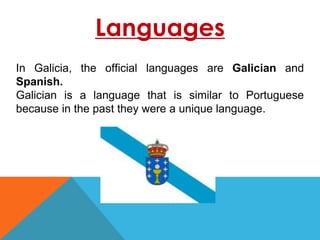
Languages
In Galicia, the official languages are Galician and
Spanish.
Galician is a language that is similar to Portuguese
because in the past they were a unique language.
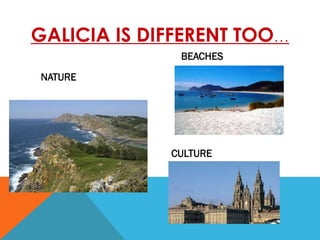
GALICIA IS DIFFERENT TOO…
BEACHES
NATURE
CULTURE
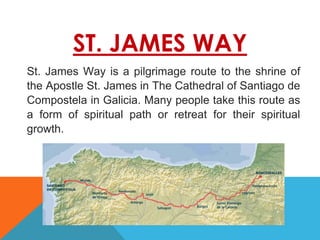
ST. JAMES WAY
St. James Way is a pilgrimage route to the shrine of
the Apostle St. James in The Cathedral of Santiago de
Compostela in Galicia. Many people take this route as
a form of spiritual path or retreat for their spiritual
growth.
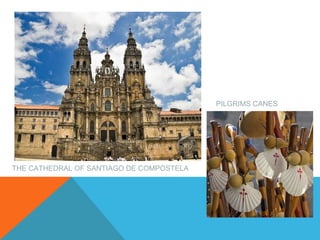
THE CATHEDRAL OF SANTIAGO DE COMPOSTELA
PILGRIMS CANES
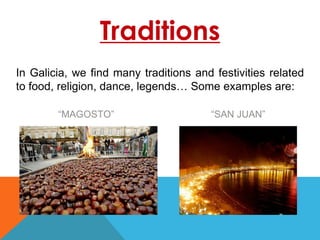
Traditions
In Galicia, we find many traditions and festivities related
to food, religion, dance, legends… Some examples are:
“MAGOSTO” “SAN JUAN”
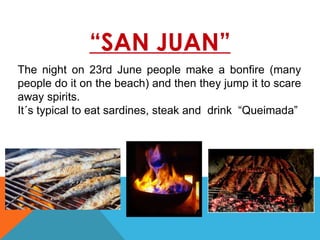
“SAN JUAN”
The night on 23rd June people make a bonfire (many
people do it on the beach) and then they jump it to scare
away spirits.
It´s typical to eat sardines, steak and drink “Queimada”
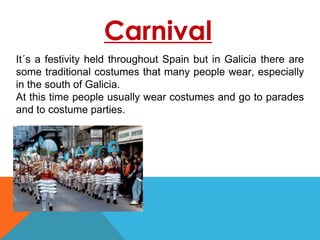
Carnival
It´s a festivity held throughout Spain but in Galicia there are
some traditional costumes that many people wear, especially
in the south of Galicia.
At this time people usually wear costumes and go to parades
and to costume parties.
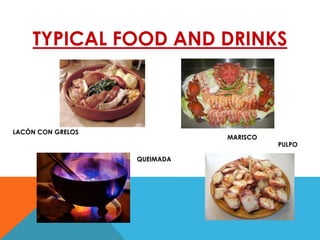
TYPICAL FOOD AND DRINKS
LACÓN CON GRELOS
MARISCO
PULPO
QUEIMADA
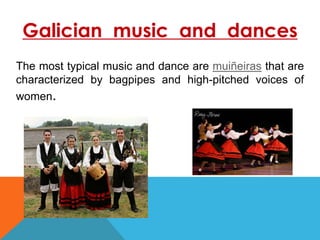
Galician music and dances
The most typical music and dance are muiñeiras that are
characterized by bagpipes and high-pitched voices of
women.
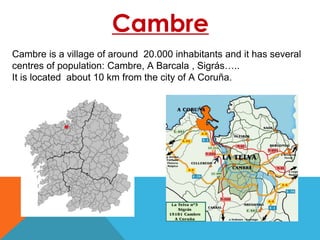
Cambre
Cambre is a village of around 20.000 inhabitants and it has several
centres of population: Cambre, A Barcala , Sigrás…..
It is located about 10 km from the city of A Coruña.
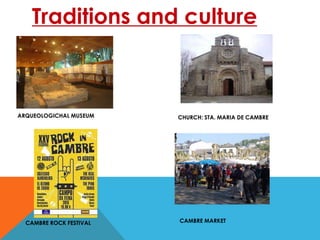
Traditions and culture
CHURCH: STA. MARIA DE CAMBREARQUEOLOGICHAL MUSEUM
CAMBRE ROCK FESTIVAL CAMBRE MARKET
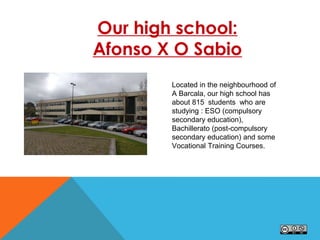
Our high school:
Afonso X O Sabio
Located in the neighbourhood of
A Barcala, our high school has
about 815 students who are
studying : ESO (compulsory
secondary education),
Bachillerato (post-compulsory
secondary education) and some
Vocational Training Courses.

Promo spain

  • 1.
  • 2.
    Where’s Spain? Spain isa country in the South of Europe that is between the Mediterranean Sea and the Atlantic Ocean.
  • 3.
    History ● Spain wasinhabited by the Iberians, Celts, Phoenicians, Greeks, Carthaginians, Romans, Visigoths, Muslims… ● In Spain apart from Spanish, there are several co- official languages such as Galician, Basque and Catalan.
  • 4.
    SPAIN IS DIFFERENT… SUNAND HEAT BEACHES NATURE CULTURE
  • 5.
    Festivities The most importantfestivities in Spain are : Easter, Sanfermines in Pamplona, April Fair in Seville, Fiesta del Pilar in Zaragoza… All of these festivities are usually held on religious grounds.
  • 6.
    SANFERMINES IN PAMPLONA FIESTADEL PILAR IN ZARAGOZA
  • 7.
    Typical food anddrink The omelette is the most famous food, and the sangría the most famous drink.
  • 8.
    Traditional music You can´tgeneralise when you are talking about the traditional Spanish music, because there are different autonomous communities and each one has inherited different genres like flamenco, jotas, muiñeiras...
  • 9.
    Galicia Galicia is anautonomous community in Spain, located in the northwest of the Iberian Peninsula.
  • 10.
    Languages In Galicia, theofficial languages are Galician and Spanish. Galician is a language that is similar to Portuguese because in the past they were a unique language.
  • 11.
    GALICIA IS DIFFERENTTOO… BEACHES NATURE CULTURE
  • 12.
    ST. JAMES WAY St.James Way is a pilgrimage route to the shrine of the Apostle St. James in The Cathedral of Santiago de Compostela in Galicia. Many people take this route as a form of spiritual path or retreat for their spiritual growth.
  • 13.
    THE CATHEDRAL OFSANTIAGO DE COMPOSTELA PILGRIMS CANES
  • 14.
    Traditions In Galicia, wefind many traditions and festivities related to food, religion, dance, legends… Some examples are: “MAGOSTO” “SAN JUAN”
  • 15.
    “SAN JUAN” The nighton 23rd June people make a bonfire (many people do it on the beach) and then they jump it to scare away spirits. It´s typical to eat sardines, steak and drink “Queimada”
  • 16.
    Carnival It´s a festivityheld throughout Spain but in Galicia there are some traditional costumes that many people wear, especially in the south of Galicia. At this time people usually wear costumes and go to parades and to costume parties.
  • 17.
    TYPICAL FOOD ANDDRINKS LACÓN CON GRELOS MARISCO PULPO QUEIMADA
  • 18.
    Galician music anddances The most typical music and dance are muiñeiras that are characterized by bagpipes and high-pitched voices of women.
  • 19.
    Cambre Cambre is avillage of around 20.000 inhabitants and it has several centres of population: Cambre, A Barcala , Sigrás….. It is located about 10 km from the city of A Coruña.
  • 20.
    Traditions and culture CHURCH:STA. MARIA DE CAMBREARQUEOLOGICHAL MUSEUM CAMBRE ROCK FESTIVAL CAMBRE MARKET
  • 21.
    Our high school: AfonsoX O Sabio Located in the neighbourhood of A Barcala, our high school has about 815 students who are studying : ESO (compulsory secondary education), Bachillerato (post-compulsory secondary education) and some Vocational Training Courses.