THE LABURNUM TOP
Auther~ Ted Hughes
Presented by~ Toshita Dhimole(39)
Itisha Kandra(15)
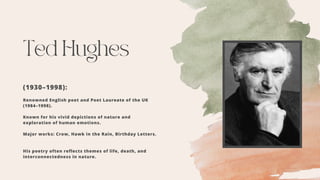
Ted Hughes
(1930–1998):
Renowned English poet and Poet Laureate of the UK
(1984–1998).
Known for his vivid depictions of nature and
exploration of human emotions.
Major works: Crow, Hawk in the Rain, Birthday Letters.
His poetry often reflects themes of life, death, and
interconnectedness in nature.
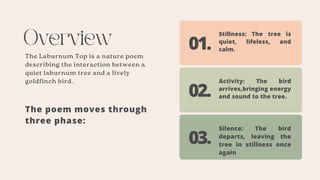
Overview
The Laburnum Top is a nature poem
describing the interaction between a
quiet laburnum tree and a lively
goldfinch bird.
The poem moves through
three phase:
01.
02.
03.
Stillness: The tree is
quiet, lifeless, and
calm.
Activity: The bird
arrives,bringing energy
and sound to the tree.
Silence: The bird
departs, leaving the
tree in stillness once
again
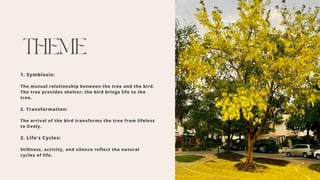
THEME
1. Symbiosis:
The mutual relationship between the tree and the bird.
The tree provides shelter; the bird brings life to the
tree.
2. Transformation:
The arrival of the bird transforms the tree from lifeless
to lively.
3. Life’s Cycles:
Stillness, activity, and silence reflect the natural
cycles of life.
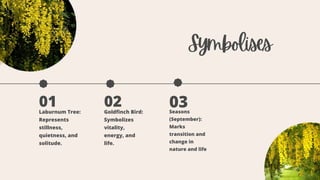
Symbolises
01 02
Laburnum Tree:
Represents
stillness,
quietness, and
solitude.
Goldfinch Bird:
Symbolizes
vitality,
energy, and
life.
03
Seasons
(September):
Marks
transition and
change in
nature and life
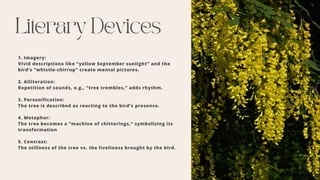
Literary Devices
1. Imagery:
Vivid descriptions like “yellow September sunlight” and the
bird’s “whistle-chirrup” create mental pictures.
2. Alliteration:
Repetition of sounds, e.g., “tree trembles,” adds rhythm.
3. Personification:
The tree is described as reacting to the bird’s presence.
4. Metaphor:
The tree becomes a “machine of chitterings,” symbolizing its
transformation
5. Contrast:
The stillness of the tree vs. the liveliness brought by the bird.
Key Messages
Life and vitality
can emerge even
from moments of
quiet stillness.
Interdependence
in nature mirrors
human
relationships.
Small actions or
connections can
bring immense
change and
meaning
Personal Interpretation
THE TREE
REPRESENTS
SOLITUDE OR
POTENTIAL
WAITING TO BE
AWAKENED.
THE BIRD SIGNIFIES
RELATIONSHIPS,
INSPIRATION, OR
CREATIVITY.
IT TEACHES US TO
VALUE QUIET
MOMENTS AS
MUCH AS BURSTS
OF ACTIVITY.
THE POEM IS A
METAPHOR FOR
HUMAN
RELATIONSHIPS:
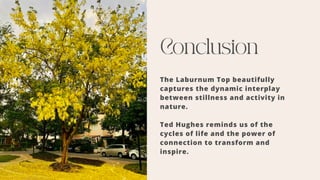
Conclusion
The Laburnum Top beautifully
captures the dynamic interplay
between stillness and activity in
nature.
Ted Hughes reminds us of the
cycles of life and the power of
connection to transform and
inspire.
THANK YOU
VERY MUCH!

Project Presentation_20250108_175135_0000.pdf

  • 1.
    THE LABURNUM TOP Auther~Ted Hughes Presented by~ Toshita Dhimole(39) Itisha Kandra(15)
  • 2.
    Ted Hughes (1930–1998): Renowned Englishpoet and Poet Laureate of the UK (1984–1998). Known for his vivid depictions of nature and exploration of human emotions. Major works: Crow, Hawk in the Rain, Birthday Letters. His poetry often reflects themes of life, death, and interconnectedness in nature.
  • 3.
    Overview The Laburnum Topis a nature poem describing the interaction between a quiet laburnum tree and a lively goldfinch bird. The poem moves through three phase: 01. 02. 03. Stillness: The tree is quiet, lifeless, and calm. Activity: The bird arrives,bringing energy and sound to the tree. Silence: The bird departs, leaving the tree in stillness once again
  • 4.
    THEME 1. Symbiosis: The mutualrelationship between the tree and the bird. The tree provides shelter; the bird brings life to the tree. 2. Transformation: The arrival of the bird transforms the tree from lifeless to lively. 3. Life’s Cycles: Stillness, activity, and silence reflect the natural cycles of life.
  • 5.
    Symbolises 01 02 Laburnum Tree: Represents stillness, quietness,and solitude. Goldfinch Bird: Symbolizes vitality, energy, and life. 03 Seasons (September): Marks transition and change in nature and life
  • 6.
    Literary Devices 1. Imagery: Vividdescriptions like “yellow September sunlight” and the bird’s “whistle-chirrup” create mental pictures. 2. Alliteration: Repetition of sounds, e.g., “tree trembles,” adds rhythm. 3. Personification: The tree is described as reacting to the bird’s presence. 4. Metaphor: The tree becomes a “machine of chitterings,” symbolizing its transformation 5. Contrast: The stillness of the tree vs. the liveliness brought by the bird.
  • 7.
    Key Messages Life andvitality can emerge even from moments of quiet stillness. Interdependence in nature mirrors human relationships. Small actions or connections can bring immense change and meaning
  • 8.
    Personal Interpretation THE TREE REPRESENTS SOLITUDEOR POTENTIAL WAITING TO BE AWAKENED. THE BIRD SIGNIFIES RELATIONSHIPS, INSPIRATION, OR CREATIVITY. IT TEACHES US TO VALUE QUIET MOMENTS AS MUCH AS BURSTS OF ACTIVITY. THE POEM IS A METAPHOR FOR HUMAN RELATIONSHIPS:
  • 9.
    Conclusion The Laburnum Topbeautifully captures the dynamic interplay between stillness and activity in nature. Ted Hughes reminds us of the cycles of life and the power of connection to transform and inspire.
  • 10.