PROJECT
METHOD
PREPARED BY
SARANYA CHANDRAN
4TH YEAR BSC NURSING
NEHRU COLLEGE OF
NURSING.
INTRODUCTION
Project method is one of the
modern method of teaching in
which, the students point of view
is given importance in designing
the curricula and content of
studies.
DEFINITION
•A Project is a problematic act carried to
completion in its natural settings.
- STEVENSON
•A Project is a whole hearted, purposeful
activity proceeding in a social
environment. - Dr. KILPATRIC
• A Project is a bit real life that has been
CHARACTERISTICS
• The method aims at teaching the child to
get the best out of life.
• It takes the student beyond the walls of
the classroom.
• It is carried out in natural setting, thus
making learning realistic and experiential.
• It is focused on the students as it enlists
• Project method gives an opportunity
for self-
expression and for relating the self to
the community.
• It promotes a better knowledge of the
practical aspects of knowledge gained
from books.
• It enhances the students social skills,
as it requires interaction with the
PRINCIPLES
1. Principle of Purposefulness.
2. Principle of Utility.
3. Principle of Freedom.
4. Principle of Activity .
5. Principle of Reality .
6. Principle of Social development .
7. Principle of Planning .
1.Principle of Purposefulness.
The project should be
purposeful. And that should
have some main objective.
2. Principle of Utility.
Knowledge will be
worthwhile when it is useful
3. Principle of Freedom.
The students should be free to
select the topic and execute the
work according to their will,
interest, attitude and capacity.
4. Principle of Activity .
Project means a purposeful
activity. So at the end of the
5. Principle of Reality.
A Project should be real and
related to the life situation of the
students and the society.
6. Principle of Social
development.
A good project focuses society
needs, social development, and
7. Principle of Planning.
The students plan in
advance about the project. They
find solutions for –How?
When? ,What?, Where? And Why?
A good project develops the
problem solving capacity and
TYPES OF PROJECT
TYPE
S
Constructi
ve project
Aesthet
ic
project
Problema
tic
project
Drill
project
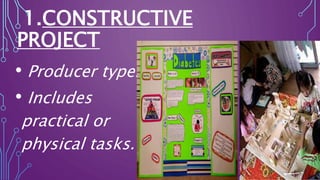
1.CONSTRUCTIVE
PROJECT
• Producer type.
• Includes
practical or
physical tasks.
2. AESTHETIC PROJECT
• Consumer
type.
• Projects in
which the
learners are
getting the
experience
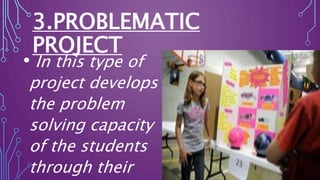
3.PROBLEMATIC
PROJECT
• In this type of
project develops
the problem
solving capacity
of the students
through their
4. DRILL PROJECT
• An activity
once
performed, is
repeated to
acquire
greater skill.
MERITS
• Follows the psychological laws of
learning .
• Gives freedom to the students.
• Suited to the psychological
concept of maturation.
• Derives social values.
• Training for social adjustments.
• Trains for democratic way of life.
• Learning through practical
problem solving.
• Economical
• Qualities like self- reliance,
resourcefulness and responsibility
among the learners will be
enhanced.
LIMITATIONS
• Learning haphazard and
incidental.
• Practical difficulties.
• Time consuming.
• May be too ambitious and
beyond the learner’s capacity.
• The method of organizing
instruction is unsystematized and
upsets the regular timetable work.
• Results in incomplete mastery of
tools of learning.
• Costly and non availability of
materials.
• Time bound projects introduce
artificiality and may require more
than necessary help.
CRITERIA FOR
SELECTING PROJECT
• Topic should have some educational value.
• Should not take overtime.
• Should be challenging in nature.
• Consider the cost and availability of
materials.
• Whole course should not be planned
using this method.
STEPS OF A
PROJECT
METHOD
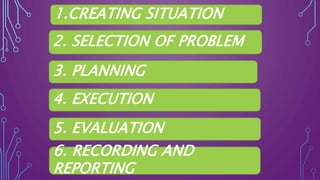
1.CREATING SITUATION
2. SELECTION OF PROBLEM
3. PLANNING
4. EXECUTION
5. EVALUATION
6. RECORDING AND
REPORTING
1. CREATING SITUATION
• The Teacher should create a
proper situation to draw the
students attention to the
project in mind through
informal conversation or
discussion or questioning etc.
2. SELECTION OF
PROBLEM
• The teacher helps the
students to select the problem
and guide them.
• The proposal for the project
should finally come from the
3.PLANNING
• The teacher discuss
with the students
about the project in
various angles and
points.
• The teacher has to
act only as a guide
4. EXECUTION
• The Students are stating
their work in this step.
• During this step the
teacher should carefully
supervise the students in
manipulative skills to
prevent waste of materials
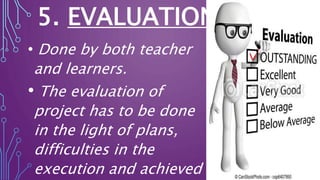
5. EVALUATION
• Done by both teacher
and learners.
• The evaluation of
project has to be done
in the light of plans,
difficulties in the
execution and achieved
6. RECORDING AND
REPORTING.
• Last step, in which
each and every step
of work are reported.
• The reported things
are recorded in a
ROLE OF THE
TEACHER
• The teacher is not a
dictator or a
commander, but a
friend, guide and a
working partner.
• Encourages students to
work collectively and
• Helps the students in developing
the character and personality.
• Provides a democratic atmosphere
in the class, so that the students can
express themselves fully without
fear.
• A teacher should have thorough
knowledge of individual children so
ASSIGNMENT
• Topic : Importance of Project
method in teaching-learning
process.
CONCLUSION
The Project method is a
teaching method that requires
the students to present in
concrete form the results of
information gathered about a
REFERENCES
• KP Neeraja , textbook of communication and
educational technology for nurses jaypee
brothers medical publishers , pg no: 283-
286.
• Nisha clement , Essentials of
communication and educational technology,
2nd edition , jaypee brothers medical
publishers pg no: 207-211.
•
https://www.slideshare.net/sallantes/projec
Project method   presentation

Project method presentation

  • 2.
    PROJECT METHOD PREPARED BY SARANYA CHANDRAN 4THYEAR BSC NURSING NEHRU COLLEGE OF NURSING.
  • 3.
    INTRODUCTION Project method isone of the modern method of teaching in which, the students point of view is given importance in designing the curricula and content of studies.
  • 4.
    DEFINITION •A Project isa problematic act carried to completion in its natural settings. - STEVENSON •A Project is a whole hearted, purposeful activity proceeding in a social environment. - Dr. KILPATRIC • A Project is a bit real life that has been
  • 5.
    CHARACTERISTICS • The methodaims at teaching the child to get the best out of life. • It takes the student beyond the walls of the classroom. • It is carried out in natural setting, thus making learning realistic and experiential. • It is focused on the students as it enlists
  • 6.
    • Project methodgives an opportunity for self- expression and for relating the self to the community. • It promotes a better knowledge of the practical aspects of knowledge gained from books. • It enhances the students social skills, as it requires interaction with the
  • 7.
    PRINCIPLES 1. Principle ofPurposefulness. 2. Principle of Utility. 3. Principle of Freedom. 4. Principle of Activity . 5. Principle of Reality . 6. Principle of Social development . 7. Principle of Planning .
  • 8.
    1.Principle of Purposefulness. Theproject should be purposeful. And that should have some main objective. 2. Principle of Utility. Knowledge will be worthwhile when it is useful
  • 9.
    3. Principle ofFreedom. The students should be free to select the topic and execute the work according to their will, interest, attitude and capacity. 4. Principle of Activity . Project means a purposeful activity. So at the end of the
  • 10.
    5. Principle ofReality. A Project should be real and related to the life situation of the students and the society. 6. Principle of Social development. A good project focuses society needs, social development, and
  • 11.
    7. Principle ofPlanning. The students plan in advance about the project. They find solutions for –How? When? ,What?, Where? And Why? A good project develops the problem solving capacity and
  • 12.
    TYPES OF PROJECT TYPE S Constructi veproject Aesthet ic project Problema tic project Drill project
  • 13.
    1.CONSTRUCTIVE PROJECT • Producer type. •Includes practical or physical tasks.
  • 14.
    2. AESTHETIC PROJECT •Consumer type. • Projects in which the learners are getting the experience
  • 15.
    3.PROBLEMATIC PROJECT • In thistype of project develops the problem solving capacity of the students through their
  • 16.
    4. DRILL PROJECT •An activity once performed, is repeated to acquire greater skill.
  • 17.
    MERITS • Follows thepsychological laws of learning . • Gives freedom to the students. • Suited to the psychological concept of maturation. • Derives social values. • Training for social adjustments.
  • 18.
    • Trains fordemocratic way of life. • Learning through practical problem solving. • Economical • Qualities like self- reliance, resourcefulness and responsibility among the learners will be enhanced.
  • 19.
    LIMITATIONS • Learning haphazardand incidental. • Practical difficulties. • Time consuming. • May be too ambitious and beyond the learner’s capacity.
  • 20.
    • The methodof organizing instruction is unsystematized and upsets the regular timetable work. • Results in incomplete mastery of tools of learning. • Costly and non availability of materials. • Time bound projects introduce artificiality and may require more than necessary help.
  • 21.
    CRITERIA FOR SELECTING PROJECT •Topic should have some educational value. • Should not take overtime. • Should be challenging in nature. • Consider the cost and availability of materials. • Whole course should not be planned using this method.
  • 22.
  • 23.
    1.CREATING SITUATION 2. SELECTIONOF PROBLEM 3. PLANNING 4. EXECUTION 5. EVALUATION 6. RECORDING AND REPORTING
  • 24.
    1. CREATING SITUATION •The Teacher should create a proper situation to draw the students attention to the project in mind through informal conversation or discussion or questioning etc.
  • 25.
    2. SELECTION OF PROBLEM •The teacher helps the students to select the problem and guide them. • The proposal for the project should finally come from the
  • 26.
    3.PLANNING • The teacherdiscuss with the students about the project in various angles and points. • The teacher has to act only as a guide
  • 27.
    4. EXECUTION • TheStudents are stating their work in this step. • During this step the teacher should carefully supervise the students in manipulative skills to prevent waste of materials
  • 28.
    5. EVALUATION • Doneby both teacher and learners. • The evaluation of project has to be done in the light of plans, difficulties in the execution and achieved
  • 29.
    6. RECORDING AND REPORTING. •Last step, in which each and every step of work are reported. • The reported things are recorded in a
  • 30.
    ROLE OF THE TEACHER •The teacher is not a dictator or a commander, but a friend, guide and a working partner. • Encourages students to work collectively and
  • 31.
    • Helps thestudents in developing the character and personality. • Provides a democratic atmosphere in the class, so that the students can express themselves fully without fear. • A teacher should have thorough knowledge of individual children so
  • 32.
    ASSIGNMENT • Topic :Importance of Project method in teaching-learning process.
  • 33.
    CONCLUSION The Project methodis a teaching method that requires the students to present in concrete form the results of information gathered about a
  • 34.
    REFERENCES • KP Neeraja, textbook of communication and educational technology for nurses jaypee brothers medical publishers , pg no: 283- 286. • Nisha clement , Essentials of communication and educational technology, 2nd edition , jaypee brothers medical publishers pg no: 207-211. • https://www.slideshare.net/sallantes/projec