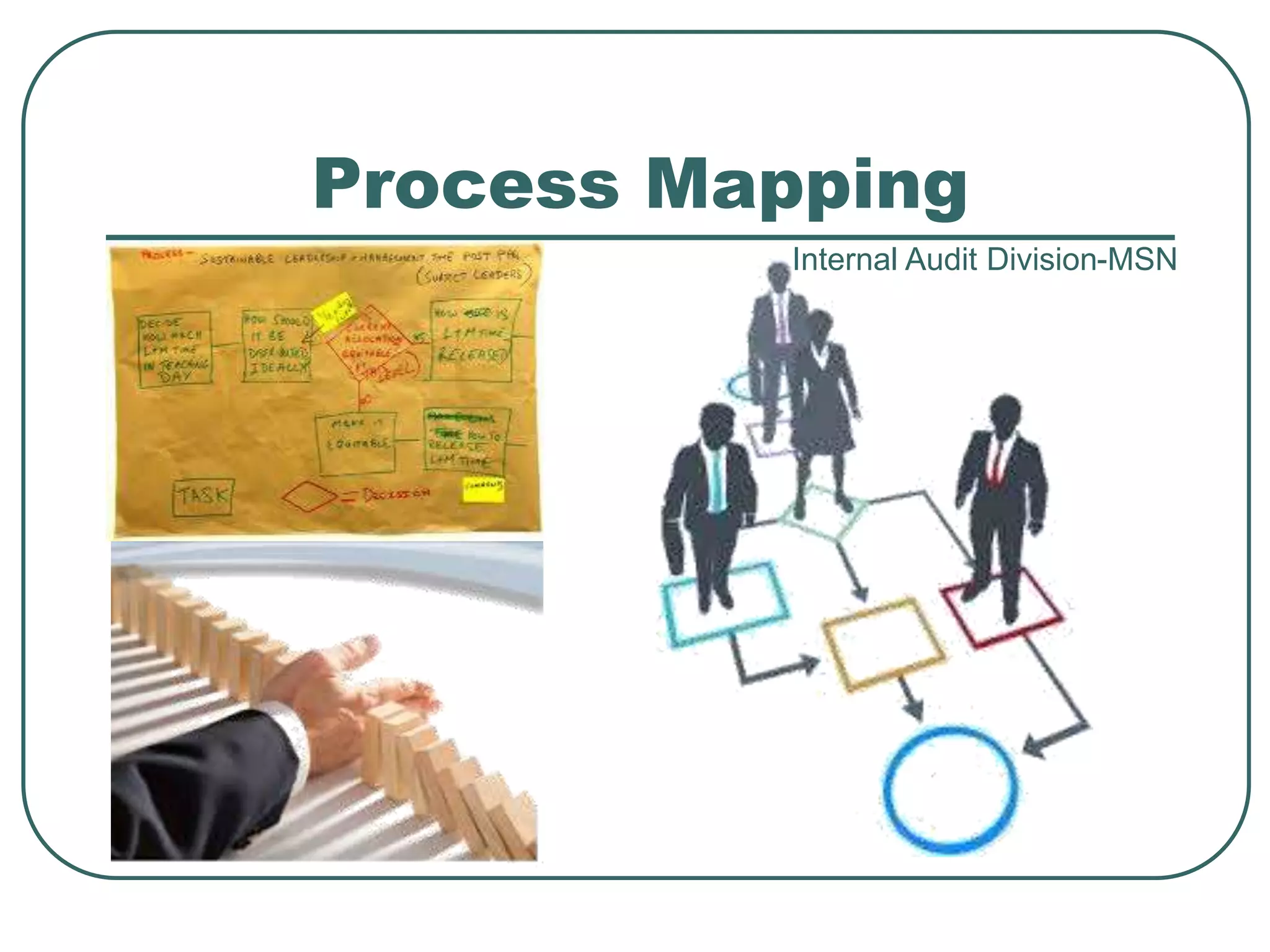
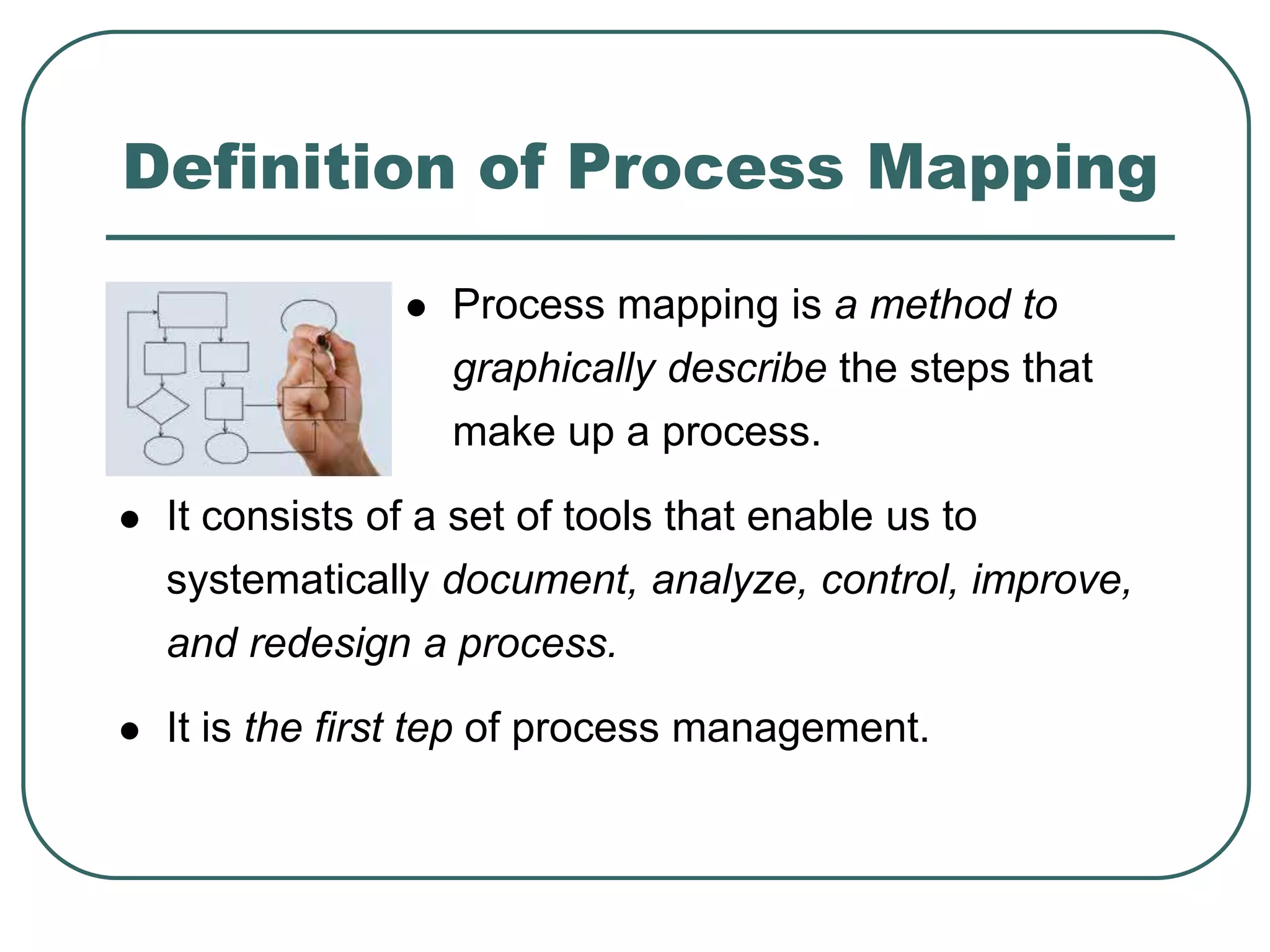
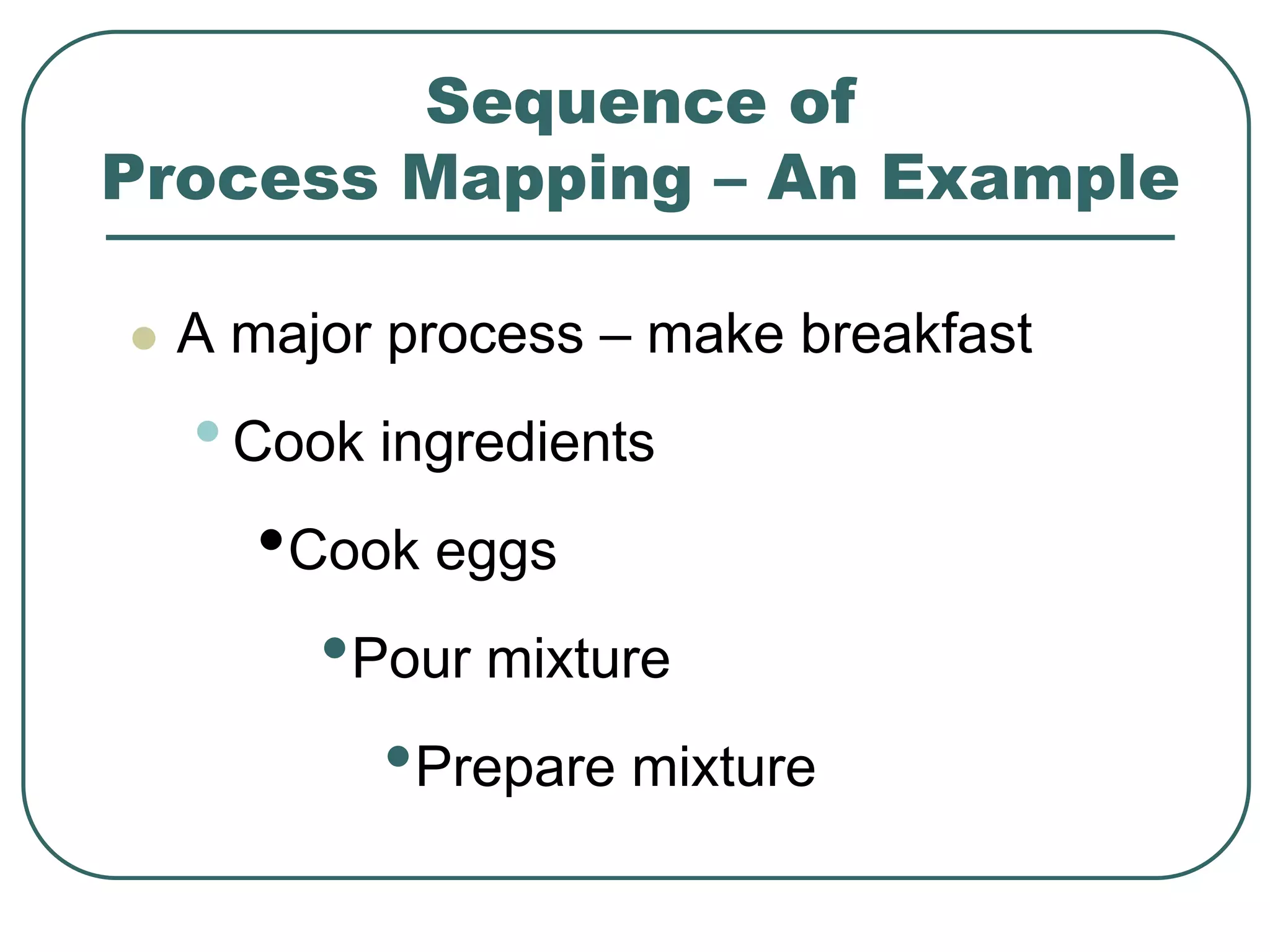
Process Mapping
Internal Audit Division-MSN
Definition of Process Mapping
 Process mapping is a method to
graphically describe the steps that
make up a process.
 It consists of a set of tools that enable us to
systematically document, analyze, control, improve,
and redesign a process.
 It is the first tep of process management.
Benefits of Process Mapping
 Ability to visually understand and document a
process
 Ability to take a holistic view of process objectives
 Develop true “buy-in” from employees
 Develop a sense of pride among employees
 Create customer-focused processes
Sequence of
Process Mapping – An Example
 A major process – make breakfast
•Cook ingredients
•Cook eggs
•Pour mixture
•Prepare mixture
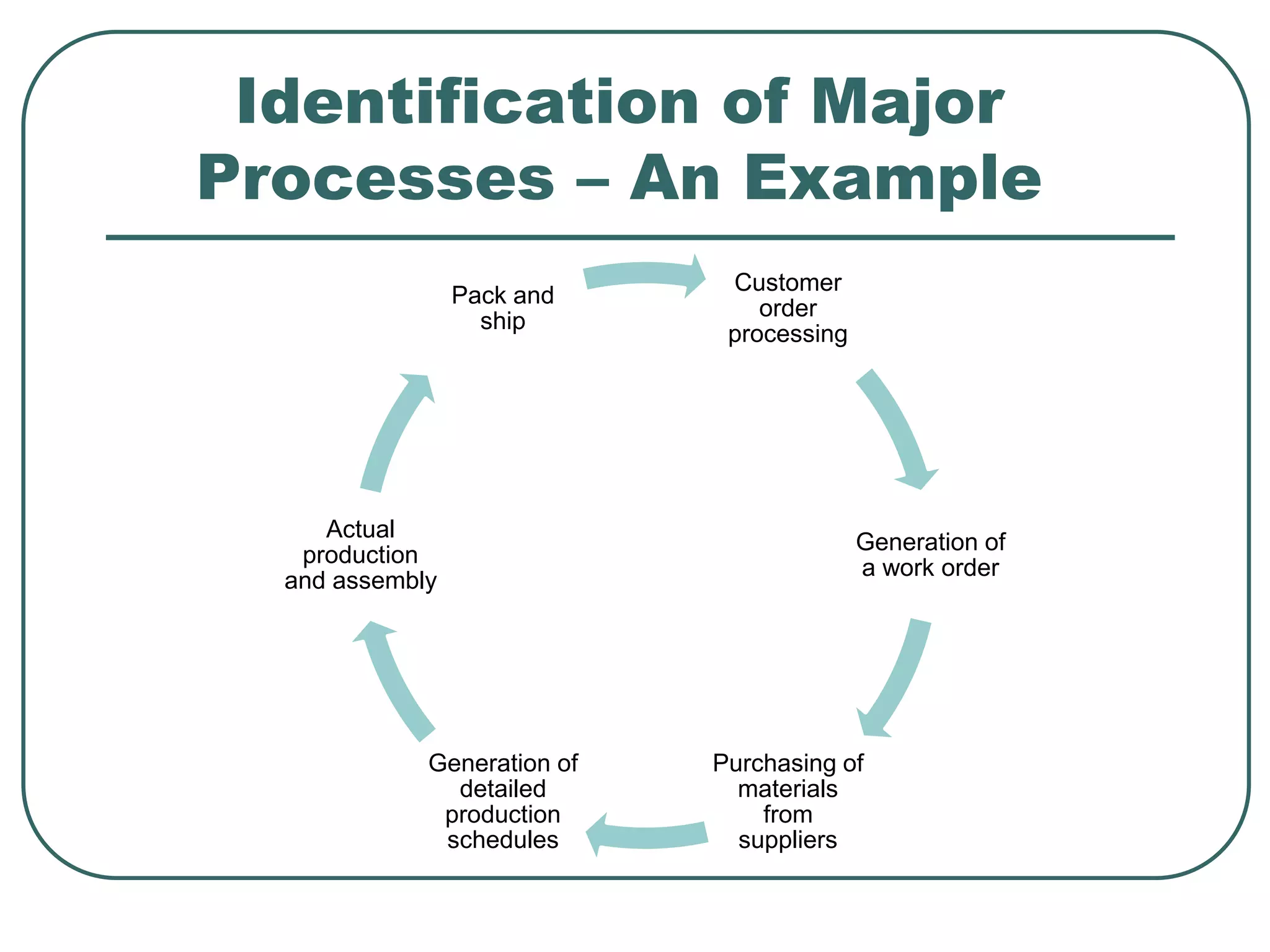
Identification of Major
Processes – An Example
Customer
order
processing
Generation of
a work order
Purchasing of
materials
from
suppliers
Generation of
detailed
production
schedules
Actual
production
and assembly
Pack and
ship
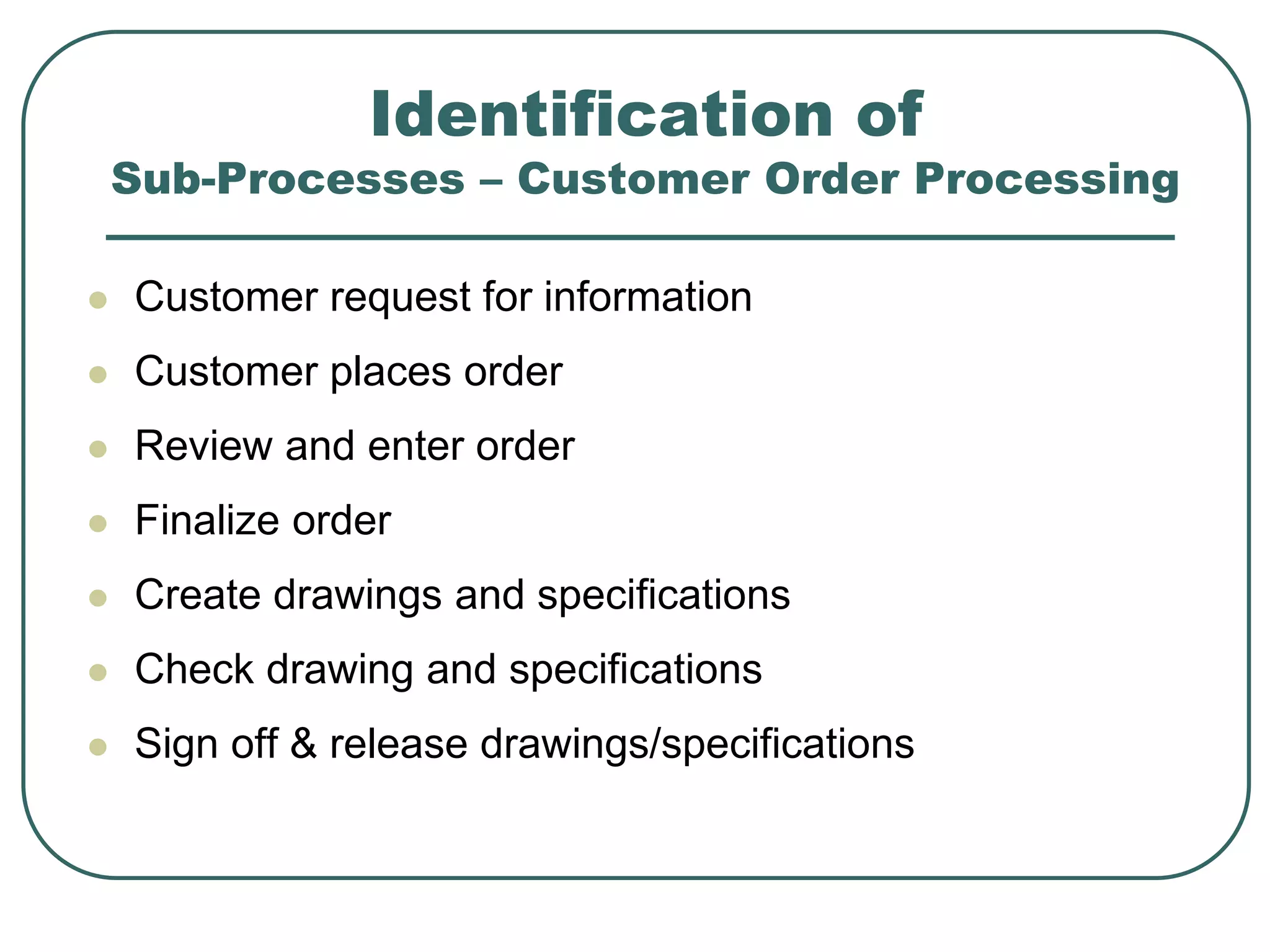
Identification of
Sub-Processes – Customer Order Processing
 Customer request for information
 Customer places order
 Review and enter order
 Finalize order
 Create drawings and specifications
 Check drawing and specifications
 Sign off & release drawings/specifications
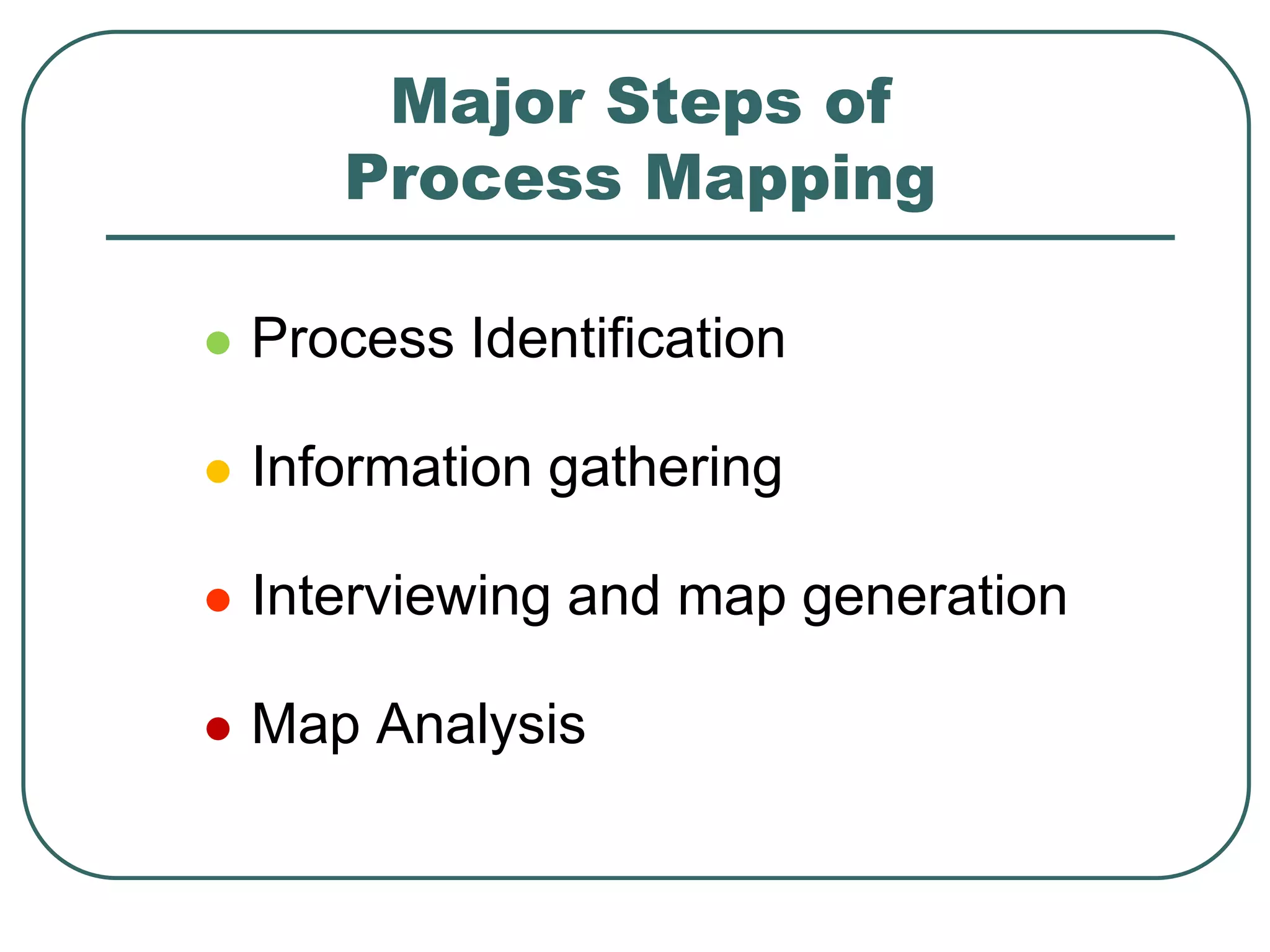
Major Steps of
Process Mapping
 Process Identification
 Information gathering
 Interviewing and map generation
 Map Analysis
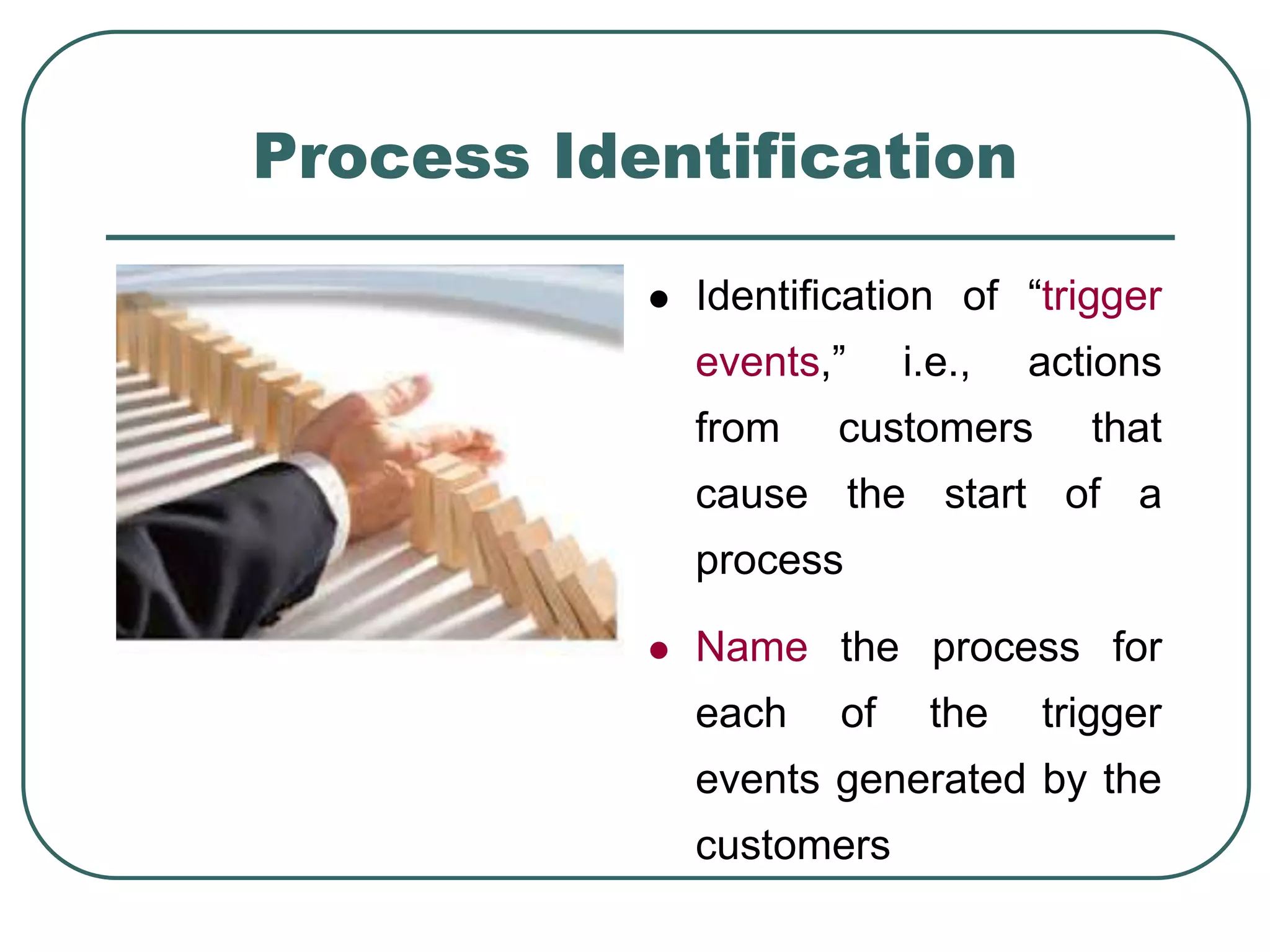
Process Identification
 Identification of “trigger
events,” i.e., actions
from customers that
cause the start of a
process
 Name the process for
each of the trigger
events generated by the
customers
Examples of Trigger Events
 Prospective customers contact company
about the product
 Customers place orders
 Customers receive orders
 Customers pay bills
 Customers request for service
 Customers stop payments
Information Gathering
 Description of a process
 Identification of process owners
 Discussion with process owners
•Business and process objectives
•Business and process risks
•Key controls
•Measures of success
Interviewing and
Map Generation
 Secure buy-in
 Select the right people for interviews
 Set up the interviews – setting, time, etc.
 Active listening and recording
 Use “drill-down” approach (unit, task and
action levels)
 Review and revise
Map Generation
An Example (Request for Payment)
 Unit Level (process request, prepare
check, deliver check)
 Task Level (complete request, verify
request, approve request, send request)
 Action Level (information needed for the
request, approval authority, method to
send request)
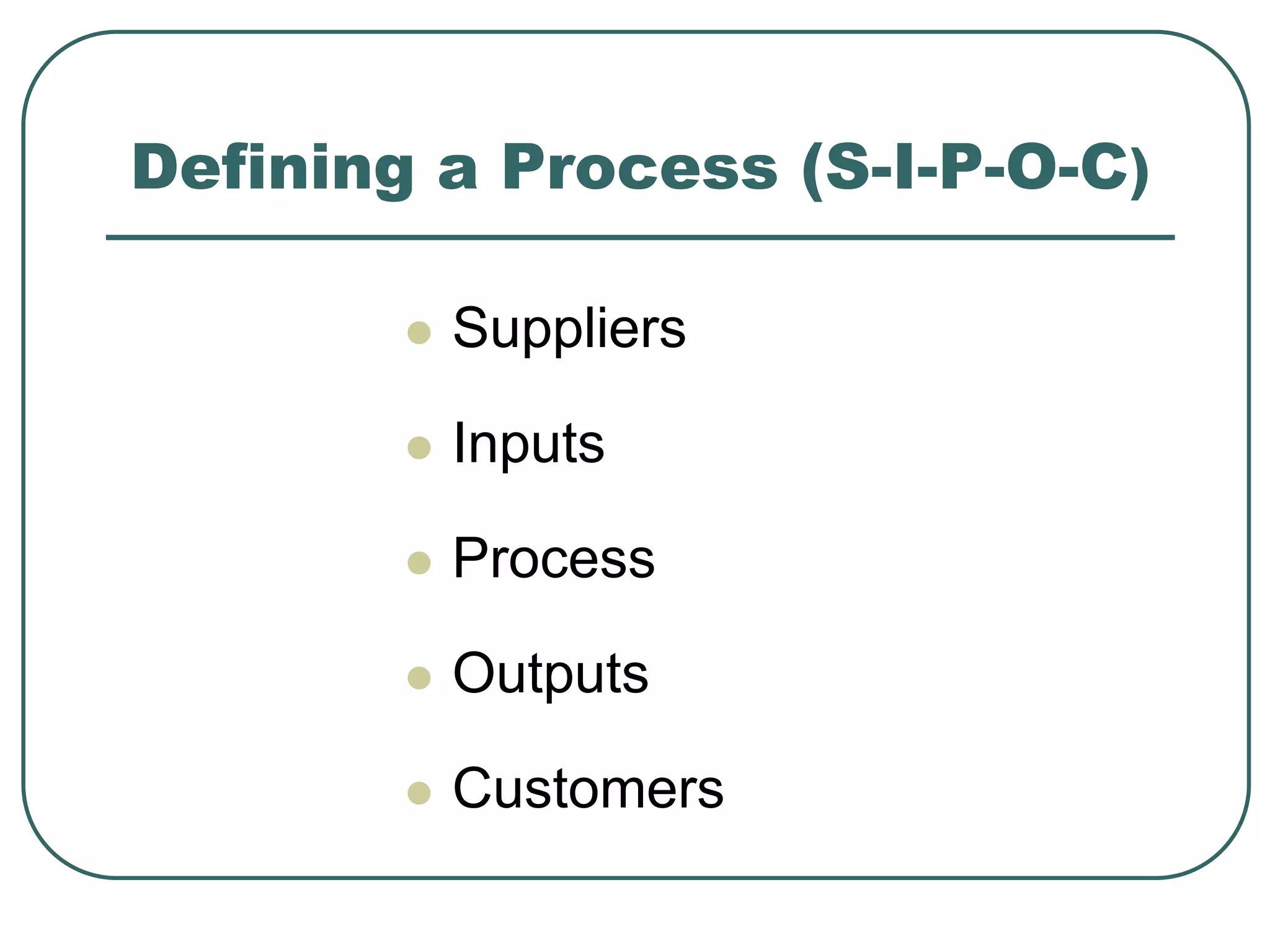
Defining a Process (S-I-P-O-C)
 Suppliers
 Inputs
 Process
 Outputs
 Customers
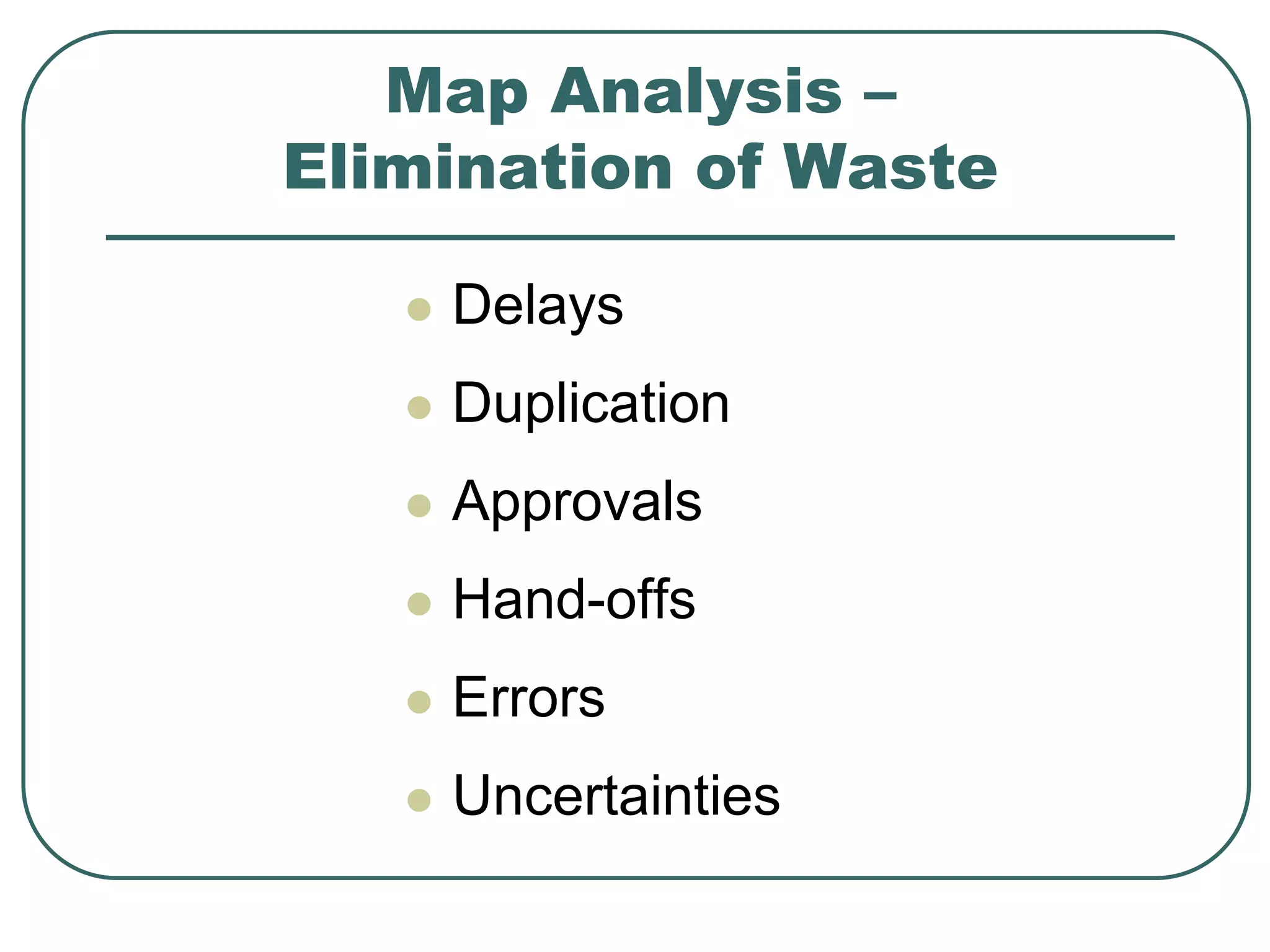
Map Analysis –
Elimination of Waste
 Delays
 Duplication
 Approvals
 Hand-offs
 Errors
 Uncertainties
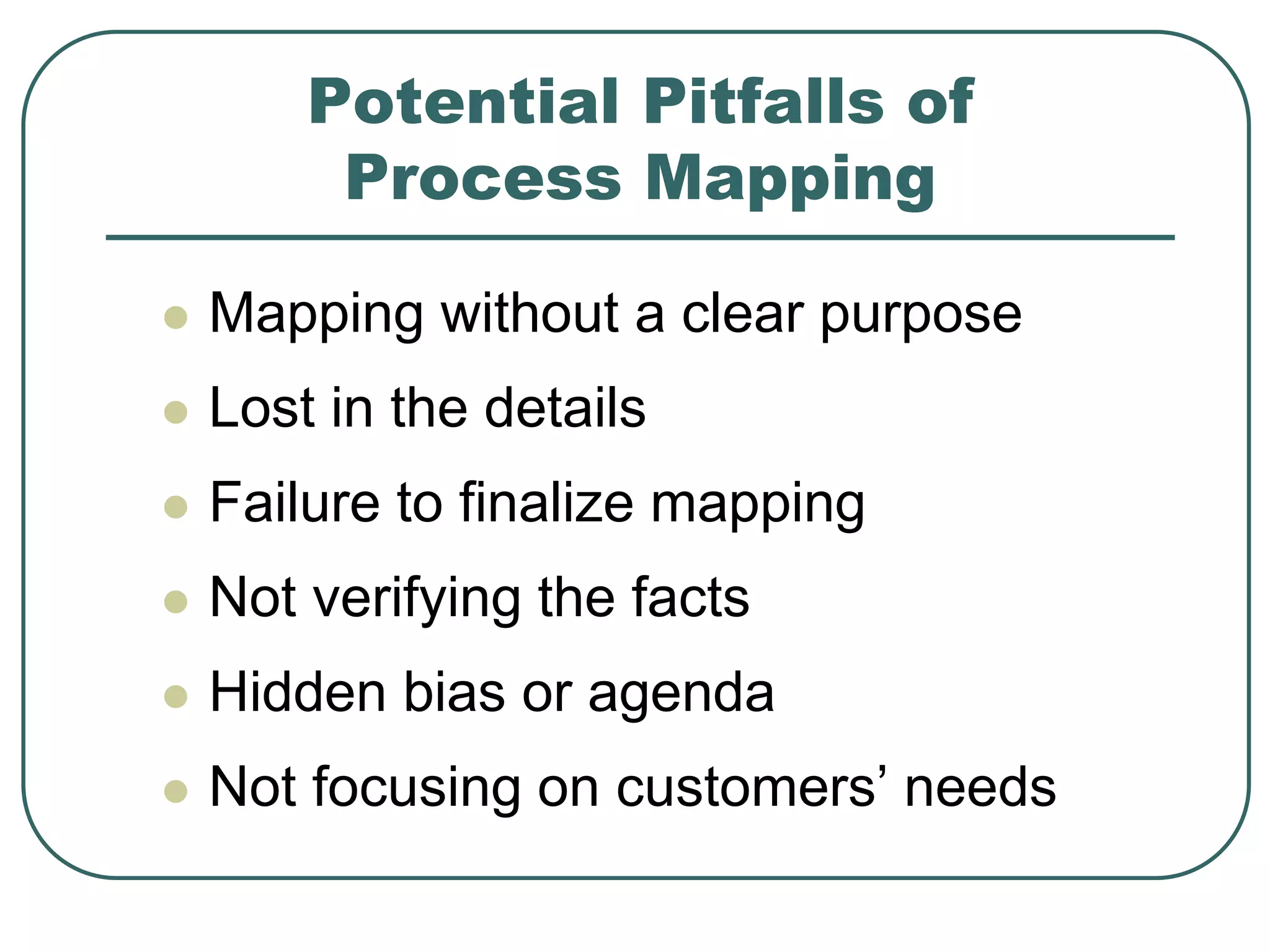
Potential Pitfalls of
Process Mapping
 Mapping without a clear purpose
 Lost in the details
 Failure to finalize mapping
 Not verifying the facts
 Hidden bias or agenda
 Not focusing on customers’ needs

Process Mapping

  • 1.
  • 2.
    Definition of ProcessMapping  Process mapping is a method to graphically describe the steps that make up a process.  It consists of a set of tools that enable us to systematically document, analyze, control, improve, and redesign a process.  It is the first tep of process management.
  • 3.
    Benefits of ProcessMapping  Ability to visually understand and document a process  Ability to take a holistic view of process objectives  Develop true “buy-in” from employees  Develop a sense of pride among employees  Create customer-focused processes
  • 4.
    Sequence of Process Mapping– An Example  A major process – make breakfast •Cook ingredients •Cook eggs •Pour mixture •Prepare mixture
  • 5.
    Identification of Major Processes– An Example Customer order processing Generation of a work order Purchasing of materials from suppliers Generation of detailed production schedules Actual production and assembly Pack and ship
  • 6.
    Identification of Sub-Processes –Customer Order Processing  Customer request for information  Customer places order  Review and enter order  Finalize order  Create drawings and specifications  Check drawing and specifications  Sign off & release drawings/specifications
  • 7.
    Major Steps of ProcessMapping  Process Identification  Information gathering  Interviewing and map generation  Map Analysis
  • 8.
    Process Identification  Identificationof “trigger events,” i.e., actions from customers that cause the start of a process  Name the process for each of the trigger events generated by the customers
  • 9.
    Examples of TriggerEvents  Prospective customers contact company about the product  Customers place orders  Customers receive orders  Customers pay bills  Customers request for service  Customers stop payments
  • 10.
    Information Gathering  Descriptionof a process  Identification of process owners  Discussion with process owners •Business and process objectives •Business and process risks •Key controls •Measures of success
  • 11.
    Interviewing and Map Generation Secure buy-in  Select the right people for interviews  Set up the interviews – setting, time, etc.  Active listening and recording  Use “drill-down” approach (unit, task and action levels)  Review and revise
  • 12.
    Map Generation An Example(Request for Payment)  Unit Level (process request, prepare check, deliver check)  Task Level (complete request, verify request, approve request, send request)  Action Level (information needed for the request, approval authority, method to send request)
  • 13.
    Defining a Process(S-I-P-O-C)  Suppliers  Inputs  Process  Outputs  Customers
  • 14.
    Map Analysis – Eliminationof Waste  Delays  Duplication  Approvals  Hand-offs  Errors  Uncertainties
  • 15.
    Potential Pitfalls of ProcessMapping  Mapping without a clear purpose  Lost in the details  Failure to finalize mapping  Not verifying the facts  Hidden bias or agenda  Not focusing on customers’ needs