Probability Sampling And
Types of Probability Sampling
BY
Selbin Babu
Probability Sampling
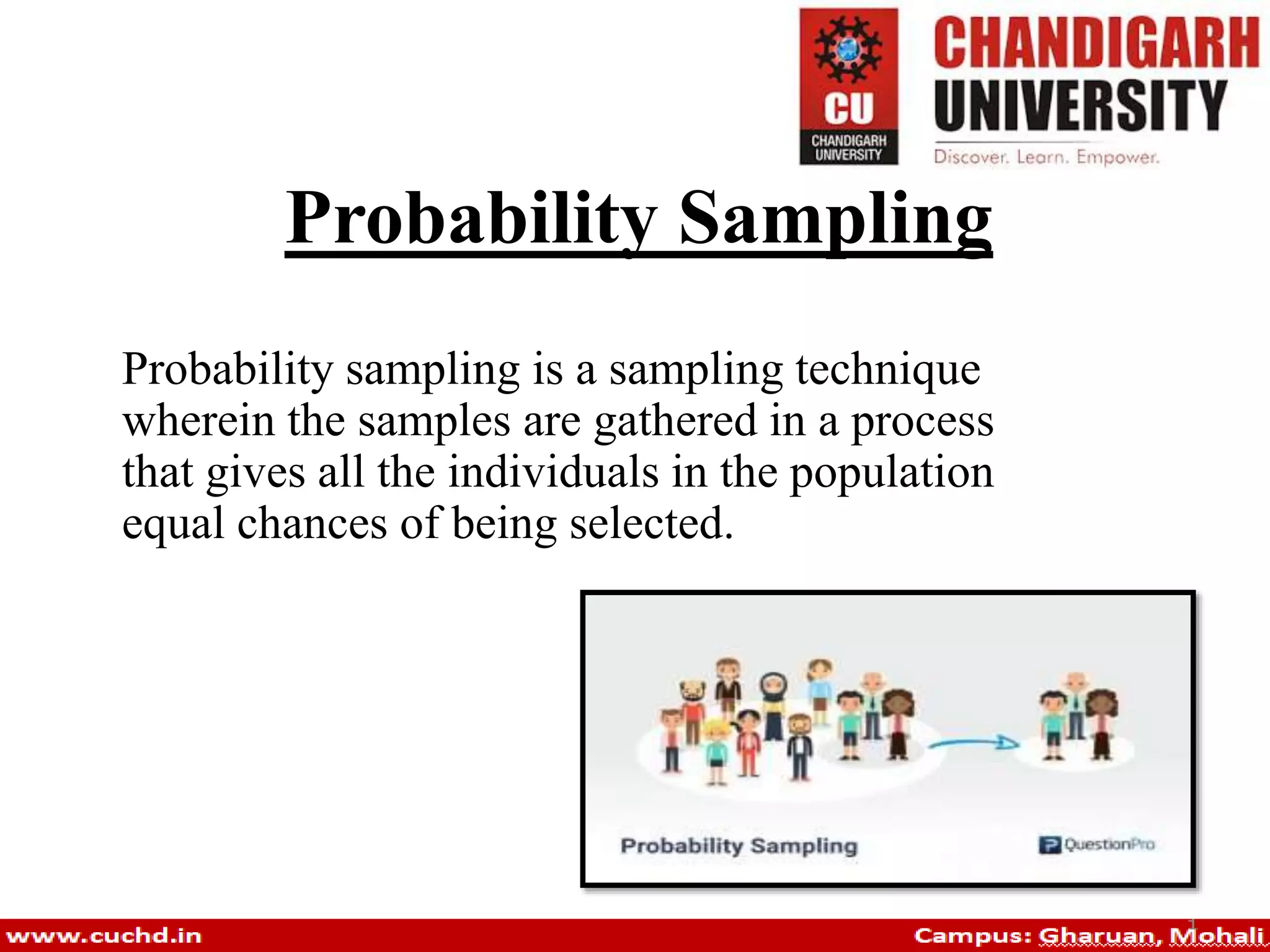
Probability sampling is a sampling technique
wherein the samples are gathered in a process
that gives all the individuals in the population
equal chances of being selected.
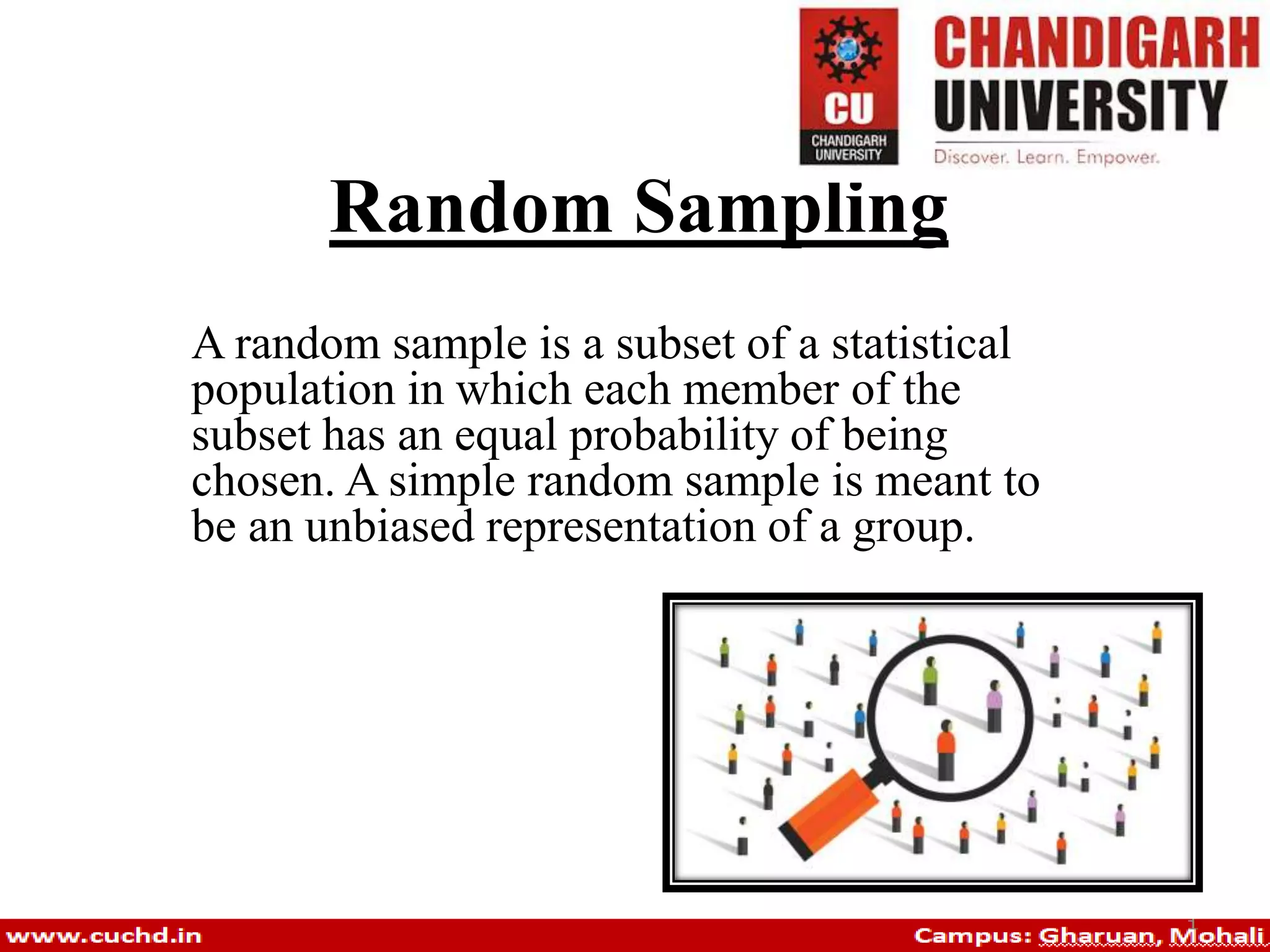
Types of Probability Sampling
Random Systematic Stratified Cluster Multi-Stage
Sampling Random Random Random Sampling
Sampling Sampling Sampling
Random Sampling
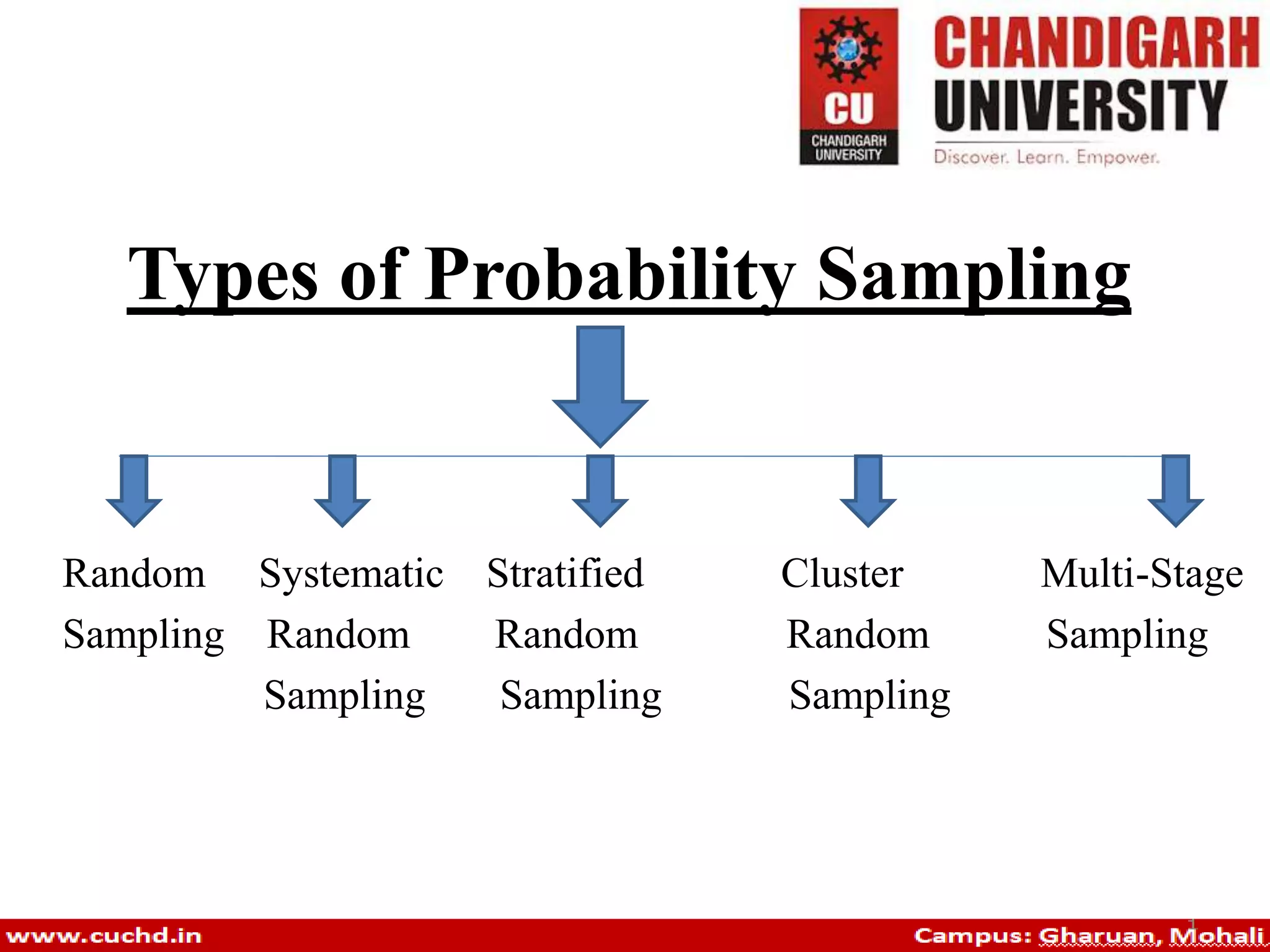
A random sample is a subset of a statistical
population in which each member of the
subset has an equal probability of being
chosen. A simple random sample is meant to
be an unbiased representation of a group.
Example of Random Sampling
The total workforce in organisations is 300
and to conduct a survey, a sample group of
30 employees is selected to do the survey. In
this case, the population is the total number
of employees in the company and the sample
group of 30 employees is the sample.
Systematic Random Sampling
Systematic random sampling is
a type of probability sampling technique.
With the systematic random sample, there is
an equal chance (probability) of
selecting each unit from within
the population when creating the sample.
Example of Systematic
Random Sampling
For example, the researcher has a population
total of 100 individuals and need 12 subjects.
He first picks his starting number, 5.
Then the researcher picks his interval, 8. The
members of his sample will be individuals 5,
13, 21, 29, 37, 45, 53, 61, 69, 77, 85, 93.
Stratified Random Sampling
Stratified Random Sampling is also known as
proportional random sampling. This is a
probability sampling technique wherein the
subjects are initially grouped into different
classification such as age, socioeconomic
status or gender.
Example of Stratified Random
Sampling
Let’s say, 100 (Nh) students of a school
having 1000 (N) students were asked
questions about their favorite subject. It’s a
fact that the students of the 8th grade will
have different subject preferences than the
students of the 9th grade.
Cluster Random Sampling
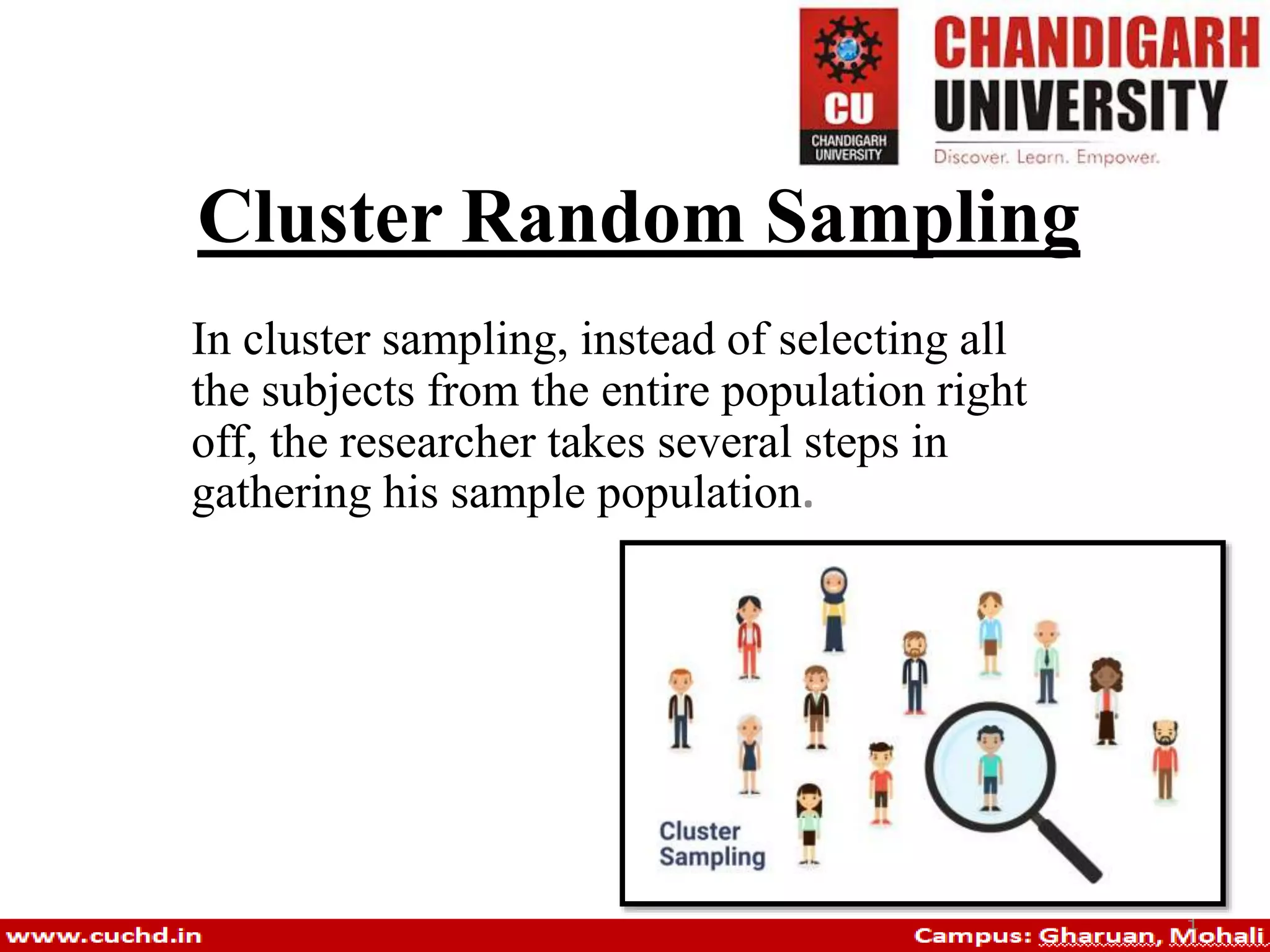
In cluster sampling, instead of selecting all
the subjects from the entire population right
off, the researcher takes several steps in
gathering his sample population.
Example of Cluster Random
Sampling
• A researcher may be interested in data about city taxes
in Florida. The researcher would compile data from
selected cities and compile them to get a picture about
the state. The individual cities would be the clusters in
this case
Multi Stage Sampling
Multi-stage sampling (also known as multi-stage cluster
sampling) is a more complex form of cluster
sampling which contains two or more stages in sample
selection. In simple terms, in multi-stage sampling large
clusters of population are divided into smaller clusters
in several stages in order to make primary data
collection more manageable.
Example of Multi Stage Sampling
The Census Bureau uses multistage sampling for the
U.S. National Center for
Health Statistics’ National Health Interview Survey
(NHIS). A multistage probability sample of 42,000
households in 376 probability sampling units (PSUs are
usually counties or groups of counties), which are
chosen in groups of around four adjacent households.
Probability Sampling and Types by Selbin Babu

Probability Sampling and Types by Selbin Babu

  • 1.
    Probability Sampling And Typesof Probability Sampling BY Selbin Babu
  • 2.
    Probability Sampling Probability samplingis a sampling technique wherein the samples are gathered in a process that gives all the individuals in the population equal chances of being selected.
  • 3.
    Types of ProbabilitySampling Random Systematic Stratified Cluster Multi-Stage Sampling Random Random Random Sampling Sampling Sampling Sampling
  • 4.
    Random Sampling A randomsample is a subset of a statistical population in which each member of the subset has an equal probability of being chosen. A simple random sample is meant to be an unbiased representation of a group.
  • 5.
    Example of RandomSampling The total workforce in organisations is 300 and to conduct a survey, a sample group of 30 employees is selected to do the survey. In this case, the population is the total number of employees in the company and the sample group of 30 employees is the sample.
  • 6.
    Systematic Random Sampling Systematicrandom sampling is a type of probability sampling technique. With the systematic random sample, there is an equal chance (probability) of selecting each unit from within the population when creating the sample.
  • 7.
    Example of Systematic RandomSampling For example, the researcher has a population total of 100 individuals and need 12 subjects. He first picks his starting number, 5. Then the researcher picks his interval, 8. The members of his sample will be individuals 5, 13, 21, 29, 37, 45, 53, 61, 69, 77, 85, 93.
  • 8.
    Stratified Random Sampling StratifiedRandom Sampling is also known as proportional random sampling. This is a probability sampling technique wherein the subjects are initially grouped into different classification such as age, socioeconomic status or gender.
  • 9.
    Example of StratifiedRandom Sampling Let’s say, 100 (Nh) students of a school having 1000 (N) students were asked questions about their favorite subject. It’s a fact that the students of the 8th grade will have different subject preferences than the students of the 9th grade.
  • 10.
    Cluster Random Sampling Incluster sampling, instead of selecting all the subjects from the entire population right off, the researcher takes several steps in gathering his sample population.
  • 11.
    Example of ClusterRandom Sampling • A researcher may be interested in data about city taxes in Florida. The researcher would compile data from selected cities and compile them to get a picture about the state. The individual cities would be the clusters in this case
  • 12.
    Multi Stage Sampling Multi-stagesampling (also known as multi-stage cluster sampling) is a more complex form of cluster sampling which contains two or more stages in sample selection. In simple terms, in multi-stage sampling large clusters of population are divided into smaller clusters in several stages in order to make primary data collection more manageable.
  • 13.
    Example of MultiStage Sampling The Census Bureau uses multistage sampling for the U.S. National Center for Health Statistics’ National Health Interview Survey (NHIS). A multistage probability sample of 42,000 households in 376 probability sampling units (PSUs are usually counties or groups of counties), which are chosen in groups of around four adjacent households.