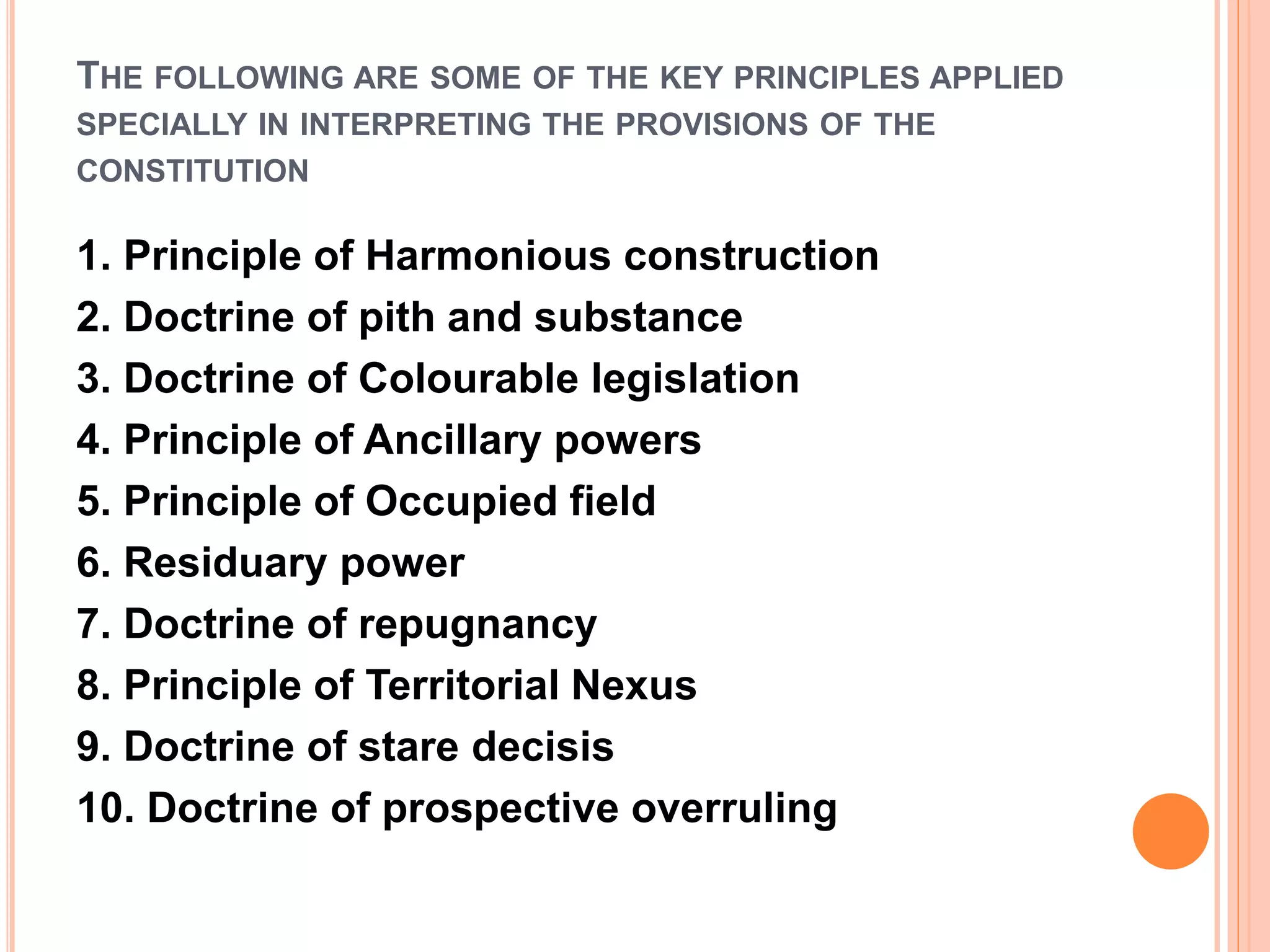
This document discusses principles of constitutional interpretation in India. It begins by explaining that constitutional interpretation should be dynamic, pragmatic and elastic rather than static, pedantic or rigid. It then outlines several key interpretation principles applied to the constitution, including harmonious construction, pith and substance, and colourable legislation. Harmonious construction means provisions should be interpreted together rather than in isolation. Pith and substance examines a law's true nature or essence. Colourable legislation prohibits indirect means of doing what is directly prohibited. The document also discusses occupied field, residuary power, repugnancy, and territorial nexus principles.