Engineerin
g Practices
s
Eng P.W. Sarath
B.Sc. Eng.(Moratuwa
C.Eng., FIE(SL), IntPE, MIET, SMIEEE
Executive Summary
• What is Engineering / Who is a Chartered
engineer-
• Engineer Vs Scientist
• Roles , Responsibilities and Functions of a
Chartered Engineer
• Competencies required to be a professional
Engineer
• Codes of Conduct
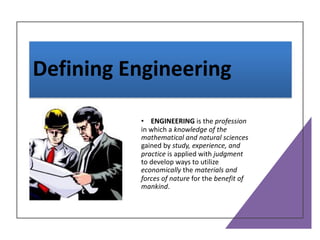
Defining Engineering
• ENGINEERING is the profession
in which a knowledge of the
mathematical and natural sciences
gained by study, experience, and
practice is applied with judgment
to develop ways to utilize
economically the materials and
forces of nature for the benefit of
mankind.
Engineer Vs Scientist
The scientist discovers the theories to explain
the existing phenomena in our environment.
Engineer innovates devices/solutions using the
discoveries what scientist have come across.
Or
Engineers use applications for solving the
problems of living beings. Accordingly Engineers
will bring the benefits to the society through
their applications
v “Scientists study the world as it is,
engineers create the world that
never has been”
(Theodore Von Karman)
v “Engineering is the application of
science to the common purpose of
life”
(Count
Rumford)
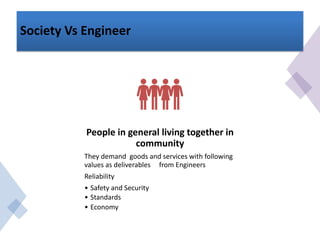
Society Vs Engineer
People in general living together in
community
They demand goods and services with following
values as deliverables from Engineers
Reliability
• Safety and Security
• Standards
• Economy
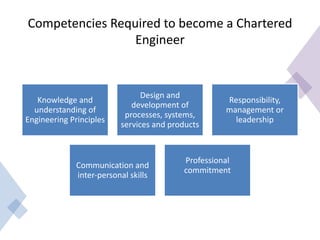
Competencies Required to become a Chartered
Engineer
Knowledge and
understanding of
Engineering Principles
Design and
development of
processes, systems,
services and products
Responsibility,
management or
leadership
Communication and
inter-personal skills
Professional
commitment
Role of
an
Enginner
• Apply reasoning informed
by contextual knowledge to
assess societal, health,
safety, legal and cultural
issues and the consequent
responsibilities relevant to
professional engineering
practice and solutions to
complex engineering
problems.
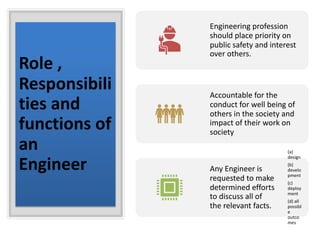
Role ,
Responsibili
ties and
functions of
an
Engineer
Engineering profession
should place priority on
public safety and interest
over others.
Accountable for the
conduct for well being of
others in the society and
impact of their work on
society
Any Engineer is
requested to make
determined efforts
to discuss all of
the relevant facts.
(a)
design
(b)
develo
pment
(c)
deploy
ment
(d) all
possibl
e
outco
mes
Social
Responsibilitie
s of Engineers
• Ensure the safety and well-being of the public
• Ensure that society’s funds and resources
concerning technology are well used
• Refusing to work on a particular project or for a
particular company
• Speaking out publicly against a proposed project
• Blowing the whistle on illegality or wrong-doing
• Professional Societies’ obligation to provide
protection for whistleblowers
• Individual and organizational concern about the
impact of engineering projects on society
• Contributing one’s services to worthy, non-profit
groups and projects
• Ccommitment to educating future engineers about
their social responsibilities
Social
Responsibilitie
s of Engineers
• Commitment of risk assessment experts to ethical
risk/safety assessments
• Voluntarily assume the task of educating the public
about important on sequences of various
technological and scientific developments
• Commitment of engineers to design and develop
sustainable technologies
• Provide expert advice to non-experts
• Explicit care and concern about technology’s impact
on Nature and the Environment
• Abiding by the principles of sustainable
development when thinking about engineering
designs
• Abiding by the “precautionary principle” when
thinking about engineering designs
• In engineering design, engineers have practiced
social responsibility by applying actors of safety to
their designs and by building in redundancy
Benefits for Being
an Engineer
• Job satisfaction
• Variety of career opportunities
• Challenging work
• Intellectual development
• Benefit society
• Financial Security
• Prestige
• Professional environment
• Technological and scientific discovery
• Creative Thinking
Rules of
Conduct
( by Laws)
• Any Engineer shall at all times uphold the
dignity and reputation of their profession,
act with fairness , Integrity towards every
one with whom there work is connected
and towards other members and safe
guard the public interest in matters of
health, safety, the environment and
otherwise.( values : integrity fairness,
Health, safety and Risk and Environmental
sustainability)
Rules of
Conduct
• Persons in any Category of Engineers, in
addition excersise their professional skill
and judgments the best of their ability
and discharge their professional
responsibilities with integrity. They shall
encourage the vocational progress of
those in their professional
charge.(Integrity and competence)
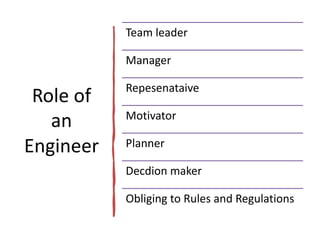
Role of
an
Engineer
Team leader
Manager
Repesenataive
Motivator
Planner
Decdion maker
Obliging to Rules and Regulations
Responsibilities • To over see entire opeartions
undertaken by him and ensure
that results will be timely
delivered mainataining economies
of scale , adhering to safety
standards , complying with
regulations , optimising the
resourses without compromising
over all Quality .
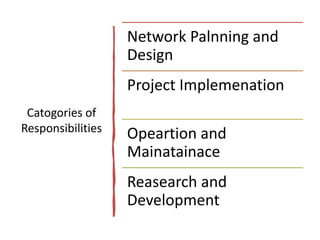
Catogories of
Responsibilities
Network Palnning and
Design
Project Implemenation
Opeartion and
Mainatainace
Reasearch and
Development
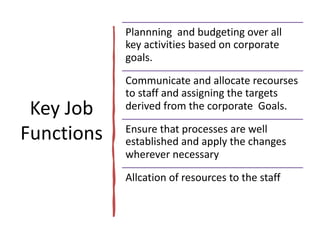
Key Job
Functions
Plannning and budgeting over all
key activities based on corporate
goals.
Communicate and allocate recourses
to staff and assigning the targets
derived from the corporate Goals.
Ensure that processes are well
established and apply the changes
wherever necessary
Allcation of resources to the staff
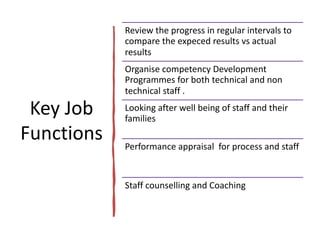
Key Job
Functions
Review the progress in regular intervals to
compare the expeced results vs actual
results
Organise competency Development
Programmes for both technical and non
technical staff .
Looking after well being of staff and their
families
Performance appraisal for process and staff
Staff counselling and Coaching
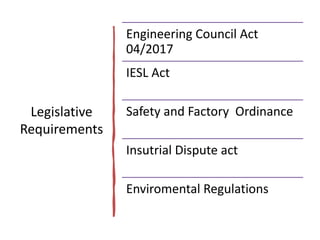
Legislative
Requirements
Engineering Council Act
04/2017
IESL Act
Safety and Factory Ordinance
Insutrial Dispute act
Enviromental Regulations

Principles and satandards of Engineering

  • 1.
    Engineerin g Practices s Eng P.W.Sarath B.Sc. Eng.(Moratuwa C.Eng., FIE(SL), IntPE, MIET, SMIEEE
  • 2.
    Executive Summary • Whatis Engineering / Who is a Chartered engineer- • Engineer Vs Scientist • Roles , Responsibilities and Functions of a Chartered Engineer • Competencies required to be a professional Engineer • Codes of Conduct
  • 3.
    Defining Engineering • ENGINEERINGis the profession in which a knowledge of the mathematical and natural sciences gained by study, experience, and practice is applied with judgment to develop ways to utilize economically the materials and forces of nature for the benefit of mankind.
  • 4.
    Engineer Vs Scientist Thescientist discovers the theories to explain the existing phenomena in our environment. Engineer innovates devices/solutions using the discoveries what scientist have come across. Or Engineers use applications for solving the problems of living beings. Accordingly Engineers will bring the benefits to the society through their applications v “Scientists study the world as it is, engineers create the world that never has been” (Theodore Von Karman) v “Engineering is the application of science to the common purpose of life” (Count Rumford)
  • 5.
    Society Vs Engineer Peoplein general living together in community They demand goods and services with following values as deliverables from Engineers Reliability • Safety and Security • Standards • Economy
  • 6.
    Competencies Required tobecome a Chartered Engineer Knowledge and understanding of Engineering Principles Design and development of processes, systems, services and products Responsibility, management or leadership Communication and inter-personal skills Professional commitment
  • 7.
    Role of an Enginner • Applyreasoning informed by contextual knowledge to assess societal, health, safety, legal and cultural issues and the consequent responsibilities relevant to professional engineering practice and solutions to complex engineering problems.
  • 8.
    Role , Responsibili ties and functionsof an Engineer Engineering profession should place priority on public safety and interest over others. Accountable for the conduct for well being of others in the society and impact of their work on society Any Engineer is requested to make determined efforts to discuss all of the relevant facts. (a) design (b) develo pment (c) deploy ment (d) all possibl e outco mes
  • 9.
    Social Responsibilitie s of Engineers •Ensure the safety and well-being of the public • Ensure that society’s funds and resources concerning technology are well used • Refusing to work on a particular project or for a particular company • Speaking out publicly against a proposed project • Blowing the whistle on illegality or wrong-doing • Professional Societies’ obligation to provide protection for whistleblowers • Individual and organizational concern about the impact of engineering projects on society • Contributing one’s services to worthy, non-profit groups and projects • Ccommitment to educating future engineers about their social responsibilities
  • 10.
    Social Responsibilitie s of Engineers •Commitment of risk assessment experts to ethical risk/safety assessments • Voluntarily assume the task of educating the public about important on sequences of various technological and scientific developments • Commitment of engineers to design and develop sustainable technologies • Provide expert advice to non-experts • Explicit care and concern about technology’s impact on Nature and the Environment • Abiding by the principles of sustainable development when thinking about engineering designs • Abiding by the “precautionary principle” when thinking about engineering designs • In engineering design, engineers have practiced social responsibility by applying actors of safety to their designs and by building in redundancy
  • 11.
    Benefits for Being anEngineer • Job satisfaction • Variety of career opportunities • Challenging work • Intellectual development • Benefit society • Financial Security • Prestige • Professional environment • Technological and scientific discovery • Creative Thinking
  • 12.
    Rules of Conduct ( byLaws) • Any Engineer shall at all times uphold the dignity and reputation of their profession, act with fairness , Integrity towards every one with whom there work is connected and towards other members and safe guard the public interest in matters of health, safety, the environment and otherwise.( values : integrity fairness, Health, safety and Risk and Environmental sustainability)
  • 13.
    Rules of Conduct • Personsin any Category of Engineers, in addition excersise their professional skill and judgments the best of their ability and discharge their professional responsibilities with integrity. They shall encourage the vocational progress of those in their professional charge.(Integrity and competence)
  • 14.
  • 15.
    Responsibilities • Toover see entire opeartions undertaken by him and ensure that results will be timely delivered mainataining economies of scale , adhering to safety standards , complying with regulations , optimising the resourses without compromising over all Quality .
  • 16.
    Catogories of Responsibilities Network Palnningand Design Project Implemenation Opeartion and Mainatainace Reasearch and Development
  • 17.
    Key Job Functions Plannning andbudgeting over all key activities based on corporate goals. Communicate and allocate recourses to staff and assigning the targets derived from the corporate Goals. Ensure that processes are well established and apply the changes wherever necessary Allcation of resources to the staff
  • 18.
    Key Job Functions Review theprogress in regular intervals to compare the expeced results vs actual results Organise competency Development Programmes for both technical and non technical staff . Looking after well being of staff and their families Performance appraisal for process and staff Staff counselling and Coaching
  • 19.
    Legislative Requirements Engineering Council Act 04/2017 IESLAct Safety and Factory Ordinance Insutrial Dispute act Enviromental Regulations