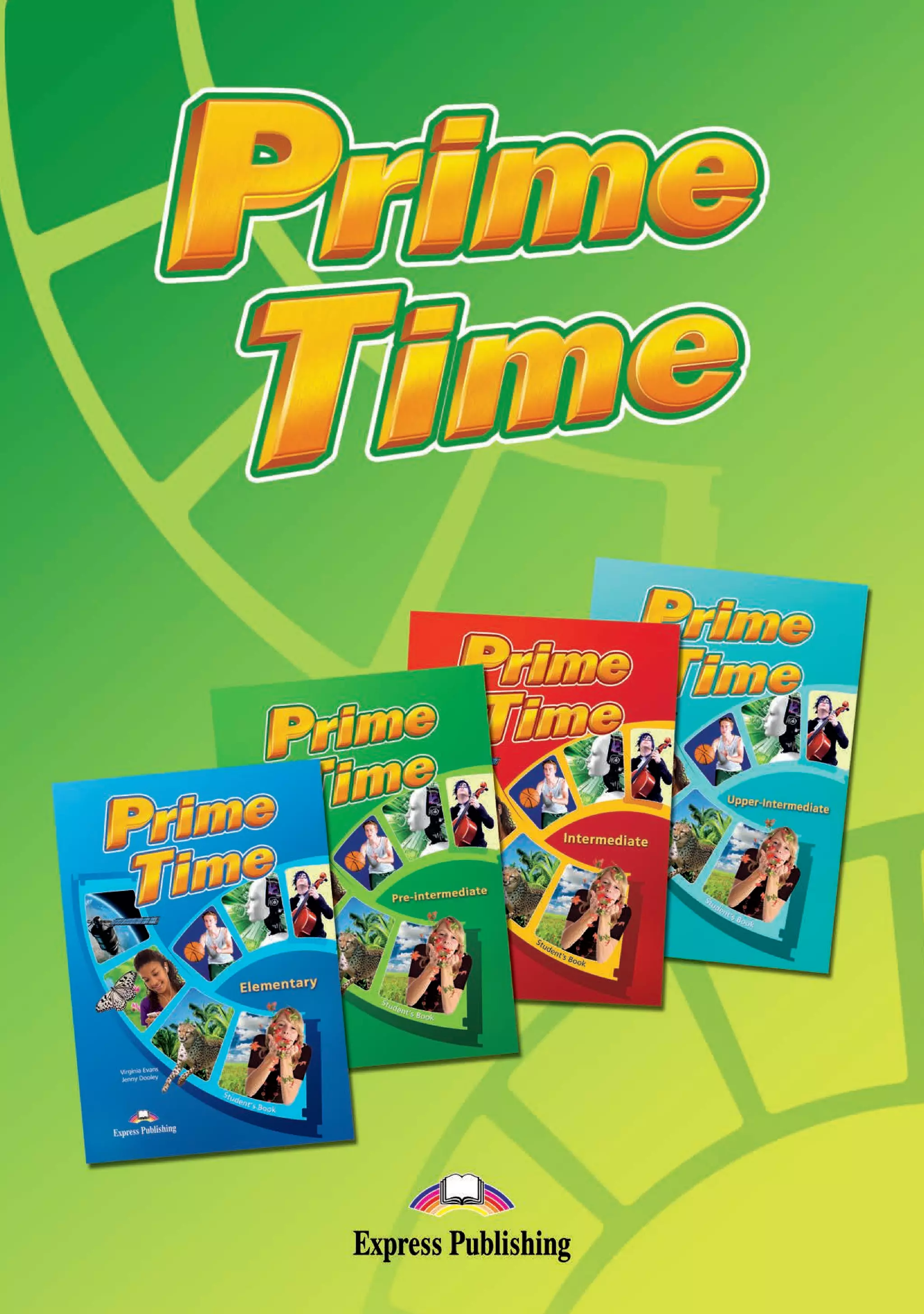
01 Prime Time Elem_UpInt Leaflet_01 Prime Time Elem_UpInt Leaflet 27/03/2012 8:25 ΜΜ Page 1
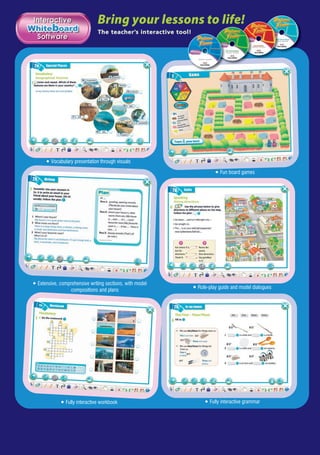
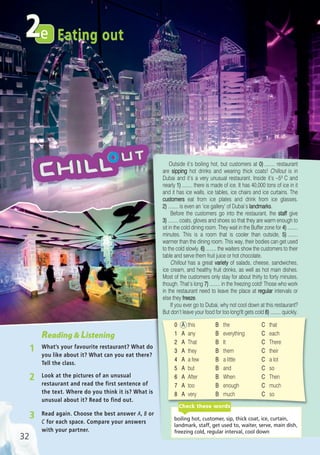
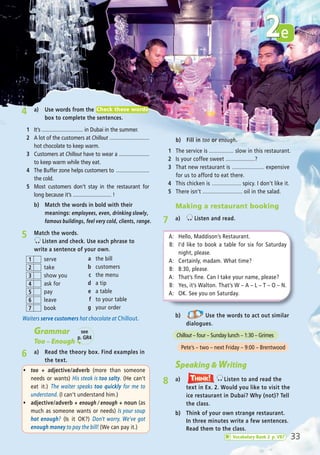
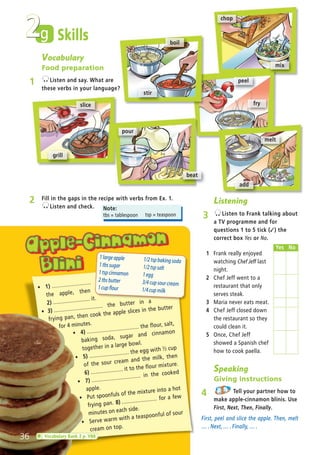
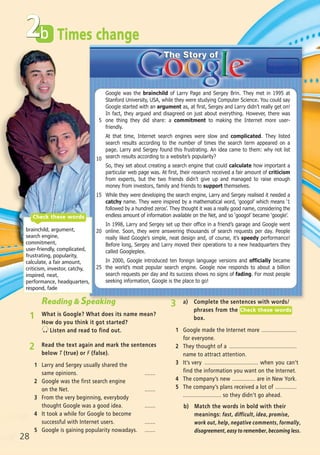
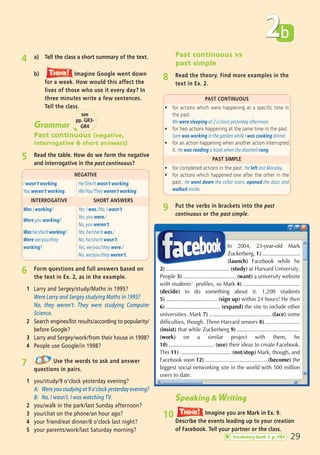
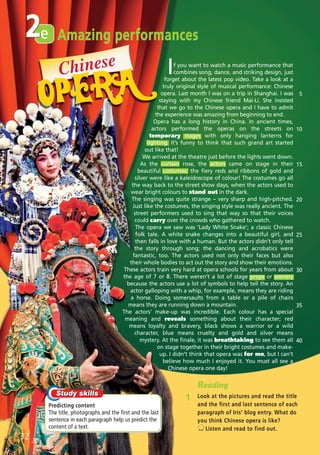
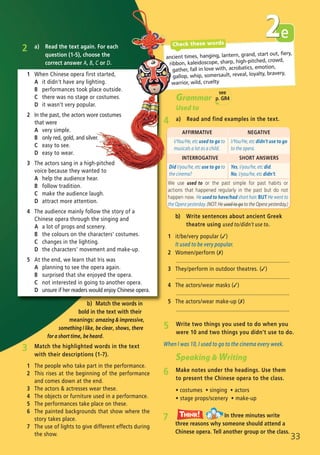
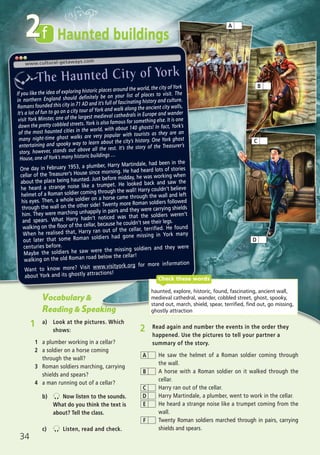
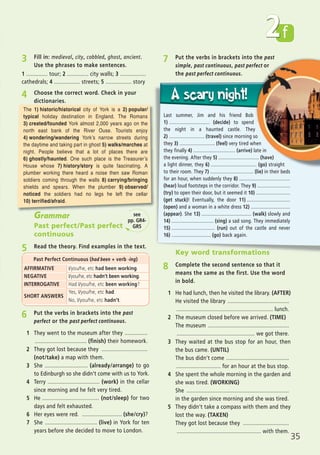
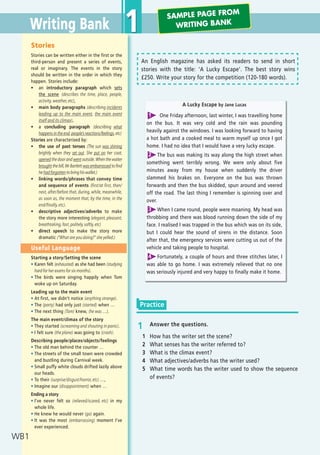
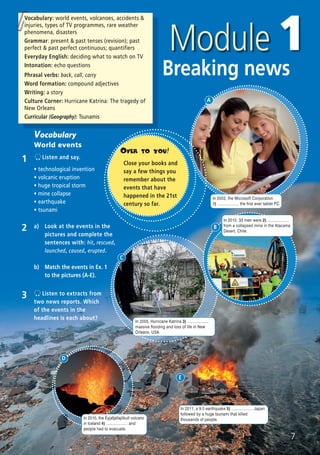
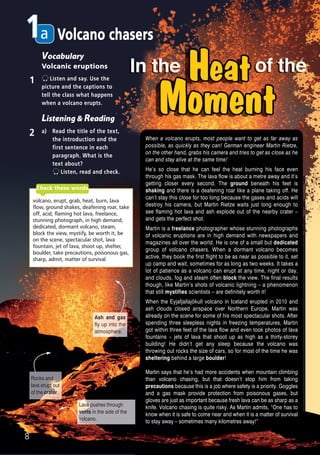
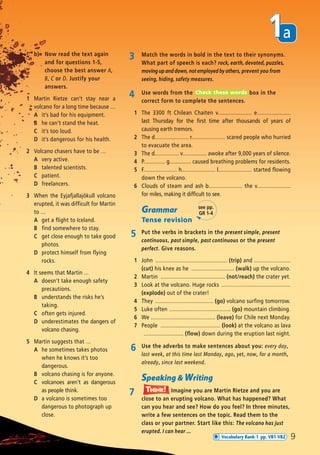
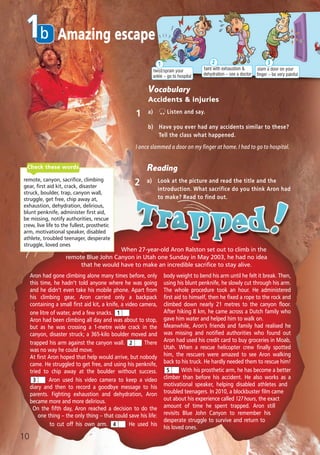
Bring your lessons to life!
The teacher’s interactive tool!
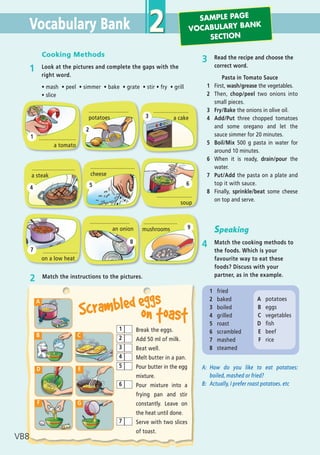
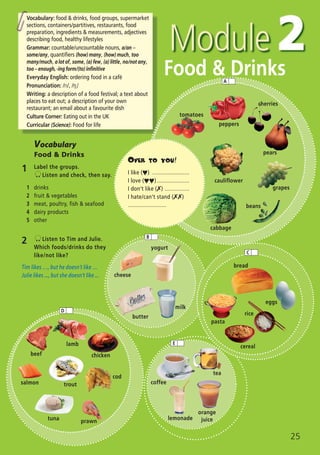
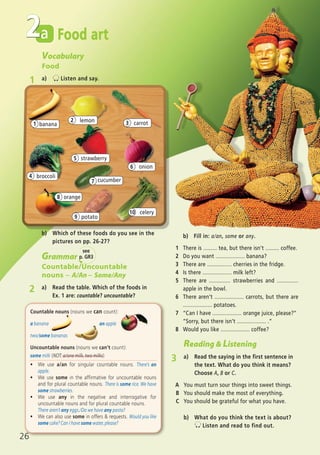
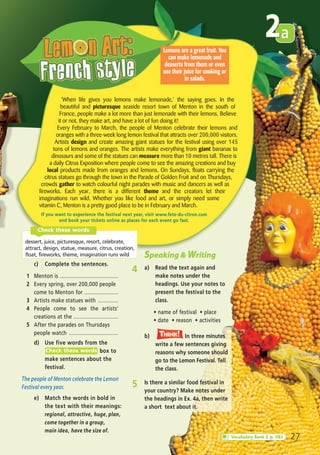
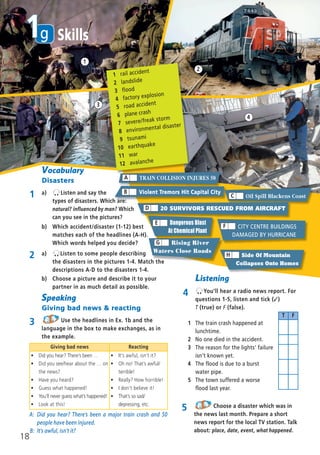
ñ Vocabulary presentation through visuals
ñ Fun board games
ñ Extensive, comprehensive writing sections, with model
compositions and plans
ñ Role-play guide and model dialogues
ñ Fully interactive workbook ñ Fully interactive grammar
01 Prime Time Elem_UpInt Leaflet_01 Prime Time Elem_UpInt Leaflet 27/03/2012 8:25 ΜΜ Page 2
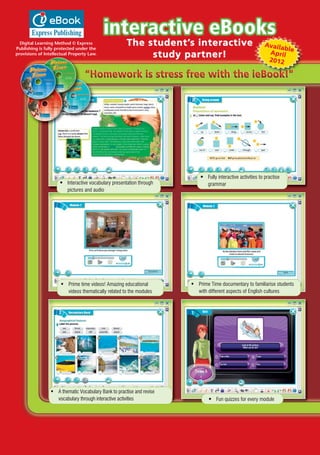
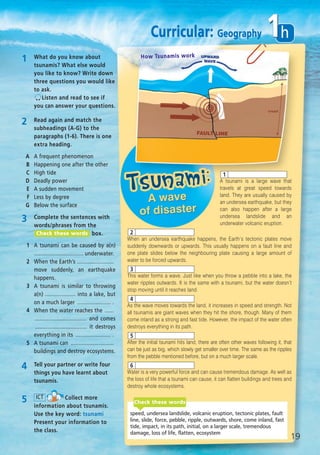
The student’s interactive
study partner!
Digital Learning Method © Express
Publishing is fully protected under the
provisions of Intellectual Property Law.
• Interactive vocabulary presentation through
pictures and audio
• Fully interactive activities to practise
grammar
• Prime time videos! Amazing educational
videos thematically related to the modules
• Prime Time documentary to familiarise students
with different aspects of English cultures
• A thematic Vocabulary Bank to practise and revise
vocabulary through interactive activities • Fun quizzes for every module
AvailableApril
2012
01 Prime Time Elem_UpInt Leaflet_01 Prime Time Elem_UpInt Leaflet 27/03/2012 8:26 ΜΜ Page 3
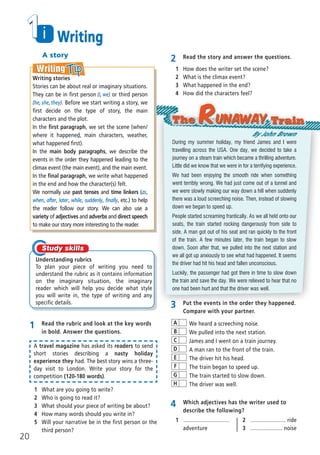
Interactive Whiteboard software
& ieBook software applications.
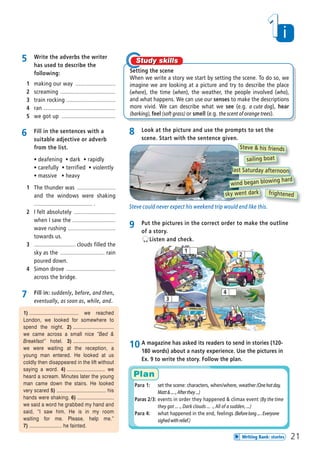
Amazing educational videos
thematically related to the
Modules.
01 Prime Time Elem_UpInt Leaflet_01 Prime Time Elem_UpInt Leaflet 27/03/2012 8:26 ΜΜ Page 4
01 Prime Time Elem_UpInt Leaflet_01 Prime Time Elem_UpInt Leaflet 27/03/2012 8:26 ΜΜ Page 5
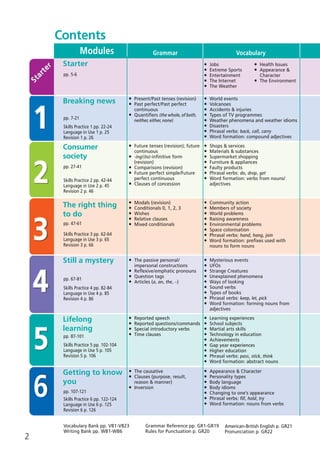
2
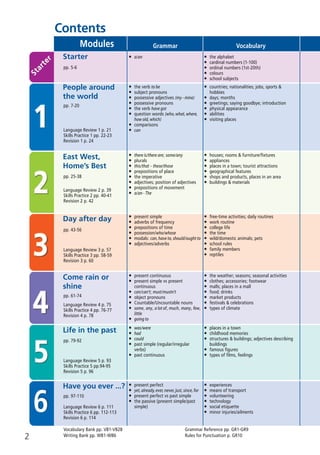
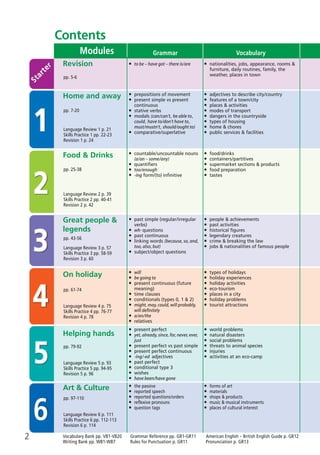
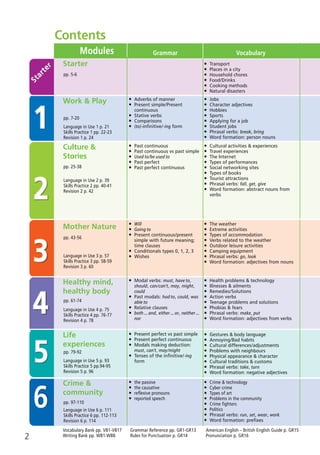
Contents
Modules Grammar Vocabulary
ñ countries; nationalities; jobs, sports &
hobbies
ñ days; months
ñ greetings; saying goodbye; introduction
ñ physical appearance
ñ abilities
ñ visiting places
ñ houses; rooms & furniture/fixtures
ñ appliances
ñ places in a town; tourist attractions
ñ geographical features
ñ shops and products, places in an area
ñ buildings & materials
ñ free-time activities; daily routines
ñ work routine
ñ college life
ñ the time
ñ wild/domestic animals; pets
ñ school rules
ñ family members
ñ reptiles
ñ the verb to be
ñ subject pronouns
ñ possessive adjectives (my - mine)
ñ possessive pronouns
ñ the verb have got
ñ question words (who, what, where,
how old, which)
ñ comparisons
ñ can
ñ the alphabet
ñ cardinal numbers (1-100)
ñ ordinal numbers (1st-20th)
ñ colours
ñ school subjects
ñ a/an
ñ there is/there are; some/any
ñ plurals
ñ this/that - these/those
ñ prepositions of place
ñ the imperative
ñ adjectives; position of adjectives
ñ prepositions of movement
ñ a/an - The
ñ present simple
ñ adverbs of frequency
ñ prepositions of time
ñ possession/who/whose
ñ modals: can, have to, should/ought to
ñ adjectives/adverbs
ñ present continuous
ñ present simple vs present
continuous
ñ can/can’t; must/mustn’t
ñ object pronouns
ñ Countable/Uncountable nouns
ñ some, any, a lot of, much, many, few,
little
ñ going to
ñ was/were
ñ had
ñ could
ñ past simple (regular/irregular
verbs)
ñ past continuous
ñ places in a town
ñ childhood memories
ñ structures & buildings; adjectives describing
buildings
ñ famous figures
ñ types of films, feelings
pp. 7-20
pp. 5-6
pp. 25-38
East West,
Home’s Best
pp. 43-56
Day after day
Come rain or
shine
pp. 61-74
Language Review 3 p. 57
Skills Practice 3 pp. 58-59
Revision 3 p. 60
Life in the past
pp. 79-92
People around
the world
Starter
Language Review 1 p. 21
Skills Practice 1 pp. 22-23
Revision 1 p. 24
Language Review 2 p. 39
Skills Practice 2 pp. 40-41
Revision 2 p. 42
ñ the weather; seasons; seasonal activities
ñ clothes; accessories; footwear
ñ malls; places in a mall
ñ food; drinks
ñ market products
ñ festivals & celebrations
ñ types of climate
Language Review 4 p. 75
Skills Practice 4 pp. 76-77
Revision 4 p. 78
Language Review 5 p. 93
Skills Practice 5 pp.94-95
Revision 5 p. 96
1
2
3
4
5
Starter
ñ present perfect
ñ yet, already, ever, never, just, since, for
ñ present perfect vs past simple
ñ the passive (present simple/past
simple)
ñ experiences
ñ means of transport
ñ volunteering
ñ technology
ñ social etiquette
ñ minor injuries/ailments
Have you ever ...?
pp. 97-110
Language Review 6 p. 111
Skills Practice 6 pp. 112-113
Revision 6 p. 114
6
Vocabulary Bank pp. VB1-VB28
Writing Bank pp. WB1-WB6
Grammar Reference pp. GR1-GR9
Rules for Punctuation p. GR10
01 Prime Time Elem_UpInt Leaflet_01 Prime Time Elem_UpInt Leaflet 27/03/2012 8:26 ΜΜ Page 6
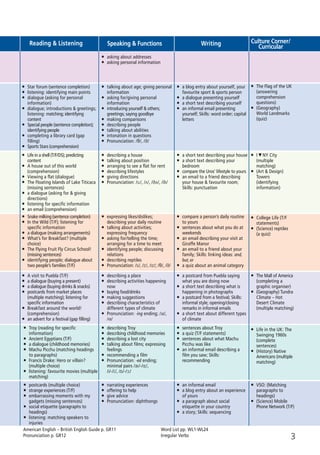
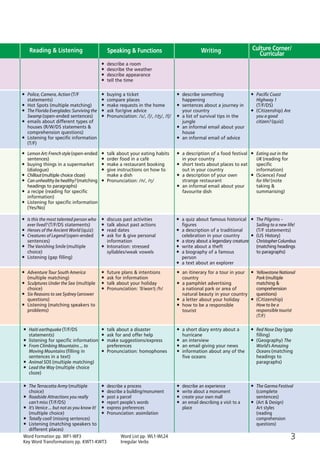
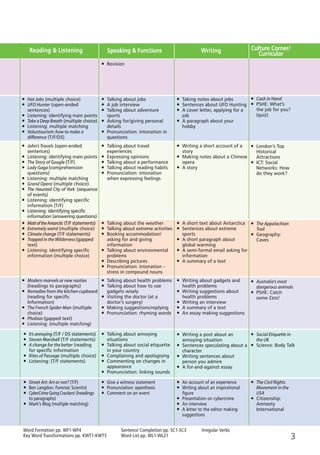
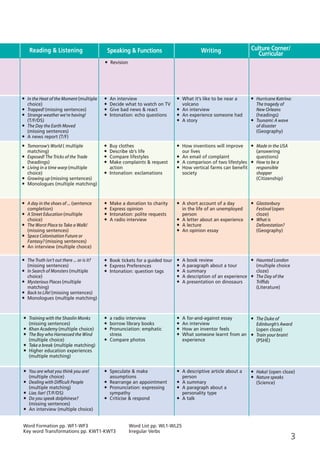
Reading & Listening Writing Culture Corner/
Curricular
ñ Star forum (sentence completion)
ñ listening: identifying main points
ñ dialogue (asking for personal
information)
ñ dialogue; introductions & greetings;
listening: matching; identifying
content
ñ Special people (sentence completion);
identifying people
ñ completing a library card (gap
filling)
ñ Sports Stars (comprehension)
ñ Life in a shell (T/F/DS); predicting
content
ñ A house out of this world
(comprehension)
ñ Viewing a flat (dialogue)
ñ The Floating Islands of Lake Titicaca
(missing sentences)
ñ a dialogue (asking for & giving
directions)
ñ listening for specific information
ñ an email (comprehension)
ñ A visit to Puebla (T/F)
ñ a dialogue (buying a present)
ñ a dialogue (buying drinks & snacks)
ñ postcards from market places
(multiple matching); listening for
specific information
ñ Breakfast around the world!
(comprehension)
ñ an advert for a festival (gap filling)
ñ Snake milking (sentence completion)
ñ In the Wild (T/F); listening for
specific information
ñ a dialogue (making arrangements)
ñ What’s for Breakfast? (multiple
choice)
ñ The Flying Fruit Fly Circus School!
(missing sentences)
ñ identifying people; dialogue about
two people’s families (T/F)
ñ a short text describing your house
ñ a short text describing your
bedroom
ñ compare the Uros’ lifestyle to yours
ñ an email to a friend describing
your house & favourite room;
Skills: punctuation
ñ compare a person’s daily routine
to yours
ñ sentences about what you do at
weekends
ñ an email describing your visit at
Giraffe Manor
ñ an email to a friend about your
family; Skills: linking ideas: and,
but, or
ñ a quiz about an animal category
ñ a postcard from Puebla saying
what you are doing now
ñ a short text describing what is
happening in photographs
ñ a postcard from a festival; Skills:
informal style; opening/closing
remarks in informal emails
ñ a short text about different types
of climate
ñ a blog entry about yourself, your
favourite sport & sports person
ñ a dialogue presenting yourself
ñ a short text describing yourself
ñ an informal email presenting
yourself; Skills: word order; capital
letters
ñ The Flag of the UK
(answering
comprehension
questions)
ñ (Geography)
World Landmarks
(quiz)
ñ I ♥ NY City
(multiple
matching)
ñ (Art & Design)
Towers
(identifying
information)
ñ College Life (T/F
statements)
ñ (Science) reptiles
(a quiz)
ñ The Mall of America
(completing a
graphic organiser)
ñ (Geography) Tundra
Climate – Hot
Desert Climate
(multiple matching)
ñ Troy (reading for specific
information)
ñ Ancient Egyptians (T/F)
ñ a dialogue (childhood memories)
ñ Machu Picchu (matching headings
to paragraphs)
ñ Francis Drake: Hero or villain?
(multiple choice)
ñ listening: favourite movies (multiple
matching)
ñ sentences about Troy
ñ a quiz (T/F statements)
ñ sentences about what Machu
Picchu was like
ñ an informal email describing a
film you saw; Skills:
recommending
ñ Life in the UK: The
Swinging 1960s
(complete
sentences)
ñ (History) Native
Americans (multiple
matching)
Speaking & Functions
ñ talking about age; giving personal
information
ñ asking for/giving personal
information
ñ introducing yourself & others;
greetings; saying goodbye
ñ making comparisons
ñ describing people
ñ talking about abilities
ñ intonation in questions
ñ Pronunciation: /θ/, /∫/
ñ describing a house
ñ talking about position
ñ arranging to see a flat for rent
ñ describing lifestyles
ñ giving directions
ñ Pronunciation: /∂/, /∑/, /∫º/, /∫i/
ñ expressing likes/dislikes;
describing your daily routine
ñ talking about activities;
expressing frequency
ñ asking for/telling the time;
arranging for a time to meet
ñ identifying people; discussing
relations
ñ describing reptiles
ñ Pronunciation: /s/, /z/, /æz/; /θ/, /∫/
ñ describing a place
ñ describing activities happening
now
ñ buying food/drinks
ñ making suggestions
ñ describing characteristics of
different types of climate
ñ Pronunciation: -ing ending; /¡/,
/Ω/
ñ describing Troy
ñ describing childhood memories
ñ describing a lost city
ñ talking about films; expressing
feelings
ñ recommending a film
ñ Pronunciation: -ed ending;
minimal pairs /±/-/≤/,
/æ/-/∞/, /≥/-/¥/
ñ postcards (multiple choice)
ñ strange experiences (T/F)
ñ embarrassing moments with my
gadgets (missing sentences)
ñ social etiquette (paragraphs to
headings)
ñ listening: matching speakers to
injuries
ñ an informal email
ñ a blog entry about an experience
of yours
ñ a paragraph about social
etiquette in your country
ñ a story; Skills: sequencing
ñ VSO: (Matching
paragraphs to
headings)
ñ (Science) Mobile
Phone Network (T/F)
ñ narrating experiences
ñ offering to help
ñ give advice
ñ Pronunciation: diphthongs
ñ asking about addresses
ñ asking personal information
American English – British English Guide p. GR11
Pronunciation p. GR12
Word List pp. WL1-WL24
Irregular Verbs 3
01 Prime Time Elem_UpInt Leaflet_01 Prime Time Elem_UpInt Leaflet 27/03/2012 8:26 ΜΜ Page 7
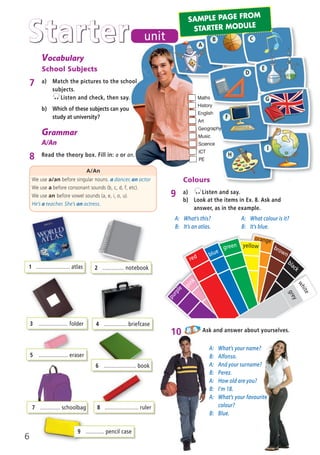
Grammar
A/An
8 Read the theory box. Fill in: a or an.
A/An
We use a/an before singular nouns. a dancer, an actor
We use a before consonant sounds (b, c, d, f, etc).
We use an before vowel sounds (a, e, i, o, u).
He’s a teacher. She’s an actress.
Colours
9 a) Listen and say.
A: What’s your name?
B: Alfonso.
A: And your surname?
B: Perez.
A: How old are you?
B: I’m 18.
A: What’s your favourite
colour?
B: Blue.
10 Ask and answer about yourselves.
1 ...................... atlas 2 .............. notebook
8 ...................... ruler
5 ................... eraser
6 ..................... book
Starter unit
orange
green
Vocabulary
School Subjects
7 a) Match the pictures to the school
subjects.
Listen and check, then say.
b) Which of these subjects can you
study at university?
7 ............. schoolbag
9 ............ pencil case
3 ................... folder 4 ............... briefcase
A
B C
D
E
G
I
brown
yellow
blue
white
grey
black
purple
pink
red
Maths
History
English
Art
Geography
Music
Science
ICT
PE
F
H
b) Look at the items in Ex. 8. Ask and
answer, as in the example.
A: What’s this?
B: It’s an atlas.
A: What colour is it?
B: It’s blue.
6
SAMPLE PAGE FROM
STARTER MODULE
02 Prime Time Elem_UpInt Leaflet_02 Prime Time Elem_UpInt Leaflet 27/03/2012 8:27 ΜΜ Page 8
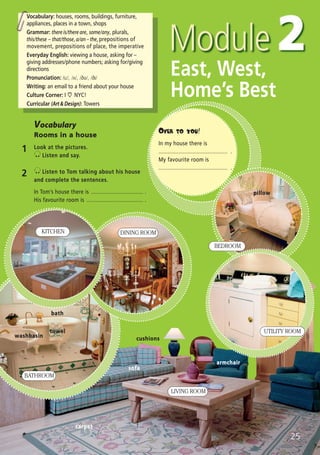
OVER TO YOU!
In my house there is
............................................. .
My favourite room is
............................................. .
pillow
East, West,
Home’s Best
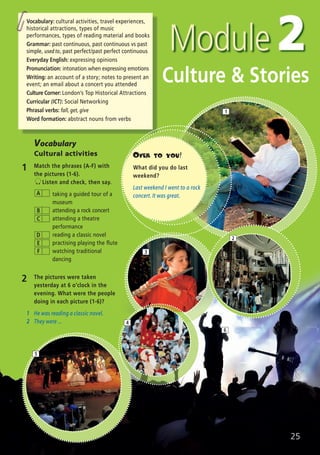
Vocabulary: houses, rooms, buildings, furniture,
appliances, places in a town, shops
Grammar: there is/there are, some/any, plurals,
this/these – that/those, a/an – the, prepositions of
movement, prepositions of place, the imperative
Everyday English: viewing a house, asking for –
giving addresses/phone numbers; asking for/giving
directions
Pronunciation: /∂/, /∑/, /∫º/, /∫i/
Writing: an email to a friend about your house
Culture Corner: I ♡ NYC!
Curricular (Art & Design): Towers
Vocabulary
Rooms in a house
1 Look at the pictures.
Listen and say.
2 Listen to Tom talking about his house
and complete the sentences.
In Tom’s house there is .................................. .
His favourite room is ..................................... .
LIVING ROOM
KITCHEN
BATHROOM
DINING ROOM
bath
towel
armchair
sofa
cushions
UTILITY ROOM
BEDROOM
washbasin
25
carpet
02 Prime Time Elem_UpInt Leaflet_02 Prime Time Elem_UpInt Leaflet 27/03/2012 8:27 ΜΜ Page 9
26
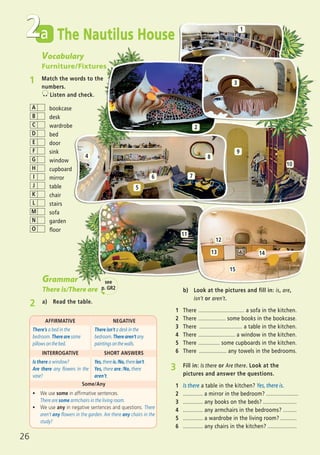
The Nautilus Housea2
Grammar
There is/There are
2 a) Read the table.
3 Fill in: Is there or Are there. Look at the
pictures and answer the questions.
1 Is there a table in the kitchen? Yes, there is.
2 ............. a mirror in the bedroom? .....................
3 ............. any books on the beds? ......................
4 ............. any armchairs in the bedrooms? .........
5 ............. a wardrobe in the living room? ...........
6 ............. any chairs in the kitchen? ...................
There’s a bed in the
bedroom. There are some
pillows on the bed.
There isn’t a desk in the
bedroom. Therearen’tany
paintingsonthewalls.
INTERROGATIVE SHORT ANSWERS
Is there a window?
Are there any flowers in the
vase?
Yes, there is./No, there isn’t.
Yes, there are./No, there
aren’t.
AFFIRMATIVE NEGATIVE
bookcase
desk
wardrobe
bed
door
sink
window
cupboard
mirror
table
chair
stairs
sofa
garden
floor
A
B
C
D
E
F
G
H
I
J
K
L
M
N
O
b) Look at the pictures and fill in: is, are,
isn’t or aren’t.
1 There .............................. a sofa in the kitchen.
2 There .................. some books in the bookcase.
3 There ............................ a table in the kitchen.
4 There ........................ a window in the kitchen.
5 There .............. some cupboards in the kitchen.
6 There .................. any towels in the bedrooms.
Some/Any
ñ We use some in affirmative sentences.
There are some armchairs in the living room.
ñ We use any in negative sentences and questions. There
aren’t any flowers in the garden. Are there any chairs in the
study?
2
3
4
5
6 7
8
9
10
11
15
12
13 14
1
see
p. GR2
Vocabulary
Furniture/Fixtures
1 Match the words to the
numbers.
Listen and check.
02 Prime Time Elem_UpInt Leaflet_02 Prime Time Elem_UpInt Leaflet 27/03/2012 8:28 ΜΜ Page 10
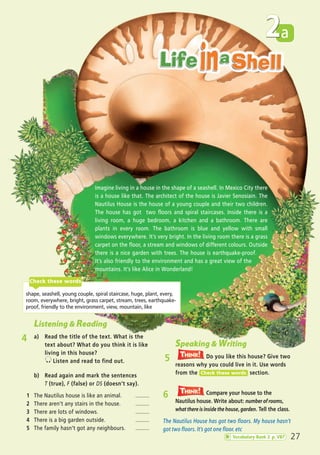
Listening & Reading
4 a) Read the title of the text. What is the
text about? What do you think it is like
living in this house?
Listen and read to find out.
6 Compare your house to the
Nautilus house. Write about: number of rooms,
what there is inside the house, garden. Tell the class.
The Nautilus House has got two floors. My house hasn’t
got two floors. It’s got one floor. etc
Think!TThink!hink!
27
a2
shape, seashell, young couple, spiral staircase, huge, plant, every,
room, everywhere, bright, grass carpet, stream, trees, earthquake-
proof, friendly to the environment, view, mountain, like
Check these words
b) Read again and mark the sentences
T (true), F (false) or DS (doesn’t say).
1 The Nautilus house is like an animal. .........
2 There aren’t any stairs in the house. .........
3 There are lots of windows. .........
4 There is a big garden outside. .........
5 The family hasn’t got any neighbours. .........
Vocabulary Bank 2 p. VB7
Imagine living in a house in the shape of a seashell. In Mexico City there
is a house like that. The architect of the house is Javier Senosiain. The
Nautilus House is the house of a young couple and their two children.
The house has got two floors and spiral staircases. Inside there is a
living room, a huge bedroom, a kitchen and a bathroom. There are
plants in every room. The bathroom is blue and yellow with small
windows everywhere. It’s very bright. In the living room there is a grass
carpet on the floor, a stream and windows of different colours. Outside
there is a nice garden with trees. The house is earthquake-proof.
It’s also friendly to the environment and has a great view of the
mountains. It’s like Alice in Wonderland!
Speaking & Writing
5 Do you like this house? Give two
reasons why you could live in it. Use words
from the section.
Think!TThink!hink!
Check these words
02 Prime Time Elem_UpInt Leaflet_02 Prime Time Elem_UpInt Leaflet 27/03/2012 8:28 ΜΜ Page 11
b2
Vocabulary
Appliances
1 Listen and say. Which of these things have/haven’t
you got in your house? Write sentences.
We’ve got a cooker, a fridge, … and … .
Grammar
Plurals
3 Read the table. Find examples
in the text.
ñ nouns + -s vase – vases
ñ -s, -ss, -sh, -ch, -x, -o, + -es
bus – buses, glass – glasses,
brush – brushes, bench – benches, fox –
foxes, tomato – tomatoes
ñ consonant + y ➞ ies lady – ladies, BUT
toy – toys
ñ -f/-fe ➞ -ves leaf – leaves BUT
roof – roofs
child – children, woman – women, man – men,
foot – feet, tooth – teeth, mouse – mice,
person – people
PLURALS
IRREGULAR PLURALS
28
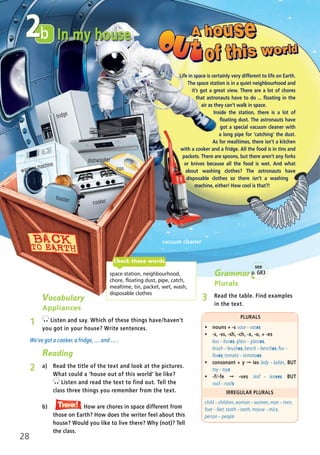
Life in space is certainly very different to life on Earth.
The space station is in a quiet neighbourhood and
it’s got a great view. There are a lot of chores
that astronauts have to do ... floating in the
air as they can’t walk in space.
Inside the station, there is a lot of
floating dust. The astronauts have
got a special vacuum cleaner with
a long pipe for ‘catching’ the dust.
As for mealtimes, there isn’t a kitchen
with a cooker and a fridge. All the food is in tins and
packets. There are spoons, but there aren’t any forks
or knives because all the food is wet. And what
about washing clothes? The astronauts have
disposable clothes so there isn’t a washing
machine, either! How cool is that?!
Reading
2 a) Read the title of the text and look at the pictures.
What could a ‘house out of this world’ be like?
Listen and read the text to find out. Tell the
class three things you remember from the text.
b) How are chores in space different from
those on Earth? How does the writer feel about this
house? Would you like to live there? Why (not)? Tell
the class.
Think!TThink!hink!
space station, neighbourhood,
chore, floating dust, pipe, catch,
mealtime, tin, packet, wet, wash,
disposable clothes
Check these words
In my house
ironwashing machine
cooker
fridge
vacuum cleaner
dishwasher
toaster
see
p. GR3
02 Prime Time Elem_UpInt Leaflet_02 Prime Time Elem_UpInt Leaflet 27/03/2012 8:28 ΜΜ Page 12
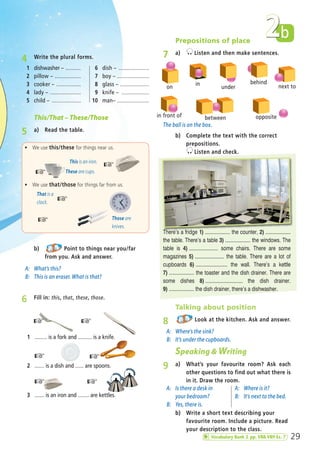
4 Write the plural forms.
b) Point to things near you/far
from you. Ask and answer.
A: What’s this?
B: This is an eraser. What is that?
This/That – These/Those
5 a) Read the table.
This is an iron.
ñ We use this/these for things near us.
☞These are cups.☞
That is a
clock.
ñ We use that/those for things far from us.
☞
Those are
knives.
☞
29
b2
☞
2 ....... is a dish and ...... are spoons.
☞
3 ....... is an iron and ........ are kettles.
6 Fill in: this, that, these, those.
1 ......... is a fork and .......... is a knife.
☞☞
☞
☞
1 dishwasher – ..........
2 pillow – .................
3 cooker – ................
4 lady – ....................
5 child – ...................
6 dish – ....................
7 boy – .....................
8 glass – ...................
9 knife – ..................
10 man– .....................
b) Complete the text with the correct
prepositions.
Listen and check.
Prepositions of place
7 a) Listen and then make sentences.
b) Write a short text describing your
favourite room. Include a picture. Read
your description to the class.
Talking about position
8 Look at the kitchen. Ask and answer.
A: Where’s the sink?
B: It’s under the cupboards.
Speaking & Writing
9 a) What’s your favourite room? Ask each
other questions to find out what there is
in it. Draw the room.
A: Is there a desk in
your bedroom?
B: Yes, there is.
A: Where is it?
B: It’s next to the bed.
The ball is on the box.
There’s a fridge 1) ................... the counter, 2) ...................
the table. There’s a table 3) ................... the windows. The
table is 4) ...................... some chairs. There are some
magazines 5) ...................... the table. There are a lot of
cupboards 6) ........................ the wall. There’s a kettle
7) ................... the toaster and the dish drainer. There are
some dishes 8) ............................ the dish drainer.
9) ................... the dish drainer, there’s a dishwasher.
on
in
under
behind
next to
oppositebetweenin front of
Vocabulary Bank 2 pp. VB8-VB9 Ex. 7
02 Prime Time Elem_UpInt Leaflet_02 Prime Time Elem_UpInt Leaflet 27/03/2012 8:28 ΜΜ Page 13
c2
30
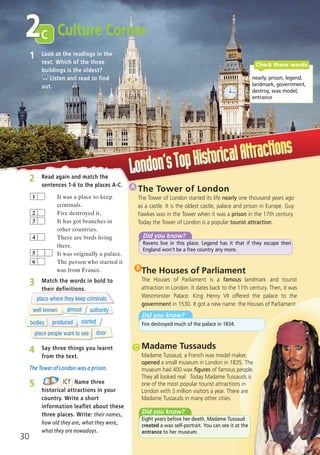
c statue, symbol of independence, ride,
chance, boat, get wet, forget, horse
and carriage, path, huge, lake, zoo,
skating rink, skyscraper, flight
Check these words
Culture Corner
NEW YORK
CITY HAS IT ALL!
NEW YORK
CITY HAS IT ALL!
3 Fill in: huge, horse-and-carriage, get, skating,
fantastic, take. Use the phrases to make
sentences about the places in the leaflet.
2 Read again and write the place (A, B or C).
1 This is a good place to take photos. .........
2 There are animals here. .........
3 You can see shows here. .........
4 It’s a place to see all of New York. .........
1 ...................... park
2 ....................... rink
3 .................... views
4 ....................... ride
5 ....................... wet
6 ......... photographs
Reading & Listening
1 Look at the leaflet about New York. What
do you know about this city? What is there
for tourists to see?
Listen and read the leaflet to check.
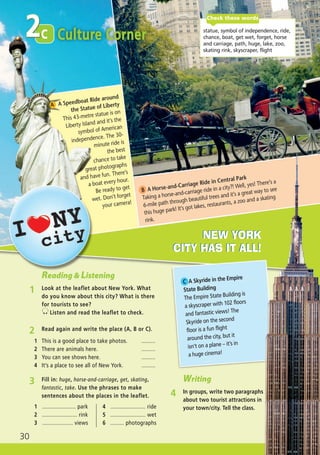
A A Speedboat Ride around
the Statue of Liberty
This 43-metre statue is on
Liberty Island and it’s the
symbol of American
independence. The 30-
minute ride is
the best
chance to take
great photographs
and have fun. There’s
a boat every hour.
Be ready to get
wet. Don’t forget
your camera!
B A Horse-and-Carriage Ride in Central Park
Taking a horse-and-carriage ride in a city?! Well, yes! There’s a
6-mile path through beautiful trees and it’s a great way to see
this huge park! It’s got lakes, restaurants, a zoo and a skating
rink.
C A Skyride in the Empire
State Building
The Empire State Building is
a skyscraper with 102 floors
and fantastic views! The
Skyride on the second
floor is a fun flight
around the city, but it
isn’t on a plane – it’s in
a huge cinema!
Writing
4 In groups, write two paragraphs
about two tourist attractions in
your town/city. Tell the class.
02 Prime Time Elem_UpInt Leaflet_02 Prime Time Elem_UpInt Leaflet 27/03/2012 8:28 ΜΜ Page 14
B
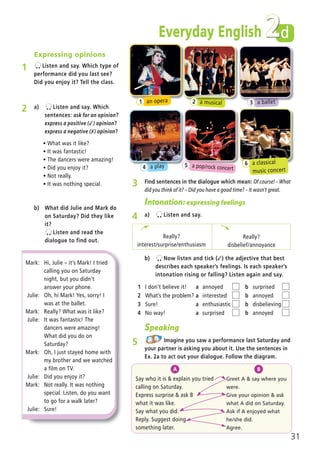
dEveryday English 2
Speaking
6 Work in pairs. You are interested in
the flat in advert A. Call the estate agent to
find out information about it. Act out your
dialogue. Follow the plan.
31
b) Which advert does the dialogue match?
3 Find sentences in the dialogue which mean:
What can I do for you? – How much does it cost? –
That’s OK with me.
4 Listen and repeat. Then, in pairs, act out
similar dialogues using the ideas below.
A: What’s your address, please?
B: 20 Milcote Road.
A: Can you spell it, please?
B: M – I – L – C – O – T – E.
ñ 12 Longhurst Lane.
ñ 17 Morrison Avenue.
ñ 21 Primrose Street.
A
Greet B. Offer to
help.
Say what is available.
Name the rooms.
Say how much it
costs.
Name the floor.
Agree. Mention
a time.
Say the address.
B
Say who you are &
what you want.
Ask about number of
rooms.
Ask about rent.
Ask which floor it is
on.
Ask if you can see it.
Agree. Ask about the
address.
Thank.
/∂/ /∑/ /∂/ /∑/ /∂/ /∑/
much dust view
roof blue under
Pronunciation: /∂/, /∑/
5 Listen and tick (✓) the correct boxes.
Listen again and repeat.
Flat hunting
1 Read the adverts. What are
they about?
2 a) The following sentences appear in the
dialogue below. Who says each: an estate
agent or a student?
Listen and read to find out.
ñ How can I help you? ñ OK, let me see.
ñ How many rooms has it got?
ñ And how much is it? ñ Which floor is it on?
ñ Can I see it? ñ Is 6 o’clock this evening OK?
ñ What’s the address?
Everyday English
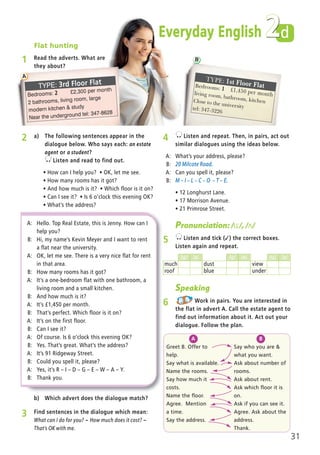
TYPE: 3rd Floor Flat
Bedrooms: 2 í2,300 per month
2 bathrooms, living room, large
modern kitchen & study
Near the underground tel: 347-8628
TYPE: 1st Floor FlatBedrooms: 1 í1,450 per monthliving room, bathroom, kitchenClose to the universitytel: 347-3226
A
A: Hello. Top Real Estate, this is Jenny. How can I
help you?
B: Hi, my name’s Kevin Meyer and I want to rent
a flat near the university.
A: OK, let me see. There is a very nice flat for rent
in that area.
B: How many rooms has it got?
A: It’s a one-bedroom flat with one bathroom, a
living room and a small kitchen.
B: And how much is it?
A: It’s í1,450 per month.
B: That’s perfect. Which floor is it on?
A: It’s on the first floor.
B: Can I see it?
A: Of course. Is 6 o’clock this evening OK?
B: Yes. That’s great. What’s the address?
A: It’s 91 Ridgeway Street.
B: Could you spell it, please?
A: Yes, it’s R – I – D – G – E – W – A – Y.
B: Thank you.
02 Prime Time Elem_UpInt Leaflet_02 Prime Time Elem_UpInt Leaflet 27/03/2012 8:28 ΜΜ Page 15
e2
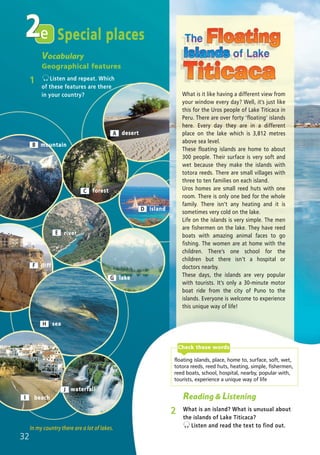
A desert
Reading & Listening
2 What is an island? What is unusual about
the islands of Lake Titicaca?
Listen and read the text to find out.In my country there are a lot of lakes.
Special places
What is it like having a different view from
your window every day? Well, it’s just like
this for the Uros people of Lake Titicaca in
Peru. There are over forty ‘floating’ islands
here. Every day they are in a different
place on the lake which is 3,812 metres
above sea level.
These floating islands are home to about
300 people. Their surface is very soft and
wet because they make the islands with
totora reeds. There are small villages with
three to ten families on each island.
Uros homes are small reed huts with one
room. There is only one bed for the whole
family. There isn’t any heating and it is
sometimes very cold on the lake.
Life on the islands is very simple. The men
are fishermen on the lake. They have reed
boats with amazing animal faces to go
fishing. The women are at home with the
children. There’s one school for the
children but there isn’t a hospital or
doctors nearby.
These days, the islands are very popular
with tourists. It’s only a 30-minute motor
boat ride from the city of Puno to the
islands. Everyone is welcome to experience
this unique way of life!
F
I
J
C
B
E
forest
mountain
river
island
lake
cliff
sea
beach
waterfall
D
G
32
H
floating islands, place, home to, surface, soft, wet,
totora reeds, reed huts, heating, simple, fishermen,
reed boats, school, hospital, nearby, popular with,
tourists, experience a unique way of life
Check these words
Vocabulary
Geographical features
1 Listen and repeat. Which
of these features are there
in your country?
02 Prime Time Elem_UpInt Leaflet_02 Prime Time Elem_UpInt Leaflet 27/03/2012 8:28 ΜΜ Page 16
e2
Speaking & Writing
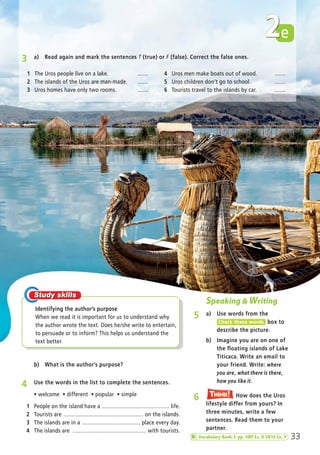
5 a) Use words from the
box to
describe the picture.
Check these words
4 Use the words in the list to complete the sentences.
ñ welcome ñ different ñ popular ñ simple
1 People on the island have a ............................................ life.
2 Tourists are .................................................... on the islands.
3 The islands are in a ...................................... place every day.
4 The islands are ................................................ with tourists.
b) Imagine you are on one of
the floating islands of Lake
Titicaca. Write an email to
your friend. Write: where
you are, what there is there,
how you like it.
b) What is the author’s purpose?
6 How does the Uros
lifestyle differ from yours? In
three minutes, write a few
sentences. Read them to your
partner.
Think!TThink!hink!
3 a) Read again and mark the sentences T (true) or F (false). Correct the false ones.
33
Identifying the author’s purpose
When we read it is important for us to understand why
the author wrote the text. Does he/she write to entertain,
to persuade or to inform? This helps us understand the
text better.
1 The Uros people live on a lake. .......
2 The islands of the Uros are man-made. .......
3 Uros homes have only two rooms. .......
4 Uros men make boats out of wood. .......
5 Uros children don’t go to school. .......
6 Tourists travel to the islands by car. .......
Vocabulary Bank 2 pp. VB9 Ex. 8-VB10 Ex. 9
02 Prime Time Elem_UpInt Leaflet_02 Prime Time Elem_UpInt Leaflet 27/03/2012 8:28 ΜΜ Page 17
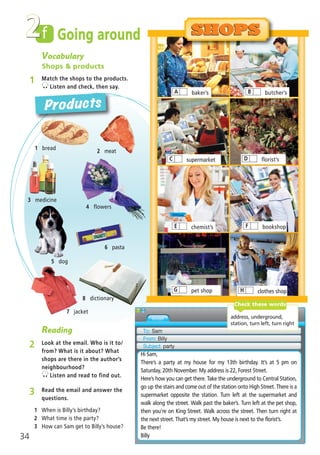
1 bread
2 meat
3 medicine
7 jacket
4 flowers
5 dog
8 dictionary
SHOPSSHOPS
Products
Vocabulary
Shops & products
1 Match the shops to the products.
Listen and check, then say.
Going aroundf2
Reading
2 Look at the email. Who is it to/
from? What is it about? What
shops are there in the author’s
neighbourhood?
Listen and read to find out.
3 Read the email and answer the
questions.
1 When is Billy’s birthday?
2 What time is the party?
3 How can Sam get to Billy’s house?
To: Sam
From: Billy
Subject: party
Hi Sam,
There’s a party at my house for my 13th birthday. It’s at 5 pm on
Saturday, 20th November. My address is 22, Forest Street.
Here’s how you can get there. Take the underground to Central Station,
go up the stairs and come out of the station onto High Street. There is a
supermarket opposite the station. Turn left at the supermarket and
walk along the street. Walk past the baker’s. Turn left at the pet shop,
then you’re on King Street. Walk across the street. Then turn right at
the next street. That’s my street. My house is next to the florist’s.
Be there!
Billy
address, underground,
station, turn left, turn right
Check these words
pet shopG clothes shopH
bookshopF
florist’sD
butcher’sBbaker’sA
supermarketC
chemist’sE
34
6 pasta
02 Prime Time Elem_UpInt Leaflet_02 Prime Time Elem_UpInt Leaflet 27/03/2012 8:29 ΜΜ Page 18
35
f2Grammar
The Imperative
4 Read the theory. Look at the signs and
write sentences.
Prepositions of movement
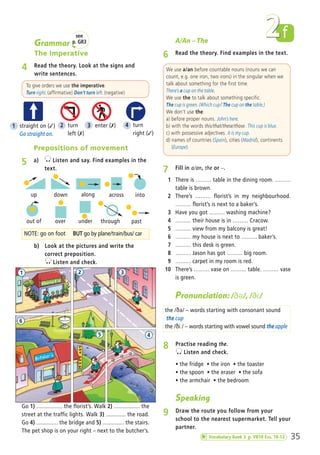
5 a) Listen and say. Find examples in the
text.
NOTE: go on foot BUT go by plane/train/bus/ car
b) Look at the pictures and write the
correct preposition.
Listen and check.
To give orders we use the imperative.
Turn right. (affirmative) Don’t turn left. (negative)
A/An – The
6 Read the theory. Find examples in the text.
We use a/an before countable nouns (nouns we can
count, e.g. one iron, two irons) in the singular when we
talk about something for the first time.
There’s a cup on the table.
We use the to talk about something specific.
The cup is green. (Which cup? The cup on the table.)
We don’t use the:
a) before proper nouns. John’s here.
b) with the words this/that/these/those. This cup is blue.
c) with possessive adjectives. It is my cup.
d) names of countries (Spain), cities (Madrid), continents
(Europe).
7 Fill in a/an, the or –.
1 There is ……… table in the dining room. ………
table is brown.
2 There’s ……… florist’s in my neighbourhood.
……… florist’s is next to a baker’s.
3 Have you got ……… washing machine?
4 ……… their house is in ……… Cracow.
5 ……… view from my balcony is great!
6 ……… my house is next to ……… baker’s.
7 ……… this desk is green.
8 ……… Jason has got ……… big room.
9 ……… carpet in my room is red.
10 There’s ……… vase on ……… table. ……… vase
is green.
Go 1) ................. the florist’s. Walk 2) ................. the
street at the traffic lights. Walk 3) ............. the road.
Go 4) .............. the bridge and 5) .............. the stairs.
The pet shop is on your right – next to the butcher’s.
Pronunciation: /∫º/, /∫∞/
the /ðə/ – words starting with consonant sound
the cup
the /ðiː/ – words starting with vowel sound the apple
8 Practise reading the.
Listen and check.
ñ the fridge ñ the iron ñ the toaster
ñ the spoon ñ the eraser ñ the sofa
ñ the armchair ñ the bedroom
Speaking
9 Draw the route you follow from your
school to the nearest supermarket. Tell your
partner.
up down across into
out of under through past
along
over
1 straight on (✓)
Go straight on.
3 enter (✗) 4 turn
right (✓)
2 turn
left (✗)
1 2 3
45
6
see
p. GR3
Vocabulary Bank 2 p. VB10 Exs. 10-12
02 Prime Time Elem_UpInt Leaflet_02 Prime Time Elem_UpInt Leaflet 27/03/2012 8:29 ΜΜ Page 19
Ask where X is.
Ask for
directions.
Thank B.
Name the street.
Give directions.
Say goodbye
to A.
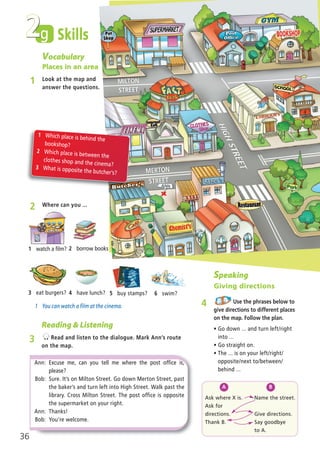
Vocabulary
Places in an area
1 Look at the map and
answer the questions.
1 Which place is behind the
bookshop?
2 Which place is between the
clothes shop and the cinema?
3 What is opposite the butcher’s?
A B
Speaking
Giving directions
4 Use the phrases below to
give directions to different places
on the map. Follow the plan.
ñ Go down ... and turn left/right
into ...
ñ Go straight on.
ñ The ... is on your left/right/
opposite/next to/between/
behind ...
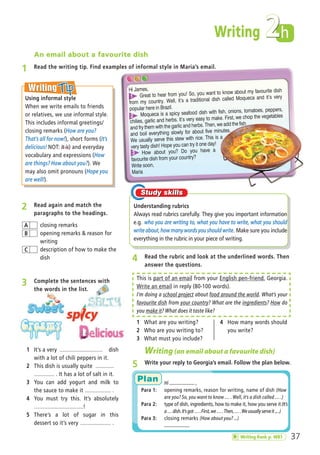
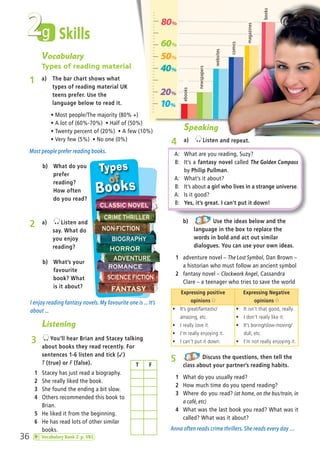
g2 Skills
36
2 Where can you ...
1 You can watch a film at the cinema.
ANN
Ann: Excuse me, can you tell me where the post office is,
please?
Bob: Sure. It’s on Milton Street. Go down Merton Street, past
the baker’s and turn left into High Street. Walk past the
library. Cross Milton Street. The post office is opposite
the supermarket on your right.
Ann: Thanks!
Bob: You’re welcome.
Reading & Listening
3 Read and listen to the dialogue. Mark Ann’s route
on the map.
2 borrow books1 watch a film?
4 have lunch?3 eat burgers? 6 swim?5 buy stamps?
02 Prime Time Elem_UpInt Leaflet_02 Prime Time Elem_UpInt Leaflet 27/03/2012 8:29 ΜΜ Page 20
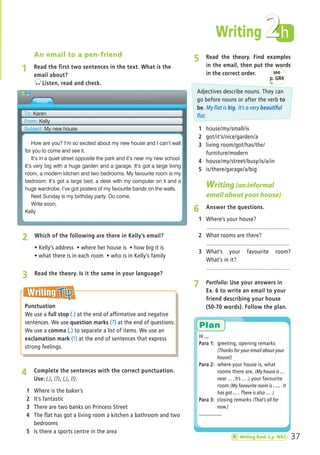
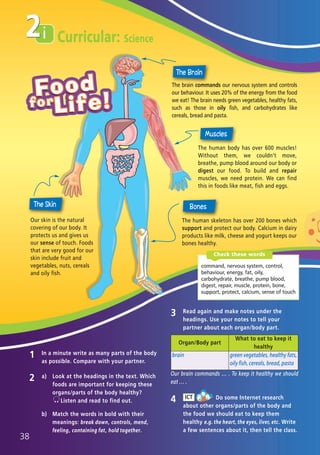
An email to a pen-friend
1 Read the first two sentences in the text. What is the
email about?
Listen, read and check.
Hi ...,
Para 1: greeting, opening remarks
(Thanks for your email about your
house!)
Para 2: where your house is, what
rooms there are, (My house is …
near … . It’s … .) your favourite
room (My favourite room is ….. . It
has got … . There is also … .)
Para 3: closing remarks (That’s all for
now.)
....................
Plan
2 Which of the following are there in Kelly’s email?
ñ Kelly’s address ñ where her house is ñ how big it is
ñ what there is in each room ñ who is in Kelly’s family
Writing (an informal
email about your house)
6 Answer the questions.
1 Where’s your house?
......................................................
2 What rooms are there?
......................................................
3 What’s your favourite room?
What’s in it?
......................................................
7 Portfolio: Use your answers in
Ex. 6 to write an email to your
friend describing your house
(50-70 words). Follow the plan.Punctuation
We use a full stop (.) at the end of affirmative and negative
sentences. We use question marks (?) at the end of questions.
We use a comma (,) to separate a list of items. We use an
exclamation mark (!) at the end of sentences that express
strong feelings.
Adjectives describe nouns. They can
go before nouns or after the verb to
be. My flat is big. It’s a very beautiful
flat.
3 Read the theory. Is it the same in your language?
5 Read the theory. Find examples
in the email, then put the words
in the correct order.
4 Complete the sentences with the correct punctuation.
Use: (.), (?), (,), (!).
1 Where is the baker’s
2 It’s fantastic
3 There are two banks on Princess Street
4 The flat has got a living room a kitchen a bathroom and two
bedrooms
5 Is there a sports centre in the area
1 house/my/small/is
2 got/it’s/nice/garden/a
3 living room/got/has/the/
furniture/modern
4 house/my/street/busy/is/a/in
5 is/there/garage/a/big
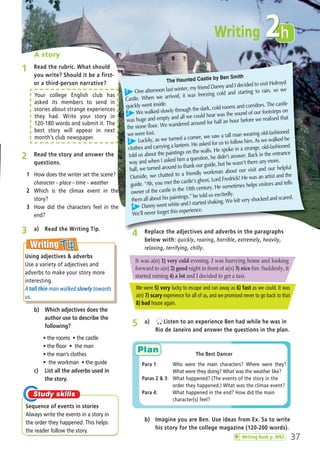
hWriting 2
To: Karen
From: Kelly
Subject: My new house
How are you? I’m so excited about my new house and I can’t wait
for you to come and see it.
It’s in a quiet street opposite the park and it’s near my new school.
It’s very big with a huge garden and a garage. It’s got a large living
room, a modern kitchen and two bedrooms. My favourite room is my
bedroom. It’s got a large bed, a desk with my computer on it and a
huge wardrobe. I’ve got posters of my favourite bands on the walls.
Next Sunday is my birthday party. Do come.
Write soon,
Kelly
37Writing Bank 2 p. WB2
see
p. GR4
02 Prime Time Elem_UpInt Leaflet_02 Prime Time Elem_UpInt Leaflet 27/03/2012 8:29 ΜΜ Page 21
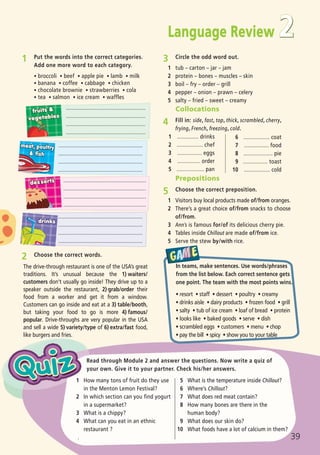
Curricular: Art & Designi2
2 Read the text. What do these numbers
refer to: 184 m, 300 m, 43 seconds, 324 m,
10,000 tonnes, 6 million?
5 In groups collect information
about another tower or building.
Where is it?, What is it made of?, What does it
look like?
Present it to the class.
ICT
4 Which tower is the most
impressive to you? Why?
Think!TThink!hink!
Listening & Reading
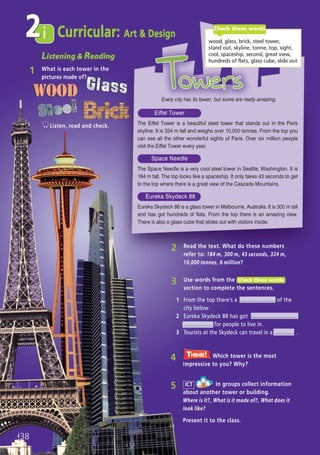
1 What is each tower in the
pictures made of?
Listen, read and check.
wood, glass, brick, steel tower,
stand out, skyline, tonne, top, sight,
cool, spaceship, second, great view,
hundreds of flats, glass cube, slide out
Check these words
Every city has its tower, but some are really amazing.
The Eiffel Tower is a beautiful steel tower that stands out in the Paris
skyline. It is 324 m tall and weighs over 10,000 tonnes. From the top you
can see all the other wonderful sights of Paris. Over six million people
visit the Eiffel Tower every year.
The Space Needle is a very cool steel tower in Seattle, Washington. It is
184 m tall. The top looks like a spaceship. It only takes 43 seconds to get
to the top where there is a great view of the Cascade Mountains.
Eureka Skydeck 88 is a glass tower in Melbourne, Australia. It is 300 m tall
and has got hundreds of flats. From the top there is an amazing view.
There is also a glass cube that slides out with visitors inside.
Space Needle
Eureka Skydeck 88
Eiffel Tower
38
3 Use words from the
section to complete the sentences.
1 From the top there’s a ....................... of the
city below.
2 Eureka Skydeck 88 has got ..............................
................... for people to live in.
3 Tourists at the Skydeck can travel in a .............. .
Check these words
02 Prime Time Elem_UpInt Leaflet_02 Prime Time Elem_UpInt Leaflet 27/03/2012 8:29 ΜΜ Page 22
2
4 Choose the correct preposition.
1 The house is in/at the shape of a seashell.
2 There are posters on/in the walls.
3 You can’t walk in/at space.
4 There are small huts in/on the island.
5 The flat is at/on the third floor.
6 We’re excited for/about our new house.
7 The place is popular with/for tourists.
8 The island is home for/to twenty families.
1 ...................... shell
2 ............... staircase
3 ....................-proof
4 ..............................
neighbourhood
5 ................ machine
6 ...................... rink
7 .................... agent
8 ....................... wet
2 Fill in: quiet, earthquake, washing, skating, get,
sea, estate, spiral.
1 Complete the spidergrams with these
words. Add one more word.
ñ fridge ñ cupboard ñ toilet ñ bed ñ sofa
ñ dishwasher ñ wardrobe ñ sink ñ washbasin
ñ pillow ñ armchair ñ cushion ñ bath
In teams make sentences. Use words from
the list. Each correct sentence gets one
point. The team with the most points wins.
ñ sea level ñ home to ñ go straight ñ turn left
ñ unique way of life ñ estate agent
ñ second floor ñ huge park ñ chores
ñ vacuum cleaner ñ small windows
ñ friendly to the environment ñ great view
3 Choose the correct word.
1 The house has a great site/view of the lake.
2 The lake is high above sea ride/level.
3 The Uros people have a unique type/way of life.
4 There are floating/popular islands on the lake
that are in a different place each day.
5 There isn’t a school nearby/straight.
6 Their houses are small hats/huts of reeds.
7 We have picnics in/at weekends.
1 The Nautilus House is like a snake. ......
2 The Space Needle is in Melbourne. ......
3 The Uros people have got
reed boats. .....
4 The Empire State Building has
got 100 floors. .....
5 You can’t walk in space. .....
6 The Statue of Liberty is on Ellis
Island. .....
7 There aren’t any lakes in Central
Park. .....
8 Lake Titicaca is in Peru. .....
Mark the sentences T (true) or F (false). Read through Module 2 and write
a quiz of your own.
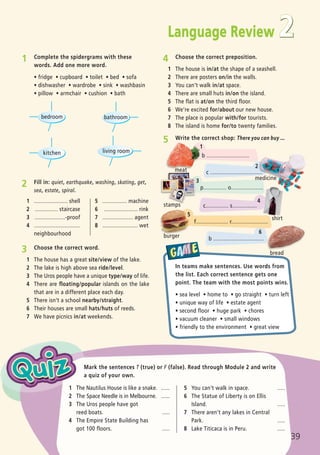
5 Write the correct shop: There you can buy ...
b ............................
c ..................................
p............... o.....................
c............... s................
f..................... r........................
b .................................
Language Review
bedroom bathroom
living roomkitchen
39
1
2
3
4
5
6
meat
stamps
burger
medicine
shirt
bread
02 Prime Time Elem_UpInt Leaflet_02 Prime Time Elem_UpInt Leaflet 27/03/2012 8:29 ΜΜ Page 23
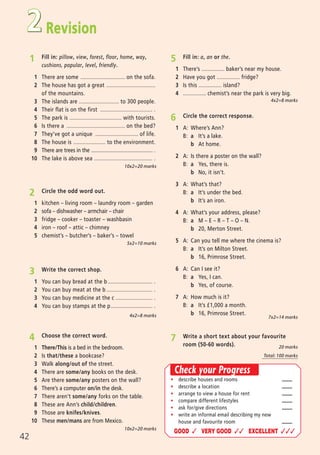
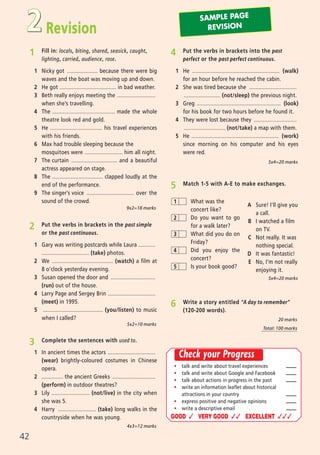
Revision
ñ describe houses and rooms
ñ describe a location
ñ arrange to view a house for rent
ñ compare different lifestyles
ñ ask for/give directions
ñ write an informal email describing my new
house and favourite room
GOOD ✓ VERY GOOD ✓✓ EXCELLENT ✓✓✓
1 Fill in: pillow, view, forest, floor, home, way,
cushions, popular, level, friendly.
1 There are some ............................. on the sofa.
2 The house has got a great ................................
of the mountains.
3 The islands are .......................... to 300 people.
4 Their flat is on the first .................................. .
5 The park is .................................. with tourists.
6 Is there a ...................................... on the bed?
7 They’ve got a unique ............................ of life.
8 The house is ..................... to the environment.
9 There are trees in the ............................................. .
10 The lake is above sea ...................................... .
10x2=20 marks
4 Choose the correct word.
1 There/This is a bed in the bedroom.
2 Is that/these a bookcase?
3 Walk along/out of the street.
4 There are some/any books on the desk.
5 Are there some/any posters on the wall?
6 There’s a computer on/in the desk.
7 There aren’t some/any forks on the table.
8 These are Ann’s child/children.
9 Those are knifes/knives.
10 These men/mans are from Mexico.
5x2=10 marks
10x2=20 marks
7 Write a short text about your favourite
room (50-60 words).
Check your Progress
20 marks
Total: 100 marks
6 Circle the correct response.
1 A: Where’s Ann?
B: a It’s a lake.
b At home.
2 A: Is there a poster on the wall?
B: a Yes, there is.
b No, it isn’t.
3 A: What’s that?
B: a It’s under the bed.
b It’s an iron.
4 A: What’s your address, please?
B: a M – E – R – T – O – N.
b 20, Merton Street.
5 A: Can you tell me where the cinema is?
B: a It’s on Milton Street.
b 16, Primrose Street.
6 A: Can I see it?
B: a Yes, I can.
b Yes, of course.
7 A: How much is it?
B: a It’s í1,000 a month.
b 16, Primrose Street.
2 Circle the odd word out.
1 kitchen – living room – laundry room – garden
2 sofa – dishwasher – armchair – chair
3 fridge – cooker – toaster – washbasin
4 iron – roof – attic – chimney
5 chemist’s – butcher’s – baker’s – towel
7x2=14 marks
5 Fill in: a, an or the.
1 There’s ............... baker’s near my house.
2 Have you got ............... fridge?
3 Is this ............... island?
4 ............... chemist’s near the park is very big.
4x2=8 marks
4x2=8 marks
3 Write the correct shop.
1 You can buy bread at the b ............................. .
2 You can buy meat at the b .............................. .
3 You can buy medicine at the c ........................ .
4 You can buy stamps at the p........................... .
2
42
02 Prime Time Elem_UpInt Leaflet_02 Prime Time Elem_UpInt Leaflet 27/03/2012 8:29 ΜΜ Page 24
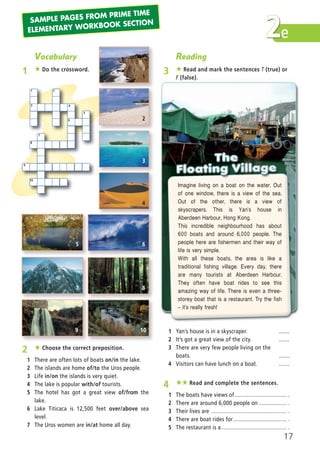
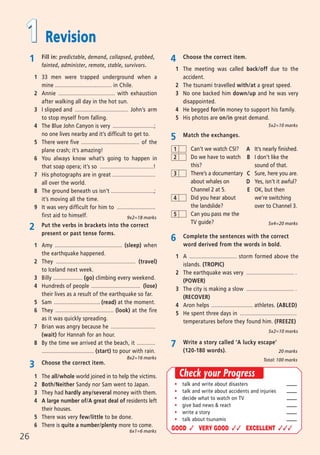
e2
Vocabulary
1 ★ Do the crossword.
1
3
2
4
6
5
8
7
9
10
2 ★ Choose the correct preposition.
1 There are often lots of boats on/in the lake.
2 The islands are home of/to the Uros people.
3 Life in/on the islands is very quiet.
4 The lake is popular with/of tourists.
5 The hotel has got a great view of/from the
lake.
6 Lake Titicaca is 12,500 feet over/above sea
level.
7 The Uros women are in/at home all day.
Reading
3 ★ Read and mark the sentences T (true) or
F (false).
4 ★★ Read and complete the sentences.
1 The boats have views of.................................. .
2 There are around 6,000 people on .................. .
3 Their lives are ................................................. .
4 There are boat rides for................................... .
5 The restaurant is a........................................... .
1 Yan’s house is in a skyscraper. .......
2 It’s got a great view of the city. .......
3 There are very few people living on the
boats. .......
4 Visitors can have lunch on a boat. .......
Imagine living on a boat on the water. Out
of one window, there is a view of the sea.
Out of the other, there is a view of
skyscrapers. This is Yan’s house in
Aberdeen Harbour, Hong Kong.
This incredible neighbourhood has about
600 boats and around 6,000 people. The
people here are fishermen and their way of
life is very simple.
With all these boats, the area is like a
traditional fishing village. Every day, there
are many tourists at Aberdeen Harbour.
They often have boat rides to see this
amazing way of life. There is even a three−
storey boat that is a restaurant. Try the fish
— it’s really fresh!
1
2
3
4
6
8
10
5
7
9
17
SAMPLE PAGES FROM PRIME TIME
ELEMENTARY WORKBOOK SECTION
03 Prime Time Elem_UpInt Leaflet_03 Prime Time Elem_UpInt Leaflet 27/03/2012 8:30 ΜΜ Page 25
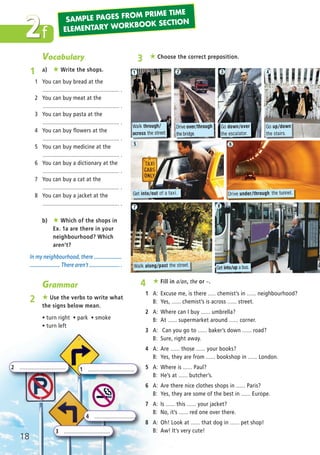
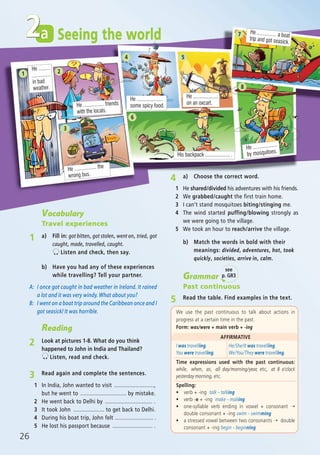
Grammar
2 ★ Use the verbs to write what
the signs below mean.
ñ turn right ñ park ñ smoke
ñ turn left
2 .............................. 1 ..............................
3 ..............................
4 ...........................
f2
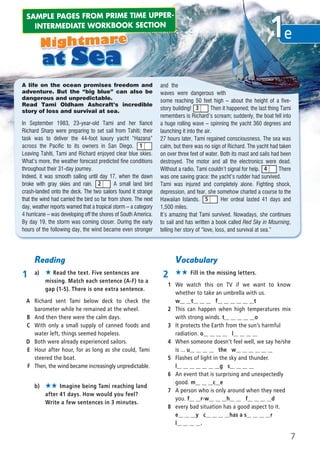
Vocabulary
1 a) ★ Write the shops.
1 You can buy bread at the
.................................................. .
2 You can buy meat at the
.................................................. .
3 You can buy pasta at the
.................................................. .
4 You can buy flowers at the
.................................................. .
5 You can buy medicine at the
.................................................. .
6 You can buy a dictionary at the
.................................................. .
7 You can buy a cat at the
.................................................. .
8 You can buy a jacket at the
.................................................. .
b) ★ Which of the shops in
Ex. 1a are there in your
neighbourhood? Which
aren’t?
In my neighbourhood, there .....................
....................... There aren’t ....................... .
3 ★ Choose the correct preposition.
4 ★ Fill in a/an, the or –.
1 A: Excuse me, is there ..... chemist’s in ...... neighbourhood?
B: Yes, ...... chemist’s is across ...... street.
2 A: Where can I buy ...... umbrella?
B: At ...... supermarket around ...... corner.
3 A: Can you go to ...... baker’s down ...... road?
B: Sure, right away.
4 A: Are ...... those ...... your books?
B: Yes, they are from ...... bookshop in ...... London.
5 A: Where is ...... Paul?
B: He’s at ...... butcher’s.
6 A: Are there nice clothes shops in ...... Paris?
B: Yes, they are some of the best in ...... Europe.
7 A: Is ...... this ...... your jacket?
B: No, it’s ...... red one over there.
8 A: Oh! Look at ...... that dog in ...... pet shop!
B: Aw! It’s very cute!
18
Walk through/
across the street.
Drive over/through
the bridge.
1
Go down/over
the escalator.
Go up/down
the stairs.
Get into/out of a taxi. Drive under/through the tunnel.
Walk along/past the street. Get into/up a bus.
2 3 4
5 6
7 8
SAMPLE PAGES FROM PRIME TIME
ELEMENTARY WORKBOOK SECTION
03 Prime Time Elem_UpInt Leaflet_03 Prime Time Elem_UpInt Leaflet 27/03/2012 8:31 ΜΜ Page 26
19
g2
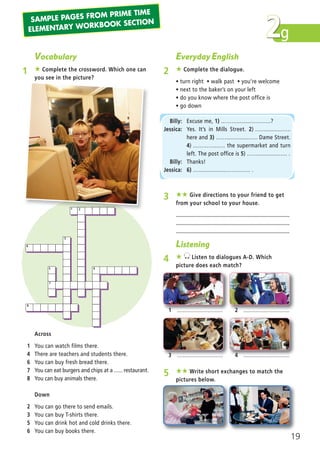
Everyday English
2 ★ Complete the dialogue.
ñ turn right ñ walk past ñ you’re welcome
ñ next to the baker’s on your left
ñ do you know where the post office is
ñ go down
Billy: Excuse me, 1) ………..........………..?
Jessica: Yes. It’s in Mills Street. 2) ……...........…..
here and 3) ……...............….. Dame Street.
4) …………..….. the supermarket and turn
left. The post office is 5) ……..............….. .
Billy: Thanks!
Jessica: 6) ……...............………….. .
3 ★★ Give directions to your friend to get
from your school to your house.
.......................................................................
.......................................................................
.......................................................................
Listening
4 ★ Listen to dialogues A-D. Which
picture does each match?
5 ★★ Write short exchanges to match the
pictures below.
1 .............................. 2 ..............................
3 .............................. 4 ..............................
SAMPLE PAGES FROM PRIME TIME
ELEMENTARY WORKBOOK SECTION
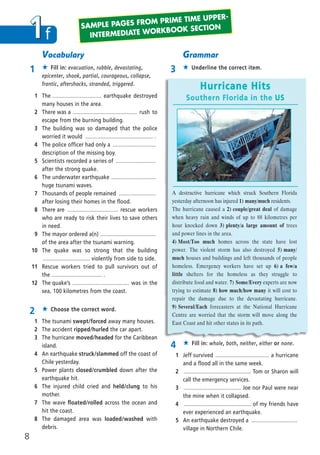
Vocabulary
1 ★ Complete the crossword. Which one can
you see in the picture?
1 2
3
4
5
7
6
Across
1 You can watch films there.
4 There are teachers and students there.
6 You can buy fresh bread there.
7 You can eat burgers and chips at a ...... restaurant.
8 You can buy animals there.
Down
2 You can go there to send emails.
3 You can buy T-shirts there.
5 You can drink hot and cold drinks there.
6 You can buy books there.
8
03 Prime Time Elem_UpInt Leaflet_03 Prime Time Elem_UpInt Leaflet 27/03/2012 8:31 ΜΜ Page 27
20
h
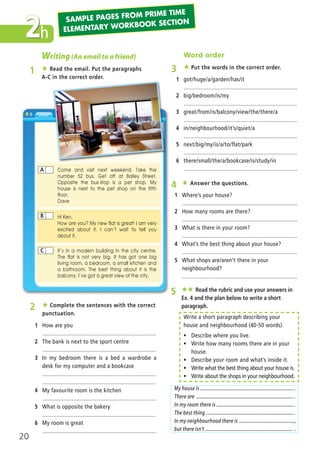
Writing (An email to a friend)
1 ★ Read the email. Put the paragraphs
A-C in the correct order.
Hi Ken,
How are you? My new flat is great! I am very
excited about it. I can’t wait to tell you
about it.
B
Word order
3 ★ Put the words in the correct order.
1 got/huge/a/garden/has/it
..........................................................................
2 big/bedroom/is/my
..........................................................................
3 great/from/is/balcony/view/the/there/a
..........................................................................
4 in/neighbourhood/it’s/quiet/a
..........................................................................
5 next/big/my/is/a/to/flat/park
..........................................................................
6 there/small/the/a/bookcase/is/study/in
..........................................................................
5 ★★ Read the rubric and use your answers in
Ex. 4 and the plan below to write a short
paragraph.
My house is .......................................................................... .
There are ............................................................................. .
In my room there is ............................................................. .
The best thing ..................................................................... .
In my neighbourhood there is ............................................,
but there isn’t ..................................................................... .
4 ★ Answer the questions.
1 Where’s your house?
...........................................................................
2 How many rooms are there?
...........................................................................
3 What is there in your room?
...........................................................................
4 What’s the best thing about your house?
...........................................................................
5 What shops are/aren’t there in your
neighbourhood?
...........................................................................
2
Come and visit next weekend. Take the
number 52 bus. Get off at Bailey Street.
Opposite the bus stop is a pet shop. My
house is next to the pet shop on the fifth
floor.
Dave
A
It’s in a modern building in the city centre.
The flat is not very big. It has got one big
living room, a bedroom, a small kitchen and
a bathroom. The best thing about it is the
balcony. I’ve got a great view of the city.
C
2 ★ Complete the sentences with the correct
punctuation.
1 How are you
..........................................................................
2 The bank is next to the sport centre
..........................................................................
3 In my bedroom there is a bed a wardrobe a
desk for my computer and a bookcase
..........................................................................
..........................................................................
4 My favourite room is the kitchen
..........................................................................
5 What is opposite the bakery
..........................................................................
6 My room is great
..........................................................................
Write a short paragraph describing your
house and neighbourhood (40-50 words).
ñ Describe where you live.
ñ Write how many rooms there are in your
house.
ñ Describe your room and what’s inside it.
ñ Write what the best thing about your house is.
ñ Write about the shops in your neighbourhood.
SAMPLE PAGES FROM PRIME TIME
ELEMENTARY WORKBOOK SECTION
03 Prime Time Elem_UpInt Leaflet_03 Prime Time Elem_UpInt Leaflet 27/03/2012 8:31 ΜΜ Page 28
i
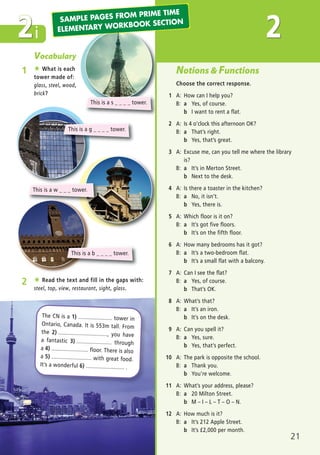
Vocabulary
1 ★ What is each
tower made of:
glass, steel, wood,
brick?
2 ★ Read the text and fill in the gaps with:
steel, top, view, restaurant, sight, glass.
The CN is a 1) ...................... tower in
Ontario, Canada. It is 553m tall. From
the 2) ................................, you have
a fantastic 3) ....................... through
a 4) ........................ floor. There is also
a 5) .......................... with great food.
It’s a wonderful 6) ......................... .
2
This is a g _ _ _ _ tower.
This is a s _ _ _ _ tower.
This is a w _ _ _ tower.
This is a b _ _ _ _ tower.
21
Notions & Functions
Choose the correct response.
1 A: How can I help you?
B: a Yes, of course.
b I want to rent a flat.
2 A: Is 4 o’clock this afternoon OK?
B: a That’s right.
b Yes, that’s great.
3 A: Excuse me, can you tell me where the library
is?
B: a It’s in Merton Street.
b Next to the desk.
4 A: Is there a toaster in the kitchen?
B: a No, it isn’t.
b Yes, there is.
5 A: Which floor is it on?
B: a It’s got five floors.
b It’s on the fifth floor.
6 A: How many bedrooms has it got?
B: a It’s a two-bedroom flat.
b It’s a small flat with a balcony.
7 A: Can I see the flat?
B: a Yes, of course.
b That’s OK.
8 A: What’s that?
B: a It’s an iron.
b It’s on the desk.
9 A: Can you spell it?
B: a Yes, sure.
b Yes, that’s perfect.
10 A: The park is opposite the school.
B: a Thank you.
b You’re welcome.
11 A: What’s your address, please?
B: a 20 Milton Street.
b M – I – L – T – O – N.
12 A: How much is it?
B: a It’s 212 Apple Street.
b It’s í2,000 per month.
2SAMPLE PAGES FROM PRIME TIME
ELEMENTARY WORKBOOK SECTION
03 Prime Time Elem_UpInt Leaflet_03 Prime Time Elem_UpInt Leaflet 27/03/2012 8:31 ΜΜ Page 29
22
Language & Grammar Review
Choose the correct answer.
1 A: Is tomorrow at seven OK?
B: A No, there isn’t. B Yes, that’s great.
C No, why?
2 The ...... of Liberty is on Liberty Island.
A Lake B Statue C Rink
3 There’s a ...... on the floor.
A grass B carpet C garden
4 Is ...... your pencil?
A this B these C the
5 We have got paintings ...... the wall.
A in B under C on
6 They’ve got two ....... .
A children B child C childrens
7 Are there ...... cushions on your sofa?
A some B the C any
8 There’s a house for ...... in the area.
A advert B rent C address
9 There are three ...... in the kitchen, so it’s very bright.
A plants B stairs C windows
10 Her house is in a ...... neighbourhood.
A different B floating C quiet
11 Are there any astronauts in the space ......?
A station B house C machine
12 The books are ...... the bookcase.
A in B under C between
13 How many ...... are there in your house?
A rinks B rides C floors
14 Where’s the ...... cleaner?
A iron B washing C vacuum
15 There are ...... in the kitchen.
A wardrobes B cupboards C baths
16 A: Is there a sofa in the living room?
B: A No, thank you. B Yes, there is. C Yes, it is.
17 Don’t miss the ...... to take great photographs.
A chance B path C ride
18 There aren’t ...... shops near our house.
A some B the C any
19 He’s a(n) ...... agent.
A riding B estate C skating
20 ...... wardrobe in my room is white.
A A B – C The
21 A: Can I see the house tomorrow?
B: A Yes, of course. B You’re welcome.
C How is it?
22 Look up in the sky; is ...... a plane?
A this B these C that
23 The house is in the ...... of a spaceship.
A place B shape C level
24 A: What are those?
B: A They’re cushions B On the balcony.
C That’s on the table.
25 I’ve got a great ...... from my window.
A view B sight C park
26 Walk ...... the bridge and turn left.
A under B in C between
27 A: What’s your address, please?
B: A 52 Henry Street. B No, it isn’t.
C It’s €400 per month.
28 The island is ...... with tourists.
A popular B surprising C unique
29 They’ve got ...... to go fishing.
A dishes B huts C boats
30 Come to ...... this unique way of life.
A experience B live C visit
31 There’s an island on the ...... .
A waterfall B mountain C lake
32 There are a lot of trees in the ...... .
A forest B river C cliff
33 Return the book to the ...... .
A library B chemist’s C post office
34 You can buy bread at the ...... .
A butcher’s B baker’s C chemist’s
35 The forest is ...... to some tribes.
A home B flat C house
2 SAMPLE PAGES FROM PRIME TIME
ELEMENTARY WORKBOOK SECTION
03 Prime Time Elem_UpInt Leaflet_03 Prime Time Elem_UpInt Leaflet 27/03/2012 8:31 ΜΜ Page 30
23
2
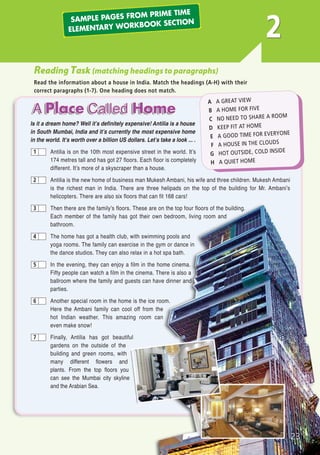
Reading Task (matching headings to paragraphs)
Read the information about a house in India. Match the headings (A-H) with their
correct paragraphs (1-7). One heading does not match.
Is it a dream home? Well it’s definitely expensive! Antilia is a house
in South Mumbai, India and it’s currently the most expensive home
in the world. It’s worth over a billion US dollars. Let’s take a look ... .
Antilia is on the 10th most expensive street in the world. It’s
174 metres tall and has got 27 floors. Each floor is completely
different. It’s more of a skyscraper than a house.
Antilia is the new home of business man Mukesh Ambani, his wife and three children. Mukesh Ambani
is the richest man in India. There are three helipads on the top of the building for Mr. Ambani’s
helicopters. There are also six floors that can fit 168 cars!
Then there are the family’s floors. These are on the top four floors of the building.
Each member of the family has got their own bedroom, living room and
bathroom.
The home has got a health club, with swimming pools and
yoga rooms. The family can exercise in the gym or dance in
the dance studios. They can also relax in a hot spa bath.
In the evening, they can enjoy a film in the home cinema.
Fifty people can watch a film in the cinema. There is also a
ballroom where the family and guests can have dinner and
parties.
Another special room in the home is the ice room.
Here the Ambani family can cool off from the
hot Indian weather. This amazing room can
even make snow!
Finally, Antilia has got beautiful
gardens on the outside of the
building and green rooms, with
many different flowers and
plants. From the top floors you
can see the Mumbai city skyline
and the Arabian Sea.
1
2
3
4
5
6
7
A A GREAT VIEW
B A HOME FOR FIVE
C NO NEED TO SHARE A ROOM
D KEEP FIT AT HOME
E A GOOD TIME FOR EVERYONE
F A HOUSE IN THE CLOUDS
G HOT OUTSIDE, COLD INSIDE
H A QUIET HOME
SAMPLE PAGES FROM PRIME TIME
ELEMENTARY WORKBOOK SECTION
03 Prime Time Elem_UpInt Leaflet_03 Prime Time Elem_UpInt Leaflet 23/05/2012 6:12 ΜΜ Page 31
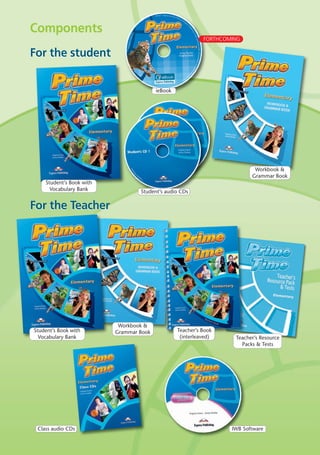
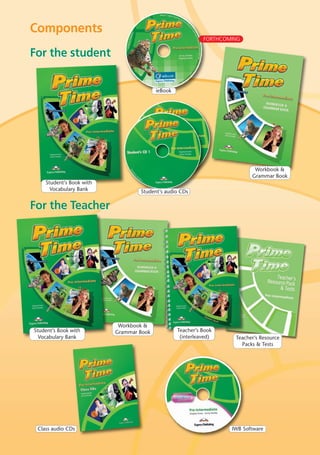
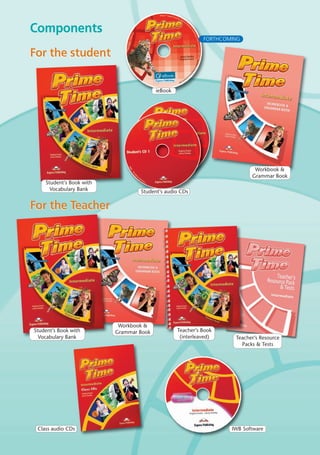
IWB SoftwareClass audio CDs
Components
ieBook
FORTHCOMING
For the TeacherFor the Teacher
For the studentFor the student
Student’s Book with
Vocabulary Bank
Workbook &
Grammar Book Teacher’s Book
(interleaved) Teacher’s Resource
Packs & Tests
Student’s Book with
Vocabulary Bank
Workbook &
Grammar Book
Student’s audio CDs
03 Prime Time Elem_UpInt Leaflet_03 Prime Time Elem_UpInt Leaflet 27/03/2012 8:32 ΜΜ Page 32
04 Prime Time Elem_UpInt Leaflet_04 Prime Time Elem_UpInt Leaflet 27/03/2012 8:33 ΜΜ Page 33
Contents
Modules Grammar Vocabulary
ñ adjectives to describe city/country
ñ features of a town/city
ñ places & activities
ñ modes of transport
ñ dangers in the countryside
ñ types of housing
ñ home & chores
ñ public services & facilities
ñ food/drinks
ñ containers/partitives
ñ supermarket sections & products
ñ food preparation
ñ tastes
ñ people & achievements
ñ past activities
ñ historical figures
ñ legendary creatures
ñ crime & breaking the law
ñ jobs & nationalities of famous people
ñ prepositions of movement
ñ present simple vs present
continuous
ñ stative verbs
ñ modals (can/can’t, be able to,
could, have to/don’t have to,
must/mustn’t, should/ought to)
ñ comparative/superlative
ñ nationalities, jobs, appearance, rooms &
furniture, daily routines, family, the
weather, places in town
ñ to be – have got – there is/are
ñ countable/uncountable nouns
(a/an – some/any)
ñ quantifiers
ñ too/enough
ñ -ing form/(to) infinitive
ñ past simple (regular/irregular
verbs)
ñ wh- questions
ñ past continuous
ñ linking words (because, so, and,
too, also, but)
ñ subject/object questions
ñ will
ñ be going to
ñ present continuous (future
meaning)
ñ time clauses
ñ conditionals (types 0, 1 & 2)
ñ might, may, could, will probably,
will definitely
ñ a/an/the
ñ relatives
ñ present perfect
ñ yet, already, since, for, never, ever,
just
ñ present perfect vs past simple
ñ present perfect continuous
ñ -ing/-ed adjectives
ñ past perfect
ñ conditional type 3
ñ wishes
ñ have been/have gone
ñ world problems
ñ natural disasters
ñ social problems
ñ threats to animal species
ñ injuries
ñ activities at an eco-camp
pp. 7-20
pp. 5-6
pp. 25-38
Food & Drinks
pp. 43-56
Great people &
legends
On holiday
pp. 61-74
Language Review 3 p. 57
Skills Practice 3 pp. 58-59
Revision 3 p. 60
Helping hands
pp. 79-92
Home and away
Revision
Language Review 1 p. 21
Skills Practice 1 pp. 22-23
Revision 1 p. 24
Language Review 2 p. 39
Skills Practice 2 pp. 40-41
Revision 2 p. 42
ñ types of holidays
ñ holiday experiences
ñ holiday activities
ñ eco-tourism
ñ places in a city
ñ holiday problems
ñ tourist attractionsLanguage Review 4 p. 75
Skills Practice 4 pp. 76-77
Revision 4 p. 78
Language Review 5 p. 93
Skills Practice 5 pp. 94-95
Revision 5 p. 96
1
2
3
4
5
Starter
ñ the passive
ñ reported speech
ñ reported questions/orders
ñ reflexive pronouns
ñ question tags
ñ forms of art
ñ materials
ñ shops & products
ñ music & musical instruments
ñ places of cultural interest
Art & Culture
pp. 97-110
Language Review 6 p. 111
Skills Practice 6 pp. 112-113
Revision 6 p. 114
6
Vocabulary Bank pp. VB1-VB20
Writing Bank pp. WB1-WB7
Grammar Reference pp. GR1-GR11
Rules for Punctuation p. GR11
American English – British English Guide p. GR12
Pronunciation p. GR13
2
04 Prime Time Elem_UpInt Leaflet_04 Prime Time Elem_UpInt Leaflet 27/03/2012 8:33 ΜΜ Page 34
Reading & Listening Writing Culture Corner/
Curricular
ñ Police, Camera, Action (T/F
statements)
ñ Hot Spots (multiple matching)
ñ The Florida Everglades: Surviving the
Swamp (open-ended sentences)
ñ emails about different types of
houses (R/W/DS statements &
comprehension questions)
ñ Listening for specific information
(T/F)
ñ Lemon Art: French style (open-ended
sentences)
ñ buying things in a supermarket
(dialogue)
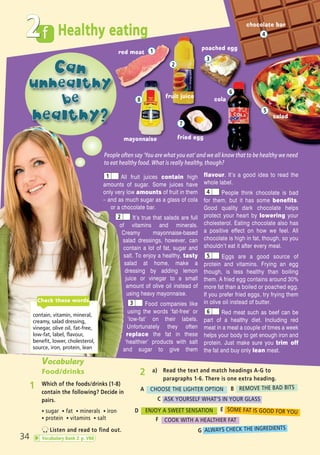
ñ Chillout(multiple choice cloze)
ñ Can unhealthy be healthy? (matching
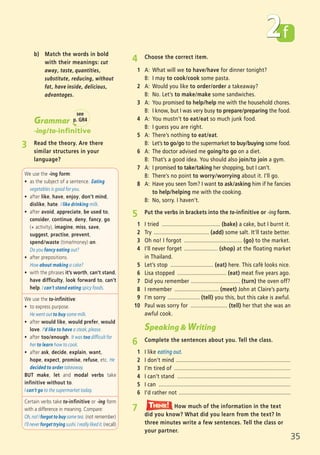
headings to paragraphs)
ñ a recipe (reading for specific
information)
ñ Listening for specific information
(Yes/No)
ñ Adventure Tour South America
(multiple matching)
ñ Sculptures Under the Sea (multiple
choice)
ñ Six Reasons to see Sydney (answer
questions)
ñ Listening (matching speakers to
problems)
ñ Is this the most talented person who
ever lived? (T/F/DS statements)
ñ Heroes of the Ancient World (quiz)
ñ Creatures of Legend (open-ended
sentences)
ñ The Vanishing Smile (multiple
choice)
ñ Listening (gap filling)
ñ a description of a food festival
in your country
ñ short texts about places to eat
out in your country
ñ a description of your own
strange restaurant
ñ an informal email about your
favourite dish
ñ a quiz about famous historical
figures
ñ a description of a traditional
celebration in your country
ñ a story about a legendary creature
ñ write about a theft
ñ a biography of a famous
person
ñ a text about an explorer
ñ an itinerary for a tour in your
country
ñ a pamphlet advertising
a national park or area of
natural beauty in your country
ñ a letter about your holiday
ñ how to be a responsible
tourist
ñ describe something
happening
ñ sentences about a journey in
your country
ñ a list of survival tips in the
jungle
ñ an informal email about your
house
ñ an informal email of advice
ñ Pacific Coast
Highway 1
(T/F/DS)
ñ (Citizenship) Are
you a good
citizen? (quiz)
ñ Eating out in the
UK (reading for
specific
information)
ñ (Science) Food
for life! (note
taking &
summarising)
ñ The Pilgrims –
Sailing to a new life!
(T/F statements)
ñ (US History)
ChristopherColumbus
(matching headings
to paragraphs)
ñ Yellowstone National
Park (multiple
matching &
comprehension
questions)
ñ (Citizenship)
How to be a
responsible tourist
(T/F)
ñ Haiti earthquake (T/F/DS
statements)
ñ listening for specific information
ñ From Climbing Mountains ... to
Moving Mountains (filling in
sentences in a text)
ñ Animal SOS (multiple matching)
ñ Lead the Way (multiple choice
cloze)
ñ a short diary entry about a
hurricane
ñ an interview
ñ an email giving your news
ñ information about any of the
five oceans
ñ Red Nose Day (gap
filling)
ñ (Geography) The
World’s Amazing
Oceans (matching
headings to
paragraphs)
Speaking & Functions
ñ buying a ticket
ñ compare places
ñ make requests in the home
ñ ask for/give advice
ñ Pronunciation: /s/, /«/, /π/, /∏/
ñ talk about your eating habits
ñ order food in a café
ñ make a restaurant booking
ñ give instructions on how to
make a dish
ñ Pronunciation: /n/, /…/
ñ discuss past activities
ñ talk about past actions
ñ read dates
ñ ask for & give personal
information
ñ Intonation: stressed
syllables/weak vowels
ñ future plans & intentions
ñ ask for information
ñ talk about your holiday
ñ Pronunciation: ’ll/won’t; /h/
ñ talk about a disaster
ñ ask for and offer help
ñ make suggestions/express
preferences
ñ Pronunciation: homophones
ñ The Terracotta Army (multiple
choice)
ñ Roadside Attractions you really
can’t miss (T/F/DS)
ñ It’s Venice ... but not as you know it!
(multiple choice)
ñ Totally cool! (missing sentences)
ñ Listening (matching speakers to
different places)
ñ describe an experience
ñ write about a monument
ñ create your own mall
ñ an email describing a visit to a
place
ñ The Garma Festival
(complete
sentences)
ñ (Art & Design)
Art styles
(reading
comprehension
questions)
ñ describe a process
ñ describe a building/monument
ñ post a parcel
ñ report people’s words
ñ express preferences
ñ Pronunciation: assimilation
ñ describe a room
ñ describe the weather
ñ describe appearance
ñ tell the time
Word Formation pp. WF1-WF3
Key Word Transformations pp. KWT1-KWT3
Word List pp. WL1-WL24
Irregular Verbs
3
04 Prime Time Elem_UpInt Leaflet_04 Prime Time Elem_UpInt Leaflet 27/03/2012 8:33 ΜΜ Page 35
Vocabulary Bank 2
1 fried
2 baked
3 boiled
4 grilled
5 roast
6 scrambled
7 mashed
8 steamed
Cooking Methods
1 Look at the pictures and complete the gaps with the
right word.
ñ mash ñ peel ñ simmer ñ bake ñ grate ñ stir ñ fry ñ grill
ñ slice
2 Match the instructions to the pictures.
Break the eggs.
Add 50 ml of milk.
Beat well.
Melt butter in a pan.
Pour butter in the egg
mixture.
Pour mixture into a
frying pan and stir
constantly. Leave on
the heat until done.
Serve with two slices
of toast.
1
2
3
4
5
6
7
A
B C
E
F G
D
Scrambled eggs
on toast
3 Read the recipe and choose the
correct word.
Pasta in Tomato Sauce
1 First, wash/grease the vegetables.
2 Then, chop/peel two onions into
small pieces.
3 Fry/Bake the onions in olive oil.
4 Add/Put three chopped tomatoes
and some oregano and let the
sauce simmer for 20 minutes.
5 Boil/Mix 500 g pasta in water for
around 10 minutes.
6 When it is ready, drain/pour the
water.
7 Put/Add the pasta on a plate and
top it with sauce.
8 Finally, sprinkle/beat some cheese
on top and serve.
Speaking
4 Match the cooking methods to
the foods. Which is your
favourite way to eat these
foods? Discuss with your
partner, as in the example.
A: How do you like to eat potatoes:
boiled, mashed or fried?
B: Actually, I prefer roast potatoes. etc
1
2
3
4 5 6
7
8
9
.............................
cheese
.......................
soup
.......................
on a low heat
..........................
an onion
......................
mushrooms
........................
a tomato
..........................
potatoes
.......................
a cake
............................
a steak
A potatoes
B eggs
C vegetables
D fish
E beef
F rice
VB8
SAMPLE PAGE
VOCABULARY BANK
SECTION
05 Prime Time Elem_UpInt Leaflet_05 Prime Time 1_4 INT Leaflet 27/03/2012 8:34 ΜΜ Page 36
2
25
Vocabulary: food & drinks, food groups, supermarket
sections, containers/partitives, restaurants, food
preparation, ingredients & measurements, adjectives
describing food, healthy lifestyles
Grammar: countable/uncountable nouns, a/an –
some/any, quantifiers (how)many, (how)much, too
many/much, alotof, some, (a)few, (a)little, no/notany,
too–enough,-ingform/(to)infinitive
Everyday English: ordering food in a café
Pronunciation: /n/, /…/
Writing: a description of a food festival; a text about
places to eat out; a description of your own
restaurant; an email about a favourite dish
Culture Corner: Eating out in the UK
Curricular (Science): Food for life
2 Listen to Tim and Julie.
Which foods/drinks do they
like/not like?
Tim likes …, but he doesn’t like …
Julie likes ..., but she doesn’t like ...
Vocabulary
Food & Drinks
1 Label the groups.
Listen and check, then say.
1 drinks
2 fruit & vegetables
3 meat, poultry, fish & seafood
4 dairy products
5 other
orange
juicelemonade
coffee
tea
OVER TO YOU!
I like (♥) ........................
I love (♥♥) .....................
I don’t like (✗) ................
I hate/can’t stand (✗✗)
.........................
tomatoes
peppers
cherries
grapes
pears
cauliflower
beans
cabbage
A
pasta
bread
eggs
rice
cereal
B
D
cheese
yogurt
butter
milk
C
E
beef
lamb
salmon
prawn
chicken
trout
cod
tuna
Food & Drinks
05 Prime Time Elem_UpInt Leaflet_05 Prime Time 1_4 INT Leaflet 27/03/2012 8:35 ΜΜ Page 37
26
Food arta2
celery
broccoli
lemon
onion
potato
orange
cucumber
banana
10
4
2
6
7
1
8
9
Vocabulary
Food
1 a) Listen and say.
carrot3
strawberry5
Countable nouns (nouns we can count):
a banana an apple
two/some bananas
Uncountable nouns (nouns we can’t count):
some milk (NOT: a/one milk, two milks)
ñ We use a/an for singular countable nouns. There’s an
apple.
ñ We use some in the affirmative for uncountable nouns
and for plural countable nouns. There is some rice. We have
some strawberries.
ñ We use any in the negative and interrogative for
uncountable nouns and for plural countable nouns.
There aren’t any eggs./Do we have any pasta?
ñ We can also use some in offers & requests. Would you like
some cake? Can I have some water, please?
Grammar
Countable/Uncountable
nouns – A/An – Some/Any
2 a) Read the table. Which of the foods in
Ex. 1 are: countable? uncountable?
b) Which of these foods do you see in the
pictures on pp. 26-27?
Reading & Listening
3 a) Read the saying in the first sentence in
the text. What do you think it means?
Choose A, B or C.
A You must turn sour things into sweet things.
B You should make the most of everything.
C You should be grateful for what you have.
b) What do you think the text is about?
Listen and read to find out.
b) Fill in: a/an, some or any.
1 There is ......... tea, but there isn’t ......... coffee.
2 Do you want ................... banana?
3 There are ................ cherries in the fridge.
4 Is there ................... milk left?
5 There are .............. strawberries and ..............
apple in the bowl.
6 There aren’t ................... carrots, but there are
................... potatoes.
7 “Can I have ................... orange juice, please?”
“Sorry, but there isn’t ................... .”
8 Would you like ................... coffee?
see
p. GR3
05 Prime Time Elem_UpInt Leaflet_05 Prime Time 1_4 INT Leaflet 27/03/2012 8:35 ΜΜ Page 38
2a
27
2
‘When life gives you lemons make lemonade,’ the saying goes. In the
beautiful and picturesque seaside resort town of Menton in the south of
France, people make a lot more than just lemonade with their lemons. Believe
it or not, they make art, and have a lot of fun doing it!
Every February to March, the people of Menton celebrate their lemons and
oranges with a three-week long lemon festival that attracts over 200,000 visitors.
Artists design and create amazing giant statues for the festival using over 145
tons of lemons and oranges. The artists make everything from giant bananas to
dinosaurs and some of the statues can measure more than 10 metres tall. There is
a daily Citrus Exposition where people come to see the amazing creations and buy
local products made from oranges and lemons. On Sundays, floats carrying the
citrus statues go through the town in the Parade of Golden Fruit and on Thursdays,
crowds gather to watch colourful night parades with music and dancers as well as
fireworks. Each year, there is a different theme and the creators let their
imaginations run wild. Whether you like food and art, or simply need some
vitamin C, Menton is a pretty good place to be in February and March.
Lemons are a great fruit. You
can make lemonade and
desserts from them or even
use their juice for cooking or
in salads.
If you want to experience the festival next year, visit www.fete-du-citron.com
and book your tickets online as places for each event go fast.
c) Complete the sentences.
1 Menton is ......................................
2 Every spring, over 200,000 people
come to Menton for ......................
3 Artists make statues with .............
4 People come to see the artists’
creations at the .............................
5 After the parades on Thursdays
people watch ................................
d) Use five words from the
box to
make sentences about the
festival.
The people of Menton celebrate the Lemon
Festival every year.
Check these words
dessert, juice, picturesque, resort, celebrate,
attract, design, statue, measure, citrus, creation,
float, fireworks, theme, imagination runs wild
Check these words
Vocabulary Bank 2 p. VB5
Speaking & Writing
4 a) Read the text again and
make notes under the
headings. Use your notes to
present the festival to the
class.
ñ name of festival ñ place
ñ date ñ reason ñ activities
b) In three minutes
write a few sentences giving
reasons why someone should
go to the Lemon Festival. Tell
the class.
Think!TThink!hink!
5 Is there a similar food festival in
your country? Make notes under
the headings in Ex. 4a, then write
a short text about it.
e) Match the words in bold in
the text with their meanings:
regional, attractive, huge, plan,
come together in a group,
main idea, have the size of.
05 Prime Time Elem_UpInt Leaflet_05 Prime Time 1_4 INT Leaflet 27/03/2012 8:35 ΜΜ Page 39
Bakery
Sweets & snacks
Drinks
Meat & fish
b
Vocabulary
Containers/Partitives
1 Listen and say. In which supermarket
section can we usually find these products
(1-11)? Make sentences as in the example.
We can usually find a loaf of bread in
the bakery section.
Reading
2 Ann and Tony are shopping for
a barbecue. What do they need?
Listen and read to find out. What is the problem?
Ann: Right, that’s all the meat and bread! What else do we need?
Tony: Well, here’s the drinks aisle. Let’s get a few cartons of juice …
and some bottles of cola and lemonade.
Ann: OK … Let’s go to the bakery section. We need some cakes.
Tony: Yes, let’s get two of these big chocolate ones! They look tasty.
Ann: Good idea. Do we have any ice cream?
Tony: Only a little. We can get another tub if you want to.
Ann: We have a lot of food here, Tony! Are you sure it isn’t too
much?
Tony: No! We are expecting thirty people, remember?
Ann: Yes, you’re right! Let’s go and pay … Oh, no!
Tony: What’s wrong?
Ann: I’m afraid I left my purse on the kitchen
table! How much money do you have?
Tony: Erm, not much … only í5 … .
Ann: Oh, no! Now what are we going to do?
At the supermarket
a loaf of bread
a jar of jam
a tin of soup
a carton of juice
a box of cereal
a bottle of cola
a tub of ice cream
a bunch of bananas
Frozen food
Fruit & vegetables
a bar of chocolate
2
aisle, expect, remember,
What’s wrong?, purse
Check these words
28
Dairy products
1
2
4
7
8
9 10
11
5
6
3
a kilo of
minced beef
a pot of yogurt
Tinned food
Breakfast food
05 Prime Time Elem_UpInt Leaflet_05 Prime Time 1_4 INT Leaflet 27/03/2012 8:35 ΜΜ Page 40
Grammar
Quantifiers
3 Read the table. Find more examples in the dialogue in
Ex. 2.
Listening
5 a) Julie is making a
shopping list for a dinner
party. Listen and put a tick
(✓) next to the things she
needs and a cross (✗) next
to the things she doesn’t
need.
b) Ask and answer questions,
as in the example.
A: How much chicken does she need?
B: She needs a lot – two kilos!
How many eggs does she need?
A: She doesn’t need any eggs.
A: How much junk food do you eat each
week?/Do you eat much junk food?
B: I eat a little, but not too much.
Speaking & Writing
6 Use the words below to
ask and answer questions about
your eating habits.
Learning grammar
Make a note of your grammar mistakes and their corrections.
This will help you to avoid making similar mistakes.
b
4 Choose the correct word. Compare with your partner.
1 A: How many/much butter have we got?
B: Very few/little. Get some more.
2 A: Is there many/any fruit?
B: There are much/a lot of bananas and apples, but there
aren’t some/many oranges.
3 A: How much/many eggs do we need for the omelette?
B: Not a lot/many. Just three or four.
4 A: There isn’t some/much flour left in the cupboard. Only
half a bag.
B: OK. Get some/few more then.
5 A: Do we need some/any tomatoes?
B: Yes, there are only a little/a few left.
6 A: There’s very few/little cheese left.
B: I’ll get some. How many/much do you want?
7 A: There’s many/no bread left.
B: Let’s buy a loaf, then, and some/any biscuits.
8 A: There’s too much/too many sugar in my coffee. I can’t
drink it.
B: Really? I always put a lot of/much sugar in my coffee.
ñ fizzy drinks ñ milk ñ water
ñ lemonade ñ tea ñ orange juice
ñ coffee
ñ a lot of/lots ñ too much/many
ñ a few/a little ñ some
ñ very few/little
ñ junk food ñ fruit ñ eggs ñ meat
ñ chocolate ñ bread ñ vegetables
EAT
DRINK
29
COUNTABLE UNCOUNTABLE
How many sweets are there? How much milk is there?
There are too
many sweets.
There is too
much milk.
There are a lot of
sweets.
There is a lot of
milk.
There are some/
a few sweets.
There is some/ a
little milk.
There are (very) few sweets./
There aren’t many sweets.
There’s (very) little milk/
There isn’t much milk.
Are there any sweets?
There aren’t any sweets./
There are no sweets.
Is there any milk?
There isn’t any milk./
There’s no milk.
2 kilos of chicken ✓
6 eggs ✗
1 kilo of cheese
3 bags of crisps
2 bottles of cola
1 carton of apple juice
1 bag of rice
20 sausages
Shopping List
2see
pp. GR3-
GR4
Vocabulary Bank 2 p. VB6
7 Use your answers in Ex. 6 to
write a few sentences about
your eating habits. Read your
sentences to the class.
05 Prime Time Elem_UpInt Leaflet_05 Prime Time 1_4 INT Leaflet 27/03/2012 8:35 ΜΜ Page 41
c
30
2
2 a) Look at the pictures and the headings in
the text. What kind of food do you think
you can get at each of these places?
Listen and read to find out.
b) Read again and replace the words in
bold with words from the text.
1 It is England’s most famous dish.
2 They are Italian dishes most people like.
3 The British often have a snack there.
4 You can buy fish ‘n’ chips there.
5 They serve these at cafés.
6 You can usually eat them in an Indian restaurant.
3 Use words from the
box to complete the sentences.
1 The British often ................ such as a sandwich
for lunch.
2 The restaurant serves a variety of dishes to
............................ .
3 Fish ‘n’ chips is a traditional British ................ .
4 Indian is one of the most popular ....................
in the UK.
Check these words
4 Tell your partner one thing you
remember about each type of place to eat
out.
5 What kinds of places to eat out are there in
your country? What kinds of food and drinks
can you get there? Write short texts. Tell the
class.
There are many interesting places to eat a meal or grab a
snack in the UK. Eating out in the UK offers much more than
fast food restaurants, there’s something to suit every taste.
Fish ‘n’ chips is a popular and
internationally famous English
dish. It is deep fried fish in batter
and fried, chipped potatoes with
salt and vinegar. The restaurants
and takeaway shops that sell it are
traditionally called ‘chippies’. You can also get a
range of pies, sauces and side dishes with chips
so you can choose your favourite combinations
such as fish, chips and mushy peas or cheese
and onion pie, chips and gravy.
Many Britons have lunch or a
snack at a café. They serve
delicious sandwiches, salads
and hot snacks such as soup or
jacket potatoes. There is also a
wide range of cooked meals to
choose from. You can also get
tea, coffee and cold drinks as
well as baked goods like cakes
and biscuits.
Britain is a multi-cultural society and the cuisine
shows this. The three most popular ethnic
cuisines are Indian, Chinese and Italian. Indian
restaurants serve chicken, prawns or meat with
rice and a variety of curry sauces, such as chicken
tikka masala. Chinese food is Cantonese with
dishes like sweet and sour pork, chicken with
cashew nuts and beef in black bean sauce. The
most popular Italian dishes are pizza, spaghetti
bolognese,
and lasagna.
grab a snack, suit every taste, dish, deep
fried, batter, chipped, vinegar, pie, sauce,
side dish, mushy peas, gravy, ethnic
cuisine, jacket potato, baked goods
Check these words
Culture Corner
Did you know?
British people spend
í42 billion on average
per year on eating out.1 How often do you
eat out? Where do you usually go?
c) Match the words in bold with their
meanings: variety, bitter, soft, cut into
long thin pieces, from another country.
05 Prime Time Elem_UpInt Leaflet_05 Prime Time 1_4 INT Leaflet 27/03/2012 8:35 ΜΜ Page 42
Everyday English d
Ordering food in a café
1 What do you usually have for breakfast/
lunch/dinner? Are any of these foods/drinks
on Ruby’s menu?
3 Find sentences in the dialogue which mean:
We can order now. – What about you? – I don’t
want a side order, thanks. – That’s correct.
c) What do Carl and Anna order?
/n/ /…/ /n/ /…/
thin tin
thing tongue
king ton
Pronunciation: /n/, /…/
4 Listen and check (✓) the correct boxes.
Listen again and say.
Speaking
5 Work in groups of three. Take roles and
act out a dialogue at Ruby’s ordering lunch. Use
the menu and the plan.
A
Ask if customers are ready
to order.
Ask what C wants.
Ask if customers
want side orders.
Ask what customers want
to drink.
Repeat customer’s order.
B & C
B replies & orders
food.
C replies.
B&C reply.
B&C reply.
B confirms order.
2 a) Listen and say.
ñ Are you ready to order or do you need a
few more minutes?
ñ Would you like any side orders?
ñ Not for me, thank you.
ñ And what would you like to drink?
ñ I’d like a glass of orange juice, please.
b) The sentences above appear in a
dialogue at a café. Who says each:
a customer/the waiter?
Listen, read and check.
Desserts
Pancakes or waffles with fruit & ice cream í4.50
Apple or cherry pie í2.75
Chocolate brownie í2.25
Drinks
Tea í1.30
Coffee í1.50
Orange juice í1.80
Soft drinks (cola, lemonade) í1.30
Hot chocolate í1.50
All-day Breakfast
Scrambled or fried eggs on toast í2.75
Full English breakfast í3.75
Omelette (cheese or mushroom) í2.50
Side orders
Chips í1.25
Mixed salad í1.50
Coleslaw or baked beans í0.75
Lunch/Dinner
Burger & Chips í6.25
Jacket potato (choice of fillings) í2.75
Sandwiches (cheese, tuna, BLT, chicken) í2.95
31
-
-
-
-
2
Waiter: Hello. Are you ready to order or do you
need a few more minutes?
Carl: I think we’re ready … erm, can I have
scrambled eggs on toast, please?
Waiter: Sure. And for you, madam?
Anna: I’d like a cheese omelette.
Waiter: OK. Would you like any side orders?
Carl: Erm … yes, chips, please.
Anna: Not for me, thank you.
Waiter: And what would you like to drink?
Carl: I’d like a glass of orange juice, please.
Anna: A cup of coffee for me, please.
Waiter: OK. So that’s scrambled eggs on toast,
chips, a cheese omelette, a glass of
orange juice and a cup of coffee.
Carl: That’s right. Thank you.
05 Prime Time Elem_UpInt Leaflet_05 Prime Time 1_4 INT Leaflet 27/03/2012 8:35 ΜΜ Page 43
3 Read again. Choose the best answer A, B or
C for each space. Compare your answers
with your partner.
2 Look at the pictures of an unusual
restaurant and read the first sentence of
the text. Where do you think it is? What is
unusual about it? Read to find out.
Reading & Listening
1 What’s your favourite restaurant? What do
you like about it? What can you eat there?
Tell the class.
32
Eating oute2
Outside it’s boiling hot, but customers at 0) ........ restaurant
are sipping hot drinks and wearing thick coats! Chillout is in
Dubai and it’s a very unusual restaurant. Inside it’s –5o C and
nearly 1) ........ there is made of ice. It has 40,000 tons of ice in it
and it has ice walls, ice tables, ice chairs and ice curtains. The
customers eat from ice plates and drink from ice glasses.
2) ........ is even an ‘ice gallery’ of Dubai’s landmarks.
Before the customers go into the restaurant, the staff give
3) ........ coats, gloves and shoes so that they are warm enough to
sit in the cold dining room. They wait in the Buffer zone for 4) ........
minutes. This is a room that is cooler than outside, 5) ........
warmer than the dining room. This way, their bodies can get used
to the cold slowly. 6) ........ the waiters show the customers to their
table and serve them fruit juice or hot chocolate.
Chillout has a great variety of salads, cheese, sandwiches,
ice cream, and healthy fruit drinks, as well as hot main dishes.
Most of the customers only stay for about thirty to forty minutes,
though. That’s long 7) ........ in the freezing cold! Those who work
in the restaurant need to leave the place at regular intervals or
else they freeze.
If you ever go to Dubai, why not cool down at this restaurant?
But don’t leave your food for too long!It gets cold 8) ........ quickly.
0 A this B the C that
1 A any B everything C each
2 A That B It C There
3 A they B them C their
4 A a few B a little C a lot
5 A but B and C so
6 A After B When C Then
7 A too B enough C much
8 A very B much C so
boiling hot, customer, sip, thick coat, ice, curtain,
landmark, staff, get used to, waiter, serve, main dish,
freezing cold, regular interval, cool down
Check these words
05 Prime Time Elem_UpInt Leaflet_05 Prime Time 1_4 INT Leaflet 27/03/2012 8:35 ΜΜ Page 44
4 a) Use words from the
box to complete the sentences.
1 It’s .............................. in Dubai in the summer.
2 A lot of the customers at Chillout .............................
hot chocolate to keep warm.
3 Customers at Chillout have to wear a ......................
to keep warm while they eat.
4 The Buffer zone helps customers to ........................
the cold.
5 Most customers don’t stay in the restaurant for
long because it’s ............................ !
Check these words
Waiters serve customers hot chocolate at Chillout.
Grammar
Too – Enough
6 a) Read the theory box. Find examples in
the text.
5 Match the words.
Listen and check. Use each phrase to
write a sentence of your own.
serve
take
show you
ask for
pay
leave
book
1
2
3
4
5
6
7
a the bill
b customers
c the menu
d a tip
e a table
f to your table
g your order
Speaking & Writing
8 a) Listen to and read the
text in Ex. 2. Would you like to visit the
ice restaurant in Dubai? Why (not)? Tell
the class.
Think!TThink!hink!
b) Think of your own strange restaurant.
In three minutes write a few sentences.
Read them to the class.
b) Use the words to act out similar
dialogues.
Chillout – four – Sunday lunch – 1:30 – Grimes
Pete’s – two – next Friday – 9:00 – Brentwood
ñ too + adjective/adverb (more than someone
needs or wants) His steak is too salty. (He can’t
eat it.) The waiter speaks too quickly for me to
understand. (I can’t understand him.)
ñ adjective/adverb + enough / enough + noun (as
much as someone wants or needs) Is your soup
hot enough? (Is it OK?) Don’t worry. We’ve got
enough money to pay the bill! (We can pay it.)
b) Fill in too or enough.
1 The service is ................ slow in this restaurant.
2 Is your coffee sweet ...................?
3 That new restaurant is ..................... expensive
for us to afford to eat there.
4 This chicken is ................... spicy. I don’t like it.
5 There isn’t .......................... oil in the salad.
e2
33
Making a restaurant booking
7 a) Listen and read.
A: Hello, Maddison’s Restaurant.
B: I’d like to book a table for six for Saturday
night, please.
A: Certainly, madam. What time?
B: 8:30, please.
A: That’s fine. Can I take your name, please?
B: Yes, it’s Walton. That’s W – A – L – T – O – N.
A: OK. See you on Saturday.
see
p. GR4
Vocabulary Bank 2 p. VB7
b) Match the words in bold with their
meanings: employees, even, drinking slowly,
famous buildings, feel very cold, clients, range.
05 Prime Time Elem_UpInt Leaflet_05 Prime Time 1_4 INT Leaflet 27/03/2012 8:36 ΜΜ Page 45
f Healthy eating
34
2
2 a) Read the text and match headings A-G to
paragraphs 1-6. There is one extra heading.
People often say ‘You are what you eat’ and we all know that to be healthy we need
to eat healthy food. What is really healthy, though?
Vocabulary
Food/drinks
1 Which of the foods/drinks (1-8)
contain the following? Decide in
pairs.
ñ sugar ñ fat ñ minerals ñ iron
ñ protein ñ vitamins ñ salt
Listen and read to find out.
1
2
3
4
8
7
5
fruit juice
cola
salad
poached egg
mayonnaise
red meat
chocolate bar
fried egg
CHOOSE THE LIGHTER OPTION REMOVE THE BAD BITS
ASK YOURSELF WHAT’S IN YOUR GLASS
ENJOY A SWEET SENSATION SOME FAT IS GOOD FOR YOU
COOK WITH A HEALTHIER FAT
ALWAYS CHECK THE INGREDIENTS
A B
C
D E
F
G
6
All fruit juices contain high
amounts of sugar. Some juices have
only very low amounts of fruit in them
– and as much sugar as a glass of cola
or a chocolate bar.
It’s true that salads are full
of vitamins and minerals.
Creamy mayonnaise-based
salad dressings, however, can
contain a lot of fat, sugar and
salt. To enjoy a healthy, tasty
salad at home, make a
dressing by adding lemon
juice or vinegar to a small
amount of olive oil instead of
using heavy mayonnaise.
Food companies like
using the words ‘fat-free’ or
‘low-fat’ on their labels.
Unfortunately they often
replace the fat in these
‘healthier’ products with salt
and sugar to give them
flavour. It’s a good idea to read the
whole label.
People think chocolate is bad
for them, but it has some benefits.
Good quality dark chocolate helps
protect your heart by lowering your
cholesterol. Eating chocolate also has
a positive effect on how we feel. All
chocolate is high in fat, though, so you
shouldn’t eat it after every meal.
Eggs are a good source of
protein and vitamins. Frying an egg
though, is less healthy than boiling
them. A fried egg contains around 30%
more fat than a boiled or poached egg.
If you prefer fried eggs, try frying them
in olive oil instead of butter.
Red meat such as beef can be
part of a healthy diet. Including red
meat in a meal a couple of times a week
helps your body to get enough iron and
protein. Just make sure you trim off
the fat and buy only lean meat.
1
2
3
4
5
6
contain, vitamin, mineral,
creamy, salad dressing,
vinegar, olive oil, fat-free,
low-fat, label, flavour,
benefit, lower, cholesterol,
source, iron, protein, lean
Check these words
Vocabulary Bank 2 p. VB8
05 Prime Time Elem_UpInt Leaflet_05 Prime Time 1_4 INT Leaflet 27/03/2012 8:36 ΜΜ Page 46
f
35
We use the -ing form:
ñ as the subject of a sentence. Eating
vegetables is good for you.
ñ after like, have, enjoy, don’t mind,
dislike, hate. I like drinking milk.
ñ after avoid, appreciate, be used to,
consider, continue, deny, fancy, go
(+ activity), imagine, miss, save,
suggest, practise, prevent,
spend/waste (time/money) on.
Do you fancy eating out?
ñ after prepositions.
How about making a cake?
ñ with the phrases it’s worth, can’t stand,
have difficulty, look forward to, can’t
help. I can’t stand eating spicy foods.
We use the to-infinitive:
ñ to express purpose.
He went out to buy some milk.
ñ after would like, would prefer, would
love. I’d like to have a steak, please.
ñ after too/enough. It was too difficult for
her to learn how to cook.
ñ after ask, decide, explain, want,
hope, expect, promise, refuse, etc. He
decided to order takeaway.
BUT make, let and modal verbs take
infinitive without to.
I can’t go to the supermarket today.
Certain verbs take to-infinitive or -ing form
with a difference in meaning. Compare:
Oh, no! I forgot to buy some tea. (not remember)
I’ll never forget trying sushi. I really liked it. (recall)
2
4 Choose the correct item.
1 A: What will we to have/have for dinner tonight?
B: I may to cook/cook some pasta.
2 A: Would you like to order/order a takeaway?
B: No. Let’s to make/make some sandwiches.
3 A: You promised to help/help me with the household chores.
B: I know, but I was very busy to prepare/preparing the food.
4 A: You mustn’t to eat/eat so much junk food.
B: I guess you are right.
5 A: There’s nothing to eat/eat.
B: Let’s to go/go to the supermarket to buy/buying some food.
6 A: The doctor advised me going/to go on a diet.
B: That’s a good idea. You should also join/to join a gym.
7 A: I promised to take/taking her shopping, but I can’t.
B: There’s no point to worry/worrying about it. I’ll go.
8 A: Have you seen Tom? I want to ask/asking him if he fancies
to help/helping me with the cooking.
B: No, sorry. I haven’t.
5 Put the verbs in brackets into the to-infinitive or -ing form.
1 I tried ...................................... (bake) a cake, but I burnt it.
2 Try .................................... (add) some salt. It’ll taste better.
3 Oh no! I forgot ...................................... (go) to the market.
4 I’ll never forget ...................... (shop) at the floating market
in Thailand.
5 Let’s stop ............................ (eat) here. This café looks nice.
6 Lisa stopped ................................ (eat) meat five years ago.
7 Did you remember ................................ (turn) the oven off?
8 I remember ............................. (meet) John at Claire’s party.
9 I’m sorry ..................... (tell) you this, but this cake is awful.
10 Paul was sorry for ........................ (tell) her that she was an
awful cook.
Speaking & Writing
6 Complete the sentences about you. Tell the class.
1 I like eating out.
2 I don’t mind ...........................................................................
3 I’m tired of ............................................................................
4 I can’t stand ..........................................................................
5 I can ......................................................................................
6 I’d rather not .........................................................................
Grammar
-ing/to-infinitive
3 Read the theory. Are there
similar structures in your
language?
see
p. GR4
7 How much of the information in the text
did you know? What did you learn from the text? In
three minutes write a few sentences. Tell the class or
your partner.
Think!TThink!hink!
b) Match the words in bold
with their meanings: cut
away, taste, quantities,
substitute, reducing, without
fat, have inside, delicious,
advantages.
05 Prime Time Elem_UpInt Leaflet_05 Prime Time 1_4 INT Leaflet 27/03/2012 8:36 ΜΜ Page 47
Speaking
Giving instructions
4 Tell your partner how to
make apple-cinnamon blinis. Use
First, Next, Then, Finally.
First, peel and slice the apple. Then, melt
… . Next, … . Finally, … .
2 Fill in the gaps in the recipe with verbs from Ex. 1.
Listen and check.
ñ 1) ........................
the apple, then
2) ........................ it.
ñ 3) ................................ the butter in a
frying pan, then cook the apple slices in the butter
for 4 minutes.
ñ 4) .................................. the flour, salt,
baking soda, sugar and cinnamon
together in a large bowl.
ñ 5) .......................... the egg with ½ cup
of the sour cream and the milk, then
6) ..................... it to the flour mixture.
ñ 7) ................................ in the cooked
apple.
ñ Put spoonfuls of the mixture into a hot
frying pan. 8) ....................... for a few
minutes on each side.
ñ Serve warm with a teaspoonful of sour
cream on top.
Note:
tbs = tablespoon tsp = teaspoon
g
Vocabulary
Food preparation
1 Listen and say. What are
these verbs in your language?
chop
mix
slice
grill
peel
fry
melt
add
Skills
pour
beat
boil
stir
Listening
3 Listen to Frank talking about
a TV programme and for
questions 1 to 5 tick (✓) the
correct box Yes or No.
1 Frank really enjoyed
watching Chef Jeff last
night.
2 Chef Jeff went to a
restaurant that only
serves steak.
3 Maria never eats meat.
4 Chef Jeff closed down
the restaurant so they
could clean it.
5 Once, Chef Jeff
showed a Spanish chef
how to cook paella.
2
1largeapple
1tbssugar
1tspcinnamon
2tbsbutter
1cupflour
1/2tspbakingsoda
1/2tspsalt
1egg
3/4cupsourcream
1/4cupmilk
36 Vocabulary Bank 2 p. VB8
Yes No
05 Prime Time Elem_UpInt Leaflet_05 Prime Time 1_4 INT Leaflet 27/03/2012 8:36 ΜΜ Page 48
An email about a favourite dish
1 Read the writing tip. Find examples of informal style in Maria’s email.
2 Read again and match the
paragraphs to the headings.
closing remarks
opening remarks & reason for
writing
description of how to make the
dish
A
B
C
1 It’s a very ............................ dish
with a lot of chili peppers in it.
2 This dish is usually quite ............
............. . It has a lot of salt in it.
3 You can add yogurt and milk to
the sauce to make it ................. .
4 You must try this. It’s absolutely
……....................…..!
5 There’s a lot of sugar in this
dessert so it’s very .................... .
1 What are you writing?
2 Who are you writing to?
3 What must you include?
4 How many words should
you write?
Hi James,
Great to hear from you! So, you want to know about my favourite dish
from my country. Well, it’s a traditional dish called Moqueca and it’s very
popular here in Brazil.
Moqueca is a spicy seafood dish with fish, onions, tomatoes, peppers,
chilies, garlic and herbs. It’s very easy to make. First, we chop the vegetables
and fry them with the garlic and herbs. Then, we add the fish
and boil everything slowly for about five minutes.
We usually serve this stew with rice. This is a
very tasty dish! Hope you can try it one day!
How about you? Do you have a
favourite dish from your country?
Write soon,
Maria
Using informal style
When we write emails to friends
or relatives, we use informal style.
This includes informal greetings/
closing remarks (How are you?
That’s all for now!), short forms (It’s
delicious! NOT: It is) and everyday
vocabulary and expressions (How
are things? How about you?). We
may also omit pronouns (Hope you
are well!).
Writing (an email about a favourite dish)
5 Write your reply to Georgia’s email. Follow the plan below.
Writing h
This is part of an email from your English pen-friend, Georgia.
Write an email in reply (80-100 words).
I’m doing a school project about food around the world. What’s your
favourite dish from your country? What are the ingredients? How do
you make it? What does it taste like?
Understanding rubrics
Always read rubrics carefully. They give you important information
e.g. who you are writing to, what you have to write, what you should
writeabout,howmanywordsyoushouldwrite. Make sure you include
everything in the rubric in your piece of writing.
Hi ...................... ,
Para 1: opening remarks, reason for writing, name of dish (How
are you? So, you want to know … . Well, it’s a dish called … .)
Para 2: type of dish, ingredients, how to make it, how you serve it(It’s
a…dish.It’sgot….First,we….Then,….Weusuallyserveit....)
Para 3: closing remarks (How about you? ...)
......................
Plan
3 Complete the sentences with
the words in the list.
2
1
2
3
37Writing Bank p. WB1
4 Read the rubric and look at the underlined words. Then
answer the questions.
05 Prime Time Elem_UpInt Leaflet_05 Prime Time 1_4 INT Leaflet 27/03/2012 8:36 ΜΜ Page 49
i
2 a) Look at the headings in the text. Which
foods are important for keeping these
organs/parts of the body healthy?
Listen and read to find out.
b) Match the words in bold with their
meanings: break down, controls, mend,
feeling, containing fat, hold together.
1 In a minute write as many parts of the body
as possible. Compare with your partner.
3 Read again and make notes under the
headings. Use your notes to tell your
partner about each organ/body part.
4 Do some Internet research
about other organs/parts of the body and
the food we should eat to keep them
healthy e.g. the heart, the eyes, liver, etc. Write
a few sentences about it, then tell the class.
ICT
Curricular: Science2
Organ/Body part
What to eat to keep it
healthy
brain green vegetables, healthy fats,
oily fish, cereals, bread, pasta
The human body has over 600 muscles!
Without them, we couldn’t move,
breathe, pump blood around our body or
digest our food. To build and repair
muscles, we need protein. We can find
this in foods like meat, fish and eggs.
The human skeleton has over 200 bones which
support and protect our body. Calcium in dairy
products like milk, cheese and yogurt keeps our
bones healthy.
The brain commands our nervous system and controls
our behaviour. It uses 20% of the energy from the food
we eat! The brain needs green vegetables, healthy fats,
such as those in oily fish, and carbohydrates like
cereals, bread and pasta.
Our skin is the natural
covering of our body. It
protects us and gives us
our sense of touch. Foods
that are very good for our
skin include fruit and
vegetables, nuts, cereals
and oily fish.
Our brain commands … . To keep it healthy we should
eat … .
38
command, nervous system, control,
behaviour, energy, fat, oily,
carbohydrate, breathe, pump blood,
digest, repair, muscle, protein, bone,
support, protect, calcium, sense of touch
Check these words
05 Prime Time Elem_UpInt Leaflet_05 Prime Time 1_4 INT Leaflet 27/03/2012 8:36 ΜΜ Page 50
1 Put the words into the correct categories.
Add one more word to each category.
ñ broccoli ñ beef ñ apple pie ñ lamb ñ milk
ñ banana ñ coffee ñ cabbage ñ chicken
ñ chocolate brownie ñ strawberries ñ cola
ñ tea ñ salmon ñ ice cream ñ waffles
39
Read through Module 2 and answer the questions. Now write a quiz of
your own. Give it to your partner. Check his/her answers.
Language Review
The drive-through restaurant is one of the USA’s great
traditions. It’s unusual because the 1) waiters/
customers don’t usually go inside! They drive up to a
speaker outside the restaurant, 2) grab/order their
food from a worker and get it from a window.
Customers can go inside and eat at a 3) table/booth,
but taking your food to go is more 4) famous/
popular. Drive-throughs are very popular in the USA
and sell a wide 5) variety/type of 6) extra/fast food,
like burgers and fries.
2 Choose the correct words.
3 Circle the odd word out.
1 tub – carton – jar – jam
2 protein – bones – muscles – skin
3 boil – fry – order – grill
4 pepper – onion – prawn – celery
5 salty – fried – sweet – creamy
1 How many tons of fruit do they use
in the Menton Lemon Festival?
2 In which section can you find yogurt
in a supermarket?
3 What is a chippy?
4 What can you eat in an ethnic
restaurant ?
.
5 What is the temperature inside Chillout?
6 Where’s Chillout?
7 What does red meat contain?
8 How many bones are there in the
human body?
9 What does our skin do?
10 What foods have a lot of calcium in them?
....................................................
....................................................
....................................................
....................................................
.......................................................
.......................................................
.......................................................
.......................................................
......................................................
......................................................
......................................................
......................................................
.......................................................
.......................................................
.......................................................
.......................................................
2
Prepositions
5 Choose the correct preposition.
1 Visitors buy local products made of/from oranges.
2 There’s a great choice of/from snacks to choose
of/from.
3 Ann’s is famous for/of its delicious cherry pie.
4 Tables inside Chillout are made of/from ice.
5 Serve the stew by/with rice.
1 .............. drinks
2 ................. chef
3 ................ eggs
4 ............... order
5 .................. pan
Collocations
4 Fill in: side, fast, top, thick, scrambled, cherry,
frying, French, freezing, cold.
6 ................. coat
7 ................ food
8 ................... pie
9 ................ toast
10 ................. cold
In teams, make sentences. Use words/phrases
from the list below. Each correct sentence gets
one point. The team with the most points wins.
ñ resort ñ staff ñ dessert ñ poultry ñ creamy
ñ drinks aisle ñ dairy products ñ frozen food ñ grill
ñ salty ñ tub of ice cream ñ loaf of bread ñ protein
ñ looks like ñ baked goods ñ serve ñ dish
ñ scrambled eggs ñ customers ñ menu ñ chop
ñ pay the bill ñ spicy ñ show you to your table
05 Prime Time Elem_UpInt Leaflet_05 Prime Time 1_4 INT Leaflet 27/03/2012 8:36 ΜΜ Page 51
IWB SoftwareClass audio CDs
Components
ieBook
FORTHCOMING
For the TeacherFor the Teacher
For the studentFor the student
Student’s Book with
Vocabulary Bank
Workbook &
Grammar Book Teacher’s Book
(interleaved) Teacher’s Resource
Packs & Tests
Student’s Book with
Vocabulary Bank
Workbook &
Grammar Book
Student’s audio CDs
05 Prime Time Elem_UpInt Leaflet_05 Prime Time 1_4 INT Leaflet 27/03/2012 8:37 ΜΜ Page 52
06 Prime Time Elem_UpInt Leaflet_06 Prime Time Elem_UpInt Leaflet 27/03/2012 8:40 ΜΜ Page 53
2
Contents
Modules Grammar Vocabulary
ñ Jobs
ñ Character adjectives
ñ Hobbies
ñ Sports
ñ Applying for a job
ñ Student jobs
ñ Phrasal verbs: break, bring
ñ Word formation: person nouns
ñ Cultural activities & experiences
ñ Travel experiences
ñ The Internet
ñ Types of performances
ñ Social networking sites
ñ Types of books
ñ Tourist attractions
ñ Phrasal verbs: fall, get, give
ñ Word formation: abstract nouns from
verbs
ñ The weather
ñ Extreme activities
ñ Types of accommodation
ñ Verbs related to the weather
ñ Outdoor leisure activities
ñ Camping equipment
ñ Phrasal verbs: go, look
ñ Word formation: adjectives from nouns
ñ Adverbs of manner
ñ Present simple/Present
continuous
ñ Stative verbs
ñ Comparisons
ñ (to)-infinitive/-ing form
ñ Transport
ñ Places in a city
ñ Household chores
ñ Food/Drinks
ñ Cooking methods
ñ Natural disasters
ñ Past continuous
ñ Past continuous vs past simple
ñ Used to/be used to
ñ Past perfect
ñ Past perfect continuous
ñ Will
ñ Going to
ñ Present continuous/present
simple with future meaning;
time clauses
ñ Conditionals types 0, 1, 2, 3
ñ Wishes
ñ Modal verbs: must, have to,
should, can/can’t, may, might,
could
ñ Past modals: had to, could, was
able to
ñ Relative clauses
ñ both ... and, either ... or, neither ...
nor
ñ Present perfect vs past simple
ñ Present perfect continuous
ñ Modals making deduction:
must, can’t, may/might
ñ Tenses of the infinitive/-ing
form
pp. 7-20
pp. 5-6
pp. 25-38
Culture &
Stories
pp. 43-56
Mother Nature
Healthy mind,
healthy body
pp. 61-74
Language in Use 3 p. 57
Skills Practice 3 pp. 58-59
Revision 3 p. 60
Life
experiences
pp. 79-92
Work & Play
Starter
Language in Use 1 p. 21
Skills Practice 1 pp. 22-23
Revision 1 p. 24
Language in Use 2 p. 39
Skills Practice 2 pp. 40-41
Revision 2 p. 42
ñ Health problems & technology
ñ Illnesses & ailments
ñ Remedies/Solutions
ñ Action verbs
ñ Teenage problems and solutions
ñ Phobias & fears
ñ Phrasal verbs: make, put
ñ Word formation: adjectives from verbs
Language in Use 4 p. 75
Skills Practice 4 pp. 76-77
Revision 4 p. 78
Language in Use 5 p. 93
Skills Practice 5 pp.94-95
Revision 5 p. 96
1
2
3
4
5
Starter
ñ the passive
ñ the causative
ñ reflexive pronouns
ñ reported speech
ñ Crime & technology
ñ Cyber crime
ñ Types of art
ñ Problems in the community
ñ Crime fighters
ñ Politics
ñ Phrasal verbs: run, set, wear, work
ñ Word formation: prefixes
Crime &
community
pp. 97-110
Language in Use 6 p. 111
Skills Practice 6 pp. 112-113
Revision 6 p. 114
6
ñ Gestures & body language
ñ Annoying/Bad habits
ñ Cultural differences/adjustments
ñ Problems with neighbours
ñ Physical appearance & character
ñ Cultural traditions & customs
ñ Phrasal verbs: take, turn
ñ Word formation: negative adjectives
Vocabulary Bank pp. VB1-VB17
Writing Bank pp. WB1-WB6
Grammar Reference pp. GR1-GR13
Rules for Punctuation p. GR14
American English – British English Guide p. GR15
Pronunciation p. GR16
06 Prime Time Elem_UpInt Leaflet_06 Prime Time Elem_UpInt Leaflet 23/05/2012 6:13 ΜΜ Page 54
Reading & Listening Writing Culture Corner/
Curricular
ñ Hot Jobs (multiple choice)
ñ UFO Hunter (open-ended
sentences)
ñ Listening: identifying main points
ñ Take a Deep Breath (multiple choice)
ñ Listening: multiple matching
ñ Voluntourism: how to make a
difference (T/F/DS)
ñ John’s Travels (open-ended
sentences)
ñ Listening: identifying main points
ñ The Story of Google (T/F)
ñ Lady Gaga (comprehension
questions)
ñ Listening: multiple matching
ñ Grand Opera (multiple choice)
ñ The Haunted City of York (sequence
of events)
ñ Listening: identifying specific
information (T/F)
ñ Listening: identifying specific
information (answering questions)
ñ MattoftheAntarctic (T/F statements)
ñ Extremely weird (multiple choice)
ñ Climate change (T/F statements)
ñ Trapped in the Wilderness (gapped
text)
ñ Listening: identifying specific
information (multiple choice)
ñ Writing a short account of a
story
ñ Making notes about a Chinese
opera
ñ A story
ñ A short text about Antarctica
ñ Sentences about extreme
sports
ñ A short paragraph about
global warming
ñ A semi-formal email asking for
information
ñ A summary of a text
ñ Writing about gadgets and
health problems
ñ Writing suggestions about
health problems
ñ Writing an interview
ñ A summary of a text
ñ An essay making suggestions
ñ Taking notes about jobs
ñ Sentences about UFO Hunting
ñ A cover letter, applying for a
job
ñ A paragraph about your
hobby
ñ Cash in Hand
ñ PSHE: What’s
the job for you?
(quiz)
ñ London’s Top
Historical
Attractions
ñ ICT: Social
Networks: How
do they work?
ñ The Appalachian
Trail
ñ Geography:
Caves
ñ Australia’s most
dangerous animals
ñ PSHE: Catch
some Zzzs!
ñ Writing a post about an
annoying situation
ñ Sentences speculating about a
character
ñ Writing sentences about
person you admire
ñ A for-and-against essay
ñ Social Etiquette in
the UK
ñ Science: Body Talk
Speaking & Functions
ñ Talking about jobs
ñ A job interview
ñ Talking about adventure
sports
ñ Asking for/giving personal
details
ñ Pronunciation: intonation in
questions
ñ Talking about travel
experiences
ñ Expressing opinions
ñ Talking about a performance
ñ Talking about reading habits
ñ Pronunciation: intonation
when expressing feelings
ñ Talking about the weather
ñ Talking about extreme activities
ñ Booking accommodation/
asking for and giving
information
ñ Talking about environmental
problems
ñ Describing pictures
ñ Pronunciation: intonation –
stress in compound nouns
ñ Talking about health problems
ñ Talking about how to use
gadgets wisely
ñ Visiting the doctor (at a
doctor’s surgery)
ñ Making suggestions/replying
ñ Pronunciation: rhyming words
ñ Talking about annoying
situations
ñ Talking about social etiquette
in your country
ñ Complaining and apologising
ñ Commenting on changes in
appearance
ñ Pronunciation: linking sounds
ñ Street Art: Art or not? (T/F)
ñ Ben Langdon: Forensic Scientist
ñ CyberCrimeGoingCrackers! (headings
to paragraphs)
ñ Mark’s Blog (multiple matching)
ñ An account of an experience
ñ Writing about an inspirational
figure
ñ Presentation on cybercrime
ñ An interview
ñ A letter to the editor making
suggestions
ñ The Civil Rights
Movement in the
USA
ñ Citizenship:
Amnesty
International
ñ Give a witness statement
ñ Pronunciation: epenthesis
ñ Comment on an event
ñ Revision
ñ It’s annoying (T/F / DS statements)
ñ Steven Marshall (T/F statements)
ñ A change for the better (reading
for specific information
ñ Rites of Passage (multiple choice)
ñ Listening: (T/F statements)
ñ Modern marvels or new nasties
(headings to paragraphs)
ñ Remedies from the kitchen cupboard
(reading for specific
Information)
ñ The French Spider-Man (multiple
choice)
ñ Phobias (gapped text)
ñ Listening: (multiple matching)
3
Word Formation pp. WF1-WF4
Key Word Transformations pp. KWT1-KWT3
Irregular VerbsSentence Completion pp. SC1-SC3
Word List pp. WL1-WL21
06 Prime Time Elem_UpInt Leaflet_06 Prime Time Elem_UpInt Leaflet 23/05/2012 6:13 ΜΜ Page 55
Revision2
1 Fill in: locals, biting, shared, seasick, caught,
lighting, carried, audience, rose.
1 Nicky got .................... because there were big
waves and the boat was moving up and down.
2 He got ..................................... in bad weather.
3 Beth really enjoys meeting the .........................
when she’s travelling.
4 The ......................................... made the whole
theatre look red and gold.
5 He .................................. his travel experiences
with his friends.
6 Max had trouble sleeping because the
mosquitoes were ......................... him all night.
7 The curtain .............................. and a beautiful
actress appeared on stage.
8 The ................................. clapped loudly at the
end of the performance.
9 The singer’s voice ............................... over the
sound of the crowd.
4 Put the verbs in brackets into the past
perfect or the past perfect continuous.
1 He ......................................................... (walk)
for an hour before he reached the cabin.
2 She was tired because she ...............................
........................ (not/sleep) the previous night.
3 Greg ....................................................... (look)
for his book for two hours before he found it.
4 They were lost because they ............................
........................... (not/take) a map with them.
5 He ......................................................... (work)
since morning on his computer and his eyes
were red.
2 Put the verbs in brackets in the past simple
or the past continuous.
1 Gary was writing postcards while Laura ...........
............................... (take) photos.
2 We ........................................ (watch) a film at
8 o’clock yesterday evening.
3 Susan opened the door and .............................
(run) out of the house.
4 Larry Page and Sergey Brin ...............................
(meet) in 1995.
5 ....................................... (you/listen) to music
when I called?
3 Complete the sentences with used to.
1 In ancient times the actors ...............................
(wear) brightly-coloured costumes in Chinese
opera.
2 .............. the ancient Greeks ............................
(perform) in outdoor theatres?
3 Lily ......................... (not/live) in the city when
she was 5.
4 Harry ......................... (take) long walks in the
countryside when he was young.
9x2=18 marks
5x2=10 marks
4x3=12 marks
6 Write a story entitled “A day to remember”
(120-200 words).
20 marks
Total: 100 marks
5 Match 1-5 with A-E to make exchanges.
A Sure! I’ll give you
a call.
B I watched a film
on TV.
C Not really. It was
nothing special.
D It was fantastic!
E No, I’m not really
enjoying it.
5x4=20 marks
5x4=20 marks
42
What was the
concert like?
Do you want to go
for a walk later?
What did you do on
Friday?
Did you enjoy the
concert?
Is your book good?
1
2
3
4
5
SAMPLE PAGE
REVISION
ñ talk and write about travel experiences
ñ talk and write about Google and Facebook
ñ talk about actions in progress in the past
ñ write an information leaflet about historical
attractions in your country
ñ express positive and negative opinions
ñ write a descriptive email
GOOD ✓ VERY GOOD ✓✓ EXCELLENT ✓✓✓
Check your Progress
07 Prime Time Elem_UpInt Leaflet_07 PrimeTime 1_4 INT Leaflet 27/03/2012 8:40 ΜΜ Page 56
25
1
Culture & Stories
2 The pictures were taken
yesterday at 6 o’clock in the
evening. What were the people
doing in each picture (1-6)?
1 He was reading a classic novel.
2 They were ...
Vocabulary
Cultural activities
1 Match the phrases (A-F) with
the pictures (1-6).
Listen and check, then say.
taking a guided tour of a
museum
attending a rock concert
attending a theatre
performance
reading a classic novel
practising playing the flute
watching traditional
dancing
A
B
C
D
E
F
6
2
3
4
5
OVER TO YOU!
What did you do last
weekend?
Last weekend I went to a rock
concert. It was great.
Vocabulary: cultural activities, travel experiences,
historical attractions, types of music
performances, types of reading material and books
Grammar: past continuous, past continuous vs past
simple, used to, past perfect/past perfect continuous
Everyday English: expressing opinions
Pronunciation: intonation when expressing emotions
Writing: an account of a story; notes to present an
event; an email about a concert you attended
Culture Corner: London’s Top Historical Attractions
Curricular (ICT): Social Networking
Phrasal verbs: fall, get, give
Word formation: abstract nouns from verbs
07 Prime Time Elem_UpInt Leaflet_07 PrimeTime 1_4 INT Leaflet 27/03/2012 8:41 ΜΜ Page 57
26
a
Vocabulary
Travel experiences
1 a) Fill in: got bitten, got stolen, went on, tried, got
caught, made, travelled, caught.
Listen and check, then say.
Grammar
Past continuous
5 Read the table. Find examples in the text.
We use the past continuous to talk about actions in
progress at a certain time in the past.
Form: was/were + main verb + -ing
AFFIRMATIVE
I was travelling.
You were travelling.
He/She/It was travelling.
We/You/They were travelling.
Time expressions used with the past continuous:
while, when, as, all day/morning/year, etc, at 8 o’clock
yesterday morning, etc.
Spelling:
ñ verb + -ing talk – talking
ñ verb -e + -ing make – making
ñ one-syllable verb ending in vowel + consonant ➝
double consonant + -ing swim – swimming
ñ a stressed vowel between two consonants ➝ double
consonant + -ing begin – beginning
b) Have you had any of these experiences
while travelling? Tell your partner.
A: I once got caught in bad weather in Ireland. It rained
a lot and it was very windy. What about you?
B: I went on a boat trip around the Caribbean once and I
got seasick! It was horrible.
Reading
2 Look at pictures 1-8. What do you think
happened to John in India and Thailand?
Listen, read and check.
Seeing the world
3 Read again and complete the sentences.
1 In India, John wanted to visit ..........................,
but he went to .............................. by mistake.
2 He went back to Delhi by ............................... .
3 It took John .................... to get back to Delhi.
4 During his boat trip, John felt ......................... .
5 He lost his passport because .......................... .
4 a) Choose the correct word.
1 He shared/divided his adventures with his friends.
2 We grabbed/caught the first train home.
3 I can’t stand mosquitoes biting/stinging me.
4 The wind started puffing/blowing strongly as
we were going to the village.
5 We took an hour to reach/arrive the village.
2
He .........
..............
in bad
weather.
1
He ................ friends
with the locals.
2
He ................. the
wrong bus.
3
He ....................
some spicy food.
4
He ............... a boat
trip and got seasick.
7
He ...................
by mosquitoes.
8
He ...................
on an oxcart.
5
His backpack ................... .
6
see
p. GR3
b) Match the words in bold with their
meanings: divided, adventures, hot, took
quickly, societies, arrive in, calm.
07 Prime Time Elem_UpInt Leaflet_07 PrimeTime 1_4 INT Leaflet 27/03/2012 8:41 ΜΜ Page 58
2a
27
2
6 Use the verbs in the list in the past
continuous to complete the sentences.
ñ write ñ buy ñ ride ñ take (x2)
At 11 o’clock yesterday morning…
1 John .............................. a camel in the desert.
2 Harry and Suzy ..................................... photos
of the Pyramids.
3 Peter ................... a boat trip on the Nile River.
4 Kim and Sam ................................... souvenirs.
5 Megan .................................... some postcards.
Which of the two adventures in
the text did you enjoy most? Why? In three
minutes, write a few sentences. Tell the class.
Think!TThink!hink!
culture, experience, adventure, end up, in the
middle of nowhere, pass by, sack, head back to,
buzz around, bite, share, long-tail boat, grab,
bush, run after, passport, embassy
Speaking
7 Tell your partner what you were doing:
at 9 o’clock last night, yesterday morning,
at 10 o’clock this morning.
At 9 o’clock last night, I was writing emails.
Hi, I’m John Thompson from Chicago, USA. I’m 19 years old, and I was travelling around the world all
last year. I learnt so much about different cultures and I had some crazy experiences, too. I thought
I’d share some of my adventures with you. I hope you enjoy them!
Listening, Speaking & Writing
8 a) Listen to Sarah talking about her
experience while travelling in Ecuador,
and put the events in the order they
happened.
She realised it was just a branch.
Her kayak hit a rock and she fell out.
It was moving closer to her.
She decided to go on a kayaking trip.
She saw a crocodile in the water.
b) Use the sentences from Ex. 8a to write
a short account of the story for Ann’s
travel website. Tell the class.
I was travelling in Ecuador and I decided…
B
C
D
E
A
Big waves and little monkeys!
I had another crazy day while I was visiting the Phi Phi Islands in Thailand in March.
One morning, I decided to go on a long-tail boat trip around the islands. Unfortunately,
the wind was blowing strongly that day and before long, I was feeling very seasick. So, I
was very relieved when we stopped at a place called ‘Monkey Beach’. Hundreds of
monkeys were running towards us as we got off the boat. But then, as I was feeding a piece
of pineapple to one monkey, another grabbed my small backpack and quickly ran into the
bushes with it! I tried to run after it, but it was too fast. The bag had my passport in it! I never
saw my passport again. I had to get a new one from my embassy in Bangkok!
Travelling by oxcart!
I was travelling in India last September. One day, I somehow caught the wrong bus while trying
to get from Delhi to Agra to see the Taj Mahal. I ended up in a small village in the middle of
nowhere! “Next bus back to Delhi… tomorrow,” the bus driver told me. Just then, a man was
passing by with an oxcart. The bus driver stopped him. Before I knew it, I was sitting on top of
some sacks on the man’s cart, and we were heading back to the city. Most of the way, it was
raining, and mosquitoes were buzzing around the ox and biting me. Sanjit only spoke Hindi,
but he was smiling and laughing all the way, and he even shared his lunch with me. It was
very spicy but delicious. It took us four hours to reach Delhi! Despite the rain and
mosquitoes, it was a lot of fun.
Check these words
07 Prime Time Elem_UpInt Leaflet_07 PrimeTime 1_4 INT Leaflet 23/05/2012 6:15 ΜΜ Page 59
b
3 a) Complete the sentences with words/
phrases from the
box.
1 Google made the Internet more .......................
for everyone.
2 They thought of a ............................................
name to attract attention.
3 It’s very ................................... when you can’t
find the information you want on the Internet.
4 The company’s new ............... are in New York.
5 The company’s plans received a lot of ..............
......................... so they didn’t go ahead.
Check these words
28
2 Times change
Google was the brainchild of Larry Page and Sergey Brin. They met in 1995 at
Stanford University, USA, while they were studying Computer Science. You could say
Google started with an argument as, at first, Sergey and Larry didn’t really get on!
In fact, they argued and disagreed on just about everything. However, there was
one thing they did share: a commitment to making the Internet more user-
friendly.
At that time, Internet search engines were slow and complicated. They listed
search results according to the number of times the search term appeared on a
page. Larry and Sergey found this frustrating. An idea came to them: why not list
search results according to a website’s popularity?
So, they set about creating a search engine that could calculate how important a
particular web page was. At first, their research received a fair amount of criticism
from experts, but the two friends didn’t give up and managed to raise enough
money from investors, family and friends to support themselves.
While they were developing the search engine, Larry and Sergey realised it needed a
catchy name. They were inspired by a mathematical word, ‘googol’ which means ‘1
followed by a hundred zeros’. They thought it was a really good name, considering the
endless amount of information available on the Net, and so ‘googol’ became ‘google’.
In 1998, Larry and Sergey set up their office in a friend’s garage and Google went
online. Soon, they were answering thousands of search requests per day. People
really liked Google’s simple, neat design and, of course, it’s speedy performance!
Before long, Sergey and Larry moved their operations to a new headquarters they
called Googleplex.
In 2000, Google introduced ten foreign language versions and officially became
the world’s most popular search engine. Google now responds to about a billion
search requests per day and its success shows no signs of fading. For most people
seeking information, Google is the place to go!
2 Read the text again and mark the sentences
below T (true) or F (false).
1 Larry and Sergey usually shared the
same opinions. .......
2 Google was the first search engine
on the Net. .......
3 From the very beginning, everybody
thought Google was a good idea. .......
4 It took a while for Google to become
successful with Internet users. .......
5 Google is gaining popularity nowadays. .......
brainchild, argument,
search engine,
commitment,
user-friendly, complicated,
frustrating, popularity,
calculate, a fair amount,
criticism, investor, catchy,
inspired, neat,
performance, headquarters,
respond, fade
Check these words
Reading & Speaking
1 What is Google? What does its name mean?
How do you think it got started?
Listen and read to find out.
5
10
15
20
25
b) Match the words in bold with their
meanings: fast, difficult, idea, promise,
work out, help, negative comments, formally,
disagreement, easy to remember, becoming less.
07 Prime Time Elem_UpInt Leaflet_07 PrimeTime 1_4 INT Leaflet 23/05/2012 6:17 ΜΜ Page 60
PAST CONTINUOUS
ñ for actions which were happening at a specific time in
the past.
We were sleeping at 2 o’clock yesterday afternoon.
ñ for two actions happening at the same time in the past.
Sam was working in the garden while I was cooking dinner.
ñ for an action happening when another action interrupted
it. He was reading a book when the doorbell rang.
PAST SIMPLE
ñ for completed actions in the past. He left last Monday.
ñ for actions which happened one after the other in the
past. He went down the cellar stairs, opened the door, and
walked inside.
b
29
2
7 Use the words to ask and answer
questions in pairs.
1 you/study/9 o’clock yesterday evening?
A: Were you studying at 9 o’clock yesterday evening?
B: No, I wasn’t. I was watching TV.
2 you/walk in the park/last Sunday afternoon?
3 you/chat on the phone/an hour ago?
4 your friend/eat dinner/8 o’clock last night?
5 your parents/work/last Saturday morning?
Grammar
Past continuous (negative,
interrogative & short answers)
5 Read the table. How do we form the negative
and interrogative in the past continuous?
NEGATIVE
I wasn’t working.
You weren’t working.
He/She/It wasn’t working.
We/You/They weren’t working.
INTERROGATIVE SHORT ANSWERS
Was I working?
Were you working?
Was he/she/it working?
Were we/you/they
working?
Yes, I was./No, I wasn’t.
Yes, you were./
No, you weren’t.
Yes, he/she/it was./
No, he/she/it wasn’t.
Yes, we/you/they were./
No, we/you/they weren’t.
6 Form questions and full answers based on
the text in Ex. 2, as in the example.
1 Larry and Sergey/study/Maths in 1995?
Were Larry and Sergey studying Maths in 1995?
No, they weren’t. They were studying Computer
Science.
2 Search engines/list results/according to popularity/
before Google?
3 Larry and Sergey/work/from their house in 1998?
4 People use Google/in 1998?
Past continuous vs
past simple
8 Read the theory. Find more examples in the
text in Ex. 2.
9 Put the verbs in brackets into the past
continuous or the past simple.
In 2004, 23-year-old Mark
Zuckerberg, 1) .........................
(launch) Facebook while he
2) .......................................... (study) at Harvard University.
People 3) ................................... (want) a university website
with students’ profiles, so Mark 4) ......................................
(decide) to do something about it. 1,200 students
5) .................................. (sign up) within 24 hours! He then
6) .................................... (expand) the site to include other
universities. Mark 7) ......................................... (face) some
difficulties, though. Three Harvard seniors 8) .......................
(insist) that while Zuckerberg 9) ..........................................
(work) on a similar project with them, he
10) .............................. (use) their ideas to create Facebook.
This 11) .................................. (not/stop) Mark, though, and
Facebook soon 12) ......................................... (become) the
biggest social networking site in the world with 500 million
users to date.
4 a) Tell the class a short summary of the text.
b) Imagine Google went down
for a week. How would this affect the
lives of those who use it every day? In
three minutes write a few sentences.
Tell the class.
Think!TThink!hink!
see
pp. GR3-
GR4
Speaking & Writing
10 Imagine you are Mark in Ex. 9.
Describe the events leading up to your creation
of Facebook. Tell your partner or the class.
Think!TThink!hink!
Vocabulary Bank 2 p. VB4
07 Prime Time Elem_UpInt Leaflet_07 PrimeTime 1_4 INT Leaflet 27/03/2012 8:41 ΜΜ Page 61
1 Look at the readings in the
text. Which of the three
buildings is the oldest?
Listen and read to find
out.
The Tower of London
The Tower of London started its life nearly one thousand years ago
as a castle. It is the oldest castle, palace and prison in Europe. Guy
Fawkes was in the Tower when it was a prison in the 17th century.
Today the Tower of London is a popular tourist attraction.
1A
Madame Tussauds
Madame Tussaud, a French wax model maker,
opened a small museum in London in 1835. The
museum had 400 wax figures of famous people.
They all looked real. Today Madame Tussauds is
one of the most popular tourist attractions in
London with 3 million visitors a year. There are
Madame Tussauds in many other cities.
1C
3 Match the words in bold to
their definitions.
4 Say three things you learnt
from the text.
The Tower of London was a prison.
5 Name three
historical attractions in your
country. Write a short
information leaflet about these
three places. Write: their names,
how old they are, what they were,
what they are nowadays.
ICT
nearly, prison, legend,
landmark, government,
destroy, wax model,
entrance
Check these words
c
30
Culture Corner2
Did you know?
Ravens live in this place. Legend has it that if they escape then
England won’t be a free country any more.
The Houses of Parliament
The Houses of Parliament is a famous landmark and tourist
attraction in London. It dates back to the 11th century. Then, it was
Westminster Palace. King Henry VII offered the palace to the
government in 1530. It got a new name: the Houses of Parliament.
Did you know?
Fire destroyed much of the palace in 1834.
1B
Did you know?
Eight years before her death, Madame Tussaud
created a wax self-portrait. You can see it at the
entrance to her museum.
place where they keep criminals
well known almost authority
bodies produced started
place people want to see door
2 Read again and match the
sentences 1-6 to the places A-C.
It was a place to keep
criminals.
Fire destroyed it.
It has got branches in
other countries.
There are birds living
there.
It was originally a palace.
The person who started it
was from France.
6
4
3
2
1
5
07 Prime Time Elem_UpInt Leaflet_07 PrimeTime 1_4 INT Leaflet 27/03/2012 8:41 ΜΜ Page 62
Everyday English d
Expressing opinions
1 Listen and say. Which type of
performance did you last see?
Did you enjoy it? Tell the class.
Intonation: expressing feelings
4 a) Listen and say.
b) Now listen and tick (✓) the adjective that best
describes each speaker’s feelings. Is each speaker’s
intonation rising or falling? Listen again and say.
2 a) Listen and say. Which
sentences: ask for an opinion?
express a positive (✓) opinion?
express a negative (✗) opinion?
ñ What was it like?
ñ It was fantastic!
ñ The dancers were amazing!
ñ Did you enjoy it?
ñ Not really.
ñ It was nothing special.
b) What did Julie and Mark do
on Saturday? Did they like
it?
Listen and read the
dialogue to find out.
2
3 Find sentences in the dialogue which mean: Of course! – What
did you think of it? – Did you have a good time? – It wasn’t great.
1 I don’t believe it! a annoyed b surprised
2 What’s the problem? a interested b annoyed
3 Sure! a enthusiastic b disbelieving
4 No way! a surprised b annoyed
Mark: Hi, Julie – it’s Mark! I tried
calling you on Saturday
night, but you didn’t
answer your phone.
Julie: Oh, hi Mark! Yes, sorry! I
was at the ballet.
Mark: Really? What was it like?
Julie: It was fantastic! The
dancers were amazing!
What did you do on
Saturday?
Mark: Oh, I just stayed home with
my brother and we watched
a film on TV.
Julie: Did you enjoy it?
Mark: Not really. It was nothing
special. Listen, do you want
to go for a walk later?
Julie: Sure!
Speaking
5 Imagine you saw a performance last Saturday and
your partner is asking you about it. Use the sentences in
Ex. 2a to act out your dialogue. Follow the diagram.
A
Say who it is & explain you tried
calling on Saturday.
Express surprise & ask B
what it was like.
Say what you did.
Reply. Suggest doing
something later.
B
Greet A & say where you
were.
Give your opinion & ask
what A did on Saturday.
Ask if A enjoyed what
he/she did.
Agree.
Really?
interest/surprise/enthusiasm
Really?
disbelief/annoyance
1 an opera 2 a musical 3 a ballet
4 a play 5 a pop/rock concert
6 a classical
music concert
31
07 Prime Time Elem_UpInt Leaflet_07 PrimeTime 1_4 INT Leaflet 27/03/2012 8:41 ΜΜ Page 63
e2
Predicting content
The title, photographs and the first and the last
sentence in each paragraph help us predict the
content of a text.
Reading
1 Look at the pictures and read the title
and the first and last sentence of each
paragraph of Iris’ blog entry. What do
you think Chinese opera is like?
Listen and read to find out.
32
If you want to watch a music performance that
combines song, dance, and striking design, just
forget about the latest pop video. Take a look at a
truly original style of musical performance: Chinese
opera. Last month I was on a trip in Shanghai. I was
staying with my Chinese friend Mai-Li. She insisted
that we go to the Chinese opera and I have to admit
the experience was amazing from beginning to end.
Opera has a long history in China. In ancient times,
actors performed the operas on the streets on
temporary stages with only hanging lanterns for
lighting. It’s funny to think that such grand art started
out like that!
We arrived at the theatre just before the lights went down.
As the curtain rose, the actors came on stage in their
beautiful costumes; the fiery reds and ribbons of gold and
silver were like a kaleidoscope of colour! The costumes go all
the way back to the street show days, when the actors used to
wear bright colours to stand out in the dark.
The singing was quite strange – very sharp and high-pitched.
Just like the costumes, the singing style was really ancient. The
street performers used to sing that way so that their voices
could carry over the crowds who gathered to watch.
The opera we saw was ‘Lady White Snake’; a classic Chinese
folk tale. A white snake changes into a beautiful girl, and
then falls in love with a human. But the actors didn’t only tell
the story through song; the dancing and acrobatics were
fantastic, too. The actors used not only their faces but also
their whole bodies to act out the story and show their emotions.
These actors train very hard at opera schools for years from about
the age of 7 or 8. There weren’t a lot of stage props or scenery
because the actors use a lot of symbols to help tell the story. An
actor galloping with a whip, for example, means they are riding
a horse. Doing somersaults from a table or a pile of chairs
means they are running down a mountain.
The actors’ make-up was incredible. Each colour has a special
meaning and reveals something about their character; red
means loyalty and bravery, black shows a warrior or a wild
character, blue means cruelty and gold and silver means
mystery. At the finale, it was breathtaking to see them all
on stage together in their bright costumes and make-
up. I didn’t think that opera was for me, but I can’t
believe how much I enjoyed it. You must all see a
Chinese opera one day!
5
10
15
20
25
30
35
40
Amazing performances
Chinese
07 Prime Time Elem_UpInt Leaflet_07 PrimeTime 1_4 INT Leaflet 27/03/2012 8:41 ΜΜ Page 64
b) Match the words in
bold in the text with their
meanings: amazing & impressive,
something I like, be clear, shows, there
for a short time, be heard.
b) Write sentences about ancient Greek
theatre using used to/didn’t use to.
1 it/be/very popular (✓)
It used to be very popular.
2 Women/perform (✗)
..........................................................................
3 They/perform in outdoor theatres. (✓)
..........................................................................
4 The actors/wear masks (✓)
..........................................................................
5 The actors/wear make-up (✗)
..........................................................................
AFFIRMATIVE NEGATIVE
I/You/He, etc used to go to
musicals a lot as a child.
I/You/He, etc didn’t use to go
to the opera.
INTERROGATIVE SHORT ANSWERS
Did I/you/he, etc use to go to
the cinema?
Yes, I/you/he, etc did.
No, I/you/he, etc didn’t.
We use used to or the past simple for past habits or
actions that happened regularly in the past but do not
happen now. He used to have/had short hair. BUT He went to
the Opera yesterday. (NOT: He used to go to the Opera yesterday.)
33
5 Write two things you used to do when you
were 10 and two things you didn’t use to do.
When I was 10, I used to go to the cinema every week.
Speaking & Writing
6 Make notes under the headings. Use them
to present the Chinese opera to the class.
ñ costumes ñ singing ñ actors
ñ stage props/scenery ñ make-up
7 In three minutes write
three reasons why someone should attend a
Chinese opera. Tell another group or the class.
Think!TThink!hink!
Grammar
Used to
4 a) Read and find examples in the text.
ancient times, hanging, lantern, grand, start out, fiery,
ribbon, kaleidoscope, sharp, high-pitched, crowd,
gather, fall in love with, acrobatics, emotion,
gallop, whip, somersault, reveal, loyalty, bravery,
warrior, wild, cruelty
e2Check these words
2 a) Read the text again. For each
question (1-5), choose the
correct answer A, B, C or D.
1 When Chinese opera first started,
A it didn’t have any lighting.
B performances took place outside.
C there was no stage or costumes.
D it wasn’t very popular.
2 In the past, the actors wore costumes
that were
A very simple.
B only red, gold, and silver.
C easy to see.
D easy to wear.
3 The actors sang in a high-pitched
voice because they wanted to
A help the audience hear.
B follow tradition.
C make the audience laugh.
D attract more attention.
4 The audience mainly follow the story of a
Chinese opera through the singing and
A a lot of props and scenery.
B the colours on the characters’ costumes.
C changes in the lighting.
D the characters’ movement and make-up.
5 At the end, we learn that Iris was
A planning to see the opera again.
B surprised that she enjoyed the opera.
C not interested in going to another opera.
D unsure if her readers would enjoy Chinese opera.
3 Match the highlighted words in the text
with their descriptions (1-7).
1 The people who take part in the performance.
2 This rises at the beginning of the performance
and comes down at the end.
3 The actors & actresses wear these.
4 The objects or furniture used in a performance.
5 The performances take place on these.
6 The painted backgrounds that show where the
story takes place.
7 The use of lights to give different effects during
the show.
see
p. GR4
07 Prime Time Elem_UpInt Leaflet_07 PrimeTime 1_4 INT Leaflet 27/03/2012 8:41 ΜΜ Page 65
34
Haunted buildingsf2
If you like the idea of exploring historic places around the world, the city of York
in northern England should definitely be on your list of places to visit. The
Romans founded this city in 71 AD and it’s full of fascinating history and culture.
It’s a lot of fun to go on a city tour of York and walk along the ancient city walls,
visit York Minster, one of the largest medieval cathedrals in Europe and wander
down the pretty cobbled streets. York is also famous for something else. It is one
of the most haunted cities in the world, with about 140 ghosts! In fact, York’s
many night-time ghost walks are very popular with tourists as they are an
entertaining and spooky way to learn about the city’s history. One York ghost
story, however, stands out above all the rest. It’s the story of the Treasurer’s
House, one of York’s many historic buildings …
One day in February 1953, a plumber, Harry Martindale, had been in the
cellar of the Treasurer’s House since morning. He had heard lots of stories
about the place being haunted. Just before midday, he was working when
he heard a strange noise like a trumpet. He looked back and saw the
helmet of a Roman soldier coming through the wall! Harry couldn’t believe
his eyes. Then, a whole soldier on a horse came through the wall and left
through the wall on the other side! Twenty more Roman soldiers followed
him. They were marching unhappily in pairs and they were carrying shields
and spears. What Harry hadn’t noticed was that the soldiers weren’t
walking on the floor of the cellar, because he couldn’t see their legs.
When he realised that, Harry ran out of the cellar, terrified. He found
out later that some Roman soldiers had gone missing in York many
centuries before.
Maybe the soldiers he saw were the missing soldiers and they were
walking on the old Roman road below the cellar!
Want to know more? Visit www.visityork.org for more information
about York and its ghostly attractions!
The Haunted City of York
www.cultural-getaways.com
A
B
C
D
Vocabulary &
Reading & Speaking
1 a) Look at the pictures. Which
shows:
1 a plumber working in a cellar?
2 a soldier on a horse coming
through the wall?
3 Roman soldiers marching, carrying
shields and spears?
4 a man running out of a cellar?
b) Now listen to the sounds.
What do you think the text is
about? Tell the class.
c) Listen, read and check.
2 Read again and number the events in the order they
happened. Use the pictures to tell your partner a
summary of the story.
He saw the helmet of a Roman soldier coming through
the wall.
A horse with a Roman soldier on it walked through the
cellar.
Harry ran out of the cellar.
Harry Martindale, a plumber, went to work in the cellar.
He heard a strange noise like a trumpet coming from the
wall.
Twenty Roman soldiers marched through in pairs, carrying
shields and spears.
A
B
C
D
E
F
haunted, explore, historic, found, fascinating, ancient wall,
medieval cathedral, wander, cobbled street, ghost, spooky,
stand out, march, shield, spear, terrified, find out, go missing,
ghostly attraction
Check these words
07 Prime Time Elem_UpInt Leaflet_07 PrimeTime 1_4 INT Leaflet 27/03/2012 8:41 ΜΜ Page 66
35
f2
7 Put the verbs in brackets into the past
simple, past continuous, past perfect or
the past perfect continuous.
Last summer, Jim and his friend Bob
1) ............................... (decide) to spend
the night in a haunted castle. They
2) ........................... (travel) since morning so
they 3) ........................... (feel) very tired when
they finally 4) ................................ (arrive) late in
the evening. After they 5) ............................... (have)
a light dinner, they 6) ................................... (go) straight
to their room. They 7) ................................. (lie) in their beds
for an hour, when suddenly they 8) .......................................
(hear) loud footsteps in the corridor. They 9) .........................
(try) to open their door, but it seemed it 10) ..........................
(get stuck)! Eventually, the door 11) .................................
(open) and a woman in a white dress 12) ..............................
(appear). She 13) ...................................... (walk) slowly and
14) ................................ (sing) a sad song. They immediately
15) ................................. (run) out of the castle and never
16) .............................. (go) back again.
Key word transformations
8 Complete the second sentence so that it
means the same as the first. Use the word
in bold.
1 He had lunch, then he visited the library. (AFTER)
He visited the library ........................................
............................................................... lunch.
2 The museum closed before we arrived. (TIME)
The museum .....................................................
................................................... we got there.
3 They waited at the bus stop for an hour, then
the bus came. (UNTIL)
The bus didn’t come .........................................
............................. for an hour at the bus stop.
4 She spent the whole morning in the garden and
she was tired. (WORKING)
She ...................................................................
in the garden since morning and she was tired.
5 They didn’t take a compass with them and they
lost the way. (TAKEN)
They got lost because they ..............................
....................................................... with them.
3 Fill in: medieval, city, cobbled, ghost, ancient.
Use the phrases to make sentences.
4 Choose the correct word. Check in your
dictionaries.
1 .............. tour; 2 .............. city walls; 3 .................
cathedrals; 4 ................. streets; 5 ................. story
6 Put the verbs in brackets into the past
perfect or the past perfect continuous.
1 They went to the museum after they ...............
.................................. (finish) their homework.
2 They got lost because they ..............................
(not/take) a map with them.
3 She ............................ (already/arrange) to go
to Edinburgh so she didn’t come with us to York.
4 Terry .................................. (work) in the cellar
since morning and he felt very tired.
5 He ..................................... (not/sleep) for two
days and felt exhausted.
6 Her eyes were red. .......................... (she/cry)?
7 She .................................. (live) in York for ten
years before she decided to move to London.
Grammar
Past perfect/Past perfect
continuous
5 Read the theory. Find examples in the text.
AFFIRMATIVE I/you/he, etc had been working.
NEGATIVE I/you/he, etc hadn’t been working.
INTERROGATIVE Had I/you/he, etc been working?
SHORT ANSWERS
Yes, I/you/he, etc had.
No, I/you/he, etc hadn’t.
Past Perfect Continuous (had been + verb -ing)
see
pp. GR4-
GR5
The 1) historic/historical city of York is a 2) popular/
typical holiday destination in England. The Romans
3) created/founded York almost 2,000 years ago on the
north east bank of the River Ouse. Tourists enjoy
4) wondering/wandering York’s narrow streets during
the daytime and taking part in ghost 5) walks/marches at
night. People believe that a lot of places there are
6) ghostly/haunted. One such place is the Treasurer’s
House whose 7) history/story is quite fascinating. A
plumber working there heard a noise then saw Roman
soldiers coming through the walls 8) carrying/bringing
shields and spears. When the plumber 9) observed/
noticed the soldiers had no legs he left the cellar
10) terrified/afraid.
07 Prime Time Elem_UpInt Leaflet_07 PrimeTime 1_4 INT Leaflet 27/03/2012 8:41 ΜΜ Page 67
ebooks
newspapers
books
magazines
comics
websites
10%
20%
40%
50%
60%
80%
5 Discuss the questions, then tell the
class about your partner’s reading habits.
1 What do you usually read?
2 How much time do you spend reading?
3 Where do you read? (at home, on the bus/train, in
a café, etc)
4 What was the last book you read? What was it
called? What was it about?
Anna often reads crime thrillers. She reads every day …
b) Use the ideas below and the
language in the box to replace the
words in bold and act out similar
dialogues. You can use your own ideas.
1 adventure novel – The Lost Symbol, Dan Brown –
a historian who must follow an ancient symbol
2 fantasy novel – Clockwork Angel, Cassandra
Clare – a teenager who tries to save the world
g
Speaking
4 a) Listen and repeat.
Listening
3 You’ll hear Brian and Stacey talking
about books they read recently. For
sentences 1-6 listen and tick (✓)
T (true) or F (false).
1 Stacey has just read a biography.
2 She really liked the book.
3 She found the ending a bit slow.
4 Others recommended this book to
Brian.
5 He liked it from the beginning.
6 He has read lots of other similar
books.
T F
Skills
A: What are you reading, Suzy?
B: It’s a fantasy novel called The Golden Compass
by Philip Pullman.
A: What’s it about?
B: It’s about a girl who lives in a strange universe.
A: Is it good?
B: Yes, it’s great. I can’t put it down!
Expressing positive
opinions U
Expressing Negative
opinions I
ñ It’s great/fantastic/
amazing, etc.
ñ I really love it.
ñ I’m really enjoying it.
ñ I can’t put it down.
ñ It isn’t that good, really.
ñ I don’t really like it.
ñ It’s boring/slow-moving/
dull, etc.
ñ I’m not really enjoying it.
b) What do you
prefer
reading?
How often
do you read?
Vocabulary
Types of reading material
1 a) The bar chart shows what
types of reading material UK
teens prefer. Use the
language below to read it.
ñ Most people/The majority (80% +)
ñ A lot of (60%-70%) ñ Half of (50%)
ñ Twenty percent of (20%) ñ A few (10%)
ñ Very few (5%) ñ No one (0%)
Most people prefer reading books.
2 a) Listen and
say. What do
you enjoy
reading?
b) What’s your
favourite
book? What
is it about?
I enjoy reading fantasy novels. My favourite one is ... It’s
about ...
36
2
fantasy
ROMANCE
ADVENTURE
HORROR
BIOGRAPHY
NON-FICTION
CRIME THRILLER
SCIENCE FICTION
CLASSIC NOVEL
Vocabulary Bank 2 p. VB5
07 Prime Time Elem_UpInt Leaflet_07 PrimeTime 1_4 INT Leaflet 27/03/2012 8:41 ΜΜ Page 68
h2
37
5 a) Listen to an experience Ben had while he was in
Rio de Janeiro and answer the questions in the plan.
b) Which adjectives does the
author use to describe the
following?
ñ the rooms ñ the castle
ñ the floor ñ the man
ñ the man’s clothes
ñ the workman ñ the guide
b) Imagine you are Ben. Use ideas from Ex. 5a to write
his story for the college magazine (120-200 words).
Writing
Sequence of events in stories
Always write the events in a story in
the order they happened. This helps
the reader follow the story.
c) List all the adverbs used in
the story.
The Haunted Castle by Ben Smith
One afternoon last winter, my friend Danny and I decided to visit Holroyd
Castle. When we arrived, it was freezing cold and starting to rain, so we
quickly went inside.
We walked slowly through the dark, cold rooms and corridors. The castle
was huge and empty and all we could hear was the sound of our footsteps on
the stone floor. We wandered around for half an hour before we realised that
we were lost.
Luckily, as we turned a corner, we saw a tall man wearing old-fashioned
clothes and carrying a lantern. He asked for us to follow him. As we walked he
told us about the paintings on the walls. He spoke in a strange, old-fashioned
way and when I asked him a question, he didn’t answer. Back in the entrance
hall, we turned around to thank our guide, but he wasn’t there any more.
Outside, we chatted to a friendly workman about our visit and our helpful
guide. “Ah, you met the castle’s ghost, Lord Fredrick! He was an artist and the
owner of the castle in the 18th century. He sometimes helps visitors and tells
them all about his paintings,” he told us excitedly.
Danny went white and I started shaking. We felt very shocked and scared.
We’ll never forget this experience.
1
2
3
4
Using adjectives & adverbs
Use a variety of adjectives and
adverbs to make your story more
interesting.
A tall thin man walked slowly towards
us.
3 a) Read the Writing Tip.
2 Read the story and answer the
questions.
1 How does the writer set the scene?
character – place – time – weather
2 Which is the climax event in the
story?
3 How did the characters feel in the
end?
A story
1 Read the rubric. What should
you write? Should it be a first-
or a third-person narrative?
Your college English club has
asked its members to send in
stories about strange experiences
they had. Write your story in
120-180 words and submit it. The
best story will appear in next
month’s club newspaper.
4 Replace the adjectives and adverbs in the paragraphs
below with: quickly, roaring, horrible, extremely, heavily,
relaxing, terrifying, chilly.
It was a(n) 1) very cold evening. I was hurrying home and looking
forward to a(n) 2) good night in front of a(n) 3) nice fire. Suddenly, it
started raining 4) a lot and I decided to get a taxi.
We were 5) very lucky to escape and ran away as 6) fast as we could. It was
a(n) 7) scary experience for all of us, and we promised never to go back to that
8) bad house again.
Writing Bank p. WB2
Plan The Best Dancer
Para 1: Who were the main characters? Where were they?
What were they doing? What was the weather like?
Paras 2 & 3: What happened? (The events of the story in the
order they happened.) What was the climax event?
Para 4: What happened in the end? How did the main
character(s) feel?
07 Prime Time Elem_UpInt Leaflet_07 PrimeTime 1_4 INT Leaflet 23/05/2012 6:19 ΜΜ Page 69
1 a) How do you communicate with your friends?
Do you use social networking sites such as
Facebook, MySpace, Twitter, etc?
b) How do social networking sites work?
Listen, read and check.
social networking site, connection, user-friendly
interface, post, profile, login name, personalise,
contact, browse, interact, straightforward,
expand, community, media, blogger, trend,
independent, promote, tight-knit
Check these words
i Curricular: ICT
38
2
c) Use the words in the box to
tell your partner about social networks.
Check these words
b) Match the highlighted words with their meanings:
depending on, let, communicate, fashion, make, starting,
search, make bigger. 4 In small groups, find out
more information about a social
network e.g. Twitter. Present
your information to the class.
ICT
3 Why do
you think social networks have
become so popular? In three
minutes, write a few
sentences. Tell another group
or the class.
Think!TThink!hink!
Do you use Facebook, MySpace, Twitter,
Friendster or Linkedin? If so, then you are
part of a social network. Social networking
sites allow us to see our social connections.
We can see our friends and their friends
through pictures and links in a user-friendly
interface.
When you create a profile on a social networking
site, you open up a huge range of possible social
connections. You can look up old friends, make new
friends and share music, photos and videos with
them. You can also join groups based on your
interests or hobbies, favourite TV shows or music.
Setting up a social networking account is simple. You
just create and post a personal profile. For this you
need a login name, password and an email account.
Then you add some personal information such as
name, age, sex, location, interests, etc. You can also
add a photo of yourself. You can personalise your
profile and share as much information about yourself
as you want. You can also control who sees your
profile. For example, you can make sure that you only
allow the friends that you have added to your
network to see it. The next step is to search the
network for your contacts, browse for new ones and
add them to your network. You can invite offline
friends to join by email or search for friends who are
already signed up by name, school, or workplace.
Then you can search your friends’ connections for
anyone else you’d like to add to your network.
Different social networking sites allow people to
interact in different ways. There are straightforward
sites that allow you to expand your personal
community such as Facebook. Then there are ones
that involve media sharing, such as YouTube,
where members upload and look at other people’s
pictures and videos. There are also ones that
specialise in sharing music, such as Last.FM, and
finally, ones that allow bloggers to form online
communities, such as Livejournal.
The latest trend in social networking is to create your
own independent social network. Companies do this
to promote their brand and individuals can do it to
create a very tight-knit community.
2 a) Read again and answer the questions.
1 What is the purpose of social networking sites?
2 What kinds of things can you do when you create a profile?
3 How do you set up a social networking account?
4 How can you personalise your profile?
5 How do you build up your list of friends?
6 What different kinds of social network sites are there?
7 Why are some companies creating their own social networks?
07 Prime Time Elem_UpInt Leaflet_07 PrimeTime 1_4 INT Leaflet 27/03/2012 8:42 ΜΜ Page 70
Phrasal verbs/Prepositions
1 Choose the correct particle.
Mark the sentences T (true) or F (false). Correct the false sentences. Read
through Module 2 and write a quiz of your own.
1 I know you’ve already read the book, so don’t
give up/away the ending!
2 Emma tried to call the theatre, but she couldn’t
get on/through.
3 We got off/on the bus and sat down behind
the driver.
4 John’s plans to travel around Asia last month
fell out/through at the last minute.
5 Mary gets away/along with Jo really well.
6 The fire gave up/off a lot of smoke.
fall for: become attracted to
fall out: argue and stop being friends
fall through: not happen (plans)
get away: escape
get on/off: enter/leave a bus/train
get along with sb: have a friendly relationship
get through: reach by phone
give away: make known, give free of charge
give off/out: produce (smell, gas)
give up: stop a bad habit
Word Formation – Abstract nouns from verbs
We use these endings to form nouns from verbs:
-ance (annoy – annoyance), -(t)ion (act – action),
-ment (enjoy – enjoyment) and -al (refuse – refusal).
1 The volcanic .................................... at the end
of the film was amazing in 3D. (ERUPT)
2 The lead actress made a personal .....................
to promote the new film. (APPEAR)
3 Jack went to see the band’s .............................
at the airport. (ARRIVE)
4 What time does the ................................. start
this evening? (PERFORM)
5 The ................................. says the rock concert
starts at 7:30. (ADVERTISE)
6 The Sydney Opera house is Sydney’s most
popular tourist ............................................... .
(ATTRACT)
2 Choose the correct preposition.
1 Harry dreamed of/up travelling the world.
2 The museum is popular for/with tourists.
3 Peter went in/on a business trip to China.
4 We went to/on a guided tour of the museum.
5 He left the room in/at a hurry.
6 I want to share my experiences with/in you.
7 The actors all went on/in stage in/with their
bright costumes for the finale.
8 The search results appear on/in the screen
instantly.
Collocations
4 Fill in: spicy, ghost, classic, search, officially, lead,
bright, social, crime, wax.
1 .................. engine
2 ............... network
3 ................... singer
4 ................. colours
5 ..................... food
6 ................... novel
7 .................. model
8 ............... became
9 ................. strong
10 ................. thriller
1 Larry Page studied engineering. ......
2 The Taj Mahal is in Delhi, India. ......
3 Ravens live at the Houses of
Parliaments. ......
4 Google went online in 1998. ......
5 Chinese opera actors train from
the age of 10. ......
6 In Chinese opera, blue make up
means mystery. ......
7 Googol means 1 followed by a
thousand zeros! ......
8 Madame Tussauds opened in
1835. ......
39
Language in Use 2
Word formation
3 Fill in the correct word derived from the
word in brackets.
Revision 2 p. 42
07 Prime Time Elem_UpInt Leaflet_07 PrimeTime 1_4 INT Leaflet 27/03/2012 8:42 ΜΜ Page 71
IWB SoftwareClass audio CDs
Components
ieBook
FORTHCOMING
For the TeacherFor the Teacher
For the studentFor the student
Student’s Book with
Vocabulary Bank
Workbook &
Grammar Book Teacher’s Book
(interleaved) Teacher’s Resource
Packs & Tests
Student’s Book with
Vocabulary Bank
Workbook &
Grammar Book
Student’s audio CDs
07 Prime Time Elem_UpInt Leaflet_07 PrimeTime 1_4 INT Leaflet 27/03/2012 8:42 ΜΜ Page 72
08 Prime Time Elem_UpInt Leaflet_08 Prime Time Elem_UpInt Leaflet 27/03/2012 8:44 ΜΜ Page 73
2
Contents
Modules Vocabulary
pp. 7-21
pp. 5-6
pp. 27-41
Consumer
society
pp. 47-61
The right thing
to do
Still a mystery
pp. 67-81
Skills Practice 3 pp. 62-64
Language in Use 3 p. 65
Revision 3 p. 66
Lifelong
learning
pp. 87-101
Breaking news
Starter
Skills Practice 1 pp. 22-24
Language in Use 1 p. 25
Revision 1 p. 26
Skills Practice 2 pp. 42-44
Language in Use 2 p. 45
Revision 2 p. 46
Skills Practice 4 pp. 82-84
Language in Use 4 p. 85
Revision 4 p. 86
Skills Practice 5 pp. 102-104
Language in Use 5 p. 105
Revision 5 p. 106
1
2
3
4
5
Starter
Getting to know
you
pp. 107-121
Skills Practice 6 pp. 122-124
Language in Use 6 p. 125
Revision 6 p. 126
6
Vocabulary Bank pp. VB1-VB23
Writing Bank pp. WB1-WB6
Grammar Reference pp. GR1-GR19
Rules for Punctuation p. GR20
American-British English p. GR21
Pronunciation p. GR22
Grammar
ñ Jobs
ñ Extreme Sports
ñ Entertainment
ñ The Internet
ñ The Weather
ñ Health Issues
ñ Appearance &
Character
ñ The Environment
ñ World events
ñ Volcanoes
ñ Accidents & injuries
ñ Types of TV programmes
ñ Weather phenomena and weather idioms
ñ Disasters
ñ Phrasal verbs: back, call, carry
ñ Word formation: compound adjectives
ñ Shops & services
ñ Materials & substances
ñ Supermarket shopping
ñ Furniture & appliances
ñ Faulty products
ñ Phrasal verbs: do, drop, get
ñ Word formation: verbs from nouns/
adjectives
ñ Community action
ñ Members of society
ñ World problems
ñ Raising awareness
ñ Environmental problems
ñ Space colonisation
ñ Phrasal verbs: hand, hang, join
ñ Word formation: prefixes used with
nouns to form nouns
ñ Present/Past tenses (revision)
ñ Past perfect/Past perfect
continuous
ñ Quantifiers (the whole, of both,
neither, either, none)
ñ Future tenses (revision); future
continuous
ñ -ing/(to)-infinitive form
(revision)
ñ Comparisons (revision)
ñ Future perfect simple/Future
perfect continuous
ñ Clauses of concession
ñ Modals (revision)
ñ Conditionals 0, 1, 2, 3
ñ Wishes
ñ Relative clauses
ñ Mixed conditionals
ñ The passive personal/
impersonal constructions
ñ Reflexive/emphatic pronouns
ñ Question tags
ñ Articles (a, an, the, –)
ñ Reported speech
ñ Reported questions/commands
ñ Special introductory verbs
ñ Time clauses
ñ Learning experiences
ñ School subjects
ñ Martial arts skills
ñ Technology in education
ñ Achievements
ñ Gap year experiences
ñ Higher education
ñ Phrasal verbs: pass, stick, think
ñ Word formation: abstract nouns
ñ Mysterious events
ñ UFOs
ñ Strange Creatures
ñ Unexplained phenomena
ñ Ways of looking
ñ Sound verbs
ñ Types of books
ñ Phrasal verbs: keep, let, pick
ñ Word formation: forming nouns from
adjectives
ñ The causative
ñ Clauses (purpose, result,
reason & manner)
ñ Inversion
ñ Appearance & Character
ñ Personality types
ñ Body language
ñ Body idioms
ñ Changing to one’s appearance
ñ Phrasal verbs: fill, hold, try
ñ Word formation: nouns from verbs
08 Prime Time Elem_UpInt Leaflet_08 Prime Time Elem_UpInt Leaflet 23/05/2012 6:24 ΜΜ Page 74
Reading & Listening Writing Culture Corner/
CurricularSpeaking & Functions
Word Formation pp. WF1-WF3
Key word Transformations pp. KWT1-KWT3
Word List pp. WL1-WL25
Irregular Verbs
3
ñ In the Heat of the Moment (multiple
choice)
ñ Trapped! (missing sentences)
ñ Strange weather we’re having!
(T/F/DS)
ñ The Day the Earth Moved
(missing sentences)
ñ A news report (T/F)
ñ Tomorrow’s World ( multiple
matching)
ñ Exposed! The Tricks of the Trade
(headings)
ñ Living in a time warp (multiple
choice)
ñ Growing up (missing sentences)
ñ Monologues (multiple matching)
ñ The Truth isn’t out there ... or is it?
(missing sentences)
ñ In Search of Monsters (multiple
choice)
ñ Mysterious Places (multiple
matching)
ñ Back to Life! (missing sentences)
ñ Monologues (multiple matching)
ñ A day in the shoes of ... (sentence
completion)
ñ A Street Education (multiple
choice)
ñ The Worst Place to Take a Walk!
(missing sentences)
ñ Space Colonisation Future or
Fantasy? (missing sentences)
ñ An interview (multiple choice)
ñ How inventions will improve
our lives
ñ An email of complaint
ñ A comparison of two lifestyles
ñ How vertical farms can benefit
society
ñ A short account of a day
in the life of an unemployed
person
ñ A letter about an experience
ñ A lecture
ñ An opinion essay
ñ A book review
ñ A paragraph about a tour
ñ A summary
ñ A description of an experience
ñ A presentation on dinosaurs
ñ What it’s like to be near a
volcano
ñ An interview
ñ An experience someone had
ñ A story
ñ Hurricane Katrina:
The tragedy of
New Orleans
(headings)
ñ Tsunami: A wave
of disaster
(Geography)
ñ Made in the USA
(answering
questions)
ñ How to be a
responsible
shopper
(Citizenship)
ñ Glastonbury
Festival (open
cloze)
ñ What is
Deforestation?
(Geography)
ñ Haunted London
(multiple choice
cloze)
ñ The Day of the
Triffids
(Literature)
ñ Training with the Shaolin Monks
(missing sentences)
ñ Khan Academy (multiple choice)
ñ The Boy who Harnessed the Wind
(multiple choice)
ñ Take a break (multiple matching)
ñ Higher education experiences
(multiple matching)
ñ A for-and-against essay
ñ An interview
ñ How an inventor feels
ñ What someone learnt from an
experience
ñ The Duke of
Edinburgh’s Award
(open cloze)
ñ Train your brain!
(PSHE)
ñ An interview
ñ Decide what to watch on TV
ñ Give bad news & react
ñ Intonation: echo questions
ñ Buy clothes
ñ Describe sb’s life
ñ Compare lifestyles
ñ Make complaints & request
action
ñ Intonation: exclamations
ñ Make a donation to charity
ñ Express opinion
ñ Intonation: polite requests
ñ A radio interview
ñ Book tickets for a guided tour
ñ Express Preferences
ñ Intonation: question tags
ñ a radio interview
ñ borrow library books
ñ Pronunciation: emphatic
stress
ñ Compare photos
ñ Revision
ñ You are what you think you are!
(multiple choice)
ñ Dealing with Difficult People
(multiple matching)
ñ Liar, liar! (T/F/DS)
ñ Do you speak dolphinese?
(missing sentences)
ñ An interview (multiple choice)
ñ A descriptive article about a
person
ñ A summary
ñ A paragraph about a
personality type
ñ A talk
ñ Haka! (open cloze)
ñ Nature speaks
(Science)
ñ Speculate & make
assumptions
ñ Rearrange an appointment
ñ Pronunciation: expressing
sympathy
ñ Criticise & respond
08 Prime Time Elem_UpInt Leaflet_08 Prime Time Elem_UpInt Leaflet 23/05/2012 6:24 ΜΜ Page 75
An English magazine has asked its readers to send in short
stories with the title: ‘A Lucky Escape’. The best story wins
í250. Write your story for the competition (120-180 words).
1 Answer the questions.
1 How has the writer set the scene?
2 What senses has the writer referred to?
3 What is the climax event?
4 What adjectives/adverbs has the writer used?
5 What time words has the writer used to show the sequence
of events?
Stories
Stories can be written either in the first or the
third-person and present a series of events,
real or imaginary. The events in the story
should be written in the order in which they
happen. Stories include:
ñ an introductory paragraph which sets
the scene (describes the time, place, people,
activity, weather, etc),
ñ main body paragraphs (describing incidents
leading up to the main event, the main event
itself and its climax),
ñ a concluding paragraph (describing what
happens in the end, people’s reactions/feelings, etc)
Stories are characterised by:
ñ the use of past tenses (The sun was shining
brightly when they set out. She put on her coat,
opened the door and went outside. When the waiter
brought the bill, Mr Bartlett was embarrassed to find
he had forgotten to bring his wallet.)
ñ linking words/phrases that convey time
and sequence of events (first/at first, then/
next, after/before that, during, while, meanwhile,
as soon as, the moment that, by the time, in the
end/finally, etc).
ñ descriptive adjectives/adverbs to make
the story more interesting (elegant, pleasant,
breathtaking, fast, politely, softly, etc)
ñ direct speech to make the story more
dramatic (“What are you doing?” she yelled.)
Useful Language
Starting a story/Setting the scene
ñ Karen felt (exhausted) as she had been (studying
hard for her exams for six months).
ñ The birds were singing happily when Tom
woke up on Saturday.
Leading up to the main event
ñ At first, we didn’t notice (anything strange).
ñ The (party) had only just (started) when …
ñ The next thing (Tom) knew, (he was …).
The main event/climax of the story
ñ They started (screaming and shouting in panic).
ñ I felt sure (the plane) was going to (crash).
Describing people/places/objects/feelings
ñ The old man behind the counter …
ñ The streets of the small town were crowded
and bustling during Carnival week.
ñ Small puffy white clouds drifted lazily above
our heads.
ñ To their (surprise/disgust/horror, etc) …,
ñ Imagine our (disappointment) when …
Ending a story
ñ I’ve never felt so (relieved/scared, etc) in my
whole life.
ñ He knew he would never (go) again.
ñ It was the most (embarrassing) moment I’ve
ever experienced.
Practice
A Lucky Escape by Jane Lucas
One Friday afternoon, last winter, I was travelling home
on the bus. It was very cold and the rain was pounding
heavily against the windows. I was looking forward to having
a hot bath and a cooked meal to warm myself up once I got
home. I had no idea that I would have a very lucky escape.
The bus was making its way along the high street when
something went terribly wrong. We were only about five
minutes away from my house when suddenly the driver
slammed his brakes on. Everyone on the bus was thrown
forwards and then the bus skidded, spun around and veered
off the road. The last thing I remember is spinning over and
over.
When I came round, people were moaning. My head was
throbbing and there was blood running down the side of my
face. I realised I was trapped in the bus which was on its side,
but I could hear the sound of sirens in the distance. Soon
after that, the emergency services were cutting us out of the
vehicle and taking people to hospital.
Fortunately, a couple of hours and three stitches later, I
was able to go home. I was extremely relieved that no one
was seriously injured and very happy to finally make it home.
1
2
3
4
Writing Bank
WB1
1 SAMPLE PAGE FROM
WRITING BANK
08 Prime Time Elem_UpInt Leaflet_08 Prime Time Elem_UpInt Leaflet 27/03/2012 8:44 ΜΜ Page 76
Breaking news
Vocabulary: world events, volcanoes, accidents &
injuries, types of TV programmes, rare weather
phenomena, disasters
Grammar: present & past tenses (revision); past
perfect & past perfect continuous; quantifiers
Everyday English: deciding what to watch on TV
Intonation: echo questions
Phrasal verbs: back, call, carry
Word formation: compound adjectives
Writing: a story
Culture Corner: Hurricane Katrina: The tragedy of
New Orleans
Curricular (Geography): Tsunamis
Vocabulary
World events
1 Listen and say.
ñ technological invention
ñ volcanic eruption
ñ huge tropical storm
ñ mine collapse
ñ earthquake
ñ tsunami
3 Listen to extracts from
two news reports. Which
of the events in the
headlines is each about?
2 a) Look at the events in the
pictures and complete the
sentences with: hit, rescued,
launched, caused, erupted.
b) Match the events in Ex. 1
to the pictures (A-E).
7
In 2011, a 9.0 earthquake 5) ................... Japan
followed by a huge tsunami that killed
thousands of people.
E
OVER TO YOU!
Close your books and
say a few things you
remember about the
events that have
happened in the 21st
century so far.
In 2002, the Microsoft Corporation
1) ................... the first ever tablet PC.
In 2005, Hurricane Katrina 3) ...................
massive flooding and loss of life in New
Orleans, USA.
In 2010, 33 men were 2) ...................
from a collapsed mine in the Atacama
Desert, Chile.
In 2010, the Eyjafjallajökull volcano
in Iceland 4) ................... and
people had to evacuate.
D
C
B
A
08 Prime Time Elem_UpInt Leaflet_08 Prime Time Elem_UpInt Leaflet 27/03/2012 8:45 ΜΜ Page 77
a1
Vocabulary
Volcanic eruptions
1 Listen and say. Use the
picture and the captions to
tell the class what happens
when a volcano erupts.
Listening & Reading
2 a) Read the title of the text,
the introduction and the
first sentence in each
paragraph. What is the
text about?
Listen, read and check.
Volcano chasers
8
Ash and gas
fly up into the
atmosphere.
Rocks and
lava erupt out
of the crater.
When a volcano erupts, most people want to get as far away as
possible, as quickly as they can! German engineer Martin Rietze,
on the other hand, grabs his camera and tries to get as close as he
can and stay alive at the same time!
He’s so close that he can feel the heat burning his face even
through his gas mask. The lava flow is about a metre away and it's
getting closer every second. The ground beneath his feet is
shaking and there is a deafening roar like a plane taking off. He
can't stay this close for too long because the gases and acids will
destroy his camera, but Martin Rietze waits just long enough to
see flaming hot lava and ash explode out of the nearby crater –
and gets the perfect shot.
Martin is a freelance photographer whose stunning photographs
of volcanic eruptions are in high demand with newspapers and
magazines all over the world. He is one of a small but dedicated
group of volcano chasers. When a dormant volcano becomes
active, they book the first flight to be as near as possible to it, set
up camp and wait, sometimes for as long as two weeks. It takes a
lot of patience as a volcano can erupt at any time, night or day,
and clouds, fog and steam often block the view. The final results
though, like Martin's shots of volcanic lightning – a phenomenon
that still mystifies scientists – are definitely worth it!
When the Eyjafjallajökull volcano in Iceland erupted in 2010 and
ash clouds closed airspace over Northern Europe, Martin was
already on the scene for some of his most spectacular shots. After
spending three sleepless nights in freezing temperatures, Martin
got within three feet of the lava flow and even took photos of lava
fountains – jets of lava that shoot up as high as a thirty-storey
building! He didn't get any sleep because the volcano was
throwing out rocks the size of cars, so for most of the time he was
sheltering behind a large boulder!
Martin says that he's had more accidents when mountain climbing
than volcano chasing, but that doesn't stop him from taking
precautions because this is a job where safety is a priority. Goggles
and a gas mask provide protection from poisonous gases, but
gloves are just as important because fresh lava can be as sharp as a
knife. Volcano chasing is quite risky. As Martin admits, “One has to
know when it is safe to come near and when it is a matter of survival
to stay away – sometimes many kilometres away!”
Lava pushes through
vents in the side of the
volcano.
volcano, erupt, grab, heat, burn, lava
flow, ground shakes, deafening roar, take
off, acid, flaming hot lava, freelance,
stunning photograph, in high demand,
dedicated, dormant volcano, steam,
block the view, mystify, be worth it, be
on the scene, spectacular shot, lava
fountain, jet of lava, shoot up, shelter,
boulder, take precautions, poisonous gas,
sharp, admit, matter of survival
Check these words
08 Prime Time Elem_UpInt Leaflet_08 Prime Time Elem_UpInt Leaflet 23/05/2012 6:26 ΜΜ Page 78
a1
9
3 Match the words in bold in the text to their synonyms.
What part of speech is each? rock, earth, devoted, puzzles,
moving up and down, not employed by others, prevent you from
seeing, hiding, safety measures.
4 Use words from the box in the
correct form to complete the sentences.
1 The 3300 ft Chilean Chaiten v...................... e......................
last Thursday for the first time after thousands of years of
causing earth tremors.
2 The d...................... r...................... scared people who hurried
to evacuate the area.
3 The d................ v................ awoke after 9,000 years of silence.
4 P.............. g.............. caused breathing problems for residents.
5 F...................... h...................... l...................... started flowing
down the volcano.
6 Clouds of steam and ash b...................... the v......................
for miles, making it difficult to see.
Check these words
Grammar
Tense revision
5 Put the verbs in brackets in the present simple, present
continuous, past simple, past continuous or the present
perfect. Give reasons.
1 John ............................................... (trip) and ........................
(cut) his knee as he ............................ (walk) up the volcano.
2 Martin .......................................... (not/reach) the crater yet.
3 Look at the volcano. Huge rocks .............................................
(explode) out of the crater!
4 They ...................................... (go) volcano surfing tomorrow.
5 Luke often ........................................ (go) mountain climbing.
6 We .......................................... (leave) for Chile next Monday.
7 People ....................................... (look) at the volcano as lava
.......................... (flow) down during the eruption last night.
6 Use the adverbs to make sentences about you: every day,
last week, at this time last Monday, ago, yet, now, for a month,
already, since last weekend.
Speaking & Writing
7 Imagine you are Martin Rietze and you are
close to an erupting volcano. What has happened? What
can you hear and see? How do you feel? In three minutes,
write a few sentences on the topic. Read them to the
class or your partner. Start like this: The volcano has just
erupted. I can hear ...
Think!TThink!hink!
b) Now read the text again
and for questions 1-5,
choose the best answer A,
B, C or D. Justify your
answers.
1 Martin Rietze can’t stay near a
volcano for a long time because …
A it’s bad for his equipment.
B he can’t stand the heat.
C it’s too loud.
D it’s dangerous for his health.
2 Volcano chasers have to be …
A very active.
B talented scientists.
C patient.
D freelancers.
3 When the Eyjafjallajökull volcano
erupted, it was difficult for Martin
to …
A get a flight to Iceland.
B find somewhere to stay.
C get close enough to take good
photos.
D protect himself from flying
rocks.
4 It seems that Martin ...
A doesn’t take enough safety
precautions.
B understands the risks he’s
taking.
C often gets injured.
D underestimates the dangers of
volcano chasing.
5 Martin suggests that …
A he sometimes takes photos
when he knows it’s too
dangerous.
B volcano chasing is for anyone.
C volcanoes aren’t as dangerous
as people think.
D a volcano is sometimes too
dangerous to photograph up
close.
see pp.
GR 1-4
Vocabulary Bank 1 pp. VB1-VB2
08 Prime Time Elem_UpInt Leaflet_08 Prime Time Elem_UpInt Leaflet 23/05/2012 6:37 ΜΜ Page 79
When 27-year-old Aron Ralston set out to climb in the
remote Blue John Canyon in Utah one Sunday in May 2003, he had no idea
that he would have to make an incredible sacrifice to stay alive.
Aron had gone climbing alone many times before, only
this time, he hadn’t told anyone where he was going
and he didn’t even take his mobile phone. Apart from
his climbing gear, Aron carried only a backpack
containing a small first aid kit, a knife, a video camera,
one litre of water, and a few snacks.
Aron had been climbing all day and was about to stop,
but as he was crossing a 1-metre wide crack in the
canyon, disaster struck; a 365-kilo boulder moved and
trapped his arm against the canyon wall. There
was no way he could move.
At first Aron hoped that help would arrive, but nobody
came. He struggled to get free, and using his penknife,
tried to chip away at the boulder without success.
Aron used his video camera to keep a video
diary and then to record a goodbye message to his
parents. Fighting exhaustion and dehydration, Aron
became more and more delirious.
On the fifth day, Aron reached a decision to do the
one thing – the only thing – that could save his life:
to cut off his own arm. He used his
body weight to bend his arm until he felt it break. Then,
using his blunt penknife, he slowly cut through his arm.
The whole procedure took an hour. He administered
first aid to himself, then he fixed a rope to the rock and
climbed down nearly 21 metres to the canyon floor.
After hiking 8 km, he came across a Dutch family who
gave him water and helped him to walk on.
Meanwhile, Aron’s friends and family had realised he
was missing and notified authorities who found out
Aron had used his credit card to buy groceries in Moab,
Utah. When a rescue helicopter crew finally spotted
him, the rescuers were amazed to see Aron walking
back to his truck. He hardly needed them to rescue him!
With his prosthetic arm, he has become a better
climber than before his accident. He also works as a
motivational speaker, helping disabled athletes and
troubled teenagers. In 2010, a blockbuster film came
out about his experience called 127hours, the exact
amount of time he spent trapped. Aron still
revisits Blue John Canyon to remember his
desperate struggle to survive and return to
his loved ones.
1
2
3
4
5
b) Have you ever had any accidents similar to these?
Tell the class what happened.
I once slammed a door on my finger at home. I had to go to hospital.
Vocabulary
Accidents & injuries
1 a) Listen and say.
b1 Amazing escape
Reading
2 a) Look at the picture and read the title and the
introduction. What sacrifice do you think Aron had
to make? Read to find out.
slam a door on your
finger – be very painful
3
faint with exhaustion &
dehydration – see a doctor
2
twist/sprain your
ankle – go to hospital
1
10
remote, canyon, sacrifice, climbing
gear, first aid kit, crack, disaster
struck, boulder, trap, canyon wall,
struggle, get free, chip away at,
exhaustion, dehydration, delirious,
blunt penknife, administer first aid,
be missing, notify authorities, rescue
crew, live life to the fullest, prosthetic
arm, motivational speaker, disabled
athlete, troubled teenager, desperate
struggle, loved ones
Check these words
08 Prime Time Elem_UpInt Leaflet_08 Prime Time Elem_UpInt Leaflet 27/03/2012 8:45 ΜΜ Page 80
We use the past perfect (had/hadn’t + past participle) for an action that
happened before another action in the past. He had left before she arrived.
Time expressions: before, after, until, by the time, already, yet
We use the past perfect continuous (had/hadn’t + been + verb -ing) for an
action that had been happening for a period of time before another action in
the past. She had been waiting for ten hours before help arrived.
Time expressions: for, since
We can use the past perfect or the past perfect continuous for an action which
finished in the past and whose results were visible in the past. They were very
happy because they had managed to reach the top of the mountain. He was very tired.
He had been hiking all day. (emphasis on duration)
Grammar
Past perfect & past perfect
continuous
4 Read the theory and find examples in
the text in Ex. 2.
b) Read the text again. Five
sentences are missing. Match
the sentences (A-F) to the
gaps (1-5). There is one extra
sentence. Justify your
answers.
A It crushed Aron’s arm so tightly he
could only feel his fingertips.
B If he didn’t rescue himself now, he
wouldn’t have the strength to do it later.
C It was a struggle for him to get free.
D Aron hasn’t let his accident stop him
from living life to the fullest.
E He felt sure he would be back before
nightfall.
F Four days and freezing cold nights
passed with Aron in terrible pain and
surviving on just sips of water and
pieces of chocolate.
5 Put the verbs in the past perfect or the past perfect continuous.
1 By the time we arrived at the canyon, it ................................
.......................... (stop) snowing.
2 Jane’s feet were aching because she ......................................
............................................. (walk) since early that morning.
3 Most people .................. (leave) before the volcano erupted.
4 Simon got lost because he ......................................................
(not/take) a map with him.
5 Julia and Amy were soaking wet because they .....................
............................................... (hike) in the rain.
3 Complete the summary using
words/phrases from the
box in the
correct form.
Check these words
Aron Ralston, an experienced climber, went
on a trip into the remote Blue John
1) ............................... .
He hadn’t told anyone where he was going
and he only had a knife, a small
2) ..................................................., a video
camera and a few snacks with him.
Unfortunately, 3) ........................................
while he was crossing a three-foot-wide
crack in the canyon. A 4) .............................
slipped and trapped his arm against the
canyon wall. He 5) ............................ to get
free, but he couldn’t. He was trapped for
five days and he suffered from 6) .............
and 7) ........................... . He decided to cut
off his own arm using a 8) ..................... to
free himself. Meanwhile, his family had
9) ......................................... who managed
to find him walking to his truck.
Today, he has a 10) ......................................
that helps him lead a normal life.
11
b1
Speaking & Writing
7 Listen and read the text. Imagine you are
interviewing Aron for a TV show. Prepare questions and
answers. Present your TV interview to the class.
TV Presenter: Aron, great to have you on the show! Now, was this the
first time you had gone climbing alone? etc
badly gash your
leg – have stitches
4
slip & break your
arm – put on a cast
5
bang your head –
put ice on it
6
6 Use the phrases to make sentences. Put the verbs in bold
in the past perfect or the past perfect continuous. Use the
adjectives in the phrases to talk about you.
1 Jeff/happy – win first prize; 2 Lucy/tired – work/all morning;
3 Betty/sad – fail the test; 4 they/exhausted – dig the garden/all
day; 5 Mark/thrilled – graduate from college
I was happy because I had passed my test. I was tired because ...
see
p. GR 4
8 Did Aron’s decision surprise you? Why? Do
you agree with his decision? In three minutes, write a
few sentences. Tell your partner or the class.
Think!TThink!hink!
Vocabulary Bank 1 pp. VB3-VB4
08 Prime Time Elem_UpInt Leaflet_08 Prime Time Elem_UpInt Leaflet 23/05/2012 6:37 ΜΜ Page 81
1 How do you think Hurricane
Katrina affected New Orleans?
Listen and read to find out.
2 Read again and match the
subheadings (A-G) to the
paragraphs (1-6). There is one
extra heading. Compare with
your partner. Which words
helped you decide?
A Surrounded by water
B Gathering strength
C Collapsing buildings
D Moving on
E The birth of the storm
F Help at last
G An awful situation
5 Imagine you lived
through Hurricane Katrina. Use
the phrases in Ex. 4 to narrate
your experience to the class.
Think!TThink!hink!
4 Fill in: threat, recovery, beg,
declare, shelters, pump, tropical,
level, rise, struggle, lose, eye.
1 ................. storm; 2 ................. a state
of emergency; 3 the ................. of the
storm; 4 be under ................. from;
5 below sea ..............; 6 in temporary
.............; 7 waters .............; 8 .............
for help; 9 ................. to cope;
10 ................. water out; 11 ...............
their lives; 12 make a slow .................
strengthen, residents, declare, state of emergency, evacuate, eye
of the storm, below sea level, come ashore, levee, storm surge,
smash, looting, violence, emergency services, struggle to cope, the
military, desperate, army engineers, pump, slow recovery, rebuild
Check these words
6 Find information
about a disaster that happened in
your/another country. Find out:
what kind of disaster it was, when/why
it happened, what happened, what the
situation is now. Compare it to the
disaster in New Orleans.
ICT
c1
12
Culture Corner
3 Match the words in bold with
their meanings: broke, manage,
moved from the sea to land,
sending people to a place of safety,
old people, in danger, asking
anxiously, stealing, announced.
On Tuesday, 23rd August, 2005, a tropical storm formed over the
Bahamas, about 560 km east of Miami, Florida. By 25th August, the storm
had strengthened and become Hurricane Katrina. Residents of the city of
New Orleans had no idea that within days, 80% of their city would be
underwater in one of the worst disasters in US history.
Hurricane Katrina was one of the most powerful storms that has ever hit
the Atlantic coast with winds of over 270 km per hour. As it became
stronger over the Gulf of Mexico, the mayor of New Orleans declared a
state of emergency and started evacuating the city. When the eye of the
storm missed the city by about 72 km, everyone thought the worst was
over, but they were very wrong.
New Orleans has always been under threat from flooding. With the
Mississippi River on two sides, Lake Pontchartrain to the north and most
of the city 150-300 m below sea level, a series of high walls, called
levees, protect it. As the hurricane came ashore, it brought an 800-
metre-high storm surge that rode the rivers up to New Orleans, and
smashed through the levees.
Over a million residents had already left the city, but tens of thousands,
mainly the elderly and the poor, were in temporary shelters. As the
waters rose, people were begging for help on roofs, and neighbourhoods
were suffering from looting and violence. Emergency services struggled
to cope.
Eventually, the military and the National Guard moved into the city and
began to get food and water to the desperate few that remained. After
43 days, army engineers pumped the last of the flood water out of the
city. Almost 1,500 people had lost their lives because of Hurricane
Katrina in New Orleans alone.
These days, New Orleans is making a slow recovery. The city has
improved the levees, the community is rebuilding itself, and everyone is
working hard to make sure that nothing like this will ever happen again.
1
2
3
4
5
6
08 Prime Time Elem_UpInt Leaflet_08 Prime Time Elem_UpInt Leaflet 27/03/2012 8:45 ΜΜ Page 82
2 Listen and say. Pay attention to the intonation.
ñ What are you watching this for? ñ It’s nearly finished.
ñ What’s on later? ñ Why don’t you look in the TV guide?
ñ I like the sound of that. ñ Isn’t there anything else on?
ñ As long as we can change the channel at 8. ñ That’s fine with me!
3 Listen and read the dialogue. What do Andy and
Becky decide to watch on TV? What TV show starts at 8?
4 Find sentences in
the dialogue which
mean: Actually, I’m
enjoying it. – Is there
another option? – I
think I’d enjoy that. –
No problem.
Speaking
6 It’s 5:50. Decide what
to watch on TV. Use the
sentences in Ex. 2 and the TV
guide to act out your own
dialogue. Follow the plan.
A
Express your
dislike for
what’s on TV.
Ask B what’s
on.
Tell B two
options.
Suggest
another option
Agree
B
Say it’s nearly
finished
Suggest checking
the TV guide.
Express dislike & ask
about another
option.
Agree but say
another show you
want to watch later.
Andy: What are you watching this for? Documentaries are boring!
Becky: I happen to find it interesting. Anyway, it’s nearly finished.
Andy: What’s on later?
Becky: I don’t know. Why don’t you look in the TV guide?
Andy: OK. Well, after this there’s a reality show on Channel 2 or
a game show on Channel 3.
Becky: I can’t stand game shows and I don’t like reality shows
either. Isn’t there anything else on?
Andy: American Idol is on Channel 1. We can watch that.
Becky: What is it?
Andy: It’s a talent show.
Becky: OK. I like the sound of that! As long as we can change the
channel at 8. I want to see CSI.
Andy: OK. That’s fine with me!
Channel 1 Channel 2 Channel 35.30 Backyardigans –
children's programme
The Simpsons –
cartoon
Jamie's 30-minute Meals –
cooking programme
6.00 The Bold and the
Beautiful – soap opera
2 Wild! –
wildlife programme
Sportsline –
sports programme
6.30 The Daily Show –
talk show
Hurricane Katrina –
documentary
How I Met your Mother –
sitcom
7.00 American Idol –
talent show
Big Brother –
reality show
Deal or No Deal –
game show8.00 News & Weather Grey's Anatomy –
hospital drama
CSI: New York –
police drama
Intonation: echo
questions
5 Replace the underlined words
with what, how much, how long,
or what time.
Listen and check. Listen
again and say.
1 He’s watching a horror film.
He’s watching a what?
2 It’s a documentary about floods.
3 The film’s on at 10 o’clock.
4 He’s paid $10,000 a show.
5 The Simpsons have been running
for over 20 years.
1 Look at the TV guide. Which are your favourite/least
favourite TV programmes? Why? Use the adjectives/
phrases boring, interesting, educational, funny, relaxing, exciting,
thought-provoking, silly, predictable, a waste of time, and your
own ideas and tell your partner.
I enjoy documentaries because I find them interesting and educational,
but I hate …
d1
13
Everyday English
Vocabulary Bank 1 pp. VB5-VB6
08 Prime Time Elem_UpInt Leaflet_08 Prime Time Elem_UpInt Leaflet 27/03/2012 8:45 ΜΜ Page 83
Vocabulary
Weather phenomena
1 In three minutes, complete the word map
with as many words as you can. Compare
with your partner.
3 Listen and say. Have you heard of any of
these phenomena? Which can you see in
the pictures?
ñ raining animals ñ giant hailstones ñ pink snow
ñ red rain ñ a never-ending lightning storm
ñ ball lightning ñ a fire tornado ñ blue moon
ñ a moonbow (lunar rainbow)
Reading & Listening
4 Read the title of the text and the subtitles.
Which of the weather phenomena are they
about?
Listen and read to find out.
5 Read again and mark the sentences T (true),
F (false) or DS (doesn’t say). Justify your
answers.
1 It rains a lot in Catatumbo, Venezuela. ......
2 It’s possible that the Catatumbo
lightning is helping the Earth. ......
3 Ball lightning appears for longer
than normal lightning. ......
4 Fire tornados can happen when
a fire is very hot and it’s windy. ......
5 They don’t happen very often. ......
6 The rain of fish is a new phenomenon. ......
7 Strong winds probably cause it. ......
sunnytornado
Most of us are interested in the weather forecast; do we need
to wrap up warm today or take an umbrella or our sunglasses
when we go out? But imagine if you heard that a never-ending
lightning storm was on its way, or a shower
of animals! This might sound crazy
but, believe it or not, these kinds
of weird weather phenomena
actually happen …
Heavy weather
Some people
are used to extreme
weather conditions.
This is the case for those who live in the area where the
Catatumbo River meets Lake Maracaibo and has dark
clouds covering it most of the year. For centuries, these
clouds constantly crash into each other and cause violent
lightning storms that can last up to ten hours and occur
between 140 and 160 nights a year. They call it ‘the never-
ending lightning storm’. However, every cloud has a silver
lining; this lightning activity produces nitrogen oxide which
probably helps to restore the ozone layer. Another kind of
rare lightning is ball lightning. This is a ball of brightly
coloured light which usually occurs during thunderstorms
but lasts longer than a lightning bolt. Sometimes the ball
even explodes and leaves behind a smell, but the true
cause of this phenomenon is a mystery. One sighting hit
the news in 1984 when ball lightning entered a Russian
aircraft, flew above the shocked passengers, travelled
through the aircraft and passed silently out again
leaving two holes in the plane.
shower blow
2 Close your eyes and listen to
the music and sounds. What is the
weather like? What can you hear,
see, feel, smell? Tell the class.
Think!TThink!hink!
WEATHER
nouns verbs
adjectives
extreme
conditions
A
1
6 Complete the sentences using words from the
box in the correct form.
1 According to the ..............................................
it will rain this evening.
2 If you are out in a ............................................,
never take shelter under big trees.
3 The devastating tsunami in Japan made ..........
..........................., shocking people everywhere.
4 Most tornadoes in the northern hemisphere
..........................................................................
in the opposite direction to the hands of a clock.
5 A ................................... broke out causing the
whole area to flood.
6 Scientists are working hard to .........................
the ozone layer before it is too late.
Check these words
e1
14
Weird weather
08 Prime Time Elem_UpInt Leaflet_08 Prime Time Elem_UpInt Leaflet 27/03/2012 8:45 ΜΜ Page 84
Weather idioms
7 a) Match the idioms (1-5) with their
meanings (A-E). Are there similar ones
in your language?
b) Use the idioms to complete the gaps.
1 Take your big umbrella with you. It is ...............
............................................................ outside!
2 Go help Bill. He’s............................................. !
3 Jane always leaves when there’s a problem,
she’s such a .................................................... .
4 I found a new job that I like better after losing
my old one. You see, ...................................... !
5 Jill ............................... today. She’s got a cold.
Speaking & Writing
8 Tell your partner four things you have
learnt from the text.
9 Imagine you have experienced
one of the weird phenomena in the texts.
In three minutes, write about your
experience and feelings. Tell the class. Start
like this: I’m in the region of Yoro, Honduras. It
has been raining since morning. Right now it’s ...
Think!TThink!hink!
raining cats and dogs
every cloud has a silver lining
fair-weather friend
in a fog
is under the weather
1
2
3
4
5
A however bad the situation is, something
positive always comes from it
B confused, puzzled
C someone who is only around when things are good
D pouring with rain
E feels a bit ill
2
A watery tale
Have you ever heard the saying, ‘it’s raining cats and dogs’?
Well, what about frogs, fish, jellyfish or even snakes? Believe it or
not, there have been many stories throughout history of it raining
animals. One explanation is that strong winds or a tornado could
pick them up and drop them far away. The rain of fish has been
happening every summer in the region of Yoro, Honduras, for over a
century. Witnesses say that there is usually a violent storm, then
afterwards there are hundreds of living fish on the
ground which people take home, cook and eat! Many
local people believe that this is a miracle, but some scientists
disagree; they believe that the fish are from
underground rivers and that the storms
somehow bring them up above
ground.
C
Idioms
Learning idioms improves your ability to read in
English and understand colloquial conversation.
Compare idioms in the English language to idioms in
your language. This will help you remember them.
Fire from the sky
We’re all used to hearing about tornados, but imagine if a tornado was a whirling fire storm
instead of a wind storm. A fire tornado or a ‘fire devil’ can happen when high temperatures from
a wildfire mix with strong winds. They are usually about 300-450 metres high, but they can
sometimes reach 1.6 km in height! A fire tornado made world news in 2010 in Brazil when
astonished motorists watched one spin and burn its way through fields by a highway. In 1923,
the Great Kanto Earthquake in Japan ignited the largest fire tornado in history, killing
38,000 people in 15 minutes. Luckily, fire tornados are very rare.
B
3
weather forecast, wrap up warm, never-ending,
lightning storm, weather phenomena, constantly,
crash into, violent, silver lining, nitrogen oxide,
restore, ozone layer, occur, whirling, temperature,
wildfire, make world news, astonished, spin, ignite,
rare, region, witness, violent storm, miracle,
underground river, above ground
Check these words
e1
15
08 Prime Time Elem_UpInt Leaflet_08 Prime Time Elem_UpInt Leaflet 23/05/2012 6:37 ΜΜ Page 85
HALF A MILLION JAPANESE 6) .................
THEIR HOUSES &1.4 MILLION WITHOUT
7) ..................................
NUCLEAR POWER STATIONS IN
QUAKE AREAS 5) .........................
f1
Vocabulary & Reading
1 a) Read the headlines and fill
in: CLOSED DOWN, WASHES
AWAY, RUNNING WATER,
UNDERSEA, STRIKES, FORCE,
EVACUATED.
Listen and check. Say the
headlines in your language.
Disasters
b) Use the headlines to tell
the class what you think
happened in Japan in
March 2011.
In March 2011, an undersea earthquake
struck off the coast of Japan. Soon after, ... .
2 Write down three questions
you would like to ask about
this disaster then read the
text. Can you answer your
questions?
10-METRE TSUNAMI
3) ..................... HOUSES & CARS
4) ...................... OF JAPAN QUAKE
MOVES ISLAND BY 2.4 METRES
MASSIVE 1) .........................
EARTHQUAKE 2) ........................
OFF THE COAST OF JAPAN
16
strike, devastating, nuclear meltdown, axis, foreshock,
exceed, shake, epicentre, authorities, warning, head for, roll
across, crash into, loaded (with), debris, landslide, mud,
pylon, evacuation, explosion, courageous, technician,
struggle, aftershock, relief worker, desperate, collapse, rip
apart, blaze, force, sweep away, inland, slam into
Check these words
On 11th March, 2011, at 14:46 local time, an undersea
earthquake struck off the northeastern coast of Japan. The force of
the earthquake, the most powerful in Japan’s history, triggered a
devastating tsunami. The world faced a partial nuclear
meltdown and the planet moved on its axis, shortening the length
of every day by 1.8 milliseconds. It was a terrible national tragedy
that the country will need a great deal of time to recover from.
In the days before the main earthquake, Japan had experienced
quite a few foreshocks, some of which exceeded magnitude 7, but
nothing could prepare the nation for the main shock, a magnitude
9 quake. It was strong enough to be felt hundreds of kilometres
away in Tokyo where buildings shook violently and many office
workers ran out onto the streets terrified. Much worse was
yet to come as the authorities issued a tsunami warning.
Frantic residents headed for high ground, rooftops or upper floors
of buildings. Soon after, a wall of water, 10 m high in some places,
rolled across the Pacific Ocean and crashed into the coast.
One giant wave even crashed through an airport in Sendai, leaving
1,300 people stranded on the upper floors. The waters reached up
to 10 km inland before heading back out to sea, now loaded with
debris and leaving a swamp-like landscape of landslides and mud.
TV viewers couldn’t believe their eyes as these scenes were
broadcast around the world.
By this time, many areas were without electricity as pylons had
crumbled which caused a major disaster at Japan's nuclear power
stations. The government immediately ordered an
evacuation of hundreds of thousands of residents. Explosions
rocked the plant as courageous technicians struggled to control
the damage and prevent a nuclear meltdown.
Over the next few days, a large number of aftershocks continued
to shake Japan, causing plenty of problems for rescue teams as
they raced to find survivors. Several countries sent relief workers
and the world held its breath while it waited to see how the tragedy
would end. Over 15,000 people died that day and
thousands more were missing. Several amazing tales of survival
came to the attention of the world’s press, though. A 4-month-old
baby girl was pulled alive from the rubble four days after the
earthquake. A man was found clinging to his rooftop as it was
floating 14 km out at sea 2 days after the tsunami. And there was
the Japanese student in California, desperate for news of her lost
family, who found them on a YouTube news clip. It showed her
sister holding up a sign and sending a desperately-needed
message of hope across the world: “We all survived.”
1
2
3
4
5
08 Prime Time Elem_UpInt Leaflet_08 Prime Time Elem_UpInt Leaflet 27/03/2012 8:45 ΜΜ Page 86
17
f1
Grammar
Quantifiers
5 a) Write C (countable),
U (uncountable) next to
each word.
1 not any C/U, few ......, many ......,
a few ......, most ......
2 not many ......, some ......, a lot of
......, too many ......
3 little ......, too much ......, very
little ......
4 not much ......, lots of ......,
a little ......
6 Read the sentences. Which phrase is not possible in each
sentence? Which can be followed by: a countable,
uncountable noun? Find more examples in the text in Ex. 2.
1 There was a large amount of/a great deal of/a number of/
plenty of rain in the days after the earthquake.
2 He heard quite a lot of/quite a few/a little/plenty of amazing
survival stories after the disaster.
3 There were no/hardly any/any/a small number of survivors.
4 Much/A large number of/Several/A couple of nuclear power
plants were damaged during the earthquake.
5 All/Several/Every/Each of them had lost their homes.
see pp.
GR 4-5
4 Match the highlighted words
with their meanings: holding on
tightly, panicked & frightened,
broken into small pieces, started,
incomplete, unable to leave, pieces
of bricks, stones & other materials,
very wet, violently threw.
7 Fill in: the whole of, both, neither, either, none. Check in the
Grammar Reference section.
1 ................................. Anna nor Steve were in Japan when the
earthquake struck.
2 Sadly, ....................... the tsunami and the earthquake caused
terrible damage.
3 ........................... the world was shocked.
4 ................................... we leave now or wait until they come.
5 Lots of people were in the building when the fire broke out,
but fortunately ........................................... of them got hurt.
8 Make sentences based on the text using: the whole of,
a large amount of, hardly any, most people, little hope, a few.
Speaking & Writing
9 Listen and read the text. Imagine you
were in Japan on the day of the earthquake and tsunami
in March 2011. Where were you? What did you see and
hear? How did you feel? In a few minutes, write a few
sentences. You can use the headlines in Ex 1a. Tell your
partner or the class.
Think!TThink!hink!
10 Draw a picture or find pictures to raise
awareness of the victims of the disaster in Japan.
Present it/them to the class.
3 Read the text again. Five
sentences are missing. Match
each sentence (A-F) to a gap
(1-5). There is one extra
sentence.
A Closer to the epicentre, buildings
collapsed, roads and railways were
ripped apart and fires blazed.
B The evacuation zone around the
nuclear power plant was soon
increased to 20 km.
C Many thousands of people lost
their lives and roads, buildings and
entire villages were swept away.
D Sadly, there were hardly any
survivors.
E Without power, the cooling system
at the Fukushima No. 1 Plant failed.
F It washed away houses and cars
and hurled ships far inland, carrying
them along and slamming them
into whatever lay in their path.
b) Choose the correct words. Explain your answers,
then make sentences using the other words.
1 Were there any/some aftershocks after the earthquake?
2 Rescue workers found very few/little survivors in the rubble.
3 A lot of/Much people lost their loved ones in the earthquake.
4 There was only a little/a few water left.
5 Most/Too much people in the town didn’t have some/any
electricity after the earthquake.
6 There wasn’t much/many hope of finding any/some survivors
in the burning building.
08 Prime Time Elem_UpInt Leaflet_08 Prime Time Elem_UpInt Leaflet 23/05/2012 6:37 ΜΜ Page 87
b) Choose a picture and describe it to your
partner in as much detail as possible.
A: Did you hear? There’s been a major train crash and 50
people have been injured.
B: It’s awful, isn’t it?
Giving bad news Reacting
ñ Did you hear? There’s been …
ñ Did you see/hear about the … on
the news?
ñ Have you heard?
ñ Guess what happened!
ñ You’ll never guess what’s happened!
ñ Look at this!
ñ It’s awful, isn’t it?
ñ Oh no! That’s awful/
terrible!
ñ Really? How horrible!
ñ I don’t believe it!
ñ That’s so sad/
depressing, etc.
1
2
3
4
5 Choose a disaster which was in
the news last month. Prepare a short
news report for the local TV station. Talk
about: place, date, event, what happened.
b) Which accident/disaster (1-12) best
matches each of the headlines (A-H).
Which words helped you decide?
1 rail accident
2 landslide
3 flood
4 factory explosion
5 road accident
6 plane crash
7 severe/freak storm
8 environmental disaster
9 tsunami
10 earthquake
11 war
12 avalanche
Side Of Mountain
Collapses Onto Homes
H
CITY CENTRE BUILDINGS
DAMAGED BY HURRICANE
F
Dangerous Blast
At Chemical Plant
E
TRAIN COLLISION INJURES 50A
20 SURVIVORS RESCUED FROM AIRCRAFTD
Rising River
Waters Close Roads
G
Violent Tremors Hit Capital CityB
Oil Spill Blackens CoastC
Vocabulary
Disasters
1 a) Listen and say the
types of disasters. Which are:
natural? influenced by man? Which
can you see in the pictures?
Speaking
Giving bad news & reacting
3 Use the headlines in Ex. 1b and the
language in the box to make exchanges, as in
the example.
2 a) Listen to some people describing
the disasters in the pictures 1-4. Match the
descriptions A-D to the disasters 1-4.
18
g1 Skills
Listening
4 You’ll hear a radio news report. For
questions 1-5, listen and tick (✓)
T (true) or F (false).
1 The train crash happened at
lunchtime.
2 No one died in the accident.
3 The reason for the lights’ failure
isn’t known yet.
4 The flood is due to a burst
water pipe.
5 The town suffered a worse
flood last year.
T F
08 Prime Time Elem_UpInt Leaflet_08 Prime Time Elem_UpInt Leaflet 27/03/2012 8:46 ΜΜ Page 88
1 What do you know about
tsunamis? What else would
you like to know? Write down
three questions you would like
to ask.
Listen and read to see if
you can answer your questions.
2 Read again and match the
subheadings (A-G) to the
paragraphs (1-6). There is one
extra heading.
A A frequent phenomenon
B Happening one after the other
C High tide
D Deadly power
E A sudden movement
F Less by degree
G Below the surface
3 Complete the sentences with
words/phrases from the
box.
1 A tsunami can be caused by a(n)
................................ underwater.
2 When the Earth’s ........................
move suddenly, an earthquake
happens.
3 A tsunami is similar to throwing
a(n) .................... into a lake, but
on a much larger ...................... .
4 When the water reaches the ......
.................................. and comes
.................................. it destroys
everything in its ....................... .
5 A tsunami can ............................
buildings and destroy ecosystems.
Check these words
4 Tell your partner or write four
things you have learnt about
tsunamis.
5 Collect more
information about tsunamis.
Use the key word: tsunami
Present your information to
the class.
ICT
speed, undersea landslide, volcanic eruption, tectonic plates, fault
line, slide, force, pebble, ripple, outwards, shore, come inland, fast
tide, impact, in its path, initial, on a larger scale, tremendous
damage, loss of life, flatten, ecosystem
Check these words
A tsunami is a large wave that
travels at great speed towards
land. They are usually caused by
an undersea earthquake, but they
can also happen after a large
undersea landslide and an
underwater volcanic eruption.
When an undersea earthquake happens, the Earth’s tectonic plates move
suddenly downwards or upwards. This usually happens on a fault line and
one plate slides below the neighbouring plate causing a large amount of
water to be forced upwards.
This water forms a wave. Just like when you throw a pebble into a lake, the
water ripples outwards. It is the same with a tsunami, but the water doesn’t
stop moving until it reaches land.
As the wave moves towards the land, it increases in speed and strength. Not
all tsunamis are giant waves when they hit the shore, though. Many of them
come inland as a strong and fast tide. However, the impact of the water often
destroys everything in its path.
After the initial tsunami hits land, there are often other waves following it, that
can be just as big, which slowly get smaller over time. The same as the ripples
from the pebble mentioned before, but on a much larger scale.
Water is a very powerful force and can cause tremendous damage. As well as
the loss of life that a tsunami can cause, it can flatten buildings and trees and
destroy whole ecosystems.
1
2
3
4
5
6
How Tsunamis work
19
h1Curricular: Geography
08 Prime Time Elem_UpInt Leaflet_08 Prime Time Elem_UpInt Leaflet 27/03/2012 8:46 ΜΜ Page 89
20
i1
2 Read the story and answer the questions.
1 How does the writer set the scene?
2 What is the climax event?
3 What happened in the end?
4 How did the characters feel?
4 Which adjectives has the writer used to
describe the following?
1 ..............................
adventure
2 ....................... ride
3 ..................... noise
A story
Understanding rubrics
To plan your piece of writing you need to
understand the rubric as it contains information
on the imaginary situation, the imaginary
reader which will help you decide what style
you will write in, the type of writing and any
specific details.
Writing stories
Stories can be about real or imaginary situations.
They can be in first person (I, we) or third person
(he, she, they). Before we start writing a story, we
first decide on the type of story, the main
characters and the plot.
In the first paragraph, we set the scene (when/
where it happened, main characters, weather,
what happened first).
In the main body paragraphs, we describe the
events in the order they happened leading to the
climax event (the main event), and the main event.
In the final paragraph, we write what happened
in the end and how the character(s) felt.
We normally use past tenses and time linkers (as,
when, after, later, while, suddenly, finally, etc.) to help
the reader follow our story. We can also use a
variety of adjectives and adverbs and direct speech
to make our story more interesting to the reader.
1 Read the rubric and look at the key words
in bold. Answer the questions.
1 What are you going to write?
2 Who is going to read it?
3 What should your piece of writing be about?
4 How many words should you write in?
5 Will your narrative be in the first person or the
third person?
3 Put the events in the order they happened.
Compare with your partner.
We heard a screeching noise.
We pulled into the next station.
James and I went on a train journey.
A man ran to the front of the train.
The driver hit his head.
The train began to speed up.
The train started to slow down.
The driver was well.
A
B
C
D
E
F
G
H
Writing
During my summer holiday, my friend James and I were
travelling across the USA. One day, we decided to take a
journey on a steam train which became a thrilling adventure.
Little did we know that we were in for a terrifying experience.
We had been enjoying the smooth ride when something
went terribly wrong. We had just come out of a tunnel and
we were slowly making our way down a hill when suddenly
there was a loud screeching noise. Then, instead of slowing
down we began to speed up.
People started screaming frantically. As we all held onto our
seats, the train started rocking dangerously from side to
side. A man got out of his seat and ran quickly to the front
of the train. A few minutes later, the train began to slow
down. Soon after that, we pulled into the next station and
we all got up anxiously to see what had happened. It seems
the driver had hit his head and fallen unconscious.
Luckily, the passenger had got there in time to slow down
the train and save the day. We were relieved to hear that no
one had been hurt and that the driver was well.
A travel magazine has asked its readers to send
short stories describing a nasty holiday
experience they had. The best story wins a three-
day visit to London. Write your story for the
competition (120-180 words).
08 Prime Time Elem_UpInt Leaflet_08 Prime Time Elem_UpInt Leaflet 23/05/2012 6:38 ΜΜ Page 90
21
1i
5 Write the adverbs the writer
has used to describe the
following:
1 making our way ..........................
2 screaming ....................................
3 train rocking ................................
4 ran ...............................................
5 we got up ...................................
9 Put the pictures in the correct order to make the outline
of a story.
Listen and check.
1
2
3
4
6 Fill in the sentences with a
suitable adjective or adverb
from the list.
ñ deafening ñ dark ñ rapidly
ñ carefully ñ terrified ñ violently
ñ massive ñ heavy
1 The thunder was .........................
and the windows were shaking
...................................... .
2 I felt absolutely ...........................
when I saw the ............................
wave rushing ...............................
towards us.
3 ........................... clouds filled the
sky as the ............................. rain
poured down.
4 Simon drove ................................
across the bridge.
7 Fill in: suddenly, before, and then,
eventually, as soon as, while, and.
1) ................................... we reached
London, we looked for somewhere to
spend the night. 2) .............................
we came across a small nice “Bed &
Breakfast” hotel. 3) .............................
we were waiting at the reception, a
young man entered. He looked at us
coldly then disappeared in the lift without
saying a word. 4) ........................... we
heard a scream. Minutes later the young
man came down the stairs. He looked
very scared 5) ................................... his
hands were shaking. 6) ..........................
we said a word he grabbed my hand and
said, “I saw him. He is in my room
waiting for me. Please, help me.”
7) ....................... he fainted.
8 Look at the picture and use the prompts to set the
scene. Start with the sentence given.
Steve could never expect his weekend trip would end like this.
Setting the scene
When we write a story we start by setting the scene. To do so, we
imagine we are looking at a picture and try to describe the place
(where), the time (when), the weather, the people involved (who),
and what happens. We can use our senses to make the descriptions
more vivid. We can describe what we see (e.g. a cute dog), hear
(barking), feel (soft grass) or smell (e.g. the scent of orange trees).
Steve & his friends
sailing boat
last Saturday afternoon
wind began blowing hard
sky went dark frightened
Writing Bank: stories
Para 1: set the scene: characters, when/where, weather(Onehotday,
Matt&....,Afterthey...)
Paras 2/3: events in order they happened & climax event (By the time
they got ... ., Dark clouds ... ., All of a sudden, ...)
Para 4: what happened in the end, feelings (Beforelong....Everyone
sighedwithrelief.)
Plan
10 A magazine has asked its readers to send in stories (120-
180 words) about a nasty experience. Use the pictures in
Ex. 9 to write the story. Follow the plan.
08 Prime Time Elem_UpInt Leaflet_08 Prime Time Elem_UpInt Leaflet 23/05/2012 6:38 ΜΜ Page 91
6x1=6 marks
1 Fill in: predictable, demand, collapsed, grabbed,
fainted, administer, remote, stable, survivors.
1 33 men were trapped underground when a
mine ..................................... in Chile.
2 Annie ..................................... with exhaustion
after walking all day in the hot sun.
3 I slipped and ................................... John’s arm
to stop myself from falling.
4 The Blue John Canyon is very ............................;
no one lives nearby and it’s difficult to get to.
5 There were five ...................................... of the
plane crash; it’s amazing!
6 You always know what’s going to happen in
that soap opera; it’s so ...................................!
7 His photographs are in great ............................
all over the world.
8 The ground beneath us isn’t ............................;
it’s moving all the time.
9 It was very difficult for him to .........................
first aid to himself.
5 Match the exchanges.
2 Put the verbs in brackets into the correct
present or past tense forms.
1 Amy ............................................ (sleep) when
the earthquake happened.
2 They .................................................... (travel)
to Iceland next week.
3 Billy ................... (go) climbing every weekend.
4 Hundreds of people ................................ (lose)
their lives as a result of the earthquake so far.
5 Sam .............................. (read) at the moment.
6 They ...................................... (look) at the fire
as it was quickly spreading.
7 Brian was angry because he .............................
(wait) for Hannah for an hour.
8 By the time we arrived at the beach, it ............
.................................. (start) to pour with rain.
4 Choose the correct item.
1 The meeting was called back/off due to the
accident.
2 The tsunami travelled with/at a great speed.
3 No one backed him down/up and he was very
disappointed.
4 He begged for/in money to support his family.
5 His photos are on/in great demand.
3 Choose the correct item.
1 The all/whole world joined in to help the victims.
2 Both/Neither Sandy nor Sam went to Japan.
3 They had hardly any/several money with them.
4 A large number of/A great deal of residents left
their houses.
5 There was very few/little to be done.
6 There is quite a number/plenty more to come.
1
9x2=18 marks
8x2=16 marks
Revision
5x4=20 marks
Can’t we watch CSI?
Do we have to watch
this?
There’s a documentary
about whales on
Channel 2 at 5.
Did you hear about
the landslide?
Can you pass me the
TV guide?
1
2
3
4
5
A It’s nearly finished.
B I don’t like the
sound of that.
C Sure, here you are.
D Yes, isn’t it awful?
E OK, but then
we’re switching
over to Channel 3.
5x2=10 marks
26
7 Write a story called ‘A lucky escape’
(120-180 words). 20 marks
Total: 100 marks
ñ talk and write about disasters
ñ talk and write about accidents and injuries
ñ decide what to watch on TV
ñ give bad news & react
ñ write a story
ñ talk about tsunamis
GOOD ✓ VERY GOOD ✓✓ EXCELLENT ✓✓✓
Check your Progress
6 Complete the sentences with the correct
word derived from the words in bold.
1 A ............................... storm formed above the
islands. (TROPIC)
2 The earthquake was very ............................... .
(POWER)
3 The city is making a slow ............................... .
(RECOVER)
4 Aron helps ........................... athletes. (ABLED)
5 He spent three days in .....................................
temperatures before they found him. (FREEZE)
5x2=10 marks
08 Prime Time Elem_UpInt Leaflet_08 Prime Time Elem_UpInt Leaflet 23/05/2012 6:38 ΜΜ Page 92
A life on the ocean promises freedom and
adventure. But the “big blue” can also be
dangerous and unpredictable.
Read Tami Oldham Ashcraft’s incredible
story of loss and survival at sea.
In September 1983, 23-year-old Tami and her fiancé
Richard Sharp were preparing to set sail from Tahiti; their
task was to deliver the 44-foot luxury yacht “Hazana”
across the Pacific to its owners in San Diego.
Leaving Tahiti, Tami and Richard enjoyed clear blue skies.
What’s more, the weather forecast predicted fine conditions
throughout their 31-day journey.
Indeed, it was smooth sailing until day 17, when the dawn
broke with gray skies and rain. A small land bird
crash-landed onto the deck. The two sailors found it strange
that the wind had carried the bird so far from shore. The next
day, weather reports warned that a tropical storm – a category
4 hurricane – was developing off the shores of South America.
By day 19, the storm was coming closer. During the early
hours of the following day, the wind became even stronger
and the
waves were dangerous with
some reaching 50 feet high – about the height of a five-
story building! Then it happened; the last thing Tami
remembers is Richard’s scream; suddenly, the boat fell into
a huge rolling wave – spinning the yacht 360 degrees and
launching it into the air.
27 hours later, Tami regained consciousness. The sea was
calm, but there was no sign of Richard. The yacht had taken
on over three feet of water. Both its mast and sails had been
destroyed. The motor and all the electronics were dead.
Without a radio, Tami couldn’t signal for help. There
was one saving grace: the yacht’s rudder had survived.
Tami was injured and completely alone. Fighting shock,
depression, and fear, she somehow charted a course to the
Hawaiian Islands. Her ordeal lasted 41 days and
1,500 miles.
It’s amazing that Tami survived. Nowadays, she continues
to sail and has written a book called Red Sky in Mourning,
telling her story of “love, loss, and survival at sea.”
1
2
3
4
5
Reading
1 a) ★ Read the text. Five sentences are
missing. Match each sentence (A-F) to a
gap (1-5). There is one extra sentence.
A Richard sent Tami below deck to check the
barometer while he remained at the wheel.
B And then there were the calm days.
C With only a small supply of canned foods and
water left, things seemed hopeless.
D Both were already experienced sailors.
E Hour after hour, for as long as she could, Tami
steered the boat.
F Then, the wind became increasingly unpredictable.
Vocabulary
2 ★★ Fill in the missing letters.
1 We watch this on TV if we want to know
whether to take an umbrella with us.
w__ __t__ __ __ f__ __ __ __ __ __t
2 This can happen when high temperatures mix
with strong winds. t__ __ __ __ __o
3 It protects the Earth from the sun’s harmful
radiation. o__ __ __ __ l__ __ __ __
4 When someone doesn’t feel well, we say he/she
is ... u__ __ __ __ the w__ __ __ __ __ __
5 Flashes of light in the sky and thunder.
l__ __ __ __ __ __ __g s__ __ __ __
6 An event that is surprising and unexpectedly
good. m__ __ __c__e
7 A person who is only around when they need
you. f__ __r-w__ __ __h__ __ f__ __ __ __d
8 every bad situation has a good aspect to it.
e__ __ __y c__ __ __ __has a s__ __ __ __r
l__ __ __ __.
b) ★★ Imagine being Tami reaching land
after 41 days. How would you feel?
Write a few sentences in 3 minutes.
e1
SAMPLE PAGES FROM PRIME TIME UPPER-
INTERMEDIATE WORKBOOK SECTION
7
08 Prime Time Elem_UpInt Leaflet_08 Prime Time Elem_UpInt Leaflet 27/03/2012 8:46 ΜΜ Page 93
1f
2 ★ Choose the correct word.
1 The tsunami swept/forced away many houses.
2 The accident ripped/hurled the car apart.
3 The hurricane moved/headed for the Caribbean
island.
4 An earthquake struck/slammed off the coast of
Chile yesterday.
5 Power plants closed/crumbled down after the
earthquake hit.
6 The injured child cried and held/clung to his
mother.
7 The wave floated/rolled across the ocean and
hit the coast.
8 The damaged area was loaded/washed with
debris.
4 ★ Fill in: whole, both, neither, either or none.
1 Jeff survived ................................... a hurricane
and a flood all in the same week.
2 ............................................ Tom or Sharon will
call the emergency services.
3 ..................................... Joe nor Paul were near
the mine when it collapsed.
4 ............................................ of my friends have
ever experienced an earthquake.
5 An earthquake destroyed a ..............................
village in Northern Chile.
Vocabulary
1 ★ Fill in: evacuation, rubble, devastating,
epicenter, shook, partial, courageous, collapse,
frantic, aftershocks, stranded, triggered.
1 The ................................ earthquake destroyed
many houses in the area.
2 There was a .......................................... rush to
escape from the burning building.
3 The building was so damaged that the police
worried it would ............................................ .
4 The police officer had only a ............................
description of the missing boy.
5 Scientists recorded a series of ..........................
after the strong quake.
6 The underwater earthquake .............................
huge tsunami waves.
7 Thousands of people remained ........................
after losing their homes in the flood.
8 There are ................................. rescue workers
who are ready to risk their lives to save others
in need.
9 The mayor ordered a(n) ....................................
of the area after the tsunami warning.
10 The quake was so strong that the building
............................... violently from side to side.
11 Rescue workers tried to pull survivors out of
the ................................. .
12 The quake’s ..................................... was in the
sea, 100 kilometres from the coast.
Grammar
3 ★ Underline the correct item.
Hurricane Hits
Southern Florida in the US
A destructive hurricane which struck Southern Florida
yesterday afternoon has injured 1) many/much residents.
The hurricane caused a 2) couple/great deal of damage
when heavy rain and winds of up to 88 kilometres per
hour knocked down 3) plenty/a large amount of trees
and power lines in the area.
4) Most/Too much homes across the state have lost
power. The violent storm has also destroyed 5) many/
much houses and buildings and left thousands of people
homeless. Emergency workers have set up 6) a few/a
little shelters for the homeless as they struggle to
distribute food and water. 7) Some/Every experts are now
trying to estimate 8) how much/how many it will cost to
repair the damage due to the devastating hurricane.
9) Several/Each forecasters at the National Hurricane
Centre are worried that the storm will move along the
East Coast and hit other states in its path.
SAMPLE PAGES FROM PRIME TIME UPPER-
INTERMEDIATE WORKBOOK SECTION
8
08 Prime Time Elem_UpInt Leaflet_08 Prime Time Elem_UpInt Leaflet 27/03/2012 8:46 ΜΜ Page 94
IWB SoftwareClass audio CDs
Components
ieBook
FORTHCOMING
For the TeacherFor the Teacher
For the studentFor the student
Student’s Book with
Vocabulary Bank
Workbook &
Grammar Book Teacher’s Book
(interleaved) Teacher’s Resource
Packs & Tests
Student’s Book with
Vocabulary Bank
Workbook &
Grammar Book
Student’s audio CDs
08 Prime Time Elem_UpInt Leaflet_08 Prime Time Elem_UpInt Leaflet 27/03/2012 8:47 ΜΜ Page 95
Prime Time is a series of four courses
for learners of English at Elementary to
Upper-Intermediate level (CEF levels A1-B2). The
series combines active English learning with a variety of
lively topics presented in themed modules.
Key Features
ñ an integrated approach to the
development of all four language skills
ñ stimulating, dialogues featuring people in
everyday situations
ñ vocabulary presentation and practice
ñ variety of reading and listening tasks
ñ clear presentation and practice of grammar
structures
ñ activities encouraging critical thinking as
well as web research
ñ Writing sections with models specially
designed to develop Ss’ writing skills
ñ pairwork and
groupwork activities
ñ Pronunciation and Intonation sections
ñ Study tips to help students become
autonomous learners
ñ Culture Corner & Curricular Sections
ñ Language Review & Revision Sections at
the end of each module
ñ a Grammar Reference Section
ñ a Vocabulary Bank Section
ñ a Writing Bank Section
Components
Student’s Book
Workbook
Teacher’s Book
Class audio CDs
Student’s audio CD
IWB software
ieBook
Liberty House, Greenham Business Park, Newbury,
Berkshire RG19 6HW
Tel.: (0044) 1635 817 363
Fax: (0044) 1635 817 463
e-mail: inquiries@expresspublishing.co.uk
http://www.expresspublishing.co.uk
08 Prime Time Elem_UpInt Leaflet_08 Prime Time Elem_UpInt Leaflet 27/03/2012 8:47 ΜΜ Page 96

Prime time

  • 1.
    01 Prime TimeElem_UpInt Leaflet_01 Prime Time Elem_UpInt Leaflet 27/03/2012 8:25 ΜΜ Page 1
  • 2.
    Bring your lessonsto life! The teacher’s interactive tool! ñ Vocabulary presentation through visuals ñ Fun board games ñ Extensive, comprehensive writing sections, with model compositions and plans ñ Role-play guide and model dialogues ñ Fully interactive workbook ñ Fully interactive grammar 01 Prime Time Elem_UpInt Leaflet_01 Prime Time Elem_UpInt Leaflet 27/03/2012 8:25 ΜΜ Page 2
  • 3.
    The student’s interactive studypartner! Digital Learning Method © Express Publishing is fully protected under the provisions of Intellectual Property Law. • Interactive vocabulary presentation through pictures and audio • Fully interactive activities to practise grammar • Prime time videos! Amazing educational videos thematically related to the modules • Prime Time documentary to familiarise students with different aspects of English cultures • A thematic Vocabulary Bank to practise and revise vocabulary through interactive activities • Fun quizzes for every module AvailableApril 2012 01 Prime Time Elem_UpInt Leaflet_01 Prime Time Elem_UpInt Leaflet 27/03/2012 8:26 ΜΜ Page 3
  • 4.
    Interactive Whiteboard software &ieBook software applications. Amazing educational videos thematically related to the Modules. 01 Prime Time Elem_UpInt Leaflet_01 Prime Time Elem_UpInt Leaflet 27/03/2012 8:26 ΜΜ Page 4
  • 5.
    01 Prime TimeElem_UpInt Leaflet_01 Prime Time Elem_UpInt Leaflet 27/03/2012 8:26 ΜΜ Page 5
  • 6.
    2 Contents Modules Grammar Vocabulary ñcountries; nationalities; jobs, sports & hobbies ñ days; months ñ greetings; saying goodbye; introduction ñ physical appearance ñ abilities ñ visiting places ñ houses; rooms & furniture/fixtures ñ appliances ñ places in a town; tourist attractions ñ geographical features ñ shops and products, places in an area ñ buildings & materials ñ free-time activities; daily routines ñ work routine ñ college life ñ the time ñ wild/domestic animals; pets ñ school rules ñ family members ñ reptiles ñ the verb to be ñ subject pronouns ñ possessive adjectives (my - mine) ñ possessive pronouns ñ the verb have got ñ question words (who, what, where, how old, which) ñ comparisons ñ can ñ the alphabet ñ cardinal numbers (1-100) ñ ordinal numbers (1st-20th) ñ colours ñ school subjects ñ a/an ñ there is/there are; some/any ñ plurals ñ this/that - these/those ñ prepositions of place ñ the imperative ñ adjectives; position of adjectives ñ prepositions of movement ñ a/an - The ñ present simple ñ adverbs of frequency ñ prepositions of time ñ possession/who/whose ñ modals: can, have to, should/ought to ñ adjectives/adverbs ñ present continuous ñ present simple vs present continuous ñ can/can’t; must/mustn’t ñ object pronouns ñ Countable/Uncountable nouns ñ some, any, a lot of, much, many, few, little ñ going to ñ was/were ñ had ñ could ñ past simple (regular/irregular verbs) ñ past continuous ñ places in a town ñ childhood memories ñ structures & buildings; adjectives describing buildings ñ famous figures ñ types of films, feelings pp. 7-20 pp. 5-6 pp. 25-38 East West, Home’s Best pp. 43-56 Day after day Come rain or shine pp. 61-74 Language Review 3 p. 57 Skills Practice 3 pp. 58-59 Revision 3 p. 60 Life in the past pp. 79-92 People around the world Starter Language Review 1 p. 21 Skills Practice 1 pp. 22-23 Revision 1 p. 24 Language Review 2 p. 39 Skills Practice 2 pp. 40-41 Revision 2 p. 42 ñ the weather; seasons; seasonal activities ñ clothes; accessories; footwear ñ malls; places in a mall ñ food; drinks ñ market products ñ festivals & celebrations ñ types of climate Language Review 4 p. 75 Skills Practice 4 pp. 76-77 Revision 4 p. 78 Language Review 5 p. 93 Skills Practice 5 pp.94-95 Revision 5 p. 96 1 2 3 4 5 Starter ñ present perfect ñ yet, already, ever, never, just, since, for ñ present perfect vs past simple ñ the passive (present simple/past simple) ñ experiences ñ means of transport ñ volunteering ñ technology ñ social etiquette ñ minor injuries/ailments Have you ever ...? pp. 97-110 Language Review 6 p. 111 Skills Practice 6 pp. 112-113 Revision 6 p. 114 6 Vocabulary Bank pp. VB1-VB28 Writing Bank pp. WB1-WB6 Grammar Reference pp. GR1-GR9 Rules for Punctuation p. GR10 01 Prime Time Elem_UpInt Leaflet_01 Prime Time Elem_UpInt Leaflet 27/03/2012 8:26 ΜΜ Page 6
  • 7.
    Reading & ListeningWriting Culture Corner/ Curricular ñ Star forum (sentence completion) ñ listening: identifying main points ñ dialogue (asking for personal information) ñ dialogue; introductions & greetings; listening: matching; identifying content ñ Special people (sentence completion); identifying people ñ completing a library card (gap filling) ñ Sports Stars (comprehension) ñ Life in a shell (T/F/DS); predicting content ñ A house out of this world (comprehension) ñ Viewing a flat (dialogue) ñ The Floating Islands of Lake Titicaca (missing sentences) ñ a dialogue (asking for & giving directions) ñ listening for specific information ñ an email (comprehension) ñ A visit to Puebla (T/F) ñ a dialogue (buying a present) ñ a dialogue (buying drinks & snacks) ñ postcards from market places (multiple matching); listening for specific information ñ Breakfast around the world! (comprehension) ñ an advert for a festival (gap filling) ñ Snake milking (sentence completion) ñ In the Wild (T/F); listening for specific information ñ a dialogue (making arrangements) ñ What’s for Breakfast? (multiple choice) ñ The Flying Fruit Fly Circus School! (missing sentences) ñ identifying people; dialogue about two people’s families (T/F) ñ a short text describing your house ñ a short text describing your bedroom ñ compare the Uros’ lifestyle to yours ñ an email to a friend describing your house & favourite room; Skills: punctuation ñ compare a person’s daily routine to yours ñ sentences about what you do at weekends ñ an email describing your visit at Giraffe Manor ñ an email to a friend about your family; Skills: linking ideas: and, but, or ñ a quiz about an animal category ñ a postcard from Puebla saying what you are doing now ñ a short text describing what is happening in photographs ñ a postcard from a festival; Skills: informal style; opening/closing remarks in informal emails ñ a short text about different types of climate ñ a blog entry about yourself, your favourite sport & sports person ñ a dialogue presenting yourself ñ a short text describing yourself ñ an informal email presenting yourself; Skills: word order; capital letters ñ The Flag of the UK (answering comprehension questions) ñ (Geography) World Landmarks (quiz) ñ I ♥ NY City (multiple matching) ñ (Art & Design) Towers (identifying information) ñ College Life (T/F statements) ñ (Science) reptiles (a quiz) ñ The Mall of America (completing a graphic organiser) ñ (Geography) Tundra Climate – Hot Desert Climate (multiple matching) ñ Troy (reading for specific information) ñ Ancient Egyptians (T/F) ñ a dialogue (childhood memories) ñ Machu Picchu (matching headings to paragraphs) ñ Francis Drake: Hero or villain? (multiple choice) ñ listening: favourite movies (multiple matching) ñ sentences about Troy ñ a quiz (T/F statements) ñ sentences about what Machu Picchu was like ñ an informal email describing a film you saw; Skills: recommending ñ Life in the UK: The Swinging 1960s (complete sentences) ñ (History) Native Americans (multiple matching) Speaking & Functions ñ talking about age; giving personal information ñ asking for/giving personal information ñ introducing yourself & others; greetings; saying goodbye ñ making comparisons ñ describing people ñ talking about abilities ñ intonation in questions ñ Pronunciation: /θ/, /∫/ ñ describing a house ñ talking about position ñ arranging to see a flat for rent ñ describing lifestyles ñ giving directions ñ Pronunciation: /∂/, /∑/, /∫º/, /∫i/ ñ expressing likes/dislikes; describing your daily routine ñ talking about activities; expressing frequency ñ asking for/telling the time; arranging for a time to meet ñ identifying people; discussing relations ñ describing reptiles ñ Pronunciation: /s/, /z/, /æz/; /θ/, /∫/ ñ describing a place ñ describing activities happening now ñ buying food/drinks ñ making suggestions ñ describing characteristics of different types of climate ñ Pronunciation: -ing ending; /¡/, /Ω/ ñ describing Troy ñ describing childhood memories ñ describing a lost city ñ talking about films; expressing feelings ñ recommending a film ñ Pronunciation: -ed ending; minimal pairs /±/-/≤/, /æ/-/∞/, /≥/-/¥/ ñ postcards (multiple choice) ñ strange experiences (T/F) ñ embarrassing moments with my gadgets (missing sentences) ñ social etiquette (paragraphs to headings) ñ listening: matching speakers to injuries ñ an informal email ñ a blog entry about an experience of yours ñ a paragraph about social etiquette in your country ñ a story; Skills: sequencing ñ VSO: (Matching paragraphs to headings) ñ (Science) Mobile Phone Network (T/F) ñ narrating experiences ñ offering to help ñ give advice ñ Pronunciation: diphthongs ñ asking about addresses ñ asking personal information American English – British English Guide p. GR11 Pronunciation p. GR12 Word List pp. WL1-WL24 Irregular Verbs 3 01 Prime Time Elem_UpInt Leaflet_01 Prime Time Elem_UpInt Leaflet 27/03/2012 8:26 ΜΜ Page 7
  • 8.
    Grammar A/An 8 Read thetheory box. Fill in: a or an. A/An We use a/an before singular nouns. a dancer, an actor We use a before consonant sounds (b, c, d, f, etc). We use an before vowel sounds (a, e, i, o, u). He’s a teacher. She’s an actress. Colours 9 a) Listen and say. A: What’s your name? B: Alfonso. A: And your surname? B: Perez. A: How old are you? B: I’m 18. A: What’s your favourite colour? B: Blue. 10 Ask and answer about yourselves. 1 ...................... atlas 2 .............. notebook 8 ...................... ruler 5 ................... eraser 6 ..................... book Starter unit orange green Vocabulary School Subjects 7 a) Match the pictures to the school subjects. Listen and check, then say. b) Which of these subjects can you study at university? 7 ............. schoolbag 9 ............ pencil case 3 ................... folder 4 ............... briefcase A B C D E G I brown yellow blue white grey black purple pink red Maths History English Art Geography Music Science ICT PE F H b) Look at the items in Ex. 8. Ask and answer, as in the example. A: What’s this? B: It’s an atlas. A: What colour is it? B: It’s blue. 6 SAMPLE PAGE FROM STARTER MODULE 02 Prime Time Elem_UpInt Leaflet_02 Prime Time Elem_UpInt Leaflet 27/03/2012 8:27 ΜΜ Page 8
  • 9.
    OVER TO YOU! Inmy house there is ............................................. . My favourite room is ............................................. . pillow East, West, Home’s Best Vocabulary: houses, rooms, buildings, furniture, appliances, places in a town, shops Grammar: there is/there are, some/any, plurals, this/these – that/those, a/an – the, prepositions of movement, prepositions of place, the imperative Everyday English: viewing a house, asking for – giving addresses/phone numbers; asking for/giving directions Pronunciation: /∂/, /∑/, /∫º/, /∫i/ Writing: an email to a friend about your house Culture Corner: I ♡ NYC! Curricular (Art & Design): Towers Vocabulary Rooms in a house 1 Look at the pictures. Listen and say. 2 Listen to Tom talking about his house and complete the sentences. In Tom’s house there is .................................. . His favourite room is ..................................... . LIVING ROOM KITCHEN BATHROOM DINING ROOM bath towel armchair sofa cushions UTILITY ROOM BEDROOM washbasin 25 carpet 02 Prime Time Elem_UpInt Leaflet_02 Prime Time Elem_UpInt Leaflet 27/03/2012 8:27 ΜΜ Page 9
  • 10.
    26 The Nautilus Housea2 Grammar Thereis/There are 2 a) Read the table. 3 Fill in: Is there or Are there. Look at the pictures and answer the questions. 1 Is there a table in the kitchen? Yes, there is. 2 ............. a mirror in the bedroom? ..................... 3 ............. any books on the beds? ...................... 4 ............. any armchairs in the bedrooms? ......... 5 ............. a wardrobe in the living room? ........... 6 ............. any chairs in the kitchen? ................... There’s a bed in the bedroom. There are some pillows on the bed. There isn’t a desk in the bedroom. Therearen’tany paintingsonthewalls. INTERROGATIVE SHORT ANSWERS Is there a window? Are there any flowers in the vase? Yes, there is./No, there isn’t. Yes, there are./No, there aren’t. AFFIRMATIVE NEGATIVE bookcase desk wardrobe bed door sink window cupboard mirror table chair stairs sofa garden floor A B C D E F G H I J K L M N O b) Look at the pictures and fill in: is, are, isn’t or aren’t. 1 There .............................. a sofa in the kitchen. 2 There .................. some books in the bookcase. 3 There ............................ a table in the kitchen. 4 There ........................ a window in the kitchen. 5 There .............. some cupboards in the kitchen. 6 There .................. any towels in the bedrooms. Some/Any ñ We use some in affirmative sentences. There are some armchairs in the living room. ñ We use any in negative sentences and questions. There aren’t any flowers in the garden. Are there any chairs in the study? 2 3 4 5 6 7 8 9 10 11 15 12 13 14 1 see p. GR2 Vocabulary Furniture/Fixtures 1 Match the words to the numbers. Listen and check. 02 Prime Time Elem_UpInt Leaflet_02 Prime Time Elem_UpInt Leaflet 27/03/2012 8:28 ΜΜ Page 10
  • 11.
    Listening & Reading 4a) Read the title of the text. What is the text about? What do you think it is like living in this house? Listen and read to find out. 6 Compare your house to the Nautilus house. Write about: number of rooms, what there is inside the house, garden. Tell the class. The Nautilus House has got two floors. My house hasn’t got two floors. It’s got one floor. etc Think!TThink!hink! 27 a2 shape, seashell, young couple, spiral staircase, huge, plant, every, room, everywhere, bright, grass carpet, stream, trees, earthquake- proof, friendly to the environment, view, mountain, like Check these words b) Read again and mark the sentences T (true), F (false) or DS (doesn’t say). 1 The Nautilus house is like an animal. ......... 2 There aren’t any stairs in the house. ......... 3 There are lots of windows. ......... 4 There is a big garden outside. ......... 5 The family hasn’t got any neighbours. ......... Vocabulary Bank 2 p. VB7 Imagine living in a house in the shape of a seashell. In Mexico City there is a house like that. The architect of the house is Javier Senosiain. The Nautilus House is the house of a young couple and their two children. The house has got two floors and spiral staircases. Inside there is a living room, a huge bedroom, a kitchen and a bathroom. There are plants in every room. The bathroom is blue and yellow with small windows everywhere. It’s very bright. In the living room there is a grass carpet on the floor, a stream and windows of different colours. Outside there is a nice garden with trees. The house is earthquake-proof. It’s also friendly to the environment and has a great view of the mountains. It’s like Alice in Wonderland! Speaking & Writing 5 Do you like this house? Give two reasons why you could live in it. Use words from the section. Think!TThink!hink! Check these words 02 Prime Time Elem_UpInt Leaflet_02 Prime Time Elem_UpInt Leaflet 27/03/2012 8:28 ΜΜ Page 11
  • 12.
    b2 Vocabulary Appliances 1 Listen andsay. Which of these things have/haven’t you got in your house? Write sentences. We’ve got a cooker, a fridge, … and … . Grammar Plurals 3 Read the table. Find examples in the text. ñ nouns + -s vase – vases ñ -s, -ss, -sh, -ch, -x, -o, + -es bus – buses, glass – glasses, brush – brushes, bench – benches, fox – foxes, tomato – tomatoes ñ consonant + y ➞ ies lady – ladies, BUT toy – toys ñ -f/-fe ➞ -ves leaf – leaves BUT roof – roofs child – children, woman – women, man – men, foot – feet, tooth – teeth, mouse – mice, person – people PLURALS IRREGULAR PLURALS 28 Life in space is certainly very different to life on Earth. The space station is in a quiet neighbourhood and it’s got a great view. There are a lot of chores that astronauts have to do ... floating in the air as they can’t walk in space. Inside the station, there is a lot of floating dust. The astronauts have got a special vacuum cleaner with a long pipe for ‘catching’ the dust. As for mealtimes, there isn’t a kitchen with a cooker and a fridge. All the food is in tins and packets. There are spoons, but there aren’t any forks or knives because all the food is wet. And what about washing clothes? The astronauts have disposable clothes so there isn’t a washing machine, either! How cool is that?! Reading 2 a) Read the title of the text and look at the pictures. What could a ‘house out of this world’ be like? Listen and read the text to find out. Tell the class three things you remember from the text. b) How are chores in space different from those on Earth? How does the writer feel about this house? Would you like to live there? Why (not)? Tell the class. Think!TThink!hink! space station, neighbourhood, chore, floating dust, pipe, catch, mealtime, tin, packet, wet, wash, disposable clothes Check these words In my house ironwashing machine cooker fridge vacuum cleaner dishwasher toaster see p. GR3 02 Prime Time Elem_UpInt Leaflet_02 Prime Time Elem_UpInt Leaflet 27/03/2012 8:28 ΜΜ Page 12
  • 13.
    4 Write theplural forms. b) Point to things near you/far from you. Ask and answer. A: What’s this? B: This is an eraser. What is that? This/That – These/Those 5 a) Read the table. This is an iron. ñ We use this/these for things near us. ☞These are cups.☞ That is a clock. ñ We use that/those for things far from us. ☞ Those are knives. ☞ 29 b2 ☞ 2 ....... is a dish and ...... are spoons. ☞ 3 ....... is an iron and ........ are kettles. 6 Fill in: this, that, these, those. 1 ......... is a fork and .......... is a knife. ☞☞ ☞ ☞ 1 dishwasher – .......... 2 pillow – ................. 3 cooker – ................ 4 lady – .................... 5 child – ................... 6 dish – .................... 7 boy – ..................... 8 glass – ................... 9 knife – .................. 10 man– ..................... b) Complete the text with the correct prepositions. Listen and check. Prepositions of place 7 a) Listen and then make sentences. b) Write a short text describing your favourite room. Include a picture. Read your description to the class. Talking about position 8 Look at the kitchen. Ask and answer. A: Where’s the sink? B: It’s under the cupboards. Speaking & Writing 9 a) What’s your favourite room? Ask each other questions to find out what there is in it. Draw the room. A: Is there a desk in your bedroom? B: Yes, there is. A: Where is it? B: It’s next to the bed. The ball is on the box. There’s a fridge 1) ................... the counter, 2) ................... the table. There’s a table 3) ................... the windows. The table is 4) ...................... some chairs. There are some magazines 5) ...................... the table. There are a lot of cupboards 6) ........................ the wall. There’s a kettle 7) ................... the toaster and the dish drainer. There are some dishes 8) ............................ the dish drainer. 9) ................... the dish drainer, there’s a dishwasher. on in under behind next to oppositebetweenin front of Vocabulary Bank 2 pp. VB8-VB9 Ex. 7 02 Prime Time Elem_UpInt Leaflet_02 Prime Time Elem_UpInt Leaflet 27/03/2012 8:28 ΜΜ Page 13
  • 14.
    c2 30 c statue, symbolof independence, ride, chance, boat, get wet, forget, horse and carriage, path, huge, lake, zoo, skating rink, skyscraper, flight Check these words Culture Corner NEW YORK CITY HAS IT ALL! NEW YORK CITY HAS IT ALL! 3 Fill in: huge, horse-and-carriage, get, skating, fantastic, take. Use the phrases to make sentences about the places in the leaflet. 2 Read again and write the place (A, B or C). 1 This is a good place to take photos. ......... 2 There are animals here. ......... 3 You can see shows here. ......... 4 It’s a place to see all of New York. ......... 1 ...................... park 2 ....................... rink 3 .................... views 4 ....................... ride 5 ....................... wet 6 ......... photographs Reading & Listening 1 Look at the leaflet about New York. What do you know about this city? What is there for tourists to see? Listen and read the leaflet to check. A A Speedboat Ride around the Statue of Liberty This 43-metre statue is on Liberty Island and it’s the symbol of American independence. The 30- minute ride is the best chance to take great photographs and have fun. There’s a boat every hour. Be ready to get wet. Don’t forget your camera! B A Horse-and-Carriage Ride in Central Park Taking a horse-and-carriage ride in a city?! Well, yes! There’s a 6-mile path through beautiful trees and it’s a great way to see this huge park! It’s got lakes, restaurants, a zoo and a skating rink. C A Skyride in the Empire State Building The Empire State Building is a skyscraper with 102 floors and fantastic views! The Skyride on the second floor is a fun flight around the city, but it isn’t on a plane – it’s in a huge cinema! Writing 4 In groups, write two paragraphs about two tourist attractions in your town/city. Tell the class. 02 Prime Time Elem_UpInt Leaflet_02 Prime Time Elem_UpInt Leaflet 27/03/2012 8:28 ΜΜ Page 14
  • 15.
    B dEveryday English 2 Speaking 6Work in pairs. You are interested in the flat in advert A. Call the estate agent to find out information about it. Act out your dialogue. Follow the plan. 31 b) Which advert does the dialogue match? 3 Find sentences in the dialogue which mean: What can I do for you? – How much does it cost? – That’s OK with me. 4 Listen and repeat. Then, in pairs, act out similar dialogues using the ideas below. A: What’s your address, please? B: 20 Milcote Road. A: Can you spell it, please? B: M – I – L – C – O – T – E. ñ 12 Longhurst Lane. ñ 17 Morrison Avenue. ñ 21 Primrose Street. A Greet B. Offer to help. Say what is available. Name the rooms. Say how much it costs. Name the floor. Agree. Mention a time. Say the address. B Say who you are & what you want. Ask about number of rooms. Ask about rent. Ask which floor it is on. Ask if you can see it. Agree. Ask about the address. Thank. /∂/ /∑/ /∂/ /∑/ /∂/ /∑/ much dust view roof blue under Pronunciation: /∂/, /∑/ 5 Listen and tick (✓) the correct boxes. Listen again and repeat. Flat hunting 1 Read the adverts. What are they about? 2 a) The following sentences appear in the dialogue below. Who says each: an estate agent or a student? Listen and read to find out. ñ How can I help you? ñ OK, let me see. ñ How many rooms has it got? ñ And how much is it? ñ Which floor is it on? ñ Can I see it? ñ Is 6 o’clock this evening OK? ñ What’s the address? Everyday English TYPE: 3rd Floor Flat Bedrooms: 2 í2,300 per month 2 bathrooms, living room, large modern kitchen & study Near the underground tel: 347-8628 TYPE: 1st Floor FlatBedrooms: 1 í1,450 per monthliving room, bathroom, kitchenClose to the universitytel: 347-3226 A A: Hello. Top Real Estate, this is Jenny. How can I help you? B: Hi, my name’s Kevin Meyer and I want to rent a flat near the university. A: OK, let me see. There is a very nice flat for rent in that area. B: How many rooms has it got? A: It’s a one-bedroom flat with one bathroom, a living room and a small kitchen. B: And how much is it? A: It’s í1,450 per month. B: That’s perfect. Which floor is it on? A: It’s on the first floor. B: Can I see it? A: Of course. Is 6 o’clock this evening OK? B: Yes. That’s great. What’s the address? A: It’s 91 Ridgeway Street. B: Could you spell it, please? A: Yes, it’s R – I – D – G – E – W – A – Y. B: Thank you. 02 Prime Time Elem_UpInt Leaflet_02 Prime Time Elem_UpInt Leaflet 27/03/2012 8:28 ΜΜ Page 15
  • 16.
    e2 A desert Reading &Listening 2 What is an island? What is unusual about the islands of Lake Titicaca? Listen and read the text to find out.In my country there are a lot of lakes. Special places What is it like having a different view from your window every day? Well, it’s just like this for the Uros people of Lake Titicaca in Peru. There are over forty ‘floating’ islands here. Every day they are in a different place on the lake which is 3,812 metres above sea level. These floating islands are home to about 300 people. Their surface is very soft and wet because they make the islands with totora reeds. There are small villages with three to ten families on each island. Uros homes are small reed huts with one room. There is only one bed for the whole family. There isn’t any heating and it is sometimes very cold on the lake. Life on the islands is very simple. The men are fishermen on the lake. They have reed boats with amazing animal faces to go fishing. The women are at home with the children. There’s one school for the children but there isn’t a hospital or doctors nearby. These days, the islands are very popular with tourists. It’s only a 30-minute motor boat ride from the city of Puno to the islands. Everyone is welcome to experience this unique way of life! F I J C B E forest mountain river island lake cliff sea beach waterfall D G 32 H floating islands, place, home to, surface, soft, wet, totora reeds, reed huts, heating, simple, fishermen, reed boats, school, hospital, nearby, popular with, tourists, experience a unique way of life Check these words Vocabulary Geographical features 1 Listen and repeat. Which of these features are there in your country? 02 Prime Time Elem_UpInt Leaflet_02 Prime Time Elem_UpInt Leaflet 27/03/2012 8:28 ΜΜ Page 16
  • 17.
    e2 Speaking & Writing 5a) Use words from the box to describe the picture. Check these words 4 Use the words in the list to complete the sentences. ñ welcome ñ different ñ popular ñ simple 1 People on the island have a ............................................ life. 2 Tourists are .................................................... on the islands. 3 The islands are in a ...................................... place every day. 4 The islands are ................................................ with tourists. b) Imagine you are on one of the floating islands of Lake Titicaca. Write an email to your friend. Write: where you are, what there is there, how you like it. b) What is the author’s purpose? 6 How does the Uros lifestyle differ from yours? In three minutes, write a few sentences. Read them to your partner. Think!TThink!hink! 3 a) Read again and mark the sentences T (true) or F (false). Correct the false ones. 33 Identifying the author’s purpose When we read it is important for us to understand why the author wrote the text. Does he/she write to entertain, to persuade or to inform? This helps us understand the text better. 1 The Uros people live on a lake. ....... 2 The islands of the Uros are man-made. ....... 3 Uros homes have only two rooms. ....... 4 Uros men make boats out of wood. ....... 5 Uros children don’t go to school. ....... 6 Tourists travel to the islands by car. ....... Vocabulary Bank 2 pp. VB9 Ex. 8-VB10 Ex. 9 02 Prime Time Elem_UpInt Leaflet_02 Prime Time Elem_UpInt Leaflet 27/03/2012 8:28 ΜΜ Page 17
  • 18.
    1 bread 2 meat 3medicine 7 jacket 4 flowers 5 dog 8 dictionary SHOPSSHOPS Products Vocabulary Shops & products 1 Match the shops to the products. Listen and check, then say. Going aroundf2 Reading 2 Look at the email. Who is it to/ from? What is it about? What shops are there in the author’s neighbourhood? Listen and read to find out. 3 Read the email and answer the questions. 1 When is Billy’s birthday? 2 What time is the party? 3 How can Sam get to Billy’s house? To: Sam From: Billy Subject: party Hi Sam, There’s a party at my house for my 13th birthday. It’s at 5 pm on Saturday, 20th November. My address is 22, Forest Street. Here’s how you can get there. Take the underground to Central Station, go up the stairs and come out of the station onto High Street. There is a supermarket opposite the station. Turn left at the supermarket and walk along the street. Walk past the baker’s. Turn left at the pet shop, then you’re on King Street. Walk across the street. Then turn right at the next street. That’s my street. My house is next to the florist’s. Be there! Billy address, underground, station, turn left, turn right Check these words pet shopG clothes shopH bookshopF florist’sD butcher’sBbaker’sA supermarketC chemist’sE 34 6 pasta 02 Prime Time Elem_UpInt Leaflet_02 Prime Time Elem_UpInt Leaflet 27/03/2012 8:29 ΜΜ Page 18
  • 19.
    35 f2Grammar The Imperative 4 Readthe theory. Look at the signs and write sentences. Prepositions of movement 5 a) Listen and say. Find examples in the text. NOTE: go on foot BUT go by plane/train/bus/ car b) Look at the pictures and write the correct preposition. Listen and check. To give orders we use the imperative. Turn right. (affirmative) Don’t turn left. (negative) A/An – The 6 Read the theory. Find examples in the text. We use a/an before countable nouns (nouns we can count, e.g. one iron, two irons) in the singular when we talk about something for the first time. There’s a cup on the table. We use the to talk about something specific. The cup is green. (Which cup? The cup on the table.) We don’t use the: a) before proper nouns. John’s here. b) with the words this/that/these/those. This cup is blue. c) with possessive adjectives. It is my cup. d) names of countries (Spain), cities (Madrid), continents (Europe). 7 Fill in a/an, the or –. 1 There is ……… table in the dining room. ……… table is brown. 2 There’s ……… florist’s in my neighbourhood. ……… florist’s is next to a baker’s. 3 Have you got ……… washing machine? 4 ……… their house is in ……… Cracow. 5 ……… view from my balcony is great! 6 ……… my house is next to ……… baker’s. 7 ……… this desk is green. 8 ……… Jason has got ……… big room. 9 ……… carpet in my room is red. 10 There’s ……… vase on ……… table. ……… vase is green. Go 1) ................. the florist’s. Walk 2) ................. the street at the traffic lights. Walk 3) ............. the road. Go 4) .............. the bridge and 5) .............. the stairs. The pet shop is on your right – next to the butcher’s. Pronunciation: /∫º/, /∫∞/ the /ðə/ – words starting with consonant sound the cup the /ðiː/ – words starting with vowel sound the apple 8 Practise reading the. Listen and check. ñ the fridge ñ the iron ñ the toaster ñ the spoon ñ the eraser ñ the sofa ñ the armchair ñ the bedroom Speaking 9 Draw the route you follow from your school to the nearest supermarket. Tell your partner. up down across into out of under through past along over 1 straight on (✓) Go straight on. 3 enter (✗) 4 turn right (✓) 2 turn left (✗) 1 2 3 45 6 see p. GR3 Vocabulary Bank 2 p. VB10 Exs. 10-12 02 Prime Time Elem_UpInt Leaflet_02 Prime Time Elem_UpInt Leaflet 27/03/2012 8:29 ΜΜ Page 19
  • 20.
    Ask where Xis. Ask for directions. Thank B. Name the street. Give directions. Say goodbye to A. Vocabulary Places in an area 1 Look at the map and answer the questions. 1 Which place is behind the bookshop? 2 Which place is between the clothes shop and the cinema? 3 What is opposite the butcher’s? A B Speaking Giving directions 4 Use the phrases below to give directions to different places on the map. Follow the plan. ñ Go down ... and turn left/right into ... ñ Go straight on. ñ The ... is on your left/right/ opposite/next to/between/ behind ... g2 Skills 36 2 Where can you ... 1 You can watch a film at the cinema. ANN Ann: Excuse me, can you tell me where the post office is, please? Bob: Sure. It’s on Milton Street. Go down Merton Street, past the baker’s and turn left into High Street. Walk past the library. Cross Milton Street. The post office is opposite the supermarket on your right. Ann: Thanks! Bob: You’re welcome. Reading & Listening 3 Read and listen to the dialogue. Mark Ann’s route on the map. 2 borrow books1 watch a film? 4 have lunch?3 eat burgers? 6 swim?5 buy stamps? 02 Prime Time Elem_UpInt Leaflet_02 Prime Time Elem_UpInt Leaflet 27/03/2012 8:29 ΜΜ Page 20
  • 21.
    An email toa pen-friend 1 Read the first two sentences in the text. What is the email about? Listen, read and check. Hi ..., Para 1: greeting, opening remarks (Thanks for your email about your house!) Para 2: where your house is, what rooms there are, (My house is … near … . It’s … .) your favourite room (My favourite room is ….. . It has got … . There is also … .) Para 3: closing remarks (That’s all for now.) .................... Plan 2 Which of the following are there in Kelly’s email? ñ Kelly’s address ñ where her house is ñ how big it is ñ what there is in each room ñ who is in Kelly’s family Writing (an informal email about your house) 6 Answer the questions. 1 Where’s your house? ...................................................... 2 What rooms are there? ...................................................... 3 What’s your favourite room? What’s in it? ...................................................... 7 Portfolio: Use your answers in Ex. 6 to write an email to your friend describing your house (50-70 words). Follow the plan.Punctuation We use a full stop (.) at the end of affirmative and negative sentences. We use question marks (?) at the end of questions. We use a comma (,) to separate a list of items. We use an exclamation mark (!) at the end of sentences that express strong feelings. Adjectives describe nouns. They can go before nouns or after the verb to be. My flat is big. It’s a very beautiful flat. 3 Read the theory. Is it the same in your language? 5 Read the theory. Find examples in the email, then put the words in the correct order. 4 Complete the sentences with the correct punctuation. Use: (.), (?), (,), (!). 1 Where is the baker’s 2 It’s fantastic 3 There are two banks on Princess Street 4 The flat has got a living room a kitchen a bathroom and two bedrooms 5 Is there a sports centre in the area 1 house/my/small/is 2 got/it’s/nice/garden/a 3 living room/got/has/the/ furniture/modern 4 house/my/street/busy/is/a/in 5 is/there/garage/a/big hWriting 2 To: Karen From: Kelly Subject: My new house How are you? I’m so excited about my new house and I can’t wait for you to come and see it. It’s in a quiet street opposite the park and it’s near my new school. It’s very big with a huge garden and a garage. It’s got a large living room, a modern kitchen and two bedrooms. My favourite room is my bedroom. It’s got a large bed, a desk with my computer on it and a huge wardrobe. I’ve got posters of my favourite bands on the walls. Next Sunday is my birthday party. Do come. Write soon, Kelly 37Writing Bank 2 p. WB2 see p. GR4 02 Prime Time Elem_UpInt Leaflet_02 Prime Time Elem_UpInt Leaflet 27/03/2012 8:29 ΜΜ Page 21
  • 22.
    Curricular: Art &Designi2 2 Read the text. What do these numbers refer to: 184 m, 300 m, 43 seconds, 324 m, 10,000 tonnes, 6 million? 5 In groups collect information about another tower or building. Where is it?, What is it made of?, What does it look like? Present it to the class. ICT 4 Which tower is the most impressive to you? Why? Think!TThink!hink! Listening & Reading 1 What is each tower in the pictures made of? Listen, read and check. wood, glass, brick, steel tower, stand out, skyline, tonne, top, sight, cool, spaceship, second, great view, hundreds of flats, glass cube, slide out Check these words Every city has its tower, but some are really amazing. The Eiffel Tower is a beautiful steel tower that stands out in the Paris skyline. It is 324 m tall and weighs over 10,000 tonnes. From the top you can see all the other wonderful sights of Paris. Over six million people visit the Eiffel Tower every year. The Space Needle is a very cool steel tower in Seattle, Washington. It is 184 m tall. The top looks like a spaceship. It only takes 43 seconds to get to the top where there is a great view of the Cascade Mountains. Eureka Skydeck 88 is a glass tower in Melbourne, Australia. It is 300 m tall and has got hundreds of flats. From the top there is an amazing view. There is also a glass cube that slides out with visitors inside. Space Needle Eureka Skydeck 88 Eiffel Tower 38 3 Use words from the section to complete the sentences. 1 From the top there’s a ....................... of the city below. 2 Eureka Skydeck 88 has got .............................. ................... for people to live in. 3 Tourists at the Skydeck can travel in a .............. . Check these words 02 Prime Time Elem_UpInt Leaflet_02 Prime Time Elem_UpInt Leaflet 27/03/2012 8:29 ΜΜ Page 22
  • 23.
    2 4 Choose thecorrect preposition. 1 The house is in/at the shape of a seashell. 2 There are posters on/in the walls. 3 You can’t walk in/at space. 4 There are small huts in/on the island. 5 The flat is at/on the third floor. 6 We’re excited for/about our new house. 7 The place is popular with/for tourists. 8 The island is home for/to twenty families. 1 ...................... shell 2 ............... staircase 3 ....................-proof 4 .............................. neighbourhood 5 ................ machine 6 ...................... rink 7 .................... agent 8 ....................... wet 2 Fill in: quiet, earthquake, washing, skating, get, sea, estate, spiral. 1 Complete the spidergrams with these words. Add one more word. ñ fridge ñ cupboard ñ toilet ñ bed ñ sofa ñ dishwasher ñ wardrobe ñ sink ñ washbasin ñ pillow ñ armchair ñ cushion ñ bath In teams make sentences. Use words from the list. Each correct sentence gets one point. The team with the most points wins. ñ sea level ñ home to ñ go straight ñ turn left ñ unique way of life ñ estate agent ñ second floor ñ huge park ñ chores ñ vacuum cleaner ñ small windows ñ friendly to the environment ñ great view 3 Choose the correct word. 1 The house has a great site/view of the lake. 2 The lake is high above sea ride/level. 3 The Uros people have a unique type/way of life. 4 There are floating/popular islands on the lake that are in a different place each day. 5 There isn’t a school nearby/straight. 6 Their houses are small hats/huts of reeds. 7 We have picnics in/at weekends. 1 The Nautilus House is like a snake. ...... 2 The Space Needle is in Melbourne. ...... 3 The Uros people have got reed boats. ..... 4 The Empire State Building has got 100 floors. ..... 5 You can’t walk in space. ..... 6 The Statue of Liberty is on Ellis Island. ..... 7 There aren’t any lakes in Central Park. ..... 8 Lake Titicaca is in Peru. ..... Mark the sentences T (true) or F (false). Read through Module 2 and write a quiz of your own. 5 Write the correct shop: There you can buy ... b ............................ c .................................. p............... o..................... c............... s................ f..................... r........................ b ................................. Language Review bedroom bathroom living roomkitchen 39 1 2 3 4 5 6 meat stamps burger medicine shirt bread 02 Prime Time Elem_UpInt Leaflet_02 Prime Time Elem_UpInt Leaflet 27/03/2012 8:29 ΜΜ Page 23
  • 24.
    Revision ñ describe housesand rooms ñ describe a location ñ arrange to view a house for rent ñ compare different lifestyles ñ ask for/give directions ñ write an informal email describing my new house and favourite room GOOD ✓ VERY GOOD ✓✓ EXCELLENT ✓✓✓ 1 Fill in: pillow, view, forest, floor, home, way, cushions, popular, level, friendly. 1 There are some ............................. on the sofa. 2 The house has got a great ................................ of the mountains. 3 The islands are .......................... to 300 people. 4 Their flat is on the first .................................. . 5 The park is .................................. with tourists. 6 Is there a ...................................... on the bed? 7 They’ve got a unique ............................ of life. 8 The house is ..................... to the environment. 9 There are trees in the ............................................. . 10 The lake is above sea ...................................... . 10x2=20 marks 4 Choose the correct word. 1 There/This is a bed in the bedroom. 2 Is that/these a bookcase? 3 Walk along/out of the street. 4 There are some/any books on the desk. 5 Are there some/any posters on the wall? 6 There’s a computer on/in the desk. 7 There aren’t some/any forks on the table. 8 These are Ann’s child/children. 9 Those are knifes/knives. 10 These men/mans are from Mexico. 5x2=10 marks 10x2=20 marks 7 Write a short text about your favourite room (50-60 words). Check your Progress 20 marks Total: 100 marks 6 Circle the correct response. 1 A: Where’s Ann? B: a It’s a lake. b At home. 2 A: Is there a poster on the wall? B: a Yes, there is. b No, it isn’t. 3 A: What’s that? B: a It’s under the bed. b It’s an iron. 4 A: What’s your address, please? B: a M – E – R – T – O – N. b 20, Merton Street. 5 A: Can you tell me where the cinema is? B: a It’s on Milton Street. b 16, Primrose Street. 6 A: Can I see it? B: a Yes, I can. b Yes, of course. 7 A: How much is it? B: a It’s í1,000 a month. b 16, Primrose Street. 2 Circle the odd word out. 1 kitchen – living room – laundry room – garden 2 sofa – dishwasher – armchair – chair 3 fridge – cooker – toaster – washbasin 4 iron – roof – attic – chimney 5 chemist’s – butcher’s – baker’s – towel 7x2=14 marks 5 Fill in: a, an or the. 1 There’s ............... baker’s near my house. 2 Have you got ............... fridge? 3 Is this ............... island? 4 ............... chemist’s near the park is very big. 4x2=8 marks 4x2=8 marks 3 Write the correct shop. 1 You can buy bread at the b ............................. . 2 You can buy meat at the b .............................. . 3 You can buy medicine at the c ........................ . 4 You can buy stamps at the p........................... . 2 42 02 Prime Time Elem_UpInt Leaflet_02 Prime Time Elem_UpInt Leaflet 27/03/2012 8:29 ΜΜ Page 24
  • 25.
    e2 Vocabulary 1 ★ Dothe crossword. 1 3 2 4 6 5 8 7 9 10 2 ★ Choose the correct preposition. 1 There are often lots of boats on/in the lake. 2 The islands are home of/to the Uros people. 3 Life in/on the islands is very quiet. 4 The lake is popular with/of tourists. 5 The hotel has got a great view of/from the lake. 6 Lake Titicaca is 12,500 feet over/above sea level. 7 The Uros women are in/at home all day. Reading 3 ★ Read and mark the sentences T (true) or F (false). 4 ★★ Read and complete the sentences. 1 The boats have views of.................................. . 2 There are around 6,000 people on .................. . 3 Their lives are ................................................. . 4 There are boat rides for................................... . 5 The restaurant is a........................................... . 1 Yan’s house is in a skyscraper. ....... 2 It’s got a great view of the city. ....... 3 There are very few people living on the boats. ....... 4 Visitors can have lunch on a boat. ....... Imagine living on a boat on the water. Out of one window, there is a view of the sea. Out of the other, there is a view of skyscrapers. This is Yan’s house in Aberdeen Harbour, Hong Kong. This incredible neighbourhood has about 600 boats and around 6,000 people. The people here are fishermen and their way of life is very simple. With all these boats, the area is like a traditional fishing village. Every day, there are many tourists at Aberdeen Harbour. They often have boat rides to see this amazing way of life. There is even a three− storey boat that is a restaurant. Try the fish — it’s really fresh! 1 2 3 4 6 8 10 5 7 9 17 SAMPLE PAGES FROM PRIME TIME ELEMENTARY WORKBOOK SECTION 03 Prime Time Elem_UpInt Leaflet_03 Prime Time Elem_UpInt Leaflet 27/03/2012 8:30 ΜΜ Page 25
  • 26.
    Grammar 2 ★ Usethe verbs to write what the signs below mean. ñ turn right ñ park ñ smoke ñ turn left 2 .............................. 1 .............................. 3 .............................. 4 ........................... f2 Vocabulary 1 a) ★ Write the shops. 1 You can buy bread at the .................................................. . 2 You can buy meat at the .................................................. . 3 You can buy pasta at the .................................................. . 4 You can buy flowers at the .................................................. . 5 You can buy medicine at the .................................................. . 6 You can buy a dictionary at the .................................................. . 7 You can buy a cat at the .................................................. . 8 You can buy a jacket at the .................................................. . b) ★ Which of the shops in Ex. 1a are there in your neighbourhood? Which aren’t? In my neighbourhood, there ..................... ....................... There aren’t ....................... . 3 ★ Choose the correct preposition. 4 ★ Fill in a/an, the or –. 1 A: Excuse me, is there ..... chemist’s in ...... neighbourhood? B: Yes, ...... chemist’s is across ...... street. 2 A: Where can I buy ...... umbrella? B: At ...... supermarket around ...... corner. 3 A: Can you go to ...... baker’s down ...... road? B: Sure, right away. 4 A: Are ...... those ...... your books? B: Yes, they are from ...... bookshop in ...... London. 5 A: Where is ...... Paul? B: He’s at ...... butcher’s. 6 A: Are there nice clothes shops in ...... Paris? B: Yes, they are some of the best in ...... Europe. 7 A: Is ...... this ...... your jacket? B: No, it’s ...... red one over there. 8 A: Oh! Look at ...... that dog in ...... pet shop! B: Aw! It’s very cute! 18 Walk through/ across the street. Drive over/through the bridge. 1 Go down/over the escalator. Go up/down the stairs. Get into/out of a taxi. Drive under/through the tunnel. Walk along/past the street. Get into/up a bus. 2 3 4 5 6 7 8 SAMPLE PAGES FROM PRIME TIME ELEMENTARY WORKBOOK SECTION 03 Prime Time Elem_UpInt Leaflet_03 Prime Time Elem_UpInt Leaflet 27/03/2012 8:31 ΜΜ Page 26
  • 27.
    19 g2 Everyday English 2 ★Complete the dialogue. ñ turn right ñ walk past ñ you’re welcome ñ next to the baker’s on your left ñ do you know where the post office is ñ go down Billy: Excuse me, 1) ………..........………..? Jessica: Yes. It’s in Mills Street. 2) ……...........….. here and 3) ……...............….. Dame Street. 4) …………..….. the supermarket and turn left. The post office is 5) ……..............….. . Billy: Thanks! Jessica: 6) ……...............………….. . 3 ★★ Give directions to your friend to get from your school to your house. ....................................................................... ....................................................................... ....................................................................... Listening 4 ★ Listen to dialogues A-D. Which picture does each match? 5 ★★ Write short exchanges to match the pictures below. 1 .............................. 2 .............................. 3 .............................. 4 .............................. SAMPLE PAGES FROM PRIME TIME ELEMENTARY WORKBOOK SECTION Vocabulary 1 ★ Complete the crossword. Which one can you see in the picture? 1 2 3 4 5 7 6 Across 1 You can watch films there. 4 There are teachers and students there. 6 You can buy fresh bread there. 7 You can eat burgers and chips at a ...... restaurant. 8 You can buy animals there. Down 2 You can go there to send emails. 3 You can buy T-shirts there. 5 You can drink hot and cold drinks there. 6 You can buy books there. 8 03 Prime Time Elem_UpInt Leaflet_03 Prime Time Elem_UpInt Leaflet 27/03/2012 8:31 ΜΜ Page 27
  • 28.
    20 h Writing (An emailto a friend) 1 ★ Read the email. Put the paragraphs A-C in the correct order. Hi Ken, How are you? My new flat is great! I am very excited about it. I can’t wait to tell you about it. B Word order 3 ★ Put the words in the correct order. 1 got/huge/a/garden/has/it .......................................................................... 2 big/bedroom/is/my .......................................................................... 3 great/from/is/balcony/view/the/there/a .......................................................................... 4 in/neighbourhood/it’s/quiet/a .......................................................................... 5 next/big/my/is/a/to/flat/park .......................................................................... 6 there/small/the/a/bookcase/is/study/in .......................................................................... 5 ★★ Read the rubric and use your answers in Ex. 4 and the plan below to write a short paragraph. My house is .......................................................................... . There are ............................................................................. . In my room there is ............................................................. . The best thing ..................................................................... . In my neighbourhood there is ............................................, but there isn’t ..................................................................... . 4 ★ Answer the questions. 1 Where’s your house? ........................................................................... 2 How many rooms are there? ........................................................................... 3 What is there in your room? ........................................................................... 4 What’s the best thing about your house? ........................................................................... 5 What shops are/aren’t there in your neighbourhood? ........................................................................... 2 Come and visit next weekend. Take the number 52 bus. Get off at Bailey Street. Opposite the bus stop is a pet shop. My house is next to the pet shop on the fifth floor. Dave A It’s in a modern building in the city centre. The flat is not very big. It has got one big living room, a bedroom, a small kitchen and a bathroom. The best thing about it is the balcony. I’ve got a great view of the city. C 2 ★ Complete the sentences with the correct punctuation. 1 How are you .......................................................................... 2 The bank is next to the sport centre .......................................................................... 3 In my bedroom there is a bed a wardrobe a desk for my computer and a bookcase .......................................................................... .......................................................................... 4 My favourite room is the kitchen .......................................................................... 5 What is opposite the bakery .......................................................................... 6 My room is great .......................................................................... Write a short paragraph describing your house and neighbourhood (40-50 words). ñ Describe where you live. ñ Write how many rooms there are in your house. ñ Describe your room and what’s inside it. ñ Write what the best thing about your house is. ñ Write about the shops in your neighbourhood. SAMPLE PAGES FROM PRIME TIME ELEMENTARY WORKBOOK SECTION 03 Prime Time Elem_UpInt Leaflet_03 Prime Time Elem_UpInt Leaflet 27/03/2012 8:31 ΜΜ Page 28
  • 29.
    i Vocabulary 1 ★ Whatis each tower made of: glass, steel, wood, brick? 2 ★ Read the text and fill in the gaps with: steel, top, view, restaurant, sight, glass. The CN is a 1) ...................... tower in Ontario, Canada. It is 553m tall. From the 2) ................................, you have a fantastic 3) ....................... through a 4) ........................ floor. There is also a 5) .......................... with great food. It’s a wonderful 6) ......................... . 2 This is a g _ _ _ _ tower. This is a s _ _ _ _ tower. This is a w _ _ _ tower. This is a b _ _ _ _ tower. 21 Notions & Functions Choose the correct response. 1 A: How can I help you? B: a Yes, of course. b I want to rent a flat. 2 A: Is 4 o’clock this afternoon OK? B: a That’s right. b Yes, that’s great. 3 A: Excuse me, can you tell me where the library is? B: a It’s in Merton Street. b Next to the desk. 4 A: Is there a toaster in the kitchen? B: a No, it isn’t. b Yes, there is. 5 A: Which floor is it on? B: a It’s got five floors. b It’s on the fifth floor. 6 A: How many bedrooms has it got? B: a It’s a two-bedroom flat. b It’s a small flat with a balcony. 7 A: Can I see the flat? B: a Yes, of course. b That’s OK. 8 A: What’s that? B: a It’s an iron. b It’s on the desk. 9 A: Can you spell it? B: a Yes, sure. b Yes, that’s perfect. 10 A: The park is opposite the school. B: a Thank you. b You’re welcome. 11 A: What’s your address, please? B: a 20 Milton Street. b M – I – L – T – O – N. 12 A: How much is it? B: a It’s 212 Apple Street. b It’s í2,000 per month. 2SAMPLE PAGES FROM PRIME TIME ELEMENTARY WORKBOOK SECTION 03 Prime Time Elem_UpInt Leaflet_03 Prime Time Elem_UpInt Leaflet 27/03/2012 8:31 ΜΜ Page 29
  • 30.
    22 Language & GrammarReview Choose the correct answer. 1 A: Is tomorrow at seven OK? B: A No, there isn’t. B Yes, that’s great. C No, why? 2 The ...... of Liberty is on Liberty Island. A Lake B Statue C Rink 3 There’s a ...... on the floor. A grass B carpet C garden 4 Is ...... your pencil? A this B these C the 5 We have got paintings ...... the wall. A in B under C on 6 They’ve got two ....... . A children B child C childrens 7 Are there ...... cushions on your sofa? A some B the C any 8 There’s a house for ...... in the area. A advert B rent C address 9 There are three ...... in the kitchen, so it’s very bright. A plants B stairs C windows 10 Her house is in a ...... neighbourhood. A different B floating C quiet 11 Are there any astronauts in the space ......? A station B house C machine 12 The books are ...... the bookcase. A in B under C between 13 How many ...... are there in your house? A rinks B rides C floors 14 Where’s the ...... cleaner? A iron B washing C vacuum 15 There are ...... in the kitchen. A wardrobes B cupboards C baths 16 A: Is there a sofa in the living room? B: A No, thank you. B Yes, there is. C Yes, it is. 17 Don’t miss the ...... to take great photographs. A chance B path C ride 18 There aren’t ...... shops near our house. A some B the C any 19 He’s a(n) ...... agent. A riding B estate C skating 20 ...... wardrobe in my room is white. A A B – C The 21 A: Can I see the house tomorrow? B: A Yes, of course. B You’re welcome. C How is it? 22 Look up in the sky; is ...... a plane? A this B these C that 23 The house is in the ...... of a spaceship. A place B shape C level 24 A: What are those? B: A They’re cushions B On the balcony. C That’s on the table. 25 I’ve got a great ...... from my window. A view B sight C park 26 Walk ...... the bridge and turn left. A under B in C between 27 A: What’s your address, please? B: A 52 Henry Street. B No, it isn’t. C It’s €400 per month. 28 The island is ...... with tourists. A popular B surprising C unique 29 They’ve got ...... to go fishing. A dishes B huts C boats 30 Come to ...... this unique way of life. A experience B live C visit 31 There’s an island on the ...... . A waterfall B mountain C lake 32 There are a lot of trees in the ...... . A forest B river C cliff 33 Return the book to the ...... . A library B chemist’s C post office 34 You can buy bread at the ...... . A butcher’s B baker’s C chemist’s 35 The forest is ...... to some tribes. A home B flat C house 2 SAMPLE PAGES FROM PRIME TIME ELEMENTARY WORKBOOK SECTION 03 Prime Time Elem_UpInt Leaflet_03 Prime Time Elem_UpInt Leaflet 27/03/2012 8:31 ΜΜ Page 30
  • 31.
    23 2 Reading Task (matchingheadings to paragraphs) Read the information about a house in India. Match the headings (A-H) with their correct paragraphs (1-7). One heading does not match. Is it a dream home? Well it’s definitely expensive! Antilia is a house in South Mumbai, India and it’s currently the most expensive home in the world. It’s worth over a billion US dollars. Let’s take a look ... . Antilia is on the 10th most expensive street in the world. It’s 174 metres tall and has got 27 floors. Each floor is completely different. It’s more of a skyscraper than a house. Antilia is the new home of business man Mukesh Ambani, his wife and three children. Mukesh Ambani is the richest man in India. There are three helipads on the top of the building for Mr. Ambani’s helicopters. There are also six floors that can fit 168 cars! Then there are the family’s floors. These are on the top four floors of the building. Each member of the family has got their own bedroom, living room and bathroom. The home has got a health club, with swimming pools and yoga rooms. The family can exercise in the gym or dance in the dance studios. They can also relax in a hot spa bath. In the evening, they can enjoy a film in the home cinema. Fifty people can watch a film in the cinema. There is also a ballroom where the family and guests can have dinner and parties. Another special room in the home is the ice room. Here the Ambani family can cool off from the hot Indian weather. This amazing room can even make snow! Finally, Antilia has got beautiful gardens on the outside of the building and green rooms, with many different flowers and plants. From the top floors you can see the Mumbai city skyline and the Arabian Sea. 1 2 3 4 5 6 7 A A GREAT VIEW B A HOME FOR FIVE C NO NEED TO SHARE A ROOM D KEEP FIT AT HOME E A GOOD TIME FOR EVERYONE F A HOUSE IN THE CLOUDS G HOT OUTSIDE, COLD INSIDE H A QUIET HOME SAMPLE PAGES FROM PRIME TIME ELEMENTARY WORKBOOK SECTION 03 Prime Time Elem_UpInt Leaflet_03 Prime Time Elem_UpInt Leaflet 23/05/2012 6:12 ΜΜ Page 31
  • 32.
    IWB SoftwareClass audioCDs Components ieBook FORTHCOMING For the TeacherFor the Teacher For the studentFor the student Student’s Book with Vocabulary Bank Workbook & Grammar Book Teacher’s Book (interleaved) Teacher’s Resource Packs & Tests Student’s Book with Vocabulary Bank Workbook & Grammar Book Student’s audio CDs 03 Prime Time Elem_UpInt Leaflet_03 Prime Time Elem_UpInt Leaflet 27/03/2012 8:32 ΜΜ Page 32
  • 33.
    04 Prime TimeElem_UpInt Leaflet_04 Prime Time Elem_UpInt Leaflet 27/03/2012 8:33 ΜΜ Page 33
  • 34.
    Contents Modules Grammar Vocabulary ñadjectives to describe city/country ñ features of a town/city ñ places & activities ñ modes of transport ñ dangers in the countryside ñ types of housing ñ home & chores ñ public services & facilities ñ food/drinks ñ containers/partitives ñ supermarket sections & products ñ food preparation ñ tastes ñ people & achievements ñ past activities ñ historical figures ñ legendary creatures ñ crime & breaking the law ñ jobs & nationalities of famous people ñ prepositions of movement ñ present simple vs present continuous ñ stative verbs ñ modals (can/can’t, be able to, could, have to/don’t have to, must/mustn’t, should/ought to) ñ comparative/superlative ñ nationalities, jobs, appearance, rooms & furniture, daily routines, family, the weather, places in town ñ to be – have got – there is/are ñ countable/uncountable nouns (a/an – some/any) ñ quantifiers ñ too/enough ñ -ing form/(to) infinitive ñ past simple (regular/irregular verbs) ñ wh- questions ñ past continuous ñ linking words (because, so, and, too, also, but) ñ subject/object questions ñ will ñ be going to ñ present continuous (future meaning) ñ time clauses ñ conditionals (types 0, 1 & 2) ñ might, may, could, will probably, will definitely ñ a/an/the ñ relatives ñ present perfect ñ yet, already, since, for, never, ever, just ñ present perfect vs past simple ñ present perfect continuous ñ -ing/-ed adjectives ñ past perfect ñ conditional type 3 ñ wishes ñ have been/have gone ñ world problems ñ natural disasters ñ social problems ñ threats to animal species ñ injuries ñ activities at an eco-camp pp. 7-20 pp. 5-6 pp. 25-38 Food & Drinks pp. 43-56 Great people & legends On holiday pp. 61-74 Language Review 3 p. 57 Skills Practice 3 pp. 58-59 Revision 3 p. 60 Helping hands pp. 79-92 Home and away Revision Language Review 1 p. 21 Skills Practice 1 pp. 22-23 Revision 1 p. 24 Language Review 2 p. 39 Skills Practice 2 pp. 40-41 Revision 2 p. 42 ñ types of holidays ñ holiday experiences ñ holiday activities ñ eco-tourism ñ places in a city ñ holiday problems ñ tourist attractionsLanguage Review 4 p. 75 Skills Practice 4 pp. 76-77 Revision 4 p. 78 Language Review 5 p. 93 Skills Practice 5 pp. 94-95 Revision 5 p. 96 1 2 3 4 5 Starter ñ the passive ñ reported speech ñ reported questions/orders ñ reflexive pronouns ñ question tags ñ forms of art ñ materials ñ shops & products ñ music & musical instruments ñ places of cultural interest Art & Culture pp. 97-110 Language Review 6 p. 111 Skills Practice 6 pp. 112-113 Revision 6 p. 114 6 Vocabulary Bank pp. VB1-VB20 Writing Bank pp. WB1-WB7 Grammar Reference pp. GR1-GR11 Rules for Punctuation p. GR11 American English – British English Guide p. GR12 Pronunciation p. GR13 2 04 Prime Time Elem_UpInt Leaflet_04 Prime Time Elem_UpInt Leaflet 27/03/2012 8:33 ΜΜ Page 34
  • 35.
    Reading & ListeningWriting Culture Corner/ Curricular ñ Police, Camera, Action (T/F statements) ñ Hot Spots (multiple matching) ñ The Florida Everglades: Surviving the Swamp (open-ended sentences) ñ emails about different types of houses (R/W/DS statements & comprehension questions) ñ Listening for specific information (T/F) ñ Lemon Art: French style (open-ended sentences) ñ buying things in a supermarket (dialogue) ñ Chillout(multiple choice cloze) ñ Can unhealthy be healthy? (matching headings to paragraphs) ñ a recipe (reading for specific information) ñ Listening for specific information (Yes/No) ñ Adventure Tour South America (multiple matching) ñ Sculptures Under the Sea (multiple choice) ñ Six Reasons to see Sydney (answer questions) ñ Listening (matching speakers to problems) ñ Is this the most talented person who ever lived? (T/F/DS statements) ñ Heroes of the Ancient World (quiz) ñ Creatures of Legend (open-ended sentences) ñ The Vanishing Smile (multiple choice) ñ Listening (gap filling) ñ a description of a food festival in your country ñ short texts about places to eat out in your country ñ a description of your own strange restaurant ñ an informal email about your favourite dish ñ a quiz about famous historical figures ñ a description of a traditional celebration in your country ñ a story about a legendary creature ñ write about a theft ñ a biography of a famous person ñ a text about an explorer ñ an itinerary for a tour in your country ñ a pamphlet advertising a national park or area of natural beauty in your country ñ a letter about your holiday ñ how to be a responsible tourist ñ describe something happening ñ sentences about a journey in your country ñ a list of survival tips in the jungle ñ an informal email about your house ñ an informal email of advice ñ Pacific Coast Highway 1 (T/F/DS) ñ (Citizenship) Are you a good citizen? (quiz) ñ Eating out in the UK (reading for specific information) ñ (Science) Food for life! (note taking & summarising) ñ The Pilgrims – Sailing to a new life! (T/F statements) ñ (US History) ChristopherColumbus (matching headings to paragraphs) ñ Yellowstone National Park (multiple matching & comprehension questions) ñ (Citizenship) How to be a responsible tourist (T/F) ñ Haiti earthquake (T/F/DS statements) ñ listening for specific information ñ From Climbing Mountains ... to Moving Mountains (filling in sentences in a text) ñ Animal SOS (multiple matching) ñ Lead the Way (multiple choice cloze) ñ a short diary entry about a hurricane ñ an interview ñ an email giving your news ñ information about any of the five oceans ñ Red Nose Day (gap filling) ñ (Geography) The World’s Amazing Oceans (matching headings to paragraphs) Speaking & Functions ñ buying a ticket ñ compare places ñ make requests in the home ñ ask for/give advice ñ Pronunciation: /s/, /«/, /π/, /∏/ ñ talk about your eating habits ñ order food in a café ñ make a restaurant booking ñ give instructions on how to make a dish ñ Pronunciation: /n/, /…/ ñ discuss past activities ñ talk about past actions ñ read dates ñ ask for & give personal information ñ Intonation: stressed syllables/weak vowels ñ future plans & intentions ñ ask for information ñ talk about your holiday ñ Pronunciation: ’ll/won’t; /h/ ñ talk about a disaster ñ ask for and offer help ñ make suggestions/express preferences ñ Pronunciation: homophones ñ The Terracotta Army (multiple choice) ñ Roadside Attractions you really can’t miss (T/F/DS) ñ It’s Venice ... but not as you know it! (multiple choice) ñ Totally cool! (missing sentences) ñ Listening (matching speakers to different places) ñ describe an experience ñ write about a monument ñ create your own mall ñ an email describing a visit to a place ñ The Garma Festival (complete sentences) ñ (Art & Design) Art styles (reading comprehension questions) ñ describe a process ñ describe a building/monument ñ post a parcel ñ report people’s words ñ express preferences ñ Pronunciation: assimilation ñ describe a room ñ describe the weather ñ describe appearance ñ tell the time Word Formation pp. WF1-WF3 Key Word Transformations pp. KWT1-KWT3 Word List pp. WL1-WL24 Irregular Verbs 3 04 Prime Time Elem_UpInt Leaflet_04 Prime Time Elem_UpInt Leaflet 27/03/2012 8:33 ΜΜ Page 35
  • 36.
    Vocabulary Bank 2 1fried 2 baked 3 boiled 4 grilled 5 roast 6 scrambled 7 mashed 8 steamed Cooking Methods 1 Look at the pictures and complete the gaps with the right word. ñ mash ñ peel ñ simmer ñ bake ñ grate ñ stir ñ fry ñ grill ñ slice 2 Match the instructions to the pictures. Break the eggs. Add 50 ml of milk. Beat well. Melt butter in a pan. Pour butter in the egg mixture. Pour mixture into a frying pan and stir constantly. Leave on the heat until done. Serve with two slices of toast. 1 2 3 4 5 6 7 A B C E F G D Scrambled eggs on toast 3 Read the recipe and choose the correct word. Pasta in Tomato Sauce 1 First, wash/grease the vegetables. 2 Then, chop/peel two onions into small pieces. 3 Fry/Bake the onions in olive oil. 4 Add/Put three chopped tomatoes and some oregano and let the sauce simmer for 20 minutes. 5 Boil/Mix 500 g pasta in water for around 10 minutes. 6 When it is ready, drain/pour the water. 7 Put/Add the pasta on a plate and top it with sauce. 8 Finally, sprinkle/beat some cheese on top and serve. Speaking 4 Match the cooking methods to the foods. Which is your favourite way to eat these foods? Discuss with your partner, as in the example. A: How do you like to eat potatoes: boiled, mashed or fried? B: Actually, I prefer roast potatoes. etc 1 2 3 4 5 6 7 8 9 ............................. cheese ....................... soup ....................... on a low heat .......................... an onion ...................... mushrooms ........................ a tomato .......................... potatoes ....................... a cake ............................ a steak A potatoes B eggs C vegetables D fish E beef F rice VB8 SAMPLE PAGE VOCABULARY BANK SECTION 05 Prime Time Elem_UpInt Leaflet_05 Prime Time 1_4 INT Leaflet 27/03/2012 8:34 ΜΜ Page 36
  • 37.
    2 25 Vocabulary: food &drinks, food groups, supermarket sections, containers/partitives, restaurants, food preparation, ingredients & measurements, adjectives describing food, healthy lifestyles Grammar: countable/uncountable nouns, a/an – some/any, quantifiers (how)many, (how)much, too many/much, alotof, some, (a)few, (a)little, no/notany, too–enough,-ingform/(to)infinitive Everyday English: ordering food in a café Pronunciation: /n/, /…/ Writing: a description of a food festival; a text about places to eat out; a description of your own restaurant; an email about a favourite dish Culture Corner: Eating out in the UK Curricular (Science): Food for life 2 Listen to Tim and Julie. Which foods/drinks do they like/not like? Tim likes …, but he doesn’t like … Julie likes ..., but she doesn’t like ... Vocabulary Food & Drinks 1 Label the groups. Listen and check, then say. 1 drinks 2 fruit & vegetables 3 meat, poultry, fish & seafood 4 dairy products 5 other orange juicelemonade coffee tea OVER TO YOU! I like (♥) ........................ I love (♥♥) ..................... I don’t like (✗) ................ I hate/can’t stand (✗✗) ......................... tomatoes peppers cherries grapes pears cauliflower beans cabbage A pasta bread eggs rice cereal B D cheese yogurt butter milk C E beef lamb salmon prawn chicken trout cod tuna Food & Drinks 05 Prime Time Elem_UpInt Leaflet_05 Prime Time 1_4 INT Leaflet 27/03/2012 8:35 ΜΜ Page 37
  • 38.
    26 Food arta2 celery broccoli lemon onion potato orange cucumber banana 10 4 2 6 7 1 8 9 Vocabulary Food 1 a)Listen and say. carrot3 strawberry5 Countable nouns (nouns we can count): a banana an apple two/some bananas Uncountable nouns (nouns we can’t count): some milk (NOT: a/one milk, two milks) ñ We use a/an for singular countable nouns. There’s an apple. ñ We use some in the affirmative for uncountable nouns and for plural countable nouns. There is some rice. We have some strawberries. ñ We use any in the negative and interrogative for uncountable nouns and for plural countable nouns. There aren’t any eggs./Do we have any pasta? ñ We can also use some in offers & requests. Would you like some cake? Can I have some water, please? Grammar Countable/Uncountable nouns – A/An – Some/Any 2 a) Read the table. Which of the foods in Ex. 1 are: countable? uncountable? b) Which of these foods do you see in the pictures on pp. 26-27? Reading & Listening 3 a) Read the saying in the first sentence in the text. What do you think it means? Choose A, B or C. A You must turn sour things into sweet things. B You should make the most of everything. C You should be grateful for what you have. b) What do you think the text is about? Listen and read to find out. b) Fill in: a/an, some or any. 1 There is ......... tea, but there isn’t ......... coffee. 2 Do you want ................... banana? 3 There are ................ cherries in the fridge. 4 Is there ................... milk left? 5 There are .............. strawberries and .............. apple in the bowl. 6 There aren’t ................... carrots, but there are ................... potatoes. 7 “Can I have ................... orange juice, please?” “Sorry, but there isn’t ................... .” 8 Would you like ................... coffee? see p. GR3 05 Prime Time Elem_UpInt Leaflet_05 Prime Time 1_4 INT Leaflet 27/03/2012 8:35 ΜΜ Page 38
  • 39.
    2a 27 2 ‘When life givesyou lemons make lemonade,’ the saying goes. In the beautiful and picturesque seaside resort town of Menton in the south of France, people make a lot more than just lemonade with their lemons. Believe it or not, they make art, and have a lot of fun doing it! Every February to March, the people of Menton celebrate their lemons and oranges with a three-week long lemon festival that attracts over 200,000 visitors. Artists design and create amazing giant statues for the festival using over 145 tons of lemons and oranges. The artists make everything from giant bananas to dinosaurs and some of the statues can measure more than 10 metres tall. There is a daily Citrus Exposition where people come to see the amazing creations and buy local products made from oranges and lemons. On Sundays, floats carrying the citrus statues go through the town in the Parade of Golden Fruit and on Thursdays, crowds gather to watch colourful night parades with music and dancers as well as fireworks. Each year, there is a different theme and the creators let their imaginations run wild. Whether you like food and art, or simply need some vitamin C, Menton is a pretty good place to be in February and March. Lemons are a great fruit. You can make lemonade and desserts from them or even use their juice for cooking or in salads. If you want to experience the festival next year, visit www.fete-du-citron.com and book your tickets online as places for each event go fast. c) Complete the sentences. 1 Menton is ...................................... 2 Every spring, over 200,000 people come to Menton for ...................... 3 Artists make statues with ............. 4 People come to see the artists’ creations at the ............................. 5 After the parades on Thursdays people watch ................................ d) Use five words from the box to make sentences about the festival. The people of Menton celebrate the Lemon Festival every year. Check these words dessert, juice, picturesque, resort, celebrate, attract, design, statue, measure, citrus, creation, float, fireworks, theme, imagination runs wild Check these words Vocabulary Bank 2 p. VB5 Speaking & Writing 4 a) Read the text again and make notes under the headings. Use your notes to present the festival to the class. ñ name of festival ñ place ñ date ñ reason ñ activities b) In three minutes write a few sentences giving reasons why someone should go to the Lemon Festival. Tell the class. Think!TThink!hink! 5 Is there a similar food festival in your country? Make notes under the headings in Ex. 4a, then write a short text about it. e) Match the words in bold in the text with their meanings: regional, attractive, huge, plan, come together in a group, main idea, have the size of. 05 Prime Time Elem_UpInt Leaflet_05 Prime Time 1_4 INT Leaflet 27/03/2012 8:35 ΜΜ Page 39
  • 40.
    Bakery Sweets & snacks Drinks Meat& fish b Vocabulary Containers/Partitives 1 Listen and say. In which supermarket section can we usually find these products (1-11)? Make sentences as in the example. We can usually find a loaf of bread in the bakery section. Reading 2 Ann and Tony are shopping for a barbecue. What do they need? Listen and read to find out. What is the problem? Ann: Right, that’s all the meat and bread! What else do we need? Tony: Well, here’s the drinks aisle. Let’s get a few cartons of juice … and some bottles of cola and lemonade. Ann: OK … Let’s go to the bakery section. We need some cakes. Tony: Yes, let’s get two of these big chocolate ones! They look tasty. Ann: Good idea. Do we have any ice cream? Tony: Only a little. We can get another tub if you want to. Ann: We have a lot of food here, Tony! Are you sure it isn’t too much? Tony: No! We are expecting thirty people, remember? Ann: Yes, you’re right! Let’s go and pay … Oh, no! Tony: What’s wrong? Ann: I’m afraid I left my purse on the kitchen table! How much money do you have? Tony: Erm, not much … only í5 … . Ann: Oh, no! Now what are we going to do? At the supermarket a loaf of bread a jar of jam a tin of soup a carton of juice a box of cereal a bottle of cola a tub of ice cream a bunch of bananas Frozen food Fruit & vegetables a bar of chocolate 2 aisle, expect, remember, What’s wrong?, purse Check these words 28 Dairy products 1 2 4 7 8 9 10 11 5 6 3 a kilo of minced beef a pot of yogurt Tinned food Breakfast food 05 Prime Time Elem_UpInt Leaflet_05 Prime Time 1_4 INT Leaflet 27/03/2012 8:35 ΜΜ Page 40
  • 41.
    Grammar Quantifiers 3 Read thetable. Find more examples in the dialogue in Ex. 2. Listening 5 a) Julie is making a shopping list for a dinner party. Listen and put a tick (✓) next to the things she needs and a cross (✗) next to the things she doesn’t need. b) Ask and answer questions, as in the example. A: How much chicken does she need? B: She needs a lot – two kilos! How many eggs does she need? A: She doesn’t need any eggs. A: How much junk food do you eat each week?/Do you eat much junk food? B: I eat a little, but not too much. Speaking & Writing 6 Use the words below to ask and answer questions about your eating habits. Learning grammar Make a note of your grammar mistakes and their corrections. This will help you to avoid making similar mistakes. b 4 Choose the correct word. Compare with your partner. 1 A: How many/much butter have we got? B: Very few/little. Get some more. 2 A: Is there many/any fruit? B: There are much/a lot of bananas and apples, but there aren’t some/many oranges. 3 A: How much/many eggs do we need for the omelette? B: Not a lot/many. Just three or four. 4 A: There isn’t some/much flour left in the cupboard. Only half a bag. B: OK. Get some/few more then. 5 A: Do we need some/any tomatoes? B: Yes, there are only a little/a few left. 6 A: There’s very few/little cheese left. B: I’ll get some. How many/much do you want? 7 A: There’s many/no bread left. B: Let’s buy a loaf, then, and some/any biscuits. 8 A: There’s too much/too many sugar in my coffee. I can’t drink it. B: Really? I always put a lot of/much sugar in my coffee. ñ fizzy drinks ñ milk ñ water ñ lemonade ñ tea ñ orange juice ñ coffee ñ a lot of/lots ñ too much/many ñ a few/a little ñ some ñ very few/little ñ junk food ñ fruit ñ eggs ñ meat ñ chocolate ñ bread ñ vegetables EAT DRINK 29 COUNTABLE UNCOUNTABLE How many sweets are there? How much milk is there? There are too many sweets. There is too much milk. There are a lot of sweets. There is a lot of milk. There are some/ a few sweets. There is some/ a little milk. There are (very) few sweets./ There aren’t many sweets. There’s (very) little milk/ There isn’t much milk. Are there any sweets? There aren’t any sweets./ There are no sweets. Is there any milk? There isn’t any milk./ There’s no milk. 2 kilos of chicken ✓ 6 eggs ✗ 1 kilo of cheese 3 bags of crisps 2 bottles of cola 1 carton of apple juice 1 bag of rice 20 sausages Shopping List 2see pp. GR3- GR4 Vocabulary Bank 2 p. VB6 7 Use your answers in Ex. 6 to write a few sentences about your eating habits. Read your sentences to the class. 05 Prime Time Elem_UpInt Leaflet_05 Prime Time 1_4 INT Leaflet 27/03/2012 8:35 ΜΜ Page 41
  • 42.
    c 30 2 2 a) Lookat the pictures and the headings in the text. What kind of food do you think you can get at each of these places? Listen and read to find out. b) Read again and replace the words in bold with words from the text. 1 It is England’s most famous dish. 2 They are Italian dishes most people like. 3 The British often have a snack there. 4 You can buy fish ‘n’ chips there. 5 They serve these at cafés. 6 You can usually eat them in an Indian restaurant. 3 Use words from the box to complete the sentences. 1 The British often ................ such as a sandwich for lunch. 2 The restaurant serves a variety of dishes to ............................ . 3 Fish ‘n’ chips is a traditional British ................ . 4 Indian is one of the most popular .................... in the UK. Check these words 4 Tell your partner one thing you remember about each type of place to eat out. 5 What kinds of places to eat out are there in your country? What kinds of food and drinks can you get there? Write short texts. Tell the class. There are many interesting places to eat a meal or grab a snack in the UK. Eating out in the UK offers much more than fast food restaurants, there’s something to suit every taste. Fish ‘n’ chips is a popular and internationally famous English dish. It is deep fried fish in batter and fried, chipped potatoes with salt and vinegar. The restaurants and takeaway shops that sell it are traditionally called ‘chippies’. You can also get a range of pies, sauces and side dishes with chips so you can choose your favourite combinations such as fish, chips and mushy peas or cheese and onion pie, chips and gravy. Many Britons have lunch or a snack at a café. They serve delicious sandwiches, salads and hot snacks such as soup or jacket potatoes. There is also a wide range of cooked meals to choose from. You can also get tea, coffee and cold drinks as well as baked goods like cakes and biscuits. Britain is a multi-cultural society and the cuisine shows this. The three most popular ethnic cuisines are Indian, Chinese and Italian. Indian restaurants serve chicken, prawns or meat with rice and a variety of curry sauces, such as chicken tikka masala. Chinese food is Cantonese with dishes like sweet and sour pork, chicken with cashew nuts and beef in black bean sauce. The most popular Italian dishes are pizza, spaghetti bolognese, and lasagna. grab a snack, suit every taste, dish, deep fried, batter, chipped, vinegar, pie, sauce, side dish, mushy peas, gravy, ethnic cuisine, jacket potato, baked goods Check these words Culture Corner Did you know? British people spend í42 billion on average per year on eating out.1 How often do you eat out? Where do you usually go? c) Match the words in bold with their meanings: variety, bitter, soft, cut into long thin pieces, from another country. 05 Prime Time Elem_UpInt Leaflet_05 Prime Time 1_4 INT Leaflet 27/03/2012 8:35 ΜΜ Page 42
  • 43.
    Everyday English d Orderingfood in a café 1 What do you usually have for breakfast/ lunch/dinner? Are any of these foods/drinks on Ruby’s menu? 3 Find sentences in the dialogue which mean: We can order now. – What about you? – I don’t want a side order, thanks. – That’s correct. c) What do Carl and Anna order? /n/ /…/ /n/ /…/ thin tin thing tongue king ton Pronunciation: /n/, /…/ 4 Listen and check (✓) the correct boxes. Listen again and say. Speaking 5 Work in groups of three. Take roles and act out a dialogue at Ruby’s ordering lunch. Use the menu and the plan. A Ask if customers are ready to order. Ask what C wants. Ask if customers want side orders. Ask what customers want to drink. Repeat customer’s order. B & C B replies & orders food. C replies. B&C reply. B&C reply. B confirms order. 2 a) Listen and say. ñ Are you ready to order or do you need a few more minutes? ñ Would you like any side orders? ñ Not for me, thank you. ñ And what would you like to drink? ñ I’d like a glass of orange juice, please. b) The sentences above appear in a dialogue at a café. Who says each: a customer/the waiter? Listen, read and check. Desserts Pancakes or waffles with fruit & ice cream í4.50 Apple or cherry pie í2.75 Chocolate brownie í2.25 Drinks Tea í1.30 Coffee í1.50 Orange juice í1.80 Soft drinks (cola, lemonade) í1.30 Hot chocolate í1.50 All-day Breakfast Scrambled or fried eggs on toast í2.75 Full English breakfast í3.75 Omelette (cheese or mushroom) í2.50 Side orders Chips í1.25 Mixed salad í1.50 Coleslaw or baked beans í0.75 Lunch/Dinner Burger & Chips í6.25 Jacket potato (choice of fillings) í2.75 Sandwiches (cheese, tuna, BLT, chicken) í2.95 31 - - - - 2 Waiter: Hello. Are you ready to order or do you need a few more minutes? Carl: I think we’re ready … erm, can I have scrambled eggs on toast, please? Waiter: Sure. And for you, madam? Anna: I’d like a cheese omelette. Waiter: OK. Would you like any side orders? Carl: Erm … yes, chips, please. Anna: Not for me, thank you. Waiter: And what would you like to drink? Carl: I’d like a glass of orange juice, please. Anna: A cup of coffee for me, please. Waiter: OK. So that’s scrambled eggs on toast, chips, a cheese omelette, a glass of orange juice and a cup of coffee. Carl: That’s right. Thank you. 05 Prime Time Elem_UpInt Leaflet_05 Prime Time 1_4 INT Leaflet 27/03/2012 8:35 ΜΜ Page 43
  • 44.
    3 Read again.Choose the best answer A, B or C for each space. Compare your answers with your partner. 2 Look at the pictures of an unusual restaurant and read the first sentence of the text. Where do you think it is? What is unusual about it? Read to find out. Reading & Listening 1 What’s your favourite restaurant? What do you like about it? What can you eat there? Tell the class. 32 Eating oute2 Outside it’s boiling hot, but customers at 0) ........ restaurant are sipping hot drinks and wearing thick coats! Chillout is in Dubai and it’s a very unusual restaurant. Inside it’s –5o C and nearly 1) ........ there is made of ice. It has 40,000 tons of ice in it and it has ice walls, ice tables, ice chairs and ice curtains. The customers eat from ice plates and drink from ice glasses. 2) ........ is even an ‘ice gallery’ of Dubai’s landmarks. Before the customers go into the restaurant, the staff give 3) ........ coats, gloves and shoes so that they are warm enough to sit in the cold dining room. They wait in the Buffer zone for 4) ........ minutes. This is a room that is cooler than outside, 5) ........ warmer than the dining room. This way, their bodies can get used to the cold slowly. 6) ........ the waiters show the customers to their table and serve them fruit juice or hot chocolate. Chillout has a great variety of salads, cheese, sandwiches, ice cream, and healthy fruit drinks, as well as hot main dishes. Most of the customers only stay for about thirty to forty minutes, though. That’s long 7) ........ in the freezing cold! Those who work in the restaurant need to leave the place at regular intervals or else they freeze. If you ever go to Dubai, why not cool down at this restaurant? But don’t leave your food for too long!It gets cold 8) ........ quickly. 0 A this B the C that 1 A any B everything C each 2 A That B It C There 3 A they B them C their 4 A a few B a little C a lot 5 A but B and C so 6 A After B When C Then 7 A too B enough C much 8 A very B much C so boiling hot, customer, sip, thick coat, ice, curtain, landmark, staff, get used to, waiter, serve, main dish, freezing cold, regular interval, cool down Check these words 05 Prime Time Elem_UpInt Leaflet_05 Prime Time 1_4 INT Leaflet 27/03/2012 8:35 ΜΜ Page 44
  • 45.
    4 a) Usewords from the box to complete the sentences. 1 It’s .............................. in Dubai in the summer. 2 A lot of the customers at Chillout ............................. hot chocolate to keep warm. 3 Customers at Chillout have to wear a ...................... to keep warm while they eat. 4 The Buffer zone helps customers to ........................ the cold. 5 Most customers don’t stay in the restaurant for long because it’s ............................ ! Check these words Waiters serve customers hot chocolate at Chillout. Grammar Too – Enough 6 a) Read the theory box. Find examples in the text. 5 Match the words. Listen and check. Use each phrase to write a sentence of your own. serve take show you ask for pay leave book 1 2 3 4 5 6 7 a the bill b customers c the menu d a tip e a table f to your table g your order Speaking & Writing 8 a) Listen to and read the text in Ex. 2. Would you like to visit the ice restaurant in Dubai? Why (not)? Tell the class. Think!TThink!hink! b) Think of your own strange restaurant. In three minutes write a few sentences. Read them to the class. b) Use the words to act out similar dialogues. Chillout – four – Sunday lunch – 1:30 – Grimes Pete’s – two – next Friday – 9:00 – Brentwood ñ too + adjective/adverb (more than someone needs or wants) His steak is too salty. (He can’t eat it.) The waiter speaks too quickly for me to understand. (I can’t understand him.) ñ adjective/adverb + enough / enough + noun (as much as someone wants or needs) Is your soup hot enough? (Is it OK?) Don’t worry. We’ve got enough money to pay the bill! (We can pay it.) b) Fill in too or enough. 1 The service is ................ slow in this restaurant. 2 Is your coffee sweet ...................? 3 That new restaurant is ..................... expensive for us to afford to eat there. 4 This chicken is ................... spicy. I don’t like it. 5 There isn’t .......................... oil in the salad. e2 33 Making a restaurant booking 7 a) Listen and read. A: Hello, Maddison’s Restaurant. B: I’d like to book a table for six for Saturday night, please. A: Certainly, madam. What time? B: 8:30, please. A: That’s fine. Can I take your name, please? B: Yes, it’s Walton. That’s W – A – L – T – O – N. A: OK. See you on Saturday. see p. GR4 Vocabulary Bank 2 p. VB7 b) Match the words in bold with their meanings: employees, even, drinking slowly, famous buildings, feel very cold, clients, range. 05 Prime Time Elem_UpInt Leaflet_05 Prime Time 1_4 INT Leaflet 27/03/2012 8:36 ΜΜ Page 45
  • 46.
    f Healthy eating 34 2 2a) Read the text and match headings A-G to paragraphs 1-6. There is one extra heading. People often say ‘You are what you eat’ and we all know that to be healthy we need to eat healthy food. What is really healthy, though? Vocabulary Food/drinks 1 Which of the foods/drinks (1-8) contain the following? Decide in pairs. ñ sugar ñ fat ñ minerals ñ iron ñ protein ñ vitamins ñ salt Listen and read to find out. 1 2 3 4 8 7 5 fruit juice cola salad poached egg mayonnaise red meat chocolate bar fried egg CHOOSE THE LIGHTER OPTION REMOVE THE BAD BITS ASK YOURSELF WHAT’S IN YOUR GLASS ENJOY A SWEET SENSATION SOME FAT IS GOOD FOR YOU COOK WITH A HEALTHIER FAT ALWAYS CHECK THE INGREDIENTS A B C D E F G 6 All fruit juices contain high amounts of sugar. Some juices have only very low amounts of fruit in them – and as much sugar as a glass of cola or a chocolate bar. It’s true that salads are full of vitamins and minerals. Creamy mayonnaise-based salad dressings, however, can contain a lot of fat, sugar and salt. To enjoy a healthy, tasty salad at home, make a dressing by adding lemon juice or vinegar to a small amount of olive oil instead of using heavy mayonnaise. Food companies like using the words ‘fat-free’ or ‘low-fat’ on their labels. Unfortunately they often replace the fat in these ‘healthier’ products with salt and sugar to give them flavour. It’s a good idea to read the whole label. People think chocolate is bad for them, but it has some benefits. Good quality dark chocolate helps protect your heart by lowering your cholesterol. Eating chocolate also has a positive effect on how we feel. All chocolate is high in fat, though, so you shouldn’t eat it after every meal. Eggs are a good source of protein and vitamins. Frying an egg though, is less healthy than boiling them. A fried egg contains around 30% more fat than a boiled or poached egg. If you prefer fried eggs, try frying them in olive oil instead of butter. Red meat such as beef can be part of a healthy diet. Including red meat in a meal a couple of times a week helps your body to get enough iron and protein. Just make sure you trim off the fat and buy only lean meat. 1 2 3 4 5 6 contain, vitamin, mineral, creamy, salad dressing, vinegar, olive oil, fat-free, low-fat, label, flavour, benefit, lower, cholesterol, source, iron, protein, lean Check these words Vocabulary Bank 2 p. VB8 05 Prime Time Elem_UpInt Leaflet_05 Prime Time 1_4 INT Leaflet 27/03/2012 8:36 ΜΜ Page 46
  • 47.
    f 35 We use the-ing form: ñ as the subject of a sentence. Eating vegetables is good for you. ñ after like, have, enjoy, don’t mind, dislike, hate. I like drinking milk. ñ after avoid, appreciate, be used to, consider, continue, deny, fancy, go (+ activity), imagine, miss, save, suggest, practise, prevent, spend/waste (time/money) on. Do you fancy eating out? ñ after prepositions. How about making a cake? ñ with the phrases it’s worth, can’t stand, have difficulty, look forward to, can’t help. I can’t stand eating spicy foods. We use the to-infinitive: ñ to express purpose. He went out to buy some milk. ñ after would like, would prefer, would love. I’d like to have a steak, please. ñ after too/enough. It was too difficult for her to learn how to cook. ñ after ask, decide, explain, want, hope, expect, promise, refuse, etc. He decided to order takeaway. BUT make, let and modal verbs take infinitive without to. I can’t go to the supermarket today. Certain verbs take to-infinitive or -ing form with a difference in meaning. Compare: Oh, no! I forgot to buy some tea. (not remember) I’ll never forget trying sushi. I really liked it. (recall) 2 4 Choose the correct item. 1 A: What will we to have/have for dinner tonight? B: I may to cook/cook some pasta. 2 A: Would you like to order/order a takeaway? B: No. Let’s to make/make some sandwiches. 3 A: You promised to help/help me with the household chores. B: I know, but I was very busy to prepare/preparing the food. 4 A: You mustn’t to eat/eat so much junk food. B: I guess you are right. 5 A: There’s nothing to eat/eat. B: Let’s to go/go to the supermarket to buy/buying some food. 6 A: The doctor advised me going/to go on a diet. B: That’s a good idea. You should also join/to join a gym. 7 A: I promised to take/taking her shopping, but I can’t. B: There’s no point to worry/worrying about it. I’ll go. 8 A: Have you seen Tom? I want to ask/asking him if he fancies to help/helping me with the cooking. B: No, sorry. I haven’t. 5 Put the verbs in brackets into the to-infinitive or -ing form. 1 I tried ...................................... (bake) a cake, but I burnt it. 2 Try .................................... (add) some salt. It’ll taste better. 3 Oh no! I forgot ...................................... (go) to the market. 4 I’ll never forget ...................... (shop) at the floating market in Thailand. 5 Let’s stop ............................ (eat) here. This café looks nice. 6 Lisa stopped ................................ (eat) meat five years ago. 7 Did you remember ................................ (turn) the oven off? 8 I remember ............................. (meet) John at Claire’s party. 9 I’m sorry ..................... (tell) you this, but this cake is awful. 10 Paul was sorry for ........................ (tell) her that she was an awful cook. Speaking & Writing 6 Complete the sentences about you. Tell the class. 1 I like eating out. 2 I don’t mind ........................................................................... 3 I’m tired of ............................................................................ 4 I can’t stand .......................................................................... 5 I can ...................................................................................... 6 I’d rather not ......................................................................... Grammar -ing/to-infinitive 3 Read the theory. Are there similar structures in your language? see p. GR4 7 How much of the information in the text did you know? What did you learn from the text? In three minutes write a few sentences. Tell the class or your partner. Think!TThink!hink! b) Match the words in bold with their meanings: cut away, taste, quantities, substitute, reducing, without fat, have inside, delicious, advantages. 05 Prime Time Elem_UpInt Leaflet_05 Prime Time 1_4 INT Leaflet 27/03/2012 8:36 ΜΜ Page 47
  • 48.
    Speaking Giving instructions 4 Tellyour partner how to make apple-cinnamon blinis. Use First, Next, Then, Finally. First, peel and slice the apple. Then, melt … . Next, … . Finally, … . 2 Fill in the gaps in the recipe with verbs from Ex. 1. Listen and check. ñ 1) ........................ the apple, then 2) ........................ it. ñ 3) ................................ the butter in a frying pan, then cook the apple slices in the butter for 4 minutes. ñ 4) .................................. the flour, salt, baking soda, sugar and cinnamon together in a large bowl. ñ 5) .......................... the egg with ½ cup of the sour cream and the milk, then 6) ..................... it to the flour mixture. ñ 7) ................................ in the cooked apple. ñ Put spoonfuls of the mixture into a hot frying pan. 8) ....................... for a few minutes on each side. ñ Serve warm with a teaspoonful of sour cream on top. Note: tbs = tablespoon tsp = teaspoon g Vocabulary Food preparation 1 Listen and say. What are these verbs in your language? chop mix slice grill peel fry melt add Skills pour beat boil stir Listening 3 Listen to Frank talking about a TV programme and for questions 1 to 5 tick (✓) the correct box Yes or No. 1 Frank really enjoyed watching Chef Jeff last night. 2 Chef Jeff went to a restaurant that only serves steak. 3 Maria never eats meat. 4 Chef Jeff closed down the restaurant so they could clean it. 5 Once, Chef Jeff showed a Spanish chef how to cook paella. 2 1largeapple 1tbssugar 1tspcinnamon 2tbsbutter 1cupflour 1/2tspbakingsoda 1/2tspsalt 1egg 3/4cupsourcream 1/4cupmilk 36 Vocabulary Bank 2 p. VB8 Yes No 05 Prime Time Elem_UpInt Leaflet_05 Prime Time 1_4 INT Leaflet 27/03/2012 8:36 ΜΜ Page 48
  • 49.
    An email abouta favourite dish 1 Read the writing tip. Find examples of informal style in Maria’s email. 2 Read again and match the paragraphs to the headings. closing remarks opening remarks & reason for writing description of how to make the dish A B C 1 It’s a very ............................ dish with a lot of chili peppers in it. 2 This dish is usually quite ............ ............. . It has a lot of salt in it. 3 You can add yogurt and milk to the sauce to make it ................. . 4 You must try this. It’s absolutely ……....................…..! 5 There’s a lot of sugar in this dessert so it’s very .................... . 1 What are you writing? 2 Who are you writing to? 3 What must you include? 4 How many words should you write? Hi James, Great to hear from you! So, you want to know about my favourite dish from my country. Well, it’s a traditional dish called Moqueca and it’s very popular here in Brazil. Moqueca is a spicy seafood dish with fish, onions, tomatoes, peppers, chilies, garlic and herbs. It’s very easy to make. First, we chop the vegetables and fry them with the garlic and herbs. Then, we add the fish and boil everything slowly for about five minutes. We usually serve this stew with rice. This is a very tasty dish! Hope you can try it one day! How about you? Do you have a favourite dish from your country? Write soon, Maria Using informal style When we write emails to friends or relatives, we use informal style. This includes informal greetings/ closing remarks (How are you? That’s all for now!), short forms (It’s delicious! NOT: It is) and everyday vocabulary and expressions (How are things? How about you?). We may also omit pronouns (Hope you are well!). Writing (an email about a favourite dish) 5 Write your reply to Georgia’s email. Follow the plan below. Writing h This is part of an email from your English pen-friend, Georgia. Write an email in reply (80-100 words). I’m doing a school project about food around the world. What’s your favourite dish from your country? What are the ingredients? How do you make it? What does it taste like? Understanding rubrics Always read rubrics carefully. They give you important information e.g. who you are writing to, what you have to write, what you should writeabout,howmanywordsyoushouldwrite. Make sure you include everything in the rubric in your piece of writing. Hi ...................... , Para 1: opening remarks, reason for writing, name of dish (How are you? So, you want to know … . Well, it’s a dish called … .) Para 2: type of dish, ingredients, how to make it, how you serve it(It’s a…dish.It’sgot….First,we….Then,….Weusuallyserveit....) Para 3: closing remarks (How about you? ...) ...................... Plan 3 Complete the sentences with the words in the list. 2 1 2 3 37Writing Bank p. WB1 4 Read the rubric and look at the underlined words. Then answer the questions. 05 Prime Time Elem_UpInt Leaflet_05 Prime Time 1_4 INT Leaflet 27/03/2012 8:36 ΜΜ Page 49
  • 50.
    i 2 a) Lookat the headings in the text. Which foods are important for keeping these organs/parts of the body healthy? Listen and read to find out. b) Match the words in bold with their meanings: break down, controls, mend, feeling, containing fat, hold together. 1 In a minute write as many parts of the body as possible. Compare with your partner. 3 Read again and make notes under the headings. Use your notes to tell your partner about each organ/body part. 4 Do some Internet research about other organs/parts of the body and the food we should eat to keep them healthy e.g. the heart, the eyes, liver, etc. Write a few sentences about it, then tell the class. ICT Curricular: Science2 Organ/Body part What to eat to keep it healthy brain green vegetables, healthy fats, oily fish, cereals, bread, pasta The human body has over 600 muscles! Without them, we couldn’t move, breathe, pump blood around our body or digest our food. To build and repair muscles, we need protein. We can find this in foods like meat, fish and eggs. The human skeleton has over 200 bones which support and protect our body. Calcium in dairy products like milk, cheese and yogurt keeps our bones healthy. The brain commands our nervous system and controls our behaviour. It uses 20% of the energy from the food we eat! The brain needs green vegetables, healthy fats, such as those in oily fish, and carbohydrates like cereals, bread and pasta. Our skin is the natural covering of our body. It protects us and gives us our sense of touch. Foods that are very good for our skin include fruit and vegetables, nuts, cereals and oily fish. Our brain commands … . To keep it healthy we should eat … . 38 command, nervous system, control, behaviour, energy, fat, oily, carbohydrate, breathe, pump blood, digest, repair, muscle, protein, bone, support, protect, calcium, sense of touch Check these words 05 Prime Time Elem_UpInt Leaflet_05 Prime Time 1_4 INT Leaflet 27/03/2012 8:36 ΜΜ Page 50
  • 51.
    1 Put thewords into the correct categories. Add one more word to each category. ñ broccoli ñ beef ñ apple pie ñ lamb ñ milk ñ banana ñ coffee ñ cabbage ñ chicken ñ chocolate brownie ñ strawberries ñ cola ñ tea ñ salmon ñ ice cream ñ waffles 39 Read through Module 2 and answer the questions. Now write a quiz of your own. Give it to your partner. Check his/her answers. Language Review The drive-through restaurant is one of the USA’s great traditions. It’s unusual because the 1) waiters/ customers don’t usually go inside! They drive up to a speaker outside the restaurant, 2) grab/order their food from a worker and get it from a window. Customers can go inside and eat at a 3) table/booth, but taking your food to go is more 4) famous/ popular. Drive-throughs are very popular in the USA and sell a wide 5) variety/type of 6) extra/fast food, like burgers and fries. 2 Choose the correct words. 3 Circle the odd word out. 1 tub – carton – jar – jam 2 protein – bones – muscles – skin 3 boil – fry – order – grill 4 pepper – onion – prawn – celery 5 salty – fried – sweet – creamy 1 How many tons of fruit do they use in the Menton Lemon Festival? 2 In which section can you find yogurt in a supermarket? 3 What is a chippy? 4 What can you eat in an ethnic restaurant ? . 5 What is the temperature inside Chillout? 6 Where’s Chillout? 7 What does red meat contain? 8 How many bones are there in the human body? 9 What does our skin do? 10 What foods have a lot of calcium in them? .................................................... .................................................... .................................................... .................................................... ....................................................... ....................................................... ....................................................... ....................................................... ...................................................... ...................................................... ...................................................... ...................................................... ....................................................... ....................................................... ....................................................... ....................................................... 2 Prepositions 5 Choose the correct preposition. 1 Visitors buy local products made of/from oranges. 2 There’s a great choice of/from snacks to choose of/from. 3 Ann’s is famous for/of its delicious cherry pie. 4 Tables inside Chillout are made of/from ice. 5 Serve the stew by/with rice. 1 .............. drinks 2 ................. chef 3 ................ eggs 4 ............... order 5 .................. pan Collocations 4 Fill in: side, fast, top, thick, scrambled, cherry, frying, French, freezing, cold. 6 ................. coat 7 ................ food 8 ................... pie 9 ................ toast 10 ................. cold In teams, make sentences. Use words/phrases from the list below. Each correct sentence gets one point. The team with the most points wins. ñ resort ñ staff ñ dessert ñ poultry ñ creamy ñ drinks aisle ñ dairy products ñ frozen food ñ grill ñ salty ñ tub of ice cream ñ loaf of bread ñ protein ñ looks like ñ baked goods ñ serve ñ dish ñ scrambled eggs ñ customers ñ menu ñ chop ñ pay the bill ñ spicy ñ show you to your table 05 Prime Time Elem_UpInt Leaflet_05 Prime Time 1_4 INT Leaflet 27/03/2012 8:36 ΜΜ Page 51
  • 52.
    IWB SoftwareClass audioCDs Components ieBook FORTHCOMING For the TeacherFor the Teacher For the studentFor the student Student’s Book with Vocabulary Bank Workbook & Grammar Book Teacher’s Book (interleaved) Teacher’s Resource Packs & Tests Student’s Book with Vocabulary Bank Workbook & Grammar Book Student’s audio CDs 05 Prime Time Elem_UpInt Leaflet_05 Prime Time 1_4 INT Leaflet 27/03/2012 8:37 ΜΜ Page 52
  • 53.
    06 Prime TimeElem_UpInt Leaflet_06 Prime Time Elem_UpInt Leaflet 27/03/2012 8:40 ΜΜ Page 53
  • 54.
    2 Contents Modules Grammar Vocabulary ñJobs ñ Character adjectives ñ Hobbies ñ Sports ñ Applying for a job ñ Student jobs ñ Phrasal verbs: break, bring ñ Word formation: person nouns ñ Cultural activities & experiences ñ Travel experiences ñ The Internet ñ Types of performances ñ Social networking sites ñ Types of books ñ Tourist attractions ñ Phrasal verbs: fall, get, give ñ Word formation: abstract nouns from verbs ñ The weather ñ Extreme activities ñ Types of accommodation ñ Verbs related to the weather ñ Outdoor leisure activities ñ Camping equipment ñ Phrasal verbs: go, look ñ Word formation: adjectives from nouns ñ Adverbs of manner ñ Present simple/Present continuous ñ Stative verbs ñ Comparisons ñ (to)-infinitive/-ing form ñ Transport ñ Places in a city ñ Household chores ñ Food/Drinks ñ Cooking methods ñ Natural disasters ñ Past continuous ñ Past continuous vs past simple ñ Used to/be used to ñ Past perfect ñ Past perfect continuous ñ Will ñ Going to ñ Present continuous/present simple with future meaning; time clauses ñ Conditionals types 0, 1, 2, 3 ñ Wishes ñ Modal verbs: must, have to, should, can/can’t, may, might, could ñ Past modals: had to, could, was able to ñ Relative clauses ñ both ... and, either ... or, neither ... nor ñ Present perfect vs past simple ñ Present perfect continuous ñ Modals making deduction: must, can’t, may/might ñ Tenses of the infinitive/-ing form pp. 7-20 pp. 5-6 pp. 25-38 Culture & Stories pp. 43-56 Mother Nature Healthy mind, healthy body pp. 61-74 Language in Use 3 p. 57 Skills Practice 3 pp. 58-59 Revision 3 p. 60 Life experiences pp. 79-92 Work & Play Starter Language in Use 1 p. 21 Skills Practice 1 pp. 22-23 Revision 1 p. 24 Language in Use 2 p. 39 Skills Practice 2 pp. 40-41 Revision 2 p. 42 ñ Health problems & technology ñ Illnesses & ailments ñ Remedies/Solutions ñ Action verbs ñ Teenage problems and solutions ñ Phobias & fears ñ Phrasal verbs: make, put ñ Word formation: adjectives from verbs Language in Use 4 p. 75 Skills Practice 4 pp. 76-77 Revision 4 p. 78 Language in Use 5 p. 93 Skills Practice 5 pp.94-95 Revision 5 p. 96 1 2 3 4 5 Starter ñ the passive ñ the causative ñ reflexive pronouns ñ reported speech ñ Crime & technology ñ Cyber crime ñ Types of art ñ Problems in the community ñ Crime fighters ñ Politics ñ Phrasal verbs: run, set, wear, work ñ Word formation: prefixes Crime & community pp. 97-110 Language in Use 6 p. 111 Skills Practice 6 pp. 112-113 Revision 6 p. 114 6 ñ Gestures & body language ñ Annoying/Bad habits ñ Cultural differences/adjustments ñ Problems with neighbours ñ Physical appearance & character ñ Cultural traditions & customs ñ Phrasal verbs: take, turn ñ Word formation: negative adjectives Vocabulary Bank pp. VB1-VB17 Writing Bank pp. WB1-WB6 Grammar Reference pp. GR1-GR13 Rules for Punctuation p. GR14 American English – British English Guide p. GR15 Pronunciation p. GR16 06 Prime Time Elem_UpInt Leaflet_06 Prime Time Elem_UpInt Leaflet 23/05/2012 6:13 ΜΜ Page 54
  • 55.
    Reading & ListeningWriting Culture Corner/ Curricular ñ Hot Jobs (multiple choice) ñ UFO Hunter (open-ended sentences) ñ Listening: identifying main points ñ Take a Deep Breath (multiple choice) ñ Listening: multiple matching ñ Voluntourism: how to make a difference (T/F/DS) ñ John’s Travels (open-ended sentences) ñ Listening: identifying main points ñ The Story of Google (T/F) ñ Lady Gaga (comprehension questions) ñ Listening: multiple matching ñ Grand Opera (multiple choice) ñ The Haunted City of York (sequence of events) ñ Listening: identifying specific information (T/F) ñ Listening: identifying specific information (answering questions) ñ MattoftheAntarctic (T/F statements) ñ Extremely weird (multiple choice) ñ Climate change (T/F statements) ñ Trapped in the Wilderness (gapped text) ñ Listening: identifying specific information (multiple choice) ñ Writing a short account of a story ñ Making notes about a Chinese opera ñ A story ñ A short text about Antarctica ñ Sentences about extreme sports ñ A short paragraph about global warming ñ A semi-formal email asking for information ñ A summary of a text ñ Writing about gadgets and health problems ñ Writing suggestions about health problems ñ Writing an interview ñ A summary of a text ñ An essay making suggestions ñ Taking notes about jobs ñ Sentences about UFO Hunting ñ A cover letter, applying for a job ñ A paragraph about your hobby ñ Cash in Hand ñ PSHE: What’s the job for you? (quiz) ñ London’s Top Historical Attractions ñ ICT: Social Networks: How do they work? ñ The Appalachian Trail ñ Geography: Caves ñ Australia’s most dangerous animals ñ PSHE: Catch some Zzzs! ñ Writing a post about an annoying situation ñ Sentences speculating about a character ñ Writing sentences about person you admire ñ A for-and-against essay ñ Social Etiquette in the UK ñ Science: Body Talk Speaking & Functions ñ Talking about jobs ñ A job interview ñ Talking about adventure sports ñ Asking for/giving personal details ñ Pronunciation: intonation in questions ñ Talking about travel experiences ñ Expressing opinions ñ Talking about a performance ñ Talking about reading habits ñ Pronunciation: intonation when expressing feelings ñ Talking about the weather ñ Talking about extreme activities ñ Booking accommodation/ asking for and giving information ñ Talking about environmental problems ñ Describing pictures ñ Pronunciation: intonation – stress in compound nouns ñ Talking about health problems ñ Talking about how to use gadgets wisely ñ Visiting the doctor (at a doctor’s surgery) ñ Making suggestions/replying ñ Pronunciation: rhyming words ñ Talking about annoying situations ñ Talking about social etiquette in your country ñ Complaining and apologising ñ Commenting on changes in appearance ñ Pronunciation: linking sounds ñ Street Art: Art or not? (T/F) ñ Ben Langdon: Forensic Scientist ñ CyberCrimeGoingCrackers! (headings to paragraphs) ñ Mark’s Blog (multiple matching) ñ An account of an experience ñ Writing about an inspirational figure ñ Presentation on cybercrime ñ An interview ñ A letter to the editor making suggestions ñ The Civil Rights Movement in the USA ñ Citizenship: Amnesty International ñ Give a witness statement ñ Pronunciation: epenthesis ñ Comment on an event ñ Revision ñ It’s annoying (T/F / DS statements) ñ Steven Marshall (T/F statements) ñ A change for the better (reading for specific information ñ Rites of Passage (multiple choice) ñ Listening: (T/F statements) ñ Modern marvels or new nasties (headings to paragraphs) ñ Remedies from the kitchen cupboard (reading for specific Information) ñ The French Spider-Man (multiple choice) ñ Phobias (gapped text) ñ Listening: (multiple matching) 3 Word Formation pp. WF1-WF4 Key Word Transformations pp. KWT1-KWT3 Irregular VerbsSentence Completion pp. SC1-SC3 Word List pp. WL1-WL21 06 Prime Time Elem_UpInt Leaflet_06 Prime Time Elem_UpInt Leaflet 23/05/2012 6:13 ΜΜ Page 55
  • 56.
    Revision2 1 Fill in:locals, biting, shared, seasick, caught, lighting, carried, audience, rose. 1 Nicky got .................... because there were big waves and the boat was moving up and down. 2 He got ..................................... in bad weather. 3 Beth really enjoys meeting the ......................... when she’s travelling. 4 The ......................................... made the whole theatre look red and gold. 5 He .................................. his travel experiences with his friends. 6 Max had trouble sleeping because the mosquitoes were ......................... him all night. 7 The curtain .............................. and a beautiful actress appeared on stage. 8 The ................................. clapped loudly at the end of the performance. 9 The singer’s voice ............................... over the sound of the crowd. 4 Put the verbs in brackets into the past perfect or the past perfect continuous. 1 He ......................................................... (walk) for an hour before he reached the cabin. 2 She was tired because she ............................... ........................ (not/sleep) the previous night. 3 Greg ....................................................... (look) for his book for two hours before he found it. 4 They were lost because they ............................ ........................... (not/take) a map with them. 5 He ......................................................... (work) since morning on his computer and his eyes were red. 2 Put the verbs in brackets in the past simple or the past continuous. 1 Gary was writing postcards while Laura ........... ............................... (take) photos. 2 We ........................................ (watch) a film at 8 o’clock yesterday evening. 3 Susan opened the door and ............................. (run) out of the house. 4 Larry Page and Sergey Brin ............................... (meet) in 1995. 5 ....................................... (you/listen) to music when I called? 3 Complete the sentences with used to. 1 In ancient times the actors ............................... (wear) brightly-coloured costumes in Chinese opera. 2 .............. the ancient Greeks ............................ (perform) in outdoor theatres? 3 Lily ......................... (not/live) in the city when she was 5. 4 Harry ......................... (take) long walks in the countryside when he was young. 9x2=18 marks 5x2=10 marks 4x3=12 marks 6 Write a story entitled “A day to remember” (120-200 words). 20 marks Total: 100 marks 5 Match 1-5 with A-E to make exchanges. A Sure! I’ll give you a call. B I watched a film on TV. C Not really. It was nothing special. D It was fantastic! E No, I’m not really enjoying it. 5x4=20 marks 5x4=20 marks 42 What was the concert like? Do you want to go for a walk later? What did you do on Friday? Did you enjoy the concert? Is your book good? 1 2 3 4 5 SAMPLE PAGE REVISION ñ talk and write about travel experiences ñ talk and write about Google and Facebook ñ talk about actions in progress in the past ñ write an information leaflet about historical attractions in your country ñ express positive and negative opinions ñ write a descriptive email GOOD ✓ VERY GOOD ✓✓ EXCELLENT ✓✓✓ Check your Progress 07 Prime Time Elem_UpInt Leaflet_07 PrimeTime 1_4 INT Leaflet 27/03/2012 8:40 ΜΜ Page 56
  • 57.
    25 1 Culture & Stories 2The pictures were taken yesterday at 6 o’clock in the evening. What were the people doing in each picture (1-6)? 1 He was reading a classic novel. 2 They were ... Vocabulary Cultural activities 1 Match the phrases (A-F) with the pictures (1-6). Listen and check, then say. taking a guided tour of a museum attending a rock concert attending a theatre performance reading a classic novel practising playing the flute watching traditional dancing A B C D E F 6 2 3 4 5 OVER TO YOU! What did you do last weekend? Last weekend I went to a rock concert. It was great. Vocabulary: cultural activities, travel experiences, historical attractions, types of music performances, types of reading material and books Grammar: past continuous, past continuous vs past simple, used to, past perfect/past perfect continuous Everyday English: expressing opinions Pronunciation: intonation when expressing emotions Writing: an account of a story; notes to present an event; an email about a concert you attended Culture Corner: London’s Top Historical Attractions Curricular (ICT): Social Networking Phrasal verbs: fall, get, give Word formation: abstract nouns from verbs 07 Prime Time Elem_UpInt Leaflet_07 PrimeTime 1_4 INT Leaflet 27/03/2012 8:41 ΜΜ Page 57
  • 58.
    26 a Vocabulary Travel experiences 1 a)Fill in: got bitten, got stolen, went on, tried, got caught, made, travelled, caught. Listen and check, then say. Grammar Past continuous 5 Read the table. Find examples in the text. We use the past continuous to talk about actions in progress at a certain time in the past. Form: was/were + main verb + -ing AFFIRMATIVE I was travelling. You were travelling. He/She/It was travelling. We/You/They were travelling. Time expressions used with the past continuous: while, when, as, all day/morning/year, etc, at 8 o’clock yesterday morning, etc. Spelling: ñ verb + -ing talk – talking ñ verb -e + -ing make – making ñ one-syllable verb ending in vowel + consonant ➝ double consonant + -ing swim – swimming ñ a stressed vowel between two consonants ➝ double consonant + -ing begin – beginning b) Have you had any of these experiences while travelling? Tell your partner. A: I once got caught in bad weather in Ireland. It rained a lot and it was very windy. What about you? B: I went on a boat trip around the Caribbean once and I got seasick! It was horrible. Reading 2 Look at pictures 1-8. What do you think happened to John in India and Thailand? Listen, read and check. Seeing the world 3 Read again and complete the sentences. 1 In India, John wanted to visit .........................., but he went to .............................. by mistake. 2 He went back to Delhi by ............................... . 3 It took John .................... to get back to Delhi. 4 During his boat trip, John felt ......................... . 5 He lost his passport because .......................... . 4 a) Choose the correct word. 1 He shared/divided his adventures with his friends. 2 We grabbed/caught the first train home. 3 I can’t stand mosquitoes biting/stinging me. 4 The wind started puffing/blowing strongly as we were going to the village. 5 We took an hour to reach/arrive the village. 2 He ......... .............. in bad weather. 1 He ................ friends with the locals. 2 He ................. the wrong bus. 3 He .................... some spicy food. 4 He ............... a boat trip and got seasick. 7 He ................... by mosquitoes. 8 He ................... on an oxcart. 5 His backpack ................... . 6 see p. GR3 b) Match the words in bold with their meanings: divided, adventures, hot, took quickly, societies, arrive in, calm. 07 Prime Time Elem_UpInt Leaflet_07 PrimeTime 1_4 INT Leaflet 27/03/2012 8:41 ΜΜ Page 58
  • 59.
    2a 27 2 6 Use theverbs in the list in the past continuous to complete the sentences. ñ write ñ buy ñ ride ñ take (x2) At 11 o’clock yesterday morning… 1 John .............................. a camel in the desert. 2 Harry and Suzy ..................................... photos of the Pyramids. 3 Peter ................... a boat trip on the Nile River. 4 Kim and Sam ................................... souvenirs. 5 Megan .................................... some postcards. Which of the two adventures in the text did you enjoy most? Why? In three minutes, write a few sentences. Tell the class. Think!TThink!hink! culture, experience, adventure, end up, in the middle of nowhere, pass by, sack, head back to, buzz around, bite, share, long-tail boat, grab, bush, run after, passport, embassy Speaking 7 Tell your partner what you were doing: at 9 o’clock last night, yesterday morning, at 10 o’clock this morning. At 9 o’clock last night, I was writing emails. Hi, I’m John Thompson from Chicago, USA. I’m 19 years old, and I was travelling around the world all last year. I learnt so much about different cultures and I had some crazy experiences, too. I thought I’d share some of my adventures with you. I hope you enjoy them! Listening, Speaking & Writing 8 a) Listen to Sarah talking about her experience while travelling in Ecuador, and put the events in the order they happened. She realised it was just a branch. Her kayak hit a rock and she fell out. It was moving closer to her. She decided to go on a kayaking trip. She saw a crocodile in the water. b) Use the sentences from Ex. 8a to write a short account of the story for Ann’s travel website. Tell the class. I was travelling in Ecuador and I decided… B C D E A Big waves and little monkeys! I had another crazy day while I was visiting the Phi Phi Islands in Thailand in March. One morning, I decided to go on a long-tail boat trip around the islands. Unfortunately, the wind was blowing strongly that day and before long, I was feeling very seasick. So, I was very relieved when we stopped at a place called ‘Monkey Beach’. Hundreds of monkeys were running towards us as we got off the boat. But then, as I was feeding a piece of pineapple to one monkey, another grabbed my small backpack and quickly ran into the bushes with it! I tried to run after it, but it was too fast. The bag had my passport in it! I never saw my passport again. I had to get a new one from my embassy in Bangkok! Travelling by oxcart! I was travelling in India last September. One day, I somehow caught the wrong bus while trying to get from Delhi to Agra to see the Taj Mahal. I ended up in a small village in the middle of nowhere! “Next bus back to Delhi… tomorrow,” the bus driver told me. Just then, a man was passing by with an oxcart. The bus driver stopped him. Before I knew it, I was sitting on top of some sacks on the man’s cart, and we were heading back to the city. Most of the way, it was raining, and mosquitoes were buzzing around the ox and biting me. Sanjit only spoke Hindi, but he was smiling and laughing all the way, and he even shared his lunch with me. It was very spicy but delicious. It took us four hours to reach Delhi! Despite the rain and mosquitoes, it was a lot of fun. Check these words 07 Prime Time Elem_UpInt Leaflet_07 PrimeTime 1_4 INT Leaflet 23/05/2012 6:15 ΜΜ Page 59
  • 60.
    b 3 a) Completethe sentences with words/ phrases from the box. 1 Google made the Internet more ....................... for everyone. 2 They thought of a ............................................ name to attract attention. 3 It’s very ................................... when you can’t find the information you want on the Internet. 4 The company’s new ............... are in New York. 5 The company’s plans received a lot of .............. ......................... so they didn’t go ahead. Check these words 28 2 Times change Google was the brainchild of Larry Page and Sergey Brin. They met in 1995 at Stanford University, USA, while they were studying Computer Science. You could say Google started with an argument as, at first, Sergey and Larry didn’t really get on! In fact, they argued and disagreed on just about everything. However, there was one thing they did share: a commitment to making the Internet more user- friendly. At that time, Internet search engines were slow and complicated. They listed search results according to the number of times the search term appeared on a page. Larry and Sergey found this frustrating. An idea came to them: why not list search results according to a website’s popularity? So, they set about creating a search engine that could calculate how important a particular web page was. At first, their research received a fair amount of criticism from experts, but the two friends didn’t give up and managed to raise enough money from investors, family and friends to support themselves. While they were developing the search engine, Larry and Sergey realised it needed a catchy name. They were inspired by a mathematical word, ‘googol’ which means ‘1 followed by a hundred zeros’. They thought it was a really good name, considering the endless amount of information available on the Net, and so ‘googol’ became ‘google’. In 1998, Larry and Sergey set up their office in a friend’s garage and Google went online. Soon, they were answering thousands of search requests per day. People really liked Google’s simple, neat design and, of course, it’s speedy performance! Before long, Sergey and Larry moved their operations to a new headquarters they called Googleplex. In 2000, Google introduced ten foreign language versions and officially became the world’s most popular search engine. Google now responds to about a billion search requests per day and its success shows no signs of fading. For most people seeking information, Google is the place to go! 2 Read the text again and mark the sentences below T (true) or F (false). 1 Larry and Sergey usually shared the same opinions. ....... 2 Google was the first search engine on the Net. ....... 3 From the very beginning, everybody thought Google was a good idea. ....... 4 It took a while for Google to become successful with Internet users. ....... 5 Google is gaining popularity nowadays. ....... brainchild, argument, search engine, commitment, user-friendly, complicated, frustrating, popularity, calculate, a fair amount, criticism, investor, catchy, inspired, neat, performance, headquarters, respond, fade Check these words Reading & Speaking 1 What is Google? What does its name mean? How do you think it got started? Listen and read to find out. 5 10 15 20 25 b) Match the words in bold with their meanings: fast, difficult, idea, promise, work out, help, negative comments, formally, disagreement, easy to remember, becoming less. 07 Prime Time Elem_UpInt Leaflet_07 PrimeTime 1_4 INT Leaflet 23/05/2012 6:17 ΜΜ Page 60
  • 61.
    PAST CONTINUOUS ñ foractions which were happening at a specific time in the past. We were sleeping at 2 o’clock yesterday afternoon. ñ for two actions happening at the same time in the past. Sam was working in the garden while I was cooking dinner. ñ for an action happening when another action interrupted it. He was reading a book when the doorbell rang. PAST SIMPLE ñ for completed actions in the past. He left last Monday. ñ for actions which happened one after the other in the past. He went down the cellar stairs, opened the door, and walked inside. b 29 2 7 Use the words to ask and answer questions in pairs. 1 you/study/9 o’clock yesterday evening? A: Were you studying at 9 o’clock yesterday evening? B: No, I wasn’t. I was watching TV. 2 you/walk in the park/last Sunday afternoon? 3 you/chat on the phone/an hour ago? 4 your friend/eat dinner/8 o’clock last night? 5 your parents/work/last Saturday morning? Grammar Past continuous (negative, interrogative & short answers) 5 Read the table. How do we form the negative and interrogative in the past continuous? NEGATIVE I wasn’t working. You weren’t working. He/She/It wasn’t working. We/You/They weren’t working. INTERROGATIVE SHORT ANSWERS Was I working? Were you working? Was he/she/it working? Were we/you/they working? Yes, I was./No, I wasn’t. Yes, you were./ No, you weren’t. Yes, he/she/it was./ No, he/she/it wasn’t. Yes, we/you/they were./ No, we/you/they weren’t. 6 Form questions and full answers based on the text in Ex. 2, as in the example. 1 Larry and Sergey/study/Maths in 1995? Were Larry and Sergey studying Maths in 1995? No, they weren’t. They were studying Computer Science. 2 Search engines/list results/according to popularity/ before Google? 3 Larry and Sergey/work/from their house in 1998? 4 People use Google/in 1998? Past continuous vs past simple 8 Read the theory. Find more examples in the text in Ex. 2. 9 Put the verbs in brackets into the past continuous or the past simple. In 2004, 23-year-old Mark Zuckerberg, 1) ......................... (launch) Facebook while he 2) .......................................... (study) at Harvard University. People 3) ................................... (want) a university website with students’ profiles, so Mark 4) ...................................... (decide) to do something about it. 1,200 students 5) .................................. (sign up) within 24 hours! He then 6) .................................... (expand) the site to include other universities. Mark 7) ......................................... (face) some difficulties, though. Three Harvard seniors 8) ....................... (insist) that while Zuckerberg 9) .......................................... (work) on a similar project with them, he 10) .............................. (use) their ideas to create Facebook. This 11) .................................. (not/stop) Mark, though, and Facebook soon 12) ......................................... (become) the biggest social networking site in the world with 500 million users to date. 4 a) Tell the class a short summary of the text. b) Imagine Google went down for a week. How would this affect the lives of those who use it every day? In three minutes write a few sentences. Tell the class. Think!TThink!hink! see pp. GR3- GR4 Speaking & Writing 10 Imagine you are Mark in Ex. 9. Describe the events leading up to your creation of Facebook. Tell your partner or the class. Think!TThink!hink! Vocabulary Bank 2 p. VB4 07 Prime Time Elem_UpInt Leaflet_07 PrimeTime 1_4 INT Leaflet 27/03/2012 8:41 ΜΜ Page 61
  • 62.
    1 Look atthe readings in the text. Which of the three buildings is the oldest? Listen and read to find out. The Tower of London The Tower of London started its life nearly one thousand years ago as a castle. It is the oldest castle, palace and prison in Europe. Guy Fawkes was in the Tower when it was a prison in the 17th century. Today the Tower of London is a popular tourist attraction. 1A Madame Tussauds Madame Tussaud, a French wax model maker, opened a small museum in London in 1835. The museum had 400 wax figures of famous people. They all looked real. Today Madame Tussauds is one of the most popular tourist attractions in London with 3 million visitors a year. There are Madame Tussauds in many other cities. 1C 3 Match the words in bold to their definitions. 4 Say three things you learnt from the text. The Tower of London was a prison. 5 Name three historical attractions in your country. Write a short information leaflet about these three places. Write: their names, how old they are, what they were, what they are nowadays. ICT nearly, prison, legend, landmark, government, destroy, wax model, entrance Check these words c 30 Culture Corner2 Did you know? Ravens live in this place. Legend has it that if they escape then England won’t be a free country any more. The Houses of Parliament The Houses of Parliament is a famous landmark and tourist attraction in London. It dates back to the 11th century. Then, it was Westminster Palace. King Henry VII offered the palace to the government in 1530. It got a new name: the Houses of Parliament. Did you know? Fire destroyed much of the palace in 1834. 1B Did you know? Eight years before her death, Madame Tussaud created a wax self-portrait. You can see it at the entrance to her museum. place where they keep criminals well known almost authority bodies produced started place people want to see door 2 Read again and match the sentences 1-6 to the places A-C. It was a place to keep criminals. Fire destroyed it. It has got branches in other countries. There are birds living there. It was originally a palace. The person who started it was from France. 6 4 3 2 1 5 07 Prime Time Elem_UpInt Leaflet_07 PrimeTime 1_4 INT Leaflet 27/03/2012 8:41 ΜΜ Page 62
  • 63.
    Everyday English d Expressingopinions 1 Listen and say. Which type of performance did you last see? Did you enjoy it? Tell the class. Intonation: expressing feelings 4 a) Listen and say. b) Now listen and tick (✓) the adjective that best describes each speaker’s feelings. Is each speaker’s intonation rising or falling? Listen again and say. 2 a) Listen and say. Which sentences: ask for an opinion? express a positive (✓) opinion? express a negative (✗) opinion? ñ What was it like? ñ It was fantastic! ñ The dancers were amazing! ñ Did you enjoy it? ñ Not really. ñ It was nothing special. b) What did Julie and Mark do on Saturday? Did they like it? Listen and read the dialogue to find out. 2 3 Find sentences in the dialogue which mean: Of course! – What did you think of it? – Did you have a good time? – It wasn’t great. 1 I don’t believe it! a annoyed b surprised 2 What’s the problem? a interested b annoyed 3 Sure! a enthusiastic b disbelieving 4 No way! a surprised b annoyed Mark: Hi, Julie – it’s Mark! I tried calling you on Saturday night, but you didn’t answer your phone. Julie: Oh, hi Mark! Yes, sorry! I was at the ballet. Mark: Really? What was it like? Julie: It was fantastic! The dancers were amazing! What did you do on Saturday? Mark: Oh, I just stayed home with my brother and we watched a film on TV. Julie: Did you enjoy it? Mark: Not really. It was nothing special. Listen, do you want to go for a walk later? Julie: Sure! Speaking 5 Imagine you saw a performance last Saturday and your partner is asking you about it. Use the sentences in Ex. 2a to act out your dialogue. Follow the diagram. A Say who it is & explain you tried calling on Saturday. Express surprise & ask B what it was like. Say what you did. Reply. Suggest doing something later. B Greet A & say where you were. Give your opinion & ask what A did on Saturday. Ask if A enjoyed what he/she did. Agree. Really? interest/surprise/enthusiasm Really? disbelief/annoyance 1 an opera 2 a musical 3 a ballet 4 a play 5 a pop/rock concert 6 a classical music concert 31 07 Prime Time Elem_UpInt Leaflet_07 PrimeTime 1_4 INT Leaflet 27/03/2012 8:41 ΜΜ Page 63
  • 64.
    e2 Predicting content The title,photographs and the first and the last sentence in each paragraph help us predict the content of a text. Reading 1 Look at the pictures and read the title and the first and last sentence of each paragraph of Iris’ blog entry. What do you think Chinese opera is like? Listen and read to find out. 32 If you want to watch a music performance that combines song, dance, and striking design, just forget about the latest pop video. Take a look at a truly original style of musical performance: Chinese opera. Last month I was on a trip in Shanghai. I was staying with my Chinese friend Mai-Li. She insisted that we go to the Chinese opera and I have to admit the experience was amazing from beginning to end. Opera has a long history in China. In ancient times, actors performed the operas on the streets on temporary stages with only hanging lanterns for lighting. It’s funny to think that such grand art started out like that! We arrived at the theatre just before the lights went down. As the curtain rose, the actors came on stage in their beautiful costumes; the fiery reds and ribbons of gold and silver were like a kaleidoscope of colour! The costumes go all the way back to the street show days, when the actors used to wear bright colours to stand out in the dark. The singing was quite strange – very sharp and high-pitched. Just like the costumes, the singing style was really ancient. The street performers used to sing that way so that their voices could carry over the crowds who gathered to watch. The opera we saw was ‘Lady White Snake’; a classic Chinese folk tale. A white snake changes into a beautiful girl, and then falls in love with a human. But the actors didn’t only tell the story through song; the dancing and acrobatics were fantastic, too. The actors used not only their faces but also their whole bodies to act out the story and show their emotions. These actors train very hard at opera schools for years from about the age of 7 or 8. There weren’t a lot of stage props or scenery because the actors use a lot of symbols to help tell the story. An actor galloping with a whip, for example, means they are riding a horse. Doing somersaults from a table or a pile of chairs means they are running down a mountain. The actors’ make-up was incredible. Each colour has a special meaning and reveals something about their character; red means loyalty and bravery, black shows a warrior or a wild character, blue means cruelty and gold and silver means mystery. At the finale, it was breathtaking to see them all on stage together in their bright costumes and make- up. I didn’t think that opera was for me, but I can’t believe how much I enjoyed it. You must all see a Chinese opera one day! 5 10 15 20 25 30 35 40 Amazing performances Chinese 07 Prime Time Elem_UpInt Leaflet_07 PrimeTime 1_4 INT Leaflet 27/03/2012 8:41 ΜΜ Page 64
  • 65.
    b) Match thewords in bold in the text with their meanings: amazing & impressive, something I like, be clear, shows, there for a short time, be heard. b) Write sentences about ancient Greek theatre using used to/didn’t use to. 1 it/be/very popular (✓) It used to be very popular. 2 Women/perform (✗) .......................................................................... 3 They/perform in outdoor theatres. (✓) .......................................................................... 4 The actors/wear masks (✓) .......................................................................... 5 The actors/wear make-up (✗) .......................................................................... AFFIRMATIVE NEGATIVE I/You/He, etc used to go to musicals a lot as a child. I/You/He, etc didn’t use to go to the opera. INTERROGATIVE SHORT ANSWERS Did I/you/he, etc use to go to the cinema? Yes, I/you/he, etc did. No, I/you/he, etc didn’t. We use used to or the past simple for past habits or actions that happened regularly in the past but do not happen now. He used to have/had short hair. BUT He went to the Opera yesterday. (NOT: He used to go to the Opera yesterday.) 33 5 Write two things you used to do when you were 10 and two things you didn’t use to do. When I was 10, I used to go to the cinema every week. Speaking & Writing 6 Make notes under the headings. Use them to present the Chinese opera to the class. ñ costumes ñ singing ñ actors ñ stage props/scenery ñ make-up 7 In three minutes write three reasons why someone should attend a Chinese opera. Tell another group or the class. Think!TThink!hink! Grammar Used to 4 a) Read and find examples in the text. ancient times, hanging, lantern, grand, start out, fiery, ribbon, kaleidoscope, sharp, high-pitched, crowd, gather, fall in love with, acrobatics, emotion, gallop, whip, somersault, reveal, loyalty, bravery, warrior, wild, cruelty e2Check these words 2 a) Read the text again. For each question (1-5), choose the correct answer A, B, C or D. 1 When Chinese opera first started, A it didn’t have any lighting. B performances took place outside. C there was no stage or costumes. D it wasn’t very popular. 2 In the past, the actors wore costumes that were A very simple. B only red, gold, and silver. C easy to see. D easy to wear. 3 The actors sang in a high-pitched voice because they wanted to A help the audience hear. B follow tradition. C make the audience laugh. D attract more attention. 4 The audience mainly follow the story of a Chinese opera through the singing and A a lot of props and scenery. B the colours on the characters’ costumes. C changes in the lighting. D the characters’ movement and make-up. 5 At the end, we learn that Iris was A planning to see the opera again. B surprised that she enjoyed the opera. C not interested in going to another opera. D unsure if her readers would enjoy Chinese opera. 3 Match the highlighted words in the text with their descriptions (1-7). 1 The people who take part in the performance. 2 This rises at the beginning of the performance and comes down at the end. 3 The actors & actresses wear these. 4 The objects or furniture used in a performance. 5 The performances take place on these. 6 The painted backgrounds that show where the story takes place. 7 The use of lights to give different effects during the show. see p. GR4 07 Prime Time Elem_UpInt Leaflet_07 PrimeTime 1_4 INT Leaflet 27/03/2012 8:41 ΜΜ Page 65
  • 66.
    34 Haunted buildingsf2 If youlike the idea of exploring historic places around the world, the city of York in northern England should definitely be on your list of places to visit. The Romans founded this city in 71 AD and it’s full of fascinating history and culture. It’s a lot of fun to go on a city tour of York and walk along the ancient city walls, visit York Minster, one of the largest medieval cathedrals in Europe and wander down the pretty cobbled streets. York is also famous for something else. It is one of the most haunted cities in the world, with about 140 ghosts! In fact, York’s many night-time ghost walks are very popular with tourists as they are an entertaining and spooky way to learn about the city’s history. One York ghost story, however, stands out above all the rest. It’s the story of the Treasurer’s House, one of York’s many historic buildings … One day in February 1953, a plumber, Harry Martindale, had been in the cellar of the Treasurer’s House since morning. He had heard lots of stories about the place being haunted. Just before midday, he was working when he heard a strange noise like a trumpet. He looked back and saw the helmet of a Roman soldier coming through the wall! Harry couldn’t believe his eyes. Then, a whole soldier on a horse came through the wall and left through the wall on the other side! Twenty more Roman soldiers followed him. They were marching unhappily in pairs and they were carrying shields and spears. What Harry hadn’t noticed was that the soldiers weren’t walking on the floor of the cellar, because he couldn’t see their legs. When he realised that, Harry ran out of the cellar, terrified. He found out later that some Roman soldiers had gone missing in York many centuries before. Maybe the soldiers he saw were the missing soldiers and they were walking on the old Roman road below the cellar! Want to know more? Visit www.visityork.org for more information about York and its ghostly attractions! The Haunted City of York www.cultural-getaways.com A B C D Vocabulary & Reading & Speaking 1 a) Look at the pictures. Which shows: 1 a plumber working in a cellar? 2 a soldier on a horse coming through the wall? 3 Roman soldiers marching, carrying shields and spears? 4 a man running out of a cellar? b) Now listen to the sounds. What do you think the text is about? Tell the class. c) Listen, read and check. 2 Read again and number the events in the order they happened. Use the pictures to tell your partner a summary of the story. He saw the helmet of a Roman soldier coming through the wall. A horse with a Roman soldier on it walked through the cellar. Harry ran out of the cellar. Harry Martindale, a plumber, went to work in the cellar. He heard a strange noise like a trumpet coming from the wall. Twenty Roman soldiers marched through in pairs, carrying shields and spears. A B C D E F haunted, explore, historic, found, fascinating, ancient wall, medieval cathedral, wander, cobbled street, ghost, spooky, stand out, march, shield, spear, terrified, find out, go missing, ghostly attraction Check these words 07 Prime Time Elem_UpInt Leaflet_07 PrimeTime 1_4 INT Leaflet 27/03/2012 8:41 ΜΜ Page 66
  • 67.
    35 f2 7 Put theverbs in brackets into the past simple, past continuous, past perfect or the past perfect continuous. Last summer, Jim and his friend Bob 1) ............................... (decide) to spend the night in a haunted castle. They 2) ........................... (travel) since morning so they 3) ........................... (feel) very tired when they finally 4) ................................ (arrive) late in the evening. After they 5) ............................... (have) a light dinner, they 6) ................................... (go) straight to their room. They 7) ................................. (lie) in their beds for an hour, when suddenly they 8) ....................................... (hear) loud footsteps in the corridor. They 9) ......................... (try) to open their door, but it seemed it 10) .......................... (get stuck)! Eventually, the door 11) ................................. (open) and a woman in a white dress 12) .............................. (appear). She 13) ...................................... (walk) slowly and 14) ................................ (sing) a sad song. They immediately 15) ................................. (run) out of the castle and never 16) .............................. (go) back again. Key word transformations 8 Complete the second sentence so that it means the same as the first. Use the word in bold. 1 He had lunch, then he visited the library. (AFTER) He visited the library ........................................ ............................................................... lunch. 2 The museum closed before we arrived. (TIME) The museum ..................................................... ................................................... we got there. 3 They waited at the bus stop for an hour, then the bus came. (UNTIL) The bus didn’t come ......................................... ............................. for an hour at the bus stop. 4 She spent the whole morning in the garden and she was tired. (WORKING) She ................................................................... in the garden since morning and she was tired. 5 They didn’t take a compass with them and they lost the way. (TAKEN) They got lost because they .............................. ....................................................... with them. 3 Fill in: medieval, city, cobbled, ghost, ancient. Use the phrases to make sentences. 4 Choose the correct word. Check in your dictionaries. 1 .............. tour; 2 .............. city walls; 3 ................. cathedrals; 4 ................. streets; 5 ................. story 6 Put the verbs in brackets into the past perfect or the past perfect continuous. 1 They went to the museum after they ............... .................................. (finish) their homework. 2 They got lost because they .............................. (not/take) a map with them. 3 She ............................ (already/arrange) to go to Edinburgh so she didn’t come with us to York. 4 Terry .................................. (work) in the cellar since morning and he felt very tired. 5 He ..................................... (not/sleep) for two days and felt exhausted. 6 Her eyes were red. .......................... (she/cry)? 7 She .................................. (live) in York for ten years before she decided to move to London. Grammar Past perfect/Past perfect continuous 5 Read the theory. Find examples in the text. AFFIRMATIVE I/you/he, etc had been working. NEGATIVE I/you/he, etc hadn’t been working. INTERROGATIVE Had I/you/he, etc been working? SHORT ANSWERS Yes, I/you/he, etc had. No, I/you/he, etc hadn’t. Past Perfect Continuous (had been + verb -ing) see pp. GR4- GR5 The 1) historic/historical city of York is a 2) popular/ typical holiday destination in England. The Romans 3) created/founded York almost 2,000 years ago on the north east bank of the River Ouse. Tourists enjoy 4) wondering/wandering York’s narrow streets during the daytime and taking part in ghost 5) walks/marches at night. People believe that a lot of places there are 6) ghostly/haunted. One such place is the Treasurer’s House whose 7) history/story is quite fascinating. A plumber working there heard a noise then saw Roman soldiers coming through the walls 8) carrying/bringing shields and spears. When the plumber 9) observed/ noticed the soldiers had no legs he left the cellar 10) terrified/afraid. 07 Prime Time Elem_UpInt Leaflet_07 PrimeTime 1_4 INT Leaflet 27/03/2012 8:41 ΜΜ Page 67
  • 68.
    ebooks newspapers books magazines comics websites 10% 20% 40% 50% 60% 80% 5 Discuss thequestions, then tell the class about your partner’s reading habits. 1 What do you usually read? 2 How much time do you spend reading? 3 Where do you read? (at home, on the bus/train, in a café, etc) 4 What was the last book you read? What was it called? What was it about? Anna often reads crime thrillers. She reads every day … b) Use the ideas below and the language in the box to replace the words in bold and act out similar dialogues. You can use your own ideas. 1 adventure novel – The Lost Symbol, Dan Brown – a historian who must follow an ancient symbol 2 fantasy novel – Clockwork Angel, Cassandra Clare – a teenager who tries to save the world g Speaking 4 a) Listen and repeat. Listening 3 You’ll hear Brian and Stacey talking about books they read recently. For sentences 1-6 listen and tick (✓) T (true) or F (false). 1 Stacey has just read a biography. 2 She really liked the book. 3 She found the ending a bit slow. 4 Others recommended this book to Brian. 5 He liked it from the beginning. 6 He has read lots of other similar books. T F Skills A: What are you reading, Suzy? B: It’s a fantasy novel called The Golden Compass by Philip Pullman. A: What’s it about? B: It’s about a girl who lives in a strange universe. A: Is it good? B: Yes, it’s great. I can’t put it down! Expressing positive opinions U Expressing Negative opinions I ñ It’s great/fantastic/ amazing, etc. ñ I really love it. ñ I’m really enjoying it. ñ I can’t put it down. ñ It isn’t that good, really. ñ I don’t really like it. ñ It’s boring/slow-moving/ dull, etc. ñ I’m not really enjoying it. b) What do you prefer reading? How often do you read? Vocabulary Types of reading material 1 a) The bar chart shows what types of reading material UK teens prefer. Use the language below to read it. ñ Most people/The majority (80% +) ñ A lot of (60%-70%) ñ Half of (50%) ñ Twenty percent of (20%) ñ A few (10%) ñ Very few (5%) ñ No one (0%) Most people prefer reading books. 2 a) Listen and say. What do you enjoy reading? b) What’s your favourite book? What is it about? I enjoy reading fantasy novels. My favourite one is ... It’s about ... 36 2 fantasy ROMANCE ADVENTURE HORROR BIOGRAPHY NON-FICTION CRIME THRILLER SCIENCE FICTION CLASSIC NOVEL Vocabulary Bank 2 p. VB5 07 Prime Time Elem_UpInt Leaflet_07 PrimeTime 1_4 INT Leaflet 27/03/2012 8:41 ΜΜ Page 68
  • 69.
    h2 37 5 a) Listento an experience Ben had while he was in Rio de Janeiro and answer the questions in the plan. b) Which adjectives does the author use to describe the following? ñ the rooms ñ the castle ñ the floor ñ the man ñ the man’s clothes ñ the workman ñ the guide b) Imagine you are Ben. Use ideas from Ex. 5a to write his story for the college magazine (120-200 words). Writing Sequence of events in stories Always write the events in a story in the order they happened. This helps the reader follow the story. c) List all the adverbs used in the story. The Haunted Castle by Ben Smith One afternoon last winter, my friend Danny and I decided to visit Holroyd Castle. When we arrived, it was freezing cold and starting to rain, so we quickly went inside. We walked slowly through the dark, cold rooms and corridors. The castle was huge and empty and all we could hear was the sound of our footsteps on the stone floor. We wandered around for half an hour before we realised that we were lost. Luckily, as we turned a corner, we saw a tall man wearing old-fashioned clothes and carrying a lantern. He asked for us to follow him. As we walked he told us about the paintings on the walls. He spoke in a strange, old-fashioned way and when I asked him a question, he didn’t answer. Back in the entrance hall, we turned around to thank our guide, but he wasn’t there any more. Outside, we chatted to a friendly workman about our visit and our helpful guide. “Ah, you met the castle’s ghost, Lord Fredrick! He was an artist and the owner of the castle in the 18th century. He sometimes helps visitors and tells them all about his paintings,” he told us excitedly. Danny went white and I started shaking. We felt very shocked and scared. We’ll never forget this experience. 1 2 3 4 Using adjectives & adverbs Use a variety of adjectives and adverbs to make your story more interesting. A tall thin man walked slowly towards us. 3 a) Read the Writing Tip. 2 Read the story and answer the questions. 1 How does the writer set the scene? character – place – time – weather 2 Which is the climax event in the story? 3 How did the characters feel in the end? A story 1 Read the rubric. What should you write? Should it be a first- or a third-person narrative? Your college English club has asked its members to send in stories about strange experiences they had. Write your story in 120-180 words and submit it. The best story will appear in next month’s club newspaper. 4 Replace the adjectives and adverbs in the paragraphs below with: quickly, roaring, horrible, extremely, heavily, relaxing, terrifying, chilly. It was a(n) 1) very cold evening. I was hurrying home and looking forward to a(n) 2) good night in front of a(n) 3) nice fire. Suddenly, it started raining 4) a lot and I decided to get a taxi. We were 5) very lucky to escape and ran away as 6) fast as we could. It was a(n) 7) scary experience for all of us, and we promised never to go back to that 8) bad house again. Writing Bank p. WB2 Plan The Best Dancer Para 1: Who were the main characters? Where were they? What were they doing? What was the weather like? Paras 2 & 3: What happened? (The events of the story in the order they happened.) What was the climax event? Para 4: What happened in the end? How did the main character(s) feel? 07 Prime Time Elem_UpInt Leaflet_07 PrimeTime 1_4 INT Leaflet 23/05/2012 6:19 ΜΜ Page 69
  • 70.
    1 a) Howdo you communicate with your friends? Do you use social networking sites such as Facebook, MySpace, Twitter, etc? b) How do social networking sites work? Listen, read and check. social networking site, connection, user-friendly interface, post, profile, login name, personalise, contact, browse, interact, straightforward, expand, community, media, blogger, trend, independent, promote, tight-knit Check these words i Curricular: ICT 38 2 c) Use the words in the box to tell your partner about social networks. Check these words b) Match the highlighted words with their meanings: depending on, let, communicate, fashion, make, starting, search, make bigger. 4 In small groups, find out more information about a social network e.g. Twitter. Present your information to the class. ICT 3 Why do you think social networks have become so popular? In three minutes, write a few sentences. Tell another group or the class. Think!TThink!hink! Do you use Facebook, MySpace, Twitter, Friendster or Linkedin? If so, then you are part of a social network. Social networking sites allow us to see our social connections. We can see our friends and their friends through pictures and links in a user-friendly interface. When you create a profile on a social networking site, you open up a huge range of possible social connections. You can look up old friends, make new friends and share music, photos and videos with them. You can also join groups based on your interests or hobbies, favourite TV shows or music. Setting up a social networking account is simple. You just create and post a personal profile. For this you need a login name, password and an email account. Then you add some personal information such as name, age, sex, location, interests, etc. You can also add a photo of yourself. You can personalise your profile and share as much information about yourself as you want. You can also control who sees your profile. For example, you can make sure that you only allow the friends that you have added to your network to see it. The next step is to search the network for your contacts, browse for new ones and add them to your network. You can invite offline friends to join by email or search for friends who are already signed up by name, school, or workplace. Then you can search your friends’ connections for anyone else you’d like to add to your network. Different social networking sites allow people to interact in different ways. There are straightforward sites that allow you to expand your personal community such as Facebook. Then there are ones that involve media sharing, such as YouTube, where members upload and look at other people’s pictures and videos. There are also ones that specialise in sharing music, such as Last.FM, and finally, ones that allow bloggers to form online communities, such as Livejournal. The latest trend in social networking is to create your own independent social network. Companies do this to promote their brand and individuals can do it to create a very tight-knit community. 2 a) Read again and answer the questions. 1 What is the purpose of social networking sites? 2 What kinds of things can you do when you create a profile? 3 How do you set up a social networking account? 4 How can you personalise your profile? 5 How do you build up your list of friends? 6 What different kinds of social network sites are there? 7 Why are some companies creating their own social networks? 07 Prime Time Elem_UpInt Leaflet_07 PrimeTime 1_4 INT Leaflet 27/03/2012 8:42 ΜΜ Page 70
  • 71.
    Phrasal verbs/Prepositions 1 Choosethe correct particle. Mark the sentences T (true) or F (false). Correct the false sentences. Read through Module 2 and write a quiz of your own. 1 I know you’ve already read the book, so don’t give up/away the ending! 2 Emma tried to call the theatre, but she couldn’t get on/through. 3 We got off/on the bus and sat down behind the driver. 4 John’s plans to travel around Asia last month fell out/through at the last minute. 5 Mary gets away/along with Jo really well. 6 The fire gave up/off a lot of smoke. fall for: become attracted to fall out: argue and stop being friends fall through: not happen (plans) get away: escape get on/off: enter/leave a bus/train get along with sb: have a friendly relationship get through: reach by phone give away: make known, give free of charge give off/out: produce (smell, gas) give up: stop a bad habit Word Formation – Abstract nouns from verbs We use these endings to form nouns from verbs: -ance (annoy – annoyance), -(t)ion (act – action), -ment (enjoy – enjoyment) and -al (refuse – refusal). 1 The volcanic .................................... at the end of the film was amazing in 3D. (ERUPT) 2 The lead actress made a personal ..................... to promote the new film. (APPEAR) 3 Jack went to see the band’s ............................. at the airport. (ARRIVE) 4 What time does the ................................. start this evening? (PERFORM) 5 The ................................. says the rock concert starts at 7:30. (ADVERTISE) 6 The Sydney Opera house is Sydney’s most popular tourist ............................................... . (ATTRACT) 2 Choose the correct preposition. 1 Harry dreamed of/up travelling the world. 2 The museum is popular for/with tourists. 3 Peter went in/on a business trip to China. 4 We went to/on a guided tour of the museum. 5 He left the room in/at a hurry. 6 I want to share my experiences with/in you. 7 The actors all went on/in stage in/with their bright costumes for the finale. 8 The search results appear on/in the screen instantly. Collocations 4 Fill in: spicy, ghost, classic, search, officially, lead, bright, social, crime, wax. 1 .................. engine 2 ............... network 3 ................... singer 4 ................. colours 5 ..................... food 6 ................... novel 7 .................. model 8 ............... became 9 ................. strong 10 ................. thriller 1 Larry Page studied engineering. ...... 2 The Taj Mahal is in Delhi, India. ...... 3 Ravens live at the Houses of Parliaments. ...... 4 Google went online in 1998. ...... 5 Chinese opera actors train from the age of 10. ...... 6 In Chinese opera, blue make up means mystery. ...... 7 Googol means 1 followed by a thousand zeros! ...... 8 Madame Tussauds opened in 1835. ...... 39 Language in Use 2 Word formation 3 Fill in the correct word derived from the word in brackets. Revision 2 p. 42 07 Prime Time Elem_UpInt Leaflet_07 PrimeTime 1_4 INT Leaflet 27/03/2012 8:42 ΜΜ Page 71
  • 72.
    IWB SoftwareClass audioCDs Components ieBook FORTHCOMING For the TeacherFor the Teacher For the studentFor the student Student’s Book with Vocabulary Bank Workbook & Grammar Book Teacher’s Book (interleaved) Teacher’s Resource Packs & Tests Student’s Book with Vocabulary Bank Workbook & Grammar Book Student’s audio CDs 07 Prime Time Elem_UpInt Leaflet_07 PrimeTime 1_4 INT Leaflet 27/03/2012 8:42 ΜΜ Page 72
  • 73.
    08 Prime TimeElem_UpInt Leaflet_08 Prime Time Elem_UpInt Leaflet 27/03/2012 8:44 ΜΜ Page 73
  • 74.
    2 Contents Modules Vocabulary pp. 7-21 pp.5-6 pp. 27-41 Consumer society pp. 47-61 The right thing to do Still a mystery pp. 67-81 Skills Practice 3 pp. 62-64 Language in Use 3 p. 65 Revision 3 p. 66 Lifelong learning pp. 87-101 Breaking news Starter Skills Practice 1 pp. 22-24 Language in Use 1 p. 25 Revision 1 p. 26 Skills Practice 2 pp. 42-44 Language in Use 2 p. 45 Revision 2 p. 46 Skills Practice 4 pp. 82-84 Language in Use 4 p. 85 Revision 4 p. 86 Skills Practice 5 pp. 102-104 Language in Use 5 p. 105 Revision 5 p. 106 1 2 3 4 5 Starter Getting to know you pp. 107-121 Skills Practice 6 pp. 122-124 Language in Use 6 p. 125 Revision 6 p. 126 6 Vocabulary Bank pp. VB1-VB23 Writing Bank pp. WB1-WB6 Grammar Reference pp. GR1-GR19 Rules for Punctuation p. GR20 American-British English p. GR21 Pronunciation p. GR22 Grammar ñ Jobs ñ Extreme Sports ñ Entertainment ñ The Internet ñ The Weather ñ Health Issues ñ Appearance & Character ñ The Environment ñ World events ñ Volcanoes ñ Accidents & injuries ñ Types of TV programmes ñ Weather phenomena and weather idioms ñ Disasters ñ Phrasal verbs: back, call, carry ñ Word formation: compound adjectives ñ Shops & services ñ Materials & substances ñ Supermarket shopping ñ Furniture & appliances ñ Faulty products ñ Phrasal verbs: do, drop, get ñ Word formation: verbs from nouns/ adjectives ñ Community action ñ Members of society ñ World problems ñ Raising awareness ñ Environmental problems ñ Space colonisation ñ Phrasal verbs: hand, hang, join ñ Word formation: prefixes used with nouns to form nouns ñ Present/Past tenses (revision) ñ Past perfect/Past perfect continuous ñ Quantifiers (the whole, of both, neither, either, none) ñ Future tenses (revision); future continuous ñ -ing/(to)-infinitive form (revision) ñ Comparisons (revision) ñ Future perfect simple/Future perfect continuous ñ Clauses of concession ñ Modals (revision) ñ Conditionals 0, 1, 2, 3 ñ Wishes ñ Relative clauses ñ Mixed conditionals ñ The passive personal/ impersonal constructions ñ Reflexive/emphatic pronouns ñ Question tags ñ Articles (a, an, the, –) ñ Reported speech ñ Reported questions/commands ñ Special introductory verbs ñ Time clauses ñ Learning experiences ñ School subjects ñ Martial arts skills ñ Technology in education ñ Achievements ñ Gap year experiences ñ Higher education ñ Phrasal verbs: pass, stick, think ñ Word formation: abstract nouns ñ Mysterious events ñ UFOs ñ Strange Creatures ñ Unexplained phenomena ñ Ways of looking ñ Sound verbs ñ Types of books ñ Phrasal verbs: keep, let, pick ñ Word formation: forming nouns from adjectives ñ The causative ñ Clauses (purpose, result, reason & manner) ñ Inversion ñ Appearance & Character ñ Personality types ñ Body language ñ Body idioms ñ Changing to one’s appearance ñ Phrasal verbs: fill, hold, try ñ Word formation: nouns from verbs 08 Prime Time Elem_UpInt Leaflet_08 Prime Time Elem_UpInt Leaflet 23/05/2012 6:24 ΜΜ Page 74
  • 75.
    Reading & ListeningWriting Culture Corner/ CurricularSpeaking & Functions Word Formation pp. WF1-WF3 Key word Transformations pp. KWT1-KWT3 Word List pp. WL1-WL25 Irregular Verbs 3 ñ In the Heat of the Moment (multiple choice) ñ Trapped! (missing sentences) ñ Strange weather we’re having! (T/F/DS) ñ The Day the Earth Moved (missing sentences) ñ A news report (T/F) ñ Tomorrow’s World ( multiple matching) ñ Exposed! The Tricks of the Trade (headings) ñ Living in a time warp (multiple choice) ñ Growing up (missing sentences) ñ Monologues (multiple matching) ñ The Truth isn’t out there ... or is it? (missing sentences) ñ In Search of Monsters (multiple choice) ñ Mysterious Places (multiple matching) ñ Back to Life! (missing sentences) ñ Monologues (multiple matching) ñ A day in the shoes of ... (sentence completion) ñ A Street Education (multiple choice) ñ The Worst Place to Take a Walk! (missing sentences) ñ Space Colonisation Future or Fantasy? (missing sentences) ñ An interview (multiple choice) ñ How inventions will improve our lives ñ An email of complaint ñ A comparison of two lifestyles ñ How vertical farms can benefit society ñ A short account of a day in the life of an unemployed person ñ A letter about an experience ñ A lecture ñ An opinion essay ñ A book review ñ A paragraph about a tour ñ A summary ñ A description of an experience ñ A presentation on dinosaurs ñ What it’s like to be near a volcano ñ An interview ñ An experience someone had ñ A story ñ Hurricane Katrina: The tragedy of New Orleans (headings) ñ Tsunami: A wave of disaster (Geography) ñ Made in the USA (answering questions) ñ How to be a responsible shopper (Citizenship) ñ Glastonbury Festival (open cloze) ñ What is Deforestation? (Geography) ñ Haunted London (multiple choice cloze) ñ The Day of the Triffids (Literature) ñ Training with the Shaolin Monks (missing sentences) ñ Khan Academy (multiple choice) ñ The Boy who Harnessed the Wind (multiple choice) ñ Take a break (multiple matching) ñ Higher education experiences (multiple matching) ñ A for-and-against essay ñ An interview ñ How an inventor feels ñ What someone learnt from an experience ñ The Duke of Edinburgh’s Award (open cloze) ñ Train your brain! (PSHE) ñ An interview ñ Decide what to watch on TV ñ Give bad news & react ñ Intonation: echo questions ñ Buy clothes ñ Describe sb’s life ñ Compare lifestyles ñ Make complaints & request action ñ Intonation: exclamations ñ Make a donation to charity ñ Express opinion ñ Intonation: polite requests ñ A radio interview ñ Book tickets for a guided tour ñ Express Preferences ñ Intonation: question tags ñ a radio interview ñ borrow library books ñ Pronunciation: emphatic stress ñ Compare photos ñ Revision ñ You are what you think you are! (multiple choice) ñ Dealing with Difficult People (multiple matching) ñ Liar, liar! (T/F/DS) ñ Do you speak dolphinese? (missing sentences) ñ An interview (multiple choice) ñ A descriptive article about a person ñ A summary ñ A paragraph about a personality type ñ A talk ñ Haka! (open cloze) ñ Nature speaks (Science) ñ Speculate & make assumptions ñ Rearrange an appointment ñ Pronunciation: expressing sympathy ñ Criticise & respond 08 Prime Time Elem_UpInt Leaflet_08 Prime Time Elem_UpInt Leaflet 23/05/2012 6:24 ΜΜ Page 75
  • 76.
    An English magazinehas asked its readers to send in short stories with the title: ‘A Lucky Escape’. The best story wins í250. Write your story for the competition (120-180 words). 1 Answer the questions. 1 How has the writer set the scene? 2 What senses has the writer referred to? 3 What is the climax event? 4 What adjectives/adverbs has the writer used? 5 What time words has the writer used to show the sequence of events? Stories Stories can be written either in the first or the third-person and present a series of events, real or imaginary. The events in the story should be written in the order in which they happen. Stories include: ñ an introductory paragraph which sets the scene (describes the time, place, people, activity, weather, etc), ñ main body paragraphs (describing incidents leading up to the main event, the main event itself and its climax), ñ a concluding paragraph (describing what happens in the end, people’s reactions/feelings, etc) Stories are characterised by: ñ the use of past tenses (The sun was shining brightly when they set out. She put on her coat, opened the door and went outside. When the waiter brought the bill, Mr Bartlett was embarrassed to find he had forgotten to bring his wallet.) ñ linking words/phrases that convey time and sequence of events (first/at first, then/ next, after/before that, during, while, meanwhile, as soon as, the moment that, by the time, in the end/finally, etc). ñ descriptive adjectives/adverbs to make the story more interesting (elegant, pleasant, breathtaking, fast, politely, softly, etc) ñ direct speech to make the story more dramatic (“What are you doing?” she yelled.) Useful Language Starting a story/Setting the scene ñ Karen felt (exhausted) as she had been (studying hard for her exams for six months). ñ The birds were singing happily when Tom woke up on Saturday. Leading up to the main event ñ At first, we didn’t notice (anything strange). ñ The (party) had only just (started) when … ñ The next thing (Tom) knew, (he was …). The main event/climax of the story ñ They started (screaming and shouting in panic). ñ I felt sure (the plane) was going to (crash). Describing people/places/objects/feelings ñ The old man behind the counter … ñ The streets of the small town were crowded and bustling during Carnival week. ñ Small puffy white clouds drifted lazily above our heads. ñ To their (surprise/disgust/horror, etc) …, ñ Imagine our (disappointment) when … Ending a story ñ I’ve never felt so (relieved/scared, etc) in my whole life. ñ He knew he would never (go) again. ñ It was the most (embarrassing) moment I’ve ever experienced. Practice A Lucky Escape by Jane Lucas One Friday afternoon, last winter, I was travelling home on the bus. It was very cold and the rain was pounding heavily against the windows. I was looking forward to having a hot bath and a cooked meal to warm myself up once I got home. I had no idea that I would have a very lucky escape. The bus was making its way along the high street when something went terribly wrong. We were only about five minutes away from my house when suddenly the driver slammed his brakes on. Everyone on the bus was thrown forwards and then the bus skidded, spun around and veered off the road. The last thing I remember is spinning over and over. When I came round, people were moaning. My head was throbbing and there was blood running down the side of my face. I realised I was trapped in the bus which was on its side, but I could hear the sound of sirens in the distance. Soon after that, the emergency services were cutting us out of the vehicle and taking people to hospital. Fortunately, a couple of hours and three stitches later, I was able to go home. I was extremely relieved that no one was seriously injured and very happy to finally make it home. 1 2 3 4 Writing Bank WB1 1 SAMPLE PAGE FROM WRITING BANK 08 Prime Time Elem_UpInt Leaflet_08 Prime Time Elem_UpInt Leaflet 27/03/2012 8:44 ΜΜ Page 76
  • 77.
    Breaking news Vocabulary: worldevents, volcanoes, accidents & injuries, types of TV programmes, rare weather phenomena, disasters Grammar: present & past tenses (revision); past perfect & past perfect continuous; quantifiers Everyday English: deciding what to watch on TV Intonation: echo questions Phrasal verbs: back, call, carry Word formation: compound adjectives Writing: a story Culture Corner: Hurricane Katrina: The tragedy of New Orleans Curricular (Geography): Tsunamis Vocabulary World events 1 Listen and say. ñ technological invention ñ volcanic eruption ñ huge tropical storm ñ mine collapse ñ earthquake ñ tsunami 3 Listen to extracts from two news reports. Which of the events in the headlines is each about? 2 a) Look at the events in the pictures and complete the sentences with: hit, rescued, launched, caused, erupted. b) Match the events in Ex. 1 to the pictures (A-E). 7 In 2011, a 9.0 earthquake 5) ................... Japan followed by a huge tsunami that killed thousands of people. E OVER TO YOU! Close your books and say a few things you remember about the events that have happened in the 21st century so far. In 2002, the Microsoft Corporation 1) ................... the first ever tablet PC. In 2005, Hurricane Katrina 3) ................... massive flooding and loss of life in New Orleans, USA. In 2010, 33 men were 2) ................... from a collapsed mine in the Atacama Desert, Chile. In 2010, the Eyjafjallajökull volcano in Iceland 4) ................... and people had to evacuate. D C B A 08 Prime Time Elem_UpInt Leaflet_08 Prime Time Elem_UpInt Leaflet 27/03/2012 8:45 ΜΜ Page 77
  • 78.
    a1 Vocabulary Volcanic eruptions 1 Listenand say. Use the picture and the captions to tell the class what happens when a volcano erupts. Listening & Reading 2 a) Read the title of the text, the introduction and the first sentence in each paragraph. What is the text about? Listen, read and check. Volcano chasers 8 Ash and gas fly up into the atmosphere. Rocks and lava erupt out of the crater. When a volcano erupts, most people want to get as far away as possible, as quickly as they can! German engineer Martin Rietze, on the other hand, grabs his camera and tries to get as close as he can and stay alive at the same time! He’s so close that he can feel the heat burning his face even through his gas mask. The lava flow is about a metre away and it's getting closer every second. The ground beneath his feet is shaking and there is a deafening roar like a plane taking off. He can't stay this close for too long because the gases and acids will destroy his camera, but Martin Rietze waits just long enough to see flaming hot lava and ash explode out of the nearby crater – and gets the perfect shot. Martin is a freelance photographer whose stunning photographs of volcanic eruptions are in high demand with newspapers and magazines all over the world. He is one of a small but dedicated group of volcano chasers. When a dormant volcano becomes active, they book the first flight to be as near as possible to it, set up camp and wait, sometimes for as long as two weeks. It takes a lot of patience as a volcano can erupt at any time, night or day, and clouds, fog and steam often block the view. The final results though, like Martin's shots of volcanic lightning – a phenomenon that still mystifies scientists – are definitely worth it! When the Eyjafjallajökull volcano in Iceland erupted in 2010 and ash clouds closed airspace over Northern Europe, Martin was already on the scene for some of his most spectacular shots. After spending three sleepless nights in freezing temperatures, Martin got within three feet of the lava flow and even took photos of lava fountains – jets of lava that shoot up as high as a thirty-storey building! He didn't get any sleep because the volcano was throwing out rocks the size of cars, so for most of the time he was sheltering behind a large boulder! Martin says that he's had more accidents when mountain climbing than volcano chasing, but that doesn't stop him from taking precautions because this is a job where safety is a priority. Goggles and a gas mask provide protection from poisonous gases, but gloves are just as important because fresh lava can be as sharp as a knife. Volcano chasing is quite risky. As Martin admits, “One has to know when it is safe to come near and when it is a matter of survival to stay away – sometimes many kilometres away!” Lava pushes through vents in the side of the volcano. volcano, erupt, grab, heat, burn, lava flow, ground shakes, deafening roar, take off, acid, flaming hot lava, freelance, stunning photograph, in high demand, dedicated, dormant volcano, steam, block the view, mystify, be worth it, be on the scene, spectacular shot, lava fountain, jet of lava, shoot up, shelter, boulder, take precautions, poisonous gas, sharp, admit, matter of survival Check these words 08 Prime Time Elem_UpInt Leaflet_08 Prime Time Elem_UpInt Leaflet 23/05/2012 6:26 ΜΜ Page 78
  • 79.
    a1 9 3 Match thewords in bold in the text to their synonyms. What part of speech is each? rock, earth, devoted, puzzles, moving up and down, not employed by others, prevent you from seeing, hiding, safety measures. 4 Use words from the box in the correct form to complete the sentences. 1 The 3300 ft Chilean Chaiten v...................... e...................... last Thursday for the first time after thousands of years of causing earth tremors. 2 The d...................... r...................... scared people who hurried to evacuate the area. 3 The d................ v................ awoke after 9,000 years of silence. 4 P.............. g.............. caused breathing problems for residents. 5 F...................... h...................... l...................... started flowing down the volcano. 6 Clouds of steam and ash b...................... the v...................... for miles, making it difficult to see. Check these words Grammar Tense revision 5 Put the verbs in brackets in the present simple, present continuous, past simple, past continuous or the present perfect. Give reasons. 1 John ............................................... (trip) and ........................ (cut) his knee as he ............................ (walk) up the volcano. 2 Martin .......................................... (not/reach) the crater yet. 3 Look at the volcano. Huge rocks ............................................. (explode) out of the crater! 4 They ...................................... (go) volcano surfing tomorrow. 5 Luke often ........................................ (go) mountain climbing. 6 We .......................................... (leave) for Chile next Monday. 7 People ....................................... (look) at the volcano as lava .......................... (flow) down during the eruption last night. 6 Use the adverbs to make sentences about you: every day, last week, at this time last Monday, ago, yet, now, for a month, already, since last weekend. Speaking & Writing 7 Imagine you are Martin Rietze and you are close to an erupting volcano. What has happened? What can you hear and see? How do you feel? In three minutes, write a few sentences on the topic. Read them to the class or your partner. Start like this: The volcano has just erupted. I can hear ... Think!TThink!hink! b) Now read the text again and for questions 1-5, choose the best answer A, B, C or D. Justify your answers. 1 Martin Rietze can’t stay near a volcano for a long time because … A it’s bad for his equipment. B he can’t stand the heat. C it’s too loud. D it’s dangerous for his health. 2 Volcano chasers have to be … A very active. B talented scientists. C patient. D freelancers. 3 When the Eyjafjallajökull volcano erupted, it was difficult for Martin to … A get a flight to Iceland. B find somewhere to stay. C get close enough to take good photos. D protect himself from flying rocks. 4 It seems that Martin ... A doesn’t take enough safety precautions. B understands the risks he’s taking. C often gets injured. D underestimates the dangers of volcano chasing. 5 Martin suggests that … A he sometimes takes photos when he knows it’s too dangerous. B volcano chasing is for anyone. C volcanoes aren’t as dangerous as people think. D a volcano is sometimes too dangerous to photograph up close. see pp. GR 1-4 Vocabulary Bank 1 pp. VB1-VB2 08 Prime Time Elem_UpInt Leaflet_08 Prime Time Elem_UpInt Leaflet 23/05/2012 6:37 ΜΜ Page 79
  • 80.
    When 27-year-old AronRalston set out to climb in the remote Blue John Canyon in Utah one Sunday in May 2003, he had no idea that he would have to make an incredible sacrifice to stay alive. Aron had gone climbing alone many times before, only this time, he hadn’t told anyone where he was going and he didn’t even take his mobile phone. Apart from his climbing gear, Aron carried only a backpack containing a small first aid kit, a knife, a video camera, one litre of water, and a few snacks. Aron had been climbing all day and was about to stop, but as he was crossing a 1-metre wide crack in the canyon, disaster struck; a 365-kilo boulder moved and trapped his arm against the canyon wall. There was no way he could move. At first Aron hoped that help would arrive, but nobody came. He struggled to get free, and using his penknife, tried to chip away at the boulder without success. Aron used his video camera to keep a video diary and then to record a goodbye message to his parents. Fighting exhaustion and dehydration, Aron became more and more delirious. On the fifth day, Aron reached a decision to do the one thing – the only thing – that could save his life: to cut off his own arm. He used his body weight to bend his arm until he felt it break. Then, using his blunt penknife, he slowly cut through his arm. The whole procedure took an hour. He administered first aid to himself, then he fixed a rope to the rock and climbed down nearly 21 metres to the canyon floor. After hiking 8 km, he came across a Dutch family who gave him water and helped him to walk on. Meanwhile, Aron’s friends and family had realised he was missing and notified authorities who found out Aron had used his credit card to buy groceries in Moab, Utah. When a rescue helicopter crew finally spotted him, the rescuers were amazed to see Aron walking back to his truck. He hardly needed them to rescue him! With his prosthetic arm, he has become a better climber than before his accident. He also works as a motivational speaker, helping disabled athletes and troubled teenagers. In 2010, a blockbuster film came out about his experience called 127hours, the exact amount of time he spent trapped. Aron still revisits Blue John Canyon to remember his desperate struggle to survive and return to his loved ones. 1 2 3 4 5 b) Have you ever had any accidents similar to these? Tell the class what happened. I once slammed a door on my finger at home. I had to go to hospital. Vocabulary Accidents & injuries 1 a) Listen and say. b1 Amazing escape Reading 2 a) Look at the picture and read the title and the introduction. What sacrifice do you think Aron had to make? Read to find out. slam a door on your finger – be very painful 3 faint with exhaustion & dehydration – see a doctor 2 twist/sprain your ankle – go to hospital 1 10 remote, canyon, sacrifice, climbing gear, first aid kit, crack, disaster struck, boulder, trap, canyon wall, struggle, get free, chip away at, exhaustion, dehydration, delirious, blunt penknife, administer first aid, be missing, notify authorities, rescue crew, live life to the fullest, prosthetic arm, motivational speaker, disabled athlete, troubled teenager, desperate struggle, loved ones Check these words 08 Prime Time Elem_UpInt Leaflet_08 Prime Time Elem_UpInt Leaflet 27/03/2012 8:45 ΜΜ Page 80
  • 81.
    We use thepast perfect (had/hadn’t + past participle) for an action that happened before another action in the past. He had left before she arrived. Time expressions: before, after, until, by the time, already, yet We use the past perfect continuous (had/hadn’t + been + verb -ing) for an action that had been happening for a period of time before another action in the past. She had been waiting for ten hours before help arrived. Time expressions: for, since We can use the past perfect or the past perfect continuous for an action which finished in the past and whose results were visible in the past. They were very happy because they had managed to reach the top of the mountain. He was very tired. He had been hiking all day. (emphasis on duration) Grammar Past perfect & past perfect continuous 4 Read the theory and find examples in the text in Ex. 2. b) Read the text again. Five sentences are missing. Match the sentences (A-F) to the gaps (1-5). There is one extra sentence. Justify your answers. A It crushed Aron’s arm so tightly he could only feel his fingertips. B If he didn’t rescue himself now, he wouldn’t have the strength to do it later. C It was a struggle for him to get free. D Aron hasn’t let his accident stop him from living life to the fullest. E He felt sure he would be back before nightfall. F Four days and freezing cold nights passed with Aron in terrible pain and surviving on just sips of water and pieces of chocolate. 5 Put the verbs in the past perfect or the past perfect continuous. 1 By the time we arrived at the canyon, it ................................ .......................... (stop) snowing. 2 Jane’s feet were aching because she ...................................... ............................................. (walk) since early that morning. 3 Most people .................. (leave) before the volcano erupted. 4 Simon got lost because he ...................................................... (not/take) a map with him. 5 Julia and Amy were soaking wet because they ..................... ............................................... (hike) in the rain. 3 Complete the summary using words/phrases from the box in the correct form. Check these words Aron Ralston, an experienced climber, went on a trip into the remote Blue John 1) ............................... . He hadn’t told anyone where he was going and he only had a knife, a small 2) ..................................................., a video camera and a few snacks with him. Unfortunately, 3) ........................................ while he was crossing a three-foot-wide crack in the canyon. A 4) ............................. slipped and trapped his arm against the canyon wall. He 5) ............................ to get free, but he couldn’t. He was trapped for five days and he suffered from 6) ............. and 7) ........................... . He decided to cut off his own arm using a 8) ..................... to free himself. Meanwhile, his family had 9) ......................................... who managed to find him walking to his truck. Today, he has a 10) ...................................... that helps him lead a normal life. 11 b1 Speaking & Writing 7 Listen and read the text. Imagine you are interviewing Aron for a TV show. Prepare questions and answers. Present your TV interview to the class. TV Presenter: Aron, great to have you on the show! Now, was this the first time you had gone climbing alone? etc badly gash your leg – have stitches 4 slip & break your arm – put on a cast 5 bang your head – put ice on it 6 6 Use the phrases to make sentences. Put the verbs in bold in the past perfect or the past perfect continuous. Use the adjectives in the phrases to talk about you. 1 Jeff/happy – win first prize; 2 Lucy/tired – work/all morning; 3 Betty/sad – fail the test; 4 they/exhausted – dig the garden/all day; 5 Mark/thrilled – graduate from college I was happy because I had passed my test. I was tired because ... see p. GR 4 8 Did Aron’s decision surprise you? Why? Do you agree with his decision? In three minutes, write a few sentences. Tell your partner or the class. Think!TThink!hink! Vocabulary Bank 1 pp. VB3-VB4 08 Prime Time Elem_UpInt Leaflet_08 Prime Time Elem_UpInt Leaflet 23/05/2012 6:37 ΜΜ Page 81
  • 82.
    1 How doyou think Hurricane Katrina affected New Orleans? Listen and read to find out. 2 Read again and match the subheadings (A-G) to the paragraphs (1-6). There is one extra heading. Compare with your partner. Which words helped you decide? A Surrounded by water B Gathering strength C Collapsing buildings D Moving on E The birth of the storm F Help at last G An awful situation 5 Imagine you lived through Hurricane Katrina. Use the phrases in Ex. 4 to narrate your experience to the class. Think!TThink!hink! 4 Fill in: threat, recovery, beg, declare, shelters, pump, tropical, level, rise, struggle, lose, eye. 1 ................. storm; 2 ................. a state of emergency; 3 the ................. of the storm; 4 be under ................. from; 5 below sea ..............; 6 in temporary .............; 7 waters .............; 8 ............. for help; 9 ................. to cope; 10 ................. water out; 11 ............... their lives; 12 make a slow ................. strengthen, residents, declare, state of emergency, evacuate, eye of the storm, below sea level, come ashore, levee, storm surge, smash, looting, violence, emergency services, struggle to cope, the military, desperate, army engineers, pump, slow recovery, rebuild Check these words 6 Find information about a disaster that happened in your/another country. Find out: what kind of disaster it was, when/why it happened, what happened, what the situation is now. Compare it to the disaster in New Orleans. ICT c1 12 Culture Corner 3 Match the words in bold with their meanings: broke, manage, moved from the sea to land, sending people to a place of safety, old people, in danger, asking anxiously, stealing, announced. On Tuesday, 23rd August, 2005, a tropical storm formed over the Bahamas, about 560 km east of Miami, Florida. By 25th August, the storm had strengthened and become Hurricane Katrina. Residents of the city of New Orleans had no idea that within days, 80% of their city would be underwater in one of the worst disasters in US history. Hurricane Katrina was one of the most powerful storms that has ever hit the Atlantic coast with winds of over 270 km per hour. As it became stronger over the Gulf of Mexico, the mayor of New Orleans declared a state of emergency and started evacuating the city. When the eye of the storm missed the city by about 72 km, everyone thought the worst was over, but they were very wrong. New Orleans has always been under threat from flooding. With the Mississippi River on two sides, Lake Pontchartrain to the north and most of the city 150-300 m below sea level, a series of high walls, called levees, protect it. As the hurricane came ashore, it brought an 800- metre-high storm surge that rode the rivers up to New Orleans, and smashed through the levees. Over a million residents had already left the city, but tens of thousands, mainly the elderly and the poor, were in temporary shelters. As the waters rose, people were begging for help on roofs, and neighbourhoods were suffering from looting and violence. Emergency services struggled to cope. Eventually, the military and the National Guard moved into the city and began to get food and water to the desperate few that remained. After 43 days, army engineers pumped the last of the flood water out of the city. Almost 1,500 people had lost their lives because of Hurricane Katrina in New Orleans alone. These days, New Orleans is making a slow recovery. The city has improved the levees, the community is rebuilding itself, and everyone is working hard to make sure that nothing like this will ever happen again. 1 2 3 4 5 6 08 Prime Time Elem_UpInt Leaflet_08 Prime Time Elem_UpInt Leaflet 27/03/2012 8:45 ΜΜ Page 82
  • 83.
    2 Listen andsay. Pay attention to the intonation. ñ What are you watching this for? ñ It’s nearly finished. ñ What’s on later? ñ Why don’t you look in the TV guide? ñ I like the sound of that. ñ Isn’t there anything else on? ñ As long as we can change the channel at 8. ñ That’s fine with me! 3 Listen and read the dialogue. What do Andy and Becky decide to watch on TV? What TV show starts at 8? 4 Find sentences in the dialogue which mean: Actually, I’m enjoying it. – Is there another option? – I think I’d enjoy that. – No problem. Speaking 6 It’s 5:50. Decide what to watch on TV. Use the sentences in Ex. 2 and the TV guide to act out your own dialogue. Follow the plan. A Express your dislike for what’s on TV. Ask B what’s on. Tell B two options. Suggest another option Agree B Say it’s nearly finished Suggest checking the TV guide. Express dislike & ask about another option. Agree but say another show you want to watch later. Andy: What are you watching this for? Documentaries are boring! Becky: I happen to find it interesting. Anyway, it’s nearly finished. Andy: What’s on later? Becky: I don’t know. Why don’t you look in the TV guide? Andy: OK. Well, after this there’s a reality show on Channel 2 or a game show on Channel 3. Becky: I can’t stand game shows and I don’t like reality shows either. Isn’t there anything else on? Andy: American Idol is on Channel 1. We can watch that. Becky: What is it? Andy: It’s a talent show. Becky: OK. I like the sound of that! As long as we can change the channel at 8. I want to see CSI. Andy: OK. That’s fine with me! Channel 1 Channel 2 Channel 35.30 Backyardigans – children's programme The Simpsons – cartoon Jamie's 30-minute Meals – cooking programme 6.00 The Bold and the Beautiful – soap opera 2 Wild! – wildlife programme Sportsline – sports programme 6.30 The Daily Show – talk show Hurricane Katrina – documentary How I Met your Mother – sitcom 7.00 American Idol – talent show Big Brother – reality show Deal or No Deal – game show8.00 News & Weather Grey's Anatomy – hospital drama CSI: New York – police drama Intonation: echo questions 5 Replace the underlined words with what, how much, how long, or what time. Listen and check. Listen again and say. 1 He’s watching a horror film. He’s watching a what? 2 It’s a documentary about floods. 3 The film’s on at 10 o’clock. 4 He’s paid $10,000 a show. 5 The Simpsons have been running for over 20 years. 1 Look at the TV guide. Which are your favourite/least favourite TV programmes? Why? Use the adjectives/ phrases boring, interesting, educational, funny, relaxing, exciting, thought-provoking, silly, predictable, a waste of time, and your own ideas and tell your partner. I enjoy documentaries because I find them interesting and educational, but I hate … d1 13 Everyday English Vocabulary Bank 1 pp. VB5-VB6 08 Prime Time Elem_UpInt Leaflet_08 Prime Time Elem_UpInt Leaflet 27/03/2012 8:45 ΜΜ Page 83
  • 84.
    Vocabulary Weather phenomena 1 Inthree minutes, complete the word map with as many words as you can. Compare with your partner. 3 Listen and say. Have you heard of any of these phenomena? Which can you see in the pictures? ñ raining animals ñ giant hailstones ñ pink snow ñ red rain ñ a never-ending lightning storm ñ ball lightning ñ a fire tornado ñ blue moon ñ a moonbow (lunar rainbow) Reading & Listening 4 Read the title of the text and the subtitles. Which of the weather phenomena are they about? Listen and read to find out. 5 Read again and mark the sentences T (true), F (false) or DS (doesn’t say). Justify your answers. 1 It rains a lot in Catatumbo, Venezuela. ...... 2 It’s possible that the Catatumbo lightning is helping the Earth. ...... 3 Ball lightning appears for longer than normal lightning. ...... 4 Fire tornados can happen when a fire is very hot and it’s windy. ...... 5 They don’t happen very often. ...... 6 The rain of fish is a new phenomenon. ...... 7 Strong winds probably cause it. ...... sunnytornado Most of us are interested in the weather forecast; do we need to wrap up warm today or take an umbrella or our sunglasses when we go out? But imagine if you heard that a never-ending lightning storm was on its way, or a shower of animals! This might sound crazy but, believe it or not, these kinds of weird weather phenomena actually happen … Heavy weather Some people are used to extreme weather conditions. This is the case for those who live in the area where the Catatumbo River meets Lake Maracaibo and has dark clouds covering it most of the year. For centuries, these clouds constantly crash into each other and cause violent lightning storms that can last up to ten hours and occur between 140 and 160 nights a year. They call it ‘the never- ending lightning storm’. However, every cloud has a silver lining; this lightning activity produces nitrogen oxide which probably helps to restore the ozone layer. Another kind of rare lightning is ball lightning. This is a ball of brightly coloured light which usually occurs during thunderstorms but lasts longer than a lightning bolt. Sometimes the ball even explodes and leaves behind a smell, but the true cause of this phenomenon is a mystery. One sighting hit the news in 1984 when ball lightning entered a Russian aircraft, flew above the shocked passengers, travelled through the aircraft and passed silently out again leaving two holes in the plane. shower blow 2 Close your eyes and listen to the music and sounds. What is the weather like? What can you hear, see, feel, smell? Tell the class. Think!TThink!hink! WEATHER nouns verbs adjectives extreme conditions A 1 6 Complete the sentences using words from the box in the correct form. 1 According to the .............................................. it will rain this evening. 2 If you are out in a ............................................, never take shelter under big trees. 3 The devastating tsunami in Japan made .......... ..........................., shocking people everywhere. 4 Most tornadoes in the northern hemisphere .......................................................................... in the opposite direction to the hands of a clock. 5 A ................................... broke out causing the whole area to flood. 6 Scientists are working hard to ......................... the ozone layer before it is too late. Check these words e1 14 Weird weather 08 Prime Time Elem_UpInt Leaflet_08 Prime Time Elem_UpInt Leaflet 27/03/2012 8:45 ΜΜ Page 84
  • 85.
    Weather idioms 7 a)Match the idioms (1-5) with their meanings (A-E). Are there similar ones in your language? b) Use the idioms to complete the gaps. 1 Take your big umbrella with you. It is ............... ............................................................ outside! 2 Go help Bill. He’s............................................. ! 3 Jane always leaves when there’s a problem, she’s such a .................................................... . 4 I found a new job that I like better after losing my old one. You see, ...................................... ! 5 Jill ............................... today. She’s got a cold. Speaking & Writing 8 Tell your partner four things you have learnt from the text. 9 Imagine you have experienced one of the weird phenomena in the texts. In three minutes, write about your experience and feelings. Tell the class. Start like this: I’m in the region of Yoro, Honduras. It has been raining since morning. Right now it’s ... Think!TThink!hink! raining cats and dogs every cloud has a silver lining fair-weather friend in a fog is under the weather 1 2 3 4 5 A however bad the situation is, something positive always comes from it B confused, puzzled C someone who is only around when things are good D pouring with rain E feels a bit ill 2 A watery tale Have you ever heard the saying, ‘it’s raining cats and dogs’? Well, what about frogs, fish, jellyfish or even snakes? Believe it or not, there have been many stories throughout history of it raining animals. One explanation is that strong winds or a tornado could pick them up and drop them far away. The rain of fish has been happening every summer in the region of Yoro, Honduras, for over a century. Witnesses say that there is usually a violent storm, then afterwards there are hundreds of living fish on the ground which people take home, cook and eat! Many local people believe that this is a miracle, but some scientists disagree; they believe that the fish are from underground rivers and that the storms somehow bring them up above ground. C Idioms Learning idioms improves your ability to read in English and understand colloquial conversation. Compare idioms in the English language to idioms in your language. This will help you remember them. Fire from the sky We’re all used to hearing about tornados, but imagine if a tornado was a whirling fire storm instead of a wind storm. A fire tornado or a ‘fire devil’ can happen when high temperatures from a wildfire mix with strong winds. They are usually about 300-450 metres high, but they can sometimes reach 1.6 km in height! A fire tornado made world news in 2010 in Brazil when astonished motorists watched one spin and burn its way through fields by a highway. In 1923, the Great Kanto Earthquake in Japan ignited the largest fire tornado in history, killing 38,000 people in 15 minutes. Luckily, fire tornados are very rare. B 3 weather forecast, wrap up warm, never-ending, lightning storm, weather phenomena, constantly, crash into, violent, silver lining, nitrogen oxide, restore, ozone layer, occur, whirling, temperature, wildfire, make world news, astonished, spin, ignite, rare, region, witness, violent storm, miracle, underground river, above ground Check these words e1 15 08 Prime Time Elem_UpInt Leaflet_08 Prime Time Elem_UpInt Leaflet 23/05/2012 6:37 ΜΜ Page 85
  • 86.
    HALF A MILLIONJAPANESE 6) ................. THEIR HOUSES &1.4 MILLION WITHOUT 7) .................................. NUCLEAR POWER STATIONS IN QUAKE AREAS 5) ......................... f1 Vocabulary & Reading 1 a) Read the headlines and fill in: CLOSED DOWN, WASHES AWAY, RUNNING WATER, UNDERSEA, STRIKES, FORCE, EVACUATED. Listen and check. Say the headlines in your language. Disasters b) Use the headlines to tell the class what you think happened in Japan in March 2011. In March 2011, an undersea earthquake struck off the coast of Japan. Soon after, ... . 2 Write down three questions you would like to ask about this disaster then read the text. Can you answer your questions? 10-METRE TSUNAMI 3) ..................... HOUSES & CARS 4) ...................... OF JAPAN QUAKE MOVES ISLAND BY 2.4 METRES MASSIVE 1) ......................... EARTHQUAKE 2) ........................ OFF THE COAST OF JAPAN 16 strike, devastating, nuclear meltdown, axis, foreshock, exceed, shake, epicentre, authorities, warning, head for, roll across, crash into, loaded (with), debris, landslide, mud, pylon, evacuation, explosion, courageous, technician, struggle, aftershock, relief worker, desperate, collapse, rip apart, blaze, force, sweep away, inland, slam into Check these words On 11th March, 2011, at 14:46 local time, an undersea earthquake struck off the northeastern coast of Japan. The force of the earthquake, the most powerful in Japan’s history, triggered a devastating tsunami. The world faced a partial nuclear meltdown and the planet moved on its axis, shortening the length of every day by 1.8 milliseconds. It was a terrible national tragedy that the country will need a great deal of time to recover from. In the days before the main earthquake, Japan had experienced quite a few foreshocks, some of which exceeded magnitude 7, but nothing could prepare the nation for the main shock, a magnitude 9 quake. It was strong enough to be felt hundreds of kilometres away in Tokyo where buildings shook violently and many office workers ran out onto the streets terrified. Much worse was yet to come as the authorities issued a tsunami warning. Frantic residents headed for high ground, rooftops or upper floors of buildings. Soon after, a wall of water, 10 m high in some places, rolled across the Pacific Ocean and crashed into the coast. One giant wave even crashed through an airport in Sendai, leaving 1,300 people stranded on the upper floors. The waters reached up to 10 km inland before heading back out to sea, now loaded with debris and leaving a swamp-like landscape of landslides and mud. TV viewers couldn’t believe their eyes as these scenes were broadcast around the world. By this time, many areas were without electricity as pylons had crumbled which caused a major disaster at Japan's nuclear power stations. The government immediately ordered an evacuation of hundreds of thousands of residents. Explosions rocked the plant as courageous technicians struggled to control the damage and prevent a nuclear meltdown. Over the next few days, a large number of aftershocks continued to shake Japan, causing plenty of problems for rescue teams as they raced to find survivors. Several countries sent relief workers and the world held its breath while it waited to see how the tragedy would end. Over 15,000 people died that day and thousands more were missing. Several amazing tales of survival came to the attention of the world’s press, though. A 4-month-old baby girl was pulled alive from the rubble four days after the earthquake. A man was found clinging to his rooftop as it was floating 14 km out at sea 2 days after the tsunami. And there was the Japanese student in California, desperate for news of her lost family, who found them on a YouTube news clip. It showed her sister holding up a sign and sending a desperately-needed message of hope across the world: “We all survived.” 1 2 3 4 5 08 Prime Time Elem_UpInt Leaflet_08 Prime Time Elem_UpInt Leaflet 27/03/2012 8:45 ΜΜ Page 86
  • 87.
    17 f1 Grammar Quantifiers 5 a) WriteC (countable), U (uncountable) next to each word. 1 not any C/U, few ......, many ......, a few ......, most ...... 2 not many ......, some ......, a lot of ......, too many ...... 3 little ......, too much ......, very little ...... 4 not much ......, lots of ......, a little ...... 6 Read the sentences. Which phrase is not possible in each sentence? Which can be followed by: a countable, uncountable noun? Find more examples in the text in Ex. 2. 1 There was a large amount of/a great deal of/a number of/ plenty of rain in the days after the earthquake. 2 He heard quite a lot of/quite a few/a little/plenty of amazing survival stories after the disaster. 3 There were no/hardly any/any/a small number of survivors. 4 Much/A large number of/Several/A couple of nuclear power plants were damaged during the earthquake. 5 All/Several/Every/Each of them had lost their homes. see pp. GR 4-5 4 Match the highlighted words with their meanings: holding on tightly, panicked & frightened, broken into small pieces, started, incomplete, unable to leave, pieces of bricks, stones & other materials, very wet, violently threw. 7 Fill in: the whole of, both, neither, either, none. Check in the Grammar Reference section. 1 ................................. Anna nor Steve were in Japan when the earthquake struck. 2 Sadly, ....................... the tsunami and the earthquake caused terrible damage. 3 ........................... the world was shocked. 4 ................................... we leave now or wait until they come. 5 Lots of people were in the building when the fire broke out, but fortunately ........................................... of them got hurt. 8 Make sentences based on the text using: the whole of, a large amount of, hardly any, most people, little hope, a few. Speaking & Writing 9 Listen and read the text. Imagine you were in Japan on the day of the earthquake and tsunami in March 2011. Where were you? What did you see and hear? How did you feel? In a few minutes, write a few sentences. You can use the headlines in Ex 1a. Tell your partner or the class. Think!TThink!hink! 10 Draw a picture or find pictures to raise awareness of the victims of the disaster in Japan. Present it/them to the class. 3 Read the text again. Five sentences are missing. Match each sentence (A-F) to a gap (1-5). There is one extra sentence. A Closer to the epicentre, buildings collapsed, roads and railways were ripped apart and fires blazed. B The evacuation zone around the nuclear power plant was soon increased to 20 km. C Many thousands of people lost their lives and roads, buildings and entire villages were swept away. D Sadly, there were hardly any survivors. E Without power, the cooling system at the Fukushima No. 1 Plant failed. F It washed away houses and cars and hurled ships far inland, carrying them along and slamming them into whatever lay in their path. b) Choose the correct words. Explain your answers, then make sentences using the other words. 1 Were there any/some aftershocks after the earthquake? 2 Rescue workers found very few/little survivors in the rubble. 3 A lot of/Much people lost their loved ones in the earthquake. 4 There was only a little/a few water left. 5 Most/Too much people in the town didn’t have some/any electricity after the earthquake. 6 There wasn’t much/many hope of finding any/some survivors in the burning building. 08 Prime Time Elem_UpInt Leaflet_08 Prime Time Elem_UpInt Leaflet 23/05/2012 6:37 ΜΜ Page 87
  • 88.
    b) Choose apicture and describe it to your partner in as much detail as possible. A: Did you hear? There’s been a major train crash and 50 people have been injured. B: It’s awful, isn’t it? Giving bad news Reacting ñ Did you hear? There’s been … ñ Did you see/hear about the … on the news? ñ Have you heard? ñ Guess what happened! ñ You’ll never guess what’s happened! ñ Look at this! ñ It’s awful, isn’t it? ñ Oh no! That’s awful/ terrible! ñ Really? How horrible! ñ I don’t believe it! ñ That’s so sad/ depressing, etc. 1 2 3 4 5 Choose a disaster which was in the news last month. Prepare a short news report for the local TV station. Talk about: place, date, event, what happened. b) Which accident/disaster (1-12) best matches each of the headlines (A-H). Which words helped you decide? 1 rail accident 2 landslide 3 flood 4 factory explosion 5 road accident 6 plane crash 7 severe/freak storm 8 environmental disaster 9 tsunami 10 earthquake 11 war 12 avalanche Side Of Mountain Collapses Onto Homes H CITY CENTRE BUILDINGS DAMAGED BY HURRICANE F Dangerous Blast At Chemical Plant E TRAIN COLLISION INJURES 50A 20 SURVIVORS RESCUED FROM AIRCRAFTD Rising River Waters Close Roads G Violent Tremors Hit Capital CityB Oil Spill Blackens CoastC Vocabulary Disasters 1 a) Listen and say the types of disasters. Which are: natural? influenced by man? Which can you see in the pictures? Speaking Giving bad news & reacting 3 Use the headlines in Ex. 1b and the language in the box to make exchanges, as in the example. 2 a) Listen to some people describing the disasters in the pictures 1-4. Match the descriptions A-D to the disasters 1-4. 18 g1 Skills Listening 4 You’ll hear a radio news report. For questions 1-5, listen and tick (✓) T (true) or F (false). 1 The train crash happened at lunchtime. 2 No one died in the accident. 3 The reason for the lights’ failure isn’t known yet. 4 The flood is due to a burst water pipe. 5 The town suffered a worse flood last year. T F 08 Prime Time Elem_UpInt Leaflet_08 Prime Time Elem_UpInt Leaflet 27/03/2012 8:46 ΜΜ Page 88
  • 89.
    1 What doyou know about tsunamis? What else would you like to know? Write down three questions you would like to ask. Listen and read to see if you can answer your questions. 2 Read again and match the subheadings (A-G) to the paragraphs (1-6). There is one extra heading. A A frequent phenomenon B Happening one after the other C High tide D Deadly power E A sudden movement F Less by degree G Below the surface 3 Complete the sentences with words/phrases from the box. 1 A tsunami can be caused by a(n) ................................ underwater. 2 When the Earth’s ........................ move suddenly, an earthquake happens. 3 A tsunami is similar to throwing a(n) .................... into a lake, but on a much larger ...................... . 4 When the water reaches the ...... .................................. and comes .................................. it destroys everything in its ....................... . 5 A tsunami can ............................ buildings and destroy ecosystems. Check these words 4 Tell your partner or write four things you have learnt about tsunamis. 5 Collect more information about tsunamis. Use the key word: tsunami Present your information to the class. ICT speed, undersea landslide, volcanic eruption, tectonic plates, fault line, slide, force, pebble, ripple, outwards, shore, come inland, fast tide, impact, in its path, initial, on a larger scale, tremendous damage, loss of life, flatten, ecosystem Check these words A tsunami is a large wave that travels at great speed towards land. They are usually caused by an undersea earthquake, but they can also happen after a large undersea landslide and an underwater volcanic eruption. When an undersea earthquake happens, the Earth’s tectonic plates move suddenly downwards or upwards. This usually happens on a fault line and one plate slides below the neighbouring plate causing a large amount of water to be forced upwards. This water forms a wave. Just like when you throw a pebble into a lake, the water ripples outwards. It is the same with a tsunami, but the water doesn’t stop moving until it reaches land. As the wave moves towards the land, it increases in speed and strength. Not all tsunamis are giant waves when they hit the shore, though. Many of them come inland as a strong and fast tide. However, the impact of the water often destroys everything in its path. After the initial tsunami hits land, there are often other waves following it, that can be just as big, which slowly get smaller over time. The same as the ripples from the pebble mentioned before, but on a much larger scale. Water is a very powerful force and can cause tremendous damage. As well as the loss of life that a tsunami can cause, it can flatten buildings and trees and destroy whole ecosystems. 1 2 3 4 5 6 How Tsunamis work 19 h1Curricular: Geography 08 Prime Time Elem_UpInt Leaflet_08 Prime Time Elem_UpInt Leaflet 27/03/2012 8:46 ΜΜ Page 89
  • 90.
    20 i1 2 Read thestory and answer the questions. 1 How does the writer set the scene? 2 What is the climax event? 3 What happened in the end? 4 How did the characters feel? 4 Which adjectives has the writer used to describe the following? 1 .............................. adventure 2 ....................... ride 3 ..................... noise A story Understanding rubrics To plan your piece of writing you need to understand the rubric as it contains information on the imaginary situation, the imaginary reader which will help you decide what style you will write in, the type of writing and any specific details. Writing stories Stories can be about real or imaginary situations. They can be in first person (I, we) or third person (he, she, they). Before we start writing a story, we first decide on the type of story, the main characters and the plot. In the first paragraph, we set the scene (when/ where it happened, main characters, weather, what happened first). In the main body paragraphs, we describe the events in the order they happened leading to the climax event (the main event), and the main event. In the final paragraph, we write what happened in the end and how the character(s) felt. We normally use past tenses and time linkers (as, when, after, later, while, suddenly, finally, etc.) to help the reader follow our story. We can also use a variety of adjectives and adverbs and direct speech to make our story more interesting to the reader. 1 Read the rubric and look at the key words in bold. Answer the questions. 1 What are you going to write? 2 Who is going to read it? 3 What should your piece of writing be about? 4 How many words should you write in? 5 Will your narrative be in the first person or the third person? 3 Put the events in the order they happened. Compare with your partner. We heard a screeching noise. We pulled into the next station. James and I went on a train journey. A man ran to the front of the train. The driver hit his head. The train began to speed up. The train started to slow down. The driver was well. A B C D E F G H Writing During my summer holiday, my friend James and I were travelling across the USA. One day, we decided to take a journey on a steam train which became a thrilling adventure. Little did we know that we were in for a terrifying experience. We had been enjoying the smooth ride when something went terribly wrong. We had just come out of a tunnel and we were slowly making our way down a hill when suddenly there was a loud screeching noise. Then, instead of slowing down we began to speed up. People started screaming frantically. As we all held onto our seats, the train started rocking dangerously from side to side. A man got out of his seat and ran quickly to the front of the train. A few minutes later, the train began to slow down. Soon after that, we pulled into the next station and we all got up anxiously to see what had happened. It seems the driver had hit his head and fallen unconscious. Luckily, the passenger had got there in time to slow down the train and save the day. We were relieved to hear that no one had been hurt and that the driver was well. A travel magazine has asked its readers to send short stories describing a nasty holiday experience they had. The best story wins a three- day visit to London. Write your story for the competition (120-180 words). 08 Prime Time Elem_UpInt Leaflet_08 Prime Time Elem_UpInt Leaflet 23/05/2012 6:38 ΜΜ Page 90
  • 91.
    21 1i 5 Write theadverbs the writer has used to describe the following: 1 making our way .......................... 2 screaming .................................... 3 train rocking ................................ 4 ran ............................................... 5 we got up ................................... 9 Put the pictures in the correct order to make the outline of a story. Listen and check. 1 2 3 4 6 Fill in the sentences with a suitable adjective or adverb from the list. ñ deafening ñ dark ñ rapidly ñ carefully ñ terrified ñ violently ñ massive ñ heavy 1 The thunder was ......................... and the windows were shaking ...................................... . 2 I felt absolutely ........................... when I saw the ............................ wave rushing ............................... towards us. 3 ........................... clouds filled the sky as the ............................. rain poured down. 4 Simon drove ................................ across the bridge. 7 Fill in: suddenly, before, and then, eventually, as soon as, while, and. 1) ................................... we reached London, we looked for somewhere to spend the night. 2) ............................. we came across a small nice “Bed & Breakfast” hotel. 3) ............................. we were waiting at the reception, a young man entered. He looked at us coldly then disappeared in the lift without saying a word. 4) ........................... we heard a scream. Minutes later the young man came down the stairs. He looked very scared 5) ................................... his hands were shaking. 6) .......................... we said a word he grabbed my hand and said, “I saw him. He is in my room waiting for me. Please, help me.” 7) ....................... he fainted. 8 Look at the picture and use the prompts to set the scene. Start with the sentence given. Steve could never expect his weekend trip would end like this. Setting the scene When we write a story we start by setting the scene. To do so, we imagine we are looking at a picture and try to describe the place (where), the time (when), the weather, the people involved (who), and what happens. We can use our senses to make the descriptions more vivid. We can describe what we see (e.g. a cute dog), hear (barking), feel (soft grass) or smell (e.g. the scent of orange trees). Steve & his friends sailing boat last Saturday afternoon wind began blowing hard sky went dark frightened Writing Bank: stories Para 1: set the scene: characters, when/where, weather(Onehotday, Matt&....,Afterthey...) Paras 2/3: events in order they happened & climax event (By the time they got ... ., Dark clouds ... ., All of a sudden, ...) Para 4: what happened in the end, feelings (Beforelong....Everyone sighedwithrelief.) Plan 10 A magazine has asked its readers to send in stories (120- 180 words) about a nasty experience. Use the pictures in Ex. 9 to write the story. Follow the plan. 08 Prime Time Elem_UpInt Leaflet_08 Prime Time Elem_UpInt Leaflet 23/05/2012 6:38 ΜΜ Page 91
  • 92.
    6x1=6 marks 1 Fillin: predictable, demand, collapsed, grabbed, fainted, administer, remote, stable, survivors. 1 33 men were trapped underground when a mine ..................................... in Chile. 2 Annie ..................................... with exhaustion after walking all day in the hot sun. 3 I slipped and ................................... John’s arm to stop myself from falling. 4 The Blue John Canyon is very ............................; no one lives nearby and it’s difficult to get to. 5 There were five ...................................... of the plane crash; it’s amazing! 6 You always know what’s going to happen in that soap opera; it’s so ...................................! 7 His photographs are in great ............................ all over the world. 8 The ground beneath us isn’t ............................; it’s moving all the time. 9 It was very difficult for him to ......................... first aid to himself. 5 Match the exchanges. 2 Put the verbs in brackets into the correct present or past tense forms. 1 Amy ............................................ (sleep) when the earthquake happened. 2 They .................................................... (travel) to Iceland next week. 3 Billy ................... (go) climbing every weekend. 4 Hundreds of people ................................ (lose) their lives as a result of the earthquake so far. 5 Sam .............................. (read) at the moment. 6 They ...................................... (look) at the fire as it was quickly spreading. 7 Brian was angry because he ............................. (wait) for Hannah for an hour. 8 By the time we arrived at the beach, it ............ .................................. (start) to pour with rain. 4 Choose the correct item. 1 The meeting was called back/off due to the accident. 2 The tsunami travelled with/at a great speed. 3 No one backed him down/up and he was very disappointed. 4 He begged for/in money to support his family. 5 His photos are on/in great demand. 3 Choose the correct item. 1 The all/whole world joined in to help the victims. 2 Both/Neither Sandy nor Sam went to Japan. 3 They had hardly any/several money with them. 4 A large number of/A great deal of residents left their houses. 5 There was very few/little to be done. 6 There is quite a number/plenty more to come. 1 9x2=18 marks 8x2=16 marks Revision 5x4=20 marks Can’t we watch CSI? Do we have to watch this? There’s a documentary about whales on Channel 2 at 5. Did you hear about the landslide? Can you pass me the TV guide? 1 2 3 4 5 A It’s nearly finished. B I don’t like the sound of that. C Sure, here you are. D Yes, isn’t it awful? E OK, but then we’re switching over to Channel 3. 5x2=10 marks 26 7 Write a story called ‘A lucky escape’ (120-180 words). 20 marks Total: 100 marks ñ talk and write about disasters ñ talk and write about accidents and injuries ñ decide what to watch on TV ñ give bad news & react ñ write a story ñ talk about tsunamis GOOD ✓ VERY GOOD ✓✓ EXCELLENT ✓✓✓ Check your Progress 6 Complete the sentences with the correct word derived from the words in bold. 1 A ............................... storm formed above the islands. (TROPIC) 2 The earthquake was very ............................... . (POWER) 3 The city is making a slow ............................... . (RECOVER) 4 Aron helps ........................... athletes. (ABLED) 5 He spent three days in ..................................... temperatures before they found him. (FREEZE) 5x2=10 marks 08 Prime Time Elem_UpInt Leaflet_08 Prime Time Elem_UpInt Leaflet 23/05/2012 6:38 ΜΜ Page 92
  • 93.
    A life onthe ocean promises freedom and adventure. But the “big blue” can also be dangerous and unpredictable. Read Tami Oldham Ashcraft’s incredible story of loss and survival at sea. In September 1983, 23-year-old Tami and her fiancé Richard Sharp were preparing to set sail from Tahiti; their task was to deliver the 44-foot luxury yacht “Hazana” across the Pacific to its owners in San Diego. Leaving Tahiti, Tami and Richard enjoyed clear blue skies. What’s more, the weather forecast predicted fine conditions throughout their 31-day journey. Indeed, it was smooth sailing until day 17, when the dawn broke with gray skies and rain. A small land bird crash-landed onto the deck. The two sailors found it strange that the wind had carried the bird so far from shore. The next day, weather reports warned that a tropical storm – a category 4 hurricane – was developing off the shores of South America. By day 19, the storm was coming closer. During the early hours of the following day, the wind became even stronger and the waves were dangerous with some reaching 50 feet high – about the height of a five- story building! Then it happened; the last thing Tami remembers is Richard’s scream; suddenly, the boat fell into a huge rolling wave – spinning the yacht 360 degrees and launching it into the air. 27 hours later, Tami regained consciousness. The sea was calm, but there was no sign of Richard. The yacht had taken on over three feet of water. Both its mast and sails had been destroyed. The motor and all the electronics were dead. Without a radio, Tami couldn’t signal for help. There was one saving grace: the yacht’s rudder had survived. Tami was injured and completely alone. Fighting shock, depression, and fear, she somehow charted a course to the Hawaiian Islands. Her ordeal lasted 41 days and 1,500 miles. It’s amazing that Tami survived. Nowadays, she continues to sail and has written a book called Red Sky in Mourning, telling her story of “love, loss, and survival at sea.” 1 2 3 4 5 Reading 1 a) ★ Read the text. Five sentences are missing. Match each sentence (A-F) to a gap (1-5). There is one extra sentence. A Richard sent Tami below deck to check the barometer while he remained at the wheel. B And then there were the calm days. C With only a small supply of canned foods and water left, things seemed hopeless. D Both were already experienced sailors. E Hour after hour, for as long as she could, Tami steered the boat. F Then, the wind became increasingly unpredictable. Vocabulary 2 ★★ Fill in the missing letters. 1 We watch this on TV if we want to know whether to take an umbrella with us. w__ __t__ __ __ f__ __ __ __ __ __t 2 This can happen when high temperatures mix with strong winds. t__ __ __ __ __o 3 It protects the Earth from the sun’s harmful radiation. o__ __ __ __ l__ __ __ __ 4 When someone doesn’t feel well, we say he/she is ... u__ __ __ __ the w__ __ __ __ __ __ 5 Flashes of light in the sky and thunder. l__ __ __ __ __ __ __g s__ __ __ __ 6 An event that is surprising and unexpectedly good. m__ __ __c__e 7 A person who is only around when they need you. f__ __r-w__ __ __h__ __ f__ __ __ __d 8 every bad situation has a good aspect to it. e__ __ __y c__ __ __ __has a s__ __ __ __r l__ __ __ __. b) ★★ Imagine being Tami reaching land after 41 days. How would you feel? Write a few sentences in 3 minutes. e1 SAMPLE PAGES FROM PRIME TIME UPPER- INTERMEDIATE WORKBOOK SECTION 7 08 Prime Time Elem_UpInt Leaflet_08 Prime Time Elem_UpInt Leaflet 27/03/2012 8:46 ΜΜ Page 93
  • 94.
    1f 2 ★ Choosethe correct word. 1 The tsunami swept/forced away many houses. 2 The accident ripped/hurled the car apart. 3 The hurricane moved/headed for the Caribbean island. 4 An earthquake struck/slammed off the coast of Chile yesterday. 5 Power plants closed/crumbled down after the earthquake hit. 6 The injured child cried and held/clung to his mother. 7 The wave floated/rolled across the ocean and hit the coast. 8 The damaged area was loaded/washed with debris. 4 ★ Fill in: whole, both, neither, either or none. 1 Jeff survived ................................... a hurricane and a flood all in the same week. 2 ............................................ Tom or Sharon will call the emergency services. 3 ..................................... Joe nor Paul were near the mine when it collapsed. 4 ............................................ of my friends have ever experienced an earthquake. 5 An earthquake destroyed a .............................. village in Northern Chile. Vocabulary 1 ★ Fill in: evacuation, rubble, devastating, epicenter, shook, partial, courageous, collapse, frantic, aftershocks, stranded, triggered. 1 The ................................ earthquake destroyed many houses in the area. 2 There was a .......................................... rush to escape from the burning building. 3 The building was so damaged that the police worried it would ............................................ . 4 The police officer had only a ............................ description of the missing boy. 5 Scientists recorded a series of .......................... after the strong quake. 6 The underwater earthquake ............................. huge tsunami waves. 7 Thousands of people remained ........................ after losing their homes in the flood. 8 There are ................................. rescue workers who are ready to risk their lives to save others in need. 9 The mayor ordered a(n) .................................... of the area after the tsunami warning. 10 The quake was so strong that the building ............................... violently from side to side. 11 Rescue workers tried to pull survivors out of the ................................. . 12 The quake’s ..................................... was in the sea, 100 kilometres from the coast. Grammar 3 ★ Underline the correct item. Hurricane Hits Southern Florida in the US A destructive hurricane which struck Southern Florida yesterday afternoon has injured 1) many/much residents. The hurricane caused a 2) couple/great deal of damage when heavy rain and winds of up to 88 kilometres per hour knocked down 3) plenty/a large amount of trees and power lines in the area. 4) Most/Too much homes across the state have lost power. The violent storm has also destroyed 5) many/ much houses and buildings and left thousands of people homeless. Emergency workers have set up 6) a few/a little shelters for the homeless as they struggle to distribute food and water. 7) Some/Every experts are now trying to estimate 8) how much/how many it will cost to repair the damage due to the devastating hurricane. 9) Several/Each forecasters at the National Hurricane Centre are worried that the storm will move along the East Coast and hit other states in its path. SAMPLE PAGES FROM PRIME TIME UPPER- INTERMEDIATE WORKBOOK SECTION 8 08 Prime Time Elem_UpInt Leaflet_08 Prime Time Elem_UpInt Leaflet 27/03/2012 8:46 ΜΜ Page 94
  • 95.
    IWB SoftwareClass audioCDs Components ieBook FORTHCOMING For the TeacherFor the Teacher For the studentFor the student Student’s Book with Vocabulary Bank Workbook & Grammar Book Teacher’s Book (interleaved) Teacher’s Resource Packs & Tests Student’s Book with Vocabulary Bank Workbook & Grammar Book Student’s audio CDs 08 Prime Time Elem_UpInt Leaflet_08 Prime Time Elem_UpInt Leaflet 27/03/2012 8:47 ΜΜ Page 95
  • 96.
    Prime Time isa series of four courses for learners of English at Elementary to Upper-Intermediate level (CEF levels A1-B2). The series combines active English learning with a variety of lively topics presented in themed modules. Key Features ñ an integrated approach to the development of all four language skills ñ stimulating, dialogues featuring people in everyday situations ñ vocabulary presentation and practice ñ variety of reading and listening tasks ñ clear presentation and practice of grammar structures ñ activities encouraging critical thinking as well as web research ñ Writing sections with models specially designed to develop Ss’ writing skills ñ pairwork and groupwork activities ñ Pronunciation and Intonation sections ñ Study tips to help students become autonomous learners ñ Culture Corner & Curricular Sections ñ Language Review & Revision Sections at the end of each module ñ a Grammar Reference Section ñ a Vocabulary Bank Section ñ a Writing Bank Section Components Student’s Book Workbook Teacher’s Book Class audio CDs Student’s audio CD IWB software ieBook Liberty House, Greenham Business Park, Newbury, Berkshire RG19 6HW Tel.: (0044) 1635 817 363 Fax: (0044) 1635 817 463 e-mail: inquiries@expresspublishing.co.uk http://www.expresspublishing.co.uk 08 Prime Time Elem_UpInt Leaflet_08 Prime Time Elem_UpInt Leaflet 27/03/2012 8:47 ΜΜ Page 96