Presentation On Presented By: Anupama Shelly Shilpa MCA-3 rd  year Submitted To: Ms. Amandeep Kaur
Introduction of e-Governance E-governance can be defines as use of information & communication  by government to enhance the range, quality of information & services provided  to the citizen in an cost effective manner.
According to World Bank E-Government refers to the  Use of information technologies  That have the ability to transform relations with citizens, businesses, and other arms of government . These  technologies can  serve better delivery of government services to citizens.
Why E-Governance E-Government can transform  citizen service provide access to information to empower citizens enable their participation in government and enhance citizen economic and social opportunities so that they can make better lives, for themselves and for the next generation.
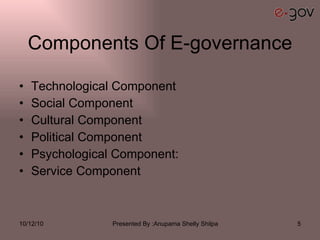
Components Of E-governance Technological Component  Social Component Cultural Component Political Component  Psychological Component: Service Component
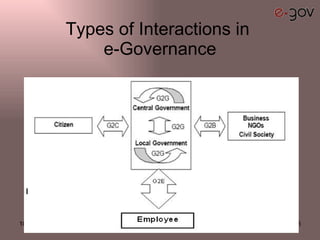
Types of Interactions in  e-Governance
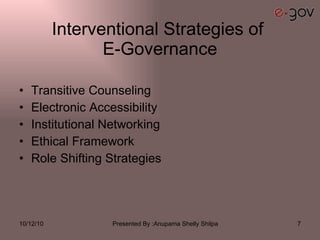
Interventional Strategies of  E-Governance Transitive Counseling Electronic Accessibility  Institutional Networking Ethical Framework Role Shifting Strategies
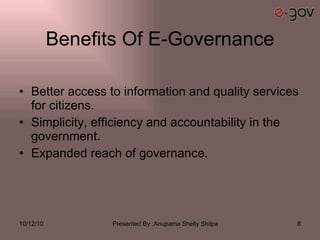
Benefits Of E-Governance Better access to information and quality services for citizens. Simplicity, efficiency and accountability in the government. Expanded reach of governance.
E-Governance Challenges Specific to India Lack of Integrated Services Lack of Key Persons Population Different Languages
Its Relevance to India Governance  Transparency  People’s participation  Promotion of a democratic society  Public services  Efficient, cost-effective and responsive governance  Convenient services to citizens and businesses  Greater citizen access to public information  Accountability in delivery of services to citizens  Management  Simplicity, efficiency and accountability  Managing voluminous information and data effectively Information services
Initiative Till Date Customs and Excise (Government of India) Indian Railways (Government of India)  Postal Department (Government of India)  Passport / Visa (Government of India)  CARD – Registration Project (State Government of Andhra Pradesh)  LOKMITRA (State Government of Himachal Pradesh)
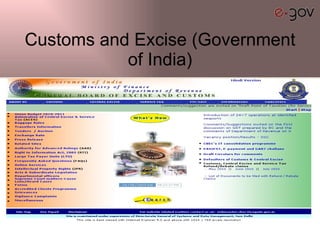
Customs and Excise (Government of India)
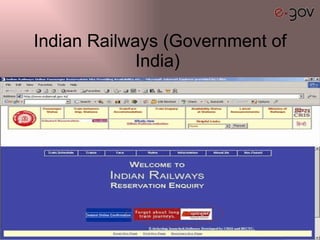
Indian Railways (Government of India)
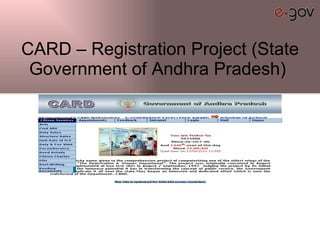
CARD – Registration Project (State Government of Andhra Pradesh)
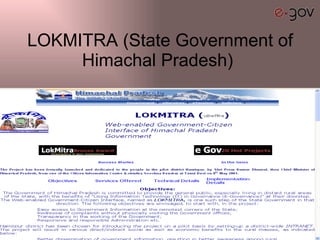
LOKMITRA (State Government of Himachal Pradesh)
National  E-Governance Program  Agriculture Municipalities  Gram Panchayats (elected village administration) Common Service Centers (CSCs)
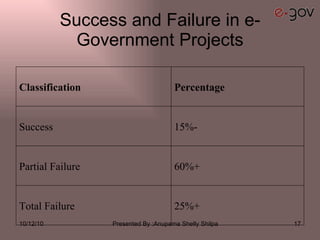
Success and Failure in e-Government Projects 25%+  Total Failure  60%+  Partial Failure  15%-  Success  Percentage  Classification
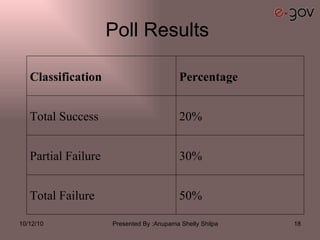
Poll Results  50%  Total Failure  30%  Partial Failure  20%  Total Success  Percentage  Classification
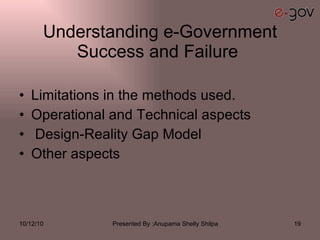
Understanding e-Government Success and Failure  Limitations in the methods used. Operational and Technical aspects Design-Reality Gap Model Other aspects
Conclusion
Thanks

Presentation1

  • 1.
    Presentation On PresentedBy: Anupama Shelly Shilpa MCA-3 rd year Submitted To: Ms. Amandeep Kaur
  • 2.
    Introduction of e-GovernanceE-governance can be defines as use of information & communication by government to enhance the range, quality of information & services provided to the citizen in an cost effective manner.
  • 3.
    According to WorldBank E-Government refers to the Use of information technologies That have the ability to transform relations with citizens, businesses, and other arms of government . These technologies can serve better delivery of government services to citizens.
  • 4.
    Why E-Governance E-Governmentcan transform citizen service provide access to information to empower citizens enable their participation in government and enhance citizen economic and social opportunities so that they can make better lives, for themselves and for the next generation.
  • 5.
    Components Of E-governanceTechnological Component Social Component Cultural Component Political Component Psychological Component: Service Component
  • 6.
    Types of Interactionsin e-Governance
  • 7.
    Interventional Strategies of E-Governance Transitive Counseling Electronic Accessibility Institutional Networking Ethical Framework Role Shifting Strategies
  • 8.
    Benefits Of E-GovernanceBetter access to information and quality services for citizens. Simplicity, efficiency and accountability in the government. Expanded reach of governance.
  • 9.
    E-Governance Challenges Specificto India Lack of Integrated Services Lack of Key Persons Population Different Languages
  • 10.
    Its Relevance toIndia Governance Transparency People’s participation Promotion of a democratic society Public services Efficient, cost-effective and responsive governance Convenient services to citizens and businesses Greater citizen access to public information Accountability in delivery of services to citizens Management Simplicity, efficiency and accountability Managing voluminous information and data effectively Information services
  • 11.
    Initiative Till DateCustoms and Excise (Government of India) Indian Railways (Government of India) Postal Department (Government of India) Passport / Visa (Government of India) CARD – Registration Project (State Government of Andhra Pradesh) LOKMITRA (State Government of Himachal Pradesh)
  • 12.
    Customs and Excise(Government of India)
  • 13.
  • 14.
    CARD – RegistrationProject (State Government of Andhra Pradesh)
  • 15.
    LOKMITRA (State Governmentof Himachal Pradesh)
  • 16.
    National E-GovernanceProgram Agriculture Municipalities Gram Panchayats (elected village administration) Common Service Centers (CSCs)
  • 17.
    Success and Failurein e-Government Projects 25%+ Total Failure 60%+ Partial Failure 15%- Success Percentage Classification
  • 18.
    Poll Results 50% Total Failure 30% Partial Failure 20% Total Success Percentage Classification
  • 19.
    Understanding e-Government Successand Failure Limitations in the methods used. Operational and Technical aspects Design-Reality Gap Model Other aspects
  • 20.
  • 21.