
Presentation
on
E-Learning Management System
GROUP MEMBERS
Subho Mrong
163 019 042
Department of Computer Science and Engineering
Primeasia University
SPOTLIGHT
1. Overview
2. Objective
3. Requirements Analysis
4. Sequence Diagram
5. Class Diagram
6. Use-Case Diagram
7. Conclusion
1. OVERVIEW
An E-Learning Management System is a cloud-based software package that enables
enterprises to deliver learning content and resources to their Students or Clients.
2. OBJECTIVE
● The main objective behind this project is to provide a user friendly environment to provide
knowledge and give everyone a chance to learn.
● The main features that the system provides can be made use of, once the registered people
select their interested subject and take a starter test.
● This helps to establish incremental learning process.
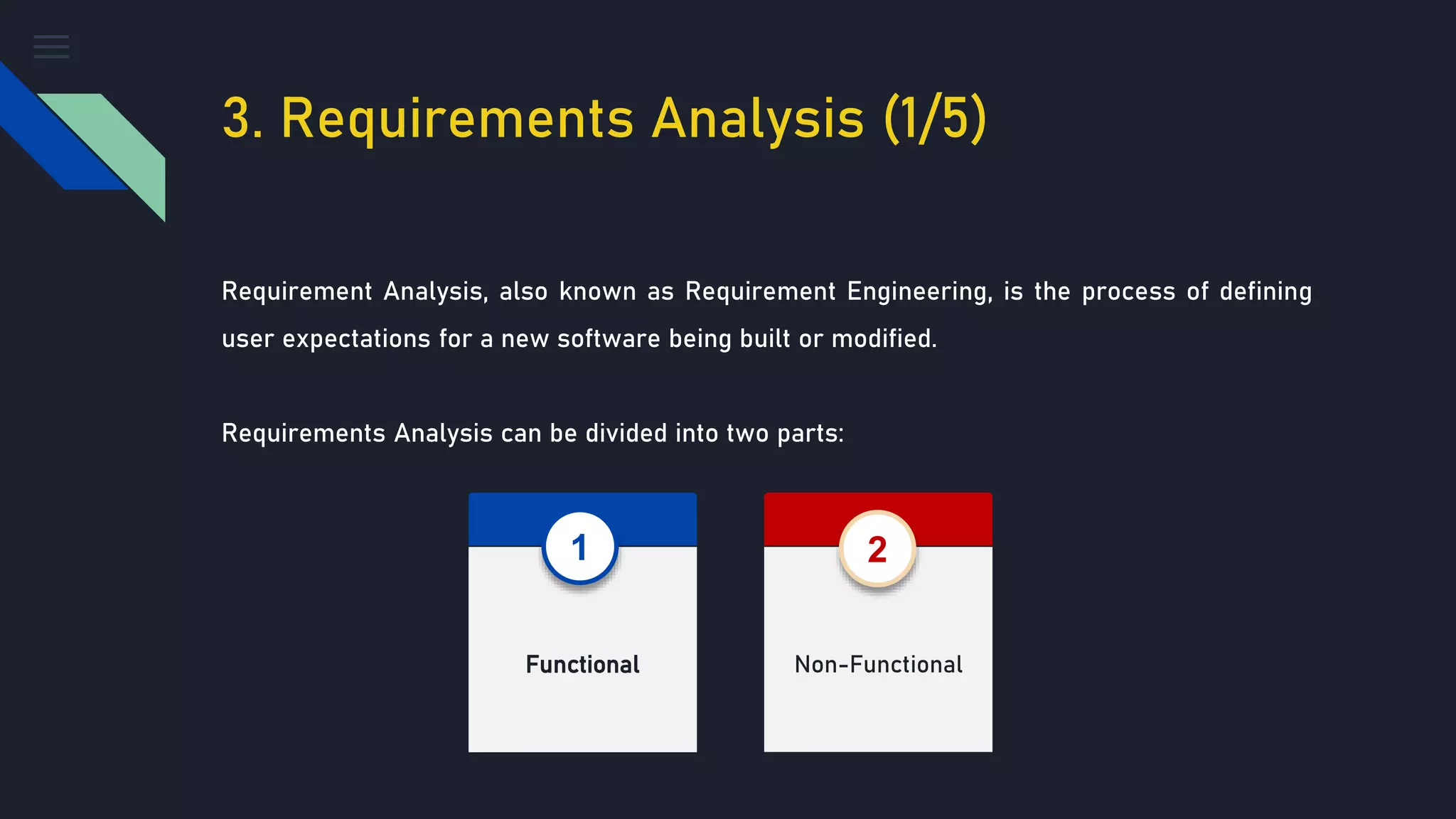
3. Requirements Analysis (1/5)
Requirement Analysis, also known as Requirement Engineering, is the process of defining
user expectations for a new software being built or modified.
Requirements Analysis can be divided into two parts:
Functional
1
Non-Functional
2
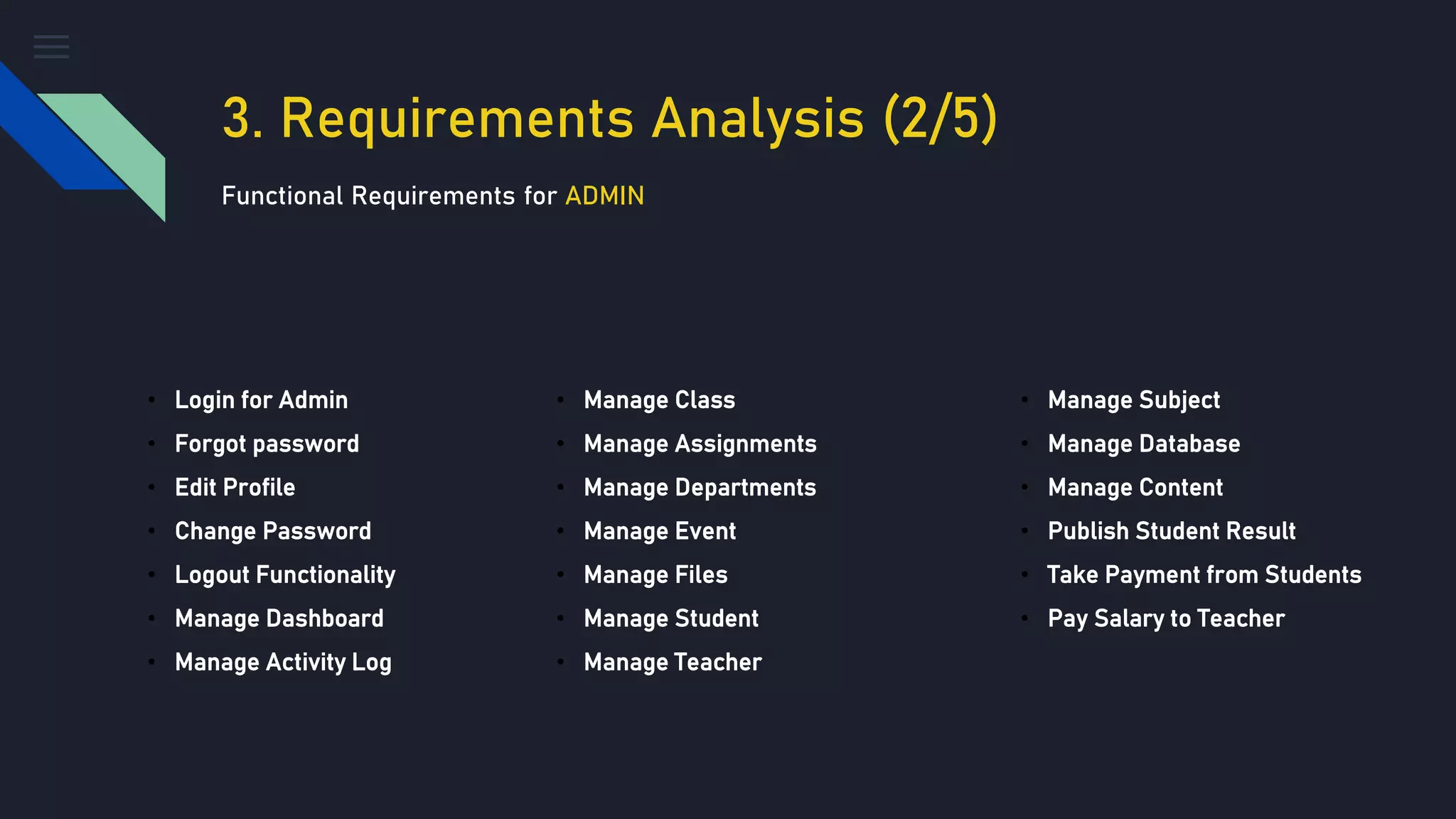
3. Requirements Analysis (2/5)
Functional Requirements for ADMIN
• Login for Admin
• Forgot password
• Edit Profile
• Change Password
• Logout Functionality
• Manage Dashboard
• Manage Activity Log
• Manage Class
• Manage Assignments
• Manage Departments
• Manage Event
• Manage Files
• Manage Student
• Manage Teacher
• Manage Subject
• Manage Database
• Manage Content
• Publish Student Result
• Take Payment from Students
• Pay Salary to Teacher
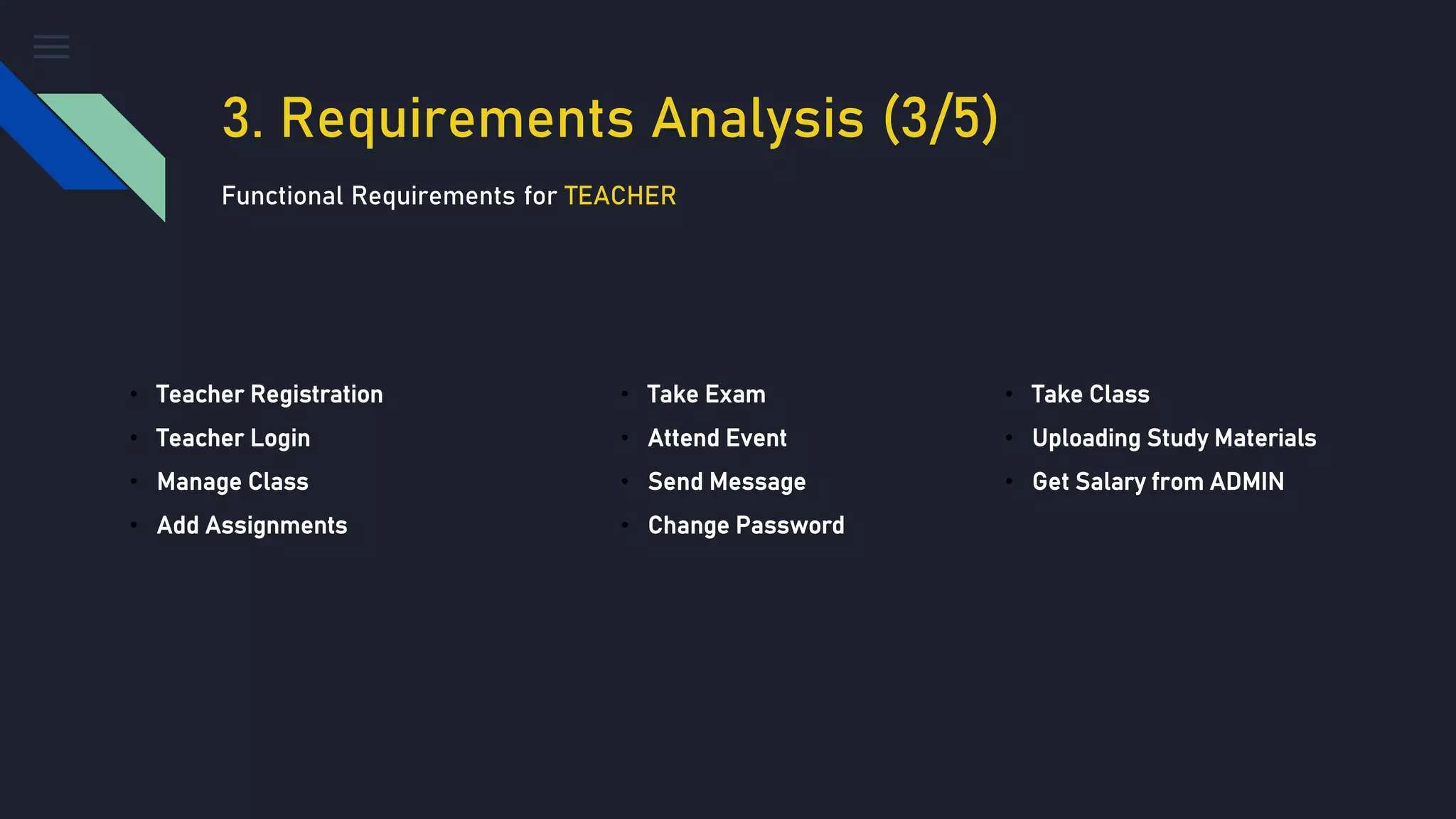
3. Requirements Analysis (3/5)
Functional Requirements for TEACHER
• Teacher Registration
• Teacher Login
• Manage Class
• Add Assignments
• Take Exam
• Attend Event
• Send Message
• Change Password
• Take Class
• Uploading Study Materials
• Get Salary from ADMIN
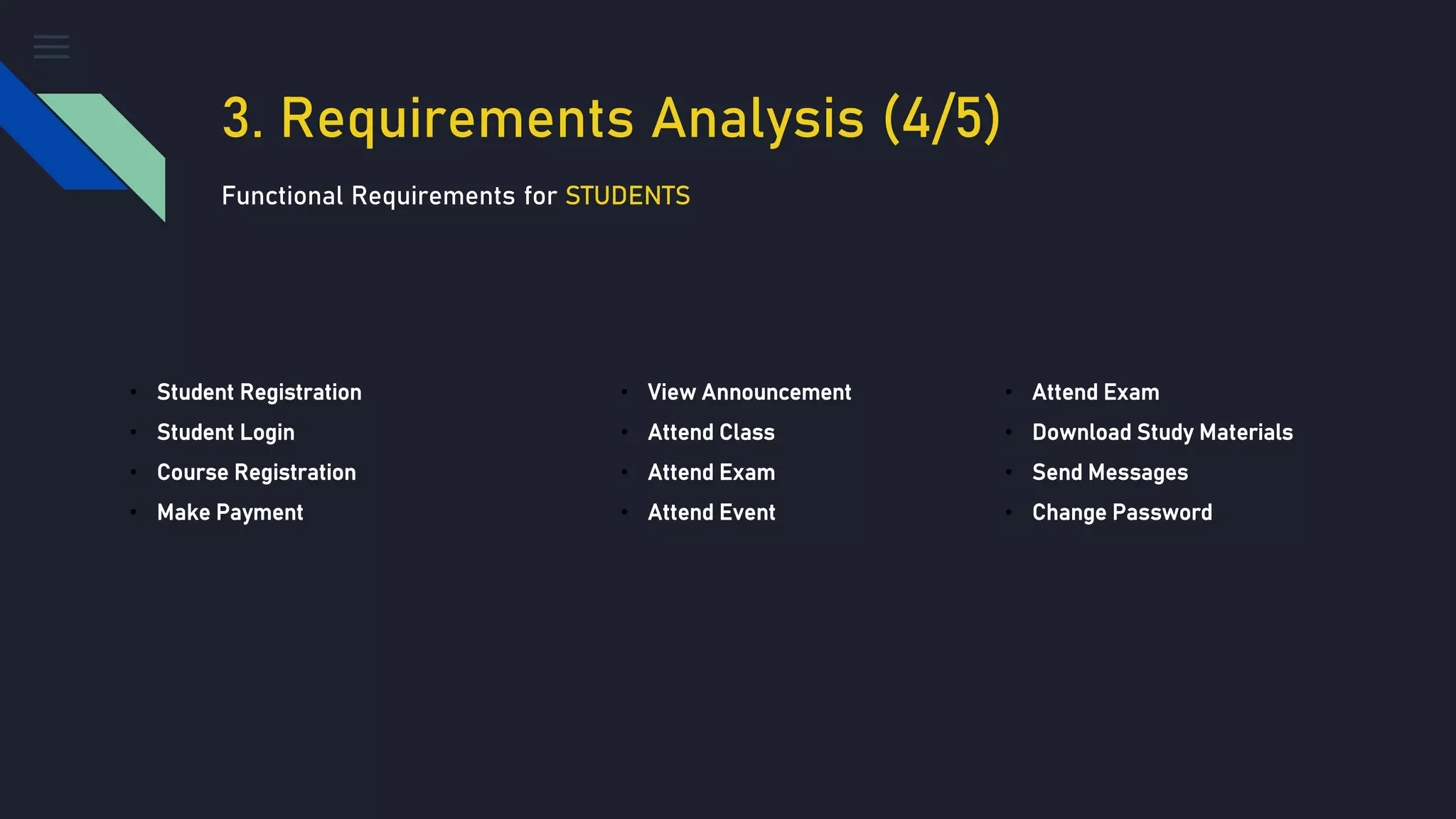
3. Requirements Analysis (4/5)
Functional Requirements for STUDENTS
• Student Registration
• Student Login
• Course Registration
• Make Payment
• View Announcement
• Attend Class
• Attend Exam
• Attend Event
• Attend Exam
• Download Study Materials
• Send Messages
• Change Password
3. Requirements Analysis (5/5)
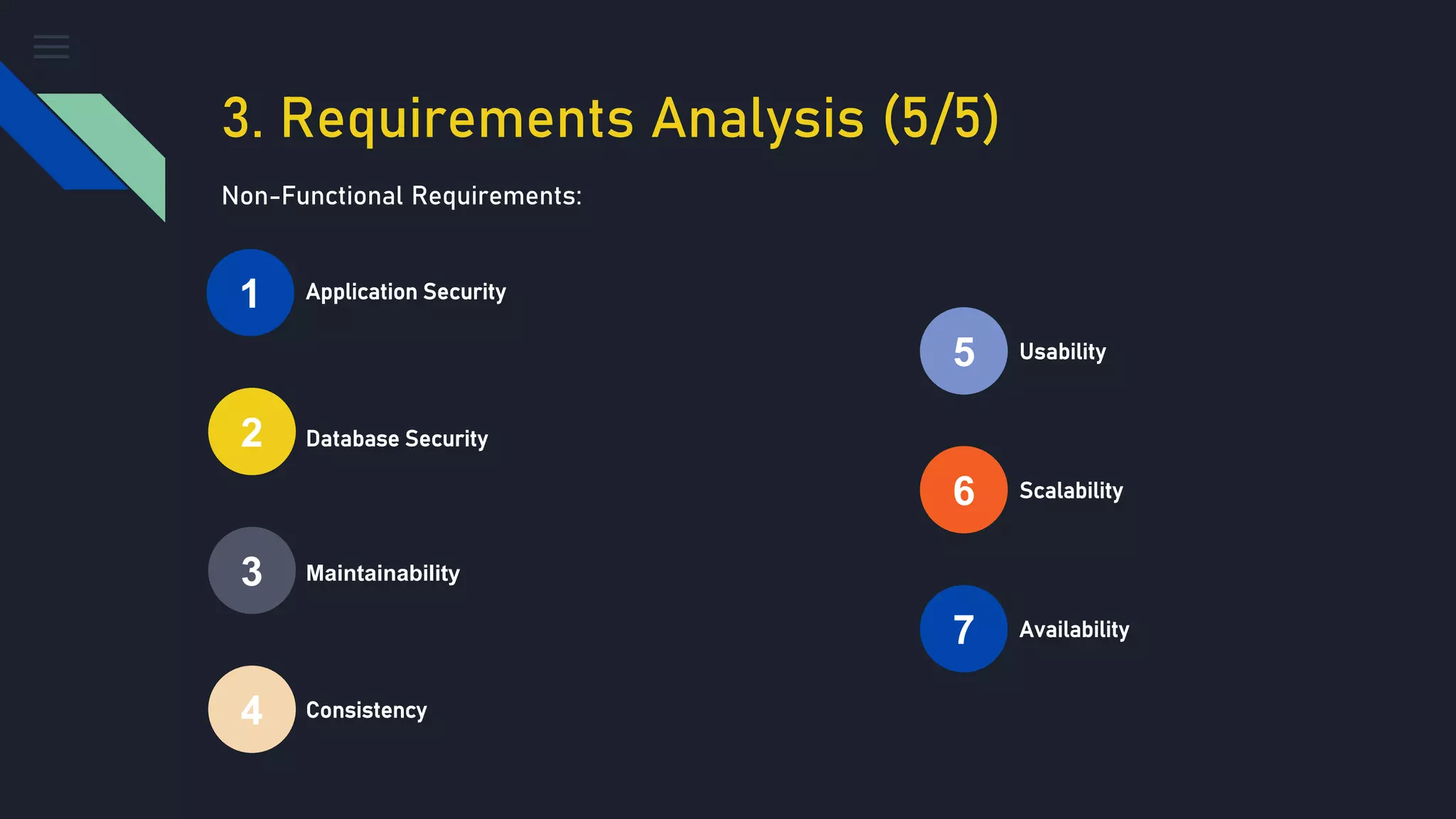
Application Security
Database Security
Maintainability
Consistency
Usability
Scalability
Availability
1
5
2
6
3
7
4
Non-Functional Requirements:
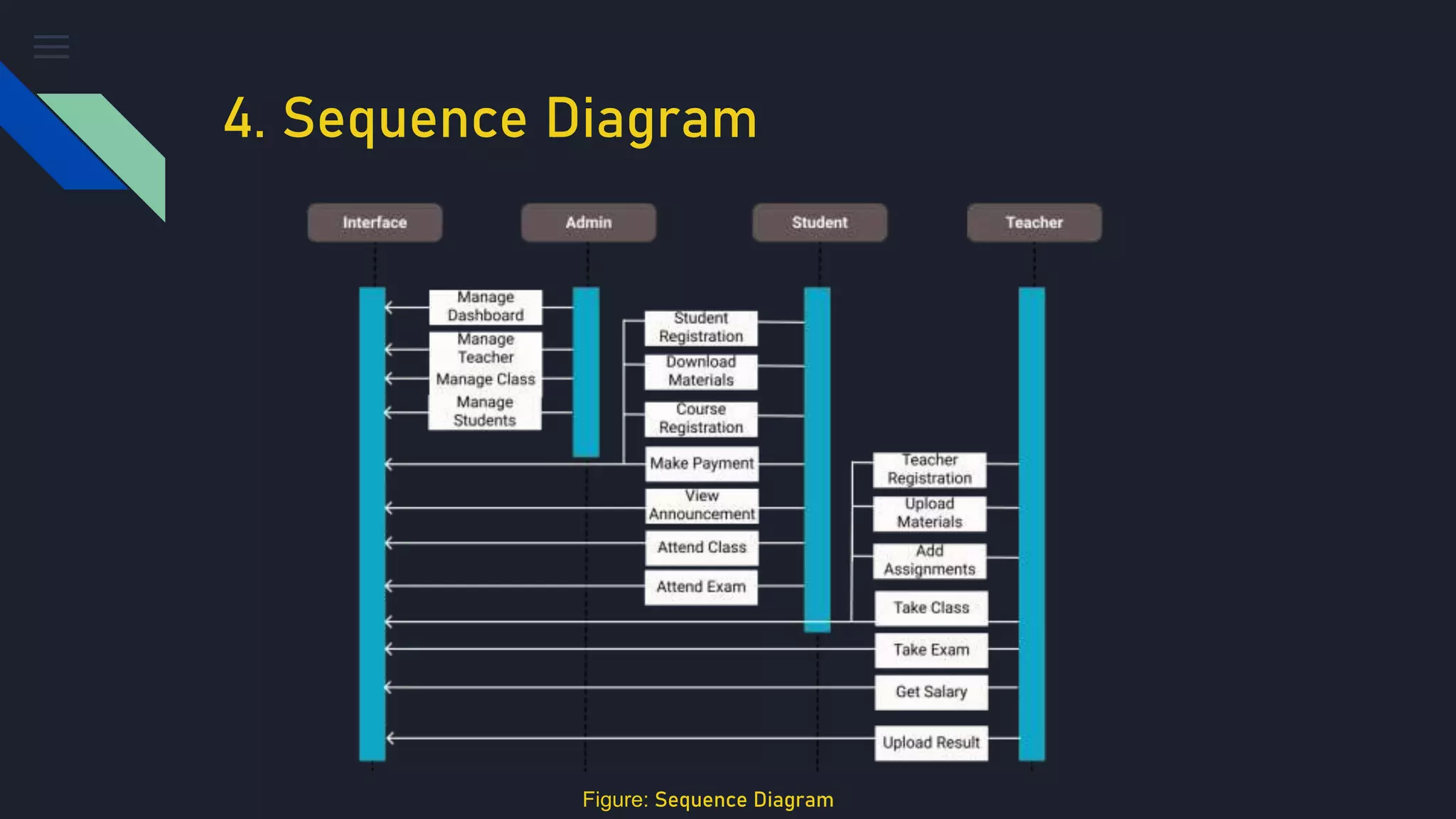
4. Sequence Diagram
Figure: Sequence Diagram
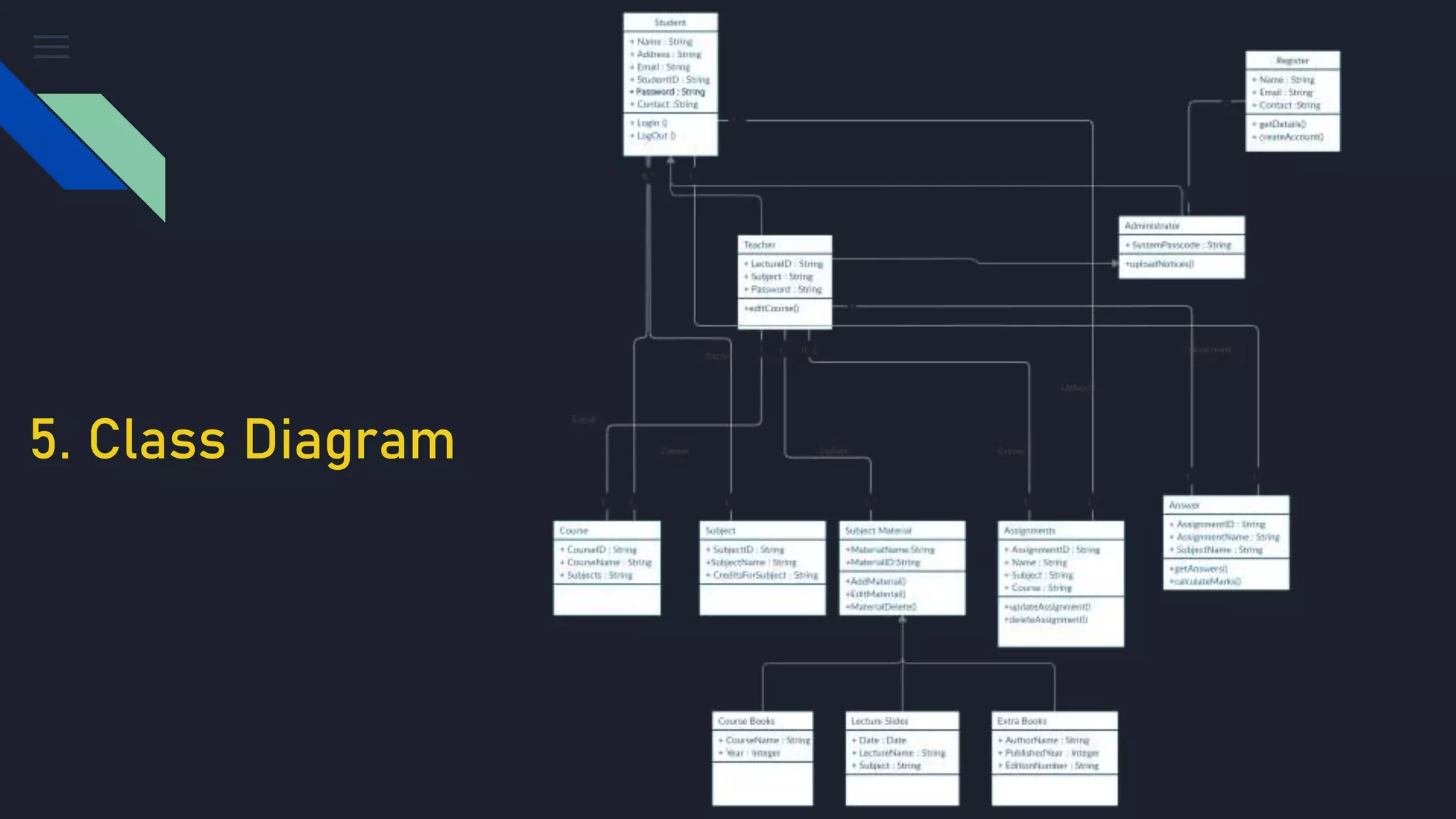
5. Class Diagram
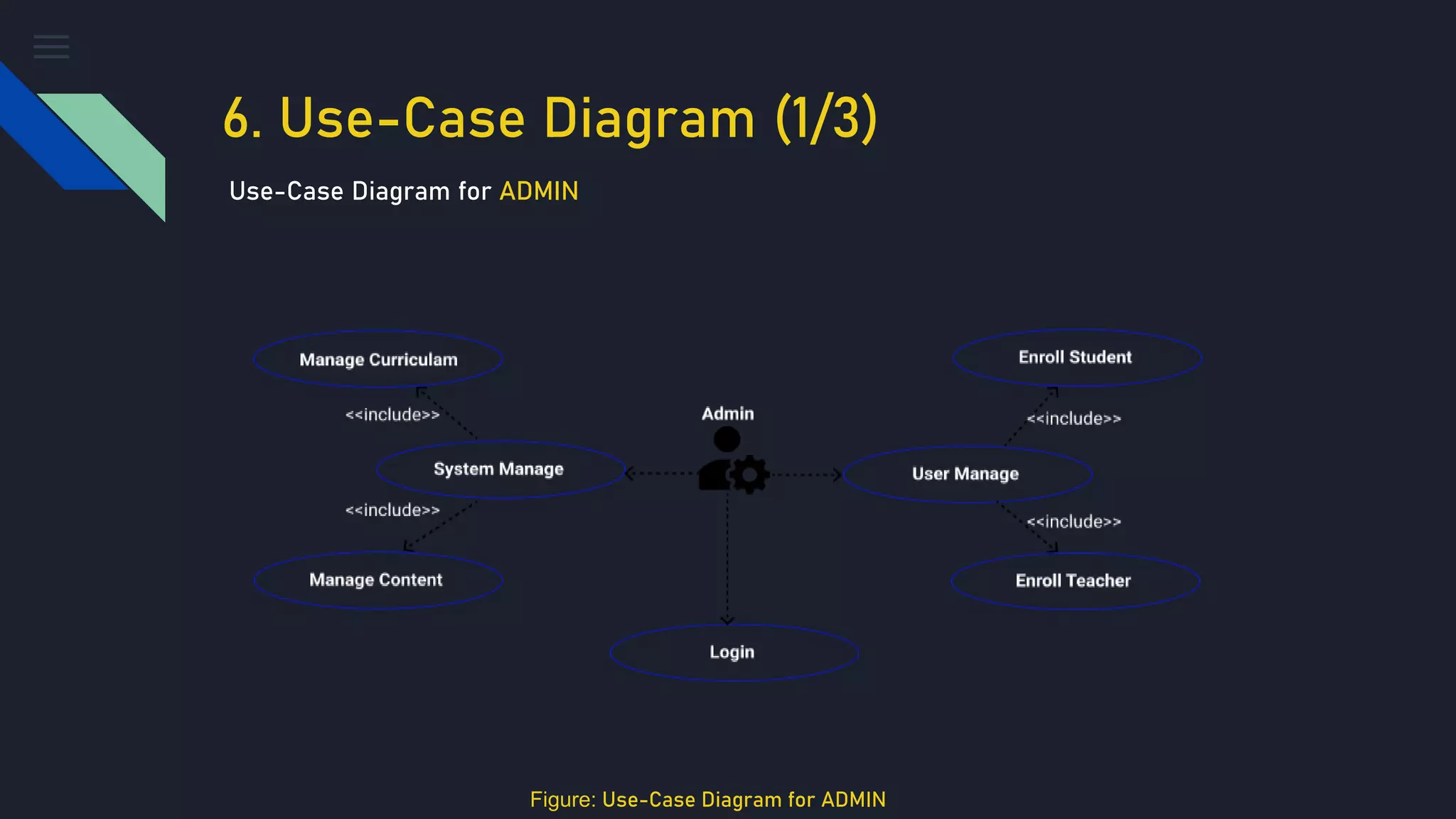
6. Use-Case Diagram (1/3)
Use-Case Diagram for ADMIN
Figure: Use-Case Diagram for ADMIN
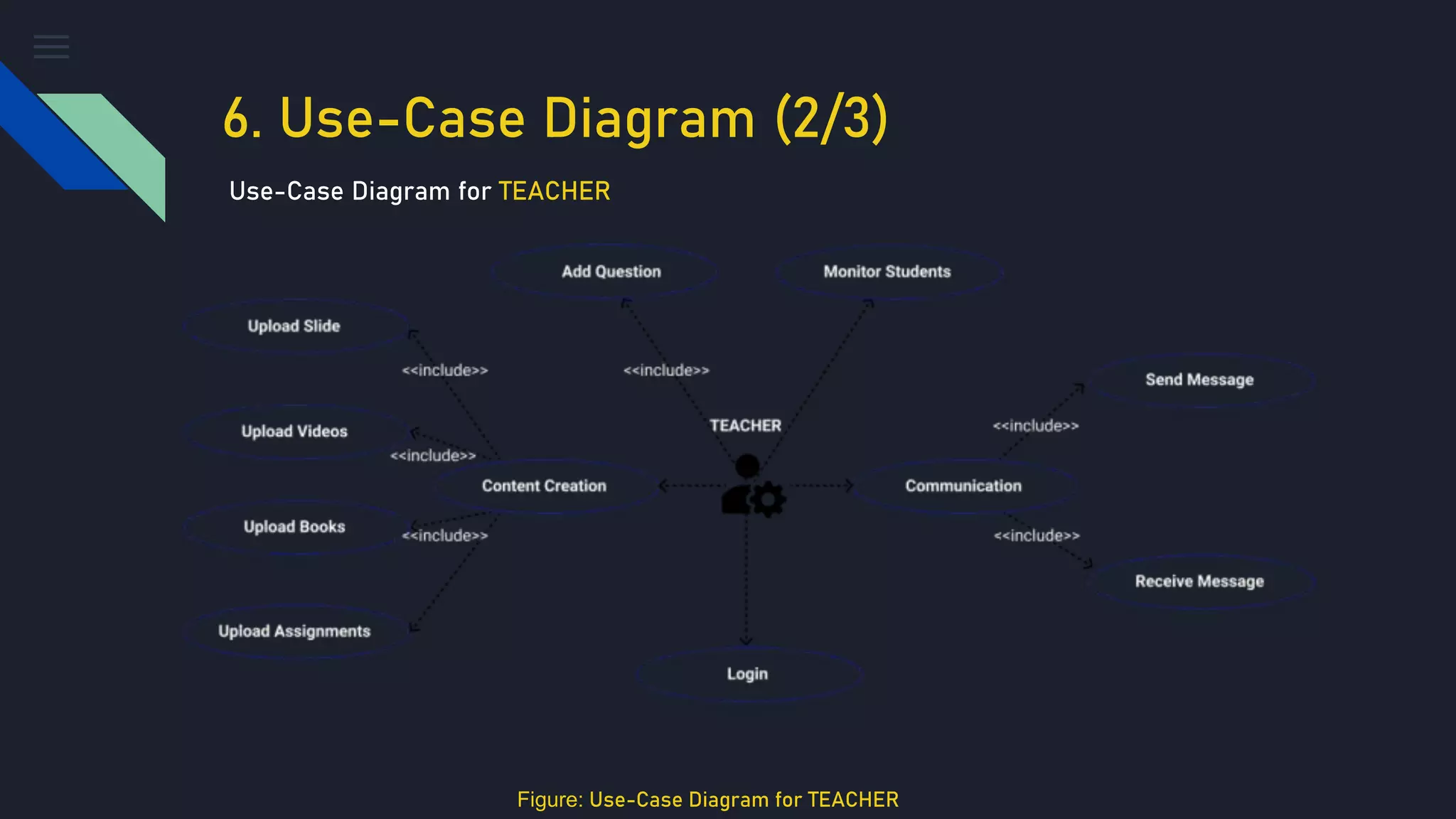
6. Use-Case Diagram (2/3)
Use-Case Diagram for TEACHER
Figure: Use-Case Diagram for TEACHER
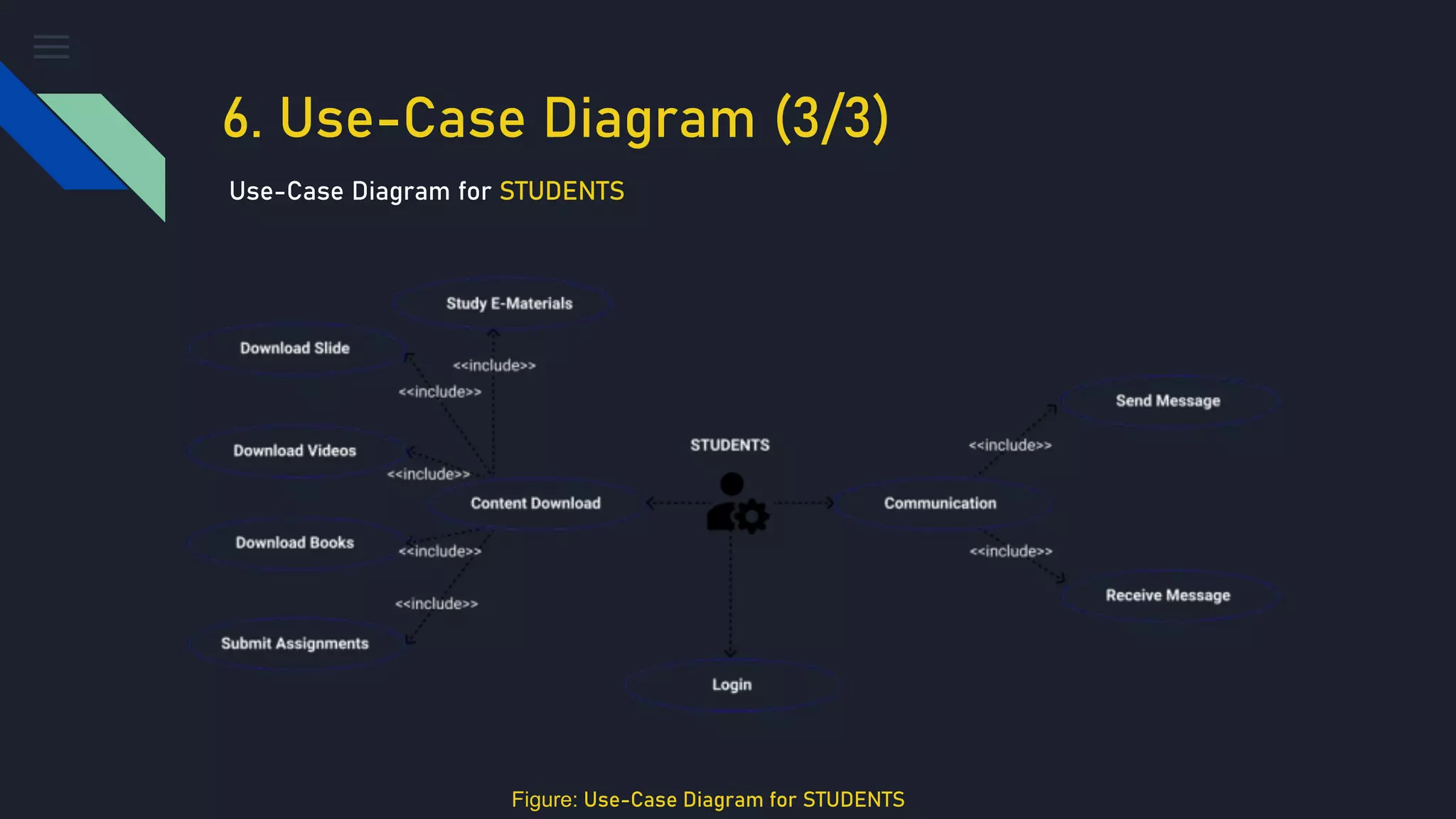
6. Use-Case Diagram (3/3)
Use-Case Diagram for STUDENTS
Figure: Use-Case Diagram for STUDENTS
7. Conclusion
The purpose of E-learning Management System is to automate the existing manual system
by the help of computerized equipment’s and full-fledged computer software, fulfilling their
requirements, so that their valuable data/information can be stored for a longer period with
easy accessing and manipulation of the same. It can assist the user to concentrate on their
other activities rather to concentrate on the record keeping.
THANK YOU!
For your patience

Presentation on e-learning system

  • 1.
  • 2.
    GROUP MEMBERS Subho Mrong 163019 042 Department of Computer Science and Engineering Primeasia University
  • 3.
    SPOTLIGHT 1. Overview 2. Objective 3.Requirements Analysis 4. Sequence Diagram 5. Class Diagram 6. Use-Case Diagram 7. Conclusion
  • 4.
    1. OVERVIEW An E-LearningManagement System is a cloud-based software package that enables enterprises to deliver learning content and resources to their Students or Clients.
  • 5.
    2. OBJECTIVE ● Themain objective behind this project is to provide a user friendly environment to provide knowledge and give everyone a chance to learn. ● The main features that the system provides can be made use of, once the registered people select their interested subject and take a starter test. ● This helps to establish incremental learning process.
  • 6.
    3. Requirements Analysis(1/5) Requirement Analysis, also known as Requirement Engineering, is the process of defining user expectations for a new software being built or modified. Requirements Analysis can be divided into two parts: Functional 1 Non-Functional 2
  • 7.
    3. Requirements Analysis(2/5) Functional Requirements for ADMIN • Login for Admin • Forgot password • Edit Profile • Change Password • Logout Functionality • Manage Dashboard • Manage Activity Log • Manage Class • Manage Assignments • Manage Departments • Manage Event • Manage Files • Manage Student • Manage Teacher • Manage Subject • Manage Database • Manage Content • Publish Student Result • Take Payment from Students • Pay Salary to Teacher
  • 8.
    3. Requirements Analysis(3/5) Functional Requirements for TEACHER • Teacher Registration • Teacher Login • Manage Class • Add Assignments • Take Exam • Attend Event • Send Message • Change Password • Take Class • Uploading Study Materials • Get Salary from ADMIN
  • 9.
    3. Requirements Analysis(4/5) Functional Requirements for STUDENTS • Student Registration • Student Login • Course Registration • Make Payment • View Announcement • Attend Class • Attend Exam • Attend Event • Attend Exam • Download Study Materials • Send Messages • Change Password
  • 10.
    3. Requirements Analysis(5/5) Application Security Database Security Maintainability Consistency Usability Scalability Availability 1 5 2 6 3 7 4 Non-Functional Requirements:
  • 11.
  • 12.
  • 13.
    6. Use-Case Diagram(1/3) Use-Case Diagram for ADMIN Figure: Use-Case Diagram for ADMIN
  • 14.
    6. Use-Case Diagram(2/3) Use-Case Diagram for TEACHER Figure: Use-Case Diagram for TEACHER
  • 15.
    6. Use-Case Diagram(3/3) Use-Case Diagram for STUDENTS Figure: Use-Case Diagram for STUDENTS
  • 16.
    7. Conclusion The purposeof E-learning Management System is to automate the existing manual system by the help of computerized equipment’s and full-fledged computer software, fulfilling their requirements, so that their valuable data/information can be stored for a longer period with easy accessing and manipulation of the same. It can assist the user to concentrate on their other activities rather to concentrate on the record keeping.
  • 17.