Cybersecurity
Essentials
Protect Your Digital Life
Introduction to
Cybersecurity Today
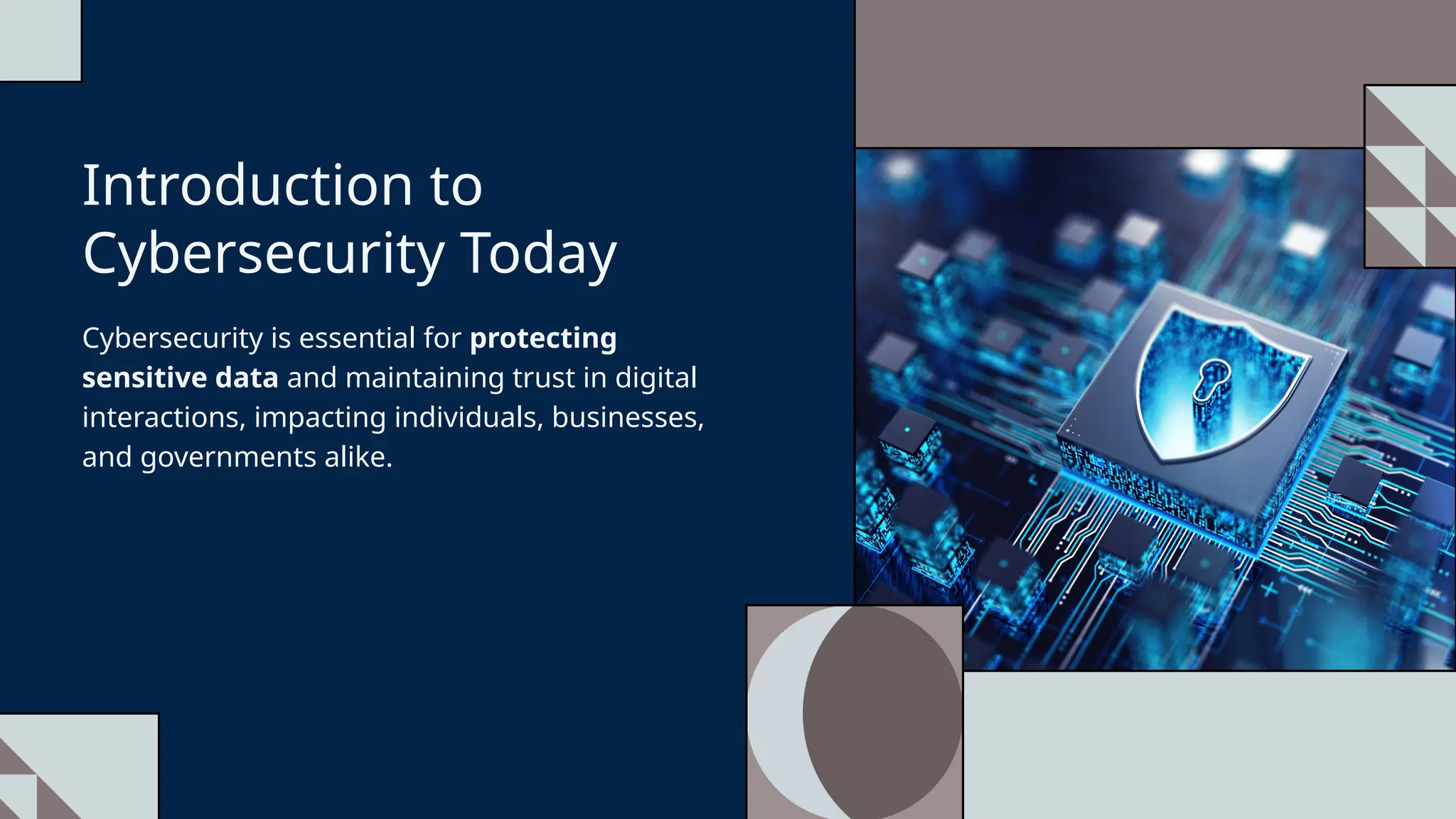
Cybersecurity is essential for protecting
sensitive data and maintaining trust in digital
interactions, impacting individuals, businesses,
and governments alike.
Key Cybersecurity Threats
Overview
Phishing attacks trick users into revealing
sensitive information via deceptive emails.
PHISHING ATTACKS
Ransomware encrypts files, demanding
payment for their release, crippling
organizations.
RANSOMWARE ATTACKS
Use strong, unique passwords
for every account.
PASSWORD MANAGEMENT
Keep software updated to patch
vulnerabilities and enhance
security.
REGULAR UPDATES
Utilize a VPN to encrypt your
internet connection and protect
privacy.
VPN USAGE
Best Practices for Cyber Hygiene
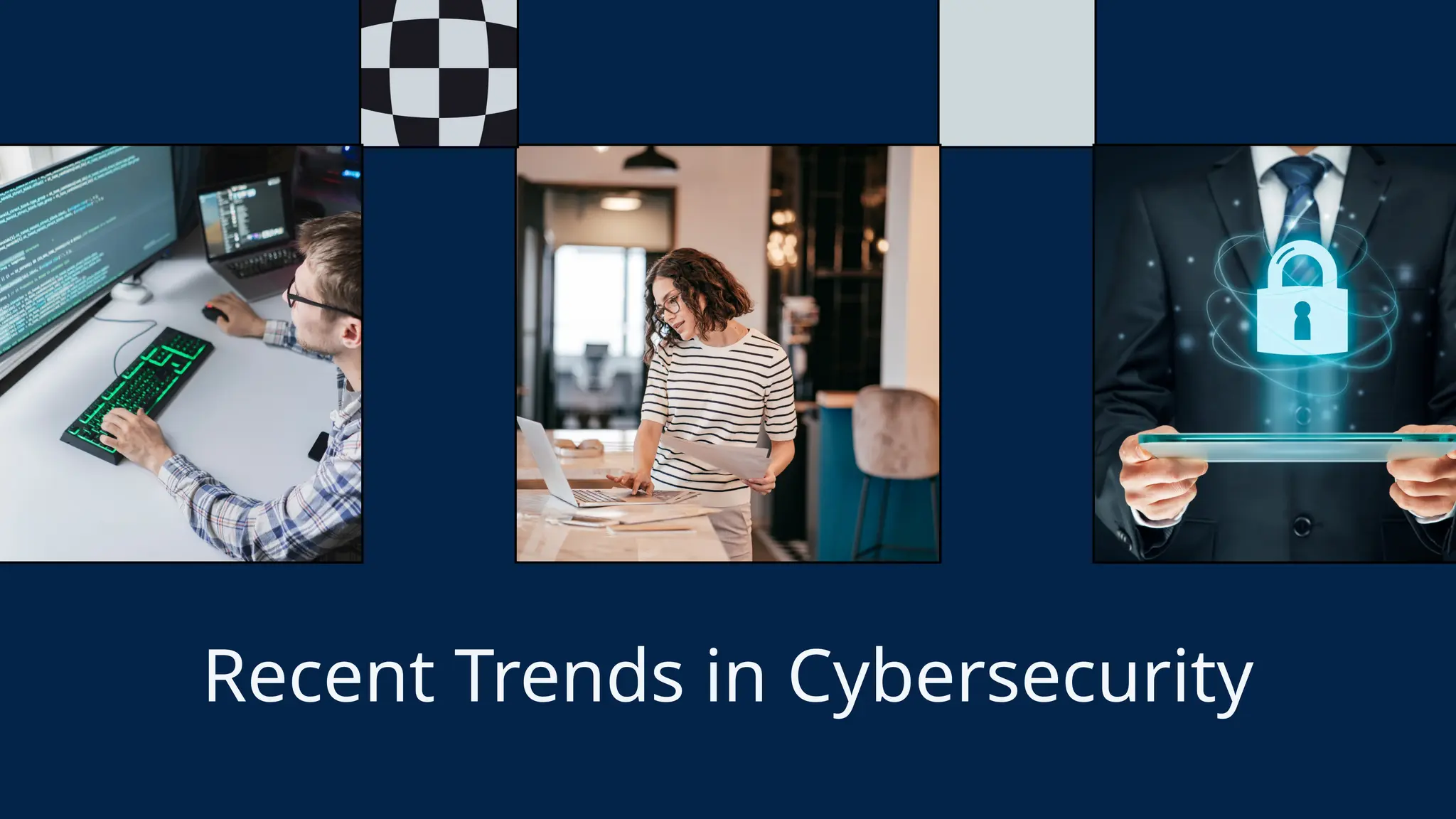
Recent Trends in Cybersecurity
Direct costs from
breaches can be
substantial.
FINANCIAL LOSS
Victims may experience
stress and anxiety after
breaches.
EMOTIONAL TOLL
Companies face loss of
trust and credibility with
customers.
REPUTATIONAL
DAMAGE
Organizations may incur
fines and lawsuits post-
breach.
LEGAL
CONSEQUENCES
Impact of Data Breaches
Cybersecurity Frameworks
Overview
A flexible approach to managing
cybersecurity risks.
NIST FRAMEWORK
Internationally recognized
standards for information
security management.
ISO STANDARDS
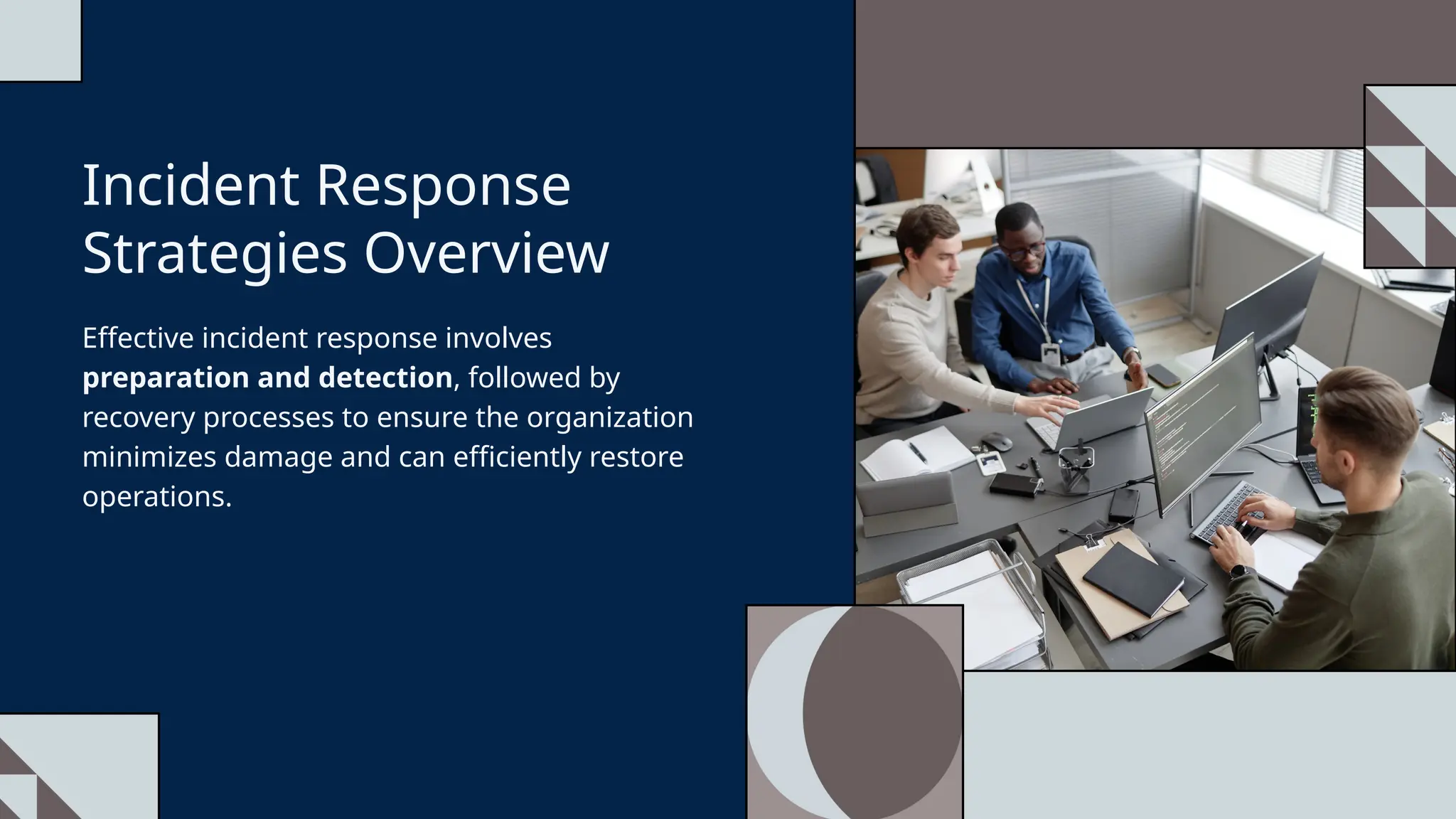
Incident Response
Strategies Overview
Effective incident response involves
preparation and detection, followed by
recovery processes to ensure the organization
minimizes damage and can efficiently restore
operations.
Essential for blocking
unauthorized access to
networks.
FIREWALLS
Protects systems by detecting
and removing malware threats.
ANTI-VIRUS SOFTWARE
Secures data by converting it
into unreadable formats.
ENCRYPTION
Technological Solutions for
Cybersecurity
Cybersecurity Regulations Overview
Ensures data protection rights
for EU citizens.
GDPR COMPLIANCE
Regulates health information
privacy in the United States.
HIPAA STANDARDS
Human Factor in
Cybersecurity
Manipulation tactics used to deceive
individuals into revealing confidential
information.
SOCIAL ENGINEERING
Employees or contractors who misuse their
access to compromise security.
INSIDER THREATS
Four Pillars of Cybersecurity
These are the essential components
• People: Training and awareness
• Process: Risk management strategies
• Technology: Tools and infrastructure
• Governance: Policies and compliance
Rising Cybercrime Trends
INCREASED ATTACKS
Cyber attacks have increased
dramatically over the last
year.
PHISHING SCAMS
Phishing scams remain a
significant threat, targeting
individuals and businesses.
DATA BREACHES
Data breaches expose sensitive
information, affecting millions
globally.
03
02
01
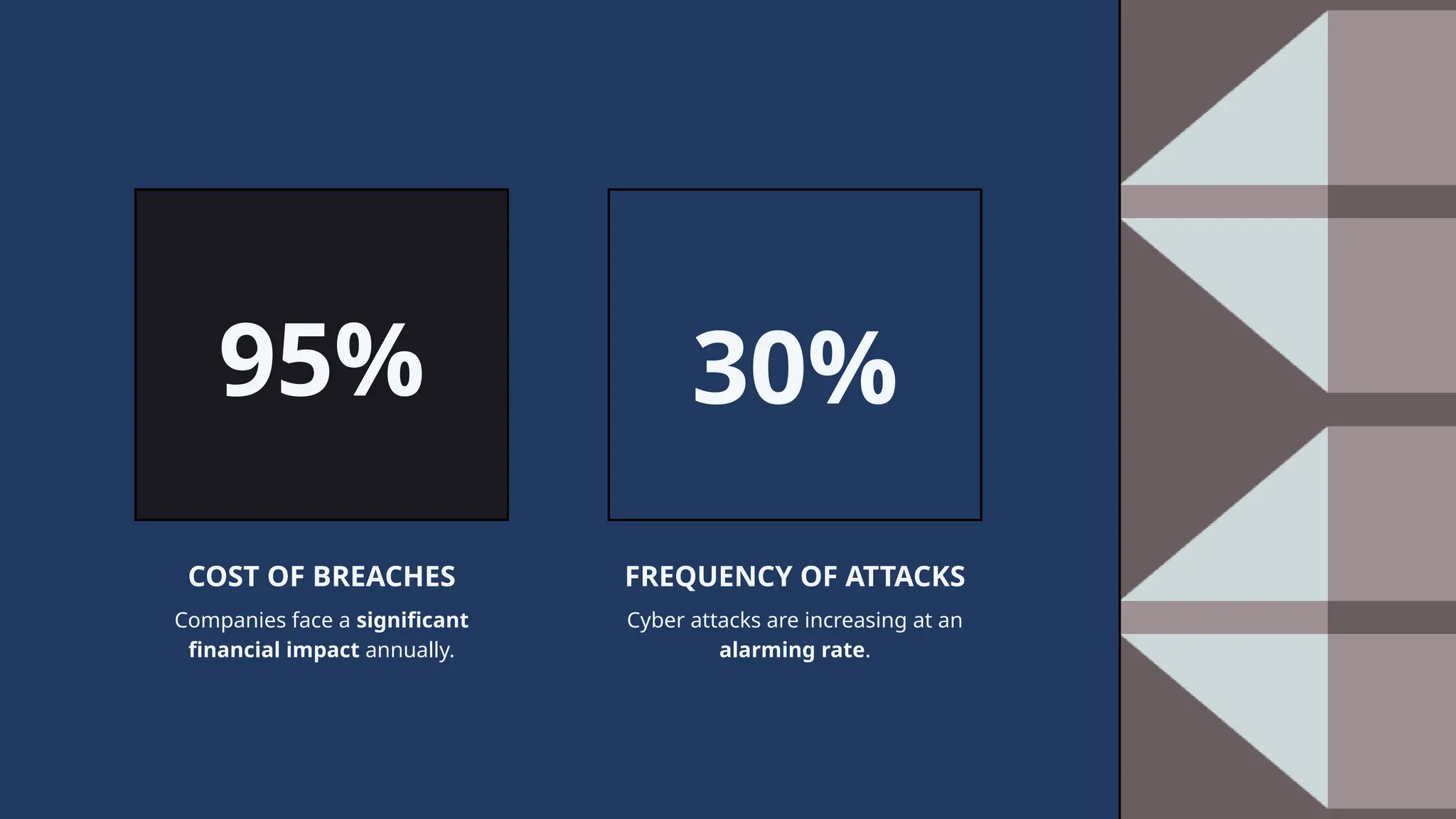
COST OF BREACHES
Companies face a significant
financial impact annually.
FREQUENCY OF ATTACKS
Cyber attacks are increasing at an
alarming rate.
30%
95%
Cyber
Attack
Trends
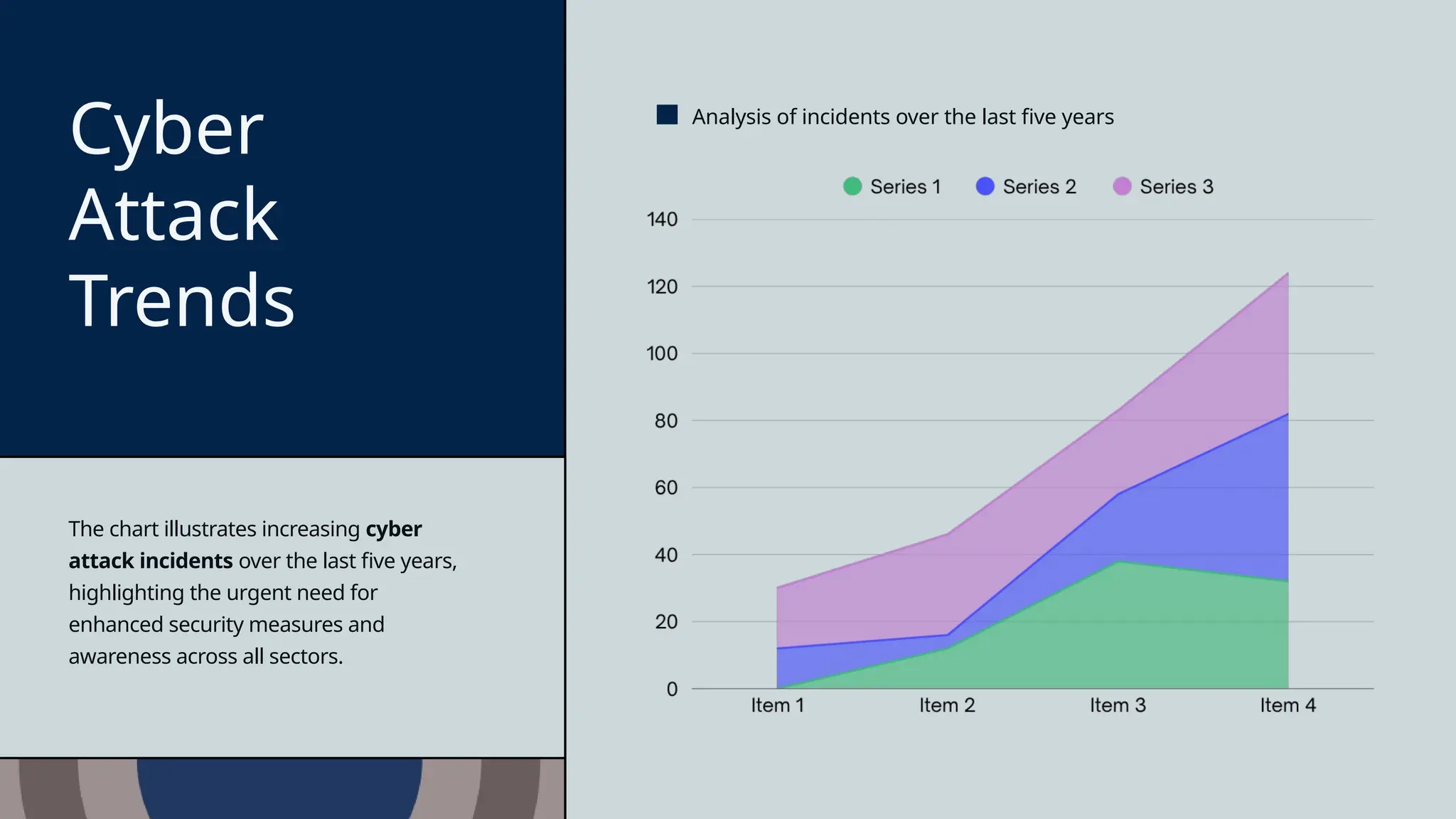
Analysis of incidents over the last five years
The chart illustrates increasing cyber
attack incidents over the last five years,
highlighting the urgent need for
enhanced security measures and
awareness across all sectors.
Top Cybersecurity Solutions
Future of Cybersecurity
Ransomware attacks are
increasing in sophistication and
frequency.
EMERGING THREATS
Artificial intelligence enhances
both defense and attack
capabilities.
NEW TECHNOLOGIES
“Cybersecurity is much
more than a matter of IT.”
– STEPHANE NAPPO
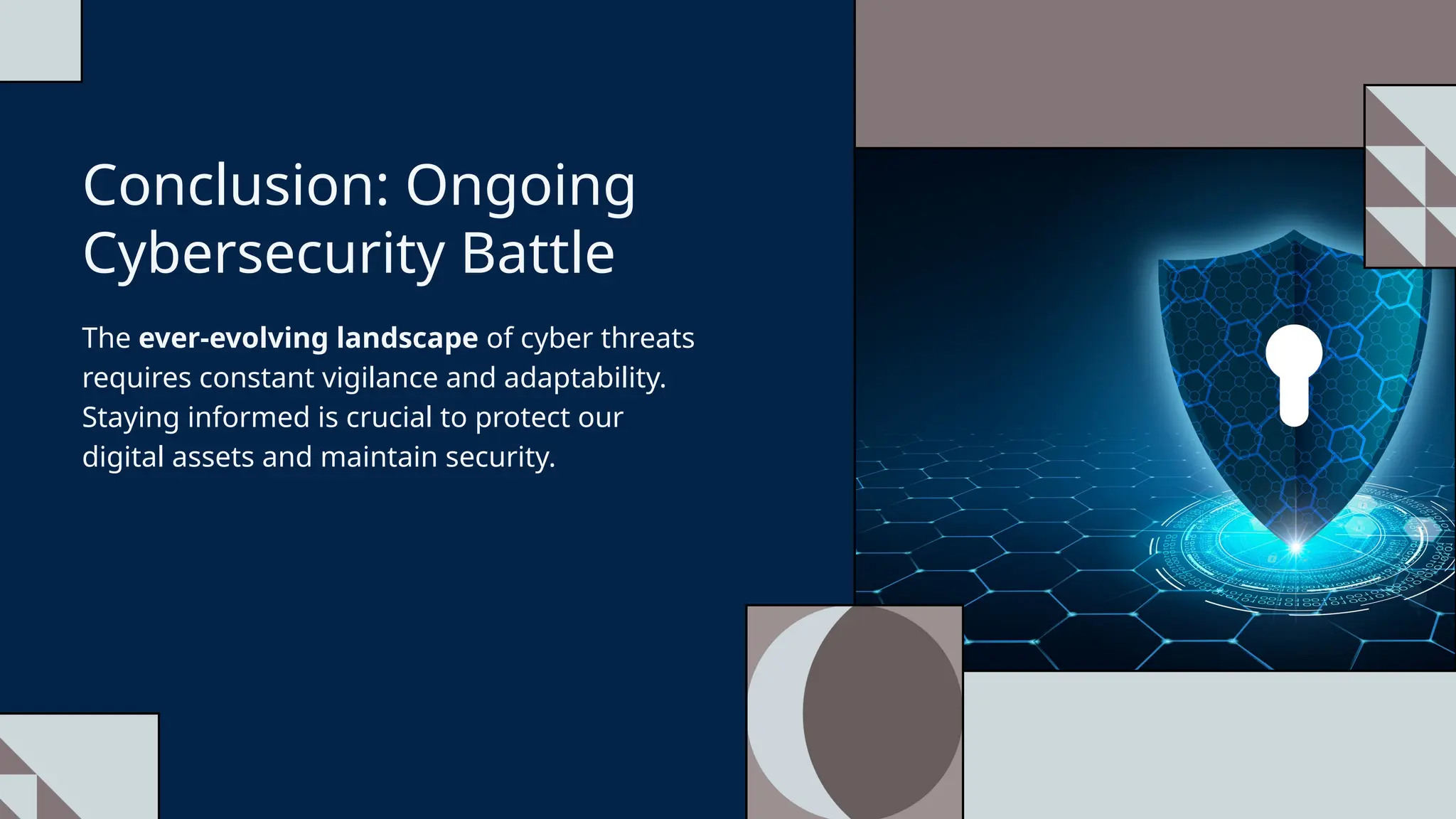
Conclusion: Ongoing
Cybersecurity Battle
The ever-evolving landscape of cyber threats
requires constant vigilance and adaptability.
Staying informed is crucial to protect our
digital assets and maintain security.
Thank
You!

Presentation - Cybersecurity Essentials.pptx

  • 1.
  • 2.
    Introduction to Cybersecurity Today Cybersecurityis essential for protecting sensitive data and maintaining trust in digital interactions, impacting individuals, businesses, and governments alike.
  • 3.
    Key Cybersecurity Threats Overview Phishingattacks trick users into revealing sensitive information via deceptive emails. PHISHING ATTACKS Ransomware encrypts files, demanding payment for their release, crippling organizations. RANSOMWARE ATTACKS
  • 4.
    Use strong, uniquepasswords for every account. PASSWORD MANAGEMENT Keep software updated to patch vulnerabilities and enhance security. REGULAR UPDATES Utilize a VPN to encrypt your internet connection and protect privacy. VPN USAGE Best Practices for Cyber Hygiene
  • 5.
    Recent Trends inCybersecurity
  • 6.
    Direct costs from breachescan be substantial. FINANCIAL LOSS Victims may experience stress and anxiety after breaches. EMOTIONAL TOLL Companies face loss of trust and credibility with customers. REPUTATIONAL DAMAGE Organizations may incur fines and lawsuits post- breach. LEGAL CONSEQUENCES Impact of Data Breaches
  • 7.
    Cybersecurity Frameworks Overview A flexibleapproach to managing cybersecurity risks. NIST FRAMEWORK Internationally recognized standards for information security management. ISO STANDARDS
  • 8.
    Incident Response Strategies Overview Effectiveincident response involves preparation and detection, followed by recovery processes to ensure the organization minimizes damage and can efficiently restore operations.
  • 9.
    Essential for blocking unauthorizedaccess to networks. FIREWALLS Protects systems by detecting and removing malware threats. ANTI-VIRUS SOFTWARE Secures data by converting it into unreadable formats. ENCRYPTION Technological Solutions for Cybersecurity
  • 10.
    Cybersecurity Regulations Overview Ensuresdata protection rights for EU citizens. GDPR COMPLIANCE Regulates health information privacy in the United States. HIPAA STANDARDS
  • 11.
    Human Factor in Cybersecurity Manipulationtactics used to deceive individuals into revealing confidential information. SOCIAL ENGINEERING Employees or contractors who misuse their access to compromise security. INSIDER THREATS
  • 12.
    Four Pillars ofCybersecurity These are the essential components • People: Training and awareness • Process: Risk management strategies • Technology: Tools and infrastructure • Governance: Policies and compliance
  • 13.
    Rising Cybercrime Trends INCREASEDATTACKS Cyber attacks have increased dramatically over the last year. PHISHING SCAMS Phishing scams remain a significant threat, targeting individuals and businesses. DATA BREACHES Data breaches expose sensitive information, affecting millions globally. 03 02 01
  • 14.
    COST OF BREACHES Companiesface a significant financial impact annually. FREQUENCY OF ATTACKS Cyber attacks are increasing at an alarming rate. 30% 95%
  • 15.
    Cyber Attack Trends Analysis of incidentsover the last five years The chart illustrates increasing cyber attack incidents over the last five years, highlighting the urgent need for enhanced security measures and awareness across all sectors.
  • 16.
  • 17.
    Future of Cybersecurity Ransomwareattacks are increasing in sophistication and frequency. EMERGING THREATS Artificial intelligence enhances both defense and attack capabilities. NEW TECHNOLOGIES
  • 18.
    “Cybersecurity is much morethan a matter of IT.” – STEPHANE NAPPO
  • 19.
    Conclusion: Ongoing Cybersecurity Battle Theever-evolving landscape of cyber threats requires constant vigilance and adaptability. Staying informed is crucial to protect our digital assets and maintain security.
  • 20.