Experiences
for the
Future
WWW.HDATASYSTEMS.COM
INFO@HYPERLINKINFOSYSTEM.COM
Digital experiences have transformed significantly
over the years:
The shift from static web pages to interactive interfaces
Increasing user expectations for personalization and
responsiveness
The integration of AI and data analytics in design processes
Emphasis on user-centered design to enhance engagement
and satisfaction
Evolution towards seamless, multi-device experiences
Transitioning
to AI and
Data
Embracing New Frontiers in Experience
Design
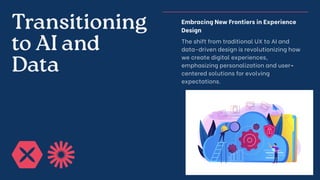
The shift from traditional UX to AI and
data-driven design is revolutionizing how
we create digital experiences,
emphasizing personalization and user-
centered solutions for evolving
expectations.
AI's Impact on
UX
Personalization
AI enhances user
experiences
through tailored
content,
adapting to
individual
preferences and
improving
engagement
effectively.
Smarter Design
Data-driven
insights empower
designers to
make informed
decisions,
optimizing user
interactions and
boosting
satisfaction in
various
applications.
Data-Driven
UX
Analyzing User Behavior Effectively
Understanding user behavior is crucial
for creating engaging digital
experiences. By collecting and
analyzing data, designers can uncover
patterns and preferences that inform
better design choices.
Gaining Real-Time Insights
Real-time insights allow designers to
adapt experiences dynamically. By
leveraging analytics, businesses can
make timely adjustments to improve
user satisfaction and overall
interaction with their platforms.
AI-Driven
Personalization
Insights
Adaptive
Content
Adaptive
content tailors
itself to user
preferences,
enhancing
engagement
and ensuring
relevant
information is
always
presented.
Personalized
Recommendation
Personalized
recommendations
utilize user data to
suggest products
or content,
creating a tailored
experience that
increases
satisfaction.
Intelligent
Interfaces:
Enhancing
User
Interaction
Predictive Search: Anticipating User
Needs
Predictive search utilizes algorithms to
analyze user behavior, allowing systems
to anticipate queries and present relevant
results, ultimately improving efficiency
and user satisfaction.
Voice UI: Conversational Interaction
Redefined
Voice user interfaces enable natural
language processing, allowing users to
interact seamlessly with technology
through speech, making digital
experiences more accessible and user-
friendly.
Inclusive
Design: AI for
Accessibility
Enhancing Access for All Users
AI plays a crucial role in creating
accessible digital experiences by
offering tailored solutions that meet
diverse user needs and removing
barriers to information.
Supporting Diverse User Needs
By employing AI, designers can
analyze user preferences and
behaviors, ensuring that experiences
are inclusive and cater to everyone,
regardless of their unique abilities or
backgrounds.
Privacy and
Ethics
Understanding the Importance
of Design Integrity
As we embrace AI and data in
UX, we must prioritize user
privacy, ensuring transparency
and trust while maintaining
ethical standards in design
practices.
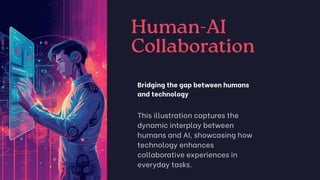
Bridging the gap between humans
and technology
This illustration captures the
dynamic interplay between
humans and AI, showcasing how
technology enhances
collaborative experiences in
everyday tasks.
Human-AI
Collaboration
Conclusion
AI and data are transforming UI/UX design
into intelligent, user-centric experiences.
By understanding user behavior and
preferences, data-driven design creates
meaningful and engaging interactions.
Intelligent UX is not just a trend—it defines
the future of digital experiences.
THANK
YOU
info@hyperlinkinfosystem.com
www.hdatasystems.com

Presentation - 5 Essential Steps for Successful Data Migration

  • 1.
  • 2.
    Digital experiences havetransformed significantly over the years: The shift from static web pages to interactive interfaces Increasing user expectations for personalization and responsiveness The integration of AI and data analytics in design processes Emphasis on user-centered design to enhance engagement and satisfaction Evolution towards seamless, multi-device experiences
  • 3.
    Transitioning to AI and Data EmbracingNew Frontiers in Experience Design The shift from traditional UX to AI and data-driven design is revolutionizing how we create digital experiences, emphasizing personalization and user- centered solutions for evolving expectations.
  • 4.
    AI's Impact on UX Personalization AIenhances user experiences through tailored content, adapting to individual preferences and improving engagement effectively. Smarter Design Data-driven insights empower designers to make informed decisions, optimizing user interactions and boosting satisfaction in various applications.
  • 5.
    Data-Driven UX Analyzing User BehaviorEffectively Understanding user behavior is crucial for creating engaging digital experiences. By collecting and analyzing data, designers can uncover patterns and preferences that inform better design choices. Gaining Real-Time Insights Real-time insights allow designers to adapt experiences dynamically. By leveraging analytics, businesses can make timely adjustments to improve user satisfaction and overall interaction with their platforms.
  • 6.
    AI-Driven Personalization Insights Adaptive Content Adaptive content tailors itself touser preferences, enhancing engagement and ensuring relevant information is always presented. Personalized Recommendation Personalized recommendations utilize user data to suggest products or content, creating a tailored experience that increases satisfaction.
  • 7.
    Intelligent Interfaces: Enhancing User Interaction Predictive Search: AnticipatingUser Needs Predictive search utilizes algorithms to analyze user behavior, allowing systems to anticipate queries and present relevant results, ultimately improving efficiency and user satisfaction. Voice UI: Conversational Interaction Redefined Voice user interfaces enable natural language processing, allowing users to interact seamlessly with technology through speech, making digital experiences more accessible and user- friendly.
  • 8.
    Inclusive Design: AI for Accessibility EnhancingAccess for All Users AI plays a crucial role in creating accessible digital experiences by offering tailored solutions that meet diverse user needs and removing barriers to information. Supporting Diverse User Needs By employing AI, designers can analyze user preferences and behaviors, ensuring that experiences are inclusive and cater to everyone, regardless of their unique abilities or backgrounds.
  • 9.
    Privacy and Ethics Understanding theImportance of Design Integrity As we embrace AI and data in UX, we must prioritize user privacy, ensuring transparency and trust while maintaining ethical standards in design practices.
  • 10.
    Bridging the gapbetween humans and technology This illustration captures the dynamic interplay between humans and AI, showcasing how technology enhances collaborative experiences in everyday tasks. Human-AI Collaboration
  • 11.
    Conclusion AI and dataare transforming UI/UX design into intelligent, user-centric experiences. By understanding user behavior and preferences, data-driven design creates meaningful and engaging interactions. Intelligent UX is not just a trend—it defines the future of digital experiences.
  • 12.