PRESENT CAKES
DEFINITION OF TERMS
• Consistent- marked by harmony, regularity or continuity.
• Contrast- a degree of difference between the lightest and darkest
parts of a presentation.
• Combine- to become one
• Compose- to arrange in proper or orderly form.
• Dramatic- striking in appearance or effect.
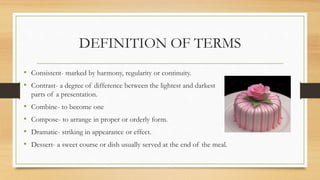
• Dessert- a sweet course or dish usually served at the end of the meal.
• Garnish- to add decorative or savory touches to food.
• Plating- food and service supplied to one person
• Present- to bring to one’s attention
• Vessel- a container such as cask, bottle, plates, saucers, cup or bowl for
holding something to serve.
PRESENTING AND PLATING CAKES
• Tips on how to plate and present cakes
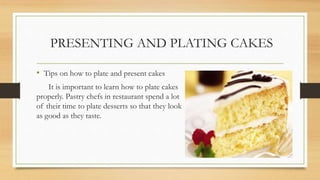
It is important to learn how to plate cakes
properly. Pastry chefs in restaurant spend a lot
of their time to plate desserts so that they look
as good as they taste.
1. Be creative with color.
A splash of color can bring your desserts to life. A dark chocolate cake can
go from a brown lump to an artful concoction when garnished with vibrant
berries; a lemon tart goes from a fairly monotone palette to lively when
presented with the contrast of a violet flower and marbed raspberry coulis.
2. Combine textures
Adding different textures to the plate adds excitement to the visual appeal
of cake. Different textures excite the sense, giving an anticipatory sense of the
taste pleasures to come.
3. Compose your plate
There are many ways to compose a plate. Consider the plate as if it were a
blank canvass or as if you were composing the frame for photograph. What
would fill the space in an interesting way?
4. Consider the vessel.
It may seem like common sense but consider the experience of eating the
dessert when you choose the type of plate.
5. Contrast temperatures
There’s nothing like pairing a slice of perfectly prepared cake with a cool
slice of ice cream. Combining temperatures can be a beautiful thing, but your
plating does require some consideration. Do not put your dessert on a hot
plate. A slightly chilled plate may be helpful when plating cold desserts,
whereas room temperature will do just fine for most cakes or pies.
6. Le it be dramatic
Have a little fun with your cake. Employ tricks to add some magic to the
presentation .
7. Don’t make it too tall or wobbly.
A slice of layer cake looks fantastic standing up on a plate. But if it’s too
tall there’s a strong chance of it tipping over even on a short journey to where
it is being served.
8. Garnish with care.
Keep in mind how the garnish will function on the finished plate.
9. Be consistent
When plating cakes, be consistent in your design and in serving size. It can
be confusing to see different presentation on each plate, and nobody likes
looking over to the plate across the table and seeing a serving double the size.s
Keeping cakes fresh and flavorful
To keep cakes at the peak of their flavor and quality.

PRESENT CAKES.pptx

  • 1.
  • 2.
    DEFINITION OF TERMS •Consistent- marked by harmony, regularity or continuity. • Contrast- a degree of difference between the lightest and darkest parts of a presentation. • Combine- to become one • Compose- to arrange in proper or orderly form. • Dramatic- striking in appearance or effect. • Dessert- a sweet course or dish usually served at the end of the meal.
  • 3.
    • Garnish- toadd decorative or savory touches to food. • Plating- food and service supplied to one person • Present- to bring to one’s attention • Vessel- a container such as cask, bottle, plates, saucers, cup or bowl for holding something to serve.
  • 4.
    PRESENTING AND PLATINGCAKES • Tips on how to plate and present cakes It is important to learn how to plate cakes properly. Pastry chefs in restaurant spend a lot of their time to plate desserts so that they look as good as they taste.
  • 5.
    1. Be creativewith color. A splash of color can bring your desserts to life. A dark chocolate cake can go from a brown lump to an artful concoction when garnished with vibrant berries; a lemon tart goes from a fairly monotone palette to lively when presented with the contrast of a violet flower and marbed raspberry coulis.
  • 6.
    2. Combine textures Addingdifferent textures to the plate adds excitement to the visual appeal of cake. Different textures excite the sense, giving an anticipatory sense of the taste pleasures to come.
  • 7.
    3. Compose yourplate There are many ways to compose a plate. Consider the plate as if it were a blank canvass or as if you were composing the frame for photograph. What would fill the space in an interesting way?
  • 8.
    4. Consider thevessel. It may seem like common sense but consider the experience of eating the dessert when you choose the type of plate.
  • 9.
    5. Contrast temperatures There’snothing like pairing a slice of perfectly prepared cake with a cool slice of ice cream. Combining temperatures can be a beautiful thing, but your plating does require some consideration. Do not put your dessert on a hot plate. A slightly chilled plate may be helpful when plating cold desserts, whereas room temperature will do just fine for most cakes or pies.
  • 10.
    6. Le itbe dramatic Have a little fun with your cake. Employ tricks to add some magic to the presentation .
  • 11.
    7. Don’t makeit too tall or wobbly. A slice of layer cake looks fantastic standing up on a plate. But if it’s too tall there’s a strong chance of it tipping over even on a short journey to where it is being served.
  • 12.
    8. Garnish withcare. Keep in mind how the garnish will function on the finished plate.
  • 13.
    9. Be consistent Whenplating cakes, be consistent in your design and in serving size. It can be confusing to see different presentation on each plate, and nobody likes looking over to the plate across the table and seeing a serving double the size.s
  • 14.
    Keeping cakes freshand flavorful To keep cakes at the peak of their flavor and quality.