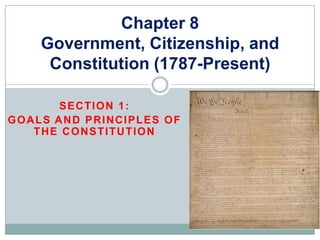
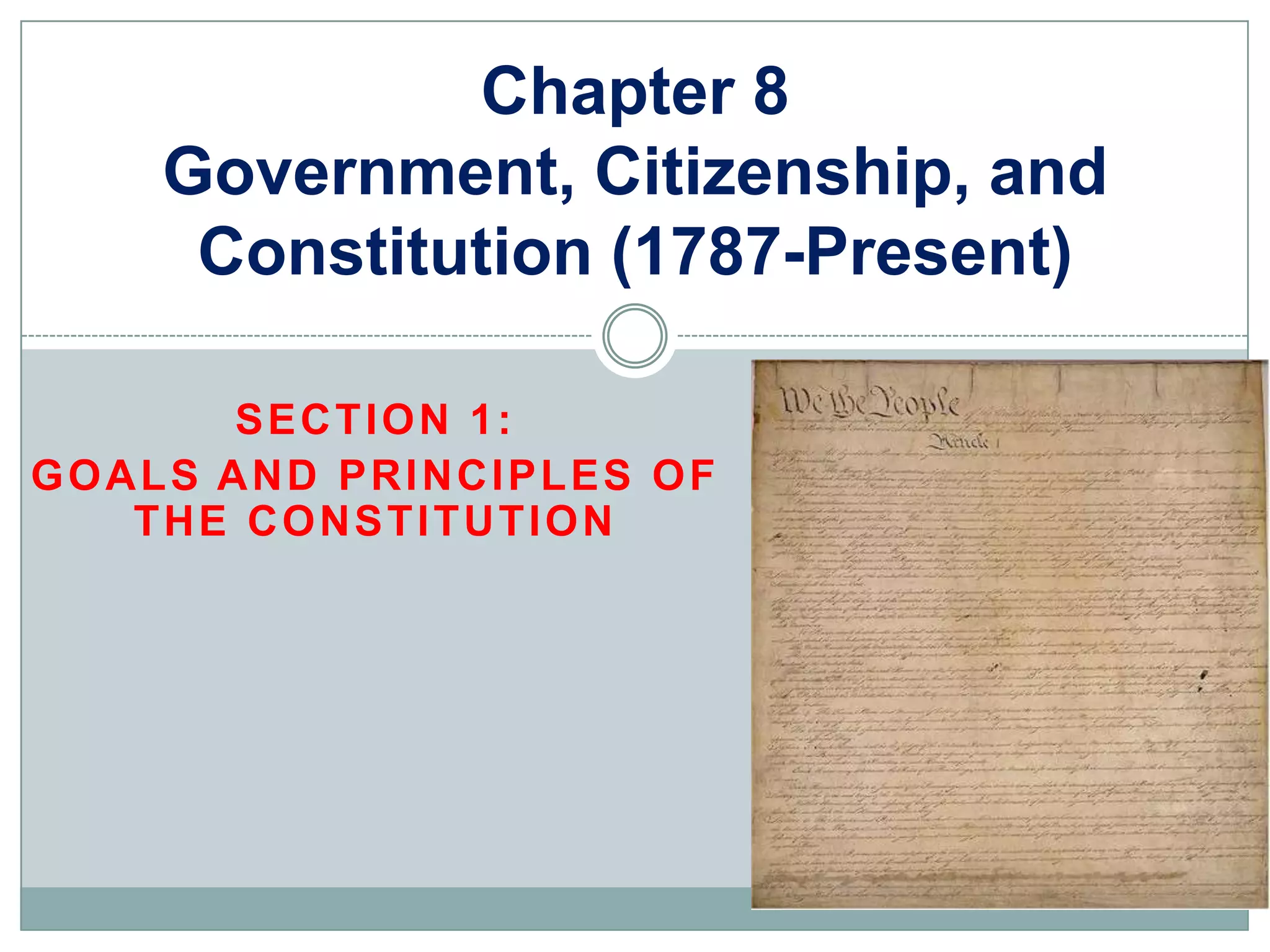
Chapter 8
    Government, Citizenship, and
     Constitution (1787-Present)

       SECTION 1:
GOALS AND PRINCIPLES OF
   THE CONSTITUTION
The Constitution Has 3 Main Parts


      The Preamble
      The Articles
      The Amendments
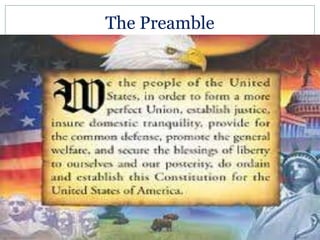
The Preamble
Preamble

 The Preamble is an introduction.
 The Preamble sets 6 goals
  1. To form a more perfect union
  2. Establish Justice
  3. Insure Domestic Tranquility
  4. Provide for the Common Defense
  5. Promote the General Welfare
  6. Secure the Blessings of Liberty
Form a more perfect union

The States need to work together as a unified nation.
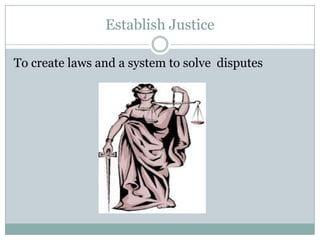
Establish Justice

To create laws and a system to solve disputes
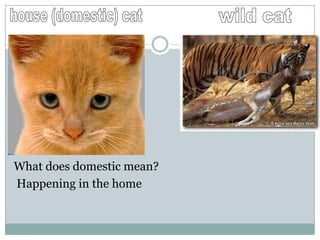
What does domestic mean?
Happening in the home
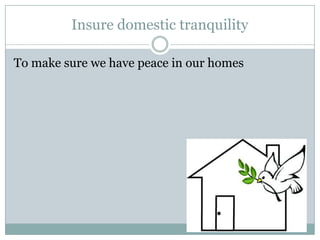
Insure domestic tranquility

To make sure we have peace in our homes
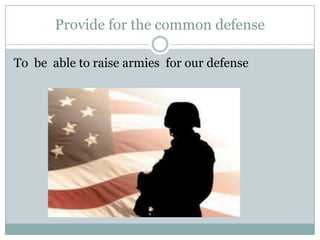
Provide for the common defense

To be able to raise armies for our defense
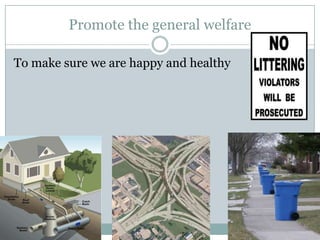
Promote the general welfare

To make sure we are happy and healthy
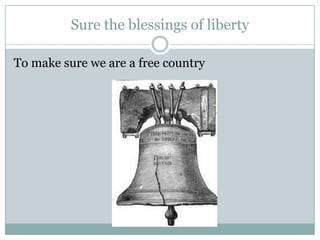
Sure the blessings of liberty

To make sure we are a free country
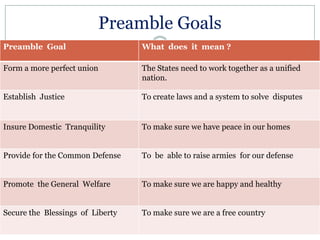
Preamble Goals
Preamble Goal                     What does it mean ?

Form a more perfect union         The States need to work together as a unified
                                  nation.

Establish Justice                 To create laws and a system to solve disputes


Insure Domestic Tranquility       To make sure we have peace in our homes


Provide for the Common Defense    To be able to raise armies for our defense


Promote the General Welfare       To make sure we are happy and healthy


Secure the Blessings of Liberty   To make sure we are a free country
The Articles
 There are 7 Articles in the Constitution
 The first 3 set up the legislative, executive, and
  judicial branches of government.
 The 4th deals with state relations
 The 5th allows us to amend or change the
  Constitution
 The 6th sets the Constitution as the Supreme
  Law and more important than state laws.
 The 7th allows us to ratify or accept the
  Constitution
Amendments

 The First 1o are called the Bill of
  Rights (1791)
 After that there have been 17 more
  Amendments to the Constitution
Seven Basic Principles

 Popular Sovereignty
 Limited Government
 Separation of Powers
 Checks and Balances
 Federalism
 Republicanism
 Individual Rights
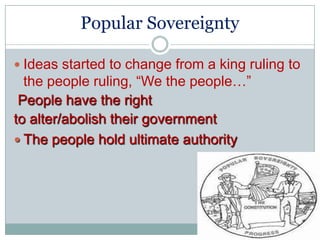
Popular Sovereignty

 Ideas started to change from a king ruling to
  the people ruling, “We the people…”
 People have the right
to alter/abolish their government
 The people hold ultimate authority
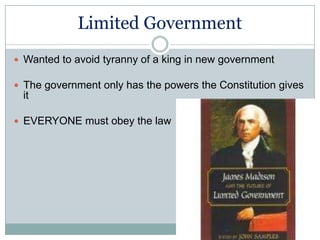
Limited Government
 Wanted to avoid tyranny of a king in new government

 The government only has the powers the Constitution gives
 it

 EVERYONE must obey the law
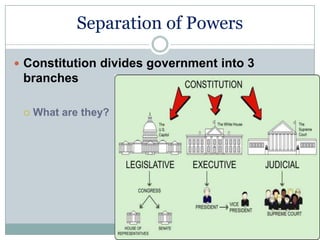
Separation of Powers

 Constitution divides government into 3
 branches

    What are they?
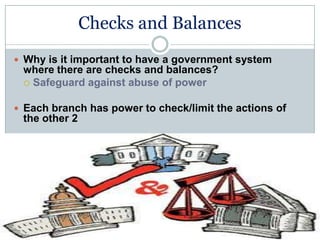
Checks and Balances
 Why is it important to have a government system
 where there are checks and balances?
  Safeguard against abuse of power


 Each branch has power to check/limit the actions of
 the other 2
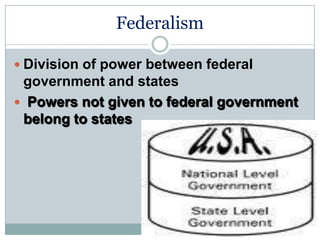
Federalism

 Division of power between federal
 government and states
 Powers not given to federal government
 belong to states
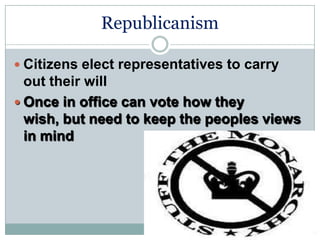
Republicanism

 Citizens elect representatives to carry
  out their will
 Once in office can vote how they
  wish, but need to keep the peoples views
  in mind
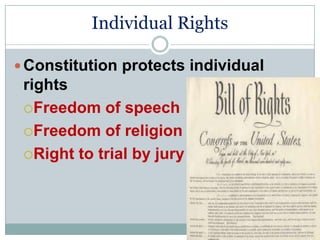
Individual Rights

 Constitution protects individual
 rights
 Freedom of speech

 Freedom of religion

 Right to trial by jury

Preamble principles

  • 1.
    Chapter 8 Government, Citizenship, and Constitution (1787-Present) SECTION 1: GOALS AND PRINCIPLES OF THE CONSTITUTION
  • 2.
    The Constitution Has3 Main Parts The Preamble The Articles The Amendments
  • 3.
  • 4.
    Preamble  The Preambleis an introduction.  The Preamble sets 6 goals  1. To form a more perfect union  2. Establish Justice  3. Insure Domestic Tranquility  4. Provide for the Common Defense  5. Promote the General Welfare  6. Secure the Blessings of Liberty
  • 5.
    Form a moreperfect union The States need to work together as a unified nation.
  • 6.
    Establish Justice To createlaws and a system to solve disputes
  • 7.
    What does domesticmean? Happening in the home
  • 8.
    Insure domestic tranquility Tomake sure we have peace in our homes
  • 9.
    Provide for thecommon defense To be able to raise armies for our defense
  • 10.
    Promote the generalwelfare To make sure we are happy and healthy
  • 11.
    Sure the blessingsof liberty To make sure we are a free country
  • 12.
    Preamble Goals Preamble Goal What does it mean ? Form a more perfect union The States need to work together as a unified nation. Establish Justice To create laws and a system to solve disputes Insure Domestic Tranquility To make sure we have peace in our homes Provide for the Common Defense To be able to raise armies for our defense Promote the General Welfare To make sure we are happy and healthy Secure the Blessings of Liberty To make sure we are a free country
  • 13.
    The Articles  Thereare 7 Articles in the Constitution  The first 3 set up the legislative, executive, and judicial branches of government.  The 4th deals with state relations  The 5th allows us to amend or change the Constitution  The 6th sets the Constitution as the Supreme Law and more important than state laws.  The 7th allows us to ratify or accept the Constitution
  • 14.
    Amendments  The First1o are called the Bill of Rights (1791)  After that there have been 17 more Amendments to the Constitution
  • 15.
    Seven Basic Principles Popular Sovereignty  Limited Government  Separation of Powers  Checks and Balances  Federalism  Republicanism  Individual Rights
  • 16.
    Popular Sovereignty  Ideasstarted to change from a king ruling to the people ruling, “We the people…” People have the right to alter/abolish their government  The people hold ultimate authority
  • 17.
    Limited Government  Wantedto avoid tyranny of a king in new government  The government only has the powers the Constitution gives it  EVERYONE must obey the law
  • 18.
    Separation of Powers Constitution divides government into 3 branches  What are they?
  • 19.
    Checks and Balances Why is it important to have a government system where there are checks and balances?  Safeguard against abuse of power  Each branch has power to check/limit the actions of the other 2
  • 20.
    Federalism  Division ofpower between federal government and states  Powers not given to federal government belong to states
  • 21.
    Republicanism  Citizens electrepresentatives to carry out their will  Once in office can vote how they wish, but need to keep the peoples views in mind
  • 22.
    Individual Rights  Constitutionprotects individual rights Freedom of speech Freedom of religion Right to trial by jury