Practical Machine Learning on Databricks (1st Edition) Debu Sinha
1.
Download the fullversion and explore a variety of ebooks
or textbooks at https://ebookmass.com
Practical Machine Learning on Databricks (1st
Edition) Debu Sinha
_____ Tap the link below to start your download _____
https://ebookmass.com/product/practical-machine-learning-on-
databricks-1st-edition-debu-sinha/
Find ebooks or textbooks at ebookmass.com today!
2.
We believe theseproducts will be a great fit for you. Click
the link to download now, or visit ebookmass.com
to discover even more!
Risk Modeling: Practical Applications of Artificial
Intelligence, Machine Learning, and Deep Learning Terisa
Roberts
https://ebookmass.com/product/risk-modeling-practical-applications-of-
artificial-intelligence-machine-learning-and-deep-learning-terisa-
roberts/
Machine Learning on Geographical Data Using Python 1st
Edition Joos Korstanje
https://ebookmass.com/product/machine-learning-on-geographical-data-
using-python-1st-edition-joos-korstanje/
Machine Learning in Microservices: Productionizing
microservices architecture for machine learning solutions
Abouahmed
https://ebookmass.com/product/machine-learning-in-microservices-
productionizing-microservices-architecture-for-machine-learning-
solutions-abouahmed/
Applied Machine Learning 1st Edition M. Gopal
https://ebookmass.com/product/applied-machine-learning-1st-edition-m-
gopal/
3.
Source separation andmachine learning Chien
https://ebookmass.com/product/source-separation-and-machine-learning-
chien/
Cognitive Behavior and Human Computer Interaction Based on
Machine Learning Algorithms Sandeep Kumar
https://ebookmass.com/product/cognitive-behavior-and-human-computer-
interaction-based-on-machine-learning-algorithms-sandeep-kumar/
Machine Vision Inspection Systems, Machine Learning-Based
Approaches Muthukumaran Malarvel
https://ebookmass.com/product/machine-vision-inspection-systems-
machine-learning-based-approaches-muthukumaran-malarvel/
Machine Learning for Beginners Aldrich Hill
https://ebookmass.com/product/machine-learning-for-beginners-aldrich-
hill/
Adversarial Robustness for Machine Learning Chen
https://ebookmass.com/product/adversarial-robustness-for-machine-
learning-chen/
Grosvenor House
11 StPaul's Square
Birmingham
B3 1RB, UK.
ISBN 978-1-80181-203-0
www.packtpub.com
8.
To my mother,for teaching me the invaluable lessons of persistence and self-belief, which have
been my guiding stars in completing this book. To the committed team at Packt—Dhruv Kataria,
Hemangi Lotlikar, and Priyanka Soam—thank you for your unwavering guidance and support
throughout this endeavor. To the founders of Databricks, for not only fostering an exceptional
company but also for providing me with the opportunity to grow and learn among a community
of brilliant minds. And to the talented engineers across the globe, with whom I’ve had the
privilege to collaborate on architecting solutions to machine learning challenges using
Databricks—you inspire me every day.
9.
- Debu Sinha
Contributors
Aboutthe author
Debu Sinha is an experienced data science and engineering leader with deep expertise in software
engineering and solutions architecture. With over 10 years in the industry, Debu has a proven track
record in designing scalable software applications and big data, and machine learning systems. As
lead ML specialist on the Specialist Solutions Architect team at Databricks, Debu focuses on AI/ML
use cases in the cloud and serves as an expert on LLMs, ML, and MLOps. With prior experience as a
start-up co-founder, Debu has demonstrated skills in team-building, scaling, and delivering impactful
software solutions. An established thought leader, Debu has received multiple awards and regularly
speaks at industry events.
About the reviewers
Abhinav Bhatnagar (AB), a seasoned data leader with years of expertise, excels in leading teams,
governance, and strategy. He holds a master’s in computer science from ASU. Currently a manager of
DS&E at Databricks, AB drives data development strategies. Previously, at Truecaller and Cyr3con,
he showcased his prowess in boosting revenue through data solutions and architecting AI-driven
pipelines. He’s been recognized with accolades such as the prestigious 40 Under 40 Data Scientists.
With numerous patents and publications, Abhinav Bhatnagar stands as a remarkable figure in the data
science and engineering landscape. His dedication to pushing boundaries in data science, with a
wealth of experience and an innovative mindset, make him a trailblazer in tech.
Amreth Chandrasehar is a director at Informatica responsible for ML engineering, observability,
and SRE teams. Over the last few years, Amreth has played a key role in cloud migration, generative
AI, observability, and ML adoption at various organizations. Amreth is also co-creator of the
Conducktor platform, serving T-Mobile’s 100+ million customers, and a tech/customer advisory
board member at various companies on observability. Amreth has also co-created and open sourced
Kardio.io, a service health dashboard tool. Amreth has been invited to and spoken at several key
conferences, has won several awards within the company, and was recently awarded three gold
awards – Globee, Stevie, and an International Achievers’Award – for his contributions to
observability and generative AI.
10.
I would liketo thank my wife (Ashwinya Mani) and my son (Athvik A) for their patience and
support during my review of this book.
Part 1: Introduction
1
TheML Process and Its Challenges
Understanding the typical machine learning process
Discovering the roles associated with machine learning projects
in organizations
Challenges with productionizing machine learning use cases in
organizations
Understanding the requirements of an enterprise-grade machine
learning platform
Scalability – the growth catalyst
Performance – ensuring efficiency and speed
Security – safeguarding data and models
Governance – steering the machine learning life cycle
Reproducibility – ensuring trust and consistency
Ease of use – balancing complexity and usability
Exploring Databricks and the Lakehouse architecture
Scalability – the growth catalyst
Performance – ensuring efficiency and speed
Security – safeguarding data and models
Governance – steering the machine learning life cycle
Reproducibility – ensuring trust and consistency
Ease of use – balancing complexity and usability
Simplifying machine learning development with the Lakehouse
architecture
Summary
Further reading
13.
2
Overview of MLon Databricks
Technical requirements
Setting up a Databricks trial account
Exploring the workspace
Repos
Exploring clusters
Single user
Shared
No isolation shared
Single-node clusters
Exploring notebooks
Exploring data
Exploring experiments
Discovering the feature store
Discovering the model registry
Libraries
Storing libraries
Managing libraries
Databricks Runtime and libraries
Library usage modes
Unity Catalog limitations
Installation sources for libraries
Summary
Further reading
14.
Part 2: MLPipeline Components and Implementation
3
Utilizing the Feature Store
Technical requirements
Diving into feature stores and the problems they solve
Discovering feature stores on the Databricks platform
Feature table
Offline store
Online store
Training Set
Model packaging
Registering your first feature table in Databricks Feature Store
Summary
Further reading
4
Understanding MLflow Components on Databricks
Technical requirements
Overview of MLflow
MLflow Tracking
MLflow Models
MLflow Model Registry
Example code showing how to track ML model training in
Databricks
Summary
15.
5
Create a BaselineModel Using Databricks AutoML
Technical requirements
Understanding the need for AutoML
Understanding AutoML in Databricks
Sampling large datasets
Imbalance data detection
Splitting data into train/validation/test sets
Enhancing semantic type detection
Shapley value (SHAP) for model explainability
Feature Store integration
Running AutoML on our churn prediction dataset
Summary
Further reading
16.
Part 3: MLGovernance and Deployment
6
Model Versioning and Webhooks
Technical requirements
Understanding the need for the Model Registry
Registering your candidate model to the Model Registry and
managing access
Diving into the webhooks support in the Model Registry
Summary
Further reading
7
Model Deployment Approaches
Technical requirements
Understanding ML deployments and paradigms
Deploying ML models for batch and streaming inference
Batch inference on Databricks
Streaming inference on Databricks
Deploying ML models for real-time inference
In-depth analysis of the constraints and capabilities of
Databricks Model Serving
Incorporating custom Python libraries into MLflow models for
Databricks deployment
Deploying custom models with MLflow and Model Serving
Packaging dependencies with MLflow models
Summary
17.
Further reading
8
Automating MLWorkflows Using Databricks Jobs
Technical requirements
Understanding Databricks Workflows
Utilizing Databricks Workflows with Jobs to automate model
training and testing
Summary
Further reading
9
Model Drift Detection and Retraining
Technical requirements
The motivation behind model monitoring
Introduction to model drift
Introduction to Statistical Drift
Techniques for drift detection
Hypothesis testing
Statistical tests and measurements for numeric features
Statistical tests and measurements for categorical features
Statistical tests and measurements on models
Implementing drift detection on Databricks
Summary
10
18.
Using CI/CD toAutomate Model Retraining and
Redeployment
Introduction to MLOps
Delta Lake – more than just a data lake
Comprehensive model management with Databricks MLflow
Integrating DevOps and MLOps for robust ML pipelines with
Databricks
Fundamentals of MLOps and deployment patterns
Navigating environment isolation in Databricks – multiple
strategies for MLOps
Understanding ML deployment patterns
The deploy models approach
The deploy code approach
Summary
Further reading
Index
Other Books You May Enjoy
19.
Preface
Designed for seasoneddata scientists and developers, this book is your definitive guide to leveraging
Databricks for end-to-end machine learning projects. Assuming a robust foundation in Python,
statistics, machine learning life cycles, and an introductory understanding of Spark, this resource
aims to transition professionals from DIY environments or other cloud platforms to the Databricks
ecosystem.
Kick off your journey with a succinct overview of the machine learning landscape, followed by a
deep dive into Databricks’ features and the MLflow framework. Navigate through crucial elements
including data preparation, model selection, and training, all while exploiting Databricks feature
stores for efficient feature engineering. Employ Databricks AutoML to swiftly initiate your projects
and learn how to automate model retraining and deployment via Databricks workflows.
By the close of this book, you’ll be well versed in utilizing MLflow for experiment tracking, inter-
team collaboration, and addressing advanced needs such as model interpretability and governance.
The book is laden with practical code examples and focuses on current, generally available features,
yet equips you to adapt swiftly to emerging technologies in machine learning, Databricks, and
MLflow.
20.
Who this bookis for?
Written for data scientists and developers well versed in Python, statistics, and ML lifecycles, this
book is your transition guide to Databricks. Ideal for those shifting from DIY or other cloud setups, it
assumes introductory Spark knowledge and covers end-to-end ML workflows.
21.
What this bookcovers
Chapter 1, The ML Process and Its Challenges, provides an overview of the various data science use
cases across different domains. It outlines the different stages and roles involved in an ML project,
from data engineering to analysis, feature engineering, and ML model training and deployment.
Chapter 2, Overview of ML on Databricks, guides you through the process of registering for a
Databricks trial account and explores the machine learning features specifically designed for an ML
practitioner’s workspace.
Chapter 3, Utilizing the Feature Store, introduces you to the concept of a feature store. We will guide
you through the process of creating feature tables using Databricks’ offline feature store and
demonstrate their effective utilization. Additionally, we’ll discuss the advantages of employing a
feature store in your machine learning workflows.
Chapter 4, Understanding MLflow Components on Databricks, helps you understand what MLflow
is, its components, and the benefits of using them. We will also walk through how to register a model
with the MLflow Model Registry.
Chapter 5, Create a Baseline Model Using Databricks AutoML, covers what AutoML is, why it is
important, and Databricks’ approach to AutoML. We will also create a baseline model with AutoML.
Chapter 6, Model Versioning and Webhooks, teaches you how to utilize the MLflow model registry to
manage model versioning, transition to PROD from various stages, and use webhooks to set up alerts
and monitoring.
Chapter 7, Model Deployment Approaches, covers the different options for deploying an ML model
utilizing the Databricks platform.
Chapter 8, Automating ML Workflows Using Databricks Jobs, explains what Databricks jobs are and
how they can be used as powerful tools to automate ML workflows. We will go over how to set up an
ML training workflow using the Jobs API.
Chapter 9, Model Drift Detection and Retraining, teaches you how to detect and protect against
model drift in production environments.
Chapter 10, Using CI/CD to Automate Model Retraining and Redeployment, demonstrates how to set
up your Databricks ML development and deployment as a CI/CD pipeline. We will use all the
concepts learned about previously in this book.
To get the most out of this book
22.
Before diving intothe hands-on activities and code examples provided in this book, it’s important to
be aware of the software and knowledge prerequisites. The following is a summary table outlining
what you’ll need:
Prerequisite Description
Databricks Runtime This book is tailored for Databricks Runtime 13.3 LTS for Machine
Learning or above.
Python proficiency
(3.x)
You should be proficient in at least Python 3.x, as the code samples are
primarily written in this version.
Statistics and ML basics A strong understanding of statistics and machine learning lifecycles is
assumed.
Spark knowledge (3.0
or above)
An introductory level of familiarity with Apache Spark 3.0 or above is
required, as Databricks is built on Spark.
Delta Lake features
(optional)
Introductory knowledge of Delta Lake features could enhance your
understanding but is not mandatory.
To fully utilize all the features and code examples described in this book, you’ll need a Databricks
trial account, which lasts for 14 days. We recommend planning your learning journey to complete the
hands-on activities within this timeframe. If you find the platform valuable and wish to continue
using it beyond the trial period, consider reaching out to your Databricks contact to set up a paid
workspace.
If you are using the digital version of this book, we advise you to type the code yourself or
access the code from the book’s GitHub repository (a link is available in the next section).
Doing so will help you avoid any potential errors related to the copying and pasting of code.
After completing this book, we highly recommend you explore the latest features in both private and
public previews within the Databricks documentation. This will provide you with insights into the
future trajectory of machine learning on Databricks, allowing you to remain ahead of the curve and
make the most of emerging functionalities.
Download the example code files
23.
You can downloadthe example code files for this book from GitHub at
https://github.com/PacktPublishing/Practical-Machine-Learning-on-Databricks. If there’s an update
to the code, it will be updated in the GitHub repository.
We also have other code bundles from our rich catalog of books and videos available at
https://github.com/PacktPublishing/. Check them out!
Conventions used
There are a number of text conventions used throughout this book.
Code in text: Indicates code words in text, database table names, folder names, filenames, file
extensions, pathnames, dummy URLs, user input, and Twitter handles. Here is an example: “In the
fifth cell, we first initialize some parameters such as our existing username, experiment_name, which
is the experiment’s name that’s associated with our AutoML, and the registry_model_name, which
will be the model’s name in the Model Registry.”
A block of code is set as follows:
iris = load_iris() X = iris.data # Features
y = iris.target # Labels
Any command-line input or output is written as follows:
from sklearn.datasets import load_iris # Importing the Iris datasetfrom
sklearn.model_selection import train_test_split # Importing train_test_split function
from sklearn.linear_model import LogisticRegression # Importing Logistic Regression
model
Bold: Indicates a new term, an important word, or words that you see onscreen. For instance, words
in menus or dialog boxes appear in bold. Here is an example: “To find out which libraries are
included in your runtime, you can refer to the System Environment subsection of the Databricks
Runtime release notes to check your specific runtime version.”
TIPS OR IMPORTANT NOTES
Appear like this.
Get in touch
Feedback from our readers is always welcome.
General feedback: If you have questions about any aspect of this book, email us at
customercare@packtpub.com and mention the book title in the subject of your message.
24.
Errata: Although wehave taken every care to ensure the accuracy of our content, mistakes do
happen. If you have found a mistake in this book, we would be grateful if you would report this to us.
Please visit www.packtpub.com/support/errata and fill in the form.
Piracy: If you come across any illegal copies of our works in any form on the internet, we would be
grateful if you would provide us with the location address or website name. Please contact us at
copyright@packt.com with a link to the material.
If you are interested in becoming an author: If there is a topic that you have expertise in and you
are interested in either writing or contributing to a book, please visit authors.packtpub.com.
Reviews
Please leave a review. Once you have read and used this book, why not leave a review on the site that
you purchased it from? Potential readers can then see and use your unbiased opinion to make
purchase decisions, we at Packt can understand what you think about our products, and our authors
can see your feedback on their book. Thank you!
For more information about Packt, please visit packtpub.com.
Share Your Thoughts
Once you’ve read Practical Machine Learning on Databricks, we’d love to hear your thoughts!
Please click here to go straight to the Amazon review page for this book and share your feedback.
Your review is important to us and the tech community and will help us make sure we’re delivering
excellent quality content.
Download a free PDF copy of this book
Thanks for purchasing this book!
Do you like to read on the go but are unable to carry your print books everywhere? Is your eBook
purchase not compatible with the device of your choice?
Don’t worry, now with every Packt book you get a DRM-free PDF version of that book at no cost.
Read anywhere, any place, on any device. Search, copy, and paste code from your favorite technical
books directly into your application.
The perks don’t stop there, you can get exclusive access to discounts, newsletters, and great free
content in your inbox daily
25.
Follow these simplesteps to get the benefits:
1. Scan the QR code or visit the link below
https://packt.link/free-ebook/9781801812030
2. Submit your proof of purchase
3. That’s it! We’ll send your free PDF and other benefits to your email directly
26.
Part 1: Introduction
Thispart mainly focuses on data science use cases, the life cycle of and personas involved in a data
science project (data engineers, analysts, and scientists), and the challenges of ML development in
organizations.
This section has the following chapters:
Chapter 1, The ML Process and Its Challenges
Chapter 2, Overview of ML on Databricks
27.
1
The ML Processand Its Challenges
Welcome to the world of simplifying your machine learning (ML) life cycle with the Databricks
platform.
As a senior specialist solutions architect at Databricks specializing in ML, over the years, I have had
the opportunity to collaborate with enterprises to architect ML-capable platforms to solve their
unique business use cases using the Databricks platform. Now, that experience will be at your service
to learn from. The knowledge you will gain from this book will open new career opportunities for
you and change how you approach architecting ML pipelines for your organization’s ML use cases.
This book does assume that you have a reasonable understanding of the Python language as the
accompanying code samples will be in Python. This book is not about teaching you ML techniques
from scratch; it is assumed that you are an experienced data science practitioner who wants to learn
how to take your ML use cases from development to production and all the steps in the middle using
the Databricks platform.
For this book, some Python and pandas know-how is required. Being familiar with Apache Spark is a
plus, and having a solid grasp of ML and data science is necessary.
NOTE
This book focuses on the features that are currently generally available. The code examples provided utilize Databricks
notebooks. While Databricks is actively developing features to support workflows using external integrated development
environments (IDEs), these specific features are not covered in this book. Also, going through this book will give you a
solid foundation to quickly pick up new features as they become GA.
In this chapter, we will cover the following:
Understanding the typical ML process
Discovering the personas involved with the machine learning process in organizations
Challenges with productionizing machine learning use cases in organizations
Understanding the requirements of an enterprise machine learning platform
Exploring Databricks and the Lakehouse architecture
By the end of this chapter, you should have a fundamental understanding of what a typical ML
development life cycle looks like in an enterprise and the different personas involved in it. You will
also know why most ML projects fail to deliver business value and how the Databricks Lakehouse
Platform provides a solution.
28.
Understanding the typicalmachine learning process
The following diagram summarizes the ML process in an organization:
Figure 1.1 – The data science development life cycle consists of three main stages – data preparation, modeling, and
deployment
NOTE
Source: https://azure.microsoft.com/mediahandler/files/resourcefiles/standardizing-the-machine-learning-
lifecycle/Standardizing%20ML%20eBook.pdf.
It is an iterative process. The raw structured and unstructured data first lands into a data lake from
different sources. A data lake utilizes the scalable and cheap storage provided by cloud storage such
as Amazon Simple Storage Service (S3) or Azure Data Lake Storage (ADLS), depending on
which cloud provider an organization uses. Due to regulations, many organizations have a multi-
cloud strategy, making it essential to choose cloud-agnostic technologies and frameworks to simplify
infrastructure management and reduce operational overhead.
Databricks defined a design pattern called the medallion architecture to organize data in a data lake.
Before moving forward, let’s briefly understand what the medallion architecture is:
29.
Figure 1.2 –Databricks medallion architecture
The medallion architecture is a data design pattern that’s used in a Lakehouse to organize data
logically. It involves structuring data into layers (Bronze, Silver, and Gold) to progressively improve
its quality and structure. The medallion architecture is also referred to as a “multi-hop” architecture.
The Lakehouse architecture, which combines the best features of data lakes and data warehouses,
offers several benefits, including a simple data model, ease of implementation, incremental extract,
transform, and load (ETL), and the ability to recreate tables from raw data at any time. It also
provides features such as ACID transactions and time travel for data versioning and historical
analysis. We will expand more on the lakehouse in the Exploring the Databricks Lakehouse
architecture section.
In the medallion architecture, the Bronze layer holds raw data sourced from external systems,
preserving its original structure along with additional metadata. The focus here is on quick change
data capture (CDC) and maintaining a historical archive. The Silver layer, on the other hand, houses
cleansed, conformed, and “just enough” transformed data. It provides an enterprise-wide view of key
business entities and serves as a source for self-service analytics, ad hoc reporting, and advanced
analytics.
The Gold layer is where curated business-level tables reside that have been organized for
consumption and reporting purposes. This layer utilizes denormalized, read-optimized data models
with fewer joins. Complex transformations and data quality rules are applied here, facilitating the
final presentation layer for various projects, such as customer analytics, product quality analytics,
inventory analytics, and more. Traditional data marts and enterprise data warehouses (EDWs) can
also be integrated into the lakehouse to enable comprehensive “pan-EDW” advanced analytics and
ML.
The medallion architecture aligns well with the concept of a data mesh, where Bronze and Silver
tables can be joined in a “one-to-many” fashion to generate multiple downstream tables, enhancing
30.
data scalability andautonomy.
Apache Spark has taken over Hadoop as the de facto standard for processing data at scale in the last
six years due to advancements in performance and large-scale developer community adoption and
support. There are many excellent books on Apache Spark written by the creators of Apache Spark
themselves; these have been listed in the Further reading section. They can give more insights into
the other benefits of Apache Spark.
Once the clean data lands in the Gold standard tables, features are generated by combining gold
datasets, which act as input for ML model training.
During the model development and training phase, various sets of hyperparameters and ML
algorithms are tested to identify the optimal combination of the model and corresponding
hyperparameters. This process relies on predetermined evaluation metrics such as accuracy, R2 score,
and F1 score.
In the context of ML, hyperparameters are parameters that govern the learning process of a model.
They are not learned from the data itself but are set before training. Examples of hyperparameters
include the learning rate, regularization strength, number of hidden layers in a neural network, or the
choice of a kernel function in a support vector machine. Adjusting these hyperparameters can
significantly impact the performance and behavior of the model.
On the other hand, training an ML model involves deriving values for other model parameters, such
as node weights or model coefficients. These parameters are learned during the training process using
the training data to minimize a chosen loss or error function. They are specific to the model being
trained and are determined iteratively through optimization techniques such as gradient descent or
closed-form solutions.
Expanding beyond node weights, model parameters can also include coefficients in regression
models, intercept terms, feature importance scores in decision trees, or filter weights in convolutional
neural networks. These parameters are directly learned from the data during the training process and
contribute to the model’s ability to make predictions.
PARAMETERS
You can learn more about parameters at https://en.wikipedia.org/wiki/Parameter.
The finalized model is deployed either for batch, streaming, or real-time inference as a
Representational State Transfer (REST) endpoint using containers. In this phase, we set up
monitoring for drift and governance around the deployed models to manage the model life cycle and
enforce access control around usage. Let’s take a look at the different personas involved in taking an
ML use case from development to production.
31.
Discovering the rolesassociated with machine learning
projects in organizations
Typically, three different types of persona are involved in developing an ML solution in an
organization:
Data engineers: The data engineers create data pipelines that take in structured, semi-structured, and unstructured data from
source systems and ingest them in a data lake. Once the raw data lands in the data lake, the data engineers are also responsible for
securely storing the data, ensuring that the data is reliable, clean, and easy to discover and utilize by the users in the organization.
Data scientists: Data scientists collaborate with subject matter experts (SMEs) to understand and address business problems,
ensuring a solid business justification for projects. They utilize clean data from data lakes and perform feature engineering,
selecting and transforming relevant features. By developing and training multiple ML models with different sets of
hyperparameters, data scientists can evaluate them on test sets to identify the best-performing model. Throughout this process,
collaboration with SMEs validates the models against business requirements, ensuring their alignment with objectives and key
performance indicators (KPIs). This iterative approach helps data scientists select a model that effectively solves the problem
and meets the specified KPIs.
Machine learning engineers: The ML engineering teams deploy the ML models created by data scientists into production
environments. It is crucial to establish procedures, governance, and access control early on, including defining data scientist
access to specific environments and data. ML engineers also implement monitoring systems to track model performance and data
drift. They enforce governance practices, track model lineage, and ensure access control for data security and compliance
throughout the ML life cycle.
A typical ML project life cycle consists of data engineering, then data science, and lastly, production
deployment by the ML engineering team. This is an iterative process.
Now, let’s take a look at the various challenges involved in productionizing ML models.
Challenges with productionizing machine learning use
cases in organizations
At this point, we understand what a typical ML project life cycle looks like in an organization and the
different personas involved in the ML process. It looks very intuitive, though we still see many
enterprises struggling to deliver business value from their data science projects.
In 2017, Gartner analyst Nick Heudecker admitted that 85% of data science projects fail. A report
published by Dimensional Research (https://dimensionalresearch.com/) also uncovered that only 4%
of companies have been successful in deploying ML use cases to production. A recent study done by
Rackspace Global Technologies in 2021 uncovered that only 20% of the 1,870 organizations in
various industries have mature AI and ML practices.
SOURCES
See the Further reading section for more details on these statistics.
32.
Most enterprises facesome common technical challenges in successfully delivering business value
from data science projects:
Unintended data silos and messy data: Data silos can be considered as groups of data in an organization that are governed and
accessible only by specific users or groups within the organization. Some valid reasons to have data silos include compliance with
particular regulations around privacy laws such as General Data Protection Regulation (GDPR) in Europe or the California
Privacy Rights Act (CCPA). These conditions are usually an exception to the norm. Gartner stated that almost 87% of
organizations have low analytics and business intelligence maturity, meaning that data is not being fully utilized.
Data silos generally arise as different departments within organizations. They have different
technology stacks to manage and process the data.
The following figure highlights this challenge:
Figure 1.3 – The tools used by the different teams in an organization and the different silos
The different personas work with different sets of tools and have different work environments. Data
analysts, data engineers, data scientists, and ML engineers utilize different tools and development
environments due to their distinct roles and objectives. Data analysts rely on SQL, spreadsheets, and
visualization tools for insights and reporting. Data engineers work with programming languages and
platforms such as Apache Spark to build and manage data infrastructure. Data scientists use statistical
programming languages, ML frameworks, and data visualization libraries to develop predictive
models. ML engineers combine ML expertise with software engineering skills to deploy models into
production systems. These divergent toolsets can pose challenges in terms of data consistency, tool
compatibility, and collaboration. Standardized processes and knowledge sharing can help mitigate
these challenges and foster effective teamwork. Traditionally, there is little to no collaboration
between these teams. As a result, a data science use case with a validated business value may not be
33.
developed at therequired pace, negatively impacting the growth and effective management of the
business.
When the concept of data lakes came up in the past decade, they promised a scalable and cheap
solution to support structured and unstructured data. The goal was to enable organization-wide
effective usage and collaboration of data. In reality, most data lakes ended up becoming data swamps,
with little to no governance regarding the quality of data.
This inherently made ML very difficult since an ML model is only as good as the data it’s trained on.
Building and managing an effective ML production environment is challenging: The ML teams at Google have done a lot of
research on the technical challenges around setting up an ML development environment. A research paper published in NeurIPS
on hidden technical debt in ML systems engineering from Google
(https://proceedings.neurips.cc/paper/2015/file/86df7dcfd896fcaf2674f757a2463eba-Paper.pdf) documented that writing ML code
is just a tiny piece of the whole ML development life cycle. To develop an effective ML development practice in an organization,
many tools, configurations, and monitoring aspects need to be integrated into the overall architecture. One of the critical
components is monitoring drift in model performance and providing feedback and retraining:
Figure 1.4 – Hidden Technical Debt in Machine Learning Systems, NeurIPS 2015
Let’s understand the requirements of an enterprise-grade ML platform a bit more.
Understanding the requirements of an enterprise-grade
machine learning platform
In the fast-paced world of artificial intelligence (AI) and ML, an enterprise-grade ML platform takes
center stage as a critical component. It is a comprehensive software platform that offers the
infrastructure, tools, and processes required to construct, deploy, and manage ML models at a grand
scale. However, a truly robust ML platform goes beyond these capabilities, extending to every stage
of the ML life cycle, from data preparation, model training, and deployment to constant monitoring
and improvements.
34.
When we speakof an enterprise-grade ML platform, several key attributes determine its
effectiveness, each of which is considered a cornerstone of such platforms. Let’s delve deeper into
each of these critical requirements and understand their significance in an enterprise setting.
Scalability – the growth catalyst
Scalability is an essential attribute, enabling the platform to adapt to the expanding needs of a
burgeoning organization. In the context of ML, this encompasses the capacity to handle voluminous
datasets, manage multiple models simultaneously, and accommodate a growing number of concurrent
users. As the organization’s data grows exponentially, the platform must have the capability to
expand and efficiently process the increasing data without compromising performance.
Performance – ensuring efficiency and speed
In a real-world enterprise setting, the ML platform’s performance directly influences business
operations. It should possess the capability to deliver high performance both in the training and
inference stages. These stages are critical to ensure that models can be efficiently trained with
minimum resources, and then deployed into production environments, ready to make timely and
accurate predictions. A high-performance platform translates to faster decisions, and in today’s fast-
paced business world, every second counts.
Security – safeguarding data and models
In an era where data breaches are common, an ML platform’s security becomes a paramount concern.
A robust ML platform should prioritize security and comply with industry regulations. This involves
an assortment of features such as stringent data encryption techniques, access control mechanisms to
prevent unauthorized access, and auditing capabilities to track activities in the system, all of which
contribute to securely handling sensitive data and ML models.
Governance – steering the machine learning life cycle
Governance is an often overlooked yet vital attribute of an enterprise-grade ML platform. Effective
governance tools can facilitate the management of the entire life cycle of ML models. They can
control versioning, maintain lineage tracking to understand the evolution of models, and audit for
regulatory compliance and transparency. As the complexity of ML projects increases, governance
35.
tools ensure smoothsailing by managing the models and maintaining a clean and understandable
system.
Reproducibility – ensuring trust and consistency
Reproducibility serves as a foundation for trust in any ML model. The ML platform should ensure the
reproducibility of the results from ML experiments, thereby establishing credibility and confidence in
the models. This means that given the same data and the same conditions, the model should produce
the same outputs consistently. Reproducibility directly impacts the decision-making process, ensuring
the decisions are consistent and reliable, and the models can be trusted.
Ease of use – balancing complexity and usability
Last, but by no means least, is the ease of use of the ML platform. Despite the inherent complexity of
ML processes, the platform should be intuitive and user-friendly for a wide range of users, from data
scientists to ML engineers. This extends to features such as a streamlined user interface, a well-
documented API, and a user-centric design, making it easier for users to develop, deploy, and manage
models. An easy-to-use platform reduces the barriers to entry, increases adoption, and empowers
users to focus more on the ML tasks at hand rather than struggling with the platform.
In essence, an enterprise MLOps platform needs capabilities for model development, deployment,
scalability, collaboration, monitoring, and automation. Databricks fits in by offering a unified
environment for ML practitioners to develop and train models, deploy them at scale, and monitor
their performance. It supports collaboration, integrates with popular deployment technologies, and
provides automation and CI/CD capabilities.
Now, let’s delve deeper into the capabilities of the Databricks Lakehouse architecture and its unified
AI/analytics platform, which establish it as an exceptional ML platform for enterprise readiness.
Exploring Databricks and the Lakehouse architecture
Databricks is a renowned cloud-native and enterprise-ready data analytics platform that integrates
data engineering, data science, and ML to enable organizations to develop and deploy ML models at
scale.
Cloud-native refers to an approach where software applications are designed, developed, and
deployed specifically for cloud environments. It involves utilizing technologies such as containers,
microservices, and orchestration platforms to achieve scalability, resilience, and agility. By
36.
leveraging the cloud’scapabilities, Databricks can scale dynamically, recover from failures, and
adapt quickly to changing demands, enabling organizations to maximize the benefits of cloud
computing.
Databricks achieves the six cornerstones of an enterprise-grade ML platform. Let’s take a closer look.
Scalability – the growth catalyst
Databricks provides fully managed Apache Spark (an open source distributed computing system
known for its ability to handle large volumes of data and perform computations in a distributed
manner) clusters.
Apache Spark consists of several components, including nodes and a driver program. Nodes refer to
the individual machines or servers within the Spark cluster that contribute computational resources.
The driver program is responsible for running the user’s application code and coordinating the
overall execution of the Spark job. It communicates with the cluster manager to allocate resources
and manages the SparkContext, which serves as the entry point to the Spark cluster. RDDs are the
core data structure, enabling parallel processing, and Spark uses a directed acyclic graph (DAG) to
optimize computations. Transformations and actions are performed on RDDs, while cluster
managers handle resource allocation. Additionally, caching and shuffling enhance performance.
The DataFrames API in Spark is a distributed collection of data that’s organized into named
columns. It provides a higher-level abstraction compared to working directly with RDDs in Spark,
making it easier to manipulate and analyze structured data. It supports a SQL-like syntax and
provides a wide range of functions for data manipulation and transformation.
Spark provides APIs in various languages, including Scala, Java, Python, and R, allowing users to
leverage their existing skills and choose the language they are most comfortable with.
Apache Spark processes large datasets across multiple nodes, making it highly scalable. It supports
both streaming and batch processing. This means that you can use Spark to process real-time data
streams as well as large-scale batch jobs. Spark Structured Streaming, a component of Spark, allows
you to process live data streams in a scalable and fault-tolerant manner. It provides high-level
abstractions that make it easy to write streaming applications using familiar batch processing
concepts.
Furthermore, Databricks allows for dynamic scaling and autoscaling of clusters, which adjusts
resources based on the workload, ensuring the efficient use of resources while accommodating
growing organizational needs.
37.
While this bookdoesn’t delve into Apache Spark in detail, we have curated a Further reading section
with excellent recommendations that will help you explore Apache Spark more comprehensively.
Performance – ensuring efficiency and speed
Databricks Runtime is optimized for the cloud and includes enhancements over open source Apache
Spark that significantly increase performance. The Databricks Delta engine provides fast query
execution for big data and AI workflows while reducing the time and resources needed for data
preparation and iterative model training. Its optimized runtime improves both model training and
inference speeds, resulting in more efficient operations.
Security – safeguarding data and models
Databricks ensures a high level of security through various means. It offers data encryption at rest
and in transit, uses role-based access control (RBAC) to provide fine-grained user permissions, and
integrates with identity providers for single sign-on (SSO).
Databricks also has a feature called Unity Catalog. Unity Catalog is a centralized metadata store for
Databricks workspaces that offers data governance capabilities such as access control, auditing,
lineage, and data discovery. Its key features include centralized governance, a universal security
model, automated lineage tracking, and easy data discovery. Its benefits include improved
governance, reduced operational overhead, and increased data agility. Unity Catalog is a powerful
tool for enhancing data governance in Databricks. Unity Catalog is a complex topic that will not be
covered extensively in this book. However, you can find more information on it in the Further
reading section, where a link has been provided.
The Databricks platform is compliant with several industry regulations, including GDPR, CCPA,
HIPAA, SOC 2 Type II, and ISO/IEC 27017. For a complete list of certifications, check out
https://www.databricks.com/trust/compliance.
Governance – steering the machine learning life cycle
Databricks provides MLflow, an open source platform for managing the ML life cycle, including
experimentation, reproducibility, and deployment. It supports model versioning and model registry
for tracking model versions and their stages in the life cycle (staging, production, and others).
Additionally, the platform provides audit logs for tracking user activity, helping meet regulatory
38.
requirements and promotingtransparency. Databricks has its own hosted feature store as well, which
we will cover in more detail in later chapters.
Reproducibility – ensuring trust and consistency
With MLflow, Databricks ensures the reproducibility of ML models. MLflow allows users to log
parameters, metrics, and artifacts for each run of an experiment, providing a record of what was done
and allowing for exact replication of the results. It also supports packaging code into reproducible
runs and sharing it with others, further ensuring the repeatability of experiments.
Ease of use – balancing complexity and usability
Databricks provides a collaborative workspace that enables data scientists and engineers to work
together seamlessly. It offers interactive notebooks with support for multiple languages (Python, R,
SQL, and Scala) in a single notebook, allowing users to use their preferred language. The platform’s
intuitive interface, coupled with extensive documentation and a robust API, makes it user-friendly,
enabling users to focus more on ML tasks rather than the complexities of platform management. In
addition to its collaborative and analytical capabilities, Databricks integrates with various data
sources, storage systems, and cloud platforms, making it flexible and adaptable to different data
ecosystems. It supports seamless integration with popular data lakes, databases, and cloud storage
services, enabling users to easily access and process data from multiple sources. Although this book
specifically focuses on the ML and MLOps capabilities of Databricks, it makes sense to understand
what the Databricks Lakehouse architecture is and how it simplifies scaling and managing ML
project life cycles for organizations.
Lakehouse, as a term, is a combination of two terms: data lakes and data warehouses. Data
warehouses are great at handling structured data and SQL queries. They are extensively used for
powering business intelligence (BI) applications but have limited support for ML. They store data in
proprietary formats and can only be accessed using SQL queries.
Data lakes, on the other hand, do a great job supporting ML use cases. A data lake allows
organizations to store a large amount of their structured and unstructured data in a central scalable
store. They are easy to scale and support open formats. However, data lakes have a significant
drawback when it comes to running BI workloads. Their performance is not comparable to data
warehouses. The lack of schema governance enforcement turned most data lakes in organizations into
swamps.
39.
Typically, in modernenterprise architecture, there is a need for both. This is where Databricks
defined the Lakehouse architecture. Databricks provides a unified analytics platform called the
Databricks Lakehouse Platform. The Lakehouse Platform provides a persona-based single platform
that caters to all the personas involved in data processing and gains insights. The personas include
data engineers, BI analysts, data scientists, and MLOps. This can tremendously simplify the data
processing and analytics architecture of any organization.
At the time of writing this book, the Lakehouse Platform is available on all three major clouds:
Amazon Web Services (AWS), Microsoft Azure, and Google Compute Platform (GCP).
Lakehouse can be thought of as a technology that combines data warehouses’ performance and data
governance aspects and makes them available at the scale of data lakes. Under the hood, Lakehouse
uses an open protocol called Delta (https://delta.io/).
The Delta format adds reliability, performance, and governance to the data in data lakes. Delta also
provides Atomicity, Consistency, Isolation, and Durability (ACID) transactions, making sure that
all data operations either fully succeed or fail. In addition to ACID transaction support, under the
hood, Delta uses the Parquet format. Unlike the regular Parquet format, the Delta format keeps track
of transaction logs, offering enhanced capabilities. It also supports granular access controls to your
data, along with versioning and the ability to roll back to previous versions. Delta format tables scale
effortlessly with data and are underpinned by Apache Spark while utilizing advanced indexing and
caching to improve performance at scale. There are many more benefits that the Delta format
provides that you can read about on the official website.
When we say Delta Lake, we mean a data lake that uses the Delta format to provide the previously
described benefits to the data lake.
The Databricks Lakehouse architecture is built on the foundation of Delta Lake:
40.
Figure 1.5 –Databricks Lakehouse Platform
NOTE
Source: Courtesy of Databricks
Next, let’s discuss how the Databricks Lakehouse architecture can simplify ML.
Simplifying machine learning development with the
Lakehouse architecture
As we saw in the previous section, the Databricks Lakehouse Platform provides a cloud-native
enterprise-ready solution that simplifies the data processing needs of an organization. It provides a
single platform that enables different teams across enterprises to collaborate and reduces time to
market for new projects.
The Lakehouse Platform has many components specific to data scientists and ML practitioners; we
will cover these in more detail later in this book. For instance, at the time of writing this book, the
Lakehouse Platform released a drop-down button that allows users to switch between persona-based
views. There are tabs to quickly access the fully integrated and managed feature store, model registry,
and MLflow tracking server in the ML practitioner persona view:
41.
Figure 1.6 –Databricks Lakehouse Platform persona selection dropdown
With that, let’s summarize this chapter.
Summary
In this chapter, we learned about ML, including the ML process, the personas involved, and the
challenges organizations face in productionizing ML models. Then, we learned about the Lakehouse
architecture and how the Databricks Lakehouse Platform can potentially simplify MLOps for
organizations. These topics give us a solid foundation to develop a more profound understanding of
how different Databricks ML-specific tools fit in the ML life cycle.
For in-depth learning about the various features and staying up to date with announcements, the
Databricks documentation is the ideal resource. You can access the documentation via the link
provided in the Further reading section. Moreover, on the documentation page, you can easily switch
to different cloud-specific documentation to explore platform-specific details and functionalities.
In the next chapter, we will dive deeper into the ML-specific features of the Databricks Lakehouse
Platform.
Further reading
To learn more about the topics that were covered in this chapter, take a look at the following
resources:
Wikipedia, Hyperparameter (machine learning) (https://en.wikipedia.org/wiki/Hyperparameter_(machine_learning)).
Matt Asay, 2017, 85% of big data projects fail, TechRepublic, November (https://www.techrepublic.com/article/85-of-big-data-
projects-fail-but-your-developers-can-help-yours-succeed/).
Rackspace Technologies, New Global Rackspace Technology Study Uncovers Widespread Artificial Intelligence and Machine
Learning Knowledge Gap, January 2021 (https://www.rackspace.com/newsroom/new-global-rackspace-technology-study-
uncovers-widespread-artificial-intelligence-and).
Gartner, Gartner Data Shows 87 Percent of Organizations Have Low BI and Analytics Maturity, December 2018
(https://www.gartner.com/en/newsroom/press-releases/2018-12-06-gartner-data-shows-87-percent-of-organizations-have-low-bi-
42.
and-analytics-maturity).
Learning Spark: Lightning-FastData Analytics, by Holden Karau, Andy Konwinski, Patrick Wendell, and Matei Zaharia: This
comprehensive guide covers the fundamentals of Spark, including RDDs, the DataFrame API, Spark Streaming, MLlib, and
GraphX. With practical examples and use cases, it will help you become proficient in using Spark for data analytics.
Spark: The Definitive Guide, by Bill Chambers and Matei Zaharia: This acclaimed book provides a deep dive into Spark’s core
concepts and advanced features. It covers Spark’s architecture, data processing techniques, ML, graph processing, and deployment
considerations. Suitable for beginners and experienced users, it offers a comprehensive understanding of Spark.
High Performance Spark: Best Practices for Scaling and Optimizing Apache Spark, by Holden Karau, Rachel Warren, and Matei
Zaharia: This book explores strategies for optimizing Spark applications to achieve maximum performance and scalability. It
offers insights into tuning Spark configurations, improving data locality, leveraging advanced features, and designing efficient
data pipelines.
Spark in Action, by Jean-Georges Perrin: This practical guide takes you through the entire Spark ecosystem, covering data
ingestion, transformation, ML, real-time processing, and integration with other technologies. With hands-on examples and real-
world use cases, it enables you to apply Spark to your specific projects.
Get Started using Unity Catalog (https://docs.databricks.com/data-governance/unity-catalog/get-started.html)
Databricks documentation (https://docs.databricks.com/introduction/index.html).
43.
2
Overview of MLon Databricks
This chapter will give you a fundamental understanding of how to get started with ML on Databricks.
The ML workspace is data scientist-friendly and allows rapid ML development by providing out-of-
the-box support for popular ML libraries such as TensorFlow, PyTorch, and many more.
We will cover setting up a trial Databricks account and learn about the various ML-specific features
available at ML practitioners’ fingertips in the Databricks workspace. You will learn how to start a
cluster on Databricks and create a new notebook.
In this chapter, we will cover these main topics:
Setting up a Databricks trial account
Introduction to the ML workspace on Databricks
Exploring the workspace
Exploring clusters
Exploring notebooks
Exploring data
Exploring experiments
Discovering the feature store
Discovering the model registry
Libraries
These topics will cover the essential features to perform effective ML Operations (MLOps) on
Databricks. Links to the Databricks official documentation will also be included at relevant places if
you wish to learn about a particular feature in more detail.
Let’s look at how we can get access to a Databricks workspace.
Technical requirements
For this chapter, you’ll need access to the Databricks workspace with cluster creation privileges. By
default, the owner of the workspace has permission to create clusters. We will cover clusters in more
detail in the Exploring clusters sections. You can read more about the various cluster access control
options here: https://docs.databricks.com/security/access-control/cluster-acl.html.
44.
Setting up aDatabricks trial account
At the time of writing, Databricks is available on all the major cloud platforms, namely Google
Cloud Platform (GCP), Microsoft Azure, and Amazon Web Services (AWS).
Databricks provides an easy way to either create an account within the community edition or start a
14-day trial with all the enterprise features available in the workspace.
To fully leverage the code examples provided in this book and explore the enterprise features we’ll
cover, I highly recommend taking advantage of the 14-day trial option. This trial will grant you
access to all the necessary functionalities, ensuring a seamless experience throughout your learning
journey.
Please go through this link to sign up for trial account: https://www.databricks.com/try-databricks?
itm_data=PricingPage-Trial#account
On filling out the introductory form, you will be redirected to a page that will provide you with
options to start with trial deployments on either of the three clouds or create a Community Edition
account:
45.
Figure 2.1 –How to get a free Databricks trial account
Once your signup is successful, you will receive an email describing how to log in to the Databricks
workspace.
NOTE
Most of the features we will cover in this chapter will be accessible with the 14-day trial option.
46.
Once you loginto the workspace, access the persona selector tab on the left navigation bar. We will
change our persona to Machine Learning:
Figure 2.2 – The persona-based workspace switcher
Now, let’s take a look at the new Databricks ML workspace features.
Exploring the workspace
The workspace is within a Databricks ML environment. Each user of the Databricks ML
environment will have a workspace. Users can create notebooks and develop code in isolation or
47.
collaborate with otherteammates through granular access controls. You will be working within the
workspace or repos for most of your time in the Databricks environment. We will learn more about
repos in the Repos section:
Figure 2.3 – The Workspace tab
It’s important to note that the Workspace area is primarily intended for Databricks notebooks. While
the workspace does support version control for notebooks using Git providers within Databricks, it’s
worth highlighting that this version control capability within workspace notebooks is now considered
less recommended compared to using repos.
Version control, in the context of software development, is a system that helps track changes made to
files over time. It allows you to maintain a historical record of modifications, enabling collaboration,
48.
bug tracking, andreverting to previous versions if needed. In the case of Databricks, version control
specifically refers to tracking changes made to notebooks.
To enhance best practices, Databricks is transitioning away from relying solely on the version control
feature within the workspace. Instead, it emphasizes the use of repos, which offers improved support
for both Databricks and non-Databricks-specific files. This strategic shift provides a more
comprehensive and versatile approach to managing code and files within the Databricks environment.
By utilizing repos, you can effectively manage and track changes not only to notebooks but also to
other file types. This includes code files, scripts, configuration files, and more. Repos leverage
popular version control systems such as Git, enabling seamless collaboration, branch management,
code review workflows, and integration with external tools and services. Let’s look at the Repos
feature, which was recently added to the workspace.
Repos
Repos is short for repository. This convenient feature allows you to version control your code in the
Databricks environment. Using repos, you can store arbitrary files within a Git repository. At the time
of writing, Databricks supports the following Git providers:
GitHub
Bitbucket
GitLab
Azure DevOps
Databricks repos provide a logging mechanism to track and record various user interactions with a
Git repository. These interactions include actions such as committing code changes and submitting
pull requests. The repo features are also available through the REST application programming
interface (API) (https://docs.databricks.com/dev-tools/api/latest/repos.html).
49.
Figure 2.4 –The Repos tab
You can read more about how to set up repos for your environment at
https://docs.databricks.com/repos.html#configure-your-git-integration-with-databricks. Repositories
are essential for setting up your CI/CD processes in the Databricks environment. The Repos feature
allows users to version their code and also allows reproducibility.
Continuous integration/continuous deployment (CI/CD) is a software development approach that
involves automating the processes of integrating code changes, testing them, and deploying them to
production environments. In the last chapter of this book, we will discuss more about the deployment
paradigms in Databricks and CI/CD as part of your MLOps:
testiculi = thewitnesses (of generative force): it is noticed by Juvenal (i. 22;
ii. 365–379; vi. 366.)
—sunt quos imbelles et mollia semper
Oscula delectant.
So Martial,
—vult futui Gallia, non parere,
And Mirabeau knew (see Kadísah) “qu’ils mordent les femmes et les liment
avec une précieuse continuité.” (Compare my vol. ii. 90; v. 46). The men also
used them as catamites (Horace i. Od. xxxvii.)
“Contaminato cum grege turpium
Morbo virorum.”
In religion the intestabilis or intestatus was held ill-omened, and not
permitted to become a priest (Seneca Controv. ii. 4), a practice perpetuated
in the various Christian churches. The manufacture was forbidden, to the
satisfaction of Martial, by Domitian, whose edict Nero confirmed; and was
restored by the Byzantine empire, which advanced eunuchs, like Eutropius
and Narses, to the highest dignities of the realm. The cruel custom to the
eternal disgrace of mediæval Christianity was revived in Rome for providing
the choirs in the Sistine Chapel and elsewhere with boys’ voices. Isaiah
mentions the custom (lvi. 3–6,). Mohammed, who notices in the Koran (xxiv.
31), “such men as attend women and have no need of women” i.e. “have no
natural force,” expressly forbade (iv. 118), “changing Allah’s creatures,”
referring, say the commentators, to superstitious ear-cropping of cattle,
tattooing, teeth-sharpening, sodomy, tribadism, and slave-gelding. See also
the “Hidáyah,” vol. iv. 121; and the famous divine Al-Siyúti, the last of his
school, wrote a tractate Fi ’l-Tahrími Khidmati ’l-Khisyán = on the illegality of
using eunuchs. Yet the Harem perpetuated the practice throughout Al-Islam
and African jealousy made a gross abuse of it. To quote no other instance,
the Sultan of Dár-For had a thousand eunuchs under a Malik or king, and all
the chief offices of the empire, such as Ab (father) and Báb (door), were
monopolised by these neutrals. The centre of supply was the Upper Nile,
where the operation was found dangerous after the age of fifteen, and when
badly performed only one in four survived. For this reason, during the last
century the Coptic monks of Girgah and Zawy al-Dayr, near Assiout, engaged
in this scandalous traffic, and declared that it was philanthropic to operate
scientifically (Prof. Panuri and many others). Eunuchs are now made in the
Sudán, Nubia, Abyssinia, Kordofán, and Dár-For, especially the Messalmiyah
district: one of those towns was called “Tawáshah” (eunuchry) from the
52.
traffic there conductedby Fukahá or religious teachers. Many are supplied by
the district between Majarah (Majarash?) and the port Masawwah; there are
also depôts at Mbadr, near Tajurrah-harbour, where Yusuf Bey, Governor in
1880, caponised some forty boys, including the brother of a hostile African
chief: here also the well-known Abu Bakr was scandalously active. It is
calculated that not less than eight thousand of these unfortunates are
annually exported to Arabia, Egypt, and Turkey. Article IV. of the Anglo-
Egyptian Convention punishes the offence with death, and no one would
object to hanging the murderer under whose mutilating razor a boy dies. Yet
this, like most of our modern “improvements” in Egypt, is a mere brutum
fulmen. The crime is committed under our very eyes, but we will not see it.
The Romans numbered three kinds of eunuchs:—1. Castrati, clean-shaved,
from Gr. κέστρος. 2. Spadones, from σπάω when the testicles are torn out,
not from “Spada,” a town of Persia; and, 3. Thlibii, from θλίβω, to press,
squeeze, when the testicles are bruised, &c. In the East also, as I have
stated (v. 46), eunuchs are of three kinds:—I. Sandali, or the clean-shaved,
the classical apocopus. The parts are swept off by a single cut of a razor, a
tube (tin or wooden) is set in the urethra, the wound is cauterised with
boiling oil, and the patient is planted in a fresh dunghill. His diet is milk; and
and if under puberty, he often survives. This is the eunuque aqueduc, who
must pass his water through a tube. 2. The eunuch whose penis is removed:
he retains all the power of copulation and procreation without the
wherewithal; and this, since the discovery of caoutchouc, has often been
supplied. 3. The eunuch, or classical Thlibias and Semivir, who has been
rendered sexless by removing the testicles (as the priests of Cybele were
castrated with a stone knife), or by bruising (the Greek Thlásias), twisting,
searing, or bandaging them. A more humane process has lately been
introduced: a horsehair is tied round the neck of the scrotum and tightened
by slow degrees till the circulation of the part stops and the bag drops off
without pain. This has been adopted in sundry Indian regiments of Irregular
Cavalry, and it succeeded admirably: the animals rarely required a day’s rest.
The practice was known to the ancients. See notes on Kadísah in Mirabeau.
The Eunuchata virgo was invented by the Lydians, according to their
historian Xanthus. Zachias (Quæst. medico-legal.) declares that the process
was one of infibulation or simple sewing up the vulva; but modern
experience has suggested an operation like the “spaying” of bitches, or
mutilation of the womb, in modern euphuism “baby-house.” Dr. Robert
(“Journey from Delhi to Bombay, Müller’s Archiv. 1843”) speaks of a eunuch’d
woman who after ovariotomy had no breasts, no pubes, no rotundities, and
no desires. The Australians practise exsection of the ovaries systematically to
make women barren. Miklucho Maclay learned from the traveller Retsch that
about Lake Parapitshurie men’s urethras were split, and the girls were
53.
spayed: the lattershowing two scars in the groin. They have flat bosoms,
but feminine forms, and are slightly bearded; they mix with the men, whom
they satisfy mechanically, but without enjoyment (?). MacGillivray, of the
“Rattlesnake,” saw near Cape York a woman with these scars: she was a
surdo-mute, and had probably been spayed to prevent increase. The old
Scandinavians, from Norway to Iceland, systematically gelded “sturdy
vagrants,” in order that they might not beget bastards. The Hottentots
before marriage used to cut off the left testicle, meaning by such semi-
castration to prevent the begetting of twins. This curious custom, mentioned
by the Jesuit Tochard, Boeving, and Kolbe, is now apparently obsolete—at
least, the traveller Fritsch did not find it.
156.
Arab. “Harám” = “forbidden,” sinful.
157. In Chavis and Cazotte, who out-galland’d Galland in transmogrifying the
Arabic, this is the “Story of Illage (Al-Hájj) Mahomet and his sons; or, the
Imprudent Man.” The tale occurs in many forms and with great
modifications: See, for instance, the Gesta Romanorum “Of the miraculous
recall of sinners and of the consolation which piety offers to the distressed,”
the adventures of the knight Placidus, vol. ii. 99. Charles Swan, London.
Rivington, 1824.
158.
i.e. For fear of the “eye”: see vol. i. 123 and passim. In these days the
practice is rare; but, whenever you see at Cairo an Egyptian dame daintily
dressed and leading by the hand a grimy little boy whose eyes are black with
flies and whose dress is worn and unclean, you see what has taken its place.
And if you would praise the brat you must not say “Oh, what a pretty boy!”
but “Inshallah!”—the Lord doth as he pleaseth.
159.
The adoption of slave lads and lasses was and is still common among
Moslems.
160.
I have elsewhere noted this “pathetic fallacy” which is a lieu commun of
Eastern folk-lore and not less frequently used in the mediæval literature of
Europe before statistics were invented.
161.
Arab. “Yaskut min ’Aynayh,” lit. = fall from his two eyes, lose favour.
54.
162.
i.e. killing aman.
163.
i.e. we can slay him whenever we will.
164.
In Chavis and Cazotte “Story of Abosaber the Patient.” “Abú Sábir” would
mean “Father of the Patient (one).”
165.
Arab. “Dihkán,” in Persian a villager; but here something more, a village-
elder or chief. Al-Mas’udi (chap. xxiv.), and other historians apply the term to
a class of noble Persians descended from the ten sons of Wahkert, the first
“Dihkán,” the fourth generation from King Kayomars.
166.
Reminding one not a little of certain anecdotes anent Quakers, current in
England and English-speaking lands.
167. Arab. “Karyah,” a word with a long history. The root seems to be Karaha, he
met; in Chald. Karih and Kária (emphatic Kárita) = a town or city; and in
Heb. Kirjath, Kiryáthayim, etc. We find it in Carthage = Kartá hádisah, or
New Town as opposed to Utica (Atíkah) = Old Town; in Carchemish and in a
host of similar compounds. In Syria and Egypt Kariyah, like Kafr, now means
a hamlet, a village.
168.
i.e. wandering at a venture.
169.
Arab. “Sakhrah,” the old French Corvée, and the “Begár” of India.
170.
Arab. “Matmúrah:” see vol. ii. 39, where it is used as an “underground cell.”
The word is extensively used in the Maghrib or Western Africa.
171.
Arab. “Yá Abá Sábir.” There are five vocative particles in Arabic; “Yá,”
common to the near and far; “Ayá” (ho!) and “Hayá” (holla!) addressed to
the far, and “Ay” and “A” (A-’Abda-lláhi, O Abdullah), to those near. All govern
the accusative of a noun in construction in the literary language only; and
the vulgar use none but the first named. The English-speaking races neglect
55.
the vocative particle,and I never heard it except in the Southern States of
the Anglo-American Union = Oh, Mr. Smith.
172.
He was not honest enough to undeceive them; a neat Quaker-like touch.
173.
Here the oath is justified; but the reader will have remarked that the name
of Allah is often taken in vain. Moslems, however, so far from holding this a
profanation deem it an acknowledgment of the Omnipotence and
Omnipresence. The Jews from whom the Christians have borrowed had an
interest in concealing the name of their tribal divinity; and therefore made it
ineffable.
174.
i.e. the grave, the fosse commune of slain men.
175.
A fancy name; “Zawash” in Pers. is = Ζεὺς, the planet Jupiter, either
borrowed from Greece, or both descended from some long forgotten
ancestor.
176.
In Chavis and Cazotte “Story of Bhazad (!) the Impatient.” The name is
Persian, Bih (well, good) Zád (born). In the adj. bih we recognise a positive
lost in English and German which retain the comparative (bih-tar = better)
and superlative (bih-tarin = best).
177. i.e. the moiety kept by the bridegroom, a contingent settlement paid at
divorce or on the death of the husband.
178.
Arab. “Rumh” = the horseman’s lance not the footman’s spear.
179.
i.e. became a highwayman (a time-honoured and honourable career) in
order to collect money for completing the dowry.
180.
i.e. to the bride, the wedding-day; not to be confounded with “going in unto”
etc.
56.
181.
Probably meaning thatshe saw the eyes espying through the crevice without
knowing whose they were.
182.
A fancy name intended to be Persian.
183.
i.e. thy Harem, thy women.
184.
i.e. thy life hath been unduly prolonged.
185.
See Chavis and Cazotte, “Story of Ravia (Arwà!) the Resigned.” Dád-bín
(Persian) = one who looks to justice, a name hardly deserved in this case.
186.
For this important province and city of Persia, see Al-Mas’údí, ii. 2; iv. 86,
etc. It gave one of many names to the Caspian Sea. The adjective is Tabari,
whereas Tabaráni = native of Tiberias (Tabariyah).
187. Zor-khán = Lord Violence, and Kárdán = Business-knower; both Persian.
188.
“Arwà” written with a terminal of yá is a woman’s P.N. in Arabic.
189.
i.e. Not look down upon me with eyes of contempt. This “marrying below
one” is still an Eastern idea, very little known to women in the West.
190.
Chavis and Cazotte call the Dabbús a “dabour” and explain it as a “sort of
scepter used by Eastern Princes, which serves also as a weapon.” For the
Dabbús, or mace, see vol. vi. 249.
191.
i.e. Let thy purposes be righteous as thine outward profession.
192.
See vol. vi. 130. This is another lieu commun amongst Moslems; and its
unfact requires only statement.
193.
Afterwards called his “chamberlain,” i.e. guardian of the Harem-door.
57.
194.
i.e. Chosroës, whomChavis and Cazotte make “Cyrus.”
195.
Arab. “Tákiyah,” used for the Persian Takhtrawán, common in The Nights.
196.
Arab. “Kubbah,” a dome-shaped tent, as elsewhere.
197. This can refer only to Abu al-Khayr’s having been put to death on Kardan’s
charge, although the tale-teller, with characteristic inconsequence, neglected
to mention the event.
198.
Not referring to skull sutures, but to the forehead, which is poetically
compared with a page of paper upon which Destiny writes her irrevocable
decrees.
199.
Said in the grimmest earnest, not jestingly, as in vol. iv. 264.
200.
i.e. the lex talionis, which is the essence of Moslem, and indeed, of all
criminal jurisprudence. We cannot wonder at the judgment of Queen Arwa:
even Confucius, the mildest and most humane of lawgivers, would not
pardon the man who allowed his father’s murderer to live. The Moslem lex
talionis (Koran ii. 173) is identical with that of the Jews (Exod. xxi. 24), and
the latter probably derives from immemorial usage. But many modern
Rabbins explain away the Mosaical command as rather a demand for a
pecuniary mulct than literal retaliation. The well-known Isaac Aburbanel cites
many arguments in proof of this position: he asks, for instance, supposing
the accused have but one eye, should he lose it for having struck out one of
another man’s two? Moreover, he dwells upon the impossibility of inflicting a
punishment the exact equivalent of the injury; like Shylock’s pound of flesh
without drawing blood. Moslems, however, know nothing of these frivolities,
and if retaliation be demanded the judge must grant it. There is a legend in
Marocco of an English merchant who was compelled to forfeit tooth for tooth
at the instance of an old woman, but a profitable concession gilded the pill.
201.
In Chavis and Cazotte “Story of Bhazmant (!); or the Confident Man.” “Bakht
(-i-) Zamán” in Pers. would = Luck of the Time.
58.
202.
Chavis and Cazottechange the name to “Abadid,” which, like “Khadídán,” is
non-significant.
203.
Arab. “Fáris,” here a Reiter, or Dugald Dolgetti, as mostly were the hordes led
by the mediæval Italian Condottiéri.
204.
So Napoleon the Great also believed that Providence is mostly favourable to
“gros bataillons.”
205.
Pers. and Arab. = “Good perfection.”
206.
In Chavis and Cazotte “Story of Baharkan.” Bihkard (in Shiraz pronounced
“Kyard”) = “Well he did.”
207. See “Katrú” in the Introduction to the Bakhtiyár-námah.
208.
The text has “Jaukalán” for Saulaján, the Persian “Chaugán” = the crooked
bat used in Polo. Sec vol. 1. 46.
209.
Amongst Moslems, I have noted, circumstantial evidence is not lawful: the
witness must swear to what he has seen. A curious consideration, how many
innocent men have been hanged by “circumstantial evidence.” See vol. v. 97.
210.
In Chavis and Cazotte “Story of Abattamant (!), or the Prudent Man;” also
Aylán Shah becomes Olensa after Italian fashion.
211.
In Arab. idiom a long hand or arm means power, a phrase not wholly unused
in European languages. Chavis and Cazotte paraphrase “He who keeps his
hands crossed upon his breast, shall not see them cut off.”
212.
Arab. “Jama’a atráfah,” lit. = he drew in his extremities, it being contrary to
“etiquette” in the presence of a superior not to cover hands and feet. In the
wild Argentine Republic the savage Gaucho removes his gigantic spurs when
coming into the presence of his master.
59.
213.
About the equivalentto the Arab. or rather Egypto-Syrian form “Jiddan,”
used in the modern slang sense.
214.
i.e. that he become my son-in-law.
215.
For the practice of shampooing often alluded to in The Nights, see vol. iii. 17.
The king “sleeping on the boys’ knees” means that he dropped off whilst his
feet were on the laps of the lads.
216.
Meaning the honour of his Harem.
217. Pardon, lit. = security: the cry for quarter already introduced into English
“Or raise the craven cry Aman.”
It was Mohammed’s express command that this prayer for mercy should be
respected even in the fury of fight. See vol. i. 342.
218.
A saying found in every Eastern language beginning with Hebrew; Proverbs
xxvi. 27, “Whoso diggeth a pit shall fall therein.”
219.
i.e. a domed tomb where prayers and prelections of the Koran could be
made. “Kubbah” in Marocco is still the term for a small square building with a
low media-naranja cupola under which a Santon lies interred. It is the “little
Waly” of our “blind travellers” in the unholy “Holy Land.”
220.
i.e. to secure her assistance in arousing the king’s wrath.
221.
i.e. so slow to avenge itself.
222.
“Story of Sultan Hebriam (!), and his Son” (Chavis and Cazotte). Unless they
greatly enlarged upon the text, they had a much fuller copy than that found
in the Bresl. Edit.
60.
223.
A right kinglyking, in the Eastern sense of the word, would strike off their
heads for daring to see omens threatening his son and heir: this would be
constructive treason of the highest because it might be expected to cause its
own fulfilment.
224.
Mahommed’s Hadís “Kazzibú ’l-Munajjimúna bi Rabbi ’l-Ka’abah” = the
Astrologers lied, by the Ka’abah’s Lord!
225.
Arab. “Khawátín,” plur. of Khátún, a matron, a lady, vol. iv. 66.
226.
See Al-Mas’udi, chapt. xvii. (Fr. Transl. ii. 48–49) of the circular cavity two
miles deep and sixty in circuit inhabited by men and animals on the
Caucasus near Derbend.
227. Arab. “Nafas” lit. = breath. Arabs living in a land of caverns know by
experience the danger of asphyxiation in such places.
228.
This simple tale is told with much pathos not of words but of sense.
229.
Arab. “Ajal” = the appointed day of death; also used for sudden death. See
vol. i. 74.
230.
i.e. the Autumnal Equinox, one of the two great festival days (the other
being the New Year) of the Persians, and surviving in our Michaelmas.
According to Al-Mas’udí (chap. xxi.), it was established to commemorate the
capture of Zahhák (Azhi-Daháka), the biting snake (the Hindu Ahi) of night
and darkness, the Greek Astyages, by Furaydun or Feridun. Prof. Sayce
(Principles of Comparative Philology, p. 11) connects the latter with the Vedic
deity Trita, who harnessed the Sun-horse (Rig. v. i. 163, 2, 3), the
τριτογένεια of Homer, a title of Athene, the Dawn-goddess, and Burnouf
proved the same Trita to be Thraétaona, son of Athwya, of the Avesta, who
finally became Furaydún, the Greek Kyrus. See vol. v. 1.
231.
In Chavis and Cazotte, “Story of Selimansha and his Family.”
61.
232.
Arab. for Pers.Pahluwán (from Pahlau) a brave, a warrior, an athlete, applied
in India to a champion in any gymnastic exercise, especially in wrestling. The
Frenchman calls him “Balavan”; and the Bresl. text in more than one place
(p. 312) calls him “Bahwán.”
233.
i.e. King (Arab.) King (Persian): we find also Sultan Malik Shah = King King
King.
234.
Arab. “Aulád-í,” a vulgarism, plural for dual.
235.
Mr. Payne translates, “so he might take his father’s leavings” i.e. heritage,
reading “Ásár” which I hold to be a clerical error for Sár = Vendetta, blood
revenge (Bresl. Edit. vi. 310).
236.
Arab. “Al-’Ásí” the pop. term for one who refuses to obey a constituted
authority and syn. with Pers. “Yághí.” “Ant ’Ásí?” Wilt thou not yield thyself?
says a policeman to a refractory Fellah.
237. i.e. of the Greeks: so in Kor. xxx. 1. “Alif Lam Mim, the Greeks (Al-Roum)
have been defeated.” Mr. Rodwell curiously remarks that “the vowel-points
for ’defeated’ not being originally written, would make the prophecy true in
either event, according as the verb received an active or passive sense in
pronunciation.” But in discovering this mare’s nest, a rank piece of humbug
like Aio te Aeacida etc., he forgets that all the Prophet’s “Companions,”
numbering some 5,000, would pronounce it only in one way and that no
man could mistake “ghalabat” (active) for “ghulibat” (passive).
238.
The text persistently uses “Járiyah” = damsel, slave-girl, for the politer
“Sabiyah” = young lady, being written in a rude and uncourtly style.
239.
So our familiar phrase “Some one to back us.”
240.
Arab. “’Akkada lahu ráy,” plur. of ráyat, a banner. See vol. iii. 307.
62.
241.
i.e. “What concernhast thou with the king’s health?” The question is
offensively put.
242.
Arab. “Masalah,” a question; here an enigma.
243.
Arab. “Liallá” (i.e. li, an, lá) lest; but printed here and elsewhere with the yá
as if it were “laylan,” = for a single night.
244.
i.e. if my death be fated to befal to-day, none may postpone it to a later
date.
245.
Arab. “Dustí”: so the ceremony vulgarly called “Doseh” and by the Italo-
Egyptians “Dosso,” the riding over disciples’ backs by the Shaykh of the
Sa’diyah Darwayshes (Lane M.E. chapt. xxv.) which took place for the last
time at Cairo in 1881.
246.
In Chavis and Cazotte she conjures him “by the great Maichonarblatha
Sarsourat” (Miat wa arba’at ashar Súrat) = the 114 chapters of the Alcoran.
247. I have noted that Moslem law is not fully satisfied without such confession
which, however, may be obtained by the bastinado. It is curious to compare
English procedure with what Moslem would be in such a case as that of the
famous Tichborne Claimant. What we did need hardly be noticed. An Arab
judge would in a case so suspicious at once have applied the stick and in a
quarter of an hour would have settled the whole business; but then what
about the “Devil’s own,” the lawyers and lawyers’ fees? And he would have
remarked that the truth is not less true because obtained by such
compulsory means.
248.
The Hudhud, so called from its cry “Hood! Hood!” It is the Lat. upupa, Gr.
ἔποψ from its supposed note epip or upup; the old Egyptian Kukufa; Heb.
Dukiphath and Syriac Kikuphá (Bochart Hierozoicon, part ii. 347). The
Spaniards call it Gallo de Marzo (March-Cock) from its returning in that
month, and our old writers “lapwing” (Deut. xiv. 18). This foul-feeding bird
derives her honours from chapt. xxvii. of the Koran (q.v.), the Hudhud was
sharp-sighted and sagacious enough to discover water underground which
the devils used to draw after she had marked the place by her bill.
63.
249.
Here the vocativeYá is designedly omitted in poetical fashion (e.g., Khaliliyya
—my friend!) to show the speaker’s emotion. See p. 113 of Captain A.
Lockett’s learned and curious work the “Miet Amil” (= Hundred Regimens),
Calcutta, 1814.
250.
The story-teller introduces this last instance with considerable art as a
preface to the dénoûement.
251.
See Chavis and Cazotte “Story of the King of Haram and the slave.”
252.
i.e. men caught red-handed.
253.
Arab. “Libwah,” one of the multitudinous names for the king of beasts, still
used in Syria where the animal has been killed out, soon to be followed by
the bear (U. Syriacus). The author knows that lions are most often found in
couples.
254.
Arab. “Himyán or Hamyán,” = a girdle.
255.
As he would kiss a son. I have never yet seen an Englishman endure these
masculine kisses, formerly so common in France and Italy, without showing
clearest signs of his disgust.
256.
A cheap way of rewarding merit, not confined to Eastern monarchs, but
practised by all contemporary Europe.
257. Arab. “Kasf,” = houghing a camel so as to render it helpless. The passage
may read, “we are broken to bits (Kisí) by our own sin.”
258.
Bresl. Edit., vol. vii. pp. 251–4, Night dlxv.
259.
See vol. vi. 175. A Moslem should dress for public occasions, like the
mediæval student, in vestibus (quasi) nigris aut subfuscis; though not,
64.
except amongst theAbbasides, absolutely black, as sable would denote
Jewry.
260.
A well-known soldier and statesman, noted for piety and austerity. A
somewhat fuller version of this story, from which I have borrowed certain
details, is given in the Biographical Dictionary of Ibn Khallikán (i. 303–4).
The latter, however, calls the first Abd al-Malik “Ibn Bahrán” (in the index Ibn
Bahrám), which somewhat spoils the story. “Ibn Khallikan,” by-the-by, is
derived popularly from “Khalli” (let go), and “Kána” (it was, enough), a
favourite expression of the author, which at last superseded his real name,
Abu al-Abbás Ahmad. He is better off than the companion nicknamed by
Mohammed Abú Horayrah = Father of the She-kitten (not the cat), and who
in consequence has lost his true name and pedigree.
261.
In Ibn Khallikán (i. 303) he is called the “Hashimite,” from his ancestor,
Hashim ibn Abd Manáf. The Hashimites and Abbasides were fine specimens
of the Moslem “Pharisee,” as he is known to Christians, not the noble Purushi
of authentic history.
262.
Meaning a cap, but of what shape we ignore. Ibn Khallikan afterwards calls it
a “Kalansúa,” a word still applied to a mitre worn by Christian priests.
263.
Arab. “Lá baas,” equivalent in conversation to our “No matter,” and “All right.”
264.
As a member of the reigning family, he wore black clothes, that being the
especial colour of the Abbasides, adopted by them in opposition to the rival
dynasty of the Ommiades, whose family colour was white, that of the
Fatimites being green. The Moslems borrowed their sacred green, “the hue
of the Pure,” from the old Nabatheans and the other primitive colours from
the tents of the captains who were thus distinguished. Hence also amongst
the Turks and Tartars, the White Horde and the Black Horde.
265.
The word has often occurred, meaning date-wine or grape-wine. Ibn
Khaldún contends that in Ibn Khallikan it here means the former.
266.
= £25,000. Ibn Khallikan (i. 304) makes the debt four millions of dirhams or
£90,000–£100,000.
65.
267. In theBiographer occurs the equivalent phrase, “That a standard be borne
over his head.”
268.
Here again we have a suggestion that Ja’afar presumed upon his favour with
the Caliph; such presumption would soon be reported (perhaps by the
austère intrigant himself) to the royal ears, and lay the foundation of ill-will
likely to end in utter destruction.
269.
Bresl. Edit., vol. vii. pp. 258–60, Night dlxvii.
270.
Fourth Abbaside, A.D. 785–786, vol. v. 93. He was a fantastic tyrant who was
bent upon promoting to the Caliphate his own son, Ja’afar; he cast Harun
into prison and would probably have slain him but for the intervention of the
mother of the two brothers, Khayzarán widow of Al-Mahdi, and Yahya the
Barmecide.
271.
Third Abbaside, A.D. 775–785, vol. vii. 136; ix. 334.
272.
This reminds us of the Bir Al-Khátim (Well of the Signet) at Al-Medinah; in
which Caliph Osman during his sixth year dropped from his finger the silver
ring belonging to the founder of Al-Islam, engraved in three lines with
“Mohammed | Apostle (of) | Allah |.” It had served to sign the letters sent to
neighbouring kings and had descended to the first three successors
(Pilgrimage ii. 219). Mohammed owned three seal-rings, the golden one he
destroyed himself; and the third, which was of carnelian, was buried with
other objects by his heirs. The late Subhi Pasha used to declare that the
latter had been brought to him with early Moslem coins by an Arab, and
when he died he left it to the Sultan.
273.
Mr. Payne quotes Al-Tabari’s version of this anecdote. “El-Mehdi had
presented his son Haroun with a ruby ring, worth a hundred thousand
dinars, and the latter being one day with his brother [the then reigning
Khalif], El Hadi saw the ring on his finger and desired it. So, when Haroun
went out from him, he sent after him, to seek the ring of him. The Khalif’s
messenger overtook Er Reshid on the bridge over the Tigris and acquainted
him with his errand; whereupon the prince, enraged at the demand, pulled
off the ring and threw it into the river. When El Hadi died and Er Reshid
succeeded to the throne, he went with his suite to the bridge in question and
66.
bade his VizierYehya ben Khalid send for divers and cause them make
search for the ring. It had then been five months in the water and no one
believed it would be found. However, the divers plunged into the river and
found the ring in the very place where he had thrown it in, whereat Haroun
rejoiced with an exceeding joy, regarding it as a presage of fair fortune.”
274.
Not historically correct. Al-Rashid made Yáhyà, father of Ja’afar, his Wazir;
and the minister’s two sons, Fazl and Ja’afar, acted as his lieutenants for
seventeen years from A.D. 786 till the destruction of the Barmecides in A.D.
803. The tale-teller quotes Ja’afar because he was the most famous of the
house.
275.
Perhaps after marrying Ja’afar to his sister. But the endearing name was
usually addressed to Ja’afar’s elder brother Fazl, who was the Caliph’s foster-
brother.
276.
Read seventeen: all these minor inaccuracies tend to invalidate the main
statement.
277. Arab. “Yar’ad” which may also mean “thundereth.” The dark saying
apparently means, Do good whilst thou art in power and thereby strengthen
thyself.
278.
The lady seems to have made the first advances and Bin Abú Hájilah quotes
a sixaine in which she amorously addresses her spouse. See D’Herbelot, s.v.
Abbassa.
279.
The tale-teller passes with a very light hand over the horrors of a massacre
which terrified and scandalised the then civilised world, and which still haunt
Moslem history. The Caliph, like the king, can do no wrong; and, as
Viceregent of Allah upon Earth, what would be deadly crime and mortal sin
in others becomes in his case an ordinance from above. These actions are
superhuman events and fatal which man must not judge nor feel any
sentiment concerning them save one of mysterious respect. For the
slaughter of the Barmecides, see my Terminal Essay, vol. x.
280.
Bresl. Edit., vol. vii. pp. 260–1, Night dlxviii.
67.
281.
Ibn al-Sammák (Sonof the fisherman or fishmonger), whose name was Abú
al-Abbás Mohammed bin Sabíh, surnamed Al-Mazkúr (Ibn al-Athir says Al-
Muzakkar), was a native of Kufah (where he died in A.H. 183 = 799–80), a
preacher and professional tale-teller famed as a stylist and a man of piety.
Al-Siyuti (p. 292) relates of him that when honoured by the Caliph with
courteous reception he said to him, “Thy humility in thy greatness is nobler
than thy greatness.” He is known to have been the only theologician who, ex
cathedrâ, promised Al-Rashid a place in Paradise.
282.
Bresl. Edit., vol. vii. pp. 261–2, Night dlxviii.
283.
Seventh Abbaside, A.H. 198–227 = 813–842. See vol. iv. 109. He was a
favourite with his father, who personally taught him tradition; but he
offended the Faithful by asserting the creation of the Koran, by his leaning to
Shi’ah doctrine, and by changing the black garments of the Banu Abbas into
green. He died of a chill at Budandún, a day’s march from Tarsus, where he
was buried: for this Podendon = πόδα τείνειν = stretch out thy feet, see Al-
Siyuti, pp. 326–27.
284.
Sixth Abbaside, A.D. 809–13. See vol. v. 93: 152. He was of pure Abbaside
blood on the father’s side and his mother Zubaydah’s. But he was unhappy in
his Wazir Al-Fazl bin Rabí’, the intriguer against the Barmecides, who
estranged him from his brothers Al-Kásim and Al-Maamún. At last he was
slain by a party of Persians, “who struck him with their swords, and cut him
through the nape of his neck and went with his head to Tahir bin al-Husayn,
general to Al-Maamún, who set it upon a garden-wall and made
proclamation, This is the head of the deposed Mohammed (Al-Amín).” Al-
Siyuti, pp. 306–311. It was remarked by Moslem annalists that every sixth
Abbaside met with a violent death: the first was this Mohammed al-Amin
surnamed Al-Makhlú’ = The Deposed; the second sixth was Al-Musta’ín; and
the last was Al-Muktadí bi ’lláh.
285.
Lit. “Order and acceptance.” See the Tale of the Sandal-wood Merchant and
the Sharpers: vol. vi. 202.
286.
This is not noticed by Al-Siyuti (p. 318) who says that his mother was a
slave-concubine named Marájil who died in giving him birth. The tale in the
68.
text appears tobe a bit of Court scandal, probably suggested by the
darkness of the Caliph’s complexion.
287. Bresl. Edit., vol. viii. pp. 226–9, Nights dclx-i.
288.
King of the Arab kingdom of Hirah, for whom see vol. v. 74. This ancient
villain rarely appears in such favourable form when tales are told of him.
289.
The tribe of the chieftain and poet, Hátim Táí, for whom see vol. iv. 94.
290.
i.e. I will make a covenant with him before the Lord. Here the word “Allah” is
introduced among the Arabs of The Ignorance.
291.
i.e. The man of the tribe of Tay.
292.
A similar story of generous dealing is told of the Caliph Omar in The Nights.
See vol. v. 99 et sqq.
293.
Bres. Edit., vol. viii. pp. 273–8, Nights dclxxv-vi. In Syria and Egypt Fírúz (the
Persian “Píroz”) = victorious, triumphant, is usually pronounced Fayrúz. The
tale is a rechauffé of the King and the Wazir’s Wife in The Nights. See vol. vi.
129.
294.
i.e. I seek refuge with Allah = God forfend.
295.
Bresl. Edit., vol. xi. pp. 84–318, Nights dccclxxv-dccccxxx. Here again the
names are Persian, showing the provenance of the tale; Shah Bakht is =
King Luck and Rahwán is a corruption of Rahbán = one who keeps the
(right) way; or it may be Ruhbán = the Pious. Mr. W. A. Clouston draws my
attention to the fact that this tale is of the Sindibad (Seven Wise Masters)
cycle and that he finds remotely allied to it a Siamese collection, entitled
Nonthuk Pakaranam in which Princess Kankras, to save the life of her father,
relates eighty or ninety tales to the king of Pataliput (Palibothra.) He
purposes to discuss this and similar subjects in extenso in his coming
volumes, “Popular Tales and Fictions: their Migrations and Transformations,”
to which I look forward with pleasant anticipations.
69.
296.
So far thiswork resembles the Bakhtiyár-námeh, in which the ten Wazirs are
eager for the death of the hero who relates tales and instances to the king,
warning him against the evils of precipitation.
297. One pilgrimage (Hajjat al-Islam) is commanded to all Moslems. For its
conditions see The Nights, vol. v. 202, et sqq.
298.
Arab. “Hajj al-Shárif.” For the expenses of the process see my Pilgrimage iii.
12. As in all “Holy Places,” from Rome to Benares, the sinner in search of
Salvation is hopelessly taken in and fleeced by the “sons of the sacred cities.”
299.
Here a stranger invites a guest who at once accepts the invitation; such is
the freedom between Moslems at Meccah and Al-Medinah, especially during
pilgrimage-time.
300.
i.e. the master could no longer use her carnally.
301.
i.e. wantoned it away.
302.
Here “Al-Hajj” = the company of pilgrims, a common use of the term.
303.
The text says, “He went on with the caravan to the Pilgrimage,” probably a
clerical error. “Hajj” is never applied to the Visitation (Ziyárah) at Al-Medinah.
304.
Arab. “Jáwar,” that is, he became a mujáwir, one who lives in or near a
collegiate mosque. The Egyptian proverb says, “He pilgrimaged: quoth one,
Yes, and for his villainy lives (yujawir) at Meccah,” meaning that he found no
other place bad enough for him.
305.
I have often heard of this mysterious art in the East, also of similarly making
rubies and branch-coral of the largest size; but, despite all my endeavours, I
never was allowed to witness the operation. It was the same with alchemy,
which, however, I found very useful to the “smasher.” See my History of
Sindh, chapt. vii.
70.
306.
Elsewhere in TheNights specified as white woollen robes.
307. Whilst she was praying the girl could not address her; but the use of the
rosary is a kind of “parergon.”
308.
Arab. “Yá Hájjah” (in Egypt pronounced “Hággeh”), a polite address to an
elderly woman, who is thus supposed to have “finished her faith.”
309.
Arab. “Kanísah” (from Kans = sweeping) a pagan temple, a Jewish
synagogue, and especially a Christian church.
310.
i.e. standeth in prayer or supplication.
311.
i.e. fell into hysterics, a very common complaint amongst the highly nervous
and excitable races of the East.
312.
Arab. “Kahramánah,” a word which has often occurred in divers senses,
nurse, duenna, chamberwoman, stewardess, armed woman defending the
Harem, etc.
313.
Which is supposed to contain the Harem.
314.
Especially mentioned because the guide very often follows his charges,
especially when he intends to play them an ugly trick. I had an unpleasant
adventure of the kind in Somaliland; but having the fear of the “Aborigines
Protection Society” before my eyes, refrained from doing more than hinting
at it.
315.
i.e. otherwise than according to ordinance of Allah.
316.
A well-known city of Irák ’Ajamí (or Persian).
317. i.e. spare pegs and strings, plectra, thumb-guards, etc.
71.
318.
Arab. “Hasír,” thefine matting used for sleeping on during the hot season in
Egypt and Syria.
319.
i.e. The bed where the “rough and tumble” had taken place.
320.
This word, which undoubtedly derives from cuculus, cogul, cocu, a cuckoo,
has taken a queer twist, nor can I explain how its present meaning arose
from a she-bird which lays her egg in a strange nest. Wittol, on the other
hand, from Witan to know, is rightly applied to one whom La Fontaine calls
“cocu et content,” the Arab. Dayyús.
321.
Arab. “Shabakah,” here a net like a fisherman’s, which is hung over the hole
in the wall called a shop, during the temporary absence of the shopkeeper.
See my Pilgrimage, i. 100.
322.
i.e. of which the singer speaks.
323.
i.e., she found him good at the to-and-fro movement; our corresponding
phrase is “basket-making.”
324.
Arab. “Mu’arris”: in vol. i. 338, I derived the word from ’Ars marriage, like the
Germ. Kupplerin. This was a mere mistake; the root is ’Ars (with a Sád not a
Sín) and means a pimp who shows off or displays his wares.
325.
Arab. “Akhmitu Ghazla-há” lit. = thicken her yarn or thread.
326.
I must again warn the reader that the negative, which to us appears
unnecessary, is emphatic in Arabic.
327. i.e. By removing the goods from the “but” to the “ben.” Pilgrimage i. 99.
328.
Arab. “Tannúr,” here the large earthern jar with a cover of the same material,
round which the fire is built.
72.
329.
Being a musicianthe hero of the tale was also a pederast.
330.
Here Mr. Payne supplies “Then they returned and sat down (apparently
changing places).” He is quite correct in characterising the Bresl. Edit. as
corrupt and “fearfully incoherent.” All we can make certain of in this passage
is that the singer mistook the Persian for his white slave (Mameluke).
331.
Arab. “Bazaka,” normally used in the sense of spitting: here the saliva might
be applied for facilitating insertion.
332.
In Persian “Áward o burd,” = brought and bore away, gen. applied to the
movement of the man as in the couplet,
Chenín burd o áward o áward o burd,
Kih dáyeh pas-i-pardeh zi ghussah murd.
He so came and went, went and came again,
That Nurse who lay curtained to faint was fain.
333.
Alluding to the fighting rams which are described by every Anglo-Indian
traveller. They strike with great force, amply sufficient to crush the clumsy
hand which happens to be caught between the two foreheads. The animals
are sometimes used for Fál or consulting futurity: the name of a friend is
given to one and that of a foe to the other; and the result of the fight
suggests victory or defeat for the men.
334.
Arab. “Jauhar” = the jewel, the essential nature of a substance. Compare M.
Alcofribas’ “Abstraction of the Quintessence.”
335.
In parts of the Moslem world Al-Jabr = the tyranny, is the equivalent of what
we call “civil law,” as opposed to Al-Sharí’ah, or Holy Law, the religious code;
Diwan Al-Jabr (Civil Court) being the contrary of the Mahkamah or Kazi’s
tribunal. See “First Footsteps in East Africa,” p. 126.
336.
i.e. in offering thee the kingship.
73.
337. i.e. “aman of fourscore.”
338.
i.e. outside the city.
339.
See the conclusion of the story.
340.
i.e. I have said my say.
341.
Arab. “Al-Mutabattil,” usually = one who forsakes the world. The Katarát al-
Naysán or rain-drops in the month Naysán (April) produce pearls when
falling into the oyster-shells and poison in the serpent’s mouth. The allusions
to them are innumerable in Persian poetry, and the idea gives rise to a host
of moralities more or less insipid.
342.
This is the general idea concerning the diamond in all countries where the
gem is dug, but I never heard it of the pearl.
343.
Arab. “Faras,” properly a mare; but the writer begins by using the feminine,
and then employs the masculine. It is an abominable text.
344.
Arab. “Rutab wa manázil,” may also mean “stations and mansions (of the
moon and planets).” The double entendre was probably intended.
345.
Arab. “Za’íf,” still a popular word, meaning feeble, sick, ailing, but especially,
weak in venery.
346.
See the original of this tale in King Al-Af’á: Al-Mas’udi, chap. xlvi.
347. He says this without any sense of shame, coolly as Horace or Catullus wrote.
348.
i.e. of the caravan with which he came.
349.
Arab. “Al-’Adl.” In the form of Zú ’adl it = a legal witness, a man of good
repute; in Marocco and other parts of the Moslem world ’Adul (plur. ’Udúl)
74.
signifies an assessorof the Kazi, a notary. Padre Lerchundy (loc. cit. p. 345)
renders it notario.
350.
i.e. I would marry thy daughter, not only for her own sake, but for alliance
with thy family.
351.
i.e. the bride’s face.
352.
The Ghusl or complete ablution after car. cop.
353.
Thus the girl was made lawful to him as a concubine by the “loathly ladye,”
whose good heart redeemed her ill-looks.
354.
Meaning the poor man and his own daughter.
355.
Mr. Payne changes the Arab title to the far more appropriate heading, “Story
of the Rich man and his Wasteful Son.” The tale begins with Æsop’s fable of
the faggot; and concludes with the “Heir of Linne,” in the famous Scotch
ballad. Mr. Clouston refers also to the Persian Tale of Murchlis (The Sorrowful
Wazir); to the Forty Vezirs (23rd Story) to Cinthio and to sundry old English
chap-books.
356.
Arab. “Tafrík wa’l-jam’a.”
357. Arab. “Wafát” pop. used as death, decease, departure; but containing the
idea of departing to the mercy of Allah and “paying the debt of nature.” It is
not so ill-omened a word as Maut = death.
358.
i.e. gifts and presents. See vol. iv. 185.
359.
i.e. Turcomans; presently called Sístán, for which see vol. ii. 218.
360.
In my Pilgrimage (i. 38), I took from Mr. Galton’s Art of Travel, the idea of
opening with a lancet the shoulder or other fleshy part of the body and
inserting into it a precious stone. This was immensely derided by not a few
75.
Welcome to ourwebsite – the perfect destination for book lovers and
knowledge seekers. We believe that every book holds a new world,
offering opportunities for learning, discovery, and personal growth.
That’s why we are dedicated to bringing you a diverse collection of
books, ranging from classic literature and specialized publications to
self-development guides and children's books.
More than just a book-buying platform, we strive to be a bridge
connecting you with timeless cultural and intellectual values. With an
elegant, user-friendly interface and a smart search system, you can
quickly find the books that best suit your interests. Additionally,
our special promotions and home delivery services help you save time
and fully enjoy the joy of reading.
Join us on a journey of knowledge exploration, passion nurturing, and
personal growth every day!
ebookmasss.com







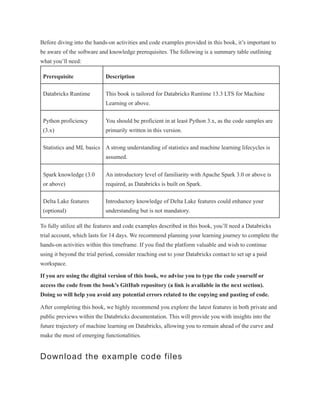



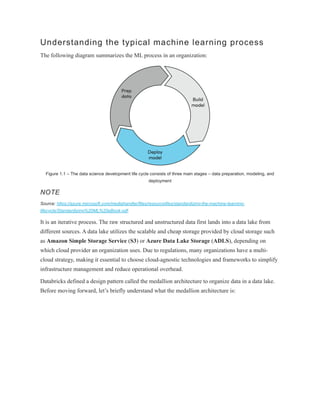
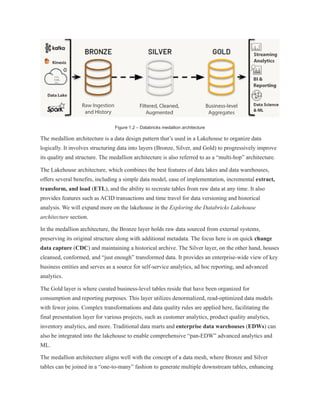
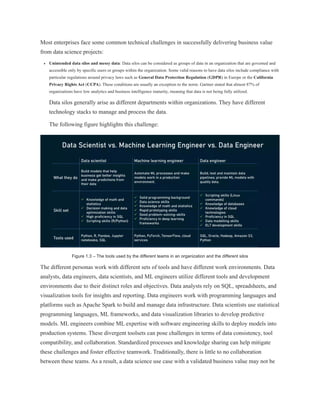
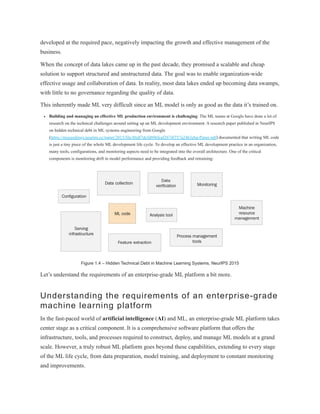
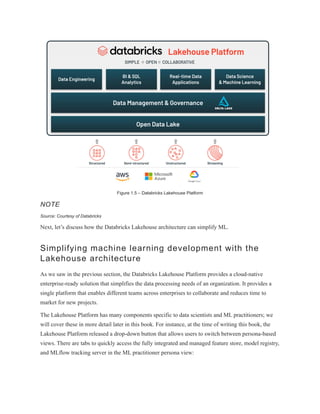
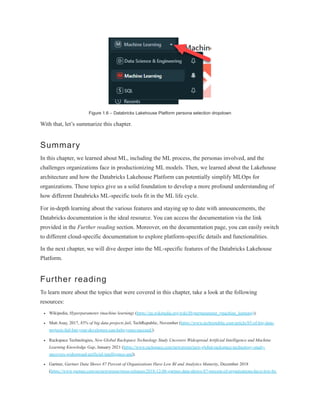



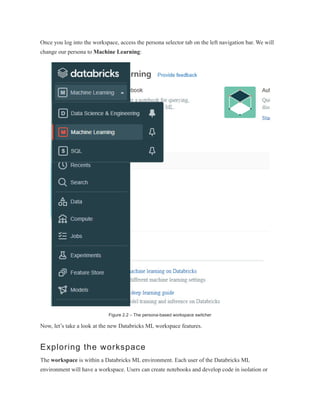
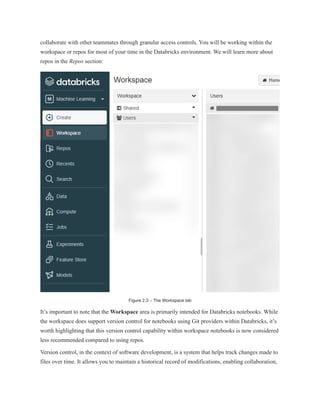
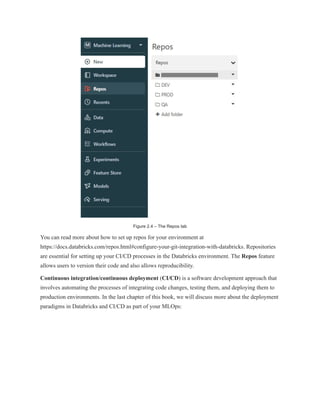

![267. In the Biographer occurs the equivalent phrase, “That a standard be borne
over his head.”
268.
Here again we have a suggestion that Ja’afar presumed upon his favour with
the Caliph; such presumption would soon be reported (perhaps by the
austère intrigant himself) to the royal ears, and lay the foundation of ill-will
likely to end in utter destruction.
269.
Bresl. Edit., vol. vii. pp. 258–60, Night dlxvii.
270.
Fourth Abbaside, A.D. 785–786, vol. v. 93. He was a fantastic tyrant who was
bent upon promoting to the Caliphate his own son, Ja’afar; he cast Harun
into prison and would probably have slain him but for the intervention of the
mother of the two brothers, Khayzarán widow of Al-Mahdi, and Yahya the
Barmecide.
271.
Third Abbaside, A.D. 775–785, vol. vii. 136; ix. 334.
272.
This reminds us of the Bir Al-Khátim (Well of the Signet) at Al-Medinah; in
which Caliph Osman during his sixth year dropped from his finger the silver
ring belonging to the founder of Al-Islam, engraved in three lines with
“Mohammed | Apostle (of) | Allah |.” It had served to sign the letters sent to
neighbouring kings and had descended to the first three successors
(Pilgrimage ii. 219). Mohammed owned three seal-rings, the golden one he
destroyed himself; and the third, which was of carnelian, was buried with
other objects by his heirs. The late Subhi Pasha used to declare that the
latter had been brought to him with early Moslem coins by an Arab, and
when he died he left it to the Sultan.
273.
Mr. Payne quotes Al-Tabari’s version of this anecdote. “El-Mehdi had
presented his son Haroun with a ruby ring, worth a hundred thousand
dinars, and the latter being one day with his brother [the then reigning
Khalif], El Hadi saw the ring on his finger and desired it. So, when Haroun
went out from him, he sent after him, to seek the ring of him. The Khalif’s
messenger overtook Er Reshid on the bridge over the Tigris and acquainted
him with his errand; whereupon the prince, enraged at the demand, pulled
off the ring and threw it into the river. When El Hadi died and Er Reshid
succeeded to the throne, he went with his suite to the bridge in question and](https://image.slidesharecdn.com/55756-250406023459-14b8005b/85/Practical-Machine-Learning-on-Databricks-1st-Edition-Debu-Sinha-65-320.jpg)