This document discusses practical applications of hydrology. It begins by defining hydrology as the science of water on Earth, including its occurrence, movement, distribution, and circulation. Hydrology can be scientific or applied/engineering. Engineering hydrology deals with water resource estimation, precipitation/runoff processes, and flood/drought problems. Some key practical applications of hydrology include water supply and treatment, irrigation, drainage, hydropower, flood control, and pollution control. Hydrology and hydraulics intersect in areas like water supply, power generation, dams/reservoirs, flood protection, and wastewater management. Engineering uses of surface water hydrology include modeling average and extreme events for applications like infrastructure design, water supply
Introduction and Hydro-Meteorology
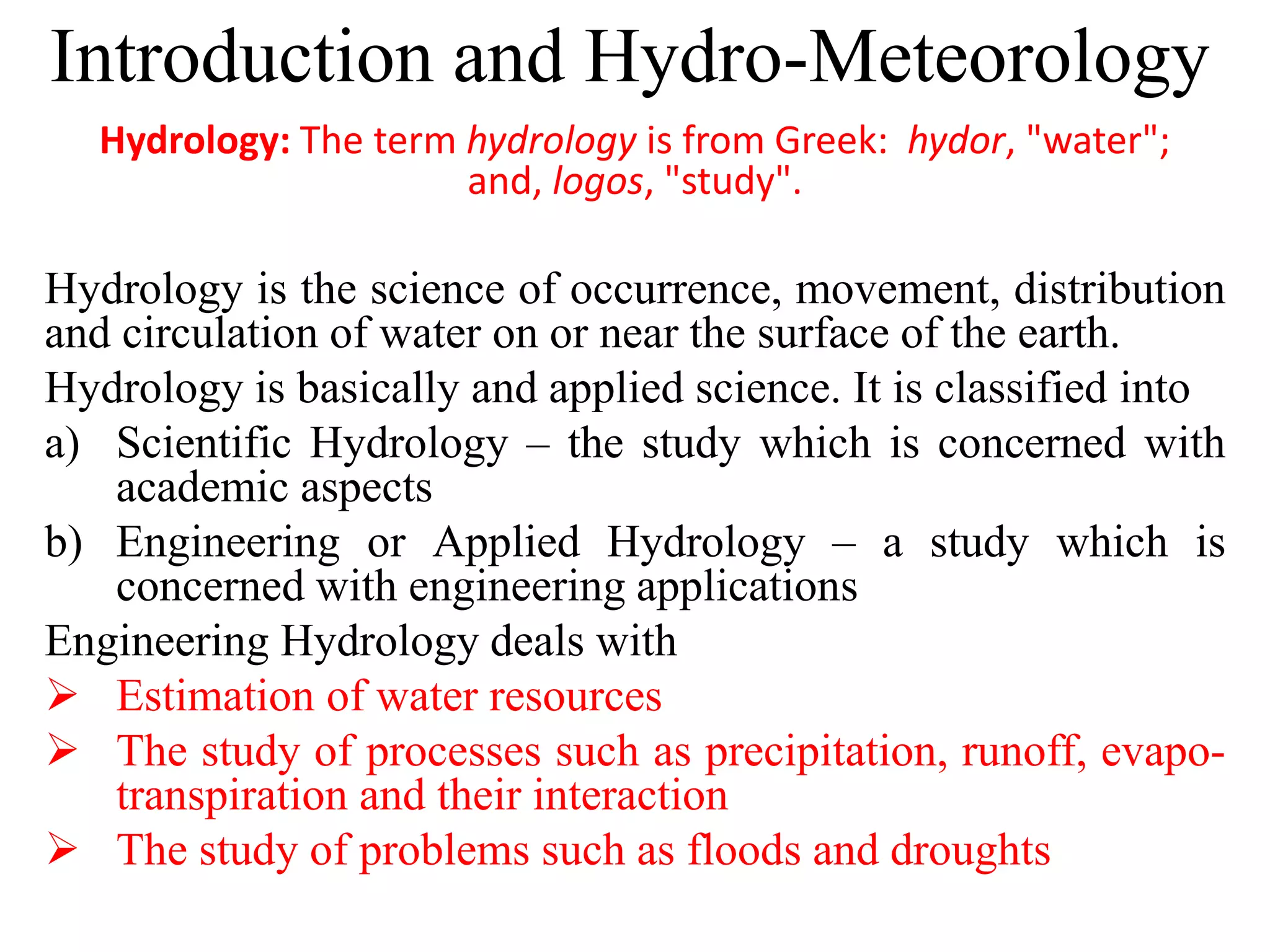
Hydrology:The term hydrology is from Greek: hydor, "water";
and, logos, "study".
Hydrology is the science of occurrence, movement, distribution
and circulation of water on or near the surface of the earth.
Hydrology is basically and applied science. It is classified into
a) Scientific Hydrology – the study which is concerned with
academic aspects
b) Engineering or Applied Hydrology – a study which is
concerned with engineering applications
Engineering Hydrology deals with
Estimation of water resources
The study of processes such as precipitation, runoff, evapo-
transpiration and their interaction
The study of problems such as floods and droughts
3.
Practical Applications ofHydrology
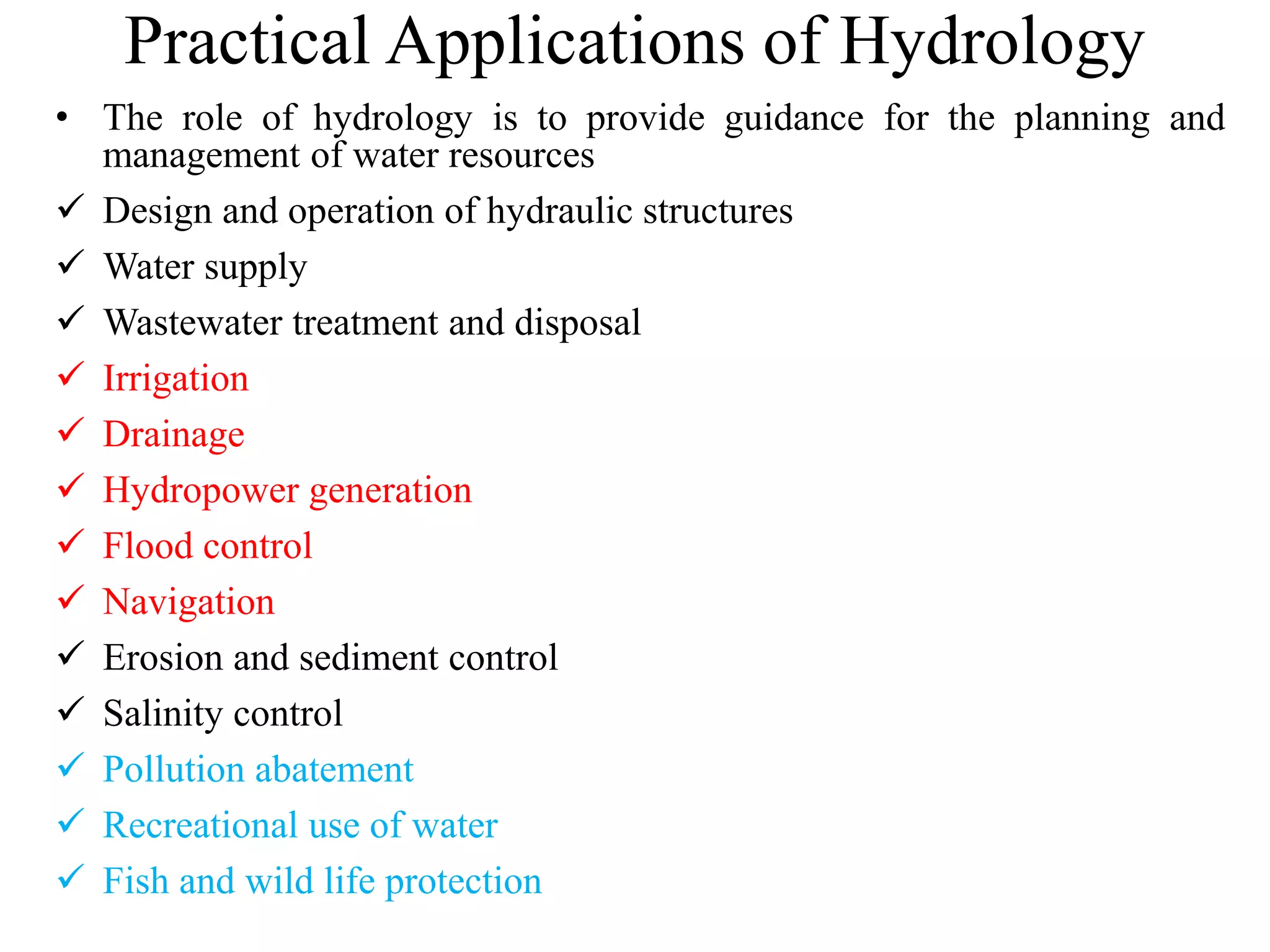
• The role of hydrology is to provide guidance for the planning and
management of water resources
Design and operation of hydraulic structures
Water supply
Wastewater treatment and disposal
Irrigation
Drainage
Hydropower generation
Flood control
Navigation
Erosion and sediment control
Salinity control
Pollution abatement
Recreational use of water
Fish and wild life protection
4.
Intersection of Hydrologyand Hydraulics
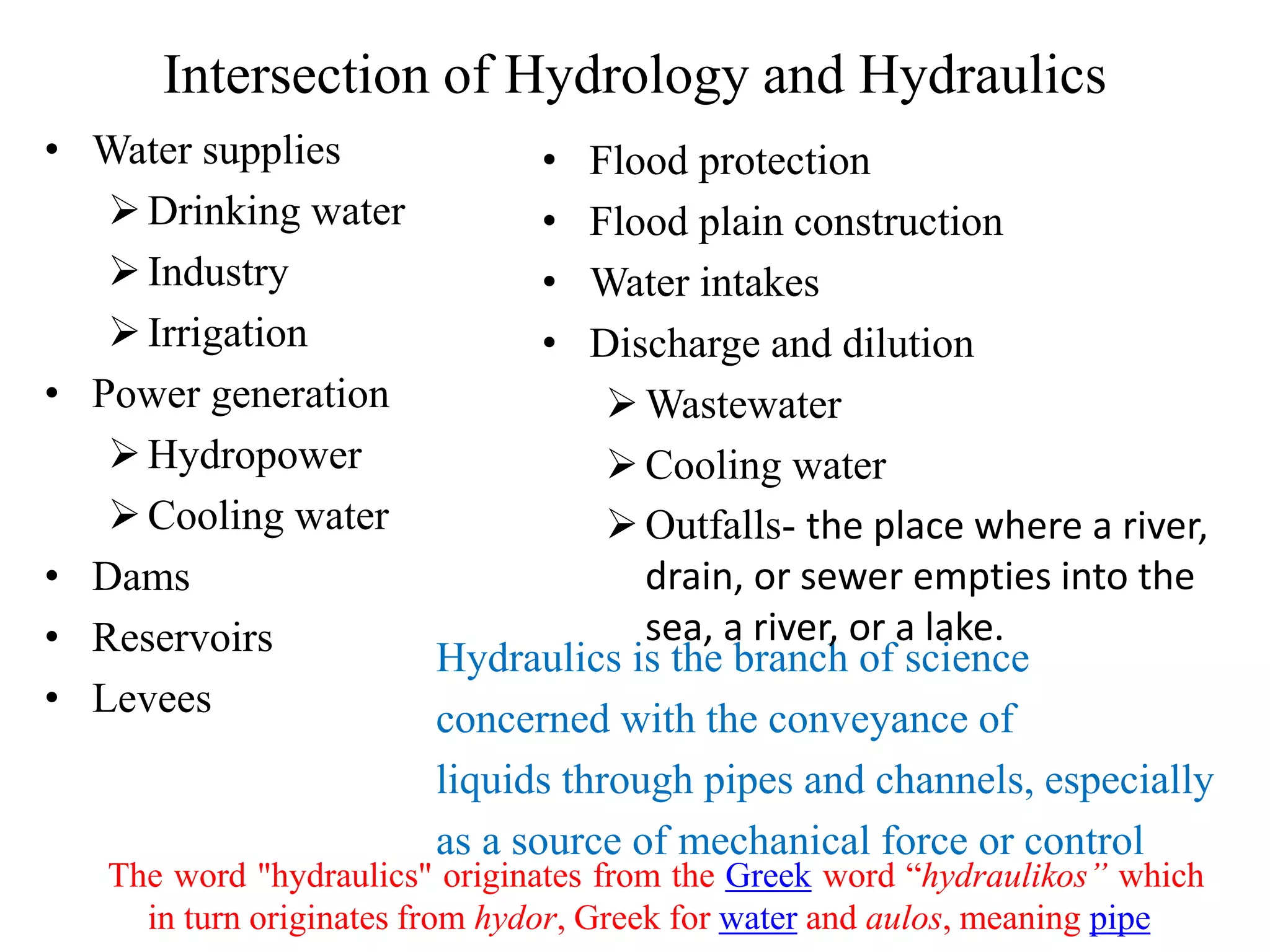
• Water supplies
Drinking water
Industry
Irrigation
• Power generation
Hydropower
Cooling water
• Dams
• Reservoirs
• Levees
Hydraulics is the branch of science
concerned with the conveyance of
liquids through pipes and channels, especially
as a source of mechanical force or control
• Flood protection
• Flood plain construction
• Water intakes
• Discharge and dilution
Wastewater
Cooling water
Outfalls- the place where a river,
drain, or sewer empties into the
sea, a river, or a lake.
The word "hydraulics" originates from the Greek word “hydraulikos” which
in turn originates from hydor, Greek for water and aulos, meaning pipe
5.
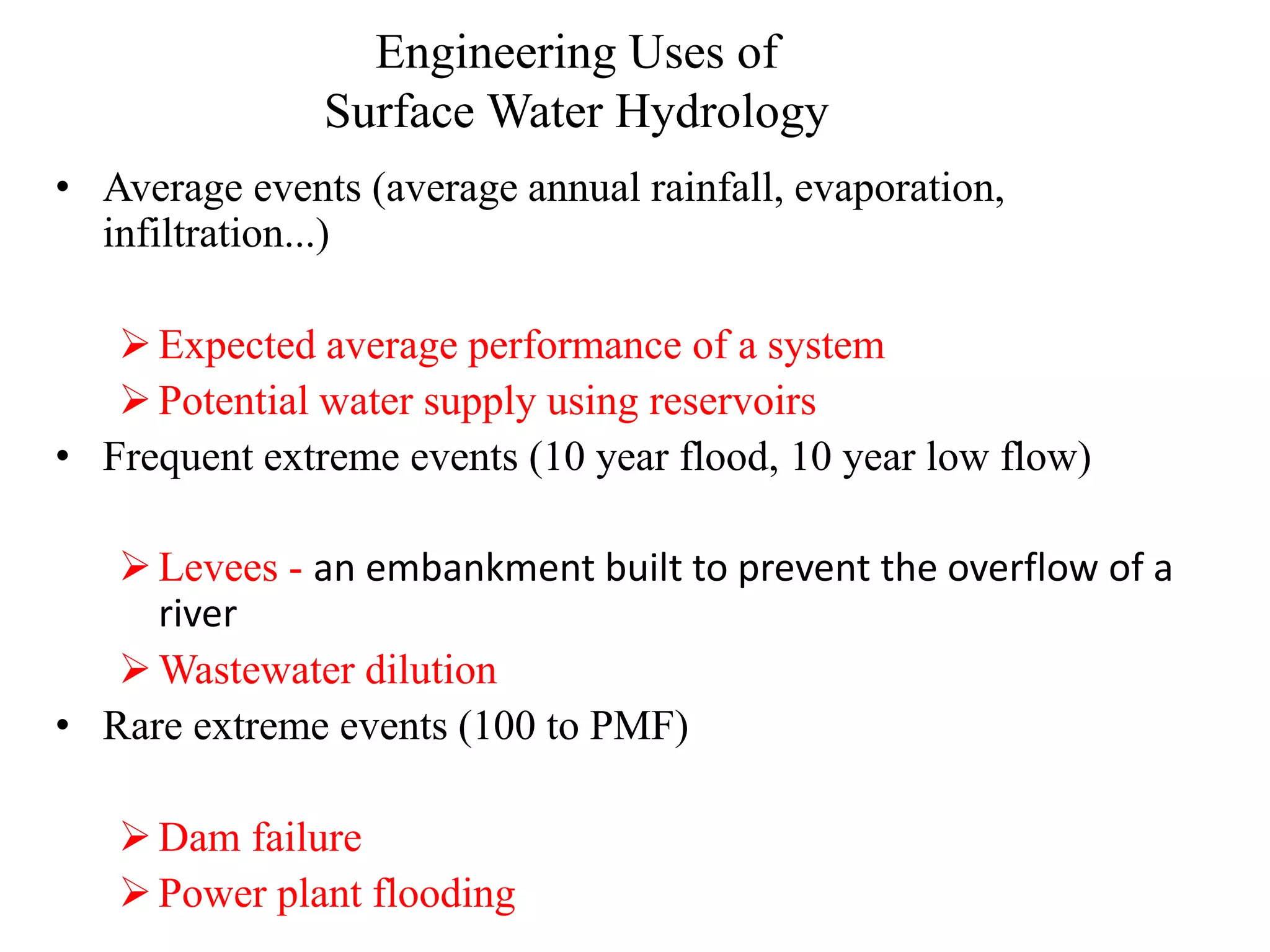
Engineering Uses of
SurfaceWater Hydrology
• Average events (average annual rainfall, evaporation,
infiltration...)
Expected average performance of a system
Potential water supply using reservoirs
• Frequent extreme events (10 year flood, 10 year low flow)
Levees - an embankment built to prevent the overflow of a
river
Wastewater dilution
• Rare extreme events (100 to PMF)
Dam failure
Power plant flooding
6.
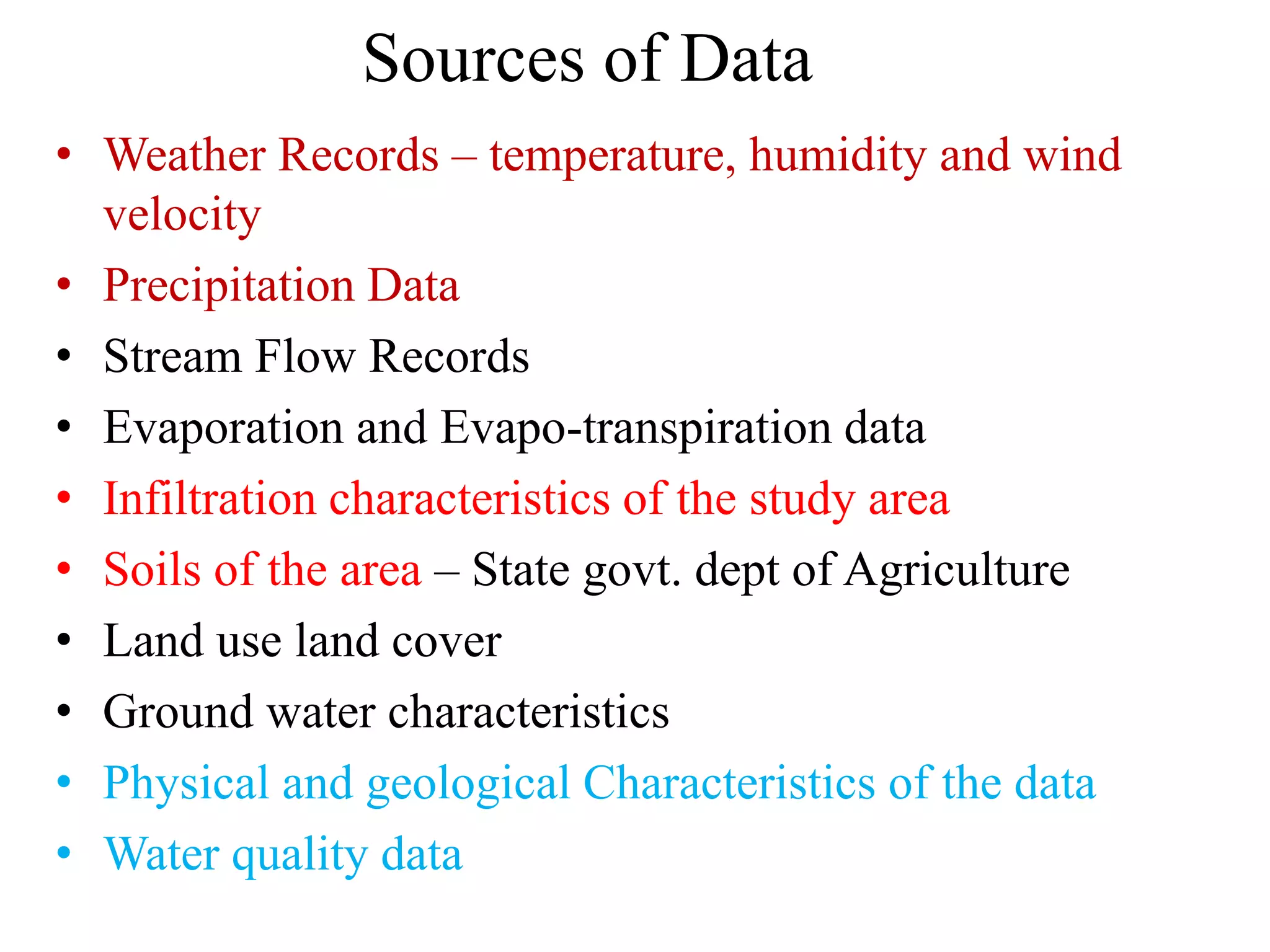
Sources of Data
•Weather Records – temperature, humidity and wind
velocity
• Precipitation Data
• Stream Flow Records
• Evaporation and Evapo-transpiration data
• Infiltration characteristics of the study area
• Soils of the area – State govt. dept of Agriculture
• Land use land cover
• Ground water characteristics
• Physical and geological Characteristics of the data
• Water quality data
7.
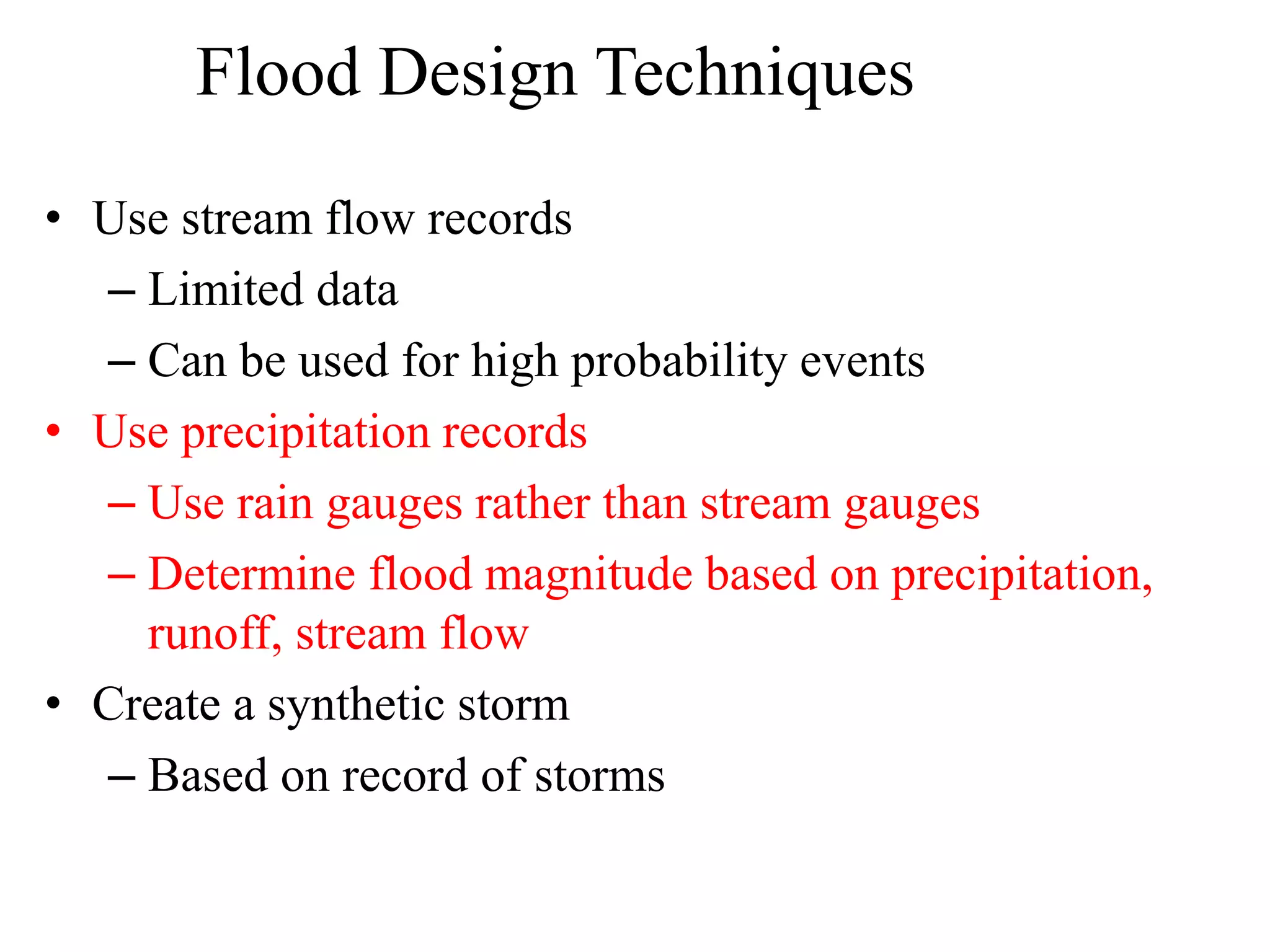
Flood Design Techniques
•Use stream flow records
– Limited data
– Can be used for high probability events
• Use precipitation records
– Use rain gauges rather than stream gauges
– Determine flood magnitude based on precipitation,
runoff, stream flow
• Create a synthetic storm
– Based on record of storms