It’s Time for PrEP
Kathleen A. Brady, MD
Medical Director/Medical Epidemiologist
Philadelphia Department of Public Health
AIDS Activities Coordinating Office
March 25, 2015
Outline
• Need for new preventions strategies
• What is PrEP?
• Data summary on PrEP
• PrEP guidelines
• Resistance
• Risk behaviors on PrEP
• Challenges and Opportunities for
implementing PrEP in clinical practice
HIV Prevention: Toolbox for
Success
• Safer-sex counseling: understanding risk
• Condoms and lubricant
• Sterile syringes and avoiding sharing ā€œworksā€
• HIV testing and treatment
• STI testing and treatment
• PEP (postexposure prophylaxis)
• PrEP (pre-exposure prophylaxis)
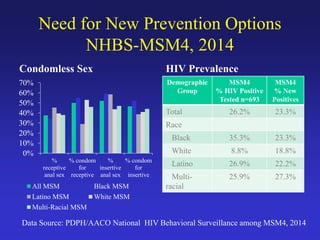
Need for New Prevention Options
NHBS-MSM4, 2014
Condomless Sex
0%
10%
20%
30%
40%
50%
60%
70%
%
receptive
anal sex
% condom
for
receptive
%
insertive
anal sex
% condom
for
insertive
All MSM Black MSM
Latino MSM White MSM
Multi-Racial MSM
HIV Prevalence
Demographic
Group
MSM4
% HIV Positive
Tested n=693
MSM4
% New
Positives
Total 26.2% 23.3%
Race
Black 35.3% 23.3%
White 8.8% 18.8%
Latino 26.9% 22.2%
Multi-
racial
25.9% 27.3%
Data Source: PDPH/AACO National HIV Behavioral Surveillance among MSM4, 2014
Need for New Prevention Options
• Only 50% of MSM in Philadelphia used a condom
the last time they had sex (50% for receptive anal
sex and 53% for insertive anal sex)
• Over 25% of MSM in Philadelphia are infected
with HIV (26.2%)
– 35.3% in AA MSM
– 26.9% in Latino MSM
– 8.8% in White MSM
Data Source: PDPH/AACO National HIV Behavioral Surveillance among MSM4, 2014
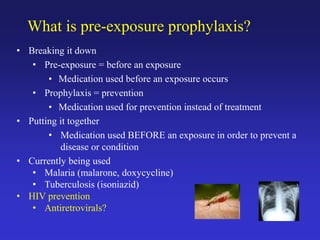
What is pre-exposure prophylaxis?
• Breaking it down
• Pre-exposure = before an exposure
• Medication used before an exposure occurs
• Prophylaxis = prevention
• Medication used for prevention instead of treatment
• Putting it together
• Medication used BEFORE an exposure in order to prevent a
disease or condition
• Currently being used
• Malaria (malarone, doxycycline)
• Tuberculosis (isoniazid)
• HIV prevention
• Antiretrovirals?
How does PrEP work?
• Steps leading to HIV infection
1. An infected body fluid comes into contact with a
mucous membrane such as the rectum, vagina, or
penis
2. HIV crosses the epithelial barrier and enters
underlying tissue
3. Replicates in the mucous membrane tissue (1-3 days)
4. Enters the lymphatic and circulatory system and
spreads throughout the body
• ā€œWindow of opportunityā€
– The time when the amount of virus is small and is
replicating at the mucous membrane
– Antiretrovirals could prevent HIV infection by helping the
body clear the virus before it spreads
Antiretrovirals Used in HIV Prevention:
The Foundation for PrEP
• Prevention of mother-to-child transmission
– Antiretrovirals given to the mother during pregnancy, labor,
and delivery and to the infant postpartum[1]
– PMTCT has virtually eliminated perinatal HIV infection in
the US and other developed countries
• Postexposure prophylaxis
– Antiretrovirals given within hrs of a known or suspected
HIV exposure (eg, needle stick injury, rape)
– US public health guidance for PEP is available for both
occupational[2] and nonoccupational[3] exposure to HIV
1. DHHS. Perinatal Guidelines. 2014. 2. Kuhar DT, et al. Infect Control Hosp Epidemiol. 2013;34:875-892.
3. MMWR. 2005;54(RR-2):1-20.
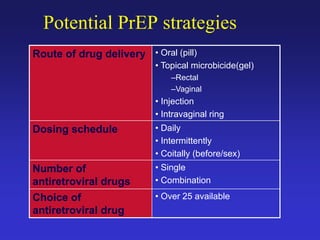
Potential PrEP strategies
Route of drug delivery • Oral (pill)
• Topical microbicide(gel)
–Rectal
–Vaginal
• Injection
• Intravaginal ring
Dosing schedule • Daily
• Intermittently
• Coitally (before/sex)
Number of
antiretroviral drugs
• Single
• Combination
Choice of
antiretroviral drug
• Over 25 available
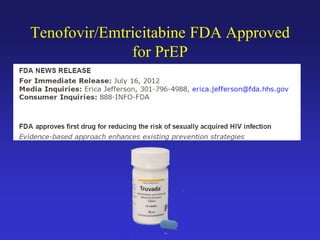
Tenofovir/Emtricitabine FDA Approved
for PrEP
PrEP Trials Have Shown Efficacy in MSM, Heterosexual
Men and Women, and IDUs
• 2 additional trials of PrEP (FEM-PrEP[5] and VOICE[6]), both conducted among high-risk African
women, did not demonstrate protection against HIV; in both trials, PrEP adherence was very low
Trial Population/Setting Intervention HIV Infections, n Reduction in
HIV Infection Rate,
% (95% CI)PrEP Placebo
iPrEX[1]
(N = 2499)
MSM, transgender women, 11
sites in US, South America,
Africa, Thailand
TDF/FTC 36 64 44 (15-63)
Partners
PrEP[2]
(N = 4747)
Serodiscordant couples
in Africa
TDF 17
52
67 (44-81)
TDF/FTC 13 75 (55-87)
TDF2[3]
(N = 1219)
Heterosexual males and
females in Botswana
TDF/FTC 9 24 62 (21-83)
Thai IDU[4]
(N = 2413)
Volunteers from 17 drug Thai
treatment centers
TDF 17 33 49 (10-72)
1. Grant RM, et al. N Engl J Med. 2010;363:2587-2599. 2. Baeten JM, et al. N Engl J Med. 2012;367:399-410. 3.
Thigpen MC, et al. N Engl J Med. 2012;367:423-434. 4. Choopanya K, et al. Lancet. 2013;381:2083-2090. 5. Van
Damme L, et al. N Engl J Med. 2012;367:411-422. 6. Marrazzo J, et al. CROI 2013. Abstract 26LB.
PrEP Works, but Adherence Is Critical
Study Efficacy Overall,
%
Blood Samples With
TFV Detected, %
Efficacy By Blood
Detection of TFV, %
iPrEx[1] 44 51 92
iPrEx OLE[2] 49 71 NR
Partners
PrEP[3]
67 (TDF)
75 (TDF/FTC)
81
86 (TDF)
90 (TDF/FTC)
TDF2[4] 62 80 85
Thai IDU[5] 49 67 74
Fem-PrEP[6] No efficacy < 30 NR
VOICE[7] No efficacy < 30 NR
1. Grant RM, et al. N Engl J Med. 2010;363:2587-2599. 2. Grant RM, et al. Lancet Infect Dis. 2014; 14:820-829. 3.
Baeten JM, et al. N Engl J Med. 2012;367:399-410. 4. Thigpen MC, et al. N Engl J Med. 2012;367:423-434. 5.
Choopanya K, et al. Lancet. 2013;381:2083-2090. 6. Van Damme L, et al. N Engl J Med. 2012;367:411-422. 7.
Marrazzo J, et al. CROI 2013. Abstract 26LB.
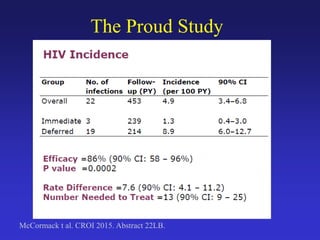
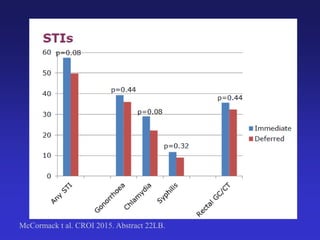
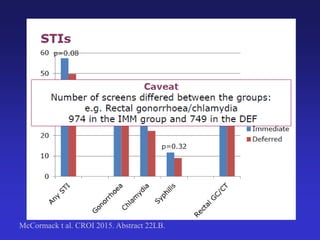
The Proud Study
McCormack t al. CROI 2015. Abstract 22LB.
The Proud Study
McCormack t al. CROI 2015. Abstract 22LB.
PrEP Trials
• PrEP Trials Have Shown Efficacy in MSM,
Heterosexual Men and Women, and IDUs
– Efficacy ranged from 44% to 75%1-6
• PrEP Works, but Adherence Is Critical
– Efficacy ranged from 74% to 92% in persons
who had detectable drug levels1-6
• In an implementation study mimicking the
real world, efficacy was 86%7
1. Grant RM, et al. N Engl J Med. 2010;363:2587-2599. 2. Baeten JM, et al. N Engl J Med. 2012;367:399-410. 3. Thigpen MC, et al. N
Engl J Med. 2012;367:423-434. 4. Choopanya K, et al. Lancet. 2013;381:2083-2090. 5. Van Damme L, et al. N Engl J Med. 2012;367:411-
422. 6. Marrazzo J, et al. CROI 2013. Abstract 26LB. 7. McCormack t al. CROI 2015. Abstract 22LB.
So How Many People Need to
Take PrEP?
• Number needed to treat
– the average number of patients who need to be
treated to prevent one additional bad outcome
• PrEP = 13 to prevent 1 HIV infection
• Statins = 100 to prevent 1 cardiovascular
event
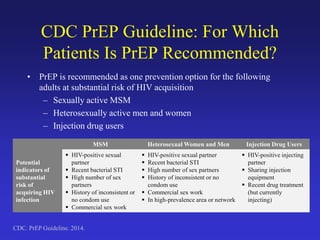
CDC PrEP Guideline: For Which
Patients Is PrEP Recommended?
• PrEP is recommended as one prevention option for the following
adults at substantial risk of HIV acquisition
– Sexually active MSM
– Heterosexually active men and women
– Injection drug users
MSM Heterosexual Women and Men Injection Drug Users
Potential
indicators of
substantial
risk of
acquiring HIV
infection
ļ‚§ HIV-positive sexual
partner
ļ‚§ Recent bacterial STI
ļ‚§ High number of sex
partners
ļ‚§ History of inconsistent or
no condom use
ļ‚§ Commercial sex work
ļ‚§ HIV-positive sexual partner
ļ‚§ Recent bacterial STI
ļ‚§ High number of sex partners
ļ‚§ History of inconsistent or no
condom use
ļ‚§ Commercial sex work
ļ‚§ In high-prevalence area or network
ļ‚§ HIV-positive injecting
partner
ļ‚§ Sharing injection
equipment
ļ‚§ Recent drug treatment
(but currently
injecting)
CDC. PrEP Guideline. 2014.
CDC Guideline: Follow-up and
Monitoring
Follow-up At Least Every 3 Mos After 3 Mos and at
Least Every 6 Mos
Thereafter
At Least Every
6 Mos
At Least Every 12
Mos
All patients ļ‚§ HIV test
ļ‚§ Medication adherence
counseling
ļ‚§ Behavioral risk
reduction support
ļ‚§ Adverse event
assessment
ļ‚§ STI symptom
assessment
ļ‚§ Assess renal function ļ‚§ Test for bacterial
STIs
ļ‚§ Evaluate need to
continue PrEP
Women ļ‚§ Pregnancy test (where
appropriate)
HBsAg+ ļ‚§ HBV DNA by quantitative assay*
*Every 6-12 mos.
CDC. PrEP Guideline. 2014.
Pregnancy
• PrEP use at conception and during pregnancy by
the uninfected partner may offer an additional tool
to reduce the risk of sexual HIV acquisition[1]
• Data directly related to the safety of PrEP use for a
developing fetus are limited
• Potential risks and limited information should be
discussed
• TDF and FTC are classified as FDA Pregnancy
Category B medications[2]
1. CDC. PrEP Guideline. 2014. 2. DHHS. HIV Perinatal Guideline. 2014.
Resistance
• Data from the Proud study1
– 3 of 6 individuals who were seroconverting around the
time they started PrEP developed resistance with a
M184V/I (resistance to one component in Truvada)
• Data from iPrex2
– 2 of 2 individuals who were seroconverting around the
time they started PrEP developed resistance with a
M184V/I (resistance to one component in Truvada)
• Highlights the need to rule out acute infection
prior to starting PrEP in high risk populations
1. McCormack t al. CROI 2015. Abstract 22LB. . 2. Liegler, T., et al. JID. 2014;210:1217-
1227.
McCormack t al. CROI 2015. Abstract 22LB.
iPrEx[1] Partners PrEP[2]
50
30
10
0
0 6 12 18 24 30
Follow-up Time (Mos)
40
20
3 9 15 21 27 33
SubjectsReporting
UnprotectedSex(%)
TDF
TDF/FTC
Placebo
PrEP Trials Found Decreasing
Risk Behavior Over Time
100
80
0
0
Wks Since Randomization
48 72 96 120 144
SubjectsReportingUnprotected
ReceptiveAnalSex(%)
40
60
20
24
TDF/FTC
Placebo
1. Grant RM, et al. N Engl J Med. 2010;363: 2587-2599.
2. Baeten JM, et al. N Engl J Med. 2012;367:399-410.
Unintended Consequences
• Resistance1, 2
– To date, resistance has been identified in some of the
individuals who were seroconverting around the time
they started PrEP (5/8 persons in iPrex and Proud)
– Highlights the need to rule out acute infection prior to
starting PrEP in high risk populations
• Sexual Risk Behavior3, 4
– Multiple studies have shown that there is no significant
increase in HIV risk behaviors (STIs or condomless
sex) in persons taking PrEP
1. McCormack t al. CROI 2015. Abstract 22LB. . 2. Liegler, T., et al. JID. 2014;210:1217-1227.
3. Grant RM, et al. N Engl J Med. 2010;363: 2587-2599. , 4. Baeten JM, et al. N Engl J Med. 2012;367:399-410.
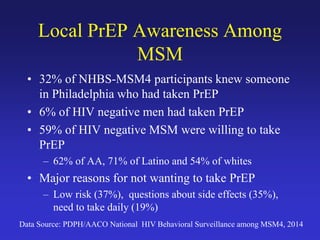
Local PrEP Awareness Among
MSM
• 32% of NHBS-MSM4 participants knew someone
in Philadelphia who had taken PrEP
• 6% of HIV negative men had taken PrEP
• 59% of HIV negative MSM were willing to take
PrEP
– 62% of AA, 71% of Latino and 54% of whites
• Major reasons for not wanting to take PrEP
– Low risk (37%), questions about side effects (35%),
need to take daily (19%)
Data Source: PDPH/AACO National HIV Behavioral Surveillance among MSM4, 2014
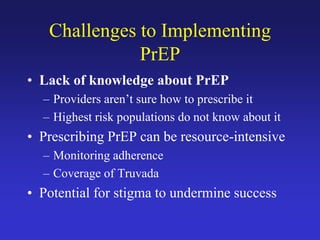
Challenges to Implementing
PrEP
• Lack of knowledge about PrEP
– Providers aren’t sure how to prescribe it
– Highest risk populations do not know about it
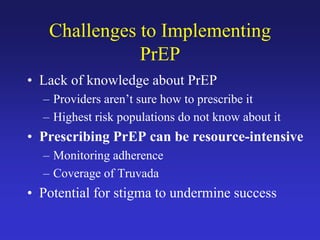
• Prescribing PrEP can be resource-intensive
– Monitoring adherence
– Coverage of Truvada
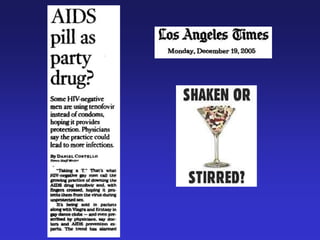
• Potential for stigma to undermine success
Primary Care Providers
• What it takes to prescribe PrEP well:
– Conversation about risk
– Baseline laboratory testing
– * Write the prescription (insured patients)
– Paperwork for patient assistance (uninsured)
– At least q3 month follow-up and HIV test
– Retention in care for highest risk groups
– Ongoing conversation about risk
28
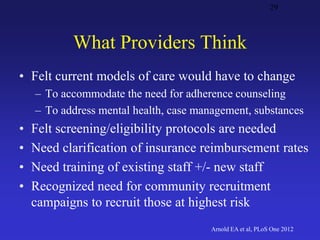
What Providers Think
• Felt current models of care would have to change
– To accommodate the need for adherence counseling
– To address mental health, case management, substances
• Felt screening/eligibility protocols are needed
• Need clarification of insurance reimbursement rates
• Need training of existing staff +/- new staff
• Recognized need for community recruitment
campaigns to recruit those at highest risk
29
Arnold EA et al, PLoS One 2012
Challenges to Implementing
PrEP
• Lack of knowledge about PrEP
– Providers aren’t sure how to prescribe it
– Highest risk populations do not know about it
• Prescribing PrEP can be resource-intensive
– Monitoring adherence
– Coverage of Truvada
• Potential for stigma to undermine success
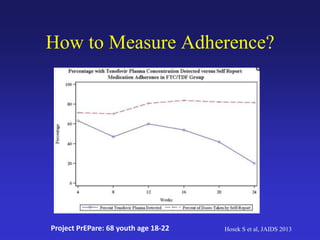
How to Measure Adherence?
Project PrEPare: 68 youth age 18-22 Hosek S et al, JAIDS 2013
Medication Coverage
• Everyone (mostly) has access to PrEP
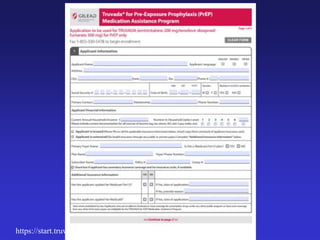
– Uninsured: Gilead Patient Assistance Program
– Insured (Medicaid): Covered ($3 co-pay)
– Insured (Private Insurance): Variable co-pays,
Co-pay card covers up to $250
• Patient Assistance time-consuming, which
limits incorporation into PCP offices and
utilizes valuable resources in all settings
https://start.truvada.com/content/pdf/medication_assistance_program.pdf
Challenges to Implementing
PrEP
• Lack of knowledge about PrEP
– Providers aren’t sure how to prescribe it
– Highest risk populations do not know about it
• Prescribing PrEP can be resource-intensive
– Monitoring adherence
– Coverage of Truvada
• Potential for stigma to undermine success
Opportunities related to PrEP
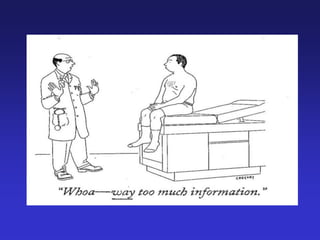
• Can help providers become more
comfortable talking about sex
• Can bring about infrastructure changes that
make sense for prevention
• Can be a way to engage hard-to-access
groups in care
Broadening our horizons…
• HIV specialists
• STI/sexual health clinics
• Other public health agencies
38
PrEP: Engaging IDUs & youth
• A way to engage IDUs in harm reduction
• Can be prescribed with birth control
• Combination agents in development, i.e. vaginal rings
• 2011-2013, ½ of PrEP recipients were women, many in
southern states
• Can engage young men & women in
preventive measures (smoking cessation,
healthy eating habits, vaccination)
Rawlings K, ICAAC 2013
So who should know about
PrEP?
• Everyone
Questions?

HPG PrEP Presentation by Dr. Kathleen Brady (AACO)

  • 1.
    It’s Time forPrEP Kathleen A. Brady, MD Medical Director/Medical Epidemiologist Philadelphia Department of Public Health AIDS Activities Coordinating Office March 25, 2015
  • 2.
    Outline • Need fornew preventions strategies • What is PrEP? • Data summary on PrEP • PrEP guidelines • Resistance • Risk behaviors on PrEP • Challenges and Opportunities for implementing PrEP in clinical practice
  • 3.
    HIV Prevention: Toolboxfor Success • Safer-sex counseling: understanding risk • Condoms and lubricant • Sterile syringes and avoiding sharing ā€œworksā€ • HIV testing and treatment • STI testing and treatment • PEP (postexposure prophylaxis) • PrEP (pre-exposure prophylaxis)
  • 4.
    Need for NewPrevention Options NHBS-MSM4, 2014 Condomless Sex 0% 10% 20% 30% 40% 50% 60% 70% % receptive anal sex % condom for receptive % insertive anal sex % condom for insertive All MSM Black MSM Latino MSM White MSM Multi-Racial MSM HIV Prevalence Demographic Group MSM4 % HIV Positive Tested n=693 MSM4 % New Positives Total 26.2% 23.3% Race Black 35.3% 23.3% White 8.8% 18.8% Latino 26.9% 22.2% Multi- racial 25.9% 27.3% Data Source: PDPH/AACO National HIV Behavioral Surveillance among MSM4, 2014
  • 5.
    Need for NewPrevention Options • Only 50% of MSM in Philadelphia used a condom the last time they had sex (50% for receptive anal sex and 53% for insertive anal sex) • Over 25% of MSM in Philadelphia are infected with HIV (26.2%) – 35.3% in AA MSM – 26.9% in Latino MSM – 8.8% in White MSM Data Source: PDPH/AACO National HIV Behavioral Surveillance among MSM4, 2014
  • 6.
    What is pre-exposureprophylaxis? • Breaking it down • Pre-exposure = before an exposure • Medication used before an exposure occurs • Prophylaxis = prevention • Medication used for prevention instead of treatment • Putting it together • Medication used BEFORE an exposure in order to prevent a disease or condition • Currently being used • Malaria (malarone, doxycycline) • Tuberculosis (isoniazid) • HIV prevention • Antiretrovirals?
  • 7.
    How does PrEPwork? • Steps leading to HIV infection 1. An infected body fluid comes into contact with a mucous membrane such as the rectum, vagina, or penis 2. HIV crosses the epithelial barrier and enters underlying tissue 3. Replicates in the mucous membrane tissue (1-3 days) 4. Enters the lymphatic and circulatory system and spreads throughout the body • ā€œWindow of opportunityā€ – The time when the amount of virus is small and is replicating at the mucous membrane – Antiretrovirals could prevent HIV infection by helping the body clear the virus before it spreads
  • 8.
    Antiretrovirals Used inHIV Prevention: The Foundation for PrEP • Prevention of mother-to-child transmission – Antiretrovirals given to the mother during pregnancy, labor, and delivery and to the infant postpartum[1] – PMTCT has virtually eliminated perinatal HIV infection in the US and other developed countries • Postexposure prophylaxis – Antiretrovirals given within hrs of a known or suspected HIV exposure (eg, needle stick injury, rape) – US public health guidance for PEP is available for both occupational[2] and nonoccupational[3] exposure to HIV 1. DHHS. Perinatal Guidelines. 2014. 2. Kuhar DT, et al. Infect Control Hosp Epidemiol. 2013;34:875-892. 3. MMWR. 2005;54(RR-2):1-20.
  • 9.
    Potential PrEP strategies Routeof drug delivery • Oral (pill) • Topical microbicide(gel) –Rectal –Vaginal • Injection • Intravaginal ring Dosing schedule • Daily • Intermittently • Coitally (before/sex) Number of antiretroviral drugs • Single • Combination Choice of antiretroviral drug • Over 25 available
  • 10.
  • 11.
    PrEP Trials HaveShown Efficacy in MSM, Heterosexual Men and Women, and IDUs • 2 additional trials of PrEP (FEM-PrEP[5] and VOICE[6]), both conducted among high-risk African women, did not demonstrate protection against HIV; in both trials, PrEP adherence was very low Trial Population/Setting Intervention HIV Infections, n Reduction in HIV Infection Rate, % (95% CI)PrEP Placebo iPrEX[1] (N = 2499) MSM, transgender women, 11 sites in US, South America, Africa, Thailand TDF/FTC 36 64 44 (15-63) Partners PrEP[2] (N = 4747) Serodiscordant couples in Africa TDF 17 52 67 (44-81) TDF/FTC 13 75 (55-87) TDF2[3] (N = 1219) Heterosexual males and females in Botswana TDF/FTC 9 24 62 (21-83) Thai IDU[4] (N = 2413) Volunteers from 17 drug Thai treatment centers TDF 17 33 49 (10-72) 1. Grant RM, et al. N Engl J Med. 2010;363:2587-2599. 2. Baeten JM, et al. N Engl J Med. 2012;367:399-410. 3. Thigpen MC, et al. N Engl J Med. 2012;367:423-434. 4. Choopanya K, et al. Lancet. 2013;381:2083-2090. 5. Van Damme L, et al. N Engl J Med. 2012;367:411-422. 6. Marrazzo J, et al. CROI 2013. Abstract 26LB.
  • 12.
    PrEP Works, butAdherence Is Critical Study Efficacy Overall, % Blood Samples With TFV Detected, % Efficacy By Blood Detection of TFV, % iPrEx[1] 44 51 92 iPrEx OLE[2] 49 71 NR Partners PrEP[3] 67 (TDF) 75 (TDF/FTC) 81 86 (TDF) 90 (TDF/FTC) TDF2[4] 62 80 85 Thai IDU[5] 49 67 74 Fem-PrEP[6] No efficacy < 30 NR VOICE[7] No efficacy < 30 NR 1. Grant RM, et al. N Engl J Med. 2010;363:2587-2599. 2. Grant RM, et al. Lancet Infect Dis. 2014; 14:820-829. 3. Baeten JM, et al. N Engl J Med. 2012;367:399-410. 4. Thigpen MC, et al. N Engl J Med. 2012;367:423-434. 5. Choopanya K, et al. Lancet. 2013;381:2083-2090. 6. Van Damme L, et al. N Engl J Med. 2012;367:411-422. 7. Marrazzo J, et al. CROI 2013. Abstract 26LB.
  • 13.
    The Proud Study McCormackt al. CROI 2015. Abstract 22LB.
  • 14.
    The Proud Study McCormackt al. CROI 2015. Abstract 22LB.
  • 15.
    PrEP Trials • PrEPTrials Have Shown Efficacy in MSM, Heterosexual Men and Women, and IDUs – Efficacy ranged from 44% to 75%1-6 • PrEP Works, but Adherence Is Critical – Efficacy ranged from 74% to 92% in persons who had detectable drug levels1-6 • In an implementation study mimicking the real world, efficacy was 86%7 1. Grant RM, et al. N Engl J Med. 2010;363:2587-2599. 2. Baeten JM, et al. N Engl J Med. 2012;367:399-410. 3. Thigpen MC, et al. N Engl J Med. 2012;367:423-434. 4. Choopanya K, et al. Lancet. 2013;381:2083-2090. 5. Van Damme L, et al. N Engl J Med. 2012;367:411- 422. 6. Marrazzo J, et al. CROI 2013. Abstract 26LB. 7. McCormack t al. CROI 2015. Abstract 22LB.
  • 16.
    So How ManyPeople Need to Take PrEP? • Number needed to treat – the average number of patients who need to be treated to prevent one additional bad outcome • PrEP = 13 to prevent 1 HIV infection • Statins = 100 to prevent 1 cardiovascular event
  • 17.
    CDC PrEP Guideline:For Which Patients Is PrEP Recommended? • PrEP is recommended as one prevention option for the following adults at substantial risk of HIV acquisition – Sexually active MSM – Heterosexually active men and women – Injection drug users MSM Heterosexual Women and Men Injection Drug Users Potential indicators of substantial risk of acquiring HIV infection ļ‚§ HIV-positive sexual partner ļ‚§ Recent bacterial STI ļ‚§ High number of sex partners ļ‚§ History of inconsistent or no condom use ļ‚§ Commercial sex work ļ‚§ HIV-positive sexual partner ļ‚§ Recent bacterial STI ļ‚§ High number of sex partners ļ‚§ History of inconsistent or no condom use ļ‚§ Commercial sex work ļ‚§ In high-prevalence area or network ļ‚§ HIV-positive injecting partner ļ‚§ Sharing injection equipment ļ‚§ Recent drug treatment (but currently injecting) CDC. PrEP Guideline. 2014.
  • 18.
    CDC Guideline: Follow-upand Monitoring Follow-up At Least Every 3 Mos After 3 Mos and at Least Every 6 Mos Thereafter At Least Every 6 Mos At Least Every 12 Mos All patients ļ‚§ HIV test ļ‚§ Medication adherence counseling ļ‚§ Behavioral risk reduction support ļ‚§ Adverse event assessment ļ‚§ STI symptom assessment ļ‚§ Assess renal function ļ‚§ Test for bacterial STIs ļ‚§ Evaluate need to continue PrEP Women ļ‚§ Pregnancy test (where appropriate) HBsAg+ ļ‚§ HBV DNA by quantitative assay* *Every 6-12 mos. CDC. PrEP Guideline. 2014.
  • 19.
    Pregnancy • PrEP useat conception and during pregnancy by the uninfected partner may offer an additional tool to reduce the risk of sexual HIV acquisition[1] • Data directly related to the safety of PrEP use for a developing fetus are limited • Potential risks and limited information should be discussed • TDF and FTC are classified as FDA Pregnancy Category B medications[2] 1. CDC. PrEP Guideline. 2014. 2. DHHS. HIV Perinatal Guideline. 2014.
  • 20.
    Resistance • Data fromthe Proud study1 – 3 of 6 individuals who were seroconverting around the time they started PrEP developed resistance with a M184V/I (resistance to one component in Truvada) • Data from iPrex2 – 2 of 2 individuals who were seroconverting around the time they started PrEP developed resistance with a M184V/I (resistance to one component in Truvada) • Highlights the need to rule out acute infection prior to starting PrEP in high risk populations 1. McCormack t al. CROI 2015. Abstract 22LB. . 2. Liegler, T., et al. JID. 2014;210:1217- 1227.
  • 21.
    McCormack t al.CROI 2015. Abstract 22LB.
  • 22.
    McCormack t al.CROI 2015. Abstract 22LB.
  • 23.
    McCormack t al.CROI 2015. Abstract 22LB.
  • 24.
    iPrEx[1] Partners PrEP[2] 50 30 10 0 06 12 18 24 30 Follow-up Time (Mos) 40 20 3 9 15 21 27 33 SubjectsReporting UnprotectedSex(%) TDF TDF/FTC Placebo PrEP Trials Found Decreasing Risk Behavior Over Time 100 80 0 0 Wks Since Randomization 48 72 96 120 144 SubjectsReportingUnprotected ReceptiveAnalSex(%) 40 60 20 24 TDF/FTC Placebo 1. Grant RM, et al. N Engl J Med. 2010;363: 2587-2599. 2. Baeten JM, et al. N Engl J Med. 2012;367:399-410.
  • 25.
    Unintended Consequences • Resistance1,2 – To date, resistance has been identified in some of the individuals who were seroconverting around the time they started PrEP (5/8 persons in iPrex and Proud) – Highlights the need to rule out acute infection prior to starting PrEP in high risk populations • Sexual Risk Behavior3, 4 – Multiple studies have shown that there is no significant increase in HIV risk behaviors (STIs or condomless sex) in persons taking PrEP 1. McCormack t al. CROI 2015. Abstract 22LB. . 2. Liegler, T., et al. JID. 2014;210:1217-1227. 3. Grant RM, et al. N Engl J Med. 2010;363: 2587-2599. , 4. Baeten JM, et al. N Engl J Med. 2012;367:399-410.
  • 26.
    Local PrEP AwarenessAmong MSM • 32% of NHBS-MSM4 participants knew someone in Philadelphia who had taken PrEP • 6% of HIV negative men had taken PrEP • 59% of HIV negative MSM were willing to take PrEP – 62% of AA, 71% of Latino and 54% of whites • Major reasons for not wanting to take PrEP – Low risk (37%), questions about side effects (35%), need to take daily (19%) Data Source: PDPH/AACO National HIV Behavioral Surveillance among MSM4, 2014
  • 27.
    Challenges to Implementing PrEP •Lack of knowledge about PrEP – Providers aren’t sure how to prescribe it – Highest risk populations do not know about it • Prescribing PrEP can be resource-intensive – Monitoring adherence – Coverage of Truvada • Potential for stigma to undermine success
  • 28.
    Primary Care Providers •What it takes to prescribe PrEP well: – Conversation about risk – Baseline laboratory testing – * Write the prescription (insured patients) – Paperwork for patient assistance (uninsured) – At least q3 month follow-up and HIV test – Retention in care for highest risk groups – Ongoing conversation about risk 28
  • 29.
    What Providers Think •Felt current models of care would have to change – To accommodate the need for adherence counseling – To address mental health, case management, substances • Felt screening/eligibility protocols are needed • Need clarification of insurance reimbursement rates • Need training of existing staff +/- new staff • Recognized need for community recruitment campaigns to recruit those at highest risk 29 Arnold EA et al, PLoS One 2012
  • 30.
    Challenges to Implementing PrEP •Lack of knowledge about PrEP – Providers aren’t sure how to prescribe it – Highest risk populations do not know about it • Prescribing PrEP can be resource-intensive – Monitoring adherence – Coverage of Truvada • Potential for stigma to undermine success
  • 31.
    How to MeasureAdherence? Project PrEPare: 68 youth age 18-22 Hosek S et al, JAIDS 2013
  • 32.
    Medication Coverage • Everyone(mostly) has access to PrEP – Uninsured: Gilead Patient Assistance Program – Insured (Medicaid): Covered ($3 co-pay) – Insured (Private Insurance): Variable co-pays, Co-pay card covers up to $250 • Patient Assistance time-consuming, which limits incorporation into PCP offices and utilizes valuable resources in all settings
  • 33.
  • 34.
    Challenges to Implementing PrEP •Lack of knowledge about PrEP – Providers aren’t sure how to prescribe it – Highest risk populations do not know about it • Prescribing PrEP can be resource-intensive – Monitoring adherence – Coverage of Truvada • Potential for stigma to undermine success
  • 36.
    Opportunities related toPrEP • Can help providers become more comfortable talking about sex • Can bring about infrastructure changes that make sense for prevention • Can be a way to engage hard-to-access groups in care
  • 38.
    Broadening our horizons… •HIV specialists • STI/sexual health clinics • Other public health agencies 38
  • 39.
    PrEP: Engaging IDUs& youth • A way to engage IDUs in harm reduction • Can be prescribed with birth control • Combination agents in development, i.e. vaginal rings • 2011-2013, ½ of PrEP recipients were women, many in southern states • Can engage young men & women in preventive measures (smoking cessation, healthy eating habits, vaccination) Rawlings K, ICAAC 2013
  • 40.
    So who shouldknow about PrEP? • Everyone
  • 41.