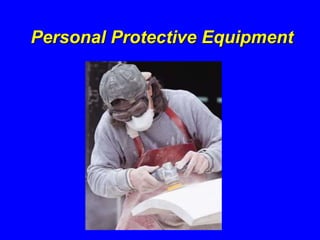
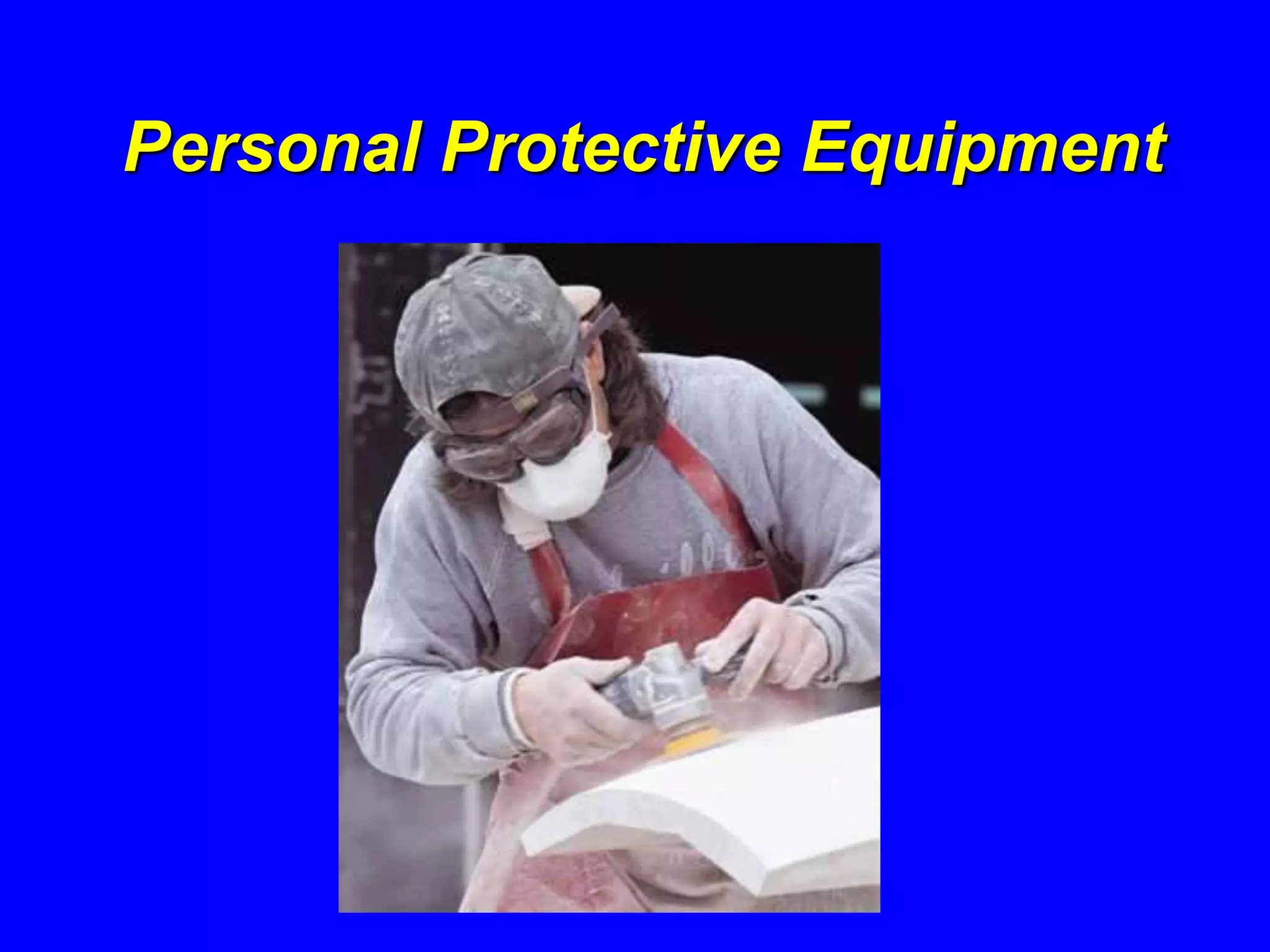
Personal Protective Equipment
Protecting Employees from
Workplace Hazards
• Employers must protect employees from workplace
hazards such as machines, hazardous substances,
and dangerous work procedures that can cause injury
• Employers must:
 Use all feasible engineering and work practice
controls to eliminate and reduce hazards
 Then use appropriate personal protective
equipment (PPE) if these controls do not eliminate
the hazards.
• Remember, PPE is the last level of control!
Engineering Controls
If . . .
The machine or work environment can be physically
changed to prevent employee exposure to the
potential hazard,
Then . . .
The hazard can be eliminated with an engineering
control.
Engineering Controls (cont’d)
• Initial design specifications
• Substitute less harmful material
• Change process
• Enclose process
• Isolate process
• Ventilation
Examples . . .
Work Practice Controls
If . . .
Employees can be removed from exposure to the
potential hazard by changing the way they do their
jobs,
Then . . .
The hazard can be eliminated with a work practice
control.
Work Practice Controls (cont’d)
• Use of wet methods to suppress dust
• Personal hygiene
• Housekeeping and maintenance
• Job rotation of workers
Examples . . .
Examples of PPE
• Eye - safety glasses, goggles
• Face - face shields
• Head - hard hats
• Feet - safety shoes
• Hands and arms - gloves
• Bodies - vests
• Hearing - earplugs, earmuffs
Establishing a PPE Program
• Sets out procedures for selecting, providing
and using PPE as part of an employer’s
routine operation
• First -- assess the workplace to determine if
hazards are present, or are likely to be
present, which necessitate the use of PPE
• Once the proper PPE has been selected, the
employer must provide training to each
employee who is required to use PPE
Training
• When PPE is necessary
• What type of PPE is necessary
• How to properly put on, take off, adjust, and wear
• Limitations of the PPE
• Proper care, maintenance, useful life and disposal
Employees required to use PPE must be trained to
know at least the following:
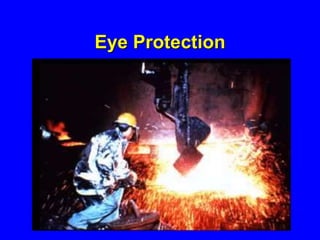
Eye Protection
What are some of the
causes of eye injuries?
• Dust and other flying particles, such as metal
shavings or sawdust
• Molten metal that might splash
• Acids and other caustic liquid chemicals that
might splash
• Blood and other potentially infectious body
fluids that might splash, spray, or splatter
• Intense light such as that created by welding
and lasers
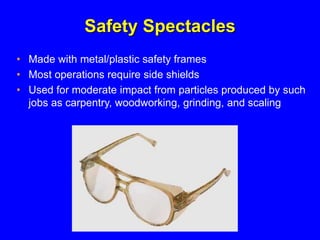
Safety Spectacles
• Made with metal/plastic safety frames
• Most operations require side shields
• Used for moderate impact from particles produced by such
jobs as carpentry, woodworking, grinding, and scaling
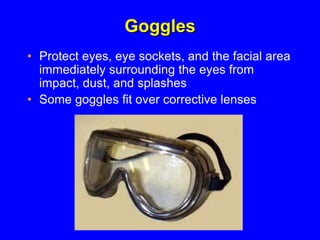
Goggles
• Protect eyes, eye sockets, and the facial area
immediately surrounding the eyes from
impact, dust, and splashes
• Some goggles fit over corrective lenses
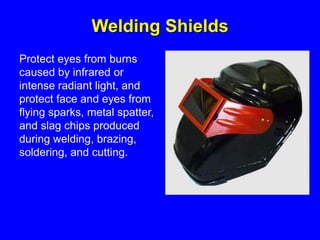
Welding Shields
Protect eyes from burns
caused by infrared or
intense radiant light, and
protect face and eyes from
flying sparks, metal spatter,
and slag chips produced
during welding, brazing,
soldering, and cutting.
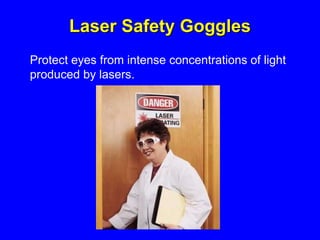
Laser Safety Goggles
Protect eyes from intense concentrations of light
produced by lasers.
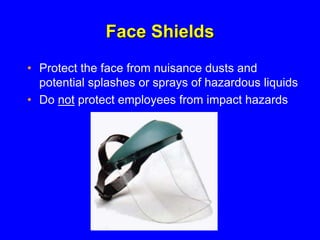
Face Shields
• Protect the face from nuisance dusts and
potential splashes or sprays of hazardous liquids
• Do not protect employees from impact hazards
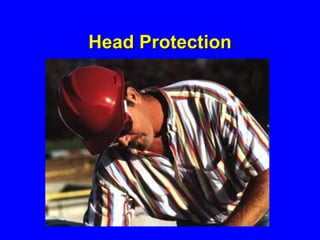
Head Protection
What are some of the
causes of head injuries?
• Falling objects
• Bumping head against fixed objects, such
as exposed pipes or beams
• Contact with exposed electrical conductors
Classes of Hard Hats
Class A
• General service (e.g., mining, building construction,
shipbuilding, lumbering, and manufacturing)
• Good impact protection but limited voltage protection
Class B
• Electrical work
• Protect against falling objects and high-voltage shock
and burns
Class C
• Designed for comfort, offer limited protection
• Protects heads that may bump against fixed objects,
but do not protect against falling objects or electrical
shock
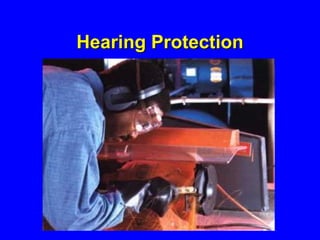
Hearing Protection
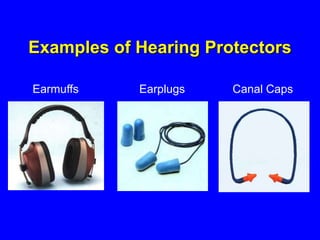
Earmuffs Earplugs Canal Caps
Examples of Hearing Protectors
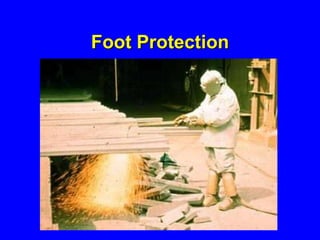
Foot Protection
What are some of the
causes of foot injuries?
• Heavy objects such as barrels or tools that
might roll onto or fall on employees’ feet
• Sharp objects such as nails or spikes that might
pierce the soles or uppers of ordinary shoes
• Molten metal that might splash on feet
• Hot or wet surfaces
• Slippery surfaces
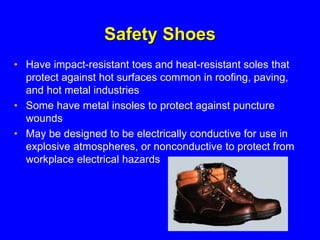
Safety Shoes
• Have impact-resistant toes and heat-resistant soles that
protect against hot surfaces common in roofing, paving,
and hot metal industries
• Some have metal insoles to protect against puncture
wounds
• May be designed to be electrically conductive for use in
explosive atmospheres, or nonconductive to protect from
workplace electrical hazards
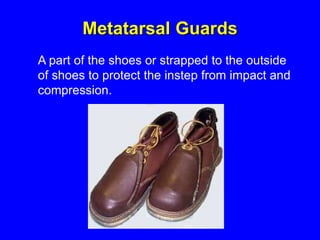
Metatarsal Guards
A part of the shoes or strapped to the outside
of shoes to protect the instep from impact and
compression.
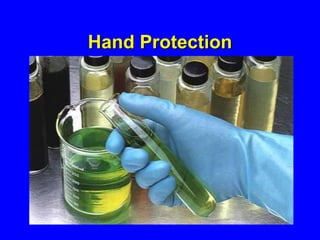
Hand Protection
What are some of the hand injuries
you need to guard against?
• Burns
• Bruises
• Abrasions
• Cuts
• Punctures
• Fractures
• Amputations
• Chemical Exposures
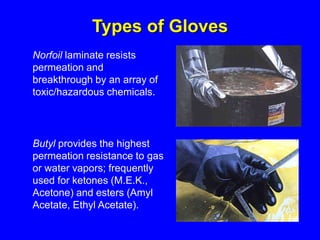
Norfoil laminate resists
permeation and
breakthrough by an array of
toxic/hazardous chemicals.
Butyl provides the highest
permeation resistance to gas
or water vapors; frequently
used for ketones (M.E.K.,
Acetone) and esters (Amyl
Acetate, Ethyl Acetate).
Types of Gloves
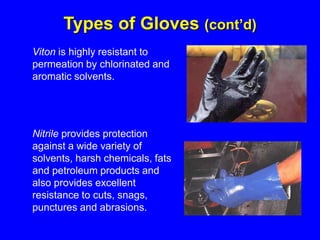
Viton is highly resistant to
permeation by chlorinated and
aromatic solvents.
Nitrile provides protection
against a wide variety of
solvents, harsh chemicals, fats
and petroleum products and
also provides excellent
resistance to cuts, snags,
punctures and abrasions.
Types of Gloves (cont’d)
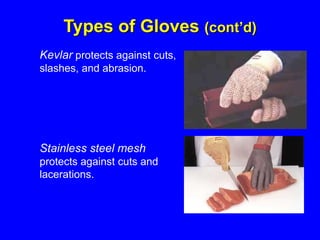
Kevlar protects against cuts,
slashes, and abrasion.
Stainless steel mesh
protects against cuts and
lacerations.
Types of Gloves (cont’d)
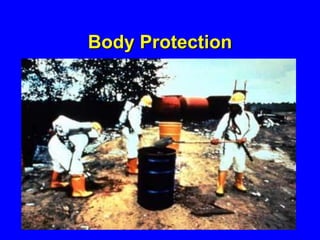
Body Protection
What are some of the
causes of body injuries?
• Intense heat
• Splashes of hot metals and other hot liquids
• Impacts from tools, machinery, and materials
• Cuts
• Hazardous chemicals
• Contact with potentially infectious materials,
like blood
• Radiation
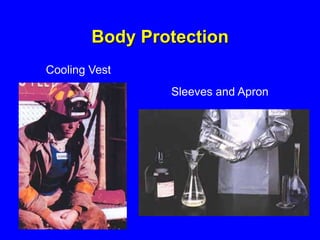
Cooling Vest
Sleeves and Apron
Body Protection
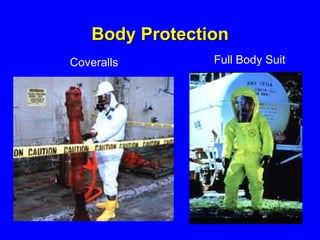
Coveralls Full Body Suit
Body Protection
Summary
• Assess the workplace for hazards
• Use engineering and work practice controls to eliminate
or reduce hazards before using PPE
• Select appropriate PPE to protect employees from
hazards that cannot be eliminated
• Inform employees why the PPE is necessary and when
it must be worn
• Train employees how to use and care for their PPE and
how to recognize deterioration and failure
• Require employees to wear selected PPE in the
workplace
Employers must implement a PPE program where they:

PPE_4.ppt

  • 1.
  • 2.
    Protecting Employees from WorkplaceHazards • Employers must protect employees from workplace hazards such as machines, hazardous substances, and dangerous work procedures that can cause injury • Employers must:  Use all feasible engineering and work practice controls to eliminate and reduce hazards  Then use appropriate personal protective equipment (PPE) if these controls do not eliminate the hazards. • Remember, PPE is the last level of control!
  • 3.
    Engineering Controls If .. . The machine or work environment can be physically changed to prevent employee exposure to the potential hazard, Then . . . The hazard can be eliminated with an engineering control.
  • 4.
    Engineering Controls (cont’d) •Initial design specifications • Substitute less harmful material • Change process • Enclose process • Isolate process • Ventilation Examples . . .
  • 5.
    Work Practice Controls If. . . Employees can be removed from exposure to the potential hazard by changing the way they do their jobs, Then . . . The hazard can be eliminated with a work practice control.
  • 6.
    Work Practice Controls(cont’d) • Use of wet methods to suppress dust • Personal hygiene • Housekeeping and maintenance • Job rotation of workers Examples . . .
  • 7.
    Examples of PPE •Eye - safety glasses, goggles • Face - face shields • Head - hard hats • Feet - safety shoes • Hands and arms - gloves • Bodies - vests • Hearing - earplugs, earmuffs
  • 8.
    Establishing a PPEProgram • Sets out procedures for selecting, providing and using PPE as part of an employer’s routine operation • First -- assess the workplace to determine if hazards are present, or are likely to be present, which necessitate the use of PPE • Once the proper PPE has been selected, the employer must provide training to each employee who is required to use PPE
  • 9.
    Training • When PPEis necessary • What type of PPE is necessary • How to properly put on, take off, adjust, and wear • Limitations of the PPE • Proper care, maintenance, useful life and disposal Employees required to use PPE must be trained to know at least the following:
  • 10.
  • 11.
    What are someof the causes of eye injuries? • Dust and other flying particles, such as metal shavings or sawdust • Molten metal that might splash • Acids and other caustic liquid chemicals that might splash • Blood and other potentially infectious body fluids that might splash, spray, or splatter • Intense light such as that created by welding and lasers
  • 12.
    Safety Spectacles • Madewith metal/plastic safety frames • Most operations require side shields • Used for moderate impact from particles produced by such jobs as carpentry, woodworking, grinding, and scaling
  • 13.
    Goggles • Protect eyes,eye sockets, and the facial area immediately surrounding the eyes from impact, dust, and splashes • Some goggles fit over corrective lenses
  • 14.
    Welding Shields Protect eyesfrom burns caused by infrared or intense radiant light, and protect face and eyes from flying sparks, metal spatter, and slag chips produced during welding, brazing, soldering, and cutting.
  • 15.
    Laser Safety Goggles Protecteyes from intense concentrations of light produced by lasers.
  • 16.
    Face Shields • Protectthe face from nuisance dusts and potential splashes or sprays of hazardous liquids • Do not protect employees from impact hazards
  • 17.
  • 18.
    What are someof the causes of head injuries? • Falling objects • Bumping head against fixed objects, such as exposed pipes or beams • Contact with exposed electrical conductors
  • 19.
    Classes of HardHats Class A • General service (e.g., mining, building construction, shipbuilding, lumbering, and manufacturing) • Good impact protection but limited voltage protection Class B • Electrical work • Protect against falling objects and high-voltage shock and burns Class C • Designed for comfort, offer limited protection • Protects heads that may bump against fixed objects, but do not protect against falling objects or electrical shock
  • 20.
  • 21.
    Earmuffs Earplugs CanalCaps Examples of Hearing Protectors
  • 22.
  • 23.
    What are someof the causes of foot injuries? • Heavy objects such as barrels or tools that might roll onto or fall on employees’ feet • Sharp objects such as nails or spikes that might pierce the soles or uppers of ordinary shoes • Molten metal that might splash on feet • Hot or wet surfaces • Slippery surfaces
  • 24.
    Safety Shoes • Haveimpact-resistant toes and heat-resistant soles that protect against hot surfaces common in roofing, paving, and hot metal industries • Some have metal insoles to protect against puncture wounds • May be designed to be electrically conductive for use in explosive atmospheres, or nonconductive to protect from workplace electrical hazards
  • 25.
    Metatarsal Guards A partof the shoes or strapped to the outside of shoes to protect the instep from impact and compression.
  • 26.
  • 27.
    What are someof the hand injuries you need to guard against? • Burns • Bruises • Abrasions • Cuts • Punctures • Fractures • Amputations • Chemical Exposures
  • 28.
    Norfoil laminate resists permeationand breakthrough by an array of toxic/hazardous chemicals. Butyl provides the highest permeation resistance to gas or water vapors; frequently used for ketones (M.E.K., Acetone) and esters (Amyl Acetate, Ethyl Acetate). Types of Gloves
  • 29.
    Viton is highlyresistant to permeation by chlorinated and aromatic solvents. Nitrile provides protection against a wide variety of solvents, harsh chemicals, fats and petroleum products and also provides excellent resistance to cuts, snags, punctures and abrasions. Types of Gloves (cont’d)
  • 30.
    Kevlar protects againstcuts, slashes, and abrasion. Stainless steel mesh protects against cuts and lacerations. Types of Gloves (cont’d)
  • 31.
  • 32.
    What are someof the causes of body injuries? • Intense heat • Splashes of hot metals and other hot liquids • Impacts from tools, machinery, and materials • Cuts • Hazardous chemicals • Contact with potentially infectious materials, like blood • Radiation
  • 33.
    Cooling Vest Sleeves andApron Body Protection
  • 34.
    Coveralls Full BodySuit Body Protection
  • 35.
    Summary • Assess theworkplace for hazards • Use engineering and work practice controls to eliminate or reduce hazards before using PPE • Select appropriate PPE to protect employees from hazards that cannot be eliminated • Inform employees why the PPE is necessary and when it must be worn • Train employees how to use and care for their PPE and how to recognize deterioration and failure • Require employees to wear selected PPE in the workplace Employers must implement a PPE program where they: