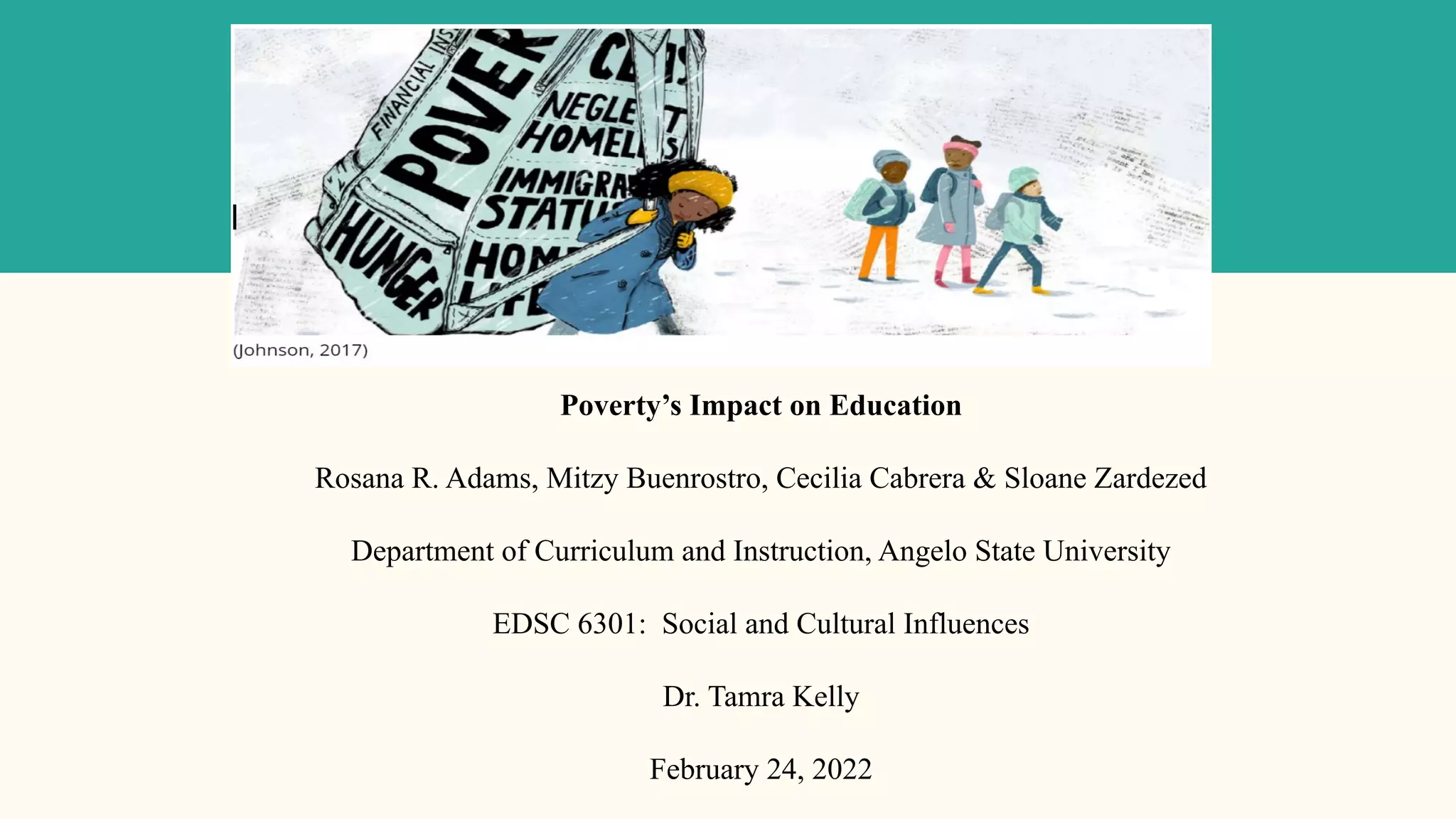
Poverty can negatively impact students' education in several ways. Living in poverty means having limited access to basic necessities like food, healthcare, and stable income which causes chronic stress that hinders learning. It is associated with worse academic performance, higher dropout rates, and lower rates of college enrollment. Educators can help by becoming more "poverty responsive" - recognizing student strengths, developing community partnerships, and teaching skills like language arts and study habits to promote academic success. While poverty reduction requires a long term, multi-faceted approach, schools can help mitigate its effects on children's education.