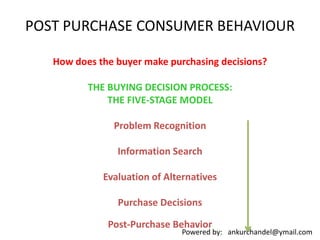
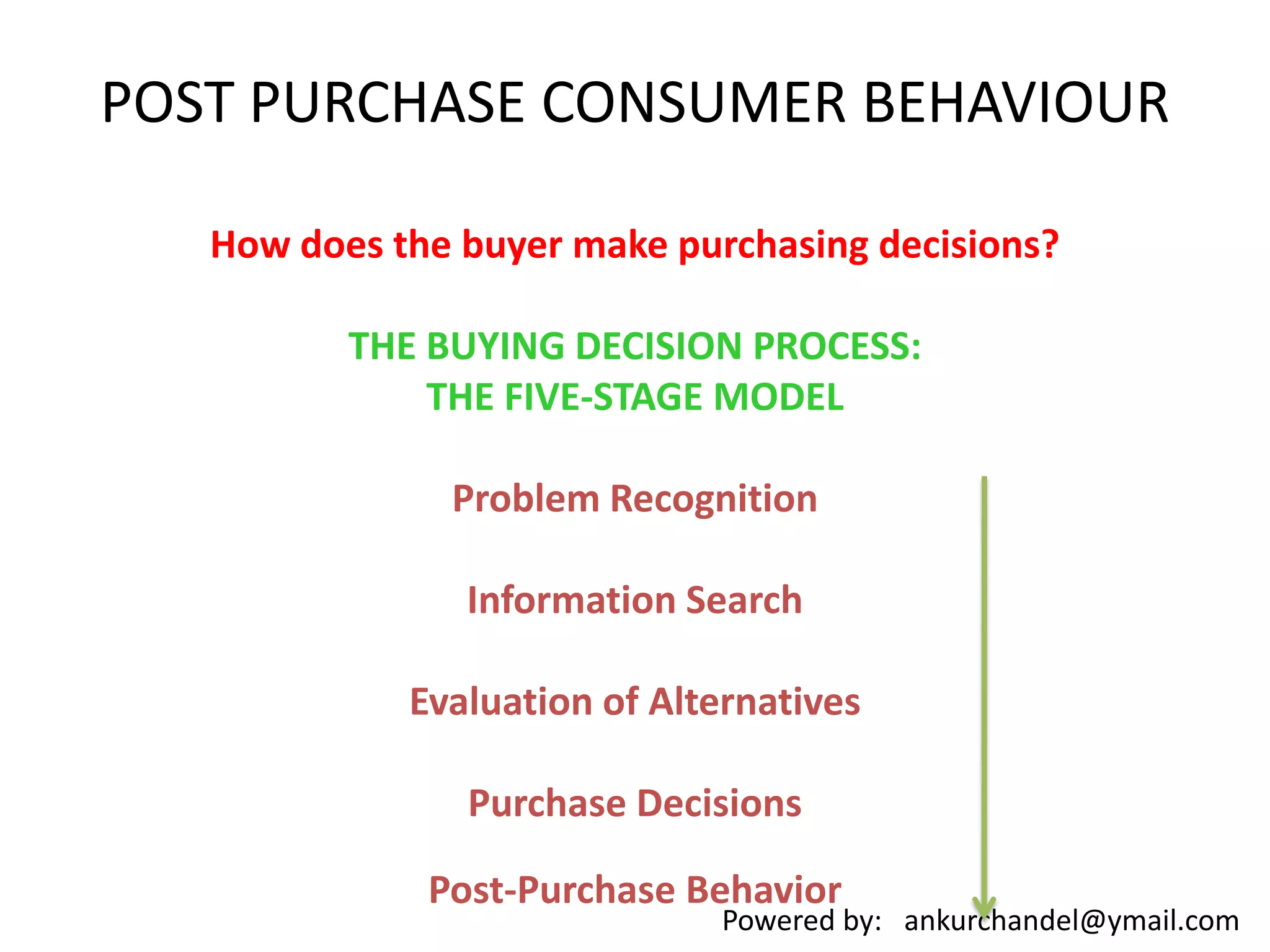
POST PURCHASE CONSUMER BEHAVIOURHow does the buyer make purchasing decisions? THE BUYING DECISION PROCESS: THE FIVE-STAGE MODELProblem RecognitionInformation SearchEvaluation of AlternativesPurchase DecisionsPost-Purchase Behavior
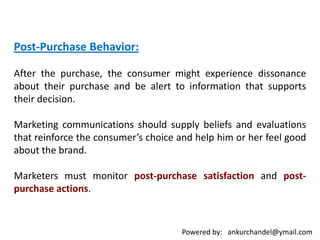
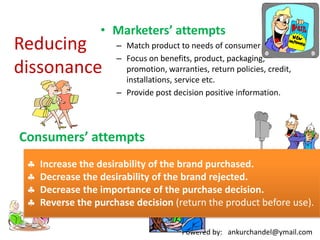
Post-Purchase Behavior:After the purchase, the consumer might experience dissonance about their purchase and be alert to information that supports their decision.Marketing communications should supply beliefs and evaluations that reinforce the consumer’s choice and help him or her feel good about the brand.Marketers must monitor post-purchase satisfaction and post-purchase actions.
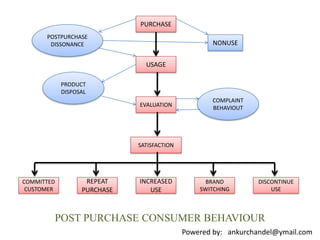
PURCHASEPOSTPURCHASE DISSONANCENONUSEUSAGEPRODUCT DISPOSALCOMPLAINT BEHAVIOUTEVALUATIONSATISFACTIONREPEATPURCHASEDISCONTINUEUSEBRANDSWITCHINGINCREASEDUSECOMMITTEDCUSTOMERPOST PURCHASE CONSUMER BEHAVIOUR
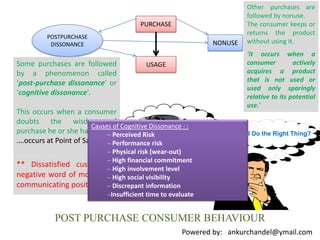
Other purchases are followed by nonuse.The consumer keeps or returns the product without using it.‘it occurs when a consumer actively acquires a product that is not used or used only sparingly relative to its potential use.’PURCHASEPOSTPURCHASE DISSONANCENONUSEUSAGESome purchases are followed by a phenomenon called ‘post-purchase dissonance’ or ‘cognitive dissonance’.This occurs when a consumer doubts the wisdom of purchase he or she has made.….occurs at Point of Sale….Causes of Cognitive Dissonance : :Perceived Risk
 Performance risk
 Physical risk (wear-out)
 High financial commitment
 High involvement level
 High social visibility
 Discrepant information
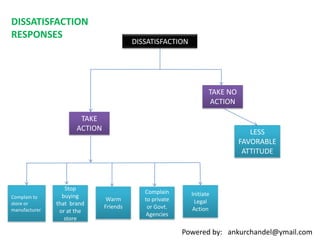
Insufficient time to evaluate  Did I Do the Right Thing?** Dissatisfied customers communicatemore negative word of mouth than satisfied customers communicating positive word of mouth.POST PURCHASE CONSUMER BEHAVIOUR
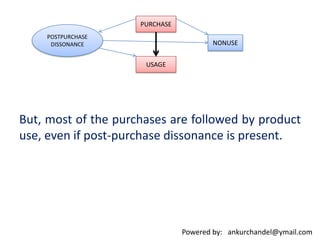
PURCHASEPOSTPURCHASE DISSONANCENONUSEUSAGEBut, most of the purchases are followed by product use, even if post-purchase dissonance is present.
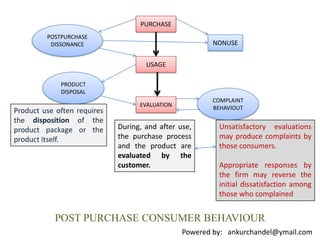
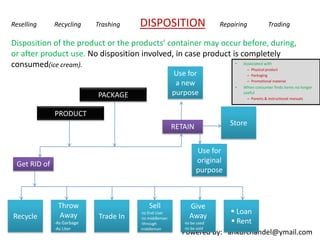
PURCHASEPOSTPURCHASE DISSONANCENONUSEUSAGEPRODUCT DISPOSALCOMPLAINT BEHAVIOUTEVALUATIONProduct use often requires the disposition of the product package or the product itself.During, and after use, the purchase process and the product are evaluated by the customer.Unsatisfactory evaluations may produce complaints by those consumers.Appropriate responses by the firm may reverse the initial dissatisfaction among those who complainedPOST PURCHASE CONSUMER BEHAVIOUR
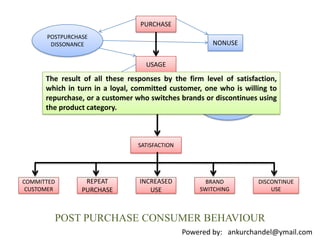
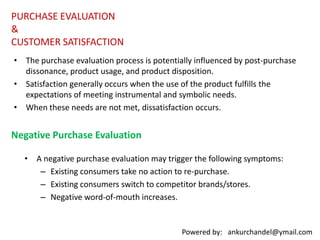
PURCHASEPOSTPURCHASE DISSONANCENONUSEUSAGEPRODUCT DISPOSALThe result of all these responses by the firm level of satisfaction, which in turn in a loyal, committed customer, one who is willing to repurchase, or a customer who switches brands or discontinues using the product category.COMPLAINT BEHAVIOUTEVALUATIONSATISFACTIONREPEATPURCHASEDISCONTINUEUSEBRANDSWITCHINGINCREASEDUSECOMMITTEDCUSTOMERPOST PURCHASE CONSUMER BEHAVIOUR
POST-PURCHASE DISSONANCEThis is a common consumer reaction after making a difficult, relatively permanent decision. Doubt or Anxiety – referred as - post-purchase dissonance.The probability of a consumer experiencing post-purchase dissonance, as well as the magnitude of such dissonance, is a function of :   Degree of commitment/irrevocability of the decision.
  Importance of decision to customer.

Post Purchase Consumer Behaviour

  • 1.
    POST PURCHASE CONSUMERBEHAVIOURHow does the buyer make purchasing decisions? THE BUYING DECISION PROCESS: THE FIVE-STAGE MODELProblem RecognitionInformation SearchEvaluation of AlternativesPurchase DecisionsPost-Purchase Behavior
  • 2.
    Post-Purchase Behavior:After thepurchase, the consumer might experience dissonance about their purchase and be alert to information that supports their decision.Marketing communications should supply beliefs and evaluations that reinforce the consumer’s choice and help him or her feel good about the brand.Marketers must monitor post-purchase satisfaction and post-purchase actions.
  • 3.
    PURCHASEPOSTPURCHASE DISSONANCENONUSEUSAGEPRODUCT DISPOSALCOMPLAINTBEHAVIOUTEVALUATIONSATISFACTIONREPEATPURCHASEDISCONTINUEUSEBRANDSWITCHINGINCREASEDUSECOMMITTEDCUSTOMERPOST PURCHASE CONSUMER BEHAVIOUR
  • 4.
    Other purchases arefollowed by nonuse.The consumer keeps or returns the product without using it.‘it occurs when a consumer actively acquires a product that is not used or used only sparingly relative to its potential use.’PURCHASEPOSTPURCHASE DISSONANCENONUSEUSAGESome purchases are followed by a phenomenon called ‘post-purchase dissonance’ or ‘cognitive dissonance’.This occurs when a consumer doubts the wisdom of purchase he or she has made.….occurs at Point of Sale….Causes of Cognitive Dissonance : :Perceived Risk
  • 5.
  • 6.
    Physical risk(wear-out)
  • 7.
    High financialcommitment
  • 8.
  • 9.
    High socialvisibility
  • 10.
  • 11.
    Insufficient time toevaluate Did I Do the Right Thing?** Dissatisfied customers communicatemore negative word of mouth than satisfied customers communicating positive word of mouth.POST PURCHASE CONSUMER BEHAVIOUR
  • 12.
    PURCHASEPOSTPURCHASE DISSONANCENONUSEUSAGEBut, mostof the purchases are followed by product use, even if post-purchase dissonance is present.
  • 13.
    PURCHASEPOSTPURCHASE DISSONANCENONUSEUSAGEPRODUCT DISPOSALCOMPLAINTBEHAVIOUTEVALUATIONProduct use often requires the disposition of the product package or the product itself.During, and after use, the purchase process and the product are evaluated by the customer.Unsatisfactory evaluations may produce complaints by those consumers.Appropriate responses by the firm may reverse the initial dissatisfaction among those who complainedPOST PURCHASE CONSUMER BEHAVIOUR
  • 14.
    PURCHASEPOSTPURCHASE DISSONANCENONUSEUSAGEPRODUCT DISPOSALTheresult of all these responses by the firm level of satisfaction, which in turn in a loyal, committed customer, one who is willing to repurchase, or a customer who switches brands or discontinues using the product category.COMPLAINT BEHAVIOUTEVALUATIONSATISFACTIONREPEATPURCHASEDISCONTINUEUSEBRANDSWITCHINGINCREASEDUSECOMMITTEDCUSTOMERPOST PURCHASE CONSUMER BEHAVIOUR
  • 15.
    POST-PURCHASE DISSONANCEThis isa common consumer reaction after making a difficult, relatively permanent decision. Doubt or Anxiety – referred as - post-purchase dissonance.The probability of a consumer experiencing post-purchase dissonance, as well as the magnitude of such dissonance, is a function of : Degree of commitment/irrevocability of the decision.
  • 16.
    Importanceof decision to customer.