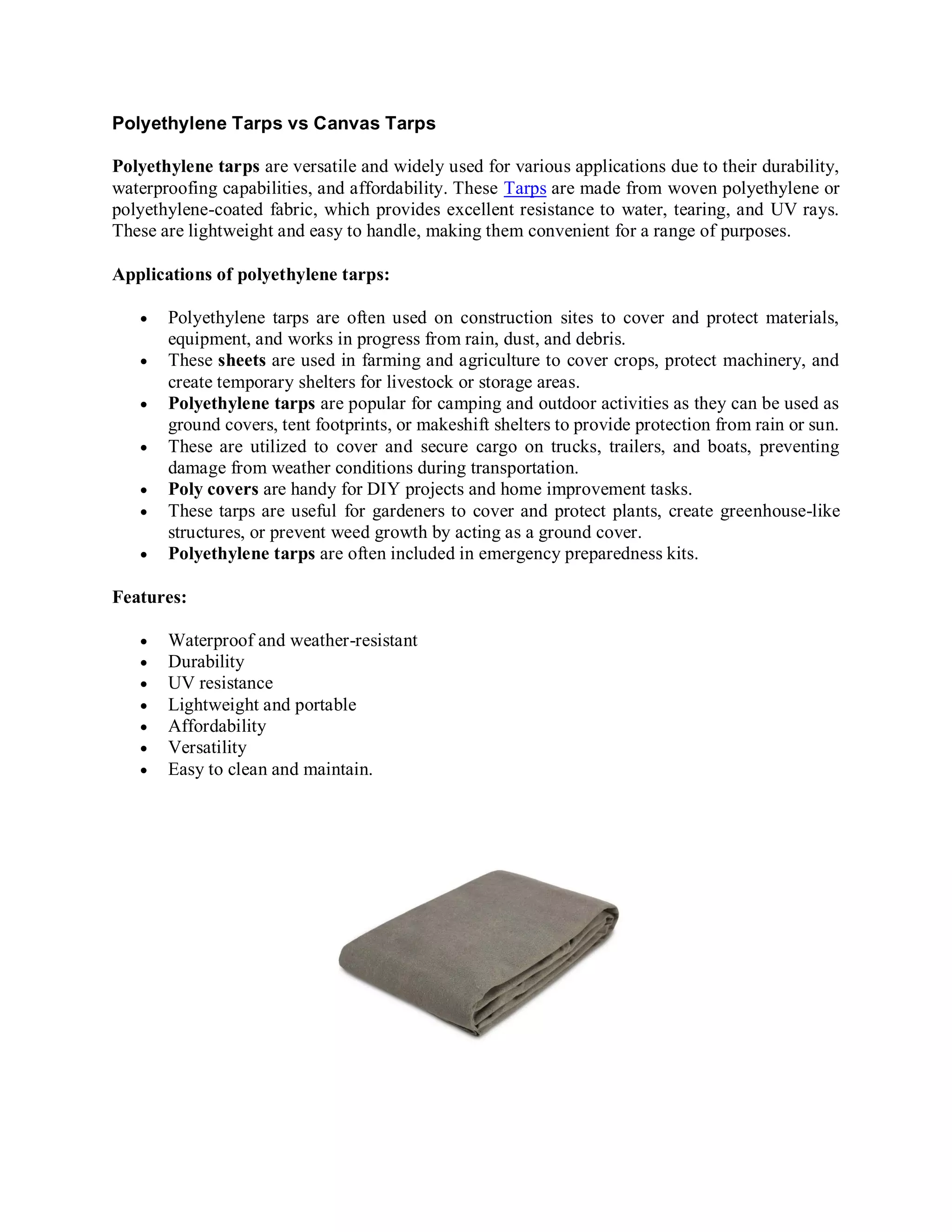
Polyethylene Tarps vs Canvas Tarps
Polyethylene tarps are versatile and widely used for various applications due to their durability,
waterproofing capabilities, and affordability. These Tarps are made from woven polyethylene or
polyethylene-coated fabric, which provides excellent resistance to water, tearing, and UV rays.
These are lightweight and easy to handle, making them convenient for a range of purposes.
Applications of polyethylene tarps:
 Polyethylene tarps are often used on construction sites to cover and protect materials,
equipment, and works in progress from rain, dust, and debris.
 These sheets are used in farming and agriculture to cover crops, protect machinery, and
create temporary shelters for livestock or storage areas.
 Polyethylene tarps are popular for camping and outdoor activities as they can be used as
ground covers, tent footprints, or makeshift shelters to provide protection from rain or sun.
 These are utilized to cover and secure cargo on trucks, trailers, and boats, preventing
damage from weather conditions during transportation.
 Poly covers are handy for DIY projects and home improvement tasks.
 These tarps are useful for gardeners to cover and protect plants, create greenhouse-like
structures, or prevent weed growth by acting as a ground cover.
 Polyethylene tarps are often included in emergency preparedness kits.
Features:
 Waterproof and weather-resistant
 Durability
 UV resistance
 Lightweight and portable
 Affordability
 Versatility
 Easy to clean and maintain.
Canvas Tarps:
Canvas Tarpaulin is highly regarded for their durability, breathability, and natural aesthetics. These
tarps are typically made from cotton or a cotton-polyester blend, offering a range of benefits for
various applications. Canvas tarps are known for their strength and ability to withstand heavy-
duty use, making them a popular choice in many industries.
 Canvas tarps are often used on construction sites to cover equipment, machinery, and
materials.
 These sheets are widely used in the transportation industry to secure and cover loads on
trucks and trailers. These covers offer protection against wind, rain, and other
environmental factors during transit.
 Canvas sheets are ideal for camping and outdoor activities due to their breathability and
natural aesthetics.
 These tarps find applications in the agricultural sector, where they are used to cover hay,
crops, and equipment.
 Canvas tarpaulins are commonly used by landscapers and gardeners for weed control,
mulching, and creating temporary shelters.
 Canvas tarps are favored by artists as drop cloths during painting projects. Their
heavyweight and absorbent nature makes them suitable for capturing spills and drips while
protecting floors and surfaces.
 These are versatile for various household applications.
Features:
 Durability and strength
 Breathability
 UV resistance
 Aesthetics
 Paint-friendly
 Long-lasting
 Customizability
Difference:
Polyethylene tarps and canvas tarps differ in their material composition, properties, and
applications. Polyethylene tarps are made from woven polyethylene or polyethylene-coated
fabric, offering excellent waterproofing, UV resistance, and affordability. These are lightweight,
durable, and commonly used in construction, agriculture, camping, and transportation. On the
other hand, canvas tarps are typically crafted from cotton or cotton-polyester blends, providing
breathability, natural aesthetics, and durability. Canvas tarpaulins are suitable for applications such
as construction, transportation, camping, and art, offering strength, breathability, and resistance to
wear and tear. While polyethylene tarps excel in waterproofing and UV resistance, Heavy Duty
Tarpaulins are valued for their breathability, longevity, and paint-friendly characteristics. The
choice between the two depends on specific needs, with polyethylene tarps being ideal for
weatherproofing and canvas tarps favored for their natural look and versatility.
Polyethylene Tarps vs Canvas Tarps.pdf

Polyethylene Tarps vs Canvas Tarps.pdf

  • 1.
    Polyethylene Tarps vsCanvas Tarps Polyethylene tarps are versatile and widely used for various applications due to their durability, waterproofing capabilities, and affordability. These Tarps are made from woven polyethylene or polyethylene-coated fabric, which provides excellent resistance to water, tearing, and UV rays. These are lightweight and easy to handle, making them convenient for a range of purposes. Applications of polyethylene tarps:  Polyethylene tarps are often used on construction sites to cover and protect materials, equipment, and works in progress from rain, dust, and debris.  These sheets are used in farming and agriculture to cover crops, protect machinery, and create temporary shelters for livestock or storage areas.  Polyethylene tarps are popular for camping and outdoor activities as they can be used as ground covers, tent footprints, or makeshift shelters to provide protection from rain or sun.  These are utilized to cover and secure cargo on trucks, trailers, and boats, preventing damage from weather conditions during transportation.  Poly covers are handy for DIY projects and home improvement tasks.  These tarps are useful for gardeners to cover and protect plants, create greenhouse-like structures, or prevent weed growth by acting as a ground cover.  Polyethylene tarps are often included in emergency preparedness kits. Features:  Waterproof and weather-resistant  Durability  UV resistance  Lightweight and portable  Affordability  Versatility  Easy to clean and maintain.
  • 2.
    Canvas Tarps: Canvas Tarpaulinis highly regarded for their durability, breathability, and natural aesthetics. These tarps are typically made from cotton or a cotton-polyester blend, offering a range of benefits for various applications. Canvas tarps are known for their strength and ability to withstand heavy- duty use, making them a popular choice in many industries.  Canvas tarps are often used on construction sites to cover equipment, machinery, and materials.  These sheets are widely used in the transportation industry to secure and cover loads on trucks and trailers. These covers offer protection against wind, rain, and other environmental factors during transit.  Canvas sheets are ideal for camping and outdoor activities due to their breathability and natural aesthetics.  These tarps find applications in the agricultural sector, where they are used to cover hay, crops, and equipment.  Canvas tarpaulins are commonly used by landscapers and gardeners for weed control, mulching, and creating temporary shelters.  Canvas tarps are favored by artists as drop cloths during painting projects. Their heavyweight and absorbent nature makes them suitable for capturing spills and drips while protecting floors and surfaces.  These are versatile for various household applications. Features:  Durability and strength  Breathability  UV resistance  Aesthetics  Paint-friendly  Long-lasting  Customizability Difference: Polyethylene tarps and canvas tarps differ in their material composition, properties, and applications. Polyethylene tarps are made from woven polyethylene or polyethylene-coated fabric, offering excellent waterproofing, UV resistance, and affordability. These are lightweight, durable, and commonly used in construction, agriculture, camping, and transportation. On the other hand, canvas tarps are typically crafted from cotton or cotton-polyester blends, providing breathability, natural aesthetics, and durability. Canvas tarpaulins are suitable for applications such as construction, transportation, camping, and art, offering strength, breathability, and resistance to wear and tear. While polyethylene tarps excel in waterproofing and UV resistance, Heavy Duty Tarpaulins are valued for their breathability, longevity, and paint-friendly characteristics. The choice between the two depends on specific needs, with polyethylene tarps being ideal for weatherproofing and canvas tarps favored for their natural look and versatility.