Polio eradication: Current status
and challenges
Guide- Dr. Meenakshi G.
Student- Dr. Swati P.
• When was polio eradicated?
• Polio incidence has dropped more than 99
percent since the launch of global polio
eradication efforts in 1988. According to
global polio surveillance data from March 9,
2016, 5 wild poliovirus cases were reported in
Pakistan and 1 wild poliovirus case was
reported in Afghanistan in 2016.
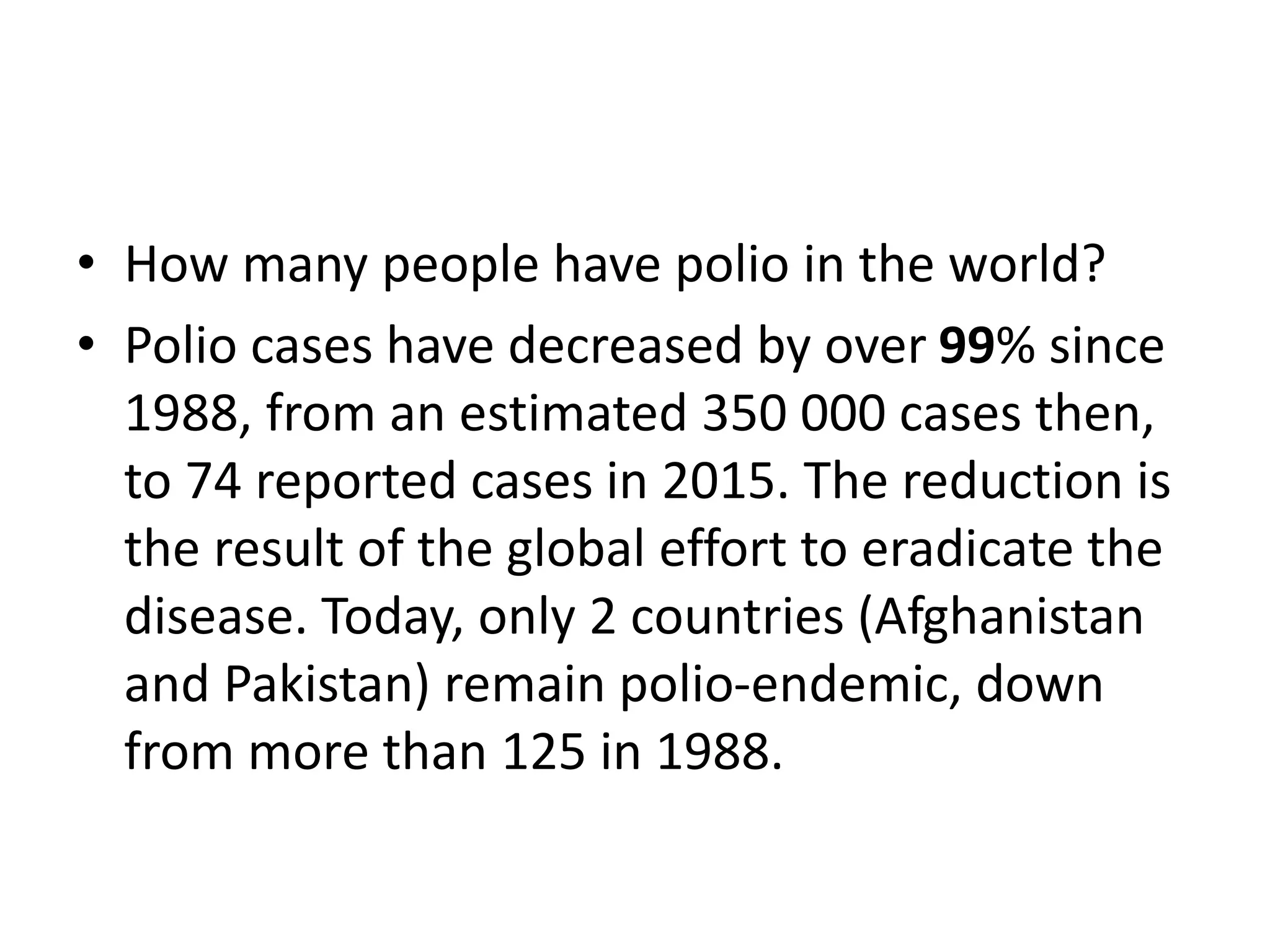
• How many people have polio in the world?
• Polio cases have decreased by over 99% since
1988, from an estimated 350 000 cases then,
to 74 reported cases in 2015. The reduction is
the result of the global effort to eradicate the
disease. Today, only 2 countries (Afghanistan
and Pakistan) remain polio-endemic, down
from more than 125 in 1988.
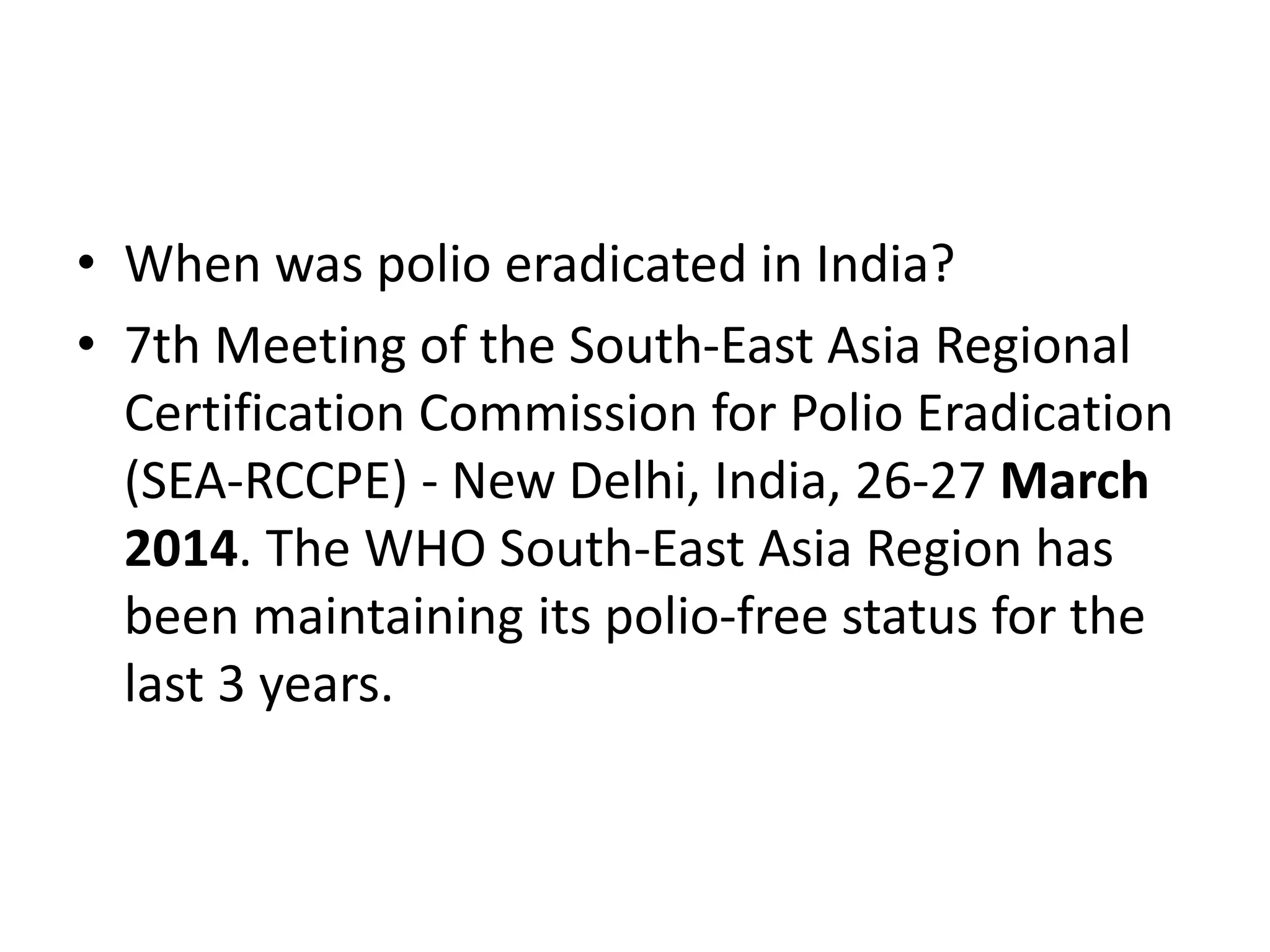
• When was polio eradicated in India?
• 7th Meeting of the South-East Asia Regional
Certification Commission for Polio Eradication
(SEA-RCCPE) - New Delhi, India, 26-27 March
2014. The WHO South-East Asia Region has
been maintaining its polio-free status for the
last 3 years.
• How many people have died from polio?
• In 1952, during the worst recorded
epidemic, 3,145 people, including 1,873
children, in the United States died from polio.
THE VIRUS
• Polio is caused by a human enterovirus called the poliovirus.
Polio can interact in its host in two ways:
• Infection not including the central nervous system, which
causes a minor illness with mild symptoms
• Infection including the central nervous system, which
may cause paralysis
• Less than 1% of poliovirus infections result in paralysis.
.
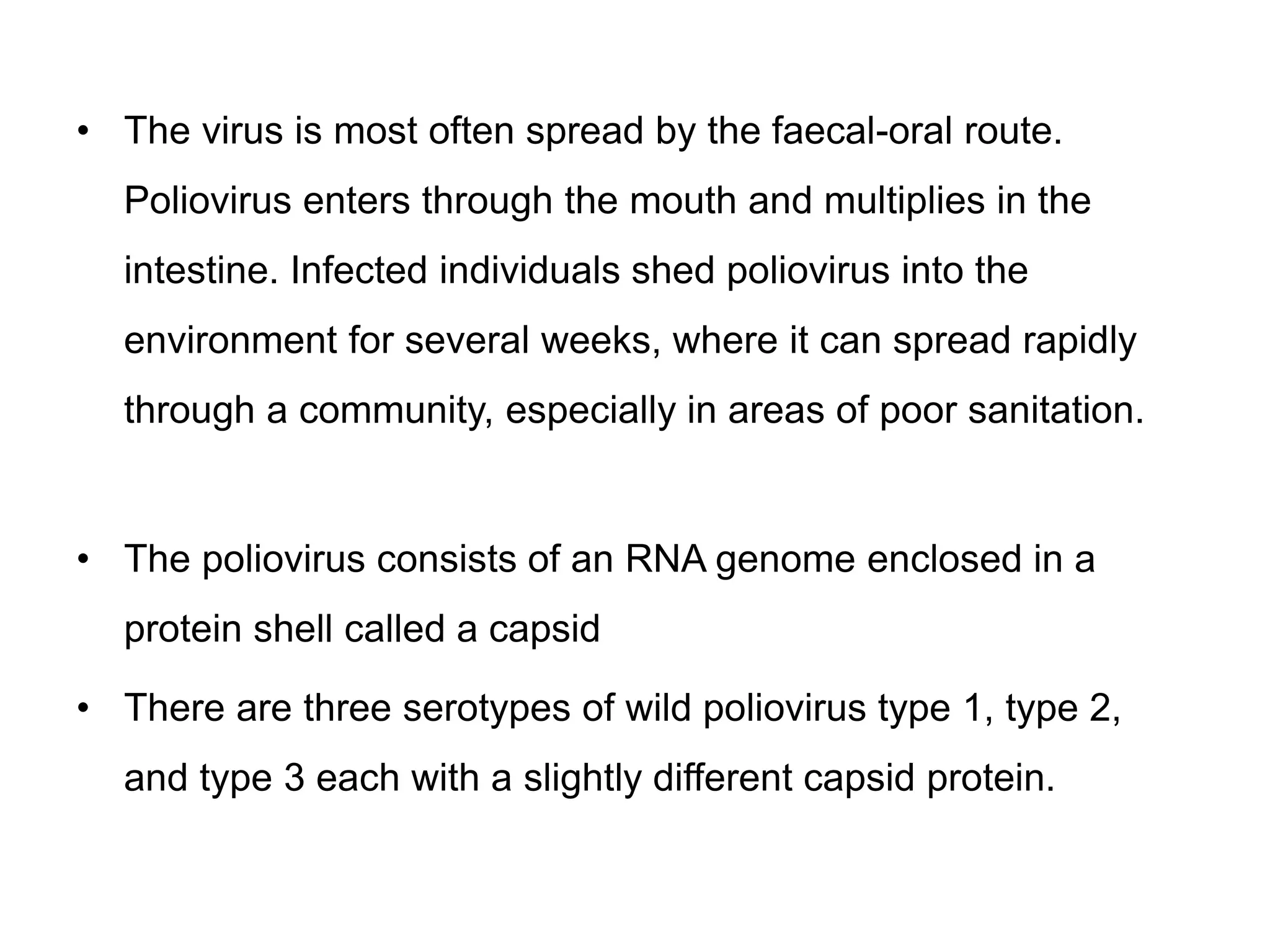
• The virus is most often spread by the faecal-oral route.
Poliovirus enters through the mouth and multiplies in the
intestine. Infected individuals shed poliovirus into the
environment for several weeks, where it can spread rapidly
through a community, especially in areas of poor sanitation.
• The poliovirus consists of an RNA genome enclosed in a
protein shell called a capsid
• There are three serotypes of wild poliovirus type 1, type 2,
and type 3 each with a slightly different capsid protein.
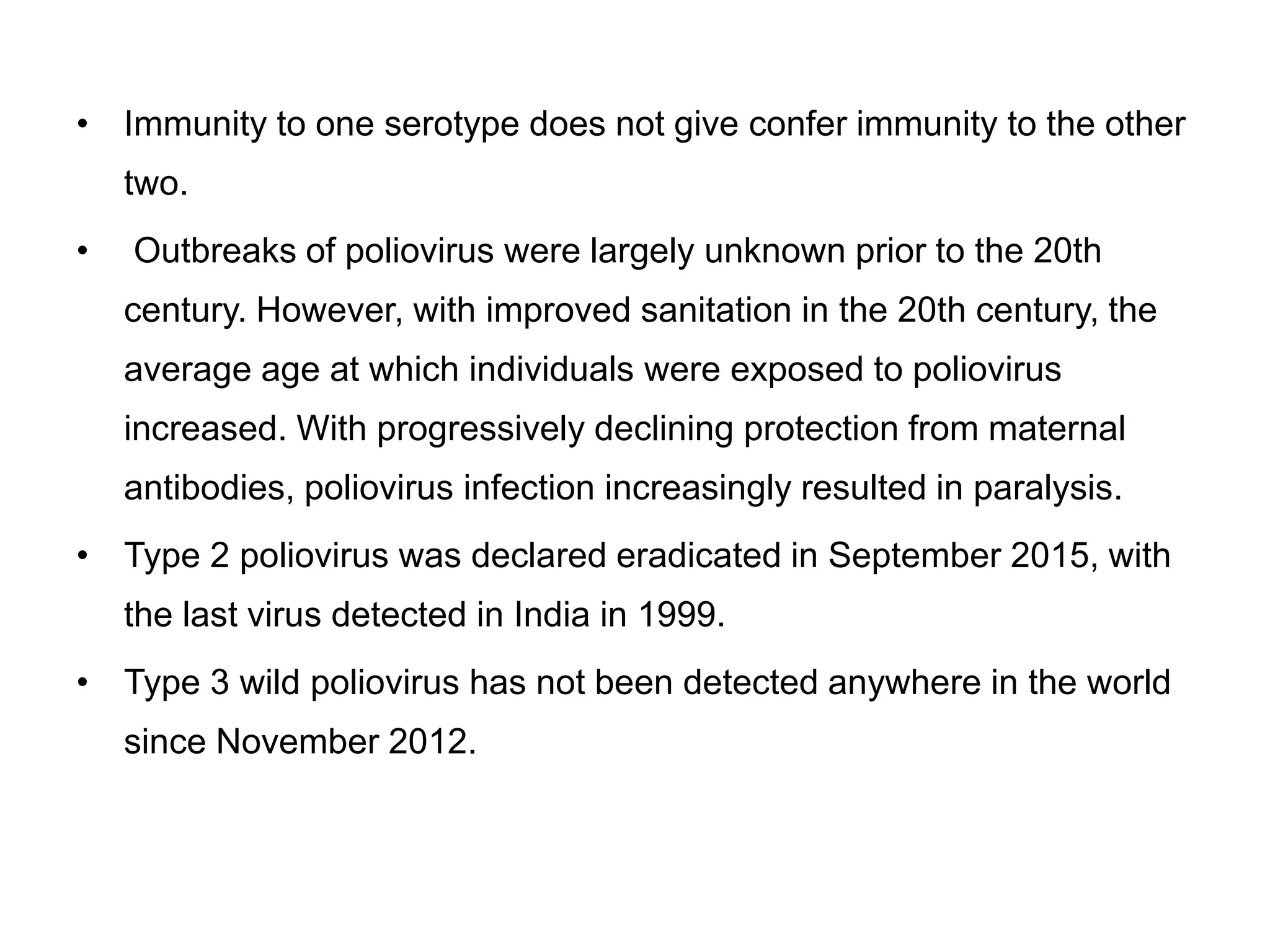
• Immunity to one serotype does not give confer immunity to the other
two.
• Outbreaks of poliovirus were largely unknown prior to the 20th
century. However, with improved sanitation in the 20th century, the
average age at which individuals were exposed to poliovirus
increased. With progressively declining protection from maternal
antibodies, poliovirus infection increasingly resulted in paralysis.
• Type 2 poliovirus was declared eradicated in September 2015, with
the last virus detected in India in 1999.
• Type 3 wild poliovirus has not been detected anywhere in the world
since November 2012.
• Testing for polioviruses
• All cases of acute flaccid paralysis (AFP) among children
under fifteen years of age are reported and tested for
wild poliovirus or vaccine-derived polioviruses within 48
hours of onset. AFP is caused by a range of factors. The
Global Polio Laboratory Network tests upwards of
100,000 AFP samples a year, of which a very small
portion are positive for poliovirus.
THE VACCINES
• The development of effective vaccines to prevent paralytic
polio was one of the major medical breakthroughs of the 20th
century.
• If enough people in a community are immunized, the virus will
be deprived of susceptible hosts and will die out.
• High levels of vaccination coverage must be maintained to
stop transmission and prevent outbreaks occurring.
• The Global Polio Eradication Initiative is constantly assessing
the optimal use of the different vaccines to prevent paralytic
polio and stop poliovirus transmission in different areas of the
world.
• . With the development and evaluation of
bivalent oral polio vaccine in 2009, the Global
Polio Eradication Initiative now has an armoury of
different vaccines to stop polio transmission:
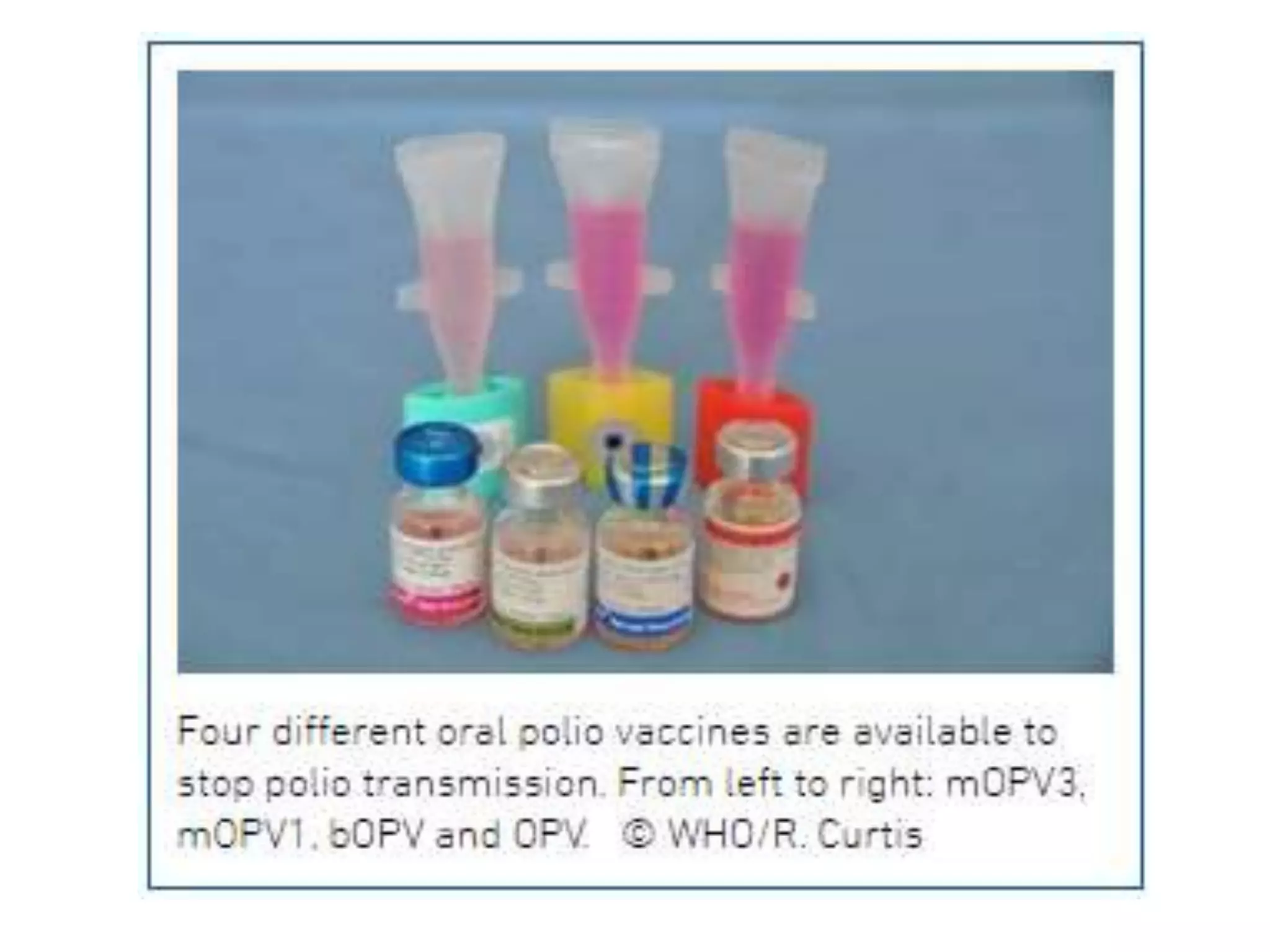
• Four different oral polio vaccines are available to
stop polio transmission. From left to right:
mOPV3, mOPV1, bOPV and OPV.
• Polio vaccine (OPV)
• Monovalent oral polio vaccines (mOPV1 and
mOPV3)
• Bivalent oral polio vaccine (bOPV)
• Inactivated polio vaccine (IPV)
OPV
• Oral poliovirus vaccines (OPV) are the predominant vaccine used in the
fight to eradicate polio.
• There are different types of oral poliovirus vaccine, which may contain one,
a combination of two, or all three different serotypes of attenuated vaccine.
• Each has their own advantages and disadvantages over the others.
• The attenuated poliovirus(es) contained in OPV are able to replicate
effectively in the intestine, but around 10,000 times less able to enter the
central nervous system than the wild virus. This enables individuals to
mount an immune response against the virus.
• Virtually all countries which have eradicated polio used OPV to interrupt
person to person transmission of the virus.
Advantages
• OPVs are all inexpensive (US $0.12-$0.18 for countries procuring through
UNICEF in 2016).
• OPVs are safe and effective and offer long lasting protection against the
serotype(s) which they target. OPV stimulates good mucosal immunity, which
is why it is so effective at interrupting transmission of the virus.
• OPVs are administered orally and do not require health professionals or sterile
needle syringes. As such, OPVs are easy to administer in mass vaccination
campaigns.
• For several weeks after vaccination the vaccine virus replicates in the intestine,
is excreted and can be spread to others in close contact. This means that in
areas with poor hygiene and sanitation, immunization with OPV can result in
‘passive’ immunization of people who have not been vaccinated.
Disadvantages
• In extremely rare cases (approx. 1 in every 2.7 million first doses of the
vaccine) the live attenuated vaccine-virus in OPV can cause paralysis.
• In some cases, it is believed that this may be triggered by an
immunodeficiency. The extremely low risk of vaccine-associated
paralytic poliomyelitis (VAPP) is well accepted by most public health
programmes.
• Very rarely, when there is insufficient coverage in a community the
vaccine-virus may be able to circulate, mutate and, over the course of
12 to 18 months, reacquire neurovirulence. This is known as a
circulating vaccine-derived poliovirus.
•
WORLD HEALTH ORGANIZATION (WHO) POSITION
STATEMENT SAFETY AND PRE-QUALIFICATION OF
ORAL POLIO VACCINE (OPV) May 2006
• OPV was developed in the 1950s and was approved for
use 40 years ago. Since 1988, over 10 billion doses of
pre-qualified OPV have been administered to children
worldwide during mass immunization campaigns, as part
of the global effort to eradicate polio. These campaigns
have reduced the number of polio cases worldwide
since1988 by 99%. The number of polio endemic
countries has been reduced from more than 125 in 1988
to just four at the beginning of 2006.
Monovalent oral poliovirus vaccine (mOPV)
• Prior to the development of tOPV, monovalent OPVs
(mOPVs) were developed in the early 1950s, but largely
dropped out of use upon the adoption of tOPV.
• It was not available at the time of the founding of GPEI in
1988.
• Monovalent oral polio vaccines confer immunity to just one of
the three serotypes of OPV.
• They are more successful in conferring immunity to the
serotype targeted than tOPV, but do not provide protection to
the other two types.
• because of successful action taken by the GPEI
Monovalent OPVs for type 1 (mOPV1) and type 3
(mOPV3) poliovirus were licensed again in 2005.
• They elicit the best immune response against the
serotype they target of all the vaccines.
• Monovalent OPV type 2 (mOPV2) has been stockpiled in
the event of a cVDPV2 outbreak.
Bivalent oral poliovirus vaccine (bOPV)
• Following April 2016, the trivalent oral poliovirus vaccine
was replaced with the bivalent oral poliovirus vaccine
(bOPV) in routine immunization around the world.
• Bivalent OPV contains only attenuated virus of serotypes
1 and 3, in the same number as in the trivalent vaccine.
• Bivalent OPV elicits a better immune response against
poliovirus types 1 and 3 than trivalent OPV, but does not
give immunity against serotype 2.
Trivalent oral poliovirus vaccine (tOPV)
• Prior to April 2016, the trivalent oral poliovirus vaccine (tOPV) was the
predominant vaccine used for routine immunization against poliovirus.
• Developed in the 1950s by Albert Sabin, tOPV consists of a mixture of
live, attenuated polioviruses of all three serotypes. Also called the
‘Sabin vaccine’, tOPV is inexpensive and effective, and offers long
lasting protection to all three serotypes of poliovirus.
• The trivalent vaccine was withdrawn in April 2016 and replaced with the
bivalent oral poliovirus vaccine (bOPV), which contains only attenuated
virus of types 1 and 3 because continued use of tOPV threatened to
continue seeding new type 2 circulating vaccine-derived polioviruses
(cVDPV2), despite the wild type 2 virus being eradicated in 1999.
• Statement of the 11th IHR Emergency
Committee regarding the international
spread of poliovirus
• WHO statement
11 November 2016
SURVEILLANCE INDICATORS
Acute Flaccid Paralysis (AFP) Surveillance
• Nationwide AFP (acute flaccid paralysis) surveillance is the
gold standard for detecting cases of poliomyelitis.
• The four steps of surveillance are:
1. finding and reporting children with acute flaccid paralysis
(AFP)
2. transporting stool samples for analysis
3. isolating and identifying poliovirus in the laboratory
4. mapping the virus to determine the origin of the virus strain.
Environmental Surveillance
• Environmental surveillance involves testing sewage or other
environmental samples for the presence of poliovirus.
• Environmental surveillance often confirms wild poliovirus
infections in the absence of cases of paralysis.
• Systematic environmental sampling (e.g. in Egypt and
Mumbai, India) provides important supplementary surveillance
data.
• environmental surveillance elsewhere (especially in polio-free
regions) provides insights into the international spread of
poliovirus.
Surveillance Indicators
Indicator Minimum levels for certification standard surveillance
Completeness of
reporting
At least 80% of expected routine (weekly or monthly) AFP
surveillance reports should be received on time, including
zero reports where no AFP cases are seen. The distribution
of reporting sites should be representative of the geography
and demography of the country
Sensitivity of
surveillance
At least one case of non-polio AFP should be detected
annually per 100 000 population aged less than 15 years. In
endemic regions, to ensure even higher sensitivity, this rate
should be two per 100 000.
Completeness of
case
investigation
All AFP cases should have a full clinical and virological
investigation with at least 80% of AFP cases having
‘adequate’ stool specimens collected. ‘Adequate’ stool
specimens are two stool specimens of sufficient quantity for
laboratory analysis, collected at least 24 hours apart, within
14 days after the onset of paralysis, and arriving in the
laboratory by reverse cold chain and with proper
documentation.
Indicator Minimum levels for certification standard
surveillance
Completeness of
follow-up
At least 80% of AFP cases should have a
follow-up examination for residual paralysis at
60 days after the onset of paralysis
Laboratory
performance
All AFP case specimens must be processed in
a WHO-accredited laboratory within the Global
Polio Laboratory Network (GPLN)
• Polio this week 1 feb 2017:
• The Executive Board of the World Health Organization at its
meeting in Geneva last week noted that the world is closer
than ever to being polio-free, and urged for increased support
to the remaining endemic countries.
• At the same time, ministries commended efforts made on
containment and to manage an ongoing global inactivated
polio vaccine (IPV) supply constraint.
• The Board also encouraged plans to transition the polio
infrastructure for the long-term, to ensure it continues to
benefit broader public health efforts even after the disease is
gone.
• To this effect, the Board adopted a ‘decision’, requesting
the GPEI to present a strategic roadmap towards polio
transition and the development of a post-certification
strategy at the May World Health Assembly.
• Closing the discussion, Rotary International addressed
the ministries with a clear call to action: “We must protect
the gains. An additional US$1.3 billion is needed through
2019. Together, we can end polio and forever build a
better future for all children.”
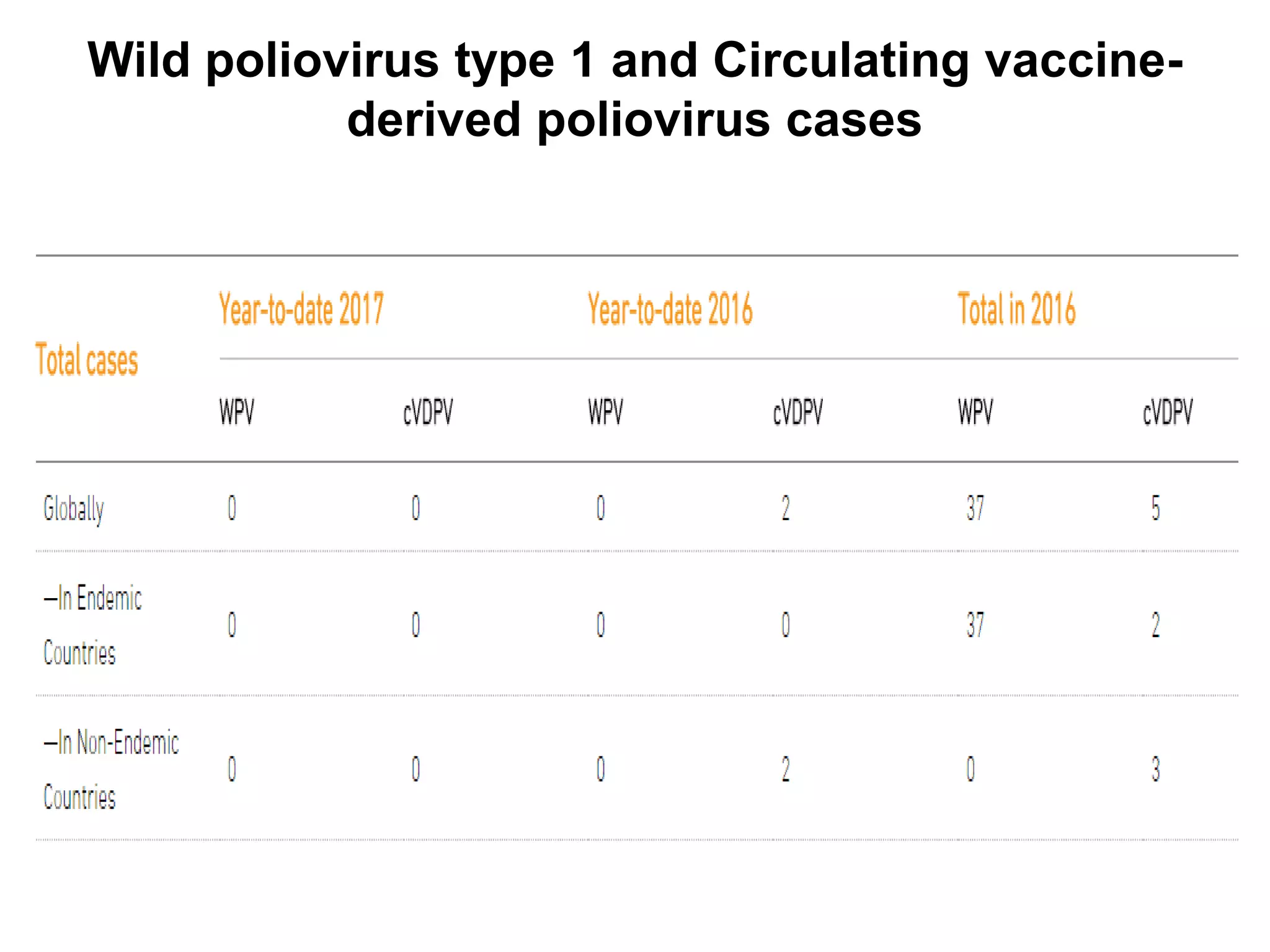
Wild poliovirus type 1 and Circulating vaccine-
derived poliovirus cases
Case breakdown by country
OUTBREAK PREPAREDNESS &
RESPONSE
• To reach the goal of eradication, the GPEI partnership
works tirelessly to strengthen surveillance, improve
immunisation activities and ensure a rapid and effective
response to any polio virus emergence.
• This work is essential to stop transmission and
eradicate both wild polio virus (WPV) and vaccine-
derived polio virus (VDPV) from the world.
• There are 3 strains of the WPV, type 1, type 2 and type
3.
• Type 2 has already been eradicated.
• Type 3 hasn’t been seen in the world since 2012 and
type1 remains only in three endemic
countries, Afghanistan, Nigeria and Pakistan.
• VDPVs also occur in three types, like WPV.
• The emergence of a VDPV of any type only occurs in
populations where not enough children are vaccinated.
• The live weakened virus from the oral polio vaccine
(OPV) can circulate in an under immunised population
through unvaccinated children.
• In very rare occasions with prolonged circulation the
virus can genetically change into a form that can cause
paralysis, just like WPV.
• If a population is fully immunized against polio it will be
protected against the spread of both WPV and VDPV.
Thank you…

Polio eradication

  • 1.
    Polio eradication: Currentstatus and challenges Guide- Dr. Meenakshi G. Student- Dr. Swati P.
  • 2.
    • When waspolio eradicated? • Polio incidence has dropped more than 99 percent since the launch of global polio eradication efforts in 1988. According to global polio surveillance data from March 9, 2016, 5 wild poliovirus cases were reported in Pakistan and 1 wild poliovirus case was reported in Afghanistan in 2016.
  • 3.
    • How manypeople have polio in the world? • Polio cases have decreased by over 99% since 1988, from an estimated 350 000 cases then, to 74 reported cases in 2015. The reduction is the result of the global effort to eradicate the disease. Today, only 2 countries (Afghanistan and Pakistan) remain polio-endemic, down from more than 125 in 1988.
  • 4.
    • When waspolio eradicated in India? • 7th Meeting of the South-East Asia Regional Certification Commission for Polio Eradication (SEA-RCCPE) - New Delhi, India, 26-27 March 2014. The WHO South-East Asia Region has been maintaining its polio-free status for the last 3 years.
  • 5.
    • How manypeople have died from polio? • In 1952, during the worst recorded epidemic, 3,145 people, including 1,873 children, in the United States died from polio.
  • 6.
    THE VIRUS • Poliois caused by a human enterovirus called the poliovirus. Polio can interact in its host in two ways: • Infection not including the central nervous system, which causes a minor illness with mild symptoms • Infection including the central nervous system, which may cause paralysis • Less than 1% of poliovirus infections result in paralysis. .
  • 7.
    • The virusis most often spread by the faecal-oral route. Poliovirus enters through the mouth and multiplies in the intestine. Infected individuals shed poliovirus into the environment for several weeks, where it can spread rapidly through a community, especially in areas of poor sanitation. • The poliovirus consists of an RNA genome enclosed in a protein shell called a capsid • There are three serotypes of wild poliovirus type 1, type 2, and type 3 each with a slightly different capsid protein.
  • 8.
    • Immunity toone serotype does not give confer immunity to the other two. • Outbreaks of poliovirus were largely unknown prior to the 20th century. However, with improved sanitation in the 20th century, the average age at which individuals were exposed to poliovirus increased. With progressively declining protection from maternal antibodies, poliovirus infection increasingly resulted in paralysis. • Type 2 poliovirus was declared eradicated in September 2015, with the last virus detected in India in 1999. • Type 3 wild poliovirus has not been detected anywhere in the world since November 2012.
  • 9.
    • Testing forpolioviruses • All cases of acute flaccid paralysis (AFP) among children under fifteen years of age are reported and tested for wild poliovirus or vaccine-derived polioviruses within 48 hours of onset. AFP is caused by a range of factors. The Global Polio Laboratory Network tests upwards of 100,000 AFP samples a year, of which a very small portion are positive for poliovirus.
  • 10.
    THE VACCINES • Thedevelopment of effective vaccines to prevent paralytic polio was one of the major medical breakthroughs of the 20th century. • If enough people in a community are immunized, the virus will be deprived of susceptible hosts and will die out. • High levels of vaccination coverage must be maintained to stop transmission and prevent outbreaks occurring. • The Global Polio Eradication Initiative is constantly assessing the optimal use of the different vaccines to prevent paralytic polio and stop poliovirus transmission in different areas of the world.
  • 11.
    • . Withthe development and evaluation of bivalent oral polio vaccine in 2009, the Global Polio Eradication Initiative now has an armoury of different vaccines to stop polio transmission: • Four different oral polio vaccines are available to stop polio transmission. From left to right: mOPV3, mOPV1, bOPV and OPV. • Polio vaccine (OPV) • Monovalent oral polio vaccines (mOPV1 and mOPV3) • Bivalent oral polio vaccine (bOPV) • Inactivated polio vaccine (IPV)
  • 13.
    OPV • Oral poliovirusvaccines (OPV) are the predominant vaccine used in the fight to eradicate polio. • There are different types of oral poliovirus vaccine, which may contain one, a combination of two, or all three different serotypes of attenuated vaccine. • Each has their own advantages and disadvantages over the others. • The attenuated poliovirus(es) contained in OPV are able to replicate effectively in the intestine, but around 10,000 times less able to enter the central nervous system than the wild virus. This enables individuals to mount an immune response against the virus. • Virtually all countries which have eradicated polio used OPV to interrupt person to person transmission of the virus.
  • 14.
    Advantages • OPVs areall inexpensive (US $0.12-$0.18 for countries procuring through UNICEF in 2016). • OPVs are safe and effective and offer long lasting protection against the serotype(s) which they target. OPV stimulates good mucosal immunity, which is why it is so effective at interrupting transmission of the virus. • OPVs are administered orally and do not require health professionals or sterile needle syringes. As such, OPVs are easy to administer in mass vaccination campaigns. • For several weeks after vaccination the vaccine virus replicates in the intestine, is excreted and can be spread to others in close contact. This means that in areas with poor hygiene and sanitation, immunization with OPV can result in ‘passive’ immunization of people who have not been vaccinated.
  • 15.
    Disadvantages • In extremelyrare cases (approx. 1 in every 2.7 million first doses of the vaccine) the live attenuated vaccine-virus in OPV can cause paralysis. • In some cases, it is believed that this may be triggered by an immunodeficiency. The extremely low risk of vaccine-associated paralytic poliomyelitis (VAPP) is well accepted by most public health programmes. • Very rarely, when there is insufficient coverage in a community the vaccine-virus may be able to circulate, mutate and, over the course of 12 to 18 months, reacquire neurovirulence. This is known as a circulating vaccine-derived poliovirus. •
  • 16.
    WORLD HEALTH ORGANIZATION(WHO) POSITION STATEMENT SAFETY AND PRE-QUALIFICATION OF ORAL POLIO VACCINE (OPV) May 2006 • OPV was developed in the 1950s and was approved for use 40 years ago. Since 1988, over 10 billion doses of pre-qualified OPV have been administered to children worldwide during mass immunization campaigns, as part of the global effort to eradicate polio. These campaigns have reduced the number of polio cases worldwide since1988 by 99%. The number of polio endemic countries has been reduced from more than 125 in 1988 to just four at the beginning of 2006.
  • 17.
    Monovalent oral poliovirusvaccine (mOPV) • Prior to the development of tOPV, monovalent OPVs (mOPVs) were developed in the early 1950s, but largely dropped out of use upon the adoption of tOPV. • It was not available at the time of the founding of GPEI in 1988. • Monovalent oral polio vaccines confer immunity to just one of the three serotypes of OPV. • They are more successful in conferring immunity to the serotype targeted than tOPV, but do not provide protection to the other two types.
  • 18.
    • because ofsuccessful action taken by the GPEI Monovalent OPVs for type 1 (mOPV1) and type 3 (mOPV3) poliovirus were licensed again in 2005. • They elicit the best immune response against the serotype they target of all the vaccines. • Monovalent OPV type 2 (mOPV2) has been stockpiled in the event of a cVDPV2 outbreak.
  • 19.
    Bivalent oral poliovirusvaccine (bOPV) • Following April 2016, the trivalent oral poliovirus vaccine was replaced with the bivalent oral poliovirus vaccine (bOPV) in routine immunization around the world. • Bivalent OPV contains only attenuated virus of serotypes 1 and 3, in the same number as in the trivalent vaccine. • Bivalent OPV elicits a better immune response against poliovirus types 1 and 3 than trivalent OPV, but does not give immunity against serotype 2.
  • 20.
    Trivalent oral poliovirusvaccine (tOPV) • Prior to April 2016, the trivalent oral poliovirus vaccine (tOPV) was the predominant vaccine used for routine immunization against poliovirus. • Developed in the 1950s by Albert Sabin, tOPV consists of a mixture of live, attenuated polioviruses of all three serotypes. Also called the ‘Sabin vaccine’, tOPV is inexpensive and effective, and offers long lasting protection to all three serotypes of poliovirus. • The trivalent vaccine was withdrawn in April 2016 and replaced with the bivalent oral poliovirus vaccine (bOPV), which contains only attenuated virus of types 1 and 3 because continued use of tOPV threatened to continue seeding new type 2 circulating vaccine-derived polioviruses (cVDPV2), despite the wild type 2 virus being eradicated in 1999.
  • 21.
    • Statement ofthe 11th IHR Emergency Committee regarding the international spread of poliovirus • WHO statement 11 November 2016
  • 22.
    SURVEILLANCE INDICATORS Acute FlaccidParalysis (AFP) Surveillance • Nationwide AFP (acute flaccid paralysis) surveillance is the gold standard for detecting cases of poliomyelitis. • The four steps of surveillance are: 1. finding and reporting children with acute flaccid paralysis (AFP) 2. transporting stool samples for analysis 3. isolating and identifying poliovirus in the laboratory 4. mapping the virus to determine the origin of the virus strain.
  • 23.
    Environmental Surveillance • Environmentalsurveillance involves testing sewage or other environmental samples for the presence of poliovirus. • Environmental surveillance often confirms wild poliovirus infections in the absence of cases of paralysis. • Systematic environmental sampling (e.g. in Egypt and Mumbai, India) provides important supplementary surveillance data. • environmental surveillance elsewhere (especially in polio-free regions) provides insights into the international spread of poliovirus.
  • 24.
    Surveillance Indicators Indicator Minimumlevels for certification standard surveillance Completeness of reporting At least 80% of expected routine (weekly or monthly) AFP surveillance reports should be received on time, including zero reports where no AFP cases are seen. The distribution of reporting sites should be representative of the geography and demography of the country Sensitivity of surveillance At least one case of non-polio AFP should be detected annually per 100 000 population aged less than 15 years. In endemic regions, to ensure even higher sensitivity, this rate should be two per 100 000. Completeness of case investigation All AFP cases should have a full clinical and virological investigation with at least 80% of AFP cases having ‘adequate’ stool specimens collected. ‘Adequate’ stool specimens are two stool specimens of sufficient quantity for laboratory analysis, collected at least 24 hours apart, within 14 days after the onset of paralysis, and arriving in the laboratory by reverse cold chain and with proper documentation.
  • 25.
    Indicator Minimum levelsfor certification standard surveillance Completeness of follow-up At least 80% of AFP cases should have a follow-up examination for residual paralysis at 60 days after the onset of paralysis Laboratory performance All AFP case specimens must be processed in a WHO-accredited laboratory within the Global Polio Laboratory Network (GPLN)
  • 26.
    • Polio thisweek 1 feb 2017: • The Executive Board of the World Health Organization at its meeting in Geneva last week noted that the world is closer than ever to being polio-free, and urged for increased support to the remaining endemic countries. • At the same time, ministries commended efforts made on containment and to manage an ongoing global inactivated polio vaccine (IPV) supply constraint. • The Board also encouraged plans to transition the polio infrastructure for the long-term, to ensure it continues to benefit broader public health efforts even after the disease is gone.
  • 27.
    • To thiseffect, the Board adopted a ‘decision’, requesting the GPEI to present a strategic roadmap towards polio transition and the development of a post-certification strategy at the May World Health Assembly. • Closing the discussion, Rotary International addressed the ministries with a clear call to action: “We must protect the gains. An additional US$1.3 billion is needed through 2019. Together, we can end polio and forever build a better future for all children.”
  • 28.
    Wild poliovirus type1 and Circulating vaccine- derived poliovirus cases
  • 29.
  • 30.
    OUTBREAK PREPAREDNESS & RESPONSE •To reach the goal of eradication, the GPEI partnership works tirelessly to strengthen surveillance, improve immunisation activities and ensure a rapid and effective response to any polio virus emergence. • This work is essential to stop transmission and eradicate both wild polio virus (WPV) and vaccine- derived polio virus (VDPV) from the world. • There are 3 strains of the WPV, type 1, type 2 and type 3. • Type 2 has already been eradicated. • Type 3 hasn’t been seen in the world since 2012 and type1 remains only in three endemic countries, Afghanistan, Nigeria and Pakistan.
  • 31.
    • VDPVs alsooccur in three types, like WPV. • The emergence of a VDPV of any type only occurs in populations where not enough children are vaccinated. • The live weakened virus from the oral polio vaccine (OPV) can circulate in an under immunised population through unvaccinated children. • In very rare occasions with prolonged circulation the virus can genetically change into a form that can cause paralysis, just like WPV. • If a population is fully immunized against polio it will be protected against the spread of both WPV and VDPV.
  • 32.