Module: Principles of Business
Principles of Business 
Topic: Introduction to Law (1) 
Introduction 
Stage 2 Lecture 7
Law within Principles of Business 
1. Introduction 
2. The Legal System 
3. Introduction to Contracts 
4. Introduction to Tort Law 
3
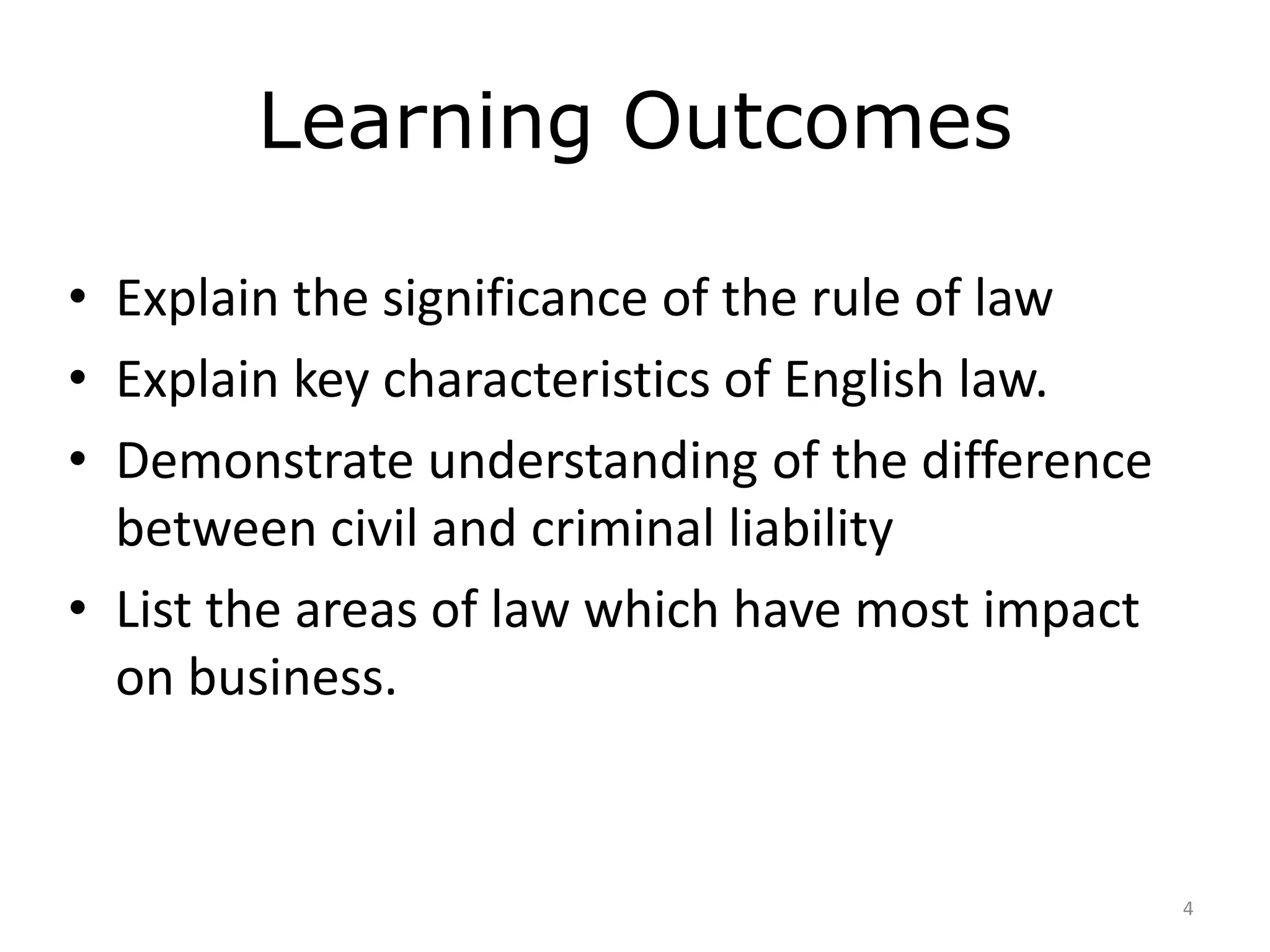
Learning Outcomes 
• Explain the significance of the rule of law 
• Explain key characteristics of English law. 
• Demonstrate understanding of the difference 
between civil and criminal liability 
• List the areas of law which have most impact 
on business. 
4
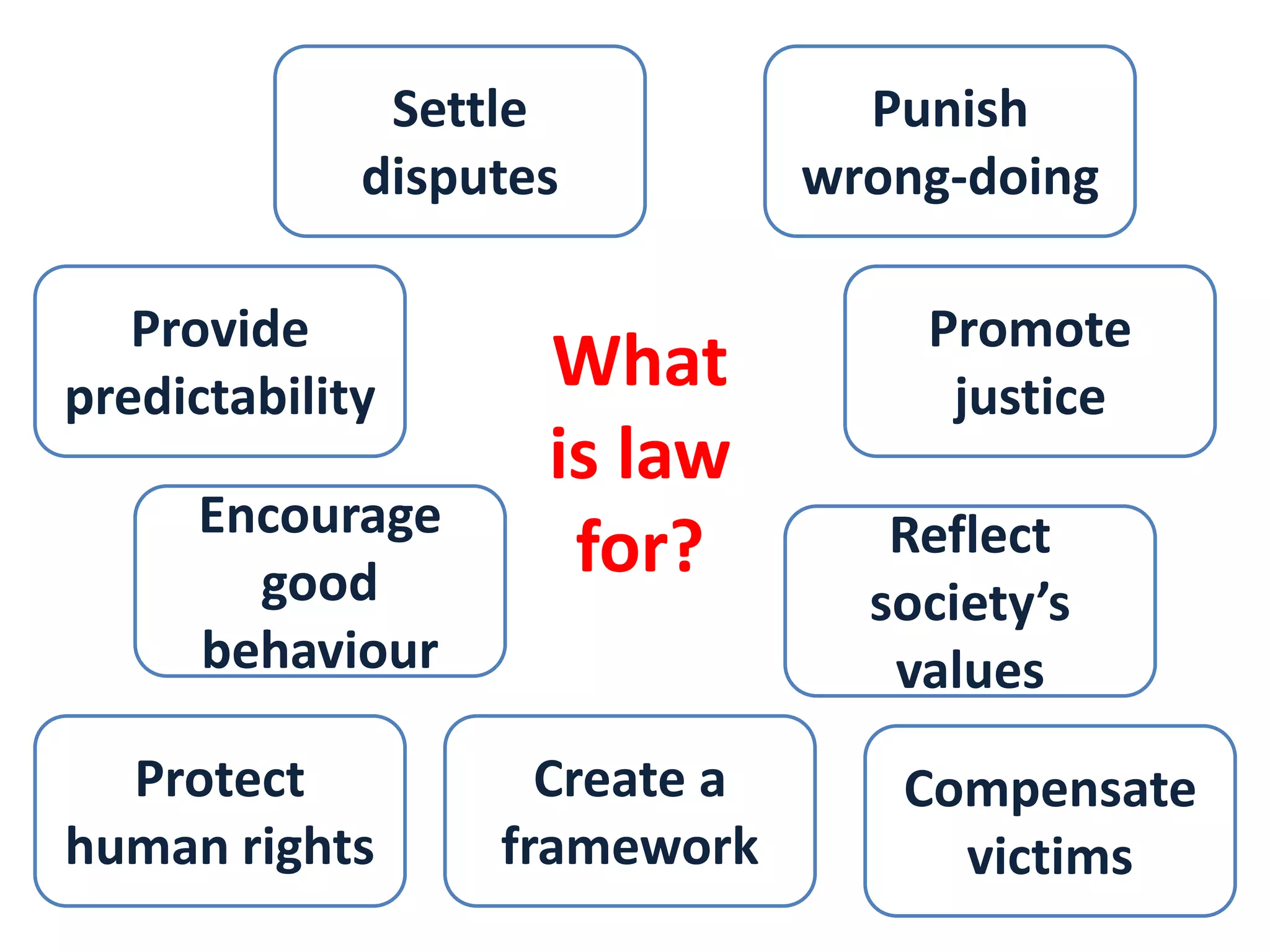
Settle 
disputes 
Encourage 
good 
behaviour 
Promote 
justice 
Provide 
predictability 
Punish 
wrong-doing 
Reflect 
society’s 
values 
Compensate 
victims 
Create a 
framework 
Protect 
human rights 
What 
is law 
for?
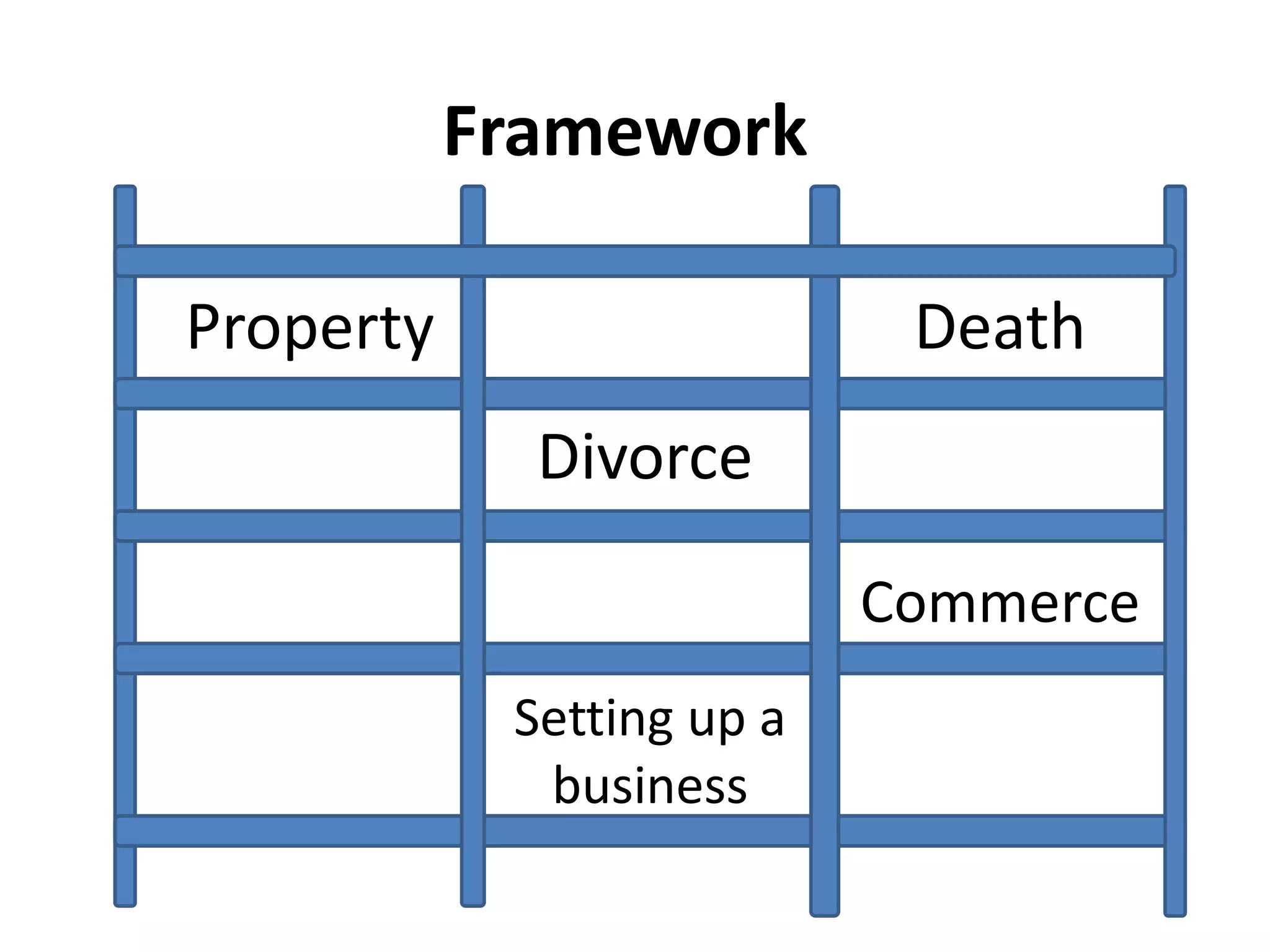
Framework 
Property 
Divorce 
Setting up a 
business 
Death 
Commerce
Predictability 
B4004A L1 7
Reflect society’s values
Settle disputes
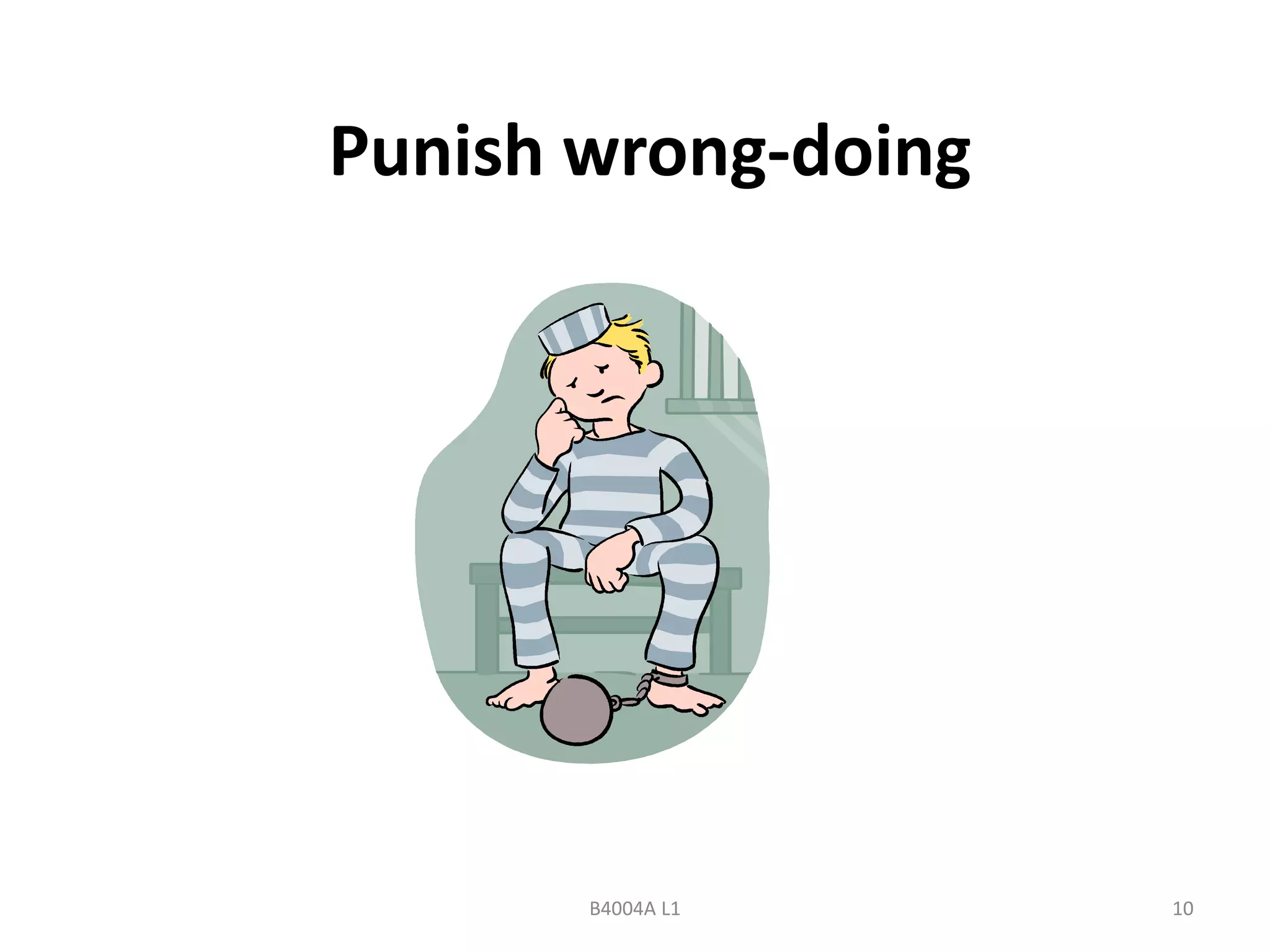
Punish wrong-doing 
B4004A L1 10
Characteristics of English law 
• Gradually evolving 
• Common law – not Roman law 
• (Partly) made by judges – doctrine of 
precedent 
• Adversarial rather than inquisitorial 
• Monarch is nominal head 
11
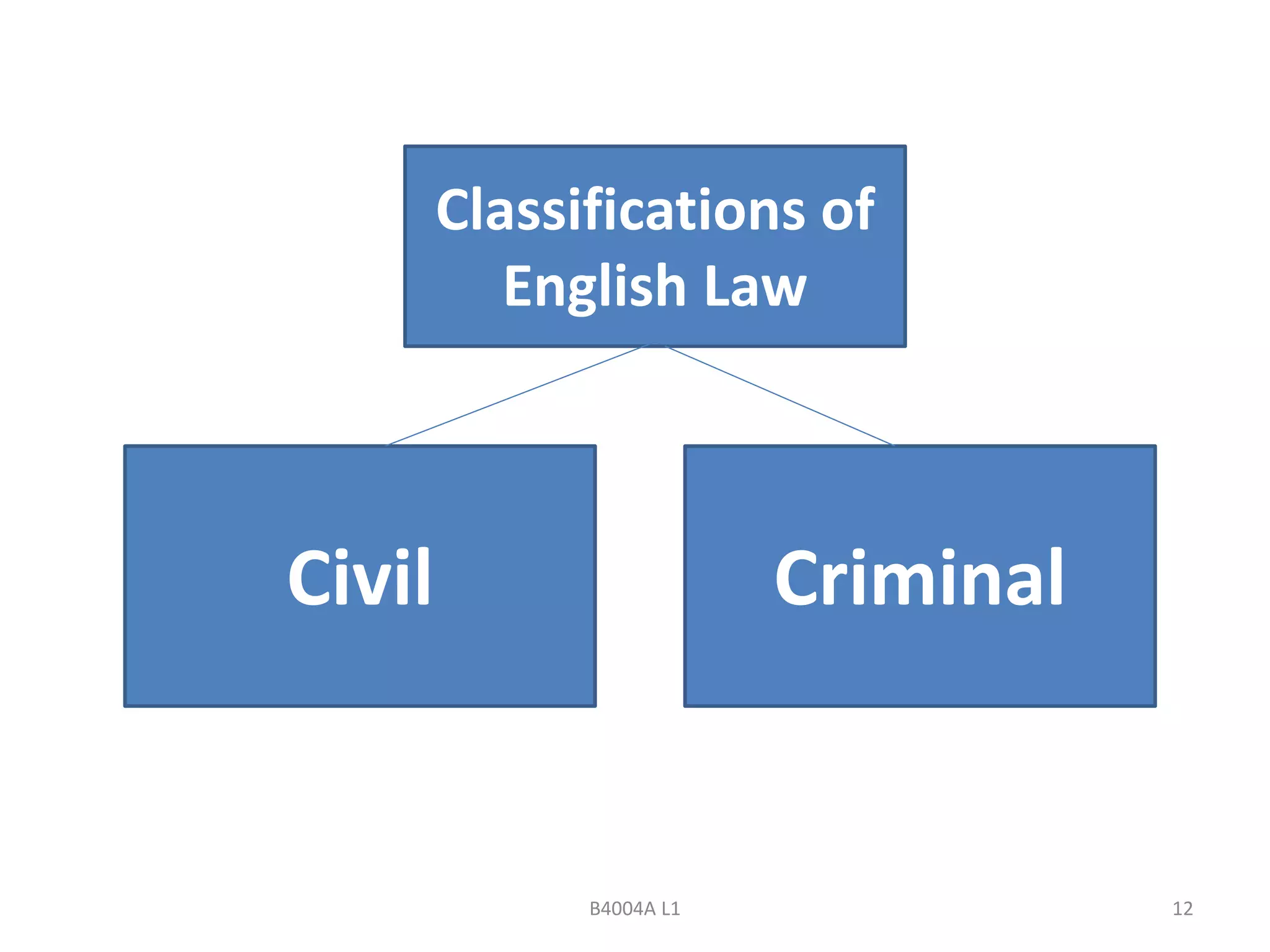
Classifications of 
English Law 
Civil Criminal 
B4004A L1 12
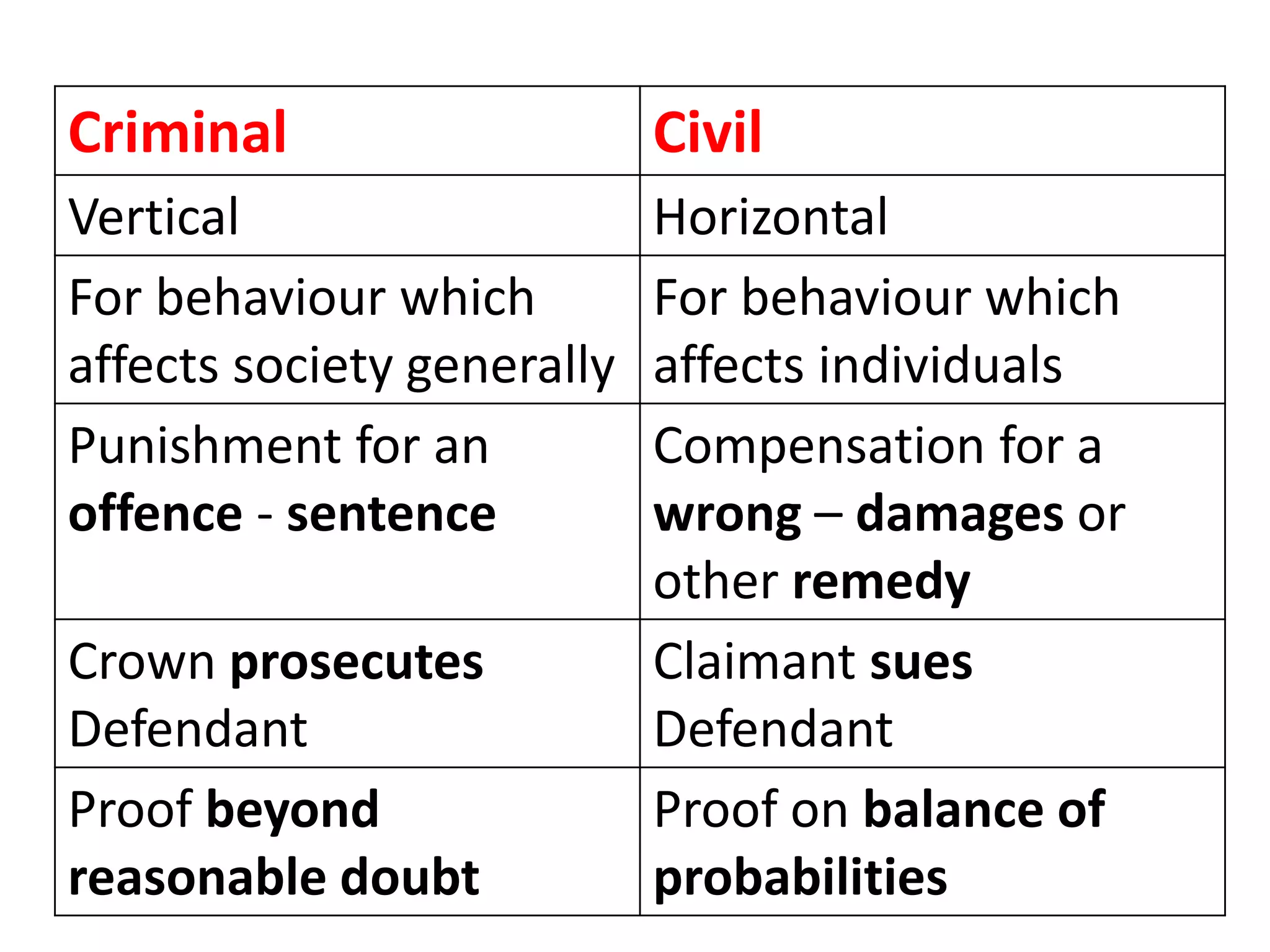
Criminal Civil 
Vertical Horizontal 
For behaviour which 
affects society generally 
For behaviour which 
affects individuals 
Punishment for an 
offence - sentence 
Compensation for a 
wrong – damages or 
other remedy 
Crown prosecutes 
Defendant 
Claimant sues 
Defendant 
Proof beyond 
reasonable doubt 
Proof on balance of 
probabilities
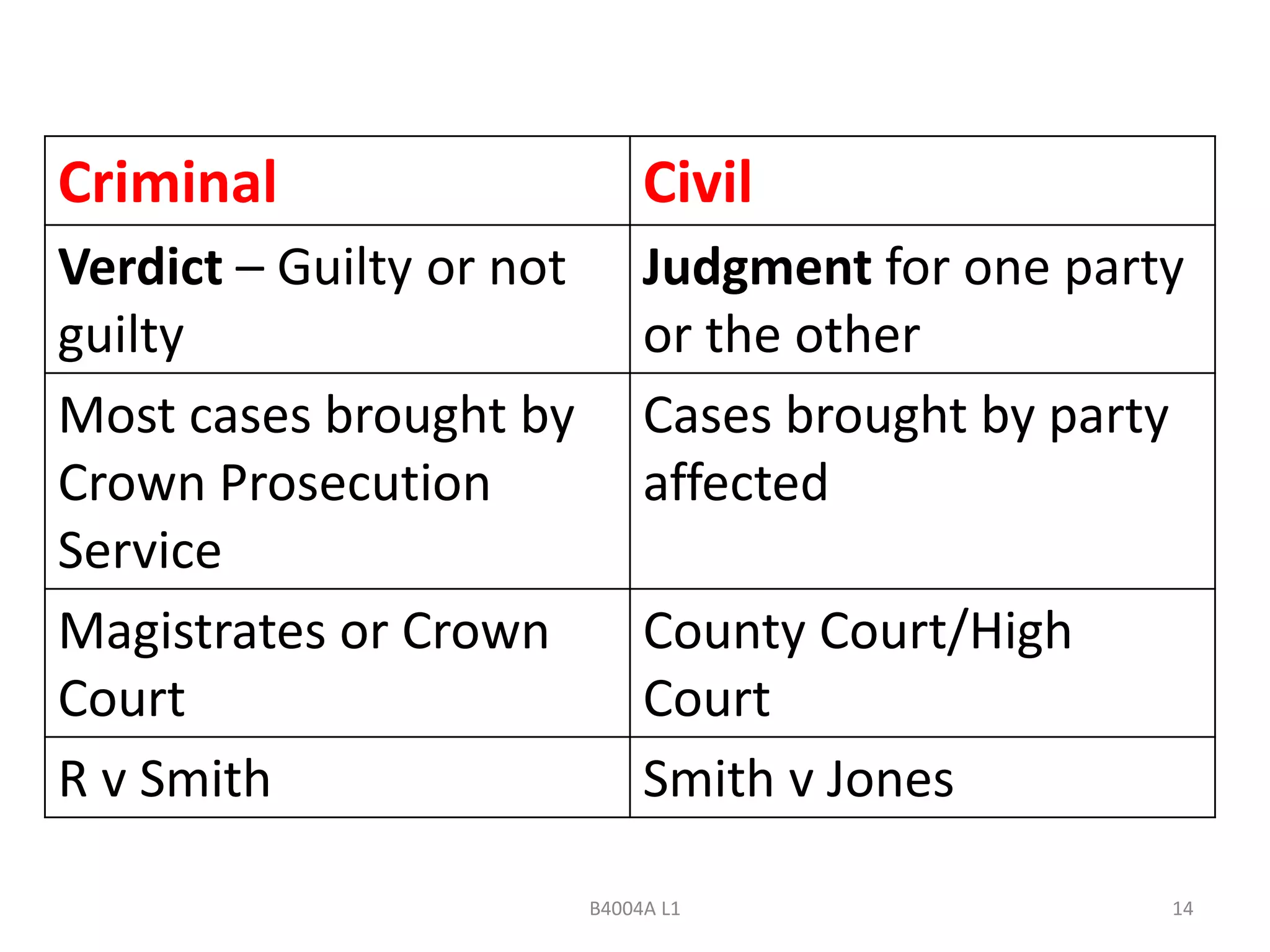
Criminal Civil 
Verdict – Guilty or not 
guilty 
Judgment for one party 
or the other 
B4004A L1 14 
Most cases brought by 
Crown Prosecution 
Service 
Cases brought by party 
affected 
Magistrates or Crown 
Court 
County Court/High 
Court 
R v Smith Smith v Jones
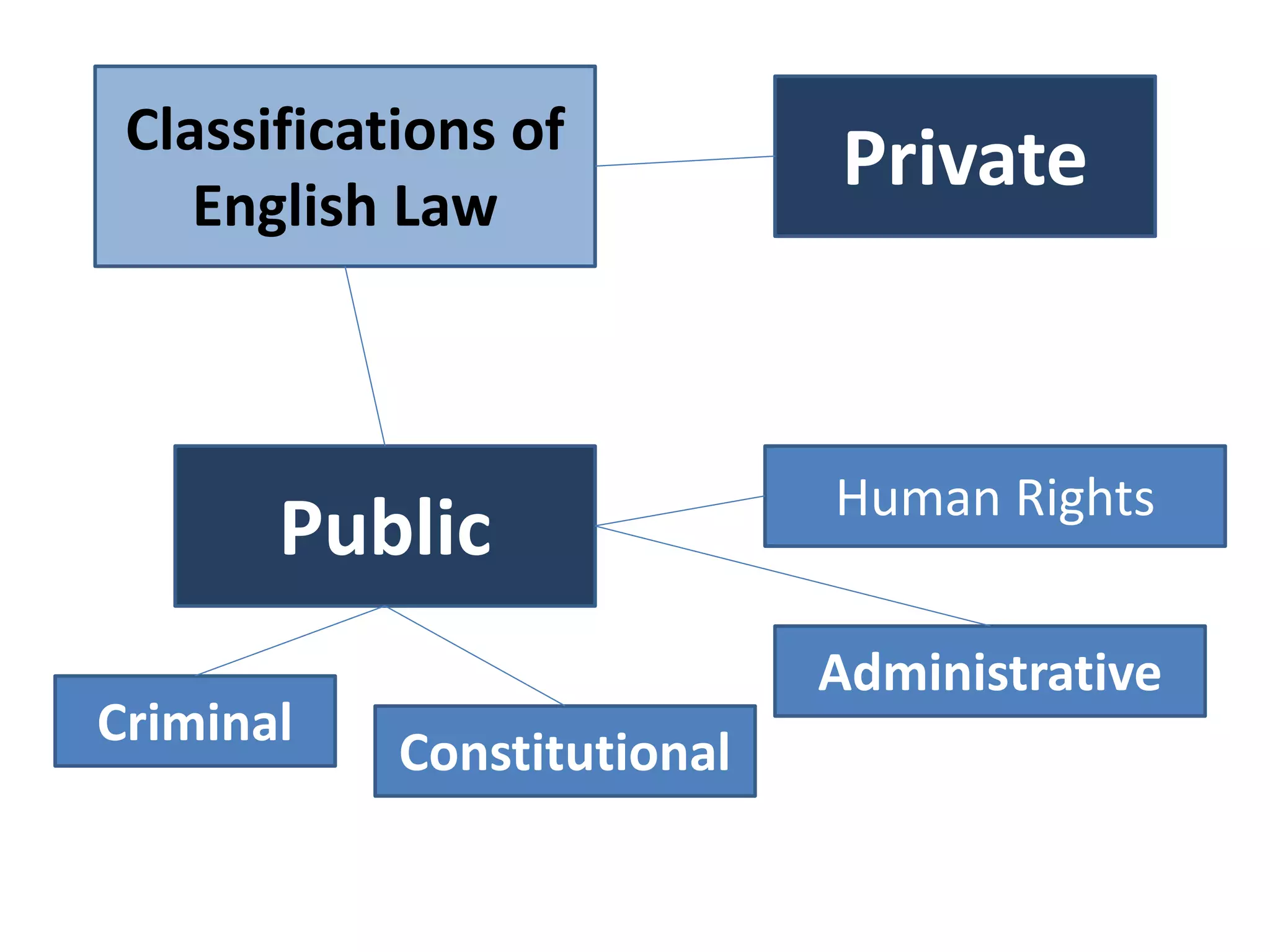
Classifications of 
English Law 
Public 
Private 
Criminal 
Constitutional 
Human Rights 
Administrative
Private law categories 
• Contract Law 
• Tort Law 
• Property Law – Land Law, Intellectual 
Property, Trusts, Succession 
• Family Law 
• Employment Law 
• Company Law 
• [EU Law] 
16
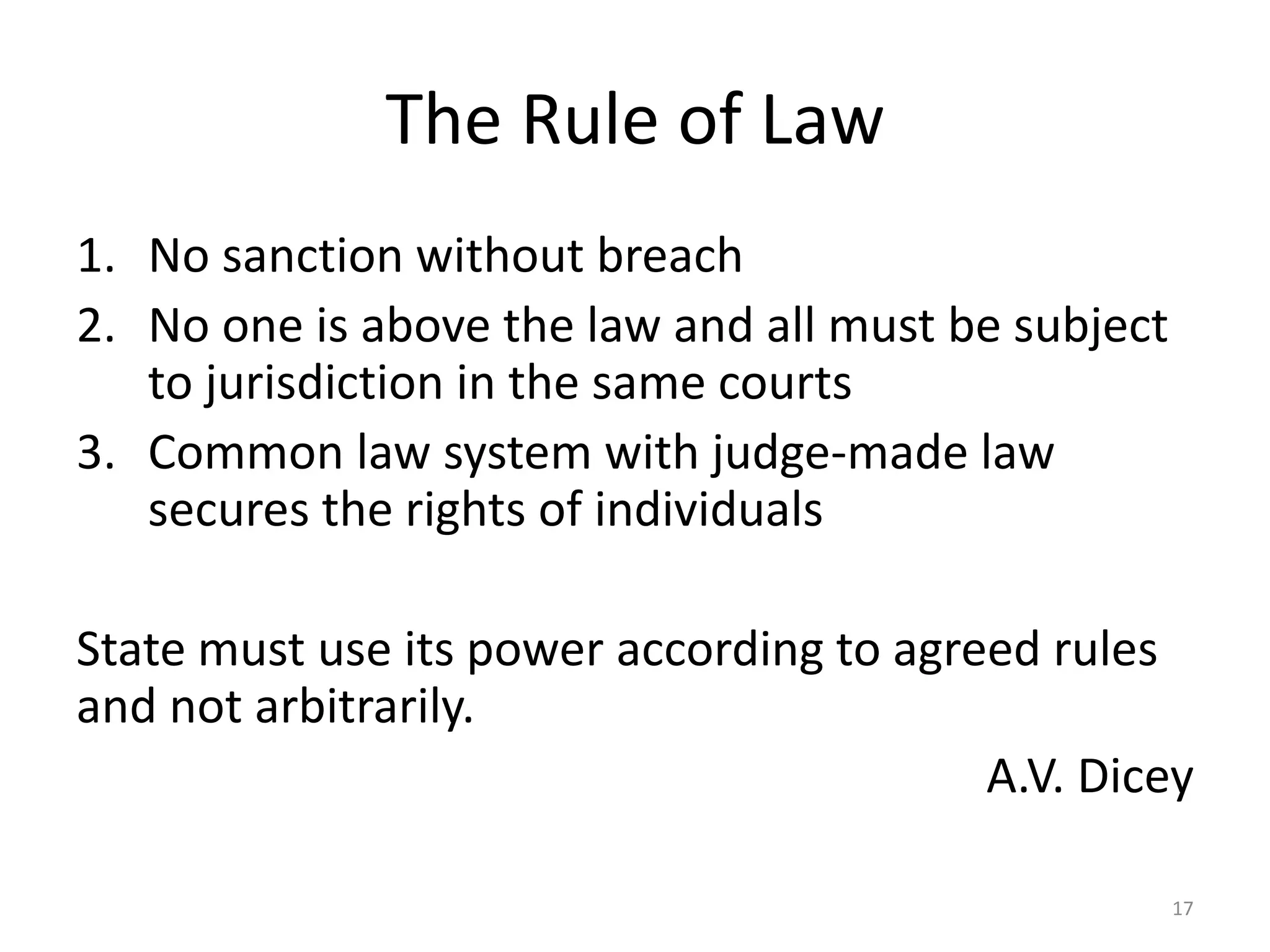
The Rule of Law 
1. No sanction without breach 
2. No one is above the law and all must be subject 
to jurisdiction in the same courts 
3. Common law system with judge-made law 
secures the rights of individuals 
State must use its power according to agreed rules 
and not arbitrarily. 
A.V. Dicey 
17
18 
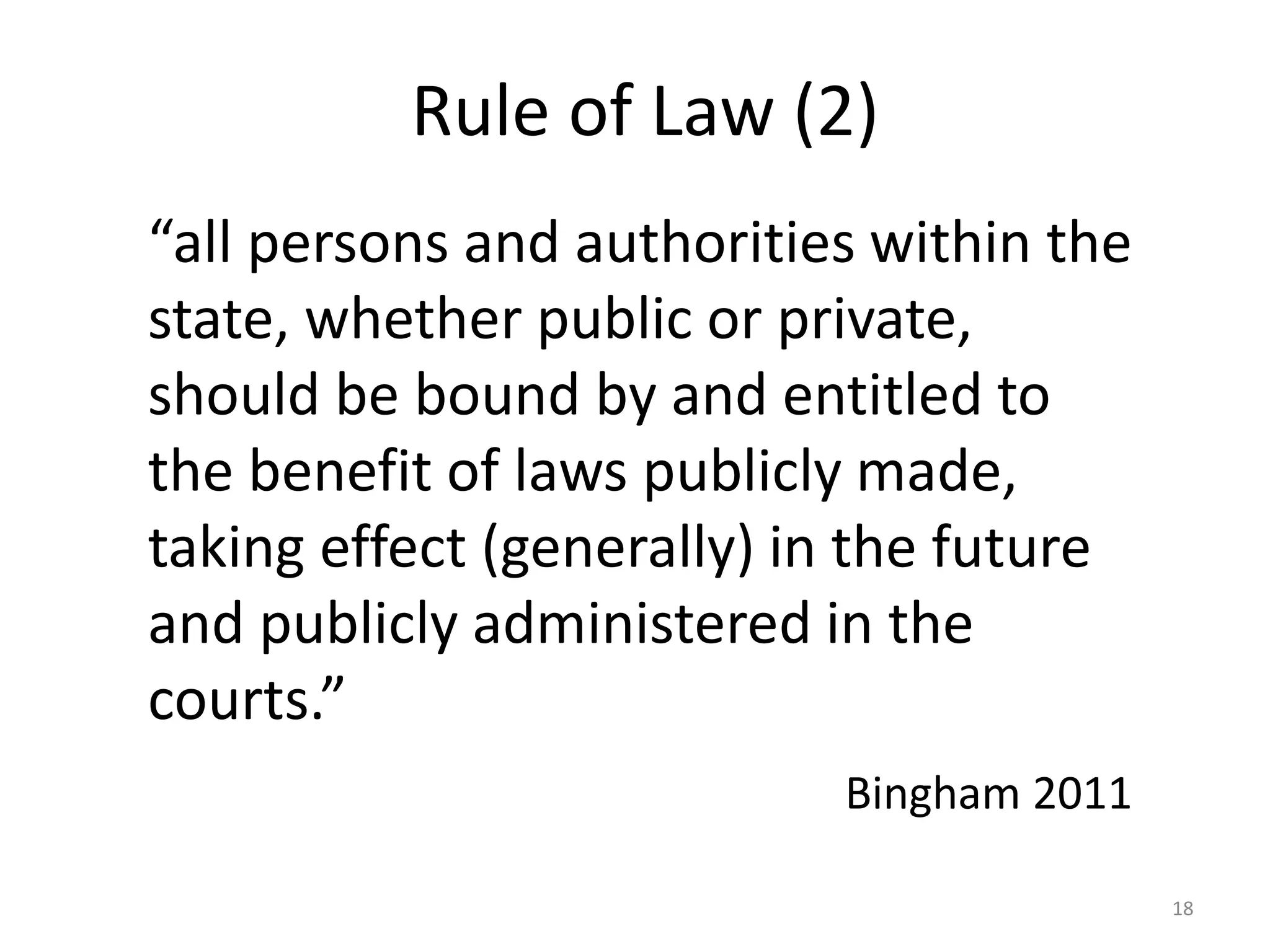
Rule of Law (2) 
“all persons and authorities within the 
state, whether public or private, 
should be bound by and entitled to 
the benefit of laws publicly made, 
taking effect (generally) in the future 
and publicly administered in the 
courts.” 
Bingham 2011
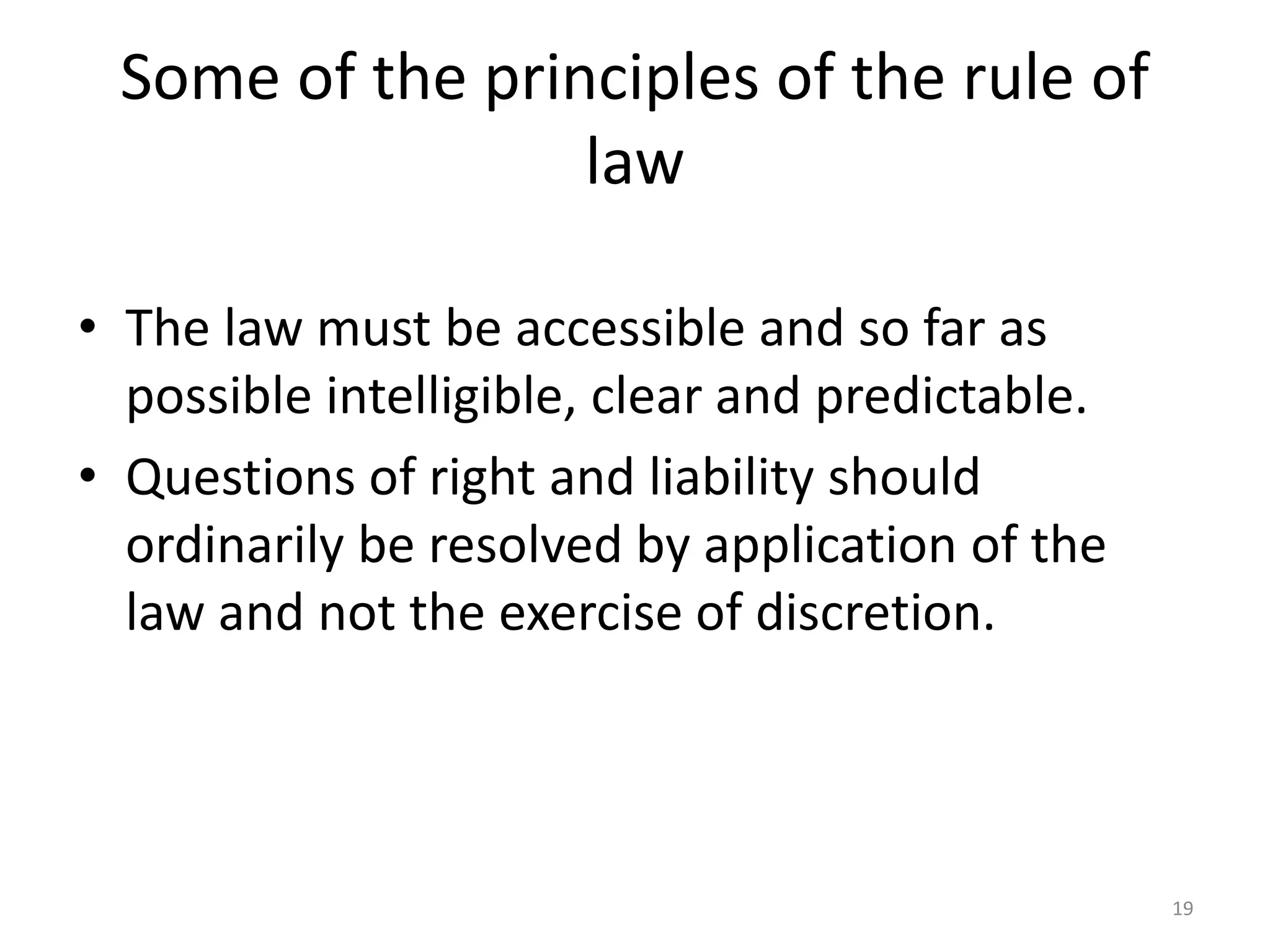
Some of the principles of the rule of 
law 
• The law must be accessible and so far as 
possible intelligible, clear and predictable. 
• Questions of right and liability should 
ordinarily be resolved by application of the 
law and not the exercise of discretion. 
19
Summary 
• Meaning of rule of law 
• Characteristics of England law 
• Difference between civil and criminal law 
• Different areas of law 
20
Essential work for next week 
• Please consult the OLE for details of: 
– Essential readings* 
– Seminar preparation work* 
– Recommended further readings 
– Any additional learning 
* Essential readings and preparation work must always be completed in time 
for the next session 
21
End of presentation 
© Pearson College 2013

Pob stage 2 lecture 7 introduction post ole set

  • 1.
  • 2.
    Principles of Business Topic: Introduction to Law (1) Introduction Stage 2 Lecture 7
  • 3.
    Law within Principlesof Business 1. Introduction 2. The Legal System 3. Introduction to Contracts 4. Introduction to Tort Law 3
  • 4.
    Learning Outcomes •Explain the significance of the rule of law • Explain key characteristics of English law. • Demonstrate understanding of the difference between civil and criminal liability • List the areas of law which have most impact on business. 4
  • 5.
    Settle disputes Encourage good behaviour Promote justice Provide predictability Punish wrong-doing Reflect society’s values Compensate victims Create a framework Protect human rights What is law for?
  • 6.
    Framework Property Divorce Setting up a business Death Commerce
  • 7.
  • 8.
  • 9.
  • 10.
  • 11.
    Characteristics of Englishlaw • Gradually evolving • Common law – not Roman law • (Partly) made by judges – doctrine of precedent • Adversarial rather than inquisitorial • Monarch is nominal head 11
  • 12.
    Classifications of EnglishLaw Civil Criminal B4004A L1 12
  • 13.
    Criminal Civil VerticalHorizontal For behaviour which affects society generally For behaviour which affects individuals Punishment for an offence - sentence Compensation for a wrong – damages or other remedy Crown prosecutes Defendant Claimant sues Defendant Proof beyond reasonable doubt Proof on balance of probabilities
  • 14.
    Criminal Civil Verdict– Guilty or not guilty Judgment for one party or the other B4004A L1 14 Most cases brought by Crown Prosecution Service Cases brought by party affected Magistrates or Crown Court County Court/High Court R v Smith Smith v Jones
  • 15.
    Classifications of EnglishLaw Public Private Criminal Constitutional Human Rights Administrative
  • 16.
    Private law categories • Contract Law • Tort Law • Property Law – Land Law, Intellectual Property, Trusts, Succession • Family Law • Employment Law • Company Law • [EU Law] 16
  • 17.
    The Rule ofLaw 1. No sanction without breach 2. No one is above the law and all must be subject to jurisdiction in the same courts 3. Common law system with judge-made law secures the rights of individuals State must use its power according to agreed rules and not arbitrarily. A.V. Dicey 17
  • 18.
    18 Rule ofLaw (2) “all persons and authorities within the state, whether public or private, should be bound by and entitled to the benefit of laws publicly made, taking effect (generally) in the future and publicly administered in the courts.” Bingham 2011
  • 19.
    Some of theprinciples of the rule of law • The law must be accessible and so far as possible intelligible, clear and predictable. • Questions of right and liability should ordinarily be resolved by application of the law and not the exercise of discretion. 19
  • 20.
    Summary • Meaningof rule of law • Characteristics of England law • Difference between civil and criminal law • Different areas of law 20
  • 21.
    Essential work fornext week • Please consult the OLE for details of: – Essential readings* – Seminar preparation work* – Recommended further readings – Any additional learning * Essential readings and preparation work must always be completed in time for the next session 21
  • 22.
    End of presentation © Pearson College 2013