Download to read offline
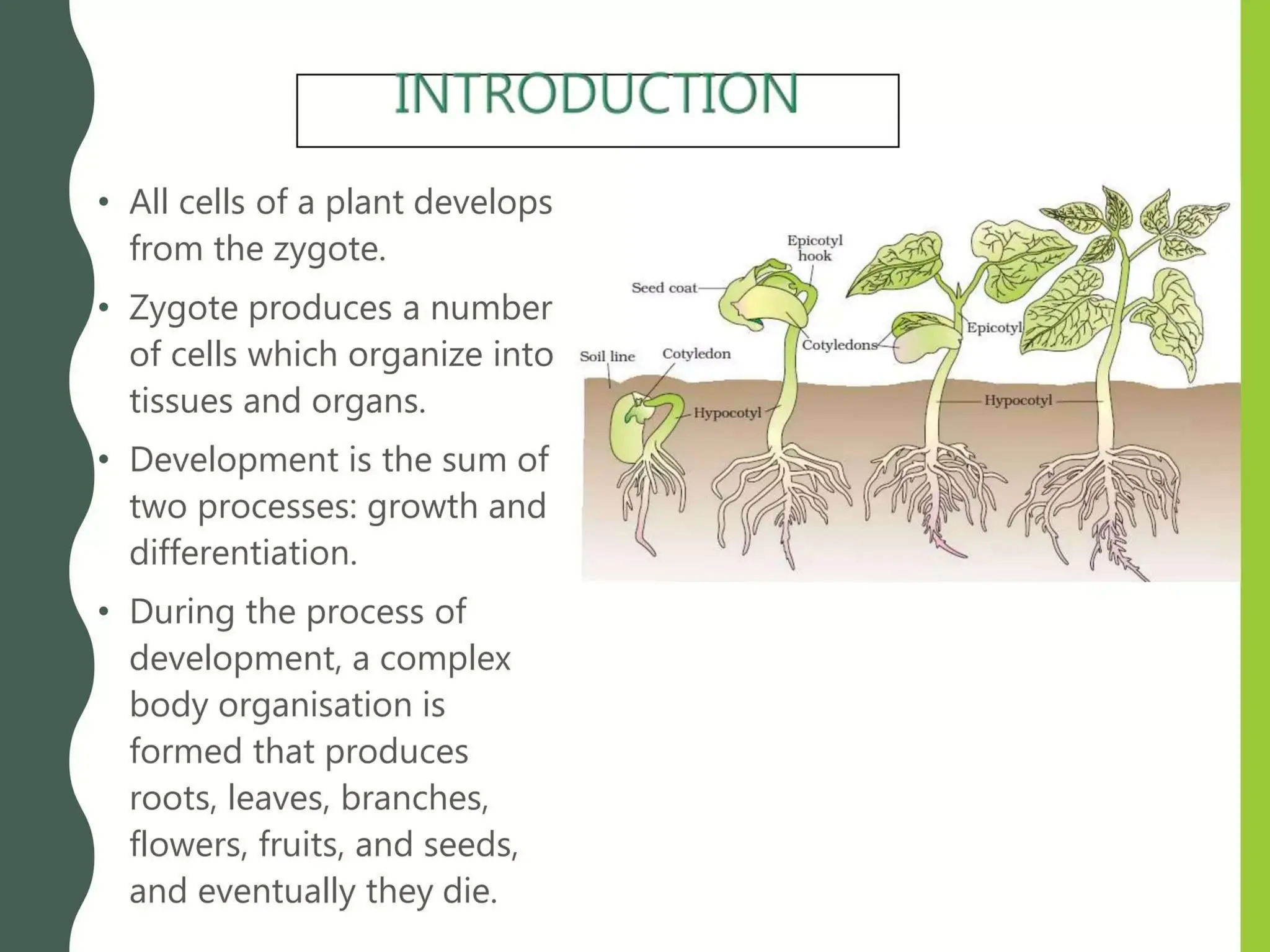
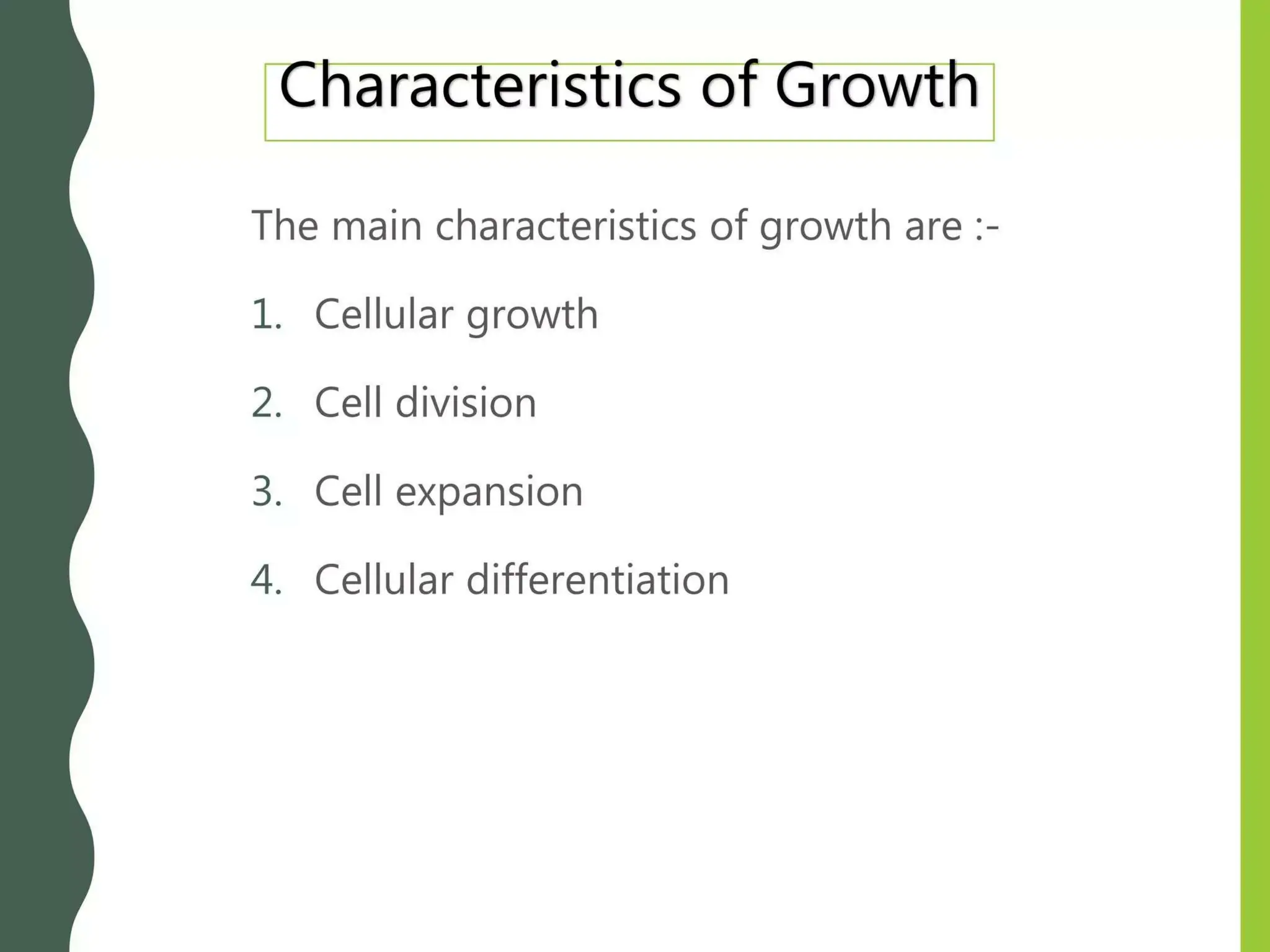
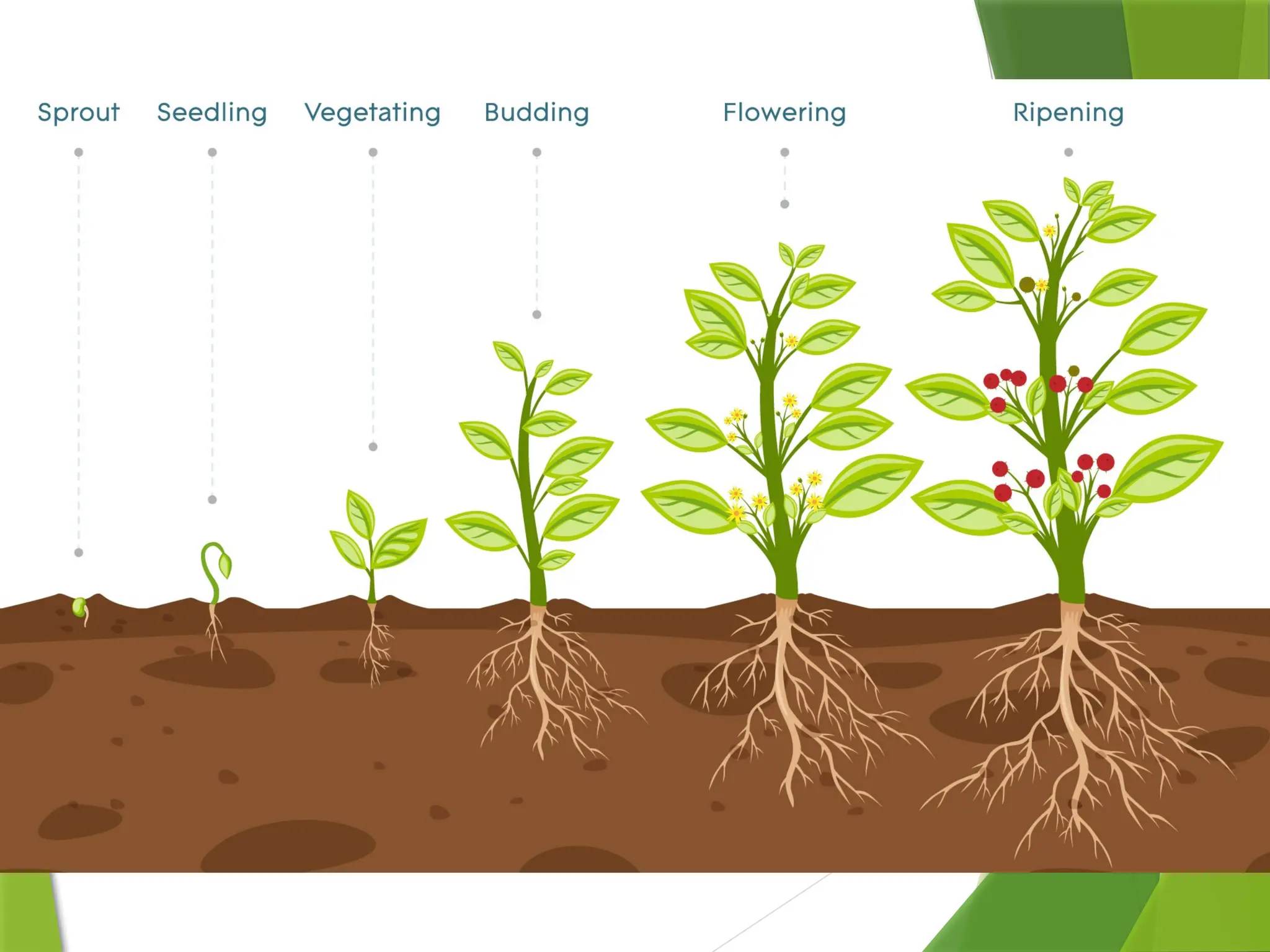
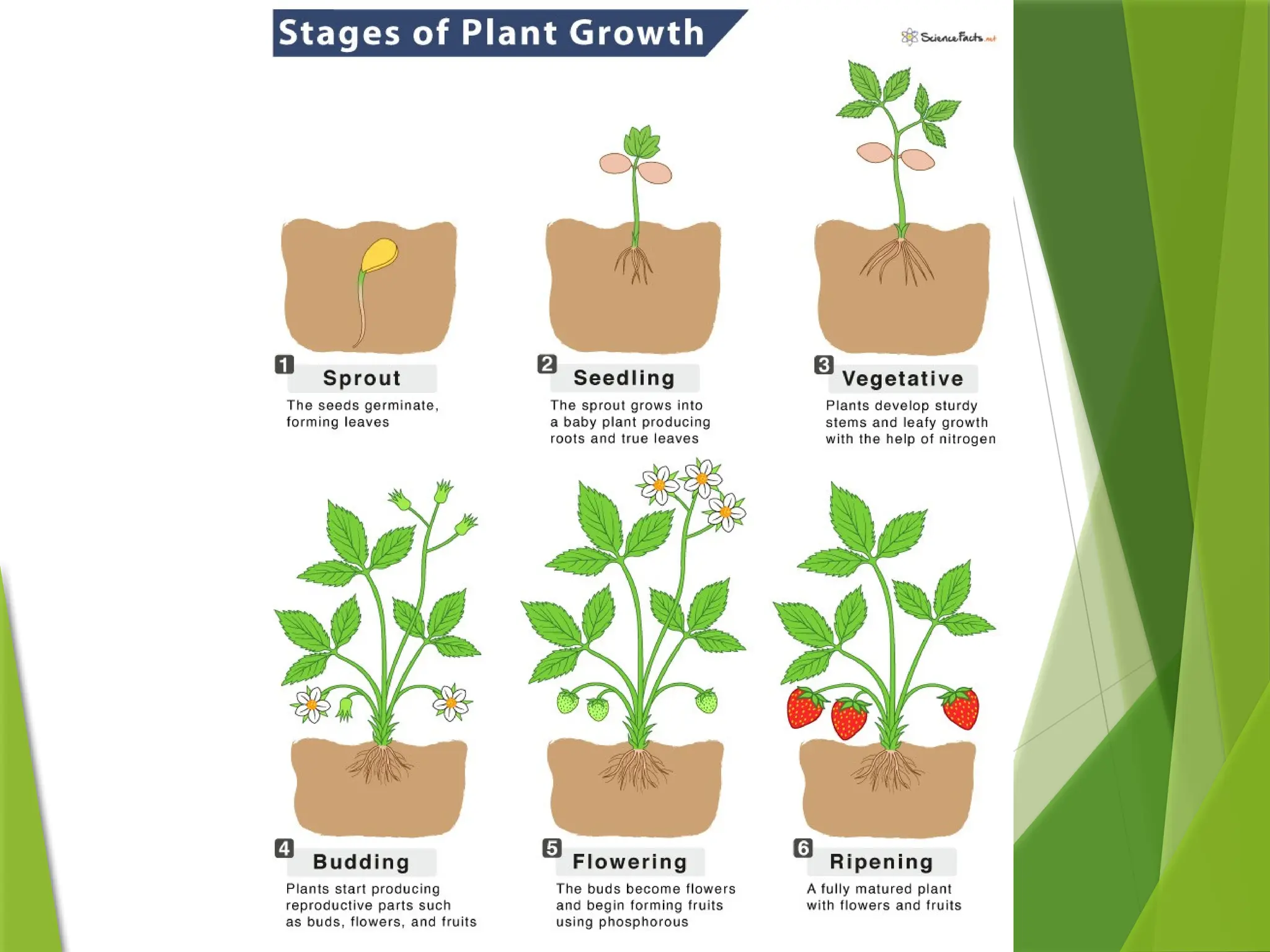
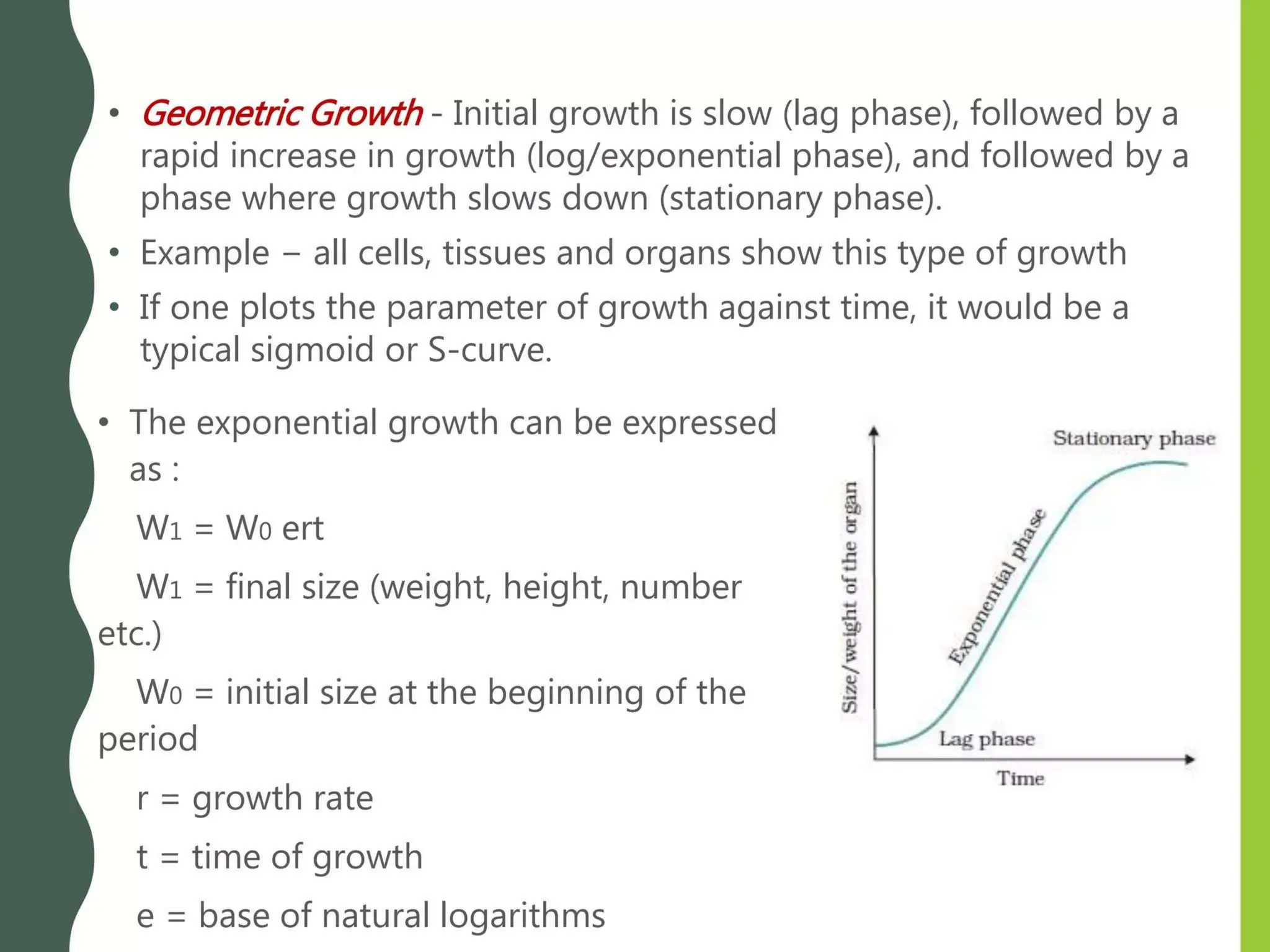
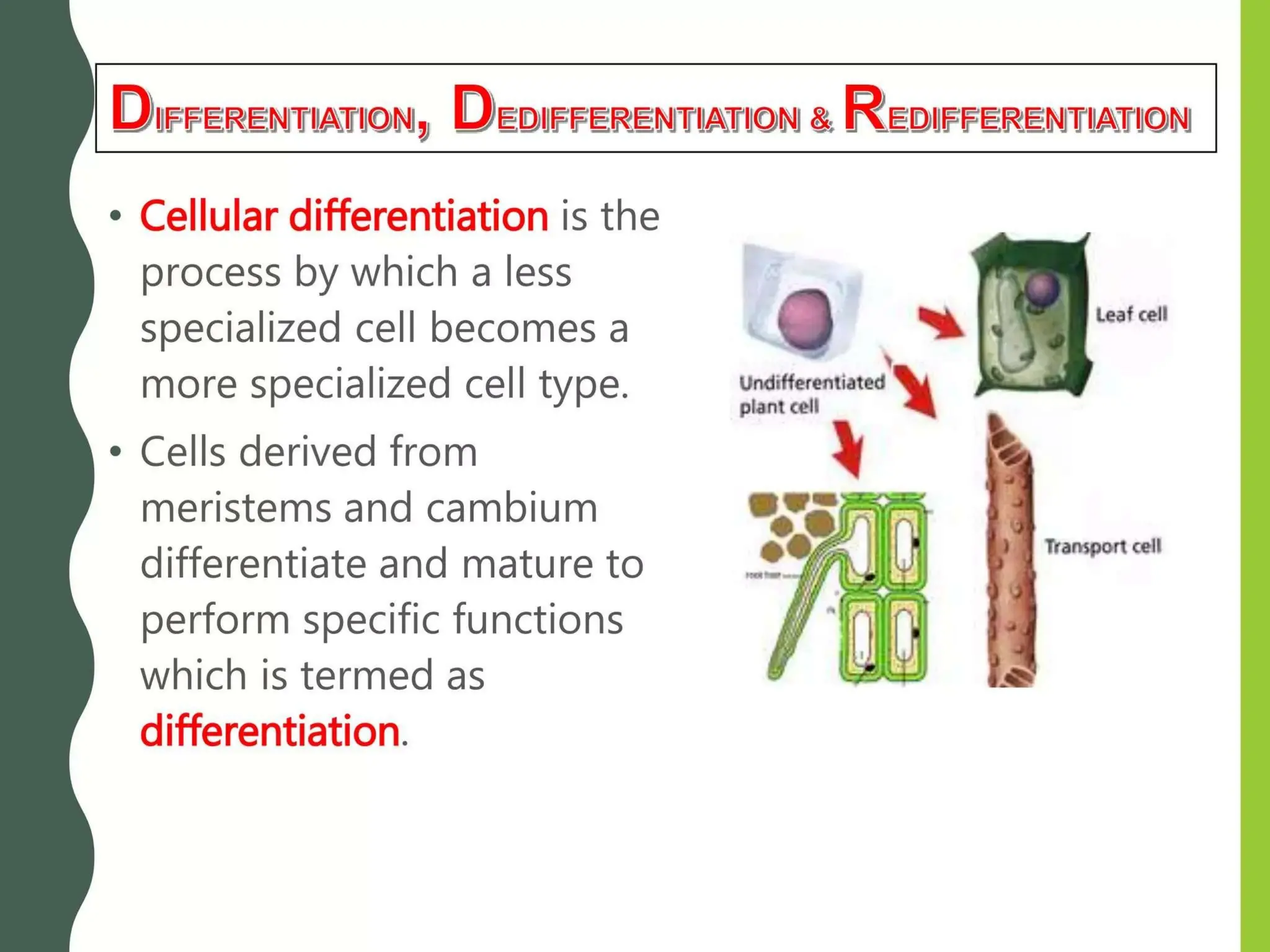
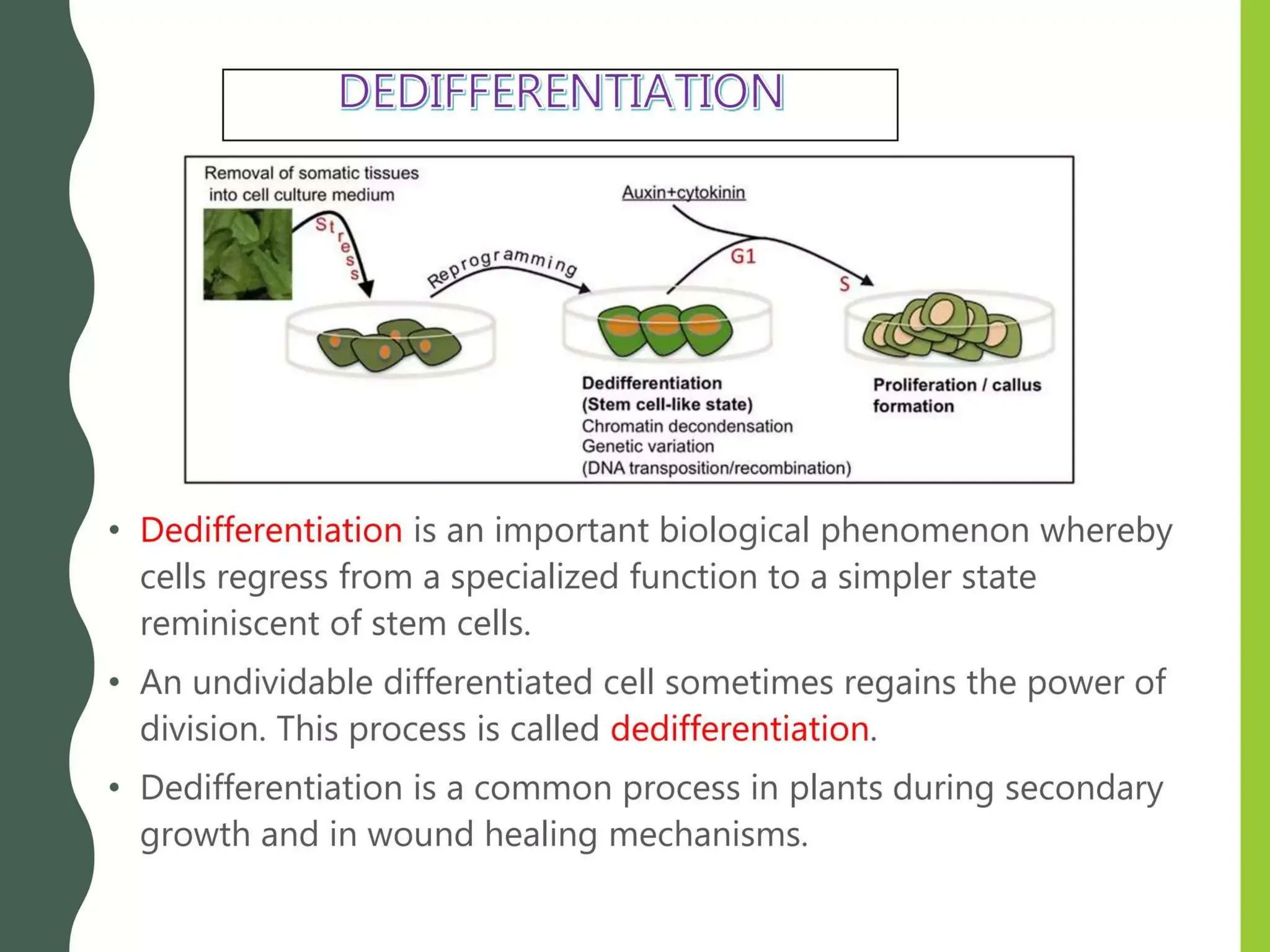
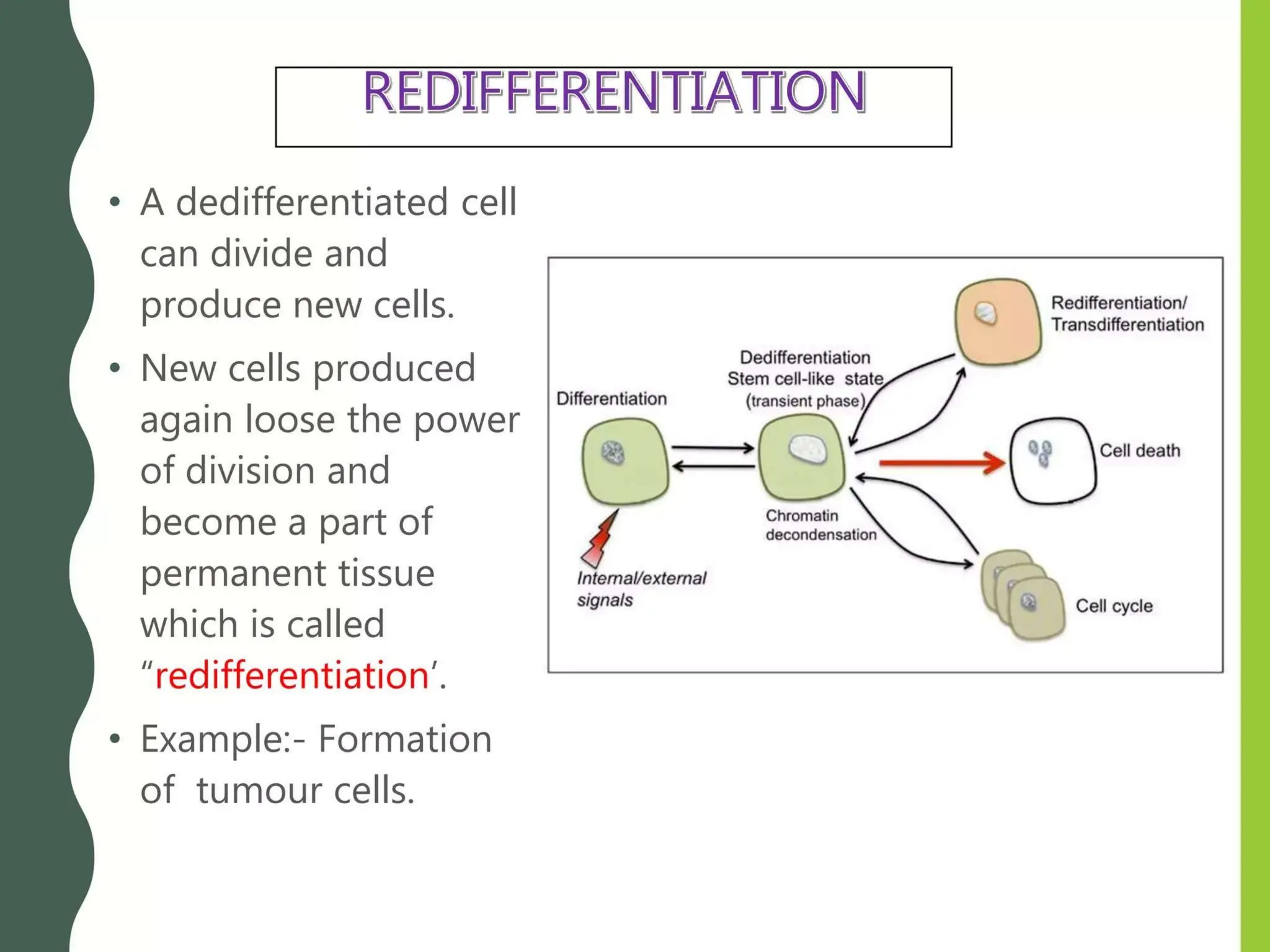
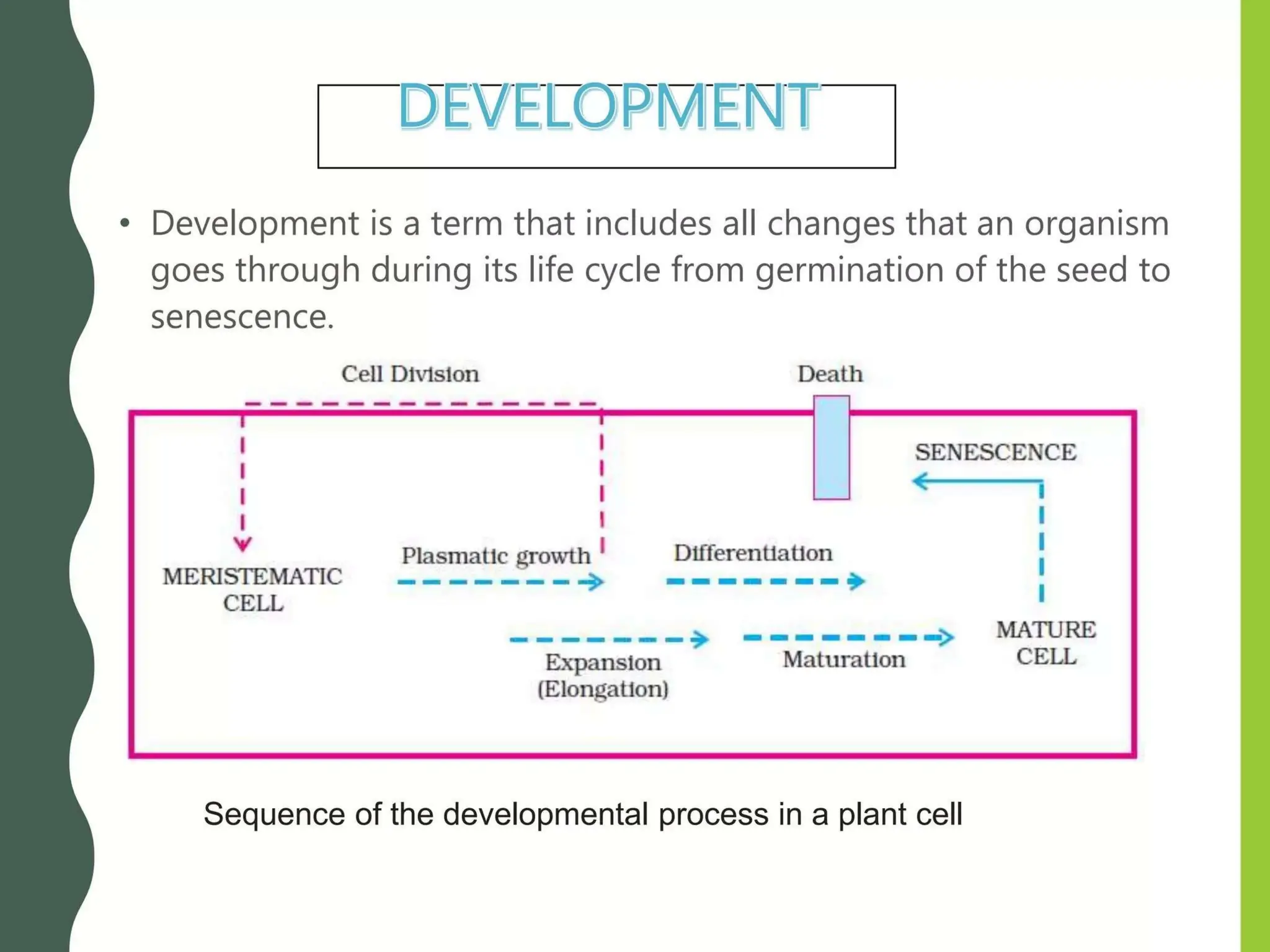
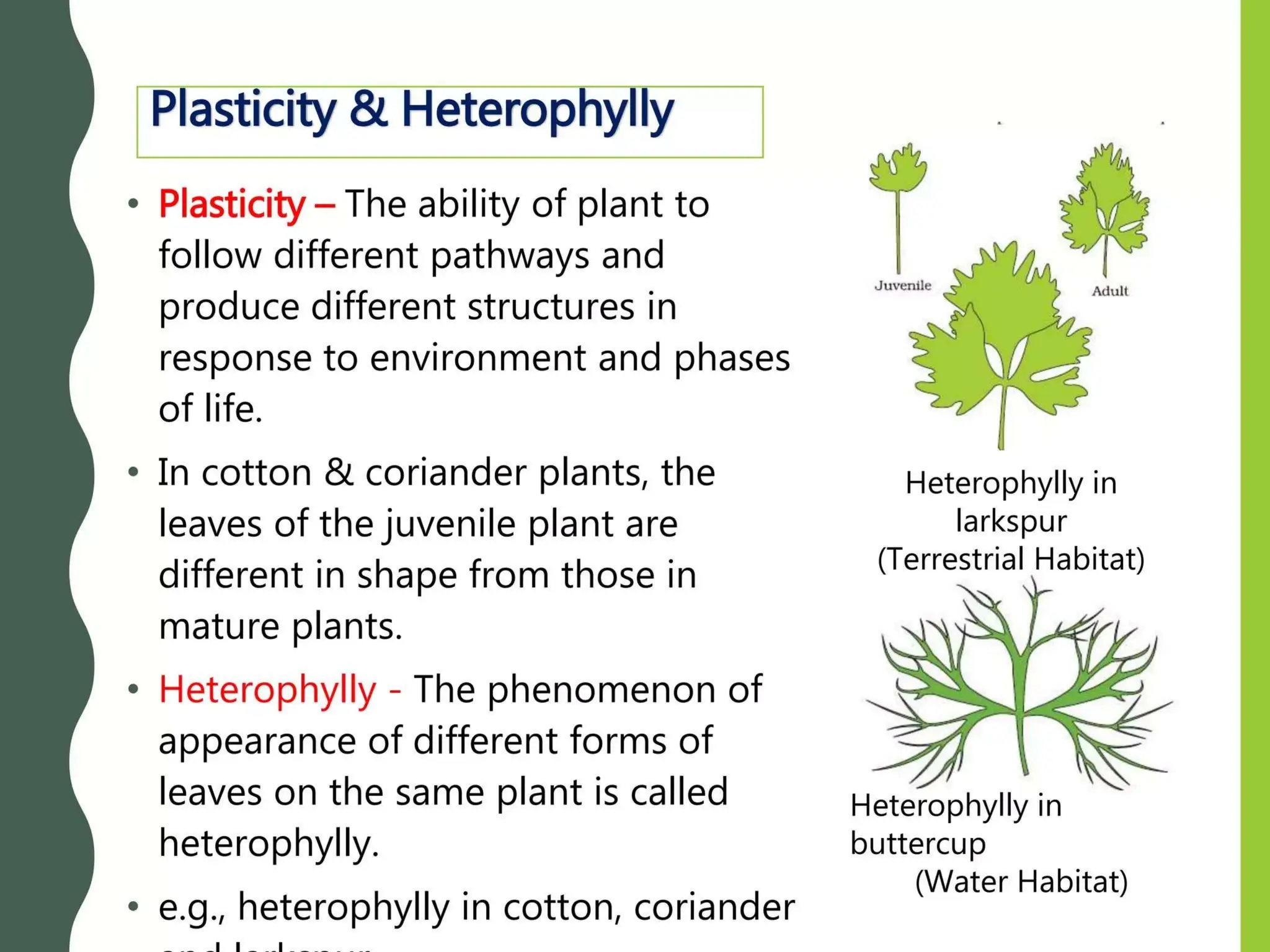
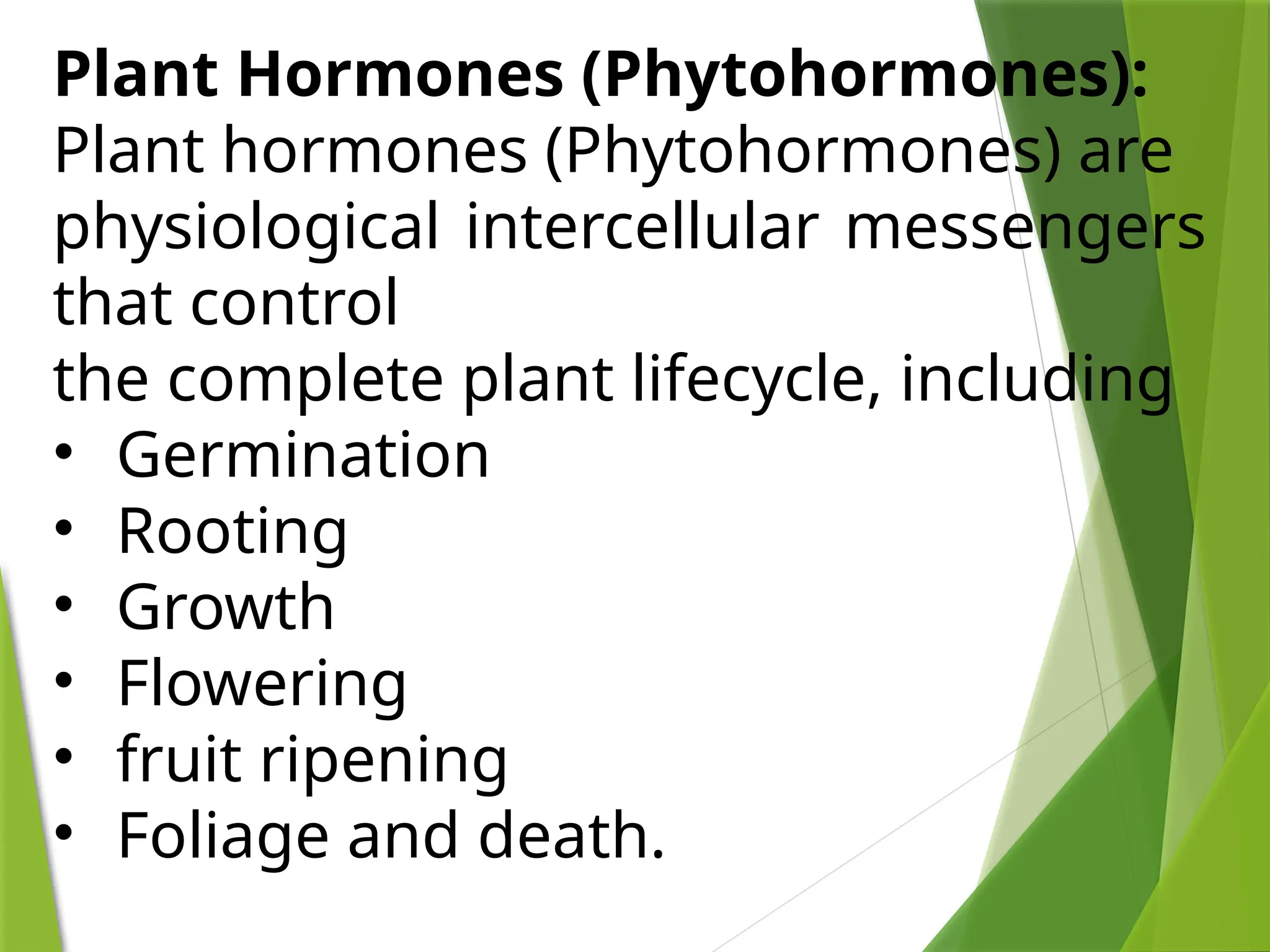
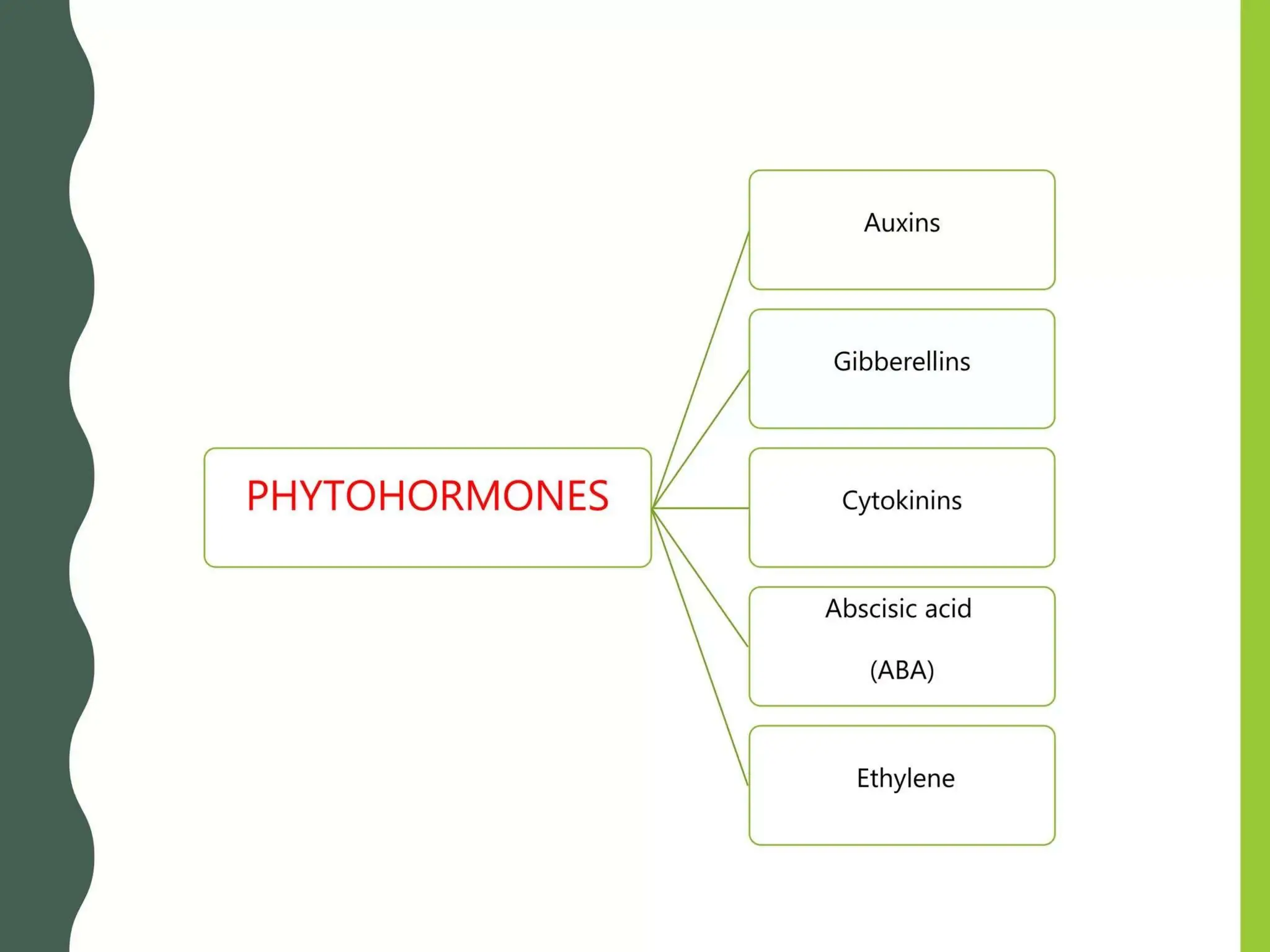
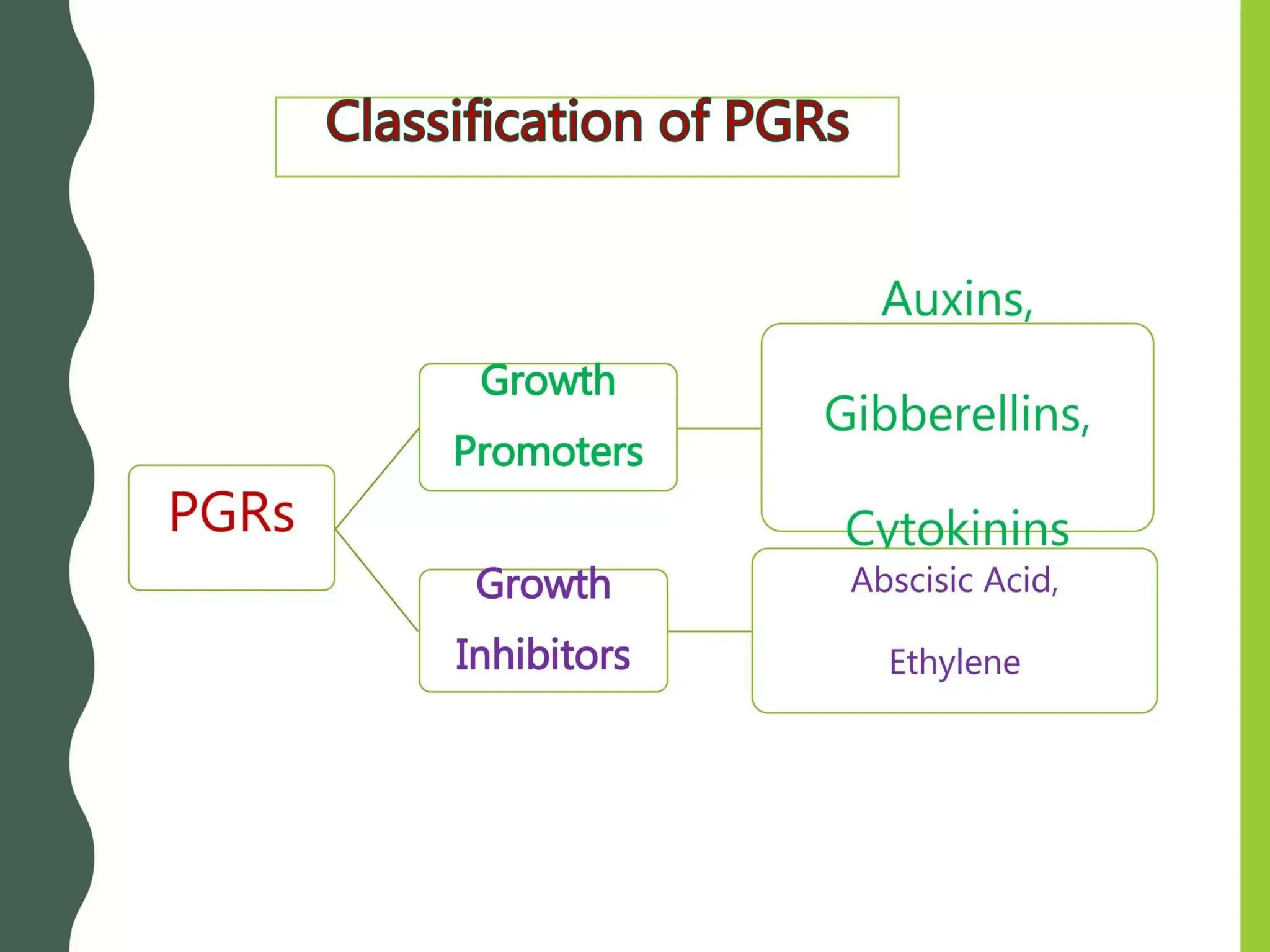
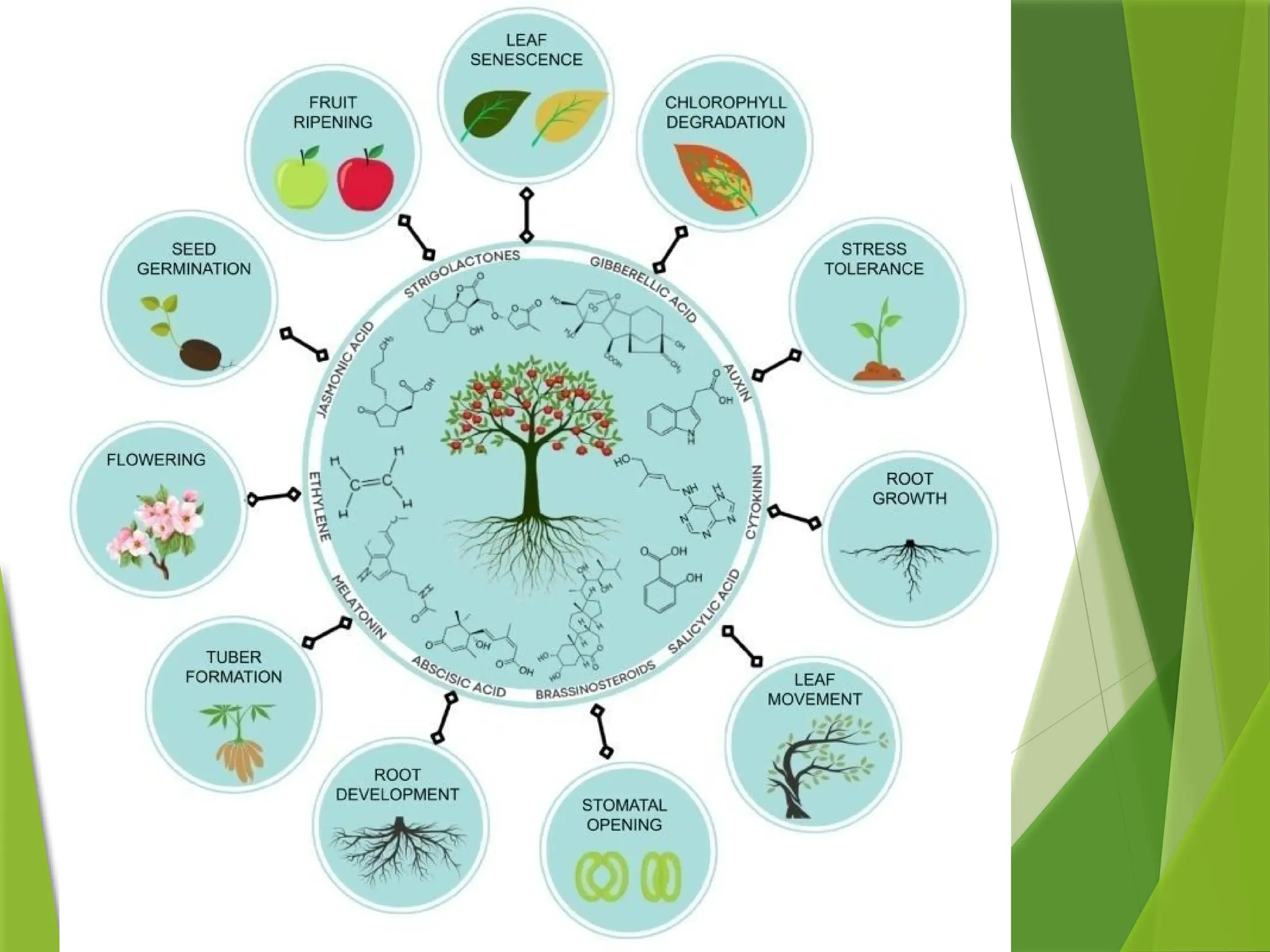

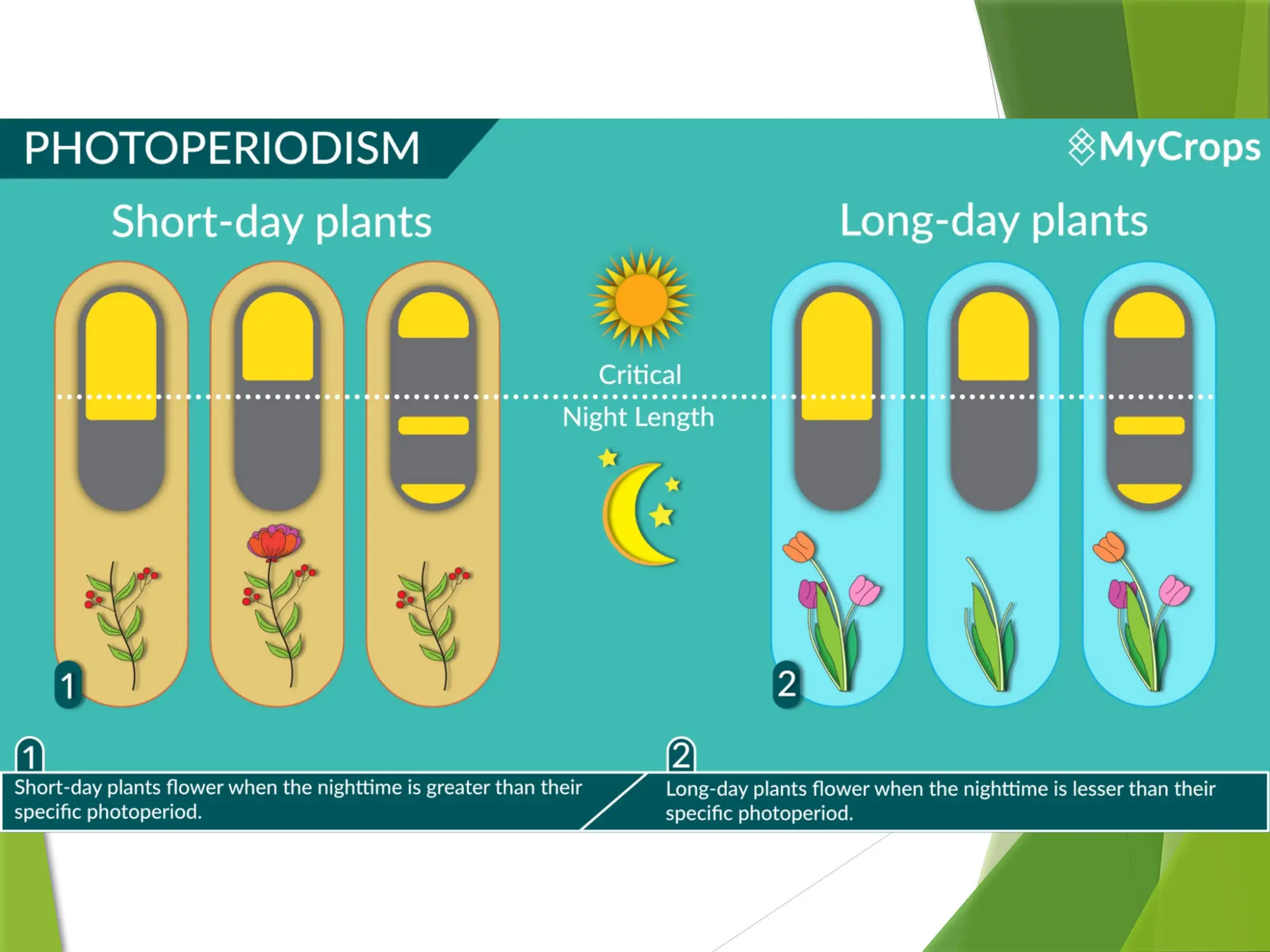
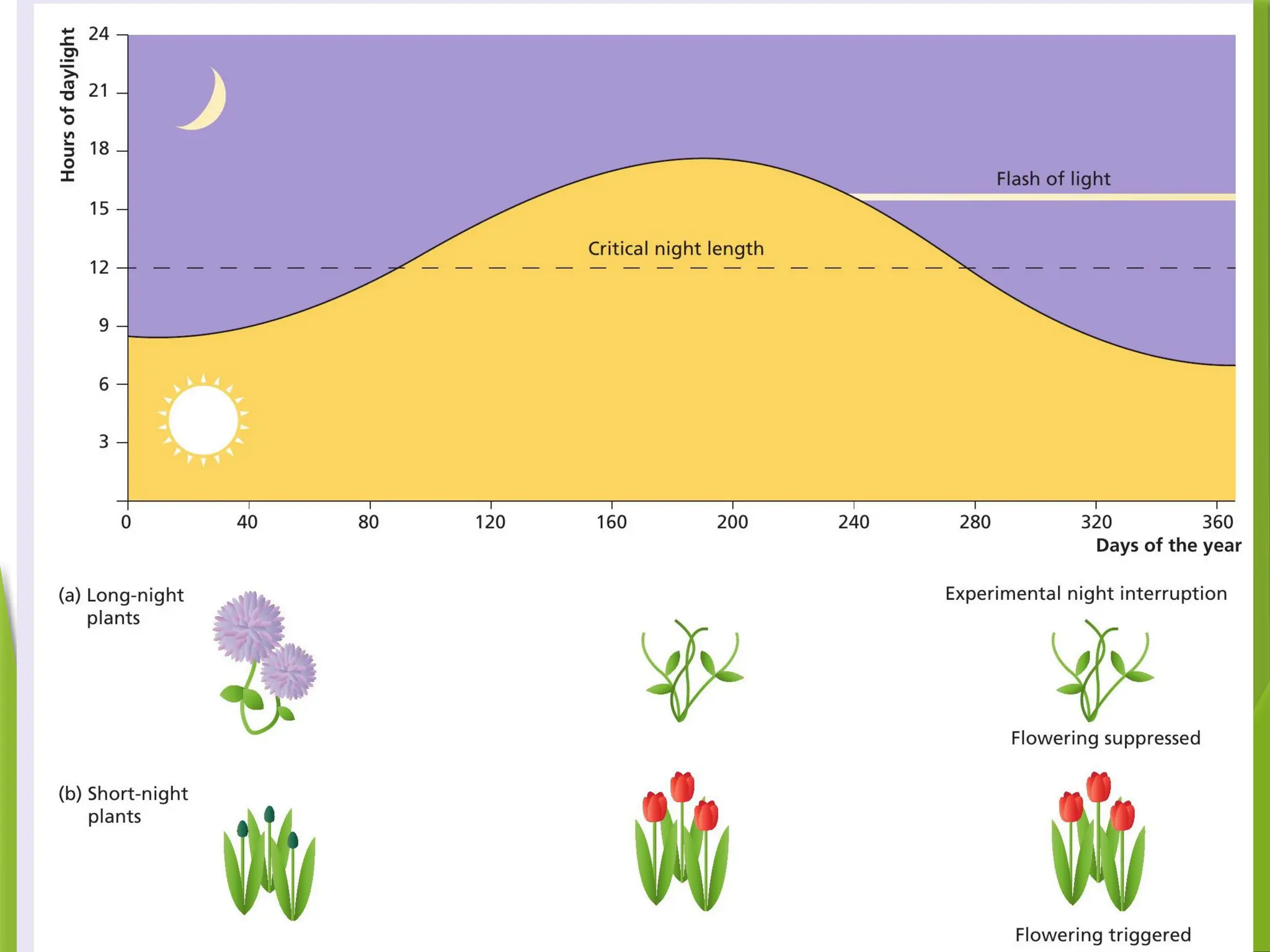
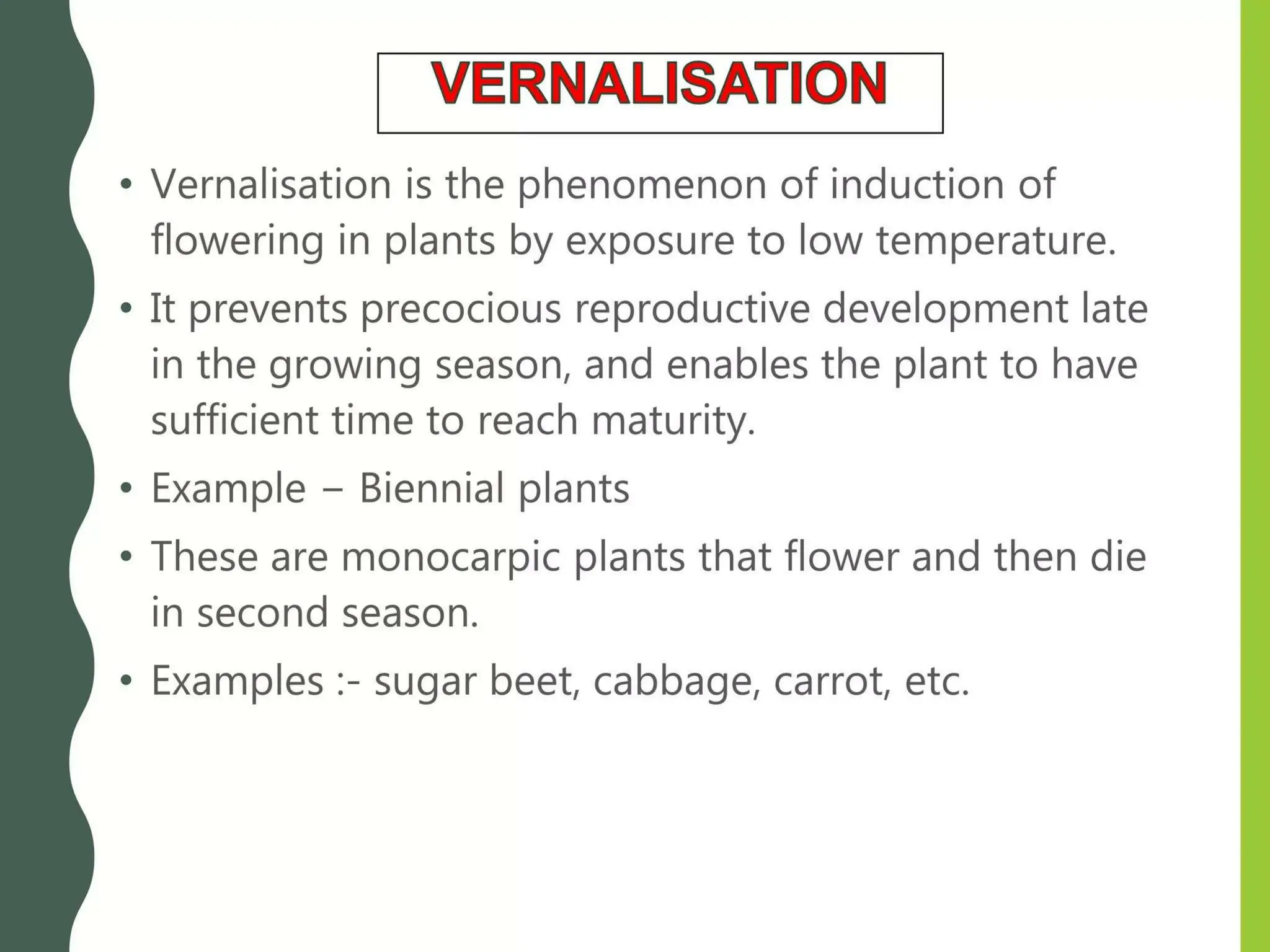
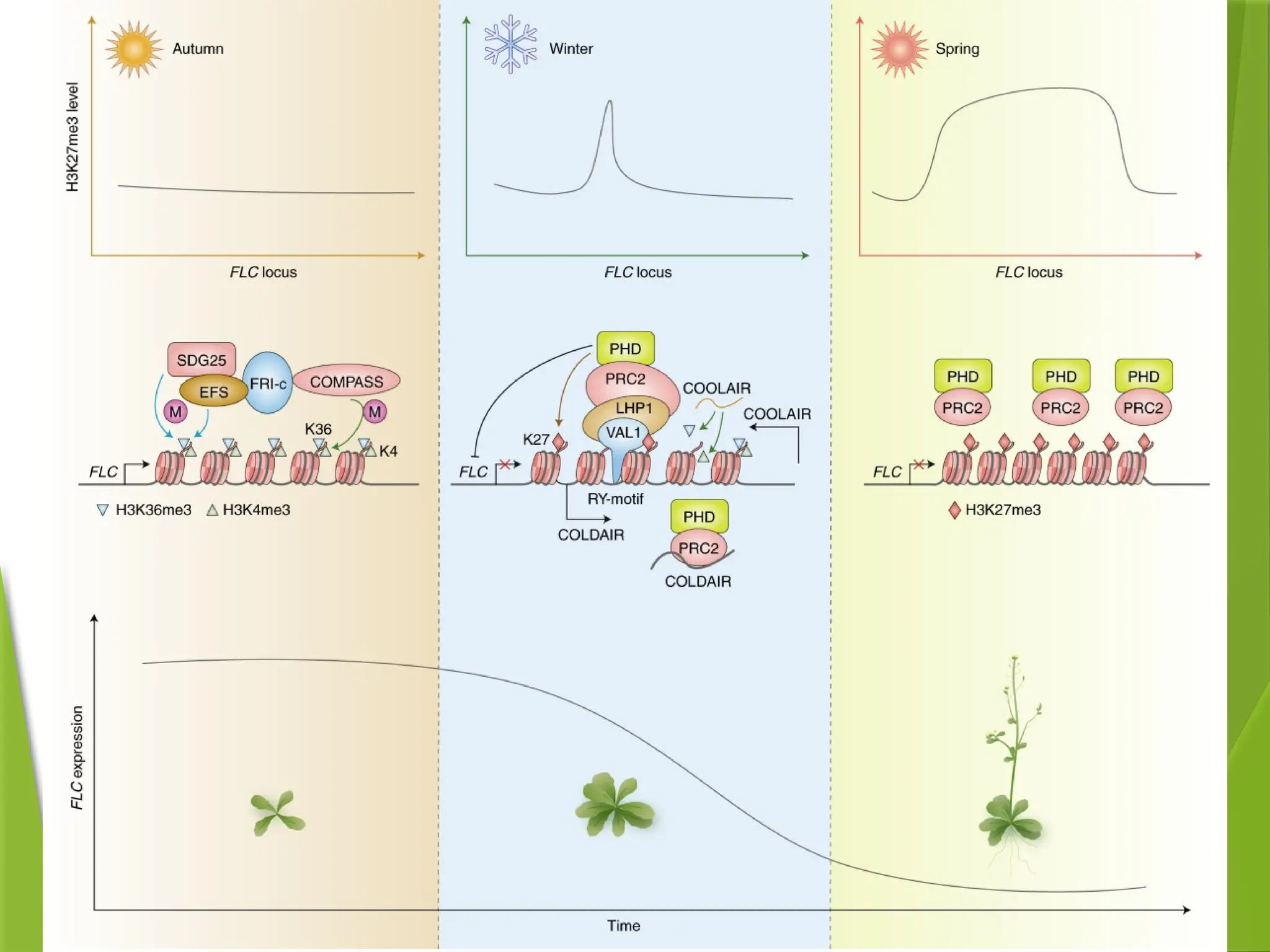

Plant growth is the irreversible increase in size due to cell division and enlargement, while plant development is the broader process encompassing all life changes from seed germination to senescence. Development is the sum of growth and differentiation and results in the formation of complex structures like roots, leaves, and flowers. Stages of Growth and Development The development of a plant from a single-celled zygote involves a highly ordered succession of events: Seed Germination: The first step, where the dormant seed resumes metabolic activities under favorable conditions (water, oxygen, temperature). Phases of Cellular Growth: Growth at a cellular level is divided into three phases: Meristematic Phase: Occurs at the root and shoot apices, involving constant cell division. Elongation Phase: Cells proximal to the meristematic zone undergo enlargement due to increased vacuolation and new cell wall deposition. Maturation Phase: Cells attain their maximal size, wall thickening, and protoplasmic modifications to perform specific functions. Differentiation: The process where meristematic cells mature and specialize into various tissues and organs (e.g., xylem, phloem, leaves, roots). Plants exhibit plasticity, meaning their development can follow different pathways in response to the environment (e.g., leaf shape variation in water vs. air). Reproductive Phase: The plant transitions from vegetative growth to flowering, fruiting, and seed formation, influenced by factors like light duration (photoperiodism) and temperature (vernalization). Senescence: The final stage of aging and eventual death of the plant or its organs.


