PID control and Tuning
Introduction
• PID controllers are most widely used automatic industrial
controllers. In process industries, most of the control
loops (typically 90-95 percent) are of PID type.
• These controllers receive inputs from sensors, meters, etc.
and depending on PID control function they deliver output
control signals to the controlled or manipulating devices
such as relays, actuators, etc.
• These are the most common form of feedback systems
and become a standard tool for precise control
applications.
What is Feedback Control System?
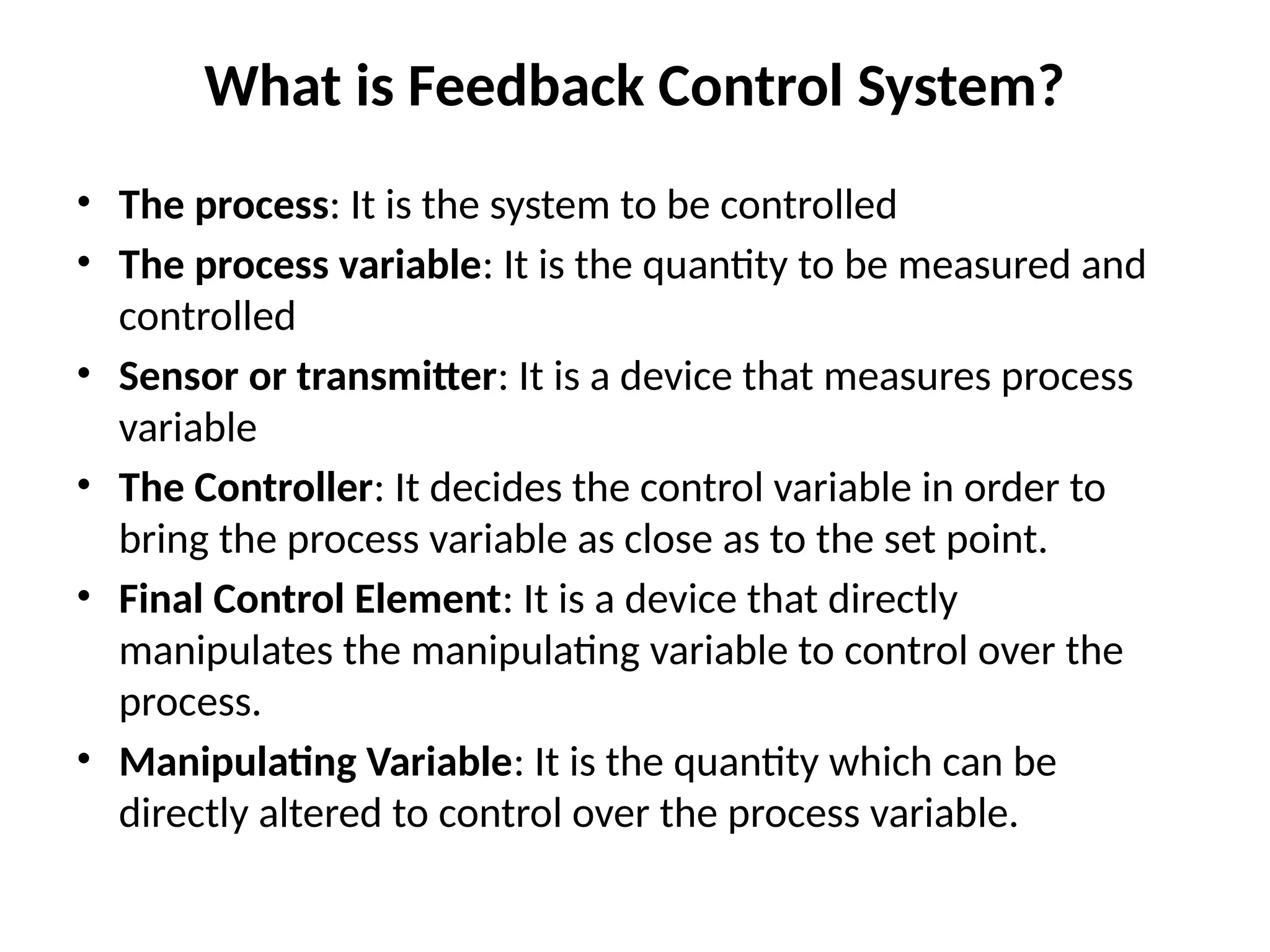
• The process: It is the system to be controlled
• The process variable: It is the quantity to be measured and
controlled
• Sensor or transmitter: It is a device that measures process
variable
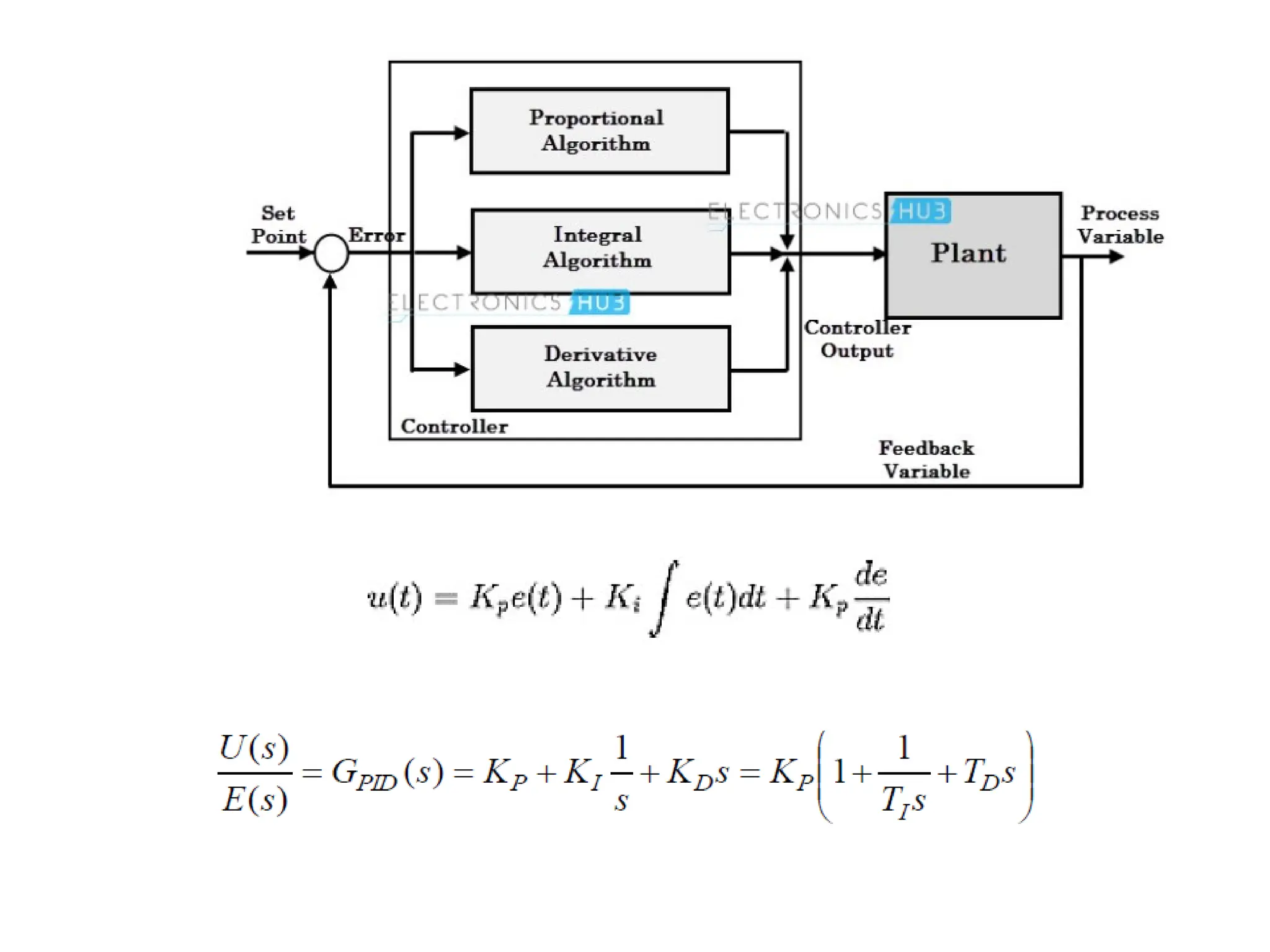
• The Controller: It decides the control variable in order to
bring the process variable as close as to the set point.
• Final Control Element: It is a device that directly
manipulates the manipulating variable to control over the
process.
• Manipulating Variable: It is the quantity which can be
directly altered to control over the process variable.
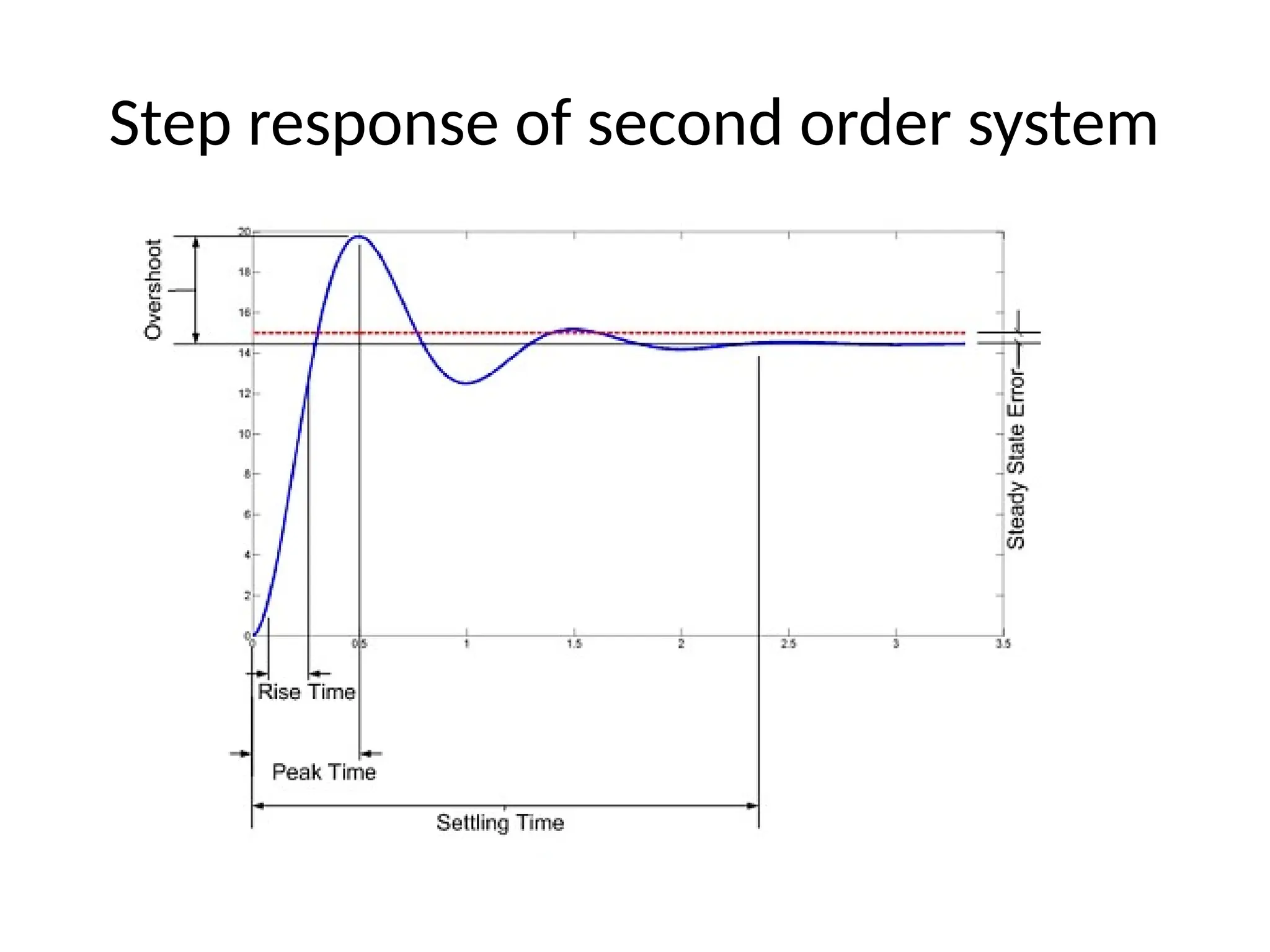
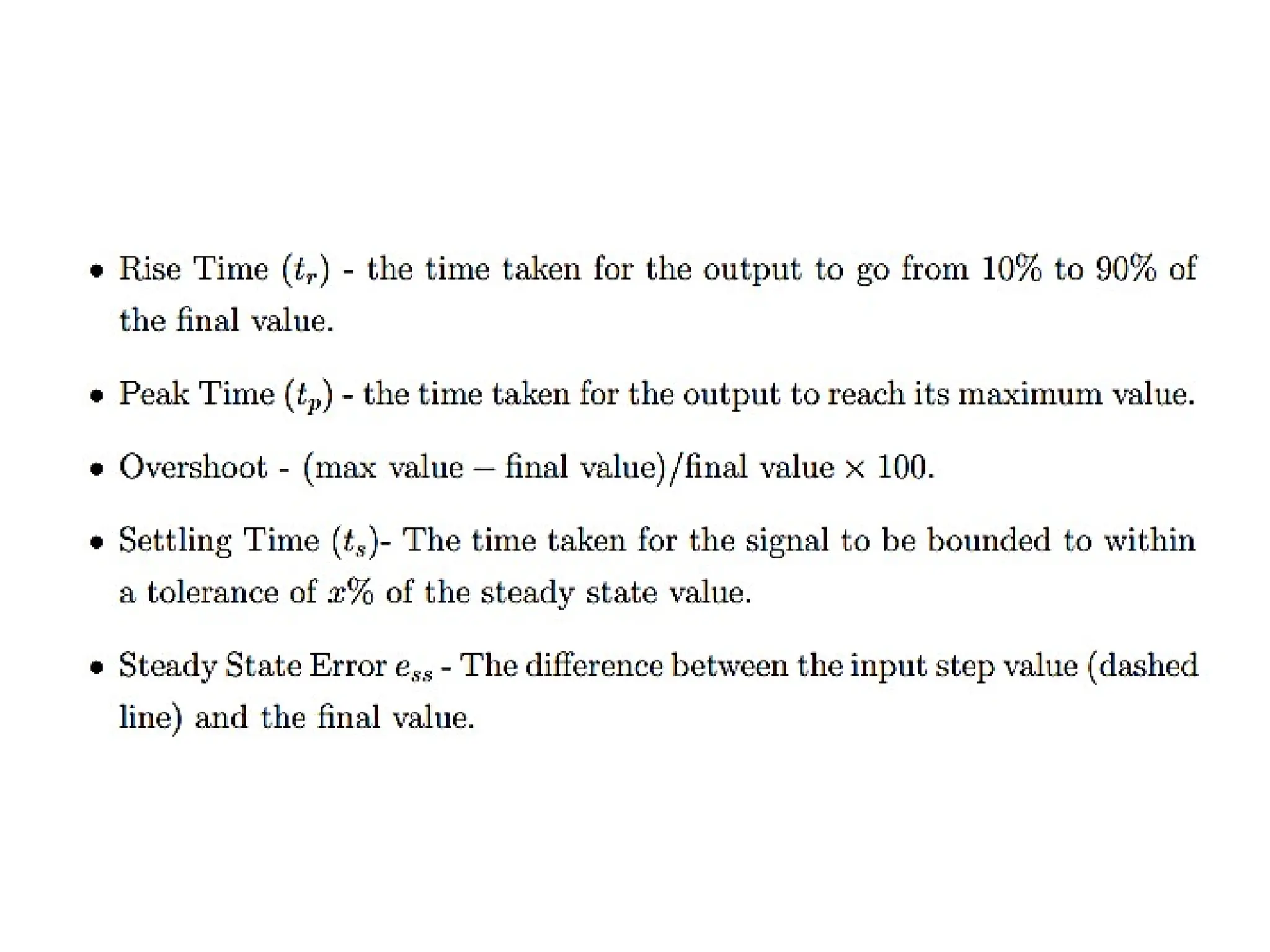
Step response of second order system
PID Tuning Method
• The determination of corresponding PID
parameter values for getting the optimum
performance from the process is called tuning.
This is obviously a crucial part in case of all
closed loop control systems.
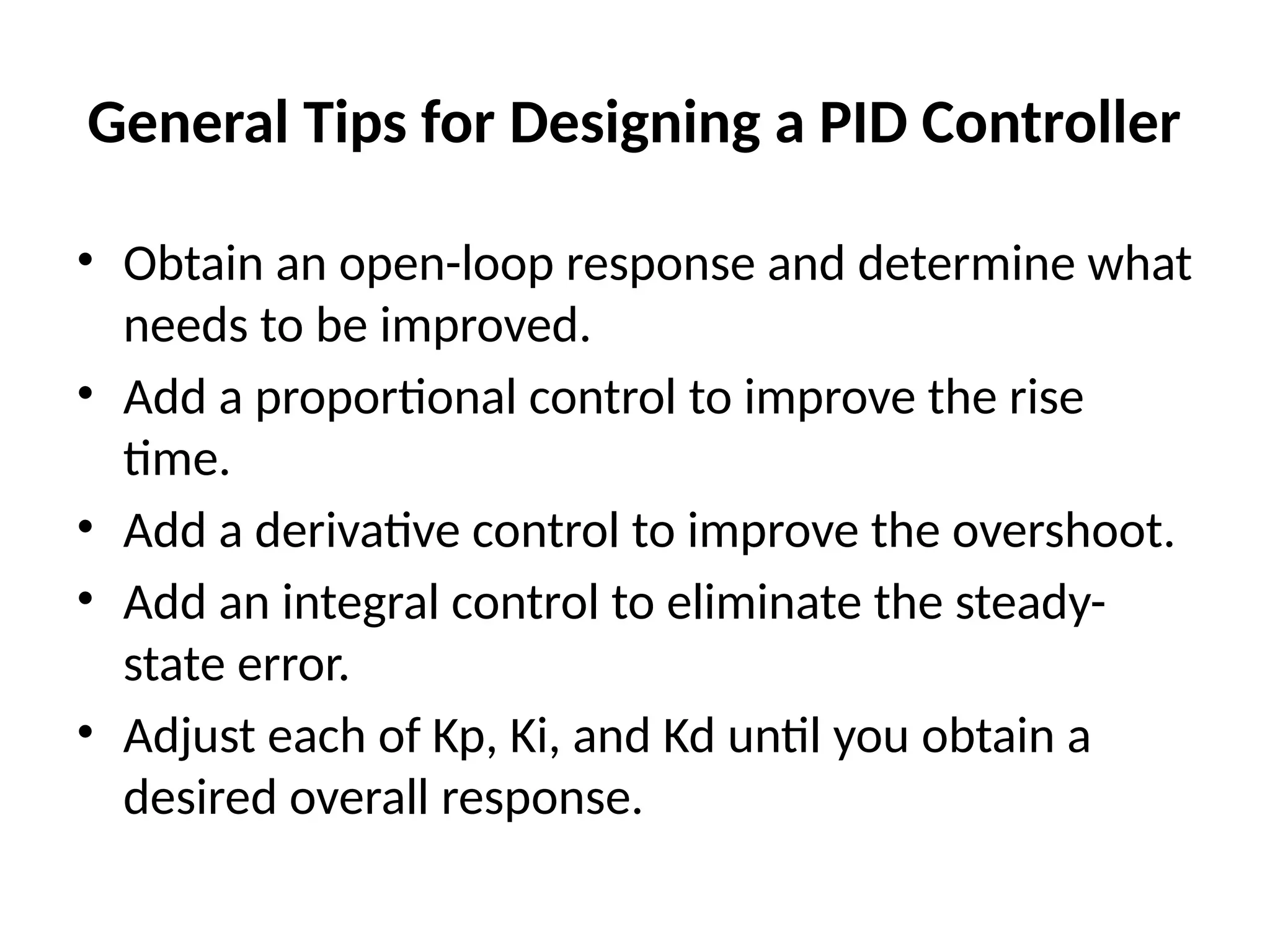
General Tips for Designing a PID Controller
• Obtain an open-loop response and determine what
needs to be improved.
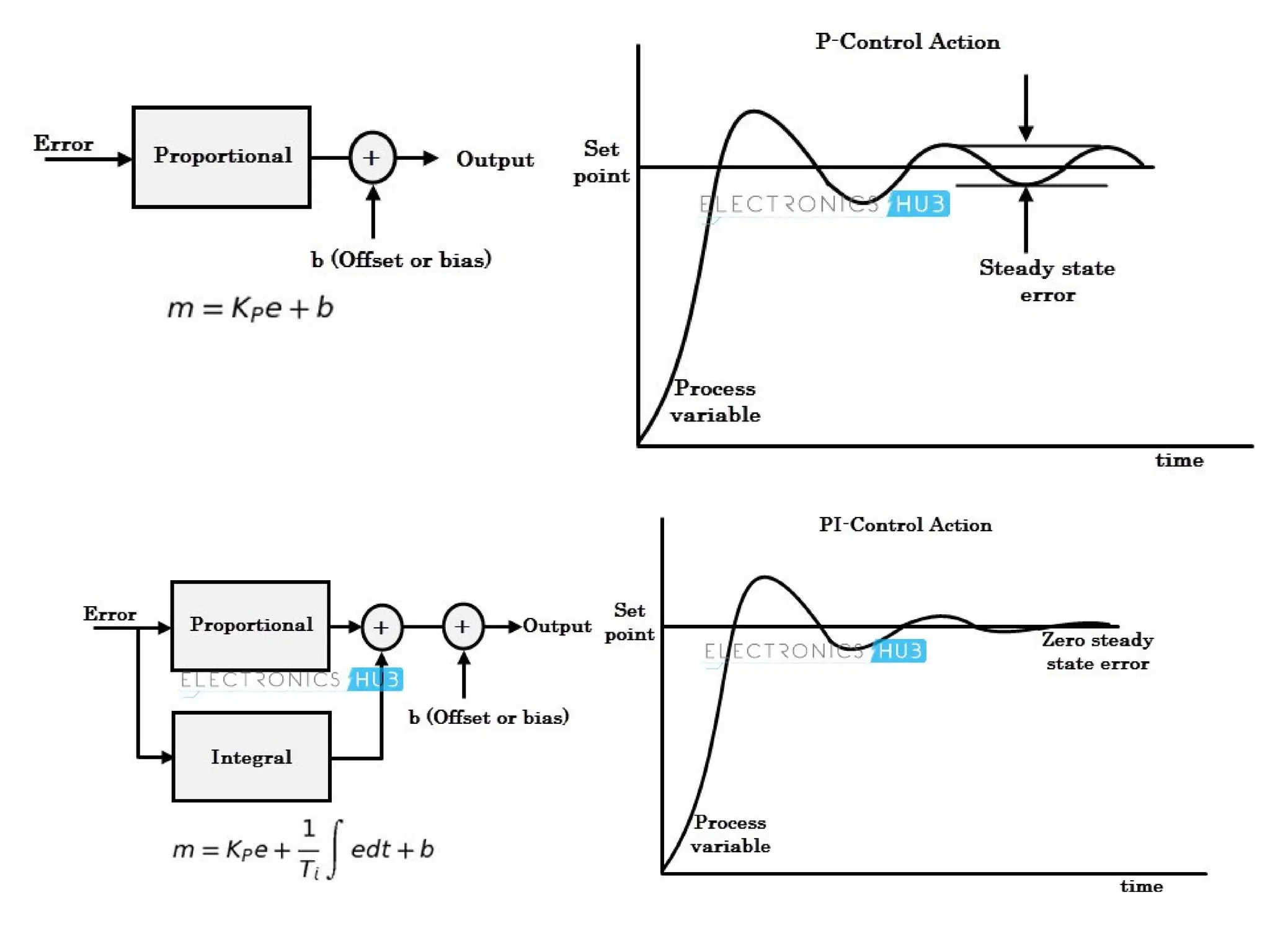
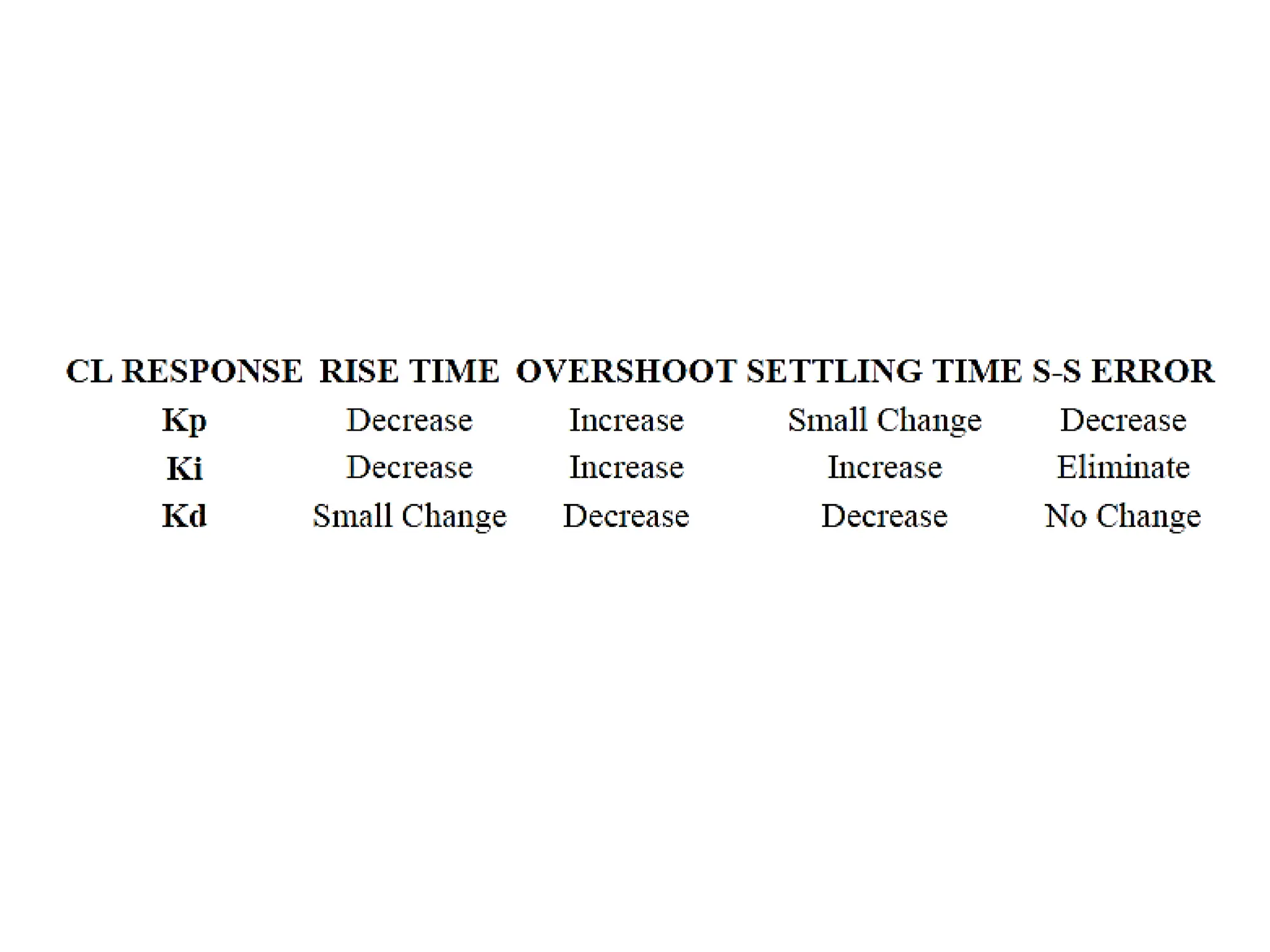
• Add a proportional control to improve the rise
time.
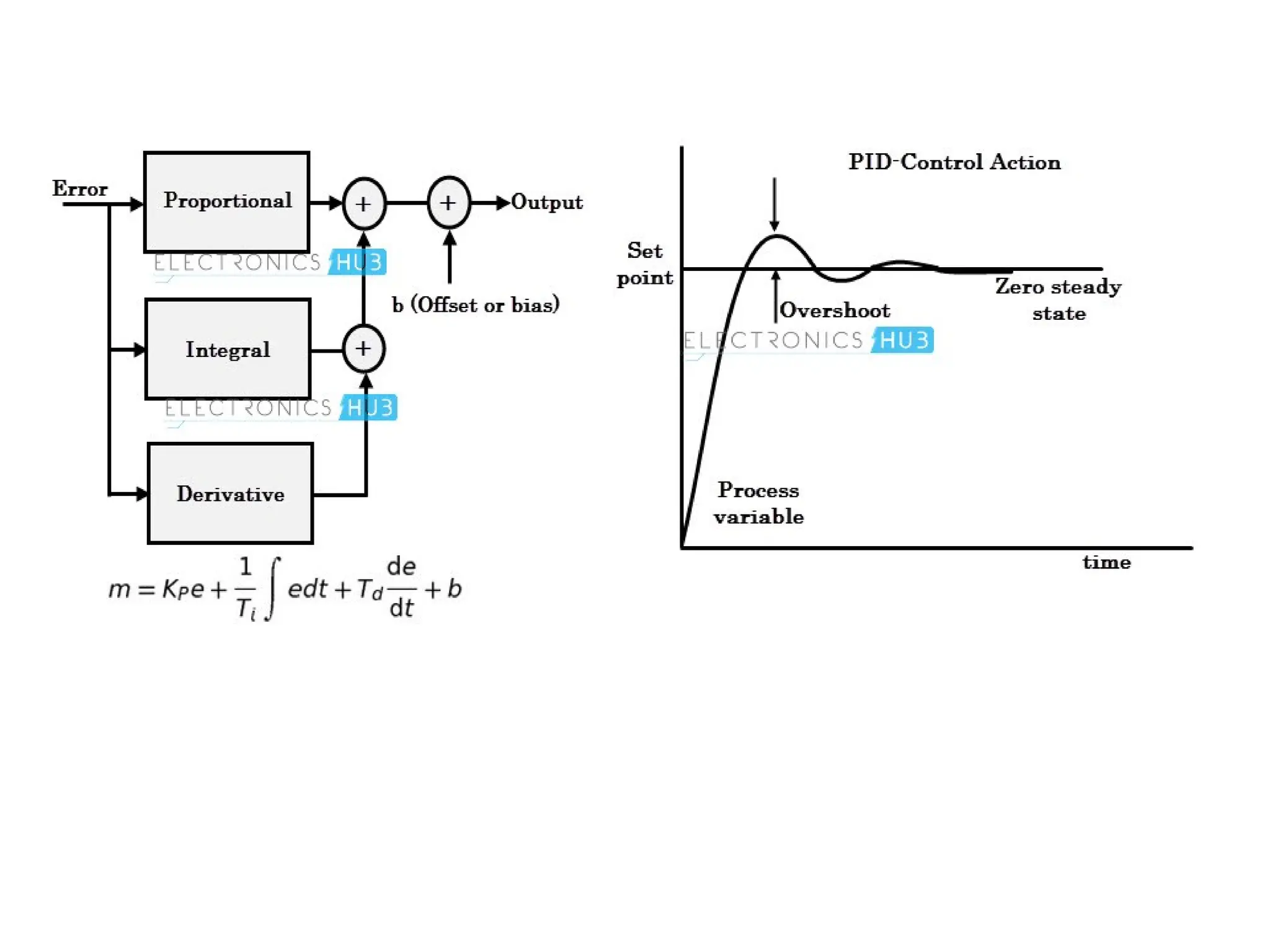
• Add a derivative control to improve the overshoot.
• Add an integral control to eliminate the steady-
state error.
• Adjust each of Kp, Ki, and Kd until you obtain a
desired overall response.
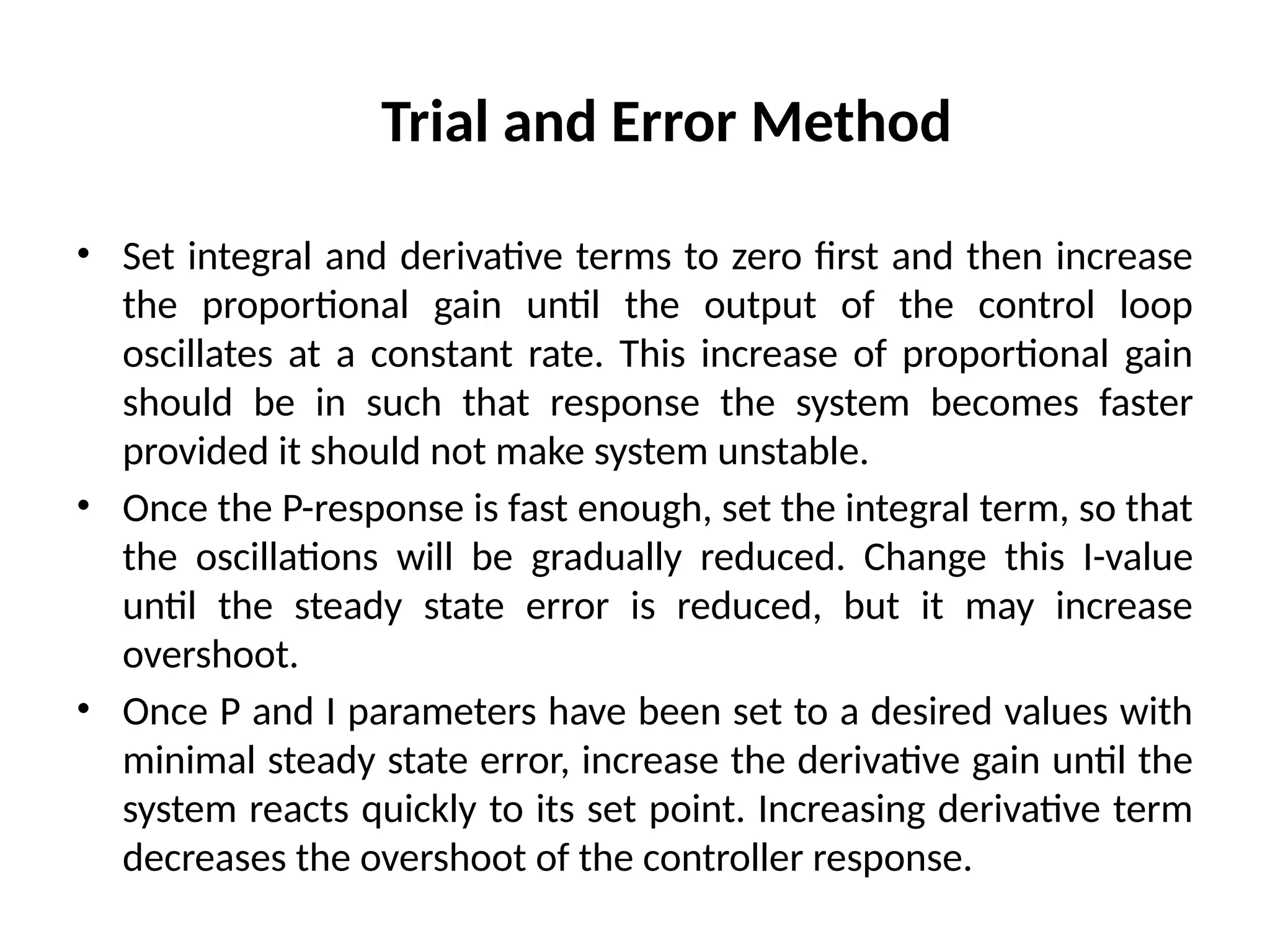
Trial and Error Method
• Set integral and derivative terms to zero first and then increase
the proportional gain until the output of the control loop
oscillates at a constant rate. This increase of proportional gain
should be in such that response the system becomes faster
provided it should not make system unstable.
• Once the P-response is fast enough, set the integral term, so that
the oscillations will be gradually reduced. Change this I-value
until the steady state error is reduced, but it may increase
overshoot.
• Once P and I parameters have been set to a desired values with
minimal steady state error, increase the derivative gain until the
system reacts quickly to its set point. Increasing derivative term
decreases the overshoot of the controller response.
Zeigler-Nichols Method
(First Method)
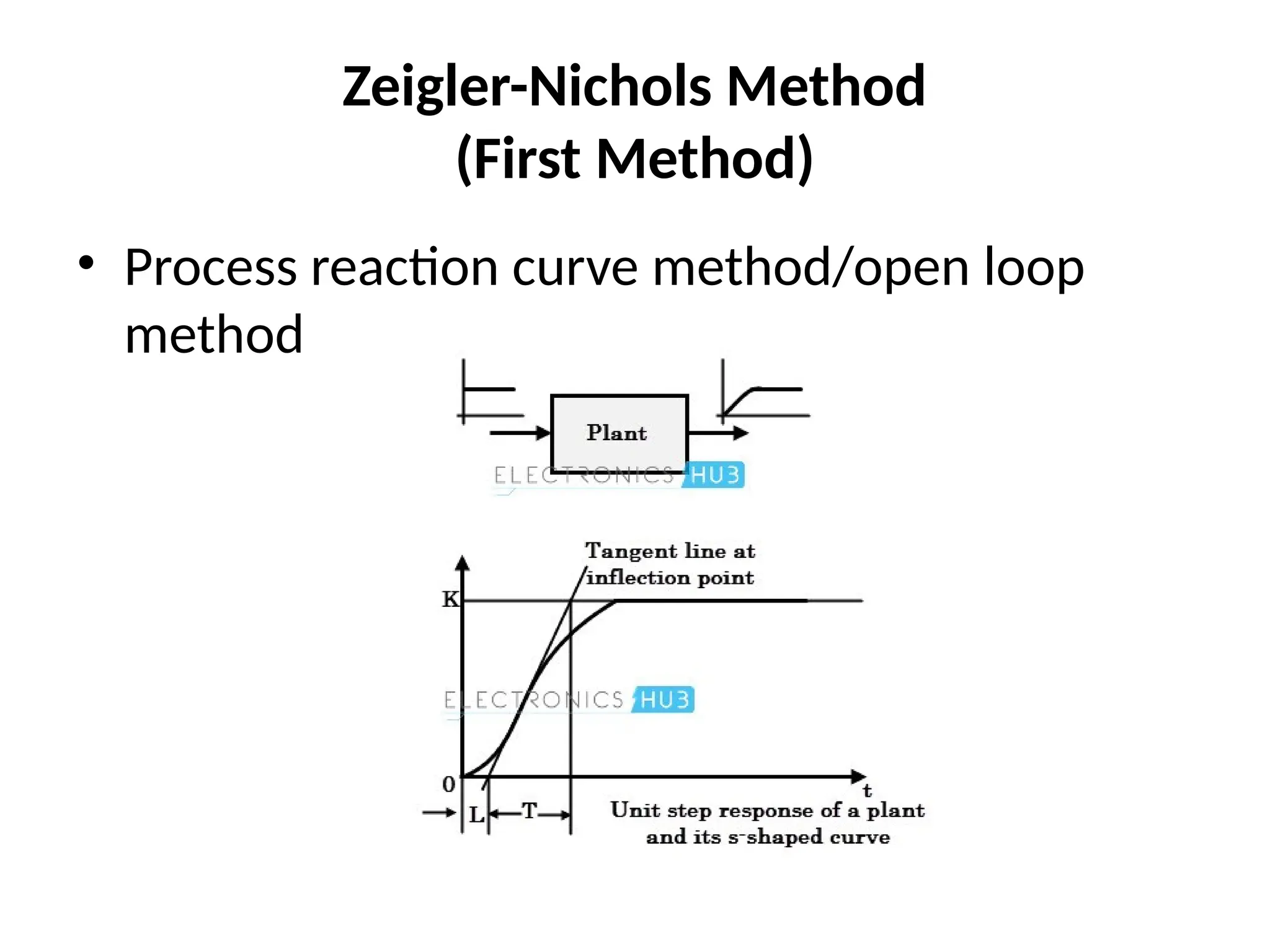
• Process reaction curve method/open loop
method
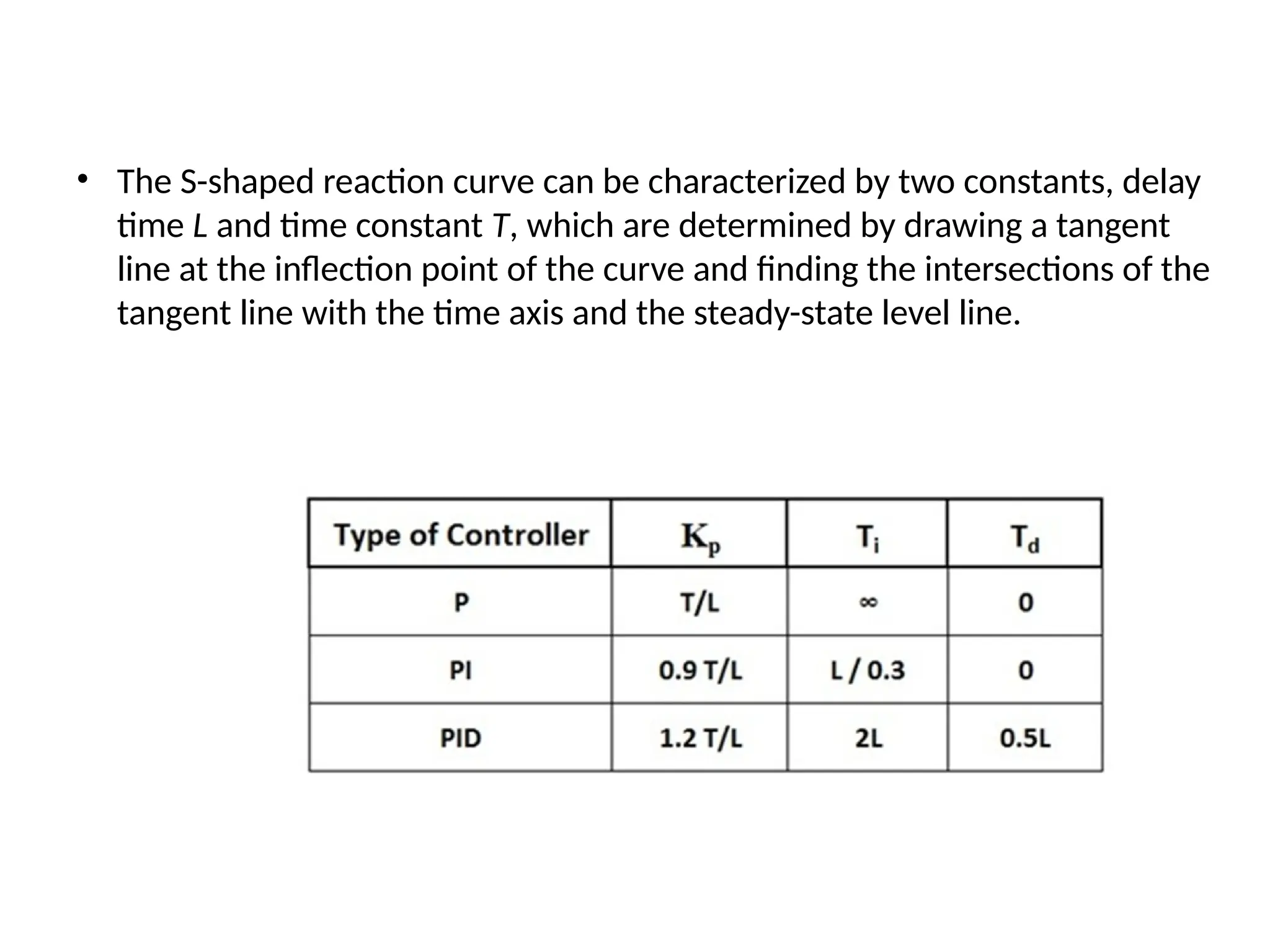
• The S-shaped reaction curve can be characterized by two constants, delay
time L and time constant T, which are determined by drawing a tangent
line at the inflection point of the curve and finding the intersections of the
tangent line with the time axis and the steady-state level line.
Zeigler-Nichols Method
Second Method
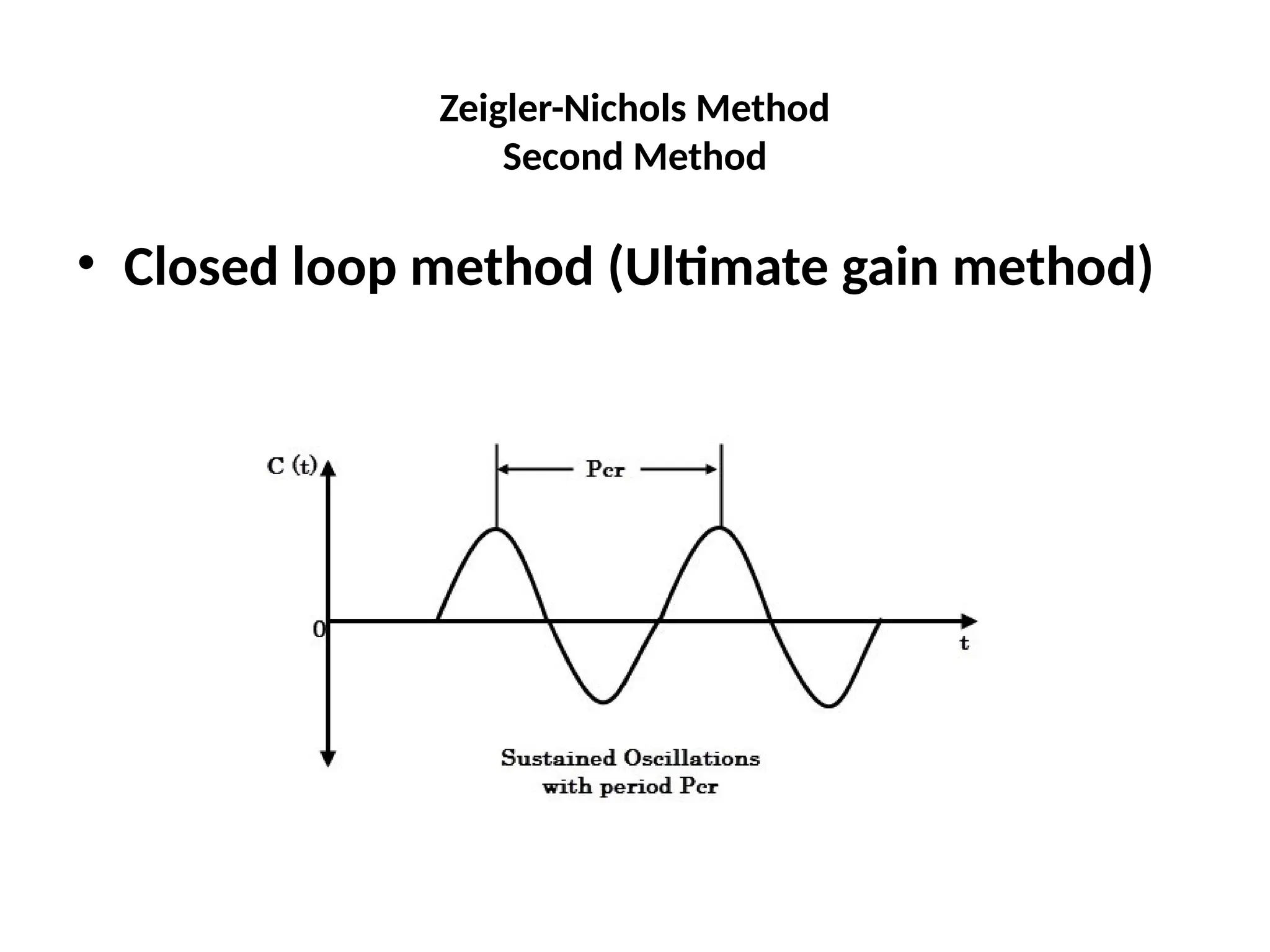
• Closed loop method (Ultimate gain method)
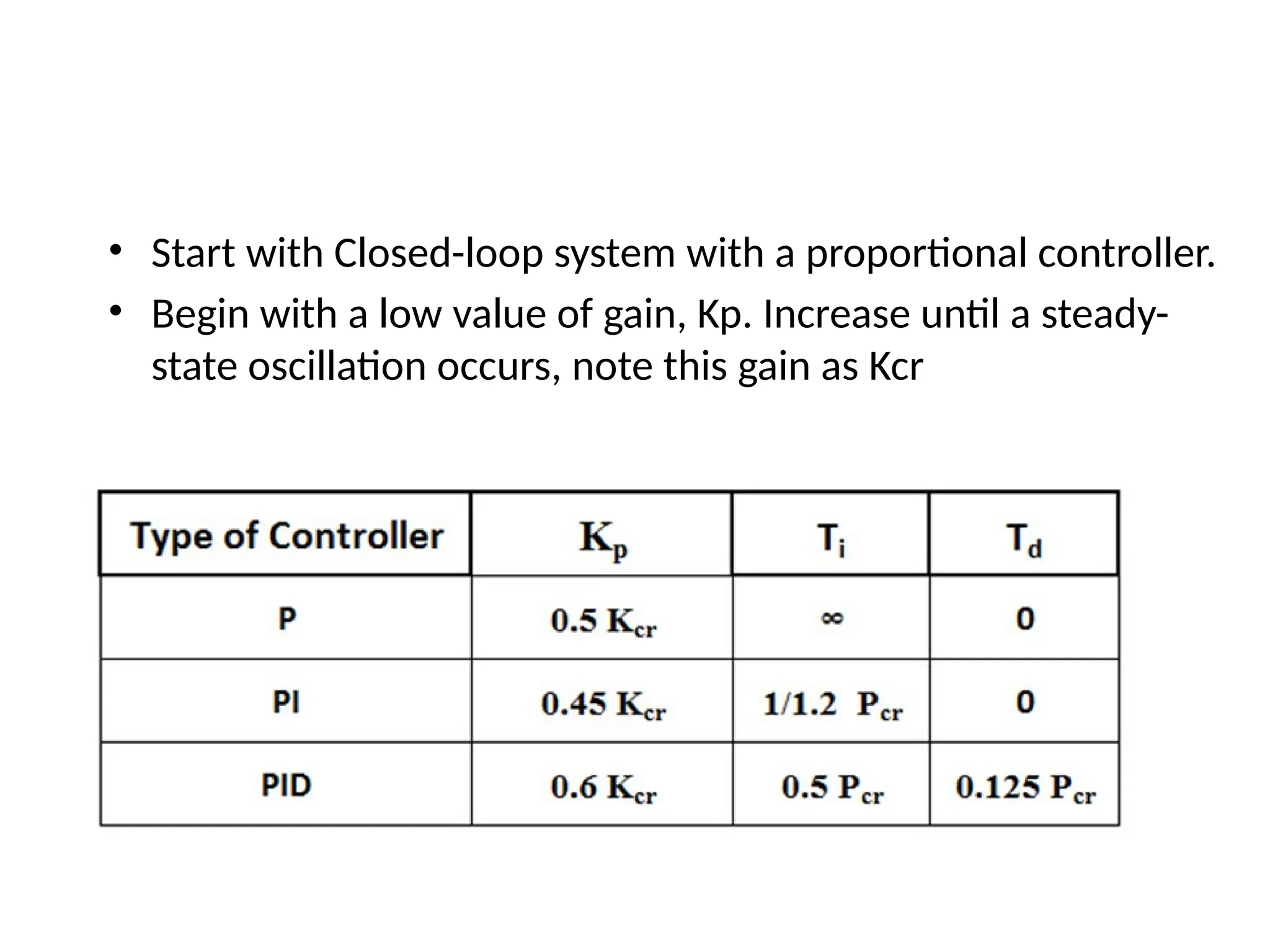
• Start with Closed-loop system with a proportional controller.
• Begin with a low value of gain, Kp. Increase until a steady-
state oscillation occurs, note this gain as Kcr
• Ziegler-Nichols tuning method to determine an
initial/estimated set of working PID
parameters for an unknown system
• •Usually included with industrial process
controllers and motor controllers as part of the
set-up utilities
• –Some controllers have additional autotune
routines
PID control and Tuning for automation.pptx

  • 1.
  • 2.
    Introduction • PID controllersare most widely used automatic industrial controllers. In process industries, most of the control loops (typically 90-95 percent) are of PID type. • These controllers receive inputs from sensors, meters, etc. and depending on PID control function they deliver output control signals to the controlled or manipulating devices such as relays, actuators, etc. • These are the most common form of feedback systems and become a standard tool for precise control applications.
  • 3.
    What is FeedbackControl System? • The process: It is the system to be controlled • The process variable: It is the quantity to be measured and controlled • Sensor or transmitter: It is a device that measures process variable • The Controller: It decides the control variable in order to bring the process variable as close as to the set point. • Final Control Element: It is a device that directly manipulates the manipulating variable to control over the process. • Manipulating Variable: It is the quantity which can be directly altered to control over the process variable.
  • 5.
    Step response ofsecond order system
  • 10.
    PID Tuning Method •The determination of corresponding PID parameter values for getting the optimum performance from the process is called tuning. This is obviously a crucial part in case of all closed loop control systems.
  • 11.
    General Tips forDesigning a PID Controller • Obtain an open-loop response and determine what needs to be improved. • Add a proportional control to improve the rise time. • Add a derivative control to improve the overshoot. • Add an integral control to eliminate the steady- state error. • Adjust each of Kp, Ki, and Kd until you obtain a desired overall response.
  • 12.
    Trial and ErrorMethod • Set integral and derivative terms to zero first and then increase the proportional gain until the output of the control loop oscillates at a constant rate. This increase of proportional gain should be in such that response the system becomes faster provided it should not make system unstable. • Once the P-response is fast enough, set the integral term, so that the oscillations will be gradually reduced. Change this I-value until the steady state error is reduced, but it may increase overshoot. • Once P and I parameters have been set to a desired values with minimal steady state error, increase the derivative gain until the system reacts quickly to its set point. Increasing derivative term decreases the overshoot of the controller response.
  • 13.
    Zeigler-Nichols Method (First Method) •Process reaction curve method/open loop method
  • 14.
    • The S-shapedreaction curve can be characterized by two constants, delay time L and time constant T, which are determined by drawing a tangent line at the inflection point of the curve and finding the intersections of the tangent line with the time axis and the steady-state level line.
  • 15.
    Zeigler-Nichols Method Second Method •Closed loop method (Ultimate gain method)
  • 16.
    • Start withClosed-loop system with a proportional controller. • Begin with a low value of gain, Kp. Increase until a steady- state oscillation occurs, note this gain as Kcr
  • 17.
    • Ziegler-Nichols tuningmethod to determine an initial/estimated set of working PID parameters for an unknown system • •Usually included with industrial process controllers and motor controllers as part of the set-up utilities • –Some controllers have additional autotune routines