PHISHING
.
PHISHING
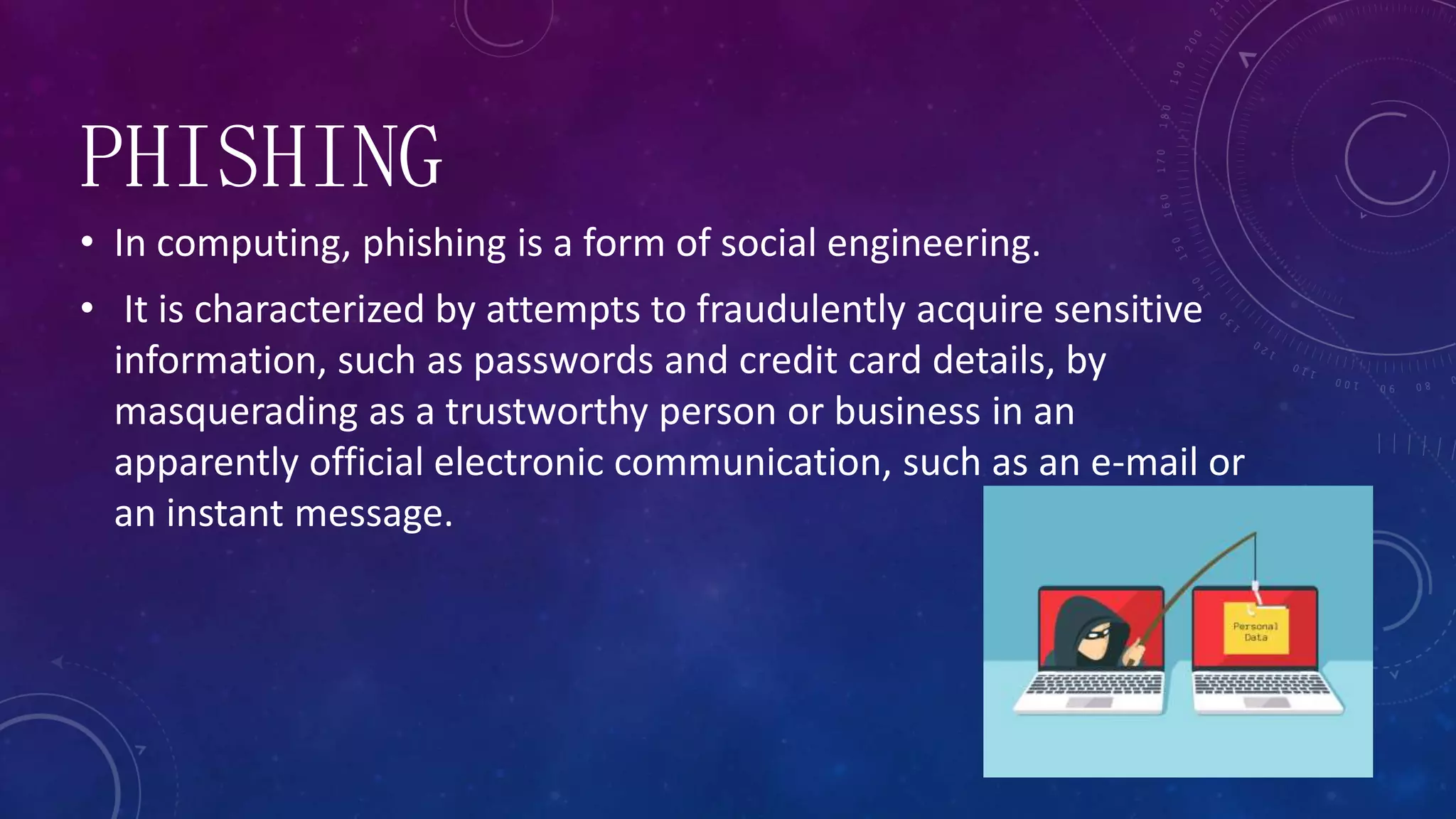
• In computing, phishing is a form of social engineering.
• It is characterized by attempts to fraudulently acquire sensitive
information, such as passwords and credit card details, by
masquerading as a trustworthy person or business in an
apparently official electronic communication, such as an e-mail or
an instant message.
SOCIAL ENGINEERING
• It is the psychological manipulation of people into performing actions or
divulging confidential information
• A type of confidence trick for the purpose of information gathering fraud or
system access
TYPES OF PHISHING ATTACKS
• Deceptive phishing or Email phishing
• Clone phishing
• Voice, SMS and calendar phishing
• Spear Phishing
• Whaling
• Pharming
DECEPTIVE PHISHING
• Deceptive phishing or also known as email phishing is the most common type
of phishing.
• In this case, an attacker attempts to obtain confidential information from the
victims.
• Attackers use the information to steal money or to launch other attacks.
• A fake email from a bank asking you to click a link and verify your account
details is an example of deceptive phishing.
SPEAR PHISHING
• Spear phishing targets specific individuals instead of a wide group of people.
• Attackers often research their victims on social media and other sites.
• That way, they can customize their communications and appear more
authentic.
• Spear phishing is often the first step used to penetrate a company’s defenses
and carry out a targeted attack.
WHALING
• Whaling also known as CEO fraud
• When attackers go after a “big fish” like a CEO, it’s called whaling.
• These attackers often spend considerable time profiling the target to find the
opportune moment and means of stealing login credentials.
• Whaling is of particular concern because high-level executives are able to
access a great deal of company information.
PHARMING
• Pharming also called page hijacking is similar to phishing, pharming sends
users to a fraudulent website that appears to be legitimate.
• However, in this case, victims do not even have to click a malicious link to be
taken to the fake site.
• Attackers can infect either the user’s computer or the website’s DNS server
and redirect the user to a fake site even if the correct URL is typed in.
CLONE PHISHING
• Clone phishing is a type of attack where a legitimate email with an
attachment or link is copied and modified to contain malicious content.
• The modified email is then sent from a fake address made to look like it's from
the original sender.
VOICE, SMS AND CALENDAR PHISHING
• Voice phishing or vishing is a type of attack done through phone calls, the attackers spoof
the calling phone number to appear as if it is coming from a legitimate bank or institution
• Vishing takes advantage of the public's lower awareness and trust in voice telephony
compared to email phishing.
• SMS phishingor smishing is a type of phishing attack that uses text messages from a cell
phone or smartphone to deliver a bait message.
• The victim is usually asked to click a link, call a phone number, or contact an email address
provided by the attacker.
• Calendar phishing involves sending fake calendar invitations with phishing links.
• These invitations often mimic common event requests and can easily be added to calendars
automatically
SIGNS OF A PHISHING
• It may contain unfamiliar tones or greetings
• Grammar and spelling mistakes
• Inconsistencies in Email addresses, links and domain names
• Threats or a sense of urgency
• Suspicious attachments
• Request for credentials payment information or other personal details
WAYS TO PREVENT PHISHING ATTACKS
• Proper awareness about phishing
• Don’t click on the suspicious attachments and links
• Don’t give information to unsecured sites
• Get free anti- phishing add on
• Rotate passwords regularly
• Update your system regularly
• Install firewalls
• Don’t be tempted by site pop-ups
• Have a security platform to spot signs of attack
THANKYOU

phishing.pptx

  • 1.
  • 2.
    PHISHING • In computing,phishing is a form of social engineering. • It is characterized by attempts to fraudulently acquire sensitive information, such as passwords and credit card details, by masquerading as a trustworthy person or business in an apparently official electronic communication, such as an e-mail or an instant message.
  • 3.
    SOCIAL ENGINEERING • Itis the psychological manipulation of people into performing actions or divulging confidential information • A type of confidence trick for the purpose of information gathering fraud or system access
  • 4.
    TYPES OF PHISHINGATTACKS • Deceptive phishing or Email phishing • Clone phishing • Voice, SMS and calendar phishing • Spear Phishing • Whaling • Pharming
  • 5.
    DECEPTIVE PHISHING • Deceptivephishing or also known as email phishing is the most common type of phishing. • In this case, an attacker attempts to obtain confidential information from the victims. • Attackers use the information to steal money or to launch other attacks. • A fake email from a bank asking you to click a link and verify your account details is an example of deceptive phishing.
  • 6.
    SPEAR PHISHING • Spearphishing targets specific individuals instead of a wide group of people. • Attackers often research their victims on social media and other sites. • That way, they can customize their communications and appear more authentic. • Spear phishing is often the first step used to penetrate a company’s defenses and carry out a targeted attack.
  • 7.
    WHALING • Whaling alsoknown as CEO fraud • When attackers go after a “big fish” like a CEO, it’s called whaling. • These attackers often spend considerable time profiling the target to find the opportune moment and means of stealing login credentials. • Whaling is of particular concern because high-level executives are able to access a great deal of company information.
  • 8.
    PHARMING • Pharming alsocalled page hijacking is similar to phishing, pharming sends users to a fraudulent website that appears to be legitimate. • However, in this case, victims do not even have to click a malicious link to be taken to the fake site. • Attackers can infect either the user’s computer or the website’s DNS server and redirect the user to a fake site even if the correct URL is typed in.
  • 9.
    CLONE PHISHING • Clonephishing is a type of attack where a legitimate email with an attachment or link is copied and modified to contain malicious content. • The modified email is then sent from a fake address made to look like it's from the original sender.
  • 10.
    VOICE, SMS ANDCALENDAR PHISHING • Voice phishing or vishing is a type of attack done through phone calls, the attackers spoof the calling phone number to appear as if it is coming from a legitimate bank or institution • Vishing takes advantage of the public's lower awareness and trust in voice telephony compared to email phishing. • SMS phishingor smishing is a type of phishing attack that uses text messages from a cell phone or smartphone to deliver a bait message. • The victim is usually asked to click a link, call a phone number, or contact an email address provided by the attacker. • Calendar phishing involves sending fake calendar invitations with phishing links. • These invitations often mimic common event requests and can easily be added to calendars automatically
  • 11.
    SIGNS OF APHISHING • It may contain unfamiliar tones or greetings • Grammar and spelling mistakes • Inconsistencies in Email addresses, links and domain names • Threats or a sense of urgency • Suspicious attachments • Request for credentials payment information or other personal details
  • 12.
    WAYS TO PREVENTPHISHING ATTACKS • Proper awareness about phishing • Don’t click on the suspicious attachments and links • Don’t give information to unsecured sites • Get free anti- phishing add on • Rotate passwords regularly • Update your system regularly • Install firewalls • Don’t be tempted by site pop-ups • Have a security platform to spot signs of attack
  • 13.