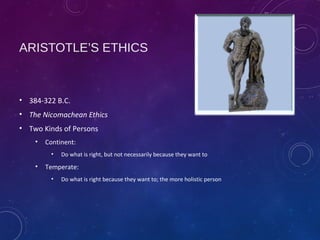
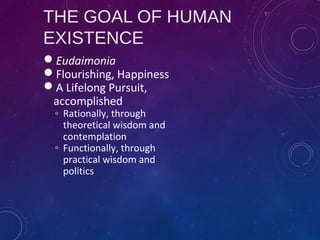
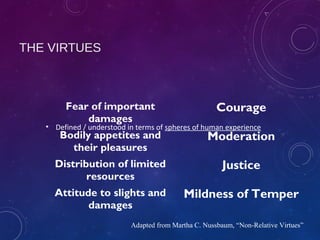
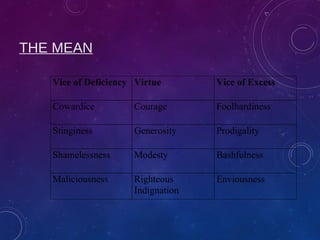
This document provides an overview of virtue ethics from Aristotle to modern philosophers. It discusses Aristotle's concept of eudaimonia or human flourishing as the goal of ethics achieved through developing moral virtues like courage, justice, and temperance. Aristotle defined virtues as means between vices of excess and deficiency. Later virtue ethicists expanded on Aristotle's work, with some emphasizing narrative traditions or ethics of care. Strengths of virtue ethics include its focus on character, community, and long-term moral development, though weaknesses include vagueness and dependence on strong communities.