Prepared By
Rashmin Patel (120400119059)
INTRODUCTION
Fuel injection is a system for admitting
fuel into an internal combustion
engine.
It has become the primary fuel delivery
system used in automotive engines.
A variety of injection systems have
existed since the earliest usage of the IC
engine.
The primary difference between
carburetors and fuel injection is that fuel
injection atomizes the fuel by forcibly
pumping it through a small nozzle under
high pressure, while a carburetor relies on
suction created by intake air accelerated
through a venturi tube to draw a fuel into
the air stream.
Most fuel injection systems are for
gasoline or diesel applications.
There are number of drawback and
limitation of carburetor in petrol
engine.
It can be eliminated by petrol
injection system so in near future
carburetor fully replace by modern
petrol injection system.
Drawback and Limitation
 It has many moving parts so its affects the
performance
 Ice formation and freezing take place its affects the
combustion
 In multi cylinder engine A/F ratio may vary in each
cylinder
 A/F ratio not available in different condition
 Back firing take place in suction and exhaust manifold
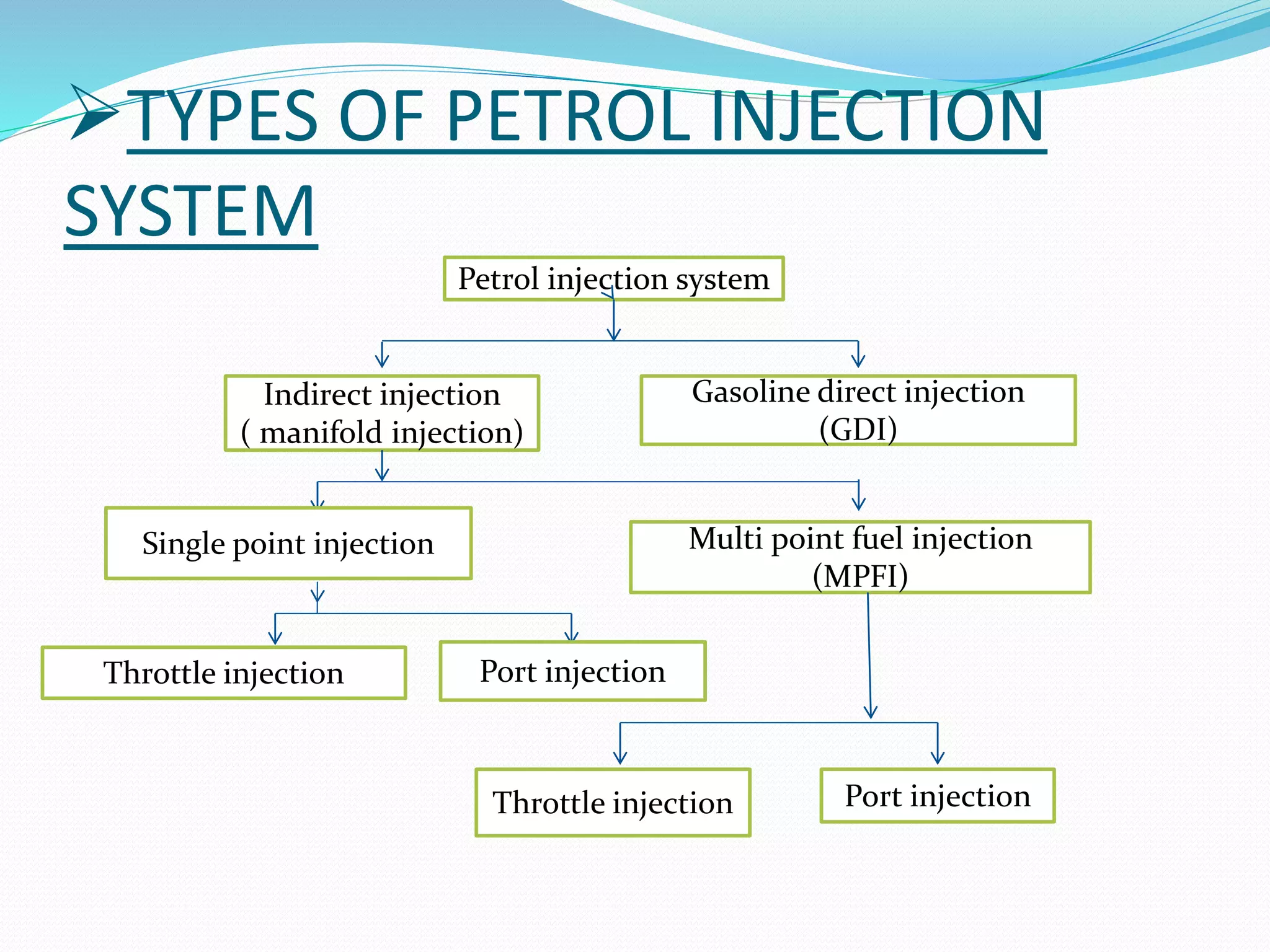
Petrol injection system
Gasoline direct injection
(GDI)
Indirect injection
( manifold injection)
Single point injection Multi point fuel injection
(MPFI)
Throttle injection Port injection
TYPES OF PETROL INJECTION
SYSTEM
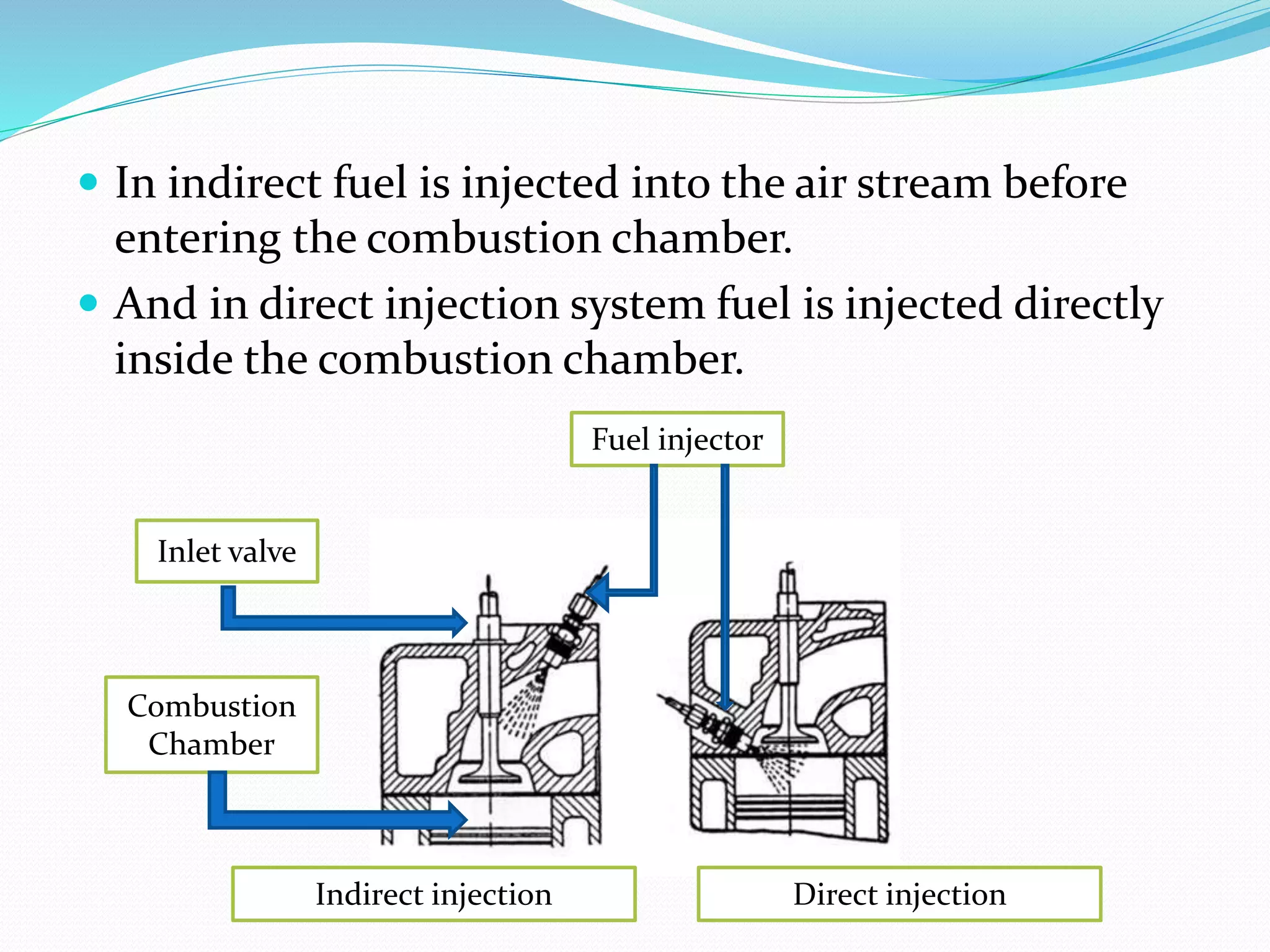
 In indirect fuel is injected into the air stream before
entering the combustion chamber.
 And in direct injection system fuel is injected directly
inside the combustion chamber.
Fuel injector
Indirect injection Direct injection
Combustion
Chamber
Inlet valve
Single Point Injection system
 The earliest & simplest type of fuel injection, single
point simply replaces the carburetor with one or two
fuel injector nozzles in the throttle body, which is the
throat of the engine’s air intake manifold.
 For some automakers, single point injection was a
stepping stone to the more complex multipoint
system.
 Single point injection system meters fuel better than a
carburetor and is less expensive and easier to service.
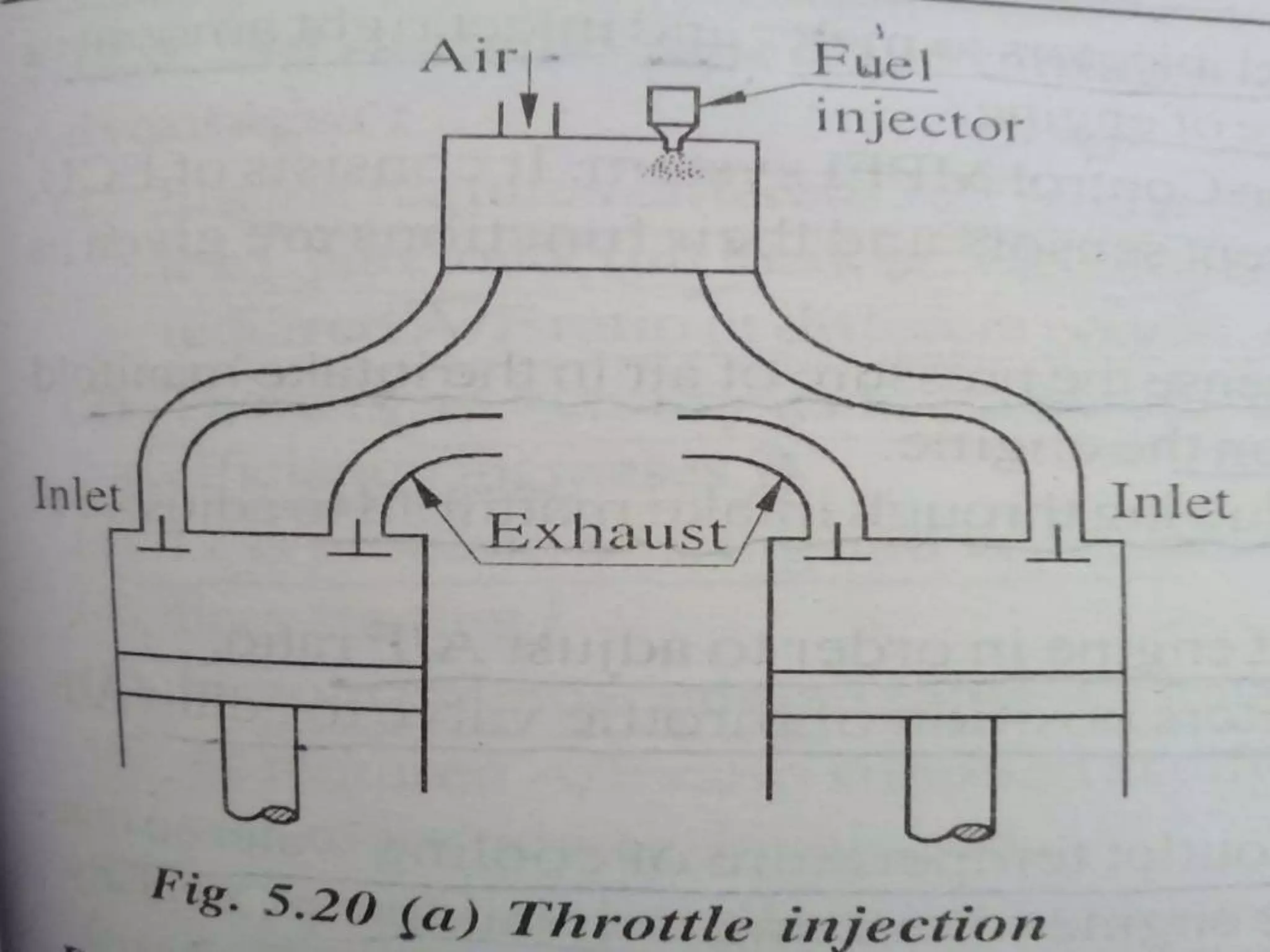
Throttle Injection
 The indirect injection can be classified as single point
injection and multi point fuel injection.
 The single point injection also called Throttle
injection in which fuel is injected at one place in
throttle body, and the mixture supply to different
cylinders as shown in fig…
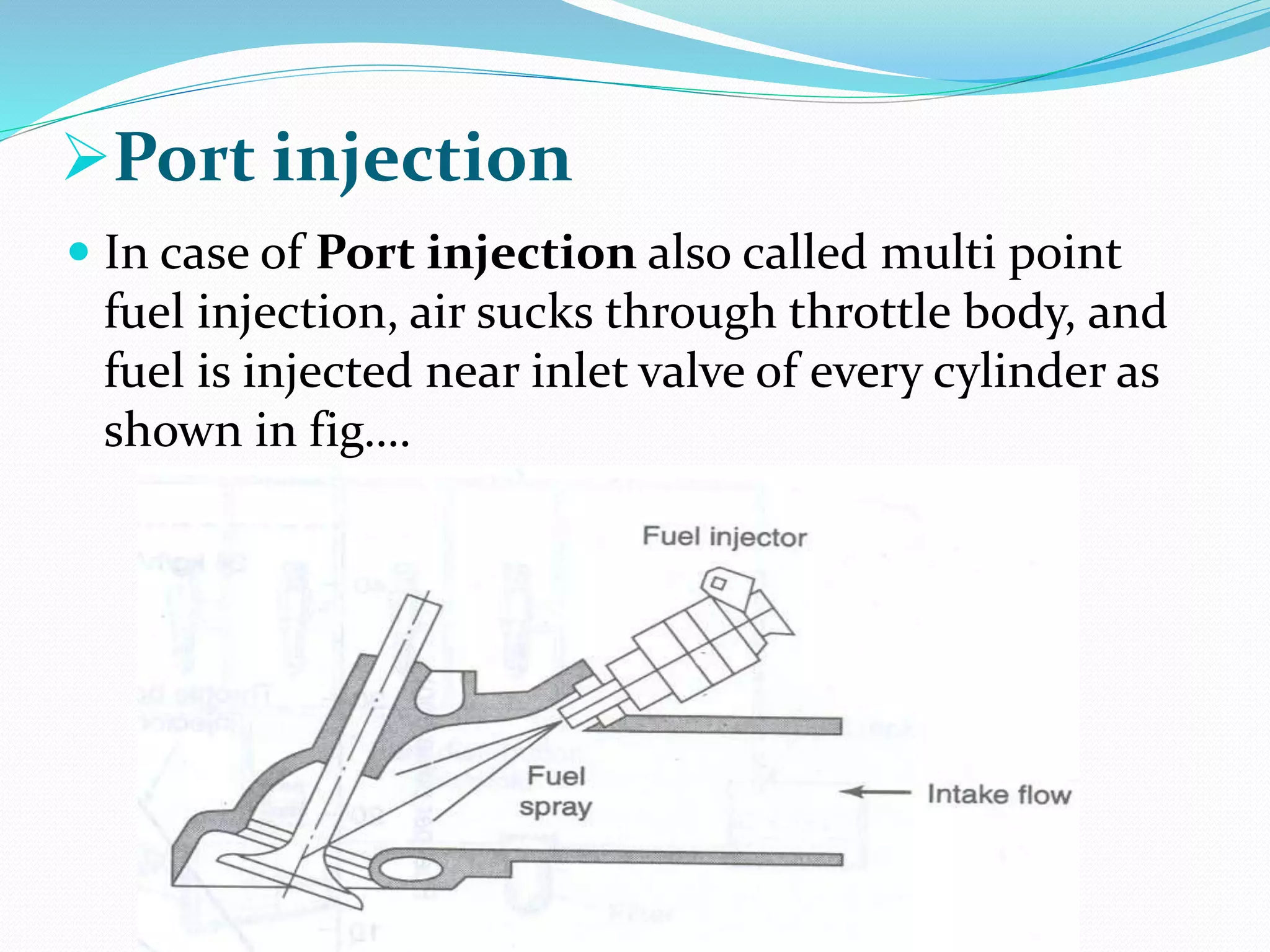
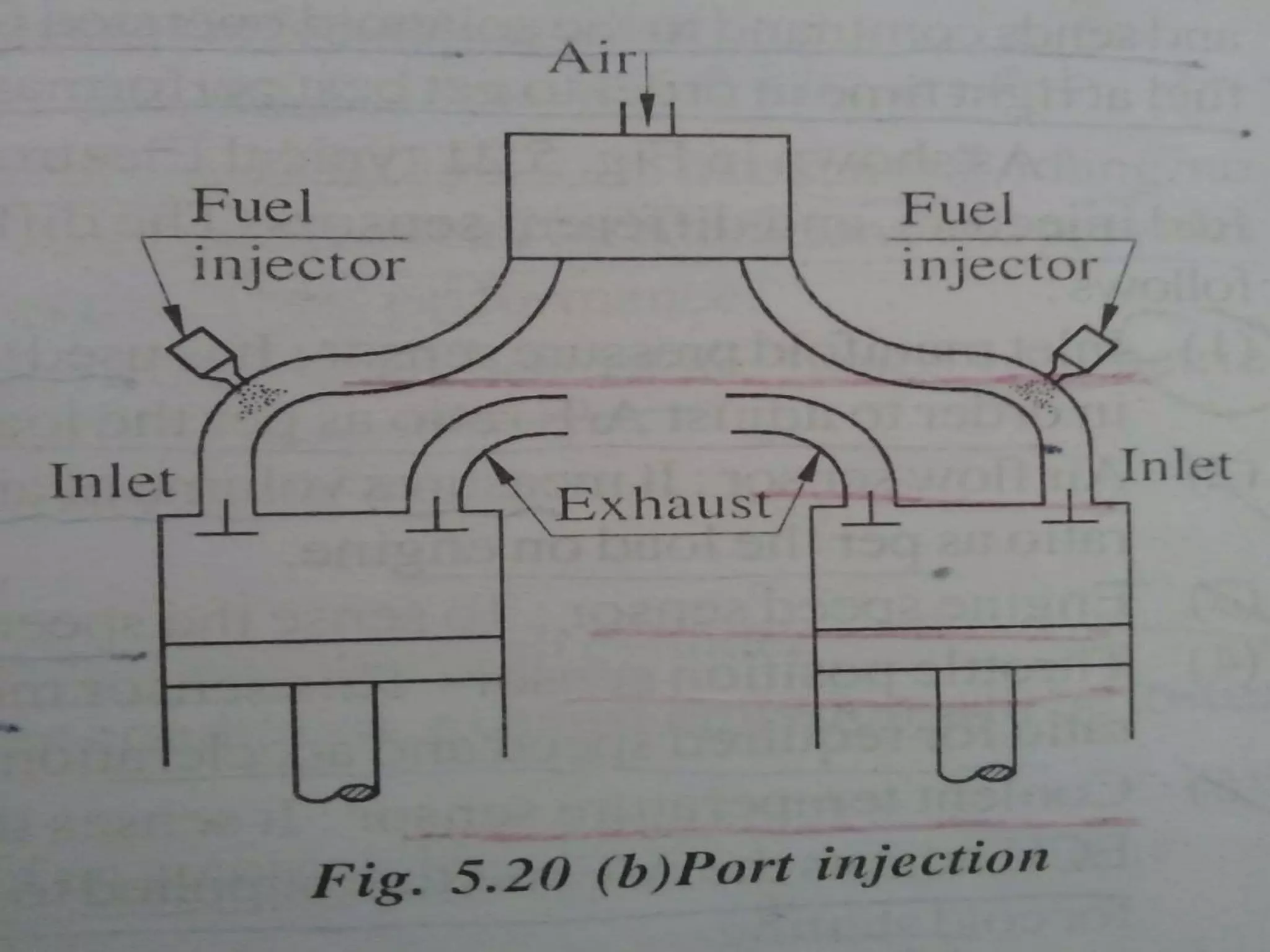
Port injection
 In case of Port injection also called multi point
fuel injection, air sucks through throttle body, and
fuel is injected near inlet valve of every cylinder as
shown in fig….
Multi Point Fuel Injection System
(MPFI)
 MPFI system is widely used in petrol engine in place of
carburetor.
 Purpose of MPFI is supply proper A/F ratio to each
cylinder of engine.
 Fuel tank > Pump > High pressure petrol > Distributor
> Fuel injector > Cylinder
 Now a days MPFI system control by Electric Control
Module (ECM).
 Ecm receives signal from different sensors.
 ECM receives signal and send to the solanoid operated
fuel injector to meter and inject right amount of fuel at
right time.
There are different type of sensors in MPFI system.
1. Inlet manifold pressure sensor
2. Air flow sensor
3. Engine speed sensor
4. Throttle position sensor
5. Coolant temperature sensor
6. Inlet air temperature sensor
7. Knock sensor
8. Exhaust gas sensor
Direct injection (GDI)
 These systems inject the fuel directly into the combustion
chamber, either during the intake stroke or during the
compression stroke.
 There are two basic type of GDI, either injection of gasoline
alone, or a duel injection of gasoline and air together.
 Injection of fuel alone is usually done during the
compression stroke and is somewhat similar to fuel
injection in CI engine. Because of the very short time
available for vaporization and mixing with air, very fine
droplets of fuel are required, as are high turbulence and
bulk mass motion within the combustion chamber
 Injector pressure must be higher than that require for
port injection.
 This is because of the higher pressure into which the
fuel is being injected, and because of the requirement
for finer droplets of fuel.
 Pressure required for fuel injection is above 40 to 65
bar.
 Modern gasoline engine may utilized Direct injection
using electric control.
Advantages of Direct Injection
 Bettor vaporization
 Higher volumetric efficiency
 Easy cold starting
 Lower exhaust emission
 Higher efficiency and better mileage
Advantages of Petrol Injection
System
 Improved atomization
 Easy starting
 Better fuel flow
 Less problem of icing and vapor lock
 Multi cylinder engine same A/F ratio supplied
 Increase engine power
Disadvantages of Petrol Injection
System
 High initial cost.
 Increase the maintenance cost because of more
electronic parts.
 Skilled worker and special service required for
maintenance.
 System is complicated so more care & attention
required.
Thank you

Petrol injection system

  • 1.
  • 2.
    INTRODUCTION Fuel injection isa system for admitting fuel into an internal combustion engine. It has become the primary fuel delivery system used in automotive engines. A variety of injection systems have existed since the earliest usage of the IC engine.
  • 3.
    The primary differencebetween carburetors and fuel injection is that fuel injection atomizes the fuel by forcibly pumping it through a small nozzle under high pressure, while a carburetor relies on suction created by intake air accelerated through a venturi tube to draw a fuel into the air stream. Most fuel injection systems are for gasoline or diesel applications.
  • 4.
    There are numberof drawback and limitation of carburetor in petrol engine. It can be eliminated by petrol injection system so in near future carburetor fully replace by modern petrol injection system.
  • 5.
    Drawback and Limitation It has many moving parts so its affects the performance  Ice formation and freezing take place its affects the combustion  In multi cylinder engine A/F ratio may vary in each cylinder  A/F ratio not available in different condition  Back firing take place in suction and exhaust manifold
  • 6.
    Petrol injection system Gasolinedirect injection (GDI) Indirect injection ( manifold injection) Single point injection Multi point fuel injection (MPFI) Throttle injection Port injection Throttle injection Port injection TYPES OF PETROL INJECTION SYSTEM
  • 7.
     In indirectfuel is injected into the air stream before entering the combustion chamber.  And in direct injection system fuel is injected directly inside the combustion chamber. Fuel injector Indirect injection Direct injection Combustion Chamber Inlet valve
  • 8.
    Single Point Injectionsystem  The earliest & simplest type of fuel injection, single point simply replaces the carburetor with one or two fuel injector nozzles in the throttle body, which is the throat of the engine’s air intake manifold.  For some automakers, single point injection was a stepping stone to the more complex multipoint system.  Single point injection system meters fuel better than a carburetor and is less expensive and easier to service.
  • 9.
    Throttle Injection  Theindirect injection can be classified as single point injection and multi point fuel injection.  The single point injection also called Throttle injection in which fuel is injected at one place in throttle body, and the mixture supply to different cylinders as shown in fig…
  • 11.
    Port injection  Incase of Port injection also called multi point fuel injection, air sucks through throttle body, and fuel is injected near inlet valve of every cylinder as shown in fig….
  • 13.
    Multi Point FuelInjection System (MPFI)  MPFI system is widely used in petrol engine in place of carburetor.  Purpose of MPFI is supply proper A/F ratio to each cylinder of engine.  Fuel tank > Pump > High pressure petrol > Distributor > Fuel injector > Cylinder  Now a days MPFI system control by Electric Control Module (ECM).  Ecm receives signal from different sensors.  ECM receives signal and send to the solanoid operated fuel injector to meter and inject right amount of fuel at right time.
  • 14.
    There are differenttype of sensors in MPFI system. 1. Inlet manifold pressure sensor 2. Air flow sensor 3. Engine speed sensor 4. Throttle position sensor 5. Coolant temperature sensor 6. Inlet air temperature sensor 7. Knock sensor 8. Exhaust gas sensor
  • 15.
    Direct injection (GDI) These systems inject the fuel directly into the combustion chamber, either during the intake stroke or during the compression stroke.  There are two basic type of GDI, either injection of gasoline alone, or a duel injection of gasoline and air together.  Injection of fuel alone is usually done during the compression stroke and is somewhat similar to fuel injection in CI engine. Because of the very short time available for vaporization and mixing with air, very fine droplets of fuel are required, as are high turbulence and bulk mass motion within the combustion chamber
  • 16.
     Injector pressuremust be higher than that require for port injection.  This is because of the higher pressure into which the fuel is being injected, and because of the requirement for finer droplets of fuel.  Pressure required for fuel injection is above 40 to 65 bar.  Modern gasoline engine may utilized Direct injection using electric control.
  • 17.
    Advantages of DirectInjection  Bettor vaporization  Higher volumetric efficiency  Easy cold starting  Lower exhaust emission  Higher efficiency and better mileage
  • 18.
    Advantages of PetrolInjection System  Improved atomization  Easy starting  Better fuel flow  Less problem of icing and vapor lock  Multi cylinder engine same A/F ratio supplied  Increase engine power
  • 19.
    Disadvantages of PetrolInjection System  High initial cost.  Increase the maintenance cost because of more electronic parts.  Skilled worker and special service required for maintenance.  System is complicated so more care & attention required.
  • 21.