Peroxisomes
v.kanthasamy.
V.Kanthasamy
M.Sc.,LifeScience
LS14106
BDU.
History of Peroxisomes
• First observed by electron microscopy in
animal cells (1950), then in plant cells
(1960)
Christian deDuve (1965)
Isolated from liver cells by centrifugation
Called them peroxisomes because they
generate and destroy H2O2
Peroxisomes are also called
Microbodies.
Peroxisomes are about the
size of lysosomes (0.5-1.5
µm) and like them are bound
by a single membrane. They
also resemble lysosomes in
being filled with enzymes.
What they look like
They are round or oval vesicles surrounded by a
phosolipid bilayer
Inside the vesicle are many, many enzymes
Each peroxisome is a single membrane
Each cell contains several hundred peroxisomes
They resemble a lysosome but are not the same
They are self replicating
Size is variable, but it is roughly 700nm
A peroxisome is found in the cytoplasm of a cell
The organ that peroxisomes are most abundant in is
the liver
Peroxisomes are vesicles than contain enzymes
to oxidize organic substances like fats. In other
words the use oxygen to break down molecules.
The enzymes in these organelles produce
hydrogen peroxide
Hydrogen peroxide is broken down right away by
the enzyme catalase into oxygen and water.
Peroxisomes are abundant in the liver where
they produce bile salts and cholesterol and break
down fats.
3-10
Functions
Major Metabolic Functions of
the Peroxisome in Plants
1. -oxidation of fatty acids
2. Glyoxylate cycle
3. Photorespiration (Glycolate pathway)
4. Degradation of purines
5. Decomposition of hydrogen peroxide
Some of the functions of the
peroxisomes in the human liver:
Breakdown (by oxidation) of excess fatty acids.
Breakdown of hydrogen peroxide (H2O2), a potentially
dangerous product of fatty-acid oxidation. It is catalyzed
by the enzyme catalase.
Participates in the synthesis of cholesterol.
Participates in the synthesis of bile acids.
Participates in the synthesis of the lipids .
Breakdown of excess purines (AMP, GMP) to uric acid.
Two Types of Peroxisomes in
Plants
Leaves
Catalyzes oxidation of side product of CO2
fixation in photorespiration
Germinating seeds
Converts fatty acid in seed lipids into sugars
needed for growth in the young plant
Enzymatic pathways in
peroxisomes
Fatty acid oxidation (VLCFA)
H2O2 detoxification (catalase)
Bile acid synthesis
Plasmalogen synthesis
Cholesterol synthesis
Glyoxylate detoxification
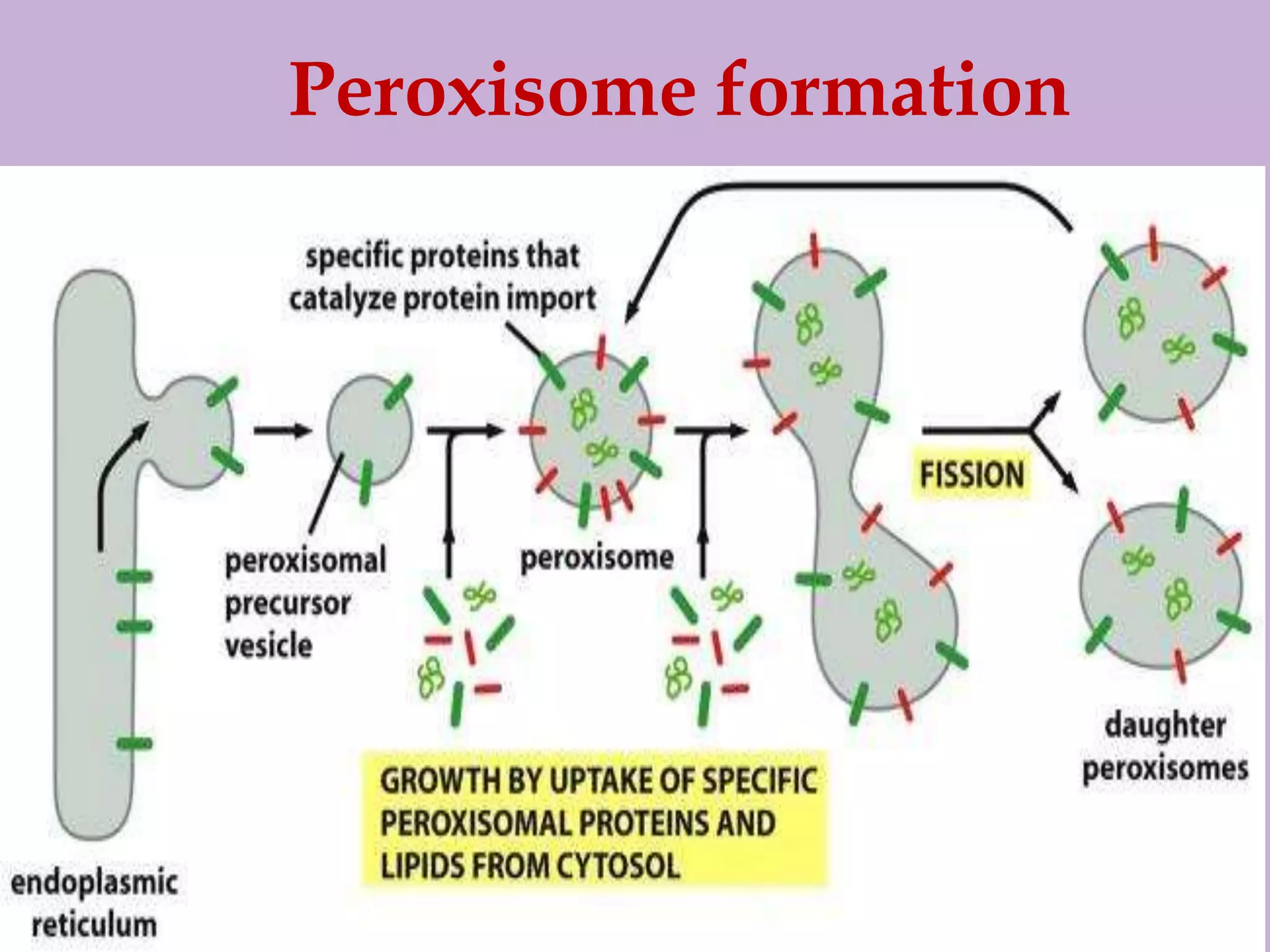
Peroxisome formation
So Finally I conclude that the peroxisome is
the most Abundant Organelle which is maintaing and
controlling the cell functions like biogenesis of amino
acids, cholestorol, purine, etc.
Conclusion

Peroxisome

  • 1.
  • 2.
    History of Peroxisomes •First observed by electron microscopy in animal cells (1950), then in plant cells (1960) Christian deDuve (1965) Isolated from liver cells by centrifugation Called them peroxisomes because they generate and destroy H2O2
  • 5.
    Peroxisomes are alsocalled Microbodies. Peroxisomes are about the size of lysosomes (0.5-1.5 µm) and like them are bound by a single membrane. They also resemble lysosomes in being filled with enzymes.
  • 6.
    What they looklike They are round or oval vesicles surrounded by a phosolipid bilayer Inside the vesicle are many, many enzymes Each peroxisome is a single membrane Each cell contains several hundred peroxisomes They resemble a lysosome but are not the same They are self replicating Size is variable, but it is roughly 700nm A peroxisome is found in the cytoplasm of a cell The organ that peroxisomes are most abundant in is the liver
  • 7.
    Peroxisomes are vesiclesthan contain enzymes to oxidize organic substances like fats. In other words the use oxygen to break down molecules. The enzymes in these organelles produce hydrogen peroxide Hydrogen peroxide is broken down right away by the enzyme catalase into oxygen and water. Peroxisomes are abundant in the liver where they produce bile salts and cholesterol and break down fats. 3-10
  • 8.
  • 9.
    Major Metabolic Functionsof the Peroxisome in Plants 1. -oxidation of fatty acids 2. Glyoxylate cycle 3. Photorespiration (Glycolate pathway) 4. Degradation of purines 5. Decomposition of hydrogen peroxide
  • 10.
    Some of thefunctions of the peroxisomes in the human liver: Breakdown (by oxidation) of excess fatty acids. Breakdown of hydrogen peroxide (H2O2), a potentially dangerous product of fatty-acid oxidation. It is catalyzed by the enzyme catalase. Participates in the synthesis of cholesterol. Participates in the synthesis of bile acids. Participates in the synthesis of the lipids . Breakdown of excess purines (AMP, GMP) to uric acid.
  • 11.
    Two Types ofPeroxisomes in Plants Leaves Catalyzes oxidation of side product of CO2 fixation in photorespiration Germinating seeds Converts fatty acid in seed lipids into sugars needed for growth in the young plant
  • 12.
    Enzymatic pathways in peroxisomes Fattyacid oxidation (VLCFA) H2O2 detoxification (catalase) Bile acid synthesis Plasmalogen synthesis Cholesterol synthesis Glyoxylate detoxification
  • 13.
  • 14.
    So Finally Iconclude that the peroxisome is the most Abundant Organelle which is maintaing and controlling the cell functions like biogenesis of amino acids, cholestorol, purine, etc. Conclusion