Downloaded 40 times
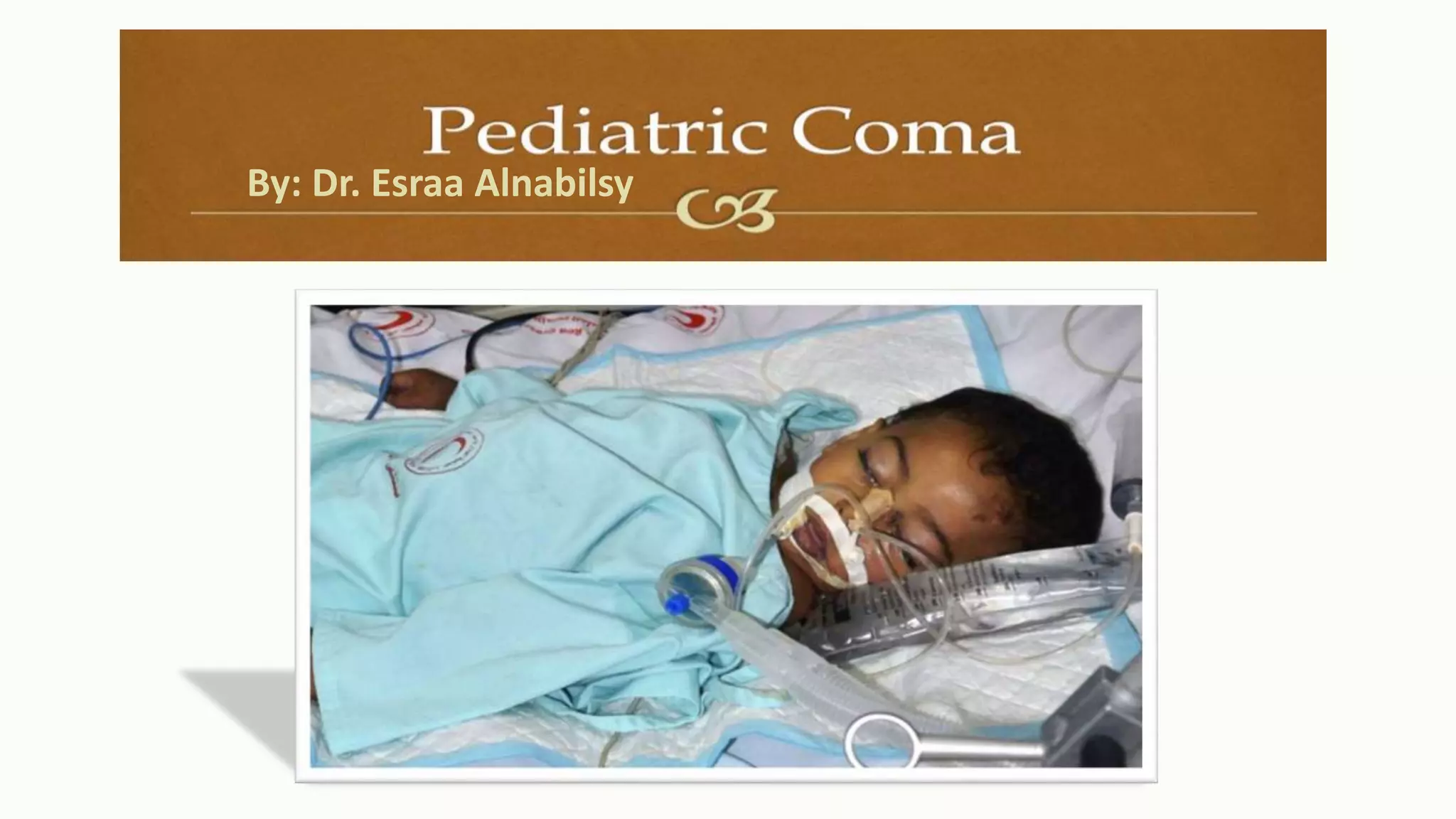


This document discusses coma, including its etiology, physical and laboratory evaluation, management and treatment, and prognosis. Coma is assessed using the Glasgow Coma Scale and signs such as eye opening, verbal response, motor response, and pupillary light reflex. Causes of coma are evaluated through history, examination, and tests of the blood, cerebrospinal fluid, imaging, and more. Treatment focuses on stabilizing the patient and removing the underlying cause, while nursing care includes positioning, nutrition, hygiene and physiotherapy. The prognosis depends on the cause, whether it can be corrected, and the duration of the coma, with higher rates of recovery for drug poisonings and head injuries treated promptly.


![APPROACH TO A COMATOSE CHILD-SP [Autosaved].pptx](https://cdn.slidesharecdn.com/ss_thumbnails/approachtoacomatosechild-spautosaved-250714160315-1b41a8a4-thumbnail.jpg?width=640&height=640&fit=bounds)


