PEACH LEAF CURL
SUBMITTED BY COURSE TEACHER
J.MAHESHKUMAR Dr. S. PARTHASARATHY
2015021073 Asst. Prof. (PLANT PATHOLOGY)
Peach Leaf Curl
• Causal organism: Taphrina deformans
• Distribution:
America,
Europe,
Asia,
Australia,
New zealand
Systemic Position
• Kingdom : Fungi
• Phylum : Ascomycota
• Class : Taphrinomycetes
• Order : Taphrinales
• Family : Taphrinaceae
• Genus : Taphrina
• Species : T. deformans
Symptoms
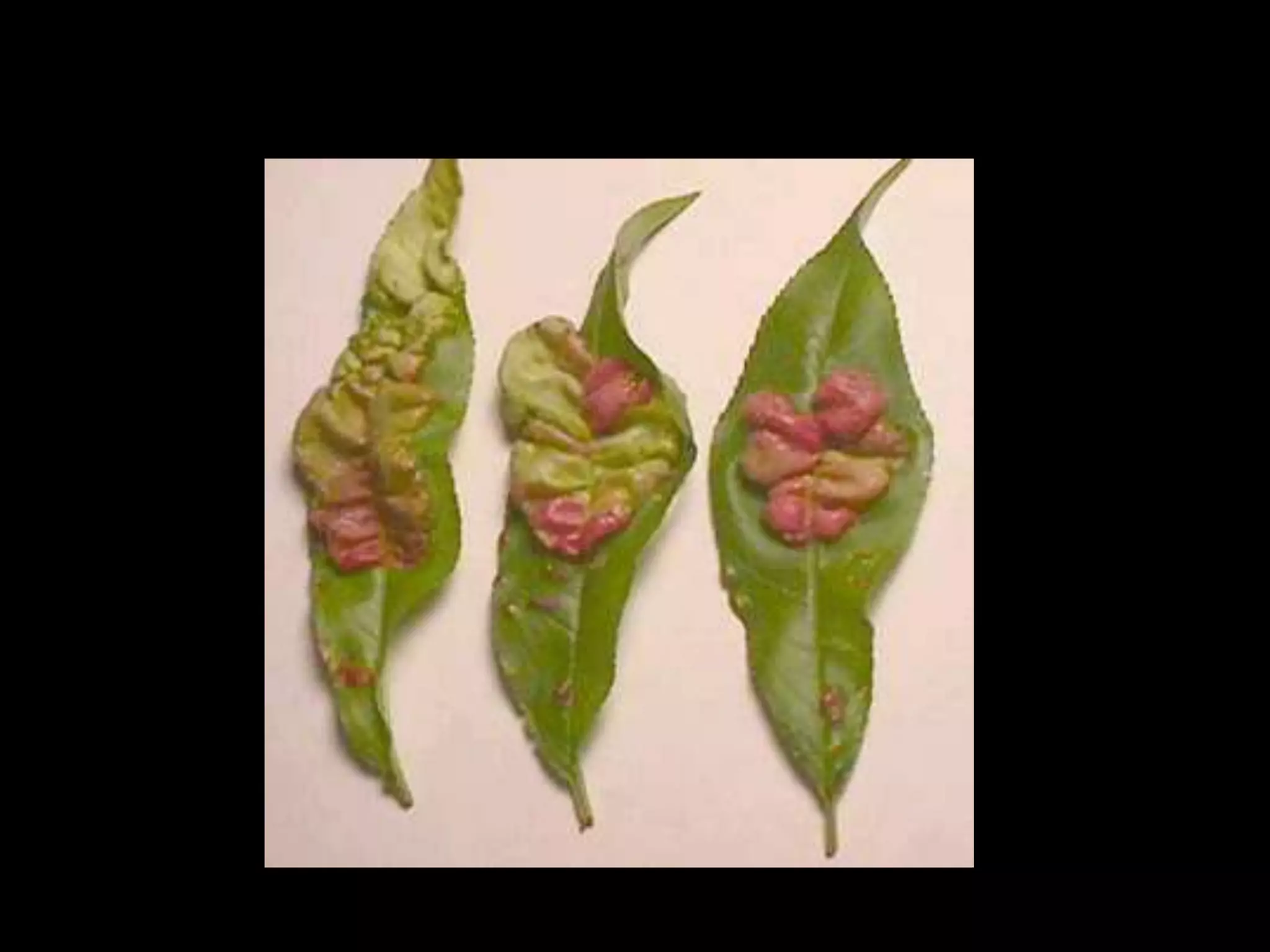
 Diseased leaves can usually be identified soon after they
emerge from the bud, due to their red color and twisted shape.
 As the leaves develop, they become increasingly distorted,
and ultimately thick and rubbery compared to normal leaves.
The colors of the leaves change from the normal green to red
and purple.
 Fruit may fail to develop from diseased blossoms, or may be
affected, showing a reddish colour.
Pathogen description
• Intercellular mycelium devoid of ascocarp.
• Naked asci are produced individually and bear eight
ascospores.
• Ascospores undergo budding division before released
from ascus.
Disease cycle
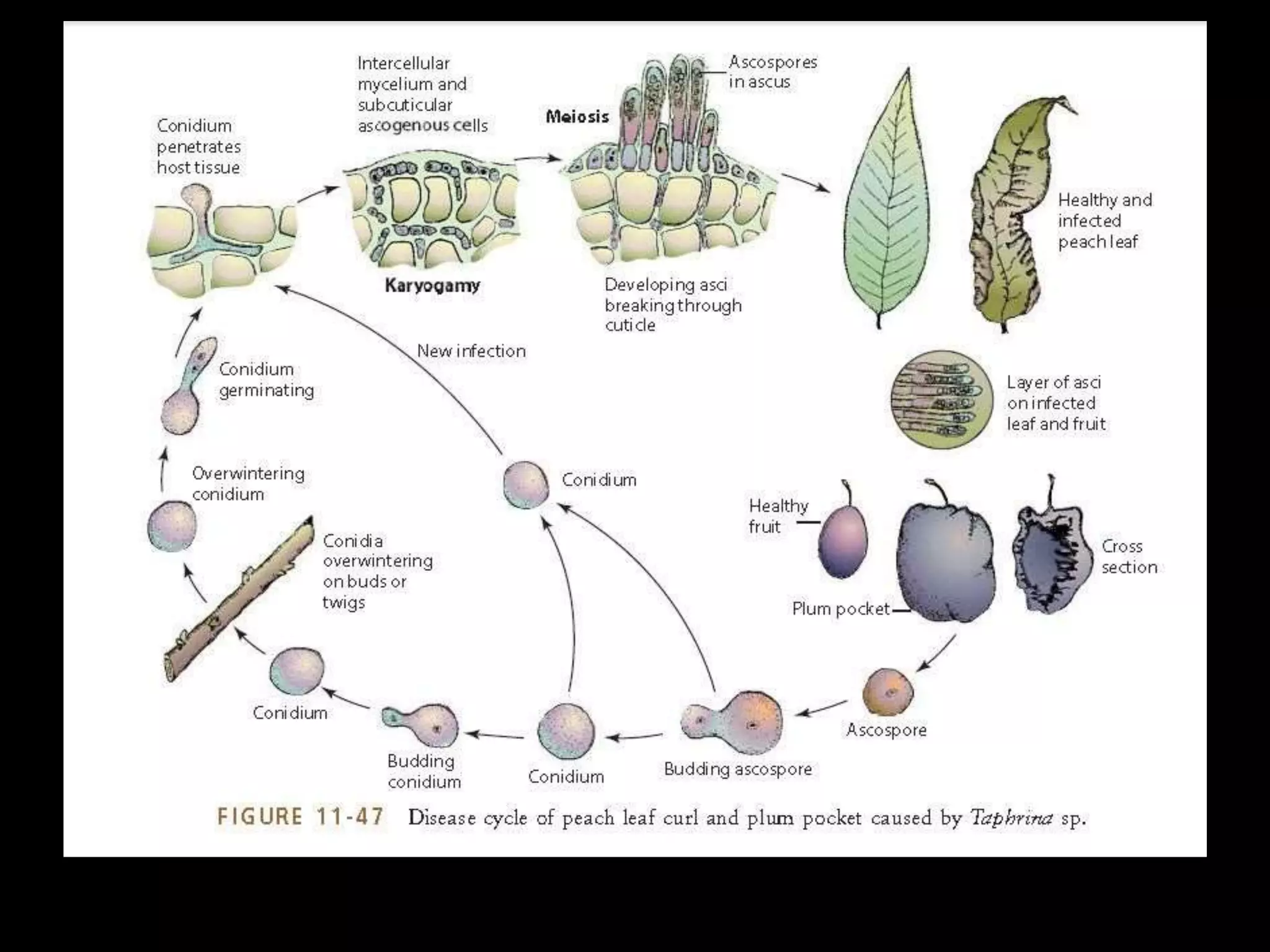
• Peach leaf curl is caused by the fungus Taphrina
deformans. This pathogen is called monocyclic,
meaning these fungal spores infect peach leaves only
once a year in the spring.
• Taphrina deformans survive winter on buds or twigs of
the tree.
Favourable condition
• For successful infection, the fungus requires cool
and wet winters, where rain wets the tree for
more than 12.5 hours at temperatures below 16°C
(61 °F).
Management
• The most effective method is to plant peach trees possibly
covered by a mat during the winter, to keep winter rain
away from the buds before they burst (incidentally to
delay blossoming until spring frosts are over)
• Spraying the leaves with fungicides is the most common
control method.
Copper based mixtures (such as bordeaux mixture) and lime
sulphur are two fungicides commonly used.
• Peach cultivars can be planted which show some resistance
to peach leaf curl, or at least regenerate rapidly, such as
Peach 'Benedicte'.
• No similarly resistant nectarine cultivar is yet known.
References:
"Peach--Leaf Curl." An Online Guide to Plant Disease
Control. 01 Jan 2008. Oregon State University. 14 Apr 2009
<http://plant-disease.ippc.orst.edu/disease.

PEACH LEAF CURL

  • 1.
    PEACH LEAF CURL SUBMITTEDBY COURSE TEACHER J.MAHESHKUMAR Dr. S. PARTHASARATHY 2015021073 Asst. Prof. (PLANT PATHOLOGY)
  • 2.
    Peach Leaf Curl •Causal organism: Taphrina deformans • Distribution: America, Europe, Asia, Australia, New zealand
  • 3.
    Systemic Position • Kingdom: Fungi • Phylum : Ascomycota • Class : Taphrinomycetes • Order : Taphrinales • Family : Taphrinaceae • Genus : Taphrina • Species : T. deformans
  • 4.
    Symptoms  Diseased leavescan usually be identified soon after they emerge from the bud, due to their red color and twisted shape.  As the leaves develop, they become increasingly distorted, and ultimately thick and rubbery compared to normal leaves. The colors of the leaves change from the normal green to red and purple.  Fruit may fail to develop from diseased blossoms, or may be affected, showing a reddish colour.
  • 6.
    Pathogen description • Intercellularmycelium devoid of ascocarp. • Naked asci are produced individually and bear eight ascospores. • Ascospores undergo budding division before released from ascus.
  • 7.
    Disease cycle • Peachleaf curl is caused by the fungus Taphrina deformans. This pathogen is called monocyclic, meaning these fungal spores infect peach leaves only once a year in the spring. • Taphrina deformans survive winter on buds or twigs of the tree.
  • 9.
    Favourable condition • Forsuccessful infection, the fungus requires cool and wet winters, where rain wets the tree for more than 12.5 hours at temperatures below 16°C (61 °F).
  • 10.
    Management • The mosteffective method is to plant peach trees possibly covered by a mat during the winter, to keep winter rain away from the buds before they burst (incidentally to delay blossoming until spring frosts are over) • Spraying the leaves with fungicides is the most common control method.
  • 11.
    Copper based mixtures(such as bordeaux mixture) and lime sulphur are two fungicides commonly used. • Peach cultivars can be planted which show some resistance to peach leaf curl, or at least regenerate rapidly, such as Peach 'Benedicte'. • No similarly resistant nectarine cultivar is yet known.
  • 12.
    References: "Peach--Leaf Curl." AnOnline Guide to Plant Disease Control. 01 Jan 2008. Oregon State University. 14 Apr 2009 <http://plant-disease.ippc.orst.edu/disease.