Parietal lobe 2
• Construction apraxia
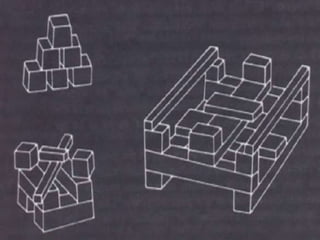
Koh’s block design task
• Koh’s wooden blocks coloured differentlty
on each surface
• Series of designs to be constructed using
a pattern card
• Pt may make open square/ keeps blocks
on top of pattern
• Shows little dissatisfaction with his efforts
• Unable to grasp mistake even when
pointed out
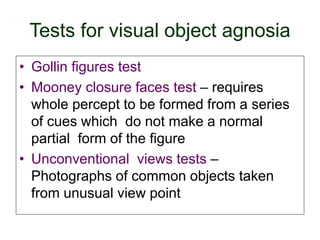
Tests for visual object agnosia
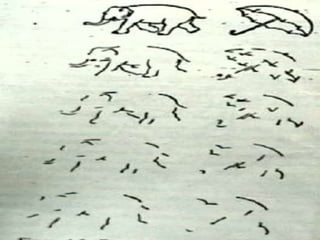
• Gollin figures test
• Mooney closure faces test – requires
whole percept to be formed from a series
of cues which do not make a normal
partial form of the figure
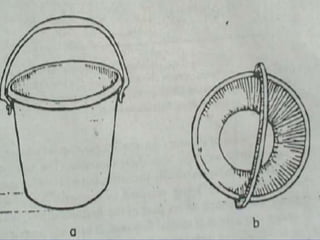
• Unconventional views tests –
Photographs of common objects taken
from unusual view point
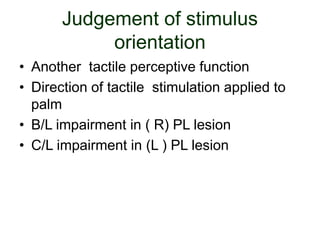
Judgement of stimulus
orientation
• Another tactile perceptive function
• Direction of tactile stimulation applied to
palm
• B/L impairment in ( R) PL lesion
• C/L impairment in (L ) PL lesion
Symbolic (quasi spatial)
synthesis
• Acalculia – pt with dominant PL lesion can
understand & remember a problem , may
even think of certain rules appropriate for
its solution , but are unable to carry out the
necessary operations
• Difficulties in reading where regular
scanning of a text is imp.
Acalculia
• Rote tables – addition, subtraction ,
multiplication
• Arithmetic concepts
• Recognition of signs
• Correct spatial alignment for written
calculation
• (L) frontal lobe plays some role in
egocentric space
• ( R ) parietal lobe concerned more with
extra personal space
VOSP
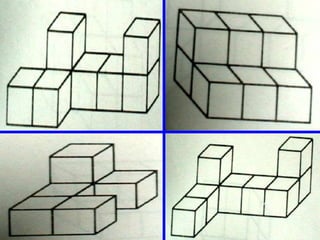
• Cube analysis
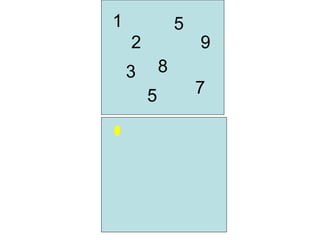
• Number Location
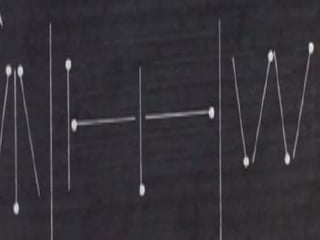
• Line orientation judgement
1
2
3
5
8
9
7
5
Tests for complex spatial relations
• Multiple choice version of Benton visual
retention test- demands memory retention
of relatively complex, abstract ,spatial
figures which are shown for 5- 10 sec
• Stick test – shown simple arrangement of
sticks & asked to copy alongside or
opposite the examiner( requires
constructional ability also )
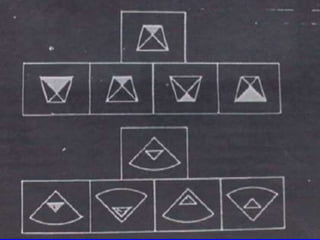
• Pool reflection test –Pt shown a sample
pattern , asked to select from multiple
choice array the pattern which reflects
sample rotated at 180 deg in fronto
parrellel plane
• Map test – ask to draw map of the state or
country. If unable, examiner draws & asks
pt to mark familiar places
• Village scene test – shown model of
village, & choose correct photograph
representing scene from six photographs ,
one of which is correct & others are similar
views with spatial relations of features of
scene are altered before being
photographed
Route finding difficulties
• Pt may be able to give adequate verbal
description of familiar routes , but unable
to execute them either by drawing or
taking them in real life
• 4 basic disorders –
–Topographical amnesia-long stored or
recent
–Perceptual disorder of location & relative
position of objects
–Topographical agnosia- inability to
recognize objects that serve as
landmarks
–UL spatial neglect
Tests
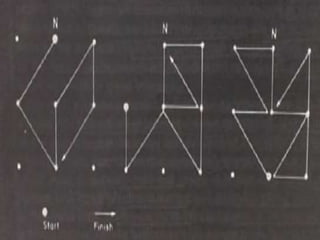
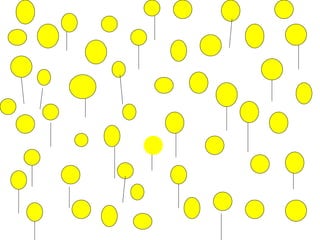
• Locomotion map following test (Semmes
maps or Weinstein maps)- 9 large dots are
placed on floor & the pt handed a map
showing simple route between these
points.Pt must follow the route by walking
between the dots , but keeping the map in
the same orientation to his own body
through out .Turning the map to preserve
its orientation with respect to points on
floor is not allowed
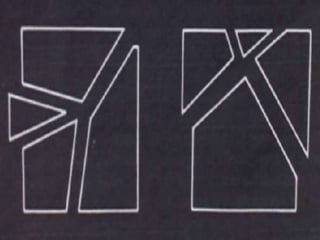
Form assembly task
• Visuo constructive task
• Assemble geometrical pieces with
different lengths of lines & different angles
to form a square
• Perceptual deficits underlie constructional
difficulty in pt with (R ) rather than (L) PL
• Visual disorientation
• Loss of ability to localize objects
• Absolute localization- inability to determine
the position of objects in relation to
themselves
• Impaired estimation of distance
• Relative localization
• Conduction aphasia
• Paraphasia in spontaneous language
• Impaired repetition
• Normal comprehension
• Often associated with acalculia
• Lesion- arcuate fasciculus near parietal
operculum
Gerstman syndrome
Described by Josef Gerstmann in 1930
Finger agnosia
Acalculia
R- L disorientation agraphia
Agraphia
Lesion site - dominant parieto occipital
region (angular gyrus )
Finger agnosia
• 1st described by Jules Badal (French
ophthalmologist)
• Inability to appreciate the position of a finger
among the rest
• Actually only a faulty finger localisation
• Usually B/L
• Thumb & little finger usually correctly identified
middle 3 confused
• Gerstmann considered it as a localised form of
autopagnosia
Acalculia
• Difficult mental arithmetic-
• Inability to do written sums
• Inability to align figures correctly in rows
• Write no. to dictation
• Distinguish hundreds from thousands or
tens of thousands
• Arrange no. in order of magnitude
• Unable to enumerate odd/even no. in
series /count backwards
• Inability to use abacus
Agraphia
• Spontaneous writing & writing on
command more affected than copy
righting
• Literal – difficulty with letters only
• Verbal – difficulty with words
• Irregular & tremulous script, misspelling ,
semantic & syntactial errors- nonsense
dysgraphia
• Site – inferior parietal lobule
R- L disorientation
• Disorientation affects all parts of own body
/ that of others
• Ask to touch (L) ear with ( R ) hand
• Identification in examiner
• Check in crossed positions
• Gerstmann tetrad notable stage in
interpretation of parietal lobe functions
• No longer considered a pure syndrome
• Tetrad need not be always present
• If 3 or more components , the lesion likely
larger one extending outside the angular
gyrus
Associated features
• Apraxia
• Amnestic dysphasia
• Alexia
• (R ) hemianopia & neglect
• ( R ) hemiparesis
• Pain agnosia
Balint syndrome
• Lesion – B/L parieto occipital convexity
• Optic ataxia- disturbance in reaching
target under visual control
• Oculomotor apraxia ( psychic paralysis of
gaze )
• Failure to shift gaze to commands
• Eyes wander till it falls on object by
chance
• Reflex eye movements normal
Balint syndrome
• Decreasd visual attention of peripheral visual
fields
• Simultanagnosia
• Visual attention only to objects in the axis of
fixation & peripheral stimuli not seen
– Inability to appreciate the meaning of whole
though individual parts are well rocognised
–VF normal
–See “forest as trees”
Interlocking finger test
• Fast & simple bed side screening test for
PL dysfunction
• Ask to imitate Std set of 4 interlocking
finger figures
• Poor scoring correlated most highly with
standard measures of parietal lobe
dysfunction
Auditory short term memory impairment
may occur with parietal lesions
Changing concepts of
organisation of sensory cortex
• Old view : different parts of body represented in
a homologous pattern in sensory & motor area
• Newer concept : motor cortex contain a mosaic
of 10 anatomically & functionally different areas
• Similarly post parietal lobe also has multiplicity
of areas
• Motor & parietal cortex reciprocally connected
• These circuits represent the basic element of the
cortical motor system

Parietal lobe.ppt

  • 1.
  • 2.
  • 3.
    Koh’s block designtask • Koh’s wooden blocks coloured differentlty on each surface • Series of designs to be constructed using a pattern card • Pt may make open square/ keeps blocks on top of pattern • Shows little dissatisfaction with his efforts • Unable to grasp mistake even when pointed out
  • 5.
    Tests for visualobject agnosia • Gollin figures test • Mooney closure faces test – requires whole percept to be formed from a series of cues which do not make a normal partial form of the figure • Unconventional views tests – Photographs of common objects taken from unusual view point
  • 8.
    Judgement of stimulus orientation •Another tactile perceptive function • Direction of tactile stimulation applied to palm • B/L impairment in ( R) PL lesion • C/L impairment in (L ) PL lesion
  • 9.
    Symbolic (quasi spatial) synthesis •Acalculia – pt with dominant PL lesion can understand & remember a problem , may even think of certain rules appropriate for its solution , but are unable to carry out the necessary operations • Difficulties in reading where regular scanning of a text is imp.
  • 10.
    Acalculia • Rote tables– addition, subtraction , multiplication • Arithmetic concepts • Recognition of signs • Correct spatial alignment for written calculation
  • 11.
    • (L) frontallobe plays some role in egocentric space • ( R ) parietal lobe concerned more with extra personal space
  • 12.
    VOSP • Cube analysis •Number Location • Line orientation judgement
  • 14.
  • 15.
    Tests for complexspatial relations • Multiple choice version of Benton visual retention test- demands memory retention of relatively complex, abstract ,spatial figures which are shown for 5- 10 sec • Stick test – shown simple arrangement of sticks & asked to copy alongside or opposite the examiner( requires constructional ability also )
  • 17.
    • Pool reflectiontest –Pt shown a sample pattern , asked to select from multiple choice array the pattern which reflects sample rotated at 180 deg in fronto parrellel plane • Map test – ask to draw map of the state or country. If unable, examiner draws & asks pt to mark familiar places • Village scene test – shown model of village, & choose correct photograph representing scene from six photographs , one of which is correct & others are similar views with spatial relations of features of scene are altered before being photographed
  • 19.
    Route finding difficulties •Pt may be able to give adequate verbal description of familiar routes , but unable to execute them either by drawing or taking them in real life • 4 basic disorders – –Topographical amnesia-long stored or recent –Perceptual disorder of location & relative position of objects –Topographical agnosia- inability to recognize objects that serve as landmarks –UL spatial neglect
  • 20.
    Tests • Locomotion mapfollowing test (Semmes maps or Weinstein maps)- 9 large dots are placed on floor & the pt handed a map showing simple route between these points.Pt must follow the route by walking between the dots , but keeping the map in the same orientation to his own body through out .Turning the map to preserve its orientation with respect to points on floor is not allowed
  • 23.
    Form assembly task •Visuo constructive task • Assemble geometrical pieces with different lengths of lines & different angles to form a square • Perceptual deficits underlie constructional difficulty in pt with (R ) rather than (L) PL
  • 25.
    • Visual disorientation •Loss of ability to localize objects • Absolute localization- inability to determine the position of objects in relation to themselves • Impaired estimation of distance • Relative localization
  • 26.
    • Conduction aphasia •Paraphasia in spontaneous language • Impaired repetition • Normal comprehension • Often associated with acalculia • Lesion- arcuate fasciculus near parietal operculum
  • 27.
    Gerstman syndrome Described byJosef Gerstmann in 1930 Finger agnosia Acalculia R- L disorientation agraphia Agraphia Lesion site - dominant parieto occipital region (angular gyrus )
  • 28.
    Finger agnosia • 1stdescribed by Jules Badal (French ophthalmologist) • Inability to appreciate the position of a finger among the rest • Actually only a faulty finger localisation • Usually B/L • Thumb & little finger usually correctly identified middle 3 confused • Gerstmann considered it as a localised form of autopagnosia
  • 29.
    Acalculia • Difficult mentalarithmetic- • Inability to do written sums • Inability to align figures correctly in rows • Write no. to dictation • Distinguish hundreds from thousands or tens of thousands • Arrange no. in order of magnitude • Unable to enumerate odd/even no. in series /count backwards • Inability to use abacus
  • 30.
    Agraphia • Spontaneous writing& writing on command more affected than copy righting • Literal – difficulty with letters only • Verbal – difficulty with words • Irregular & tremulous script, misspelling , semantic & syntactial errors- nonsense dysgraphia • Site – inferior parietal lobule
  • 31.
    R- L disorientation •Disorientation affects all parts of own body / that of others • Ask to touch (L) ear with ( R ) hand • Identification in examiner • Check in crossed positions
  • 32.
    • Gerstmann tetradnotable stage in interpretation of parietal lobe functions • No longer considered a pure syndrome • Tetrad need not be always present • If 3 or more components , the lesion likely larger one extending outside the angular gyrus
  • 33.
    Associated features • Apraxia •Amnestic dysphasia • Alexia • (R ) hemianopia & neglect • ( R ) hemiparesis • Pain agnosia
  • 34.
    Balint syndrome • Lesion– B/L parieto occipital convexity • Optic ataxia- disturbance in reaching target under visual control • Oculomotor apraxia ( psychic paralysis of gaze ) • Failure to shift gaze to commands • Eyes wander till it falls on object by chance • Reflex eye movements normal
  • 35.
    Balint syndrome • Decreasdvisual attention of peripheral visual fields • Simultanagnosia • Visual attention only to objects in the axis of fixation & peripheral stimuli not seen – Inability to appreciate the meaning of whole though individual parts are well rocognised –VF normal –See “forest as trees”
  • 36.
    Interlocking finger test •Fast & simple bed side screening test for PL dysfunction • Ask to imitate Std set of 4 interlocking finger figures • Poor scoring correlated most highly with standard measures of parietal lobe dysfunction Auditory short term memory impairment may occur with parietal lesions
  • 37.
    Changing concepts of organisationof sensory cortex • Old view : different parts of body represented in a homologous pattern in sensory & motor area • Newer concept : motor cortex contain a mosaic of 10 anatomically & functionally different areas • Similarly post parietal lobe also has multiplicity of areas • Motor & parietal cortex reciprocally connected • These circuits represent the basic element of the cortical motor system