Paid Media Marketing: A
Strategic Approach
Welcome to a comprehensive overview of paid media marketing. Let's
explore the key elements that drive successful campaigns.
by Influicity
https://www.influicity.com/
Defining Paid Media: Platforms and Channels
Platforms
Paid media encompasses a wide range of platforms including
social media, search engines, and display networks.
Channels
Within each platform, various channels exist, like search ads,
social media ads, video ads, and native ads.
Setting Measurable
Campaign Goals
1 Define Objectives
Establish clear goals, such
as increasing brand
awareness, driving website
traffic, generating leads, or
boosting sales.
2 Measure Success
Set specific, measurable,
achievable, relevant, and
time-bound (SMART) goals
that can be tracked and
analyzed.
3 Track Progress
Monitor campaign performance against defined goals using
analytics tools and dashboards.
Audience Targeting and
Segmentation
Demographic Targeting
Target audiences based on
factors like age, gender,
location, income, and
education.
Psychographic
Targeting
Target audiences based on
interests, values, lifestyle,
personality, and motivations.
Behavioral Targeting
Target audiences based on past actions, such as website visits,
purchases, or engagement with specific content.
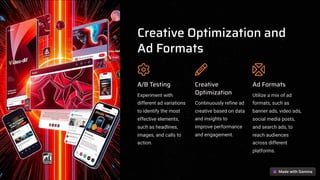
Creative Optimization and
Ad Formats
A/B Testing
Experiment with
different ad variations
to identify the most
effective elements,
such as headlines,
images, and calls to
action.
Creative
Optimization
Continuously refine ad
creative based on data
and insights to
improve performance
and engagement.
Ad Formats
Utilize a mix of ad
formats, such as
banner ads, video ads,
social media posts,
and search ads, to
reach audiences
across different
platforms.
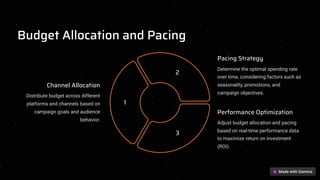
Budget Allocation and Pacing
1
2
3
Channel Allocation
Distribute budget across different
platforms and channels based on
campaign goals and audience
behavior.
Pacing Strategy
Determine the optimal spending rate
over time, considering factors such as
seasonality, promotions, and
campaign objectives.
Performance Optimization
Adjust budget allocation and pacing
based on real-time performance data
to maximize return on investment
(ROI).
Measuring and Analyzing
Campaign Performance
Track KPIs
Monitor key performance indicators (KPIs) to assess campaign
success, such as website traffic, leads generated, conversion rate,
and ROI.
Analyze Data
Dig deeper into performance data to identify trends, patterns, and
insights that can inform future campaign strategies.
Optimize for Success
Use insights gleaned from campaign analysis to make
adjustments and improve performance over time.

Paid Media Marketing

  • 1.
    Paid Media Marketing:A Strategic Approach Welcome to a comprehensive overview of paid media marketing. Let's explore the key elements that drive successful campaigns. by Influicity https://www.influicity.com/
  • 2.
    Defining Paid Media:Platforms and Channels Platforms Paid media encompasses a wide range of platforms including social media, search engines, and display networks. Channels Within each platform, various channels exist, like search ads, social media ads, video ads, and native ads.
  • 3.
    Setting Measurable Campaign Goals 1Define Objectives Establish clear goals, such as increasing brand awareness, driving website traffic, generating leads, or boosting sales. 2 Measure Success Set specific, measurable, achievable, relevant, and time-bound (SMART) goals that can be tracked and analyzed. 3 Track Progress Monitor campaign performance against defined goals using analytics tools and dashboards.
  • 4.
    Audience Targeting and Segmentation DemographicTargeting Target audiences based on factors like age, gender, location, income, and education. Psychographic Targeting Target audiences based on interests, values, lifestyle, personality, and motivations. Behavioral Targeting Target audiences based on past actions, such as website visits, purchases, or engagement with specific content.
  • 5.
    Creative Optimization and AdFormats A/B Testing Experiment with different ad variations to identify the most effective elements, such as headlines, images, and calls to action. Creative Optimization Continuously refine ad creative based on data and insights to improve performance and engagement. Ad Formats Utilize a mix of ad formats, such as banner ads, video ads, social media posts, and search ads, to reach audiences across different platforms.
  • 6.
    Budget Allocation andPacing 1 2 3 Channel Allocation Distribute budget across different platforms and channels based on campaign goals and audience behavior. Pacing Strategy Determine the optimal spending rate over time, considering factors such as seasonality, promotions, and campaign objectives. Performance Optimization Adjust budget allocation and pacing based on real-time performance data to maximize return on investment (ROI).
  • 7.
    Measuring and Analyzing CampaignPerformance Track KPIs Monitor key performance indicators (KPIs) to assess campaign success, such as website traffic, leads generated, conversion rate, and ROI. Analyze Data Dig deeper into performance data to identify trends, patterns, and insights that can inform future campaign strategies. Optimize for Success Use insights gleaned from campaign analysis to make adjustments and improve performance over time.