Oxidative phosphorylation
Ms. Sudheesha K.
Assistant Professor Adhoc
KAHM Unity Women’s College, Manjeri
• To provide this much energy requires 83 kg of ATP. However, human beings
possess only about 250 g of ATP at any given moment.
• The disparity between the amount of ATP that we have and the amount that we
require is compensated by recycling ADP back to ATP.
• Each ATP molecule is recycled approximately 300 times per day.
• This recycling takes place primarily through oxidative phosphorylation.
• In oxidative phosphorylation, electrons from NADH and FADH2 are used to
reduce molecular oxygen to water.
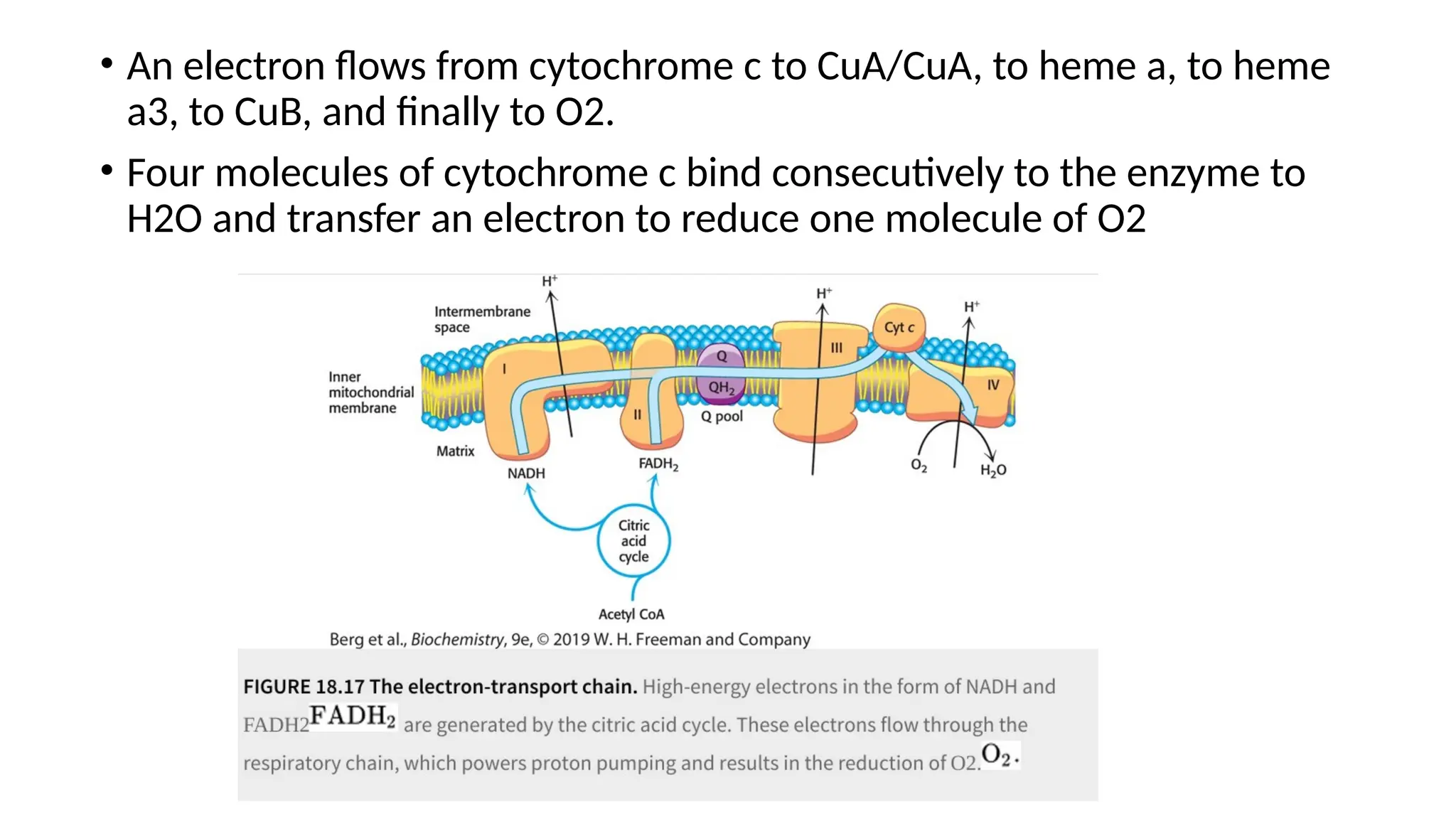
• The electron flow takes place in four large protein complexes that are embedded
in the inner mitochondrial membrane, together called the respiratory chain or
the electron-transport chain.
• The generation of high-transfer-potential electrons by the citric acid
cycle, their flow through the respiratory chain, and the accompanying
synthesis of ATP is called respiration or cellular respiration
• Eukaryotic Oxidative Phosphorylation Takes Place in Mitochondria
• Three of the components of the electron-transport chain are arranged
into a large complex called the respirasome. The human respirasome
consists of 2 copies of Complex I, Complex III, and Complex IV
The Respiratory Chain Consists of Four
Complexes
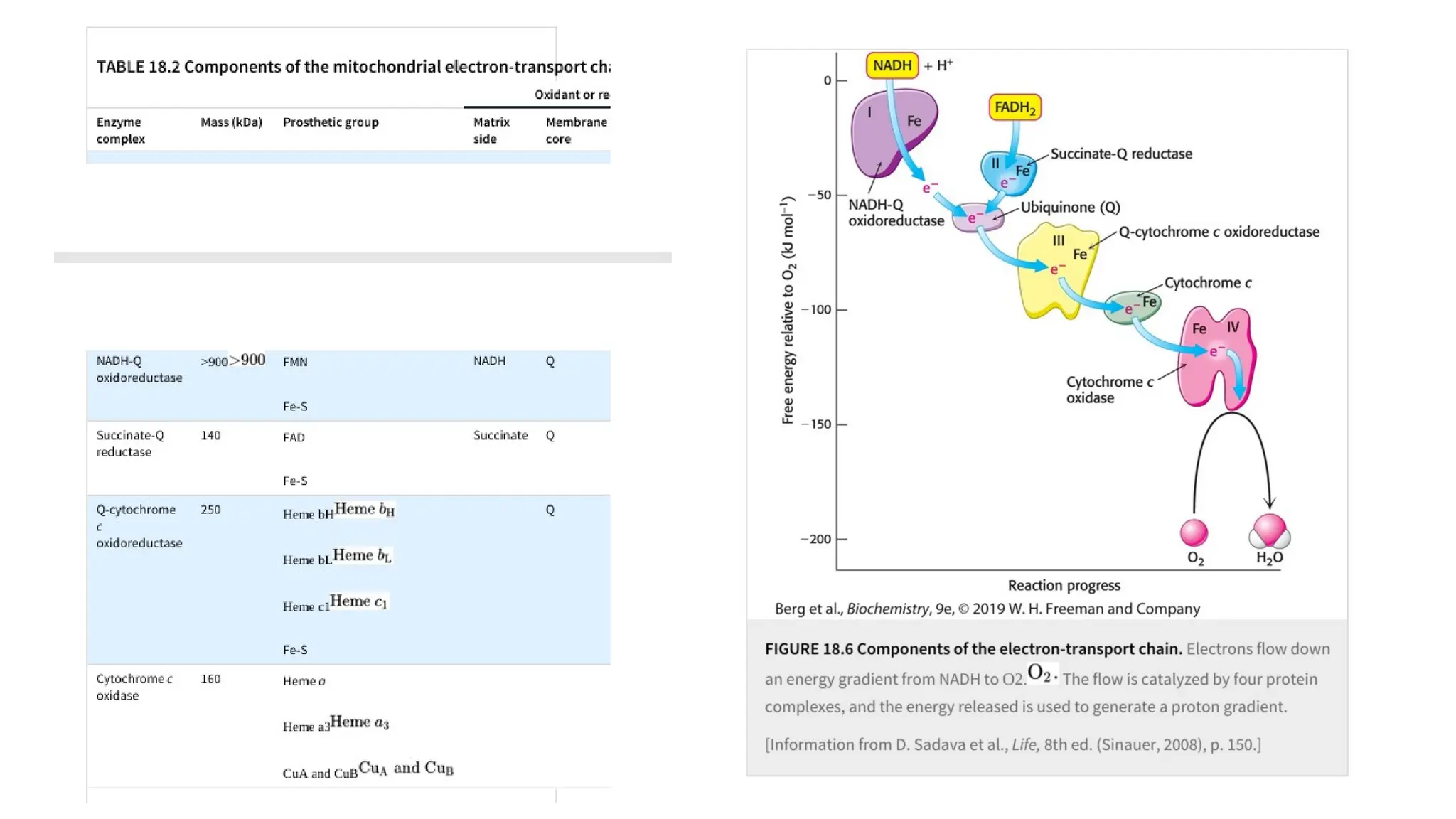
• Electrons are transferred from NADH to O2 through a chain of three large protein
complexes called NADH-Q oxidoreductase, Q-cytochrome c oxidoreductase, and
cytochrome c oxidase.
• A fourth large protein complex, called succinate-Q reductase, contains the
succinate dehydrogenase that generates FADH2 in the citric acid cycle.
• Electrons from this FADH2 enter the electron-transport chain at Q-cytochrome c
oxidoreductase.
• Succinate-Q reductase, in contrast with the other complexes, does not pump
protons.
• NADH-Q oxidoreductase, succinate Q reductase, Q-cytochrome c
oxidoreductase, and cytochrome c oxidase are also called Complex I, II, III, and IV,
respectively
Two special electron carriers ferry the
electrons from one complex to the next.
• The first is coenzyme Q (Q), also known as ubiquinone because it is a
ubiquitous quinone in biological systems.
• Ubiquinone is a hydrophobic quinone that diffuses rapidly within the
inner mitochondrial membrane.
• Electrons are carried from NADH-Q oxidoreductase to Q-cytochrome c
oxidoreductase, the third complex of the chain, by the reduced form
of Q.
• Electrons from the FADH2 generated by the citric acid cycle are
transferred first to ubiquinone and then to the Q-cytochrome c
oxidoreductase complex
Complex I
• Recall that FADH2 is formed in the citric acid cycle, in the oxidation of succinate
to fumarate by succinate dehydrogenase.
• Succinate dehydrogenase is part of the succinate-Q reductase complex (Complex
II), an integral membrane protein of the inner mitochondrial membrane.
• FADH2 does not leave the complex.
• Rather, its electrons are transferred to Fe-S centers and then finally to Q to form
QH2, which then is ready to transfer electrons further down the electron-
transport chain.
• The succinate-Q reductase complex, in contrast with NADH-Q oxidoreductase,
does not pump protons from one side of the membrane to the other.
Complex II
• The electrons of NADH enter the chain at NADH-Q oxidoreductase
(also called Complex I and NADH dehydrogenase),
• The initial step is the binding of NADH and the transfer of its two high
potential electrons to the flavin mononucleotide (FMN) prosthetic
group, yielding the reduced form, FMNH2.
• Electrons are then transferred from FMNH2 to a series of iron–sulfur
clusters
• Thus, the flow of two electrons from NADH to coenzyme Q through
NADH-Q oxidoreductase leads to the pumping of four hydrogen ions
out of the matrix of the mitochondrion.
Complex III
• Electrons from QH2 are passed on to cytochrome c (Cyt c), a water soluble
protein, by the second of the three proton pumps in the respiratory chain,
Q-cytochrome c oxidoreductase (also known as Complex III and as
cytochrome c reductase).
• The flow of a pair of electrons through this complex leads to the effective
net transport of 2 H+ to the intermembrane space,
• QH2 passes two electrons to Q-cytochrome c oxidoreductase, but the
acceptor of electrons in this complex, cytochrome c, can accept only one
electron.
• The mechanism for the coupling of electron transfer from Q to cytochrome c
to transmembrane proton transport is known as the Q cycle
Complex IV.
• The last of the three proton-pumping assemblies of the respiratory chain is
cytochrome c oxidase
• Cytochrome c oxidase catalyzes the transfer of electrons from the reduced
form of cytochrome c to molecular oxygen, the final acceptor.
• The requirement of oxygen for this reaction is what makes “aerobic”
organisms aerobic.
• To obtain oxygen for this reaction is the reason that human beings must
breathe.
• Four electrons are funneled to O2 to completely reduce it to H2O, and,
concomitantly, protons are pumped from the matrix into the intermembrane
space.
• An electron flows from cytochrome c to CuA/CuA, to heme a, to heme
a3, to CuB, and finally to O2.
• Four molecules of cytochrome c bind consecutively to the enzyme to
H2O and transfer an electron to reduce one molecule of O2
A Proton Gradient Powers the Synthesis of ATP
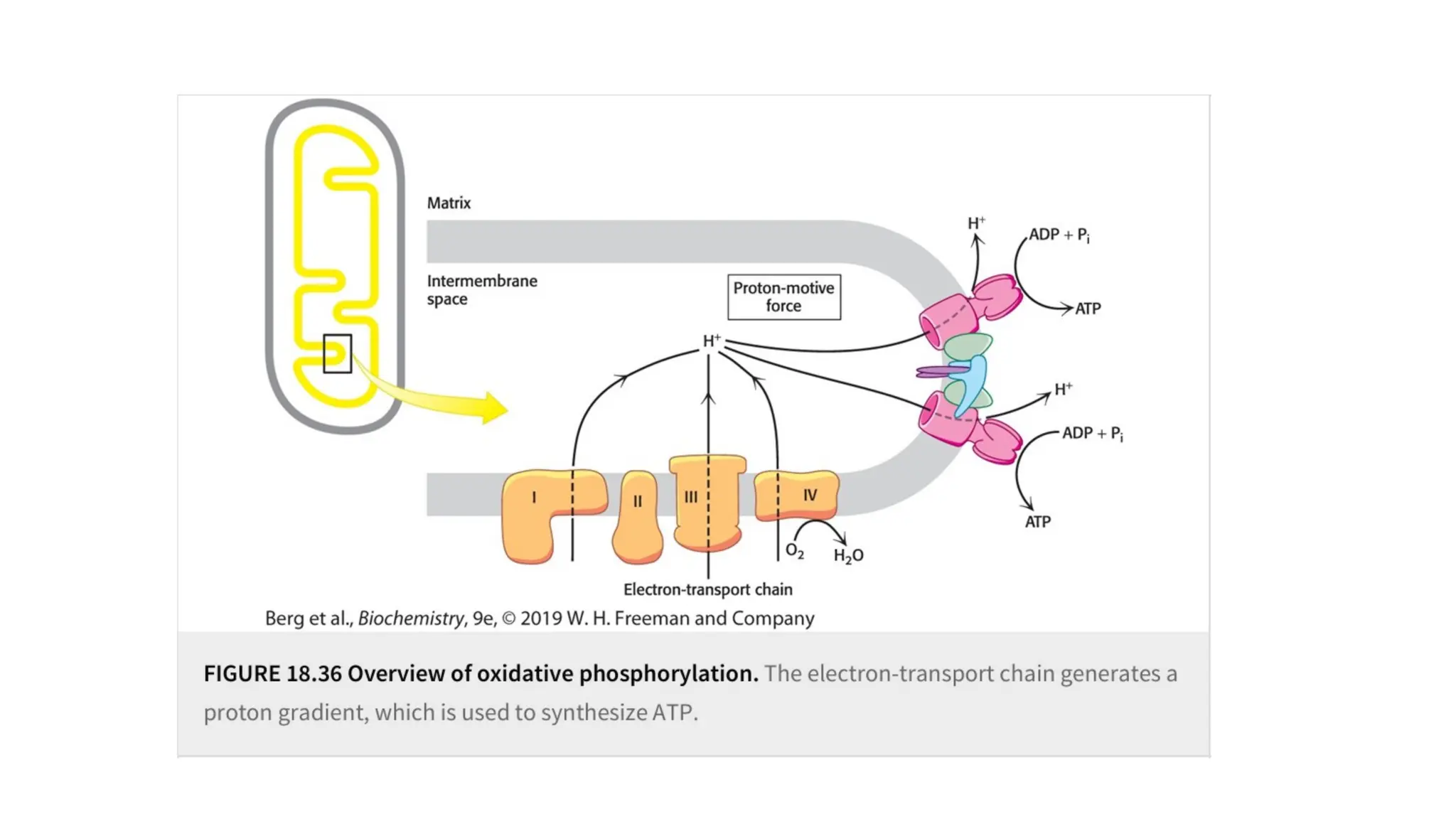
• In 1961, Peter Mitchell Proposed the chemiosmotic hypothesis.
• He stated that electron transport and ATP synthesis are coupled by a proton
gradient across the inner mitochondrial membrane.
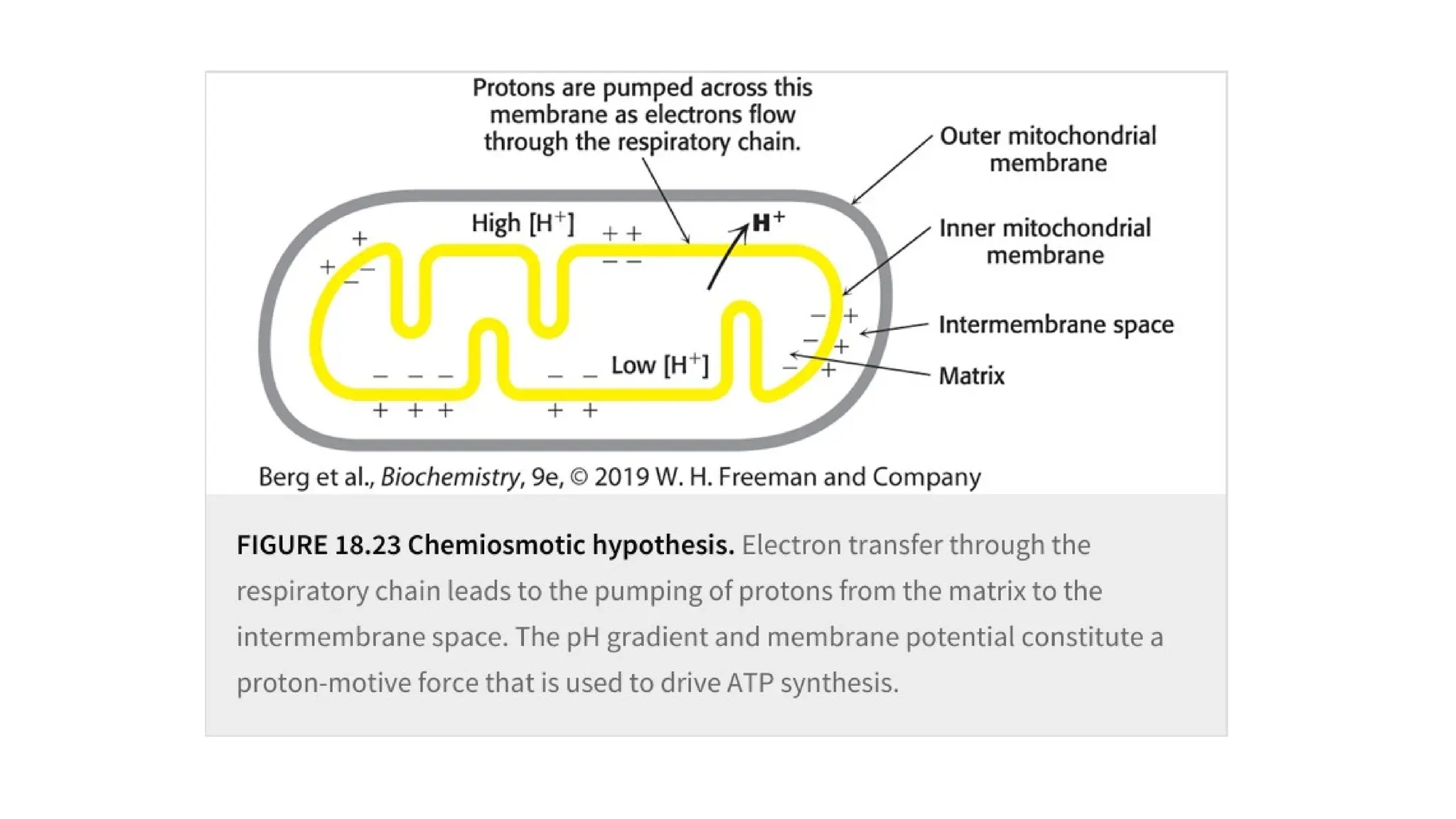
• In his model, the transfer of electrons through the respiratory chain leads to the
pumping of protons from the matrix to the intermembrane space.
• The H+ concentration becomes lower in the matrix, and an electric field with the
matrix side negative is generated.
• Protons then flow back into the matrix to equalize the distribution. This flow of
protons drives the synthesis of ATP by ATP synthase.
• The energy-rich unequal distribution of protons is called the proton-motive
force.
• Proton-motive force (Δp)=chemical gradient (ΔpH)+charge gradient (Δψ).
• A molecular assembly in the inner mitochondrial membrane carries out
the synthesis of ATP.
• This enzyme complex was originally called the mitochondrial ATPase or
F1F0 ATPase because it was discovered through its catalysis of the
reverse reaction, the hydrolysis of ATP.
• ATP synthase, its preferred name, emphasizes its actual role in the
mitochondrion.
• It is also called Complex V
ATP synthase
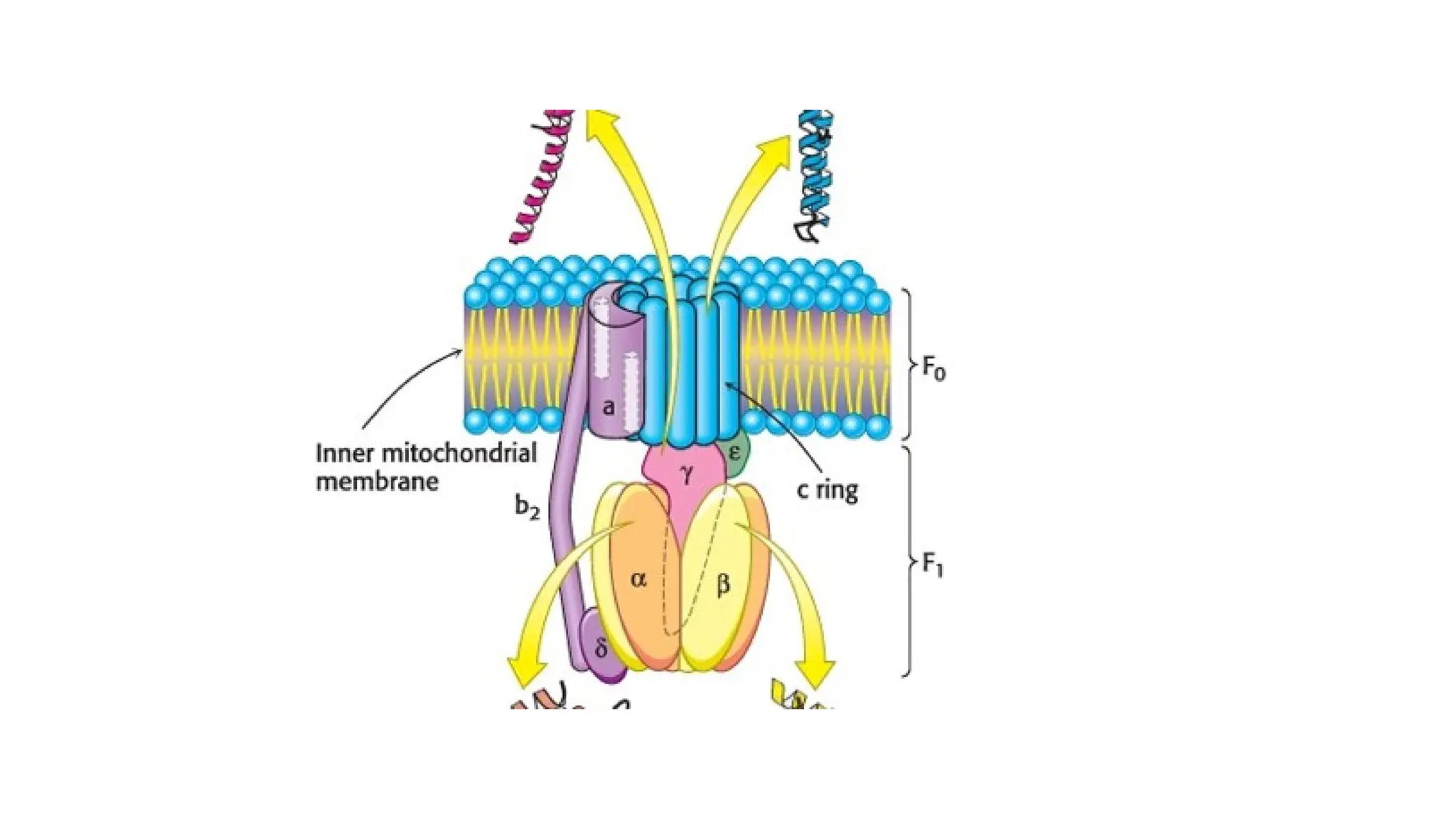
• Much of the “stick” part, called the F0 subunit, is embedded in the
inner mitochondrial membrane.
• The F1 subunit, protrudes into the mitochondrial matrix.
• The F1 subunit contains the catalytic activity of the synthase.
• The F1 subunit consists of five types of polypeptide chains (α3, β3, γ ,
δ , and ɛ).
• The α and β subunits, which make up the bulk of the F1, are arranged
alternately in a hexameric ring.
• Both bind nucleotides but only the β subunits are catalytically active.
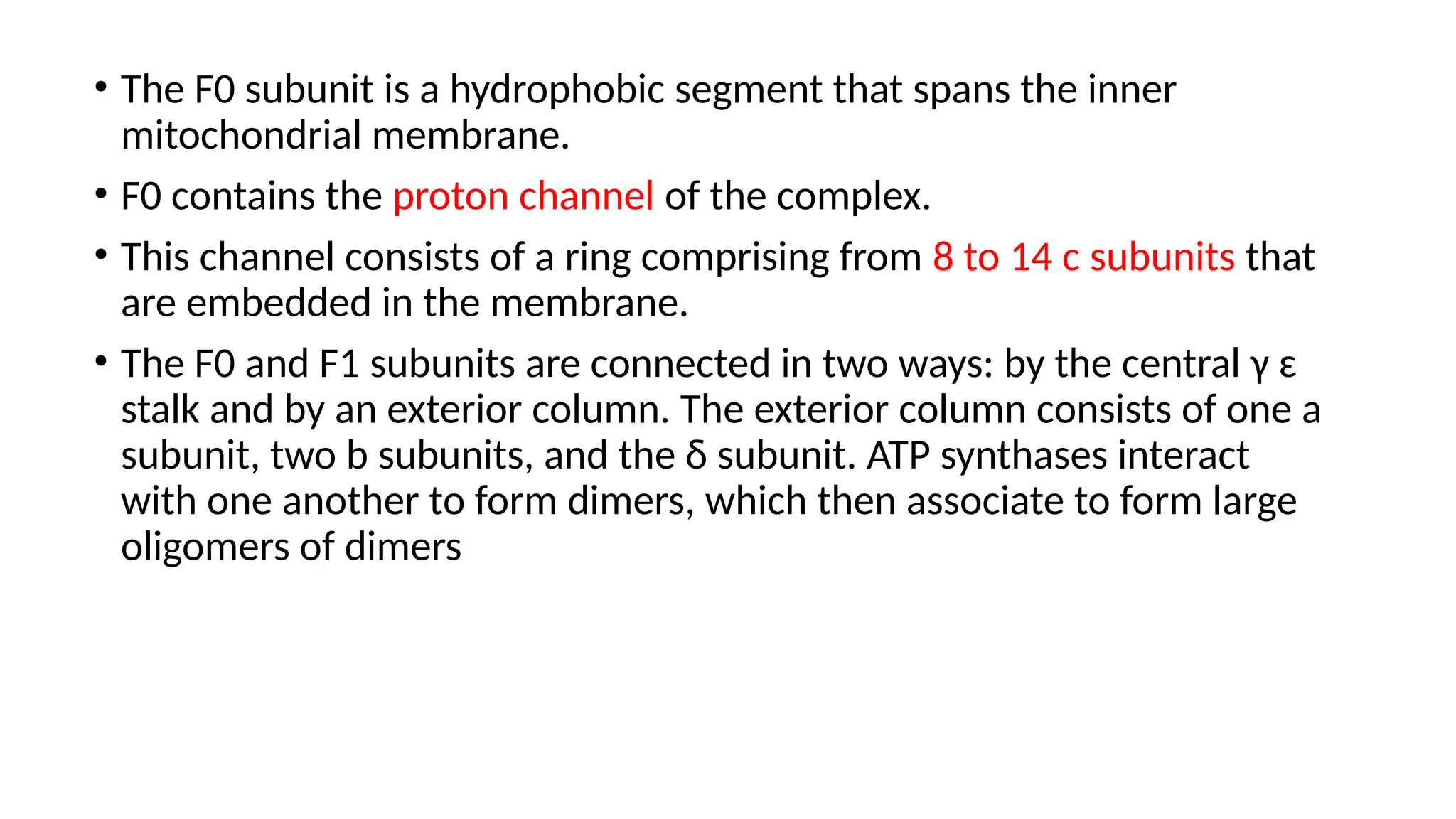
• The F0 subunit is a hydrophobic segment that spans the inner
mitochondrial membrane.
• F0 contains the proton channel of the complex.
• This channel consists of a ring comprising from 8 to 14 c subunits that
are embedded in the membrane.
• The F0 and F1 subunits are connected in two ways: by the central γ ɛ
stalk and by an exterior column. The exterior column consists of one a
subunit, two b subunits, and the δ subunit. ATP synthases interact
with one another to form dimers, which then associate to form large
oligomers of dimers
Proton flow through ATP synthase leads to the release
of tightly bound ATP: The binding-change mechanism
• ATP synthase catalyzes the formation of ATP from ADP and
orthophosphate.
• β subunit can perform each of three sequential steps in the synthesis
of ATP by changing conformation.
• These steps are
• (1) ADP and Pi binding
• (2) ATP synthesis
• (3) ATP release.
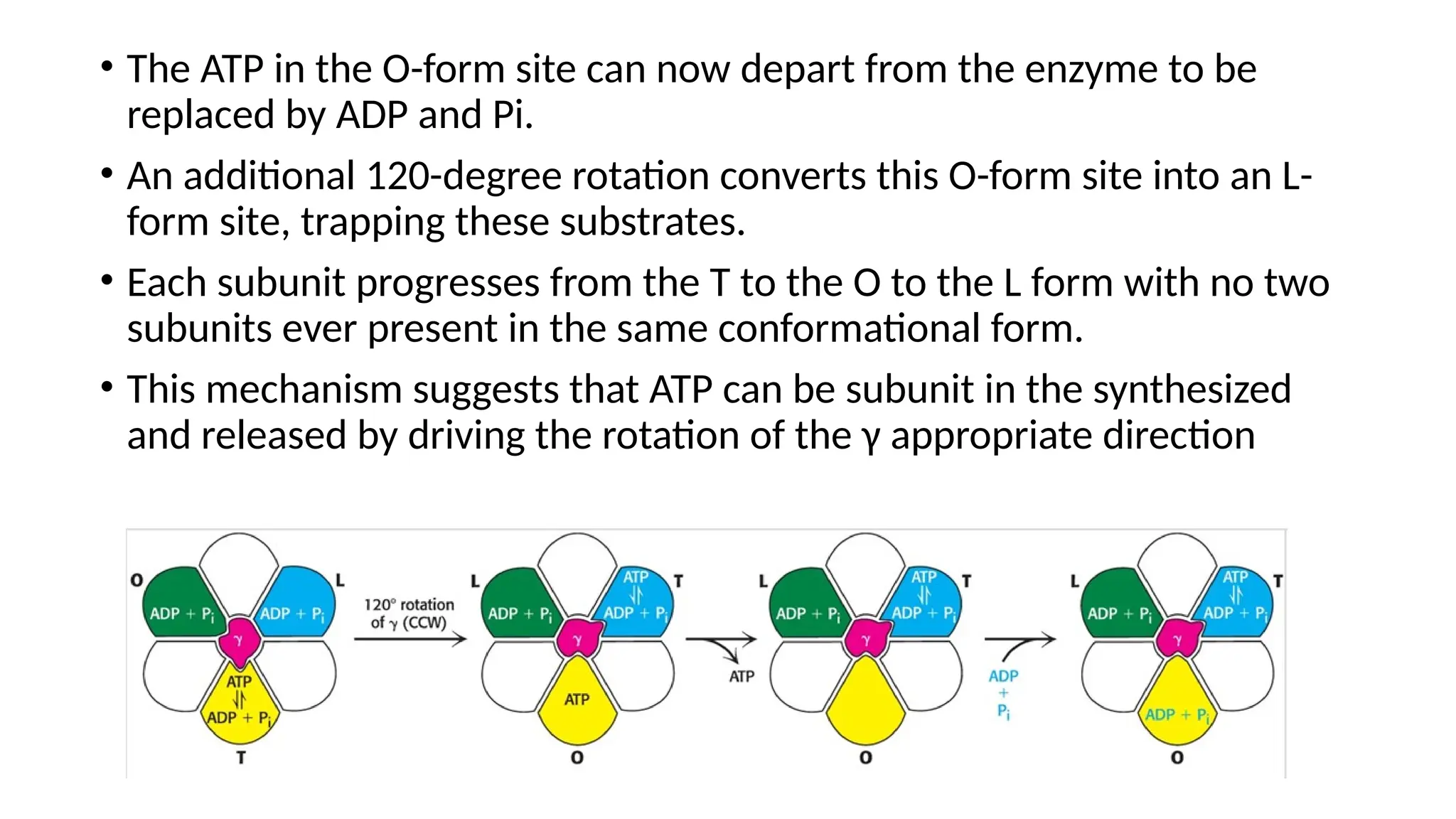
• At any given moment, one β subunit will be in the L, or loose,
conformation. This conformation binds ADP and Pi.
• A second subunit will be in the T, or tight, conformation. This
conformation binds ATP with great avidity, so much so that it will
convert bound ADP and Pi into ATP.
• Both the T and L conformations are sufficiently constrained that they
cannot release bound nucleotides.
• The final subunit will be in the O, or open, form. This form has a more
open conformation and can bind or release adenine nucleotides
• The rotation of the γ subunit drives the interconversion of these three
forms.
• ADP and Pi bound in the subunit in the T form are transiently
combining to form ATP.
• Suppose that the γ subunit is rotated by 120 degrees in a
counterclockwise direction.
• This rotation converts the T-form site into an O-form site with the
nucleotide bound as ATP.
• Concomitantly, the L-form site is converted into a T-form site, enabling
the transformation of an additional ADP and Pi into ATP.
• The ATP in the O-form site can now depart from the enzyme to be
replaced by ADP and Pi.
• An additional 120-degree rotation converts this O-form site into an L-
form site, trapping these substrates.
• Each subunit progresses from the T to the O to the L form with no two
subunits ever present in the same conformational form.
• This mechanism suggests that ATP can be subunit in the synthesized
and released by driving the rotation of the γ appropriate direction
Proton flow around the c ring powers ATP synthesis
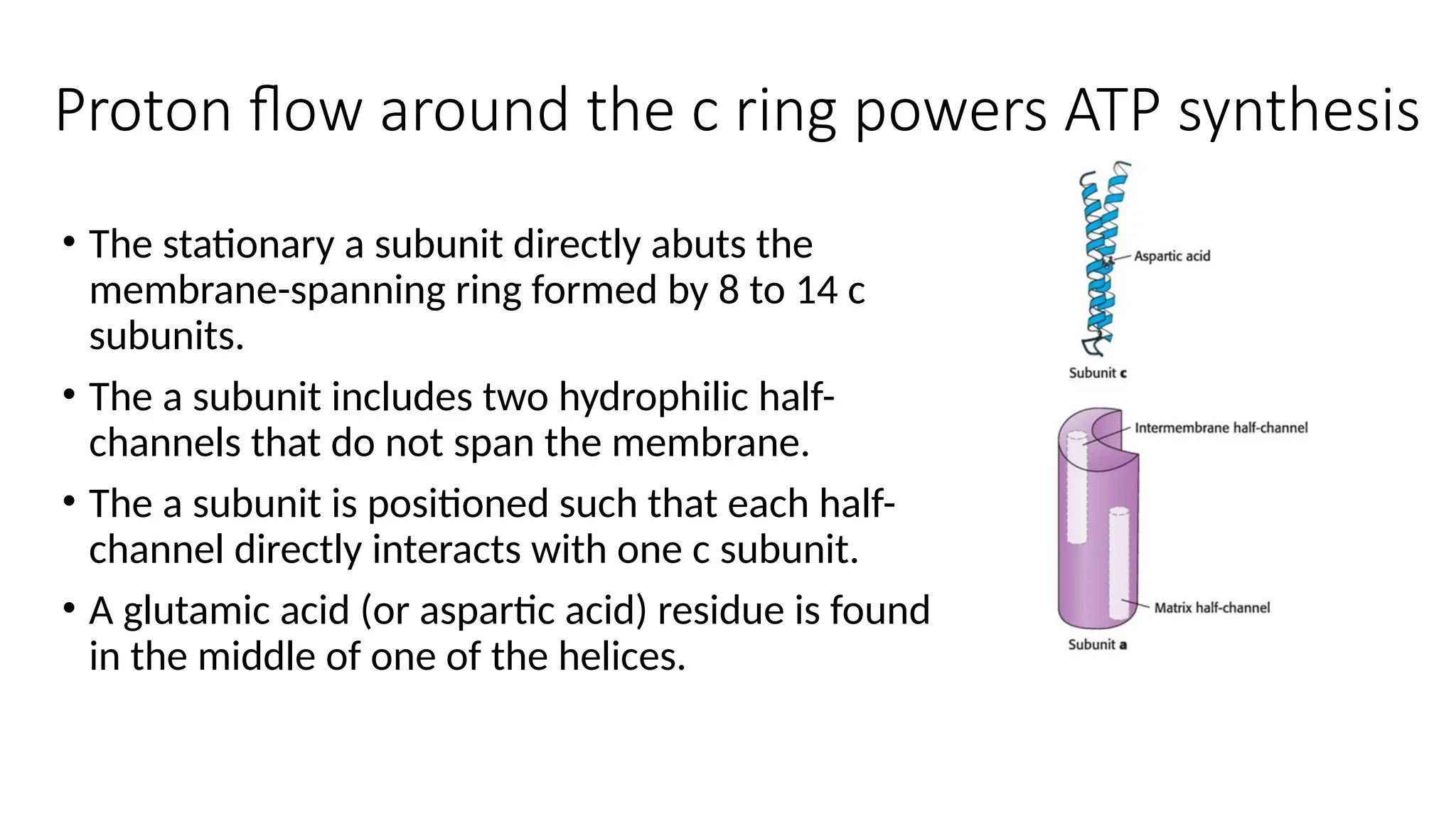
• The stationary a subunit directly abuts the
membrane-spanning ring formed by 8 to 14 c
subunits.
• The a subunit includes two hydrophilic half-
channels that do not span the membrane.
• The a subunit is positioned such that each half-
channel directly interacts with one c subunit.
• A glutamic acid (or aspartic acid) residue is found
in the middle of one of the helices.
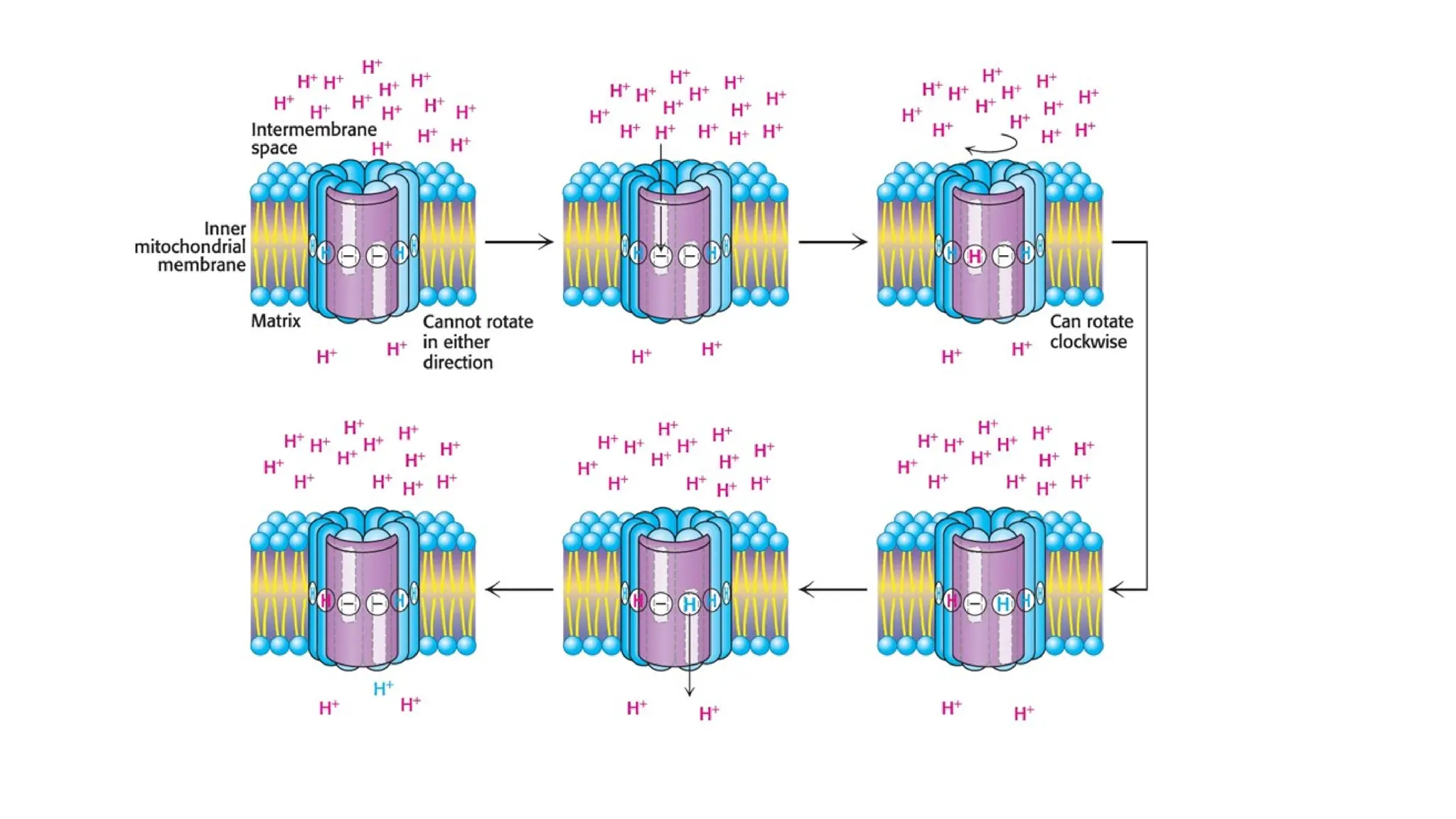
• a proton will first enter intermembrane space half channel and bind
the glutamate residue.
• The c subunit with the bound proton then moves into the membrane
as the ring rotates by one c subunit.
• This rotation brings the newly deprotonated c subunit from the matrix
half-channel to the proton-rich intermembrane space half-channel,
where it can bind a proton.
• The movement of protons through the half-channels from the high
proton concentration of the intermembrane space to the low proton
concentration of the matrix powers the rotation of the c ring.
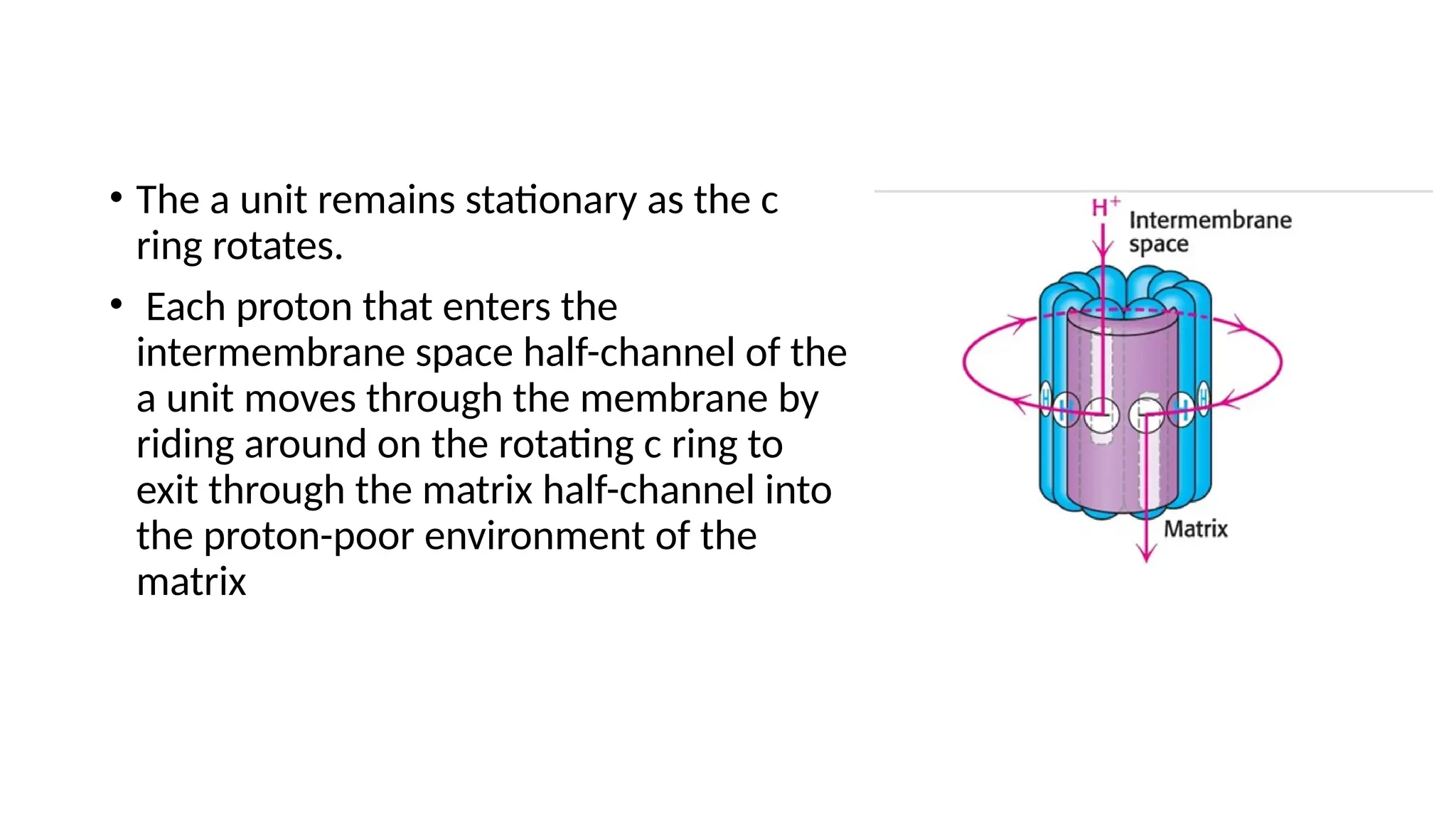
• The a unit remains stationary as the c
ring rotates.
• Each proton that enters the
intermembrane space half-channel of the
a unit moves through the membrane by
riding around on the rotating c ring to
exit through the matrix half-channel into
the proton-poor environment of the
matrix
Thank you

Oxidative phosphorylation, Cellular respiration, Respiratory chain, structure & mechanism of ATP synthse

  • 1.
    Oxidative phosphorylation Ms. SudheeshaK. Assistant Professor Adhoc KAHM Unity Women’s College, Manjeri
  • 2.
    • To providethis much energy requires 83 kg of ATP. However, human beings possess only about 250 g of ATP at any given moment. • The disparity between the amount of ATP that we have and the amount that we require is compensated by recycling ADP back to ATP. • Each ATP molecule is recycled approximately 300 times per day. • This recycling takes place primarily through oxidative phosphorylation. • In oxidative phosphorylation, electrons from NADH and FADH2 are used to reduce molecular oxygen to water. • The electron flow takes place in four large protein complexes that are embedded in the inner mitochondrial membrane, together called the respiratory chain or the electron-transport chain.
  • 3.
    • The generationof high-transfer-potential electrons by the citric acid cycle, their flow through the respiratory chain, and the accompanying synthesis of ATP is called respiration or cellular respiration • Eukaryotic Oxidative Phosphorylation Takes Place in Mitochondria • Three of the components of the electron-transport chain are arranged into a large complex called the respirasome. The human respirasome consists of 2 copies of Complex I, Complex III, and Complex IV
  • 4.
    The Respiratory ChainConsists of Four Complexes • Electrons are transferred from NADH to O2 through a chain of three large protein complexes called NADH-Q oxidoreductase, Q-cytochrome c oxidoreductase, and cytochrome c oxidase. • A fourth large protein complex, called succinate-Q reductase, contains the succinate dehydrogenase that generates FADH2 in the citric acid cycle. • Electrons from this FADH2 enter the electron-transport chain at Q-cytochrome c oxidoreductase. • Succinate-Q reductase, in contrast with the other complexes, does not pump protons. • NADH-Q oxidoreductase, succinate Q reductase, Q-cytochrome c oxidoreductase, and cytochrome c oxidase are also called Complex I, II, III, and IV, respectively
  • 6.
    Two special electroncarriers ferry the electrons from one complex to the next. • The first is coenzyme Q (Q), also known as ubiquinone because it is a ubiquitous quinone in biological systems. • Ubiquinone is a hydrophobic quinone that diffuses rapidly within the inner mitochondrial membrane. • Electrons are carried from NADH-Q oxidoreductase to Q-cytochrome c oxidoreductase, the third complex of the chain, by the reduced form of Q. • Electrons from the FADH2 generated by the citric acid cycle are transferred first to ubiquinone and then to the Q-cytochrome c oxidoreductase complex
  • 7.
    Complex I • Recallthat FADH2 is formed in the citric acid cycle, in the oxidation of succinate to fumarate by succinate dehydrogenase. • Succinate dehydrogenase is part of the succinate-Q reductase complex (Complex II), an integral membrane protein of the inner mitochondrial membrane. • FADH2 does not leave the complex. • Rather, its electrons are transferred to Fe-S centers and then finally to Q to form QH2, which then is ready to transfer electrons further down the electron- transport chain. • The succinate-Q reductase complex, in contrast with NADH-Q oxidoreductase, does not pump protons from one side of the membrane to the other.
  • 8.
    Complex II • Theelectrons of NADH enter the chain at NADH-Q oxidoreductase (also called Complex I and NADH dehydrogenase), • The initial step is the binding of NADH and the transfer of its two high potential electrons to the flavin mononucleotide (FMN) prosthetic group, yielding the reduced form, FMNH2. • Electrons are then transferred from FMNH2 to a series of iron–sulfur clusters • Thus, the flow of two electrons from NADH to coenzyme Q through NADH-Q oxidoreductase leads to the pumping of four hydrogen ions out of the matrix of the mitochondrion.
  • 9.
    Complex III • Electronsfrom QH2 are passed on to cytochrome c (Cyt c), a water soluble protein, by the second of the three proton pumps in the respiratory chain, Q-cytochrome c oxidoreductase (also known as Complex III and as cytochrome c reductase). • The flow of a pair of electrons through this complex leads to the effective net transport of 2 H+ to the intermembrane space, • QH2 passes two electrons to Q-cytochrome c oxidoreductase, but the acceptor of electrons in this complex, cytochrome c, can accept only one electron. • The mechanism for the coupling of electron transfer from Q to cytochrome c to transmembrane proton transport is known as the Q cycle
  • 10.
    Complex IV. • Thelast of the three proton-pumping assemblies of the respiratory chain is cytochrome c oxidase • Cytochrome c oxidase catalyzes the transfer of electrons from the reduced form of cytochrome c to molecular oxygen, the final acceptor. • The requirement of oxygen for this reaction is what makes “aerobic” organisms aerobic. • To obtain oxygen for this reaction is the reason that human beings must breathe. • Four electrons are funneled to O2 to completely reduce it to H2O, and, concomitantly, protons are pumped from the matrix into the intermembrane space.
  • 11.
    • An electronflows from cytochrome c to CuA/CuA, to heme a, to heme a3, to CuB, and finally to O2. • Four molecules of cytochrome c bind consecutively to the enzyme to H2O and transfer an electron to reduce one molecule of O2
  • 12.
    A Proton GradientPowers the Synthesis of ATP • In 1961, Peter Mitchell Proposed the chemiosmotic hypothesis. • He stated that electron transport and ATP synthesis are coupled by a proton gradient across the inner mitochondrial membrane. • In his model, the transfer of electrons through the respiratory chain leads to the pumping of protons from the matrix to the intermembrane space. • The H+ concentration becomes lower in the matrix, and an electric field with the matrix side negative is generated. • Protons then flow back into the matrix to equalize the distribution. This flow of protons drives the synthesis of ATP by ATP synthase. • The energy-rich unequal distribution of protons is called the proton-motive force.
  • 13.
    • Proton-motive force(Δp)=chemical gradient (ΔpH)+charge gradient (Δψ). • A molecular assembly in the inner mitochondrial membrane carries out the synthesis of ATP. • This enzyme complex was originally called the mitochondrial ATPase or F1F0 ATPase because it was discovered through its catalysis of the reverse reaction, the hydrolysis of ATP. • ATP synthase, its preferred name, emphasizes its actual role in the mitochondrion. • It is also called Complex V
  • 15.
    ATP synthase • Muchof the “stick” part, called the F0 subunit, is embedded in the inner mitochondrial membrane. • The F1 subunit, protrudes into the mitochondrial matrix. • The F1 subunit contains the catalytic activity of the synthase. • The F1 subunit consists of five types of polypeptide chains (α3, β3, γ , δ , and ɛ). • The α and β subunits, which make up the bulk of the F1, are arranged alternately in a hexameric ring. • Both bind nucleotides but only the β subunits are catalytically active.
  • 17.
    • The F0subunit is a hydrophobic segment that spans the inner mitochondrial membrane. • F0 contains the proton channel of the complex. • This channel consists of a ring comprising from 8 to 14 c subunits that are embedded in the membrane. • The F0 and F1 subunits are connected in two ways: by the central γ ɛ stalk and by an exterior column. The exterior column consists of one a subunit, two b subunits, and the δ subunit. ATP synthases interact with one another to form dimers, which then associate to form large oligomers of dimers
  • 18.
    Proton flow throughATP synthase leads to the release of tightly bound ATP: The binding-change mechanism • ATP synthase catalyzes the formation of ATP from ADP and orthophosphate. • β subunit can perform each of three sequential steps in the synthesis of ATP by changing conformation. • These steps are • (1) ADP and Pi binding • (2) ATP synthesis • (3) ATP release.
  • 19.
    • At anygiven moment, one β subunit will be in the L, or loose, conformation. This conformation binds ADP and Pi. • A second subunit will be in the T, or tight, conformation. This conformation binds ATP with great avidity, so much so that it will convert bound ADP and Pi into ATP. • Both the T and L conformations are sufficiently constrained that they cannot release bound nucleotides. • The final subunit will be in the O, or open, form. This form has a more open conformation and can bind or release adenine nucleotides
  • 21.
    • The rotationof the γ subunit drives the interconversion of these three forms. • ADP and Pi bound in the subunit in the T form are transiently combining to form ATP. • Suppose that the γ subunit is rotated by 120 degrees in a counterclockwise direction. • This rotation converts the T-form site into an O-form site with the nucleotide bound as ATP. • Concomitantly, the L-form site is converted into a T-form site, enabling the transformation of an additional ADP and Pi into ATP.
  • 22.
    • The ATPin the O-form site can now depart from the enzyme to be replaced by ADP and Pi. • An additional 120-degree rotation converts this O-form site into an L- form site, trapping these substrates. • Each subunit progresses from the T to the O to the L form with no two subunits ever present in the same conformational form. • This mechanism suggests that ATP can be subunit in the synthesized and released by driving the rotation of the γ appropriate direction
  • 23.
    Proton flow aroundthe c ring powers ATP synthesis • The stationary a subunit directly abuts the membrane-spanning ring formed by 8 to 14 c subunits. • The a subunit includes two hydrophilic half- channels that do not span the membrane. • The a subunit is positioned such that each half- channel directly interacts with one c subunit. • A glutamic acid (or aspartic acid) residue is found in the middle of one of the helices.
  • 24.
    • a protonwill first enter intermembrane space half channel and bind the glutamate residue. • The c subunit with the bound proton then moves into the membrane as the ring rotates by one c subunit. • This rotation brings the newly deprotonated c subunit from the matrix half-channel to the proton-rich intermembrane space half-channel, where it can bind a proton. • The movement of protons through the half-channels from the high proton concentration of the intermembrane space to the low proton concentration of the matrix powers the rotation of the c ring.
  • 25.
    • The aunit remains stationary as the c ring rotates. • Each proton that enters the intermembrane space half-channel of the a unit moves through the membrane by riding around on the rotating c ring to exit through the matrix half-channel into the proton-poor environment of the matrix
  • 28.