For personal use only

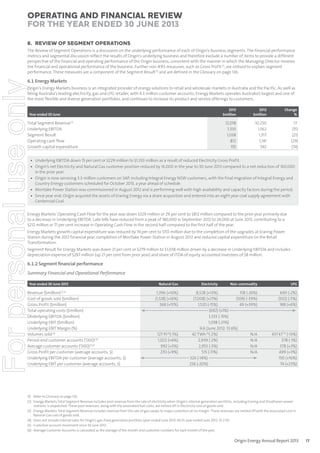
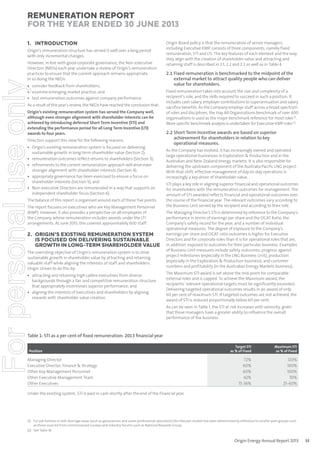
EVERY DAY
Annual Report 2013

05:45am
Early morning walk in Queensland’s
CSG fields, which power homes,
businesses and power stations
across the state.

Strategy Performance Growth
For personal use only

Contents

1.

A message from your Chairman and Managing Director

1

2. Directors’ Report

4

3.

9

Operating and Financial Review

4. Remuneration Report

33

5.

57

Lead Auditor’s Independence Declaration

6. Board of Directors
Executive Management Team

60

8. Corporate Governance Statement

62

9. Financial Statements

66

10. Directors’ Declaration

116

11. Independent Auditor’s Report

117

12. Share and Shareholder Information

119

13. Exploration & Production Permits and Data

121

14. Five Year Financial History

125

15. Glossary

4

58

7.

126
For personal use only

A message
from your
Chairman
and
Managing
Director
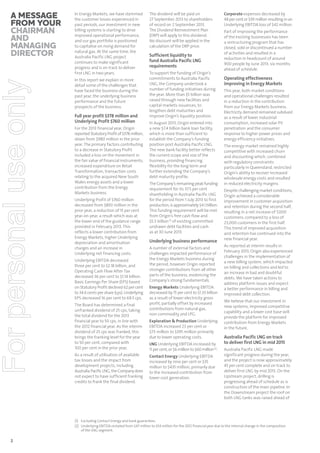
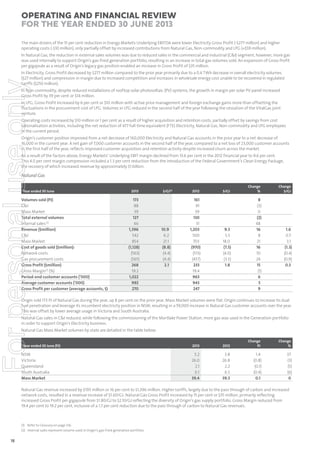
08:30am
Managing Director Grant King
and Chairman Kevin McCann ahead
of a Board meeting.

Fellow shareholder
As foreshadowed in February,
the 2013 financial year was a
more challenging one for Origin,
and this is evident in our financial
results. Origin’s performance was
impacted by a very competitive
environment in our Energy Markets
business and the impact of past
regulatory decisions related to
pricing, particularly in Queensland.
In the past decade we have
established the leading Australian
integrated energy company and
the fundamentals of the business
remain strong. In addition, actions
which we have taken over the past
year make us optimistic about our
future prospects.

Origin Energy Annual Report 2013

1
For personal use only

A message
from your
chairman
and
managing
director

In Energy Markets, we have stemmed
the customer losses experienced in
past periods, our investment in new
billing systems is starting to drive
improved operational performance,
and our gas portfolio is positioned
to capitalise on rising demand for
natural gas. At the same time, the
Australia Pacific LNG project
continues to make significant
progress and is on track to deliver
first LNG in two years.
In this report we explain in more
detail some of the challenges that
have faced the business during the
past year, the underlying business
performance and the future
prospects of the business.

Full year profit $378 million and
Underlying Profit $760 million
For the 2013 financial year, Origin
reported Statutory Profit of $378 million,
down from $980 million in the prior
year. The primary factors contributing
to a decrease in Statutory Profit
included a loss on the movement in
the fair value of financial instruments,
increased expenditure on Retail
Transformation, transaction costs
relating to the acquired New South
Wales energy assets and a lower
contribution from the Energy
Markets business.
Underlying Profit of $760 million
decreased from $893 million in the
prior year, a reduction of 15 per cent
year-on-year, a result which was at
the lower end of the guidance range
provided in February 2013. This
reflects a lower contribution from
Energy Markets, higher Underlying
depreciation and amortisation
charges and an increase in
Underlying net financing costs.
Underlying EBITDA decreased
three per cent to $2.18 billion, and
Operating Cash Flow After Tax
decreased 36 per cent to $1.14 billion.
Basic Earnings Per Share (EPS) based
on Statutory Profit declined 62 per cent
to 34.6 cents per share (cps). Underlying
EPS decreased 16 per cent to 69.5 cps.
The Board has determined a final
unfranked dividend of 25 cps, taking
the total dividend for the 2013
financial year to 50 cps, in line with
the 2012 financial year. As the interim
dividend of 25 cps was franked, this
brings the franking level for the year
to 50 per cent, compared with
100 per cent in the prior year.
As a result of utilisation of available
tax losses and the impact from
development projects, including
Australia Pacific LNG, the Company does
not expect to have sufficient franking
credits to frank the final dividend.

The dividend will be paid on
27 September 2013 to shareholders
of record on 2 September 2013.
The Dividend Reinvestment Plan
(DRP) will apply to this dividend.
No discount will be applied in the
calculation of the DRP price.

Sufficient liquidity to
fund Australia Pacific LNG
requirements
To support the funding of Origin’s
commitments to Australia Pacific
LNG, the Company undertook a
number of funding initiatives during
the year. More than $5 billion was
raised through new facilities and
capital markets issuances, to
lengthen debt maturities and
improve Origin’s liquidity position.
In August 2013, Origin entered into
a new $7.4 billion bank loan facility,
which is more than sufficient to
establish the Company’s funding
position post Australia Pacific LNG.
The new bank facility better reflects
the current scope and size of the
business, providing financing
flexibility for the long term and
further extending the Company’s
debt maturity profile.
The Company’s remaining peak funding
requirement for its 37.5 per cent
shareholding in Australia Pacific LNG
for the period from 1 July 2013 to first
production, is approximately $4.1 billion.
This funding requirement will be met
from Origin’s free cash flow and
$5.3 billion (1) of existing committed
undrawn debt facilities and cash
as at 30 June 2013.

Underlying business performance
A number of external factors and
challenges impacted performance of
the Energy Markets business during
the period, however Origin reported
stronger contributions from all other
parts of the business, evidencing the
Company’s strong fundamentals.
Energy Markets Underlying EBITDA
decreased by 15 per cent to $1.33 billion
as a result of lower electricity gross
profit, partially offset by increased
contributions from natural gas,
non-commodity and LPG.
Exploration & Production Underlying
EBITDA increased 23 per cent or
$73 million to $395 million primarily
due to lower operating costs.
LNG Underlying EBITDA increased by
11 per cent, or $6 million to $60 million (2).
Contact Energy Underlying EBITDA
increased by nine per cent or $35
million to $435 million, primarily due
to the increased contribution from
lower cost generation.

Corporate expenses decreased by
48 per cent or $39 million resulting in an
Underlying EBITDA loss of $42 million.
Part of improving the performance
of the existing businesses has been
a restructuring program that has
closed, sold or discontinued a number
of activities and resulted in a
reduction in headcount of around
900 people by June 2013, six months
ahead of schedule.

Operating effectiveness
improving in Energy Markets
This year, both market conditions
and operational challenges resulted
in a reduction in the contribution
from our Energy Markets business.
Electricity demand remained subdued
as a result of lower industrial
consumption, increased solar PV
penetration and the consumer
response to higher power prices and
energy efficiency initiatives.
The energy market remained highly
competitive with increased churn
and discounting which, combined
with regulatory constraints
particularly in Queensland, restricted
Origin’s ability to recover increased
wholesale energy costs and resulted
in reduced electricity margins.
Despite challenging market conditions,
Origin achieved a considerable
improvement in customer acquisition
and retention during the second half,
resulting in a net increase of 7,000
customers, compared to a loss of
23,000 customers in the first half.
This trend of improved acquisition
and retention has continued into the
new financial year.
As reported at interim results in
February 2013, Origin also experienced
challenges in the implementation of
a new billing system, which impacted
on billing and collections and led to
an increase in bad and doubtful
debts. We have taken actions to
address platform issues and expect
a better performance in billing and
improved debt collection.
We believe that our investment in
new systems, improved competitive
capability and a lower cost base will
provide the platform for improved
contribution from Energy Markets
in the future.

Australia Pacific LNG on track
to deliver first LNG in mid 2015
Australia Pacific LNG made
significant progress during the year,
and the project is now approximately
45 per cent complete and on track to
deliver first LNG by mid 2015. On the
Upstream project, drilling is
progressing ahead of schedule as is
construction of the main pipeline. In
the Downstream project the roof on
both LNG tanks was raised ahead of

(1) Excluding Contact Energy and bank guarantees.
(2) Underlying EBITDA restated from $47 million to $54 million for the 2012 financial year due to the internal change in the composition
of the LNG segment.

2
schedule and the first LNG modules,
refrigeration compressors and gas
turbine generators have been installed.
Our investment in Australia Pacific
LNG stands to deliver a step change
in earnings and cash flow to
support increased distributions
to shareholders and future growth
opportunities.

Future prospects

For personal use only

Looking ahead, Origin continues
to focus on its key priorities:

• improving the performance of the
Energy Markets, Exploration &
Production and Contact Energy
businesses;
• delivering the Australia Pacific LNG
project on schedule and budget;
• managing the funding of the
Company’s investment in Australia
Pacific LNG; and
• creating growth opportunities
for the future.
In the existing business, there are
many improving trends.
In Energy Markets the 2014 financial
year Queensland tariff determination
recovers some of the adverse impact
of wholesale cost increases not
recovered in the 2013 financial year.
Electricity and gas pricing has been
deregulated in South Australia.
In October, Origin expects to complete
the migration of all mass market
customers to its new SAP-based
customer systems, which will allow
improvements in efficiency,
competitiveness and service to
customers. Some of these benefits
are already being seen in improved
operational performance.
Customer losses experienced in prior
periods have been stopped, with
increased effectiveness of customer
acquisition and retention activity.
The investment in prior years in
improving the availability and capacity
of Exploration & Production assets
will result in higher production in the
2014 financial year.
Similarly, the completion of investment
in Contact Energy’s program to
improve flexibility and lower the cost
of generation will result in reduced
risk to Contact’s earnings from
fluctuations in hydrology.
Restructuring activities across Origin
have reduced headcount and will lead
to a lower cost base and improved
cash flow.
Notwithstanding these improving
trends, the highly competitive
environment in the Energy Markets
business in the 2013 financial year has
resulted in a higher level of discounts
locked in well into the 2014 financial
year. These locked in discounts will
delay recovery of earnings in the 2014
financial year.

Given current conditions in the market,
Origin will not be providing specific
earnings guidance for the 2014
financial year at this time, however
an update will be provided at the
Annual General Meeting in October.
Looking ahead to the 2015 financial
year and beyond, Origin expects that
market conditions will improve and
we expect to see margins in the
Energy Markets business return
to more sustainable levels. Origin
expects its gas position will deliver
improved earnings from the 2015
financial year as demand for gas in
Eastern Australia grows when the
Queensland LNG industry begins
production. When Australia Pacific
LNG commences LNG production
in mid 2015, Origin expects strong
growth in earnings and cash flow.

Sustainability
Origin has an overriding duty to
ensure the health and safety of our
employees and contractors. Our Total
Recordable Injury Frequency Rate at
year end was 6.7. While this was an
improvement on the prior year, we
fell short of our target of 6.0. We have
initiated a number of activities,
including a set of 11 Life Saving Rules
that reinforce safe behaviours,
which will help us continue to
make improvements towards our
ultimate objective of zero harm.
More broadly, the development, use
and cost of energy continued to be
important issues throughout the year
for many in the community. Many
customers are coping with the rising
cost of living, of which the cost of
energy is a factor. Others in the
community continue to express
concerns about the impacts of
certain energy developments,
particularly coal seam gas (CSG) and
wind farms. We also continue as a
nation to debate the best ways to
reduce our carbon emissions, and
promote cleaner forms of energy for
the future. These are important
social, environmental and economic
challenges not only for Origin, but
for Australia, and we continue to
listen to our stakeholders and work
to address their concerns. Our ability
to effectively manage these challenges
will be important to the ongoing
sustainability of our business.
We talk in detail about these and
other challenges, in our 2013
Sustainability Report.

Board and People
During the past 12 months, there
have been some changes to the
Origin Board. After 12 years’ service
as a Director, Trevor Bourne retired
in November 2012. Trevor has been
a highly valued colleague from the
very start of Origin and we thank him
for his counsel and tireless contribution
to Origin during a time we have
grown to become one of Australia’s
largest energy companies.
In November, Origin appointed Bruce
Morgan as an Independent
Non-executive Director and
Chairman of the Audit Committee.
Mr Morgan has had a distinguished
career as an auditor and leader of
PricewaterhouseCoopers, and has
a deep knowledge of the Australian
energy sector. These changes ensure
the Board has the skills required to
serve Origin shareholders.
Our people have worked very hard in
a difficult year. We are proud of the
passion and commitment they bring
to Origin each and every day.
Finally, we would like to acknowledge
the continued strong support Origin
receives from our key stakeholders –
our employees, customers, the
communities in which we operate,
our business partners and you, our
shareholders. We will strive to
continue growing our business and
creating value to share sustainably
with all of our stakeholders.

H Kevin McCann
Chairman

Grant King
Managing Director

Opportunities
to grow
Origin Energy Annual Report 2013

3
Directors’ Report
for the year ended 30 June 2013
Developments

The Operating and Financial Review and Remuneration Report form part
of this Directors’ Report.

Mortlake Power Station – In August 2012, the second unit at the Mortlake
Power Station completed final commission, signalling the formal
completion of the Company’s 550 MW development.

For personal use only

In accordance with the Corporations Act 2001, the Directors of Origin
Energy Limited (Company) report on the Company and the consolidated
entity Origin Energy Group (Origin), being the Company and its
controlled entities for the year ended 30 June 2013.

1. PRINCIPAL ACTIVITIES
During the year, the principal activity of Origin was the operation of
energy businesses including:

• exploration and production of oil and gas;
• electricity generation; and
• wholesale and retail sale of electricity and gas.
There had been no significant changes in the nature of these activities
during the year.

Retail Transformation Program – During the year, the Company
successfully migrated all Integral Energy NSW customer accounts
to its new SAP system.

BassGas – In October 2012, production recommenced at the Yolla platform
after an extended shutdown for the Mid Life Enhancement project.
During the year, Origin entered into agreements to sell a portion of its
future oil and condensate production over a 72 month period
commencing July 2015, at a price linked to the oil forward pricing curve.
Upon entry into the agreements, Origin received $482 million.
The events described above and those as disclosed in the Financial
Statements represent the significant changes in the state of affairs
of Origin for the year ended 30 June 2013.

2. REVIEW OF OPERATIONS
A review of the operations and results of operations of Origin during the
year, and the business strategies and prospects for future financial years,
is set out in the Operating and Financial Review, which is attached and
forms part of this Directors’ Report.

3. SIGNIFICANT CHANGES IN THE STATE
OF AFFAIRS
The following significant changes in the state of affairs of the Company
occurred during the year:

Australia Pacific LNG
On 4 July 2012 Australia Pacific LNG approved a Final Investment
Decision on the second train of its two train CSG to LNG project in
Queensland. With this, the subscription agreement for Sinopec to
increase its shareholding in Australia Pacific LNG from 15 per cent to
25 per cent became unconditional. The acquisition by Sinopec of the
additional 10 per cent shareholding was completed on 12 July 2012,
resulting in Origin’s and ConocoPhillips’ respective shareholdings in
Australia Pacific LNG reducing to 37.5 per cent.
During the year, Australia Pacific LNG continued to make good progress
on its CSG to LNG project with both the Upstream and Downstream
projects 45 per cent complete at the end of June 2013. Confidence in the
delivery of the project was confirmed through a project review, resulting
in an announcement in February 2013 of an acceleration of the schedule
for Train 2 and an increase in project costs of 7 per cent to $24.7 billion.

Funding
During the year ended 30 June 2013, Origin undertook a number of
funding initiatives, including the raising of over $5 billion of new facilities
and capital markets issuances, to lengthen debt maturities and improve
its liquidity position.
In October 2012, Origin undertook a €500 million (approximately
US$646 million) seven year medium-term notes issuance under its
Euro Medium Term Note Program.
In April 2013, Origin issued an additional €150 million (approximately
$186 million) 10 year medium-term note and a €750 million (approximately
$950 million) seven and a half year medium-term note under the Euro
Medium Term Note Program.
Origin also executed a $2.4 billion syndicated bank loan facility in
October 2012. The loan facility has terms of four and five years and will
mature in October 2016 and October 2017 and was used to refinance
existing loan facilities maturing in the 2013 and 2014 financial years.
An additional syndicated bank loan facility of $600 million and
USD$200 million was executed in June 2013. The loan facility has a
five year term and will mature in July 2018, and was used to refinance
existing loan facilities maturing in the 2015 financial year.
These initiatives assisted in diversifying Origin’s funding portfolio in terms
of currency, market and tenor, strengthening Origin’s liquidity position
and supporting Origin’s funding commitments to Australia Pacific LNG.
Origin holds debt denominated in Australian dollars, US dollars and
New Zealand dollars to match the currency denomination of cash flow
receipts and the functional currency of its various businesses.

4

4. EVENTS SUBSEQUENT TO BALANCE DATE
Other than the items described below, no matters or circumstances have
arisen since 30 June 2013, which have significantly affected, or may
significantly affect:
• the Company’s operations in future financial years;
• results of those operations in future financial years; or
• the Company’s state of affairs in future financial years.

Acquisition of Eraring Energy and entry into new fuel supply
arrangement
Acquisition of Eraring Energy Pty Limited
On 1 August 2013 Origin completed the acquisition of 100 per cent of
Eraring Energy Pty Limited (Eraring Energy) under a Sale and Purchase
Agreement with the NSW Government for a net payment of $50 million,
and agreed terms for the cancellation of the Cobbora Coal Supply
Agreement, including a payment to Origin of $300 million. The acquisition
provided Origin ownership of the Eraring Power Station and Shoalhaven
Scheme, adding flexibility in the operation of Origin’s generation
portfolio and enhancing Origin’s energy trading capabilities.
The net payment of $50 million reflects a total purchase price of $659 million
net of the expected balance of prepaid capacity charges and funds
prepaid or on deposit with the NSW Government of $609 million, in
relation to the existing GenTrader arrangements. The deposit balance
and pre-paid capacity charge amount reflect the remaining balance of
funds for future capacity charges previously paid by Origin to the NSW
Government when it entered the GenTrader Arrangements in March
2011. The amounts were derived in accordance with the agreed terms
under the GenTrader arrangements.
The Company has not yet finalised its accounting for the acquisition of
Eraring Energy Pty Limited due to the proximity of the completion date
of 1 August to the date of release of these financial statements.
As part of the acquisition Origin settled certain contractual
arrangements previously entered into with Eraring Energy in March 2011.
These arrangements include the GenTrader arrangements and the
Cobbora Coal Supply Agreement and the settlement of these
arrangements will be accounted for as part of the transaction.

Centennial Coal supply agreement
On 1 July 2013 Origin entered into a Coal Supply Agreement with
Centennial Coal for the provision of 24.5 million tonnes of coal over
an eight year period from the 2015 financial year for use at the Eraring
Power Station, with 6 million tonnes of that coal conditional on the
development of Centennial Coal’s Newstan mine extension project.

Debt refinancing
On 21 August 2013 Origin completed a $7.4 billion debt refinancing with
terms of four years and five years. These syndicated facilities will be used
to refinance existing bank debt facilities. As part of the refinancing Origin’s
standard banking terms have been renegotiated and the Company’s
debt maturity profile has been extended. The interest rate of the new
bank debt facility is in line with the cost of existing bank debt.
Directors’ Report
for the year ended 30 June 2013
5. DIVIDENDS
(a) Dividends paid during the year by the Company were as follows:
$million

For personal use only

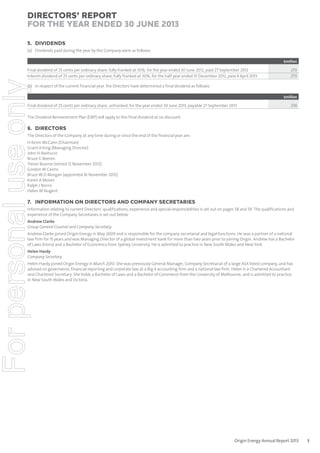
Final dividend of 25 cents per ordinary share, fully franked at 30%, for the year ended 30 June 2012, paid 27 September 2012
Interim dividend of 25 cents per ordinary share, fully franked at 30%, for the half year ended 31 December 2012, paid 4 April 2013

273
273

(b) In respect of the current financial year, the Directors have determined a final dividend as follows:
$million

Final dividend of 25 cents per ordinary share, unfranked, for the year ended 30 June 2013, payable 27 September 2013

274

The Dividend Reinvestment Plan (DRP) will apply to this final dividend at no discount.

6. DIRECTORS
The Directors of the Company at any time during or since the end of the financial year are:
H Kevin McCann (Chairman)
Grant A King (Managing Director)
John H Akehurst
Bruce G Beeren
Trevor Bourne (retired 12 November 2012)
Gordon M Cairns
Bruce W D Morgan (appointed 16 November 2012)
Karen A Moses
Ralph J Norris
Helen M Nugent

7. INFORMATION ON DIRECTORS AND COMPANY SECRETARIES
Information relating to current Directors’ qualifications, experience and special responsibilities is set out on pages 58 and 59. The qualifications and
experience of the Company Secretaries is set out below.
Andrew Clarke
Group General Counsel and Company Secretary
Andrew Clarke joined Origin Energy in May 2009 and is responsible for the company secretarial and legal functions. He was a partner of a national
law firm for 15 years and was Managing Director of a global investment bank for more than two years prior to joining Origin. Andrew has a Bachelor
of Laws (Hons) and a Bachelor of Economics from Sydney University. He is admitted to practice in New South Wales and New York.
Helen Hardy
Company Secretary
Helen Hardy joined Origin Energy in March 2010. She was previously General Manager, Company Secretariat of a large ASX listed company, and has
advised on governance, financial reporting and corporate law at a Big 4 accounting firm and a national law firm. Helen is a Chartered Accountant
and Chartered Secretary. She holds a Bachelor of Laws and a Bachelor of Commerce from the University of Melbourne, and is admitted to practice
in New South Wales and Victoria.

Origin Energy Annual Report 2013

5
Directors’ Report
for the year ended 30 June 2013
8. DIRECTORS’ MEETINGS
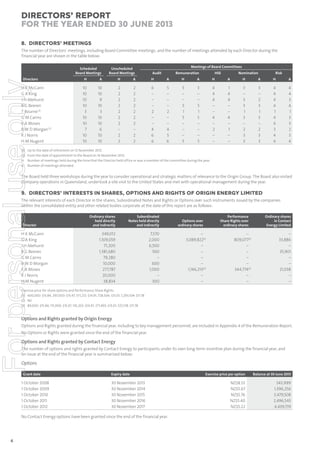
The number of Directors’ meetings, including Board Committee meetings, and the number of meetings attended by each Director during the
financial year are shown in the table below:
Scheduled
Board Meetings

For personal use only

Directors

H K McCann
G A King
J H Akehurst
B G Beeren
T Bourne (1)
G M Cairns
K A Moses
B W D Morgan (2)
R J Norris
H M Nugent

(1)
(2)
H
A

Unscheduled
Board Meetings

Meetings of Board Committees
Audit

Remuneration

HSE

Nomination

Risk

H

A

H

A

H

A

H

A

H

A

H

A

H

A

10
10
10
10
3
10
10
7
10
10

10
10
9
10
3
10
10
6
10
10

2
2
2
2
2
2
2
–
2
2

2
2
2
2
2
2
2
–
2
2

6
–
–
–
2
–
–
4
6
6

5
–
–
–
2
–
–
4
5
6

5
–
–
5
1
5
–
–
–
5

3
–
–
5
1
5
–
–
–
5

4
4
4
–
–
4
–
2
–
–

1
4
4
–
–
4
–
1
–
–

3
–
3
3
1
3
–
2
3
3

3
–
2
3
1
3
–
2
3
3

4
4
4
4
1
4
4
3
4
4

4
4
3
4
1
3
3
2
3
4

Up to the date of retirement on 12 November 2012.
From the date of appointment to the Board on 16 November 2012.
Number of meetings held during the time that the Director held office or was a member of the committee during the year.
Number of meetings attended.

The Board held three workshops during the year to consider operational and strategic matters of relevance to the Origin Group. The Board also visited
Company operations in Queensland, undertook a site visit to the United States and met with operational management during the year.

9. DIRECTORS’ INTERESTS IN SHARES, OPTIONS AND RIGHTS OF ORIGIN ENERGY LIMITED
The relevant interests of each Director in the shares, Subordinated Notes and Rights or Options over such instruments issued by the companies
within the consolidated entity and other related bodies corporate at the date of this report are as follows:

Director

H K McCann
G A King
J H Akehurst
B G Beeren
G M Cairns
B W D Morgan
K A Moses
R J Norris
H M Nugent

Ordinary shares
held directly
and indirectly

Subordinated
Notes held directly
and indirectly

349,012
1,109,059
71,200
1,381,680
79,280
10,000
277,787
20,000
38,834

7,570
2,000
6,500
500
–
600
1,000
–
300

Performance
Share Rights over
ordinary shares

Options over
ordinary shares

–
3,089,822(1)
–
–
–
–
1,146,213(3)
–
–

–
809,077(2)
–
–
–
–
344,774(2)
–
–

Ordinary shares
in Contact
Energy Limited

–
33,886
–
35,901
–
–
21,038
–
–

Exercise price for share options and Performance Share Rights:
(1) 400,000: $15.84, 297,000: $15.47, 371,212: $14.91, 728,506: $13.01, 1,293,104: $11.78
(2) Nil
(3) 89,000: $15.84, 115,000: $15.47, 145,202: $14.91, 271,493: $13.01, 525,518: $11.78

Options and Rights granted by Origin Energy
Options and Rights granted during the financial year, including to key management personnel, are included in Appendix 4 of the Remuneration Report.
No Options or Rights were granted since the end of the financial year.

Options and Rights granted by Contact Energy
The number of options and rights granted by Contact Energy to participants under its own long-term incentive plan during the financial year, and
on issue at the end of the financial year is summarised below:

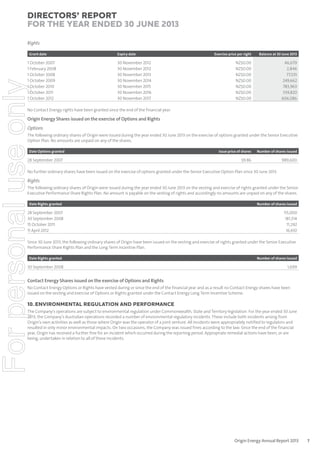
Options
Grant date

1 October 2008
1 October 2009
1 October 2010
1 October 2011
1 October 2012

Expiry date

30 November 2013
30 November 2014
30 November 2015
30 November 2016
30 November 2017

No Contact Energy options have been granted since the end of the financial year.

6

Exercise price per option

Balance at 30 June 2013

NZ$8.53
NZ$5.67
NZ$5.76
NZ$5.40
NZ$5.22

543,999
1,396,256
3,479,508
2,496,543
4,439,719
Directors’ Report
for the year ended 30 June 2013
Rights
Grant date

For personal use only

1 October 2007
1 February 2008
1 October 2008
1 October 2009
1 October 2010
1 October 2011
1 October 2012

Expiry date

30 November 2012
30 November 2012
30 November 2013
30 November 2014
30 November 2015
30 November 2016
30 November 2017

Exercise price per right

Balance at 30 June 2013

NZ$0.00
NZ$0.00
NZ$0.00
NZ$0.00
NZ$0.00
NZ$0.00
NZ$0.00

46,679
2,846
77,535
249,662
783,963
539,820
606,086

No Contact Energy rights have been granted since the end of the financial year.

Origin Energy Shares issued on the exercise of Options and Rights
Options
The following ordinary shares of Origin were issued during the year ended 30 June 2013 on the exercise of options granted under the Senior Executive
Option Plan. No amounts are unpaid on any of the shares.
Date Options granted

28 September 2007

Issue price of shares

Number of shares issued

$9.86

989,600

No further ordinary shares have been issued on the exercise of options granted under the Senior Executive Option Plan since 30 June 2013.

Rights
The following ordinary shares of Origin were issued during the year ended 30 June 2013 on the vesting and exercise of rights granted under the Senior
Executive Performance Share Rights Plan. No amount is payable on the vesting of rights and accordingly no amounts are unpaid on any of the shares.
Date Rights granted

28 September 2007
30 September 2008
15 October 2011
11 April 2012

Number of shares issued

115,000
181,314
11,292
16,610

Since 30 June 2013, the following ordinary shares of Origin have been issued on the vesting and exercise of rights granted under the Senior Executive
Performance Share Rights Plan and the Long Term Incentive Plan.
Date Rights granted

30 September 2008

Number of shares issued

1,699

Contact Energy Shares issued on the exercise of Options and Rights
No Contact Energy Options or Rights have vested during or since the end of the financial year and as a result no Contact Energy shares have been
issued on the vesting and exercise of Options or Rights granted under the Contact Energy Long Term Incentive Scheme.

10. ENVIRONMENTAL REGULATION AND PERFORMANCE

The Company’s operations are subject to environmental regulation under Commonwealth, State and Territory legislation. For the year ended 30 June
2013, the Company’s Australian operations recorded a number of environmental regulatory incidents. These include both incidents arising from
Origin’s own activities as well as those where Origin was the operator of a joint venture. All incidents were appropriately notified to regulators and
resulted in only minor environmental impacts. On two occasions, the Company was issued fines according to the law. Since the end of the financial
year, Origin has received a further fine for an incident which occurred during the reporting period. Appropriate remedial actions have been, or are
being, undertaken in relation to all of these incidents.

Origin Energy Annual Report 2013

7
Directors’ Report
for the year ended 30 June 2013
Further details of amounts paid to the Company’s auditors are included
in Note 21 to the full financial statements.

Under its constitution, the Company may indemnify current and past
directors and officers for losses or liabilities incurred by the person as a
director or officer of the Company or its related bodies corporate to the
extent allowed under law. The constitution also permits the Company
to purchase and maintain a directors’ and officers’ insurance policy.
No indemnity has been granted to an auditor of the Company in their
capacity as auditor of the Company.

In accordance with written advice signed by the Audit Committee
Chairman and provided to the Board pursuant to a resolution passed by
the Audit Committee, the Board has formed the view that the provision
of those non-audit services by the auditor is compatible with, and did
not compromise, the general standards of independence for auditors
imposed by the Corporations Act. The Board’s reasons for concluding
that the non-audit services provided did not compromise the auditor’s
independence are:

For personal use only

11. INDEMNITIES AND INSURANCE FOR
DIRECTORS AND OFFICERS

The Company has entered into agreements with current Directors and
certain former Directors whereby it will indemnify those Directors from
all losses or liabilities in accordance with the terms of the constitution.
The agreements stipulate that the Company will meet the full amount
of any such liabilities, including costs and expenses to the extent
allowed under law. The Company is not aware of any liability having
arisen, and no claims have been made during or since the year ended
30 June 2013 under these agreements.
During the year, the Company has paid insurance premiums in respect
of directors’ and officers’ liability, and legal expense insurance contracts
for the year ended 30 June 2013.
The insurance contracts insure against certain liability (subject to exclusions)
of persons who are or have been directors or officers of the Company
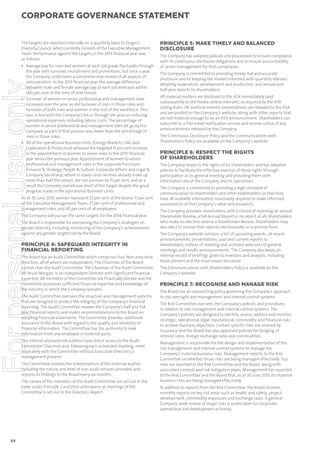
and its controlled entities. A condition of the contracts is that the nature
of the liability indemnified and the premium payable not be disclosed.

12. AUDITOR INDEPENDENCE

There is no former partner or director of KPMG, the Company’s auditors,
who is or was at any time during the year ended 30 June 2013 an officer
of the Origin Energy Group. The auditor’s independence declaration
(made under section 307C of the Corporations Act) is attached to and
forms part of this report.

13. NON-AUDIT SERVICES
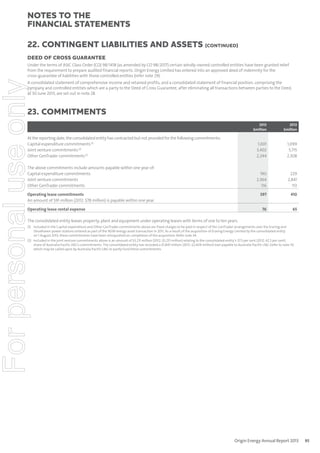
The amounts paid or payable to the Origin Energy Group auditor KPMG
for non-audit services provided by that firm during the year are as
follows (shown to nearest thousand dollar):
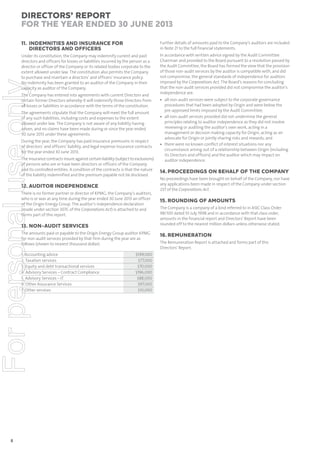
1. Accounting advice
2. Taxation services
3. Equity and debt transactional services
4. Advisory Services – Contract Compliance
5. Advisory Services – IT
6. Other Assurance Services
7. Other services

8

$199,000
$77,000
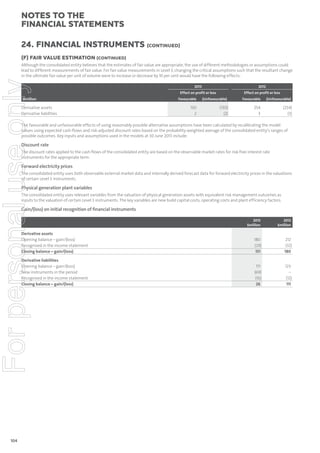
$70,000
$196,000
$88,000
$97,000
$10,000

• all non-audit services were subject to the corporate governance
procedures that had been adopted by Origin and were below the
pre-approved limits imposed by the Audit Committee;
• all non-audit services provided did not undermine the general
principles relating to auditor independence as they did not involve
reviewing or auditing the auditor’s own work, acting in a
management or decision making capacity for Origin, acting as an
advocate for Origin or jointly sharing risks and rewards; and
• there were no known conflict of interest situations nor any
circumstance arising out of a relationship between Origin (including
its Directors and officers) and the auditor which may impact on
auditor independence.

14. PROCEEDINGS ON BEHALF OF THE COMPANY
No proceedings have been brought on behalf of the Company, nor have
any applications been made in respect of the Company under section
237 of the Corporations Act.

15. ROUNDING OF AMOUNTS
The Company is a company of a kind referred to in ASIC Class Order
98/100 dated 10 July 1998 and in accordance with that class order,
amounts in the financial report and Directors’ Report have been
rounded off to the nearest million dollars unless otherwise stated.

16. REMUNERATION
The Remuneration Report is attached and forms part of this
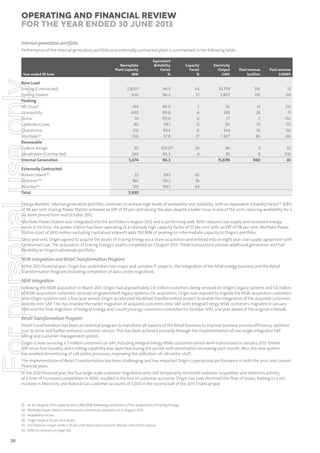
Directors’ Report.
Operating and Financial Review
for the year ended 30 June 2013
This Operating and Financial Review (OFR) contains forward looking statements, including statements of current intention, statements of opinion
and predictions as to possible future events and future financial prospects. Such statements are not statements of fact and there can be no certainty
of outcome in relation to the matters to which the statements relate. Forward looking statements involve known and unknown risks, uncertainties,
assumptions and other important factors that could cause the actual outcomes to be materially different from the events or results expressed or
implied by such statements, and the outcomes are not all within the control of Origin. Statements about past performance are not necessarily
indicative of future performance.

For personal use only

Neither the Company nor any of its subsidiaries, affiliates and associated companies (or any of their respective officers, employees or agents) (the
Relevant Persons) makes any representation, assurance or guarantee as to the accuracy or likelihood of fulfilment of any forward looking statement
or any outcomes expressed or implied in any forward looking statements. The forward looking statements in this OFR reflect views held only at the
date of this report and except as required by applicable law or the ASX Listing Rules, the Relevant Persons disclaim any obligation or undertaking to
publicly update any forward looking statements, or discussion of future financial prospects, whether as a result of new information or future events.
This OFR, Remuneration Report, and Directors’ Report refer to Origin’s financial results, including Origin’s Statutory Profit and Underlying
Consolidated Profit. Origin’s Statutory Profit contains a number of items that when excluded provide a different perspective on the financial and
operational performance of the business. Income Statement amounts, presented on an underlying basis such as Underlying Consolidated Profit, are
Non-IFRS Financial Measures, and exclude the impact of these items consistent with the manner in which the Managing Director reviews the
financial and operating performance of the business. Each underlying measure disclosed has been adjusted to remove the impact of these items on a
consistent basis. A detailed reconciliation and description of the items that contribute to the difference between Statutory Profit and Underlying
Consolidated Profit is provided in Section 3.1 of this OFR.
Certain other Non-IFRS Financial Measures are also included in the reports. These Non-IFRS Financial Measures are used internally by management to
assess the performance of Origin’s business and make decisions on allocation of resources. Further information regarding the Non-IFRS Financial
Measures is included in the Glossary on page 126. Non-IFRS Measures have not been subject to audit or review.

1. FINANCIAL AND OPERATING HIGHLIGHTS
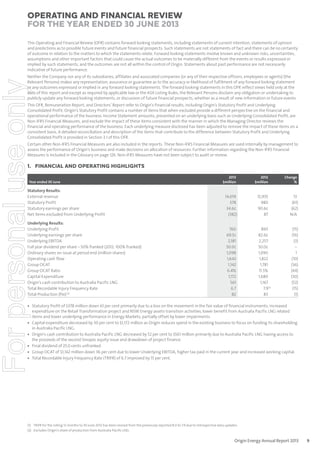
2013
$million

2012
$million

Change
%

Statutory Results:
External revenue
Statutory Profit
Statutory earnings per share
Net items excluded from Underlying Profit

14,619
378
34.6¢
(382)

12,935
980
90.6¢
87

13
(61)
(62)
N/A

Underlying Results:
Underlying Profit
Underlying earnings per share
Underlying EBITDA
Full year dividend per share – 50% franked (2012: 100% franked)
Ordinary shares on issue at period end (million shares)
Operating cash flow
Group OCAT
Group OCAT Ratio
Capital Expenditure
Origin’s cash contribution to Australia Pacific LNG
Total Recordable Injury Frequency Rate
Total Production (PJe) (2)

760
69.5¢
2,181
50.0¢
1,098
1,642
1,142
6.4%
1,172
561
6.7
82

893
82.6¢
2,257
50.0¢
1,090
1,822
1,781
11.5%
1,680
1,167
7.9(1)
83

(15)
(16)
(3)
–
1
(10)
(36)
(44)
(30)
(52)
(15)
(1)

Year ended 30 June

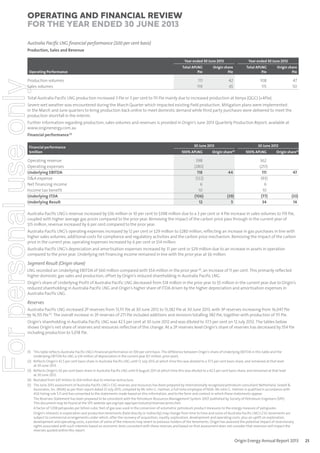
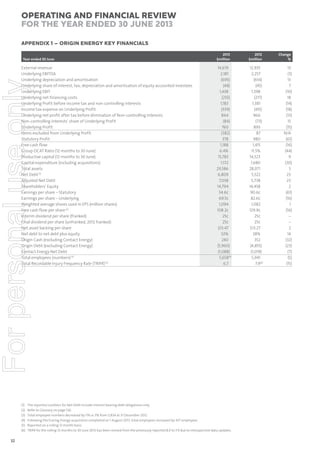
• Statutory Profit of $378 million down 61 per cent primarily due to a loss on the movement in the fair value of financial instruments, increased
expenditure on the Retail Transformation project and NSW Energy assets transition activities, lower benefit from Australia Pacific LNG related
items and lower underlying performance in Energy Markets, partially offset by lower impairments.
• Capital expenditure decreased by 30 per cent to $1,172 million as Origin reduces spend in the existing business to focus on funding its shareholding
in Australia Pacific LNG.
• Origin’s cash contribution to Australia Pacific LNG decreased by 52 per cent to $561 million primarily due to Australia Pacific LNG having access to
the proceeds of the second Sinopec equity issue and drawdown of project finance.
• Final dividend of 25.0 cents unfranked.
• Group OCAT of $1,142 million down 36 per cent due to lower Underlying EBITDA, higher tax paid in the current year and increased working capital.
• Total Recordable Injury Frequency Rate (TRIFR) of 6.7 improved by 15 per cent.

(1) TRIFR for the rolling 12 months to 30 June 2012 has been revised from the previously reported 8.0 to 7.9 due to retrospective data updates.
(2) Excludes Origin’s share of production from Australia Pacific LNG.

Origin Energy Annual Report 2013

9
Operating and Financial Review
for the year ended 30 June 2013
New Zealand

Origin supplies energy to wholesale and retail energy markets primarily
in Australia and New Zealand and increasingly in the Asia Pacific region.

Origin holds a 53.1 per cent interest in Contact Energy, one of New
Zealand’s leading integrated generation and energy retailing companies.

In supplying these markets, Origin’s strategy is to invest in the
contestable segments of energy production, power generation and
energy retailing. This strategy is designed to provide opportunities to
grow the value of the Company whilst allowing for the more effective
management of the risks that arise across an increasingly competitive
energy supply chain.

Contact Energy supplies electricity, gas and LPG to approximately
566,000 commercial and residential customers and has around a
23 per cent share of the retail market (1). Contact Energy owns and
operates a generation portfolio of 2,218 MW across New Zealand and
supplies approximately 25 per cent of New Zealand’s electricity needs (2).
Contact Energy uses a diverse fuel base of hydro, geothermal, gas and
diesel and has a strategy of developing low cost baseload and flexible
generation capacity so that it can cost effectively meet the energy
requirements of its customers.

For personal use only

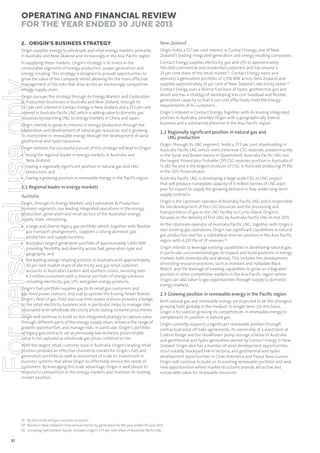
2. ORIGIN’S BUSINESS STRATEGY

Origin pursues this strategy through its Energy Markets and Exploration
& Production businesses in Australia and New Zealand, through its
53.1 per cent interest in Contact Energy in New Zealand and a 37.5 per cent
interest in Australia Pacific LNG which is adding value to domestic gas
resources by exporting LNG to energy markets in China and Japan.
Origin intends to grow its interest in energy production through the
exploration and development of natural gas resources and is growing
its investment in renewable energy through the development of wind,
geothermal and hydro resources.
Origin believes the successful pursuit of this strategy will lead to Origin:

• being the regional leader in energy markets in Australia and
New Zealand;
• having a regionally significant position in natural gas and LNG
production; and
• having a growing position in renewable energy in the Pacific region.

Origin’s interest in Contact Energy, together with its leading integrated
position in Australia, provides Origin with a geographically diverse
business and a substantial presence in the Asia Pacific region.

2.2 Regionally significant position in natural gas and
LNG production
Origin, through its LNG segment, holds a 37.5 per cent shareholding in
Australia Pacific LNG which owns extensive CSG reserves, predominantly
in the Surat and Bowen basins in Queensland. Australia Pacific LNG has
the largest Proved plus Probable (2P) CSG reserves position in Australia of
13,382 PJe and is the largest producer of CSG in Australia producing 111 PJe
in the 2013 financial year.

Australia

Australia Pacific LNG is developing a large-scale CSG to LNG project
that will produce nameplate capacity of 9 million tonnes of LNG each
year for export to supply the growing demand in Asia under long-term
supply contracts.

Origin, through its Energy Markets and Exploration & Production
business segments, has leading integrated operations in the energy
production, generation and retail sectors of the Australian energy
supply chain, comprising:

Origin is the Upstream operator of Australia Pacific LNG and is responsible
for the development of the CSG resources and the processing and
transportation of gas to the LNG facility on Curtis Island. Origin is
focused on the delivery of first LNG by Australia Pacific LNG in mid 2015.

• a large and diverse legacy gas portfolio which, together with flexible
gas transport arrangements, supports a strong domestic gas
production and supply business;
• Australia’s largest generation portfolio of approximately 5,900 MW
providing flexibility and diversity across fuel, generation type and
geography; and
• the leading energy retailing position in Australia with approximately
30 per cent market share of electricity and gas retail customer
accounts in Australia’s eastern and southern states, servicing over
4.3 million customers with a diverse portfolio of energy solutions
including electricity, gas, LPG and green energy products.

As the Upstream operator of Australia Pacific LNG, together with Origin’s
own existing gas operations, Origin has significant capabilities in natural
gas production and has a substantial reserves position in the Asia Pacific
region with 6,201 PJe of 2P reserves (3).

2.1 Regional leader in energy markets

Origin’s fuel portfolio supplies gas to its retail gas customers and
gas-fired power stations, and coal to operate the Eraring Power Station.
Origin’s fleet of gas-fired and coal-fired power stations provides a hedge
to the retail electricity business and, in particular, helps to manage risks
associated with wholesale electricity prices during extreme price events.
Origin will continue to build on this integrated strategy to capture value
through different parts of the energy supply chain, enhance the range of
growth opportunities and manage risks. In particular, Origin’s portfolio
of legacy gas contracts set at previously low domestic prices enable
value to be captured as wholesale gas prices continue to rise.
With the largest retail customer base in Australia, Origin’s leading retail
position provides an effective channel to market for Origin’s fuel and
generation portfolio as well as economies of scale on investment in
business systems that allow Origin to effectively service the needs of
customers. By leveraging this scale advantage, Origin is well placed to
respond to competition in the energy markets and maintain its leading
market position.

Origin intends to leverage existing capabilities in developing natural gas,
in particular unconventional gas, to expand and build positions in energy
markets both domestically and abroad. This includes the development
of existing resource positions, such as Ironbark and Halladale Black
Watch, and the leverage of existing capabilities to grow an integrated
position in other competitive markets in the Asia Pacific region where
Origin can add value to gas opportunities through supply to domestic
energy markets.

2.3 Growing position in renewable energy in the Pacific region
Both natural gas and renewable energy are expected to be the strongest
growing fuels globally in the medium to longer term. On this basis,
Origin is focused on growing its competencies in renewable energy to
complement its position in natural gas.
Origin currently supports a significant renewable position through
contractual wind off-take agreements, its ownership of a wind farm at
Cullerin Range and the Shoalhaven pump storage scheme in Australia
and geothermal and hydro generation owned by Contact Energy in New
Zealand. Origin also has a number of wind development opportunities,
most notably Stockyard Hill in Victoria, and geothermal and hydro
development opportunities in Chile, Indonesia and Papua New Guinea.
Origin will continue to build on its existing renewable portfolio and seek
new opportunities where market structures provide attractive and
sustainable value for renewable resources.

(1) By electricity and gas customer accounts.
(2) Based on New Zealand’s total annual electricity generation for the year ended 30 June 2013.
(3) Including hydrocarbon liquids. Includes Origin’s 37.5 per cent share of Australia Pacific LNG.

10
Operating and Financial Review
for the year ended 30 June 2013
3. REVIEW OF FINANCIAL PERFORMANCE
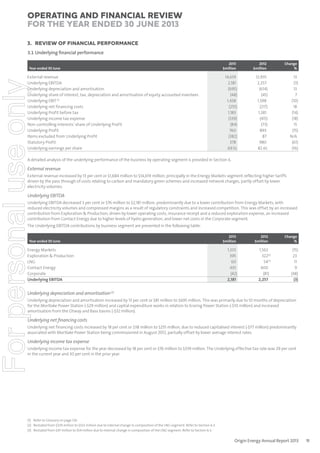
3.1 Underlying financial performance
Year ended 30 June

For personal use only

External revenue
Underlying EBITDA
Underlying depreciation and amortisation
Underlying share of interest, tax, depreciation and amortisation of equity accounted investees
Underlying EBIT (1)
Underlying net financing costs
Underlying Profit before tax
Underlying income tax expense
Non-controlling interests’ share of Underlying Profit
Underlying Profit
Items excluded from Underlying Profit
Statutory Profit
Underlying earnings per share

2013
$million

2012
$million

Change
%

14,619
2,181
(695)
(48)
1,438
(255)
1,183
(339)
(84)
760
(382)
378
69.5¢

12,935
2,257
(614)
(45)
1,598
(217)
1,381
(415)
(73)
893
87
980
82.6¢

13
(3)
13
7
(10)
18
(14)
(18)
15
(15)
N/A
(61)
(16)

A detailed analysis of the underlying performance of the business by operating segment is provided in Section 6.

External revenue
External revenue increased by 13 per cent or $1,684 million to $14,619 million, principally in the Energy Markets segment reflecting higher tariffs
driven by the pass through of costs relating to carbon and mandatory green schemes and increased network charges, partly offset by lower
electricity volumes.

Underlying EBITDA

Underlying EBITDA decreased 3 per cent or $76 million to $2,181 million, predominantly due to a lower contribution from Energy Markets, with
reduced electricity volumes and compressed margins as a result of regulatory constraints and increased competition. This was offset by an increased
contribution from Exploration & Production, driven by lower operating costs, insurance receipt and a reduced exploration expense, an increased
contribution from Contact Energy due to higher levels of hydro generation, and lower net costs in the Corporate segment.
The Underlying EBITDA contributions by business segment are presented in the following table:

Year ended 30 June

Energy Markets
Exploration & Production
LNG
Contact Energy
Corporate
Underlying EBITDA

2013
$million

1,333
395
60
435
(42)
2,181

2012
$million

1,562
322(2)
54(3)
400
(81)
2,257

Change
%

(15)
23
11
9
(48)
(3)

Underlying depreciation and amortisation (1)
Underlying depreciation and amortisation increased by 13 per cent or $81 million to $695 million. This was primarily due to 10 months of depreciation
for the Mortlake Power Station (-$29 million) and capital expenditure works in relation to Eraring Power Station (-$10 million) and increased
amortisation from the Otway and Bass basins (-$32 million).

Underlying net financing costs
Underlying net financing costs increased by 18 per cent or $38 million to $255 million, due to reduced capitalised interest (-$77 million) predominantly
associated with Mortlake Power Station being commissioned in August 2012, partially offset by lower average interest rates.

Underlying income tax expense
Underlying income tax expense for the year decreased by 18 per cent or $76 million to $339 million. The Underlying effective tax rate was 29 per cent
in the current year and 30 per cent in the prior year.

(1) Refer to Glossary on page 126.
(2) Restated from $329 million to $322 million due to internal change in composition of the LNG segment. Refer to Section 6.3.
(3) Restated from $47 million to $54 million due to internal change in composition of the LNG segment. Refer to Section 6.3.

Origin Energy Annual Report 2013

11
Operating and Financial Review
for the year ended 30 June 2013
Underlying Profit
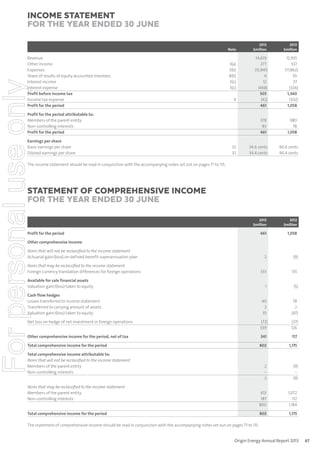
Underlying Profit decreased by 15 per cent or $133 million to $760 million.
Underlying Profit is derived from Statutory Profit and excludes the impact of certain items (described below) that do not align with the manner in
which the Managing Director reviews the financial and operating performance of the business.

For personal use only

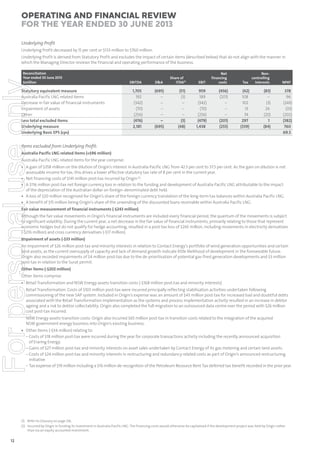
Reconciliation
Year ended 30 June 2013
$million

Statutory equivalent measure
Australia Pacific LNG related items
Decrease in fair value of financial instruments
Impairment of assets
Other
Less total excluded items
Underlying measure
Underlying Basic EPS (cps)

EBITDA

D&A

Share of
ITDA(1)

1,705
192
(342)
(70)
(256)
(476)
2,181

(695)
–
–
–
–
–
(695)

(51)
(3)
–
–
–
(3)
(48)

EBIT

Net
financing
costs

959
189
(342)
(70)
(256)
(479)
1,438

(456)
(201)
–
–
–
(201)
(255)

Noncontrolling
Tax
Interests

(42)
108
102
13
74
297
(339)

(83)
–
(3)
24
(20)
1
(84)

NPAT

378
96
(243)
(33)
(202)
(382)
760
69.5

Items excluded from Underlying Profit:
Australia Pacific LNG related items (+$96 million)
Australia Pacific LNG related items for the year comprise:

• A gain of $358 million on the dilution of Origin’s interest in Australia Pacific LNG from 42.5 per cent to 37.5 per cent. As the gain on dilution is not
assessable income for tax, this drives a lower effective statutory tax rate of 8 per cent in the current year.
• Net financing costs of $141 million post-tax incurred by Origin (2).
• A $116 million post-tax net foreign currency loss in relation to the funding and development of Australia Pacific LNG attributable to the impact
of the depreciation of the Australian dollar on foreign-denominated debt held.
• A loss of $20 million recognised for Origin’s share of the foreign currency translation of the long-term tax balances within Australia Pacific LNG.
• A benefit of $15 million being Origin’s share of the unwinding of the discounted loans receivable within Australia Pacific LNG.
Fair value measurement of financial instruments (-$243 million)
Although the fair value movements in Origin’s financial instruments are included every financial period, the quantum of the movements is subject
to significant volatility. During the current year, a net decrease in the fair value of financial instruments, primarily relating to those that represent
economic hedges but do not qualify for hedge accounting, resulted in a post-tax loss of $243 million, including movements in electricity derivatives
(-$216 million) and cross currency derivatives (-$17 million).
Impairment of assets (-$33 million)
An impairment of $26 million post-tax and minority interests in relation to Contact Energy’s portfolio of wind generation opportunities and certain
land assets, as the current oversupply of capacity and lack of demand growth indicate little likelihood of development in the foreseeable future.
Origin also recorded impairments of $4 million post-tax due to the de-prioritisation of potential gas-fired generation developments and $3 million
post-tax in relation to the Surat permit.
Other items (-$202 million)
Other items comprise:
• Retail Transformation and NSW Energy assets transition costs (-$168 million post-tax and minority interests)
Retail Transformation: Costs of $103 million post-tax were incurred principally reflecting stabilisation activities undertaken following
commissioning of the new SAP system. Included in Origin’s expense was an amount of $43 million post-tax for increased bad and doubtful debts
associated with the Retail Transformation implementation as the systems and process implementation activity resulted in an increase in debtor
ageing and a risk to debtor collectability. Origin also completed the full migration to an outsourced data centre over the period with $26 million
cost post-tax incurred.

NSW Energy assets transition costs: Origin also incurred $65 million post-tax in transition costs related to the integration of the acquired
NSW government energy business into Origin’s existing business.

• Other items (-$34 million) relating to:
– Costs of $18 million post-tax were incurred during the year for corporate transactions activity including the recently announced acquisition
of Eraring Energy.
– Gains of $27 million post-tax and minority interests on asset sales undertaken by Contact Energy of its gas metering and certain land assets.
– Costs of $24 million post-tax and minority interests in restructuring and redundancy related costs as part of Origin’s announced restructuring
initiative.
– Tax expense of $19 million including a $16 million de-recognition of the Petroleum Resource Rent Tax deferred tax benefit recorded in the prior year.

(1) Refer to Glossary on page 126.
(2) Incurred by Origin in funding its investment in Australia Pacific LNG. The financing costs would otherwise be capitalised if the development project was held by Origin rather
than via an equity accounted investment.

12
Operating and Financial Review
for the year ended 30 June 2013
3.2 Final dividend – 25.0 cps unfranked
A final unfranked dividend of 25.0 cps will be paid on 27 September 2013 to shareholders of record on 2 September 2013. Origin shares will trade
ex-dividend from 27 August 2013.
This will bring the total dividend attributable to the 2013 financial year to 50.0 cps in line with the prior year. However, the franking level for the year was
50 per cent compared with 100 per cent in the prior year, as the interim dividend of 25.0 cps was fully franked while the final dividend is unfranked.

For personal use only

As a result of utilisation of available tax losses and the impact from development projects, including Australia Pacific LNG, the Company does not
expect to have sufficient franking credits to frank the final dividend.
The DRP will apply to this dividend. No discount will be applied in the calculation of the DRP price.

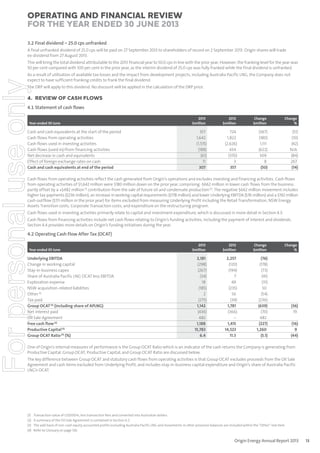
4. REVIEW OF CASH FLOWS
4.1 Statement of cash flows
Year ended 30 June

Cash and cash equivalents at the start of the period
Cash flows from operating activities
Cash flows used in investing activities
Cash flows (used in)/from financing activities
Net decrease in cash and equivalents
Effect of foreign exchange rates on cash
Cash and cash equivalents at end of the period

2013
$million

2012
$million

Change
$million

Change
%

357
1,642
(1,515)
(188)
(61)
11
307

724
1,822
(2,626)
434
(370)
3
357

(367)
(180)
1,111
(622)
309
8
(50)

(51)
(10)
(42)
N/A
(84)
267
(14)

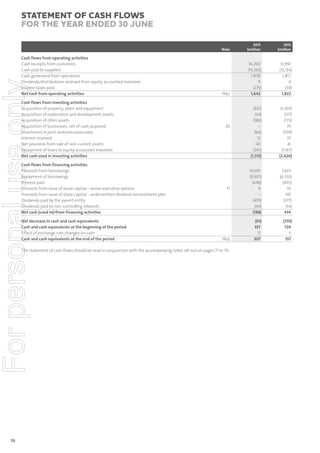
Cash flows from operating activities reflect the cash generated from Origin’s operations and excludes investing and financing activities. Cash flows
from operating activities of $1,642 million were $180 million down on the prior year, comprising -$662 million in lower cash flows from the business
partly offset by a +$482 million (1) contribution from the sale of future oil and condensate production (2). The negative $662 million movement includes
higher tax payments ($236 million), an increase in working capital requirements ($178 million) and lower Underlying EBITDA ($76 million) and a $192 million
cash outflow ($111 million in the prior year) for items excluded from measuring Underlying Profit including the Retail Transformation, NSW Energy
Assets Transition costs, Corporate Transaction costs, and expenditure on the restructuring program.
Cash flows used in investing activities primarily relate to capital and investment expenditure, which is discussed in more detail in Section 4.3.
Cash flows from financing activities include net cash flows relating to Origin’s funding activities, including the payment of interest and dividends.
Section 4.4 provides more details on Origin’s funding initiatives during the year.

4.2 Operating Cash Flow After Tax (OCAT)
Year ended 30 June

Underlying EBITDA
Change in working capital
Stay-in-business capex
Share of Australia Pacific LNG OCAT less EBITDA
Exploration expense
NSW acquisition-related liabilities
Other (3)
Tax paid
Group OCAT (4) (including share of APLNG)
Net interest paid
Oil Sale Agreement
Free cash flow (4)
Productive Capital (4)
Group OCAT Ratio (4) (%)

2013
$million

2012
$million

Change
$million

2,181
(298)
(267)
(34)
18
(185)
2
(275)
1,142
(436)
482
1,188
15,783
6.4

2,257
(120)
(194)
7
49
(235)
56
(39)
1,781
(366)
–
1,415
14,523
11.5

Change
%

(76)
(178)
(73)
(41)
(31)
50
(54)
(236)
(639)
(70)
482
(227)
1,260
(5.1)

(36)
19
(16)
9
(44)

One of Origin’s internal measures of performance is the Group OCAT Ratio which is an indicator of the cash returns the Company is generating from
Productive Capital. Group OCAT, Productive Capital, and Group OCAT Ratio are discussed below.
The key difference between Group OCAT and statutory cash flows from operating activities is that Group OCAT excludes proceeds from the Oil Sale
Agreement and cash items excluded from Underlying Profit, and includes stay-in-business capital expenditure and Origin’s share of Australia Pacific
LNG’s OCAT.

(1)
(2)
(3)
(4)

Transaction value of US$500m, less transaction fees and converted into Australian dollars.
A summary of the Oil Sale Agreement is contained in Section 6.2.
The add-back of non-cash equity accounted profits excluding Australia Pacific LNG and movements in other provision balances are included within the “Other” line item.
Refer to Glossary on page 126.

Origin Energy Annual Report 2013

13
Operating and Financial Review
for the year ended 30 June 2013
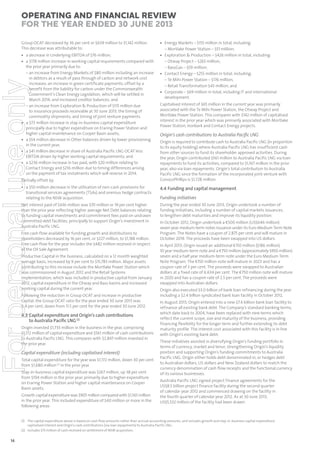
Group OCAT decreased by 36 per cent or $639 million to $1,142 million.
This decrease was attributable to:

For personal use only

• a decrease in Underlying EBITDA of $76 million;
• a $178 million increase in working capital requirements compared with
the prior year primarily due to:
– an increase from Energy Markets of $80 million including an increase
in debtors as a result of pass through of carbon and network cost
increases; an increase in green certificate payments; offset by a
benefit from the liability for carbon under the Commonwealth
Government’s Clean Energy Legislation, which will be settled in
March 2014; and increased creditor balances; and
– an increase from Exploration & Production of $115 million due
to insurance proceeds receivable at 30 June 2013; the timing of
commodity shipments; and timing of joint venture payments.
• a $73 million increase in stay-in-business capital expenditure
principally due to higher expenditure on Eraring Power Station and
higher capital maintenance on Cooper Basin assets;
• a $54 million decrease in Other balances driven by lower provisioning
in the current year;
• a $41 million decrease in share of Australia Pacific LNG OCAT less
EBITDA driven by higher working capital requirements; and
• a $236 million increase in tax paid, with $20 million relating to
Contact Energy and $216 million due to timing differences arising
on the payment of tax instalments which will reverse in 2014.
Partially offset by:

• Energy Markets – $155 million in total, including:
– Mortlake Power Station – $51 million;
• Exploration & Production – $426 million in total, including:
– Otway Project – $265 million;
– BassGas – $59 million;
• Contact Energy – $255 million in total, including:
– Te Mihi Power Station – $176 million;
– Retail Transformation $43 million; and
• Corporate – $69 million in total, including IT and international
development.
Capitalised interest of $65 million in the current year was primarily
associated with the Te Mihi Power Station, the Otway Project and
Mortlake Power Station. This compares with $142 million of capitalised
interest in the prior year which was primarily associated with Mortlake
Power Station, Ironbark and Contact Energy projects.

Origin’s cash contributions to Australia Pacific LNG
Origin is required to contribute cash to Australia Pacific LNG (in proportion
to its equity holding) where Australia Pacific LNG has insufficient cash
from other sources to fund its shareholder approved activities. During
the year, Origin contributed $561 million to Australia Pacific LNG via loan
repayments to fund its activities, compared to $1,167 million in the prior
year, also via loan repayments. Origin’s total contribution to Australia
Pacific LNG since the formation of the incorporated joint venture with
ConocoPhillips is $1,728 million.

• a $50 million decrease in the utilisation of non-cash provisions for
transitional services agreements (TSAs) and onerous hedge contracts
relating to the NSW acquisition.

4.4 Funding and capital management

Net interest paid of $436 million was $70 million or 19 per cent higher
than the prior year reflecting higher average Net Debt balances relating
to funding capital investments and commitment fees paid on undrawn
committed debt facilities, principally to support Origin’s investment in
Australia Pacific LNG.

During the year ended 30 June 2013, Origin undertook a number of
funding initiatives, including a number of capital markets issuances,
to lengthen debt maturities and improve its liquidity position.

Free cash flow available for funding growth and distributions to
shareholders decreased by 16 per cent, or $227 million, to $1,188 million.
Free cash flow for the year includes the $482 million received in respect
of the Oil Sale Agreement.
Productive Capital in the business, calculated on a 12 month weighted
average basis, increased by 9 per cent to $15,783 million. Major assets
contributing to this increase include the Mortlake Power Station which
was commissioned in August 2012 and the Retail Systems
implementation, which was included in productive capital from January
2012, capital expenditure in the Otway and Bass basins and increased
working capital during the current year.
Following the reduction in Group OCAT and increase in productive
capital, the Group OCAT ratio for the year ended 30 June 2013 was
6.4 per cent, down from 11.5 per cent for the year ended 30 June 2012.

4.3 Capital expenditure and Origin’s cash contributions
to Australia Pacific LNG (1)
Origin invested $1,733 million in the business in the year, comprising
$1,172 million of capital expenditure and $561 million of cash contributions
to Australia Pacific LNG. This compares with $2,847 million invested in
the prior year.

Capital expenditure (including capitalised interest)
Total capital expenditure for the year was $1,172 million, down 30 per cent
from $1,680 million (2) in the prior year.

Stay-in-business capital expenditure was $267 million, up 38 per cent
from $194 million in the prior year, primarily due to higher expenditure
on Eraring Power Station and higher capital maintenance on Cooper
Basin assets.
Growth capital expenditure was $905 million compared with $1,561 million
in the prior year. This included expenditure of $40 million or more in the
following areas:

Funding initiatives

In October 2012, Origin undertook a €500 million (US$646 million)
seven year medium-term notes issuance under its Euro Medium Term Note
Program. The Notes have a coupon of 2.875 per cent and will mature in
October 2019. The proceeds have been swapped into US dollars.
In April 2013, Origin issued an additional €150 million ($186 million)
10 year medium-term note and a €750 million (approximately $950 million)
seven and a half year medium-term note under the Euro Medium Term
Note Program. The €150 million note will mature in 2023 and has a
coupon rate of 3 per cent. The proceeds were swapped to Australian
dollars at a fixed rate of 6.634 per cent. The €750 million note will mature
in 2020 and has a coupon rate of 2.5 per cent. The proceeds were
swapped into Australian dollars.
Origin also executed $3.0 billion of bank loan refinancing during the year
including a $2.4 billion syndicated bank loan facility in October 2012.
In August 2013, Origin entered into a new $7.4 billion bank loan facility to
refinance all existing bank debt. The Company’s standard banking terms,
which date back to 2004, have been replaced with new terms which
reflect the current scope, size and maturity of the business, providing
financing flexibility for the longer term and further extending its debt
maturity profile. The interest cost associated with this facility is in line
with Origin’s existing bank debt.
These initiatives assisted in diversifying Origin’s funding portfolio in
terms of currency, market and tenor, strengthening Origin’s liquidity
position and supporting Origin’s funding commitments to Australia
Pacific LNG. Origin either holds debt denominated in, or hedges debt
to Australian dollars, US dollars and New Zealand dollars to match the
currency denomination of cash flow receipts and the functional currency
of its various businesses.
Australia Pacific LNG signed project finance agreements for the
US$8.5 billion project finance facility during the second quarter
of calendar year 2012 and commenced drawing on the facility in
the fourth quarter of calendar year 2012. As at 30 June 2013,
US$5,532 million of the facility had been drawn.

(1) The capital expenditure above is based on cash flow amounts rather than accrual accounting amounts, and includes growth and stay-in-business capital expenditure,
capitalised interest and Origin’s cash contributions (via loan repayments) to Australia Pacific LNG.
(2) Includes $75 million of cash received on settlement of NSW acquisition.

14
Operating and Financial Review
for the year ended 30 June 2013
Origin’s remaining funding requirement for its 37.5 per cent shareholding in Australia Pacific LNG for the period from 1 July 2013 to first production
from both LNG trains is approximately $4.1 billion (1), based on current estimates, and after the drawdown of project finance and the payment of
Sinopec’s equity subscription on 12 July 2012.
This funding requirement will be met partly from Origin’s free cash flow and from $5.3 billion of existing liquidity comprising committed undrawn
debt facilities and cash (excluding Contact Energy and bank guarantees as at 30 June 2013).

For personal use only

Share capital
During the 2013 financial year, Origin issued an additional 8.4 million shares, raising a total of $96 million. This included 7.1 million shares under the
DRP which raised $87 million, and 1.3 million shares issued as a result of the exercise of long-term employee incentives, which raised $9 million.
As a consequence, the total number of shares on issue increased from 1,090 million at 30 June 2012 to 1,098 million at 30 June 2013.
The weighted average number of shares used to calculate basic EPS at 30 June 2013 increased by 12 million to 1,094 million from 1,082 million
at 30 June 2012.

Net Debt (2) and equity
Net Debt
Net Debt for the consolidated entity increased by 23 per cent or $1,287 million to $6,809 million from $5,522 million at 30 June 2012. The increase in
Net Debt is primarily due to Origin’s funding of Australia Pacific LNG ($561 million), growth capital expenditure ($905 million) and the fair value and
foreign currency translation movements of debt ($442 million), partially offset by cash flows from the existing business.
Equity
Shareholders’ Equity (2) increased by 2 per cent from $14,458 million at 30 June 2012 to $14,794 million at 30 June 2013. The increase of $336 million is
predominantly due to the Statutory Profit before Non-controlling interests of $461 million, $341 of other comprehensive income (comprising foreign
currency translation reserve ($161 million), hedging reserve ($73 million), and Non-controlling interests ($104 million)) and $96 million of share
issuance, partially offset by $546 million of dividends paid.
Gearing Ratio (2)

The following table provides the calculation of the Gearing Ratio based on the reported Net Debt and the reported Shareholders’ Equity:
As at

Net Debt as reported ($million)
Shareholders’ Equity as reported ($million)
Net Debt to (Net Debt + Shareholders’ Equity) (%)

30 June 2013

30 June 2012

6,809
14,794
32

5,522
14,458
28

4.5 Interest rates

Origin’s Underlying average interest rate (2) incurred on debt for the year was 6.1 per cent compared with 7.4 per cent for the year ended 30 June 2012.
The lower Underlying average interest rate was primarily due to a reduction in the Australian dollar floating interest rate. Underlying net financing
costs used to calculate the Underlying average interest rate include interest on Origin’s Australian dollar, US dollar and New Zealand dollar debt
obligations, Contact Energy’s New Zealand dollar denominated debt, as well as commitment fees incurred on undrawn committed debt facilities
associated with Origin’s underlying business.
Interest incurred on drawn debt and commitment fees paid on undrawn committed debt facilities, which act to support Origin’s future funding
commitments to Australia Pacific LNG, are excluded from Underlying net financing costs (refer to Section 3.1) and from the interest rate quoted
above. This amounted to $141 million post-tax in the year, and would otherwise be capitalised except for Origin’s investment in Australia Pacific LNG
being equity accounted.
As at 30 June 2013, Origin held cash and cash equivalents of $307 million compared with $357 million at 30 June 2012. This cash was invested at an
average rate of 3.9 per cent for the year.
Approximately 71 per cent of Origin’s consolidated debt obligations are fixed to 30 June 2014 at an average rate of 5.3 per cent including margin.

5. ORIGIN’S PROSPECTS FOR FUTURE FINANCIAL YEARS
The following discussion of Origin’s prospects for future financial years should be considered in conjunction with the risks associated with the
achievement of those prospects outlined in section 7.
Origin’s prospects in the short to medium-term are driven by four key priorities:

•
•
•
•

improving the performance of the existing businesses;
delivering first LNG through Australia Pacific LNG in mid 2015;
managing funding and the balance sheet position; and
creating growth opportunities for the medium and longer term future.

5.1 Improving the performance of the existing businesses
Removal of controls on retail pricing reduces risk and improves earnings potential
In the 2013 financial year, margin compression occurred as a result of regulatory decisions, as the Queensland Competition Authority pricing
determination reduced the wholesale cost of energy allowance and higher than expected costs of wholesale energy were unable to be recovered
in previously set tariffs.
In the 2014 financial year, the Queensland tariff determination recovers some of the adverse impact of wholesale cost increases not recovered in the
2013 financial year. Further, with the commencement of deregulation and opening up to full contestability in the South Australian market from
January 2013 and the announcement of the proposed deregulation of the Queensland market from July 2015, Origin believes the future earnings
potential of the business will not be limited by price controls.

(1) Partially via loan repayment.
(2) Refer to Glossary on page 126.

Origin Energy Annual Report 2013

15
Operating and Financial Review
for the year ended 30 June 2013
Reduction in employee numbers, business restructuring and asset
sales improve cash flow and reduces cost base

In the 2013 financial year, competitive activity, market churn and
discounts increased in all states, except Queensland. There are signs
towards the end of the 2013 financial year that the competitive
environment in some markets is moderating with churn and discount
levels beginning to decrease which improves the outlook on margins in
future years. Notwithstanding this, the lagged impact of high levels of
discounting that are locked in with customers well into the 2014 financial
year is expected to constrain Origin’s ability to recover expected
increases in wholesale energy costs and contribute to a delay in the
recovery in earnings.

In the 2013 financial year, around 900 roles were removed across the
Contact Energy, Energy Markets, Exploration & Production and the
Corporate business segments as part of a business restructuring
program. A review of investment activities and assets also resulted in
the discontinuation, sale and reduced spend in a number of businesses
and assets. These business rationalisation activities will drive improved
cash flow and reduce the cost base in future years.

For personal use only

Stabilising competitive environment reduces churn and improves
margin outlook

Implementation of retail systems and completion of NSW
customer migration improves operating effectiveness and
competitive capability
Origin has made investments in two major projects, the Retail
Transformation Program and NSW integration, to improve operational
efficiency and enhance customer service. The implementation of Retail
Transformation has been challenging which disrupted collection activity
during the large scale migration of customers to the new SAP system in
the 2012 financial year, and resulted in an increase in aged debt. Issues
with the implementation of the billing processes on the SAP system led
to late bills peaking at 180,000 in September 2012, which has created
challenges in collection.
With the stabilisation of the SAP system, Origin is improving billing and
collection performance evidenced by late bills returning to 24,000 at the
end of June 2013 and an improvement in operating cash flow in the
second half of the 2013 financial year.
The new SAP system will provide new capabilities in channel
management and products and services provided to customers
including on-line self-serve functionality and e-billing. Further, scale
benefits from the early integration of Integral Energy NSW customers
(completed in January 2013) and the final migration of Integral Energy
and Country Energy (scheduled for October 2013) are expected to
generate further improved performance and competitive capability.

Completion of investment to improve availability and capacity of
upstream assets and additional gas contracting will benefit from
increased demand for gas as LNG production commences
Origin expects to benefit from prior year investment in improving
production and reliability of existing production assets resulting in an
increased contribution from the Exploration & Production segment.
In particular, the Otway Basin is expected to have an improvement in
performance with the completion of the Geographe 2 well in July 2013,
the Bass Basin is expected to benefit from a full year of production from
Yolla 3 and Yolla 4, and the Cooper Basin as additional development wells
come online.
Origin has also lengthened its gas contracting position with the entry
into the gas purchase agreement with Beach Energy for up to 173 PJ of
gas over 10 years from the 2015 financial year.
These initiatives will allow Origin to increase gas sales into a growing
east coast gas market as the LNG industry commences production.

Completion of Contact Energy’s investment in low cost and flexible
generation and commissioning of HVDC interconnector reduces
exposure to hydrology and improves reliability of earnings
Contact Energy is expected to benefit from the resolution of two issues
that had previously impacted earnings. Transmission network upgrades
that include the completion of an additional HVDC Inter-Island link will
improve the connectivity of Contact Energy’s generation and markets
in the North and South islands and, the reduction in gas take-or-pay
commitments will increase flexibility in the gas and generation portfolio.
In addition, the completion of the Te Mihi geothermal power station will
provide Contact Energy with additional lower cost generation.

16

5.2 Delivering the Australia Pacific LNG project
A key focus for Origin is the delivery of Australia Pacific LNG’s CSG to LNG
project, with first LNG targeted in mid 2015. Prior to first LNG, Australia
Pacific LNG’s earnings will reflect growing sales to domestic markets and
other LNG projects. The Australia Pacific LNG project will deliver a step
change in Origin’s earnings and cash flow from the 2016 financial year when
the project is due to deliver LNG under its existing long-term contracts.

5.3 Managing the funding of Origin’s investment in Australia
Pacific LNG
Origin’s remaining funding requirement for its 37.5 per cent shareholding
in Australia Pacific LNG for the period from 1 July 2013 to first production
from both LNG trains is approximately $4.1 billion.
To fund Origin’s share of the investment in the Australia Pacific LNG
project, Origin expects to continue to significantly reduce its committed
capital expenditure on other projects, maximise cash flow from the
existing business and extend the maturity profile of the debt position.
In the coming years, Origin expects the existing businesses to generate
cash flow surplus to their ongoing business needs. This excess cash
flow will be used to partly meet Origin’s funding requirement to
Australia Pacific LNG. The balance of Origin’s funding requirement will
be met by existing liquidity of $5.3 billion, comprising committed
undrawn facilities and cash (excluding Contact Energy and bank
guarantees, as at 30 June 2013).

5.4 Creating growth opportunities for the future
Origin is progressing existing development opportunities to provide
ongoing growth following the completion of the Australia Pacific LNG
project. This includes preparing existing gas and renewable energy
opportunities to be ready for final investment decisions (FID) to be taken
in the medium-term, such as Ironbark and Halladale Black Watch and the
large-scale wind project at Stockyard Hill. Origin will continue
exploration activities to increase its gas resource position including the
planned well to be drilled in the Canterbury Basin in New Zealand.
Controlled spend will continue to grow Origin’s position in hydro and
geothermal resources.
Operating and Financial Review
for the year ended 30 June 2013
6. REVIEW OF SEGMENT OPERATIONS
The Review of Segment Operations is a discussion on the underlying performance of each of Origin’s business segments. The financial performance
metrics and segmental discussion reflect the results of Origin’s underlying business and therefore exclude a number of items to provide a different
perspective of the financial and operating performance of the Origin business, consistent with the manner in which the Managing Director reviews
the financial and operational performance of the business. Further non-IFRS measures, such as Gross Profit (1), are utilised to explain segment
performance. These measures are a component of the Segment Result (1) and are defined in the Glossary on page 126.

For personal use only

6.1 Energy Markets
Origin’s Energy Markets business is an integrated provider of energy solutions to retail and wholesale markets in Australia and the Pacific. As well as
being Australia’s leading electricity, gas and LPG retailer, with 4.3 million customer accounts, Energy Markets operates Australia’s largest and one of
the most flexible and diverse generation portfolios, and continues to increase its product and service offerings to customers.
2013
$million

Total Segment Revenue (1)
Underlying EBITDA
Segment Result
Operating cash flow
Growth capital expenditure

2012
$million

Change
%

12,018
1,333
1,038
812
155

Year ended 30 June

10,250
1,562
1,317
1,141
592

17
(15)
(21)
(29)
(74)

• Underlying EBITDA down 15 per cent or $229 million to $1,333 million as a result of reduced Electricity Gross Profit.
• Origin’s net Electricity and Natural Gas customer position reduced by 16,000 in the year to 30 June 2013 compared to a net reduction of 160,000
in the prior year.
• Origin is now servicing 3.3 million customers on SAP, including Integral Energy NSW customers, with the final migration of Integral Energy and
Country Energy customers scheduled for October 2013, a year ahead of schedule.
• Mortlake Power Station was commissioned in August 2012 and is performing well with high availability and capacity factors during the period.
• Since year end, Origin acquired the assets of Eraring Energy via a share acquisition and entered into an eight year coal supply agreement with
Centennial Coal.

Energy Markets’ Operating Cash Flow for the year was down $329 million or 29 per cent to $812 million compared to the prior year primarily due
to a decrease in Underlying EBITDA. Late bills have reduced from a peak of 180,000 in September 2012 to 24,000 at June 2013, contributing to a
$212 million or 71 per cent increase in Operating Cash Flow in the second half compared to the first half of the year.
Energy Markets growth capital expenditure was reduced by 74 per cent to $155 million due to the completion of the upgrades at Eraring Power
Station during the 2012 financial year, completion of Mortlake Power Station in August 2012 and reduced capital expenditure on the Retail
Transformation.
Segment Result for Energy Markets was down 21 per cent or $279 million to $1,038 million driven by a decrease in Underlying EBITDA and includes
depreciation expense of $287 million (up 21 per cent from prior year) and share of ITDA of equity accounted investees of $8 million.

6.1.2 Segment financial performance
Summary Financial and Operational Performance
Year ended 30 June 2013

Revenue ($million) (2,3)
Cost of goods sold ($million)
Gross Profit ($million)
Total operating costs ($million)
Underlying EBITDA ($million)
Underlying EBIT ($million)
Underlying EBIT Margin (%)
Volumes sold (4)
Period-end customer accounts (’000) (5)
Average customer accounts (’000) (5,6)
Gross Profit per customer (average accounts, $)
Underlying EBITDA per customer (average accounts, $)
Underlying EBIT per customer (average accounts, $)

Natural Gas

1,396 (+16%)
(1,128) (+16%)
268 (+15%)

127 PJ (1)(-1%)
1,022 (+6%)
992 (+5%)
270 (+9%)

Electricity

Non-commodity

LPG

8,528 (+13%)
158 (-26%)
(7,008) (+21%)
(109) (-39%)
1,520 (-15%)
49 (+39%)
(692) (+1%)
1,333 (-15%)
1,038 (-21%)
9.6 (June 2012: 13.6%)
42 TWh (1)(-2%)
N/A
2,939 (-2%)
N/A
2,953 (-5%)
N/A
515 (-11%)
N/A
324 (-14%)
256 (-20%)

690 (-2%)
(502) (-5%)
188 (+6%)

437 kT (1) (-13%)
378 (-1%)
378 (+3%)
499 (+3%)
150 (+16%)
74 (+23%)

(1) Refer to Glossary on page 126.
(2) Energy Markets Total Segment Revenue includes pool revenue from the sale of electricity when Origin’s internal generation portfolio, including Eraring and Shoalhaven power
stations, is dispatched. These pool revenues, along with the associated fuel costs, are netted off in Electricity cost of goods sold.
(3) Energy Markets Total Segment Revenue includes revenue from the sale of gas swaps to major customers at no margin. These revenues are netted off with the associated cost in
Natural Gas cost of goods sold.
(4) Does not include internal sales for Origin’s gas-fired generation portfolio (year ended June 2013: 46 PJ; year ended June 2012: 31.2 PJ).
(5) Customer account movement since 30 June 2012.
(6) Average Customer Accounts is calculated as the average of the month-end customer numbers for each month of the year.

Origin Energy Annual Report 2013

17
Operating and Financial Review
for the year ended 30 June 2013
The main drivers of the 15 per cent reduction in Energy Markets Underlying EBITDA were lower Electricity Gross Profit (-$277 million) and higher
operating costs (-$10 million), only partially offset by increased contributions from Natural Gas, Non-commodity and LPG (+$59 million).
In Natural Gas, the reduction in external sales volumes was due to reduced sales in the commercial and industrial (C&I) segment, however, more gas
was used internally to support Origin’s gas-fired generation portfolio, resulting in an increase in total gas volumes sold. An expansion of Gross Profit
per gigajoule as a result of Origin’s legacy gas position enabled an increase in Gross Profit of $35 million.

For personal use only

In Electricity, Gross Profit decreased by $277 million compared to the prior year primarily due to a 0.4 TWh decrease in overall electricity volumes
($27 million) and compression in margin due to increased competition and increases in wholesale energy cost unable to be recovered in regulated
tariffs ($250 million).
In Non-commodity, despite reduced installations of rooftop solar photovoltaic (PV) systems, the growth in margin per solar PV panel increased
Gross Profit by 39 per cent or $14 million.
In LPG, Gross Profit increased by 6 per cent or $10 million with active price management and foreign exchange gains more than offsetting the
fluctuations in the procurement cost of LPG. Volumes in LPG reduced in the second half of the year following the cessation of the VitalGas joint
venture.
Operating costs increased by $10 million or 1 per cent as a result of higher acquisition and retention costs, partially offset by savings from cost
rationalisation activities, including the net reduction of 477 full-time equivalent (FTE) Electricity, Natural Gas, Non-commodity and LPG employees
in the current period.
Origin’s customer position improved from a net decrease of 160,000 Electricity and Natural Gas accounts in the prior year to a net decrease of
16,000 in the current year. A net gain of 7,000 customer accounts in the second half of the year, compared to a net loss of 23,000 customer accounts
in the first half of the year, reflects improved customer acquisition and retention activity despite increased churn across the market.
As a result of the factors above, Energy Markets’ Underlying EBIT margin declined from 13.6 per cent in the 2012 financial year to 9.6 per cent.
This 4.0 per cent margin compression included a 1.3 per cent reduction from the introduction of the Federal Government’s Clean Energy Package,
the recovery of which increased revenue by approximately $1 billion.

Natural Gas
Year ended 30 June

Volumes sold (PJ)
C&I
Mass Market
Total external volumes
Internal sales (2)
Revenue ($million)
C&I
Mass Market
Cost of goods sold ($million):
Network costs
Gas procurement costs
Gross Profit ($million)
Gross Margin(1) (%)
Period-end customer accounts (’000)
Average customer accounts (’000)
Gross Profit per customer (average accounts, $)

2013

173
88
39
127
46
1,396
542
854
(1,128)
(563)
(565)
268
19.2
1,022
992
270

$/GJ(1)

10.9
6.2
21.1
(8.8)
(4.4)
(4.4)
2.1

2012

161
91
39
130
31
1,203
500
703
(970)
(513)
(457)
233
19.4
963
943
247

$/GJ

9.3
5.5
18.0
(7.5)
(4.0)
(3.5)
1.8

Change
%

8
(3)
0
(2)
48
16
8
21
16
10
24
15
(1)
6
5
9

Change
$/GJ

1.6
0.7
3.1
(1.3)
(0.4)
(0.9)
0.3

Origin sold 173 PJ of Natural Gas during the year, up 8 per cent on the prior year. Mass Market volumes were flat. Origin continues to increase its dual
fuel penetration and leverage its incumbent electricity position in NSW, resulting in a 59,000 increase in Natural Gas customer accounts over the year.
This was offset by lower average usage in Victoria and South Australia.
Natural Gas sales in C&I reduced, while following the commissioning of the Mortlake Power Station, more gas was used in the Generation portfolio
in order to support Origin’s Electricity business.
Natural Gas Mass Market volumes by state are detailed in the table below:

Year ended 30 June (PJ)

NSW
Victoria
Queensland
South Australia
Mass Market

2013

2012

Change
PJ

Change
%

5.2
26.0
2.1
6.1
39.4

3.8
26.8
2.2
6.5
39.3

1.4
(0.8)
(0.1)
(0.4)
0.1

37
(3)
(5)
(6)
0

Natural Gas revenue increased by $193 million or 16 per cent to $1,396 million. Higher tariffs, largely due to the pass through of carbon and increased
network costs, resulted in a revenue increase of $1.60/GJ. Natural Gas Gross Profit increased by 15 per cent or $35 million, primarily reflecting
increased Gross Profit per gigajoule from $1.80/GJ to $2.10/GJ reflecting the diversity of Origin’s gas supply portfolio. Gross Margin reduced from
19.4 per cent to 19.2 per cent, inclusive of a 1.7 per cent reduction due to the pass through of carbon to Natural Gas revenues.

(1) Refer to Glossary on page 126.
(2) Internal sales represent volume used in Origin’s gas-fired generation portfolio.

18
Operating and Financial Review
for the year ended 30 June 2013
Electricity
Year ended 30 June

For personal use only

Volumes sold (TWh)
C&I
Mass Market
Revenue ($million)
C&I
Mass Market
Externally contracted generation
Cost of goods sold ($million):
Network costs
Wholesale energy costs
Generation operating costs
Energy procurement costs
Gross Profit ($million)
Gross Margin (%)
Period-end customer accounts (’000)
Average customer accounts (’000)
Gross Profit per customer (average accounts, $)

2013

42.3
22.2
20.1
8,528
3,053
5,399
76
(7,008)
(3,751)
(2,983)
(274)
(3,257)
1,520
17.8
2,939
2,953
515

$/MWh

201
137
266
(165)
(89)
(70)
(7)
(77)
36

2012

42.7
20.6
22.1
7,566
2,385
5,136
45
(5,769)
(3,453)
(2,063)
(252)
(2,316)
1,797
23.8
3,014
3,114
577

$/MWh

177
116
232
(135)
(81)
(48)
(6)
(54)
42

Change
%

Change
$/MWh

(1)
8
(9)
13
28
5
69
21
9
44
9
41
(15)
(25)
(2)
(5)
(11)

24
22
34
(30)
(8)
(22)
(1)
(23)
(6)

Electricity Gross Profit
Electricity volumes declined by 0.4 TWh over the year to 42.3 TWh. While C&I volumes increased by 1.6 TWh or 8 per cent, this was more than offset
by reduced Mass Market volumes, which declined 2.0 TWh or 9 per cent. The reduction in overall volume of 0.4 TWh resulted in a $27 million decrease
in Gross Profit.
The decline in Mass Market electricity volumes of 9 per cent was largely attributable to customer losses resulting from increased competition in NSW
during a period when Origin’s customer acquisition and retention activities were inhibited due to the large-scale migration of customer accounts to
SAP in the 2012 financial year. This resulted in average Electricity customer accounts being 161,000 lower than the prior period. In addition, the
continuing penetration of solar PV and subdued demand for electricity as residential customers continue to closely monitor energy usage has
resulted in a reduction in average residential usage per customer.
Increased market competition in the Small to Medium Enterprise segment (classified within Mass Market) resulted in the transfer of some large
customers, and volumes, in the Mass Market segment to the C&I segment at lower rates in order to retain these customers.
Mass Market electricity volumes by state are detailed in the table below:

Year ended 30 June (TWh)

NSW
Victoria
Queensland
South Australia
Mass Market

2013

2012

Change
TWh

Change
%

9.8
3.9
5.5
0.9
20.1

10.9
4.1
6.2
0.9
22.1

(1.1)
(0.2)
(0.7)
(0.0)
(2.0)

(10)
(4)
(11)
(4)
(9)

Tariffs in the Mass Market segment are set with a forward view of underlying energy costs. In New South Wales, Queensland and South Australia,
the forward view of underlying energy costs is estimated by regulators in arriving at a tariff determination for a given financial year. In the current year,
tariffs in these states were set in the final quarter of last financial year and took effect from 1 July 2012. The market has no ability to adjust these
tariffs once fixed.

In the 2013 financial year, electricity revenue increased by 13 per cent (or $24/MWh) to $8,528 million, however cost of goods sold increased by 21 per cent
(or $30/MWh) to $7,008 million. While the increased revenue and cost of goods sold was largely due to the pass through of carbon and increased
costs associated with mandatory green schemes and increased network charges, Origin experienced a margin compression of $6/MWh as a result
of increased competition and an inability to recover increases in the wholesale cost of energy in regulated tariffs.
The change in mix of electricity volume between Mass Market and C&I as a result of increased competition, net of mitigating pricing strategies,
contributed $1/MWh to the reduction in gross margins ($40 million impact on Gross Profit). A further margin compression of $5/MWh includes both
the impact of the tariff determination in Queensland ($2.60/MWh or $110 million) and higher wholesale prices that occurred during the year but were
not factored into the initial tariff setting ($2.35/MWh or $100 million).
The Queensland Competition Authority’s tariff determination for the 2013 financial year reduced the wholesale energy cost allowance relative to the
previous financial year by $30/MWh. This was only partially offset by an increase in the allowable Retail margin of $10/MWh, resulting in a reduction
in Electricity Gross Profit, pre-mitigating strategies, of $110 million (or $2.60/MWh across total volume).
Average electricity spot prices increased by approximately $9/MWh as a result of reduced generation capacity across the National Electricity Market
and extended periods of high prices in Queensland during the March Quarter. These events led to a significant increase in Origin’s electricity costs as
the wholesale portfolio typically carries a higher exposure to higher energy prices than to volatile energy prices, which are covered by Origin’s flexible
generation portfolio. These higher average prices were not factored into tariff decisions, including regulated tariff determinations, and therefore
were unable to be recovered through the market, resulting in a reduction in Gross Profit of $100 million (or $2.35/MWh across total volume).
For these reasons, gross margin reduced from 23.8 per cent to 17.8 per cent. Included within the gross margin reduction is 2.5 per cent relating to the
impact of the pass-through of carbon to consumers on revenue.

Origin Energy Annual Report 2013

19
Operating and Financial Review
for the year ended 30 June 2013
Internal generation portfolio
Performance of the internal generation portfolio and externally contracted plant is summarised in the following table:

For personal use only

Year ended 30 June

Nameplate
Plant Capacity
MW

Equivalent
Reliability
Factor
%

Capacity
Factor
%

Electricity
Output
GWh

Pool revenue
$million

Pool revenue
$/MWh

2,800(1)
630

94.5
96.2

44
51

10,739
2,807

595
195

55
69

414
640
74
80
216
550

98.9
99.6
99.9
99.1
99.3
97.8

2
6
6
12
6
27

56
338
37
90
144
1,307

12
24
5
10
19
86

213
71
136
113
132
66

30
240
5,674

100.0(3)
84.3
96.3

36
4

96
85
15,699

5
9
960

52
106
61

32
180
120
5,930

99.1
99.2
99.5

65
76
94

Base Load
Eraring (Contracted)
Darling Downs
Peaking
Mt Stuart
Uranquinty
Roma
Ladbroke Grove
Quarantine
Mortlake (2)
Renewable
Cullerin Range
Shoalhaven (Contracted)
Internal Generation

Externally Contracted
Bulwer Island (4)
Osborne (4,5)
Worsley (4)
Total

Energy Markets’ internal generation portfolio continues to achieve high levels of availability and reliability, with an equivalent reliability factor (6) (ERF)
of 96 per cent. Eraring Power Station achieved an ERF of 95 per cent during the year, despite a boiler issue in one of the units reducing availability for a
six week period from mid October 2012.
Mortlake Power Station was integrated into the portfolio in August 2012 and is performing well. With reduced coal supply and increased energy
prices in Victoria, the power station has been operating at a relatively high capacity factor of 27 per cent with an ERF of 98 per cent. Mortlake Power
Station (cost of $810 million excluding capitalised interest) adds 550 MW of peaking-to-intermediate capacity to Origin’s portfolio.
Since year end, Origin agreed to acquire the assets of Eraring Energy via a share acquisition and entered into an eight year coal supply agreement with
Centennial Coal. The acquisition of Eraring Energy’s assets completed on 1 August 2013. These transactions provide additional generation and fuel
flexibility to Origin’s wholesale portfolio.

NSW Integration and Retail Transformation Program
In the 2013 financial year, Origin has undertaken two major and complex IT projects: the integration of the NSW energy business and the Retail
Transformation Program (including completion of data centre migration).

NSW Integration
Following the NSW acquisition in March 2011, Origin had approximately 2.6 million customers being serviced on Origin’s legacy systems and 1.6 million
of NSW-acquisition customers serviced on government legacy systems. On acquisition, Origin was required to migrate the NSW-acquisition customers
onto Origin systems over a four year period. Origin accelerated the Retail Transformation project to enable the integration of the acquired customers
directly onto SAP. This has enabled the earlier migration of acquired customers onto SAP, with Integral Energy NSW customers migrated in January
2013 and the final migration of Integral Energy and Country Energy customers scheduled for October 2013, one year ahead of the original schedule.

Retail Transformation Program
Retail Transformation has been an essential program to transform all aspects of the Retail business to improve business process efficiency, optimise
cost to serve and further enhance customer service. This has been achieved primarily through the implementation of one single integrated SAP
billing and customer management system.
Origin is now servicing 3.3 million customers on SAP, including Integral Energy NSW customers which were transitioned in January 2013. Online
self-serve functionality and e-billing capability was launched during the period, with penetration increasing each month. Also, the new system
has enabled streamlining of call centre processes, improving the utilisation of call centre staff.
The implementation of Retail Transformation has been challenging and has impacted Origin’s operational performance in both the prior and current
financial years.
In the 2012 financial year, the four large-scale customer migrations onto SAP temporarily restricted customer acquisition and retention activity,
at a time of increased competition in NSW, resulted in the loss of customer accounts. Origin has now stemmed the flow of losses, leading to a net
increase in Electricity and Natural Gas customer accounts of 7,000 in the second half of the 2013 financial year.

(1)
(2)
(3)
(4)
(5)
(6)

20

As at 1 August 2013, capacity was 2,880 MW following completion of the acquisition of Eraring Energy.
Mortlake Power Station commenced commercial operation on 21 August 2012.
Availability factor.
Origin holds a 50 per cent share.
For Osborne, Origin holds a 50 per cent share and contracts 100 per cent of the output.
Refer to Glossary on page 126.
Operating and Financial Review
for the year ended 30 June 2013
During the 2013 financial year, issues with the implementation of the billing processes on the SAP system resulted in a delay in bills being issued to
some customers. The number of late bills peaked in September 2012 at 180,000, which has created challenges in collection. Since then, these issues
have been rectified and at June 2013, late bills were at 24,000.
Disruptions to collection activity during the implementation of Retail Transformation has caused an increase in aged debt, which has proved difficult
to collect in the 2013 financial year.

For personal use only

The billing and collections issues have resulted in a higher bad and doubtful debt expense in the current year.

Operating costs
2013
$million

Natural Gas, Electricity & Non-commodity operating costs
LPG operating costs
Total operating costs

2012
$million

Change
%

(561)
(132)
(692)

Year ended 30 June

(551)
(131)
(682)

2
1
1

Natural Gas, Electricity and Non-commodity operating costs (cost to serve)
Origin includes within its cost to serve all costs associated with servicing and maintaining customers, all customer acquisition and retention costs,
and all costs associated with delivering new product lines within the Non-commodity business.

Year ended 30 June

Natural Gas, Electricity & Non-commodity operating cost (excl. TSA unwind) ($million)
TSA provision unwind ($million)
Total Electricity, Natural Gas & Non-commodity cost to serve ($million)
Maintenance costs ($million)
Acquisition & retention costs ($million)
Average customer accounts (’000)
Cost to serve ($ per customer)
Cost to maintain ($ per average customer)
Cost to acquire/retain ($ per average customer)
Cost per acquisition/retention (1) ($ per win/retain)

2013

2012

Change

Change
%

(697)
136
(561)
(445)
(116)
3,946
(142)
(113)
(29)
(79)

(649)
98
(551)
(465)
(86)
4,057
(136)
(115)
(21)
(73)

(48)
38
(10)
20
(30)
(111)
(6)
2
(8)
(6)

7
39
2
(4)
35
(3)
5
(2)
39
8

Cost to serve increased by 2 per cent or $10 million to $561 million.

The increase in cost to serve was primarily due to higher acquisition and retention costs of $30 million from increased customer acquisition and
retention activities which resulted in an improved net customer position, partly offset by savings arising from operational improvements achieved
during the year and lower expense on the TSAs.
Core operations continue to improve following the SAP migrations allowing Origin to commence cost rationalisation activities, resulting in a net
reduction of 309 FTE employees during the year in Electricity, Natural Gas and Non-Commodity. This includes an increase of 120 FTEs associated with
the Integral Energy migration, which replaces services provided under the Integral Energy TSAs.
Cost to serve was impacted by $57 million of higher bad and doubtful debt expense as a result of higher tariffs and billing and collection issues
experienced post-implementation of Retail Transformation.

The TSA provision unwind was $136 million ($98 million in the prior year), which is the amount by which Origin believed payments to the NSW
Government exceed the underlying cost to serve. This included an accelerated amount of $45 million, which reflects the expected migration of the
Country Energy customers (in October 2013) one year ahead of the original schedule. The early migration of these customers brings forward the end
of the TSA, reduces cash expenditure previously anticipated in servicing these customers and, as a consequence, reduces the requirement for the
provision associated with the TSA.

Natural Gas, Electricity and LPG customer accounts
The increased investment in acquisition and retention activity has improved the relative performance of Origin’s Electricity and Natural Gas customer
account movements. During the year, Electricity and Natural Gas customer accounts reduced by 16,000 compared to a 160,000 net reduction in the
prior year. The net reduction of 16,000 customer accounts in the current year included a net loss of 23,000 in the first half and a net gain of 7,000 in
the second half reflecting improved customer acquisition and retention activity.
In New South Wales, while Electricity customer accounts decreased by 55,000 during the year as increased levels of competition continued
post-privatisation, these losses were offset by a 58,000 increase in Natural Gas customer accounts, reflecting increased dual fuel penetration and
marketing efforts in New South Wales.
In Victoria, Origin lost 36,000 customer accounts during the period. Competition and churn in this market intensified following regulatory decisions
in other states which had the effect of lessening competition, most notably in Queensland.
As at 30 June 2013, Origin held 1,067,000 dual fuel (Electricity and Natural Gas) customer accounts. Dual fuel accounts increased by 125,000 accounts
during the financial year from 942,000 accounts at 30 June 2012.

(1) Cost per acquisition/retention = Acquisition and Retention Costs divided by the sum of customer wins (637,000; 545,000 prior year) and retains (841,000; 634,000 prior year.
Retains have been restated from prior year to remove the impact of inter-entity transfers associated with the acquired NSW energy assets).

Origin Energy Annual Report 2013

21
Operating and Financial Review
for the year ended 30 June 2013
Customer account movement from 30 June 2012 to 30 June 2013 (’000)
30 June 2013
Customer Accounts

For personal use only

NSW
Victoria
Queensland
South Australia
Total

30 June 2012

Electricity

Natural Gas

Total

Electricity

Natural Gas

Total

Change
’000

1,370
611
793
165
2,939

215
469
140
198
1,022

1,585
1,080
933
363
3,961

1,425
641
795
153
3,014

157
475
130
201
963

1,582
1,116
925
354
3,977

3
(36)
8
9
(16)

As at 30 June 2013, Origin had 378,000 LPG customer accounts, down 4,000 on the prior year but up 4,000 from 374,000 in the first half of the 2013
financial year.

6.2 Exploration & Production
Origin has exploration and production interests in eastern and southern Australia, the Perth Basin in Western Australia and in New Zealand.
Origin also has other international exploration interests in South East Asia, Kenya and Botswana. These activities are reported within Exploration
& Production. Australia Pacific LNG activities are reported separately and discussed in Section 6.3.

Year ended 30 June

Total Segment Revenue
External Revenue (1)
Underlying EBITDA
Segment Result
Operating cash flow
Growth capital expenditure

2013
$million

2012
$million

740
582
395
162
233
426

Change
%

735
583
322(2)
105
371
421

1
(0)
23
54
(37)
1

• Underlying EBITDA up 23 per cent or $73 million to $395 million primarily due to lower operating costs of $45 million and the Kupe insurance
receipt of $24 million.
• Total operating costs down 11 per cent from $415 million to $370 million, mainly due to reduced shutdown expenses and a significantly reduced
exploration expense.
• First gas delivered from the Geographe 2 well during July 2013 following completion of the drilling and commissioning phases of the project.
• BassGas returned to full production in July 2013 following the successful completion of well workovers, and the earlier re-commissioning of
Yolla platform for manned operations as part of the Mid Life Enhancement (MLE) Project.
• $482 million received under agreements to sell a portion of future oil and condensate production from July 2015 for 72 months at a price linked
to the oil forward pricing curve.
• Origin continues to rationalise small assets including the suspension of gas operations at Kincora in Queensland and the oil operations at
Jingemia in Western Australia as well as the announced agreement to dispose of the TAWN assets in New Zealand.

Operating cash flow decreased by 37 per cent or $138 million to $233 million due to an increase in working capital and an increase in stay-in-business
capital expenditure, partly offset by the increase in Underlying EBITDA.
Exploration & Production growth capital expenditure increased by $5 million or 1 per cent.
Segment Result for Exploration & Production includes depreciation expense of $233 million (up 7 per cent from the prior year (3)).

Financial Performance
Production, Sales and Revenue
Year ended 30 June

Total Production (PJe (4))
Total Sales (PJe)
Commodity Sales Revenue ($million)
2P Reserves (PJe) (5)

(1)
(2)
(3)
(4)
(5)

22

2013

2012

Change
%

82
88
701
1,182

83
90
700
1,235

(2)
(3)
0
(4)

The Exploration & Production Segment sells gas and LPG to the Energy Markets segment on an arm’s length basis. Intersegment sales are eliminated on consolidation.
Restated from $329 million to $322 million due to internal restructure of LNG segment. Refer to Section 6.3.
Restated from $224 million to $217 million due to internal restructure of LNG segment. Refer to Section 6.3.
Refer to Glossary on page 126.
Excludes Origin’s share of Australia Pacific LNG reserves. However, if you include Origin’s share of Australia Pacific LNG, then Origin’s 2P Reserves decreased from 6,807 PJe
to 6,201 PJe, or 9 per cent, which includes Origin’s dilution in Australia Pacific LNG from 42.5 per cent to 37.5 per cent.
Operating and Financial Review
for the year ended 30 June 2013
Origin’s share of total production in Exploration & Production was down 1 PJe or 2 per cent to 82 PJe. Increases in production from the Otway and
Bass basins due to higher availability at both plants and following the completion of Phase 1 of the Yolla MLE Project were offset by the extended
shutdown of BassGas for the MLE Project and lower customer nominations at Kupe.
Sales volumes were also lower reflecting lower production together with lower sales from third party purchases. Of the total sales of 88 PJe, 33 PJe
was sold internally to Origin, an increase of 15 per cent on the prior year.

For personal use only

Total Segment Revenue was in line with the prior year. Commodity revenue (which excludes tolling revenue) of $701 million is also in line with the
prior year with higher commodity prices partly offset by a 3 per cent decrease in sales volumes. Revenue per unit of sales of $7.98/GJe represented
an increase of $0.23/GJe, or 3 per cent, on prior year.
Further information regarding production, sales volumes and revenues is provided in Origin’s June 2013 Quarterly Production Report, available at
www.originenergy.com.au

Operating costs
Total operating costs including exploration expense declined by 11 per cent on the prior year, from $415 million to $370 million. Expenses excluding
exploration costs decreased by 4 per cent to $352 million, as detailed in the table below.

Year ended 30 June

Cost of goods sold
Stock movement
Royalties, tariffs and freight
General operating costs
Expenses
Exploration
Total operating costs

2013
$million

2012
$million

Change
%

(117)
4
(56)
(183)
(352)
(18)
(370)

(100)
5
(62)
(209)
(366)
(49)
(415)

17
(16)
(9)
(13)
(4)
(64)
(11)

Cost of goods sold increased by 17 per cent to $117 million in the year, primarily due to an increase in Origin’s liability relating to the Commonwealth
Government’s carbon price mechanism and an increase in third party purchases in the Cooper Basin.
General operating costs decreased by 13 per cent or $26 million to $183 million in the year. Routine general operating costs were $5 million lower
primarily due to the shut-in of operations in the Surat and Perth basins. Non-routine general operating costs were $17 million lower than the prior
year primarily due to non-recurring costs in the prior year.
Origin’s general operating costs per unit of production decreased by $0.28/GJe, or 11 per cent, compared with the prior year to $2.24/GJe.

For the current year, exploration expense was $18 million, comprising the write-off of exploration expenses incurred to 30 June 2013 from the Vietnam
well, net of the benefit of, the divestment of Origin’s interest in Vietnam from 100 per cent to 45 per cent, which resulted in the recovery of past costs
under the farm-out agreement, and other general exploration costs across other permit areas.
Underlying depreciation and amortisation charges were 7 per cent higher than the prior year at $233 million, primarily due to increased production
from the Otway gas field and additional subsea development costs, higher depreciation from BassGas assets following the completion of Phase 1
of the Yolla MLE Project and higher downhole development costs associated with an increase in field reserves in the Cooper Basin.

During the year, Origin entered into agreements to sell a portion of its future oil and condensate production over a 72 month period commencing
July 2015, at a price linked to the oil forward pricing curve. Upon entry into the agreements, Origin received $482 million (1). The production being sold
will be sourced from Origin’s east coast and New Zealand portfolio, and represents around 35 per cent of Origin’s current oil and condensate
2P reserves, excluding Australia Pacific LNG.

Reserves
The 2P reserves attributable to Origin across its areas of interest (excluding its shareholding in Australia Pacific LNG) decreased by 4 per cent or 53 PJe
to 1,182 PJe (2) at 30 June 2013. Significant changes in 2P reserves excluding production were recorded for Cooper Basin (+29 PJe), and Ironbark (-13 PJe).

Origin undertakes a full assessment of its reserves on an annual basis at the end of the financial year. A full statement of reserves attributable
to Origin at 30 June 2013 is included in Origin’s Annual Reserves Report released to ASX on 31 July 2013 and available on Origin’s website at
www.originenergy.com.au

(1) Transaction value of US$500 million, less transaction fees and converted into Australian dollars.
(2) The statements in this Operating and Financial Review relating to reserves and resources as at 30 June 2013 for the Ironbark asset are based on information in the Netherland,
Sewell & Associates, Inc. (NSAI) report dated 29 July 2013, compiled by Mr. John G. Hattner, a full-time employee of NSAI. Mr. John G. Hattner has consented to the statements
based on this information, and to the form and context in which these statements appear. The statements in this document relating to reserves and resources for other assets
have been compiled by Andrew Mayers, a full-time employee of Origin. Andrew Mayers is qualified in accordance with ASX listing rule 5.11 and has consented to the form and
context in which these statements appear.

Origin Energy Annual Report 2013

23
Operating and Financial Review
for the year ended 30 June 2013
Operations
Australia
Origin’s Australian operations include producing assets in the Bass and Otway basins off the south coast of Victoria, the Surat Basin in south east
Queensland, the Cooper Basin in central Australia and the Perth Basin in Western Australia. Collectively, these assets produced 65 PJe net to Origin
during the year, which was in line with production for the prior year.

For personal use only

In the Bass Basin, the Yolla platform and both Yolla 3 and Yolla 4 wells returned to full production in July 2013 following the completion of the
accommodation stage of Phase 1 of the Yolla MLE Project and successful well workovers. The timing of installation of the export compression and
condensate pumping modules will be assessed by the joint venture following the planned drilling of two wells late in the 2014 financial year, the
timing of which is subject to rig availability.
In the Otway Basin, first gas was delivered from the Geographe 2 well during July following the completion of the drilling and commissioning phases
of the project. The development of Geographe 2 enables the production from Otway gas plant to be maintained subject to demand. The Stena Clyde
rig was demobilised in February 2013 with completion of the Geographe 3 well being deferred to a later campaign.
New Zealand
In New Zealand, Origin participates in production from both offshore (Kupe Project) and onshore assets in the Taranaki Basin, and has interests in
exploration permits in the Canterbury. Origin’s share of production from these assets was 16 PJe, a decrease of 8 per cent on the prior full year due
to lower gas customer nominations.
The pilot project to appraise the potential for secondary waterflood recovery of oil reserves from the Manutahi field was commissioned and brought
into production during the year.
In the Canterbury Basin, drilling of the Caravel-1 well is scheduled for the second half of the 2014 financial year.

6.3 LNG
The LNG segment includes Origin’s equity accounted share of the results of Australia Pacific LNG Pty Ltd, and the financing costs, foreign exchange
gains and losses and tax associated with Australia Pacific LNG. As a result of an internal change in the composition of the LNG segment during the
current year, the LNG Segment also contains Origin’s activities and transactions arising from its operatorship of the Australia Pacific LNG upstream
activities previously reported in the Exploration & Production segment. The comparative numbers for 2012 have been restated.
Origin’s shareholding in Australia Pacific LNG at 30 June 2012 was 42.5 per cent. On 12 July 2012, completion of Sinopec’s increased share subscription
in Australia Pacific LNG from 15 per cent to 25 per cent resulted in a dilution of Origin’s shareholding to 37.5 per cent and a gain on dilution of $358 million.
Origin’s shareholding at 30 June 2013 was 37.5 per cent.
In Origin’s Financial Statements, the financial performance of Australia Pacific LNG is equity accounted. Consequently, revenue and expenses from
Australia Pacific LNG do not appear on a line-by-line basis in the LNG Segment Result. Origin’s share of Australia Pacific LNG’s Underlying EBITDA is
included in the Underlying EBITDA of the LNG segment. Origin’s share of Australia Pacific LNG’s Underlying interest, tax, depreciation and
amortisation expense is accounted for between Underlying EBITDA and Underlying EBIT in the line item “Share of interest, tax, depreciation and
amortisation of equity accounted investees”. As a result, Origin’s share of Australia Pacific LNG’s Underlying net profit after tax is included in the
Underlying EBIT and Segment Result lines.

Year ended 30 June

Total Segment Revenue
Underlying EBITDA
Segment result
Origin share of operating cash flow
Origin cash contribution to Australia Pacific LNG (3)

2013
$million

–
60(1)
5
28
561

2012
$million

Change
%

–
54(2)
14
54
1,167

–
11
(64)
(48)
(52)

• Underlying EBITDA increased by $6 million to $60 million primarily reflecting higher domestic gas sales and production, offset by Origin’s
reduced shareholding in Australia Pacific LNG.
• Progress on the Upstream component of the Australia Pacific LNG project is 45 per cent complete and the Downstream component is
45 per cent complete.

Operating cash flow decreased 48 per cent to $28 million due to Origin’s reduced shareholding in Australia Pacific LNG and the timing of receipts
under domestic take-or-pay arrangements.
Origin’s cash contribution to Australia Pacific LNG decreased by 52 per cent to $561 million primarily due to Australia Pacific LNG having access to the
proceeds of the second Sinopec equity issue and drawdown of project finance and Origin’ reduced shareholding in Australia Pacific LNG.
Segment Result for LNG includes depreciation expense of $16 million ($7 million in the prior year (4)) and share of ITDA expense of $39 million
(up 18 per cent on prior year).

(1) Some of the costs incurred by Origin as Upstream operator come through as depreciation but are recovered from Australia Pacific LNG at the Underlying EBITDA level.
This amounted to $16 million in the current year ($7 million, prior year).
(2) Restated from $47 million to $54 million due to internal change in the composition of the LNG segment.
(3) Via loan repayment.
(4) Restated from nil to $7 million in the prior year due to the internal change in the composition of the LNG segment.

24
Operating and Financial Review
for the year ended 30 June 2013
Australia Pacific LNG financial performance (100 per cent basis)
Production, Sales and Revenue
Year ended 30 June 2013
Operating Performance

For personal use only

Production volumes
Sales volumes

Year ended 30 June 2012

Total APLNG
PJe

Origin share
PJe

Total APLNG
PJe

Origin share
PJe

111
119

42
45

108
115

47
50

Total Australia Pacific LNG production increased 3 PJe or 3 per cent to 111 PJe mainly due to increased production at Kenya (QGC) (+4PJe).
Severe wet weather was encountered during the March Quarter which impacted existing field production. Mitigation plans were implemented
in the March and June quarters to bring production back online to meet domestic demand while third party purchases were delivered to meet the
production shortfall in the interim.
Further information regarding production, sales volumes and revenues is provided in Origin’s June 2013 Quarterly Production Report, available at
www.originenergy.com.au
Financial performance (1)
Financial performance
$million

Operating revenue
Operating expenses
Underlying EBITDA
D&A expense
Net financing income
Income tax benefit
Underlying ITDA
Underlying Result

30 June 2013
100% APLNG

398
(280)
118
(122)
6
10
(106)
12

30 June 2012

Origin share(2)

44

(39)
5

100% APLNG

Origin share(3)

362
(251)
111
(93)
6
10
(77)
34

47

(33)
14

Australia Pacific LNG’s revenue increased by $36 million or 10 per cent to $398 million due to a 3 per cent or 4 PJe increase in sales volumes to 119 PJe,
coupled with higher average gas prices compared to the prior year. Removing the impact of the carbon price pass through in the current year of
$15 million, revenue increased by 6 per cent compared to the prior year.
Australia Pacific LNG’s operating expenses increased by 12 per cent or $29 million to $280 million, reflecting an increase in gas purchases in line with
higher sales volumes, additional costs for compliance and regulatory activities and the carbon price mechanism. Removing the impact of the carbon
price in the current year, operating expenses increased by 6 per cent or $14 million.
Australia Pacific LNG’s depreciation and amortisation expenses increased by 31 per cent or $29 million due to an increase in assets in operation
compared to the prior year. Underlying net financing income remained in line with the prior year at $6 million.

Segment Result (Origin share)

LNG recorded an Underlying EBITDA of $60 million compared with $54 million in the prior year (4), an increase of 11 per cent. This primarily reflected
higher domestic gas sales and production, offset by Origin’s reduced shareholding in Australia Pacific LNG.
Origin’s share of Underlying Profit of Australia Pacific LNG decreased from $14 million in the prior year to $5 million in the current year due to Origin’s
reduced shareholding in Australia Pacific LNG and Origin’s higher share of ITDA driven by the higher depreciation and amortisation expenses in
Australia Pacific LNG.

Reserves
Australia Pacific LNG increased 2P reserves from 13,111 PJe at 30 June 2012 to 13,382 PJe at 30 June 2013, with 3P reserves increasing from 16,047 PJe
to 16,155 PJe (5). The overall increase in 2P reserves of 271 PJe included additions and revisions totalling 382 PJe, together with production of 111 PJe.

Origin’s shareholding in Australia Pacific LNG was 42.5 per cent at 30 June 2012 and was diluted to 37.5 per cent on 12 July 2012. The tables below
shows Origin’s net share of reserves and resources reflective of this change. At a 2P reserves level Origin’s share of reserves has decreased by 554 PJe
including production to 5,018 PJe.

(1) This table reflects Australia Pacific LNG’s financial performance on 100 per cent basis. The difference between Origin’s share of Underlying EBITDA in this table and the
Underlying EBITDA for LNG is $16 million of depreciation in the current year ($7 million, prior year).
(2) Reflects Origin’s 42.5 per cent basis share in Australia Pacific LNG until 12 July 2012 at which time this was diluted to a 37.5 per cent basis share, and remained at that level
at 30 June 2013.
(3) Reflects Origin’s 50 per cent basis share in Australia Pacific LNG until 9 August 2011 at which time this was diluted to a 42.5 per cent basis share, and remained at that level
at 30 June 2012.
(4) Restated from $47 million to $54 million due to internal restructure.
(5) The June 2013 assessment of Australia Pacific LNG’s CSG reserves and resources has been prepared by internationally recognised petroleum consultant Netherland, Sewell &
Associates, Inc. (NSAI) as per their report dated 25 July 2013, compiled by Mr John G. Hattner, a full-time employee of NSAI. Mr John G. Hattner is qualified in accordance with
ASX listing rule 5.11 and has consented to the statements made based on this information, and to the form and context in which these statements appear.
The Reserves Statement has been prepared to be consistent with the Petroleum Resources Management System 2007 published by Society of Petroleum Engineers (SPE).
This document may be found at the SPE website spe.org/spe-app/spe/industry/reserves/prms.htm
A factor of 1.038 petajoules per billion cubic feet of gas was used in the conversion of volumetric petroleum product measures to the energy measure of petajoules.
Origin’s interests in exploration and production tenements (held directly or indirectly) may change from time to time and some of Australia Pacific LNG’s CSG tenements are
subject to commercial arrangements under which, after the recovery of acquisition, royalty, exploration, development and operating costs, plus an uplift on exploration,
development and operating costs, a portion of some of the interests may revert to previous holders of the tenements. Origin has assessed the potential impact of reversionary
rights associated with such interests based on economic tests consistent with these reserves and based on that assessment does not consider that reversion will impact the
reserves quoted within this report.

Origin Energy Annual Report 2013

25
Operating and Financial Review
for the year ended 30 June 2013
Origin Share of reserves

Reserves

Reserves at
30 June 2012
(42.5%)

Divestment of
5% to Sinopec
(12 July 2012)

Other Additions
and Revision

Production

Reserves at
30 June 2013
(37.5%)

5,572
6,820

(656)
(802)

143
82

(42)
(42)

5,018
6,058

Resources at
30 June 2012
(42.5%)

Divestment of
5% to Sinopec
(12 July 2012)

Other Additions
and Revision

Production

Resources at
30 June 2013
(37.5%)

1,626

(191)

(68)

–

1,367

For personal use only

2P
3P

Resources

2C

Australia Pacific LNG Project
The Australia Pacific LNG export project (the Project) was sanctioned in July 2011 for an initial 4.5 million tonnes per annum LNG train and
infrastructure to support a second LNG train of the same size. The second LNG train was sanctioned in July 2012.
On 20 January 2012, Sinopec agreed to purchase an additional 3.3 million tonnes per annum of LNG through to 2035 under its existing sale and
purchase agreement with Australia Pacific LNG. On 29 June 2012, Australia Pacific LNG and The Kansai Electric Power Company signed an agreement
for the sale and purchase of approximately 1 million tonnes of LNG per year for approximately 20 years. The above Sinopec and Kansai agreements
completed the marketing of Australia Pacific LNG’s two train project.
Project performance and key milestones

At the end of June 2013, the Upstream Project was 45 per cent complete and the Downstream Project was 45 per cent complete, and based on overall
progress of work completed to date and the project plan to completion, is on track to accomplish the key milestones of first LNG from Train 1 in
mid 2015 and first LNG from Train 2 in late 2015.
Key accomplishments
Upstream – Operated
The following table reports progress against the Upstream Project key goals and milestones Origin outlined in its December 2012 half year
Management Discussion and Analysis:
Upstream goal (February 2013)

Drilling: 320 wells drilled

Gathering: 100 diameter-kilometres
of gathering line installed (equivalent
to 170 wells)
Facilities: Eastern gas field facilities
70 per cent complete (related to
Train 1)

Western gas field facilities 15 per cent
complete (related to Train 2)
Pipeline: Main pipeline from Condabri
to Gladstone 50 per cent complete

Actual progress (as at June 2013)

Accomplished: 343 wells have been drilled.
Well drilling progress has been solid despite severe weather events during the March Quarter. Land access
is well advanced for all workfronts.
Three Savanna hybrid coil rigs and two conventional Ensign rigs were operational at the end of June 2013.
Accomplished: 161 diameter-kilometres of gathering line installed (equivalent to 273 wells).
All Phase 1 operated wells locations have been ‘scouted’ (land surveys, environmental studies, flow-line
routes etc.).
Not accomplished: 63 per cent complete.
The first compression train at Condabri Central is behind schedule due to severe weather events in the
March Quarter and execution challenges. However, this will not impact the project critical path. Condabri
train 1 is forecast to be complete in October 2013. The Condabri Central flare, ponds and gathering
infrastructure are complete, enabling field commissioning to progress ahead of the completion of the
compression facility.
Accomplished: 32 per cent complete at the end of June. Good progress on module fabrication, equipment
deliveries and civil works in the Western gas fields.
Accomplished: 73 per cent complete with 143 kilometres installed (lowered in and backfilled) and
212 kilometres welded. The Condabri Lateral is complete and final testing is underway. Construction
activity has commenced on the Woleebee Lateral and work on the Narrows Crossing is progressing
on track. Land access for the main pipeline and laterals has been secured.

Upstream – QGC-operated
355 development wells were drilled during the year in ATP 620 & ATP 648 with 137 of these drilled in the June Quarter. As at June 2013, approved
development in the tenements in which Australia Pacific LNG is a participant is more than 50 per cent complete. Construction of the Kenya Water
Treatment Plant (near Chinchilla) is close to completion and is scheduled to commence operation before September 2013. The first field compressor
station in the ATP 648 development has reached mechanical completion and is due to be commissioned before the end of December 2013.

Upstream – GLNG-operated
66 development wells were drilled during the year. As at June 2013, Fairview had 166 wells online, which were continuing to be turned down and
dewatered ahead of the two hub/nodal compressor stations 4 and 5 coming online, which are under construction. Powerlink has been contracted
to provide high voltage electrical infrastructure to the Fairview field for the electrification of well site facilities and nodal compressors.

26
Operating and Financial Review
for the year ended 30 June 2013
Downstream
The following table reports progress against the Downstream Project key goals and milestones Origin outlined in its December 2012 half year
Management Discussion and Analysis:
Downstream goal (February 2013)

Actual progress (June 2013)

For personal use only

First compressors delivered to site
in Q3 (FY2013)
First LNG modules delivered to site
in Q3 (FY2013)
Set first refrigeration compressor
(Q4, FY2013)
Set train 1 gas turbine generators
(Q4, FY2013)
LNG tanks 35 per cent complete
(Q4, FY2013)

Accomplished: All LNG compressors (methane, ethylene and propane) for Train 1 were delivered.
Accomplished: The first modules were received at Curtis Island and set on their foundations, and as at the
end of June 2013 three barges of modules had been delivered, with another arriving during July 2013.
Accomplished.
Accomplished: Train 1 gas turbine generators were set on their foundations.
Accomplished: The raising of the roof occurred on the first LNG tank in June 2013, one month ahead
of schedule and the second tank’s roof raising was completed in July 2013, ahead of schedule.

Key Project goals and milestones for the first half of the 2014 financial year
Upstream Operated

FY2014 Plan

First gas and water production from Condabri Central
(eastern area)
500 wells drilled
295 diameter-kilometres of gathering line installed
(equivalent to 500 wells)
Condabri Central Train 1 commissioned
First gas and water production from Reedy Creek
(western area)
Main pipelines complete

Downstream

FY2014 Plan

Q1
Q2

Final Train 1 refrigeration compressor set
Accommodation camp complete

Q1
Q1

Q2
Q2

Complete Train 2 compressor table tops
Complete loading platform for LNG jetty
First Train 1 cold boxes (methane and ethylene)
delivered to site and set
Last Train 1 Module set

Q2
Q2

Q3
Q3

Q2
Q3

Capital expenditure and funding
The table below details Australia Pacific LNG capital expenditure (100 per cent basis) for the year and cumulative to 30 June 2013.

APLNG Capital Expenditure (100% basis)
$million

Project costs

Operated – Growth
Non-Operated – Growth

Capitalised O&M costs

Operated – Growth

Domestic costs

Operated – Stay In Business
Non-Operated – Growth

Exploration costs

Operated
Non-Operated

Total
Origin cash contribution

Year to
30 June 2013

7,043
800
7,843
317
317
174
379
553
186
35
221
8,934
561

Cumulative
from FID 1 to
June 2013

11,266
1,231
12,497

1,728

Project costs include all operated and non-operated capital costs associated with the LNG project.
Capitalised O&M costs includes all operating and maintenance costs associated with the LNG project which have been capitalised and are excluded
from the LNG export project cost estimates. The capitalisation of operating and maintenance costs prior to LNG start up will continue to be assessed.
Domestic costs include capital costs from Australia Pacific LNG’s domestic operations, upstream non-operated capital costs associated with the
supply of gas to third party LNG projects and costs associated with head office, project and system assets.
Exploration costs are attributable to exploration and appraisal activities and permit acquisition costs not related to the gas required for Phase 1 of the
LNG project.
During the year, Origin contributed $561 million to Australia Pacific LNG via loan repayments to meet its share of Australia Pacific LNG capital
expenditure not otherwise met by cash available to Australia Pacific LNG. Origin made cash contributions of $1,167 million in the 2012 financial year.
Origin has made total cumulative cash contributions of $1,728 million at 30 June 2013.
During the year, all conditions precedent were satisfied for the US$8.5 billion project finance facility obtained by Australia Pacific LNG. The total
amount drawn down by Australia Pacific LNG during the year was US$5,532 million. Capitalised interest of US$147 million has been recognised during
the year attributable to the funding utilised from the project finance facility.

Origin Energy Annual Report 2013

27
Operating and Financial Review
for the year ended 30 June 2013
6.4 Contact Energy
This segment reports the results of Origin’s 53.1 per cent owned controlled entity, Contact Energy, which is a natural gas, electricity, LPG and energy
related products and services provider and power generator in New Zealand. Origin held a 53.0 per cent interest in Contact Energy at 30 June 2012.
The segment also includes Origin’s interest and tax relating to borrowings for the investment in Contact Energy.

For personal use only

Financial Performance
Year ended 30 June

Total Segment Revenue
Underlying EBITDA
Underlying Net financing costs
Underlying Income tax expense
Segment Result
Operating cash flow
Capital expenditure

2013
$million

2012
$million

Change
%

2,019
435
(65)
(60)
73
373
255

2,102
400
(67)
(51)
60
297
402

(4)
9
(3)
18
22
26
(37)

• Underlying EBITDA up 9 per cent to $435 million due to a lower cost of generation with hydro displacing more expensive thermal generation
and lower carbon and gas costs.
• Divestment of non-core gas metering assets and certain land assets offset by the impairment of Contact Energy’s portfolio of wind generation
opportunities and certain land assets.
• Te Mihi continues in commissioning phase with completion expected in the first half of the 2014 financial year.
• Retail Transformation project progressing toward ‘go-live’ at the end of the 2013 calendar year.

Operating cash flow increased by 26 per cent to $373 million primarily due to improvements in Underlying EBITDA, a favourable working capital
movement driven by lower wholesale prices and stored gas extractions and lower stay-in-business capital expenditure.
Growth capital expenditure decreased 37 per cent to $255 million primarily due to the Te Mihi development entering a less cash intensive phase
post-completion of the majority of physical works in the 2012 financial year.
Segment Result includes depreciation and amortisation expense of $156 million, net financing costs of $65 million, income tax expense of
$60 million and non-controlling interests of $81 million.

Operational Performance
Year ended 30 June

Total generation volume (GWh)
Retail electricity sales (GWh)
Gas sales (retail and wholesale) (PJ)
LPG sales (kT)
Electricity customers (’000)
Gas customers (’000)
LPG customers (including franchisees) (’000)
Total customers (’000)

2013

2012

Change
%

9,879
8,277
4.7
68,061
439.5
61.5
65.0
566.0

9,929
8,280
4.8
65,715
443.5
62.5
61.5
567.5

(1)
0
(2)
4
(1)
(2)
6
0

In consolidating Contact Energy’s results, Origin used an average exchange rate of NZ$1.25 to the Australian dollar, compared with NZ$1.28 to the
Australian dollar in the prior year.
During the year, Contact Energy continued its program of selling non-core assets, completing the sale of its gas metering business to Vector for
NZ$60 million, the sale of the New Plymouth power station site in two separate transactions for a price of NZ$24 million and the sale of surplus land
for NZ$31 million. Following a full assessment of its generation development opportunities, Contact Energy has impaired its portfolio of wind
generation opportunities and some land assets (-A$26 million excluded from Origin’s Underlying Profit) with the decision to exit the Hauãuru mã raki
(HMR) development and to not proceed in the foreseeable future with the Waitahora project. The impact of the gains on asset sales and impairment
expense results in a net gain of A$1 million post-tax and minority interests, recorded outside of the Segment Result.
The commentary below relates to Contact Energy’s performance in New Zealand dollar terms. In January 2013, Contact Energy announced a revised
segment structure to simplify the reporting of the relationship between the generation and retail operations. Retail and wholesale gas are now
integrated into the Electricity segment which is now called the “Integrated Energy” segment. The “Other” segment includes the contribution of the
LPG and meters business.
Contact Energy’s Underlying EBITDA increased by 6 per cent or NZ$32 million to NZ$541 million.
The Integrated Energy segment grew strongly, with Underlying EBITDA up 7 per cent or NZ$33 million to NZ$502 million. The year was characterised
by fluctuating hydrology with a resultant impact on electricity wholesale prices. Contact Energy’s increasingly flexible fuel and generation portfolio,
with diversity of fuel resources and reduced take-or-pay obligations in gas, was able to respond to changing market conditions with a resultant
NZ$2/MWh reduction in net purchase cost.
Contact Energy’s retail electricity and gas sales volumes were stable, at 8,277 GWh and 2.5 PJ respectively. Retail competition remained intense with
Contact Energy’s electricity and gas customer numbers down slightly over the year with lost volume offset by commercial and industrial sales. Retail
margins increased marginally by NZ$3/MWh primarily due to improved collections, reduced operating costs and the full recovery of network costs.
Underlying EBITDA from Contact Energy’s Other business segment was down 3 per cent, or NZ$1 million, to NZ$39 million with LPG sales volume
increasing 4 per cent, offset by increased purchase costs as a result of LPG imports during a period of supplier interruption.

28
Operating and Financial Review
for the year ended 30 June 2013
6.5 Corporate
This segment reports corporate activities that have not been allocated to other operating segments together with business development activities
outside Origin’s existing operations.
With the exception of net financing costs and tax specifically associated with the LNG and Contact Energy segments which are recorded in those
segments, all other net financing costs and tax are recorded in the Corporate segment.

For personal use only

Financial Performance
Year ended 30 June

Underlying EBITDA
Segment Result

2013
$million

2012
$million

Change
%

(42)
(518)

(81)
(603)

(48)
(14)

• Lower Underlying EBITDA loss resulting from the reimbursement from the NSW government of tax that Origin pays in relation to interest charges
on capacity payments under the GenTrader arrangements, lower international development costs and lower unallocated corporate costs.

Segment Result includes depreciation expense of $3 million, share of ITDA of $1 million expense, Underlying net financing costs of $190 million,
Underlying income tax expense of $279 million and non-controlling interest expense of $3 million.

7. RISKS RELATED TO ORIGIN’S FUTURE FINANCIAL PROSPECTS
Risks related to Origin’s future financial prospects
The scope of Origin’s operations means that a range of factors may impact on the achievement of the Company’s strategies and future financial
prospects. Material business risks are summarised below including the Company’s approach to managing these risks. The summary is not an
exhaustive list of all risks that affect the business and the items have not been prioritised.

Material Business Risks
Wholesale Electricity Prices and Commodity Prices

• Volatility in wholesale electricity prices – A key part of Origin’s Energy Markets business involves procuring the supply of electricity from wholesale
electricity markets in Australia and New Zealand for on-sale to customers. Wholesale electricity prices are volatile and influenced by many factors
such as demand and supply changes that are difficult to predict.
• Unexpected movements in wholesale prices which are not mitigated through hedging arrangements could result in adverse impacts on Origin’s
financial performance. Origin manages its wholesale electricity market risk within strict exposure limits. Exposure limits reflect the level of
underlying inherent risk which cannot be mitigated through hedging given mismatches between customer demand and available hedges, and the
expected returns available through managing spot market volatility.
• Commodity prices – Revenues from Origin’s Exploration & Production business includes the sale of commodities such as oil and gas, and other
products whose prices are linked to external market prices of oil and gas, such as LPG and, potentially in the future, LNG. Additionally, our Energy
Markets business is exposed to the fluctuation in commodity prices in respect of purchases of coal and gas for electricity generation and LPG for
on-sale to customers. Unexpected movements in commodity prices could result in adverse impacts on Origin’s financial performance.

Management of Wholesale Electricity Prices and Commodity Prices risks
Origin manages exposure to wholesale electricity and commodity price risk through a combination of physical positions (ownership or despatch
rights to generation or gas supply) and derivatives contracts. Strict limits are set by the Board to manage the overall exposure that Origin is prepared
to take, and a commodity risk management system is in place to monitor and report performance against these limits.

Competition in Key Markets and Energy Demand
Origin operates in competitive markets and changes in these competitive markets can impact the future financial performance of the Company.
Origin is involved in supplying energy to customers and is impacted by changes in the ongoing demand for energy.

• Competition in energy retailing and power generation – Origin’s future financial performance is dependent to an extent on the Company’s
operations in the competitive Australian and New Zealand Energy retailing markets, where electricity and gas customers are able to change
providers. High levels of competition can result in downward pressure on margins, lower customer numbers and higher costs of acquiring and
maintaining customers, which can adversely impact future financial performance. Additionally, there are many power generators in Australia and
New Zealand which compete for generation capacity and sources of fuel, which can impact the cost of energy supply.
• Competition in the upstream gas market in eastern Australia – the potential discovery of significant new gas resources in eastern Australia could
have a significant impact on the supply and demand dynamics of the eastern Australia gas markets, resulting in changes in gas prices and
therefore Origin’s future revenues and purchase costs. In addition, the LNG facilities currently being built on Curtis Island in Queensland will
compete with domestic demand for gas. Changes in the demand and supply of gas in the eastern Australian markets could result in material
changes to the price of gas, which in turn could result in adverse impacts on Origin’s financial performance.
• Demand for energy – the volume of electricity, gas and LPG the Company sells is dependent on the energy usage of our customers. Reductions
in energy demand including from prevailing consumer sentiment, technological advancement, mandatory minimum appliance performance
standards, and other factors, can reduce the Company’s revenues and adversely affect the Company’s future financial performance.

Origin Energy Annual Report 2013

29
Operating and Financial Review
for the year ended 30 June 2013
Management of competition in key markets and energy demand risks
Origin regularly reviews the products offered to customers both by Origin and by other market participants to ensure that offerings remain
competitive. Origin is able to respond to changes in the competitive environment by changing the terms on which it is prepared to supply
customers to maintain competitiveness. The implementation of the new SAP system should also enable Origin to respond to competitor activity
more effectively.

For personal use only

Origin constantly monitors gas and electricity supply and demand dynamics and has built a portfolio of physical assets to assist in managing the
exposure to movements in supply and demand. As a result of the physical assets, Origin is able to hedge exposure to supply volatility by using owned
generation or gas to meet demand. In addition, the physical electricity and gas portfolio also acts as a hedge to demand volatility within the Origin
portfolio enabling Origin to supply a range of market participants.

Business Development Risk

• Delays in project delivery and cost overruns – Origin undertakes investments in a variety of projects for the construction or expansion of gas, oil,
electricity generation, and business systems including core operational systems. There is a risk that major projects, including Australia Pacific LNG’s
CSG to LNG project, could be delayed, cost more than intended or not perform as planned, which could adversely impact the Company’s future
financial performance.
• Oil and gas reserves – there are numerous uncertainties inherent in exploring for new oil and gas reserves and in estimating quantities of oil and
gas reserves, including factors that are beyond the control of Origin.

Origin is involved in the exploration for oil and gas reserves and there is no assurance that oil and/or gas will be discovered through these activities or
that any particular undeveloped reserves will proceed to development or will ultimately be recovered. This risk could adversely impact Origin’s future
financial prospects.
In estimating the quantities of reserves, classifications of reserves are only attempts to define the degree of uncertainty involved. There is a risk that
actual production from reserves may vary from that predicted and such variances could be material and could have an adverse impact on Origin’s
revenue and ability to supply fuel to its Generation portfolio as well as customers in its Retail business.

Management of Business and Strategic Risks
Origin manages projects in accordance with well established project management processes and continually reviews progress against targets for
both time and cost.
Origin employs geological and other standard oil and gas industry procedures to identify and consider areas for potential exploration, considering
amongst other factors: likelihood of exploration success, costs of exploration, and potential benefit of success. Origin monitors oil and gas well
performance on a continual basis, and reports production and reserves to the market regularly.

Regulatory, Tax and Litigation Risks

• Regulatory risk – Origin operates in a highly regulated environment and is exposed to the risk of changes in regulations or its own failure to meet
regulatory requirements, resulting in a loss or constraint to its license to operate. Energy Markets includes regulated electricity and gas retailer
operations and is subject to a wide range of regulations including, amongst other things, dealing with customers, tariff setting in some States,
participation in energy trading markets, and competition. Operational assets are governed by a range of regulations including, amongst others,
environmental (including water management), industrial relations, health and safety, electricity market and competition. Changes to regulatory
requirements or a failure to meet regulatory requirements may result in the inability of Origin to operate and its inability to achieve its future
financial prospects.
• Tax liabilities – Origin is exposed to risks arising from the manner in which the Australian and international tax regimes may be amended, applied,
interpreted and enforced. Any actual or alleged failure to comply with, or any change in the interpretation, application or enforcement of,
applicable tax laws and regulations could significantly increase Origin’s tax liability and expose Origin to legal, regulatory and other actions that
could adversely affect Origin’s financial performance and prospects. Origin has been, currently is, and from time to time may be, subject to tax
reviews and audits. Although Origin considers that prior tax treatment for prior periods does not need to be amended, a material amendment
to any tax treatment for prior periods would adversely affect Origin’s financial performance and future financial prospects.
• Litigation and Legal Proceedings – the nature of Origin’s business means that it has been, is and from time to time is likely to be involved in
litigation, regulatory actions or similar dispute resolution processes arising from a wide range of possible matters. Origin may also be involved
in investigations, inquiries or disputes, debt recoveries, native title claims, land tenure and access disputes, environmental claims or occupational
health and safety claims. Any of these claims or actions could result in delays, increase costs or otherwise adversely impact Origin’s assets and
operations, and adversely impact Origin’s financial performance and future financial prospects.

Management of Regulatory, Tax and Litigation Risks
Origin has in place compliance systems and processes to identify, understand and capture with compliance and regulatory obligations across the
business. The risk management system is designed to encourage early escalation of issues. Whistleblower and Serious Concern policies are in place
to further enable issues to be escalated. In the event of non-compliance by individuals, the organisation has procedures in place to take appropriate
actions. Origin manages litigation and legal risk through internal legal counsel and external legal advice as required.
With respect to tax risks, Origin believes that it has in place controls and procedures designed to promote compliance with applicable tax laws and
regulations in order to manage its tax obligations appropriately. Origin monitors the state of any tax reviews and audits and adjusts its response,
including provisioning, as appropriate.

30
Operating and Financial Review
for the year ended 30 June 2013
Operational Risks

For personal use only

• Key asset outages, process safety, personal safety and environmental risks – Origin is involved in large-scale operating activities including oil and
gas projects, power generation, LPG facilities and, through Australia Pacific LNG, construction of CSG to LNG processing facilities. There is a risk
that our operating equipment and facilities may not operate as intended and suffer outages or significant damage. Additionally, the complexity,
scale and geography of our operations also give rise to a range of health, safety and environmental risks including risk to the safety of our
employees and contractors, including through travel as part of our operations, and harm to the environment and local communities in which we
operate. Unintended operating failures or harm to our employees, contractors, environment and local communities may adversely impact the
Company achieving its financial prospects.
• Joint venture arrangements – Origin’s joint venture partners may have economic or other business interests or goals that are inconsistent with
Origin’s and may take actions contrary to the objectives or interests of Origin. There is also the risk that joint venture partners might become
bankrupt, default on or fail to fulfil as expected their obligations thereby impacting the performance of the joint venture and adversely affecting
Origin or its interests in the joint venture and thereby adversely impacting the Company’s financial prospects.
• Reliance on third party infrastructure – any failure of third party infrastructure including, in particular, transmission infrastructure, could
materially and adversely affect the ability of Origin to conduct business and operations.
• Customer billing and collections – Origin supplies a large base of customers in Australia and New Zealand including residential and corporate
and industrial customers. If Origin is unable to effectively bill and/or collect outstanding debt from customers it could have an adverse impact
on Origin’s future financial prospects. Potential causes of an inability for Origin to bill and collect debts from its customers include amongst other
factors, the unintended impacts of changes to internal billing and collection systems and economic hardship related to Origin’s customer base.

Management of Operational Risks
The risk management system that Origin has in place operates to identify, manage and mitigate operational risks across the business. The risk
management system sets out the minimum operating standards that Origin expects of all operating assets regardless of whether they are wholly
owned and operated or are in non-operated joint ventures. Procedures have been developed to identify and investigate significant incidents and
near misses and to ensure that learnings are shared across the business.
Origin works closely with joint venture and third party providers to reduce the likelihood of interruption to business however it is not always possible
for Origin to influence the operational environment of third party providers (e.g. transmission companies).
Origin administers customer credit procedures to monitor customer billings and debtor balances. These procedures are designed to monitor the
accuracy and completeness of customer billings and reduce the incidence of bad debts. This is particularly important in a period of changing internal
processes (including billing systems) or market condition (including competitive intensity). Where such an event occurs, additional resources are
employed to manage the impact.

Financial Risks

• Counterparty credit risk – Origin is subject to the risk that some counterparties may fail to fulfil their obligations under major hedge and sales
contracts, including making payments as they fall due, and such defaults could adversely impact Origin’s financial prospects.
• Fluctuations in foreign exchange rates and interest rates – Origin is exposed to foreign exchange rate fluctuations in the Australian dollar value
of foreign currency denominated assets, revenues, dividends received and expenses including interest expense. Interest rate risk arises in respect
of the Company’s long-term borrowings.
• Ability to access capital in the financial markets – Origin is exposed to the availability of capital in financial markets at the time of any financing
or refinancing that Origin requires. There is a risk that Origin’s credit ratings and financial flexibility may be adversely affected.

Management of Financial Risks
Financial risks are managed within risk limits set within the Company’s Commodity Risk Management System and Treasury Risk Management
System. Financial exposures are subject to regular review. Risk limits are set at a level that is designed to preserve the financial integrity of the
Company under a range of commodity price scenarios.
Origin manages its liquidity position within limits designed to maintain sufficient liquidity to meet its objectives even in periods of reduced
market liquidity.

Origin Energy Annual Report 2013

31
Operating and Financial Review
for the year ended 30 June 2013
APPENDIX 1 – ORIGIN ENERGY KEY FINANCIALS
Year ended 30 June

For personal use only

External revenue
Underlying EBITDA
Underlying depreciation and amortisation
Underlying share of interest, tax, depreciation and amortisation of equity accounted investees
Underlying EBIT
Underlying net financing costs
Underlying Profit before income tax and non-controlling interests
Income tax expense on Underlying Profit
Underlying net profit after tax before elimination of Non-controlling interests
Non-controlling interests’ share of Underlying Profit
Underlying Profit
Items excluded from Underlying Profit
Statutory Profit
Free cash flow
Group OCAT Ratio (12 months to 30 June)
Productive capital (12 months to 30 June)
Capital expenditure (including acquisitions)
Total assets
Net Debt (1)
Adjusted Net Debt
Shareholders’ Equity
Earnings per share – Statutory
Earnings per share – Underlying
Weighted average shares used in EPS (million shares)
Free cash flow per share (2)
Interim dividend per share (franked)
Final dividend per share (unfranked, 2012 franked)
Net asset backing per share
Net debt to net debt plus equity
Origin Cash (excluding Contact Energy)
Origin Debt (excluding Contact Energy)
Contact Energy Net Debt
Total employees (numbers) (3)
Total Recordable Injury Frequency Rate (TRIFR) (5)

(1)
(2)
(3)
(4)
(5)
(6)

32

2013
$million

2012
$million

Change
%

14,619
2,181
(695)
(48)
1,438
(255)
1,183
(339)
844
(84)
760
(382)
378
1,188
6.4%
15,783
1,172
29,586
6,809
7,038
14,794
34.6¢
69.5¢
1,094
108.2¢
25¢
25¢
$13.47
32%
240
(5,960)
(1,088)
5,658(4)
6.7

12,935
2,257
(614)
(45)
1,598
(217)
1,381
(415)
966
(73)
893
87
980
1,415
11.5%
14,523
1,680
28,071
5,522
5,738
14,458
90.6¢
82.6¢
1,082
129.9¢
25¢
25¢
$13.27
28%
352
(4,855)
(1,019)
5,941
7.9(6)

13
(3)
13
7
(10)
18
(14)
(18)
(13)
15
(15)
N/A
(61)
(16)
(44)
9
(30)
5
23
23
2
(61)
(16)
1
(16)
–
–
2
14
(32)
(23)
(7)
(5)
(15)

The reported numbers for Net Debt include interest bearing debt obligations only.
Refer to Glossary on page 126.
Total employee numbers decreased by 176 or 3% from 5,834 at 31 December 2012.
Following the Eraring Energy acquisition completed on 1 August 2013, total employees increased by 437 employees.
Reported on a rolling 12 month basis.
TRIFR for the rolling 12 months to 30 June 2012 has been revised from the previously reported 8.0 to 7.9 due to retrospective data updates.
Remuneration Report
for the year ended 30 June 2013
1. INTRODUCTION
Origin’s remuneration structure has served it well over a long period
with only incremental changes.

For personal use only

However, in line with good corporate governance, the Non-executive
Directors (NEDs) each year undertake a review of Origin’s remuneration
practices to ensure that the current approach remains appropriate.
In so doing the NEDs:
• consider feedback from shareholders;
• examine emerging market practice; and
• test remuneration outcomes against company performance.
As a result of this year’s review, the NEDs have reached the conclusion that:
Origin’s existing remuneration system has served the Company well,
although even stronger alignment with shareholder interests can be
achieved by introducing deferred Short Term Incentive (STI) and
extending the performance period for all Long Term Incentive (LTI)
awards to four years.
Directors support this view for the following reasons:

• Origin’s existing remuneration system is focused on delivering
sustainable growth in long-term shareholder value (Section 2);
• remuneration outcomes reflect returns to shareholders (Section 3);
• refinements to the current remuneration approach will drive even
stronger alignment with shareholder interests (Section 4);
• appropriate governance has been exercised to ensure a focus on
shareholder interests (Section 5); and
• Non-executive Directors are remunerated in a way that supports an
independent shareholder focus (Section 6).
The balance of this report is organised around each of these five points.
The report focuses on executives who are Key Management Personnel
(KMP). However, it also provides a perspective on all employees of
the Company whose remuneration includes awards under the LTI
arrangements. At June 2013, this covered approximately 600 staff.

2. ORIGIN’S EXISTING REMUNERATION SYSTEM
IS FOCUSED ON DELIVERING SUSTAINABLE
GROWTH IN LONG-TERM SHAREHOLDER VALUE
The overriding objective of Origin’s remuneration system is to drive
sustainable growth in shareholder value by attracting and retaining
valuable staff while aligning the interests of staff and shareholders.
Origin strives to do this by:
• attracting and retaining high calibre executives from diverse
backgrounds through a fair and competitive remuneration structure
that appropriately incentivises superior performance; and
• aligning the interests of executives and shareholders by aligning
rewards with shareholder value creation.

Origin Board policy is that the remuneration of senior managers,
including Executive KMP, consists of three components, namely fixed
remuneration, STI and LTI. The key features of each element and the way
they align with the creation of shareholder value and attracting and
retaining staff is described in 2.1, 2.2 and 2.3 as well as in Table 4.

2.1 Fixed remuneration is benchmarked to the midpoint of the
external market to attract quality people who can deliver
value for shareholders.
Fixed remuneration takes into account the size and complexity of a
recipient’s role, and the skills required to succeed in such a position. It
includes cash salary, employer contributions to superannuation and salary
sacrifice benefits. As the Company employs staff across a broad spectrum
of roles and disciplines, the Hay All Organisations benchmark of over 400
organisations is used as the major benchmark reference for most roles (1).
More specific benchmark analysis is undertaken for Executive KMP roles (2).

2.2 Short Term Incentive awards are based on superior
achievement for shareholders in relation to key
operational measures.
As the Company has evolved, it has increasingly owned and operated
large operational businesses in Exploration & Production and in the
Australian and New Zealand energy markets. It is also responsible for
delivering the upstream component of the Australia Pacific LNG project.
With that shift, effective management of day-to-day operations is
increasingly a key driver of shareholder value.
STI plays a key role in aligning superior financial and operational outcomes
for shareholders with the remuneration outcomes for management. The
amount of STI awarded reflects financial and operational outcomes over
the course of the financial year. The relevant outcomes vary according to
the Business Unit served by the recipient and according to their role.
The Managing Director’s STI is determined by reference to the Company’s
performance in terms of earnings per share and the OCAT Ratio; the
Company’s safety record for the year; and a number of individual
operational measures. The degree of exposure to the Company’s
earnings per share and OCAT ratio outcomes is higher for Executive
Directors and for corporate roles than it is for operational roles that are,
in addition, exposed to outcomes for their particular business. Examples
of Business Unit measures include safety outcomes; progress against
project milestones (especially in the LNG Business Unit); production
(especially in the Exploration & Production business); and customer
numbers and profitability (in the Australian Energy Markets business).
The Maximum STI award is set above the mid-point for comparable
external roles and is capped. To achieve the Maximum award, the
recipients’ relevant operational targets must be significantly exceeded.
Delivering targeted operational outcomes results in an award of only
60 per cent of maximum STI. If targeted outcomes are not achieved, the
award of STI is reduced proportionally below 60 per cent.
As can be seen in Table 1, the STI at risk increases with seniority, given
that those managers have a greater ability to influence the overall
performance of the business.

Table 1: STI as a per cent of fixed remuneration: 2013 financial year
Position

Managing Director
Executive Director, Finance & Strategy
Other Key Management Personnel
Other Executive Management Team
Other Executives

Target STI
as % of Fixed

Maximum STI
as % of Fixed

72%
60%
60%
42%
15-36%

120%
100%
100%
70%
25-60%

Under the existing system, STI is paid in cash shortly after the end of the financial year.

(1) For job families in skill shortage areas (such as geosciences and some professional specialists) the relevant market has been determined by reference to smaller peer groups such
as those sourced from commissioned surveys and industry forums such as National Rewards Group.
(2) See Table 16.

Origin Energy Annual Report 2013

33
Remuneration Report
for the year ended 30 June 2013
2.3 Long Term Incentive awards are designed to align executive remuneration with financial outcomes for shareholders over the
longer term.
LTI arrangements provide executives with a deferred equity interest in Origin. The vesting of that interest depends on Total Shareholder Return (TSR)
over the vesting period, and the value of that vesting depends on the Company’s share price.
The Maximum Potential LTI award for any executive is determined by the seniority of their role, as illustrated in Table 2.

For personal use only

Table 2: LTI as a percentage of fixed remuneration: 2013 financial year
Position

Managing Director
Executive Director, Finance & Strategy
Other Executive KMP
Other Executive Management Team
Other Executives

Target LTI
as % of Fixed

Maximum LTI
as % of Fixed

90%
72%
60%
42%
9-33%

150%
120%
100%
70%
15-55%

The maximum potential LTI award depends on an annual assessment of the executive’s performance and future development potential (1). Allocations
are generally between 30 per cent and 100 per cent of maximum potential LTI, and have averaged 79 per cent for all LTI recipients over the previous
three years. The Board can exercise discretion either up or down where it considers it appropriate to do so.
Maximum potential LTI allocations are set at a level such that, in combination with a grant of maximum STI, a high performing executive’s total
remuneration would reach the 75th percentile of the external market for comparable roles.
Under the current system, the LTI allocations are made half in the form of Performance Share Rights and half as Options (2).
Once granted, the LTI award only vests if Origin’s Total Shareholder Return (TSR) exceeds the 50th percentile of ASX 100 companies. 50 per cent of the
award vests above the 50th percentile, and 100 per cent of the award vests at the 75th percentile, and proportionately on a straight-line basis
between the 50th and 75th percentiles.
The assessment of relative performance versus the market is made at the end of the performance period, which currently is three years in the case of
Performance Share Rights and four years in the case of Options. For awards since the 2012 financial year, the TSR hurdle is not retested if the LTI does
not vest at the end of the performance period, in which case it lapses immediately. Other than in the case of death, disability, retirement or
redundancy, the executive forfeits the LTI allocation if they are not employed by Origin Energy at the time of that assessment.
Table 3 provides further detail on the LTI.

(1) This assessment uses the Company’s performance management and talent management systems. The Managing Director’s performance is assessed by the NEDs. The
performance of other EMT members including the Executive Director, Finance & Strategy is assessed by the Managing Director, recommended by the Remuneration Committee
and approved by the NEDs.
(2) In the 2014 financial year, LTI allocations will no longer be made half in the form of Performance Share Rights and half as Options for all recipients. See discussion in section 4.

34
Remuneration Report
for the year ended 30 June 2013
Table 3: LTI profile
LTI parameter

For personal use only

LTI instruments

Valuation

Relative TSR hurdle and
Vesting Scale

Re-testing
Early vesting

Exercise period, expiry and
forfeiture

Anti Hedging policy

FY2013 details

Allocation of LTI is made in the form of:
(a) Performance Share Rights (PSRs) which are the right to a fully paid share in the Company at no cost; and/or
(b) Options, which are the right to a fully paid share in the Company upon payment of an exercise price (1).
The most senior managers (including all Executive KMP and EMT) are allocated 50 per cent of their LTI in the form
of PSRs and 50 per cent Options (by fair value). Other participants are allocated LTI wholly in the form of PSRs (2).
(This mix will change in 2014: see Section 4.5).
The number of Options and/or PSRs for each executive is calculated by dividing the allocated value of the LTI award
for that executive by the independently-determined fair market value of the Option and/or PSR at the date of grant.
The fair value is calculated using a Black-Scholes methodology with a Monte Carlo simulation model that takes into
account market conditions and performance hurdles.
Because the Options and the PSRs have different values, an Executive receiving a 50/50 mix by value will receive a
different number of Options and PSRs.
For the Managing Director and the Executive Director, Finance & Strategy, the maximum value of the potential LTI
award, as recommended by the Board, is submitted for approval by shareholders at the AGM held in the prior year
to which the award relates. The actual number of Options and/or PSRs is calculated at the time of the decision to
make the award, shortly after the release of the financial results of that performance year, based upon the
independently-determined fair values at that time. This process will be changed for the 2014 financial year, as
discussed in section 4.7 of this report.
After allocation, the PSRs and Options are subject to a further performance condition in order to vest, namely TSR
relative to the ASX 100 group of companies as comprised at the date of grant.
Relative TSR is measured at the end of the performance period. Since the 2012 financial year the performance period
is four years for Options and three years for PSRs. (This approach will change in 2014 as outlined in Section 4.4).
Vesting occurs only when TSR exceeds the 50th percentile of ASX 100 companies. 50 per cent of the award vests
above the 50th percentile, and 100 per cent of the award vests at the 75th percentile, and proportionately on a
straight-line basis between the 50th and 75th percentiles.
Prior to vesting and allocation of shares, unvested and unexercised Options and/or PSRs carry no voting rights
or entitlements to dividends.
Options that vest must be exercised together with payment of the exercise price, upon which shares are then
allotted. PSRs have a zero exercise price and (since 1 July 2011) shares are allocated automatically on vesting.
On capital reorganisation, the number of unvested awards to which each participant is entitled, or the exercise
price (if any) or both, will be adjusted in a manner determined by the Board in order to minimise or eliminate any
material advantage or disadvantage to the participant (3).
For awards since the 2012 financial year there is no re-testing. Any unvested LTI after the test at the end of the
performance period lapses immediately.
In very limited circumstances, testing against the performance condition may be brought forward earlier than the
original scheduled test date. Provided that the performance condition is then met, vesting may occur. The limited
circumstances are:
• on a person/entity acquiring 20 per cent or more of the relevant interest in the Company pursuant to a takeover
bid that has become unconditional, or on a person/entity otherwise acquiring 20 per cent or more of the relevant
interest in the issued capital of the Company;
• on termination of employment due to death or permanent disability; or
• in other exceptional circumstances where the Board determines it to be appropriate. Such discretion has not
been exercised by the Board to date.
Options may be exercised only where the performance condition has been met, to the extent set out in the Vesting
Scale above. Options that vest must be exercised by the employee together with payment of the exercise price.
PSRs are exercised automatically upon vesting.
The LTI Plan Rules provide that unvested or unexercised Options and PSRs lapse on cessation of employment other
than in exceptional circumstances (for example death, disability, redundancy or retirement, as defined in the Equity
Plan Rules). In those circumstances, the unvested Options or PSRs may be held “on foot” subject to the specified
performance hurdles and other Plan conditions being met. The Plan Rules provide that unvested or unexercised
Options and PSRs lapse up to a maximum of seven years after grant.
The Company’s policy requires that employees cannot trade instruments or other financial products which limit the
economic risk of any securities held under any equity-based incentive schemes so long as those holdings are subject
to performance hurdles or are otherwise unvested. Non-compliance may result in summary dismissal.

(1) For the 2012 financial year allocation, the exercise price was determined as the volume weighted average market price for the Company’s shares traded on the ASX in the ten
trading days immediately prior to 18 September 2012 inclusive.
(2) Particular arrangements apply to Mr Barnes who participated in Contact Energy’s LTI arrangements. While under secondment to Contact Energy, Mr Barnes participated in
Contact Energy’s LTI arrangements (refer to Contact Energy’s website – contactenergy.co.nz). The maximum opportunity in his case refers to the combined LTI from Origin Energy
and Contact Energy in any given year.
(3) If new awards are granted, they will, unless the Board determines otherwise, be subject to the same terms and conditions as the original awards.

Origin Energy Annual Report 2013

35
Remuneration Report
for the year ended 30 June 2013
2.4 Summary
In summary, fixed remuneration, STI and LTI work together to generate alignment with shareholders. The way this occurs can be seen in Table 4.

Table 4: Summary of the 2013 financial year executive remuneration system

AT-RISK REMUNERATION The proportion at risk increases with seniority

Not at risk

For personal use only

Remuneration
component

Delivery
vehicle

Performance
measure

Fixed
remuneration

Cash, super,
benefits

Position
description

Secure staff
to execute
business plans

Group
Measure 1
Underlying EPS (3)

Drive real annual
earnings growth

Group
Measure 2
OCAT
Ratio (3)

Measure of cash
flow required
to exceed
risk-adjusted cost
of capital,
reflecting the
long-term nature
of the business

STI

Cash (2) paid
annually after
release of
corporate results

Divisional
Measure
(e.g. financial
measures such as
EBITDA, capital
and opex
management)

At-risk
weight (1)

STI AT RISK
(as a % of Fixed)
MD 120%
Other
KMP 100%

Reward
achievement of
specific divisional
goals

Individual
measure
(e.g. safety, project
delivery, culture
and engagement)

LTI

Deferred and
share-based
(Options and
Performance
Share Rights)

Allocation
measure
Personal
performance and
development
potential
Vesting measure
Relative TSR

Strategic objective/
performance link

Reward
achievement of
specific individual
performance goals

LTI AT RISK
(% of Fixed
Reward)
MD 150%
Other
KMP 100-120%

Reward creation
of shareholder
wealth
(measured by
outperformance
of TSR relative to
the comparator
group, tested after
3 or 4 years)

(1) Maximum STI and LTI components expressed as a percentage of Fixed Remuneration. In this diagram, “Other KMP” refers to the average of executive KMPs (excluding the
Managing Director, but including the Executive Director, Finance & Strategy).
(2) Inclusive of any Superannuation Guarantee obligations.
(3) The key performance indicators of Underlying EPS and OCAT Ratio together form the Group STI Financial Performance Metric which applies to all STI participants, in addition
to Divisional and individual performance measures.

36
Remuneration Report
for the year ended 30 June 2013
2.5 Senior executives receive a greater percentage of their total remuneration in the form of STI and LTI
With seniority, a higher proportion of an executive’s remuneration is dependent on performance and a larger proportion is deferred, as shown in
Table 5.

For personal use only

Table 5: Remuneration mix: 2013 financial year

Position

Managing Director
Executive Director, Finance & Strategy
Other Executive KMP
Other EMT
Other Executives

Maximum STI
as % of Fixed

Maximum LTI
as % of Fixed

Ratio
LTI/STI

Ratio at risk/
Fixed

At risk as %
of Total(1)

Proportion
deferred
(LTI/Total)(1)

120%
100%
100%
70%
25-60%

150%
120%
100%
70%
15-55%

1.25
1.20
1.00
1.00
0.6-0.9

2.70
2.20
2.00
1.40
0.4-1.15

73%
69%
67%
58%
29-53%

41%
38%
33%
29%
11-26%

(1) Total is the Aggregate Reward (Fixed remuneration+STI+LTI) at maximum incentive outcomes.

For the Managing Director, the proportion of total remuneration that is deferred exceeds the average level of deferral for CEOs in the ASX 50,
as shown in Table 6.

Table 6: ASX 50 average MD target current and deferred pay mix, calendar year 2012 data
Sector

Non-Financials
Financials
Energy
ASX 50 (All)
Origin MD

Current pay

Deferred Pay

62%
60%
55%
61%
53%

38%
40%
45%
39%
47%

Source: Guerdon Associates analysis of remuneration for full-year CEOs from ASX 50 companies, disclosures to 31 December 2012. The percentage that is deferred includes deferred STI,
the disclosed amortised fair value of LTI grants and any unhurdled equity grants; the percentage that is not deferred includes base salary, fringe benefits, superannuation and cash STI.

2.6 To assist with preserving shareholder value, retention plans are selectively used to retain key staff
The Board Remuneration Committee regularly assesses the Company’s vulnerability to losing key staff in areas of intense market activity. Typically,
they are critical technical operational staff or senior executives who manage core activities or have skills that are being actively solicited in the market.

In such circumstances, the Board Remuneration Committee may consider putting in place deferred payment arrangements to reduce the risk of
losing such staff. More specifically, such staff may be offered Deferred Share Rights (DSRs) (1) or deferred cash payments if they remain in employment
at a nominated date (2) and achieve personal performance targets.
The DSR Plan was approved by the Board in early 2010 to provide an equity grant as an alternative to cash, with deferral periods ranging from
two to four years. The first DSRs were issued during the 2012 financial year. At 30 June 2013, 143,109 DSRs were on issue held by 16 recipients, whereas
on 30 June 2012, 161,448 DSRs were held by 16 recipients.
No new deferred cash arrangements under the Plan were implemented for Executive KMP during the 2013 financial year, and no such arrangements
are outstanding for Executive KMP at 30 June 2013.

2.7 The Employee Share Plan focuses all staff on safety
It is well known that operational excellence and safety performance are tightly linked. For this reason, the Board has determined that all staff have
an incentive to focus on safety.
The Board has the ability to make an annual award of up to $1,000 worth of shares to all permanent employees in Australia and New Zealand (other
than Executive Directors) with more than one year of service. Such an award is valued by staff, and for this reason the Board has determined that its
allocation should be made subject to Company-wide targets relating to safety being met during the year.
Shares awarded under the Employee Share Plan must be held for at least three years following the award or until cessation of employment,
whichever occurs first.
For 2013 financial year, a target was set for the recording of 30,000 safety observations, with the additional requirement that each be acted upon and
‘closed out’ in the Company’s HSE Management System by the relevant manager or safety adviser. This target was fully met in 2013. As a result, the
Company will award $1,000 worth of shares to approximately 4,300 eligible employees(3).

The Company will acquire the requisite shares on market for transfer to employees during September 2013, subject to compliance with applicable
regulations.

(1) DSRs are the right to own a share in the Company, subject to ongoing employment at the time of vesting.
(2) Generally two to four years in the future.
(3) A pro-rata amount is paid to eligible part-time employees.

Origin Energy Annual Report 2013

37
Remuneration Report
for the year ended 30 June 2013
2.8 Shareholder interests are served by focusing on gender pay equity which aims to make the most of the talents of all staff
Origin’s policy is to deliver equal pay for equal work, with a view to attracting and retaining quality staff regardless of gender. Research has shown
that organisations that make the most of the talents of women are superior performers over time(1).

For personal use only

Once a year, a central review of proposed pay arrangements for the coming 12 months is conducted for all divisions of the Company at all levels.
If proposed pay arrangements diverge by plus or minus two per cent between males and females within a job grade at the Business Unit or Company
level, managers are required to revise recommendations until the variation is within two per cent. A fuller description is provided in the Company’s
Corporate Governance Statement.
While equal work is rewarded with equal pay, females are over represented in lower-graded jobs and under-represented in higher-graded jobs.
The Corporate Governance Statement describes the Company’s initiatives aimed at delivering against Origin’s publicly stated goals to reduce the
turnover of women in senior roles and increase the percentage of women appointed to such roles.

3. REMUNERATION OUTCOMES REFLECT RETURNS TO SHAREHOLDERS
While Origin has produced very solid outcomes for shareholders over the past decade, the 2013 financial year was a challenging year financially relative
to past performance.
In these circumstances, the remuneration system has performed in a way that demonstrates its responsiveness and alignment with shareholders’
interests. However, in striking an appropriate balance between the short term financial interests of shareholders and staff, Directors also recognise
that attracting and retaining key staff is in shareholders’ longer term interests.
More specifically, against the background of Origin’s financial performance over the past decade and in the 2013 financial year, this section of the
Remuneration Report will demonstrate:
• STI outcomes for most Executive KMP are significantly lower than the prior year, appropriately reflecting the current year’s financial and
operational outcomes;
• the amount of past pay crystallised in the current year is zero, appropriately reflecting the lower returns to shareholders relative to prior years;
• conditional future pay awarded for the current year (LTI) for most Executive KMP is significantly down on the prior year;
• the 2014 financial year fixed remuneration will not increase for most Executive KMP; and
• staff retention has been strong, although Directors recognise that low deferred pay crystallisation levels potentially reduce the retention impact
of the LTI arrangements.
Each of these points will be discussed in turn, in the context of the Company’s overall performance.

3.1 While the Company has produced solid outcomes for shareholders over the past decade, last year’s financial results have come
under pressure
Origin’s financial performance over the past decade has been solid. Underlying profit has increased by a compound annual growth rate (CAGR) of
15.7 per cent from $205 million to $760 million on an annual revenue growth rate of 17.1 per cent. Over the same period, Underlying Earnings Per Share
(EPS) has increased by 10.1 per cent per annum compound.
However, Origin’s near term performance has come under pressure. Statutory Net Profit after Tax attributable to members of the parent entity
for the 2013 financial year was $378 million, down from $980 million in the prior year. This reflected a 14.9 per cent decrease in Underlying Profit from
$893 million to $760 million, compounded by a significant increase in items excluded from Underlying Profit. For more detail refer to section 3 of the
Operating and Financial Review.
Financial and TSR performance over the last 10 years are outlined in Table 7.
(1) Catalyst (2011) Why Diversity Matters; McKinsey (2012) Is There a Pay-Off For Top-Team Diversity?; McKinsey, Carter and Wager (2011) The Bottom Line: Corporate Performance
and Women’s Representation on Boards 2004-2008.

Table 7: Ten Year Performance History

Earnings
Revenue $million
Statutory Profit $million
Statutory EPS – basic (3) cents per share
Underlying EPS – basic (3) cents per share
Underlying Profit $million
Total Shareholder Return (TSR)
Dividends (cents)
Share Price 30 June (3) $
TSR Index (Table 8)
Annual TSR %
10 Year TSR % (5)
3-Year Rolling TSR %pa (6)
(1)
(2)
(3)
(4)
(5)
(6)

38

2004(1)

2005(1)

2006

2007

2008

2009

2010

2011

2012

2013

3,522
205
29.2
29.2
205

4,870
301
38.4
38.4
301

5,880
332
40.7
41.5
338

6,436
457
53.1
43.0
370

8,275
517
57.4
49.2
443

8,042
6,941
768.8
58.7
530

8,534
612
67.7
64.8
585

10,344
186
19.6
71.0
673

12,935
980
90.6
82.6
893

14,619
378
34.6
69.5
760

13.0
5.24
100
42.5

15.0
7.28
142.0
42.0

18.0
7.04
140.6
(1.0)

21.0
9.51
194.6
38.4

50.0(4)
15.43
323.4
66.2

50.0
14.23
306.3
(5.3)

50.0
14.52
322.6
5.3

50.0
15.79
362.1
12.2

50.0
12.20
290.0
(19.9)

26.0

35.4

26.1

24.9

31.6

29.6

18.3

3.8

(1.8)

50.0
12.57
311.6
7.4
343.5
(1.1)

The 2004 and 2005 financial years are reported under previous AGAAP and have not been re-stated under A-IFRS.
Compound annual growth rate (%pa) between 30 June 2004 to 30 June 2013.
EPS and Share Price have been restated for the bonus element of the Rights Issues completed in April 2005 and April 2011.
Includes additional dividend paid in November 2008.
The 10-Year TSR% includes the full period of the 2004 financial report and represents the period from 30 June 2003 to 30 June 2013.
Compound annual growth rate (%pa) for the three years ended 30 June. Three years corresponds to the average LTI vesting period through to the 2012 financial year
(3.5 years in the 2013 financial year).

CAGR(2)

17.1%

10.1%
15.7%
16.1%
10.2%
Remuneration Report
for the year ended 30 June 2013
Table 7 shows that TSR increased 7.4 per cent between the 2012 and 2013 financial years and 343.5 per cent over the last 10 years. Origin has also
outperformed the ASX 100 as shown in Table 8.

Table 8: Total Shareholder Return vs ASX 100 (indexed to 100 from 1/07/04 to 30/06/13)

Index Level

For personal use only

400

300

200

100

01 Jul
2004

30 Jun
30 Jun
2005
2006
Origin Total Shareholder Return

30 Jun
30 Jun
2007
2008
S&P/ASX 100 Index Total Return

30 Jun
2009

30 Jun
2010

30 Jun
2011

30 Jun
2013

30 Jun
2012

Source: Mercer

3.2 STI outcomes for most KMP are significantly lower than the prior year.
The STI awarded reflects financial and operational outcomes over the course of a financial year. The financial outcomes for the current and prior
years are shown in Table 9.

Table 9: STI Performance Conditions

Underlying EPS – basic cents per share
Group OCAT Ratio %
Corporate STI Financial Performance Metric Outcome (%) (1)

2012

2013

Annual Change

82.6
11.5
92.4

69.5
6.4
0.0

(15.9%)
(44.3%)
(100%)

(1) For the 2012 and 2013 financial years the two performance indicators Underlying EPS and OCAT Ratio combined in equal weights to form the Group STI Financial Performance Metric
(see Table 4).

The relevant outcomes for Executive KMP vary according to their Business Unit. Table 10 shows that apart from one person, over the past year, all
Executive KMP saw a significant decline in STI, both in terms of their STI outcome as a percent of Maximum STI allocation and in terms of the dollar
value of their actual STI payment.
While underlying profit declined by 14.9 percent, between the 2012 and 2013 financial years, overall actual Executive KMP STI allocations decreased by
47.7 per cent. As can be seen in Table 10, the extent of the decline varied by KMP, largely but not exclusively, reflecting the extent to which an
individual KMP were exposed to the corporate STI financial metric of earnings per share and the OCAT ratio. As can be seen from Table 9, the
corporate STI financial metric was zero in the 2013 financial year. The only executive whose STI increased was Mr Barnes. As CEO of the publicly listed
New Zealand company, Contact Energy, Mr Barnes’s STI was exposed to Contact’s corporate STI financial metric rather than Origin’s metric.

Origin Energy Annual Report 2013

39
Remuneration Report
for the year ended 30 June 2013
Table 10: Remuneration outcomes: Present Pay
Pay earned and delivered in respect of the period.

Fixed
remuneration (1)

Max STI as %
of fixed
remuneration

Actual STI
as % of
maximum
STI (2)

Actual STI
payment (3)

2013
2012
2013
2012

2,500,000
2,500,000
1,325,000
1,270,000

120
120
100
100

20
78
50
90

600,000
2,350,000
662,500
1,145,540

2013
2012
2013
2012
2013
2012
2013
2012
2013
2012

920,000
880,000
700,000
650,000
1,050,000
1,000,000
740,000
710,000
7,235,000
7,010,000

100
100
100
100
100
100
100
100

76
88
72
60
28
71
38
62

699,200
774,400
504,000
390,000
294,000
710,000
281,200
440,200
3,040,900
5,810,140

For personal use only

Name

Executive Directors
G A King
K A Moses
Other Executive KMP
D A Baldwin

D Barnes (5)
F G Calabria
P A Zealand

Total

% Change

Present pay (4)

% Change

(74.5%)

3,100,000
4,850,000
1,987,500
2,415,540

(36.1%)

1,619,200
1,654,400
1,204,000
1,040,000
1,344,000
1,710,000
1,021,200
1,150,200
10,275,900
12,820,140

(2.1%)

(42.2%)

(9.7%)
29.2%
(58.6%)
(36.1%)
(47.7%)

(17.7%)

15.8%
(21.4%)
(11.2%)
(19.8%)

(1) Fixed remuneration represents base salary (cash) and superannuation, plus any benefits that have been salary sacrificed. It is the amount to which other pay elements such
as STI and LTI are referenced. Fixed remuneration for the 2012 financial year has been re-stated for consistency with this definition. The amount reported in the 2012 financial year
was calculated inclusive of all non-monetary benefits such as insurance and incidentals, and did not represent the actual contractual salary nor the base on which pay elements
such as STI and LTI were referenced.
(2) The minimum total value of the STI is nil if no performance conditions are met. Where the actual STI payment is less than maximum potential, the difference is foregone.
The proportion of potential STI forgone is the difference between 100 per cent and the Actual STI as a percentage of maximum. Note that in exceptional circumstances there
is board discretion to award above maximum STI, in which case the notional foregone would then be zero.
(3) 2013 STI constitutes a non-deferred cash bonus granted for performance during the year ended 30 June 2013, determined following the close of 2013 results and paid in
September 2013. 2012 STI constitutes a cash bonus granted for performance during the year ended 30 June 2012, determined following the close of 2012 results and paid in
September 2012.
(4) Present pay is the total of fixed remuneration and actual STI payment and represents the actual pay delivered in and for the period.
(5) Fixed remuneration set by Contact Energy board in NZD. The Australian denominated fixed pay is converted to Australian dollars at the time of notification of pay change
(2013 financial year set in September 2012, $1.2825; 2012 financial year set in September 2011, $1.2615).

3.3 The amount of past pay crystallised in the current year is zero, reflecting alignment with shareholders
The strong alignment of remuneration outcomes with shareholders’ interests is also demonstrated in the way conditional deferred pay from prior
years has not crystallised.
Reflecting the historic timeframe for LTI hurdles, in the 2013 financial year only PSR and Option grants from 2008 and 2009 were tested. This occurred
in September and November 2012. The TSR hurdle was not met in either case. As a consequence, neither grant vested. One test remains for the 2008
grant in September 2013, while two tests remain for the 2009 options, one of which will occur later in 2013.
Moreover, at Origin’s current share price, the strike price for the options issued in 2008 is unlikely to be met. The strike price for the 2008 Options
grant was $15.84, while Origin’s share price on 30 June 2013 was $12.57. In the case of the 2009 Options grants, the two tranches have strike prices
of $14.58 and $15.47 respectively.
Table 11 shows that no past pay crystallised in the 2013 financial year for any KMP.

40
Remuneration Report
for the year ended 30 June 2013
Table 11: Crystallisation of past pay
Past pay crystallised
during FY2013 (2)

Uncrystallised past pay (1)
Financial Year

For personal use only

G A King
K A Moses
D A Baldwin (4)
D Barnes (5)
F G Calabria
P A Zealand

2008

2009

2010

2011

2012

2,093,700
471,058
333,354
–
259,704
111,160

2,532,065
982,544
858,437
–
818,863
332,921

3,071,520
1,201,439
640,698
–
861,907
302,825

4,094,511
1,525,903
2,259,602
612,087
1,128,155
451,833

3,538,116
1,437,890
830,280
645,721
943,499
569,404

2008 2009

0
0
0
–
0
0

0
0
0
–
0
0

Indicative value of past pay that
may crystallise in the future (3)

2010

2011

2012

–
–
–
–
–
–

–
–
–
–
–
–

–
–
–
–
–
–

2008 2009

0
0
0
–
0
0

2010

2011

2012

0
0
0
–
0
0

0
0
0
0
0
0

0
0
0
0
0
0

0
0
0
–
0
0

(1) Uncrystallised past pay represents the grant date fair value of LTI awarded for prior periods that has not vested by the end of the current period. For Contact Energy securities,
the Australian dollar value has been calculated using the exchange rate applicable at the time of the corresponding disclosure (in respect of awards referencing the 2008 financial
year – $1.2291, 2009 financial year – $1.2362, 2010 financial year – $1.2947, 2011 financial year – $1.2825, 2012 financial year – $1.249).
(2) Past pay crystallised represents the value of LTI awarded for prior periods that has vested during the current period. The value of equity is calculated at the date of vesting
(irrespective of exercise). This is the number of Options or Rights vested multiplied by the market closing price of the Company’s shares on the day of vesting, less any applicable
exercise price. Where the exercise price exceeds the market price, the value is zero. In the 2013 financial year, testing of unvested deferred pay earned in respect of the 2008
financial year and 2009 financial year took place but did not result in any vesting. No testing of past pay in respect of the 2010 financial year, 2011 financial year or 2012 financial
year occurred during the 2013 financial year.
(3) Indicative value of past pay that may crystallise in the future represents the value of LTI awarded for prior periods that had not vested by the end of the current period but that
may vest (partially or fully) or lapse in a future period. The indicative value is calculated from the TSR ranking and implied vesting measured at the end of the period based on the
Company’s closing share price on that date (30 June 2013 – $12.57) less any applicable exercise price. Where the exercise price exceeds the share price at 30 June 2013, the indicative
value is zero. Awards in this column were granted between 30 September 2008 and October 2012 referable to performance years 2008 financial year through to 2012 financial
year. As at 30 June 2013, all uncrystallised pay past pay had zero indicative value. The indicative value may change in future periods based on actual TSR performance over longer
lengths of time.
(4) Includes Contact Energy securities.
(5) For the period as an Executive KMP, including Contact Energy securities.

3.4 LTI awards for most Executive KMP are significantly lower than the prior year
Aggregate awarded LTI grants for the 2013 financial year are down 57.4 percent against a decrease in underlying profit of 14.9 per cent.
This reflects in part the exercise of Directors’ discretion rather than the use of the matrix of individual performance and potential that is usually the
basis for making such grants (1). Discretion has been exercised downwards by using the same or a lower percent of Maximum potential ratio for LTI
as for STI for all except two (2) of the executive KMP. In exercising this discretion, Directors reserve the right to exercise LTI awards upwards in future.
The outcomes for specific KMPs are outlined in Table 12.

(1) See section 2.3.
(2) Except for D A Baldwin and D Barnes.

Table 12: Remuneration outcomes: Future Conditional Pay
Maximum LTI as a % of
Fixed remuneration

Actual LTI as % of
Maximum LTI

LTI pay awarded for the period that(1)
may crystallise in the future(1)

2013
2012
2013
2012

150
150
120
120

20
100
40
100

750,000(2)
3,750,000(3)
636,000(2)
1,524,000(3)

2013
2012
2013
2012
2013
2012
2013
2012
2013
2012

100
100
100
100
100
100
100
100

100
100
100
100
28
100
38
85

920,000
880,000
700,000
650,000
294,000
1,000,000
281,200
603,500
3,581,200
8,407,500

Name

Executive Directors
G A King
K A Moses
Other Executive KMP
D A Baldwin
D Barnes
F G Calabria
P A Zealand
Total

% Change

(80.0%)
(58.3%)

4.5%
7.7%
(70.6%)
(53.4%)
(57.4%)

(1) Intended fair value of deferred pay (LTI) awards determined with respect to performance in the period that may vest (partially or fully) or lapse in a future period.
(2) Pursuant to shareholder approval obtained at the 2012 AGM.
(3) Pursuant to shareholder approval obtained at the 2011 AGM.

Origin Energy Annual Report 2013

41
Remuneration Report
for the year ended 30 June 2013
3.5 2014 financial year fixed remuneration will not increase for most KMP
Fixed remuneration for most KMP including Executive Directors will be held at the same level as for the 2013 financial year. The exception is Mr Baldwin,
CEO of Origin’s LNG business, whose base pay will increase to reflect his change in role over the past year.

3.6 Staff retention has been strong, although Directors recognise that low deferred pay crystallisation levels potentially reduce the
retention impact of the LTI arrangements.

For personal use only

Attracting and retaining high calibre executives from diverse backgrounds is an essential overriding objective of Origin’s remuneration system.
Despite the financial pressures of the past year and the impact on remuneration outcomes, retention has been strong.
The Executive Management Team (EMT) is drawn from a range of industry backgrounds. The average tenure of the direct reports to the Managing
Director is 6.8 years(1). Voluntary turnover amongst the executive group has risen slightly in recent years, but remains low (5.6 per cent pa 2013
financial year). All new senior executives have been attracted to the Company within the existing remuneration structure.
Despite this outcome, the NEDs recognise the implications for retention of LTI not vesting as described in Section 3.3. They view equity as an
important retention tool that needs to be allocated in a way that is consistent with shareholder interests over both the short and long term.
In summary, in a challenging year, Origin’s remuneration system has operated in a way that demonstrates strong alignment with shareholder interests.

4. REFINEMENTS TO THE CURRENT REMUNERATION APPROACH WILL DRIVE EVEN STRONGER
ALIGNMENT WITH SHAREHOLDER INTERESTS
In line with good corporate governance, NEDs undertake an annual review of Origin’s remuneration practices to ensure they remain appropriate.
Such deliberations include consideration of feedback from shareholders in the previous remuneration cycle; Origin’s evolving circumstances; and
input from advisors on evolving market practice.

This year, based on that review, the Remuneration Committee recommended and the NEDs of the Board approved two changes which will be
implemented in the 2014 financial year. Specifically, the Company will introduce a deferred STI equity scheme for management including KMP and
the EMT, and the performance period for PSRs will be extended to four years so that Options and PSRs have the same vesting period. The process for
obtaining shareholder approval for LTI recommendations for Executive Directors will also change.
These changes reflect the Company’s changing circumstances and the desire to ensure the ongoing alignment of staff and shareholder interests.
They also reflect evolving market practice for ASX 100 companies.
In recent years, excellence in operational performance has become increasingly important for the Company. This has occurred because Origin is
now Australia’s largest generator and retailer of electricity; it operates significant mature conventional gas facilities; and has responsibility for the
construction and operation of Australia Pacific LNG’s upstream facilities. Ensuring staff are focused on operational excellence is an imperative.
The remuneration changes support that change and are in the interests of shareholders for the following reasons:

4.1 Greater emphasis is placed on critical near-term performance by changing the STI/LTI mix and by recognising that delivery against
objectives is essential to shareholders in the near term
As described in section 2.2, the criteria for awarding STI to executives relates to performance over the year against specific operational measures.
Group-level measures include underlying earnings per share and the OCAT ratio. Others are set at the Business Unit or personal level and measure
operational performance such as profit; safety outcomes; progress against project milestones (especially in the LNG Business Unit); production
(in the Exploration & Production business); and customer numbers and profitability (in the Energy Markets business).
In the 2014 financial year, the mix of STI and LTI will change to decrease the proportion potentially allocated to LTI, while proportionally increasing
the STI potential. The result will be to increase the proportion of at risk remuneration directly linked to operational outcomes. This change does not
increase the overall maximum level of executive remuneration.
The shift can be seen in Table 13.

Table 13: Change in weightings of LTI and STI (expressed as a % of Fixed Remuneration)

Managing Director
Executive Director, Finance & Strategy
Other KMP
Other EMT
Other Executives

FY2013

FY2014

Maximum STI

Maximum LTI

Total

Maximum STI

Maximum LTI

Total

120%
100%
100%
70%
25-60%

150%
120%
100%
70%
15-55%

270%
220%
200%
140%
40-115%

150%
135%
130%
100%
40-85%

120%
85%
70%
40%
0-30%

270%
220%
200%
140%
40-115%

4.2 A third of STI will be awarded in the form of deferred share rights reinforcing alignment with shareholders
STI is currently awarded and paid in cash. In light of the increased future weighting of remuneration toward STI, and to increase alignment with
long-term value creation for shareholders, a third of the awarded STI will in future be in the form of Deferred Share Rights (DSRs). The remaining two
thirds will be paid in cash. The basis on which STI awards are made will remain the same, except that discretion in relation to STI awards in future can
be exercised both up and down.
DSRs are the right to own a share in the Company, subject to ongoing employment at the time of vesting. No dividends will be paid on DSRs that have
not vested.
Award of a portion of STI in this form aligns executive and shareholder interests by providing an equity interest, linked to performance against
operational objectives, whose value will increase or decrease directly in line with Origin’s share price.

(1) These figures do not include the Managing Director. Including the time spent by the Managing Director in the Managing Director role, average tenure of the EMT in EMT roles
is 8.2 years.

42
Remuneration Report
for the year ended 30 June 2013
4.3 DSRs will vest over one, two and three years, thereby lengthening the payout period
For all KMP and other EMT, DSRs will vest by number in three tranches. One third of the DSRs will vest at the end of one year from the date of award,
one third at the end of two years and the remaining one third at the end of three years. Three-year tranching will also apply to a small number of
senior staff below this level. For less senior executives, DSRs will be deferred for two years. Rather than allocating the award over three years as for
more senior executives, this approach recognises the smaller DSR parcels allocated to executives at lower levels.
DSRs will align executives’ and shareholders’ interests in two ways:

For personal use only

• deferral will mean that the value of the executive’s share rights depends on the medium-term impact on shareholder returns of operational
decisions made in the year of award; and
• deferral, subject to ongoing employment, will also provide a clear and effective incentive for the executive to remain with the Company, while
having an equity interest in the Company’s performance.

4.4 The LTI deferral period will be extended so that Options and PSRs both vest at four years
LTI is currently awarded in the form of Options and PSRs as described in Table 3 in Section 2.3. The existing vesting period for Options is four years
and three years for PSRs. From the 2014 financial year the vesting period for PSRs will be changed to four years.
This extension of the deferral period for PSRs reflects the NEDs’ view that LTI awards should consistently reflect the longer term impact of
management’s decisions.

4.5 The mix of Options and PSRs granted as LTI will change from 50 per cent each to 75 per cent/25 per cent, thereby increasing senior
executives’ LTI exposure to share price performance
The appropriate mix of PSRs and Options going forward has been considered in light of the introduction of DSRs for STI, whose risk/reward
characteristics are somewhat more akin to PSRs.
In contrast, the risk/reward profile of PSRs and Options differ.
While both PSRs and Options will be subject to the existing TSR hurdle, value from Options is only created for a recipient if Origin’s share price
increases above the issue price of the Option. In contrast, with PSRs, provided the hurdle is met, some value attaches to the PSR regardless of the
movement in the share price.
Currently, senior executives, including all KMP and EMT, receive half their LTI in the form of PSRs and half as Options.
Going forward, and in light of the introduction of DSRs as part of STI, the NEDs have approved LTIs being made with 75 per cent awarded to Options
and 25 per cent to PSRs.
In this way, executives – like shareholders – will be more exposed to the risk of share price movement.

4.6 LTI will be allocated only to the most senior employees who have the greatest potential to influence returns to shareholders
The NEDs take the view that long-term strategic decisions that are company transformational and involve critical resource allocation decisions are more
likely to be made by the most senior executives. It is also these decisions that should be aligned with shareholders’ interests through an LTI award.
For this reason, it is proposed that the number of executives eligible to receive LTI be reduced from the current level of around 600 to approximately
100. Instead, the sole focus for more junior staff will be on operational excellence, which should be rewarded through STI, including DSRs.

4.7 The number and value of Options PSRs and DSRs awarded to Executive Directors will be submitted for shareholder approval
retrospectively, not prospectively.
For a number of years, shareholder approval for an LTI award has been sought in advance of the actual allocation. Shareholders have subsequently
been informed of the specific LTI grant made by the NEDs, whose vesting remains subject to meeting a TSR hurdle.
More specifically, at the November 2012 Annual General Meeting shareholders approved the NED’s having discretion to award up to the Maximum
Potential LTI award for the 2013 financial year. In the case of the Managing Director, the amount approved was $3.75 million; while it was $1.59 million
for the Executive Director, Finance & Strategy. The actual LTI grants made for 2013 are $750,000 for the Managing Director and $636,000 for the
Executive Director, Finance & Strategy.
In future years, starting in the 2014 financial year, the specific allocation of Options, PSRs and DSRs to be granted to Executive Directors will be
submitted for approval by shareholders at the AGM held after the close of the financial year to which the grants relate. Specifically, grants relating
to the 2014 financial year will be put to shareholders at the AGM to be held in October 2014.
This modified process will allow shareholders to consider the Board’s equity recommendations for Executive Directors with the full knowledge of the
Company’s financial performance for the year to which the award relates.

5. APPROPRIATE GOVERNANCE HAS BEEN EXERCISED TO ENSURE A FOCUS ON SHAREHOLDERS’
INTERESTS
Effective governance is central to Origin’s approach. It is achieved through a clear definition of responsibilities; appropriate composition of the Board
Remuneration Committee; and adherence to processes that ensure independent decision-making.

5.1 Governance responsibilities are clearly defined

The full Board has oversight of Origin’s remuneration arrangements. It is accountable for Executive and NED’s remuneration and the policies and
process governing both.
The Board Remuneration Committee, through its Chairman, reports to the full Board and advises on these matters. The Committee is comprised of a
minimum of three members who must be NEDs. The majority of the Committee, and its Chairman, are independent. There is a standing invitation to
all Board members to attend the Committee’s meetings.
The main responsibilities of the Board and Remuneration Committee are described in Table 14.

Origin Energy Annual Report 2013

43
Remuneration Report
for the year ended 30 June 2013
Table 14: Responsibilities of the Board and Remuneration Committee
Approved by the Board (on recommendation
of the Remuneration Committee)

For personal use only

Executive
Remuneration
Structure

Non-executive
Director
Remuneration

Approved by the
Remuneration Committee

• The remuneration strategy, policy and structure and
compliance with legal and regulatory requirements
• Levels of delegated responsibility to the Remuneration
Committee and management for remuneration-related
decisions
• Individual remuneration for KMP and other members
of the Executive Management Team
• Allocations made under all equity based remuneration
plans
• The Remuneration structure for Non-executive Directors
• Remuneration for Non-executive Director fees (subject
to the maximum aggregate amount being approved
by shareholders)

• Identification of the employee population that receives
deferred at-risk remuneration
• Remuneration recommendations in relation to non-KMP
and non-EMT employees
• Specific remuneration related matters as delegated
by the Board

5.2 The Remuneration Committee is composed of NEDs with an appropriate level of independence and expertise
For part of the 2013 financial year, the Board Remuneration Committee was comprised of five NEDs, although with Mr Bourne’s resignation in November
the size of the Committee reduced to four. As shown in Table 15, all members have significant experience of the Company’s operations.

Table 15: Remuneration Committee 2013 financial year
Role

Trevor Bourne
(Chairman until
November 2012 )
Kevin McCann
(Acting Chairman
from November 2012
– February 2013)
Helen Nugent
(Chairman since
February 2013)
Bruce Beeren
Gordon Cairns

Status

Other Origin Committees

Independent, Non-executive Director until November 2012

• Audit; Health, Safety & Environment; Risk; Nominations

Independent, Non-executive Chairman

• Audit, Health, Safety & Environment, Risk, Nominations

Independent, Non-executive Director

• Audit (Chairman until February 2013 and subsequently a
member); Risk; Nominations

Non-executive Director
Independent, Non-executive Director

• Risk; Nominations
• Health, Safety & Environment; Risk; Nominations; Origin
Foundation (Chairman)

Dr Nugent, Mr Cairns and Mr McCann have experience with remuneration governance as members of board remuneration committees at other
ASX 100 Australian companies.
The Committee met five times in the 2013 financial year.

5.3 Board and Remuneration Committee processes ensure independence
The Remuneration Committee operates under a Charter published on the Company’s website at originenergy.com.au. In particular, the Charter
identifies the processes for dealing with conflicts of interest. The Charter and all associated processes are followed assiduously by the Board and
Remuneration Committee.
The Committee has established protocols for engaging and dealing with external advisors, including those defined as Remuneration Consultants for
the purpose of the Corporations Act 2001 (Cth). The protocols require engagement by the Committee; instruction by the Chairman of the Committee;
delivery of reports direct to the Committee through its Chairman; and a prohibition on communication with Company management except as
authorised by the Chairman and limited to the provision or validation of factual and policy data. The advisor must furnish a statement confirming the
absence of any undue influence from management.
These protocols were followed in the 2013 financial year. While Guerdon Associates did not act as a Remuneration Consultant for the purposes of the
Corporations Act 2001 (Cth), it provided benchmarking information and data to inform the Board’s changes to STI and LTI described in section 4 and
to inform the Board’s decisions about KMP and Other EMT remuneration. Guerdon Associates has provided a statement confirming the absence of
any influence from management.
Table 16 summarises the sources of remuneration data used in the 2013 financial year.

44
Remuneration Report
for the year ended 30 June 2013
Table 16: Sources of remuneration data, 2013 financial year
Advisor/Consultant
FY2013

Yes

No

The Hay Group

Yes

No

Ernst & Young
Mercer Consulting

No
No

No
No

For personal use only

Guerdon Associates

KMP Benchmarking and data used
by Committee to formulate its own Remuneration Consultant for the
recommendations to Board
purposes of the Corporations Act

Comments

Benchmarking and market analysis, advisor to
Remuneration Committee
Hay PayNet® database access to remuneration survey
data
General benchmarking and survey reports
Fair valuation of LTI instruments, actuarial assessment
of superannuation

6. NON-EXECUTIVE DIRECTORS ARE REMUNERATED IN A WAY THAT SUPPORTS AN INDEPENDENT
SHAREHOLDER FOCUS

6.1 The overall objective of Origin’s remuneration approach for Non-executive Directors is to ensure that they are remunerated
appropriately in ways that are consistent with their independent focus
Appropriate remuneration for NEDs is achieved by:
• setting Board and Committee fees taking into account market rates for relevant Australian organisations for the time commitment and
responsibilities involved; and
• delivering those fees in a form that is not contingent on Origin’s performance.
As a result, remuneration arrangements for NEDs are quite different from those in place for Executives. Non-executive Director remuneration is not
performance-based or dependent on the Company’s results. Fees are fixed to allow for independent and objective assessment of executive and
Company performance.
No Executive KMP is remunerated for acting as a Director of Origin Energy. The Managing Director, the Executive Director Finance & Strategy and the
CEO LNG are, however, remunerated for serving as Directors of Contact Energy.

6.2 Non-executive Director fees are appropriate in light of market rates, and remain within the aggregate cap approved
by shareholders
Board and Committee fees are reviewed annually having regard to the level of fees paid to Non-executive Directors at Australian companies of
comparable size and complexity. They reflect the responsibilities and time commitment necessary for the role. Per diem fees may also be paid on
occasions where approved special work is undertaken outside of the expected commitments.
Following a review, no change of fee is proposed for any role as a Non-executive Director for 2014.
The Chairman receives a single fee that is inclusive of Committee activities, while other Non-executive Directors receive a base Board fee and
separate fees for appointment to specific Committees. All fees are inclusive of superannuation contributions. Each year Directors may elect to salary
sacrifice up to $5,000 of their fees to acquire Origin shares (See Section 6.3).
The aggregate cap for Non-executive Directors’ remuneration ($2,700,000) was last approved by shareholders at the 2010 Annual General Meeting.
The Board does not propose a change to this cap for the 2014 financial year.
Table 17 shows the structure and level of Non-executive Director fees for the current year, which will also apply for the 2014 financial year:

Table 17: Fee structure ($)
Fees

Board fees
Chairman (inclusive of all Committee work)
Non-executive Director base fee

Committee fees (except for Chairman)
Audit
Chairman
Member
Remuneration
Chairman
Member
Health, Safety & Environment
Chairman
Member
Risk
Chairman & members
Nomination
Chairman & members

FY2013

FY2014

677,000
196,000

677,000
196,000

57,000
29,000

57,000
29,000

47,000
21,000

47,000
21,000

42,000
21,000

42,000
21,000

–

–

–

–

No per diem fees were paid in the 2013 financial year for approved special work undertaken outside of the expected commitments.

Origin Energy Annual Report 2013

45
Remuneration Report
for the year ended 30 June 2013
6.3 Non-executive Directors are required to acquire and hold shares in the Company
To more closely align the interests of the Board and shareholders, NEDs are required to hold a minimum of 10,000 shares in the Company within
three years of appointment. All Directors meet this minimum shareholding requirement.
From August 2013, the minimum requirement for NEDs will be 20,000 shares. New NEDs will have up to three years to acquire this shareholding once
they join the Board.

For personal use only

In the 2013 financial year and in previous years, the Non-executive Director Share Plan (NEDSP) allowed a salary sacrifice of up to $5,000 in annual
fees toward the acquisition of shares. Shares could be acquired on-market by the Trustee of the Plan to be held for participating NEDs. The Trustee of
the Plan could transfer to a NED a share acquired under the Plan after five years or upon retirement from office or in the case of death.
No acquisitions were made under the NEDSP in the 2013 financial year. The NEDSP was closed to new participants and to new acquisitions by existing
participants by decision of the Board in August 2013.
No directors acquired additional shares during the year other than Mr Morgan, who was appointed to the Board in November 2012 and purchased
shares to meet the minimum holding requirement at that time of 10,000 shares.

APPENDICES: KEY MANAGEMENT PERSONNEL (KMP) DISCLOSURES
Appendix 1: KMP
KMP include Executive Directors and Executives with authority and responsibility for planning, directing and controlling the activities of Origin
Energy and its controlled entities (together making Executive KMP) and Non-executive Directors. Origin’s Non-executive Directors are required by the
Corporations Act 2001 (Cth) to be included as KMP for the purposes of the disclosures in the Remuneration Report. However, the Non-executive
Directors do not consider themselves part of ‘management’.

Table 18: Key Management Personnel, 2013 financial year
Non-executive Directors

H K McCann
J H Akehurst
B G Beeren
T Bourne
G M Cairns
B W D Morgan
R J Norris
H M Nugent

Notes

Independent Chairman
Independent
Non-executive
Independent
Independent
Independent
Independent
Independent

Executive Director from March 2000 to January 2005
Retired from the Board November 2012
Joined the Board November 2012

Executive Directors

G A King
K A Moses

Managing Director
Executive Director, Finance & Strategy

Executives

D A Baldwin
D Barnes
F G Calabria
P A Zealand

Chief Executive Officer, LNG
Chief Executive Officer, Contact Energy
Chief Executive Officer, Energy Markets
Chief Executive Officer, Upstream

Chief Development Officer until December 2012, also a KMP role

Except where otherwise noted, the remuneration and other related party disclosures included in the Remuneration Report have been prepared
in accordance with the requirements of the Corporations Act 2001 (Cth) and in compliance with AASB 124 Related Party Disclosures. For the purpose
of these disclosures, all the individuals listed above have been determined to be KMP, as defined by AASB 124 Related Party Disclosures.

46
Remuneration Report
for the year ended 30 June 2013
Appendix 2: Contractual arrangements for Executive KMP
The table below sets out the main terms and conditions of the employment contracts of the Managing Director and executive KMP (excluding
Non-executive Directors) as at 30 June, 2013.
As noted in section 2, the contractual terms were determined with reference to the size and complexity of the job roles, were benchmarked against
the external market, and reflect the principles of reward for performance and alignment with the interests of shareholders.

For personal use only

Table 19: Contractual Details for Executive KMP (1)
Role

Contract Expiry

Notice Period

Managing Director To 30 June 2014

• 12 months either party
• Immediate for misconduct, breach of contract or
bankruptcy
• 6 months for extended illness

Executive Director, Ongoing
Finance & Strategy (no fixed term)
and other
Executive KMP

• Up to 3 months by either party
• Immediate for misconduct, breach of contract or
bankruptcy

Termination Payments (subject to termination benefits
legislation)

• Statutory entitlements only for termination
with cause
• Payment in lieu of notice at Company discretion
• For Company termination “without cause”,
pro rata STI is payable
• Statutory entitlements only for termination
with cause
• Payment in lieu of notice at Company discretion
• For Company termination “without cause”
pro rata earned STI is payable
• For Company termination “without cause”
payment equivalent to 3 weeks’ fixed
remuneration per year of service capped at
74 weeks; a minimum may also apply
(generally 18-22 weeks)

(1) The table includes arrangements agreed prior to the amendments to the Corporations Act 2001 (Cth) regarding termination payments which came into effect on 24 November 2009.
Entitlements under pre-existing contracts are generally not subject to the new limits on termination payments. The new legislative provisions apply to KMP contract variations
after 24 November 2009 and to agreements with KMPs appointed after 24 November 2009.

Details regarding the Managing Director’s remuneration arrangements are provided in earlier sections of this Report but are included in the
summary below for completeness:

Table 20: Managing Director remuneration
Element

Fixed
remuneration

STI

LTI

Details

The Managing Director’s fixed remuneration for the 2013 financial year was $2,500,000.
The Board commissioned an external report by Guerdon Associates on chief executive remuneration providing detailed
benchmarks across a range of domestic and international peer groups. The Board concluded from the analysis that it was
appropriate not to increase the Managing Director’s fixed remuneration for the 2014 financial year.
The Managing Director’s maximum STI opportunity level is 120% of fixed remuneration (72% at target).
60% of the Managing Director’s STI is determined by the Group Performance Metrics and 40% on individual measures.
Company performance for the 2013 financial year was determined against two equally weighted measures, OCAT Ratio and
growth in Underlying EPS (see section 2).
The Managing Director’s maximum LTI opportunity level for the 2013 financial year was 150% of fixed remuneration.
The Managing Director maintains a significant shareholding in the Company, as reflected in Table 29 of this Report
(and equivalent tables in prior Reports).

Origin Energy Annual Report 2013

47
Remuneration Report
for the year ended 30 June 2013
Appendix 3: Supplementary remuneration disclosures
Three additional disclosures are presented below, incorporating information from Tables 10, 11 and 12 and prepared in line with the Corporations and
Market Advisory Committee’s (CAMAC) indicative guidelines and subject to an Exposure Draft amendment to the Corporations Act 2001 (Cth)
proposed by Treasury on 12 December 2012. These tables are not additive.

For personal use only

1 Past pay represents the value of LTI awarded for prior periods that has crystallised (vested) during the current period. The value of equity is calculated
at the date of vesting (irrespective of exercise). This is the number of Options or Rights vested multiplied by the market closing price of the Company’s
shares on the day of vesting, less any applicable exercise price. Where the exercise price exceeds the market price, the value is zero. In the 2013
financial year, testing of unvested deferred pay earned in respect of the 2008 financial year and 2009 financial year took place but did not result in any
vesting. In the 2012 financial year, vesting comprised LTI awards granted in September 2008 referable to the 2008 performance financial year.

Table 21: Past Pay
Name

Executive Directors
G A King
K A Moses
Other Executive KMP
D A Baldwin

D Barnes (1)
F G Calabria
P A Zealand
Total

Past Pay ($)

% change

2013
2012
2013
2012

0
1,677,216
0
402,538

(100%)

2013
2012
2013
2012
2013
2012
2013
2012
2013
2012

0
0
0
67,090
0
223,628
0
95,042
0
2,465,514

0

(100%)

(100%)
(100%)
(100%)
(100%)

(1) 2012 past pay based on New Zealand dollar/Australian dollar annual average exchange rate of $1.2825 (1 July 2011 – 30 June 2012) applied to the New Zealand dollar denomination
elements of pay.

2 Present pay represents remuneration earned in respect of the period and paid during or shortly after the end of the period. For the 2012 and 2013
financial years this includes fixed remuneration plus STI. For these periods the STI constitutes a non-deferred cash bonus granted for performance
during the period, determined following the close of final results for the period, and paid during September of the following period.

Table 22: Present Pay
Fixed
remuneration (1)

Actual STI
payment (2)

2013
2012
2013
2012

2,500,000
2,500,000
1,325,000
1,270,000

600,000
2,350,000
662,500
1,145,540

2013
2012
2013
2012
2013
2012
2013
2012
2013
2012

920,000
880,000
700,000
650,000
1,050,000
1,000,000
740,000
710,000
7,235,000
7,010,000

699,200
774,400
504,000
390,000
294,000
710,000
281,200
440,200
3,040,900
5,810,140

Name

Executive Directors
G A King
K A Moses
Other Executive KMP
D A Baldwin
D Barnes (3)

F G Calabria
P A Zealand
Total

% change

Present pay

% change

(74.5%)

3,100,000
4,850,000
1,987,500
2,415,540

(36.1%)

1,619,200
1,654,400
1,204,000
1,040,000
1,344,000
1,710,000
1,021,200
1,150,200
10,275,900
12,820,140

(2.1%)

(42.2%)

(9.7%)
29.2%
(58.6%)
(36.1%)
(47.7%)

(17.7%)

15.8%
(21.4%)
(11.2%)
(19.8%)

(1) Fixed remuneration represents base salary (cash) and superannuation, plus any benefits that have been salary sacrificed. It is the amount to which other pay elements such as
STI and LTI are referenced. Fixed remuneration for the 2012 financial year has been re-stated for consistency with this definition. The amount reported in the 2012 financial year
was calculated inclusive of all non-monetary benefits such as insurance and incidentals, and did not represent the actual contractual salary nor the base on which pay elements
such as STI and LTI were referenced.
(2) 2013 STI constitutes a non-deferred cash bonus granted for performance during the year ended 30 June 2013, determined following the close of 2013 results and paid in
September 2013. 2012 STI constitutes a cash bonus granted for performance during the year ended 30 June 2012, determined following the close of 2012 results and paid in
September 2012.
(3) Fixed remuneration set by Contact Energy board in New Zealand dollars. The Australian denominated fixed pay is converted to Australian dollars at the time of notification
of pay change (2013 financial year set in September 2012 , $1.2825; 2012 financial year set in September 2011, $1.2615).

48
Remuneration Report
for the year ended 30 June 2013
3 Future pay represents deferred pay awarded for the period but to be paid in a future period. For equity awards the value represents the intended
fair value at the time of determination of the award. For the 2012 and 2013 financial years the amounts are comprised of conditional LTI awards
that may vest (partially or fully), or may lapse without value, in a future period.

Table 23: Future Pay
Future Pay(1)

% Change

2013
2012
2013
2012

750,000(2)
3,750,000(3)
636,000(2)
1,524,000(3)

(80.0%)

2013
2012
2013
2012
2013
2012
2013
2012
2013
2012

920,000
880,000
700,000
650,000
294,000
1,000,000
281,200
603,500
3,581,200
8,407,500

For personal use only

Name

Executive Directors
G A King
K A Moses
Other Executive KMP
D A Baldwin
D Barnes
F G Calabria
P A Zealand
Total

(58.3%)

4.5%
7.7%
(70.6%)
(53.4%)
(57.4%)

(1) Intended fair value of deferred pay (LTI) awards determined with respect to performance in the period that may vest (partially or fully) or lapse in a future period.
(2) Pursuant to shareholder approval obtained at the 2012 AGM.
(3) Pursuant to shareholder approval obtained at the 2011 AGM.

Origin Energy Annual Report 2013

49
Remuneration Report
for the year ended 30 June 2013
Appendix 4: Statutory remuneration disclosures
Table 24: Remuneration Table for the 2012 and 2013 financial years

For personal use only

Short-term benefits

Executive Directors
G A King

Base salary/fees

Contact Energy Fees(1)

Variable
remuneration(2)

Non-monetary
benefits and Other(3)

2013
2012
2013
2012

2,481,000
2,456,248
1,305,846
1,251,542

174,139
163,743
104,484
100,292

600,000
2,350,000
662,500
1,145,540

105,734
30,963
74,197
22,715

2013
2012
2013
2012
2013
2012
2013
2012

891,312
852,008
749,834
618,362
1,005,922
963,669
706,941
660,899

112,890
102,339
–
–
–
–
–
–

699,200
774,400
504,000
390,000
294,000
710,000
281,200
440,200

19,091
314,463
10,350
5,589
32,629
24,088
36,895
27,021

Non-executive Directors (current)
H K McCann
2013
2012
J H Akehurst
2013
2012
B G Beeren
2013
2012
G M Cairns
2013
2012
B W D Morgan (7)
2013
2012
R J Norris (8)
2013
2012
H M Nugent
2013
2012

659,179
633,245
221,511
205,208
202,512
218,489
221,511
208,112
151,569
–
209,956
35,092
256,803
278,112

–
–
–
–
128,102
120,468
–
–
–
–
–
–
–
–

–
–
–
–
–
–
–
–
–
–
–
–
–
–

1,537
738
204
204
1,537
1,515
204
204
204
–
204
51
204
204

Non-executive Directors (former)
T Bourne (9)
2013
2012
Totals (10)
2013
2012

101,160
266,112
9,165,056
8,647,098

–
–
519,615
486,842

–
–
3,040,900
5,810,140

204
256
283,194
428,011

K A Moses
Other Executive KMP
D A Baldwin (5)
D Barnes (6)
F G Calabria
P A Zealand

(1) G A King, D A Baldwin, B G Beeren and K A Moses are the Company’s nominees on the board of Contact Energy. Remuneration is converted to Australian dollars using an annual
(1 July 2012 – 30 June 2013) average exchange rate of $1.249 (2012 – $1.2825).
(2) Variable remuneration includes the STI in respect of the relevant reporting period based on achieving personal goals and satisfying specified performance criteria during that
period plus any discretionary amounts awarded for exceptional contributions. 2013 financial year STI constitutes a cash bonus granted for the year ended 30 June 2013,
determined following the close of the 2013 financial year results and to be paid in September 2013. The 2012 financial year STI constitutes a cash bonus granted for the year ended
30 June 2012, determined following the close of 2012 results and paid in September 2012.
(3) Non-monetary benefits include insurance premiums and fringe benefits such as car parking. For the 2012 financial year, benefits for D A Baldwin include costs associated with his
relocation from New Zealand to Australia and is recorded as Other Benefits.
(4) The fair value of the Options and PSRs awarded is calculated at the date of grant using a Black-Scholes methodology with a Monte Carlo simulation model that takes into account
hurdles. The fair value is allocated to each reporting period evenly over the period from date of grant to the first test date. The value disclosed is the portion of the fair value of the
Options and PSRs allocated to the relevant reporting period. In valuing the Options and PSRs, market conditions have been taken into account.
(5) Amortisation includes equity issued by Contact Energy in relation to D A Baldwin’s employment by Contact Energy prior to April 2011.
(6) During employment with Contact Energy, D Barnes was paid in New Zealand currency. Remuneration is converted to Australian dollars using an annual average exchange rate
of $1.249 (1 July 2012 to 30 June 2013) (2012 – $1.2825). For Contact Energy, base salary may include holiday pay rate adjustments. Fixed remuneration and all or part of Contact
Energy variable remuneration for the period of employment with Contact Energy is reimbursed by Contact Energy. Amortisation includes equity issued by Contact Energy in
relation to D Barnes employment by Contact after 1 April 2011.
(7) B W D Morgan was appointed as a Non-executive Director on 16 November 2012.
(8) R J Norris was appointed as a Non-executive Director on 18 April 2012.
(9) T Bourne retired as a Non-executive Director on 12 November 2012.
(10) All named executive KMP and Executive Directors are employed and remunerated by the Company and its controlled entities. All Non-executive Directors are remunerated
by the Company.

50
Remuneration Report
for the year ended 30 June 2013

For personal use only

Post-employment
benefits

Superannuation

Long-term benefits
Accounting Value of
Options & Rights(4)

Totals

Movement in
Accrued LSL

Termination
Benefits

Total Remuneration

% of Total
Remuneration
“At Risk”

% of Remuneration
in Options and PSRs

19,000
43,752
16,488
15,792

3,496,148
3,162,818
1,352,448
1,169,436

62,485
140,468
55,456
58,515

–
–
–
–

6,938,506
8,347,992
3,571,419
3,763,832

59%
66%
56%
62%

50%
38%
38%
31%

16,488
15,792
21,000
21,000
24,312
23,616
24,993
42,812

1,365,503
1,206,338
333,510
325,414
933,231
873,784
399,489
338,092

14,573
65,226
32,807
62,371
39,371
158,539
11,765
11,267

–
–
–
–
–
–
–
–

3,119,057
3,330,566
1,651,501
1,422,736
2,329,465
2,753,696
1,461,283
1,520,291

66%
59%
51%
50%
53%
58%
47%
51%

44%
36%
20%
23%
40%
32%
27%
22%

16,488
15,792
16,488
23,792
16,488
15,792
16,488
15,792
10,305
–
16,488
3,158
16,488
15,792

–
–
–
–
–
–
–
–
–
–
–
–
–
–

–
–
–
–
–
–
–
–
–
–
–
–
–
–

–
–
–
–
–
–
–
–
–
–
–
–
–
–

677,204
649,775
238,203
229,204
348,639
356,264
238,203
224,108
162,078
–
226,648
38,301
273,495
294,108

–
–
–
–
–
–
–
–
–
–
–
–
–
–

–
–
–
–
–
–
–
–
–
–
–
–
–
–

5,996
15,792
237,510
268,674

–
–
7,880,329
7,075,882

–
–
216,457
496,386

–
–
–
–

107,360
282,160
21,343,061
23,213,033

–
–
–
–

–
–
–
–

Origin Energy Annual Report 2013

51
Remuneration Report
for the year ended 30 June 2013
Table 25: Details of equity grants
The table below lists the position of all current grants of equity-based incentive grants made to Directors and Executives. No terms of equity-settled
share-based transactions (including Options, PSRs and DSRs granted as compensation to a KMP) have been altered or modified by the issuing entity
during the reporting period or the prior period except as footnoted below.

For personal use only

Granted

Type

28-09-2007
28-09-2007
28-09-2007
30-09-2008
30-09-2008
28-09-2009
28-09-2009
06-11-2009
06-11-2009
10-05-2010
10-05-2010
28-10-2010
28-10-2010
15-10-2011

Options
PSRs
Options
PSRs
Options
PSRs
Options
PSRs
Options
PSRs
Options
PSRs
Options
DSRs

15-10-2011
15-10-2011
15-10-2011

PSRs
Options
DSRs

15-10-2011
15-10-2011
11-04-2012

PSRs
Options
DSRs

11-04-2012
11-04-2012
15-10-2012

PSRs
Options
DSRs

15-10-2012
15-10-2012
24-12-2012
24-12-2012

PSRs
Options
PSRs
Options

Number
Outstanding

Exercise Price

First Test Date

Expiry Date

–
–
–
201,305
1,127,000
405,993
1,011,000
154,370
412,000
4,322
11,600
725,773
1,982,274
–
11,292
11,292
42,886
174,316
26,678
26,678
26,678
1,800,627
4,081,986
7,195
7,195
7,195
98,409
362,570
6,302
6,302
6,302
3,689,524
7,309,306
11,342
41,381

$9.86
Nil
$9.86
Nil
$15.84
Nil
$14.58
Nil
$15.47
Nil
$14.89
Nil
$14.91
Nil
Nil
Nil
Nil
$13.01
Nil
Nil
Nil
Nil
$13.01
Nil
Nil
Nil
Nil
$12.91
Nil
Nil
Nil
Nil
$11.78
Nil
$11.78

28-09-2010 (3)
28-09-2010 (3)
28-09-2010 (3)
30-09-2011
30-09-2011
28-09-2012
28-09-2012
6-11-2012
6-11-2012
10-05-2013
10-05-2013
1-10-2013
1-10-2013
1-04-2013
1-04-2014
1-04-2015
1-04-2014
1-04-2014
15-10-2013
15-10-2014
15-10-2015
15-10-2014
15-10-2014
1-02-2014
1-02-2015
1-02-2016
11-04-2015
11-04-2015
15-10-2014
15-10-2015
15-10-2016
15-10-2015
15-10-2016
15-10-2015
15-10-2016

28-09-2012
28-12-2012
28-12-2012
30-12-2013
30-12-2013
28-12-2014
28-12-2014
6-02-2015
6-02-2015
10-08-2015
10-08-2015
31-12-2015
31-12-2015
1-04-2013
1-04-2014
1-04-2015
1-04-2016
30-06-2016
15-10-2013
15-10-2014
15-10-2015
15-10-2016
15-01-2017
1-02-2014
1-02-2015
1-02-2016
11-04-2017
11-07-2017
15-10-2014
15-10-2015
15-10-2016
15-10-2015
15-10-2019
15-10-2015
15-10-2019

Vested

Yes
Yes
Yes
Partial
Partial
No
No
No
No
No
No
No
No
Yes
No
No
No
No
No
No
No
No
No
No
No
No
No
No
No
No
No
No
No
No
No

Number
Exercisable (1)

Percentage
Exercisable (2)

–
–
–
139,107
930,451
0
0
0
0
0
0
0
0
–
–
–
0
0
–
–
–
0
0
–
–
–
0
0
–
–
–
0
0
0
0

–
–
–
82.56
82.56
0
0
0
0
0
0
0
0
–
–
–
0
0
–
–
–
0
0
–
–
–
0
0
–
–
–
0
0
0
0

(1) The performance conditions are described in section 2.3.
(2) Where not vested the percentage exercisable is indicative and for Options and PSRs only. The percentage has been calculated by comparing the Company’s TSR to the relevant
performance group and applying the performance conditions noted in section 2.3 as at 30 June 2013. The number of Options and PSRs that become exercisable will be
determined at the test date and may be different from that indicated here. An indicative number is not provided for Deferred Share Rights as these are subject to tenure and
personal performance hurdles rather than a market hurdle.
(3) Under the previous LTI Plan Rules that applied to these awards early testing occurred as a result of the announcement on 30 April 2008 by the BG Group that it proposed to
acquire more than 20 per cent of the Company’s shares. On testing, the performance hurdles were met and the awards vested.

52
Remuneration Report
for the year ended 30 June 2013
Table 26: Analysis of movements in Options and PSRs
A summary of the movement in the 2013 financial year, by value, of Options over ordinary shares and PSRs in the Company (and Options, PSRs and
Restricted Shares in Contact Energy in the case of D A Baldwin and D Barnes) held by KMP is provided in the table below. Note that no Non-executive
Directors hold Options or PSRs.

For personal use only

Value of Options and PSRs ($)

Executive Directors
G A King
K A Moses
Other Executive KMP
D A Baldwin (3,4)

D Barnes (3,4)

F G Calabria
P A Zealand

Type

Granted (1)

Exercised (2)

Lapsed

Options
PSRs
Options
PSRs

1,719,828
1,818,287
698,939
738,951

438,000
1,507,710
275,800
603,330

–
–
–
–

403,587
426,693
–
–
–
74,527
78,797
246,199
246,199
458,621
484,877
276,778
292,625

–
–
–
–
–
–
61,176
–
–
136,960
203,746
–
–

–
–
130,104
80,461
–
–
–
–
–
–
–
–
–

Options
PSRs
Contact Options
Contact PSRs
Contact Restricted Shares
Options
PSRs
Contact Options
Contact PSRs
Options
PSRs
Options
PSRs

(1) The allocated value of Options and PSRs granted in the year is the fair value calculated at grant date using a Black-Scholes algorithm with Monte Carlo simulation to account for
hurdles has been independently calculated by Mercer. The value disclosed is the total value of the Options and PSRs. This amount is allocated to remuneration (Table 24) over the
vesting period .
(2) The value of Options and PSRs exercised during the year is calculated as the market price of the Company’s shares on the ASX as at the close of trading on the date the Options
and PSRs were exercised, after deducting the price paid to exercise the Option or PSR. The exercise price paid for each Option that was exercised was $9.86.
(3) Based on an exchange rate of 1.249.
(4) D Barnes and D A Baldwin’s Contact securities were issued under the Contact Energy Employee Long Term Incentive Scheme as Chief Executive Officer or Managing Director
(respectively) of Contact Energy. Contact Energy relies on NZSX Listing Rule 7.3.9 to allow participation of the CEO/Managing Director in the Long Term Incentive Scheme.
D A Baldwin receives cash director’s fees from Contact Energy in his capacity as a director post 1 April 2011 following the end of his secondment to Contact Energy, but will not
be granted any further securities in Contact Energy under its Long Term Incentive Scheme. However he retains existing securities subject to their corresponding exercise hurdles
and vesting requirements. Refer to refer to Contact Energy’s website – www.contactenergy.co.nz.

Origin Energy Annual Report 2013

53
Remuneration Report
for the year ended 30 June 2013
Table 27: Numbers of Options and PSRs granted, vested and lapsed in the 2013 financial year and associated fair value
Options over ordinary shares and PSRs of the Company (and Options and PSRs in Contact Energy in the case of D Barnes) granted or vested to KMP
are listed below. Note that no Non-executive Directors hold Options or PSRs and no KMPs hold DSRs.

For personal use only

KMP

Type

Executive Directors
G A King
Options
PSRs
K A Moses
Options
PSRs
Other Executive KMP
D A Baldwin
Options
PSRs
D Barnes
Options
PSRs
Contact Options (3)
Contact PSRs (3)
F G Calabria
Options
PSRs
P A Zealand
Options
PSRs

No Granted
during
FY2013

Grant Date

Fair
Value(1)

Exercise
Price

Vesting Date Expiry Date

% vested
FY2013

%
forfeited
FY2013(2)

No of
options &
PSRs vested
FY2013

1,293,104
354,442
525,518
144,045

15/10/12
15/10/12
15/10/12
15/10/12

$1.33
$5.13
$1.33
$5.13

$11.78
Nil
$11.78
Nil

15/10/16
15/10/15
15/10/16
15/10/15

15/10/19
15/10/15
15/10/19
15/10/15

–
–
–
–

–
–
–
–

–
–
–
–

303,449
83,176
56,035
15,360
715,117
97,620
344,828
94,518
208,104
57,042

15/10/12
15/10/12
15/10/12
15/10/12
01/10/12
01/10/12
15/10/12
15/10/12
15/10/12
15/10/12

$1.33
$5.13
$1.33
$5.13
$0.34
$2.52
$1.33
$5.13
$1.33
$5.13

$11.78
Nil
$11.78
Nil
$4.18
Nil
$11.78
Nil
$11.78
Nil

15/10/16
15/10/15
15/10/16
15/10/15
01/10/15
01/10/15
15/10/16
15/10/15
15/10/16
15/10/15

15/10/19
15/10/15
15/10/19
15/10/15
30/11/17
30/11/17
15/10/19
15/10/15
15/10/19
15/10/15

–
–
–
–
–
–
–
–
–
–

–
–
–
–
–
–
–
–
–
–

–
–
–
–
–
–
–
–
–
–

(1) Fair values are at the date of grant.
(2) The percentage forfeited in the 2013 financial year represents the reduction from the maximum number of Options available to vest due to the highest level performance criteria
not being achieved.
(3) Converted to Australian dollars using an average exchange rate of $1.249 (1 July 2012 to 30 June 2013). For terms refer to refer to Contact Energy’s website –
www.contactenergy.co.nz.

No Options or PSRs have been granted since the end of the reporting period. Options or PSRs were provided at no cost to the recipients. Unvested
Options and PSRs expire on the earlier of their expiry date or on cessation of employment. The Options and PSRs are generally exercisable no earlier
than three years after grant date. In addition to a continuing employment service condition, the ability to exercise Options and PSRs is conditional
on the consolidated entity achieving certain performance hurdles. Details of the performance criteria are included in the LTI information in section 2.3
(and, for Contact Energy, refer to Contact Energy’s website – www.contactenergy.co.nz).

54
Remuneration Report
for the year ended 30 June 2013
Table 28: Options and PSRs holdings and transactions

For personal use only

Movement during the reporting period in the number of Options and PSRs over ordinary shares in the Company (and, for D A Baldwin and D Barnes,
Options and PSRs over ordinary shares in Contact Energy) held directly, indirectly or beneficially by the KMP including their related parties are listed
below. Note that Non-executive Directors do not hold Options or PSRs.

Year

Executive Directors
G A King
2013

K A Moses

2012
2013
2012

Other Executive KMP
D A Baldwin
2013

D Barnes

F G Calabria

P A Zealand

2012

2013

2012

2013
2012
2013
2012

Held at Year
Start

Granted
during the
year

Vested and
Exercised

Options
PSRs
Options
PSRs
Options
PSRs
Options
PSRs

2,096,718
582,083
1,368,212
399,750
760,695
251,729
700,202
183,779

1,293,104
354,442
728,506
182,333
525,518
144,045
271,493
67,950

Options
PSRs
Contact Options
Contact PSRs
Contact
Restricted
Shares
Options
PSRs
Contact Options
Contact PSRs
Contact
Restricted
Shares
Options
PSRs
Contact Options
Contact PSRs
Options
PSRs
Contact Options
Contact PSRs
Options
PSRs
Options
PSRs
Options
PSRs
Options
PSRs

368,415
113,787
1,043,692
200,408

Type

Lapsed

Held at
Year End

Vested
During Year

Vested &
Exercisable at
Year End

300,000
127,448
–
–
140,000
51,000
211,000
–

–
–
–
–
–
–
–
–

3,089,822
809,077
2,096,718
582,083
1,146,213
344,774
760,695
251,729

–
–
330,240
127,448
–
–
73,478
30,588

330,240
–
630,240
127,448
73,478
30,588
213,478
81,588

303,449
83,176
–
–

–
–
–
–

–
–
98,485
17,508

671,864
196,963
945,207
182,900

–
–
–
–

–
–
–
–

–
178,369
66,221
1,250,102
104,655

–
190,046
47,566
–
96,308(1)

–
–
–
–
–

–
–
–
206,410
555

–
368,415
113,787
1,043,692
200,408

–
–
–
–
–

–
–
–
–
–

133,070
56,990
21,540
596,707
129,983
56,990
21,540
106,082
23,574
509,890
144,509
309,166
94,271
175,989
56,511
95,599
36,390

–
56,035
15,360
715,117
97,620
–
–
490,625
106,409
344,828
94,518
200,724
50,238
208,104
57,042
80,390
20,121

–
–
5,098
–
–
–
–
–
–
64,000
16,993
–
–
–
–
–
–

133,070
–
–
–
–
–
–
–
–
–
–
–
–
–
–
–
–

–
113,025
31,802
1,311,824
227,603
56,990
21,540
596,707
129,983
790,718
222,034
509,890
144,509
384,093
113,553
175,989
56,511

–
–
–
–
–
12,384
5,098
–
–
–
–
40,454
16,993
–
–
17,338
7,222

–
12,384
–
–
–
12,384
5,098
–
–
40,454
–
104,454
16,993
17,338
7,222
17,338
7,222

(1) Contact PSRs issued in 2012 financial year to adjust for dilution on previously granted securities as a result of the Contact Energy Entitlement Offer and to replace existing
Restricted Shares due to the closure of the Contact Energy Restricted Share Plan. Refer to refer to Contact Energy’s website – www.contactenergy.co.nz.

Origin Energy Annual Report 2013

55
Remuneration Report
for the year ended 30 June 2013
Table 29: Equity holdings and transactions
Movements during the reporting periods in the number of ordinary shares of the Company (and, in the case of D A Baldwin and D Barnes, Contact
Energy) held directly, or indirectly or beneficially by KMP, including their related parties:

Purchases

Received on
exercise of
options

Received on
Exercise of
PSRs(6)

Sales

Held at
Year End

349,012
349,012
71,200
71,200
1,381,680
1,360,015
83,360
83,360
–
–
20,000
–
38,834
38,204

–
–
–
–
–
21,665
–
–
10,000
–
–
20,000
–
630

–
–
–
–
–
–
–
–
–
–
–
–
–
–

–
–
–
–
–
–
–
–
–
–
–
–
–
–

–
–
–
–
–
–
4,080
–
–
–
–
–
–
–

349,012
349,012
71,200
71,200
1,381,680
1,381,680
79,280
83,360
10,000
–
20,000
20,000
38,834
38,834

55,606
53,504

–
2,102

–
–

–
–

16,844
–

38,762
55,606

2013
2012
2013
2012

1,006,611
1,106,611
237,374
221,927

–
–
–
–

300,000(4)
–
140,000(4)
211,000(5)

127,448
–
51,000
–

325,000
100,000
150,587
195,553

1,109,059
1,006,611
277,787
237,374

2013
2012
2013
2012
2013
2012
2013
2012

10,393
10,000
59,668
59,668
234,469
234,469
183,540
182,928

513
393
20,942
–
81,077
–
1,419
612

–
–
–
–
64,000(4)
–
–
–

–
–
5,098
–
16,993
–
–
–

–
–
50,462
–
209,912
–
–
–

10,906
10,393
35,246
59,668
186,627
234,469
184,959
183,540

2013
2012
2013
2012
2013
2012
2013
2012
2013
2012
2013
2012
2013
2012

Non-executive Director (former)
T Bourne (3)
2013
2012

For personal use only

Year

Held at Year
Start

Non-executive Directors (1)
H K McCann
J H Akehurst
B G Beeren
G M Cairns
B W D Morgan (2)

R J Norris
H M Nugent

Executive Directors
G A King
K A Moses

Other Executive KMP
D A Baldwin
D Barnes
F G Calabria

P A Zealand

(1)
(2)
(3)
(4)
(5)
(6)

Non-executive Directors purchased shares on-market and were not issued shares under any incentive or equity plans.
B W D Morgan was appointed to the Board on 16 November 2012.
T Bourne retired from the Board on 12 November 2012.
Exercise price per share of $9.86. There are no amounts remaining unpaid.
Exercise price per share of $6.04. There are no amounts remaining unpaid.
No amount was paid for the shares acquired on exercise of vested PSRs.

Signed in accordance with a resolution of Directors:

H Kevin McCann,
Chairman
Sydney, 21 August 2013

56
For personal use only

Lead auditor’s
independence declaration

Origin Energy Annual Report 2013

57
For personal use only

Board of directors

H Kevin McCann AM
Independent Non-executive
Chairman

Kevin McCann joined the Board of the Company
as Chairman in February 2000. He is Chairman
of the Nomination and Risk committees and a
member of the Audit, Remuneration, and
Health, Safety and Environment committees.
Kevin is also Chairman of Macquarie Group Ltd
and Macquarie Bank Ltd and a director of Evans
and Partners and the University of Sydney
United States Studies Centre. Kevin is a Fellow
of the Senate of the University of Sydney.
Kevin’s community activities include
Chairmanship of the National Library of
Australia Foundation and membership of the
Law Foundation, University of Sydney and a
member of the University of Sydney, Business
School Advisory Board.
Kevin practiced as a commercial lawyer as a
partner of Allens Arthur Robinson (and its
predecessor firm Allen Allen & Hemsley) from
1970 to 2004 and was Chairman of Partners
from 1995 to 2004. He was previously Chairman
of Healthscope Ltd and ING Management
Limited, a director of BlueScope Steel Ltd,
Pioneer International Ltd (building materials
and products), Ampol Ltd (refiner and retailer
of petroleum products), a member of the
Takeovers Panel, the State Rail Authority of
New South Wales and served on the Defence
Procurement Advisory Board and the Council
of the National Library of Australia. He was also
previously the Chairman of the Sydney Harbour
Federation Trust, a Commonwealth agency and
was previously a director and President of the
NSW Division of the Australian Institute of
Company Directors (AICD) and was a member
of the AICD Corporate Governance Committee
and NSW Advisory Council.
Kevin has a Bachelor of Arts and Law (Honours)
from Sydney University and a Master of Laws from
Harvard University. He is a Fellow of the AICD.

Grant A King
Managing Director
Grant King was appointed Managing Director
of the Company at the time of its demerger from
Boral Ltd, in February 2000, and was Managing
Director of Boral Energy from 1994. Grant is a
member of the Company’s Risk and Health,
Safety & Environment committees.
Prior to joining Boral, he was General Manager,
AGL Gas Companies. Grant is Chairman of
Contact Energy Ltd, a councillor of the Australian
Petroleum Production and Exploration
Association, a director of the Business Council
of Australia and Chairman of the Business
Council of Australia Infrastructure &
Sustainability Growth Committee. He is a
Fellow of the AICD and a former director of
Envestra Ltd and former Chairman of the
Energy Supply Association of Australia Ltd.
Grant has a Civil Engineering degree from the
University of New South Wales and a Master of
Management from the University of Wollongong.

Bruce W D Morgan
Independent Non-executive
Director
Bruce Morgan joined the Board of the Company
in November 2012 and is Chairman of the Audit
Committee and a member of the Health,
Safety & Environment, Nomination and Risk
committees.
Bruce served as Chairman of the Board of PwC
Australia between 2005 and 2012. In 2009 he was
elected as a member of the PwC International
Board serving a four year term. He was previously
Managing Partner of PwC’s Sydney and Brisbane
Offices. An Audit partner of the firm for more
than 25 years, he was focused on the financial
services and energy and mining sectors leading
some of the firm’s most significant clients in
Australia and internationally.
He is a director of Caltex Australia Ltd, Sydney
Water Corporation, the University of New
South Wales Foundation, the European
Australian Business Council and of Redkite.
Bruce has a Bachelor of Commerce (Accounting
and Finance) from the University of New South
Wales. He is a Fellow of the Institute of Chartered
Accountants in Australia and of the AICD.

John H Akehurst
Independent Non-executive
Director
John Akehurst joined the Board of the Company
in April 2009 and is Chairman of the Health,
Safety and Environment Committee and a
member of the Nomination and Risk committees.
His executive career was in the upstream oil
and gas and LNG industries, initially with Royal
Dutch Shell and then as Chief Executive of
Woodside Petroleum Ltd. John is currently
a member of the Board of the Reserve Bank
of Australia and a director of CSL Ltd and
Transform Exploration Pty Ltd.
He is Chairman of the National Centre for
Asbestos Related Diseases and of the Fortitude
Foundation, a former Chairman of Alinta Ltd
and Coogee Resources Ltd and a former
director of Oil Search Ltd, Securency Ltd and
University of Western Australia Business School.
John holds a Masters in Engineering Science
from Oxford University and is a Fellow of the
Institution of Mechanical Engineers.

Karen A Moses
Executive Director, Finance
and Strategy
Karen Moses joined the Board of the Company
in March 2009 and is a member of the Risk
Committee. She is responsible for the finance, tax
and accounting functions, interactions with
capital markets and for information technology.
In addition she oversees corporate strategy and
transactional activity, and overall risk including
health, safety and environment, commodity
risk, compliance and insurance. Karen also sits
on the Board of Australia Pacific LNG and
oversees Origin’s international development
opportunities.
Karen has more than 30 years’ experience in
the energy industry spanning oil, gas, electricity
and coal commodities and upstream production,
supply and downstream marketing operations.
Karen has worked with Origin (formerly Boral
Energy) since 1994 and prior to that Exxon and
BP. Karen is a director of Contact Energy Ltd,
SAS Trustee Corporation, Sydney Dance
Company and director of Energía Andina S.A.
Karen is a former director of Australian Energy
Market Operator Ltd, Energy and Water
Ombudsman (Victoria) Ltd.
Karen holds a Bachelor of Economics and a
Diploma of Education from the University
of Sydney.

58
For personal use only

Board of directors

Bruce G Beeren
Non-executive Director

Bruce Beeren joined the Board of the Company
as an Executive Director in March 2000. He
retired from this position on 31 January 2005
and continues on the Board as a Non-executive
Director. He is a member of the Remuneration,
Risk and Nomination committees.
With more than 35 years’ experience in the
energy industry, Bruce was Chief Executive
Officer of VENCorp, the Victorian gas system
operator, and held several senior management
positions at AGL, including Chief Financial
Officer. He is a director of Contact Energy Ltd,
Equipsuper Pty Ltd and The Hunger Project
Australia Pty Ltd. He is a former director of
ConnectEast Group, Coal & Allied Industries
Ltd, Envestra Ltd and Veda Advantage Ltd.
Bruce has degrees in Science (from ANU) and
Commerce and a Master of Business
Administration (both from the University
of New South Wales). He is a Fellow of CPA
Australia and the AICD.

Ralph J Norris KNZM
Independent Non-executive
Director

Ralph Norris joined the Board of the Company
in April 2012. He is a member of the Audit,
Nomination and Risk committees.
Ralph retired as Managing Director and Chief
Executive Officer of the Commonwealth Bank
of Australia in November 2011 following a
40 year career in business and the banking
sector in Australia and New Zealand. During his
career he had a number of senior executive
roles including Chief Executive Officer of ASB
Bank and Air New Zealand Ltd. He is a director
of Fonterra Ltd, New Zealand Treasury, FSF
Funds Management Ltd, the Advisory Board
of Tax Management Ltd and Families Inc and
a former director of Fletcher Building Ltd,
Business Council of Australia, the International
Monetary Conference, Chairman of Sovereign
Insurance Ltd, the New Zealand Bankers’
Association, New Zealand Business Roundtable
and the Australian Bankers’ Association.
He is a member of the New Zealand Olympic
Advisory Committee, the Juvenile Diabetes
Research Foundation Advisory Board and the
Auckland University Council.
Ralph was made a Knight Companion of the
New Zealand Order of Merit in 2009 and a
Distinguished Companion of the New Zealand
Order of Merit for services to business in 2006.
He is a Fellow of the New Zealand Institute of
Management and a Fellow of New Zealand
Computer Society.

Gordon M Cairns
Independent Non-executive
Director
Gordon Cairns joined the Board of the Company
in June 2007. He is a member of the
Remuneration, Risk, Nomination and Health,
Safety and Environment committees and is
Chairman of the Origin Foundation.
He has extensive Australian and international
experience as a senior executive, most recently
as Chief Executive Officer of Lion Nathan Ltd,
and has held senior management positions in
marketing and finance with PepsiCo, Cadbury
Schweppes and Nestlé.
Gordon is currently Chairman of Quick Service
Restaurant Group and a director of Westpac
Banking Corporation and World Education
Australia. He is also a senior advisor to
McKinsey & Company and Greenhill. He was
previously Chairman of Rebel Group and a
director of The Centre for Independent Studies.
Gordon holds a Master of Arts (Honours) from
the University of Edinburgh.

Helen M Nugent AO
Independent Non-executive
Director
Helen Nugent joined the Board of the Company
in March 2003. She is Chairman of the
Remuneration Committee and a member of
the Audit, Risk and Nomination committees.
She was Chairman of the Audit Committee
until early 2013.
Helen has significant experience in the financial
services and resources sector. She is currently
Chairman of Funds SA, the $20 billion investment
fund of the South Australian Government. She
is also a non-executive director of Macquarie
Group Ltd and Macquarie Bank Ltd. Previously,
she has been Chairman of Swiss Re Life and
Health (Australia) and Director of Strategy at
Westpac Banking Corporation. As a partner
with McKinsey she specialised in the banking
and mining sectors.
She is committed to giving back to society
through education and the arts. She is currently
President of Cranbrook School and Chancellor
of Bond University. She is also Chairman of the
National Portrait Gallery.
Helen has a Bachelor of Arts (Hons); a
Doctorate of Philosophy in Indian history; and
an Honorary Doctorate in Business from the
University of Queensland. She also holds a
Master of Business Administration (with
Distinction) from the Harvard Business School.
She is a Fellow of the AICD.

Origin Energy Annual Report 2013

59
executive management team

For personal use only

David Baldwin

Dennis Barnes

Frank Calabria

Chief Executive Officer
LNG

Chief Executive Officer
Contact Energy

Chief Executive Officer
Energy Markets

David Baldwin joined Origin in May 2006 and
is responsible for the LNG segment including
Origin’s interests in Australia Pacific LNG as
operator of the Upstream and Pipeline
components of the joint venture. Prior to being
appointed to his current role in December 2012,
he was Chief Development Officer. Until April
2011, David was previously Managing Director
of Contact Energy in New Zealand, in which
Origin has a 53.1 per cent interest. He continues
to serve on the Board of the Company.
Before joining Origin, David held senior roles
with MidAmerican Energy Holdings Company
in Asia and the United States, and with Shell
in New Zealand and the Netherlands.

Dennis Barnes was appointed Chief Executive
Officer of Contact Energy in April 2011 and sits
on the Board. Prior to joining Contact Energy,
Dennis was General Manager Energy Risk
Management at Origin, based in Sydney.
He joined Origin in 1998 and over that time
led sales, systems development, gas trading
and generation operations departments.
Dennis also previously held managerial roles
at Scottish and English electricity companies.
Dennis has a Bachelor of Science (Hons) in
Metallurgy and Microstructural Engineering
from Sheffield Hallam University and a
Master of Business Administration from
Sheffield University.

David holds a Master of Business
Administration from Victoria University and
a Bachelor of Engineering (Chemical) from
Canterbury University.

60

Frank Calabria joined Origin as Chief Financial
Officer in November 2001 and was appointed
Chief Executive Officer Energy Markets in
March 2009. In this role, Frank is responsible
for the integrated operations within Australia
including power generation and natural gas,
electricity and LPG trading and retailing.
Prior to joining Origin, Frank held senior finance
roles with Pioneer International Limited, Hanson
plc and Hutchison Telecommunications.
Frank has a Bachelor of Economics from
Macquarie University and a Master of Business
Administration (Executive) from the Australian
Graduate School of Management. He is a
Fellow of the Institute of Chartered
Accountants of Australia and a Fellow of the
Financial Services Institute of Australasia.

Carl McCamish

Paul Zealand

Executive General Manager
People and Culture

Chief Executive Officer
Upstream

Carl McCamish joined Origin in March 2008
and is responsible for the Company’s human
resources strategy. Carl was previously
Executive General Manager Corporate
Development and subsequently Executive
General Manager Corporate Affairs at Origin.
Before joining Origin, Carl was head of strategic
development at the private equity firm, Terra
Firma. He was previously Senior Energy Advisor
in the United Kingdom Prime Minister’s
Strategy Unit and was deputy head of the 2006
UK Energy Review. Before that he worked at
McKinsey & Co management consultants.
Carl has a Bachelor of Arts and Law from the
University of Melbourne and a Masters in
Industrial Relations and Labour Economics from
Oxford University where he was a Rhodes Scholar.

Paul Zealand joined Origin in 2005 and
manages the Company’s portfolio of oil and
gas assets in Australia, New Zealand, and
internationally. He is also responsible for
Origin’s exploration activities focused on the
long-term growth and development of the
Upstream business.
Prior to joining Origin, Paul was Country
Chairman and General Manager of Shell in
New Zealand, and has more than 35 years’
global oil and gas experience.
Paul holds a Master of Business Administration
and Bachelor of Science (Mechanical – Honours),
is a Vice President of the Queensland Resources
Council, a Fellow of Engineers Australia and a
member of the AICD.
executive management team

For personal use only

Andrew Clarke

Phil Craig

Group General Counsel
and Company Secretary

Executive General Manager
Corporate Affairs

Andrew Clarke joined Origin in May 2009 and
is responsible for the company secretarial and
legal functions. He was a partner of a national
law firm for 15 years and was Managing
Director of a global investment bank for more
than two years prior to joining Origin. Andrew
has a Bachelor of Laws (Hons) and a Bachelor
of Economics from Sydney University. He is
admitted to practice in New South Wales and
New York.

Phil Craig joined Origin in May 2001 and was
appointed Executive General Manager
Corporate Affairs in March 2012. In this role,
Phil has responsibility for Origin’s brand and
reputation, government and media relations,
policy development and sustainability, and the
Origin Foundation.
Prior to this, Phil was General Manager of Origin’s
Retail business, leading the development and
substantial growth of that business over a decade.
Phil has a Bachelor of Commerce from the
University of Melbourne, and a Master of
Business Administration with Distinction
from Warwick Business School (UK).

Origin Energy Annual Report 2013

61
corporate governance statement

Origin Energy’s Board and management are committed to the creation
of shareholder value and meeting the expectations of stakeholders to
practice sound corporate governance.

For personal use only

To achieve this, every employee and contractor is required to act
in accordance with the highest standards of personal safety and
environmental performance, governance and business conduct across
its operations in Australia and internationally.

COMPLIANCE WITH ASX CORPORATE
GOVERNANCE COUNCIL’S CORPORATE
GOVERNANCE PRINCIPLES AND
RECOMMENDATIONS (ASX PRINCIPLES)
This statement summarises the Company’s corporate governance
practices which were in place throughout the 2013 financial year. The
Company is pleased to report that, during the financial year and to the
date of this Report, it complied with all of the ASX Principles.

PRINCIPLE 1: LAY SOLID FOUNDATIONS FOR
MANAGEMENT AND OVERSIGHT
The Board’s roles and responsibilities are formalised in a Board Charter,
which is available on the Company’s website. The Charter sets out those
functions that are delegated to management and those that are
reserved to the Board.

All Directors have access to Company employees, advisers and records.
In carrying out their duties and responsibilities, Directors have access to
advice and counsel from the Chairman, the Company Secretary and the
Group General Counsel, and are able to seek independent professional
advice at the Company’s expense, after consultation with the Chairman.
The Board’s size and composition is determined by the Directors, within
limits set by the Company’s constitution, which requires a Board of
between five and 12 Directors. As at 30 June 2013, the Board comprised
nine Directors, including two Executive Directors and seven
Non-executive Directors, six of whom are considered independent by
the Board. Directors’ profiles, duration of office and details of their skills,
experience and special expertise are set out in the Director’s Report.
The Board seeks to have an appropriate mix of skills, experience,
expertise and diversity to enable it to discharge its responsibilities and
add value to the Company. The skills, experience and expertise which are
relevant include those in the areas of finance, legal, safety, governance,
management, retail, marketing, engineering and energy
industry-related. The Board values diversity in all respects, including
gender and differences in background and life experience,
communication styles, interpersonal skills, education, functional
expertise and problem solving skills. The Board has an appropriate mix of
relevant skills, experience, expertise and diversity.

The performance of all key executives, including the Managing Director,
is reviewed annually against:

The Company’s Independence of Directors Policy requires that the Board
is comprised of a majority of independent Directors. In defining the
characteristics of an independent Director, the Board uses the ASX
Principles, together with its own consideration of the Company’s
operations and businesses and appropriate materiality thresholds.
Further details of the matters considered by the Board in assessing
independence are contained in the Independence of Directors Policy
which is available on the Company’s website.

(a) a set of personal financial and non-financial goals;
(b) Company goals; and
(c) adherence to the Company’s Compass, which reflects the role
that Origin’s Purpose, Principles, Values and Commitments play
in everyday decision making.

The Board reviews each Director’s independence annually. At its review
for the 2013 financial year reporting period, the Board formed the view
that, Mr Kevin McCann, Chairman, and Directors Mr John Akehurst,
Mr Gordon Cairns, Mr Bruce Morgan, Mr Ralph Norris and Dr Helen Nugent
were independent.

The Remuneration Committee considers the performance of the
Managing Director and all members of the Executive Management Team
when awarding performance-related remuneration through short-term
and long-term incentives for the year completed and when assessing
fixed remuneration for future periods. Further information on executive
remuneration is set out in the Remuneration Report.

The Board selects and appoints the Chairman from the independent
Directors. The Chairman, Mr McCann is independent and his role and
responsibilities are separate from those of the Managing Director.

At the time of joining the Company, Directors and senior executives are
provided with letters of appointment, together with key Company
documents and information setting out their term of office, duties,
rights and responsibilities, and entitlements on termination.

PRINCIPLE 2: STRUCTURE THE BOARD
TO ADD VALUE
The Board is structured to facilitate the effective discharge of its duties
and to add value through its deliberations.
In the 2013 financial year, the Board had 10 scheduled meetings,
including a two-day strategic planning meeting. The Board also had
four separate scheduled workshops to consider matters of particular
relevance. In addition, the full Board met on two other occasions to deal
with urgent matters and conducted visits of Company operations and
met with operational management during the year.
From time to time, the Board delegates its authority to non-standing
committees of Directors to deal with transactional or other urgent
matters. In the 12 months to 30 June 2013, eight such additional Board
Committee meetings were held.
At each scheduled Board meeting, Directors receive reports from
executive management, financial and operational reports, a health,
safety and environment report and reports on all major projects in
which the Company is involved. In addition, the Directors receive
reports from Board Committees and, as appropriate, presentations
on opportunities and challenges for the Company.
Non-executive Directors also meet without the Executive Directors and
management to address such matters as succession planning, key
strategic issues, and Board operation and effectiveness.

62

Five Committees assist the Board in executing its duties relating to audit,
remuneration, health, safety and environment, nomination and risk.
Each Committee has its own Charter which sets out its role,
responsibilities, composition, structure, membership requirements and
operation. These are available on the Company’s website. Each
Committee’s Chairman reports to the Board on the Committee’s
deliberations at the following Board meeting where the Committee
meeting minutes are also tabled. Additional and specific reporting
requirements to the Board by each Committee are addressed in the
respective Committee Charters.
Additional information about the Audit Committee, Risk Committee
and Remuneration Committee is provided in response to Principles 4,
7 and 8 respectively.
The Nomination Committee, which met three times during the 2013
financial year, provides support and advice to the Board by:
• assessing the range of skills and experience required on the Board
and of Directors as part of the Company’s continued consideration
of Board renewal and succession planning;
• reviewing the performance of Directors and the Board;
• establishing processes to identify suitable Directors, including the
use of professional intermediaries;
• recommending Directors’ appointments and re-elections; and
• considering the appropriate induction and continuing education
provided for Directors.
A list of the members of each Board Committee as at 30 June 2013 is set
out below and their attendance at Committee meetings is set out in the
Directors’ Report.
corporate governance statement

Current Board Committee membership
Audit

For personal use only

Non-executive Directors
Kevin McCann
Member
John Akehurst
Bruce Beeren
Gordon Cairns
Bruce Morgan
Chairman
Ralph Norris
Member
Helen Nugent
Member

Remuneration

Member
Member
Member

Health, Safety &
Environment

Member
Chairman
Member
Member

Chairman

Executive Directors
Grant King
Karen Moses
Each year the performance of the Directors retiring by rotation and
seeking re-election under the Constitution is reviewed by the
Nomination Committee (other than the relevant Director), the results of
which form the basis of the Board’s recommendation to shareholders.
That review considers the Director’s expertise, skill and experience, along
with his/her understanding of the Company’s business, preparation for
meetings, relationships with other Directors and management,
awareness of ethical and governance issues, and overall contribution.
The Board reviewed the performance of Mr Cairns, who is standing for
re-election at the Annual General Meeting in October 2013. The Board
found that Mr Cairns was a high performing Director and concluded
that he should be proposed for re-election. Mr Cairns was not present
for his review.
In addition, Mr Morgan joined the Board in November 2012 and will be
standing for election at the Annual General Meeting in accordance with
the ASX Listing Rules.
Mr Morgan brings to the Board significant financial and international
business experience, together with a deep knowledge of the Australian
energy sector and of multinational companies, which will provide an
invaluable contribution to the Company’s business.
The Board’s recommendation on the election or re-election of each
Director will be included in the Notice convening the Annual General
Meeting.
Every second year, the Directors review the performance of the whole
Board and Board Committees. Last year, the review was undertaken with
assistance from an independent external consultant, covering the
Board’s activities and work program, time commitments, meeting
efficiency and Board contribution to Company strategy, monitoring,
compliance and governance. The results of the review were discussed by
the whole Board, and initiatives to improve or enhance Board
performance and effectiveness were considered and recommended.

PRINCIPLE 3: PROMOTE ETHICAL AND
RESPONSIBLE DECISION MAKING
All Directors and employees are expected to comply with the law and act
with a high level of integrity. The Company has a Code of Conduct and a
number of policies governing conduct in pursuit of Company objectives
in dealing with shareholders, employers, customers, contractors and
other stakeholders. The Code of Conduct is based on the Company’s
Statement of Purpose, Principles, Values and Commitments (Origin
Compass).
A summary of the Code of Conduct and the Origin Compass is available
on the Company’s website.

Member

Nomination

Risk

Chairman
Member
Member
Member
Member
Member
Member

Chairman
Member
Member
Member
Member
Member
Member
Member
Member

The Company has also established a policy which governs dealings in its
securities. This precludes any Origin personnel from dealing in the
Company’s securities from 1 July until the day after the announcement of
the full year financial results, and from 1 January until the day after the
announcement of the half year results. In addition, all Origin personnel
are prohibited from trading in the Company’s securities at any time if
they possess information which is not generally available to the market
and which could reasonably be expected to have a material effect on the
price or value of the Company’s securities.
Origin personnel may not engage in short-term dealings in the
Company’s securities and margin loans should not be entered into if they
could cause a dealing that is in breach of the Policy or the general insider
trading provisions of the Corporations Act. Executives are prohibited
from entering into hedging transactions which operate to limit the
economic risk of any of their unvested equity-based incentives. The
Dealing in Securities Policy is available on the Company’s website.
The Code of Conduct, Dealings in Securities Policy and other relevant
policies are supported by appropriate training programs and regular
updates.
The Company is focused on increasing gender diversity across all levels
of its workforce, but in particular in senior roles. It is committed to
providing equality of opportunity and a rewarding workplace for all
employees, and the Company’s Diversity and Inclusion Policy aims to
create an environment in which all individuals are supported and
respected.
As part of the Company’s continued efforts to increase gender diversity
across the business, the Company committed in the 2013 financial year
to:
• continue to deliver equal average pay for men and women at each
job grade;
• improve our retention of women, with a target to improve our
turnover rate among women in senior professional and management
roles by 15 per cent;
• increase the number of women in senior management, with a target
to improve our rate of appointment of women to senior professional
and management roles by 15 per cent in the 2014 financial year.
The cohort ‘senior professional and management roles’ aims to capture
roles in the operational business units that report to the Executive
Management Team (EMT) and the two layers below; and roles in the
smaller functional areas (People & Culture, Corporate Affairs and Legal)
that report to the EMT and one layer below. For consistency across the
organisation, and for comparability over time, the cohort is defined by
reference to Hay Pay Scale grades.

The Company also encourages individuals to report known or suspected
instances of inappropriate conduct, including breaches of the Code of
Conduct and other policies and directives. There are policies in place to
protect employees and contractors from any reprisal, discrimination or
being personally disadvantaged as a result of their reporting of a concern.

Origin Energy Annual Report 2013

63
corporate governance statement

The targets are reported internally on a quarterly basis to Origin’s
Diversity Council, which currently consists of the Executive Management
Team. Performance against the targets in the 2013 financial year was
as follows:

For personal use only

• Average pay for men and women at each job grade fluctuates through
the year with turnover, recruitment and promotions, but once a year
the Company undertakes a comprehensive review of all aspects of
remuneration. In the 2013 financial year, the average difference
between male and female average pay at each job level was within
two per cent at the time of that review.
• Turnover of women in senior professional and management roles
increased over the year, as did turnover of men in those roles and
turnover of both men and women in the rest of the workforce. This
was in line with the Company’s focus through the year on reducing
operational expenses, including labour costs. The percentage of
women in senior professional and management roles let go by the
Company as part of that process was lower than the percentage of
men in those roles.
• All of the operational Business Units (Energy Markets, LNG and
Exploration & Production) achieved the targeted 15 per cent increase
in the appointment of women to senior roles in the 2013 financial
year versus the previous year. Appointment of women to senior
professional and management roles in the corporate functions
(Finance & Strategy, People & Culture, Corporate Affairs and Legal &
Company Secretary), where in many cases women already make up
more than half the cohort, did not increase by 15 per cent, and as a
result the Company overall was short of the target despite the good
progress made in the operational Business Units.
As at 30 June 2013, women represent 22 per cent of the Board; 11 per cent
of the Executive Management Team; 27 per cent of professional and
management roles; and 40 per cent of all employees.
The Company will pursue the same targets for the 2014 financial year.
The Board is responsible for overseeing the Company’s strategies on
gender diversity, including monitoring of the Company’s achievements
against any gender targets set by the Board.

PRINCIPLE 4: SAFEGUARD INTEGRITY IN
FINANCIAL REPORTING
The Board has an Audit Committee which comprises four Non-executive
Directors, all of whom are independent. The Chairman of the Board
cannot chair the Audit Committee. The Chairman of the Audit Committee,
Mr Bruce Morgan, is an independent Director with significant financial
expertise. All members of the Committee are financially literate and the
Committee possesses sufficient financial expertise and knowledge of
the industry in which the Company operates.
The Audit Committee oversees the structure and management systems
that are designed to protect the integrity of the Company’s financial
reporting. The Audit Committee reviews the Company’s half and full
year financial reports and makes recommendations to the Board on
adopting financial statements. The Committee provides additional
assurance to the Board with regard to the quality and reliability of
financial information. The Committee has the authority to seek
information from any employee or external party.
The internal and external auditors have direct access to the Audit
Committee Chairman and, following each scheduled meeting, meet
separately with the Committee without Executive Directors or
management present.
The Committee reviews the independence of the external auditor,
including the nature and level of non-audit services provided, and
reports its findings to the Board every six months.
The names of the members of the Audit Committee are set out in the
table under Principle 2 and their attendance at meetings of the
Committee is set out in the Directors’ Report.

64

PRINCIPLE 5: MAKE TIMELY AND BALANCED
DISCLOSURE
The Company has adopted policies and procedures to ensure compliance
with its continuous disclosure obligations and to ensure accountability
of senior management for that compliance.
The Company is committed to providing timely, full and accurate
disclosure and to keeping the market informed with quarterly releases
detailing exploration, development and production, and annual and
half-year reports to shareholders.
All material matters are disclosed to the ASX immediately (and
subsequently to the media, where relevant), as required by the ASX
Listing Rules. All material investor presentations are released to the ASX
and are posted on the Company’s website, along with other reports that
are not material enough to be an ASX announcement. Shareholders can
subscribe to a free email notification service and receive notice of any
announcements released by the Company.
The Continuous Disclosure Policy and the Communications with
Shareholders Policy are available on the Company’s website.

PRINCIPLE 6: RESPECT THE RIGHTS
OF SHAREHOLDERS
The Company respects the rights of its shareholders and has adopted
policies to facilitate the effective exercise of those rights through
participation at its general meeting and providing them with
information about the Company and its operations.
The Company is committed to providing a high standard of
communication to shareholders and other stakeholders so that they
have all available information reasonably required to make informed
assessments of the Company’s value and prospects.
The Company provides shareholders with a choice of receiving an annual
Shareholder Review, a full Annual Report or no report at all. Shareholders
who make no election receive a Shareholder Review. Shareholders may
also elect to receive their reports electronically or in printed form.
The Company’s website contains a list of upcoming events, all recent
announcements, presentations, past and current reports to
shareholders, notices of meeting and archived webcasts of general
meetings and results announcements. The Company also keeps an
internal record of briefings given to investors and analysts, including
those present and the main issues discussed.
The Communications with Shareholders Policy is available on the
Company’s website.

PRINCIPLE 7: RECOGNISE AND MANAGE RISK
The Board has an overarching policy governing the Company’s approach
to risk oversight and management and internal control systems.
The Risk Committee oversees the Company’s policies and procedures
in relation to risk management and internal control systems. The
Company’s policies are designed to identify, assess, address and monitor
strategic, operational, legal, reputational, commodity and financial risks
to achieve business objectives. Certain specific risks are covered by
insurance and the Board has also approved policies for hedging of
interest rates, foreign exchange rates and commodities.
Management is responsible for the design and implementation of the
risk management and internal control systems to manage the
Company’s material business risks. Management reports to the Risk
Committee on whether those risks are being managed effectively. Top
risks are reported to the Risk Committee and the Board, along with
associated controls and risk mitigation plans. Management has reported
to the Risk Committee and the Board that, as at 30 June 2013, its material
business risks are being managed effectively.
In addition to reports from the Risk Committee, the Board receives
monthly reports on key risk areas such as health and safety, project
development, commodity exposures and exchange rates. A general
Company-wide review of major risks is undertaken for corporate,
operational and development activities.
corporate governance statement

For personal use only

Given the importance and scale of the Company’s investment in the
$24.7 billion Australia Pacific LNG project, it receives particular attention
by the Board. The Board, and its relevant Committees, have a number of
mechanisms through which they maintain appropriate oversight of the
Australia Pacific LNG project related risks, including a comprehensive
assurance program, ongoing management briefings and rigorous
monthly reports, participation in CSG workshops, and evaluating
progress in the field by undertaking visits to both the gasfields in the
Surat and Bowen basins and the LNG facility under development at
Curtis Island.
When presenting financial statements for Board approval, the Managing
Director and Executive Director, Finance and Strategy provide a formal
statement in accordance with Section 295A of the Corporations Act with
an assurance that the statement is founded upon a sound system of risk
management and internal control that is operating effectively in all
material respects.
The Company also has an internal audit function which utilises both
internal and external resources to provide independent appraisal of the
adequacy and effectiveness of the Company’s risk management and
internal control system. The internal audit function has direct access to
the Audit Committee Chairman and management, and has the right to
seek information.
The names of the members of the Risk Committee are set out in the
table under Principle 2 and their attendance at meetings of the
Committee is set out in the Directors’ Report.
The Risk Management Policy and information on Origin Energy’s policies
on risk oversight and management of material business risks is available
on the Company’s website. The Risk Committee Charter is available on
the Company’s website.

PRINCIPLE 8: REMUNERATE FAIRLY
AND RESPONSIBLY
The Remuneration Report sets out details of the Company’s policies
and practices for remunerating Directors, key management personnel
and employees.
The Board has a Remuneration Committee, which comprises four
Non-executive Directors, of whom three are independent. The Chairman,
Dr Helen Nugent, is an independent Director. The names of the
members of the Remuneration Committee are set out under Principle 2
and their attendance at meetings of the Committee is as set out in the
Directors’ Report.
Further information about the Remuneration Committee’s activities is
provided in the Remuneration Report.
The remuneration of Non-executive Directors is structured separately
from that of the Executive Directors and senior executives. Information
on remuneration for Non-executive Directors is in the Remuneration
Report.
All information referred to in this Corporate Governance Statement as
being on the Company’s website may be found at the web address:
www.originenergy.com.au under the section “Investor Centre” –
“Corporate Governance”.

Origin Energy Annual Report 2013

65
financial statements
contents
Income statement

67

Statement of comprehensive income

67

Statement of financial position

68

Statement of changes in equity

69

Statement of cash flows

70

For personal use only

Notes to the financial statements
1 Statement of significant accounting policies

71

2 Segments

77

3 Profit

80

4 Income tax expense

81

5 Dividends

82

6 Trade and other receivables

82

7 Other financial assets, including derivatives

83

8 Investments accounted for using the equity method

83

9 Property, plant and equipment

86

10 Exploration and evaluation assets

87

11 Intangible assets

87

12 Deferred tax assets and liabilities

88

13 Trade and other payables

89

14 Interest-bearing liabilities

90

15 Other financial liabilities, including derivatives

90

16 Provisions

91

17 Share capital and reserves

91

18 Other comprehensive income

92

19 Notes to the statement of cash flows

93

20 Business combinations

93

21 Auditors’ remuneration

94

22 Contingent liabilities and assets

94

23 Commitments

95

24 Financial instruments

96

25 Share-based payments

105

26 Related party disclosures

107

27 Key management personnel disclosures

108

28 Deed of cross guarantee

108

29 Controlled entities

110

30 Changes in controlled entities

112

31 Interest in joint venture operations

112

32 Earnings per share

113

33 Parent entity disclosures

114

34 Subsequent events

115

Directors’ declaration
Independent auditor’s report

66

116
117
Income statement
for the year ended 30 June
2013
$million

2012
$million

14,619
277
(13,941)
4
12
(468)
503
(42)
461

12,935
537
(11,862)
39
37
(326)
1,360
(302)
1,058

378
83
461

980
78
1,058

34.6 cents
34.4 cents

90.6 cents
90.4 cents

2013
$million

2012
$million

461

1,058

2

(9)

333

135

1

(5)

40
2
35

78
2
(47)

Net loss on hedge of net investment in foreign operations

(72)
339

(37)
126

Other comprehensive income for the period, net of tax

341

117

Total comprehensive income for the period

802

1,175

2
–
2

(9)
–
(9)

613
187
800

1,072
112
1,184

802

1,175

Note

For personal use only

Revenue
Other income
Expenses
Share of results of equity accounted investees
Interest income
Interest expense
Profit before income tax
Income tax expense
Profit for the period

3(a)
3(b)
8(b)
3(c)
3(c)
4

Profit for the period attributable to:
Members of the parent entity
Non-controlling interests
Profit for the period
Earnings per share
Basic earnings per share
Diluted earnings per share

32
32

The income statement should be read in conjunction with the accompanying notes set out on pages 71 to 115.

statement of comprehensive income
for the year ended 30 June

Profit for the period
Other comprehensive income
Items that will not be reclassified to the income statement
Actuarial gain/(loss) on defined benefit superannuation plan
Items that may be reclassified to the income statement
Foreign currency translation differences for foreign operations
Available for sale financial assets
Valuation gain/(loss) taken to equity
Cash flow hedges
Losses transferred to income statement
Transferred to carrying amount of assets
Valuation gain/(loss) taken to equity

Total comprehensive income attributable to:
Items that will not be reclassified to the income statement
Members of the parent entity
Non-controlling interests
Items that may be reclassified to the income statement
Members of the parent entity
Non-controlling interests

Total comprehensive income for the period
The statement of comprehensive income should be read in conjunction with the accompanying notes set out on pages 71 to 115.

Origin Energy Annual Report 2013

67
Statement of financial position
as at 30 June
Note

For personal use only

Current assets
Cash and cash equivalents
Trade and other receivables
Inventories
Other financial assets, including derivatives
Income tax receivable
Assets classified as held for sale
Other assets
Total current assets
Non-current assets
Trade and other receivables
Inventories
Other financial assets, including derivatives
Investments accounted for using the equity method
Property, plant and equipment
Exploration and evaluation assets
Intangible assets
Other assets
Total non-current assets
Total assets
Current liabilities
Trade and other payables
Interest-bearing liabilities
Other financial liabilities, including derivatives
Provision for income tax
Employee benefits
Provisions
Liabilities classified as held for sale
Total current liabilities
Non-current liabilities
Trade and other payables
Interest-bearing liabilities
Other financial liabilities, including derivatives
Deferred tax liabilities
Employee benefits
Provisions
Total non-current liabilities
Total liabilities
Net assets
Equity
Share capital
Reserves
Retained earnings
Total parent entity interest
Non-controlling interests
Total equity

6
7

6
7
8(b)
9
10
11

13
14
15

16

13
14
15
12
16

17

The statement of financial position should be read in conjunction with the accompanying notes set out on pages 71 to 115.

68

2013
$million

2012
$million

307
2,705
231
370
174
35
139
3,961

357
2,396
186
363
–
38
155
3,495

17
78
781
6,432
11,297
864
6,113
43
25,625
29,586

17
73
798
5,962
10,895
838
5,966
27
24,576
28,071

2,120
741
2,324
21
186
67
17
5,476

2,153
145
1,620
71
180
135
16
4,320

336
6,375
934
1,136
30
505
9,316
14,792
14,794

365
5,734
1,546
1,074
34
540
9,293
13,613
14,458

4,441
73
8,769
13,283
1,511
14,794

4,345
(186)
8,935
13,094
1,364
14,458
Statement of changes in equity
for the year ended 30 June

$million

Balance as at 1 July 2012

Share
capital

ShareForeign
based
currency
payments translation
reserve
reserve

Hedging
reserve

Availablefor-sale
reserve

NonRetained controlling
earnings
interests

Total
equity

4,345

82

(171)

(92)

(5)

8,935

1,364

14,458

–
–
–

–
–
–

161
–
161

73
–
73

1
–
1

2
378
380

104
83
187

341
461
802

Dividends paid (refer note 5)
Movement in share capital (refer note 17)
Movement in share-based payments reserve
Total transactions with owners recorded directly in equity
Balance as at 30 June 2013

–
96
–
96
4,441

–
–
24
24
106

–
–
–
–
(10)

–
–
–
–
(19)

–
–
–
–
(4)

(546)
–
–
(546)
8,769

(64)
23
1
(40)
1,511

(610)
119
25
(466)
14,794

Balance as at 1 July 2011

4,029

61

(239)

(123)

–

8,504

1,284

13,516

–
–
–

–
–
–

68
–
68

31
–
31

(5)
–
(5)

(11)
980
969

34
78
112

117
1,058
1,175

–
316
–
316
4,345

–
–
21
21
82

–
–
–
–
(171)

–
–
–
–
(92)

–
–
–
–
(5)

(538)
–
–
(538)
8,935

(65)
32
1
(32)
1,364

(603)
348
22
(233)
14,458

For personal use only

Other comprehensive income (refer note 18)
Profit
Total comprehensive income/(expense) for the period

Other comprehensive income (refer note 18)
Profit
Total comprehensive income/(expense) for the period
Dividends paid (refer note 5)
Movement in share capital (refer note 17)
Movement in share-based payments reserve
Total transactions with owners recorded directly in equity
Balance as at 30 June 2012

The statement of changes in equity should be read in conjunction with the accompanying notes set out on pages 71 to 115.

Origin Energy Annual Report 2013

69
Statement of cash flows
for the year ended 30 June
Note

For personal use only

Cash flows from operating activities
Cash receipts from customers
Cash paid to suppliers
Cash generated from operations
Dividends/distributions received from equity accounted investees
Income taxes paid
Net cash from operating activities
Cash flows from investing activities
Acquisition of property, plant and equipment
Acquisition of exploration and development assets
Acquisition of other assets
Acquisition of businesses, net of cash acquired
Investment in joint ventures/associates
Interest received
Net proceeds from sale of non-current assets
Repayment of loans to equity accounted investees
Net cash used in investing activities
Cash flows from financing activities
Proceeds from borrowings
Repayment of borrowings
Interest paid
Proceeds from issue of share capital – senior executive options
Proceeds from issue of share capital – underwritten dividend reinvestment plan
Dividends paid by the parent entity
Dividends paid to non-controlling interests
Net cash (used in)/from financing activities
Net decrease in cash and cash equivalents
Cash and cash equivalents at the beginning of the period
Effect of exchange rate changes on cash
Cash and cash equivalents at the end of the period

2013
$million

2012
$million

19(c)

16,200
(14,292)
1,908
9
(275)
1,642

13,991
(12,134)
1,857
4
(39)
1,822

(821)
(34)
(186)
–
(66)
12
141
(561)
(1,515)

(1,203)
(127)
(173)
75
(109)
37
41
(1,167)
(2,626)

10,655
(9,901)
(448)
9
–
(459)
(44)
(188)

7,423
(6,330)
(403)
10
145
(377)
(34)
434

(61)
357
11
307

(370)
724
3
357

20

17

19(a)

The statement of cash flows should be read in conjunction with the accompanying notes set out on pages 71 to 115.

70
notes to the
financial statements
1. Statement of significant accounting policies

For personal use only

Origin Energy Limited (the Company) is a company domiciled in Australia.
The address of the Company’s registered office is Level 45, Australia
Square, 264-278 George Street, Sydney NSW 2000. The financial statements
of the Company for the year ended 30 June 2013 comprise the Company,
its controlled entities and the consolidated entity’s interest in associates
and joint ventures (together referred to as the consolidated entity). The
consolidated entity is a for-profit entity and is primarily involved in the
operation of energy businesses including the exploration and production
of oil and gas; electricity generation; wholesale and retail sale of
electricity and gas; CSG domestic operations and the Australia Pacific
LNG CSG to LNG export project; and renewable energy development
opportunities in Australia and overseas.

(A) STATEMENT OF COMPLIANCE
The financial statements are general purpose financial statements that
have been prepared in accordance with Australian Accounting Standards
adopted by the Australian Accounting Standards Board (AASB) and the
Corporations Act 2001 (Cth). The financial statements of the consolidated
entity comply with International Financial Reporting Standards adopted
by the International Accounting Standards Board.
The consolidated financial statements were approved by the Board
of Directors on 21 August 2013.

(B) BASIS OF PREPARATION
The consolidated financial statements are presented in Australian
dollars, which is the functional currency of the Company and the
majority of the controlled entities in the consolidated entity. Unless
otherwise stated all reference to ‘$’ refers to Australian dollars.
The accounting policies set out below have been applied consistently
to all periods presented in the financial statements. The entity has not
elected to early adopt any accounting standards and amendments.
The financial statements are prepared on the historical cost basis
except for derivative financial instruments and environmental scheme
certificates that are carried at their fair value; and trade and other
receivables that are initially recognised at fair value, and subsequently
measured at amortised cost less accumulated impairment losses.
Certain comparative amounts have been reclassified to conform to the
current year’s presentation.

(C) PRINCIPLES OF CONSOLIDATION
The financial statements of the consolidated entity include the
consolidation of Origin Energy Limited and controlled entities. Controlled
entities are entities controlled by the parent entity.

Accounting for acquisitions of non-controlling interests

(D) TRADE AND OTHER RECEIVABLES
Trade and other receivables (including unbilled revenue) are initially
recognised at fair value. Unbilled revenue represents estimated gas and
electricity services supplied to customers but unbilled at the end of the
reporting period.
Subsequent to initial recognition the recoverable amount of trade and
other receivables are measured at amortised cost less accumulated
impairment losses.
Impairment of receivables and unbilled revenue is not recognised until
objective evidence is available that a loss event has occurred. Significant
receivables are individually assessed for impairment. Impairment testing
for individually non-significant receivables and unbilled revenue is
performed by placing them into portfolios of similar risk profiles, based
on objective evidence from historical experience adjusted for any effects
of conditions existing at each reporting date.

(E) IMPAIRMENT
The carrying amounts of assets, other than inventories, derivatives,
environmental scheme certificates and deferred tax assets, are reviewed
at each reporting date to determine if there is any indication of impairment.
If any such indication exists, the asset’s recoverable amount is estimated,
as discussed below for all assets except exploration and evaluation assets
which is discussed in note 1(H).
An impairment loss is recognised whenever the carrying amount of an
asset or its cash-generating unit (CGU) exceeds its recoverable amount.
Impairment losses are recognised in the income statement.

(F) CALCULATION OF RECOVERABLE AMOUNT
The recoverable amount of assets, other than trade and other
receivables (refer (D) above), is the greater of their fair value less costs
to sell, and value in use. Fair value less costs to sell is determined as the
present value of the estimated future cash flows expected to arise from
the continued use of the assets, including any expansion prospects, and
its eventual disposal, using assumptions that an independent market
participant may take into account. In assessing value in use, the estimated
future cash flows are discounted to their present value using a pre-tax
discount rate that reflects current market assessments of the time value
of money and the risks specific to the asset. For an asset that does not
generate largely independent cash inflows, the recoverable amount is
determined for the CGU to which the asset belongs.

(G) INTANGIBLE ASSETS
Goodwill

Acquisitions of non-controlling interests are accounted for as
transactions with equity holders in their capacity as equity holders and
therefore no goodwill is recognised. The adjustments to non-controlling
interests are based on a proportionate amount of the net assets of the
controlled entity.

Goodwill is stated at cost less any accumulated impairment losses.
Goodwill is not amortised but is tested bi-annually for impairment.
Subject to an operating segment ceiling test, CGUs to which goodwill
has been allocated are aggregated so that the level at which impairment
testing is performed reflects the lowest level at which goodwill is
monitored for internal reporting purposes.

Associates and joint ventures (equity accounted investees)

Customer related and other intangible assets

Associates are those entities over which the consolidated entity
exercises significant influence, but not control, over the financial and
operating policies and which are not intended for sale in the near future.
Joint ventures are those entities over whose activities the consolidated
entity has joint control, established by contractual agreement and
requiring unanimous consent for strategic, financial and operating
decisions. In the financial statements, investments in associates and
investments in incorporated joint ventures, including partnerships,
are accounted for using equity accounting principles.

Customer related and other intangible assets are stated at cost less
accumulated amortisation and impairment losses. Amortisation is
recognised as an expense on a straight-line basis over the estimated
useful lives of the assets.
The average amortisation rate for customer related and other
intangibles was 11 per cent (2012: 15 per cent).

Jointly controlled operations and assets
The consolidated entity’s interests in unincorporated joint ventures are
brought to account on a line-by-line basis in the income statement and
statement of financial position.

Origin Energy Annual Report 2013

71
notes to the
financial statements
1. Statement of significant accounting policies (continued)
(K) INTEREST-BEARING LIABILITIES

Exploration and evaluation assets are accounted for in accordance with
the area of interest method. The application of this method is based on
a partial capitalisation model closely aligned to the ‘successful efforts’
approach. All exploration and evaluation costs, including directly
attributable overheads, general permit activity, geological and geophysical
costs are expensed as incurred except the cost of drilling exploration
wells and the cost of acquiring new interests. The costs of drilling
exploration wells are initially capitalised pending the determination
of the success of the well. Costs are expensed where the well does not
result in a successful discovery.

Interest-bearing liabilities are initially recognised at fair value less
attributable transaction costs. Subsequent to initial recognition,
interest-bearing liabilities are stated at amortised cost with any
difference between cost and redemption value being recognised in the
income statement over the period of borrowings on an effective interest
basis. Interest expense is recognised in the income statement.

For personal use only

(H) EXPLORATION AND EVALUATION ASSETS

Exploration and evaluation assets are partially or fully capitalised where
the rights of the area of interest are current and either (i) the expenditure
is expected to be recouped through successful development and
exploitation of the area of interest (or alternatively, by its sale) or
(ii) exploration and evaluation activities in the area of interest have
not at the reporting date reached a stage which permits a reasonable
assessment of the existence or otherwise of economically recoverable
reserves, and active and significant operations in, or in relation to, the
area of interest are continuing, or where both conditions are met.
Upon approval for the commercial development of a project, the
accumulated expenditure is transferred to development assets.
Exploration and evaluation assets are reviewed at each reporting date
to determine if there is any indication of impairment. To the extent that
capitalised expenditure is no longer expected to be recovered, an
impairment loss is recorded in the income statement.
The ultimate recoupment of the carrying value of the consolidated
entity’s exploration and evaluation assets is dependent on successful
and commercial exploitation, or sale of the respective areas of interest.

(I) DEVELOPMENT ASSETS
The costs of oil and gas assets in the development phase are separately
accounted for and include costs transferred from exploration and
evaluation assets once technical feasibility and commercial viability of
an area of interest are demonstrable, and all development drilling and
other subsurface expenditure. When production commences, the
accumulated costs are transferred to producing areas of interest except
for land and buildings and surface plant and equipment associated with
development assets which are recorded in the other land and buildings
and other plant and equipment categories respectively.

(L) EMPLOYEE SUPERANNUATION FUNDS
At 30 June 2013, there were in existence a number of superannuation
plans in which the consolidated entity participates for the benefit of
its employees in Australia and overseas. The major plans are managed
through Equipsuper. The principal types of benefit provided for under
the plans are lump sums payable on retirement, termination, death or
total disability.
Contributions to the plans by both employees and entities in the
consolidated entity are predominantly based on percentages of the
salaries or wages of employees. Entities in the consolidated entity
contribute to the plans in accordance with the governing Trust Deeds
subject to certain rights to vary. The consolidated entity makes
contributions to defined contribution superannuation funds. All
contributions made by the consolidated entity are recognised as a labour
related expense within expenses in the income statement as incurred.
Defined benefit members receive lump sum benefits on retirement,
death, disablement and withdrawal. Some defined benefit members are
also eligible for pension benefits in certain circumstances. The defined
benefit section of the plan is closed to new members. All new members
receive accumulation only benefits.

(M) WAGES, SALARIES, ANNUAL LEAVE, OTHER
EMPLOYEE BENEFITS AND LONG-TERM
SERVICE BENEFITS
Liabilities for employee benefits for wages, salaries, annual leave and
other employee benefits that are expected and due to be settled within
12 months of the reporting date represent present obligations resulting
from employees’ services provided up to the reporting date calculated at
undiscounted amounts based on remuneration wage and salary rates that
the Company expects to pay as at the reporting date including related
on-costs, such as workers compensation insurance and payroll tax.

Property, plant and equipment is recorded at cost less accumulated
depreciation and impairment charges. Cost is the fair value of
consideration given to acquire the asset at the time of its acquisition or
construction and includes the direct cost of bringing the asset to the
location and condition necessary for operation and the estimated future
cost of closure and rehabilitation of the facility.

The consolidated entity’s net obligation in respect of long-term service
benefits, other than superannuation plans, is the amount of future
benefit that employees have earned in return for their service in the
current and prior periods. The obligation is calculated using expected
future increases in wage and salary rates including related on-costs and
expected settlement dates, and is discounted using the rates attached
to the Commonwealth Government bonds at the reporting date which
have maturity dates approximating the terms of the consolidated
entity’s obligations.

Depreciation and amortisation

(N) PROVISIONS

With the exception of producing areas of interest sub-surface assets and
land, depreciation is charged to the income statement on a straight-line
basis over the estimated useful lives of each part of an item of property,
plant and equipment. The carrying values of producing areas of interest
and sub-surface assets are amortised on a units of production basis
using the proved and probable reserves to which they relate, together
with the estimated future development expenditure required to develop
those reserves. Land is not depreciated.

A provision is recognised in the statement of financial position when there
is a legal, equitable or constructive obligation as a result of a past event
and it is probable that a future sacrifice of economic benefits will be
required to settle the obligation, the timing or amount of which is uncertain.
Provisions are determined by discounting the expected future cash flows
required to settle the obligation at a pre-tax rate that reflects current
market assessments of the time value of money and the risk free rate, being
the rates on Commonwealth Government bonds most closely matching
the expected future payments. The unwinding of the discount on the
provision is recognised in the income statement within interest expense.

(J) PROPERTY, PLANT AND EQUIPMENT

The range of depreciation rates for the current and comparative period
for each class of asset are:
Generation property, plant and equipment
Other land and buildings
Other plant and equipment
Producing areas of interest

72

1% – 33%
1% – 18%
1% – 50%
2% – 25%
notes to the
financial statements
1. Statement of significant accounting policies (continued)
(N) PROVISIONS (CONTINUED)
Restoration, rehabilitation and dismantling provisions

For personal use only

Provisions for the estimated costs relating to current environmental
restoration, rehabilitation and dismantling are recognised as liabilities.
Where the obligation arises as a result of the construction or installation
of an asset or assets, an amount equal to the initial liability is capitalised
as a component of the asset. At each reporting date, the restoration liability
is remeasured in line with changes in discount rates, and timing or
amount of the costs to be incurred. Any changes in the liability in future
periods are added or deducted from the related asset, other than the
unwinding of the discount which is recognised as interest expense in
the income statement as it occurs. The costs are determined on the
basis of current legal requirements and current technology. Changes
in estimates are factored in on a prospective basis.

(O) REVENUE RECOGNITION
Revenue comprises revenue earned (net of returns, discounts and
allowances) from the provision of products or services to parties outside
the consolidated entity, including estimated amounts for customers’
unread and unbilled meters and is measured at the fair value of
consideration received or receivable. Sales revenue is recognised in
accordance with the contractual arrangements where applicable and
only once the significant risks and rewards of ownership of the goods
passes from the consolidated entity to the customer or when services
have been rendered to the customer, collectability is reasonably assured
and revenue can be measured reliably. In practice, the revenue
recognition approach is applied to the consolidated entity’s operating
segments as follows:
• Revenue from the sale of oil and gas in the Exploration & Production
operating segment is recognised when title to the commodities
passes to the customer.
• Revenue from electricity and gas supplied by the Energy Markets and
Contact Energy operating segments is recognised once the electricity
and gas have been delivered and is measured through a regular review
of usage meters.

(P) NET FINANCING COSTS
Net financing costs comprise interest payable on borrowings, unwinding
of discounts and interest income on funds invested. Borrowing costs are
expensed as incurred. Interest income is recognised in the income
statement as it accrues.
Financing costs incurred for the construction of a qualifying asset are
capitalised during the period of time that is required to complete and
prepare the asset for its intended use or sale.

(Q) INCOME TAX
Income tax on the profit and loss for the year comprises current and
deferred tax. Income tax is recognised in the income statement except
to the extent that it relates to items recognised directly in equity, in
which case it is recognised in equity.
Current tax is the expected tax receivable/payable on the taxable
income for the year, using tax rates enacted or substantively enacted at
the reporting date, and any adjustment to tax payable in respect of
previous years.
Deferred tax is recognised in respect of temporary differences between
the carrying amounts of assets and liabilities for financial reporting
purposes and the amounts used for taxation purposes. The following
temporary differences are not provided for: goodwill, the initial
recognition of assets or liabilities that affect neither accounting, nor
taxable profit, and differences relating to investments in controlled
entities and equity accounted investees to the extent that they will not
probably reverse in the foreseeable future. The amount of deferred tax
provided is based on the expected manner of realisation or settlement
of the carrying amount of assets and liabilities, using tax rates enacted
or substantively enacted at the reporting date.

A deferred tax asset is recognised only to the extent that it is probable
that future taxable profits will be available against which the asset can
be utilised. Deferred tax assets are reduced to the extent that it is no longer
probable that the related tax benefit will be realised.
The consolidated entity’s Exploration & Production operations in
New Zealand have an accounting functional currency other than the
New Zealand dollar. New Zealand tax legislation dictates that these
operations have a New Zealand dollar currency for the purposes of
submitting their tax returns. Origin is required to translate the New Zealand
dollar tax bases using the spot rate at the reporting date when performing
the tax effect accounting calculation, with the foreign exchange movement
recorded in the income statement through income tax expense.

Petroleum Resource Rent Tax (PRRT)
Petroleum Resource Rent Tax (PRRT) is considered, for accounting
purposes, to be a tax based on income under AASB 112 Income Taxes.
Accordingly, any current and deferred PRRT expense is measured and
disclosed on the same basis as income tax.

(R) FINANCIAL STATEMENTS OF FOREIGN
OPERATIONS
The assets and liabilities of foreign operations, including goodwill and
fair value adjustments arising on consolidation are translated to
Australian dollars at foreign exchange rates in effect at the reporting
date. The revenues and expenses of foreign operations are translated
to Australian dollars at rates approximating the foreign exchange rates
ruling at the dates of the transactions. Foreign exchange differences
arising on retranslation are recognised in other comprehensive income,
and presented in the foreign currency translation reserve within equity.

(S) ENVIRONMENTAL SCHEME CERTIFICATES
The environmental certificate assets and surrender obligations are
initially recorded at cost. Subsequent to initial recognition, they are
recorded at fair value (being the market price for certificates at the
reporting date) where there is an active market in which the consolidated
entity participates in buying and selling activities. If there is no active
market, the certificates continue to be recorded at cost.

(T) FINANCIAL INSTRUMENTS
(i) Financial assets and liabilities
The consolidated entity classifies its financial assets in the following
categories: at fair value through profit or loss, loans and receivables and
available-for-sale financial assets. The classification depends on the
purpose for which the financial assets were acquired or executed. The
consolidated entity classifies its financial liabilities into the following
categories: at fair value through profit or loss and other financial
liabilities. Management determines the classification of its financial
assets and liabilities at initial recognition and re-evaluates this
designation at every reporting date.

Financial assets and liabilities at fair value through profit or loss
This category has two sub-categories: financial assets or liabilities held
for trading, and those designated at fair value through profit or loss at
inception. A financial asset is classified in this category if acquired
principally for the purpose of selling in the short term or if so designated
by management. Derivative instruments (assets and liabilities) are also
categorised as held for trading unless they are designated as hedges for
accounting purposes. The consolidated entity holds a number of
derivative instruments for economic hedging purposes under the Board
approved risk management policies, which are prohibited from being
designated as hedges under Australian Accounting Standards. These
derivative assets and liabilities are therefore required to be categorised
as held for trading.

Origin Energy Annual Report 2013

73
notes to the
financial statements
1. Statement of significant accounting policies (continued)
(T) FINANCIAL INSTRUMENTS (CONTINUED)
(i) Financial assets and liabilities (continued)
Loans and receivables

For personal use only

Loans and receivables are non-derivative financial assets with fixed
or determinable payments that are not quoted in an active market.
They are included in current assets, except for maturities greater than
12 months after the reporting date, which are classified as non-current
assets. Loans and receivables are classified as ‘trade and other
receivables’ in the statement of financial position (note 6).

Available-for-sale financial assets
Available-for-sale financial assets are non-derivatives that are either
designated in this category or not classified in any of the other categories.
They are included in non-current assets unless management intends
to dispose of, or otherwise realise, the asset within 12 months of the
reporting date.

Other financial liabilities
Other financial liabilities are non-derivatives that are either designated
into this category or not designated as fair value through profit or loss.
They are included in current liabilities, except where the obligation
matures greater than 12 months after the reporting date.

(ii) Recognition
Regular purchases and sales of investments are recognised on trade-date,
the date on which the consolidated entity commits to purchase or sell
the asset. Investments are initially recognised at fair value plus transaction
costs for all financial assets not carried at fair value through profit or loss.
Financial assets carried at fair value through profit or loss are initially
recognised at fair value, and transaction costs are expensed in the
income statement. Available-for-sale financial assets and financial assets
at fair value through profit or loss are subsequently carried at fair value.
Loans and receivables are carried at amortised cost using the effective
interest method. Financial liabilities carried at fair value through profit
or loss are initially recognised at fair value, and transaction costs are
expensed in the income statement. Other financial liabilities are
recognised initially at fair value less any directly attributable transaction
costs. Subsequent to initial recognition, these financial liabilities are
measured at amortised cost using the effective interest rate method.
The consolidated entity does not recognise day one gains or losses arising
from valuation techniques used to estimate the fair value of structured
commodity derivatives for which no observable market prices exist. The
effect of any day one gains and losses is excluded from recognition both
initially and in all subsequent periods during the life of the instrument.
The day one gain or loss is recognised in the income statement over the
life of the instrument based on the profile of the present value of its cash
flows at inception.
The fair values of quoted investments are based on current bid prices.
If the market for a financial asset is not active (and for unlisted securities),
the consolidated entity establishes fair value by using valuation
techniques. These include the use of recent arm’s length transactions,
reference to other instruments that are substantially the same,
discounted cash flow analysis, and option pricing models making
maximum use of market inputs and relying as little as possible on
entity-specific inputs.

(iii) Derivative financial instruments and hedging activities
The consolidated entity uses a range of derivative financial instruments
to hedge the risk exposures arising from its operational, financing and
investment activities.
Derivatives are initially recognised at fair value on the date they are
entered into and are subsequently remeasured at their fair value. The
method of recognising the resulting gain or loss depends on whether the
derivative is designated as a hedging instrument, and if so, the nature of
the item being hedged. The consolidated entity designates certain
derivatives as either:
• hedges of the fair value of recognised assets, liabilities or firm
commitments (fair value hedge);

74

• hedges of a particular cash flow risk associated with a recognised
asset, liability or highly probable forecast transaction (cash flow
hedge); or
• hedges of a net investment in a foreign operation (net investment
hedge).
The consolidated entity documents at the inception of the transaction
the relationship between hedging instruments and hedged items, as well
as its risk management objective and strategy for undertaking various
hedge transactions. The consolidated entity also documents its assessment,
both at hedge inception and on an ongoing basis, of whether the
derivatives that are used in hedging transactions are highly effective in
offsetting changes in fair values or cash flows of hedged items.
The fair values of various derivative instruments used for hedging
purposes are disclosed in note 7 and note 15. Movements of the hedging
reserve in shareholders’ equity are shown in the statement of changes in
equity and note 18. The fair value of hedging derivatives is classified as
either current or non-current based on the timing of the underlying cash
flows of the instrument. Cash flows due within 12 months of the
reporting date are classified as current and cash flows due after 12
months of the reporting date are classified as non-current.

Fair value hedges
Changes in the fair value of derivatives that are designated and qualify
as fair value hedges are recorded in the income statement, together
with any changes in the fair value of the hedged asset or liability that
are attributable to the hedged risk. The gain or loss relating to the cross
currency interest rate swaps hedging fixed rate foreign currency
borrowings is recognised in the income statement within “expenses”.
Changes in the fair value of the hedged fixed rate borrowings
attributable to interest rate and foreign exchange rate risk are
recognised in the income statement within “expenses”.
If the hedge no longer meets the criteria for hedge accounting, the
adjustment to the carrying amount of a hedged item for which the
effective interest method is used is amortised to profit or loss over the
period to maturity.

Cash flow hedges
The effective portion of changes in the fair value of derivatives that are
designated and qualify as cash flow hedges are recognised in equity. The
gain or loss relating to the ineffective portion is recognised immediately
in the income statement within “expenses”.
Amounts accumulated in equity are transferred to the income statement
in the periods when the hedged item affects profit or loss (for instance
when the forecast sale that is hedged takes place). The gain or loss
relating to the effective portion of interest rate swaps hedging variable
rate borrowings is recognised in the income statement within “net
financing costs”. The gain or loss relating to the effective portion of
commodity derivatives hedging floating price forecast purchases is
recognised in note 3(b) within “raw materials and consumables used,
and changes in finished goods and work in progress”. The gain or loss
relating to the effective portion of commodity derivatives hedging
floating price forecast sales is recognised in the income statement
within “revenue”. The gain or loss relating to the effective portion of
forward foreign exchange contracts hedging export sales is recognised
in the income statement within “revenue”. The gain or loss relating to
the effective portion of forward foreign exchange contracts hedging
purchases of non-financial assets (such as capital equipment) is
recognised in the initial carrying value of the non-financial asset.
When a hedging instrument expires or is sold, or when a hedge no
longer meets the criteria for hedge accounting, any cumulative gain or
loss existing in equity at that time remains in equity and is recognised
when the forecast transaction is ultimately recognised in the income
statement. When a forecast transaction is no longer expected to occur,
the cumulative gain or loss that was reported in equity is immediately
transferred to the income statement.
notes to the
financial statements
1. Statement of significant accounting policies (continued)
(T) FINANCIAL INSTRUMENTS (CONTINUED)

For personal use only

(iii) Derivative financial instruments and hedging activities
(continued)
Net investment and hedge of net investment in foreign operations
Exchange differences arising from the translation of the net investment
in foreign operations, and of related hedges that are deemed effective,
are recognised in other comprehensive income and presented in the
foreign currency translation reserve within equity. They are released to
the income statement upon disposal.
The consolidated entity applies hedge accounting to foreign currency
differences arising between the functional currency of the foreign
operation and the parent entity’s functional currency, regardless of
whether the net investment is held directly or through an immediate
parent entity.

Derivatives that do not qualify for hedge accounting
Certain derivative instruments do not qualify for hedge accounting,
despite being valid economic hedges of the relevant risk(s). Changes in
the fair value of any derivative instruments that do not qualify for hedge
accounting are recognised immediately in the income statement within
“expenses” and disclosed in the “increase/(decrease) in fair value of
financial instruments” (note 3(b)).

(U) ASSETS AND LIABILITIES CLASSIFIED AS HELD
FOR SALE
Assets and liabilities that are expected to be recovered or settled
primarily through sale rather than through continuing use, are classified
as held for sale and recognised as current assets or current liabilities.
Immediately before classification as held for sale, the assets, or
components of a disposal group, are remeasured in accordance with the
consolidated entity’s accounting policy for that asset or liability.
Thereafter the assets or liabilities are measured at the lower of their
carrying amount and fair value less cost to sell.
Impairment losses on initial classification as held for sale and
subsequent gains or losses on remeasurement at the end of each
reporting period are recognised in the income statement.
Once classified as held for sale, property, plant and equipment and
intangible assets are no longer depreciated or amortised.

(V) ACCOUNTING ESTIMATES AND JUDGEMENTS
The preparation of financial statements requires management to make
judgements, estimates and assumptions that affect the application of
policies and reported amounts of assets and liabilities, income and
expenses. The estimates and associated assumptions are based on
historical experience and various other factors that are believed to be
reasonable under the circumstances, the results of which form the basis
of making the judgements about carrying values of assets and liabilities
that are not readily apparent from other sources. Actual results may
differ from these estimates.
The estimates and underlying assumptions are reviewed on an ongoing
basis. Revisions to accounting estimates are recognised in the period in
which the estimate is revised and in any future periods affected. These
key accounting estimates and judgements are below.

Estimates of reserve quantities
Reserves are estimates of the amount of product that can be
economically and legally extracted from the consolidated entity’s
properties. In order to estimate economically recoverable reserves,
assumptions are required about a range of geological, technical, legal
and economic factors, including quantities, grades, production
techniques, reversion rights, recovery rates, production costs, transport
costs, commodity demand, commodity prices and exchange rates.

Estimating the quantity and/or grade of reserves requires the size, shape
and depth of reserve fields to be determined by analysing geological
data such as drilling samples. Because the economic assumptions used
to estimate economically recoverable reserves change from period to
period, and because additional geological data is generated during the
course of operations, estimates of reserves may change from period
to period. Changes in reported reserves may affect the consolidated
entity’s financial results and financial position in a number of ways,
including the following:
• asset carrying values (notes 9, 10 and 11) may be affected due to
changes in estimated future cash flows, or changes to depreciation,
depletion or amortisation charges;
• depreciation, depletion and amortisation charged in the income
statement (note 3(b)) may change where such charges are determined
by the units of production basis, or where the useful economic lives of
assets change;
• restoration, rehabilitation and dismantling provisions (note 16) may
change where changes in estimated reserves affect expectations
about the timing or the cost of the activities; and
• the carrying value of deferred tax assets and tax liabilities (note 12)
may change due to changes in the estimates of the likely recovery of
the tax benefits.

Restoration, rehabilitation and dismantling provisions
The consolidated entity estimates the future removal costs of off-shore
oil and gas platforms, production facilities, water treatment facilities,
wells, pipelines, LPG tanks and generation plants at the time of
installation or construction of the assets. In most instances, removal of
the assets occurs many years into the future. This requires judgemental
assumptions regarding removal date, future environmental legislation,
the extent of restoration and rehabilitation activities required, the
methodology for estimating cost, future removal technologies in
determining the removal cost, and the risk free rate to determine the
present value of these cash flows. Refer to note 16 for the carrying value
of these provisions.

Impairment of assets
In accordance with AASB 136 Impairment of assets, the recoverable
amount of assets is the greater of its value in use and its fair value less
costs to sell (refer note 1(F)). These calculations are based on financial
forecasts covering periods which reflect the long-term nature of the
assets. The forecasts include assumptions related to the growth in
revenue, operating expenditure and capital expenditure. The growth
assumptions are largely determined by contractual parameters, market
parameters such as electricity pool prices and the projected Australian
Consumer Price Index or equivalent. Expenditure growth for all assets is
largely indexed to the projected Australian Consumer Price Index.
Assumptions used for oil and gas properties also include reserves levels,
future production profiles and commodity prices.
The estimated future cash flows are discounted to their present value
using a pre-tax discount rate based on the weighted average cost of
capital (WACC).
These estimates and assumptions are subject to risk and uncertainty;
hence there is a possibility that changes in circumstances will alter these
projections, which may impact the recoverable amount of the assets.
In such circumstances, some or all of the carrying amount of the assets
may be further impaired or the impairment charge reduced with the
impact recorded in the income statement.

Exploration and evaluation assets
The consolidated entity’s accounting policy for exploration and
evaluation assets is set out in note 1(H). The application of this policy
requires management to make certain estimates and assumptions
as to future events and circumstances, in particular, the assessment
of whether economic quantities of reserves have been found. Any such
estimates and assumptions may change as new information becomes
available. Refer to note 10 for the carrying value of exploration and
evaluation assets.

Origin Energy Annual Report 2013

75
notes to the
financial statements
1. Statement of significant accounting policies (continued)
(V) ACCOUNTING ESTIMATES AND JUDGEMENTS
(CONTINUED)

Fair value of financial instruments

For personal use only

The fair value of financial assets and financial liabilities must be
estimated for recognition and measurement or for disclosure purposes.
The fair value of financial instruments that are not traded in an active
market are determined using valuation techniques. The consolidated
entity uses a variety of methods and makes assumptions that are based
on market conditions existing at each reporting date. Refer to note 24
for further details.

Unbilled revenue
Unbilled revenue for gas and electricity meters is estimated at the end
of the reporting period. This involves an estimate of consumption for
each meter based on the customer’s past consumption history or an
estimate of unbilled days at an average billed rate over the billing cycle.
Refer to note 6 for the carrying value of unbilled revenue.

Trade and other receivables
The collectability of trade receivables is reviewed on an ongoing basis.
The allowance for doubtful debts is increased when debts are deemed
to be no longer collectable. Judgement has been applied in determining
the level of doubtful debts provisioning, taking into account the historic
analysis of collection trends and the prevailing economic conditions and
the impact of non-recurring events such as the Retail Transformation
project. The allowance for doubtful debts is disclosed in note 6.

Taxation
The consolidated entity is subject to income taxes in Australia and
jurisdictions where it has foreign operations. Judgement is required in
determining the provision for income taxes. There are many transactions
and calculations undertaken during the ordinary course of business for
which the ultimate tax determination is uncertain.
Deferred tax assets are recognised for deductible temporary differences
and unused tax losses only if it is probable that future taxable profits are
available to utilise those temporary differences and losses, and the tax
losses continue to be available.
Assumptions are made about the application of income tax legislation.
These assumptions are subject to risk and uncertainty and there is a
possibility that changes in circumstances will alter expectations which
may impact the amount of deferred tax assets and deferred tax liabilities
recorded in the statement of financial position and the amount of tax
losses and timing differences not yet recognised. In these circumstances,
the carrying amount of deferred tax assets and liabilities may change,
impacting the profit or loss of the consolidated entity. Refer to note 12
for the carrying value of tax assets and liabilities.

Petroleum Resource Rent Tax (PRRT)
PRRT applies to all Australian onshore oil and gas projects, including CSG
projects. In addition to the taxation estimates and judgements above,
implementation of PRRT legislation involves judgement around the
application of the PRRT legislation including the taxing point of projects,
the transfer price used for determining PRRT income, and the
measurement of the Starting Base on transition of existing permits,
production licences and retention leases into the PRRT regime. In
assessing the recoverability of deferred tax assets, estimates are
required in respect of future augmentation (escalation) of expenditure,
the sequence in which current and future deductible amounts are
expected to be utilised, and the probable cash flows used in determining
the recoverability of deferred tax assets.

76

(W) NEW STANDARDS AND INTERPRETATIONS
NOT YET ADOPTED
A number of new standards, amendments to standards and interpretations
are effective for annual periods beginning after 1 July 2013, and have not
been applied in preparing these consolidated financial statements. The
consolidated entity has reviewed the impact of the adoption of AASB 10
Consolidated Financial Statements, AASB 11 Joint Arrangements and
AASB 12 Disclosure of Interests in Other Entities. These are not expected
to have a significant effect on the consolidated financial statements.
AASB 13 Fair Value Measurement amends the valuation of certain
financial instruments held by the consolidated entity. The consolidated
entity is currently assessing the impact of this standard.
notes to the
financial statements
2. Segments
(A) OPERATING SEGMENTS
The operating segments have been presented on a basis consistent with the information that is provided internally to the Managing Director
who is the chief operating decision maker for the consolidated entity. The segments are:

For personal use only

Energy Markets – Australian energy retailing, associated products and services; power generation in Australia; and LPG operations in Australia,
the Pacific, Papua New Guinea and Vietnam.
Exploration & Production – Gas and oil exploration and production in Australia, New Zealand and International areas of interest.
LNG – The consolidated entity’s 37.5 per cent investment in Australia Pacific LNG (42.5 per cent at 30 June 2012) including current domestic operations,
the Australia Pacific LNG coal seam gas to LNG export project as well as Origin’s LNG Upstream Operator activities.
Contact Energy – The consolidated entity’s investment in its 53.1 per cent owned New Zealand controlled entity (53.0 per cent at 30 June 2012).
Contact Energy Limited is involved in energy retailing, associated products and services, and power generation in New Zealand.
Corporate – Corporate activities that are not allocated to other operating segments and business development activities outside of the consolidated
entity’s existing operations.
The Managing Director receives financial information on the segment result of each operating segment so as to assess the performance of each
segment, including the items excluded from segment result and underlying consolidated profit by segment, and a reconciliation of the statutory
consolidated profit to the underlying consolidated profit.
Segment result represents underlying earnings before interest and tax (EBIT) for the Energy Markets and Exploration & Production segments.
Net financing costs and tax expense/(benefit) are allocated to the LNG, Contact Energy and Corporate segments in measuring segment result.

Segment results:
for the year ended 30 June

$million

Revenue
Total segment revenue
Intersegment sales elimination (2)
Total revenues from external
customers
Underlying Earnings before interest,
tax, depreciation and amortisation
(EBITDA) (3)
Depreciation and amortisation
expense
Share of interest, tax, depreciation
and amortisation of equity
accounted investees
Underlying Earnings before interest
and tax (EBIT)
Net financing costs
Income tax expense
Non-controlling interests
Segment result and underlying
consolidated profit
Items excluded from segment result
and underlying consolidated profit
for the period (refer note 2(b)):
(Decrease)/increase in fair value
of financial instruments
Impairment of assets
Australia Pacific LNG related items
Other
Tax and non-controlling interests on
items excluded from segment result
Impact of items excluded from
segment result and underlying
consolidated profit net of tax
Statutory profit attributable to
members of the parent entity

Energy Markets

Exploration &
Production

LNG (1)

Contact Energy

Corporate

Consolidated

2013

2012

2013

2012

2013

2012

2013

2012

2013

2012

2013

2012

12,018
–

10,250
–

740
(158)

735
(152)

–
–

–
–

2,019
–

2,102
–

–
–

–
–

14,777
(158)

13,087
(152)

12,018

10,250

582

583

–

–

2,019

2,102

–

–

14,619

12,935

1,333

1,562

395

322

60

54

435

400

(42)

(81)

2,181

2,257

(287)

(237)

(233)

(217)

(16)

(7)

(156)

(151)

(3)

(2)

(695)

(614)

(8)

(8)

–

–

(39)

(33)

–

(1)

(1)

(3)

(48)

(45)

1,038

1,317

162

105

5
–
–

14
–
–

279
(65)
(60)
(81)

248
(67)
(51)
(70)

(46)
(190)
(279)
(3)

(86)
(150)
(364)
(3)

1,438
(255)
(339)
(84)

1,598
(217)
(415)
(73)

1,038

1,317

162

105

5

14

73

60

(518)

(603)

760

893

(329)
(10)
–
(254)

175
(87)
–
(108)

2
–
–
(1)

2
(225)
–
–

(24)
–
(12)
(3)

(33)
–
454
–

10
(60)
–
36

(9)
(3)
–
20

(1)
–
–
(34)

(2)
(197)
–
(8)

(342)
(70)
(12)
(256)

133
(512)
454
(96)

115

9

13

(2)

170

101

298

108

76

430

(1)

6

135

(106)

(382)

87

378

980

(593)

(20)

1

(223)

(1) Includes the consolidated entity’s 37.5 per cent share of Australia Pacific LNG at 30 June 2013 (30 June 2012: 42.5 per cent). Refer to note 8(c) for further details.
The LNG segment now includes Origin’s LNG Upstream Operator activities which was previously reported in the Exploration & Production segment. The prior period has been restated.
(2) Intersegment pricing is determined on an arm’s length basis. Intersegment sales are eliminated on consolidation. The Exploration & Production segment sells gas and LPG to the
Energy Markets segment.
(3) Underlying EBITDA includes the consolidated entity’s share of underlying EBITDA of equity accounted investees of $62 million (2012: $73 million). Refer to note 8(b) for further details.

Origin Energy Annual Report 2013

77
notes to the
financial statements
2. Segments (continued)
(A) OPERATING SEGMENTS (CONTINUED)

For personal use only

Other segment information:
as at 30 June

$million

Assets
Segment assets
Investments accounted for using the
equity method (refer note 8(b))
Cash and interest rate derivatives
and current and deferred tax assets
Total assets
Liabilities
Segment liabilities
Other financial liabilities,
interest-bearing liabilities and related
derivatives and tax liabilities
Total liabilities

Exploration &
Production

Energy Markets

LNG (1)

Contact Energy

Corporate

Consolidated

2013

2012

2013

2012

2013

2012

2013

2012

2013

2012

2013

2012

12,860

12,923

3,964

3,596

119

21

5,460

5,072

114

140

22,517

21,752

76

71

11

5

6,174

5,769

–

–

171

117

6,432

5,962

12,936

12,994

3,975

3,601

6,293

5,790

68
5,528

5
5,077

569
854

352
637
609 29,586

357
28,071

(2,503)

(2,474)

(1,027)

(572)

(123)

(121)

(332)

(380)

(296)

(275)

(3,822)

(2,503)

(2,474)

(1,027)

(572)

195

567

514

450

Acquisitions of non-current assets
(includes capital expenditure)

(3,849) (3,648) (2,266) (2,064) (4,396)
(3,972) (3,769) (2,598) (2,444) (4,692)
–

–

263

451

(4,281)

(4,079) (10,511) (9,791)
(4,354) (14,792) (13,613)

60

112

1,032

1,580

(1) Includes the consolidated entity’s 37.5 per cent share of Australia Pacific LNG at 30 June 2013 (30 June 2012: 42.5 per cent). Refer to note 8(c) for further details.
The LNG segment now includes Origin’s LNG Upstream operator activities which was previously reported in the Exploration & Production segment. The prior period has been restated.

(B) RECONCILIATION OF UNDERLYING CONSOLIDATED PROFIT TO STATUTORY PROFIT
for the year ended 30 June

$million

Profit attributable to members of the
parent entity
Items excluded from segment result and
underlying consolidated profit attributable to
members of the parent entity:
(Decrease)/increase in fair value
of financial instruments
Impairment of assets
Australia Pacific LNG related items
Other
Total items excluded from segment result
and underlying consolidated profit
Underlying consolidated profit
Refer to note 2(c) for a further detail of these items.

78

2013

Gross

Tax

2012

Noncontrolling
interests

Net

Gross

Tax

Noncontrolling
interests

378

Net

980

(342)
(70)
(12)
(256)

102
13
108
74

(3)
24
–
(20)

(243)
(33)
96
(202)

133
(512)
454
(96)

(39)
104
(2)
50

3
1
–
(9)

97
(407)
452
(55)

(680)

297

1

(382)
760

(21)

113

(5)

87
893
notes to the
financial statements
2. Segments (continued)
(C) EXPLANATORY NOTES TO THE RECONCILIATION OF UNDERLYING CONSOLIDATED PROFIT
TO STATUTORY PROFIT
(Decrease)/increase in fair value of financial instruments

For personal use only

Change in fair value of financial instruments primarily relates to instruments that are effective economic hedges but do not qualify for hedge
accounting.

Impairment of assets
In the year ended 30 June 2013, the consolidated entity recorded an impairment of $65 million (tax expense $12 million) in relation to property, plant
and equipment (refer note 9), and $5 million (tax expense $1 million) for inventory.
In the year ended 30 June 2012, the consolidated entity recorded an impairment of $512 million (tax expense $104 million) in relation to property,
plant and equipment, exploration assets, intangible assets and investments in equity accounted investees.

Australia Pacific LNG related items
2013

$million

2012

Gross

Dilution gain on Australia Pacific LNG investment
Financing costs not able to be capitalised
Share of unwinding of discounted receivables within Australia Pacific LNG
Share of tax expense on translation of foreign denominated long-term tax balances
Foreign currency (loss)/gain

Tax

Gross

Tax

358
(201)
15
(20)
(164)
(12)

–
60
–
–
48
108

437
(72)
21
(5)
73
454

–
22
–
–
(24)
(2)

• $358 million (2012: $437 million): net gain on dilution of the consolidated entity’s investment in Australia Pacific LNG arising on Australia Pacific
LNG issuing shares to China Petroleum and Chemical Corporation (Sinopec), resulting in Sinopec holding a further 10 per cent interest (2012: an
initial 15 per cent interest) in Australia Pacific LNG and the consolidated entity’s interest in Australia Pacific LNG diluting from 42.5 per cent to
37.5 per cent (2012: from 50 per cent to 42.5 per cent);
• $201 million (2012: $72 million): net financing costs incurred by the consolidated entity in funding the Australia Pacific LNG project. The interest
would otherwise be capitalised if the development project was completed by the consolidated entity, rather than being held via an equity
accounted investment;
• $15 million (2012: $21 million): the consolidated entity’s share of the unwinding of discounted receivables within Australia Pacific LNG, refer note 8(c);
• $20 million share of tax benefit (2012: $5 million expense) on translation of foreign denominated long-term tax balances recorded in the equity
accounted investment in Australia Pacific LNG; and
• $164 million foreign currency loss (2012: $73 million gain) incurred by the consolidated entity on borrowings relating to funding the Australia Pacific
LNG project and the consolidated entity’s share of the net foreign exchange loss in Australia Pacific LNG.

Other
2013

$million

2012

Gross
(1)

Retail business transformation and NSW Energy assets transition costs
Corporate transaction costs
Tax expense on translation of foreign denominated long-term tax balances
Gain on asset sales in Contact Energy (2)
Recognition of tax benefits not previously brought to account relating to Powercor
Trading Contracts
(Derecognition)/recognition of deferred tax benefit in respect of the Petroleum
Resource Rent Tax (PRRT) legislation (3)
Restructure costs (4)

Tax

Gross

Tax

(241)
(26)
–
47

72
8
(3)
2

(111)
(8)
–
23

33
3
(7)
(1)

–

–

–

6

–
(36)
(256)

(16)
11
74

–
–
(96)

16
–
50

(1) Retail business transformation and NSW Energy assets transition costs of $241 million relate to the Retail transformation project ($149 million) and transition costs ($92 million).
Retail transformation project costs principally reflecting stabilisation activities undertaken following the commissioning of the new SAP system ($50 million), a one off increase
in Origin’s allowance for impairment of receivables ($62 million), as the system and process implementation activity resulted in an increase in debtor ageing and collectability and
costs associated with the migration to an outsourced data centre ($37 million).
Transition costs relate to the integration of the acquired NSW Government energy business into Origin’s existing business.
(2) Contact Energy sold its gas metering assets and certain land assets during the year.
(3) An expense of $16 million was recognised from the derecognition of the deferred tax benefit recorded on the inception of the extended PRRT legislation which took effect on
1 July 2012. The change in the current year arose from Origin refining its inception date PRRT projects as is required under the PRRT legislation and considering the available future
deductible amounts.
(4) As part of the restructuring initiative Origin incurred costs of $36 million pre-tax and minority interests for restructuring and redundancy related costs during the year.

Origin Energy Annual Report 2013

79
notes to the
financial statements
2. Segments (continued)
(D) GEOGRAPHICAL INFORMATION
2013
$million

12,291
2,200
128
14,619

For personal use only

As at 30 June
Non-current assets
Australia
New Zealand
Other (1)
Total segment non-current assets

10,533
2,291
111
12,935

18,882
5,740
222
24,844

For the year ended 30 June
Revenue
Australia
New Zealand
Other (1)
Total revenue from external customers

2012
$million

18,280
5,339
159
23,778

(1) The other geographic segment includes operations in the Pacific, South East Asia, Papua New Guinea, Chile, Indonesia and Africa.

In presenting geographical information revenue is based on the geographical location of customers. Non-current assets, which exclude financial
instruments and deferred tax assets, are based on the geographical location of the assets.

3. Profit
2013
$million

2012
$million

358
44
(169)
44
277

437
27
67
6
537

(11,101)
(792)
(18)
(695)
(70)
(342)
(923)
(13,941)

(9,255)
(708)
(49)
(614)
(512)
133
(857)
(11,862)

12
12

37
37

(244)
(23)
(201)
(468)

(217)
(37)
(72)
(326)

Net financing costs

(456)

(289)

Net financing costs excluding interest expense related to Australia Pacific LNG funding (2)

(255)

(217)

65

142

Notes

(A) OTHER INCOME
Net gain on dilution of Origin’s interest in equity accounted investees
Net gain on sale of other assets
Net foreign exchange (loss)/gain
Other
Total other income

2(c)

(B) EXPENSES

Raw materials and consumables used, and changes in finished goods and work in progress
Employee benefits expense (1)
Exploration expense
Depreciation, depletion and amortisation expense
Impairment of assets
(Decrease)/increase in fair value of financial instruments
Other expenses
Expenses

2(b)
2(b)

(C) NET FINANCING COSTS
Interest income
Other parties
Interest expense
Other parties
Impact of discounting on long-term provisions
Interest expense related to Australia Pacific LNG funding

2(c)

Financing costs capitalised (3)
(1) Employee benefits expense includes contributions to defined contribution superannuation funds of $59 million (2012: $52 million).
(2) Disclosure is provided to enable reconciliation to net financing costs included in the segment analysis in note 2(a).
(3) Capitalised interest is calculated at an average rate based on the general borrowings of the consolidated entity (2013: 6.42 per cent; 2012: 7.53 per cent).

80
notes to the
financial statements
4. Income tax expense
2012
$million

Income tax
Current tax expense
Deferred tax (benefit)/expense
Over provided in prior years
Petroleum resource rent tax deferred tax expense/(benefit)
Total income tax expense in the income statement

57
(30)
(1)
16
42

103
217
(2)
(16)
302

Reconciliation between tax expense and pre-tax net profit
Profit before income tax

503

1,360

Income tax using the domestic corporation tax rate of 30 per cent (2012: 30 per cent)
Prima facie income tax expense on pre-tax accounting profit:
– at Australian tax rate of 30 per cent
– adjustment for difference between Australian and overseas tax rates
Income tax expense on pre-tax accounting profit at standard rates

151
(4)
147

408
(3)
405

–
(7)
(107)
(21)
–
9
6
(120)
(1)
26
16
42

50
(11)
(131)
2
(6)
7
4
(85)
(2)
318
(16)
302

33
54
(3)
(7)
77

12
13
(1)
(5)
19

For personal use only

2013
$million

Increase/(decrease) in income tax expense due to:
Impairment expense not recoverable
Share of results of equity accounted investees
Gain on dilution of equity accounted investees
Recognition of change in net tax loss position
Recognition of tax benefits relating to Powercor Trading Contracts not previously brought to account
Tax expense on translation of foreign denominated tax balances
Other
Over provided in prior years – current and deferred
Income tax expense on pre-tax net profit
Petroleum resource rent tax deferred tax expense/(benefit)
Total income tax expense
Deferred tax movements recognised directly in other comprehensive income (including foreign currency translation)
Financial instruments at fair value
Property, plant and equipment
Provisions
Other items

$million

2013

2012

Gross

Tax

Net

Gross

Tax

Net

1

–

1

(8)

3

(5)

57
3
51

(17)
(1)
(16)

40
2
35

109
4
(65)

(31)
(2)
18

78
2
(47)

(72)
333
3
376

–
–
(1)
(35)

(72)
333
2
341

(37)
135
(13)
125

–
–
4
(8)

(37)
135
(9)
117

Income tax expense recognised in other comprehensive income
Available for sale assets:
Valuation gain/(loss) taken to equity
Cash flow hedges:
Losses transferred to income statement
Transferred to carrying amount of assets
Valuation gain/(loss) taken to equity
Net loss on hedge of net investment in foreign operations
Foreign currency translation differences for foreign operations
Actuarial gain/(loss) on defined benefit superannuation plan
Other comprehensive income for the period

Origin Energy Annual Report 2013

81
notes to the
financial statements
5. Dividends
2013
$million

2012
$million

273

266

273
546

272
538

–
158

58
140

2013
$million

2012
$million

1,097
1,389
219
2,705

1,046
1,251
99
2,396

17
17

17
17

(A) DIVIDENDS PAID

For personal use only

Final dividend of 25 cents per share, fully franked at 30 per cent, paid 27 September 2012
(2012: Final dividend of 25 cents per share, fully franked at 30 per cent, paid 29 September 2011)
Interim dividend of 25 cents per share, fully franked at 30 per cent, paid 4 April 2013
(2012: Interim dividend of 25 cents per share, fully franked at 30 per cent, paid 30 March 2012)

(B) DIVIDEND FRANKING ACCOUNT
Franking credits available to shareholders of Origin Energy Limited for subsequent financial years are:
Australian franking credits available at 30 per cent
New Zealand franking credits available at 28 per cent (in NZD)
The ability to utilise the franking credits is dependent upon the ability to declare dividends.

6. Trade and other receivables

Current
Trade receivables net of allowance for impairment
Unbilled revenue net of allowance for impairment
Other debtors
Non-current
Trade receivables

The consolidated entity’s policy requires trade debtors to pay in accordance with agreed payment terms. Depending on the customer segment, the
settlement terms are generally 14 to 30 days from the date of the invoice. All credit and recovery risk associated with trade debtors has been provided
for in the statement of financial position. The average age of trade receivables is 22 days (2012: 22 days).
The movement in the allowance for impairment in respect of trade receivables and unbilled revenue during the year is as follows:
Balance as at 1 July
Impairment losses recognised
Amounts written off
Balance as at 30 June

66
193
(129)
130

62
70
(66)
66

The ageing of the consolidated entity’s trade receivables and unbilled revenue at the reporting date is detailed below:

$million

Unbilled revenue
Current
30 – 60 days
60 – 90 days
More than 90 days

82

2013

2012

Total

Allowance for
impairment

Total

Allowance for
impairment

1,402
806
148
60
200
2,616

(13)
(7)
(9)
(8)
(93)
(130)

1,263
743
126
45
186
2,363

(12)
(3)
(3)
(3)
(45)
(66)
notes to the
financial statements
7. Other financial assets, including derivatives
2013
$million

2012
$million

24
24
24

127
237
5
1
370

84
268
11
–
363

24
24
24

592
176
13
781

505
280
13
798

Note

For personal use only

Current
Derivative financial instruments
Environmental scheme certificates
Available-for-sale financial assets
Other financial assets
Non-current
Derivative financial instruments
Environmental scheme certificates
Available-for-sale financial assets

8. Investments accounted for using the equity method
(A) INVESTMENTS SUMMARY
Ownership interest (%)
Reporting date

2013

2012

Associates
BIEP Pty Ltd
BIEP Security Pty Ltd
CUBE Pty Ltd
Energía Andina S.A.
Gas Industry Superannuation Pty Ltd
Rockgas Timaru Ltd

30 Jun
30 Jun
30 Jun
31 Dec
30 Jun
31 Mar

50.0
50.0
50.0
40.0
50.0
50.0

50.0
50.0
50.0
40.0
50.0
50.0

Joint venture entities
Australia Pacific LNG Pty Ltd
Bulwer Island Energy Partnership
Energía Austral SpA (1)
KUBU Energy Resources (Pty) Limited
OTP Geothermal Pte Ltd
PNG Energy Developments Limited
Transform Solar Pty Ltd

30 Jun
30 Jun
31 Dec
30 Jun
31 Dec
31 Dec
30 Jun

37.5
50.0
29.0
50.0
50.0
50.0
50.0

42.5
50.0
20.7
50.0
50.0
50.0
50.0

(1) The consolidated entity holds a 29.0 per cent (2012: 20.7 per cent) ownership interest in Energía Austral SpA and a 51 per cent voting interest. However, the consolidated entity
does not control Energía Austral SpA as the Shareholders Agreement provides for joint control between the consolidated entity and Xstrata over the key strategic financial and
operating decisions of the entity.

Origin Energy Annual Report 2013

83
notes to the
financial statements
8. Investments accounted for using the equity method
(continued)

(B) RESULTS OF EQUITY ACCOUNTED INVESTEES

For personal use only

2013

$million

Australia Pacific LNG joint venture
Other joint venture entities
Associates
Total
Consolidated entity’s share of items
recorded in Australia Pacific LNG
treated as items excluded from
underlying consolidated profit (1)
Total excluding the consolidated
entity’s share of items recorded in
Australia Pacific LNG treated as
items excluded from underlying
consolidated profit (2)

Share of
EBITDA

Share of
interest, tax,
depreciation
and
amortisation
(ITDA)

37
4
14
55

2012

Share of
net profit

Equity
accounted
investment
carrying
amount

Share of
EBITDA

Share of
interest, tax,
depreciation
and
amortisation
(ITDA)

(42)
(1)
(8)
(51)

(5)
3
6
4

6,174
178
80
6,432

40
8
18
66

(15)
(3)
(9)
(27)

25
5
9
39

7

3

10

7

(18)

(11)

62

(48)

14

73

(45)

28

Share of
net profit

Equity
accounted
investment
carrying
amount

5,769
132
61
5,962

(1) The consolidated entity’s share of items recorded in Australia Pacific LNG treated as items excluded from underlying consolidated profit include the consolidated entity’s share of
the unwinding of discounted receivables (EBITDA $nil, ITDA $15 million gain); share of tax expense on foreign denominated long-term tax balances (EBITDA $nil, ITDA $20 million
expense) and share of foreign currency loss incurred by Australia Pacific LNG in relation to the funding and development of Australia Pacific LNG (EBITDA $7 million loss, ITDA
$2 million benefit).
(2) Disclosure is provided to enable the reconciliation to share of interest, tax, depreciation and amortisation of equity accounted investees included in the segment analysis in note 2(a).

(C) INVESTMENT IN AUSTRALIA PACIFIC LNG PTY LTD
The consolidated entity’s interest in the results of Australia Pacific LNG are included in the operating segment LNG (refer note 2), along with Origin’s
LNG Upstream operator activities.
A summary of Australia Pacific LNG’s financial performance for the periods ended 30 June 2013 and 30 June 2012, and its financial position as at
30 June 2013 and 30 June 2012 follows:

$million

Operating revenue
Operating expenses
EBITDA
Depreciation and amortisation expense
Net financing income
Income tax benefit
Result for the period

2013
Total
APLNG

398
(280)
118
(122)
6
10
12

2012
Origin
37.5 per cent
interest (1)

Total
APLNG

5

Origin
42.5 per cent
interest (1)

362
(251)
111
(93)
6
10
34

44

47

14

Items excluded from Australia Pacific LNG’s result for the period:
Net unwinding of discounted receivables from shareholders
Net foreign exchange loss
Tax expense on translation of foreign denominated tax balances
Total items excluded from segment result

41
(14)
(52)
(25)

15
(5)
(20)
(10)

50
(12)
(13)
25

21
(5)
(5)
11

Net (loss)/profit for the period

(13)

(5)

59

25

(1) The consolidated entity’s interest in Australia Pacific LNG for the period was 50 per cent from 1 July 2011 until 8 August 2011, 42.5 per cent from 9 August 2011 until 11 July 2012,
and 37.5 per cent from 12 July 2012 to 30 June 2013.

84
notes to the
financial statements
8. Investments accounted for using the equity method
(continued)

For personal use only

(C) INVESTMENT IN AUSTRALIA PACIFIC LNG PTY LTD (CONTINUED)

Summary statement of financial position of Australia Pacific LNG
Receivables from shareholders
Other current assets
Current assets
Receivables from shareholders
Property, plant and equipment and exploration and evaluation and development assets
Other non-current assets
Non-current assets
Total assets
Current liabilities
Bank loans – secured
Other non-current liabilities
Non-current liabilities
Total liabilities
Net assets
Consolidated entity’s interest of 37.5 per cent at 30 June 2013 (2012: 42.5 per cent)
Consolidated entity’s own costs

2013
$million

2012
$million

4,913
985
5,898

2,969
765
3,734

–
18,331
18
18,349
24,247

2,682
8,656
52
11,390
15,124

1,573

1,258

5,765
489
6,254
7,827

–
320
320
1,578

16,420

13,546

6,157
17
6,174

5,757
12
5,769

(D) INVESTMENTS IN JOINT VENTURE ENTITIES
Australia Pacific LNG’s summary financial information is separately disclosed in note 8(c). Results of “other” joint venture entities are immaterial.

(E) TRANSACTIONS BETWEEN ORIGIN AND EQUITY ACCOUNTED INVESTEES
Osborne Cogeneration Pty Ltd

The consolidated entity is party to a Gas Supply Agreement and a Power Purchase Agreement with its associated entity Osborne Cogeneration Pty Ltd
(Osborne). Under these agreements the consolidated entity supplies gas to Osborne and purchases electricity from Osborne.

Australia Pacific LNG Pty Ltd Joint Venture
The consolidated entity provides services to Australia Pacific LNG. The services are provided in accordance with contractual arrangements. The
services provided under these arrangements include the provision of corporate related services, Upstream operating services including activities
related to the development and operation of Australia Pacific LNG’s natural gas assets and coal seam gas (CSG) marketing related services. The
consolidated entity incurs costs in providing these services and charges Australia Pacific LNG in accordance with the terms of the contractual
arrangements.

The consolidated entity has entered agreements with Australia Pacific LNG where the consolidated entity purchases gas from Australia Pacific LNG
(2013: $139 million; 2012: $151 million) and the consolidated entity sells gas to Australia Pacific LNG (2013: $74 million; 2012: $59 million). At 30 June 2013,
the consolidated entity’s outstanding payable balance for purchases from Australia Pacific LNG is $9 million (2012: $14 million) and outstanding
receivable balance for sales to Australia Pacific LNG is $4 million (2012: $4 million).

Origin Energy Annual Report 2013

85
notes to the
financial statements
9. Property, plant and equipment
2013
$million

8,831
1,487
7,344

For personal use only

1,926

11,297

Capital work in progress

1,656
870
786

1,031

Producing areas of interest
At cost
Less: Accumulated amortisation

3,303
1,330
1,973

1,819
989
830

Other plant and equipment
At cost
Less: Accumulated depreciation

130
30
100

3,497
1,494
2,003

Other land and buildings
At cost
Less: Accumulated depreciation

7,278
1,168
6,110

121
32
89

Generation property, plant and equipment
At cost
Less: Accumulated depreciation

2012
$million

10,895

Generation
property, plant
and equipment

Other
land and
buildings

Other
plant and
equipment

Producing
areas of
interest

Capital
work in
progress

Total

2013
Balance as at 1 July 2012
Additions
Disposals
Depreciation/amortisation expense
Impairment loss (1)
Transfers within PP&E
Transfers to held for sale
Effect of movements in foreign exchange rates
Balance as at 30 June 2013

6,110
67
(2)
(319)
(2)
1,251
(5)
244
7,344

100
5
(17)
(2)
–
–
–
3
89

1,973
15
(37)
(164)
–
182
–
34
2,003

786
136
–
(119)
–
–
–
27
830

1,926
552
(1)
–
(63)
(1,433)
–
50
1,031

10,895
775
(57)
(604)
(65)
–
(5)
358
11,297

2012
Balance as at 1 July 2011
Additions
Depreciation/amortisation expense
Impairment loss (2)
Transfers within PP&E and to intangibles
Transfers to held for sale
Effect of movements in foreign exchange rates
Balance as at 30 June 2012

6,060
200
(269)
(3)
71
(1)
52
6,110

92
23
(4)
(13)
–
–
2
100

2,079
265
(160)
(23)
(197)
(10)
19
1,973

773
124
(103)
(11)
–
(13)
16
786

1,309
748
–
–
(132)
(5)
6
1,926

10,313
1,360
(536)
(50)
(258)
(29)
95
10,895

$million

(1) Impairment losses of $60 million in respect of Contact Energy Limited’s portfolio of wind development opportunities; and $5 million following further deprioritisation of
prospective gas fired generation development sites.
(2) Impairment losses of $15 million in respect of the consolidated entity’s portfolio of wind development opportunities; $5 million following the deprioritisation of a prospective gas
fired generation development site; $3 million in respect of Contact Energy Limited’s impairment of the Clutha Hydro site; and $27 million in respect of the Surat Basin recorded
against other land and buildings and producing areas of interest were recognised at 30 June 2012.

86
notes to the
financial statements
10. Exploration and evaluation assets
2013
$million

838
43
–
(18)
–
1
864

For personal use only

Balance as at 1 July
Additions
Impairment loss (1)
Exploration expense
Transfers to assets held for sale
Effect of movements in foreign exchange rates
Balance as at 30 June

2012
$million

965
169
(242)
(49)
(5)
–
838

(1) In 2012, the impairment losses of $198 million were in respect of the Ironbark CSG permit area and $44 million in respect to the consolidated entity’s Geothermal development
opportunities in Australia.

11. Intangible assets
Goodwill at cost
Customer related and other intangible assets at cost
Less: Accumulated amortisation

5,372
1,123
(382)
6,113

5,341
913
(288)
5,966

Goodwill

Customer
related and
other
intangibles

Total

2013
Balance as at 1 July 2012
Other additions
Amortisation expense
Effect of movements in foreign exchange rates
Balance as at 30 June 2013

5,341
–
–
31
5,372

625
193
(91)
14
741

5,966
193
(91)
45
6,113

2012
Balance as at 1 July 2011
NSW acquisition settlement adjustment
Other additions
Transfers from property, plant and equipment
Impairment loss (1)
Amortisation expense
Effect of movements in foreign exchange rates
Balance as at 30 June 2012

5,398
(49)
1
–
(17)
–
8
5,341

295
–
198
258
(50)
(78)
2
625

5,693
(49)
199
258
(67)
(78)
10
5,966

Reconciliations of the carrying amounts of each class of intangible asset are set out below:

$million

(1) In 2012, impairment losses of $50 million were in respect of the consolidated entity’s portfolio of wind development opportunities and $17 million in respect of the consolidated
entity’s 50 per cent interest in the Worsley Generation plant.

Origin Energy Annual Report 2013

87
notes to the
financial statements
11. Intangible assets (continued)
2013
$million

4,911
458
3
5,372

For personal use only

Impairment tests for segments containing goodwill
The following segments have carrying amounts of goodwill:
Energy Markets
Contact Energy
Other

2012
$million

4,911
427
3
5,341

ENERGY MARKETS SEGMENT
The impairment test for the Energy Markets segment’s goodwill is based on a value in use methodology. The value in use calculations apply a
discounted cash flow methodology. Cash flow projections are based on the consolidated entity’s five-year business plan for the Energy Markets
segment and cash flows for a further 35-year period or life of each generation asset are determined based on expected market trends and the
expected impact of the key assumptions (discussed below) of the change in customer numbers and customer churn, gross margin per customer and
other operating costs per customer. The consolidated entity uses steady growth rates to extrapolate cash flows beyond the five year business plan
based on long-term CPI rates. The consolidated entity’s electricity and gas business is considered a long-term business and the cash flow projections
allow for the risk of increased competition for customers and short-term and long-term customer churn. The cash flow projections are discounted
using a pre-tax discount rate of 12.2 per cent (2012: 12.2 per cent).
Key assumptions in the value in use calculation for the Energy Markets segment and the approach to determining the value in the current and
previous period are:
Assumptions

Customer numbers and customer churn

Gross margin per customer
Other operating costs per customer

Method of determination

Review of actual customer numbers and historical data regarding movements in customer
numbers and levels of customer churn. The historical analysis is considered against current
and expected market trends and competition for customers.
Review of actual gross margins per customer and consideration of current and expected
market movements and impacts.
Review of actual operating costs per customer and consideration of current and expected
market movements and impacts.

CONTACT ENERGY CASH-GENERATING UNIT
The Contact Energy goodwill relates to Origin Energy’s acquired 53.1 per cent ownership interest in Contact Energy Limited. The impairment test for
Contact Energy uses the fair value less costs to sell methodology based on Contact Energy’s quoted market price and an appropriate control premium.

12. Deferred tax assets and liabilities
MOVEMENT IN TEMPORARY DIFFERENCES DURING THE YEAR
Asset/(liability)

$million

Accrued expenses not incurred for tax
Employee benefits
Acquired environmental scheme certificate
purchase obligations
Acquired energy purchase obligations
Provisions
Available-for-sale financial assets
Inventories
Tax value of carry-forward tax losses recognised
Petroleum resource rent tax
Property, plant and equipment
Exploration and evaluation assets
Financial instruments at fair value
Investments in associates
Unbilled receivables
Other items
Net deferred tax liabilities

88

Acquisition
of
controlled
Balance at
entities 30 June 2012

Balance at
1 July 2011

Recognised
in income
statement

Recognised
in equity

17
49

(5)
2

–
–

–
–

12
51

33
3

–
–

45
54

32
118
194
4
5
143
–
(959)
(353)
121
(19)
(237)
30
(855)

(7)
(17)
31
–
–
45
16
(110)
9
(153)
16
(11)
(15)
(199)

–
–
1
–
–
3
–
(13)
–
(12)
(3)
–
5
(19)

1
–
–
–
–
–
–
–
–
–
–
–
(2)
(1)

26
101
226
4
5
191
16
(1,082)
(344)
(44)
(6)
(248)
18
(1,074)

(8)
(11)
2
–
(3)
4
(16)
(87)
(7)
100
2
(5)
8
15

–
–
3
–
–
5
–
(54)
–
(33)
–
–
2
(77)

18
90
231
4
2
200
–
(1,223)
(351)
23
(4)
(253)
28
(1,136)

Recognised
in income
statement

Recognised
Balance at
in equity 30 June 2013
notes to the
financial statements
12. Deferred tax assets and liabilities (continued)
2013
$million

For personal use only

Unrecognised deferred tax assets
Deferred tax assets have not been recognised in respect of the following items:
Revenue losses
Capital losses
Petroleum resource rent tax (net of income tax)
GenTrader finance lease asset
Acquisition transaction costs
Investment in joint venture
Intangible assets

2012
$million

38
21
1,261
99
57
28
19
1,523

38
43
1,027
61
57
28
19
1,273

AUSTRALIA PACIFIC LNG
Australia Pacific LNG (Origin’s 37.5 per cent joint venture; 2012: 42.5 per cent) is also subject to the PRRT legislation and has an unrecognised deferred
tax asset balance of $2,320 million (100 per cent Australia Pacific LNG) at 30 June 2013 (2012: $2,426 million). Any future recognition of this balance by
Australia Pacific LNG will result in an increase in the consolidated entity’s equity accounted investment in Australia Pacific LNG, rather than a deferred
tax asset, as the consolidated entity equity accounts its 37.5 per cent interest (2012: 42.5 per cent interest).

UNRECOGNISED DEFERRED TAX LIABILITIES
At 30 June 2013 a deferred tax liability balance of $1,839 million (2012: $1,723 million) for temporary differences of $6,129 million (2012: $5,741 million)
in respect of the consolidated entity’s investment in the Australia Pacific LNG joint venture has not been recognised as the consolidated entity is able
to control the timing of the reversal of the temporary difference through voting rights prescribed in the shareholders’ agreement and it is not expected
that the temporary difference will reverse in the foreseeable future.

13. Trade and other payables

Current
Trade payables and accrued expenses
Acquired energy purchase obligations
Acquired environmental scheme certificate purchase obligations
Non-current
Acquired energy purchase obligations
Acquired environmental scheme certificate purchase obligations
Other payables

2013
$million

2012
$million

2,086
22
12
2,120

2,096
34
23
2,153

279
49
8
336

301
62
2
365

Origin Energy Annual Report 2013

89
notes to the
financial statements
14. Interest-bearing liabilities
2013
$million

19
7
713
739
2
741

For personal use only

Non-current
Bank loans – secured
Bank loans – unsecured
Capital market borrowings – unsecured
Total non-current borrowings
Lease liabilities – secured
Total non-current interest-bearing liabilities

17
49
77
143
2
145

258
1,065
5,038
6,361
14
6,375

Current
Bank loans – secured
Bank loans – unsecured
Capital market borrowings – unsecured
Total current borrowings
Lease liabilities – secured
Total current interest-bearing liabilities

2012
$million

277
2,022
3,430
5,729
5
5,734

Refer to note 24 for further information regarding interest-bearing liabilities.

Interest rates
The consolidated entity has entered into fixed interest rate swap contracts to manage the exposure to interest rates between 1.20 per cent to
8.00 per cent per annum, at a weighted average of 5.25 per cent per annum (2012: 1.20 per cent to 7.67 per cent per annum, at a weighted average
of 5.81 per cent per annum).
Refer to note 24(a)(iv) Financial risk factors – interest rate risk (cash flow and fair value), for a summary of interest rate risks.

15. Other financial liabilities, including derivatives

Current
Derivative financial instruments
Loan from Australia Pacific LNG joint venture entity
Environmental scheme surrender obligations
Other financial liabilities

Non-current
Derivative financial instruments
Loan from Australia Pacific LNG joint venture entity

90

Note

24
24

24

2013
$million

2012
$million

216
1,847
261
–
2,324

193
1,262
160
5
1,620

934
–
934

399
1,147
1,546
notes to the
financial statements
16. Provisions
Reconciliations of the carrying amounts of each class of provision are set out below:

For personal use only

$million

Onerous
contracts

Restoration,
rehabilitation
and dismantling

Other

Total

175
–
(50)
(94)
3
–
34

465
57
(43)
(3)
19
10
505

35
5
–
(7)
–
–
33

675
62
(93)
(104)
22
10
572

33
1
34

9
496
505

25
8
33

67
505
572

Balance as at 1 July 2012
Provisions recognised
Provisions released
Payments/utilisation
Impact of discounting expense
Effect of movements in foreign exchange rates
Balance as at 30 June 2013
Current
Non-current

NATURE AND PURPOSE OF PROVISIONS
Restoration, rehabilitation and dismantling
The restoration, rehabilitation and dismantling provision represents estimates of future expenditure for site rehabilitation and restoration of oil and
gas fields and infrastructure sites, including the future costs of dismantling and removing infrastructure.

Onerous contracts
Onerous provisions primarily represent the onerous portion of the Transitional Services Agreement (TSA) covering customer related services in
respect of the acquired NSW retail businesses.

17. Share capital and reserves
2013
$million

2012
$million

4,441

4,345

Ordinary share capital at the beginning of the period
Shares issued:
– 7,083,417 (2012: 23,664,131) shares in accordance with the Dividend Reinvestment Plan
– 1,313,816 (2012: 1,393,248) shares in accordance with the Long Term Incentive Plans
Total movements in ordinary share capital

4,345

4,029

87
9
96

306
10
316

Ordinary share capital at the end of the period

4,441

4,345

Issued and paid-up capital
1,097,961,871 (2012: 1,089,564,638) ordinary shares, fully paid

TERMS AND CONDITIONS
Holders of ordinary shares are entitled to receive dividends as determined from time to time and are entitled to one vote per share at shareholders’
meetings. In the event of the winding up of the company, ordinary shareholders rank after creditors, and are fully entitled to any proceeds of liquidation.
The company does not have authorised capital or par value in respect of its issued shares.

NATURE AND PURPOSE OF RESERVES
Share-based payments reserve
The share-based payments reserve is used to recognise the fair value of options, performance share rights and deferred share rights over their vesting
period (refer note 25).

Foreign currency translation reserve

The foreign currency translation reserve records the foreign currency differences arising from the translation of foreign operations, and the
translation of transactions that hedge the company’s net investments in foreign operations.

Hedging reserve
The hedging reserve is used to record the effective portion of the gains or losses on hedging instruments in cash flow hedges that have not yet
settled. Amounts are recognised in profit or loss when the associated hedged transactions affect profit or loss or as part of the cost of an asset if
non-monetary.

Available-for-sale reserve
Changes in fair value and exchange differences arising on translation of investments and settlement residue agreements are taken to the available-for-sale
reserve. Amounts are recognised in profit or loss when the associated investments/settlement residue agreements are sold/settled or impaired.

Origin Energy Annual Report 2013

91
notes to the
financial statements
18. Other comprehensive income
$million

For personal use only

2013
Items that will not be reclassified to the
income statement
Actuarial gain on defined benefit
superannuation plan, net of tax
Items that may be reclassified to the income
statement
Foreign currency translation differences for
foreign operations
Net loss on hedge of net investment in foreign
operations
Cash flow hedges – valuation gain taken to
equity, net of tax
Cash flow hedges – losses transferred to
income statement, net of tax
Cash flow hedges – transferred to carrying
amounts of assets, net of tax
Cash flow hedges – foreign currency translation
(loss)/gain, net of tax
Available for sale assets – valuation gain taken
to equity, net of tax
Total other comprehensive income
2012
Items that will not be reclassified to the
income statement
Actuarial gain on defined benefit
superannuation plan, net of tax
Items that may be reclassified to the income
statement
Foreign currency translation differences for
foreign operations
Net loss on hedge of net investment in foreign
operations
Cash flow hedges – valuation (loss)/gain taken
to equity, net of tax
Cash flow hedges – losses transferred to
income statement, net of tax
Cash flow hedges – transferred to carrying
amounts of assets, net of tax
Cash flow hedges – foreign currency translation
(loss)/gain, net of tax
Available for sale assets – valuation loss taken
to equity, net of tax
(Loss)/gain on transfer of interest in entities
under common control
Total other comprehensive income

92

Foreign currency
translation
reserve

Hedging
reserve

Available-forsale reserve

Retained
earnings

Non-controlling
interests

Total other
comprehensive
income

–
–

–
–

–
–

2
2

–
–

2
2

235

–

–

–

98

333

(72)

–

–

–

–

(72)

–

33

–

–

2

35

–

38

–

–

2

40

–

1

–

–

1

2

(2)

1

–

–

1

–

–
161
161

–
73
73

1
1
1

–
–
2

–
104
104

1
339
341

–
–

–
–

–
–

(9)
(9)

–
–

(9)
(9)

111

–

–

–

24

135

(37)

–

–

–

–

(37)

–

(52)

–

–

5

(47)

–

77

–

–

1

78

–

2

–

–

–

2

(6)

4

–

–

2

–

–

–

(5)

–

–

(5)

–
68
68

–
31
31

–
(5)
(5)

(2)
(2)
(11)

2
34
34

–
126
117
notes to the
financial statements
19. Notes to the statement of cash flows
(A) RECONCILIATION OF CASH AND CASH EQUIVALENTS
Cash includes cash on hand, at bank and short-term deposits, net of outstanding bank overdrafts.

For personal use only

Cash as at the end of the period as shown in the statement of cash flows is reconciled to the related items in the statement of financial
position as follows:

Cash and cash equivalents

2013
$million

2012
$million

307
307

Note

357
357

(B) THE FOLLOWING NON-CASH FINANCING AND INVESTING ACTIVITIES HAVE NOT BEEN INCLUDED
IN THE STATEMENT OF CASH FLOWS:
Issue of shares in respect of the Dividend Reinvestment Plan

17

87

306

461

1,058

695
27
193
18
70
342
456
(238)
(402)
5
159

614
22
70
49
512
(133)
289
263
(464)
(39)
(56)

(428)
(44)
152
(136)
312
1,181
1,642

(222)
7
47
(54)
(141)
764
1,822

(C) RECONCILIATION OF PROFIT TO NET CASH PROVIDED BY OPERATING ACTIVITIES
Profit for the period

Adjustments to reconcile profit to net cash provided by operating activities:
Depreciation and amortisation
Executive share-based payment expense
Impairment losses recognised – trade and other receivables
Exploration expense
Impairment of assets
Decrease/(increase) in fair value of financial instruments
Net financing costs
Increase in tax balances
Gain on dilution of the consolidated entity’s interest in equity accounted investees and sale of assets
Non-cash share of net profits of equity accounted investees
Unrealised foreign exchange loss/(gain)
Changes in assets and liabilities, net of effects from acquisitions/disposals:
– Receivables
– Inventories
– Payables
– Provisions
– Other
Total adjustments
Net cash provided by operating activities

20. Business combinations
2013
There were no business combinations during the year ended 30 June 2013.

2012
There were no business combinations during the year ended 30 June 2012. During the 2012 year the consolidated entity received a working capital
settlement amount of $75 million in respect of the acquisition of the retail businesses of Integral Energy and Country Energy.
The acquisition accounting for the acquisition of the NSW Government energy assets was completed during the year ended 30 June 2012.

Origin Energy Annual Report 2013

93
notes to the
financial statements
21. Auditors’ remuneration
2013
$’000

2012
$’000

3,387
66
3,453

3,212
66
3,278

737

929

4,496
5,233
8,686

3,857
4,786
8,064

Audit and review services of the financial reports by:

For personal use only

Auditors of the company (KPMG)
Other auditors (1)
Other services by:
Auditors of the company (KPMG)
– In relation to other assurance, taxation and due diligence services
Other auditors (2)
– In relation to other services

(1) Other auditors audit financial reports of certain controlled entities located in the Pacific and South East Asia.
(2) Includes amounts for internal audit, taxation, advice on acquisition transactions, information technology, risk and quality assurance advice, accounting advice and other advisory
services.

22. Contingent liabilities and assets
Details of contingent liabilities where the probability of future payments is not considered remote are set out below. Provisions are not required in
respect of these matters, as it is not probable that a future sacrifice of economic benefits will be required or the amount is not capable of reliable
measurement. Details of contingent liabilities and contingent assets, which the directors consider should be disclosed, have also been included.

Bank guarantees – unsecured
Letters of credit – unsecured

2013
$million

2012
$million

377
20
397

352
19
371

The bank guarantees and letters of credit disclosed have primarily been provided by the consolidated entity in favour of the Australian Energy Market
Operator Limited to support its obligations to purchase electricity from the National Electricity Market.
The consolidated entity has provided guarantees for certain contractual commitments of its joint ventures. The consolidated entity has disclosed
its share of these contractual commitments in note 23.
At 30 June 2013, the consolidated entity holds a 37.5 per cent interest in Australia Pacific LNG and currently the consolidated entity provides parent
company guarantees in excess of its 37.5 per cent shareholding in relation to certain contractual commitments relating to Australia Pacific LNG.
A process is in progress amongst ConocoPhillips, Sinopec, Australian Pacific LNG and the consolidated entity to amend those guarantees where the
parties have agreed to reflect each shareholder’s revised share of the guarantee following Sinopec increasing its shareholding in Australia Pacific LNG.
Australia Pacific LNG has secured US$8.5 billion through a project finance facility. At 30 June 2013, Australia Pacific LNG has drawn down US$5.5 billion
under the project finance facility covering capital expenditure and fees. The consolidated entity guarantees its proportionate share of amounts
drawn down under the facility during the construction phase of the project (37.5 per cent share at 30 June 2013 being US$2.1 billion).
The consolidated entity has given to its bankers letters of responsibility in respect of accommodation provided from time to time by the banks
to Origin Energy Limited’s wholly or partly-owned controlled entities.
Warranties and indemnities have been given by entities in the consolidated entity in relation to environmental liabilities for certain properties
as part of the terms and conditions of divestments.
A number of sites within or previously owned/operated by the consolidated entity have been identified as contaminated. These properties are
subject to ongoing environmental management programs to ensure appropriate controls are in place and clean-up requirements are implemented.
The contaminating activities ceased in the 1970s when manufactured gas was replaced with natural gas from oil and gas fields. For sites where the
requirements can be assessed and costs estimated, the estimated cost of remediation has been expensed or provided for.
Certain entities within the consolidated entity are subject to various lawsuits and claims as well as audits and reviews by government or regulatory
bodies. Any liabilities arising from such lawsuits and claims, or potential claims arising from audits or reviews, are not expected to have a material
adverse effect on the consolidated financial statements.
The consolidated entity, as a participant in certain joint ventures, is liable for a share of all liabilities incurred by these joint ventures in proportion to
its equity interest in them. In some circumstances, the consolidated entity may incur more than its proportionate share of such liabilities, but will
have the right to recover the excess liability from the other joint venture participants.
The consolidated entity is party to deferred contingent consideration payments relating to past business combinations contingent on future events
and performance related triggers. Current assessment of these triggers and future events indicates that any payment is considered remote.

94
notes to the
financial statements
22. Contingent liabilities and assets (continued)
DEED OF CROSS GUARANTEE

For personal use only

Under the terms of ASIC Class Order (CO) 98/1418 (as amended by CO 98/2017) certain wholly-owned controlled entities have been granted relief
from the requirement to prepare audited financial reports. Origin Energy Limited has entered into an approved deed of indemnity for the
cross-guarantee of liabilities with those controlled entities (refer note 29).
A consolidated statement of comprehensive income and retained profits, and a consolidated statement of financial position, comprising the
company and controlled entities which are a party to the Deed of Cross Guarantee, after eliminating all transactions between parties to the Deed,
at 30 June 2013, are set out in note 28.

23. Commitments
2013
$million

2012
$million

At the reporting date, the consolidated entity has contracted but not provided for the following commitments:
Capital expenditure commitments (1)
Joint venture commitments (2)
Other GenTrader commitments (1)

1,001
3,402
2,244

1,099
5,715
2,308

The above commitments include amounts payable within one year of:
Capital expenditure commitments
Joint venture commitments
Other GenTrader commitments

190
2,364
116

229
2,841
113

397

410

76

65

Operating lease commitments
An amount of $91 million (2012: $78 million) is payable within one year.
Operating lease rental expense
The consolidated entity leases property, plant and equipment under operating leases with terms of one to ten years.

(1) Included in the Capital expenditure and Other GenTrader commitments above are fixed charges to be paid in respect of the GenTrader arrangements over the Eraring and
Shoalhaven power stations entered as part of the NSW energy asset transaction in 2011. As a result of the acquisition of Eraring Energy Limited by the consolidated entity
on 1 August 2013, these commitments have been relinquished on completion of the acquisition. Refer note 34.
(2) Included in the joint venture commitments above is an amount of $3,211 million (2012: $5,251 million) relating to the consolidated entity’s 37.5 per cent (2012: 42.5 per cent)
share of Australia Pacific LNG’s commitments. The consolidated entity has recorded a $1,847 million (2012: $2,409 million) loan payable to Australia Pacific LNG (refer to note 15)
which may be called upon by Australia Pacific LNG to partly fund these commitments.

Origin Energy Annual Report 2013

95
notes to the
financial statements
24. Financial instruments
(A) FINANCIAL RISK MANAGEMENT
Financial risk factors

For personal use only

The consolidated entity’s activities expose it to a variety of financial risks: market risk (including foreign exchange risk and price risk), credit risk,
liquidity risk and interest rate risk. The consolidated entity’s overall risk management program focuses on the unpredictability of financial and
commodity markets and seeks to manage potential adverse effects on the consolidated entity’s financial performance. The consolidated entity uses
a range of derivative financial instruments to hedge these risk exposures.
Risk management is carried out under policies approved by the Board of Directors. Financial risks are identified, evaluated and hedged in close
co-operation with the consolidated entity’s operating units. The consolidated entity has written policies covering specific areas, such as foreign
exchange risk, interest rate risk, electricity price risk, oil price risk, credit risk, use of derivative financial instruments and non-derivative financial
instruments, and the investment of excess liquidity.

(i) Market risk
Foreign exchange risk
The consolidated entity operates internationally and is exposed to foreign exchange risk arising from various currency exposures, primarily with
respect to the New Zealand dollar, US dollar and Euro. Foreign exchange risk arises from future commercial transactions (including interest payments
and principle debt repayments on long-term borrowings, the sale of oil, the sale and purchase of LPG and the purchase of capital equipment),
recognised assets and liabilities (including foreign receivables and borrowings) and net investments in foreign operations.

To manage the foreign exchange risk arising from future commercial transactions, the consolidated entity uses forward foreign exchange contracts.
To manage the foreign exchange risk arising from the future principal and interest payments required on foreign currency denominated long-term
borrowings, the consolidated entity uses cross currency interest rate swaps (both fixed to fixed and fixed to floating) which convert the foreign
currency denominated future principal and interest payments into the functional currency for the relevant entity for the full term of the underlying
borrowings. In certain circumstances borrowings are left in the foreign currencies, or hedged from one foreign currency to another to match
payments of interest and principal against expected future business cash flows in that foreign currency.
External derivative contracts are designated at the consolidated entity level as hedges of foreign exchange risk on specific assets, liabilities or future
transactions on a gross basis.
The consolidated entity has certain investments in foreign operations whose net assets are exposed to foreign currency translation risk. Currency
exposure arising from the net assets of the consolidated entity’s foreign operations is managed primarily through borrowings denominated in the
relevant foreign currencies.
The following table summarises the impact of a 10 per cent strengthening/weakening of the Australian dollar against the relevant foreign currency
exposures at balance date, on the consolidated entity’s post-tax profit for the year and on other components of equity. All variables other than the
relevant primary risk variable identified are held constant in the analysis.

US dollar
New Zealand dollar
Euro

Impact on post-tax profit
2013

Impact on equity
2012

+ / – ($million)

116
–
(49)

2013

2012

+ / – ($million)

21
–
60

179
23
(47)

87
21
60

Price risk
The consolidated entity is exposed to price risk from the purchase and sale of electricity, oil, gas, environmental scheme certificates and related
commodities. To manage its price risks the consolidated entity utilises a range of financial and derivative instruments including fixed priced swaps,
options, futures and fixed price forward purchase contracts.
The consolidated entity’s risk management policy for commodity price risk is to hedge forecast future transactions. The consolidated entity has a risk
management policy framework that manages the exposure arising from its commodity-based activities. The policy permits the active hedging of
price and volume exposure arising from the retailing, generation and portfolio management activities, within prescribed risk capacity limits. The
policy prescribes the maximum risk exposures permissible over prescribed periods for each commodity within the portfolio, under defined worse
case scenarios. The full portfolio is subject to ongoing testing against these limits at prescribed intervals, and reported monthly.
The following table summarises the impact of a 10 per cent increase/decrease of the relevant forward prices (for oil, electricity and environmental
scheme certificates) on the consolidated entity’s post-tax profit for the year and on other components of equity. All variables other than the relevant
primary risk variable identified are held constant in the analysis.
Impact on post-tax profit
2013

Impact on equity
2012

+ / – ($million)

Electricity forward price
Oil forward prices
Environmental scheme certificate prices

96

9
–
20

2013

2012

+ / – ($million)

5
–
33

60
(43)
20

2
5
33
notes to the
financial statements
24. Financial instruments (continued)
(A) FINANCIAL RISK MANAGEMENT (CONTINUED)
(ii) Credit risk

For personal use only

The consolidated entity manages its exposure to credit risk via credit risk management policies which allocate credit limits based on the overall
financial and competitive strength of the counterparty. Publicly available credit information from recognised providers is utilised for this purpose
where available. Credit policies cover exposures generated from the sale of products and the use of derivative instruments. Derivative counterparties
are limited to high-credit-quality financial institutions and other organisations in the relevant industry. The consolidated entity has Board approved
policies that limit the amount of credit exposure to each financial institution and derivative counterparty. The consolidated entity also utilises
International Swaps and Derivative Association (ISDA) agreements with all derivative counterparties in order to limit exposure to credit risk through
the netting of amounts receivable from and amounts payable to individual counterparties.
The carrying amounts of financial assets recognised in the statement of financial position, and disclosed in more detail in notes 6, 7 and 19 best
represents the consolidated entity’s maximum exposure to credit risk at the reporting date. In respect of those financial assets and the credit risk
embodied within them, the consolidated entity holds no significant collateral as security and there are no other significant credit enhancements in
respect of these assets. The credit quality of all financial assets that are neither past due nor impaired is constantly monitored in order to identify any
potential adverse changes in the credit quality. There are no significant financial assets that have had renegotiated terms that would otherwise,
without that renegotiation, have been past due or impaired.

(iii) Liquidity risk
Prudent liquidity risk management implies maintaining sufficient cash and marketable securities, the availability of funding through an adequate
amount of committed credit facilities and the ability to close out market positions. Due to the dynamic nature of the underlying businesses, the
consolidated entity aims to maintain flexibility in funding by keeping committed credit lines available. Certain of the consolidated entity’s
interest-bearing liability obligations are subject to change in control provisions under the agreements with third-party lenders. As at 30 June 2013
these provisions were not triggered.
The following summarises the contractual timing of cash flows of the borrowings drawn at balance date together with interest and all financial
instruments and drawn guarantees at 30 June 2013 and 30 June 2012:

$million

2013

2012

Financial
liabilities

Financial
assets

Net financial
(liabilities)/
assets

1,052
1,260
3,302
4,800
5,239

964
1,421
793
432
201

(88)
161
(2,509)
(4,368)
(5,038)

Less than one month
One to three months
Three to 12 months
One to five years
Over five years

Financial
liabilities

Financial
assets

Net financial
(liabilities)/
assets

883
821
2,640
6,486
3,083

885
1,292
662
504
310

2
471
(1,978)
(5,982)
(2,773)

Included in the balances from the previous table is the $1,847 million (2012: $2,409 million) loan from Australia Pacific LNG ($301 million current within
one month, $455 million current within one to three months, $1,091 million current within three to twelve months; 2012: $1,262 million current within
three to twelve months and $1,147 million non-current within one to five years). The consolidated entity has $5,402 million (2012: $4,189 million) of
undrawn facilities (refer note 24(c)) which is immediately available.

(iv) Interest rate risk (cash flow and fair value)
The consolidated entity’s income and operating cash flows are substantially independent of changes in market interest rates. The consolidated entity’s
interest rate risk arises from long-term borrowings. Borrowings issued at variable rates expose the consolidated entity to cash flow interest rate risk.
Borrowings issued at fixed rates expose the consolidated entity to fair value interest rate risk. The consolidated entity’s risk management policy is to
manage interest rate exposures using Profit at Risk and Value at Risk methodologies using 95 per cent statistical confidence levels. Exposure limits
are set to ensure that the consolidated entity is not exposed to excess risk from interest rate volatility. The consolidated entity manages its cash flow
interest rate risk by using floating-to-fixed interest rate swaps. Such interest rate swaps have the economic effect of converting borrowings from
floating rates to fixed rates.
The following table summarises the impact of a 100 basis point increase/decrease of the relevant interest rates at the reporting date on the consolidated
entity’s post-tax profit for the year and on other components of equity. All variables other than the relevant primary risk variable identified are held
constant in the analysis.

Interest rates

Impact on post-tax profit
2013

Impact on equity
2012

+ / – ($million)

5

2013

2012

+ / – ($million)

(16)

38

12

Origin Energy Annual Report 2013

97
notes to the
financial statements
24. Financial instruments (continued)
(B) CAPITAL RISK MANAGEMENT

For personal use only

The consolidated entity’s objectives when managing capital are to safeguard the consolidated entity’s ability to continue as a going concern, so that
it can continue to provide returns for shareholders and benefits for other stakeholders and to maintain an optimal capital structure to reduce the
cost of capital.
In order to maintain or adjust the capital structure, the consolidated entity monitors its current and future funding requirements for at least the
next five years and regularly assesses a range of funding alternatives to meet these funding requirements in advance of when the funds are required.
The consolidated entity anticipates meeting future financing requirements through operating cash flows, periodically raising long-term and
short-term bank and capital markets debt, and utilising the dividend reinvestment plan and other capital management tools, including equity
offerings as may be required from time to time. The consolidated entity aims to maintain a diversified debt portfolio that enables access to a range
of debt markets and specific instruments to meet on-going business requirements and investment opportunities. To date, the consolidated entity
has financed operations and developments primarily through cash flows from operations, borrowings from banks and proceeds from issuances of
equity and debt securities. The consolidated entity intends to continue to fund business operations, future acquisitions and developments from
existing financial resources and may also raise additional funds through debt or equity offerings or sales or other dispositions of assets in the future
to finance all or a portion of future developments or for other purposes.
The consolidated entity assesses the capital structure and gearing policies on an on-going basis in light of overall business objectives and prevailing
local and global economic conditions. The consolidated entity’s objective is to maintain an appropriate capital structure with sufficient financial
headroom to allow the business to absorb any short term shocks to business performance. The consolidated entity seeks to retain the flexibility to
access a range of debt and equity markets to ensure sufficient liquid funds are available to meet financial commitments as required. Key factors
considered in determining the consolidated entity’s capital structure and funding strategy at any point in time include expected operating cash
flows, capital expenditure plans, maturity profile of existing debt facilities, dividend policy and the ability to access funding from banks, capital
markets, and other sources.
Consistent with others in the industry, the consolidated entity monitors capital on the basis of a number of metrics including the gearing ratio.
This ratio is calculated as net debt divided by total capital. Net debt is calculated as total interest-bearing borrowings less cash and cash equivalents
and fair value adjustments to borrowings in hedge relationships. Total capital is calculated as ‘equity’ as shown in the statement of financial position
plus net debt less reserves attributable to fair value adjustments on financial instruments. In addition, Origin monitors various other credit metrics,
principally funds from operations (FFO) to gross debt and EBIT to net interest expense.
The consolidated entity maintains a gearing ratio designed to optimise the cost of capital whilst providing flexibility to fund growth opportunities.
The gearing ratios were as follows:

Total interest-bearing liabilities
Less: Cash and cash equivalents
Net debt
Fair value adjustments on borrowings in hedge relationships
Adjusted net debt
Total equity
Less: Reserves (1)
Total capital (excluding reserves (1))
Total capital (including reserves (1))
Gearing ratio (excluding reserves (1))
Gearing ratio (including reserves (1))
(1) Represents reserves attributable to fair value adjustments on financial instruments.

98

2013
$million

2012
$million

7,116
(307)
6,809
229
7,038
14,794
23
21,855
21,832
32%
32%

5,879
(357)
5,522
216
5,738
14,458
97
20,293
20,196
28%
28%
notes to the
financial statements
24. Financial instruments (continued)
(C) INTEREST-BEARING LIABILITIES

For personal use only

The exposure of the consolidated entity’s borrowings (excluding lease liabilities) to interest rate changes and the contractual repricing dates at the
reporting date are as follows:
2013
$million

1,201
1,209
1,161
3,529
7,100

1,749
77
2,505
1,541
5,872

236
1,711
4,414
6,361
14
6,375

Six months or less
Six to twelve months
One to five years
Over five years

2012
$million

764
2,443
2,522
5,729
5
5,734

The remaining contractual maturity of non-current borrowings is as follows:
One to two years
Two to five years
Over five years
Total non-current borrowings
Lease liabilities
Total non-current interest-bearing liabilities
The carrying amounts and fair values of the non-current borrowings are as follows:

Bank loans – unsecured
Bank loans – secured
Capital markets borrowings – unsecured

Carrying value

Fair value

2013
$million

2012
$million

2013
$million

2012
$million

1,065
258
5,038
6,361

2,022
277
3,430
5,729

1,097
233
5,221
6,551

2,055
242
3,600
5,897

2013
$million

2012
$million

3,658
1,509
534
1,399
7,100

2,861
1,353
1,045
613
5,872

–
5,402
5,402

739
3,450
4,189

The carrying amounts of the consolidated entity’s borrowings are exposed to the following currencies:

Australian dollar
New Zealand dollar
US dollar
Euro

The consolidated entity has the following committed undrawn floating rate borrowing facilities:
Expiring within one year
Expiring beyond one year

Origin Energy Annual Report 2013

99
notes to the
financial statements
24. Financial instruments (continued)
(D) HEDGE ACCOUNTING
Fair value hedges

For personal use only

The changes in the fair values of the hedged items and hedging instruments recognised in the income statement for the year are disclosed in the
following table:
2013
$million

101
(95)
6

The ineffectiveness losses recognised in the income statement from cash flow hedges

1
88
20
4
113

(2)

The losses transferred from the cash flow hedge reserve to sales
The losses transferred from the cash flow hedge reserve to cost of sales
The losses transferred from the cash flow hedge reserve to finance cost
The losses transferred from the cash flow hedge reserve to the initial carrying value of non-financial assets

(65)

(2)
55
4
3
60

Cash flow hedges
The effective portion of the losses on cash flow hedges recognised in the cash flow hedge reserve (pre-tax)

30
(28)
2

51

Gain on the hedging instruments
Loss on the hedged item attributable to the hedge risk

2012
$million

(3)

Net investment hedges
The effective portion of the gains/(losses) on net investment hedges recognised in the foreign currency translation reserve for the year to 30 June
2013 totalled $72 million loss (2012: $37 million loss).
The ineffectiveness recognised in the income statement from net investment hedges for the year to 30 June 2013 totalled $Nil (2012: $Nil).

Derivatives that do not qualify for hedge accounting
Origin enters a range of derivative instruments for economic hedging purposes under approved risk management policies which are not designated as
hedges under Australian Accounting Standards. These derivative instruments are categorised as held for trading, with the net change in fair value of the
derivative instruments being recognised in the income statement; totalling a $346 million loss in the year ended 30 June 2013 (2012: $90 million gain).

Fair value of financial instruments designated as hedging instruments

Fair value hedges (1)
Cash flow hedges (2)
Net investment hedges (3)

Assets

Liabilities

2013
$million

2012
$million

2013
$million

2012
$million

151
89
–

–
55
–

157
674
896

171
232
1,363

(1) The consolidated entity designates certain cross currency interest rate swaps in fair value hedge relationships.
(2) The consolidated entity designates certain foreign exchange contracts, electricity derivatives, interest rate swaps, cross currency interest rate swaps and oil derivatives in cash
flow hedge relationships.
(3) The consolidated entity designates certain foreign denominated borrowings in net investment hedge relationships.

100
notes to the
financial statements
24. Financial instruments (continued)
(E) DERIVATIVE FINANCIAL INSTRUMENTS

For personal use only

Assets
Notes

2012
$million

2013
$million

2012
$million

7, 15

1
–
–
122
4
127

–
–
1
77
6
84

87
44
1
84
–
216

41
34
3
115
–
193

155
–
437
–
–
592
719

1
–
502
2
–
505
589

149
112
196
458
19
934
1,150

140
139
102
–
18
399
592

Current
Interest rate swaps
Cross currency interest rate swaps
Forward foreign exchange contracts
Electricity derivatives
Oil derivatives
Non-current
Interest rate swaps
Cross currency interest rate swaps
Electricity derivatives
Oil derivatives
Other commodity derivatives
Total

Liabilities

2013
$million

7, 15

Interest rate swaps
The aggregate notional principal amounts of the outstanding interest rate swap contracts at 30 June 2013 were $3,461 million (2012: $1,968 million).
At 30 June 2013, the fixed interest rates vary from 1.20 per cent to 8.00 per cent (2012: 1.20 per cent to 8.00 per cent) and the main floating rates are
BBSW, US LIBOR and BKBM. Interest rate swaps are either designated in cash flow hedge relationships or remain non-designated and are fair valued
through the income statement.
The hedged anticipated interest payment transactions are expected to occur at various dates between one month and 12 years from the reporting
date as a result of the maturities of the underlying borrowings. Gains and losses recognised in the cash flow hedge reserve in equity (statement of
comprehensive income) on interest rate swap contracts as of 30 June 2013 will be continuously released to the income statement in each period in
which interest payments are recognised in the income statement until the maturities of the swaps and underlying borrowings. During the year to
30 June 2013 and the year to 30 June 2012 no interest rate swaps were de-designated.

Cross currency interest rate swaps
The aggregate notional principal amounts of the outstanding cross currency interest rate swap contracts at 30 June 2013 were $4,492 million (2012:
$1,470 million). At 30 June 2013, the fixed interest rates vary from 2.50 per cent to 7.49 per cent (2012: 6.25 per cent to 7.49 per cent) and the main
floating rates are BBSW, US LIBOR and BKBM. Cross currency interest rate swaps are designated in either cash flow hedge relationships or fair value
hedge relationships, or remain non-designated and are fair valued through the income statement.

The hedged anticipated interest payment transactions are expected to occur at various dates between one month and 6 years from the reporting
date as a result of the maturities of the underlying borrowings. Gains and losses recognised in the cash flow hedge reserve in equity (statement of
comprehensive income) on cross currency interest rate swap contracts as of 30 June 2013 will be continuously released to the income statement in
each period in which interest payments are recognised in the income statement until the maturities of the swaps and underlying borrowings. During
the year to 30 June 2013 and the year to 30 June 2012 no cross currency interest rate swaps were de-designated and all underlying forecast transactions
remain highly probable to occur as originally forecast. During the year to 30 June 2013 and the year to 30 June 2012 no cross currency interest rate
swaps were de-designated.

Forward foreign exchange contracts
The aggregate notional principal amounts of the outstanding forward foreign exchange contracts at 30 June 2013 were $30 million (2012: $78 million).
Forward foreign exchange contracts are designated in cash flow hedge relationships.
The hedged anticipated transactions denominated in foreign currency are expected to occur at various dates between one month and 3 years from
the reporting date. Gains and losses recognised in the cash flow hedge reserve in equity (statement of comprehensive income) on forward foreign
exchange contracts as of 30 June 2013 will be released to the income statement when the underlying anticipated transactions affect the income
statement or included in the carrying value of assets or liabilities acquired. During the year to 30 June 2013 and the year to 30 June 2012, no forward
foreign exchange contracts were de-designated and all underlying forecast transactions remain highly probable to occur as originally forecast.

Origin Energy Annual Report 2013

101
notes to the
financial statements
24. Financial instruments (continued)
(E) DERIVATIVE FINANCIAL INSTRUMENTS (CONTINUED)
Electricity derivatives

For personal use only

The aggregate notional volumes of the outstanding electricity derivatives at 30 June 2013 were 227 million MWhs (2012: 232 million MWhs). Electricity
derivatives are either designated in cash flow hedge relationships or remain non-designated and are fair valued through the income statement
within “(decrease)/increase in fair value of financial instruments” (note 3(b)).

The hedged anticipated electricity purchase and sale transactions are expected to occur continuously for each half hour period throughout the next
15 years from the reporting date consistent with the forecast demand from customers over this period. Gains and losses recognised in the cash flow
hedge reserve in equity (statement of comprehensive income) on electricity derivatives as of 30 June 2013 will be continuously released to the income
statement in each period in which the underlying purchase or sale transactions are recognised in the income statement. During the year to 30 June
2013 and the year to 30 June 2012, no hedges were de-designated and all underlying forecast transactions remain highly probable to occur as
originally forecast.
The inherent variability in the volume of electricity purchased by customers and dispatched from generators in any half hour period means that the
actual purchase requirements and sales volume can vary from the forecasts. The forecasts are updated for significant changes in underlying
conditions and where this leads to a reduction in the forecast below the aggregate notional volume of hedging instruments in the relevant half hour
periods impacted, the affected hedging instruments are de-designated and the accumulated gain or loss which had been recognised in the cash flow
hedge reserve is recognised directly in the income statement as the underlying forecast purchase or sale transactions for those half hours are no
longer expected to occur.

Oil derivatives
The aggregate notional volumes of the outstanding oil and related derivatives at 30 June 2013 were 8.6 Mbbl (2012: 0.77 Mbbl). Oil derivatives are
designated in cash flow hedge relationships.
The hedged anticipated oil sale and purchase transactions are expected to occur continuously throughout the next eight years from the reporting
date consistent with the forecast production and demand from customers over this period. Gains and losses recognised in the cash flow hedge reserve
in equity (statement of comprehensive income) on oil derivatives as of 30 June 2013 will be continuously released to the income statement in each
period in which the underlying sale or purchase transactions are recognised in the income statement. During the year to 30 June 2013 and the year
to 30 June 2012, no hedges were de-designated and all underlying forecast transactions remain highly probable to occur as originally forecast.

(F) FAIR VALUE ESTIMATION
The fair values of financial instruments traded in active markets (such as available-for-sale securities) are based on quoted market prices at the
reporting date. The quoted market prices used for financial assets held by the consolidated entity are the current bid prices for the assets.
The fair values of financial instruments that are not traded in an active market (for example, over-the-counter derivatives) are determined by using
valuation techniques. The consolidated entity uses valuation techniques consistent with the established valuation methodology and general market
practice applicable to each instrument/market. Quoted market prices or dealer quotes for similar instruments are used for long-term debt.
The fair values of interest rate swaps and cross currency interest rate swaps are calculated using the present value of the estimated future cash flows
of these instruments.
The fair values of forward foreign exchange contracts are determined using quoted forward exchange rates at the reporting date.
The fair values of commodity swaps and futures are calculated using the present value of the estimated future cash flows using available market
forward prices.
The fair values of commodity option contracts which are regularly traded are determined based on the most recent available transaction prices for
the same instruments.
Certain electricity derivative instruments utilised by the consolidated entity are not regularly traded and there are no observable market prices or
transactions for equivalent or substantially similar instruments. Valuation techniques are required in order to estimate the fair value of such
instruments. The valuation technique estimates the fair value of the avoided cost of physical assets at the valuation date required to achieve an
equivalent risk management outcome for the consolidated entity, taking into account all relevant variables including capital costs, fixed and variable
operating costs, efficiency factors and asset lives. Valuation techniques require the use of a range of variables and assumptions. Maximum use is
made of all relevant independent and observable market data when selecting variables and developing assumptions for valuation techniques.
Each instrument is discounted at the market interest rate appropriate to the instrument.
Where the fair value of a derivative is calculated as the present value of the estimated future cash flows of the instrument, there are two key
variables used:
• appropriate market pricing data (for the relevant underlying interest rates, foreign exchange rates or commodity prices); and
• discount rates.
For these derivative instruments, both of these variables are taken from observed market pricing data at the valuation date and therefore these
variables represent those which would be used by market participants to execute and value the instruments.
The nominal value of trade receivables (less impairment allowance) and payables approximate their fair values.

102
notes to the
financial statements
24. Financial instruments (continued)
(F) FAIR VALUE ESTIMATION (CONTINUED)
Fair value hierarchy

For personal use only

The table below summarises the financial instruments carried at fair value by valuation method. The different levels in the hierarchy are defined
as follows:

• Level 1: quoted prices (unadjusted) in active markets for identical instruments.
• Level 2: inputs other than quoted prices included within Level 1 that are observable for the instrument, either directly (as prices) or indirectly
(derived from prices).
• Level 3: one or more key inputs for the instrument are not based on observable market data (unobservable inputs).

Note

Level 1
$million

Level 2
$million

Level 3
$million

Total
$million

2013
Derivative financial assets
Environmental scheme certificates
Available-for-sale financial assets
Derivative financial liabilities
Environmental scheme certificates surrender obligations

7
7
7
15
15

–
413
18
–
(261)
170

291
–
–
(639)
–
(348)

428
–
–
(511)
–
(83)

719
413
18
(1,150)
(261)
(261)

2012
Derivative financial assets
Environmental scheme certificates
Available-for-sale financial assets
Derivative financial liabilities
Environmental scheme certificates surrender obligations

7
7
7
15
15

–
548
24
–
(160)
412

119
–
–
(588)
–
(469)

470
–
–
(4)
–
466

589
548
24
(592)
(160)
409

The following table shows a reconciliation from the beginning balances to the ending balances for the fair value measurements in Level 3 of the fair
value hierarchy:

Balance as at 1 July 2012
New instruments in the period
Net loss recognised in the statement of comprehensive income
Net loss from financial instruments at fair value through profit and loss
Balance as at 30 June 2013

$million

466
(435)
(22)
(92)
(83)

Origin Energy Annual Report 2013 103
notes to the
financial statements
24. Financial instruments (continued)
(F) FAIR VALUE ESTIMATION (CONTINUED)

For personal use only

Although the consolidated entity believes that the estimates of fair value are appropriate, the use of different methodologies or assumptions could
lead to different measurements of fair value. For fair value measurements in Level 3, changing the critical assumptions such that the resultant change
in the ultimate fair value per unit of volume were to increase or decrease by 10 per cent would have the following effects:

$million

Derivative assets
Derivative liabilities

2013

2012

Effect on profit or loss

Effect on profit or loss

Favourable

(Unfavourable)

Favourable

(Unfavourable)

130
2

(130)
(2)

254
3

(254)
(3)

The favourable and unfavourable effects of using reasonably possible alternative assumptions have been calculated by recalibrating the model
values using expected cash flows and risk-adjusted discount rates based on the probability weighted average of the consolidated entity’s ranges of
possible outcomes. Key inputs and assumptions used in the models at 30 June 2013 include:

Discount rate
The discount rates applied to the cash flows of the consolidated entity are based on the observable market rates for risk-free interest rate
instruments for the appropriate term.

Forward electricity prices
The consolidated entity uses both observable external market data and internally derived forecast data for forward electricity prices in the valuations
of certain Level 3 instruments.

Physical generation plant variables
The consolidated entity uses relevant variables from the valuation of physical generation assets with equivalent risk management outcomes as
inputs to the valuation of certain Level 3 instruments. The key variables are new build capital costs, operating costs and plant efficiency factors.

Gain/(loss) on initial recognition of financial instruments
2012
$million

Derivative assets
Opening balance – gain/(loss)
Recognised in the income statement
Closing balance – gain/(loss)

180
(29)
151

212
(32)
180

Derivative liabilities
Opening balance – gain/(loss)
New instruments in the period
Recognised in the income statement
Closing balance – gain/(loss)

104

2013
$million

111
(69)
(16)
26

123
–
(12)
111
notes to the
financial statements
25. Share-based payments
(A) ORIGIN ENERGY LIMITED LONG TERM INCENTIVE PLAN

For personal use only

Equity or share-based remuneration awards are made pursuant to Origin’s Equity Incentive Plan Rules, as approved by the Board and as amended
from time to time. The Incentive Plan arrangements provide executives with a deferred equity interest in the Company. Awards are subject to the
Offer Terms determined prior to grant and as lodged with the ASX, and are currently in the form of Options and/or Share Rights (collectively
‘securities’). Share Rights are currently in the form of Performance Share Rights (PSRs) and Deferred Share Rights (DSRs).
Options and PSRs are subject to performance conditions that are described in the Remuneration Report (section 2.3) and may vest to the extent that
those conditions are satisfied. The test against the performance conditions occurs four years after Grant Date for Options, and three years after
Grant Date for PSRs. Since 2012, there has been no re-testing. DSRs are subject to a service obligation (generally between one and four years) and vest
if the obligation is met.
The fair value of the securities granted is recognised as an employee expense with a corresponding increase in equity. For Options and PSRs the fair
value is measured at grant date using a Black-Scholes methodology with a Monte Carlo simulation model, taking into account market performance
conditions and is recognised over the vesting period between Grant Date and the first test against the performance hurdle or condition. The amount
recognised as an expense is adjusted to reflect the actual number of securities that vest except where forfeiture of Options and PSRs is due to market
related conditions. For DSRs the valuation uses a discounted cash flow methodology.
The performance hurdle which must be met for the Options or PSRs to vest is currently based on Origin’s Total Shareholder Return (TSR – share price
movement of ordinary shares after notional reinvestment of dividends for a given period). Origin’s TSR over the period between Grant Date and the
Test Date is compared with the TSRs of companies in a pre-determined reference group (currently the ASX100 at the time of Grant). The Options or
PSRs vest only if Origin’s TSR for the period exceeds the 50th percentile of the reference group. 50 per cent of the Options or PSRs vest if Origin is
above the 50th percentile, and 100 per cent of the award vests if Origin is at or above the 75th percentile, with proportionate vesting between the
50th and 75th percentiles.
The tenure hurdle for DSRs is continuing employment in good standing at a point in time, generally between one and four years after Grant Date.
Options and Share Rights do not carry voting or dividend entitlements.
Shares arising from the vesting and exercise of Options or Share Rights are issued by Origin and rank equally with other fully paid ordinary shares
on issue and carry voting and dividend entitlements.

(B) OPTIONS
A vested Option entitles the holder to acquire one fully paid ordinary share on payment of an exercise price. The exercise price is based on the
weighted average price of the Company’s shares over a period of at least five but no more than fifteen trading days determined by the Board
to be representative of the Company’s position at the time, or as adjusted in accordance with the terms of the Equity Incentive Plan Rules.
Since the 2012 financial year, the vesting test against the performance conditions occurs four years after Grant Date for Options and since 2012,
there is no re-testing.
Subject to any restriction on exercise, vested Options may be exercised on payment of the exercise price up to seven years after Grant Date (or, in the
event of cessation of employment, up to 60 days after vest). Trading restrictions may apply to the shares arising from exercise. In certain limited
circumstances (as set out in Table 3 of the Remuneration Report) the securities may be tested against the performance condition earlier than the
scheduled test date, and vest to the extent the conditions are satisfied. In Australia the Options are classified under the Deferral Scheme tax
arrangements with a genuine risk of forfeiture.
During the year, the company issued 7,540,504 options (2012: 4,969,944 options). The weighted average exercise prices of the options issued during
the year are included in the Summary of Options table in note 25(f). The fair value of the options granted is recognised as an employee expense with
a corresponding increase in equity. The Company has recognised $9,315,495 (2012: $8,354,365) as an expense during the year.
A summary of options outstanding at the beginning and the end of the financial year and movements during the year are provided in the Summary
of Options table in note 25(f).

(C) SHARE RIGHTS (PERFORMANCE SHARE RIGHTS (PSRS) AND DEFERRED SHARE RIGHTS (DSRS))
A vested Share Right entitles the holder to acquire one fully paid ordinary share. The number of Share Rights granted may be adjusted in accordance
with the Equity Incentive Plan Rules (for example, in circumstances of a general Rights issue).
The exercise price of the Share Rights is nil and exercise is automatic on vesting, unless otherwise determined by the Board.
The vesting test against the performance conditions occurs three years after Grant Date for PSRs and since the 2012 financial year there has been
no re-testing. In certain limited circumstances (as set out in Table 3 of the Remuneration Report) the securities may be tested against the performance
condition earlier than the scheduled test date, and vest to the extent the conditions are satisfied. The tenure obligations for DSRs are generally
between one to four years after Grant Date, and an award may be tranched into discrete parcels with separate service requirements (refer footnotes
to the Summary of Share Rights (PSRs and DSRs) table in note 25(g)). In Australia the Share Rights are classified under the Deferral Scheme tax
arrangements with a genuine risk of forfeiture.
During the year, the Company issued 3,848,242 PSRs (2012: 2,118,256). The fair value of the PSRs is recognised as an employee expense with a
corresponding increase in equity. The Company has recognised $13,811,494 (2012: $10,171,657) as an expense during the year.
During the year, the Company issued 18,906 DSRs (2012: 161,448). The fair value of the DSRs is recognised as an employee expense with a
corresponding increase in equity. The Company has recognised $738,360 (2012: $574,995) as an expense during the year.
Details of PSRs and DSRs outstanding at the beginning and the end of the financial year and movements during the year are provided in the Summary
of Senior Executive Performance Share Rights (PSR) and Deferred Share Rights (DSR) table in note 25(g).

Origin Energy Annual Report 2013 105
notes to the
financial statements
25. Share-based payments (continued)
(D) EMPLOYEE SHARE PLAN

For personal use only

All full-time and permanent part-time employees of the consolidated entity who are based in Australia or New Zealand with at least one year
of service qualify for participation in the ESP, which provides for a grant of up to $1,000 of fully paid Origin shares conditional upon the Company
meeting certain safety targets, for no consideration. In Australia the ESP is classified as a Taxed Up Front Employee Share Scheme (eligible for
reduction, $1,000 concession) under the Income Tax Assessment Act 1997 (Cth) as amended.

Shares awarded under the ESP are purchased on-market and registered in the name of the employee, and are restricted for three years, or until
cessation of employment, whichever occurs first.
The following table details the shares awarded under the employee share plans for the year ended 30 June 2013:

2013

Number of
shares granted

Date shares granted

20 September 2012
20 September 2012 (1)

Cost per share (2)

305,565
10,568
316,133

$11.88
$0.00

Total cost
$’000

3,630
–
3,630

(1) Shares awarded to New Zealand-based employees at no cost as the shares were granted from forfeited shares acquired at market prices in prior periods.
(2) The cost per share represents the weighted average market price of the company’s shares.

No shares were awarded under the employee share plan during the year ended 30 June 2012.

(E) CONTACT ENERGY SHARE BASED PAYMENTS
The company’s 53.1 per cent controlled entity, Contact Energy Limited, has an Employee Long Term Incentive Scheme for participating employees
whereby the value of the long-term incentive award is allocated as a mix of share options and PSRs (options with an exercise price of zero), under
the Share Option Scheme. Contact also previously issued restricted shares under a Restricted Share Plan. Under the Share Option Scheme the share
options and PSRs will only be exercisable to the extent that the relevant performance hurdles are met (the hurdle is a comparison of Contact’s Total
Shareholder Return (TSR) relative to the TSR of a reference group comprising companies in the NZX50 index over the relevant period, commencing
on the effective grant date).
The consolidated entity has recognised $3,003,841 (2012: $2,668,415) as an expense during the year.

(F) SUMMARY OF OPTIONS

2013
Options
Weighted average exercise price (2)

Key management personnel
Non-key management personnel
2012
Options
Weighted average exercise price (2)

Key management personnel (4)
Non-key management personnel

Balance as at
1 July

Issued (3)

Exercised (1)

Forfeited

Balance as at
30 June

Vested as at
30 June

10,621,448
$13.60

7,540,504
$11.78

989,600
$9.86

658,919
$12.48

16,513,433
$13.04

930,451
$15.84

3,968,697
6,652,751
10,621,448

2,731,038
4,809,466
7,540,504

504,000
485,600
989,600

–
658,919
658,919

6,195,735
10,317,698
16,513,433

473,894
456,557
930,451

7,382,127
$12.95

4,969,944
$13.00

1,241,400
$6.97

489,223
$14.40

10,621,448
$13.60

2,074,534
$12.62

2,708,538
4,673,589
7,382,127

1,471,159
3,498,785
4,969,944

211,000
1,030,400
1,241,400

–
489,223
489,223

3,968,697
6,652,751
10,621,448

977,894
1,096,640
2,074,534

The options outstanding at 30 June 2013 have an exercise price in the range of $11.78 to $15.84 and a weighted average contractual life of 4.3 years
(2012: 3.3 years).
(1) The weighted average share price during the year ended 30 June 2013 was $11.99 (2012: $13.67).
(2) Exercise prices have been adjusted to reflect the impact of the rights issue in March and April 2011.
(3) The inputs used to measure the fair value of options granted during the year ended 30 June 2013 were a weighted average share price of $11.50, an exercise price of $11.78,
expected volatility of 23.0 per cent, dividend yield of 3.5 per cent and a risk free rate of 2.57 per cent derived from the yield on Australian Government Bonds of appropriate term.
The volatility assumption has been determined based on the actual volatility of the consolidated entity’s daily closing share price in the three years up to the grant date.
(4) Opening balances restated to reflect changes to key management personnel for the year ended 30 June 2012.

106
notes to the
financial statements
25. Share-based payments (continued)

For personal use only

(G) SUMMARY OF SHARE RIGHTS (PSRS AND DSRS)

Performance share
rights
Deferred share rights (1)
Key management
personnel
Non-key management
personnel

Balance at
1 July
2012

Issued

(2)

Exercised

3,926,101
161,448
4,087,549

3,848,242
18,906
3,867,148

1,170,159
2,917,390
4,087,549

Forfeited

Balance at
30 June
2013

Balance at
1 July
2011

Issued

Exercised

Forfeited

Balance at
30 June
2012

296,314
27,902
324,216

343,478
9,343
352,821

7,134,551
143,109
7,277,660

2,075,593
–
2,075,593

2,118,256
161,448
2,279,704

151,848
–
151,848

115,900
–
115,900

3,926,101
161,448
4,087,549

748,583

200,539

–

1,718,203

801,951

368,208

–

–

1,170,159

3,118,565
3,867,148

123,677
324,216

352,821
352,821

5,559,457
7,277,660

1,273,642
2,075,593

1,911,496
2,279,704

151,848
151,848

115,900
115,900

2,917,390
4,087,549

(1) Deferred share rights (DSRs) vest in equal thirds (tranches) on satisfaction of the vesting conditions as detailed below:
• Tranche 1 – continued employment until end of year 2;
• Tranche 2 – continued employment until end of year 3;
• Tranche 3 – continued employment until end of year 4.
Vesting of DSRs is also subject to satisfactory performance during the period in which the DSRs are held. Satisfactory performance is defined in the company’s performance

management system as reviewed by line management and the Managing Director from time to time.
(2) The fair value of PSRs granted during the year was $5.13 per PSR. The fair value of DSRs granted during the year was in the range of $9.93 to $10.72 per DSR.

26. Related party disclosures
ASSOCIATED ENTITIES
Interests held in equity accounted entities are set out in note 8. The business activities of a number of these entities are conducted under joint
venture arrangements. The equity accounted entities conduct business transactions with various controlled entities. Such transactions include
purchases and sales of certain products, provision of services and dividends. Refer to note 8 for further information regarding these transactions.
Refer to note 27 for key management personnel disclosures.

Origin Energy Annual Report 2013 107
notes to the
financial statements
27. Key management personnel disclosures
(A) KEY MANAGEMENT PERSONNEL COMPENSATION TABLES

For personal use only

2013
$

Short-term employee benefits
Post-employment benefits
Other long-term benefits
Share-based payments

2012
$

13,008,765
237,510
216,457
7,880,329
21,343,061

15,372,091
268,674
496,386
7,075,882
23,213,033

(B) EQUITY INSTRUMENTS
Refer to the Remuneration Report in the Directors’ Report for details of the following:
(i) Options over equity instruments granted as compensation;
(ii) Exercise of options granted as compensation; and
(iii) Equity holdings and transactions.

(C) LOANS AND OTHER TRANSACTIONS WITH KEY MANAGEMENT PERSONNEL
(i) Loans
There were no loans with key management personnel during the year.

(ii) Other transactions with the company or its controlled entities
Transactions entered into during the year with key management personnel which are within normal employee, customer or supplier relationships on
terms and conditions no more favourable than dealings in the same circumstances on an arm’s length basis include:

•
•
•
•
•
•

the receipt of dividends from Origin Energy Limited;
participation in the Employee Share Plan and the Long Term Incentive Plan;
terms and conditions of employment;
reimbursement of expenses;
purchases of goods and services; and
interest on Retail Notes.

Certain directors of Origin Energy Limited are also directors of other companies which supply Origin Energy Limited with goods and services or
acquire goods or services from Origin Energy Limited. Those transactions are approved by management within delegated limits of authority and the
directors do not participate in the decisions to enter into such transactions. If the decision to enter into those transactions should require approval of
the Board, the director concerned will not vote upon that decision nor take part in the consideration of it.

28. Deed of cross guarantee
The following consolidated statement of comprehensive income and retained profits, and statement of financial position comprises the company and
its controlled entities which are party to the Deed of Cross Guarantee (refer note 29), after eliminating all transactions between parties to the Deed.

for the year ended 30 June

2013
$million

2012
$million

12,138
190
(11,847)
1
8
(352)
138
(63)
201
2
203

10,430
468
(9,351)
35
32
(182)
1,432
297
1,135
(9)
1,126

8,930
4
8,934
(546)
8,591

8,342
–
8,342
(538)
8,930

Consolidated statement of comprehensive income and retained profits
Revenue
Other income
Expenses
Share of results of equity accounted investees
Interest income
Interest expense
Profit before income tax
Income tax (benefit)/expense
Profit for the period
Other comprehensive income
Total comprehensive income for the period
Retained earnings at the beginning of the period
Adjustments for entities entering the Deed of Cross Guarantee
Retained earnings at the beginning of the period
Dividends paid
Retained earnings at the end of the period

108
notes to the
financial statements
28. Deed of cross guarantee (continued)
2013
$million

2012
$million

102
3,455
171
348
174
85
4,335

152
3,192
130
820
–
93
4,387

Non-current assets
Trade and other receivables
Other financial assets, including derivatives
Investments accounted for using the equity method
Property, plant and equipment
Exploration and evaluation assets
Intangible assets
Other assets
Total non-current assets

1,088
4,311
6,224
5,324
162
5,247
37
22,393

1,061
3,952
5,816
5,176
175
5,186
21
21,387

Total assets

26,728

25,774

Current liabilities
Trade and other payables
Interest-bearing liabilities
Other financial liabilities, including derivatives
Provision for income tax
Employee benefits
Provisions
Total current liabilities

2,737
714
2,235
–
159
58
5,903

1,612
120
1,596
46
155
121
3,650

Non-current liabilities
Trade and other payables
Interest-bearing liabilities
Other financial liabilities, including derivatives
Tax liabilities
Employee benefits
Provisions
Total non-current liabilities

4,408
1,752
827
275
29
333
7,624

3,420
3,307
1,339
333
34
390
8,823

Total liabilities

13,527

12,473

Net assets

13,201

13,301

Equity
Share capital
Reserves
Retained earnings
Total equity

4,441
169
8,591
13,201

4,345
26
8,930
13,301

as at 30 June

For personal use only

Statement of financial position
Current assets
Cash and cash equivalents
Trade and other receivables
Inventories
Other financial assets, including derivatives
Income tax receivable
Other assets
Total current assets

Origin Energy Annual Report 2013 109
notes to the
financial statements
29. Controlled entities
2013
Incorporated in

For personal use only

Origin Energy Limited
Origin Energy Finance Ltd
Huddart Parker Pty Ltd <
Origin Energy NZ Share Plan Ltd
FRL Pty Ltd <
BTS Pty Ltd <
Origin Energy Power Ltd <
Origin Energy SWC Ltd <
BESP Pty Ltd
Origin Energy Pinjar Security Pty Ltd
Origin Energy Pinjar Holdings No. 1 Pty Ltd
Origin Energy Pinjar No. 1 Pty Ltd
Origin Energy Pinjar Holdings No. 2 Pty Ltd
Origin Energy Pinjar No. 2 Pty Ltd
Origin Energy Walloons Transmissions Pty Ltd
Origin Energy Holdings Pty Ltd <
Origin Energy Retail Ltd <
Origin Energy (Vic) Pty Ltd <
Gasmart (Vic) Pty Ltd <
Origin Energy (TM) Pty Ltd < *
Cogent Energy Pty Ltd
Origin Energy Electricity Ltd <
Eraring Gentrader Depositor Pty Ltd
Sun Retail Pty Ltd <
OE Power Pty Ltd <
Origin Energy Uranquinty Power Pty Ltd
Origin Energy Mortlake Terminal Station No. 1 Pty Ltd
Origin Energy Mortlake Terminal Station No. 2 Pty Ltd
Origin Energy PNG Ltd
Origin Energy PNG Holdings Ltd
Origin Energy Tasmania Pty Ltd <
The Fiji Gas Co Ltd
Tonga Gas Ltd
Origin Energy Contracting Ltd <
Origin Energy LPG Ltd <
Origin (LGC) (Aust) Pty Ltd <
Origin Energy SA Pty Ltd <
Hylemit Pty Ltd
Speed-E-Gas (NSW) Pty Ltd
Origin Energy WA Pty Ltd <
Origin Energy Services Ltd <
OEL US Inc.
Origin Energy NSW Pty Ltd <
Origin Energy Asset Management Ltd <
Origin Energy Pipelines Pty Ltd <
Origin Energy Pipelines (SESA) Pty Ltd
Origin Energy Pipelines (Vic) Holdings Pty Ltd <
Origin Energy Pipelines (Vic) Pty Ltd <
Origin LPG (Vietnam) LLC
Origin Energy Solomons Ltd
Origin Energy Cook Islands Ltd
Origin Energy Vanuatu Ltd
Origin Energy Leasing Ltd
Origin Energy Samoa Ltd
Origin Energy American Samoa Inc
Origin Energy Insurance Singapore Pte Ltd
Origin Energy Resources Ltd <
Origin Energy CSG 2 Pty Ltd
Origin Energy ATP 788P Pty Ltd
Angari Pty Ltd <

110

NSW
Vic
Vic
NZ
WA
WA
SA
WA
Vic
Vic
Vic
Vic
Vic
Vic
Vic
Vic
SA
Vic
Vic
Vic
Vic
Vic
Vic
Qld
Vic
Vic
Vic
Vic
PNG
PNG
Tas
Fiji
Tonga
Qld
NSW
NSW
SA
Vic
NSW
WA
SA
USA
NSW
SA
NT
Vic
Vic
Vic
Republic of Vietnam
Solomon Islands
Cook Islands
Vanuatu
Vanuatu
Western Samoa
American Samoa
Singapore
SA
Vic
Qld
SA

2012

Ownership
Ownership
interest per cent interest per cent

100
100
100
100
100
100
100
100
100
100
100
100
100
100
100
100
100
100
100
100
100
100
100
100
100
100
100
66.7
100
100
51
51
100
100
100
100
100
100
100
100
100
100
100
100
100
100
100
51
80
100
100
100
100
100
100
100
100
100
100

100
100
100
100
100
100
100
100
100
100
100
100
100
100
100
100
100
100
100
100
100
100
100
100
100
100
100
66.7
100
100
51
51
100
100
100
100
100
100
100
100
100
100
100
100
100
100
100
51
80
100
100
100
100
100
–
100
100
100
100
notes to the
financial statements
29. Controlled entities (continued)
2013

For personal use only

Incorporated in

Oil Investments Pty Ltd <
Origin Energy Southern Africa Holdings Pty Ltd
Origin Energy Wallumbilla Transmissions Pty Ltd
Oil Company of Australia (Moura) Transmissions Pty Ltd <
Origin Energy Kenya Pty Ltd
Origin Energy Bonaparte Pty Ltd <
Origin Energy Developments Pty Ltd <
Origin Energy Zoca 91-08 Pty Ltd <
Origin Energy Petroleum Pty Ltd <
Origin Energy Northwest Ltd
Sagasco Southeast Inc
Origin Energy Resources NZ Ltd
Kupe Development Ltd
Kupe Mining (No.1) Ltd
Origin Energy Resources (Kupe) Ltd
Origin Energy Resources NZ (Rimu) Ltd
Origin Energy Resources NZ (TAWN) Ltd
Sagasco NT Pty Ltd <
Sagasco Amadeus Pty Ltd <
Origin Energy Amadeus Pty Ltd <
Amadeus United States Pty Ltd <
OE Resources Ltd Partnership
Origin Energy Vietnam Pty Ltd
Origin Energy Singapore Holdings Pte Ltd
Origin Energy (Song Hong) Pte Ltd
Origin Energy (Block 31) Pte Limited
Origin Energy (Block 01) Pte Limited
Origin Energy (L15/50) Pte Limited
Origin Energy (L26/50) Pte Limited
Origin Energy (Savannahket) Pte Limited
Origin Energy Fairview Transmissions Pty Ltd
Origin Energy VIC Holdings Pty Ltd <
Origin Energy New Zealand Ltd
Origin Energy Universal Holdings Ltd
Origin Energy Five Star Holdings Ltd
Origin Energy Contact Finance Ltd
Origin Energy Contact Finance No.2 Ltd
Origin Energy Pacific Holdings Ltd
Contact Energy Ltd
Contact Australia Pty Ltd
Contact Aria Ltd
Contact Operations Australia Pty Ltd
Contact Wind Ltd
Empower Ltd
Rockgas Ltd
Origin Energy Capital Ltd <
Origin Energy Finance Company Pty Ltd <
OE JV Co Pty Ltd <
OE JV Holdings Pty Ltd
Origin Energy Australia Holding BV
Origin Energy Mt Stuart BV
Parbond Pty Ltd
Origin Foundation Pty Ltd
Origin Renewable Energy Investments No 1 Pty Ltd
Origin Renewable Energy Investments No 2 Pty Ltd
Origin Renewable Energy Pty Ltd
Origin Energy Geothermal Holdings Pty Ltd
Origin Energy Geothermal Pty Ltd
Origin Energy Chile Holdings Pty Ltd
Origin Energy Chile S.A.
Origin Energy Geothermal Chile Limitada

SA
Qld
Vic
WA
Vic
SA
ACT
SA
Qld
UK
Panama
NZ
NZ
NZ
NZ
NZ
NZ
SA
SA
Qld
Qld
NSW
Vic
Singapore
Singapore
Singapore
Singapore
Singapore
Singapore
Singapore
Vic
Vic
NZ
NZ
NZ
NZ
NZ
NZ
NZ
Vic
NZ
Vic
NZ
NZ
NZ
Vic
Vic
Vic
Vic
Netherlands
Netherlands
NSW
Vic
Vic
Vic
Vic
Vic
Vic
NSW
Chile
Chile

2012

Ownership
Ownership
interest per cent interest per cent

100
100
100
100
100
100
100
100
100
100
100
100
100
100
100
100
100
100
100
100
100
100
100
100
100
100
100
100
100
100
100
100
100
100
100
100
100
100
53.1
53.1
53.1
53.1
53.1
53.1
53.1
100
100
100
100
100
100
100
100
100
100
100
100
100
100
100
100

100
100
100
100
100
100
100
100
100
100
100
100
100
100
100
100
100
100
100
100
100
100
100
100
100
100
100
100
100
100
100
100
100
100
100
100
100
100
53.0
53.0
53.0
53.0
53.0
53.0
53.0
100
100
100
100
100
100
100
100
100
100
100
100
100
100
100
100

Origin Energy Annual Report 2013

111
notes to the
financial statements
29. Controlled entities (continued)
2013

For personal use only

Incorporated in

<
*

Origin Energy Geothermal Singapore Pte Ltd
Origin Energy Wind Holdings Pty Ltd
Cullerin Range Wind Farm Pty Ltd
Crystal Brook Wind Farm Pty Ltd
Wind Power Pty Ltd
Wind Power Management Pty Ltd
Lexton Wind Farm Pty Ltd
Stockyard Hill Wind Farm Pty Ltd
Tuki Wind Farm Pty Ltd
Dundas Tablelands Wind Farm Pty Ltd
Origin Energy Hydro Bermuda Limited
Origin Energy Hydro Chile SpA

Singapore
Vic
NSW
NSW
Vic
Vic
Vic
Vic
Vic
Vic
Bermuda
Chile

2012

Ownership
Ownership
interest per cent interest per cent

100
100
100
100
100
100
100
100
100
100
100
100

100
100
100
100
100
100
100
100
100
100
100
100

Entered into a Class Order 98/1418 and related deed of cross guarantee with Origin Energy Limited removing the requirement for the preparation of separate financial statements
(refer notes 22 and 28).
Entered into a Class Order 98/1418 during the year ended 30 June 2013.

30. Changes in controlled entities
The following entities were incorporated/registered during the period:
Origin Energy Insurance Singapore Pte Ltd

The following entities ceased to be controlled and were sold during the period:
Yass Valley Wind Farm Pty Ltd
Conroy’s Gap Wind Farm Pty Ltd

The following entities were acquired during the previous financial year:
On 3 April 2012, the consolidated entity acquired a 100 per cent interest in South American Energy (Bermuda) Limited and Energy Hydro Chile SpA.

No entities were incorporated, registered or deregistered during the year ended 30 June 2012.
Name changes during the previous financial year:
OCA Holdings Pty Ltd to Origin Energy Southern Africa Holdings Pty Ltd
South American Energy (Bermuda) Limited to Origin Energy Hydro Bermuda Limited
Energy Hydro Chile SpA to Origin Energy Hydro Chile SpA

31. Interest in joint venture operations
The consolidated entity holds interests in a number of unincorporated joint ventures covering the following assets:
Cooper Basin
Bass Basin
Kupe
Otway Basin
Surat Basin

Perth Basin
Worsley Power Plant
Geodynamics
South East Asia joint ventures

The principal activities of these joint ventures are oil and/or gas exploration, development and production, power generation, and geothermal
power technology.

112
notes to the
financial statements
32. Earnings per share
2012

Earnings per share based on statutory consolidated profit
Basic earnings per share
Diluted earnings per share

34.6 cents
34.4 cents

90.6 cents
90.4 cents

Earnings per share based on underlying consolidated profit
Underlying basic earnings per share
Underlying diluted earnings per share

69.5 cents
69.2 cents

82.6 cents
82.4 cents

2013
Number

2012
Number

1,093,837,731
4,464,045
1,098,301,776

1,081,691,687
2,408,440
1,084,100,127

For personal use only

2013

WEIGHTED AVERAGE NUMBER OF SHARES USED AS THE DENOMINATOR

Number of ordinary shares for basic earnings per share calculation
Effect of executive share options, performance share rights and deferred share rights on issue
Number of ordinary shares for diluted earnings per share calculation

RECONCILIATION OF EARNINGS USED IN CALCULATING BASIC AND DILUTED EARNINGS PER SHARE
BASED ON STATUTORY PROFIT
2013
$million

2012
$million

461
(83)
378

1,058
(78)
980

Profit for the period
Less: Profit attributable to non-controlling interests
Earnings used in calculating earnings per share

Refer to note 2(b) for a reconciliation of underlying consolidated profit used in calculating earnings per share based on underlying consolidated profit.

INFORMATION CONCERNING THE CLASSIFICATION OF SECURITIES
(a) Fully paid ordinary shares
Fully paid ordinary shares are classified as ordinary shares for the purposes of calculating basic and diluted earnings per share.

(b) Share options, performance share rights and deferred share rights
Share options, performance share rights and deferred share rights issued under the Long Term Incentive Plan have been classified as potential
ordinary shares and have been included in the determination of diluted earnings per share. The options and rights have not been included in the
determination of basic earnings per share.

INFORMATION ABOUT BASIC AND DILUTED EARNINGS PER SHARE
During the year 2,325,556 (2012: 1,998,371) options, performance share rights and deferred share rights were exercised, forfeited or lapsed. Summary
details of these share options and performance share rights are set out in note 25.
There were 1,699 (2012: 68,515) shares issued as a result of the exercise of options, performance share rights and deferred share rights between the
reporting date and the completion of the financial report.

Origin Energy Annual Report 2013

113
notes to the
financial statements
33. Parent entity disclosures
As at, and throughout the financial year ended 30 June 2013, the parent entity company of the consolidated entity was Origin Energy Limited.
Origin Energy Limited
2012
$million

(159)
9
(150)

158
4
162

Financial position of the parent entity at period end
Current assets
Non-current assets
Total assets

1,107
15,549
16,656

1,884
16,134
18,018

Current liabilities
Non-current liabilities
Total liabilities

5,697
6,133
11,830

6,846
5,770
12,616

Total equity of the parent entity comprising:
Share capital
Share-based payments reserve
Hedging reserve
Retained earnings
Total equity

4,441
101
(24)
308
4,826

4,345
77
(31)
1,011
5,402

For personal use only

2013
$million

Results of the parent entity
(Loss)/profit for the period
Other comprehensive income, net of income tax
Total comprehensive income for the period

At 30 June 2013, the current liabilities of the parent exceed current assets by $4,590 million. The current liabilities include intercompany balances and
the loan from Australia Pacific LNG. The settlement of intercompany transactions can be controlled and access to the undrawn facilities set out in
note 24 means that the Company is able to settle its debts and obligations as and when they fall due.

Parent entity contingencies
The directors are of the opinion that provisions are not required in respect of contingencies, as it is not probable that a future sacrifice of economic
benefits will be required or the amount is not capable of reliable measurement.
Contingent liabilities
Bank guarantees – unsecured

55

The parent entity has provided guarantees for certain contractual commitments of its joint ventures associated with capital projects.

Deed of cross guarantee
The parent entity has entered into a Deed of Cross Guarantee with the effect that the company guarantees debts in respect of certain of its
controlled entities. Further details of the Deed of Cross Guarantee and the controlled entities subject to the deed, are disclosed in notes 28 and 29.

114

44
notes to the
financial statements
34. Subsequent events
ACQUISITION OF ERARING ENERGY AND ENTRY INTO NEW FUEL SUPPLY ARRANGEMENT
Acquisition of Eraring Energy Pty Limited

For personal use only

On 1 August 2013 Origin completed the acquisition of 100 per cent of Eraring Energy Pty Limited (Eraring Energy) under a Sale and Purchase
Agreement with the NSW Government for a net payment of $50 million, and agreed terms for cancellation of the Cobbora Coal Supply Agreement
including a payment to Origin of $300 million. The acquisition will provide Origin ownership of the Eraring Power Station and Shoalhaven Scheme,
adding flexibility in the operation of Origin’s generation portfolio and enhance Origin’s energy trading capabilities.
The net payment of $50 million reflects a total purchase price of $659 million net of the expected balance of prepaid capacity charges and funds
prepaid or on deposit with the NSW Government of $609 million, in relation to the existing GenTrader arrangements. The deposit balance and
pre-paid capacity charge amount reflects the remaining balance of funds for future capacity charges previously paid by Origin to the NSW
Government when it entered the GenTrader Arrangements in March 2011. The amounts were derived in accordance with the agreed terms under
the GenTrader arrangements.
The Company has not yet finalised its accounting for the acquisition of Eraring Energy Pty Limited due to the proximity of the completion date of
1 August to the date of release of these financial statements.

As part of the acquisition Origin has settled certain contractual arrangements previously entered into with Eraring Energy in March 2011. These
arrangements include the GenTrader arrangements and the Cobbora Coal Supply Agreement and the settlement of these arrangements will be
accounted for as part of the transaction.

Centennial Coal supply agreement

On 1 July 2013 Origin entered into a Coal Supply Agreement with Centennial Coal for the provision of 24.5 million tonnes of coal over an eight-year
period from the 2015 financial year for use at the Eraring Power Station, with 6 million tonnes of coal conditional on the development of Centennial
Coal’s Newstan mine extension project.

Debt refinancing
On 21 August 2013 Origin completed a $7.4 billion debt refinancing with terms of four years and five years. These syndicated facilities will be used to
refinance existing bank debt facilities. As part of the refinancing Origin’s standard banking terms have been renegotiated and the Company’s
debt maturity profile has been extended. The interest rate of the new bank debt facility is in line with the cost of existing bank debt.

DIVIDENDS
Since the end of the financial year, the directors have determined to pay a final dividend of 25 cents per share, unfranked, payable 27 September 2013.

The financial effect of this dividend has not been brought to account in the financial statements for the year ended 30 June 2013 and will be
recognised in subsequent financial statements.
Other than the matters described above, no other item, transaction or event of a material nature has arisen since 30 June 2013 that would
significantly affect the operations of the consolidated entity, the results of those operations, or the state of affairs of the consolidated entity
in future financial periods.

Origin Energy Annual Report 2013

115
directors’ declaration

1

In the opinion of the Directors of Origin Energy Limited (the Company):
(a) the financial statements and notes, and the Remuneration Report in the Directors’ Report, are in
accordance with the Corporations Act 2001 (Cth), including:

For personal use only

(i) giving a true and fair view of the financial position of the consolidated entity as at 30 June 2013
and of its performance, for the year ended on that date; and
(ii) complying with Australian Accounting Standards (including the Australian Accounting Interpretations)
and the Corporations Regulations 2001 (Cth).

(b) the financial report also complies with International Financial Reporting Standards as disclosed in note 1
in the consolidated financial statements.
(c) there are reasonable grounds to believe that the Company will be able to pay its debts as and when they
become due and payable.

2

There are reasonable grounds to believe that the Company and the controlled entities identified in note 29 will
be able to meet any obligations or liabilities to which they are or may become subject to by virtue of the Deed
of Cross Guarantee between the Company and those controlled entities pursuant to ASIC Class Order 98/1418.

3

The directors have been given the declarations required by Section 295A of the Corporations Act 2001 (Cth)
from the Managing Director and the Executive Director, Finance & Strategy for the financial year ended
30 June 2013.

Signed in accordance with a resolution of the directors:

H Kevin McCann, Chairman
Director
Sydney, 21 August 2013

116
For personal use only

independent
auditor’s report

Origin Energy Annual Report 2013

117
For personal use only

independent
auditor’s report

118
share and
shareholder information
Information set out below was applicable as at 21 August 2013:

ORDINARY SHARES
Holdings Ranges

For personal use only

1-1,000
1,001-5,000
5,001-10,000
10,001-100,000
100,001-99,999,999,999
Totals

Holders

Total Units

%

74,840
75,923
12,093
6,108
176
169,140

35,386,909
173,876,454
84,046,327
119,499,778
685,154,102
1,097,963,570

3.223
15.836
7.655
10.884
62.402
100.000

Number of shares

% of issued shares

196,749,640
151,830,088
106,159,263
52,351,934
29,034,810
18,604,534
16,851,327
8,603,259
7,944,634
7,338,285
6,835,090
6,789,947
5,956,027
4,438,454
4,330,261
4,203,047
2,568,481
2,530,228
2,241,194
1,574,055
636,934,558
1,097,963,570

17.920
13.828
9.669
4.768
2.644
1.694
1.535
0.784
0.724
0.668
0.623
0.618
0.542
0.404
0.394
0.383
0.234
0.230
0.204
0.143
58.011

4,424 shareholders hold less than a marketable parcel.

SUBSTANTIAL SHAREHOLDERS
There were no substantial shareholders of record on 21 August 2013.

TOP 20 HOLDINGS
Twenty Largest Shareholders

HSBC Custody Nominees (Australia) Limited
JP Morgan Nominees Australia Limited
National Nominees Limited
Citicorp Nominees Pty Limited
Citicorp Nominees Pty Limited (Colonial First State Inv A/C)
JP Morgan Nominees Australia Limited (Cash Income A/C)
BNP Paribas Noms Pty Ltd (Drp)
BNP Paribas Nominees Pty Ltd (Agency Lending Drp A/C)
RBC Investor Services Australia Nominees Pty Limited (Bkcust A/C)
AMP Life Limited
Australian Foundation Investment Company Limited
Argo Investments Limited
UBS Wealth Management Australia Nominees Pty Ltd
QIC Limited
HSBC Custody Nominees (Australia) Limited (Nt-Comnwlth Super Corp A/C)
RBC Investor Services Australia Nominees Pty Limited (Gsam A/C)
RBC Investor Services Australia Nominees Pty Limited (Mba A/C)
Navigator Australia Ltd (Mlc Investment Sett A/C)
The Senior Master Of The Supreme Court (Common Fund No 3 A/C)
CS Fourth Nominees Pty Ltd
Total

SHAREHOLDER ENQUIRIES

For information about your shareholding, to notify a change of address, to make changes to your dividend payment instructions or for any other
shareholder enquiries, you should contact Origin Energy’s share registry, Boardroom Pty Ltd on 1300 664 446. Please note that broker sponsored
holders are required to contact their broker to amend their address.
When contacting the share registry, shareholders should quote their security holder reference number, which can be found on the holding or
dividend statements.
Shareholders with internet access can update and obtain information regarding their shareholding online at www.originenergy.com.au/investor.

Origin Energy Annual Report 2013

119
share and
shareholder information
DIVIDENDS
Origin will pay a final dividend for the 2013 financial year of 25 cents per share unfranked on 27 September 2013.
There are several alternatives in relation to the way shareholders can elect to receive their dividends:

For personal use only

• By direct credit, paid into a bank, building society or credit union account in Australia or New Zealand. For payments into New Zealand bank
accounts dividends will be paid in New Zealand dollars. The payment of dividends will be electronically credited on the dividend payment date
and confirmed by payment advices sent through the mail; or
• By participation in the Dividend Reinvestment Plan (DRP). The DRP enables shareholders to use cash dividends to purchase additional fully paid
Origin Energy shares. Details of the DRP can be obtained at www.originenergy.com.au/investor or by contacting the share registry; or
• By cheque paid in Australian dollars (only available to shareholders with a registered address outside Australia and New Zealand).

TAX FILE NUMBER
For resident shareholders who have not provided the share registry with their Tax File Number (TFN) or exemption category details, tax at the top
marginal tax rate (plus Medicare levy) will be deducted from dividends to the extent they are not fully franked. For those shareholders who have
not as yet provided their TFN or exemption category details, forms are available from the share registry. Shareholders are not obliged to provide this
information if they do not wish to do so.

INFORMATION ON ORIGIN
The main source of information for shareholders is the Annual Report and the Shareholder Review. Both the Annual Report and Shareholder
Review will be provided to shareholders on request and free of charge. Shareholders not wishing to receive the Annual Report should advise
the share registry in writing so that their names can be removed from the mailing list. Origin’s website www.originenergy.com.au is another
source of information for shareholders.

SECURITIES EXCHANGE LISTING
Origin shares are traded on the Australian Securities Exchange Limited (ASX). The symbol under which Origin shares are traded is ‘ORG’.

VOTING RIGHTS OF MEMBERS
At a meeting of members, each member who is entitled to attend and vote may attend and vote in person or by proxy, attorney or representative.
On a show of hands, every person present who is a member, proxy, attorney or representative, shall have one vote and on a poll, every member who
is present in person or by proxy, attorney or representative shall have one vote for each fully paid share held.

120
For personal use only

explorATION AND PRODUCTION
PERMITS AND DATA

Key
Origin Enery Interests
Origin permit
APLNG permit
Production facility
Pipeline

Origin Energy Annual Report 2013

121
explorATION AND PRODUCTION
PERMITS AND DATA
Basin/Project Area

Interest Notes

AUSTRALIA

For personal use only

COOPER BASIN (South Australia)
Patchawarra East Block PPLs
10.54%
SA Unit PPLs
13.19%
Reg Sprigg West Unit
(PPL 194/PPL 211 )
7.90%
COOPER BASIN (Queensland)
SWQ Unit Subleases
16.74%
Aquitaine A * B Blocks of ATP
259P and associated PLs
25.00%
Aquitaine C Block of ATP
259P and associated PLs
27.00%
Wareena Block of ATP 259P
and associated PLs
10.00%
GALILEE BASIN (Queensland)
ATP 666P
37.50%
ATP 667P
37.50%
ATP 668P
37.50%
SURAT BASIN (Queensland)
PL 14
100.00%
PLs 56 and 74
69.00%
PL 30
75.00%
PLs 21, 22, 27 and 64
87.50%
PLs 53, 174 and 227
100.00%
ATP 470P Redcap
90.00%
PL 264
90.00%
ATP 470P Formosa Downs
42.72%
PL 71 (Exploration)
72.00%
PL 71 (Production)
90.00%
PL 70
100.00%
ATP 471P Weribone
Pooling Area
50.64%
ATP 336P and PLs 10W, 11W,
12W, 28, 69 and 89
46.25%
PL 11 Snake Creek East 1
Exclusion Zone
25.00%
ATP 647P (Block 2656 only)
50.00%
ATP 754P
50.00%
ATP 788P Deeps
25.00%
ATP 471P Bainbilla
24.75%
DENISON TROUGH (Queensland)
PLs 41, 42, 43, 44, 45, 54, 67,
173, 183 and 218
18.75%
ATP 337P (Denison Trough)
– Production
18.75%
ATP 337P (Denison Trough)
– Exploration, PLs 449(A),
450(A), 451(A), 454(A) and
457(A)
18.75%
ATP 337P Mahalo and
PL448(A)
11.25%
ATP 553P
18.75%
CSG (Queensland)
Fairview
ATP 526P and PLs 90, 91, 92,
99, 100, 232, 233, 234, 235
and 236
8.97%
Spring Gully
ATP 592P and PLs 195, 203,
268(A), 414(A), 415(A), 416(A),
417(A), 418(A) and 419(A)
35.44%
PL 204
37.40%
PL 200
35.89%
Talinga/Orana
ATP 692P, PLs 209, 215,
216(A), 225(A), 226, 272(A),
289(A), 445(A) and 481(A)
37.50%

122

* (1)
* (1)
* (1)
*
*
*
*
*
*
*
*
*
*
*
*

*
*
*

* (1)
* (1)

(1)

(1)

Basin/Project Area

Interest Notes

Kenya/Argyle/Lauren/Bellevue
PLs 179, 180, 228, 229 and 263
15.23%
PL 247
11.02%
ATP 648P Shallows, PLs 257,
273, 274, 275, 278, 279, 442,
466 and 475
11.72%
Peat
PL 101
37.50%
Other Bowen Basin
ATP 804P
10.99%
ATPs 653P and 745P and PLs
420(A), 421(A) and 440(A)
8.94%
PLs 219 and 220
37.50%
Other Surat Basin
ATP 606P and PLs 297, 404, 408,
403(A), 405(A), 406(A), 407(A),
412(A), 413(A) and 444(A)
34.77%
ATP 631P, PLs 281(A) and 282(A)
6.79%
ATP 663P and PLs 434(A),
435(A), 436(A), 437(A), 438(A)
and 439(A)
37.50%
973P, and PLs 265, 266 and 267 37.50%
ATP 972P, and PLs 469(A),
470(A) and 471(A)
34.77%
ATP 788P (Shallows)
100.00%
ATP 1178P
37.50%
ONSHORE OTWAY BASIN
Victoria
PPLs 6,9 and PRL1
90.00%
PPLs 4, 5, 7, 10 and 12
100.00%
PPL 2 Ex (Iona Exclusion)
100.00%
PPL 8
100.00%
OFFSHORE OTWAY BASIN
Victoria
Vic/P42 (V)
100.00%
Vic/P43
67.23%
Vic/L23
67.23%
Vic/RL2(V)
100.00%
Tasmania
T/L2, T/L3 and T/30P
67.23%
T/34P
82.30%
Bass Basin (Tasmania)
T/L1
42.50%
T/18P
39.00%
PERTH BASIN (Western Australia)
EP320 and L11
67.00%
L 14
49.19%
L1/L2 (Excluding Dongara,
Mondarra and Yardarino)
50.00%
BONAPARTE BASIN (Western Australia)
NT/RL1 and WA6R
5.00%

(1)
(1)

(1)

* (1)
(1)

(1)

* (1)

* (1)
(1)

* (1)
* (1)
* (1)
*
* (1)

*
*
*
*

*
*
*
*
*
*
*
*
*
*

(1)

NEW ZEALAND

(1)

* (1)
* (1)
* (1)

* (1)

TARANAKI BASIN
PML 38146
PMP 38151
PMP 38155
PML 38138
PML 38139
PML 38140
PML 38141
CANTERBURY BASIN
PEP 38264

50.00%
100.00%
100.00%
100.00%
100.00%
100.00%
100.00%
50.00%

*
*
*
* (2)
* (2)
* (2)
* (2)

Basin/Project Area

Interest Notes

KENYA
LAMU BASIN
L8

20.00%

VIETNAM
SONG HONG BASIN
Block 121

45.00%

BOTSWANA
KALAHARI BASIN
PL134/2010, PL135/2010,
PL136/2010

50.00%

* Operatorship
(1) Interest held through 37.5 per cent ownership of
Australia Pacific LNG Joint Venture.
(2) TAWN assets subject to Sale Agreement with
New Zealand Energy Corp.
(3) Interest reduced from 100 per cent to 45 per cent.
Refer to page 23.

* (3)
explorATION AND PRODUCTION
PERMITS AND DATA
DRILLING PROGRAM RESULTS (1 JULY 2012 TO 30 JUNE 2013) – NUMBER OF WELLS
Area/Basin

Exploration

Appraisal

–
4
–
1
1
–
–
–
–
–
–
–
1
1
9
17

–
1
–
48
12
–
–
–
–
–
–
–
–
–
–
61

For personal use only

Cooper Oil
Cooper Gas
CSG – Ironbark
CSG – Australia Pacific LNG
Denison Trough – Australia Pacific LNG
Surat
Offshore Otway
Bass Basin
Perth Basin
Bonaparte Basin
New Zealand – Offshore
New Zealand – Onshore
Kenya
Vietnam
Other
Total

Development

3
35
–
728
–
–
2(1)
–
–
–
–
–
–
–
–
768

Total

Wells cased for
production

3
40
–
777
13
–
2
–
–
–
–
–
1(2)
1(2)
9(2)
846

3
35
–
777
13
–
1
–
–
–
–
–
–
–
–
829

(1) Geographe 3 well commenced in the 2013 financial year and to be completed at a later date.
(2) Analysis of results and forward options is ongoing.

POTENTIAL DRILLING PROGRAM FOR FINANCIAL YEAR 2014 (GROSS NUMBERS OF WELLS)
Area/Basin

No. of wells

Cooper Oil
Cooper Gas
CSG – Ironbark
CSG – Australia Pacific LNG
Denison Trough – Australia Pacific LNG
Surat
Offshore Otway
Bass Basin
Perth Basin
Bonaparte Basin
New Zealand – Offshore
New Zealand – Onshore
Kenya
Vietnam
Other
Total

8
63
4
974
18
–
–
1
–
–
1
–
–
–
3
1,072

SALES VOLUME BY ASSET

Area/Basin

Cooper Basin
Surat Basin
Denison Trough
Peat
Fairview
Spring Gully
Argyle/Kenya/Bellevue
Talinga/Orana
Perth Basin gas
Perth Basin oil
Bass Project
Otway Gas Project
Kupe
Taranaki Basin (Onshore)
Total

Sales Volume (PJe)
1 July – 30 June
Region

South Australia/Queensland
Queensland
Queensland
Queensland
Queensland
Queensland
Queensland
Queensland
Western Australia
Western Australia
Tasmania
Victoria/Tasmania
New Zealand
New Zealand

2013

2012

23.3
0.1
0.6
1.0
6.0
14.9
8.2
13.9
4.0
0.1
6.2
37.6
15.4
1.2
132.5

25.9
2.5
1.0
1.2
7.4
17.9
7.0
15.2
3.3
0.4
4.7
35.8
16.3
1.4
140.0

Origin Energy Annual Report 2013

123
explorATION AND PRODUCTION
PERMITS AND DATA
2P RESERVES BY PRODUCT
Gas (PJ)

For personal use only

Total at 30 June 2012
Production
Net additions/revisions
Total at 30 June 2013

LPG (kT)

Cond. (kbbls)

Oil (kbbls)

Total (PJe)

6,575
(107)
(488)
5,980

1,990
(114)
60
1,935

18,936
(1,495)
459
17,900

5,502
(546)
(31)
4,925

6,807
(123)
(483)
6,201

Gas (PJ)

LPG (kT)

Condensate
(kbbls)

Oil (kbbls)

Total (PJe)

–

15

–

5,018

182
56

402
66

3,240
664

2,432
824

233
67

27
–
165

–
–
–

18
–
–

–
68
–

27
–
165

287
106

554
347

4,176
3,745

–
6

337
144

129
10
5,980

550
15
1,935

6,036
7
17,900

–
1,595
4,925

189
20
6,201

2P RESERVES BY REGION

Australia Pacific LNG
Coal Seam Gas / Denison
Cooper Basin
SA Cooper
SWQ Cooper
Other Onshore Australia
Western Australia
Conventional Surat
Ironbark (CSG)
Offshore Australia
Otway Basin – Offshore
Bass Basin
New Zealand
Offshore Taranaki (Kupe)
Onshore Taranaki
Total
(1) Refer to page 26.

124

5,018(1)
FIVE YEAR
financial history
2013

For personal use only

Income Statement ($million)
Total external revenue
Underlying:
EBITDA
Depreciation and amortisation expense
Share of interest, tax, depreciation and amortisation of equity accounted
investees (1)
EBIT
Net financing costs
Income tax expense
Non-controlling interests
Segment result and Underlying consolidated profit
Impact of items excluded from segment result and Underlying consolidated
profit net of tax
Statutory:
Profit attributable to members of the parent entity
Statement of financial position ($million)
Total Assets
Net Debt/(cash)
Shareholders’ equity – members/parent entity interest
Adjusted Net Debt/(cash) (2)
Shareholders’ equity – total
Cash flow and capital expenditure ($million)
Group operating cash flow after tax (OCAT) (3)
Free cash flow (2)
Capital expenditure
Stay-in-business
Growth
Acquisitions
Productive Capital (2)
Group OCAT Ratio (%) (2)
Key ratios
Statutory basic earnings per share (cents) (4)
Underlying basic earnings per share (cents) (4)
Free cash flow per share (cents)
Total dividend per share (cents)
Net Debt to Net Debt plus equity (adjusted) (%) (2)
Underlying EBITDA by segment ($million)
Energy Markets
Exploration and Production
LNG
Contact Energy
Corporate
General information
Number of employees (excluding Contact Energy)
2P reserves (PJe) (5)
Product sales volumes (PJe)
Natural gas and Ethane (PJ)
Crude oil (kbbls)
Condensate/naphtha (kbbls)
LPG (kT)
Ethane (kT)
Production volumes (PJe)
Generation (MW) – owned and contracted
Generation dispatched (TWh)
Number of customers (’000)
Electricity
Natural gas
LPG
Electricity (TWh)
Natural gas (PJ)
LPG (kT)
Weighted average number of shares (4)

2012

2011

2010

2009

14,619

12,935

10,344

8,534

8,042

2,181
(695)

2,257
(614)

1,782
(539)

1,346
(408)

1,219
(369)

(48)
1,438
(255)
(339)
(84)
760

(45)
1,598
(217)
(415)
(73)
893

(49)
1,194
(143)
(316)
(62)
673

(42)
896
(13)
(232)
(66)
585

(31)
819
(32)
(183)
(74)
530

(382)

87

(487)

27

6,411

378

980

186

612

6,941

29,586
6,809
13,283
7,038
14,794

28,071
5,522
13,094
5,738
14,458

26,900
4,060
12,232
4,283
13,516

21,834
2,663
10,249
2,835
11,438

22,102
(269)
10,003
(107)
11,144

1,142
1,188
1,172
267
905
–
15,783
6.4

1,781
1,415
1,680
194
1,561
(75)
14,523
11.5

1,585
1,316
4,954
203
1,626
3,125
11,571
13.0

965
800
3,027
179
1,664
1,184
8,423
10.9

797
661
2,426
209
2,052
165
7,256
10.4

34.6
69.5
108.2
50
32

90.6
82.6
129.9
50
28

19.6
71.0
123.6
50
24

67.7
64.8
90.8
50
20

768.8
58.7
75.6
50
n/a

1,333
395
60
435
(42)

1,562
322
54
400
(81)

1,174
268
63
345
(68)

807
209
45
346
(61)

629
245
29
369
(53)

5,658
5,941
6,201
6,807
132.5
140
110
118
1,462
1,286
1,548
1,563
113.3
119
29
34
123.4
130
5,930
5,900
15.699
14.89
4,339
4,359
2,939
3,014
1,022
963
378
382
42
43
127
130
437
502
1,093,837,731 1,081,691,687

5,213
4,392
4,198
7,041
6,207
4,484
150
117
112
128
97
93
1,067
1,209
1,358
1,792
1,245
821
136
92
97
37
36
34
135
104
104
5,310
1,620
1,494
9.56
2.36
1.67
4,502
2,938
2,957
3,214
1,721
1,743
923
868
867
365
349
347
34
30
31
142
135
134
476
491
479
947,741,899 903,353,998 902,833,589

(1) Origin discloses its equity accounted results in two lines ‘share of EBITDA of equity accounted investees’ included in EBITDA and ‘share of interest, tax, depreciation
and amortisation of equity accounted investees’ included between EBITDA and EBIT.
(2) Refer to Glossary on page 126.
(3) Group OCAT is calculated from Underlying EBITDA as the primary source of cash contribution, but adjusted for stay-in-business capital expenditure, changes in working capital,
non cash items and tax paid.
(4) Data for the 2009 and 2010 financial years has been restated for the bonus element of the rights issue completed in April 2011.
(5) Includes Origin’s share of Australia Pacific LNG reserves. Shareholding was 50 per cent at 30 June 2009, 42.5 per cent at 30 June 2012 and 37.5 per cent at 30 June 2013.

Origin Energy Annual Report 2013

125
glossary

FINANCIAL MEASURES
Statutory Financial Measures

For personal use only

Statutory Financial Measures are measures included in the Financial Statements for the Origin Consolidated Group, which are measured and disclosed
in accordance with applicable Australian Accounting Standards. Statutory Financial Measures also include measures that have been directly calculated
from, or disaggregated directly from financial information included in the Financial Statements for the Origin Consolidated Group.
Term

Net Debt
Non-controlling interest
Shareholders’ Equity
Statutory EBIT
Statutory EBITDA
Statutory effective tax rate
Statutory earnings per share
Statutory income tax expense
Statutory net financing costs
Statutory Profit

Statutory profit before tax
Statutory share of ITDA

Meaning

Total current and non-current interest bearing liabilities only less cash and cash equivalents.
Economic interest in a controlled entity of the Consolidated Entity that is not held by the Parent entity or a
controlled entity of the Consolidated Entity.
Shareholders’ residual interest in the assets of the consolidated entity after deducting all liabilities,
including non-controlling interests.
Earnings before interest and tax (EBIT) as calculated from the Origin Consolidated Financial Statements.
Earnings before interest, tax, depreciation and amortisation (EBITDA) as calculated from the Origin
Consolidated Financial Statements.
Statutory income tax expense divided by Statutory Profit before Tax.
Statutory profit divided by weighted average number of shares.
Income tax expense as disclosed in the Income Statement of the Origin Consolidated Financial Statements.
Interest expense net of interest revenue as disclosed in the Origin Consolidated Financial Statements.
Net profit after tax and non-controlling interests as disclosed in the Income Statement of the Origin
Consolidated Financial Statements.
Profit before tax as disclosed in the Income Statement of the Origin Consolidated Financial Statements.
The Consolidated Entity’s share of interest, tax, depreciation and amortisation (ITDA) of equity accounted
investees as disclosed in the Origin Consolidated Financial Statements.

Non-IFRS Financial Measures

This document includes certain Non-IFRS Financial Measures. Non-IFRS Financial Measures are defined as financial measures that are presented
other than in accordance with all relevant Accounting Standards. Non-IFRS Financial Measures are used internally by management to assess the
performance of Origin’s business, and to make decisions on allocation of resources. The Non-IFRS Financial Measures have been derived from
Statutory Financial Measures included in the Origin Consolidated Financial Statements, and are provided in this report, along with the Statutory
Financial Measures to enable further insight and a different perspective into the financial performance, including profit and loss and cash flow
outcomes, of the Origin business.
The principal non-IFRS profit and loss measure of Underlying Consolidated Profit has been reconciled to Statutory Profit on page 11. The key Non-IFRS
Financial Measures included in this report are defined below.
Term

Adjusted Net Debt
Free cash flow
Free cash flow per share
Gearing Ratio
Gross Margin
Gross Profit
Group OCAT
Group OCAT ratio
Interest tax shield
Operating cash flow
Operating cash flow return (OCFR)
Productive Capital
Share of ITDA
Total Segment Revenue

Underlying average interest rate
Underlying profit and loss measures:
– Consolidated Profit/Segment Result
– Depreciation and Amortisation
– EBIT
– EBIT margin
– EBITDA
– Effective tax rate
– EPS
– Income tax expense/benefit
– Net financing costs/income
– Non-controlling interests
– Profit before tax
– Share of ITDA

126

Meaning

Net Debt adjusted to remove fair value adjustments on borrowings in hedge relationships.
Cash available to fund distributions to shareholders and growth capital expenditure.
Free cash flow divided by the closing number of shares on issue.
Net Debt divided by Net Debt plus Shareholders’ Equity.
Gross profit divided by Revenue.
Revenue less cost of goods sold.
Group Operating cash flow after tax (OCAT) of the Consolidated Entity (including Origin’s share of
Australia Pacific LNG OCAT).
(Group OCAT – interest tax shield)/Productive Capital.
The tax deduction for interest paid.
Operating cash flow before tax.
Calendar year Operating cash flow/Productive Capital excluding tax balances.
Funds employed including Origin’s share of Australia Pacific LNG and excluding capital works in progress for
projects under development which are not yet contributing to earnings. Calculated on a rolling 12 month basis.
Share of interest, tax, depreciation and amortisation (ITDA) of equity accounted investees
Total revenue for the Energy Markets, Exploration & Production, Australia Pacific LNG, Contact Energy and
Corporate segments, including inter-segment sales, as disclosed in note 2 of the Origin Consolidated
Financial Statements.
Underlying interest expense for the period divided by Origin’s average drawn debt during the year
(excluding funding related to Australia Pacific LNG).
Underlying measures are measures used internally by management to assess the profitability of the Origin
business. The Underlying profit and loss measures are derived from the equivalent Statutory profit
measures disclosed in the Origin Consolidated Financial Statements and exclude the impact of certain
items that do not align with the manner in which the Managing Director reviews the financial and
operating performance of the business. Underlying EBIT, Underlying EBITDA, Segment Result and
Underlying Consolidated Profit are disclosed in note 2 of the Origin Consolidated Financial Statements.
Underlying EPS is disclosed in note 32 of the Origin Consolidated Financial Statements.
glossary

NON-FINANCIAL TERMS
Term

1P reserves

For personal use only

2P reserves

3P reserves

Capacity factor

Equivalent reliability factor
GJ
GJe
Joule
kT
kW
kWh
MW
MWh
PJ
PJe

TW
TWh
Watt

Meaning

Proved Reserves are those reserves which analysis of geological and engineering data can be estimated
with reasonable certainty to be commercially recoverable. There should be at least a 90 per cent
probability that the quantities actually recovered will equal or exceed the estimate.
The sum of Proved plus Probable Reserves. Probable Reserves are those reserves which analysis of
geological and engineering data indicate are less likely to be recovered than Proved Reserves but more
certain than Possible Reserves. It is equally likely that the actual remaining quantities recovered will be
greater than or less than the sum of the estimated Proved plus Probable Reserves (2P).
Proved plus Probable plus Possible Reserves. Possible Reserves are those additional Reserves which analysis
of geological and engineering data suggest are less likely to be recoverable than Probable Reserves. The
total quantities ultimately recovered from the project have a low probability to exceed the sum of Proved
plus Probable plus Possible (3P), which is equivalent to the high estimate scenario.
A generation plant’s output over a period compared with the expected maximum output from the plant
in the period based on 100 per cent availability at the manufacturer’s operating specifications.
Equivalent reliability factor is the availability of the plant after scheduled outages.
Gigajoule = 109 joules
Gigajoules equivalent = 10-6 PJe
Primary measure of energy in the metric system.
Kilo tonnes = 1,000 tonnes
Kilowatt = 103 watts
Kilowatt hour = standard unit of electrical energy representing consumption of one kilowatt over one hour.
Megawatt = 106 watts
Megawatt hour = 103 kilowatt hours
Petajoule = 1015 joules
Petajoules equivalent = an energy measurement Origin uses to represent the equivalent energy in different
products so the amount of energy contained in these products can be compared. The factors used
by Origin to convert to PJe are: 1 million barrels crude oil = 5.8 PJe; 1 million barrels condensate = 5.4 PJe;
1 million tonnes LPG = 49.3 PJe; 1 TWh of electricity = 3.6 PJe.
Terawatt = 1012 watts
Terawatt hour = 109 kilowatt hours
A measure of power when a one ampere of current flows under one volt of pressure.

INTERPRETATION

A reference to Contact Energy is a reference to Origin’s controlled entity (53.1 per cent ownership) Contact Energy Limited in New Zealand. In accordance
with Australian Accounting Standards, Origin consolidates Contact Energy within its result.
A reference to Australia Pacific LNG or APLNG is a reference to Australia Pacific LNG Pty Ltd in which Origin had a 50 per cent shareholding in until
9 August 2011, when completion of a share subscription agreement between Australia Pacific LNG and Sinopec resulted in a dilution in Origin’s
shareholding to 42.5 per cent. Origin’s shareholding in Australia Pacific LNG, which is equity accounted in line with Origin’s shareholding, was
42.5 per cent as at 30 June 2012. This shareholding was subsequently diluted to 37.5 per cent upon completion of Sinopec’s increased share
subscription in Australia Pacific LNG on 12 July 2012 and was 37.5 per cent as at 30 June 2013.
A reference to the NSW acquisition or NSW energy assets is a reference to the Integral Energy and Country Energy retail businesses and the Eraring
GenTrader arrangements acquired by Origin in March 2011.
A reference to $ is a reference to Australian dollars unless specifically marked otherwise.
All references to debt are a reference to interest bearing debt only (excludes Australia Pacific LNG shareholder loans).
Individual items and totals are rounded to the nearest appropriate number or decimal. Some totals may not add down the page due to rounding
of individual components.
When calculating a percentage change, a positive or negative percentage change denotes the mathematical movement in the underlying metric,
rather than a positive or a detrimental impact.
Measures for which the underlying numbers change from negative to positive, or vice versa, are labelled as not applicable.

Origin Energy Annual Report 2013

127
For personal use only
128

This page has been left blank intentionally.
For personal use only

DIRECTORY
Origin Energy Limited
Registered office

Share register

Level 45, Australia Square
264-278 George Street
Sydney NSW 2000

Boardroom Pty Limited
Level 7, 207 Kent Street
Sydney NSW 2000

GPO Box 5376
Sydney NSW 2001

GPO Box 3993
Sydney NSW 2001

Telephone (02) 8345 5000
Facsimile (02) 9241 7377
www.originenergy.com.au
enquiry@originenergy.com.au

Toll Free 1300 664 446
Telephone (02) 8016 2896
Facsimile (02) 9279 0664

Secretaries

www.boardroomlimited.com.au
origin@boardroomlimited.com.au

Andrew Clarke
Helen Hardy

Auditor
KPMG

Further information about Origin’s performance can be found on the website:
http://reports.originenergy.com.au

Origin

  • 1.
    For personal useonly EVERY DAY Annual Report 2013 05:45am Early morning walk in Queensland’s CSG fields, which power homes, businesses and power stations across the state. Strategy Performance Growth
  • 2.
    For personal useonly Contents 1. A message from your Chairman and Managing Director 1 2. Directors’ Report 4 3. 9 Operating and Financial Review 4. Remuneration Report 33 5. 57 Lead Auditor’s Independence Declaration 6. Board of Directors Executive Management Team 60 8. Corporate Governance Statement 62 9. Financial Statements 66 10. Directors’ Declaration 116 11. Independent Auditor’s Report 117 12. Share and Shareholder Information 119 13. Exploration & Production Permits and Data 121 14. Five Year Financial History 125 15. Glossary 4 58 7. 126
  • 3.
    For personal useonly A message from your Chairman and Managing Director 08:30am Managing Director Grant King and Chairman Kevin McCann ahead of a Board meeting. Fellow shareholder As foreshadowed in February, the 2013 financial year was a more challenging one for Origin, and this is evident in our financial results. Origin’s performance was impacted by a very competitive environment in our Energy Markets business and the impact of past regulatory decisions related to pricing, particularly in Queensland. In the past decade we have established the leading Australian integrated energy company and the fundamentals of the business remain strong. In addition, actions which we have taken over the past year make us optimistic about our future prospects. Origin Energy Annual Report 2013 1
  • 4.
    For personal useonly A message from your chairman and managing director In Energy Markets, we have stemmed the customer losses experienced in past periods, our investment in new billing systems is starting to drive improved operational performance, and our gas portfolio is positioned to capitalise on rising demand for natural gas. At the same time, the Australia Pacific LNG project continues to make significant progress and is on track to deliver first LNG in two years. In this report we explain in more detail some of the challenges that have faced the business during the past year, the underlying business performance and the future prospects of the business. Full year profit $378 million and Underlying Profit $760 million For the 2013 financial year, Origin reported Statutory Profit of $378 million, down from $980 million in the prior year. The primary factors contributing to a decrease in Statutory Profit included a loss on the movement in the fair value of financial instruments, increased expenditure on Retail Transformation, transaction costs relating to the acquired New South Wales energy assets and a lower contribution from the Energy Markets business. Underlying Profit of $760 million decreased from $893 million in the prior year, a reduction of 15 per cent year-on-year, a result which was at the lower end of the guidance range provided in February 2013. This reflects a lower contribution from Energy Markets, higher Underlying depreciation and amortisation charges and an increase in Underlying net financing costs. Underlying EBITDA decreased three per cent to $2.18 billion, and Operating Cash Flow After Tax decreased 36 per cent to $1.14 billion. Basic Earnings Per Share (EPS) based on Statutory Profit declined 62 per cent to 34.6 cents per share (cps). Underlying EPS decreased 16 per cent to 69.5 cps. The Board has determined a final unfranked dividend of 25 cps, taking the total dividend for the 2013 financial year to 50 cps, in line with the 2012 financial year. As the interim dividend of 25 cps was franked, this brings the franking level for the year to 50 per cent, compared with 100 per cent in the prior year. As a result of utilisation of available tax losses and the impact from development projects, including Australia Pacific LNG, the Company does not expect to have sufficient franking credits to frank the final dividend. The dividend will be paid on 27 September 2013 to shareholders of record on 2 September 2013. The Dividend Reinvestment Plan (DRP) will apply to this dividend. No discount will be applied in the calculation of the DRP price. Sufficient liquidity to fund Australia Pacific LNG requirements To support the funding of Origin’s commitments to Australia Pacific LNG, the Company undertook a number of funding initiatives during the year. More than $5 billion was raised through new facilities and capital markets issuances, to lengthen debt maturities and improve Origin’s liquidity position. In August 2013, Origin entered into a new $7.4 billion bank loan facility, which is more than sufficient to establish the Company’s funding position post Australia Pacific LNG. The new bank facility better reflects the current scope and size of the business, providing financing flexibility for the long term and further extending the Company’s debt maturity profile. The Company’s remaining peak funding requirement for its 37.5 per cent shareholding in Australia Pacific LNG for the period from 1 July 2013 to first production, is approximately $4.1 billion. This funding requirement will be met from Origin’s free cash flow and $5.3 billion (1) of existing committed undrawn debt facilities and cash as at 30 June 2013. Underlying business performance A number of external factors and challenges impacted performance of the Energy Markets business during the period, however Origin reported stronger contributions from all other parts of the business, evidencing the Company’s strong fundamentals. Energy Markets Underlying EBITDA decreased by 15 per cent to $1.33 billion as a result of lower electricity gross profit, partially offset by increased contributions from natural gas, non-commodity and LPG. Exploration & Production Underlying EBITDA increased 23 per cent or $73 million to $395 million primarily due to lower operating costs. LNG Underlying EBITDA increased by 11 per cent, or $6 million to $60 million (2). Contact Energy Underlying EBITDA increased by nine per cent or $35 million to $435 million, primarily due to the increased contribution from lower cost generation. Corporate expenses decreased by 48 per cent or $39 million resulting in an Underlying EBITDA loss of $42 million. Part of improving the performance of the existing businesses has been a restructuring program that has closed, sold or discontinued a number of activities and resulted in a reduction in headcount of around 900 people by June 2013, six months ahead of schedule. Operating effectiveness improving in Energy Markets This year, both market conditions and operational challenges resulted in a reduction in the contribution from our Energy Markets business. Electricity demand remained subdued as a result of lower industrial consumption, increased solar PV penetration and the consumer response to higher power prices and energy efficiency initiatives. The energy market remained highly competitive with increased churn and discounting which, combined with regulatory constraints particularly in Queensland, restricted Origin’s ability to recover increased wholesale energy costs and resulted in reduced electricity margins. Despite challenging market conditions, Origin achieved a considerable improvement in customer acquisition and retention during the second half, resulting in a net increase of 7,000 customers, compared to a loss of 23,000 customers in the first half. This trend of improved acquisition and retention has continued into the new financial year. As reported at interim results in February 2013, Origin also experienced challenges in the implementation of a new billing system, which impacted on billing and collections and led to an increase in bad and doubtful debts. We have taken actions to address platform issues and expect a better performance in billing and improved debt collection. We believe that our investment in new systems, improved competitive capability and a lower cost base will provide the platform for improved contribution from Energy Markets in the future. Australia Pacific LNG on track to deliver first LNG in mid 2015 Australia Pacific LNG made significant progress during the year, and the project is now approximately 45 per cent complete and on track to deliver first LNG by mid 2015. On the Upstream project, drilling is progressing ahead of schedule as is construction of the main pipeline. In the Downstream project the roof on both LNG tanks was raised ahead of (1) Excluding Contact Energy and bank guarantees. (2) Underlying EBITDA restated from $47 million to $54 million for the 2012 financial year due to the internal change in the composition of the LNG segment. 2
  • 5.
    schedule and thefirst LNG modules, refrigeration compressors and gas turbine generators have been installed. Our investment in Australia Pacific LNG stands to deliver a step change in earnings and cash flow to support increased distributions to shareholders and future growth opportunities. Future prospects For personal use only Looking ahead, Origin continues to focus on its key priorities: • improving the performance of the Energy Markets, Exploration & Production and Contact Energy businesses; • delivering the Australia Pacific LNG project on schedule and budget; • managing the funding of the Company’s investment in Australia Pacific LNG; and • creating growth opportunities for the future. In the existing business, there are many improving trends. In Energy Markets the 2014 financial year Queensland tariff determination recovers some of the adverse impact of wholesale cost increases not recovered in the 2013 financial year. Electricity and gas pricing has been deregulated in South Australia. In October, Origin expects to complete the migration of all mass market customers to its new SAP-based customer systems, which will allow improvements in efficiency, competitiveness and service to customers. Some of these benefits are already being seen in improved operational performance. Customer losses experienced in prior periods have been stopped, with increased effectiveness of customer acquisition and retention activity. The investment in prior years in improving the availability and capacity of Exploration & Production assets will result in higher production in the 2014 financial year. Similarly, the completion of investment in Contact Energy’s program to improve flexibility and lower the cost of generation will result in reduced risk to Contact’s earnings from fluctuations in hydrology. Restructuring activities across Origin have reduced headcount and will lead to a lower cost base and improved cash flow. Notwithstanding these improving trends, the highly competitive environment in the Energy Markets business in the 2013 financial year has resulted in a higher level of discounts locked in well into the 2014 financial year. These locked in discounts will delay recovery of earnings in the 2014 financial year. Given current conditions in the market, Origin will not be providing specific earnings guidance for the 2014 financial year at this time, however an update will be provided at the Annual General Meeting in October. Looking ahead to the 2015 financial year and beyond, Origin expects that market conditions will improve and we expect to see margins in the Energy Markets business return to more sustainable levels. Origin expects its gas position will deliver improved earnings from the 2015 financial year as demand for gas in Eastern Australia grows when the Queensland LNG industry begins production. When Australia Pacific LNG commences LNG production in mid 2015, Origin expects strong growth in earnings and cash flow. Sustainability Origin has an overriding duty to ensure the health and safety of our employees and contractors. Our Total Recordable Injury Frequency Rate at year end was 6.7. While this was an improvement on the prior year, we fell short of our target of 6.0. We have initiated a number of activities, including a set of 11 Life Saving Rules that reinforce safe behaviours, which will help us continue to make improvements towards our ultimate objective of zero harm. More broadly, the development, use and cost of energy continued to be important issues throughout the year for many in the community. Many customers are coping with the rising cost of living, of which the cost of energy is a factor. Others in the community continue to express concerns about the impacts of certain energy developments, particularly coal seam gas (CSG) and wind farms. We also continue as a nation to debate the best ways to reduce our carbon emissions, and promote cleaner forms of energy for the future. These are important social, environmental and economic challenges not only for Origin, but for Australia, and we continue to listen to our stakeholders and work to address their concerns. Our ability to effectively manage these challenges will be important to the ongoing sustainability of our business. We talk in detail about these and other challenges, in our 2013 Sustainability Report. Board and People During the past 12 months, there have been some changes to the Origin Board. After 12 years’ service as a Director, Trevor Bourne retired in November 2012. Trevor has been a highly valued colleague from the very start of Origin and we thank him for his counsel and tireless contribution to Origin during a time we have grown to become one of Australia’s largest energy companies. In November, Origin appointed Bruce Morgan as an Independent Non-executive Director and Chairman of the Audit Committee. Mr Morgan has had a distinguished career as an auditor and leader of PricewaterhouseCoopers, and has a deep knowledge of the Australian energy sector. These changes ensure the Board has the skills required to serve Origin shareholders. Our people have worked very hard in a difficult year. We are proud of the passion and commitment they bring to Origin each and every day. Finally, we would like to acknowledge the continued strong support Origin receives from our key stakeholders – our employees, customers, the communities in which we operate, our business partners and you, our shareholders. We will strive to continue growing our business and creating value to share sustainably with all of our stakeholders. H Kevin McCann Chairman Grant King Managing Director Opportunities to grow Origin Energy Annual Report 2013 3
  • 6.
    Directors’ Report for theyear ended 30 June 2013 Developments The Operating and Financial Review and Remuneration Report form part of this Directors’ Report. Mortlake Power Station – In August 2012, the second unit at the Mortlake Power Station completed final commission, signalling the formal completion of the Company’s 550 MW development. For personal use only In accordance with the Corporations Act 2001, the Directors of Origin Energy Limited (Company) report on the Company and the consolidated entity Origin Energy Group (Origin), being the Company and its controlled entities for the year ended 30 June 2013. 1. PRINCIPAL ACTIVITIES During the year, the principal activity of Origin was the operation of energy businesses including: • exploration and production of oil and gas; • electricity generation; and • wholesale and retail sale of electricity and gas. There had been no significant changes in the nature of these activities during the year. Retail Transformation Program – During the year, the Company successfully migrated all Integral Energy NSW customer accounts to its new SAP system. BassGas – In October 2012, production recommenced at the Yolla platform after an extended shutdown for the Mid Life Enhancement project. During the year, Origin entered into agreements to sell a portion of its future oil and condensate production over a 72 month period commencing July 2015, at a price linked to the oil forward pricing curve. Upon entry into the agreements, Origin received $482 million. The events described above and those as disclosed in the Financial Statements represent the significant changes in the state of affairs of Origin for the year ended 30 June 2013. 2. REVIEW OF OPERATIONS A review of the operations and results of operations of Origin during the year, and the business strategies and prospects for future financial years, is set out in the Operating and Financial Review, which is attached and forms part of this Directors’ Report. 3. SIGNIFICANT CHANGES IN THE STATE OF AFFAIRS The following significant changes in the state of affairs of the Company occurred during the year: Australia Pacific LNG On 4 July 2012 Australia Pacific LNG approved a Final Investment Decision on the second train of its two train CSG to LNG project in Queensland. With this, the subscription agreement for Sinopec to increase its shareholding in Australia Pacific LNG from 15 per cent to 25 per cent became unconditional. The acquisition by Sinopec of the additional 10 per cent shareholding was completed on 12 July 2012, resulting in Origin’s and ConocoPhillips’ respective shareholdings in Australia Pacific LNG reducing to 37.5 per cent. During the year, Australia Pacific LNG continued to make good progress on its CSG to LNG project with both the Upstream and Downstream projects 45 per cent complete at the end of June 2013. Confidence in the delivery of the project was confirmed through a project review, resulting in an announcement in February 2013 of an acceleration of the schedule for Train 2 and an increase in project costs of 7 per cent to $24.7 billion. Funding During the year ended 30 June 2013, Origin undertook a number of funding initiatives, including the raising of over $5 billion of new facilities and capital markets issuances, to lengthen debt maturities and improve its liquidity position. In October 2012, Origin undertook a €500 million (approximately US$646 million) seven year medium-term notes issuance under its Euro Medium Term Note Program. In April 2013, Origin issued an additional €150 million (approximately $186 million) 10 year medium-term note and a €750 million (approximately $950 million) seven and a half year medium-term note under the Euro Medium Term Note Program. Origin also executed a $2.4 billion syndicated bank loan facility in October 2012. The loan facility has terms of four and five years and will mature in October 2016 and October 2017 and was used to refinance existing loan facilities maturing in the 2013 and 2014 financial years. An additional syndicated bank loan facility of $600 million and USD$200 million was executed in June 2013. The loan facility has a five year term and will mature in July 2018, and was used to refinance existing loan facilities maturing in the 2015 financial year. These initiatives assisted in diversifying Origin’s funding portfolio in terms of currency, market and tenor, strengthening Origin’s liquidity position and supporting Origin’s funding commitments to Australia Pacific LNG. Origin holds debt denominated in Australian dollars, US dollars and New Zealand dollars to match the currency denomination of cash flow receipts and the functional currency of its various businesses. 4 4. EVENTS SUBSEQUENT TO BALANCE DATE Other than the items described below, no matters or circumstances have arisen since 30 June 2013, which have significantly affected, or may significantly affect: • the Company’s operations in future financial years; • results of those operations in future financial years; or • the Company’s state of affairs in future financial years. Acquisition of Eraring Energy and entry into new fuel supply arrangement Acquisition of Eraring Energy Pty Limited On 1 August 2013 Origin completed the acquisition of 100 per cent of Eraring Energy Pty Limited (Eraring Energy) under a Sale and Purchase Agreement with the NSW Government for a net payment of $50 million, and agreed terms for the cancellation of the Cobbora Coal Supply Agreement, including a payment to Origin of $300 million. The acquisition provided Origin ownership of the Eraring Power Station and Shoalhaven Scheme, adding flexibility in the operation of Origin’s generation portfolio and enhancing Origin’s energy trading capabilities. The net payment of $50 million reflects a total purchase price of $659 million net of the expected balance of prepaid capacity charges and funds prepaid or on deposit with the NSW Government of $609 million, in relation to the existing GenTrader arrangements. The deposit balance and pre-paid capacity charge amount reflect the remaining balance of funds for future capacity charges previously paid by Origin to the NSW Government when it entered the GenTrader Arrangements in March 2011. The amounts were derived in accordance with the agreed terms under the GenTrader arrangements. The Company has not yet finalised its accounting for the acquisition of Eraring Energy Pty Limited due to the proximity of the completion date of 1 August to the date of release of these financial statements. As part of the acquisition Origin settled certain contractual arrangements previously entered into with Eraring Energy in March 2011. These arrangements include the GenTrader arrangements and the Cobbora Coal Supply Agreement and the settlement of these arrangements will be accounted for as part of the transaction. Centennial Coal supply agreement On 1 July 2013 Origin entered into a Coal Supply Agreement with Centennial Coal for the provision of 24.5 million tonnes of coal over an eight year period from the 2015 financial year for use at the Eraring Power Station, with 6 million tonnes of that coal conditional on the development of Centennial Coal’s Newstan mine extension project. Debt refinancing On 21 August 2013 Origin completed a $7.4 billion debt refinancing with terms of four years and five years. These syndicated facilities will be used to refinance existing bank debt facilities. As part of the refinancing Origin’s standard banking terms have been renegotiated and the Company’s debt maturity profile has been extended. The interest rate of the new bank debt facility is in line with the cost of existing bank debt.
  • 7.
    Directors’ Report for theyear ended 30 June 2013 5. DIVIDENDS (a) Dividends paid during the year by the Company were as follows: $million For personal use only Final dividend of 25 cents per ordinary share, fully franked at 30%, for the year ended 30 June 2012, paid 27 September 2012 Interim dividend of 25 cents per ordinary share, fully franked at 30%, for the half year ended 31 December 2012, paid 4 April 2013 273 273 (b) In respect of the current financial year, the Directors have determined a final dividend as follows: $million Final dividend of 25 cents per ordinary share, unfranked, for the year ended 30 June 2013, payable 27 September 2013 274 The Dividend Reinvestment Plan (DRP) will apply to this final dividend at no discount. 6. DIRECTORS The Directors of the Company at any time during or since the end of the financial year are: H Kevin McCann (Chairman) Grant A King (Managing Director) John H Akehurst Bruce G Beeren Trevor Bourne (retired 12 November 2012) Gordon M Cairns Bruce W D Morgan (appointed 16 November 2012) Karen A Moses Ralph J Norris Helen M Nugent 7. INFORMATION ON DIRECTORS AND COMPANY SECRETARIES Information relating to current Directors’ qualifications, experience and special responsibilities is set out on pages 58 and 59. The qualifications and experience of the Company Secretaries is set out below. Andrew Clarke Group General Counsel and Company Secretary Andrew Clarke joined Origin Energy in May 2009 and is responsible for the company secretarial and legal functions. He was a partner of a national law firm for 15 years and was Managing Director of a global investment bank for more than two years prior to joining Origin. Andrew has a Bachelor of Laws (Hons) and a Bachelor of Economics from Sydney University. He is admitted to practice in New South Wales and New York. Helen Hardy Company Secretary Helen Hardy joined Origin Energy in March 2010. She was previously General Manager, Company Secretariat of a large ASX listed company, and has advised on governance, financial reporting and corporate law at a Big 4 accounting firm and a national law firm. Helen is a Chartered Accountant and Chartered Secretary. She holds a Bachelor of Laws and a Bachelor of Commerce from the University of Melbourne, and is admitted to practice in New South Wales and Victoria. Origin Energy Annual Report 2013 5
  • 8.
    Directors’ Report for theyear ended 30 June 2013 8. DIRECTORS’ MEETINGS The number of Directors’ meetings, including Board Committee meetings, and the number of meetings attended by each Director during the financial year are shown in the table below: Scheduled Board Meetings For personal use only Directors H K McCann G A King J H Akehurst B G Beeren T Bourne (1) G M Cairns K A Moses B W D Morgan (2) R J Norris H M Nugent (1) (2) H A Unscheduled Board Meetings Meetings of Board Committees Audit Remuneration HSE Nomination Risk H A H A H A H A H A H A H A 10 10 10 10 3 10 10 7 10 10 10 10 9 10 3 10 10 6 10 10 2 2 2 2 2 2 2 – 2 2 2 2 2 2 2 2 2 – 2 2 6 – – – 2 – – 4 6 6 5 – – – 2 – – 4 5 6 5 – – 5 1 5 – – – 5 3 – – 5 1 5 – – – 5 4 4 4 – – 4 – 2 – – 1 4 4 – – 4 – 1 – – 3 – 3 3 1 3 – 2 3 3 3 – 2 3 1 3 – 2 3 3 4 4 4 4 1 4 4 3 4 4 4 4 3 4 1 3 3 2 3 4 Up to the date of retirement on 12 November 2012. From the date of appointment to the Board on 16 November 2012. Number of meetings held during the time that the Director held office or was a member of the committee during the year. Number of meetings attended. The Board held three workshops during the year to consider operational and strategic matters of relevance to the Origin Group. The Board also visited Company operations in Queensland, undertook a site visit to the United States and met with operational management during the year. 9. DIRECTORS’ INTERESTS IN SHARES, OPTIONS AND RIGHTS OF ORIGIN ENERGY LIMITED The relevant interests of each Director in the shares, Subordinated Notes and Rights or Options over such instruments issued by the companies within the consolidated entity and other related bodies corporate at the date of this report are as follows: Director H K McCann G A King J H Akehurst B G Beeren G M Cairns B W D Morgan K A Moses R J Norris H M Nugent Ordinary shares held directly and indirectly Subordinated Notes held directly and indirectly 349,012 1,109,059 71,200 1,381,680 79,280 10,000 277,787 20,000 38,834 7,570 2,000 6,500 500 – 600 1,000 – 300 Performance Share Rights over ordinary shares Options over ordinary shares – 3,089,822(1) – – – – 1,146,213(3) – – – 809,077(2) – – – – 344,774(2) – – Ordinary shares in Contact Energy Limited – 33,886 – 35,901 – – 21,038 – – Exercise price for share options and Performance Share Rights: (1) 400,000: $15.84, 297,000: $15.47, 371,212: $14.91, 728,506: $13.01, 1,293,104: $11.78 (2) Nil (3) 89,000: $15.84, 115,000: $15.47, 145,202: $14.91, 271,493: $13.01, 525,518: $11.78 Options and Rights granted by Origin Energy Options and Rights granted during the financial year, including to key management personnel, are included in Appendix 4 of the Remuneration Report. No Options or Rights were granted since the end of the financial year. Options and Rights granted by Contact Energy The number of options and rights granted by Contact Energy to participants under its own long-term incentive plan during the financial year, and on issue at the end of the financial year is summarised below: Options Grant date 1 October 2008 1 October 2009 1 October 2010 1 October 2011 1 October 2012 Expiry date 30 November 2013 30 November 2014 30 November 2015 30 November 2016 30 November 2017 No Contact Energy options have been granted since the end of the financial year. 6 Exercise price per option Balance at 30 June 2013 NZ$8.53 NZ$5.67 NZ$5.76 NZ$5.40 NZ$5.22 543,999 1,396,256 3,479,508 2,496,543 4,439,719
  • 9.
    Directors’ Report for theyear ended 30 June 2013 Rights Grant date For personal use only 1 October 2007 1 February 2008 1 October 2008 1 October 2009 1 October 2010 1 October 2011 1 October 2012 Expiry date 30 November 2012 30 November 2012 30 November 2013 30 November 2014 30 November 2015 30 November 2016 30 November 2017 Exercise price per right Balance at 30 June 2013 NZ$0.00 NZ$0.00 NZ$0.00 NZ$0.00 NZ$0.00 NZ$0.00 NZ$0.00 46,679 2,846 77,535 249,662 783,963 539,820 606,086 No Contact Energy rights have been granted since the end of the financial year. Origin Energy Shares issued on the exercise of Options and Rights Options The following ordinary shares of Origin were issued during the year ended 30 June 2013 on the exercise of options granted under the Senior Executive Option Plan. No amounts are unpaid on any of the shares. Date Options granted 28 September 2007 Issue price of shares Number of shares issued $9.86 989,600 No further ordinary shares have been issued on the exercise of options granted under the Senior Executive Option Plan since 30 June 2013. Rights The following ordinary shares of Origin were issued during the year ended 30 June 2013 on the vesting and exercise of rights granted under the Senior Executive Performance Share Rights Plan. No amount is payable on the vesting of rights and accordingly no amounts are unpaid on any of the shares. Date Rights granted 28 September 2007 30 September 2008 15 October 2011 11 April 2012 Number of shares issued 115,000 181,314 11,292 16,610 Since 30 June 2013, the following ordinary shares of Origin have been issued on the vesting and exercise of rights granted under the Senior Executive Performance Share Rights Plan and the Long Term Incentive Plan. Date Rights granted 30 September 2008 Number of shares issued 1,699 Contact Energy Shares issued on the exercise of Options and Rights No Contact Energy Options or Rights have vested during or since the end of the financial year and as a result no Contact Energy shares have been issued on the vesting and exercise of Options or Rights granted under the Contact Energy Long Term Incentive Scheme. 10. ENVIRONMENTAL REGULATION AND PERFORMANCE The Company’s operations are subject to environmental regulation under Commonwealth, State and Territory legislation. For the year ended 30 June 2013, the Company’s Australian operations recorded a number of environmental regulatory incidents. These include both incidents arising from Origin’s own activities as well as those where Origin was the operator of a joint venture. All incidents were appropriately notified to regulators and resulted in only minor environmental impacts. On two occasions, the Company was issued fines according to the law. Since the end of the financial year, Origin has received a further fine for an incident which occurred during the reporting period. Appropriate remedial actions have been, or are being, undertaken in relation to all of these incidents. Origin Energy Annual Report 2013 7
  • 10.
    Directors’ Report for theyear ended 30 June 2013 Further details of amounts paid to the Company’s auditors are included in Note 21 to the full financial statements. Under its constitution, the Company may indemnify current and past directors and officers for losses or liabilities incurred by the person as a director or officer of the Company or its related bodies corporate to the extent allowed under law. The constitution also permits the Company to purchase and maintain a directors’ and officers’ insurance policy. No indemnity has been granted to an auditor of the Company in their capacity as auditor of the Company. In accordance with written advice signed by the Audit Committee Chairman and provided to the Board pursuant to a resolution passed by the Audit Committee, the Board has formed the view that the provision of those non-audit services by the auditor is compatible with, and did not compromise, the general standards of independence for auditors imposed by the Corporations Act. The Board’s reasons for concluding that the non-audit services provided did not compromise the auditor’s independence are: For personal use only 11. INDEMNITIES AND INSURANCE FOR DIRECTORS AND OFFICERS The Company has entered into agreements with current Directors and certain former Directors whereby it will indemnify those Directors from all losses or liabilities in accordance with the terms of the constitution. The agreements stipulate that the Company will meet the full amount of any such liabilities, including costs and expenses to the extent allowed under law. The Company is not aware of any liability having arisen, and no claims have been made during or since the year ended 30 June 2013 under these agreements. During the year, the Company has paid insurance premiums in respect of directors’ and officers’ liability, and legal expense insurance contracts for the year ended 30 June 2013. The insurance contracts insure against certain liability (subject to exclusions) of persons who are or have been directors or officers of the Company and its controlled entities. A condition of the contracts is that the nature of the liability indemnified and the premium payable not be disclosed. 12. AUDITOR INDEPENDENCE There is no former partner or director of KPMG, the Company’s auditors, who is or was at any time during the year ended 30 June 2013 an officer of the Origin Energy Group. The auditor’s independence declaration (made under section 307C of the Corporations Act) is attached to and forms part of this report. 13. NON-AUDIT SERVICES The amounts paid or payable to the Origin Energy Group auditor KPMG for non-audit services provided by that firm during the year are as follows (shown to nearest thousand dollar): 1. Accounting advice 2. Taxation services 3. Equity and debt transactional services 4. Advisory Services – Contract Compliance 5. Advisory Services – IT 6. Other Assurance Services 7. Other services 8 $199,000 $77,000 $70,000 $196,000 $88,000 $97,000 $10,000 • all non-audit services were subject to the corporate governance procedures that had been adopted by Origin and were below the pre-approved limits imposed by the Audit Committee; • all non-audit services provided did not undermine the general principles relating to auditor independence as they did not involve reviewing or auditing the auditor’s own work, acting in a management or decision making capacity for Origin, acting as an advocate for Origin or jointly sharing risks and rewards; and • there were no known conflict of interest situations nor any circumstance arising out of a relationship between Origin (including its Directors and officers) and the auditor which may impact on auditor independence. 14. PROCEEDINGS ON BEHALF OF THE COMPANY No proceedings have been brought on behalf of the Company, nor have any applications been made in respect of the Company under section 237 of the Corporations Act. 15. ROUNDING OF AMOUNTS The Company is a company of a kind referred to in ASIC Class Order 98/100 dated 10 July 1998 and in accordance with that class order, amounts in the financial report and Directors’ Report have been rounded off to the nearest million dollars unless otherwise stated. 16. REMUNERATION The Remuneration Report is attached and forms part of this Directors’ Report.
  • 11.
    Operating and FinancialReview for the year ended 30 June 2013 This Operating and Financial Review (OFR) contains forward looking statements, including statements of current intention, statements of opinion and predictions as to possible future events and future financial prospects. Such statements are not statements of fact and there can be no certainty of outcome in relation to the matters to which the statements relate. Forward looking statements involve known and unknown risks, uncertainties, assumptions and other important factors that could cause the actual outcomes to be materially different from the events or results expressed or implied by such statements, and the outcomes are not all within the control of Origin. Statements about past performance are not necessarily indicative of future performance. For personal use only Neither the Company nor any of its subsidiaries, affiliates and associated companies (or any of their respective officers, employees or agents) (the Relevant Persons) makes any representation, assurance or guarantee as to the accuracy or likelihood of fulfilment of any forward looking statement or any outcomes expressed or implied in any forward looking statements. The forward looking statements in this OFR reflect views held only at the date of this report and except as required by applicable law or the ASX Listing Rules, the Relevant Persons disclaim any obligation or undertaking to publicly update any forward looking statements, or discussion of future financial prospects, whether as a result of new information or future events. This OFR, Remuneration Report, and Directors’ Report refer to Origin’s financial results, including Origin’s Statutory Profit and Underlying Consolidated Profit. Origin’s Statutory Profit contains a number of items that when excluded provide a different perspective on the financial and operational performance of the business. Income Statement amounts, presented on an underlying basis such as Underlying Consolidated Profit, are Non-IFRS Financial Measures, and exclude the impact of these items consistent with the manner in which the Managing Director reviews the financial and operating performance of the business. Each underlying measure disclosed has been adjusted to remove the impact of these items on a consistent basis. A detailed reconciliation and description of the items that contribute to the difference between Statutory Profit and Underlying Consolidated Profit is provided in Section 3.1 of this OFR. Certain other Non-IFRS Financial Measures are also included in the reports. These Non-IFRS Financial Measures are used internally by management to assess the performance of Origin’s business and make decisions on allocation of resources. Further information regarding the Non-IFRS Financial Measures is included in the Glossary on page 126. Non-IFRS Measures have not been subject to audit or review. 1. FINANCIAL AND OPERATING HIGHLIGHTS 2013 $million 2012 $million Change % Statutory Results: External revenue Statutory Profit Statutory earnings per share Net items excluded from Underlying Profit 14,619 378 34.6¢ (382) 12,935 980 90.6¢ 87 13 (61) (62) N/A Underlying Results: Underlying Profit Underlying earnings per share Underlying EBITDA Full year dividend per share – 50% franked (2012: 100% franked) Ordinary shares on issue at period end (million shares) Operating cash flow Group OCAT Group OCAT Ratio Capital Expenditure Origin’s cash contribution to Australia Pacific LNG Total Recordable Injury Frequency Rate Total Production (PJe) (2) 760 69.5¢ 2,181 50.0¢ 1,098 1,642 1,142 6.4% 1,172 561 6.7 82 893 82.6¢ 2,257 50.0¢ 1,090 1,822 1,781 11.5% 1,680 1,167 7.9(1) 83 (15) (16) (3) – 1 (10) (36) (44) (30) (52) (15) (1) Year ended 30 June • Statutory Profit of $378 million down 61 per cent primarily due to a loss on the movement in the fair value of financial instruments, increased expenditure on the Retail Transformation project and NSW Energy assets transition activities, lower benefit from Australia Pacific LNG related items and lower underlying performance in Energy Markets, partially offset by lower impairments. • Capital expenditure decreased by 30 per cent to $1,172 million as Origin reduces spend in the existing business to focus on funding its shareholding in Australia Pacific LNG. • Origin’s cash contribution to Australia Pacific LNG decreased by 52 per cent to $561 million primarily due to Australia Pacific LNG having access to the proceeds of the second Sinopec equity issue and drawdown of project finance. • Final dividend of 25.0 cents unfranked. • Group OCAT of $1,142 million down 36 per cent due to lower Underlying EBITDA, higher tax paid in the current year and increased working capital. • Total Recordable Injury Frequency Rate (TRIFR) of 6.7 improved by 15 per cent. (1) TRIFR for the rolling 12 months to 30 June 2012 has been revised from the previously reported 8.0 to 7.9 due to retrospective data updates. (2) Excludes Origin’s share of production from Australia Pacific LNG. Origin Energy Annual Report 2013 9
  • 12.
    Operating and FinancialReview for the year ended 30 June 2013 New Zealand Origin supplies energy to wholesale and retail energy markets primarily in Australia and New Zealand and increasingly in the Asia Pacific region. Origin holds a 53.1 per cent interest in Contact Energy, one of New Zealand’s leading integrated generation and energy retailing companies. In supplying these markets, Origin’s strategy is to invest in the contestable segments of energy production, power generation and energy retailing. This strategy is designed to provide opportunities to grow the value of the Company whilst allowing for the more effective management of the risks that arise across an increasingly competitive energy supply chain. Contact Energy supplies electricity, gas and LPG to approximately 566,000 commercial and residential customers and has around a 23 per cent share of the retail market (1). Contact Energy owns and operates a generation portfolio of 2,218 MW across New Zealand and supplies approximately 25 per cent of New Zealand’s electricity needs (2). Contact Energy uses a diverse fuel base of hydro, geothermal, gas and diesel and has a strategy of developing low cost baseload and flexible generation capacity so that it can cost effectively meet the energy requirements of its customers. For personal use only 2. ORIGIN’S BUSINESS STRATEGY Origin pursues this strategy through its Energy Markets and Exploration & Production businesses in Australia and New Zealand, through its 53.1 per cent interest in Contact Energy in New Zealand and a 37.5 per cent interest in Australia Pacific LNG which is adding value to domestic gas resources by exporting LNG to energy markets in China and Japan. Origin intends to grow its interest in energy production through the exploration and development of natural gas resources and is growing its investment in renewable energy through the development of wind, geothermal and hydro resources. Origin believes the successful pursuit of this strategy will lead to Origin: • being the regional leader in energy markets in Australia and New Zealand; • having a regionally significant position in natural gas and LNG production; and • having a growing position in renewable energy in the Pacific region. Origin’s interest in Contact Energy, together with its leading integrated position in Australia, provides Origin with a geographically diverse business and a substantial presence in the Asia Pacific region. 2.2 Regionally significant position in natural gas and LNG production Origin, through its LNG segment, holds a 37.5 per cent shareholding in Australia Pacific LNG which owns extensive CSG reserves, predominantly in the Surat and Bowen basins in Queensland. Australia Pacific LNG has the largest Proved plus Probable (2P) CSG reserves position in Australia of 13,382 PJe and is the largest producer of CSG in Australia producing 111 PJe in the 2013 financial year. Australia Australia Pacific LNG is developing a large-scale CSG to LNG project that will produce nameplate capacity of 9 million tonnes of LNG each year for export to supply the growing demand in Asia under long-term supply contracts. Origin, through its Energy Markets and Exploration & Production business segments, has leading integrated operations in the energy production, generation and retail sectors of the Australian energy supply chain, comprising: Origin is the Upstream operator of Australia Pacific LNG and is responsible for the development of the CSG resources and the processing and transportation of gas to the LNG facility on Curtis Island. Origin is focused on the delivery of first LNG by Australia Pacific LNG in mid 2015. • a large and diverse legacy gas portfolio which, together with flexible gas transport arrangements, supports a strong domestic gas production and supply business; • Australia’s largest generation portfolio of approximately 5,900 MW providing flexibility and diversity across fuel, generation type and geography; and • the leading energy retailing position in Australia with approximately 30 per cent market share of electricity and gas retail customer accounts in Australia’s eastern and southern states, servicing over 4.3 million customers with a diverse portfolio of energy solutions including electricity, gas, LPG and green energy products. As the Upstream operator of Australia Pacific LNG, together with Origin’s own existing gas operations, Origin has significant capabilities in natural gas production and has a substantial reserves position in the Asia Pacific region with 6,201 PJe of 2P reserves (3). 2.1 Regional leader in energy markets Origin’s fuel portfolio supplies gas to its retail gas customers and gas-fired power stations, and coal to operate the Eraring Power Station. Origin’s fleet of gas-fired and coal-fired power stations provides a hedge to the retail electricity business and, in particular, helps to manage risks associated with wholesale electricity prices during extreme price events. Origin will continue to build on this integrated strategy to capture value through different parts of the energy supply chain, enhance the range of growth opportunities and manage risks. In particular, Origin’s portfolio of legacy gas contracts set at previously low domestic prices enable value to be captured as wholesale gas prices continue to rise. With the largest retail customer base in Australia, Origin’s leading retail position provides an effective channel to market for Origin’s fuel and generation portfolio as well as economies of scale on investment in business systems that allow Origin to effectively service the needs of customers. By leveraging this scale advantage, Origin is well placed to respond to competition in the energy markets and maintain its leading market position. Origin intends to leverage existing capabilities in developing natural gas, in particular unconventional gas, to expand and build positions in energy markets both domestically and abroad. This includes the development of existing resource positions, such as Ironbark and Halladale Black Watch, and the leverage of existing capabilities to grow an integrated position in other competitive markets in the Asia Pacific region where Origin can add value to gas opportunities through supply to domestic energy markets. 2.3 Growing position in renewable energy in the Pacific region Both natural gas and renewable energy are expected to be the strongest growing fuels globally in the medium to longer term. On this basis, Origin is focused on growing its competencies in renewable energy to complement its position in natural gas. Origin currently supports a significant renewable position through contractual wind off-take agreements, its ownership of a wind farm at Cullerin Range and the Shoalhaven pump storage scheme in Australia and geothermal and hydro generation owned by Contact Energy in New Zealand. Origin also has a number of wind development opportunities, most notably Stockyard Hill in Victoria, and geothermal and hydro development opportunities in Chile, Indonesia and Papua New Guinea. Origin will continue to build on its existing renewable portfolio and seek new opportunities where market structures provide attractive and sustainable value for renewable resources. (1) By electricity and gas customer accounts. (2) Based on New Zealand’s total annual electricity generation for the year ended 30 June 2013. (3) Including hydrocarbon liquids. Includes Origin’s 37.5 per cent share of Australia Pacific LNG. 10
  • 13.
    Operating and FinancialReview for the year ended 30 June 2013 3. REVIEW OF FINANCIAL PERFORMANCE 3.1 Underlying financial performance Year ended 30 June For personal use only External revenue Underlying EBITDA Underlying depreciation and amortisation Underlying share of interest, tax, depreciation and amortisation of equity accounted investees Underlying EBIT (1) Underlying net financing costs Underlying Profit before tax Underlying income tax expense Non-controlling interests’ share of Underlying Profit Underlying Profit Items excluded from Underlying Profit Statutory Profit Underlying earnings per share 2013 $million 2012 $million Change % 14,619 2,181 (695) (48) 1,438 (255) 1,183 (339) (84) 760 (382) 378 69.5¢ 12,935 2,257 (614) (45) 1,598 (217) 1,381 (415) (73) 893 87 980 82.6¢ 13 (3) 13 7 (10) 18 (14) (18) 15 (15) N/A (61) (16) A detailed analysis of the underlying performance of the business by operating segment is provided in Section 6. External revenue External revenue increased by 13 per cent or $1,684 million to $14,619 million, principally in the Energy Markets segment reflecting higher tariffs driven by the pass through of costs relating to carbon and mandatory green schemes and increased network charges, partly offset by lower electricity volumes. Underlying EBITDA Underlying EBITDA decreased 3 per cent or $76 million to $2,181 million, predominantly due to a lower contribution from Energy Markets, with reduced electricity volumes and compressed margins as a result of regulatory constraints and increased competition. This was offset by an increased contribution from Exploration & Production, driven by lower operating costs, insurance receipt and a reduced exploration expense, an increased contribution from Contact Energy due to higher levels of hydro generation, and lower net costs in the Corporate segment. The Underlying EBITDA contributions by business segment are presented in the following table: Year ended 30 June Energy Markets Exploration & Production LNG Contact Energy Corporate Underlying EBITDA 2013 $million 1,333 395 60 435 (42) 2,181 2012 $million 1,562 322(2) 54(3) 400 (81) 2,257 Change % (15) 23 11 9 (48) (3) Underlying depreciation and amortisation (1) Underlying depreciation and amortisation increased by 13 per cent or $81 million to $695 million. This was primarily due to 10 months of depreciation for the Mortlake Power Station (-$29 million) and capital expenditure works in relation to Eraring Power Station (-$10 million) and increased amortisation from the Otway and Bass basins (-$32 million). Underlying net financing costs Underlying net financing costs increased by 18 per cent or $38 million to $255 million, due to reduced capitalised interest (-$77 million) predominantly associated with Mortlake Power Station being commissioned in August 2012, partially offset by lower average interest rates. Underlying income tax expense Underlying income tax expense for the year decreased by 18 per cent or $76 million to $339 million. The Underlying effective tax rate was 29 per cent in the current year and 30 per cent in the prior year. (1) Refer to Glossary on page 126. (2) Restated from $329 million to $322 million due to internal change in composition of the LNG segment. Refer to Section 6.3. (3) Restated from $47 million to $54 million due to internal change in composition of the LNG segment. Refer to Section 6.3. Origin Energy Annual Report 2013 11
  • 14.
    Operating and FinancialReview for the year ended 30 June 2013 Underlying Profit Underlying Profit decreased by 15 per cent or $133 million to $760 million. Underlying Profit is derived from Statutory Profit and excludes the impact of certain items (described below) that do not align with the manner in which the Managing Director reviews the financial and operating performance of the business. For personal use only Reconciliation Year ended 30 June 2013 $million Statutory equivalent measure Australia Pacific LNG related items Decrease in fair value of financial instruments Impairment of assets Other Less total excluded items Underlying measure Underlying Basic EPS (cps) EBITDA D&A Share of ITDA(1) 1,705 192 (342) (70) (256) (476) 2,181 (695) – – – – – (695) (51) (3) – – – (3) (48) EBIT Net financing costs 959 189 (342) (70) (256) (479) 1,438 (456) (201) – – – (201) (255) Noncontrolling Tax Interests (42) 108 102 13 74 297 (339) (83) – (3) 24 (20) 1 (84) NPAT 378 96 (243) (33) (202) (382) 760 69.5 Items excluded from Underlying Profit: Australia Pacific LNG related items (+$96 million) Australia Pacific LNG related items for the year comprise: • A gain of $358 million on the dilution of Origin’s interest in Australia Pacific LNG from 42.5 per cent to 37.5 per cent. As the gain on dilution is not assessable income for tax, this drives a lower effective statutory tax rate of 8 per cent in the current year. • Net financing costs of $141 million post-tax incurred by Origin (2). • A $116 million post-tax net foreign currency loss in relation to the funding and development of Australia Pacific LNG attributable to the impact of the depreciation of the Australian dollar on foreign-denominated debt held. • A loss of $20 million recognised for Origin’s share of the foreign currency translation of the long-term tax balances within Australia Pacific LNG. • A benefit of $15 million being Origin’s share of the unwinding of the discounted loans receivable within Australia Pacific LNG. Fair value measurement of financial instruments (-$243 million) Although the fair value movements in Origin’s financial instruments are included every financial period, the quantum of the movements is subject to significant volatility. During the current year, a net decrease in the fair value of financial instruments, primarily relating to those that represent economic hedges but do not qualify for hedge accounting, resulted in a post-tax loss of $243 million, including movements in electricity derivatives (-$216 million) and cross currency derivatives (-$17 million). Impairment of assets (-$33 million) An impairment of $26 million post-tax and minority interests in relation to Contact Energy’s portfolio of wind generation opportunities and certain land assets, as the current oversupply of capacity and lack of demand growth indicate little likelihood of development in the foreseeable future. Origin also recorded impairments of $4 million post-tax due to the de-prioritisation of potential gas-fired generation developments and $3 million post-tax in relation to the Surat permit. Other items (-$202 million) Other items comprise: • Retail Transformation and NSW Energy assets transition costs (-$168 million post-tax and minority interests) Retail Transformation: Costs of $103 million post-tax were incurred principally reflecting stabilisation activities undertaken following commissioning of the new SAP system. Included in Origin’s expense was an amount of $43 million post-tax for increased bad and doubtful debts associated with the Retail Transformation implementation as the systems and process implementation activity resulted in an increase in debtor ageing and a risk to debtor collectability. Origin also completed the full migration to an outsourced data centre over the period with $26 million cost post-tax incurred. NSW Energy assets transition costs: Origin also incurred $65 million post-tax in transition costs related to the integration of the acquired NSW government energy business into Origin’s existing business. • Other items (-$34 million) relating to: – Costs of $18 million post-tax were incurred during the year for corporate transactions activity including the recently announced acquisition of Eraring Energy. – Gains of $27 million post-tax and minority interests on asset sales undertaken by Contact Energy of its gas metering and certain land assets. – Costs of $24 million post-tax and minority interests in restructuring and redundancy related costs as part of Origin’s announced restructuring initiative. – Tax expense of $19 million including a $16 million de-recognition of the Petroleum Resource Rent Tax deferred tax benefit recorded in the prior year. (1) Refer to Glossary on page 126. (2) Incurred by Origin in funding its investment in Australia Pacific LNG. The financing costs would otherwise be capitalised if the development project was held by Origin rather than via an equity accounted investment. 12
  • 15.
    Operating and FinancialReview for the year ended 30 June 2013 3.2 Final dividend – 25.0 cps unfranked A final unfranked dividend of 25.0 cps will be paid on 27 September 2013 to shareholders of record on 2 September 2013. Origin shares will trade ex-dividend from 27 August 2013. This will bring the total dividend attributable to the 2013 financial year to 50.0 cps in line with the prior year. However, the franking level for the year was 50 per cent compared with 100 per cent in the prior year, as the interim dividend of 25.0 cps was fully franked while the final dividend is unfranked. For personal use only As a result of utilisation of available tax losses and the impact from development projects, including Australia Pacific LNG, the Company does not expect to have sufficient franking credits to frank the final dividend. The DRP will apply to this dividend. No discount will be applied in the calculation of the DRP price. 4. REVIEW OF CASH FLOWS 4.1 Statement of cash flows Year ended 30 June Cash and cash equivalents at the start of the period Cash flows from operating activities Cash flows used in investing activities Cash flows (used in)/from financing activities Net decrease in cash and equivalents Effect of foreign exchange rates on cash Cash and cash equivalents at end of the period 2013 $million 2012 $million Change $million Change % 357 1,642 (1,515) (188) (61) 11 307 724 1,822 (2,626) 434 (370) 3 357 (367) (180) 1,111 (622) 309 8 (50) (51) (10) (42) N/A (84) 267 (14) Cash flows from operating activities reflect the cash generated from Origin’s operations and excludes investing and financing activities. Cash flows from operating activities of $1,642 million were $180 million down on the prior year, comprising -$662 million in lower cash flows from the business partly offset by a +$482 million (1) contribution from the sale of future oil and condensate production (2). The negative $662 million movement includes higher tax payments ($236 million), an increase in working capital requirements ($178 million) and lower Underlying EBITDA ($76 million) and a $192 million cash outflow ($111 million in the prior year) for items excluded from measuring Underlying Profit including the Retail Transformation, NSW Energy Assets Transition costs, Corporate Transaction costs, and expenditure on the restructuring program. Cash flows used in investing activities primarily relate to capital and investment expenditure, which is discussed in more detail in Section 4.3. Cash flows from financing activities include net cash flows relating to Origin’s funding activities, including the payment of interest and dividends. Section 4.4 provides more details on Origin’s funding initiatives during the year. 4.2 Operating Cash Flow After Tax (OCAT) Year ended 30 June Underlying EBITDA Change in working capital Stay-in-business capex Share of Australia Pacific LNG OCAT less EBITDA Exploration expense NSW acquisition-related liabilities Other (3) Tax paid Group OCAT (4) (including share of APLNG) Net interest paid Oil Sale Agreement Free cash flow (4) Productive Capital (4) Group OCAT Ratio (4) (%) 2013 $million 2012 $million Change $million 2,181 (298) (267) (34) 18 (185) 2 (275) 1,142 (436) 482 1,188 15,783 6.4 2,257 (120) (194) 7 49 (235) 56 (39) 1,781 (366) – 1,415 14,523 11.5 Change % (76) (178) (73) (41) (31) 50 (54) (236) (639) (70) 482 (227) 1,260 (5.1) (36) 19 (16) 9 (44) One of Origin’s internal measures of performance is the Group OCAT Ratio which is an indicator of the cash returns the Company is generating from Productive Capital. Group OCAT, Productive Capital, and Group OCAT Ratio are discussed below. The key difference between Group OCAT and statutory cash flows from operating activities is that Group OCAT excludes proceeds from the Oil Sale Agreement and cash items excluded from Underlying Profit, and includes stay-in-business capital expenditure and Origin’s share of Australia Pacific LNG’s OCAT. (1) (2) (3) (4) Transaction value of US$500m, less transaction fees and converted into Australian dollars. A summary of the Oil Sale Agreement is contained in Section 6.2. The add-back of non-cash equity accounted profits excluding Australia Pacific LNG and movements in other provision balances are included within the “Other” line item. Refer to Glossary on page 126. Origin Energy Annual Report 2013 13
  • 16.
    Operating and FinancialReview for the year ended 30 June 2013 Group OCAT decreased by 36 per cent or $639 million to $1,142 million. This decrease was attributable to: For personal use only • a decrease in Underlying EBITDA of $76 million; • a $178 million increase in working capital requirements compared with the prior year primarily due to: – an increase from Energy Markets of $80 million including an increase in debtors as a result of pass through of carbon and network cost increases; an increase in green certificate payments; offset by a benefit from the liability for carbon under the Commonwealth Government’s Clean Energy Legislation, which will be settled in March 2014; and increased creditor balances; and – an increase from Exploration & Production of $115 million due to insurance proceeds receivable at 30 June 2013; the timing of commodity shipments; and timing of joint venture payments. • a $73 million increase in stay-in-business capital expenditure principally due to higher expenditure on Eraring Power Station and higher capital maintenance on Cooper Basin assets; • a $54 million decrease in Other balances driven by lower provisioning in the current year; • a $41 million decrease in share of Australia Pacific LNG OCAT less EBITDA driven by higher working capital requirements; and • a $236 million increase in tax paid, with $20 million relating to Contact Energy and $216 million due to timing differences arising on the payment of tax instalments which will reverse in 2014. Partially offset by: • Energy Markets – $155 million in total, including: – Mortlake Power Station – $51 million; • Exploration & Production – $426 million in total, including: – Otway Project – $265 million; – BassGas – $59 million; • Contact Energy – $255 million in total, including: – Te Mihi Power Station – $176 million; – Retail Transformation $43 million; and • Corporate – $69 million in total, including IT and international development. Capitalised interest of $65 million in the current year was primarily associated with the Te Mihi Power Station, the Otway Project and Mortlake Power Station. This compares with $142 million of capitalised interest in the prior year which was primarily associated with Mortlake Power Station, Ironbark and Contact Energy projects. Origin’s cash contributions to Australia Pacific LNG Origin is required to contribute cash to Australia Pacific LNG (in proportion to its equity holding) where Australia Pacific LNG has insufficient cash from other sources to fund its shareholder approved activities. During the year, Origin contributed $561 million to Australia Pacific LNG via loan repayments to fund its activities, compared to $1,167 million in the prior year, also via loan repayments. Origin’s total contribution to Australia Pacific LNG since the formation of the incorporated joint venture with ConocoPhillips is $1,728 million. • a $50 million decrease in the utilisation of non-cash provisions for transitional services agreements (TSAs) and onerous hedge contracts relating to the NSW acquisition. 4.4 Funding and capital management Net interest paid of $436 million was $70 million or 19 per cent higher than the prior year reflecting higher average Net Debt balances relating to funding capital investments and commitment fees paid on undrawn committed debt facilities, principally to support Origin’s investment in Australia Pacific LNG. During the year ended 30 June 2013, Origin undertook a number of funding initiatives, including a number of capital markets issuances, to lengthen debt maturities and improve its liquidity position. Free cash flow available for funding growth and distributions to shareholders decreased by 16 per cent, or $227 million, to $1,188 million. Free cash flow for the year includes the $482 million received in respect of the Oil Sale Agreement. Productive Capital in the business, calculated on a 12 month weighted average basis, increased by 9 per cent to $15,783 million. Major assets contributing to this increase include the Mortlake Power Station which was commissioned in August 2012 and the Retail Systems implementation, which was included in productive capital from January 2012, capital expenditure in the Otway and Bass basins and increased working capital during the current year. Following the reduction in Group OCAT and increase in productive capital, the Group OCAT ratio for the year ended 30 June 2013 was 6.4 per cent, down from 11.5 per cent for the year ended 30 June 2012. 4.3 Capital expenditure and Origin’s cash contributions to Australia Pacific LNG (1) Origin invested $1,733 million in the business in the year, comprising $1,172 million of capital expenditure and $561 million of cash contributions to Australia Pacific LNG. This compares with $2,847 million invested in the prior year. Capital expenditure (including capitalised interest) Total capital expenditure for the year was $1,172 million, down 30 per cent from $1,680 million (2) in the prior year. Stay-in-business capital expenditure was $267 million, up 38 per cent from $194 million in the prior year, primarily due to higher expenditure on Eraring Power Station and higher capital maintenance on Cooper Basin assets. Growth capital expenditure was $905 million compared with $1,561 million in the prior year. This included expenditure of $40 million or more in the following areas: Funding initiatives In October 2012, Origin undertook a €500 million (US$646 million) seven year medium-term notes issuance under its Euro Medium Term Note Program. The Notes have a coupon of 2.875 per cent and will mature in October 2019. The proceeds have been swapped into US dollars. In April 2013, Origin issued an additional €150 million ($186 million) 10 year medium-term note and a €750 million (approximately $950 million) seven and a half year medium-term note under the Euro Medium Term Note Program. The €150 million note will mature in 2023 and has a coupon rate of 3 per cent. The proceeds were swapped to Australian dollars at a fixed rate of 6.634 per cent. The €750 million note will mature in 2020 and has a coupon rate of 2.5 per cent. The proceeds were swapped into Australian dollars. Origin also executed $3.0 billion of bank loan refinancing during the year including a $2.4 billion syndicated bank loan facility in October 2012. In August 2013, Origin entered into a new $7.4 billion bank loan facility to refinance all existing bank debt. The Company’s standard banking terms, which date back to 2004, have been replaced with new terms which reflect the current scope, size and maturity of the business, providing financing flexibility for the longer term and further extending its debt maturity profile. The interest cost associated with this facility is in line with Origin’s existing bank debt. These initiatives assisted in diversifying Origin’s funding portfolio in terms of currency, market and tenor, strengthening Origin’s liquidity position and supporting Origin’s funding commitments to Australia Pacific LNG. Origin either holds debt denominated in, or hedges debt to Australian dollars, US dollars and New Zealand dollars to match the currency denomination of cash flow receipts and the functional currency of its various businesses. Australia Pacific LNG signed project finance agreements for the US$8.5 billion project finance facility during the second quarter of calendar year 2012 and commenced drawing on the facility in the fourth quarter of calendar year 2012. As at 30 June 2013, US$5,532 million of the facility had been drawn. (1) The capital expenditure above is based on cash flow amounts rather than accrual accounting amounts, and includes growth and stay-in-business capital expenditure, capitalised interest and Origin’s cash contributions (via loan repayments) to Australia Pacific LNG. (2) Includes $75 million of cash received on settlement of NSW acquisition. 14
  • 17.
    Operating and FinancialReview for the year ended 30 June 2013 Origin’s remaining funding requirement for its 37.5 per cent shareholding in Australia Pacific LNG for the period from 1 July 2013 to first production from both LNG trains is approximately $4.1 billion (1), based on current estimates, and after the drawdown of project finance and the payment of Sinopec’s equity subscription on 12 July 2012. This funding requirement will be met partly from Origin’s free cash flow and from $5.3 billion of existing liquidity comprising committed undrawn debt facilities and cash (excluding Contact Energy and bank guarantees as at 30 June 2013). For personal use only Share capital During the 2013 financial year, Origin issued an additional 8.4 million shares, raising a total of $96 million. This included 7.1 million shares under the DRP which raised $87 million, and 1.3 million shares issued as a result of the exercise of long-term employee incentives, which raised $9 million. As a consequence, the total number of shares on issue increased from 1,090 million at 30 June 2012 to 1,098 million at 30 June 2013. The weighted average number of shares used to calculate basic EPS at 30 June 2013 increased by 12 million to 1,094 million from 1,082 million at 30 June 2012. Net Debt (2) and equity Net Debt Net Debt for the consolidated entity increased by 23 per cent or $1,287 million to $6,809 million from $5,522 million at 30 June 2012. The increase in Net Debt is primarily due to Origin’s funding of Australia Pacific LNG ($561 million), growth capital expenditure ($905 million) and the fair value and foreign currency translation movements of debt ($442 million), partially offset by cash flows from the existing business. Equity Shareholders’ Equity (2) increased by 2 per cent from $14,458 million at 30 June 2012 to $14,794 million at 30 June 2013. The increase of $336 million is predominantly due to the Statutory Profit before Non-controlling interests of $461 million, $341 of other comprehensive income (comprising foreign currency translation reserve ($161 million), hedging reserve ($73 million), and Non-controlling interests ($104 million)) and $96 million of share issuance, partially offset by $546 million of dividends paid. Gearing Ratio (2) The following table provides the calculation of the Gearing Ratio based on the reported Net Debt and the reported Shareholders’ Equity: As at Net Debt as reported ($million) Shareholders’ Equity as reported ($million) Net Debt to (Net Debt + Shareholders’ Equity) (%) 30 June 2013 30 June 2012 6,809 14,794 32 5,522 14,458 28 4.5 Interest rates Origin’s Underlying average interest rate (2) incurred on debt for the year was 6.1 per cent compared with 7.4 per cent for the year ended 30 June 2012. The lower Underlying average interest rate was primarily due to a reduction in the Australian dollar floating interest rate. Underlying net financing costs used to calculate the Underlying average interest rate include interest on Origin’s Australian dollar, US dollar and New Zealand dollar debt obligations, Contact Energy’s New Zealand dollar denominated debt, as well as commitment fees incurred on undrawn committed debt facilities associated with Origin’s underlying business. Interest incurred on drawn debt and commitment fees paid on undrawn committed debt facilities, which act to support Origin’s future funding commitments to Australia Pacific LNG, are excluded from Underlying net financing costs (refer to Section 3.1) and from the interest rate quoted above. This amounted to $141 million post-tax in the year, and would otherwise be capitalised except for Origin’s investment in Australia Pacific LNG being equity accounted. As at 30 June 2013, Origin held cash and cash equivalents of $307 million compared with $357 million at 30 June 2012. This cash was invested at an average rate of 3.9 per cent for the year. Approximately 71 per cent of Origin’s consolidated debt obligations are fixed to 30 June 2014 at an average rate of 5.3 per cent including margin. 5. ORIGIN’S PROSPECTS FOR FUTURE FINANCIAL YEARS The following discussion of Origin’s prospects for future financial years should be considered in conjunction with the risks associated with the achievement of those prospects outlined in section 7. Origin’s prospects in the short to medium-term are driven by four key priorities: • • • • improving the performance of the existing businesses; delivering first LNG through Australia Pacific LNG in mid 2015; managing funding and the balance sheet position; and creating growth opportunities for the medium and longer term future. 5.1 Improving the performance of the existing businesses Removal of controls on retail pricing reduces risk and improves earnings potential In the 2013 financial year, margin compression occurred as a result of regulatory decisions, as the Queensland Competition Authority pricing determination reduced the wholesale cost of energy allowance and higher than expected costs of wholesale energy were unable to be recovered in previously set tariffs. In the 2014 financial year, the Queensland tariff determination recovers some of the adverse impact of wholesale cost increases not recovered in the 2013 financial year. Further, with the commencement of deregulation and opening up to full contestability in the South Australian market from January 2013 and the announcement of the proposed deregulation of the Queensland market from July 2015, Origin believes the future earnings potential of the business will not be limited by price controls. (1) Partially via loan repayment. (2) Refer to Glossary on page 126. Origin Energy Annual Report 2013 15
  • 18.
    Operating and FinancialReview for the year ended 30 June 2013 Reduction in employee numbers, business restructuring and asset sales improve cash flow and reduces cost base In the 2013 financial year, competitive activity, market churn and discounts increased in all states, except Queensland. There are signs towards the end of the 2013 financial year that the competitive environment in some markets is moderating with churn and discount levels beginning to decrease which improves the outlook on margins in future years. Notwithstanding this, the lagged impact of high levels of discounting that are locked in with customers well into the 2014 financial year is expected to constrain Origin’s ability to recover expected increases in wholesale energy costs and contribute to a delay in the recovery in earnings. In the 2013 financial year, around 900 roles were removed across the Contact Energy, Energy Markets, Exploration & Production and the Corporate business segments as part of a business restructuring program. A review of investment activities and assets also resulted in the discontinuation, sale and reduced spend in a number of businesses and assets. These business rationalisation activities will drive improved cash flow and reduce the cost base in future years. For personal use only Stabilising competitive environment reduces churn and improves margin outlook Implementation of retail systems and completion of NSW customer migration improves operating effectiveness and competitive capability Origin has made investments in two major projects, the Retail Transformation Program and NSW integration, to improve operational efficiency and enhance customer service. The implementation of Retail Transformation has been challenging which disrupted collection activity during the large scale migration of customers to the new SAP system in the 2012 financial year, and resulted in an increase in aged debt. Issues with the implementation of the billing processes on the SAP system led to late bills peaking at 180,000 in September 2012, which has created challenges in collection. With the stabilisation of the SAP system, Origin is improving billing and collection performance evidenced by late bills returning to 24,000 at the end of June 2013 and an improvement in operating cash flow in the second half of the 2013 financial year. The new SAP system will provide new capabilities in channel management and products and services provided to customers including on-line self-serve functionality and e-billing. Further, scale benefits from the early integration of Integral Energy NSW customers (completed in January 2013) and the final migration of Integral Energy and Country Energy (scheduled for October 2013) are expected to generate further improved performance and competitive capability. Completion of investment to improve availability and capacity of upstream assets and additional gas contracting will benefit from increased demand for gas as LNG production commences Origin expects to benefit from prior year investment in improving production and reliability of existing production assets resulting in an increased contribution from the Exploration & Production segment. In particular, the Otway Basin is expected to have an improvement in performance with the completion of the Geographe 2 well in July 2013, the Bass Basin is expected to benefit from a full year of production from Yolla 3 and Yolla 4, and the Cooper Basin as additional development wells come online. Origin has also lengthened its gas contracting position with the entry into the gas purchase agreement with Beach Energy for up to 173 PJ of gas over 10 years from the 2015 financial year. These initiatives will allow Origin to increase gas sales into a growing east coast gas market as the LNG industry commences production. Completion of Contact Energy’s investment in low cost and flexible generation and commissioning of HVDC interconnector reduces exposure to hydrology and improves reliability of earnings Contact Energy is expected to benefit from the resolution of two issues that had previously impacted earnings. Transmission network upgrades that include the completion of an additional HVDC Inter-Island link will improve the connectivity of Contact Energy’s generation and markets in the North and South islands and, the reduction in gas take-or-pay commitments will increase flexibility in the gas and generation portfolio. In addition, the completion of the Te Mihi geothermal power station will provide Contact Energy with additional lower cost generation. 16 5.2 Delivering the Australia Pacific LNG project A key focus for Origin is the delivery of Australia Pacific LNG’s CSG to LNG project, with first LNG targeted in mid 2015. Prior to first LNG, Australia Pacific LNG’s earnings will reflect growing sales to domestic markets and other LNG projects. The Australia Pacific LNG project will deliver a step change in Origin’s earnings and cash flow from the 2016 financial year when the project is due to deliver LNG under its existing long-term contracts. 5.3 Managing the funding of Origin’s investment in Australia Pacific LNG Origin’s remaining funding requirement for its 37.5 per cent shareholding in Australia Pacific LNG for the period from 1 July 2013 to first production from both LNG trains is approximately $4.1 billion. To fund Origin’s share of the investment in the Australia Pacific LNG project, Origin expects to continue to significantly reduce its committed capital expenditure on other projects, maximise cash flow from the existing business and extend the maturity profile of the debt position. In the coming years, Origin expects the existing businesses to generate cash flow surplus to their ongoing business needs. This excess cash flow will be used to partly meet Origin’s funding requirement to Australia Pacific LNG. The balance of Origin’s funding requirement will be met by existing liquidity of $5.3 billion, comprising committed undrawn facilities and cash (excluding Contact Energy and bank guarantees, as at 30 June 2013). 5.4 Creating growth opportunities for the future Origin is progressing existing development opportunities to provide ongoing growth following the completion of the Australia Pacific LNG project. This includes preparing existing gas and renewable energy opportunities to be ready for final investment decisions (FID) to be taken in the medium-term, such as Ironbark and Halladale Black Watch and the large-scale wind project at Stockyard Hill. Origin will continue exploration activities to increase its gas resource position including the planned well to be drilled in the Canterbury Basin in New Zealand. Controlled spend will continue to grow Origin’s position in hydro and geothermal resources.
  • 19.
    Operating and FinancialReview for the year ended 30 June 2013 6. REVIEW OF SEGMENT OPERATIONS The Review of Segment Operations is a discussion on the underlying performance of each of Origin’s business segments. The financial performance metrics and segmental discussion reflect the results of Origin’s underlying business and therefore exclude a number of items to provide a different perspective of the financial and operating performance of the Origin business, consistent with the manner in which the Managing Director reviews the financial and operational performance of the business. Further non-IFRS measures, such as Gross Profit (1), are utilised to explain segment performance. These measures are a component of the Segment Result (1) and are defined in the Glossary on page 126. For personal use only 6.1 Energy Markets Origin’s Energy Markets business is an integrated provider of energy solutions to retail and wholesale markets in Australia and the Pacific. As well as being Australia’s leading electricity, gas and LPG retailer, with 4.3 million customer accounts, Energy Markets operates Australia’s largest and one of the most flexible and diverse generation portfolios, and continues to increase its product and service offerings to customers. 2013 $million Total Segment Revenue (1) Underlying EBITDA Segment Result Operating cash flow Growth capital expenditure 2012 $million Change % 12,018 1,333 1,038 812 155 Year ended 30 June 10,250 1,562 1,317 1,141 592 17 (15) (21) (29) (74) • Underlying EBITDA down 15 per cent or $229 million to $1,333 million as a result of reduced Electricity Gross Profit. • Origin’s net Electricity and Natural Gas customer position reduced by 16,000 in the year to 30 June 2013 compared to a net reduction of 160,000 in the prior year. • Origin is now servicing 3.3 million customers on SAP, including Integral Energy NSW customers, with the final migration of Integral Energy and Country Energy customers scheduled for October 2013, a year ahead of schedule. • Mortlake Power Station was commissioned in August 2012 and is performing well with high availability and capacity factors during the period. • Since year end, Origin acquired the assets of Eraring Energy via a share acquisition and entered into an eight year coal supply agreement with Centennial Coal. Energy Markets’ Operating Cash Flow for the year was down $329 million or 29 per cent to $812 million compared to the prior year primarily due to a decrease in Underlying EBITDA. Late bills have reduced from a peak of 180,000 in September 2012 to 24,000 at June 2013, contributing to a $212 million or 71 per cent increase in Operating Cash Flow in the second half compared to the first half of the year. Energy Markets growth capital expenditure was reduced by 74 per cent to $155 million due to the completion of the upgrades at Eraring Power Station during the 2012 financial year, completion of Mortlake Power Station in August 2012 and reduced capital expenditure on the Retail Transformation. Segment Result for Energy Markets was down 21 per cent or $279 million to $1,038 million driven by a decrease in Underlying EBITDA and includes depreciation expense of $287 million (up 21 per cent from prior year) and share of ITDA of equity accounted investees of $8 million. 6.1.2 Segment financial performance Summary Financial and Operational Performance Year ended 30 June 2013 Revenue ($million) (2,3) Cost of goods sold ($million) Gross Profit ($million) Total operating costs ($million) Underlying EBITDA ($million) Underlying EBIT ($million) Underlying EBIT Margin (%) Volumes sold (4) Period-end customer accounts (’000) (5) Average customer accounts (’000) (5,6) Gross Profit per customer (average accounts, $) Underlying EBITDA per customer (average accounts, $) Underlying EBIT per customer (average accounts, $) Natural Gas 1,396 (+16%) (1,128) (+16%) 268 (+15%) 127 PJ (1)(-1%) 1,022 (+6%) 992 (+5%) 270 (+9%) Electricity Non-commodity LPG 8,528 (+13%) 158 (-26%) (7,008) (+21%) (109) (-39%) 1,520 (-15%) 49 (+39%) (692) (+1%) 1,333 (-15%) 1,038 (-21%) 9.6 (June 2012: 13.6%) 42 TWh (1)(-2%) N/A 2,939 (-2%) N/A 2,953 (-5%) N/A 515 (-11%) N/A 324 (-14%) 256 (-20%) 690 (-2%) (502) (-5%) 188 (+6%) 437 kT (1) (-13%) 378 (-1%) 378 (+3%) 499 (+3%) 150 (+16%) 74 (+23%) (1) Refer to Glossary on page 126. (2) Energy Markets Total Segment Revenue includes pool revenue from the sale of electricity when Origin’s internal generation portfolio, including Eraring and Shoalhaven power stations, is dispatched. These pool revenues, along with the associated fuel costs, are netted off in Electricity cost of goods sold. (3) Energy Markets Total Segment Revenue includes revenue from the sale of gas swaps to major customers at no margin. These revenues are netted off with the associated cost in Natural Gas cost of goods sold. (4) Does not include internal sales for Origin’s gas-fired generation portfolio (year ended June 2013: 46 PJ; year ended June 2012: 31.2 PJ). (5) Customer account movement since 30 June 2012. (6) Average Customer Accounts is calculated as the average of the month-end customer numbers for each month of the year. Origin Energy Annual Report 2013 17
  • 20.
    Operating and FinancialReview for the year ended 30 June 2013 The main drivers of the 15 per cent reduction in Energy Markets Underlying EBITDA were lower Electricity Gross Profit (-$277 million) and higher operating costs (-$10 million), only partially offset by increased contributions from Natural Gas, Non-commodity and LPG (+$59 million). In Natural Gas, the reduction in external sales volumes was due to reduced sales in the commercial and industrial (C&I) segment, however, more gas was used internally to support Origin’s gas-fired generation portfolio, resulting in an increase in total gas volumes sold. An expansion of Gross Profit per gigajoule as a result of Origin’s legacy gas position enabled an increase in Gross Profit of $35 million. For personal use only In Electricity, Gross Profit decreased by $277 million compared to the prior year primarily due to a 0.4 TWh decrease in overall electricity volumes ($27 million) and compression in margin due to increased competition and increases in wholesale energy cost unable to be recovered in regulated tariffs ($250 million). In Non-commodity, despite reduced installations of rooftop solar photovoltaic (PV) systems, the growth in margin per solar PV panel increased Gross Profit by 39 per cent or $14 million. In LPG, Gross Profit increased by 6 per cent or $10 million with active price management and foreign exchange gains more than offsetting the fluctuations in the procurement cost of LPG. Volumes in LPG reduced in the second half of the year following the cessation of the VitalGas joint venture. Operating costs increased by $10 million or 1 per cent as a result of higher acquisition and retention costs, partially offset by savings from cost rationalisation activities, including the net reduction of 477 full-time equivalent (FTE) Electricity, Natural Gas, Non-commodity and LPG employees in the current period. Origin’s customer position improved from a net decrease of 160,000 Electricity and Natural Gas accounts in the prior year to a net decrease of 16,000 in the current year. A net gain of 7,000 customer accounts in the second half of the year, compared to a net loss of 23,000 customer accounts in the first half of the year, reflects improved customer acquisition and retention activity despite increased churn across the market. As a result of the factors above, Energy Markets’ Underlying EBIT margin declined from 13.6 per cent in the 2012 financial year to 9.6 per cent. This 4.0 per cent margin compression included a 1.3 per cent reduction from the introduction of the Federal Government’s Clean Energy Package, the recovery of which increased revenue by approximately $1 billion. Natural Gas Year ended 30 June Volumes sold (PJ) C&I Mass Market Total external volumes Internal sales (2) Revenue ($million) C&I Mass Market Cost of goods sold ($million): Network costs Gas procurement costs Gross Profit ($million) Gross Margin(1) (%) Period-end customer accounts (’000) Average customer accounts (’000) Gross Profit per customer (average accounts, $) 2013 173 88 39 127 46 1,396 542 854 (1,128) (563) (565) 268 19.2 1,022 992 270 $/GJ(1) 10.9 6.2 21.1 (8.8) (4.4) (4.4) 2.1 2012 161 91 39 130 31 1,203 500 703 (970) (513) (457) 233 19.4 963 943 247 $/GJ 9.3 5.5 18.0 (7.5) (4.0) (3.5) 1.8 Change % 8 (3) 0 (2) 48 16 8 21 16 10 24 15 (1) 6 5 9 Change $/GJ 1.6 0.7 3.1 (1.3) (0.4) (0.9) 0.3 Origin sold 173 PJ of Natural Gas during the year, up 8 per cent on the prior year. Mass Market volumes were flat. Origin continues to increase its dual fuel penetration and leverage its incumbent electricity position in NSW, resulting in a 59,000 increase in Natural Gas customer accounts over the year. This was offset by lower average usage in Victoria and South Australia. Natural Gas sales in C&I reduced, while following the commissioning of the Mortlake Power Station, more gas was used in the Generation portfolio in order to support Origin’s Electricity business. Natural Gas Mass Market volumes by state are detailed in the table below: Year ended 30 June (PJ) NSW Victoria Queensland South Australia Mass Market 2013 2012 Change PJ Change % 5.2 26.0 2.1 6.1 39.4 3.8 26.8 2.2 6.5 39.3 1.4 (0.8) (0.1) (0.4) 0.1 37 (3) (5) (6) 0 Natural Gas revenue increased by $193 million or 16 per cent to $1,396 million. Higher tariffs, largely due to the pass through of carbon and increased network costs, resulted in a revenue increase of $1.60/GJ. Natural Gas Gross Profit increased by 15 per cent or $35 million, primarily reflecting increased Gross Profit per gigajoule from $1.80/GJ to $2.10/GJ reflecting the diversity of Origin’s gas supply portfolio. Gross Margin reduced from 19.4 per cent to 19.2 per cent, inclusive of a 1.7 per cent reduction due to the pass through of carbon to Natural Gas revenues. (1) Refer to Glossary on page 126. (2) Internal sales represent volume used in Origin’s gas-fired generation portfolio. 18
  • 21.
    Operating and FinancialReview for the year ended 30 June 2013 Electricity Year ended 30 June For personal use only Volumes sold (TWh) C&I Mass Market Revenue ($million) C&I Mass Market Externally contracted generation Cost of goods sold ($million): Network costs Wholesale energy costs Generation operating costs Energy procurement costs Gross Profit ($million) Gross Margin (%) Period-end customer accounts (’000) Average customer accounts (’000) Gross Profit per customer (average accounts, $) 2013 42.3 22.2 20.1 8,528 3,053 5,399 76 (7,008) (3,751) (2,983) (274) (3,257) 1,520 17.8 2,939 2,953 515 $/MWh 201 137 266 (165) (89) (70) (7) (77) 36 2012 42.7 20.6 22.1 7,566 2,385 5,136 45 (5,769) (3,453) (2,063) (252) (2,316) 1,797 23.8 3,014 3,114 577 $/MWh 177 116 232 (135) (81) (48) (6) (54) 42 Change % Change $/MWh (1) 8 (9) 13 28 5 69 21 9 44 9 41 (15) (25) (2) (5) (11) 24 22 34 (30) (8) (22) (1) (23) (6) Electricity Gross Profit Electricity volumes declined by 0.4 TWh over the year to 42.3 TWh. While C&I volumes increased by 1.6 TWh or 8 per cent, this was more than offset by reduced Mass Market volumes, which declined 2.0 TWh or 9 per cent. The reduction in overall volume of 0.4 TWh resulted in a $27 million decrease in Gross Profit. The decline in Mass Market electricity volumes of 9 per cent was largely attributable to customer losses resulting from increased competition in NSW during a period when Origin’s customer acquisition and retention activities were inhibited due to the large-scale migration of customer accounts to SAP in the 2012 financial year. This resulted in average Electricity customer accounts being 161,000 lower than the prior period. In addition, the continuing penetration of solar PV and subdued demand for electricity as residential customers continue to closely monitor energy usage has resulted in a reduction in average residential usage per customer. Increased market competition in the Small to Medium Enterprise segment (classified within Mass Market) resulted in the transfer of some large customers, and volumes, in the Mass Market segment to the C&I segment at lower rates in order to retain these customers. Mass Market electricity volumes by state are detailed in the table below: Year ended 30 June (TWh) NSW Victoria Queensland South Australia Mass Market 2013 2012 Change TWh Change % 9.8 3.9 5.5 0.9 20.1 10.9 4.1 6.2 0.9 22.1 (1.1) (0.2) (0.7) (0.0) (2.0) (10) (4) (11) (4) (9) Tariffs in the Mass Market segment are set with a forward view of underlying energy costs. In New South Wales, Queensland and South Australia, the forward view of underlying energy costs is estimated by regulators in arriving at a tariff determination for a given financial year. In the current year, tariffs in these states were set in the final quarter of last financial year and took effect from 1 July 2012. The market has no ability to adjust these tariffs once fixed. In the 2013 financial year, electricity revenue increased by 13 per cent (or $24/MWh) to $8,528 million, however cost of goods sold increased by 21 per cent (or $30/MWh) to $7,008 million. While the increased revenue and cost of goods sold was largely due to the pass through of carbon and increased costs associated with mandatory green schemes and increased network charges, Origin experienced a margin compression of $6/MWh as a result of increased competition and an inability to recover increases in the wholesale cost of energy in regulated tariffs. The change in mix of electricity volume between Mass Market and C&I as a result of increased competition, net of mitigating pricing strategies, contributed $1/MWh to the reduction in gross margins ($40 million impact on Gross Profit). A further margin compression of $5/MWh includes both the impact of the tariff determination in Queensland ($2.60/MWh or $110 million) and higher wholesale prices that occurred during the year but were not factored into the initial tariff setting ($2.35/MWh or $100 million). The Queensland Competition Authority’s tariff determination for the 2013 financial year reduced the wholesale energy cost allowance relative to the previous financial year by $30/MWh. This was only partially offset by an increase in the allowable Retail margin of $10/MWh, resulting in a reduction in Electricity Gross Profit, pre-mitigating strategies, of $110 million (or $2.60/MWh across total volume). Average electricity spot prices increased by approximately $9/MWh as a result of reduced generation capacity across the National Electricity Market and extended periods of high prices in Queensland during the March Quarter. These events led to a significant increase in Origin’s electricity costs as the wholesale portfolio typically carries a higher exposure to higher energy prices than to volatile energy prices, which are covered by Origin’s flexible generation portfolio. These higher average prices were not factored into tariff decisions, including regulated tariff determinations, and therefore were unable to be recovered through the market, resulting in a reduction in Gross Profit of $100 million (or $2.35/MWh across total volume). For these reasons, gross margin reduced from 23.8 per cent to 17.8 per cent. Included within the gross margin reduction is 2.5 per cent relating to the impact of the pass-through of carbon to consumers on revenue. Origin Energy Annual Report 2013 19
  • 22.
    Operating and FinancialReview for the year ended 30 June 2013 Internal generation portfolio Performance of the internal generation portfolio and externally contracted plant is summarised in the following table: For personal use only Year ended 30 June Nameplate Plant Capacity MW Equivalent Reliability Factor % Capacity Factor % Electricity Output GWh Pool revenue $million Pool revenue $/MWh 2,800(1) 630 94.5 96.2 44 51 10,739 2,807 595 195 55 69 414 640 74 80 216 550 98.9 99.6 99.9 99.1 99.3 97.8 2 6 6 12 6 27 56 338 37 90 144 1,307 12 24 5 10 19 86 213 71 136 113 132 66 30 240 5,674 100.0(3) 84.3 96.3 36 4 96 85 15,699 5 9 960 52 106 61 32 180 120 5,930 99.1 99.2 99.5 65 76 94 Base Load Eraring (Contracted) Darling Downs Peaking Mt Stuart Uranquinty Roma Ladbroke Grove Quarantine Mortlake (2) Renewable Cullerin Range Shoalhaven (Contracted) Internal Generation Externally Contracted Bulwer Island (4) Osborne (4,5) Worsley (4) Total Energy Markets’ internal generation portfolio continues to achieve high levels of availability and reliability, with an equivalent reliability factor (6) (ERF) of 96 per cent. Eraring Power Station achieved an ERF of 95 per cent during the year, despite a boiler issue in one of the units reducing availability for a six week period from mid October 2012. Mortlake Power Station was integrated into the portfolio in August 2012 and is performing well. With reduced coal supply and increased energy prices in Victoria, the power station has been operating at a relatively high capacity factor of 27 per cent with an ERF of 98 per cent. Mortlake Power Station (cost of $810 million excluding capitalised interest) adds 550 MW of peaking-to-intermediate capacity to Origin’s portfolio. Since year end, Origin agreed to acquire the assets of Eraring Energy via a share acquisition and entered into an eight year coal supply agreement with Centennial Coal. The acquisition of Eraring Energy’s assets completed on 1 August 2013. These transactions provide additional generation and fuel flexibility to Origin’s wholesale portfolio. NSW Integration and Retail Transformation Program In the 2013 financial year, Origin has undertaken two major and complex IT projects: the integration of the NSW energy business and the Retail Transformation Program (including completion of data centre migration). NSW Integration Following the NSW acquisition in March 2011, Origin had approximately 2.6 million customers being serviced on Origin’s legacy systems and 1.6 million of NSW-acquisition customers serviced on government legacy systems. On acquisition, Origin was required to migrate the NSW-acquisition customers onto Origin systems over a four year period. Origin accelerated the Retail Transformation project to enable the integration of the acquired customers directly onto SAP. This has enabled the earlier migration of acquired customers onto SAP, with Integral Energy NSW customers migrated in January 2013 and the final migration of Integral Energy and Country Energy customers scheduled for October 2013, one year ahead of the original schedule. Retail Transformation Program Retail Transformation has been an essential program to transform all aspects of the Retail business to improve business process efficiency, optimise cost to serve and further enhance customer service. This has been achieved primarily through the implementation of one single integrated SAP billing and customer management system. Origin is now servicing 3.3 million customers on SAP, including Integral Energy NSW customers which were transitioned in January 2013. Online self-serve functionality and e-billing capability was launched during the period, with penetration increasing each month. Also, the new system has enabled streamlining of call centre processes, improving the utilisation of call centre staff. The implementation of Retail Transformation has been challenging and has impacted Origin’s operational performance in both the prior and current financial years. In the 2012 financial year, the four large-scale customer migrations onto SAP temporarily restricted customer acquisition and retention activity, at a time of increased competition in NSW, resulted in the loss of customer accounts. Origin has now stemmed the flow of losses, leading to a net increase in Electricity and Natural Gas customer accounts of 7,000 in the second half of the 2013 financial year. (1) (2) (3) (4) (5) (6) 20 As at 1 August 2013, capacity was 2,880 MW following completion of the acquisition of Eraring Energy. Mortlake Power Station commenced commercial operation on 21 August 2012. Availability factor. Origin holds a 50 per cent share. For Osborne, Origin holds a 50 per cent share and contracts 100 per cent of the output. Refer to Glossary on page 126.
  • 23.
    Operating and FinancialReview for the year ended 30 June 2013 During the 2013 financial year, issues with the implementation of the billing processes on the SAP system resulted in a delay in bills being issued to some customers. The number of late bills peaked in September 2012 at 180,000, which has created challenges in collection. Since then, these issues have been rectified and at June 2013, late bills were at 24,000. Disruptions to collection activity during the implementation of Retail Transformation has caused an increase in aged debt, which has proved difficult to collect in the 2013 financial year. For personal use only The billing and collections issues have resulted in a higher bad and doubtful debt expense in the current year. Operating costs 2013 $million Natural Gas, Electricity & Non-commodity operating costs LPG operating costs Total operating costs 2012 $million Change % (561) (132) (692) Year ended 30 June (551) (131) (682) 2 1 1 Natural Gas, Electricity and Non-commodity operating costs (cost to serve) Origin includes within its cost to serve all costs associated with servicing and maintaining customers, all customer acquisition and retention costs, and all costs associated with delivering new product lines within the Non-commodity business. Year ended 30 June Natural Gas, Electricity & Non-commodity operating cost (excl. TSA unwind) ($million) TSA provision unwind ($million) Total Electricity, Natural Gas & Non-commodity cost to serve ($million) Maintenance costs ($million) Acquisition & retention costs ($million) Average customer accounts (’000) Cost to serve ($ per customer) Cost to maintain ($ per average customer) Cost to acquire/retain ($ per average customer) Cost per acquisition/retention (1) ($ per win/retain) 2013 2012 Change Change % (697) 136 (561) (445) (116) 3,946 (142) (113) (29) (79) (649) 98 (551) (465) (86) 4,057 (136) (115) (21) (73) (48) 38 (10) 20 (30) (111) (6) 2 (8) (6) 7 39 2 (4) 35 (3) 5 (2) 39 8 Cost to serve increased by 2 per cent or $10 million to $561 million. The increase in cost to serve was primarily due to higher acquisition and retention costs of $30 million from increased customer acquisition and retention activities which resulted in an improved net customer position, partly offset by savings arising from operational improvements achieved during the year and lower expense on the TSAs. Core operations continue to improve following the SAP migrations allowing Origin to commence cost rationalisation activities, resulting in a net reduction of 309 FTE employees during the year in Electricity, Natural Gas and Non-Commodity. This includes an increase of 120 FTEs associated with the Integral Energy migration, which replaces services provided under the Integral Energy TSAs. Cost to serve was impacted by $57 million of higher bad and doubtful debt expense as a result of higher tariffs and billing and collection issues experienced post-implementation of Retail Transformation. The TSA provision unwind was $136 million ($98 million in the prior year), which is the amount by which Origin believed payments to the NSW Government exceed the underlying cost to serve. This included an accelerated amount of $45 million, which reflects the expected migration of the Country Energy customers (in October 2013) one year ahead of the original schedule. The early migration of these customers brings forward the end of the TSA, reduces cash expenditure previously anticipated in servicing these customers and, as a consequence, reduces the requirement for the provision associated with the TSA. Natural Gas, Electricity and LPG customer accounts The increased investment in acquisition and retention activity has improved the relative performance of Origin’s Electricity and Natural Gas customer account movements. During the year, Electricity and Natural Gas customer accounts reduced by 16,000 compared to a 160,000 net reduction in the prior year. The net reduction of 16,000 customer accounts in the current year included a net loss of 23,000 in the first half and a net gain of 7,000 in the second half reflecting improved customer acquisition and retention activity. In New South Wales, while Electricity customer accounts decreased by 55,000 during the year as increased levels of competition continued post-privatisation, these losses were offset by a 58,000 increase in Natural Gas customer accounts, reflecting increased dual fuel penetration and marketing efforts in New South Wales. In Victoria, Origin lost 36,000 customer accounts during the period. Competition and churn in this market intensified following regulatory decisions in other states which had the effect of lessening competition, most notably in Queensland. As at 30 June 2013, Origin held 1,067,000 dual fuel (Electricity and Natural Gas) customer accounts. Dual fuel accounts increased by 125,000 accounts during the financial year from 942,000 accounts at 30 June 2012. (1) Cost per acquisition/retention = Acquisition and Retention Costs divided by the sum of customer wins (637,000; 545,000 prior year) and retains (841,000; 634,000 prior year. Retains have been restated from prior year to remove the impact of inter-entity transfers associated with the acquired NSW energy assets). Origin Energy Annual Report 2013 21
  • 24.
    Operating and FinancialReview for the year ended 30 June 2013 Customer account movement from 30 June 2012 to 30 June 2013 (’000) 30 June 2013 Customer Accounts For personal use only NSW Victoria Queensland South Australia Total 30 June 2012 Electricity Natural Gas Total Electricity Natural Gas Total Change ’000 1,370 611 793 165 2,939 215 469 140 198 1,022 1,585 1,080 933 363 3,961 1,425 641 795 153 3,014 157 475 130 201 963 1,582 1,116 925 354 3,977 3 (36) 8 9 (16) As at 30 June 2013, Origin had 378,000 LPG customer accounts, down 4,000 on the prior year but up 4,000 from 374,000 in the first half of the 2013 financial year. 6.2 Exploration & Production Origin has exploration and production interests in eastern and southern Australia, the Perth Basin in Western Australia and in New Zealand. Origin also has other international exploration interests in South East Asia, Kenya and Botswana. These activities are reported within Exploration & Production. Australia Pacific LNG activities are reported separately and discussed in Section 6.3. Year ended 30 June Total Segment Revenue External Revenue (1) Underlying EBITDA Segment Result Operating cash flow Growth capital expenditure 2013 $million 2012 $million 740 582 395 162 233 426 Change % 735 583 322(2) 105 371 421 1 (0) 23 54 (37) 1 • Underlying EBITDA up 23 per cent or $73 million to $395 million primarily due to lower operating costs of $45 million and the Kupe insurance receipt of $24 million. • Total operating costs down 11 per cent from $415 million to $370 million, mainly due to reduced shutdown expenses and a significantly reduced exploration expense. • First gas delivered from the Geographe 2 well during July 2013 following completion of the drilling and commissioning phases of the project. • BassGas returned to full production in July 2013 following the successful completion of well workovers, and the earlier re-commissioning of Yolla platform for manned operations as part of the Mid Life Enhancement (MLE) Project. • $482 million received under agreements to sell a portion of future oil and condensate production from July 2015 for 72 months at a price linked to the oil forward pricing curve. • Origin continues to rationalise small assets including the suspension of gas operations at Kincora in Queensland and the oil operations at Jingemia in Western Australia as well as the announced agreement to dispose of the TAWN assets in New Zealand. Operating cash flow decreased by 37 per cent or $138 million to $233 million due to an increase in working capital and an increase in stay-in-business capital expenditure, partly offset by the increase in Underlying EBITDA. Exploration & Production growth capital expenditure increased by $5 million or 1 per cent. Segment Result for Exploration & Production includes depreciation expense of $233 million (up 7 per cent from the prior year (3)). Financial Performance Production, Sales and Revenue Year ended 30 June Total Production (PJe (4)) Total Sales (PJe) Commodity Sales Revenue ($million) 2P Reserves (PJe) (5) (1) (2) (3) (4) (5) 22 2013 2012 Change % 82 88 701 1,182 83 90 700 1,235 (2) (3) 0 (4) The Exploration & Production Segment sells gas and LPG to the Energy Markets segment on an arm’s length basis. Intersegment sales are eliminated on consolidation. Restated from $329 million to $322 million due to internal restructure of LNG segment. Refer to Section 6.3. Restated from $224 million to $217 million due to internal restructure of LNG segment. Refer to Section 6.3. Refer to Glossary on page 126. Excludes Origin’s share of Australia Pacific LNG reserves. However, if you include Origin’s share of Australia Pacific LNG, then Origin’s 2P Reserves decreased from 6,807 PJe to 6,201 PJe, or 9 per cent, which includes Origin’s dilution in Australia Pacific LNG from 42.5 per cent to 37.5 per cent.
  • 25.
    Operating and FinancialReview for the year ended 30 June 2013 Origin’s share of total production in Exploration & Production was down 1 PJe or 2 per cent to 82 PJe. Increases in production from the Otway and Bass basins due to higher availability at both plants and following the completion of Phase 1 of the Yolla MLE Project were offset by the extended shutdown of BassGas for the MLE Project and lower customer nominations at Kupe. Sales volumes were also lower reflecting lower production together with lower sales from third party purchases. Of the total sales of 88 PJe, 33 PJe was sold internally to Origin, an increase of 15 per cent on the prior year. For personal use only Total Segment Revenue was in line with the prior year. Commodity revenue (which excludes tolling revenue) of $701 million is also in line with the prior year with higher commodity prices partly offset by a 3 per cent decrease in sales volumes. Revenue per unit of sales of $7.98/GJe represented an increase of $0.23/GJe, or 3 per cent, on prior year. Further information regarding production, sales volumes and revenues is provided in Origin’s June 2013 Quarterly Production Report, available at www.originenergy.com.au Operating costs Total operating costs including exploration expense declined by 11 per cent on the prior year, from $415 million to $370 million. Expenses excluding exploration costs decreased by 4 per cent to $352 million, as detailed in the table below. Year ended 30 June Cost of goods sold Stock movement Royalties, tariffs and freight General operating costs Expenses Exploration Total operating costs 2013 $million 2012 $million Change % (117) 4 (56) (183) (352) (18) (370) (100) 5 (62) (209) (366) (49) (415) 17 (16) (9) (13) (4) (64) (11) Cost of goods sold increased by 17 per cent to $117 million in the year, primarily due to an increase in Origin’s liability relating to the Commonwealth Government’s carbon price mechanism and an increase in third party purchases in the Cooper Basin. General operating costs decreased by 13 per cent or $26 million to $183 million in the year. Routine general operating costs were $5 million lower primarily due to the shut-in of operations in the Surat and Perth basins. Non-routine general operating costs were $17 million lower than the prior year primarily due to non-recurring costs in the prior year. Origin’s general operating costs per unit of production decreased by $0.28/GJe, or 11 per cent, compared with the prior year to $2.24/GJe. For the current year, exploration expense was $18 million, comprising the write-off of exploration expenses incurred to 30 June 2013 from the Vietnam well, net of the benefit of, the divestment of Origin’s interest in Vietnam from 100 per cent to 45 per cent, which resulted in the recovery of past costs under the farm-out agreement, and other general exploration costs across other permit areas. Underlying depreciation and amortisation charges were 7 per cent higher than the prior year at $233 million, primarily due to increased production from the Otway gas field and additional subsea development costs, higher depreciation from BassGas assets following the completion of Phase 1 of the Yolla MLE Project and higher downhole development costs associated with an increase in field reserves in the Cooper Basin. During the year, Origin entered into agreements to sell a portion of its future oil and condensate production over a 72 month period commencing July 2015, at a price linked to the oil forward pricing curve. Upon entry into the agreements, Origin received $482 million (1). The production being sold will be sourced from Origin’s east coast and New Zealand portfolio, and represents around 35 per cent of Origin’s current oil and condensate 2P reserves, excluding Australia Pacific LNG. Reserves The 2P reserves attributable to Origin across its areas of interest (excluding its shareholding in Australia Pacific LNG) decreased by 4 per cent or 53 PJe to 1,182 PJe (2) at 30 June 2013. Significant changes in 2P reserves excluding production were recorded for Cooper Basin (+29 PJe), and Ironbark (-13 PJe). Origin undertakes a full assessment of its reserves on an annual basis at the end of the financial year. A full statement of reserves attributable to Origin at 30 June 2013 is included in Origin’s Annual Reserves Report released to ASX on 31 July 2013 and available on Origin’s website at www.originenergy.com.au (1) Transaction value of US$500 million, less transaction fees and converted into Australian dollars. (2) The statements in this Operating and Financial Review relating to reserves and resources as at 30 June 2013 for the Ironbark asset are based on information in the Netherland, Sewell & Associates, Inc. (NSAI) report dated 29 July 2013, compiled by Mr. John G. Hattner, a full-time employee of NSAI. Mr. John G. Hattner has consented to the statements based on this information, and to the form and context in which these statements appear. The statements in this document relating to reserves and resources for other assets have been compiled by Andrew Mayers, a full-time employee of Origin. Andrew Mayers is qualified in accordance with ASX listing rule 5.11 and has consented to the form and context in which these statements appear. Origin Energy Annual Report 2013 23
  • 26.
    Operating and FinancialReview for the year ended 30 June 2013 Operations Australia Origin’s Australian operations include producing assets in the Bass and Otway basins off the south coast of Victoria, the Surat Basin in south east Queensland, the Cooper Basin in central Australia and the Perth Basin in Western Australia. Collectively, these assets produced 65 PJe net to Origin during the year, which was in line with production for the prior year. For personal use only In the Bass Basin, the Yolla platform and both Yolla 3 and Yolla 4 wells returned to full production in July 2013 following the completion of the accommodation stage of Phase 1 of the Yolla MLE Project and successful well workovers. The timing of installation of the export compression and condensate pumping modules will be assessed by the joint venture following the planned drilling of two wells late in the 2014 financial year, the timing of which is subject to rig availability. In the Otway Basin, first gas was delivered from the Geographe 2 well during July following the completion of the drilling and commissioning phases of the project. The development of Geographe 2 enables the production from Otway gas plant to be maintained subject to demand. The Stena Clyde rig was demobilised in February 2013 with completion of the Geographe 3 well being deferred to a later campaign. New Zealand In New Zealand, Origin participates in production from both offshore (Kupe Project) and onshore assets in the Taranaki Basin, and has interests in exploration permits in the Canterbury. Origin’s share of production from these assets was 16 PJe, a decrease of 8 per cent on the prior full year due to lower gas customer nominations. The pilot project to appraise the potential for secondary waterflood recovery of oil reserves from the Manutahi field was commissioned and brought into production during the year. In the Canterbury Basin, drilling of the Caravel-1 well is scheduled for the second half of the 2014 financial year. 6.3 LNG The LNG segment includes Origin’s equity accounted share of the results of Australia Pacific LNG Pty Ltd, and the financing costs, foreign exchange gains and losses and tax associated with Australia Pacific LNG. As a result of an internal change in the composition of the LNG segment during the current year, the LNG Segment also contains Origin’s activities and transactions arising from its operatorship of the Australia Pacific LNG upstream activities previously reported in the Exploration & Production segment. The comparative numbers for 2012 have been restated. Origin’s shareholding in Australia Pacific LNG at 30 June 2012 was 42.5 per cent. On 12 July 2012, completion of Sinopec’s increased share subscription in Australia Pacific LNG from 15 per cent to 25 per cent resulted in a dilution of Origin’s shareholding to 37.5 per cent and a gain on dilution of $358 million. Origin’s shareholding at 30 June 2013 was 37.5 per cent. In Origin’s Financial Statements, the financial performance of Australia Pacific LNG is equity accounted. Consequently, revenue and expenses from Australia Pacific LNG do not appear on a line-by-line basis in the LNG Segment Result. Origin’s share of Australia Pacific LNG’s Underlying EBITDA is included in the Underlying EBITDA of the LNG segment. Origin’s share of Australia Pacific LNG’s Underlying interest, tax, depreciation and amortisation expense is accounted for between Underlying EBITDA and Underlying EBIT in the line item “Share of interest, tax, depreciation and amortisation of equity accounted investees”. As a result, Origin’s share of Australia Pacific LNG’s Underlying net profit after tax is included in the Underlying EBIT and Segment Result lines. Year ended 30 June Total Segment Revenue Underlying EBITDA Segment result Origin share of operating cash flow Origin cash contribution to Australia Pacific LNG (3) 2013 $million – 60(1) 5 28 561 2012 $million Change % – 54(2) 14 54 1,167 – 11 (64) (48) (52) • Underlying EBITDA increased by $6 million to $60 million primarily reflecting higher domestic gas sales and production, offset by Origin’s reduced shareholding in Australia Pacific LNG. • Progress on the Upstream component of the Australia Pacific LNG project is 45 per cent complete and the Downstream component is 45 per cent complete. Operating cash flow decreased 48 per cent to $28 million due to Origin’s reduced shareholding in Australia Pacific LNG and the timing of receipts under domestic take-or-pay arrangements. Origin’s cash contribution to Australia Pacific LNG decreased by 52 per cent to $561 million primarily due to Australia Pacific LNG having access to the proceeds of the second Sinopec equity issue and drawdown of project finance and Origin’ reduced shareholding in Australia Pacific LNG. Segment Result for LNG includes depreciation expense of $16 million ($7 million in the prior year (4)) and share of ITDA expense of $39 million (up 18 per cent on prior year). (1) Some of the costs incurred by Origin as Upstream operator come through as depreciation but are recovered from Australia Pacific LNG at the Underlying EBITDA level. This amounted to $16 million in the current year ($7 million, prior year). (2) Restated from $47 million to $54 million due to internal change in the composition of the LNG segment. (3) Via loan repayment. (4) Restated from nil to $7 million in the prior year due to the internal change in the composition of the LNG segment. 24
  • 27.
    Operating and FinancialReview for the year ended 30 June 2013 Australia Pacific LNG financial performance (100 per cent basis) Production, Sales and Revenue Year ended 30 June 2013 Operating Performance For personal use only Production volumes Sales volumes Year ended 30 June 2012 Total APLNG PJe Origin share PJe Total APLNG PJe Origin share PJe 111 119 42 45 108 115 47 50 Total Australia Pacific LNG production increased 3 PJe or 3 per cent to 111 PJe mainly due to increased production at Kenya (QGC) (+4PJe). Severe wet weather was encountered during the March Quarter which impacted existing field production. Mitigation plans were implemented in the March and June quarters to bring production back online to meet domestic demand while third party purchases were delivered to meet the production shortfall in the interim. Further information regarding production, sales volumes and revenues is provided in Origin’s June 2013 Quarterly Production Report, available at www.originenergy.com.au Financial performance (1) Financial performance $million Operating revenue Operating expenses Underlying EBITDA D&A expense Net financing income Income tax benefit Underlying ITDA Underlying Result 30 June 2013 100% APLNG 398 (280) 118 (122) 6 10 (106) 12 30 June 2012 Origin share(2) 44 (39) 5 100% APLNG Origin share(3) 362 (251) 111 (93) 6 10 (77) 34 47 (33) 14 Australia Pacific LNG’s revenue increased by $36 million or 10 per cent to $398 million due to a 3 per cent or 4 PJe increase in sales volumes to 119 PJe, coupled with higher average gas prices compared to the prior year. Removing the impact of the carbon price pass through in the current year of $15 million, revenue increased by 6 per cent compared to the prior year. Australia Pacific LNG’s operating expenses increased by 12 per cent or $29 million to $280 million, reflecting an increase in gas purchases in line with higher sales volumes, additional costs for compliance and regulatory activities and the carbon price mechanism. Removing the impact of the carbon price in the current year, operating expenses increased by 6 per cent or $14 million. Australia Pacific LNG’s depreciation and amortisation expenses increased by 31 per cent or $29 million due to an increase in assets in operation compared to the prior year. Underlying net financing income remained in line with the prior year at $6 million. Segment Result (Origin share) LNG recorded an Underlying EBITDA of $60 million compared with $54 million in the prior year (4), an increase of 11 per cent. This primarily reflected higher domestic gas sales and production, offset by Origin’s reduced shareholding in Australia Pacific LNG. Origin’s share of Underlying Profit of Australia Pacific LNG decreased from $14 million in the prior year to $5 million in the current year due to Origin’s reduced shareholding in Australia Pacific LNG and Origin’s higher share of ITDA driven by the higher depreciation and amortisation expenses in Australia Pacific LNG. Reserves Australia Pacific LNG increased 2P reserves from 13,111 PJe at 30 June 2012 to 13,382 PJe at 30 June 2013, with 3P reserves increasing from 16,047 PJe to 16,155 PJe (5). The overall increase in 2P reserves of 271 PJe included additions and revisions totalling 382 PJe, together with production of 111 PJe. Origin’s shareholding in Australia Pacific LNG was 42.5 per cent at 30 June 2012 and was diluted to 37.5 per cent on 12 July 2012. The tables below shows Origin’s net share of reserves and resources reflective of this change. At a 2P reserves level Origin’s share of reserves has decreased by 554 PJe including production to 5,018 PJe. (1) This table reflects Australia Pacific LNG’s financial performance on 100 per cent basis. The difference between Origin’s share of Underlying EBITDA in this table and the Underlying EBITDA for LNG is $16 million of depreciation in the current year ($7 million, prior year). (2) Reflects Origin’s 42.5 per cent basis share in Australia Pacific LNG until 12 July 2012 at which time this was diluted to a 37.5 per cent basis share, and remained at that level at 30 June 2013. (3) Reflects Origin’s 50 per cent basis share in Australia Pacific LNG until 9 August 2011 at which time this was diluted to a 42.5 per cent basis share, and remained at that level at 30 June 2012. (4) Restated from $47 million to $54 million due to internal restructure. (5) The June 2013 assessment of Australia Pacific LNG’s CSG reserves and resources has been prepared by internationally recognised petroleum consultant Netherland, Sewell & Associates, Inc. (NSAI) as per their report dated 25 July 2013, compiled by Mr John G. Hattner, a full-time employee of NSAI. Mr John G. Hattner is qualified in accordance with ASX listing rule 5.11 and has consented to the statements made based on this information, and to the form and context in which these statements appear. The Reserves Statement has been prepared to be consistent with the Petroleum Resources Management System 2007 published by Society of Petroleum Engineers (SPE). This document may be found at the SPE website spe.org/spe-app/spe/industry/reserves/prms.htm A factor of 1.038 petajoules per billion cubic feet of gas was used in the conversion of volumetric petroleum product measures to the energy measure of petajoules. Origin’s interests in exploration and production tenements (held directly or indirectly) may change from time to time and some of Australia Pacific LNG’s CSG tenements are subject to commercial arrangements under which, after the recovery of acquisition, royalty, exploration, development and operating costs, plus an uplift on exploration, development and operating costs, a portion of some of the interests may revert to previous holders of the tenements. Origin has assessed the potential impact of reversionary rights associated with such interests based on economic tests consistent with these reserves and based on that assessment does not consider that reversion will impact the reserves quoted within this report. Origin Energy Annual Report 2013 25
  • 28.
    Operating and FinancialReview for the year ended 30 June 2013 Origin Share of reserves Reserves Reserves at 30 June 2012 (42.5%) Divestment of 5% to Sinopec (12 July 2012) Other Additions and Revision Production Reserves at 30 June 2013 (37.5%) 5,572 6,820 (656) (802) 143 82 (42) (42) 5,018 6,058 Resources at 30 June 2012 (42.5%) Divestment of 5% to Sinopec (12 July 2012) Other Additions and Revision Production Resources at 30 June 2013 (37.5%) 1,626 (191) (68) – 1,367 For personal use only 2P 3P Resources 2C Australia Pacific LNG Project The Australia Pacific LNG export project (the Project) was sanctioned in July 2011 for an initial 4.5 million tonnes per annum LNG train and infrastructure to support a second LNG train of the same size. The second LNG train was sanctioned in July 2012. On 20 January 2012, Sinopec agreed to purchase an additional 3.3 million tonnes per annum of LNG through to 2035 under its existing sale and purchase agreement with Australia Pacific LNG. On 29 June 2012, Australia Pacific LNG and The Kansai Electric Power Company signed an agreement for the sale and purchase of approximately 1 million tonnes of LNG per year for approximately 20 years. The above Sinopec and Kansai agreements completed the marketing of Australia Pacific LNG’s two train project. Project performance and key milestones At the end of June 2013, the Upstream Project was 45 per cent complete and the Downstream Project was 45 per cent complete, and based on overall progress of work completed to date and the project plan to completion, is on track to accomplish the key milestones of first LNG from Train 1 in mid 2015 and first LNG from Train 2 in late 2015. Key accomplishments Upstream – Operated The following table reports progress against the Upstream Project key goals and milestones Origin outlined in its December 2012 half year Management Discussion and Analysis: Upstream goal (February 2013) Drilling: 320 wells drilled Gathering: 100 diameter-kilometres of gathering line installed (equivalent to 170 wells) Facilities: Eastern gas field facilities 70 per cent complete (related to Train 1) Western gas field facilities 15 per cent complete (related to Train 2) Pipeline: Main pipeline from Condabri to Gladstone 50 per cent complete Actual progress (as at June 2013) Accomplished: 343 wells have been drilled. Well drilling progress has been solid despite severe weather events during the March Quarter. Land access is well advanced for all workfronts. Three Savanna hybrid coil rigs and two conventional Ensign rigs were operational at the end of June 2013. Accomplished: 161 diameter-kilometres of gathering line installed (equivalent to 273 wells). All Phase 1 operated wells locations have been ‘scouted’ (land surveys, environmental studies, flow-line routes etc.). Not accomplished: 63 per cent complete. The first compression train at Condabri Central is behind schedule due to severe weather events in the March Quarter and execution challenges. However, this will not impact the project critical path. Condabri train 1 is forecast to be complete in October 2013. The Condabri Central flare, ponds and gathering infrastructure are complete, enabling field commissioning to progress ahead of the completion of the compression facility. Accomplished: 32 per cent complete at the end of June. Good progress on module fabrication, equipment deliveries and civil works in the Western gas fields. Accomplished: 73 per cent complete with 143 kilometres installed (lowered in and backfilled) and 212 kilometres welded. The Condabri Lateral is complete and final testing is underway. Construction activity has commenced on the Woleebee Lateral and work on the Narrows Crossing is progressing on track. Land access for the main pipeline and laterals has been secured. Upstream – QGC-operated 355 development wells were drilled during the year in ATP 620 & ATP 648 with 137 of these drilled in the June Quarter. As at June 2013, approved development in the tenements in which Australia Pacific LNG is a participant is more than 50 per cent complete. Construction of the Kenya Water Treatment Plant (near Chinchilla) is close to completion and is scheduled to commence operation before September 2013. The first field compressor station in the ATP 648 development has reached mechanical completion and is due to be commissioned before the end of December 2013. Upstream – GLNG-operated 66 development wells were drilled during the year. As at June 2013, Fairview had 166 wells online, which were continuing to be turned down and dewatered ahead of the two hub/nodal compressor stations 4 and 5 coming online, which are under construction. Powerlink has been contracted to provide high voltage electrical infrastructure to the Fairview field for the electrification of well site facilities and nodal compressors. 26
  • 29.
    Operating and FinancialReview for the year ended 30 June 2013 Downstream The following table reports progress against the Downstream Project key goals and milestones Origin outlined in its December 2012 half year Management Discussion and Analysis: Downstream goal (February 2013) Actual progress (June 2013) For personal use only First compressors delivered to site in Q3 (FY2013) First LNG modules delivered to site in Q3 (FY2013) Set first refrigeration compressor (Q4, FY2013) Set train 1 gas turbine generators (Q4, FY2013) LNG tanks 35 per cent complete (Q4, FY2013) Accomplished: All LNG compressors (methane, ethylene and propane) for Train 1 were delivered. Accomplished: The first modules were received at Curtis Island and set on their foundations, and as at the end of June 2013 three barges of modules had been delivered, with another arriving during July 2013. Accomplished. Accomplished: Train 1 gas turbine generators were set on their foundations. Accomplished: The raising of the roof occurred on the first LNG tank in June 2013, one month ahead of schedule and the second tank’s roof raising was completed in July 2013, ahead of schedule. Key Project goals and milestones for the first half of the 2014 financial year Upstream Operated FY2014 Plan First gas and water production from Condabri Central (eastern area) 500 wells drilled 295 diameter-kilometres of gathering line installed (equivalent to 500 wells) Condabri Central Train 1 commissioned First gas and water production from Reedy Creek (western area) Main pipelines complete Downstream FY2014 Plan Q1 Q2 Final Train 1 refrigeration compressor set Accommodation camp complete Q1 Q1 Q2 Q2 Complete Train 2 compressor table tops Complete loading platform for LNG jetty First Train 1 cold boxes (methane and ethylene) delivered to site and set Last Train 1 Module set Q2 Q2 Q3 Q3 Q2 Q3 Capital expenditure and funding The table below details Australia Pacific LNG capital expenditure (100 per cent basis) for the year and cumulative to 30 June 2013. APLNG Capital Expenditure (100% basis) $million Project costs Operated – Growth Non-Operated – Growth Capitalised O&M costs Operated – Growth Domestic costs Operated – Stay In Business Non-Operated – Growth Exploration costs Operated Non-Operated Total Origin cash contribution Year to 30 June 2013 7,043 800 7,843 317 317 174 379 553 186 35 221 8,934 561 Cumulative from FID 1 to June 2013 11,266 1,231 12,497 1,728 Project costs include all operated and non-operated capital costs associated with the LNG project. Capitalised O&M costs includes all operating and maintenance costs associated with the LNG project which have been capitalised and are excluded from the LNG export project cost estimates. The capitalisation of operating and maintenance costs prior to LNG start up will continue to be assessed. Domestic costs include capital costs from Australia Pacific LNG’s domestic operations, upstream non-operated capital costs associated with the supply of gas to third party LNG projects and costs associated with head office, project and system assets. Exploration costs are attributable to exploration and appraisal activities and permit acquisition costs not related to the gas required for Phase 1 of the LNG project. During the year, Origin contributed $561 million to Australia Pacific LNG via loan repayments to meet its share of Australia Pacific LNG capital expenditure not otherwise met by cash available to Australia Pacific LNG. Origin made cash contributions of $1,167 million in the 2012 financial year. Origin has made total cumulative cash contributions of $1,728 million at 30 June 2013. During the year, all conditions precedent were satisfied for the US$8.5 billion project finance facility obtained by Australia Pacific LNG. The total amount drawn down by Australia Pacific LNG during the year was US$5,532 million. Capitalised interest of US$147 million has been recognised during the year attributable to the funding utilised from the project finance facility. Origin Energy Annual Report 2013 27
  • 30.
    Operating and FinancialReview for the year ended 30 June 2013 6.4 Contact Energy This segment reports the results of Origin’s 53.1 per cent owned controlled entity, Contact Energy, which is a natural gas, electricity, LPG and energy related products and services provider and power generator in New Zealand. Origin held a 53.0 per cent interest in Contact Energy at 30 June 2012. The segment also includes Origin’s interest and tax relating to borrowings for the investment in Contact Energy. For personal use only Financial Performance Year ended 30 June Total Segment Revenue Underlying EBITDA Underlying Net financing costs Underlying Income tax expense Segment Result Operating cash flow Capital expenditure 2013 $million 2012 $million Change % 2,019 435 (65) (60) 73 373 255 2,102 400 (67) (51) 60 297 402 (4) 9 (3) 18 22 26 (37) • Underlying EBITDA up 9 per cent to $435 million due to a lower cost of generation with hydro displacing more expensive thermal generation and lower carbon and gas costs. • Divestment of non-core gas metering assets and certain land assets offset by the impairment of Contact Energy’s portfolio of wind generation opportunities and certain land assets. • Te Mihi continues in commissioning phase with completion expected in the first half of the 2014 financial year. • Retail Transformation project progressing toward ‘go-live’ at the end of the 2013 calendar year. Operating cash flow increased by 26 per cent to $373 million primarily due to improvements in Underlying EBITDA, a favourable working capital movement driven by lower wholesale prices and stored gas extractions and lower stay-in-business capital expenditure. Growth capital expenditure decreased 37 per cent to $255 million primarily due to the Te Mihi development entering a less cash intensive phase post-completion of the majority of physical works in the 2012 financial year. Segment Result includes depreciation and amortisation expense of $156 million, net financing costs of $65 million, income tax expense of $60 million and non-controlling interests of $81 million. Operational Performance Year ended 30 June Total generation volume (GWh) Retail electricity sales (GWh) Gas sales (retail and wholesale) (PJ) LPG sales (kT) Electricity customers (’000) Gas customers (’000) LPG customers (including franchisees) (’000) Total customers (’000) 2013 2012 Change % 9,879 8,277 4.7 68,061 439.5 61.5 65.0 566.0 9,929 8,280 4.8 65,715 443.5 62.5 61.5 567.5 (1) 0 (2) 4 (1) (2) 6 0 In consolidating Contact Energy’s results, Origin used an average exchange rate of NZ$1.25 to the Australian dollar, compared with NZ$1.28 to the Australian dollar in the prior year. During the year, Contact Energy continued its program of selling non-core assets, completing the sale of its gas metering business to Vector for NZ$60 million, the sale of the New Plymouth power station site in two separate transactions for a price of NZ$24 million and the sale of surplus land for NZ$31 million. Following a full assessment of its generation development opportunities, Contact Energy has impaired its portfolio of wind generation opportunities and some land assets (-A$26 million excluded from Origin’s Underlying Profit) with the decision to exit the Hauãuru mã raki (HMR) development and to not proceed in the foreseeable future with the Waitahora project. The impact of the gains on asset sales and impairment expense results in a net gain of A$1 million post-tax and minority interests, recorded outside of the Segment Result. The commentary below relates to Contact Energy’s performance in New Zealand dollar terms. In January 2013, Contact Energy announced a revised segment structure to simplify the reporting of the relationship between the generation and retail operations. Retail and wholesale gas are now integrated into the Electricity segment which is now called the “Integrated Energy” segment. The “Other” segment includes the contribution of the LPG and meters business. Contact Energy’s Underlying EBITDA increased by 6 per cent or NZ$32 million to NZ$541 million. The Integrated Energy segment grew strongly, with Underlying EBITDA up 7 per cent or NZ$33 million to NZ$502 million. The year was characterised by fluctuating hydrology with a resultant impact on electricity wholesale prices. Contact Energy’s increasingly flexible fuel and generation portfolio, with diversity of fuel resources and reduced take-or-pay obligations in gas, was able to respond to changing market conditions with a resultant NZ$2/MWh reduction in net purchase cost. Contact Energy’s retail electricity and gas sales volumes were stable, at 8,277 GWh and 2.5 PJ respectively. Retail competition remained intense with Contact Energy’s electricity and gas customer numbers down slightly over the year with lost volume offset by commercial and industrial sales. Retail margins increased marginally by NZ$3/MWh primarily due to improved collections, reduced operating costs and the full recovery of network costs. Underlying EBITDA from Contact Energy’s Other business segment was down 3 per cent, or NZ$1 million, to NZ$39 million with LPG sales volume increasing 4 per cent, offset by increased purchase costs as a result of LPG imports during a period of supplier interruption. 28
  • 31.
    Operating and FinancialReview for the year ended 30 June 2013 6.5 Corporate This segment reports corporate activities that have not been allocated to other operating segments together with business development activities outside Origin’s existing operations. With the exception of net financing costs and tax specifically associated with the LNG and Contact Energy segments which are recorded in those segments, all other net financing costs and tax are recorded in the Corporate segment. For personal use only Financial Performance Year ended 30 June Underlying EBITDA Segment Result 2013 $million 2012 $million Change % (42) (518) (81) (603) (48) (14) • Lower Underlying EBITDA loss resulting from the reimbursement from the NSW government of tax that Origin pays in relation to interest charges on capacity payments under the GenTrader arrangements, lower international development costs and lower unallocated corporate costs. Segment Result includes depreciation expense of $3 million, share of ITDA of $1 million expense, Underlying net financing costs of $190 million, Underlying income tax expense of $279 million and non-controlling interest expense of $3 million. 7. RISKS RELATED TO ORIGIN’S FUTURE FINANCIAL PROSPECTS Risks related to Origin’s future financial prospects The scope of Origin’s operations means that a range of factors may impact on the achievement of the Company’s strategies and future financial prospects. Material business risks are summarised below including the Company’s approach to managing these risks. The summary is not an exhaustive list of all risks that affect the business and the items have not been prioritised. Material Business Risks Wholesale Electricity Prices and Commodity Prices • Volatility in wholesale electricity prices – A key part of Origin’s Energy Markets business involves procuring the supply of electricity from wholesale electricity markets in Australia and New Zealand for on-sale to customers. Wholesale electricity prices are volatile and influenced by many factors such as demand and supply changes that are difficult to predict. • Unexpected movements in wholesale prices which are not mitigated through hedging arrangements could result in adverse impacts on Origin’s financial performance. Origin manages its wholesale electricity market risk within strict exposure limits. Exposure limits reflect the level of underlying inherent risk which cannot be mitigated through hedging given mismatches between customer demand and available hedges, and the expected returns available through managing spot market volatility. • Commodity prices – Revenues from Origin’s Exploration & Production business includes the sale of commodities such as oil and gas, and other products whose prices are linked to external market prices of oil and gas, such as LPG and, potentially in the future, LNG. Additionally, our Energy Markets business is exposed to the fluctuation in commodity prices in respect of purchases of coal and gas for electricity generation and LPG for on-sale to customers. Unexpected movements in commodity prices could result in adverse impacts on Origin’s financial performance. Management of Wholesale Electricity Prices and Commodity Prices risks Origin manages exposure to wholesale electricity and commodity price risk through a combination of physical positions (ownership or despatch rights to generation or gas supply) and derivatives contracts. Strict limits are set by the Board to manage the overall exposure that Origin is prepared to take, and a commodity risk management system is in place to monitor and report performance against these limits. Competition in Key Markets and Energy Demand Origin operates in competitive markets and changes in these competitive markets can impact the future financial performance of the Company. Origin is involved in supplying energy to customers and is impacted by changes in the ongoing demand for energy. • Competition in energy retailing and power generation – Origin’s future financial performance is dependent to an extent on the Company’s operations in the competitive Australian and New Zealand Energy retailing markets, where electricity and gas customers are able to change providers. High levels of competition can result in downward pressure on margins, lower customer numbers and higher costs of acquiring and maintaining customers, which can adversely impact future financial performance. Additionally, there are many power generators in Australia and New Zealand which compete for generation capacity and sources of fuel, which can impact the cost of energy supply. • Competition in the upstream gas market in eastern Australia – the potential discovery of significant new gas resources in eastern Australia could have a significant impact on the supply and demand dynamics of the eastern Australia gas markets, resulting in changes in gas prices and therefore Origin’s future revenues and purchase costs. In addition, the LNG facilities currently being built on Curtis Island in Queensland will compete with domestic demand for gas. Changes in the demand and supply of gas in the eastern Australian markets could result in material changes to the price of gas, which in turn could result in adverse impacts on Origin’s financial performance. • Demand for energy – the volume of electricity, gas and LPG the Company sells is dependent on the energy usage of our customers. Reductions in energy demand including from prevailing consumer sentiment, technological advancement, mandatory minimum appliance performance standards, and other factors, can reduce the Company’s revenues and adversely affect the Company’s future financial performance. Origin Energy Annual Report 2013 29
  • 32.
    Operating and FinancialReview for the year ended 30 June 2013 Management of competition in key markets and energy demand risks Origin regularly reviews the products offered to customers both by Origin and by other market participants to ensure that offerings remain competitive. Origin is able to respond to changes in the competitive environment by changing the terms on which it is prepared to supply customers to maintain competitiveness. The implementation of the new SAP system should also enable Origin to respond to competitor activity more effectively. For personal use only Origin constantly monitors gas and electricity supply and demand dynamics and has built a portfolio of physical assets to assist in managing the exposure to movements in supply and demand. As a result of the physical assets, Origin is able to hedge exposure to supply volatility by using owned generation or gas to meet demand. In addition, the physical electricity and gas portfolio also acts as a hedge to demand volatility within the Origin portfolio enabling Origin to supply a range of market participants. Business Development Risk • Delays in project delivery and cost overruns – Origin undertakes investments in a variety of projects for the construction or expansion of gas, oil, electricity generation, and business systems including core operational systems. There is a risk that major projects, including Australia Pacific LNG’s CSG to LNG project, could be delayed, cost more than intended or not perform as planned, which could adversely impact the Company’s future financial performance. • Oil and gas reserves – there are numerous uncertainties inherent in exploring for new oil and gas reserves and in estimating quantities of oil and gas reserves, including factors that are beyond the control of Origin. Origin is involved in the exploration for oil and gas reserves and there is no assurance that oil and/or gas will be discovered through these activities or that any particular undeveloped reserves will proceed to development or will ultimately be recovered. This risk could adversely impact Origin’s future financial prospects. In estimating the quantities of reserves, classifications of reserves are only attempts to define the degree of uncertainty involved. There is a risk that actual production from reserves may vary from that predicted and such variances could be material and could have an adverse impact on Origin’s revenue and ability to supply fuel to its Generation portfolio as well as customers in its Retail business. Management of Business and Strategic Risks Origin manages projects in accordance with well established project management processes and continually reviews progress against targets for both time and cost. Origin employs geological and other standard oil and gas industry procedures to identify and consider areas for potential exploration, considering amongst other factors: likelihood of exploration success, costs of exploration, and potential benefit of success. Origin monitors oil and gas well performance on a continual basis, and reports production and reserves to the market regularly. Regulatory, Tax and Litigation Risks • Regulatory risk – Origin operates in a highly regulated environment and is exposed to the risk of changes in regulations or its own failure to meet regulatory requirements, resulting in a loss or constraint to its license to operate. Energy Markets includes regulated electricity and gas retailer operations and is subject to a wide range of regulations including, amongst other things, dealing with customers, tariff setting in some States, participation in energy trading markets, and competition. Operational assets are governed by a range of regulations including, amongst others, environmental (including water management), industrial relations, health and safety, electricity market and competition. Changes to regulatory requirements or a failure to meet regulatory requirements may result in the inability of Origin to operate and its inability to achieve its future financial prospects. • Tax liabilities – Origin is exposed to risks arising from the manner in which the Australian and international tax regimes may be amended, applied, interpreted and enforced. Any actual or alleged failure to comply with, or any change in the interpretation, application or enforcement of, applicable tax laws and regulations could significantly increase Origin’s tax liability and expose Origin to legal, regulatory and other actions that could adversely affect Origin’s financial performance and prospects. Origin has been, currently is, and from time to time may be, subject to tax reviews and audits. Although Origin considers that prior tax treatment for prior periods does not need to be amended, a material amendment to any tax treatment for prior periods would adversely affect Origin’s financial performance and future financial prospects. • Litigation and Legal Proceedings – the nature of Origin’s business means that it has been, is and from time to time is likely to be involved in litigation, regulatory actions or similar dispute resolution processes arising from a wide range of possible matters. Origin may also be involved in investigations, inquiries or disputes, debt recoveries, native title claims, land tenure and access disputes, environmental claims or occupational health and safety claims. Any of these claims or actions could result in delays, increase costs or otherwise adversely impact Origin’s assets and operations, and adversely impact Origin’s financial performance and future financial prospects. Management of Regulatory, Tax and Litigation Risks Origin has in place compliance systems and processes to identify, understand and capture with compliance and regulatory obligations across the business. The risk management system is designed to encourage early escalation of issues. Whistleblower and Serious Concern policies are in place to further enable issues to be escalated. In the event of non-compliance by individuals, the organisation has procedures in place to take appropriate actions. Origin manages litigation and legal risk through internal legal counsel and external legal advice as required. With respect to tax risks, Origin believes that it has in place controls and procedures designed to promote compliance with applicable tax laws and regulations in order to manage its tax obligations appropriately. Origin monitors the state of any tax reviews and audits and adjusts its response, including provisioning, as appropriate. 30
  • 33.
    Operating and FinancialReview for the year ended 30 June 2013 Operational Risks For personal use only • Key asset outages, process safety, personal safety and environmental risks – Origin is involved in large-scale operating activities including oil and gas projects, power generation, LPG facilities and, through Australia Pacific LNG, construction of CSG to LNG processing facilities. There is a risk that our operating equipment and facilities may not operate as intended and suffer outages or significant damage. Additionally, the complexity, scale and geography of our operations also give rise to a range of health, safety and environmental risks including risk to the safety of our employees and contractors, including through travel as part of our operations, and harm to the environment and local communities in which we operate. Unintended operating failures or harm to our employees, contractors, environment and local communities may adversely impact the Company achieving its financial prospects. • Joint venture arrangements – Origin’s joint venture partners may have economic or other business interests or goals that are inconsistent with Origin’s and may take actions contrary to the objectives or interests of Origin. There is also the risk that joint venture partners might become bankrupt, default on or fail to fulfil as expected their obligations thereby impacting the performance of the joint venture and adversely affecting Origin or its interests in the joint venture and thereby adversely impacting the Company’s financial prospects. • Reliance on third party infrastructure – any failure of third party infrastructure including, in particular, transmission infrastructure, could materially and adversely affect the ability of Origin to conduct business and operations. • Customer billing and collections – Origin supplies a large base of customers in Australia and New Zealand including residential and corporate and industrial customers. If Origin is unable to effectively bill and/or collect outstanding debt from customers it could have an adverse impact on Origin’s future financial prospects. Potential causes of an inability for Origin to bill and collect debts from its customers include amongst other factors, the unintended impacts of changes to internal billing and collection systems and economic hardship related to Origin’s customer base. Management of Operational Risks The risk management system that Origin has in place operates to identify, manage and mitigate operational risks across the business. The risk management system sets out the minimum operating standards that Origin expects of all operating assets regardless of whether they are wholly owned and operated or are in non-operated joint ventures. Procedures have been developed to identify and investigate significant incidents and near misses and to ensure that learnings are shared across the business. Origin works closely with joint venture and third party providers to reduce the likelihood of interruption to business however it is not always possible for Origin to influence the operational environment of third party providers (e.g. transmission companies). Origin administers customer credit procedures to monitor customer billings and debtor balances. These procedures are designed to monitor the accuracy and completeness of customer billings and reduce the incidence of bad debts. This is particularly important in a period of changing internal processes (including billing systems) or market condition (including competitive intensity). Where such an event occurs, additional resources are employed to manage the impact. Financial Risks • Counterparty credit risk – Origin is subject to the risk that some counterparties may fail to fulfil their obligations under major hedge and sales contracts, including making payments as they fall due, and such defaults could adversely impact Origin’s financial prospects. • Fluctuations in foreign exchange rates and interest rates – Origin is exposed to foreign exchange rate fluctuations in the Australian dollar value of foreign currency denominated assets, revenues, dividends received and expenses including interest expense. Interest rate risk arises in respect of the Company’s long-term borrowings. • Ability to access capital in the financial markets – Origin is exposed to the availability of capital in financial markets at the time of any financing or refinancing that Origin requires. There is a risk that Origin’s credit ratings and financial flexibility may be adversely affected. Management of Financial Risks Financial risks are managed within risk limits set within the Company’s Commodity Risk Management System and Treasury Risk Management System. Financial exposures are subject to regular review. Risk limits are set at a level that is designed to preserve the financial integrity of the Company under a range of commodity price scenarios. Origin manages its liquidity position within limits designed to maintain sufficient liquidity to meet its objectives even in periods of reduced market liquidity. Origin Energy Annual Report 2013 31
  • 34.
    Operating and FinancialReview for the year ended 30 June 2013 APPENDIX 1 – ORIGIN ENERGY KEY FINANCIALS Year ended 30 June For personal use only External revenue Underlying EBITDA Underlying depreciation and amortisation Underlying share of interest, tax, depreciation and amortisation of equity accounted investees Underlying EBIT Underlying net financing costs Underlying Profit before income tax and non-controlling interests Income tax expense on Underlying Profit Underlying net profit after tax before elimination of Non-controlling interests Non-controlling interests’ share of Underlying Profit Underlying Profit Items excluded from Underlying Profit Statutory Profit Free cash flow Group OCAT Ratio (12 months to 30 June) Productive capital (12 months to 30 June) Capital expenditure (including acquisitions) Total assets Net Debt (1) Adjusted Net Debt Shareholders’ Equity Earnings per share – Statutory Earnings per share – Underlying Weighted average shares used in EPS (million shares) Free cash flow per share (2) Interim dividend per share (franked) Final dividend per share (unfranked, 2012 franked) Net asset backing per share Net debt to net debt plus equity Origin Cash (excluding Contact Energy) Origin Debt (excluding Contact Energy) Contact Energy Net Debt Total employees (numbers) (3) Total Recordable Injury Frequency Rate (TRIFR) (5) (1) (2) (3) (4) (5) (6) 32 2013 $million 2012 $million Change % 14,619 2,181 (695) (48) 1,438 (255) 1,183 (339) 844 (84) 760 (382) 378 1,188 6.4% 15,783 1,172 29,586 6,809 7,038 14,794 34.6¢ 69.5¢ 1,094 108.2¢ 25¢ 25¢ $13.47 32% 240 (5,960) (1,088) 5,658(4) 6.7 12,935 2,257 (614) (45) 1,598 (217) 1,381 (415) 966 (73) 893 87 980 1,415 11.5% 14,523 1,680 28,071 5,522 5,738 14,458 90.6¢ 82.6¢ 1,082 129.9¢ 25¢ 25¢ $13.27 28% 352 (4,855) (1,019) 5,941 7.9(6) 13 (3) 13 7 (10) 18 (14) (18) (13) 15 (15) N/A (61) (16) (44) 9 (30) 5 23 23 2 (61) (16) 1 (16) – – 2 14 (32) (23) (7) (5) (15) The reported numbers for Net Debt include interest bearing debt obligations only. Refer to Glossary on page 126. Total employee numbers decreased by 176 or 3% from 5,834 at 31 December 2012. Following the Eraring Energy acquisition completed on 1 August 2013, total employees increased by 437 employees. Reported on a rolling 12 month basis. TRIFR for the rolling 12 months to 30 June 2012 has been revised from the previously reported 8.0 to 7.9 due to retrospective data updates.
  • 35.
    Remuneration Report for theyear ended 30 June 2013 1. INTRODUCTION Origin’s remuneration structure has served it well over a long period with only incremental changes. For personal use only However, in line with good corporate governance, the Non-executive Directors (NEDs) each year undertake a review of Origin’s remuneration practices to ensure that the current approach remains appropriate. In so doing the NEDs: • consider feedback from shareholders; • examine emerging market practice; and • test remuneration outcomes against company performance. As a result of this year’s review, the NEDs have reached the conclusion that: Origin’s existing remuneration system has served the Company well, although even stronger alignment with shareholder interests can be achieved by introducing deferred Short Term Incentive (STI) and extending the performance period for all Long Term Incentive (LTI) awards to four years. Directors support this view for the following reasons: • Origin’s existing remuneration system is focused on delivering sustainable growth in long-term shareholder value (Section 2); • remuneration outcomes reflect returns to shareholders (Section 3); • refinements to the current remuneration approach will drive even stronger alignment with shareholder interests (Section 4); • appropriate governance has been exercised to ensure a focus on shareholder interests (Section 5); and • Non-executive Directors are remunerated in a way that supports an independent shareholder focus (Section 6). The balance of this report is organised around each of these five points. The report focuses on executives who are Key Management Personnel (KMP). However, it also provides a perspective on all employees of the Company whose remuneration includes awards under the LTI arrangements. At June 2013, this covered approximately 600 staff. 2. ORIGIN’S EXISTING REMUNERATION SYSTEM IS FOCUSED ON DELIVERING SUSTAINABLE GROWTH IN LONG-TERM SHAREHOLDER VALUE The overriding objective of Origin’s remuneration system is to drive sustainable growth in shareholder value by attracting and retaining valuable staff while aligning the interests of staff and shareholders. Origin strives to do this by: • attracting and retaining high calibre executives from diverse backgrounds through a fair and competitive remuneration structure that appropriately incentivises superior performance; and • aligning the interests of executives and shareholders by aligning rewards with shareholder value creation. Origin Board policy is that the remuneration of senior managers, including Executive KMP, consists of three components, namely fixed remuneration, STI and LTI. The key features of each element and the way they align with the creation of shareholder value and attracting and retaining staff is described in 2.1, 2.2 and 2.3 as well as in Table 4. 2.1 Fixed remuneration is benchmarked to the midpoint of the external market to attract quality people who can deliver value for shareholders. Fixed remuneration takes into account the size and complexity of a recipient’s role, and the skills required to succeed in such a position. It includes cash salary, employer contributions to superannuation and salary sacrifice benefits. As the Company employs staff across a broad spectrum of roles and disciplines, the Hay All Organisations benchmark of over 400 organisations is used as the major benchmark reference for most roles (1). More specific benchmark analysis is undertaken for Executive KMP roles (2). 2.2 Short Term Incentive awards are based on superior achievement for shareholders in relation to key operational measures. As the Company has evolved, it has increasingly owned and operated large operational businesses in Exploration & Production and in the Australian and New Zealand energy markets. It is also responsible for delivering the upstream component of the Australia Pacific LNG project. With that shift, effective management of day-to-day operations is increasingly a key driver of shareholder value. STI plays a key role in aligning superior financial and operational outcomes for shareholders with the remuneration outcomes for management. The amount of STI awarded reflects financial and operational outcomes over the course of the financial year. The relevant outcomes vary according to the Business Unit served by the recipient and according to their role. The Managing Director’s STI is determined by reference to the Company’s performance in terms of earnings per share and the OCAT Ratio; the Company’s safety record for the year; and a number of individual operational measures. The degree of exposure to the Company’s earnings per share and OCAT ratio outcomes is higher for Executive Directors and for corporate roles than it is for operational roles that are, in addition, exposed to outcomes for their particular business. Examples of Business Unit measures include safety outcomes; progress against project milestones (especially in the LNG Business Unit); production (especially in the Exploration & Production business); and customer numbers and profitability (in the Australian Energy Markets business). The Maximum STI award is set above the mid-point for comparable external roles and is capped. To achieve the Maximum award, the recipients’ relevant operational targets must be significantly exceeded. Delivering targeted operational outcomes results in an award of only 60 per cent of maximum STI. If targeted outcomes are not achieved, the award of STI is reduced proportionally below 60 per cent. As can be seen in Table 1, the STI at risk increases with seniority, given that those managers have a greater ability to influence the overall performance of the business. Table 1: STI as a per cent of fixed remuneration: 2013 financial year Position Managing Director Executive Director, Finance & Strategy Other Key Management Personnel Other Executive Management Team Other Executives Target STI as % of Fixed Maximum STI as % of Fixed 72% 60% 60% 42% 15-36% 120% 100% 100% 70% 25-60% Under the existing system, STI is paid in cash shortly after the end of the financial year. (1) For job families in skill shortage areas (such as geosciences and some professional specialists) the relevant market has been determined by reference to smaller peer groups such as those sourced from commissioned surveys and industry forums such as National Rewards Group. (2) See Table 16. Origin Energy Annual Report 2013 33
  • 36.
    Remuneration Report for theyear ended 30 June 2013 2.3 Long Term Incentive awards are designed to align executive remuneration with financial outcomes for shareholders over the longer term. LTI arrangements provide executives with a deferred equity interest in Origin. The vesting of that interest depends on Total Shareholder Return (TSR) over the vesting period, and the value of that vesting depends on the Company’s share price. The Maximum Potential LTI award for any executive is determined by the seniority of their role, as illustrated in Table 2. For personal use only Table 2: LTI as a percentage of fixed remuneration: 2013 financial year Position Managing Director Executive Director, Finance & Strategy Other Executive KMP Other Executive Management Team Other Executives Target LTI as % of Fixed Maximum LTI as % of Fixed 90% 72% 60% 42% 9-33% 150% 120% 100% 70% 15-55% The maximum potential LTI award depends on an annual assessment of the executive’s performance and future development potential (1). Allocations are generally between 30 per cent and 100 per cent of maximum potential LTI, and have averaged 79 per cent for all LTI recipients over the previous three years. The Board can exercise discretion either up or down where it considers it appropriate to do so. Maximum potential LTI allocations are set at a level such that, in combination with a grant of maximum STI, a high performing executive’s total remuneration would reach the 75th percentile of the external market for comparable roles. Under the current system, the LTI allocations are made half in the form of Performance Share Rights and half as Options (2). Once granted, the LTI award only vests if Origin’s Total Shareholder Return (TSR) exceeds the 50th percentile of ASX 100 companies. 50 per cent of the award vests above the 50th percentile, and 100 per cent of the award vests at the 75th percentile, and proportionately on a straight-line basis between the 50th and 75th percentiles. The assessment of relative performance versus the market is made at the end of the performance period, which currently is three years in the case of Performance Share Rights and four years in the case of Options. For awards since the 2012 financial year, the TSR hurdle is not retested if the LTI does not vest at the end of the performance period, in which case it lapses immediately. Other than in the case of death, disability, retirement or redundancy, the executive forfeits the LTI allocation if they are not employed by Origin Energy at the time of that assessment. Table 3 provides further detail on the LTI. (1) This assessment uses the Company’s performance management and talent management systems. The Managing Director’s performance is assessed by the NEDs. The performance of other EMT members including the Executive Director, Finance & Strategy is assessed by the Managing Director, recommended by the Remuneration Committee and approved by the NEDs. (2) In the 2014 financial year, LTI allocations will no longer be made half in the form of Performance Share Rights and half as Options for all recipients. See discussion in section 4. 34
  • 37.
    Remuneration Report for theyear ended 30 June 2013 Table 3: LTI profile LTI parameter For personal use only LTI instruments Valuation Relative TSR hurdle and Vesting Scale Re-testing Early vesting Exercise period, expiry and forfeiture Anti Hedging policy FY2013 details Allocation of LTI is made in the form of: (a) Performance Share Rights (PSRs) which are the right to a fully paid share in the Company at no cost; and/or (b) Options, which are the right to a fully paid share in the Company upon payment of an exercise price (1). The most senior managers (including all Executive KMP and EMT) are allocated 50 per cent of their LTI in the form of PSRs and 50 per cent Options (by fair value). Other participants are allocated LTI wholly in the form of PSRs (2). (This mix will change in 2014: see Section 4.5). The number of Options and/or PSRs for each executive is calculated by dividing the allocated value of the LTI award for that executive by the independently-determined fair market value of the Option and/or PSR at the date of grant. The fair value is calculated using a Black-Scholes methodology with a Monte Carlo simulation model that takes into account market conditions and performance hurdles. Because the Options and the PSRs have different values, an Executive receiving a 50/50 mix by value will receive a different number of Options and PSRs. For the Managing Director and the Executive Director, Finance & Strategy, the maximum value of the potential LTI award, as recommended by the Board, is submitted for approval by shareholders at the AGM held in the prior year to which the award relates. The actual number of Options and/or PSRs is calculated at the time of the decision to make the award, shortly after the release of the financial results of that performance year, based upon the independently-determined fair values at that time. This process will be changed for the 2014 financial year, as discussed in section 4.7 of this report. After allocation, the PSRs and Options are subject to a further performance condition in order to vest, namely TSR relative to the ASX 100 group of companies as comprised at the date of grant. Relative TSR is measured at the end of the performance period. Since the 2012 financial year the performance period is four years for Options and three years for PSRs. (This approach will change in 2014 as outlined in Section 4.4). Vesting occurs only when TSR exceeds the 50th percentile of ASX 100 companies. 50 per cent of the award vests above the 50th percentile, and 100 per cent of the award vests at the 75th percentile, and proportionately on a straight-line basis between the 50th and 75th percentiles. Prior to vesting and allocation of shares, unvested and unexercised Options and/or PSRs carry no voting rights or entitlements to dividends. Options that vest must be exercised together with payment of the exercise price, upon which shares are then allotted. PSRs have a zero exercise price and (since 1 July 2011) shares are allocated automatically on vesting. On capital reorganisation, the number of unvested awards to which each participant is entitled, or the exercise price (if any) or both, will be adjusted in a manner determined by the Board in order to minimise or eliminate any material advantage or disadvantage to the participant (3). For awards since the 2012 financial year there is no re-testing. Any unvested LTI after the test at the end of the performance period lapses immediately. In very limited circumstances, testing against the performance condition may be brought forward earlier than the original scheduled test date. Provided that the performance condition is then met, vesting may occur. The limited circumstances are: • on a person/entity acquiring 20 per cent or more of the relevant interest in the Company pursuant to a takeover bid that has become unconditional, or on a person/entity otherwise acquiring 20 per cent or more of the relevant interest in the issued capital of the Company; • on termination of employment due to death or permanent disability; or • in other exceptional circumstances where the Board determines it to be appropriate. Such discretion has not been exercised by the Board to date. Options may be exercised only where the performance condition has been met, to the extent set out in the Vesting Scale above. Options that vest must be exercised by the employee together with payment of the exercise price. PSRs are exercised automatically upon vesting. The LTI Plan Rules provide that unvested or unexercised Options and PSRs lapse on cessation of employment other than in exceptional circumstances (for example death, disability, redundancy or retirement, as defined in the Equity Plan Rules). In those circumstances, the unvested Options or PSRs may be held “on foot” subject to the specified performance hurdles and other Plan conditions being met. The Plan Rules provide that unvested or unexercised Options and PSRs lapse up to a maximum of seven years after grant. The Company’s policy requires that employees cannot trade instruments or other financial products which limit the economic risk of any securities held under any equity-based incentive schemes so long as those holdings are subject to performance hurdles or are otherwise unvested. Non-compliance may result in summary dismissal. (1) For the 2012 financial year allocation, the exercise price was determined as the volume weighted average market price for the Company’s shares traded on the ASX in the ten trading days immediately prior to 18 September 2012 inclusive. (2) Particular arrangements apply to Mr Barnes who participated in Contact Energy’s LTI arrangements. While under secondment to Contact Energy, Mr Barnes participated in Contact Energy’s LTI arrangements (refer to Contact Energy’s website – contactenergy.co.nz). The maximum opportunity in his case refers to the combined LTI from Origin Energy and Contact Energy in any given year. (3) If new awards are granted, they will, unless the Board determines otherwise, be subject to the same terms and conditions as the original awards. Origin Energy Annual Report 2013 35
  • 38.
    Remuneration Report for theyear ended 30 June 2013 2.4 Summary In summary, fixed remuneration, STI and LTI work together to generate alignment with shareholders. The way this occurs can be seen in Table 4. Table 4: Summary of the 2013 financial year executive remuneration system AT-RISK REMUNERATION The proportion at risk increases with seniority Not at risk For personal use only Remuneration component Delivery vehicle Performance measure Fixed remuneration Cash, super, benefits Position description Secure staff to execute business plans Group Measure 1 Underlying EPS (3) Drive real annual earnings growth Group Measure 2 OCAT Ratio (3) Measure of cash flow required to exceed risk-adjusted cost of capital, reflecting the long-term nature of the business STI Cash (2) paid annually after release of corporate results Divisional Measure (e.g. financial measures such as EBITDA, capital and opex management) At-risk weight (1) STI AT RISK (as a % of Fixed) MD 120% Other KMP 100% Reward achievement of specific divisional goals Individual measure (e.g. safety, project delivery, culture and engagement) LTI Deferred and share-based (Options and Performance Share Rights) Allocation measure Personal performance and development potential Vesting measure Relative TSR Strategic objective/ performance link Reward achievement of specific individual performance goals LTI AT RISK (% of Fixed Reward) MD 150% Other KMP 100-120% Reward creation of shareholder wealth (measured by outperformance of TSR relative to the comparator group, tested after 3 or 4 years) (1) Maximum STI and LTI components expressed as a percentage of Fixed Remuneration. In this diagram, “Other KMP” refers to the average of executive KMPs (excluding the Managing Director, but including the Executive Director, Finance & Strategy). (2) Inclusive of any Superannuation Guarantee obligations. (3) The key performance indicators of Underlying EPS and OCAT Ratio together form the Group STI Financial Performance Metric which applies to all STI participants, in addition to Divisional and individual performance measures. 36
  • 39.
    Remuneration Report for theyear ended 30 June 2013 2.5 Senior executives receive a greater percentage of their total remuneration in the form of STI and LTI With seniority, a higher proportion of an executive’s remuneration is dependent on performance and a larger proportion is deferred, as shown in Table 5. For personal use only Table 5: Remuneration mix: 2013 financial year Position Managing Director Executive Director, Finance & Strategy Other Executive KMP Other EMT Other Executives Maximum STI as % of Fixed Maximum LTI as % of Fixed Ratio LTI/STI Ratio at risk/ Fixed At risk as % of Total(1) Proportion deferred (LTI/Total)(1) 120% 100% 100% 70% 25-60% 150% 120% 100% 70% 15-55% 1.25 1.20 1.00 1.00 0.6-0.9 2.70 2.20 2.00 1.40 0.4-1.15 73% 69% 67% 58% 29-53% 41% 38% 33% 29% 11-26% (1) Total is the Aggregate Reward (Fixed remuneration+STI+LTI) at maximum incentive outcomes. For the Managing Director, the proportion of total remuneration that is deferred exceeds the average level of deferral for CEOs in the ASX 50, as shown in Table 6. Table 6: ASX 50 average MD target current and deferred pay mix, calendar year 2012 data Sector Non-Financials Financials Energy ASX 50 (All) Origin MD Current pay Deferred Pay 62% 60% 55% 61% 53% 38% 40% 45% 39% 47% Source: Guerdon Associates analysis of remuneration for full-year CEOs from ASX 50 companies, disclosures to 31 December 2012. The percentage that is deferred includes deferred STI, the disclosed amortised fair value of LTI grants and any unhurdled equity grants; the percentage that is not deferred includes base salary, fringe benefits, superannuation and cash STI. 2.6 To assist with preserving shareholder value, retention plans are selectively used to retain key staff The Board Remuneration Committee regularly assesses the Company’s vulnerability to losing key staff in areas of intense market activity. Typically, they are critical technical operational staff or senior executives who manage core activities or have skills that are being actively solicited in the market. In such circumstances, the Board Remuneration Committee may consider putting in place deferred payment arrangements to reduce the risk of losing such staff. More specifically, such staff may be offered Deferred Share Rights (DSRs) (1) or deferred cash payments if they remain in employment at a nominated date (2) and achieve personal performance targets. The DSR Plan was approved by the Board in early 2010 to provide an equity grant as an alternative to cash, with deferral periods ranging from two to four years. The first DSRs were issued during the 2012 financial year. At 30 June 2013, 143,109 DSRs were on issue held by 16 recipients, whereas on 30 June 2012, 161,448 DSRs were held by 16 recipients. No new deferred cash arrangements under the Plan were implemented for Executive KMP during the 2013 financial year, and no such arrangements are outstanding for Executive KMP at 30 June 2013. 2.7 The Employee Share Plan focuses all staff on safety It is well known that operational excellence and safety performance are tightly linked. For this reason, the Board has determined that all staff have an incentive to focus on safety. The Board has the ability to make an annual award of up to $1,000 worth of shares to all permanent employees in Australia and New Zealand (other than Executive Directors) with more than one year of service. Such an award is valued by staff, and for this reason the Board has determined that its allocation should be made subject to Company-wide targets relating to safety being met during the year. Shares awarded under the Employee Share Plan must be held for at least three years following the award or until cessation of employment, whichever occurs first. For 2013 financial year, a target was set for the recording of 30,000 safety observations, with the additional requirement that each be acted upon and ‘closed out’ in the Company’s HSE Management System by the relevant manager or safety adviser. This target was fully met in 2013. As a result, the Company will award $1,000 worth of shares to approximately 4,300 eligible employees(3). The Company will acquire the requisite shares on market for transfer to employees during September 2013, subject to compliance with applicable regulations. (1) DSRs are the right to own a share in the Company, subject to ongoing employment at the time of vesting. (2) Generally two to four years in the future. (3) A pro-rata amount is paid to eligible part-time employees. Origin Energy Annual Report 2013 37
  • 40.
    Remuneration Report for theyear ended 30 June 2013 2.8 Shareholder interests are served by focusing on gender pay equity which aims to make the most of the talents of all staff Origin’s policy is to deliver equal pay for equal work, with a view to attracting and retaining quality staff regardless of gender. Research has shown that organisations that make the most of the talents of women are superior performers over time(1). For personal use only Once a year, a central review of proposed pay arrangements for the coming 12 months is conducted for all divisions of the Company at all levels. If proposed pay arrangements diverge by plus or minus two per cent between males and females within a job grade at the Business Unit or Company level, managers are required to revise recommendations until the variation is within two per cent. A fuller description is provided in the Company’s Corporate Governance Statement. While equal work is rewarded with equal pay, females are over represented in lower-graded jobs and under-represented in higher-graded jobs. The Corporate Governance Statement describes the Company’s initiatives aimed at delivering against Origin’s publicly stated goals to reduce the turnover of women in senior roles and increase the percentage of women appointed to such roles. 3. REMUNERATION OUTCOMES REFLECT RETURNS TO SHAREHOLDERS While Origin has produced very solid outcomes for shareholders over the past decade, the 2013 financial year was a challenging year financially relative to past performance. In these circumstances, the remuneration system has performed in a way that demonstrates its responsiveness and alignment with shareholders’ interests. However, in striking an appropriate balance between the short term financial interests of shareholders and staff, Directors also recognise that attracting and retaining key staff is in shareholders’ longer term interests. More specifically, against the background of Origin’s financial performance over the past decade and in the 2013 financial year, this section of the Remuneration Report will demonstrate: • STI outcomes for most Executive KMP are significantly lower than the prior year, appropriately reflecting the current year’s financial and operational outcomes; • the amount of past pay crystallised in the current year is zero, appropriately reflecting the lower returns to shareholders relative to prior years; • conditional future pay awarded for the current year (LTI) for most Executive KMP is significantly down on the prior year; • the 2014 financial year fixed remuneration will not increase for most Executive KMP; and • staff retention has been strong, although Directors recognise that low deferred pay crystallisation levels potentially reduce the retention impact of the LTI arrangements. Each of these points will be discussed in turn, in the context of the Company’s overall performance. 3.1 While the Company has produced solid outcomes for shareholders over the past decade, last year’s financial results have come under pressure Origin’s financial performance over the past decade has been solid. Underlying profit has increased by a compound annual growth rate (CAGR) of 15.7 per cent from $205 million to $760 million on an annual revenue growth rate of 17.1 per cent. Over the same period, Underlying Earnings Per Share (EPS) has increased by 10.1 per cent per annum compound. However, Origin’s near term performance has come under pressure. Statutory Net Profit after Tax attributable to members of the parent entity for the 2013 financial year was $378 million, down from $980 million in the prior year. This reflected a 14.9 per cent decrease in Underlying Profit from $893 million to $760 million, compounded by a significant increase in items excluded from Underlying Profit. For more detail refer to section 3 of the Operating and Financial Review. Financial and TSR performance over the last 10 years are outlined in Table 7. (1) Catalyst (2011) Why Diversity Matters; McKinsey (2012) Is There a Pay-Off For Top-Team Diversity?; McKinsey, Carter and Wager (2011) The Bottom Line: Corporate Performance and Women’s Representation on Boards 2004-2008. Table 7: Ten Year Performance History Earnings Revenue $million Statutory Profit $million Statutory EPS – basic (3) cents per share Underlying EPS – basic (3) cents per share Underlying Profit $million Total Shareholder Return (TSR) Dividends (cents) Share Price 30 June (3) $ TSR Index (Table 8) Annual TSR % 10 Year TSR % (5) 3-Year Rolling TSR %pa (6) (1) (2) (3) (4) (5) (6) 38 2004(1) 2005(1) 2006 2007 2008 2009 2010 2011 2012 2013 3,522 205 29.2 29.2 205 4,870 301 38.4 38.4 301 5,880 332 40.7 41.5 338 6,436 457 53.1 43.0 370 8,275 517 57.4 49.2 443 8,042 6,941 768.8 58.7 530 8,534 612 67.7 64.8 585 10,344 186 19.6 71.0 673 12,935 980 90.6 82.6 893 14,619 378 34.6 69.5 760 13.0 5.24 100 42.5 15.0 7.28 142.0 42.0 18.0 7.04 140.6 (1.0) 21.0 9.51 194.6 38.4 50.0(4) 15.43 323.4 66.2 50.0 14.23 306.3 (5.3) 50.0 14.52 322.6 5.3 50.0 15.79 362.1 12.2 50.0 12.20 290.0 (19.9) 26.0 35.4 26.1 24.9 31.6 29.6 18.3 3.8 (1.8) 50.0 12.57 311.6 7.4 343.5 (1.1) The 2004 and 2005 financial years are reported under previous AGAAP and have not been re-stated under A-IFRS. Compound annual growth rate (%pa) between 30 June 2004 to 30 June 2013. EPS and Share Price have been restated for the bonus element of the Rights Issues completed in April 2005 and April 2011. Includes additional dividend paid in November 2008. The 10-Year TSR% includes the full period of the 2004 financial report and represents the period from 30 June 2003 to 30 June 2013. Compound annual growth rate (%pa) for the three years ended 30 June. Three years corresponds to the average LTI vesting period through to the 2012 financial year (3.5 years in the 2013 financial year). CAGR(2) 17.1% 10.1% 15.7% 16.1% 10.2%
  • 41.
    Remuneration Report for theyear ended 30 June 2013 Table 7 shows that TSR increased 7.4 per cent between the 2012 and 2013 financial years and 343.5 per cent over the last 10 years. Origin has also outperformed the ASX 100 as shown in Table 8. Table 8: Total Shareholder Return vs ASX 100 (indexed to 100 from 1/07/04 to 30/06/13) Index Level For personal use only 400 300 200 100 01 Jul 2004 30 Jun 30 Jun 2005 2006 Origin Total Shareholder Return 30 Jun 30 Jun 2007 2008 S&P/ASX 100 Index Total Return 30 Jun 2009 30 Jun 2010 30 Jun 2011 30 Jun 2013 30 Jun 2012 Source: Mercer 3.2 STI outcomes for most KMP are significantly lower than the prior year. The STI awarded reflects financial and operational outcomes over the course of a financial year. The financial outcomes for the current and prior years are shown in Table 9. Table 9: STI Performance Conditions Underlying EPS – basic cents per share Group OCAT Ratio % Corporate STI Financial Performance Metric Outcome (%) (1) 2012 2013 Annual Change 82.6 11.5 92.4 69.5 6.4 0.0 (15.9%) (44.3%) (100%) (1) For the 2012 and 2013 financial years the two performance indicators Underlying EPS and OCAT Ratio combined in equal weights to form the Group STI Financial Performance Metric (see Table 4). The relevant outcomes for Executive KMP vary according to their Business Unit. Table 10 shows that apart from one person, over the past year, all Executive KMP saw a significant decline in STI, both in terms of their STI outcome as a percent of Maximum STI allocation and in terms of the dollar value of their actual STI payment. While underlying profit declined by 14.9 percent, between the 2012 and 2013 financial years, overall actual Executive KMP STI allocations decreased by 47.7 per cent. As can be seen in Table 10, the extent of the decline varied by KMP, largely but not exclusively, reflecting the extent to which an individual KMP were exposed to the corporate STI financial metric of earnings per share and the OCAT ratio. As can be seen from Table 9, the corporate STI financial metric was zero in the 2013 financial year. The only executive whose STI increased was Mr Barnes. As CEO of the publicly listed New Zealand company, Contact Energy, Mr Barnes’s STI was exposed to Contact’s corporate STI financial metric rather than Origin’s metric. Origin Energy Annual Report 2013 39
  • 42.
    Remuneration Report for theyear ended 30 June 2013 Table 10: Remuneration outcomes: Present Pay Pay earned and delivered in respect of the period. Fixed remuneration (1) Max STI as % of fixed remuneration Actual STI as % of maximum STI (2) Actual STI payment (3) 2013 2012 2013 2012 2,500,000 2,500,000 1,325,000 1,270,000 120 120 100 100 20 78 50 90 600,000 2,350,000 662,500 1,145,540 2013 2012 2013 2012 2013 2012 2013 2012 2013 2012 920,000 880,000 700,000 650,000 1,050,000 1,000,000 740,000 710,000 7,235,000 7,010,000 100 100 100 100 100 100 100 100 76 88 72 60 28 71 38 62 699,200 774,400 504,000 390,000 294,000 710,000 281,200 440,200 3,040,900 5,810,140 For personal use only Name Executive Directors G A King K A Moses Other Executive KMP D A Baldwin D Barnes (5) F G Calabria P A Zealand Total % Change Present pay (4) % Change (74.5%) 3,100,000 4,850,000 1,987,500 2,415,540 (36.1%) 1,619,200 1,654,400 1,204,000 1,040,000 1,344,000 1,710,000 1,021,200 1,150,200 10,275,900 12,820,140 (2.1%) (42.2%) (9.7%) 29.2% (58.6%) (36.1%) (47.7%) (17.7%) 15.8% (21.4%) (11.2%) (19.8%) (1) Fixed remuneration represents base salary (cash) and superannuation, plus any benefits that have been salary sacrificed. It is the amount to which other pay elements such as STI and LTI are referenced. Fixed remuneration for the 2012 financial year has been re-stated for consistency with this definition. The amount reported in the 2012 financial year was calculated inclusive of all non-monetary benefits such as insurance and incidentals, and did not represent the actual contractual salary nor the base on which pay elements such as STI and LTI were referenced. (2) The minimum total value of the STI is nil if no performance conditions are met. Where the actual STI payment is less than maximum potential, the difference is foregone. The proportion of potential STI forgone is the difference between 100 per cent and the Actual STI as a percentage of maximum. Note that in exceptional circumstances there is board discretion to award above maximum STI, in which case the notional foregone would then be zero. (3) 2013 STI constitutes a non-deferred cash bonus granted for performance during the year ended 30 June 2013, determined following the close of 2013 results and paid in September 2013. 2012 STI constitutes a cash bonus granted for performance during the year ended 30 June 2012, determined following the close of 2012 results and paid in September 2012. (4) Present pay is the total of fixed remuneration and actual STI payment and represents the actual pay delivered in and for the period. (5) Fixed remuneration set by Contact Energy board in NZD. The Australian denominated fixed pay is converted to Australian dollars at the time of notification of pay change (2013 financial year set in September 2012, $1.2825; 2012 financial year set in September 2011, $1.2615). 3.3 The amount of past pay crystallised in the current year is zero, reflecting alignment with shareholders The strong alignment of remuneration outcomes with shareholders’ interests is also demonstrated in the way conditional deferred pay from prior years has not crystallised. Reflecting the historic timeframe for LTI hurdles, in the 2013 financial year only PSR and Option grants from 2008 and 2009 were tested. This occurred in September and November 2012. The TSR hurdle was not met in either case. As a consequence, neither grant vested. One test remains for the 2008 grant in September 2013, while two tests remain for the 2009 options, one of which will occur later in 2013. Moreover, at Origin’s current share price, the strike price for the options issued in 2008 is unlikely to be met. The strike price for the 2008 Options grant was $15.84, while Origin’s share price on 30 June 2013 was $12.57. In the case of the 2009 Options grants, the two tranches have strike prices of $14.58 and $15.47 respectively. Table 11 shows that no past pay crystallised in the 2013 financial year for any KMP. 40
  • 43.
    Remuneration Report for theyear ended 30 June 2013 Table 11: Crystallisation of past pay Past pay crystallised during FY2013 (2) Uncrystallised past pay (1) Financial Year For personal use only G A King K A Moses D A Baldwin (4) D Barnes (5) F G Calabria P A Zealand 2008 2009 2010 2011 2012 2,093,700 471,058 333,354 – 259,704 111,160 2,532,065 982,544 858,437 – 818,863 332,921 3,071,520 1,201,439 640,698 – 861,907 302,825 4,094,511 1,525,903 2,259,602 612,087 1,128,155 451,833 3,538,116 1,437,890 830,280 645,721 943,499 569,404 2008 2009 0 0 0 – 0 0 0 0 0 – 0 0 Indicative value of past pay that may crystallise in the future (3) 2010 2011 2012 – – – – – – – – – – – – – – – – – – 2008 2009 0 0 0 – 0 0 2010 2011 2012 0 0 0 – 0 0 0 0 0 0 0 0 0 0 0 0 0 0 0 0 0 – 0 0 (1) Uncrystallised past pay represents the grant date fair value of LTI awarded for prior periods that has not vested by the end of the current period. For Contact Energy securities, the Australian dollar value has been calculated using the exchange rate applicable at the time of the corresponding disclosure (in respect of awards referencing the 2008 financial year – $1.2291, 2009 financial year – $1.2362, 2010 financial year – $1.2947, 2011 financial year – $1.2825, 2012 financial year – $1.249). (2) Past pay crystallised represents the value of LTI awarded for prior periods that has vested during the current period. The value of equity is calculated at the date of vesting (irrespective of exercise). This is the number of Options or Rights vested multiplied by the market closing price of the Company’s shares on the day of vesting, less any applicable exercise price. Where the exercise price exceeds the market price, the value is zero. In the 2013 financial year, testing of unvested deferred pay earned in respect of the 2008 financial year and 2009 financial year took place but did not result in any vesting. No testing of past pay in respect of the 2010 financial year, 2011 financial year or 2012 financial year occurred during the 2013 financial year. (3) Indicative value of past pay that may crystallise in the future represents the value of LTI awarded for prior periods that had not vested by the end of the current period but that may vest (partially or fully) or lapse in a future period. The indicative value is calculated from the TSR ranking and implied vesting measured at the end of the period based on the Company’s closing share price on that date (30 June 2013 – $12.57) less any applicable exercise price. Where the exercise price exceeds the share price at 30 June 2013, the indicative value is zero. Awards in this column were granted between 30 September 2008 and October 2012 referable to performance years 2008 financial year through to 2012 financial year. As at 30 June 2013, all uncrystallised pay past pay had zero indicative value. The indicative value may change in future periods based on actual TSR performance over longer lengths of time. (4) Includes Contact Energy securities. (5) For the period as an Executive KMP, including Contact Energy securities. 3.4 LTI awards for most Executive KMP are significantly lower than the prior year Aggregate awarded LTI grants for the 2013 financial year are down 57.4 percent against a decrease in underlying profit of 14.9 per cent. This reflects in part the exercise of Directors’ discretion rather than the use of the matrix of individual performance and potential that is usually the basis for making such grants (1). Discretion has been exercised downwards by using the same or a lower percent of Maximum potential ratio for LTI as for STI for all except two (2) of the executive KMP. In exercising this discretion, Directors reserve the right to exercise LTI awards upwards in future. The outcomes for specific KMPs are outlined in Table 12. (1) See section 2.3. (2) Except for D A Baldwin and D Barnes. Table 12: Remuneration outcomes: Future Conditional Pay Maximum LTI as a % of Fixed remuneration Actual LTI as % of Maximum LTI LTI pay awarded for the period that(1) may crystallise in the future(1) 2013 2012 2013 2012 150 150 120 120 20 100 40 100 750,000(2) 3,750,000(3) 636,000(2) 1,524,000(3) 2013 2012 2013 2012 2013 2012 2013 2012 2013 2012 100 100 100 100 100 100 100 100 100 100 100 100 28 100 38 85 920,000 880,000 700,000 650,000 294,000 1,000,000 281,200 603,500 3,581,200 8,407,500 Name Executive Directors G A King K A Moses Other Executive KMP D A Baldwin D Barnes F G Calabria P A Zealand Total % Change (80.0%) (58.3%) 4.5% 7.7% (70.6%) (53.4%) (57.4%) (1) Intended fair value of deferred pay (LTI) awards determined with respect to performance in the period that may vest (partially or fully) or lapse in a future period. (2) Pursuant to shareholder approval obtained at the 2012 AGM. (3) Pursuant to shareholder approval obtained at the 2011 AGM. Origin Energy Annual Report 2013 41
  • 44.
    Remuneration Report for theyear ended 30 June 2013 3.5 2014 financial year fixed remuneration will not increase for most KMP Fixed remuneration for most KMP including Executive Directors will be held at the same level as for the 2013 financial year. The exception is Mr Baldwin, CEO of Origin’s LNG business, whose base pay will increase to reflect his change in role over the past year. 3.6 Staff retention has been strong, although Directors recognise that low deferred pay crystallisation levels potentially reduce the retention impact of the LTI arrangements. For personal use only Attracting and retaining high calibre executives from diverse backgrounds is an essential overriding objective of Origin’s remuneration system. Despite the financial pressures of the past year and the impact on remuneration outcomes, retention has been strong. The Executive Management Team (EMT) is drawn from a range of industry backgrounds. The average tenure of the direct reports to the Managing Director is 6.8 years(1). Voluntary turnover amongst the executive group has risen slightly in recent years, but remains low (5.6 per cent pa 2013 financial year). All new senior executives have been attracted to the Company within the existing remuneration structure. Despite this outcome, the NEDs recognise the implications for retention of LTI not vesting as described in Section 3.3. They view equity as an important retention tool that needs to be allocated in a way that is consistent with shareholder interests over both the short and long term. In summary, in a challenging year, Origin’s remuneration system has operated in a way that demonstrates strong alignment with shareholder interests. 4. REFINEMENTS TO THE CURRENT REMUNERATION APPROACH WILL DRIVE EVEN STRONGER ALIGNMENT WITH SHAREHOLDER INTERESTS In line with good corporate governance, NEDs undertake an annual review of Origin’s remuneration practices to ensure they remain appropriate. Such deliberations include consideration of feedback from shareholders in the previous remuneration cycle; Origin’s evolving circumstances; and input from advisors on evolving market practice. This year, based on that review, the Remuneration Committee recommended and the NEDs of the Board approved two changes which will be implemented in the 2014 financial year. Specifically, the Company will introduce a deferred STI equity scheme for management including KMP and the EMT, and the performance period for PSRs will be extended to four years so that Options and PSRs have the same vesting period. The process for obtaining shareholder approval for LTI recommendations for Executive Directors will also change. These changes reflect the Company’s changing circumstances and the desire to ensure the ongoing alignment of staff and shareholder interests. They also reflect evolving market practice for ASX 100 companies. In recent years, excellence in operational performance has become increasingly important for the Company. This has occurred because Origin is now Australia’s largest generator and retailer of electricity; it operates significant mature conventional gas facilities; and has responsibility for the construction and operation of Australia Pacific LNG’s upstream facilities. Ensuring staff are focused on operational excellence is an imperative. The remuneration changes support that change and are in the interests of shareholders for the following reasons: 4.1 Greater emphasis is placed on critical near-term performance by changing the STI/LTI mix and by recognising that delivery against objectives is essential to shareholders in the near term As described in section 2.2, the criteria for awarding STI to executives relates to performance over the year against specific operational measures. Group-level measures include underlying earnings per share and the OCAT ratio. Others are set at the Business Unit or personal level and measure operational performance such as profit; safety outcomes; progress against project milestones (especially in the LNG Business Unit); production (in the Exploration & Production business); and customer numbers and profitability (in the Energy Markets business). In the 2014 financial year, the mix of STI and LTI will change to decrease the proportion potentially allocated to LTI, while proportionally increasing the STI potential. The result will be to increase the proportion of at risk remuneration directly linked to operational outcomes. This change does not increase the overall maximum level of executive remuneration. The shift can be seen in Table 13. Table 13: Change in weightings of LTI and STI (expressed as a % of Fixed Remuneration) Managing Director Executive Director, Finance & Strategy Other KMP Other EMT Other Executives FY2013 FY2014 Maximum STI Maximum LTI Total Maximum STI Maximum LTI Total 120% 100% 100% 70% 25-60% 150% 120% 100% 70% 15-55% 270% 220% 200% 140% 40-115% 150% 135% 130% 100% 40-85% 120% 85% 70% 40% 0-30% 270% 220% 200% 140% 40-115% 4.2 A third of STI will be awarded in the form of deferred share rights reinforcing alignment with shareholders STI is currently awarded and paid in cash. In light of the increased future weighting of remuneration toward STI, and to increase alignment with long-term value creation for shareholders, a third of the awarded STI will in future be in the form of Deferred Share Rights (DSRs). The remaining two thirds will be paid in cash. The basis on which STI awards are made will remain the same, except that discretion in relation to STI awards in future can be exercised both up and down. DSRs are the right to own a share in the Company, subject to ongoing employment at the time of vesting. No dividends will be paid on DSRs that have not vested. Award of a portion of STI in this form aligns executive and shareholder interests by providing an equity interest, linked to performance against operational objectives, whose value will increase or decrease directly in line with Origin’s share price. (1) These figures do not include the Managing Director. Including the time spent by the Managing Director in the Managing Director role, average tenure of the EMT in EMT roles is 8.2 years. 42
  • 45.
    Remuneration Report for theyear ended 30 June 2013 4.3 DSRs will vest over one, two and three years, thereby lengthening the payout period For all KMP and other EMT, DSRs will vest by number in three tranches. One third of the DSRs will vest at the end of one year from the date of award, one third at the end of two years and the remaining one third at the end of three years. Three-year tranching will also apply to a small number of senior staff below this level. For less senior executives, DSRs will be deferred for two years. Rather than allocating the award over three years as for more senior executives, this approach recognises the smaller DSR parcels allocated to executives at lower levels. DSRs will align executives’ and shareholders’ interests in two ways: For personal use only • deferral will mean that the value of the executive’s share rights depends on the medium-term impact on shareholder returns of operational decisions made in the year of award; and • deferral, subject to ongoing employment, will also provide a clear and effective incentive for the executive to remain with the Company, while having an equity interest in the Company’s performance. 4.4 The LTI deferral period will be extended so that Options and PSRs both vest at four years LTI is currently awarded in the form of Options and PSRs as described in Table 3 in Section 2.3. The existing vesting period for Options is four years and three years for PSRs. From the 2014 financial year the vesting period for PSRs will be changed to four years. This extension of the deferral period for PSRs reflects the NEDs’ view that LTI awards should consistently reflect the longer term impact of management’s decisions. 4.5 The mix of Options and PSRs granted as LTI will change from 50 per cent each to 75 per cent/25 per cent, thereby increasing senior executives’ LTI exposure to share price performance The appropriate mix of PSRs and Options going forward has been considered in light of the introduction of DSRs for STI, whose risk/reward characteristics are somewhat more akin to PSRs. In contrast, the risk/reward profile of PSRs and Options differ. While both PSRs and Options will be subject to the existing TSR hurdle, value from Options is only created for a recipient if Origin’s share price increases above the issue price of the Option. In contrast, with PSRs, provided the hurdle is met, some value attaches to the PSR regardless of the movement in the share price. Currently, senior executives, including all KMP and EMT, receive half their LTI in the form of PSRs and half as Options. Going forward, and in light of the introduction of DSRs as part of STI, the NEDs have approved LTIs being made with 75 per cent awarded to Options and 25 per cent to PSRs. In this way, executives – like shareholders – will be more exposed to the risk of share price movement. 4.6 LTI will be allocated only to the most senior employees who have the greatest potential to influence returns to shareholders The NEDs take the view that long-term strategic decisions that are company transformational and involve critical resource allocation decisions are more likely to be made by the most senior executives. It is also these decisions that should be aligned with shareholders’ interests through an LTI award. For this reason, it is proposed that the number of executives eligible to receive LTI be reduced from the current level of around 600 to approximately 100. Instead, the sole focus for more junior staff will be on operational excellence, which should be rewarded through STI, including DSRs. 4.7 The number and value of Options PSRs and DSRs awarded to Executive Directors will be submitted for shareholder approval retrospectively, not prospectively. For a number of years, shareholder approval for an LTI award has been sought in advance of the actual allocation. Shareholders have subsequently been informed of the specific LTI grant made by the NEDs, whose vesting remains subject to meeting a TSR hurdle. More specifically, at the November 2012 Annual General Meeting shareholders approved the NED’s having discretion to award up to the Maximum Potential LTI award for the 2013 financial year. In the case of the Managing Director, the amount approved was $3.75 million; while it was $1.59 million for the Executive Director, Finance & Strategy. The actual LTI grants made for 2013 are $750,000 for the Managing Director and $636,000 for the Executive Director, Finance & Strategy. In future years, starting in the 2014 financial year, the specific allocation of Options, PSRs and DSRs to be granted to Executive Directors will be submitted for approval by shareholders at the AGM held after the close of the financial year to which the grants relate. Specifically, grants relating to the 2014 financial year will be put to shareholders at the AGM to be held in October 2014. This modified process will allow shareholders to consider the Board’s equity recommendations for Executive Directors with the full knowledge of the Company’s financial performance for the year to which the award relates. 5. APPROPRIATE GOVERNANCE HAS BEEN EXERCISED TO ENSURE A FOCUS ON SHAREHOLDERS’ INTERESTS Effective governance is central to Origin’s approach. It is achieved through a clear definition of responsibilities; appropriate composition of the Board Remuneration Committee; and adherence to processes that ensure independent decision-making. 5.1 Governance responsibilities are clearly defined The full Board has oversight of Origin’s remuneration arrangements. It is accountable for Executive and NED’s remuneration and the policies and process governing both. The Board Remuneration Committee, through its Chairman, reports to the full Board and advises on these matters. The Committee is comprised of a minimum of three members who must be NEDs. The majority of the Committee, and its Chairman, are independent. There is a standing invitation to all Board members to attend the Committee’s meetings. The main responsibilities of the Board and Remuneration Committee are described in Table 14. Origin Energy Annual Report 2013 43
  • 46.
    Remuneration Report for theyear ended 30 June 2013 Table 14: Responsibilities of the Board and Remuneration Committee Approved by the Board (on recommendation of the Remuneration Committee) For personal use only Executive Remuneration Structure Non-executive Director Remuneration Approved by the Remuneration Committee • The remuneration strategy, policy and structure and compliance with legal and regulatory requirements • Levels of delegated responsibility to the Remuneration Committee and management for remuneration-related decisions • Individual remuneration for KMP and other members of the Executive Management Team • Allocations made under all equity based remuneration plans • The Remuneration structure for Non-executive Directors • Remuneration for Non-executive Director fees (subject to the maximum aggregate amount being approved by shareholders) • Identification of the employee population that receives deferred at-risk remuneration • Remuneration recommendations in relation to non-KMP and non-EMT employees • Specific remuneration related matters as delegated by the Board 5.2 The Remuneration Committee is composed of NEDs with an appropriate level of independence and expertise For part of the 2013 financial year, the Board Remuneration Committee was comprised of five NEDs, although with Mr Bourne’s resignation in November the size of the Committee reduced to four. As shown in Table 15, all members have significant experience of the Company’s operations. Table 15: Remuneration Committee 2013 financial year Role Trevor Bourne (Chairman until November 2012 ) Kevin McCann (Acting Chairman from November 2012 – February 2013) Helen Nugent (Chairman since February 2013) Bruce Beeren Gordon Cairns Status Other Origin Committees Independent, Non-executive Director until November 2012 • Audit; Health, Safety & Environment; Risk; Nominations Independent, Non-executive Chairman • Audit, Health, Safety & Environment, Risk, Nominations Independent, Non-executive Director • Audit (Chairman until February 2013 and subsequently a member); Risk; Nominations Non-executive Director Independent, Non-executive Director • Risk; Nominations • Health, Safety & Environment; Risk; Nominations; Origin Foundation (Chairman) Dr Nugent, Mr Cairns and Mr McCann have experience with remuneration governance as members of board remuneration committees at other ASX 100 Australian companies. The Committee met five times in the 2013 financial year. 5.3 Board and Remuneration Committee processes ensure independence The Remuneration Committee operates under a Charter published on the Company’s website at originenergy.com.au. In particular, the Charter identifies the processes for dealing with conflicts of interest. The Charter and all associated processes are followed assiduously by the Board and Remuneration Committee. The Committee has established protocols for engaging and dealing with external advisors, including those defined as Remuneration Consultants for the purpose of the Corporations Act 2001 (Cth). The protocols require engagement by the Committee; instruction by the Chairman of the Committee; delivery of reports direct to the Committee through its Chairman; and a prohibition on communication with Company management except as authorised by the Chairman and limited to the provision or validation of factual and policy data. The advisor must furnish a statement confirming the absence of any undue influence from management. These protocols were followed in the 2013 financial year. While Guerdon Associates did not act as a Remuneration Consultant for the purposes of the Corporations Act 2001 (Cth), it provided benchmarking information and data to inform the Board’s changes to STI and LTI described in section 4 and to inform the Board’s decisions about KMP and Other EMT remuneration. Guerdon Associates has provided a statement confirming the absence of any influence from management. Table 16 summarises the sources of remuneration data used in the 2013 financial year. 44
  • 47.
    Remuneration Report for theyear ended 30 June 2013 Table 16: Sources of remuneration data, 2013 financial year Advisor/Consultant FY2013 Yes No The Hay Group Yes No Ernst & Young Mercer Consulting No No No No For personal use only Guerdon Associates KMP Benchmarking and data used by Committee to formulate its own Remuneration Consultant for the recommendations to Board purposes of the Corporations Act Comments Benchmarking and market analysis, advisor to Remuneration Committee Hay PayNet® database access to remuneration survey data General benchmarking and survey reports Fair valuation of LTI instruments, actuarial assessment of superannuation 6. NON-EXECUTIVE DIRECTORS ARE REMUNERATED IN A WAY THAT SUPPORTS AN INDEPENDENT SHAREHOLDER FOCUS 6.1 The overall objective of Origin’s remuneration approach for Non-executive Directors is to ensure that they are remunerated appropriately in ways that are consistent with their independent focus Appropriate remuneration for NEDs is achieved by: • setting Board and Committee fees taking into account market rates for relevant Australian organisations for the time commitment and responsibilities involved; and • delivering those fees in a form that is not contingent on Origin’s performance. As a result, remuneration arrangements for NEDs are quite different from those in place for Executives. Non-executive Director remuneration is not performance-based or dependent on the Company’s results. Fees are fixed to allow for independent and objective assessment of executive and Company performance. No Executive KMP is remunerated for acting as a Director of Origin Energy. The Managing Director, the Executive Director Finance & Strategy and the CEO LNG are, however, remunerated for serving as Directors of Contact Energy. 6.2 Non-executive Director fees are appropriate in light of market rates, and remain within the aggregate cap approved by shareholders Board and Committee fees are reviewed annually having regard to the level of fees paid to Non-executive Directors at Australian companies of comparable size and complexity. They reflect the responsibilities and time commitment necessary for the role. Per diem fees may also be paid on occasions where approved special work is undertaken outside of the expected commitments. Following a review, no change of fee is proposed for any role as a Non-executive Director for 2014. The Chairman receives a single fee that is inclusive of Committee activities, while other Non-executive Directors receive a base Board fee and separate fees for appointment to specific Committees. All fees are inclusive of superannuation contributions. Each year Directors may elect to salary sacrifice up to $5,000 of their fees to acquire Origin shares (See Section 6.3). The aggregate cap for Non-executive Directors’ remuneration ($2,700,000) was last approved by shareholders at the 2010 Annual General Meeting. The Board does not propose a change to this cap for the 2014 financial year. Table 17 shows the structure and level of Non-executive Director fees for the current year, which will also apply for the 2014 financial year: Table 17: Fee structure ($) Fees Board fees Chairman (inclusive of all Committee work) Non-executive Director base fee Committee fees (except for Chairman) Audit Chairman Member Remuneration Chairman Member Health, Safety & Environment Chairman Member Risk Chairman & members Nomination Chairman & members FY2013 FY2014 677,000 196,000 677,000 196,000 57,000 29,000 57,000 29,000 47,000 21,000 47,000 21,000 42,000 21,000 42,000 21,000 – – – – No per diem fees were paid in the 2013 financial year for approved special work undertaken outside of the expected commitments. Origin Energy Annual Report 2013 45
  • 48.
    Remuneration Report for theyear ended 30 June 2013 6.3 Non-executive Directors are required to acquire and hold shares in the Company To more closely align the interests of the Board and shareholders, NEDs are required to hold a minimum of 10,000 shares in the Company within three years of appointment. All Directors meet this minimum shareholding requirement. From August 2013, the minimum requirement for NEDs will be 20,000 shares. New NEDs will have up to three years to acquire this shareholding once they join the Board. For personal use only In the 2013 financial year and in previous years, the Non-executive Director Share Plan (NEDSP) allowed a salary sacrifice of up to $5,000 in annual fees toward the acquisition of shares. Shares could be acquired on-market by the Trustee of the Plan to be held for participating NEDs. The Trustee of the Plan could transfer to a NED a share acquired under the Plan after five years or upon retirement from office or in the case of death. No acquisitions were made under the NEDSP in the 2013 financial year. The NEDSP was closed to new participants and to new acquisitions by existing participants by decision of the Board in August 2013. No directors acquired additional shares during the year other than Mr Morgan, who was appointed to the Board in November 2012 and purchased shares to meet the minimum holding requirement at that time of 10,000 shares. APPENDICES: KEY MANAGEMENT PERSONNEL (KMP) DISCLOSURES Appendix 1: KMP KMP include Executive Directors and Executives with authority and responsibility for planning, directing and controlling the activities of Origin Energy and its controlled entities (together making Executive KMP) and Non-executive Directors. Origin’s Non-executive Directors are required by the Corporations Act 2001 (Cth) to be included as KMP for the purposes of the disclosures in the Remuneration Report. However, the Non-executive Directors do not consider themselves part of ‘management’. Table 18: Key Management Personnel, 2013 financial year Non-executive Directors H K McCann J H Akehurst B G Beeren T Bourne G M Cairns B W D Morgan R J Norris H M Nugent Notes Independent Chairman Independent Non-executive Independent Independent Independent Independent Independent Executive Director from March 2000 to January 2005 Retired from the Board November 2012 Joined the Board November 2012 Executive Directors G A King K A Moses Managing Director Executive Director, Finance & Strategy Executives D A Baldwin D Barnes F G Calabria P A Zealand Chief Executive Officer, LNG Chief Executive Officer, Contact Energy Chief Executive Officer, Energy Markets Chief Executive Officer, Upstream Chief Development Officer until December 2012, also a KMP role Except where otherwise noted, the remuneration and other related party disclosures included in the Remuneration Report have been prepared in accordance with the requirements of the Corporations Act 2001 (Cth) and in compliance with AASB 124 Related Party Disclosures. For the purpose of these disclosures, all the individuals listed above have been determined to be KMP, as defined by AASB 124 Related Party Disclosures. 46
  • 49.
    Remuneration Report for theyear ended 30 June 2013 Appendix 2: Contractual arrangements for Executive KMP The table below sets out the main terms and conditions of the employment contracts of the Managing Director and executive KMP (excluding Non-executive Directors) as at 30 June, 2013. As noted in section 2, the contractual terms were determined with reference to the size and complexity of the job roles, were benchmarked against the external market, and reflect the principles of reward for performance and alignment with the interests of shareholders. For personal use only Table 19: Contractual Details for Executive KMP (1) Role Contract Expiry Notice Period Managing Director To 30 June 2014 • 12 months either party • Immediate for misconduct, breach of contract or bankruptcy • 6 months for extended illness Executive Director, Ongoing Finance & Strategy (no fixed term) and other Executive KMP • Up to 3 months by either party • Immediate for misconduct, breach of contract or bankruptcy Termination Payments (subject to termination benefits legislation) • Statutory entitlements only for termination with cause • Payment in lieu of notice at Company discretion • For Company termination “without cause”, pro rata STI is payable • Statutory entitlements only for termination with cause • Payment in lieu of notice at Company discretion • For Company termination “without cause” pro rata earned STI is payable • For Company termination “without cause” payment equivalent to 3 weeks’ fixed remuneration per year of service capped at 74 weeks; a minimum may also apply (generally 18-22 weeks) (1) The table includes arrangements agreed prior to the amendments to the Corporations Act 2001 (Cth) regarding termination payments which came into effect on 24 November 2009. Entitlements under pre-existing contracts are generally not subject to the new limits on termination payments. The new legislative provisions apply to KMP contract variations after 24 November 2009 and to agreements with KMPs appointed after 24 November 2009. Details regarding the Managing Director’s remuneration arrangements are provided in earlier sections of this Report but are included in the summary below for completeness: Table 20: Managing Director remuneration Element Fixed remuneration STI LTI Details The Managing Director’s fixed remuneration for the 2013 financial year was $2,500,000. The Board commissioned an external report by Guerdon Associates on chief executive remuneration providing detailed benchmarks across a range of domestic and international peer groups. The Board concluded from the analysis that it was appropriate not to increase the Managing Director’s fixed remuneration for the 2014 financial year. The Managing Director’s maximum STI opportunity level is 120% of fixed remuneration (72% at target). 60% of the Managing Director’s STI is determined by the Group Performance Metrics and 40% on individual measures. Company performance for the 2013 financial year was determined against two equally weighted measures, OCAT Ratio and growth in Underlying EPS (see section 2). The Managing Director’s maximum LTI opportunity level for the 2013 financial year was 150% of fixed remuneration. The Managing Director maintains a significant shareholding in the Company, as reflected in Table 29 of this Report (and equivalent tables in prior Reports). Origin Energy Annual Report 2013 47
  • 50.
    Remuneration Report for theyear ended 30 June 2013 Appendix 3: Supplementary remuneration disclosures Three additional disclosures are presented below, incorporating information from Tables 10, 11 and 12 and prepared in line with the Corporations and Market Advisory Committee’s (CAMAC) indicative guidelines and subject to an Exposure Draft amendment to the Corporations Act 2001 (Cth) proposed by Treasury on 12 December 2012. These tables are not additive. For personal use only 1 Past pay represents the value of LTI awarded for prior periods that has crystallised (vested) during the current period. The value of equity is calculated at the date of vesting (irrespective of exercise). This is the number of Options or Rights vested multiplied by the market closing price of the Company’s shares on the day of vesting, less any applicable exercise price. Where the exercise price exceeds the market price, the value is zero. In the 2013 financial year, testing of unvested deferred pay earned in respect of the 2008 financial year and 2009 financial year took place but did not result in any vesting. In the 2012 financial year, vesting comprised LTI awards granted in September 2008 referable to the 2008 performance financial year. Table 21: Past Pay Name Executive Directors G A King K A Moses Other Executive KMP D A Baldwin D Barnes (1) F G Calabria P A Zealand Total Past Pay ($) % change 2013 2012 2013 2012 0 1,677,216 0 402,538 (100%) 2013 2012 2013 2012 2013 2012 2013 2012 2013 2012 0 0 0 67,090 0 223,628 0 95,042 0 2,465,514 0 (100%) (100%) (100%) (100%) (100%) (1) 2012 past pay based on New Zealand dollar/Australian dollar annual average exchange rate of $1.2825 (1 July 2011 – 30 June 2012) applied to the New Zealand dollar denomination elements of pay. 2 Present pay represents remuneration earned in respect of the period and paid during or shortly after the end of the period. For the 2012 and 2013 financial years this includes fixed remuneration plus STI. For these periods the STI constitutes a non-deferred cash bonus granted for performance during the period, determined following the close of final results for the period, and paid during September of the following period. Table 22: Present Pay Fixed remuneration (1) Actual STI payment (2) 2013 2012 2013 2012 2,500,000 2,500,000 1,325,000 1,270,000 600,000 2,350,000 662,500 1,145,540 2013 2012 2013 2012 2013 2012 2013 2012 2013 2012 920,000 880,000 700,000 650,000 1,050,000 1,000,000 740,000 710,000 7,235,000 7,010,000 699,200 774,400 504,000 390,000 294,000 710,000 281,200 440,200 3,040,900 5,810,140 Name Executive Directors G A King K A Moses Other Executive KMP D A Baldwin D Barnes (3) F G Calabria P A Zealand Total % change Present pay % change (74.5%) 3,100,000 4,850,000 1,987,500 2,415,540 (36.1%) 1,619,200 1,654,400 1,204,000 1,040,000 1,344,000 1,710,000 1,021,200 1,150,200 10,275,900 12,820,140 (2.1%) (42.2%) (9.7%) 29.2% (58.6%) (36.1%) (47.7%) (17.7%) 15.8% (21.4%) (11.2%) (19.8%) (1) Fixed remuneration represents base salary (cash) and superannuation, plus any benefits that have been salary sacrificed. It is the amount to which other pay elements such as STI and LTI are referenced. Fixed remuneration for the 2012 financial year has been re-stated for consistency with this definition. The amount reported in the 2012 financial year was calculated inclusive of all non-monetary benefits such as insurance and incidentals, and did not represent the actual contractual salary nor the base on which pay elements such as STI and LTI were referenced. (2) 2013 STI constitutes a non-deferred cash bonus granted for performance during the year ended 30 June 2013, determined following the close of 2013 results and paid in September 2013. 2012 STI constitutes a cash bonus granted for performance during the year ended 30 June 2012, determined following the close of 2012 results and paid in September 2012. (3) Fixed remuneration set by Contact Energy board in New Zealand dollars. The Australian denominated fixed pay is converted to Australian dollars at the time of notification of pay change (2013 financial year set in September 2012 , $1.2825; 2012 financial year set in September 2011, $1.2615). 48
  • 51.
    Remuneration Report for theyear ended 30 June 2013 3 Future pay represents deferred pay awarded for the period but to be paid in a future period. For equity awards the value represents the intended fair value at the time of determination of the award. For the 2012 and 2013 financial years the amounts are comprised of conditional LTI awards that may vest (partially or fully), or may lapse without value, in a future period. Table 23: Future Pay Future Pay(1) % Change 2013 2012 2013 2012 750,000(2) 3,750,000(3) 636,000(2) 1,524,000(3) (80.0%) 2013 2012 2013 2012 2013 2012 2013 2012 2013 2012 920,000 880,000 700,000 650,000 294,000 1,000,000 281,200 603,500 3,581,200 8,407,500 For personal use only Name Executive Directors G A King K A Moses Other Executive KMP D A Baldwin D Barnes F G Calabria P A Zealand Total (58.3%) 4.5% 7.7% (70.6%) (53.4%) (57.4%) (1) Intended fair value of deferred pay (LTI) awards determined with respect to performance in the period that may vest (partially or fully) or lapse in a future period. (2) Pursuant to shareholder approval obtained at the 2012 AGM. (3) Pursuant to shareholder approval obtained at the 2011 AGM. Origin Energy Annual Report 2013 49
  • 52.
    Remuneration Report for theyear ended 30 June 2013 Appendix 4: Statutory remuneration disclosures Table 24: Remuneration Table for the 2012 and 2013 financial years For personal use only Short-term benefits Executive Directors G A King Base salary/fees Contact Energy Fees(1) Variable remuneration(2) Non-monetary benefits and Other(3) 2013 2012 2013 2012 2,481,000 2,456,248 1,305,846 1,251,542 174,139 163,743 104,484 100,292 600,000 2,350,000 662,500 1,145,540 105,734 30,963 74,197 22,715 2013 2012 2013 2012 2013 2012 2013 2012 891,312 852,008 749,834 618,362 1,005,922 963,669 706,941 660,899 112,890 102,339 – – – – – – 699,200 774,400 504,000 390,000 294,000 710,000 281,200 440,200 19,091 314,463 10,350 5,589 32,629 24,088 36,895 27,021 Non-executive Directors (current) H K McCann 2013 2012 J H Akehurst 2013 2012 B G Beeren 2013 2012 G M Cairns 2013 2012 B W D Morgan (7) 2013 2012 R J Norris (8) 2013 2012 H M Nugent 2013 2012 659,179 633,245 221,511 205,208 202,512 218,489 221,511 208,112 151,569 – 209,956 35,092 256,803 278,112 – – – – 128,102 120,468 – – – – – – – – – – – – – – – – – – – – – – 1,537 738 204 204 1,537 1,515 204 204 204 – 204 51 204 204 Non-executive Directors (former) T Bourne (9) 2013 2012 Totals (10) 2013 2012 101,160 266,112 9,165,056 8,647,098 – – 519,615 486,842 – – 3,040,900 5,810,140 204 256 283,194 428,011 K A Moses Other Executive KMP D A Baldwin (5) D Barnes (6) F G Calabria P A Zealand (1) G A King, D A Baldwin, B G Beeren and K A Moses are the Company’s nominees on the board of Contact Energy. Remuneration is converted to Australian dollars using an annual (1 July 2012 – 30 June 2013) average exchange rate of $1.249 (2012 – $1.2825). (2) Variable remuneration includes the STI in respect of the relevant reporting period based on achieving personal goals and satisfying specified performance criteria during that period plus any discretionary amounts awarded for exceptional contributions. 2013 financial year STI constitutes a cash bonus granted for the year ended 30 June 2013, determined following the close of the 2013 financial year results and to be paid in September 2013. The 2012 financial year STI constitutes a cash bonus granted for the year ended 30 June 2012, determined following the close of 2012 results and paid in September 2012. (3) Non-monetary benefits include insurance premiums and fringe benefits such as car parking. For the 2012 financial year, benefits for D A Baldwin include costs associated with his relocation from New Zealand to Australia and is recorded as Other Benefits. (4) The fair value of the Options and PSRs awarded is calculated at the date of grant using a Black-Scholes methodology with a Monte Carlo simulation model that takes into account hurdles. The fair value is allocated to each reporting period evenly over the period from date of grant to the first test date. The value disclosed is the portion of the fair value of the Options and PSRs allocated to the relevant reporting period. In valuing the Options and PSRs, market conditions have been taken into account. (5) Amortisation includes equity issued by Contact Energy in relation to D A Baldwin’s employment by Contact Energy prior to April 2011. (6) During employment with Contact Energy, D Barnes was paid in New Zealand currency. Remuneration is converted to Australian dollars using an annual average exchange rate of $1.249 (1 July 2012 to 30 June 2013) (2012 – $1.2825). For Contact Energy, base salary may include holiday pay rate adjustments. Fixed remuneration and all or part of Contact Energy variable remuneration for the period of employment with Contact Energy is reimbursed by Contact Energy. Amortisation includes equity issued by Contact Energy in relation to D Barnes employment by Contact after 1 April 2011. (7) B W D Morgan was appointed as a Non-executive Director on 16 November 2012. (8) R J Norris was appointed as a Non-executive Director on 18 April 2012. (9) T Bourne retired as a Non-executive Director on 12 November 2012. (10) All named executive KMP and Executive Directors are employed and remunerated by the Company and its controlled entities. All Non-executive Directors are remunerated by the Company. 50
  • 53.
    Remuneration Report for theyear ended 30 June 2013 For personal use only Post-employment benefits Superannuation Long-term benefits Accounting Value of Options & Rights(4) Totals Movement in Accrued LSL Termination Benefits Total Remuneration % of Total Remuneration “At Risk” % of Remuneration in Options and PSRs 19,000 43,752 16,488 15,792 3,496,148 3,162,818 1,352,448 1,169,436 62,485 140,468 55,456 58,515 – – – – 6,938,506 8,347,992 3,571,419 3,763,832 59% 66% 56% 62% 50% 38% 38% 31% 16,488 15,792 21,000 21,000 24,312 23,616 24,993 42,812 1,365,503 1,206,338 333,510 325,414 933,231 873,784 399,489 338,092 14,573 65,226 32,807 62,371 39,371 158,539 11,765 11,267 – – – – – – – – 3,119,057 3,330,566 1,651,501 1,422,736 2,329,465 2,753,696 1,461,283 1,520,291 66% 59% 51% 50% 53% 58% 47% 51% 44% 36% 20% 23% 40% 32% 27% 22% 16,488 15,792 16,488 23,792 16,488 15,792 16,488 15,792 10,305 – 16,488 3,158 16,488 15,792 – – – – – – – – – – – – – – – – – – – – – – – – – – – – – – – – – – – – – – – – – – 677,204 649,775 238,203 229,204 348,639 356,264 238,203 224,108 162,078 – 226,648 38,301 273,495 294,108 – – – – – – – – – – – – – – – – – – – – – – – – – – – – 5,996 15,792 237,510 268,674 – – 7,880,329 7,075,882 – – 216,457 496,386 – – – – 107,360 282,160 21,343,061 23,213,033 – – – – – – – – Origin Energy Annual Report 2013 51
  • 54.
    Remuneration Report for theyear ended 30 June 2013 Table 25: Details of equity grants The table below lists the position of all current grants of equity-based incentive grants made to Directors and Executives. No terms of equity-settled share-based transactions (including Options, PSRs and DSRs granted as compensation to a KMP) have been altered or modified by the issuing entity during the reporting period or the prior period except as footnoted below. For personal use only Granted Type 28-09-2007 28-09-2007 28-09-2007 30-09-2008 30-09-2008 28-09-2009 28-09-2009 06-11-2009 06-11-2009 10-05-2010 10-05-2010 28-10-2010 28-10-2010 15-10-2011 Options PSRs Options PSRs Options PSRs Options PSRs Options PSRs Options PSRs Options DSRs 15-10-2011 15-10-2011 15-10-2011 PSRs Options DSRs 15-10-2011 15-10-2011 11-04-2012 PSRs Options DSRs 11-04-2012 11-04-2012 15-10-2012 PSRs Options DSRs 15-10-2012 15-10-2012 24-12-2012 24-12-2012 PSRs Options PSRs Options Number Outstanding Exercise Price First Test Date Expiry Date – – – 201,305 1,127,000 405,993 1,011,000 154,370 412,000 4,322 11,600 725,773 1,982,274 – 11,292 11,292 42,886 174,316 26,678 26,678 26,678 1,800,627 4,081,986 7,195 7,195 7,195 98,409 362,570 6,302 6,302 6,302 3,689,524 7,309,306 11,342 41,381 $9.86 Nil $9.86 Nil $15.84 Nil $14.58 Nil $15.47 Nil $14.89 Nil $14.91 Nil Nil Nil Nil $13.01 Nil Nil Nil Nil $13.01 Nil Nil Nil Nil $12.91 Nil Nil Nil Nil $11.78 Nil $11.78 28-09-2010 (3) 28-09-2010 (3) 28-09-2010 (3) 30-09-2011 30-09-2011 28-09-2012 28-09-2012 6-11-2012 6-11-2012 10-05-2013 10-05-2013 1-10-2013 1-10-2013 1-04-2013 1-04-2014 1-04-2015 1-04-2014 1-04-2014 15-10-2013 15-10-2014 15-10-2015 15-10-2014 15-10-2014 1-02-2014 1-02-2015 1-02-2016 11-04-2015 11-04-2015 15-10-2014 15-10-2015 15-10-2016 15-10-2015 15-10-2016 15-10-2015 15-10-2016 28-09-2012 28-12-2012 28-12-2012 30-12-2013 30-12-2013 28-12-2014 28-12-2014 6-02-2015 6-02-2015 10-08-2015 10-08-2015 31-12-2015 31-12-2015 1-04-2013 1-04-2014 1-04-2015 1-04-2016 30-06-2016 15-10-2013 15-10-2014 15-10-2015 15-10-2016 15-01-2017 1-02-2014 1-02-2015 1-02-2016 11-04-2017 11-07-2017 15-10-2014 15-10-2015 15-10-2016 15-10-2015 15-10-2019 15-10-2015 15-10-2019 Vested Yes Yes Yes Partial Partial No No No No No No No No Yes No No No No No No No No No No No No No No No No No No No No No Number Exercisable (1) Percentage Exercisable (2) – – – 139,107 930,451 0 0 0 0 0 0 0 0 – – – 0 0 – – – 0 0 – – – 0 0 – – – 0 0 0 0 – – – 82.56 82.56 0 0 0 0 0 0 0 0 – – – 0 0 – – – 0 0 – – – 0 0 – – – 0 0 0 0 (1) The performance conditions are described in section 2.3. (2) Where not vested the percentage exercisable is indicative and for Options and PSRs only. The percentage has been calculated by comparing the Company’s TSR to the relevant performance group and applying the performance conditions noted in section 2.3 as at 30 June 2013. The number of Options and PSRs that become exercisable will be determined at the test date and may be different from that indicated here. An indicative number is not provided for Deferred Share Rights as these are subject to tenure and personal performance hurdles rather than a market hurdle. (3) Under the previous LTI Plan Rules that applied to these awards early testing occurred as a result of the announcement on 30 April 2008 by the BG Group that it proposed to acquire more than 20 per cent of the Company’s shares. On testing, the performance hurdles were met and the awards vested. 52
  • 55.
    Remuneration Report for theyear ended 30 June 2013 Table 26: Analysis of movements in Options and PSRs A summary of the movement in the 2013 financial year, by value, of Options over ordinary shares and PSRs in the Company (and Options, PSRs and Restricted Shares in Contact Energy in the case of D A Baldwin and D Barnes) held by KMP is provided in the table below. Note that no Non-executive Directors hold Options or PSRs. For personal use only Value of Options and PSRs ($) Executive Directors G A King K A Moses Other Executive KMP D A Baldwin (3,4) D Barnes (3,4) F G Calabria P A Zealand Type Granted (1) Exercised (2) Lapsed Options PSRs Options PSRs 1,719,828 1,818,287 698,939 738,951 438,000 1,507,710 275,800 603,330 – – – – 403,587 426,693 – – – 74,527 78,797 246,199 246,199 458,621 484,877 276,778 292,625 – – – – – – 61,176 – – 136,960 203,746 – – – – 130,104 80,461 – – – – – – – – – Options PSRs Contact Options Contact PSRs Contact Restricted Shares Options PSRs Contact Options Contact PSRs Options PSRs Options PSRs (1) The allocated value of Options and PSRs granted in the year is the fair value calculated at grant date using a Black-Scholes algorithm with Monte Carlo simulation to account for hurdles has been independently calculated by Mercer. The value disclosed is the total value of the Options and PSRs. This amount is allocated to remuneration (Table 24) over the vesting period . (2) The value of Options and PSRs exercised during the year is calculated as the market price of the Company’s shares on the ASX as at the close of trading on the date the Options and PSRs were exercised, after deducting the price paid to exercise the Option or PSR. The exercise price paid for each Option that was exercised was $9.86. (3) Based on an exchange rate of 1.249. (4) D Barnes and D A Baldwin’s Contact securities were issued under the Contact Energy Employee Long Term Incentive Scheme as Chief Executive Officer or Managing Director (respectively) of Contact Energy. Contact Energy relies on NZSX Listing Rule 7.3.9 to allow participation of the CEO/Managing Director in the Long Term Incentive Scheme. D A Baldwin receives cash director’s fees from Contact Energy in his capacity as a director post 1 April 2011 following the end of his secondment to Contact Energy, but will not be granted any further securities in Contact Energy under its Long Term Incentive Scheme. However he retains existing securities subject to their corresponding exercise hurdles and vesting requirements. Refer to refer to Contact Energy’s website – www.contactenergy.co.nz. Origin Energy Annual Report 2013 53
  • 56.
    Remuneration Report for theyear ended 30 June 2013 Table 27: Numbers of Options and PSRs granted, vested and lapsed in the 2013 financial year and associated fair value Options over ordinary shares and PSRs of the Company (and Options and PSRs in Contact Energy in the case of D Barnes) granted or vested to KMP are listed below. Note that no Non-executive Directors hold Options or PSRs and no KMPs hold DSRs. For personal use only KMP Type Executive Directors G A King Options PSRs K A Moses Options PSRs Other Executive KMP D A Baldwin Options PSRs D Barnes Options PSRs Contact Options (3) Contact PSRs (3) F G Calabria Options PSRs P A Zealand Options PSRs No Granted during FY2013 Grant Date Fair Value(1) Exercise Price Vesting Date Expiry Date % vested FY2013 % forfeited FY2013(2) No of options & PSRs vested FY2013 1,293,104 354,442 525,518 144,045 15/10/12 15/10/12 15/10/12 15/10/12 $1.33 $5.13 $1.33 $5.13 $11.78 Nil $11.78 Nil 15/10/16 15/10/15 15/10/16 15/10/15 15/10/19 15/10/15 15/10/19 15/10/15 – – – – – – – – – – – – 303,449 83,176 56,035 15,360 715,117 97,620 344,828 94,518 208,104 57,042 15/10/12 15/10/12 15/10/12 15/10/12 01/10/12 01/10/12 15/10/12 15/10/12 15/10/12 15/10/12 $1.33 $5.13 $1.33 $5.13 $0.34 $2.52 $1.33 $5.13 $1.33 $5.13 $11.78 Nil $11.78 Nil $4.18 Nil $11.78 Nil $11.78 Nil 15/10/16 15/10/15 15/10/16 15/10/15 01/10/15 01/10/15 15/10/16 15/10/15 15/10/16 15/10/15 15/10/19 15/10/15 15/10/19 15/10/15 30/11/17 30/11/17 15/10/19 15/10/15 15/10/19 15/10/15 – – – – – – – – – – – – – – – – – – – – – – – – – – – – – – (1) Fair values are at the date of grant. (2) The percentage forfeited in the 2013 financial year represents the reduction from the maximum number of Options available to vest due to the highest level performance criteria not being achieved. (3) Converted to Australian dollars using an average exchange rate of $1.249 (1 July 2012 to 30 June 2013). For terms refer to refer to Contact Energy’s website – www.contactenergy.co.nz. No Options or PSRs have been granted since the end of the reporting period. Options or PSRs were provided at no cost to the recipients. Unvested Options and PSRs expire on the earlier of their expiry date or on cessation of employment. The Options and PSRs are generally exercisable no earlier than three years after grant date. In addition to a continuing employment service condition, the ability to exercise Options and PSRs is conditional on the consolidated entity achieving certain performance hurdles. Details of the performance criteria are included in the LTI information in section 2.3 (and, for Contact Energy, refer to Contact Energy’s website – www.contactenergy.co.nz). 54
  • 57.
    Remuneration Report for theyear ended 30 June 2013 Table 28: Options and PSRs holdings and transactions For personal use only Movement during the reporting period in the number of Options and PSRs over ordinary shares in the Company (and, for D A Baldwin and D Barnes, Options and PSRs over ordinary shares in Contact Energy) held directly, indirectly or beneficially by the KMP including their related parties are listed below. Note that Non-executive Directors do not hold Options or PSRs. Year Executive Directors G A King 2013 K A Moses 2012 2013 2012 Other Executive KMP D A Baldwin 2013 D Barnes F G Calabria P A Zealand 2012 2013 2012 2013 2012 2013 2012 Held at Year Start Granted during the year Vested and Exercised Options PSRs Options PSRs Options PSRs Options PSRs 2,096,718 582,083 1,368,212 399,750 760,695 251,729 700,202 183,779 1,293,104 354,442 728,506 182,333 525,518 144,045 271,493 67,950 Options PSRs Contact Options Contact PSRs Contact Restricted Shares Options PSRs Contact Options Contact PSRs Contact Restricted Shares Options PSRs Contact Options Contact PSRs Options PSRs Contact Options Contact PSRs Options PSRs Options PSRs Options PSRs Options PSRs 368,415 113,787 1,043,692 200,408 Type Lapsed Held at Year End Vested During Year Vested & Exercisable at Year End 300,000 127,448 – – 140,000 51,000 211,000 – – – – – – – – – 3,089,822 809,077 2,096,718 582,083 1,146,213 344,774 760,695 251,729 – – 330,240 127,448 – – 73,478 30,588 330,240 – 630,240 127,448 73,478 30,588 213,478 81,588 303,449 83,176 – – – – – – – – 98,485 17,508 671,864 196,963 945,207 182,900 – – – – – – – – – 178,369 66,221 1,250,102 104,655 – 190,046 47,566 – 96,308(1) – – – – – – – – 206,410 555 – 368,415 113,787 1,043,692 200,408 – – – – – – – – – – 133,070 56,990 21,540 596,707 129,983 56,990 21,540 106,082 23,574 509,890 144,509 309,166 94,271 175,989 56,511 95,599 36,390 – 56,035 15,360 715,117 97,620 – – 490,625 106,409 344,828 94,518 200,724 50,238 208,104 57,042 80,390 20,121 – – 5,098 – – – – – – 64,000 16,993 – – – – – – 133,070 – – – – – – – – – – – – – – – – – 113,025 31,802 1,311,824 227,603 56,990 21,540 596,707 129,983 790,718 222,034 509,890 144,509 384,093 113,553 175,989 56,511 – – – – – 12,384 5,098 – – – – 40,454 16,993 – – 17,338 7,222 – 12,384 – – – 12,384 5,098 – – 40,454 – 104,454 16,993 17,338 7,222 17,338 7,222 (1) Contact PSRs issued in 2012 financial year to adjust for dilution on previously granted securities as a result of the Contact Energy Entitlement Offer and to replace existing Restricted Shares due to the closure of the Contact Energy Restricted Share Plan. Refer to refer to Contact Energy’s website – www.contactenergy.co.nz. Origin Energy Annual Report 2013 55
  • 58.
    Remuneration Report for theyear ended 30 June 2013 Table 29: Equity holdings and transactions Movements during the reporting periods in the number of ordinary shares of the Company (and, in the case of D A Baldwin and D Barnes, Contact Energy) held directly, or indirectly or beneficially by KMP, including their related parties: Purchases Received on exercise of options Received on Exercise of PSRs(6) Sales Held at Year End 349,012 349,012 71,200 71,200 1,381,680 1,360,015 83,360 83,360 – – 20,000 – 38,834 38,204 – – – – – 21,665 – – 10,000 – – 20,000 – 630 – – – – – – – – – – – – – – – – – – – – – – – – – – – – – – – – – – 4,080 – – – – – – – 349,012 349,012 71,200 71,200 1,381,680 1,381,680 79,280 83,360 10,000 – 20,000 20,000 38,834 38,834 55,606 53,504 – 2,102 – – – – 16,844 – 38,762 55,606 2013 2012 2013 2012 1,006,611 1,106,611 237,374 221,927 – – – – 300,000(4) – 140,000(4) 211,000(5) 127,448 – 51,000 – 325,000 100,000 150,587 195,553 1,109,059 1,006,611 277,787 237,374 2013 2012 2013 2012 2013 2012 2013 2012 10,393 10,000 59,668 59,668 234,469 234,469 183,540 182,928 513 393 20,942 – 81,077 – 1,419 612 – – – – 64,000(4) – – – – – 5,098 – 16,993 – – – – – 50,462 – 209,912 – – – 10,906 10,393 35,246 59,668 186,627 234,469 184,959 183,540 2013 2012 2013 2012 2013 2012 2013 2012 2013 2012 2013 2012 2013 2012 Non-executive Director (former) T Bourne (3) 2013 2012 For personal use only Year Held at Year Start Non-executive Directors (1) H K McCann J H Akehurst B G Beeren G M Cairns B W D Morgan (2) R J Norris H M Nugent Executive Directors G A King K A Moses Other Executive KMP D A Baldwin D Barnes F G Calabria P A Zealand (1) (2) (3) (4) (5) (6) Non-executive Directors purchased shares on-market and were not issued shares under any incentive or equity plans. B W D Morgan was appointed to the Board on 16 November 2012. T Bourne retired from the Board on 12 November 2012. Exercise price per share of $9.86. There are no amounts remaining unpaid. Exercise price per share of $6.04. There are no amounts remaining unpaid. No amount was paid for the shares acquired on exercise of vested PSRs. Signed in accordance with a resolution of Directors: H Kevin McCann, Chairman Sydney, 21 August 2013 56
  • 59.
    For personal useonly Lead auditor’s independence declaration Origin Energy Annual Report 2013 57
  • 60.
    For personal useonly Board of directors H Kevin McCann AM Independent Non-executive Chairman Kevin McCann joined the Board of the Company as Chairman in February 2000. He is Chairman of the Nomination and Risk committees and a member of the Audit, Remuneration, and Health, Safety and Environment committees. Kevin is also Chairman of Macquarie Group Ltd and Macquarie Bank Ltd and a director of Evans and Partners and the University of Sydney United States Studies Centre. Kevin is a Fellow of the Senate of the University of Sydney. Kevin’s community activities include Chairmanship of the National Library of Australia Foundation and membership of the Law Foundation, University of Sydney and a member of the University of Sydney, Business School Advisory Board. Kevin practiced as a commercial lawyer as a partner of Allens Arthur Robinson (and its predecessor firm Allen Allen & Hemsley) from 1970 to 2004 and was Chairman of Partners from 1995 to 2004. He was previously Chairman of Healthscope Ltd and ING Management Limited, a director of BlueScope Steel Ltd, Pioneer International Ltd (building materials and products), Ampol Ltd (refiner and retailer of petroleum products), a member of the Takeovers Panel, the State Rail Authority of New South Wales and served on the Defence Procurement Advisory Board and the Council of the National Library of Australia. He was also previously the Chairman of the Sydney Harbour Federation Trust, a Commonwealth agency and was previously a director and President of the NSW Division of the Australian Institute of Company Directors (AICD) and was a member of the AICD Corporate Governance Committee and NSW Advisory Council. Kevin has a Bachelor of Arts and Law (Honours) from Sydney University and a Master of Laws from Harvard University. He is a Fellow of the AICD. Grant A King Managing Director Grant King was appointed Managing Director of the Company at the time of its demerger from Boral Ltd, in February 2000, and was Managing Director of Boral Energy from 1994. Grant is a member of the Company’s Risk and Health, Safety & Environment committees. Prior to joining Boral, he was General Manager, AGL Gas Companies. Grant is Chairman of Contact Energy Ltd, a councillor of the Australian Petroleum Production and Exploration Association, a director of the Business Council of Australia and Chairman of the Business Council of Australia Infrastructure & Sustainability Growth Committee. He is a Fellow of the AICD and a former director of Envestra Ltd and former Chairman of the Energy Supply Association of Australia Ltd. Grant has a Civil Engineering degree from the University of New South Wales and a Master of Management from the University of Wollongong. Bruce W D Morgan Independent Non-executive Director Bruce Morgan joined the Board of the Company in November 2012 and is Chairman of the Audit Committee and a member of the Health, Safety & Environment, Nomination and Risk committees. Bruce served as Chairman of the Board of PwC Australia between 2005 and 2012. In 2009 he was elected as a member of the PwC International Board serving a four year term. He was previously Managing Partner of PwC’s Sydney and Brisbane Offices. An Audit partner of the firm for more than 25 years, he was focused on the financial services and energy and mining sectors leading some of the firm’s most significant clients in Australia and internationally. He is a director of Caltex Australia Ltd, Sydney Water Corporation, the University of New South Wales Foundation, the European Australian Business Council and of Redkite. Bruce has a Bachelor of Commerce (Accounting and Finance) from the University of New South Wales. He is a Fellow of the Institute of Chartered Accountants in Australia and of the AICD. John H Akehurst Independent Non-executive Director John Akehurst joined the Board of the Company in April 2009 and is Chairman of the Health, Safety and Environment Committee and a member of the Nomination and Risk committees. His executive career was in the upstream oil and gas and LNG industries, initially with Royal Dutch Shell and then as Chief Executive of Woodside Petroleum Ltd. John is currently a member of the Board of the Reserve Bank of Australia and a director of CSL Ltd and Transform Exploration Pty Ltd. He is Chairman of the National Centre for Asbestos Related Diseases and of the Fortitude Foundation, a former Chairman of Alinta Ltd and Coogee Resources Ltd and a former director of Oil Search Ltd, Securency Ltd and University of Western Australia Business School. John holds a Masters in Engineering Science from Oxford University and is a Fellow of the Institution of Mechanical Engineers. Karen A Moses Executive Director, Finance and Strategy Karen Moses joined the Board of the Company in March 2009 and is a member of the Risk Committee. She is responsible for the finance, tax and accounting functions, interactions with capital markets and for information technology. In addition she oversees corporate strategy and transactional activity, and overall risk including health, safety and environment, commodity risk, compliance and insurance. Karen also sits on the Board of Australia Pacific LNG and oversees Origin’s international development opportunities. Karen has more than 30 years’ experience in the energy industry spanning oil, gas, electricity and coal commodities and upstream production, supply and downstream marketing operations. Karen has worked with Origin (formerly Boral Energy) since 1994 and prior to that Exxon and BP. Karen is a director of Contact Energy Ltd, SAS Trustee Corporation, Sydney Dance Company and director of Energía Andina S.A. Karen is a former director of Australian Energy Market Operator Ltd, Energy and Water Ombudsman (Victoria) Ltd. Karen holds a Bachelor of Economics and a Diploma of Education from the University of Sydney. 58
  • 61.
    For personal useonly Board of directors Bruce G Beeren Non-executive Director Bruce Beeren joined the Board of the Company as an Executive Director in March 2000. He retired from this position on 31 January 2005 and continues on the Board as a Non-executive Director. He is a member of the Remuneration, Risk and Nomination committees. With more than 35 years’ experience in the energy industry, Bruce was Chief Executive Officer of VENCorp, the Victorian gas system operator, and held several senior management positions at AGL, including Chief Financial Officer. He is a director of Contact Energy Ltd, Equipsuper Pty Ltd and The Hunger Project Australia Pty Ltd. He is a former director of ConnectEast Group, Coal & Allied Industries Ltd, Envestra Ltd and Veda Advantage Ltd. Bruce has degrees in Science (from ANU) and Commerce and a Master of Business Administration (both from the University of New South Wales). He is a Fellow of CPA Australia and the AICD. Ralph J Norris KNZM Independent Non-executive Director Ralph Norris joined the Board of the Company in April 2012. He is a member of the Audit, Nomination and Risk committees. Ralph retired as Managing Director and Chief Executive Officer of the Commonwealth Bank of Australia in November 2011 following a 40 year career in business and the banking sector in Australia and New Zealand. During his career he had a number of senior executive roles including Chief Executive Officer of ASB Bank and Air New Zealand Ltd. He is a director of Fonterra Ltd, New Zealand Treasury, FSF Funds Management Ltd, the Advisory Board of Tax Management Ltd and Families Inc and a former director of Fletcher Building Ltd, Business Council of Australia, the International Monetary Conference, Chairman of Sovereign Insurance Ltd, the New Zealand Bankers’ Association, New Zealand Business Roundtable and the Australian Bankers’ Association. He is a member of the New Zealand Olympic Advisory Committee, the Juvenile Diabetes Research Foundation Advisory Board and the Auckland University Council. Ralph was made a Knight Companion of the New Zealand Order of Merit in 2009 and a Distinguished Companion of the New Zealand Order of Merit for services to business in 2006. He is a Fellow of the New Zealand Institute of Management and a Fellow of New Zealand Computer Society. Gordon M Cairns Independent Non-executive Director Gordon Cairns joined the Board of the Company in June 2007. He is a member of the Remuneration, Risk, Nomination and Health, Safety and Environment committees and is Chairman of the Origin Foundation. He has extensive Australian and international experience as a senior executive, most recently as Chief Executive Officer of Lion Nathan Ltd, and has held senior management positions in marketing and finance with PepsiCo, Cadbury Schweppes and Nestlé. Gordon is currently Chairman of Quick Service Restaurant Group and a director of Westpac Banking Corporation and World Education Australia. He is also a senior advisor to McKinsey & Company and Greenhill. He was previously Chairman of Rebel Group and a director of The Centre for Independent Studies. Gordon holds a Master of Arts (Honours) from the University of Edinburgh. Helen M Nugent AO Independent Non-executive Director Helen Nugent joined the Board of the Company in March 2003. She is Chairman of the Remuneration Committee and a member of the Audit, Risk and Nomination committees. She was Chairman of the Audit Committee until early 2013. Helen has significant experience in the financial services and resources sector. She is currently Chairman of Funds SA, the $20 billion investment fund of the South Australian Government. She is also a non-executive director of Macquarie Group Ltd and Macquarie Bank Ltd. Previously, she has been Chairman of Swiss Re Life and Health (Australia) and Director of Strategy at Westpac Banking Corporation. As a partner with McKinsey she specialised in the banking and mining sectors. She is committed to giving back to society through education and the arts. She is currently President of Cranbrook School and Chancellor of Bond University. She is also Chairman of the National Portrait Gallery. Helen has a Bachelor of Arts (Hons); a Doctorate of Philosophy in Indian history; and an Honorary Doctorate in Business from the University of Queensland. She also holds a Master of Business Administration (with Distinction) from the Harvard Business School. She is a Fellow of the AICD. Origin Energy Annual Report 2013 59
  • 62.
    executive management team Forpersonal use only David Baldwin Dennis Barnes Frank Calabria Chief Executive Officer LNG Chief Executive Officer Contact Energy Chief Executive Officer Energy Markets David Baldwin joined Origin in May 2006 and is responsible for the LNG segment including Origin’s interests in Australia Pacific LNG as operator of the Upstream and Pipeline components of the joint venture. Prior to being appointed to his current role in December 2012, he was Chief Development Officer. Until April 2011, David was previously Managing Director of Contact Energy in New Zealand, in which Origin has a 53.1 per cent interest. He continues to serve on the Board of the Company. Before joining Origin, David held senior roles with MidAmerican Energy Holdings Company in Asia and the United States, and with Shell in New Zealand and the Netherlands. Dennis Barnes was appointed Chief Executive Officer of Contact Energy in April 2011 and sits on the Board. Prior to joining Contact Energy, Dennis was General Manager Energy Risk Management at Origin, based in Sydney. He joined Origin in 1998 and over that time led sales, systems development, gas trading and generation operations departments. Dennis also previously held managerial roles at Scottish and English electricity companies. Dennis has a Bachelor of Science (Hons) in Metallurgy and Microstructural Engineering from Sheffield Hallam University and a Master of Business Administration from Sheffield University. David holds a Master of Business Administration from Victoria University and a Bachelor of Engineering (Chemical) from Canterbury University. 60 Frank Calabria joined Origin as Chief Financial Officer in November 2001 and was appointed Chief Executive Officer Energy Markets in March 2009. In this role, Frank is responsible for the integrated operations within Australia including power generation and natural gas, electricity and LPG trading and retailing. Prior to joining Origin, Frank held senior finance roles with Pioneer International Limited, Hanson plc and Hutchison Telecommunications. Frank has a Bachelor of Economics from Macquarie University and a Master of Business Administration (Executive) from the Australian Graduate School of Management. He is a Fellow of the Institute of Chartered Accountants of Australia and a Fellow of the Financial Services Institute of Australasia. Carl McCamish Paul Zealand Executive General Manager People and Culture Chief Executive Officer Upstream Carl McCamish joined Origin in March 2008 and is responsible for the Company’s human resources strategy. Carl was previously Executive General Manager Corporate Development and subsequently Executive General Manager Corporate Affairs at Origin. Before joining Origin, Carl was head of strategic development at the private equity firm, Terra Firma. He was previously Senior Energy Advisor in the United Kingdom Prime Minister’s Strategy Unit and was deputy head of the 2006 UK Energy Review. Before that he worked at McKinsey & Co management consultants. Carl has a Bachelor of Arts and Law from the University of Melbourne and a Masters in Industrial Relations and Labour Economics from Oxford University where he was a Rhodes Scholar. Paul Zealand joined Origin in 2005 and manages the Company’s portfolio of oil and gas assets in Australia, New Zealand, and internationally. He is also responsible for Origin’s exploration activities focused on the long-term growth and development of the Upstream business. Prior to joining Origin, Paul was Country Chairman and General Manager of Shell in New Zealand, and has more than 35 years’ global oil and gas experience. Paul holds a Master of Business Administration and Bachelor of Science (Mechanical – Honours), is a Vice President of the Queensland Resources Council, a Fellow of Engineers Australia and a member of the AICD.
  • 63.
    executive management team Forpersonal use only Andrew Clarke Phil Craig Group General Counsel and Company Secretary Executive General Manager Corporate Affairs Andrew Clarke joined Origin in May 2009 and is responsible for the company secretarial and legal functions. He was a partner of a national law firm for 15 years and was Managing Director of a global investment bank for more than two years prior to joining Origin. Andrew has a Bachelor of Laws (Hons) and a Bachelor of Economics from Sydney University. He is admitted to practice in New South Wales and New York. Phil Craig joined Origin in May 2001 and was appointed Executive General Manager Corporate Affairs in March 2012. In this role, Phil has responsibility for Origin’s brand and reputation, government and media relations, policy development and sustainability, and the Origin Foundation. Prior to this, Phil was General Manager of Origin’s Retail business, leading the development and substantial growth of that business over a decade. Phil has a Bachelor of Commerce from the University of Melbourne, and a Master of Business Administration with Distinction from Warwick Business School (UK). Origin Energy Annual Report 2013 61
  • 64.
    corporate governance statement OriginEnergy’s Board and management are committed to the creation of shareholder value and meeting the expectations of stakeholders to practice sound corporate governance. For personal use only To achieve this, every employee and contractor is required to act in accordance with the highest standards of personal safety and environmental performance, governance and business conduct across its operations in Australia and internationally. COMPLIANCE WITH ASX CORPORATE GOVERNANCE COUNCIL’S CORPORATE GOVERNANCE PRINCIPLES AND RECOMMENDATIONS (ASX PRINCIPLES) This statement summarises the Company’s corporate governance practices which were in place throughout the 2013 financial year. The Company is pleased to report that, during the financial year and to the date of this Report, it complied with all of the ASX Principles. PRINCIPLE 1: LAY SOLID FOUNDATIONS FOR MANAGEMENT AND OVERSIGHT The Board’s roles and responsibilities are formalised in a Board Charter, which is available on the Company’s website. The Charter sets out those functions that are delegated to management and those that are reserved to the Board. All Directors have access to Company employees, advisers and records. In carrying out their duties and responsibilities, Directors have access to advice and counsel from the Chairman, the Company Secretary and the Group General Counsel, and are able to seek independent professional advice at the Company’s expense, after consultation with the Chairman. The Board’s size and composition is determined by the Directors, within limits set by the Company’s constitution, which requires a Board of between five and 12 Directors. As at 30 June 2013, the Board comprised nine Directors, including two Executive Directors and seven Non-executive Directors, six of whom are considered independent by the Board. Directors’ profiles, duration of office and details of their skills, experience and special expertise are set out in the Director’s Report. The Board seeks to have an appropriate mix of skills, experience, expertise and diversity to enable it to discharge its responsibilities and add value to the Company. The skills, experience and expertise which are relevant include those in the areas of finance, legal, safety, governance, management, retail, marketing, engineering and energy industry-related. The Board values diversity in all respects, including gender and differences in background and life experience, communication styles, interpersonal skills, education, functional expertise and problem solving skills. The Board has an appropriate mix of relevant skills, experience, expertise and diversity. The performance of all key executives, including the Managing Director, is reviewed annually against: The Company’s Independence of Directors Policy requires that the Board is comprised of a majority of independent Directors. In defining the characteristics of an independent Director, the Board uses the ASX Principles, together with its own consideration of the Company’s operations and businesses and appropriate materiality thresholds. Further details of the matters considered by the Board in assessing independence are contained in the Independence of Directors Policy which is available on the Company’s website. (a) a set of personal financial and non-financial goals; (b) Company goals; and (c) adherence to the Company’s Compass, which reflects the role that Origin’s Purpose, Principles, Values and Commitments play in everyday decision making. The Board reviews each Director’s independence annually. At its review for the 2013 financial year reporting period, the Board formed the view that, Mr Kevin McCann, Chairman, and Directors Mr John Akehurst, Mr Gordon Cairns, Mr Bruce Morgan, Mr Ralph Norris and Dr Helen Nugent were independent. The Remuneration Committee considers the performance of the Managing Director and all members of the Executive Management Team when awarding performance-related remuneration through short-term and long-term incentives for the year completed and when assessing fixed remuneration for future periods. Further information on executive remuneration is set out in the Remuneration Report. The Board selects and appoints the Chairman from the independent Directors. The Chairman, Mr McCann is independent and his role and responsibilities are separate from those of the Managing Director. At the time of joining the Company, Directors and senior executives are provided with letters of appointment, together with key Company documents and information setting out their term of office, duties, rights and responsibilities, and entitlements on termination. PRINCIPLE 2: STRUCTURE THE BOARD TO ADD VALUE The Board is structured to facilitate the effective discharge of its duties and to add value through its deliberations. In the 2013 financial year, the Board had 10 scheduled meetings, including a two-day strategic planning meeting. The Board also had four separate scheduled workshops to consider matters of particular relevance. In addition, the full Board met on two other occasions to deal with urgent matters and conducted visits of Company operations and met with operational management during the year. From time to time, the Board delegates its authority to non-standing committees of Directors to deal with transactional or other urgent matters. In the 12 months to 30 June 2013, eight such additional Board Committee meetings were held. At each scheduled Board meeting, Directors receive reports from executive management, financial and operational reports, a health, safety and environment report and reports on all major projects in which the Company is involved. In addition, the Directors receive reports from Board Committees and, as appropriate, presentations on opportunities and challenges for the Company. Non-executive Directors also meet without the Executive Directors and management to address such matters as succession planning, key strategic issues, and Board operation and effectiveness. 62 Five Committees assist the Board in executing its duties relating to audit, remuneration, health, safety and environment, nomination and risk. Each Committee has its own Charter which sets out its role, responsibilities, composition, structure, membership requirements and operation. These are available on the Company’s website. Each Committee’s Chairman reports to the Board on the Committee’s deliberations at the following Board meeting where the Committee meeting minutes are also tabled. Additional and specific reporting requirements to the Board by each Committee are addressed in the respective Committee Charters. Additional information about the Audit Committee, Risk Committee and Remuneration Committee is provided in response to Principles 4, 7 and 8 respectively. The Nomination Committee, which met three times during the 2013 financial year, provides support and advice to the Board by: • assessing the range of skills and experience required on the Board and of Directors as part of the Company’s continued consideration of Board renewal and succession planning; • reviewing the performance of Directors and the Board; • establishing processes to identify suitable Directors, including the use of professional intermediaries; • recommending Directors’ appointments and re-elections; and • considering the appropriate induction and continuing education provided for Directors. A list of the members of each Board Committee as at 30 June 2013 is set out below and their attendance at Committee meetings is set out in the Directors’ Report.
  • 65.
    corporate governance statement CurrentBoard Committee membership Audit For personal use only Non-executive Directors Kevin McCann Member John Akehurst Bruce Beeren Gordon Cairns Bruce Morgan Chairman Ralph Norris Member Helen Nugent Member Remuneration Member Member Member Health, Safety & Environment Member Chairman Member Member Chairman Executive Directors Grant King Karen Moses Each year the performance of the Directors retiring by rotation and seeking re-election under the Constitution is reviewed by the Nomination Committee (other than the relevant Director), the results of which form the basis of the Board’s recommendation to shareholders. That review considers the Director’s expertise, skill and experience, along with his/her understanding of the Company’s business, preparation for meetings, relationships with other Directors and management, awareness of ethical and governance issues, and overall contribution. The Board reviewed the performance of Mr Cairns, who is standing for re-election at the Annual General Meeting in October 2013. The Board found that Mr Cairns was a high performing Director and concluded that he should be proposed for re-election. Mr Cairns was not present for his review. In addition, Mr Morgan joined the Board in November 2012 and will be standing for election at the Annual General Meeting in accordance with the ASX Listing Rules. Mr Morgan brings to the Board significant financial and international business experience, together with a deep knowledge of the Australian energy sector and of multinational companies, which will provide an invaluable contribution to the Company’s business. The Board’s recommendation on the election or re-election of each Director will be included in the Notice convening the Annual General Meeting. Every second year, the Directors review the performance of the whole Board and Board Committees. Last year, the review was undertaken with assistance from an independent external consultant, covering the Board’s activities and work program, time commitments, meeting efficiency and Board contribution to Company strategy, monitoring, compliance and governance. The results of the review were discussed by the whole Board, and initiatives to improve or enhance Board performance and effectiveness were considered and recommended. PRINCIPLE 3: PROMOTE ETHICAL AND RESPONSIBLE DECISION MAKING All Directors and employees are expected to comply with the law and act with a high level of integrity. The Company has a Code of Conduct and a number of policies governing conduct in pursuit of Company objectives in dealing with shareholders, employers, customers, contractors and other stakeholders. The Code of Conduct is based on the Company’s Statement of Purpose, Principles, Values and Commitments (Origin Compass). A summary of the Code of Conduct and the Origin Compass is available on the Company’s website. Member Nomination Risk Chairman Member Member Member Member Member Member Chairman Member Member Member Member Member Member Member Member The Company has also established a policy which governs dealings in its securities. This precludes any Origin personnel from dealing in the Company’s securities from 1 July until the day after the announcement of the full year financial results, and from 1 January until the day after the announcement of the half year results. In addition, all Origin personnel are prohibited from trading in the Company’s securities at any time if they possess information which is not generally available to the market and which could reasonably be expected to have a material effect on the price or value of the Company’s securities. Origin personnel may not engage in short-term dealings in the Company’s securities and margin loans should not be entered into if they could cause a dealing that is in breach of the Policy or the general insider trading provisions of the Corporations Act. Executives are prohibited from entering into hedging transactions which operate to limit the economic risk of any of their unvested equity-based incentives. The Dealing in Securities Policy is available on the Company’s website. The Code of Conduct, Dealings in Securities Policy and other relevant policies are supported by appropriate training programs and regular updates. The Company is focused on increasing gender diversity across all levels of its workforce, but in particular in senior roles. It is committed to providing equality of opportunity and a rewarding workplace for all employees, and the Company’s Diversity and Inclusion Policy aims to create an environment in which all individuals are supported and respected. As part of the Company’s continued efforts to increase gender diversity across the business, the Company committed in the 2013 financial year to: • continue to deliver equal average pay for men and women at each job grade; • improve our retention of women, with a target to improve our turnover rate among women in senior professional and management roles by 15 per cent; • increase the number of women in senior management, with a target to improve our rate of appointment of women to senior professional and management roles by 15 per cent in the 2014 financial year. The cohort ‘senior professional and management roles’ aims to capture roles in the operational business units that report to the Executive Management Team (EMT) and the two layers below; and roles in the smaller functional areas (People & Culture, Corporate Affairs and Legal) that report to the EMT and one layer below. For consistency across the organisation, and for comparability over time, the cohort is defined by reference to Hay Pay Scale grades. The Company also encourages individuals to report known or suspected instances of inappropriate conduct, including breaches of the Code of Conduct and other policies and directives. There are policies in place to protect employees and contractors from any reprisal, discrimination or being personally disadvantaged as a result of their reporting of a concern. Origin Energy Annual Report 2013 63
  • 66.
    corporate governance statement Thetargets are reported internally on a quarterly basis to Origin’s Diversity Council, which currently consists of the Executive Management Team. Performance against the targets in the 2013 financial year was as follows: For personal use only • Average pay for men and women at each job grade fluctuates through the year with turnover, recruitment and promotions, but once a year the Company undertakes a comprehensive review of all aspects of remuneration. In the 2013 financial year, the average difference between male and female average pay at each job level was within two per cent at the time of that review. • Turnover of women in senior professional and management roles increased over the year, as did turnover of men in those roles and turnover of both men and women in the rest of the workforce. This was in line with the Company’s focus through the year on reducing operational expenses, including labour costs. The percentage of women in senior professional and management roles let go by the Company as part of that process was lower than the percentage of men in those roles. • All of the operational Business Units (Energy Markets, LNG and Exploration & Production) achieved the targeted 15 per cent increase in the appointment of women to senior roles in the 2013 financial year versus the previous year. Appointment of women to senior professional and management roles in the corporate functions (Finance & Strategy, People & Culture, Corporate Affairs and Legal & Company Secretary), where in many cases women already make up more than half the cohort, did not increase by 15 per cent, and as a result the Company overall was short of the target despite the good progress made in the operational Business Units. As at 30 June 2013, women represent 22 per cent of the Board; 11 per cent of the Executive Management Team; 27 per cent of professional and management roles; and 40 per cent of all employees. The Company will pursue the same targets for the 2014 financial year. The Board is responsible for overseeing the Company’s strategies on gender diversity, including monitoring of the Company’s achievements against any gender targets set by the Board. PRINCIPLE 4: SAFEGUARD INTEGRITY IN FINANCIAL REPORTING The Board has an Audit Committee which comprises four Non-executive Directors, all of whom are independent. The Chairman of the Board cannot chair the Audit Committee. The Chairman of the Audit Committee, Mr Bruce Morgan, is an independent Director with significant financial expertise. All members of the Committee are financially literate and the Committee possesses sufficient financial expertise and knowledge of the industry in which the Company operates. The Audit Committee oversees the structure and management systems that are designed to protect the integrity of the Company’s financial reporting. The Audit Committee reviews the Company’s half and full year financial reports and makes recommendations to the Board on adopting financial statements. The Committee provides additional assurance to the Board with regard to the quality and reliability of financial information. The Committee has the authority to seek information from any employee or external party. The internal and external auditors have direct access to the Audit Committee Chairman and, following each scheduled meeting, meet separately with the Committee without Executive Directors or management present. The Committee reviews the independence of the external auditor, including the nature and level of non-audit services provided, and reports its findings to the Board every six months. The names of the members of the Audit Committee are set out in the table under Principle 2 and their attendance at meetings of the Committee is set out in the Directors’ Report. 64 PRINCIPLE 5: MAKE TIMELY AND BALANCED DISCLOSURE The Company has adopted policies and procedures to ensure compliance with its continuous disclosure obligations and to ensure accountability of senior management for that compliance. The Company is committed to providing timely, full and accurate disclosure and to keeping the market informed with quarterly releases detailing exploration, development and production, and annual and half-year reports to shareholders. All material matters are disclosed to the ASX immediately (and subsequently to the media, where relevant), as required by the ASX Listing Rules. All material investor presentations are released to the ASX and are posted on the Company’s website, along with other reports that are not material enough to be an ASX announcement. Shareholders can subscribe to a free email notification service and receive notice of any announcements released by the Company. The Continuous Disclosure Policy and the Communications with Shareholders Policy are available on the Company’s website. PRINCIPLE 6: RESPECT THE RIGHTS OF SHAREHOLDERS The Company respects the rights of its shareholders and has adopted policies to facilitate the effective exercise of those rights through participation at its general meeting and providing them with information about the Company and its operations. The Company is committed to providing a high standard of communication to shareholders and other stakeholders so that they have all available information reasonably required to make informed assessments of the Company’s value and prospects. The Company provides shareholders with a choice of receiving an annual Shareholder Review, a full Annual Report or no report at all. Shareholders who make no election receive a Shareholder Review. Shareholders may also elect to receive their reports electronically or in printed form. The Company’s website contains a list of upcoming events, all recent announcements, presentations, past and current reports to shareholders, notices of meeting and archived webcasts of general meetings and results announcements. The Company also keeps an internal record of briefings given to investors and analysts, including those present and the main issues discussed. The Communications with Shareholders Policy is available on the Company’s website. PRINCIPLE 7: RECOGNISE AND MANAGE RISK The Board has an overarching policy governing the Company’s approach to risk oversight and management and internal control systems. The Risk Committee oversees the Company’s policies and procedures in relation to risk management and internal control systems. The Company’s policies are designed to identify, assess, address and monitor strategic, operational, legal, reputational, commodity and financial risks to achieve business objectives. Certain specific risks are covered by insurance and the Board has also approved policies for hedging of interest rates, foreign exchange rates and commodities. Management is responsible for the design and implementation of the risk management and internal control systems to manage the Company’s material business risks. Management reports to the Risk Committee on whether those risks are being managed effectively. Top risks are reported to the Risk Committee and the Board, along with associated controls and risk mitigation plans. Management has reported to the Risk Committee and the Board that, as at 30 June 2013, its material business risks are being managed effectively. In addition to reports from the Risk Committee, the Board receives monthly reports on key risk areas such as health and safety, project development, commodity exposures and exchange rates. A general Company-wide review of major risks is undertaken for corporate, operational and development activities.
  • 67.
    corporate governance statement Forpersonal use only Given the importance and scale of the Company’s investment in the $24.7 billion Australia Pacific LNG project, it receives particular attention by the Board. The Board, and its relevant Committees, have a number of mechanisms through which they maintain appropriate oversight of the Australia Pacific LNG project related risks, including a comprehensive assurance program, ongoing management briefings and rigorous monthly reports, participation in CSG workshops, and evaluating progress in the field by undertaking visits to both the gasfields in the Surat and Bowen basins and the LNG facility under development at Curtis Island. When presenting financial statements for Board approval, the Managing Director and Executive Director, Finance and Strategy provide a formal statement in accordance with Section 295A of the Corporations Act with an assurance that the statement is founded upon a sound system of risk management and internal control that is operating effectively in all material respects. The Company also has an internal audit function which utilises both internal and external resources to provide independent appraisal of the adequacy and effectiveness of the Company’s risk management and internal control system. The internal audit function has direct access to the Audit Committee Chairman and management, and has the right to seek information. The names of the members of the Risk Committee are set out in the table under Principle 2 and their attendance at meetings of the Committee is set out in the Directors’ Report. The Risk Management Policy and information on Origin Energy’s policies on risk oversight and management of material business risks is available on the Company’s website. The Risk Committee Charter is available on the Company’s website. PRINCIPLE 8: REMUNERATE FAIRLY AND RESPONSIBLY The Remuneration Report sets out details of the Company’s policies and practices for remunerating Directors, key management personnel and employees. The Board has a Remuneration Committee, which comprises four Non-executive Directors, of whom three are independent. The Chairman, Dr Helen Nugent, is an independent Director. The names of the members of the Remuneration Committee are set out under Principle 2 and their attendance at meetings of the Committee is as set out in the Directors’ Report. Further information about the Remuneration Committee’s activities is provided in the Remuneration Report. The remuneration of Non-executive Directors is structured separately from that of the Executive Directors and senior executives. Information on remuneration for Non-executive Directors is in the Remuneration Report. All information referred to in this Corporate Governance Statement as being on the Company’s website may be found at the web address: www.originenergy.com.au under the section “Investor Centre” – “Corporate Governance”. Origin Energy Annual Report 2013 65
  • 68.
    financial statements contents Income statement 67 Statementof comprehensive income 67 Statement of financial position 68 Statement of changes in equity 69 Statement of cash flows 70 For personal use only Notes to the financial statements 1 Statement of significant accounting policies 71 2 Segments 77 3 Profit 80 4 Income tax expense 81 5 Dividends 82 6 Trade and other receivables 82 7 Other financial assets, including derivatives 83 8 Investments accounted for using the equity method 83 9 Property, plant and equipment 86 10 Exploration and evaluation assets 87 11 Intangible assets 87 12 Deferred tax assets and liabilities 88 13 Trade and other payables 89 14 Interest-bearing liabilities 90 15 Other financial liabilities, including derivatives 90 16 Provisions 91 17 Share capital and reserves 91 18 Other comprehensive income 92 19 Notes to the statement of cash flows 93 20 Business combinations 93 21 Auditors’ remuneration 94 22 Contingent liabilities and assets 94 23 Commitments 95 24 Financial instruments 96 25 Share-based payments 105 26 Related party disclosures 107 27 Key management personnel disclosures 108 28 Deed of cross guarantee 108 29 Controlled entities 110 30 Changes in controlled entities 112 31 Interest in joint venture operations 112 32 Earnings per share 113 33 Parent entity disclosures 114 34 Subsequent events 115 Directors’ declaration Independent auditor’s report 66 116 117
  • 69.
    Income statement for theyear ended 30 June 2013 $million 2012 $million 14,619 277 (13,941) 4 12 (468) 503 (42) 461 12,935 537 (11,862) 39 37 (326) 1,360 (302) 1,058 378 83 461 980 78 1,058 34.6 cents 34.4 cents 90.6 cents 90.4 cents 2013 $million 2012 $million 461 1,058 2 (9) 333 135 1 (5) 40 2 35 78 2 (47) Net loss on hedge of net investment in foreign operations (72) 339 (37) 126 Other comprehensive income for the period, net of tax 341 117 Total comprehensive income for the period 802 1,175 2 – 2 (9) – (9) 613 187 800 1,072 112 1,184 802 1,175 Note For personal use only Revenue Other income Expenses Share of results of equity accounted investees Interest income Interest expense Profit before income tax Income tax expense Profit for the period 3(a) 3(b) 8(b) 3(c) 3(c) 4 Profit for the period attributable to: Members of the parent entity Non-controlling interests Profit for the period Earnings per share Basic earnings per share Diluted earnings per share 32 32 The income statement should be read in conjunction with the accompanying notes set out on pages 71 to 115. statement of comprehensive income for the year ended 30 June Profit for the period Other comprehensive income Items that will not be reclassified to the income statement Actuarial gain/(loss) on defined benefit superannuation plan Items that may be reclassified to the income statement Foreign currency translation differences for foreign operations Available for sale financial assets Valuation gain/(loss) taken to equity Cash flow hedges Losses transferred to income statement Transferred to carrying amount of assets Valuation gain/(loss) taken to equity Total comprehensive income attributable to: Items that will not be reclassified to the income statement Members of the parent entity Non-controlling interests Items that may be reclassified to the income statement Members of the parent entity Non-controlling interests Total comprehensive income for the period The statement of comprehensive income should be read in conjunction with the accompanying notes set out on pages 71 to 115. Origin Energy Annual Report 2013 67
  • 70.
    Statement of financialposition as at 30 June Note For personal use only Current assets Cash and cash equivalents Trade and other receivables Inventories Other financial assets, including derivatives Income tax receivable Assets classified as held for sale Other assets Total current assets Non-current assets Trade and other receivables Inventories Other financial assets, including derivatives Investments accounted for using the equity method Property, plant and equipment Exploration and evaluation assets Intangible assets Other assets Total non-current assets Total assets Current liabilities Trade and other payables Interest-bearing liabilities Other financial liabilities, including derivatives Provision for income tax Employee benefits Provisions Liabilities classified as held for sale Total current liabilities Non-current liabilities Trade and other payables Interest-bearing liabilities Other financial liabilities, including derivatives Deferred tax liabilities Employee benefits Provisions Total non-current liabilities Total liabilities Net assets Equity Share capital Reserves Retained earnings Total parent entity interest Non-controlling interests Total equity 6 7 6 7 8(b) 9 10 11 13 14 15 16 13 14 15 12 16 17 The statement of financial position should be read in conjunction with the accompanying notes set out on pages 71 to 115. 68 2013 $million 2012 $million 307 2,705 231 370 174 35 139 3,961 357 2,396 186 363 – 38 155 3,495 17 78 781 6,432 11,297 864 6,113 43 25,625 29,586 17 73 798 5,962 10,895 838 5,966 27 24,576 28,071 2,120 741 2,324 21 186 67 17 5,476 2,153 145 1,620 71 180 135 16 4,320 336 6,375 934 1,136 30 505 9,316 14,792 14,794 365 5,734 1,546 1,074 34 540 9,293 13,613 14,458 4,441 73 8,769 13,283 1,511 14,794 4,345 (186) 8,935 13,094 1,364 14,458
  • 71.
    Statement of changesin equity for the year ended 30 June $million Balance as at 1 July 2012 Share capital ShareForeign based currency payments translation reserve reserve Hedging reserve Availablefor-sale reserve NonRetained controlling earnings interests Total equity 4,345 82 (171) (92) (5) 8,935 1,364 14,458 – – – – – – 161 – 161 73 – 73 1 – 1 2 378 380 104 83 187 341 461 802 Dividends paid (refer note 5) Movement in share capital (refer note 17) Movement in share-based payments reserve Total transactions with owners recorded directly in equity Balance as at 30 June 2013 – 96 – 96 4,441 – – 24 24 106 – – – – (10) – – – – (19) – – – – (4) (546) – – (546) 8,769 (64) 23 1 (40) 1,511 (610) 119 25 (466) 14,794 Balance as at 1 July 2011 4,029 61 (239) (123) – 8,504 1,284 13,516 – – – – – – 68 – 68 31 – 31 (5) – (5) (11) 980 969 34 78 112 117 1,058 1,175 – 316 – 316 4,345 – – 21 21 82 – – – – (171) – – – – (92) – – – – (5) (538) – – (538) 8,935 (65) 32 1 (32) 1,364 (603) 348 22 (233) 14,458 For personal use only Other comprehensive income (refer note 18) Profit Total comprehensive income/(expense) for the period Other comprehensive income (refer note 18) Profit Total comprehensive income/(expense) for the period Dividends paid (refer note 5) Movement in share capital (refer note 17) Movement in share-based payments reserve Total transactions with owners recorded directly in equity Balance as at 30 June 2012 The statement of changes in equity should be read in conjunction with the accompanying notes set out on pages 71 to 115. Origin Energy Annual Report 2013 69
  • 72.
    Statement of cashflows for the year ended 30 June Note For personal use only Cash flows from operating activities Cash receipts from customers Cash paid to suppliers Cash generated from operations Dividends/distributions received from equity accounted investees Income taxes paid Net cash from operating activities Cash flows from investing activities Acquisition of property, plant and equipment Acquisition of exploration and development assets Acquisition of other assets Acquisition of businesses, net of cash acquired Investment in joint ventures/associates Interest received Net proceeds from sale of non-current assets Repayment of loans to equity accounted investees Net cash used in investing activities Cash flows from financing activities Proceeds from borrowings Repayment of borrowings Interest paid Proceeds from issue of share capital – senior executive options Proceeds from issue of share capital – underwritten dividend reinvestment plan Dividends paid by the parent entity Dividends paid to non-controlling interests Net cash (used in)/from financing activities Net decrease in cash and cash equivalents Cash and cash equivalents at the beginning of the period Effect of exchange rate changes on cash Cash and cash equivalents at the end of the period 2013 $million 2012 $million 19(c) 16,200 (14,292) 1,908 9 (275) 1,642 13,991 (12,134) 1,857 4 (39) 1,822 (821) (34) (186) – (66) 12 141 (561) (1,515) (1,203) (127) (173) 75 (109) 37 41 (1,167) (2,626) 10,655 (9,901) (448) 9 – (459) (44) (188) 7,423 (6,330) (403) 10 145 (377) (34) 434 (61) 357 11 307 (370) 724 3 357 20 17 19(a) The statement of cash flows should be read in conjunction with the accompanying notes set out on pages 71 to 115. 70
  • 73.
    notes to the financialstatements 1. Statement of significant accounting policies For personal use only Origin Energy Limited (the Company) is a company domiciled in Australia. The address of the Company’s registered office is Level 45, Australia Square, 264-278 George Street, Sydney NSW 2000. The financial statements of the Company for the year ended 30 June 2013 comprise the Company, its controlled entities and the consolidated entity’s interest in associates and joint ventures (together referred to as the consolidated entity). The consolidated entity is a for-profit entity and is primarily involved in the operation of energy businesses including the exploration and production of oil and gas; electricity generation; wholesale and retail sale of electricity and gas; CSG domestic operations and the Australia Pacific LNG CSG to LNG export project; and renewable energy development opportunities in Australia and overseas. (A) STATEMENT OF COMPLIANCE The financial statements are general purpose financial statements that have been prepared in accordance with Australian Accounting Standards adopted by the Australian Accounting Standards Board (AASB) and the Corporations Act 2001 (Cth). The financial statements of the consolidated entity comply with International Financial Reporting Standards adopted by the International Accounting Standards Board. The consolidated financial statements were approved by the Board of Directors on 21 August 2013. (B) BASIS OF PREPARATION The consolidated financial statements are presented in Australian dollars, which is the functional currency of the Company and the majority of the controlled entities in the consolidated entity. Unless otherwise stated all reference to ‘$’ refers to Australian dollars. The accounting policies set out below have been applied consistently to all periods presented in the financial statements. The entity has not elected to early adopt any accounting standards and amendments. The financial statements are prepared on the historical cost basis except for derivative financial instruments and environmental scheme certificates that are carried at their fair value; and trade and other receivables that are initially recognised at fair value, and subsequently measured at amortised cost less accumulated impairment losses. Certain comparative amounts have been reclassified to conform to the current year’s presentation. (C) PRINCIPLES OF CONSOLIDATION The financial statements of the consolidated entity include the consolidation of Origin Energy Limited and controlled entities. Controlled entities are entities controlled by the parent entity. Accounting for acquisitions of non-controlling interests (D) TRADE AND OTHER RECEIVABLES Trade and other receivables (including unbilled revenue) are initially recognised at fair value. Unbilled revenue represents estimated gas and electricity services supplied to customers but unbilled at the end of the reporting period. Subsequent to initial recognition the recoverable amount of trade and other receivables are measured at amortised cost less accumulated impairment losses. Impairment of receivables and unbilled revenue is not recognised until objective evidence is available that a loss event has occurred. Significant receivables are individually assessed for impairment. Impairment testing for individually non-significant receivables and unbilled revenue is performed by placing them into portfolios of similar risk profiles, based on objective evidence from historical experience adjusted for any effects of conditions existing at each reporting date. (E) IMPAIRMENT The carrying amounts of assets, other than inventories, derivatives, environmental scheme certificates and deferred tax assets, are reviewed at each reporting date to determine if there is any indication of impairment. If any such indication exists, the asset’s recoverable amount is estimated, as discussed below for all assets except exploration and evaluation assets which is discussed in note 1(H). An impairment loss is recognised whenever the carrying amount of an asset or its cash-generating unit (CGU) exceeds its recoverable amount. Impairment losses are recognised in the income statement. (F) CALCULATION OF RECOVERABLE AMOUNT The recoverable amount of assets, other than trade and other receivables (refer (D) above), is the greater of their fair value less costs to sell, and value in use. Fair value less costs to sell is determined as the present value of the estimated future cash flows expected to arise from the continued use of the assets, including any expansion prospects, and its eventual disposal, using assumptions that an independent market participant may take into account. In assessing value in use, the estimated future cash flows are discounted to their present value using a pre-tax discount rate that reflects current market assessments of the time value of money and the risks specific to the asset. For an asset that does not generate largely independent cash inflows, the recoverable amount is determined for the CGU to which the asset belongs. (G) INTANGIBLE ASSETS Goodwill Acquisitions of non-controlling interests are accounted for as transactions with equity holders in their capacity as equity holders and therefore no goodwill is recognised. The adjustments to non-controlling interests are based on a proportionate amount of the net assets of the controlled entity. Goodwill is stated at cost less any accumulated impairment losses. Goodwill is not amortised but is tested bi-annually for impairment. Subject to an operating segment ceiling test, CGUs to which goodwill has been allocated are aggregated so that the level at which impairment testing is performed reflects the lowest level at which goodwill is monitored for internal reporting purposes. Associates and joint ventures (equity accounted investees) Customer related and other intangible assets Associates are those entities over which the consolidated entity exercises significant influence, but not control, over the financial and operating policies and which are not intended for sale in the near future. Joint ventures are those entities over whose activities the consolidated entity has joint control, established by contractual agreement and requiring unanimous consent for strategic, financial and operating decisions. In the financial statements, investments in associates and investments in incorporated joint ventures, including partnerships, are accounted for using equity accounting principles. Customer related and other intangible assets are stated at cost less accumulated amortisation and impairment losses. Amortisation is recognised as an expense on a straight-line basis over the estimated useful lives of the assets. The average amortisation rate for customer related and other intangibles was 11 per cent (2012: 15 per cent). Jointly controlled operations and assets The consolidated entity’s interests in unincorporated joint ventures are brought to account on a line-by-line basis in the income statement and statement of financial position. Origin Energy Annual Report 2013 71
  • 74.
    notes to the financialstatements 1. Statement of significant accounting policies (continued) (K) INTEREST-BEARING LIABILITIES Exploration and evaluation assets are accounted for in accordance with the area of interest method. The application of this method is based on a partial capitalisation model closely aligned to the ‘successful efforts’ approach. All exploration and evaluation costs, including directly attributable overheads, general permit activity, geological and geophysical costs are expensed as incurred except the cost of drilling exploration wells and the cost of acquiring new interests. The costs of drilling exploration wells are initially capitalised pending the determination of the success of the well. Costs are expensed where the well does not result in a successful discovery. Interest-bearing liabilities are initially recognised at fair value less attributable transaction costs. Subsequent to initial recognition, interest-bearing liabilities are stated at amortised cost with any difference between cost and redemption value being recognised in the income statement over the period of borrowings on an effective interest basis. Interest expense is recognised in the income statement. For personal use only (H) EXPLORATION AND EVALUATION ASSETS Exploration and evaluation assets are partially or fully capitalised where the rights of the area of interest are current and either (i) the expenditure is expected to be recouped through successful development and exploitation of the area of interest (or alternatively, by its sale) or (ii) exploration and evaluation activities in the area of interest have not at the reporting date reached a stage which permits a reasonable assessment of the existence or otherwise of economically recoverable reserves, and active and significant operations in, or in relation to, the area of interest are continuing, or where both conditions are met. Upon approval for the commercial development of a project, the accumulated expenditure is transferred to development assets. Exploration and evaluation assets are reviewed at each reporting date to determine if there is any indication of impairment. To the extent that capitalised expenditure is no longer expected to be recovered, an impairment loss is recorded in the income statement. The ultimate recoupment of the carrying value of the consolidated entity’s exploration and evaluation assets is dependent on successful and commercial exploitation, or sale of the respective areas of interest. (I) DEVELOPMENT ASSETS The costs of oil and gas assets in the development phase are separately accounted for and include costs transferred from exploration and evaluation assets once technical feasibility and commercial viability of an area of interest are demonstrable, and all development drilling and other subsurface expenditure. When production commences, the accumulated costs are transferred to producing areas of interest except for land and buildings and surface plant and equipment associated with development assets which are recorded in the other land and buildings and other plant and equipment categories respectively. (L) EMPLOYEE SUPERANNUATION FUNDS At 30 June 2013, there were in existence a number of superannuation plans in which the consolidated entity participates for the benefit of its employees in Australia and overseas. The major plans are managed through Equipsuper. The principal types of benefit provided for under the plans are lump sums payable on retirement, termination, death or total disability. Contributions to the plans by both employees and entities in the consolidated entity are predominantly based on percentages of the salaries or wages of employees. Entities in the consolidated entity contribute to the plans in accordance with the governing Trust Deeds subject to certain rights to vary. The consolidated entity makes contributions to defined contribution superannuation funds. All contributions made by the consolidated entity are recognised as a labour related expense within expenses in the income statement as incurred. Defined benefit members receive lump sum benefits on retirement, death, disablement and withdrawal. Some defined benefit members are also eligible for pension benefits in certain circumstances. The defined benefit section of the plan is closed to new members. All new members receive accumulation only benefits. (M) WAGES, SALARIES, ANNUAL LEAVE, OTHER EMPLOYEE BENEFITS AND LONG-TERM SERVICE BENEFITS Liabilities for employee benefits for wages, salaries, annual leave and other employee benefits that are expected and due to be settled within 12 months of the reporting date represent present obligations resulting from employees’ services provided up to the reporting date calculated at undiscounted amounts based on remuneration wage and salary rates that the Company expects to pay as at the reporting date including related on-costs, such as workers compensation insurance and payroll tax. Property, plant and equipment is recorded at cost less accumulated depreciation and impairment charges. Cost is the fair value of consideration given to acquire the asset at the time of its acquisition or construction and includes the direct cost of bringing the asset to the location and condition necessary for operation and the estimated future cost of closure and rehabilitation of the facility. The consolidated entity’s net obligation in respect of long-term service benefits, other than superannuation plans, is the amount of future benefit that employees have earned in return for their service in the current and prior periods. The obligation is calculated using expected future increases in wage and salary rates including related on-costs and expected settlement dates, and is discounted using the rates attached to the Commonwealth Government bonds at the reporting date which have maturity dates approximating the terms of the consolidated entity’s obligations. Depreciation and amortisation (N) PROVISIONS With the exception of producing areas of interest sub-surface assets and land, depreciation is charged to the income statement on a straight-line basis over the estimated useful lives of each part of an item of property, plant and equipment. The carrying values of producing areas of interest and sub-surface assets are amortised on a units of production basis using the proved and probable reserves to which they relate, together with the estimated future development expenditure required to develop those reserves. Land is not depreciated. A provision is recognised in the statement of financial position when there is a legal, equitable or constructive obligation as a result of a past event and it is probable that a future sacrifice of economic benefits will be required to settle the obligation, the timing or amount of which is uncertain. Provisions are determined by discounting the expected future cash flows required to settle the obligation at a pre-tax rate that reflects current market assessments of the time value of money and the risk free rate, being the rates on Commonwealth Government bonds most closely matching the expected future payments. The unwinding of the discount on the provision is recognised in the income statement within interest expense. (J) PROPERTY, PLANT AND EQUIPMENT The range of depreciation rates for the current and comparative period for each class of asset are: Generation property, plant and equipment Other land and buildings Other plant and equipment Producing areas of interest 72 1% – 33% 1% – 18% 1% – 50% 2% – 25%
  • 75.
    notes to the financialstatements 1. Statement of significant accounting policies (continued) (N) PROVISIONS (CONTINUED) Restoration, rehabilitation and dismantling provisions For personal use only Provisions for the estimated costs relating to current environmental restoration, rehabilitation and dismantling are recognised as liabilities. Where the obligation arises as a result of the construction or installation of an asset or assets, an amount equal to the initial liability is capitalised as a component of the asset. At each reporting date, the restoration liability is remeasured in line with changes in discount rates, and timing or amount of the costs to be incurred. Any changes in the liability in future periods are added or deducted from the related asset, other than the unwinding of the discount which is recognised as interest expense in the income statement as it occurs. The costs are determined on the basis of current legal requirements and current technology. Changes in estimates are factored in on a prospective basis. (O) REVENUE RECOGNITION Revenue comprises revenue earned (net of returns, discounts and allowances) from the provision of products or services to parties outside the consolidated entity, including estimated amounts for customers’ unread and unbilled meters and is measured at the fair value of consideration received or receivable. Sales revenue is recognised in accordance with the contractual arrangements where applicable and only once the significant risks and rewards of ownership of the goods passes from the consolidated entity to the customer or when services have been rendered to the customer, collectability is reasonably assured and revenue can be measured reliably. In practice, the revenue recognition approach is applied to the consolidated entity’s operating segments as follows: • Revenue from the sale of oil and gas in the Exploration & Production operating segment is recognised when title to the commodities passes to the customer. • Revenue from electricity and gas supplied by the Energy Markets and Contact Energy operating segments is recognised once the electricity and gas have been delivered and is measured through a regular review of usage meters. (P) NET FINANCING COSTS Net financing costs comprise interest payable on borrowings, unwinding of discounts and interest income on funds invested. Borrowing costs are expensed as incurred. Interest income is recognised in the income statement as it accrues. Financing costs incurred for the construction of a qualifying asset are capitalised during the period of time that is required to complete and prepare the asset for its intended use or sale. (Q) INCOME TAX Income tax on the profit and loss for the year comprises current and deferred tax. Income tax is recognised in the income statement except to the extent that it relates to items recognised directly in equity, in which case it is recognised in equity. Current tax is the expected tax receivable/payable on the taxable income for the year, using tax rates enacted or substantively enacted at the reporting date, and any adjustment to tax payable in respect of previous years. Deferred tax is recognised in respect of temporary differences between the carrying amounts of assets and liabilities for financial reporting purposes and the amounts used for taxation purposes. The following temporary differences are not provided for: goodwill, the initial recognition of assets or liabilities that affect neither accounting, nor taxable profit, and differences relating to investments in controlled entities and equity accounted investees to the extent that they will not probably reverse in the foreseeable future. The amount of deferred tax provided is based on the expected manner of realisation or settlement of the carrying amount of assets and liabilities, using tax rates enacted or substantively enacted at the reporting date. A deferred tax asset is recognised only to the extent that it is probable that future taxable profits will be available against which the asset can be utilised. Deferred tax assets are reduced to the extent that it is no longer probable that the related tax benefit will be realised. The consolidated entity’s Exploration & Production operations in New Zealand have an accounting functional currency other than the New Zealand dollar. New Zealand tax legislation dictates that these operations have a New Zealand dollar currency for the purposes of submitting their tax returns. Origin is required to translate the New Zealand dollar tax bases using the spot rate at the reporting date when performing the tax effect accounting calculation, with the foreign exchange movement recorded in the income statement through income tax expense. Petroleum Resource Rent Tax (PRRT) Petroleum Resource Rent Tax (PRRT) is considered, for accounting purposes, to be a tax based on income under AASB 112 Income Taxes. Accordingly, any current and deferred PRRT expense is measured and disclosed on the same basis as income tax. (R) FINANCIAL STATEMENTS OF FOREIGN OPERATIONS The assets and liabilities of foreign operations, including goodwill and fair value adjustments arising on consolidation are translated to Australian dollars at foreign exchange rates in effect at the reporting date. The revenues and expenses of foreign operations are translated to Australian dollars at rates approximating the foreign exchange rates ruling at the dates of the transactions. Foreign exchange differences arising on retranslation are recognised in other comprehensive income, and presented in the foreign currency translation reserve within equity. (S) ENVIRONMENTAL SCHEME CERTIFICATES The environmental certificate assets and surrender obligations are initially recorded at cost. Subsequent to initial recognition, they are recorded at fair value (being the market price for certificates at the reporting date) where there is an active market in which the consolidated entity participates in buying and selling activities. If there is no active market, the certificates continue to be recorded at cost. (T) FINANCIAL INSTRUMENTS (i) Financial assets and liabilities The consolidated entity classifies its financial assets in the following categories: at fair value through profit or loss, loans and receivables and available-for-sale financial assets. The classification depends on the purpose for which the financial assets were acquired or executed. The consolidated entity classifies its financial liabilities into the following categories: at fair value through profit or loss and other financial liabilities. Management determines the classification of its financial assets and liabilities at initial recognition and re-evaluates this designation at every reporting date. Financial assets and liabilities at fair value through profit or loss This category has two sub-categories: financial assets or liabilities held for trading, and those designated at fair value through profit or loss at inception. A financial asset is classified in this category if acquired principally for the purpose of selling in the short term or if so designated by management. Derivative instruments (assets and liabilities) are also categorised as held for trading unless they are designated as hedges for accounting purposes. The consolidated entity holds a number of derivative instruments for economic hedging purposes under the Board approved risk management policies, which are prohibited from being designated as hedges under Australian Accounting Standards. These derivative assets and liabilities are therefore required to be categorised as held for trading. Origin Energy Annual Report 2013 73
  • 76.
    notes to the financialstatements 1. Statement of significant accounting policies (continued) (T) FINANCIAL INSTRUMENTS (CONTINUED) (i) Financial assets and liabilities (continued) Loans and receivables For personal use only Loans and receivables are non-derivative financial assets with fixed or determinable payments that are not quoted in an active market. They are included in current assets, except for maturities greater than 12 months after the reporting date, which are classified as non-current assets. Loans and receivables are classified as ‘trade and other receivables’ in the statement of financial position (note 6). Available-for-sale financial assets Available-for-sale financial assets are non-derivatives that are either designated in this category or not classified in any of the other categories. They are included in non-current assets unless management intends to dispose of, or otherwise realise, the asset within 12 months of the reporting date. Other financial liabilities Other financial liabilities are non-derivatives that are either designated into this category or not designated as fair value through profit or loss. They are included in current liabilities, except where the obligation matures greater than 12 months after the reporting date. (ii) Recognition Regular purchases and sales of investments are recognised on trade-date, the date on which the consolidated entity commits to purchase or sell the asset. Investments are initially recognised at fair value plus transaction costs for all financial assets not carried at fair value through profit or loss. Financial assets carried at fair value through profit or loss are initially recognised at fair value, and transaction costs are expensed in the income statement. Available-for-sale financial assets and financial assets at fair value through profit or loss are subsequently carried at fair value. Loans and receivables are carried at amortised cost using the effective interest method. Financial liabilities carried at fair value through profit or loss are initially recognised at fair value, and transaction costs are expensed in the income statement. Other financial liabilities are recognised initially at fair value less any directly attributable transaction costs. Subsequent to initial recognition, these financial liabilities are measured at amortised cost using the effective interest rate method. The consolidated entity does not recognise day one gains or losses arising from valuation techniques used to estimate the fair value of structured commodity derivatives for which no observable market prices exist. The effect of any day one gains and losses is excluded from recognition both initially and in all subsequent periods during the life of the instrument. The day one gain or loss is recognised in the income statement over the life of the instrument based on the profile of the present value of its cash flows at inception. The fair values of quoted investments are based on current bid prices. If the market for a financial asset is not active (and for unlisted securities), the consolidated entity establishes fair value by using valuation techniques. These include the use of recent arm’s length transactions, reference to other instruments that are substantially the same, discounted cash flow analysis, and option pricing models making maximum use of market inputs and relying as little as possible on entity-specific inputs. (iii) Derivative financial instruments and hedging activities The consolidated entity uses a range of derivative financial instruments to hedge the risk exposures arising from its operational, financing and investment activities. Derivatives are initially recognised at fair value on the date they are entered into and are subsequently remeasured at their fair value. The method of recognising the resulting gain or loss depends on whether the derivative is designated as a hedging instrument, and if so, the nature of the item being hedged. The consolidated entity designates certain derivatives as either: • hedges of the fair value of recognised assets, liabilities or firm commitments (fair value hedge); 74 • hedges of a particular cash flow risk associated with a recognised asset, liability or highly probable forecast transaction (cash flow hedge); or • hedges of a net investment in a foreign operation (net investment hedge). The consolidated entity documents at the inception of the transaction the relationship between hedging instruments and hedged items, as well as its risk management objective and strategy for undertaking various hedge transactions. The consolidated entity also documents its assessment, both at hedge inception and on an ongoing basis, of whether the derivatives that are used in hedging transactions are highly effective in offsetting changes in fair values or cash flows of hedged items. The fair values of various derivative instruments used for hedging purposes are disclosed in note 7 and note 15. Movements of the hedging reserve in shareholders’ equity are shown in the statement of changes in equity and note 18. The fair value of hedging derivatives is classified as either current or non-current based on the timing of the underlying cash flows of the instrument. Cash flows due within 12 months of the reporting date are classified as current and cash flows due after 12 months of the reporting date are classified as non-current. Fair value hedges Changes in the fair value of derivatives that are designated and qualify as fair value hedges are recorded in the income statement, together with any changes in the fair value of the hedged asset or liability that are attributable to the hedged risk. The gain or loss relating to the cross currency interest rate swaps hedging fixed rate foreign currency borrowings is recognised in the income statement within “expenses”. Changes in the fair value of the hedged fixed rate borrowings attributable to interest rate and foreign exchange rate risk are recognised in the income statement within “expenses”. If the hedge no longer meets the criteria for hedge accounting, the adjustment to the carrying amount of a hedged item for which the effective interest method is used is amortised to profit or loss over the period to maturity. Cash flow hedges The effective portion of changes in the fair value of derivatives that are designated and qualify as cash flow hedges are recognised in equity. The gain or loss relating to the ineffective portion is recognised immediately in the income statement within “expenses”. Amounts accumulated in equity are transferred to the income statement in the periods when the hedged item affects profit or loss (for instance when the forecast sale that is hedged takes place). The gain or loss relating to the effective portion of interest rate swaps hedging variable rate borrowings is recognised in the income statement within “net financing costs”. The gain or loss relating to the effective portion of commodity derivatives hedging floating price forecast purchases is recognised in note 3(b) within “raw materials and consumables used, and changes in finished goods and work in progress”. The gain or loss relating to the effective portion of commodity derivatives hedging floating price forecast sales is recognised in the income statement within “revenue”. The gain or loss relating to the effective portion of forward foreign exchange contracts hedging export sales is recognised in the income statement within “revenue”. The gain or loss relating to the effective portion of forward foreign exchange contracts hedging purchases of non-financial assets (such as capital equipment) is recognised in the initial carrying value of the non-financial asset. When a hedging instrument expires or is sold, or when a hedge no longer meets the criteria for hedge accounting, any cumulative gain or loss existing in equity at that time remains in equity and is recognised when the forecast transaction is ultimately recognised in the income statement. When a forecast transaction is no longer expected to occur, the cumulative gain or loss that was reported in equity is immediately transferred to the income statement.
  • 77.
    notes to the financialstatements 1. Statement of significant accounting policies (continued) (T) FINANCIAL INSTRUMENTS (CONTINUED) For personal use only (iii) Derivative financial instruments and hedging activities (continued) Net investment and hedge of net investment in foreign operations Exchange differences arising from the translation of the net investment in foreign operations, and of related hedges that are deemed effective, are recognised in other comprehensive income and presented in the foreign currency translation reserve within equity. They are released to the income statement upon disposal. The consolidated entity applies hedge accounting to foreign currency differences arising between the functional currency of the foreign operation and the parent entity’s functional currency, regardless of whether the net investment is held directly or through an immediate parent entity. Derivatives that do not qualify for hedge accounting Certain derivative instruments do not qualify for hedge accounting, despite being valid economic hedges of the relevant risk(s). Changes in the fair value of any derivative instruments that do not qualify for hedge accounting are recognised immediately in the income statement within “expenses” and disclosed in the “increase/(decrease) in fair value of financial instruments” (note 3(b)). (U) ASSETS AND LIABILITIES CLASSIFIED AS HELD FOR SALE Assets and liabilities that are expected to be recovered or settled primarily through sale rather than through continuing use, are classified as held for sale and recognised as current assets or current liabilities. Immediately before classification as held for sale, the assets, or components of a disposal group, are remeasured in accordance with the consolidated entity’s accounting policy for that asset or liability. Thereafter the assets or liabilities are measured at the lower of their carrying amount and fair value less cost to sell. Impairment losses on initial classification as held for sale and subsequent gains or losses on remeasurement at the end of each reporting period are recognised in the income statement. Once classified as held for sale, property, plant and equipment and intangible assets are no longer depreciated or amortised. (V) ACCOUNTING ESTIMATES AND JUDGEMENTS The preparation of financial statements requires management to make judgements, estimates and assumptions that affect the application of policies and reported amounts of assets and liabilities, income and expenses. The estimates and associated assumptions are based on historical experience and various other factors that are believed to be reasonable under the circumstances, the results of which form the basis of making the judgements about carrying values of assets and liabilities that are not readily apparent from other sources. Actual results may differ from these estimates. The estimates and underlying assumptions are reviewed on an ongoing basis. Revisions to accounting estimates are recognised in the period in which the estimate is revised and in any future periods affected. These key accounting estimates and judgements are below. Estimates of reserve quantities Reserves are estimates of the amount of product that can be economically and legally extracted from the consolidated entity’s properties. In order to estimate economically recoverable reserves, assumptions are required about a range of geological, technical, legal and economic factors, including quantities, grades, production techniques, reversion rights, recovery rates, production costs, transport costs, commodity demand, commodity prices and exchange rates. Estimating the quantity and/or grade of reserves requires the size, shape and depth of reserve fields to be determined by analysing geological data such as drilling samples. Because the economic assumptions used to estimate economically recoverable reserves change from period to period, and because additional geological data is generated during the course of operations, estimates of reserves may change from period to period. Changes in reported reserves may affect the consolidated entity’s financial results and financial position in a number of ways, including the following: • asset carrying values (notes 9, 10 and 11) may be affected due to changes in estimated future cash flows, or changes to depreciation, depletion or amortisation charges; • depreciation, depletion and amortisation charged in the income statement (note 3(b)) may change where such charges are determined by the units of production basis, or where the useful economic lives of assets change; • restoration, rehabilitation and dismantling provisions (note 16) may change where changes in estimated reserves affect expectations about the timing or the cost of the activities; and • the carrying value of deferred tax assets and tax liabilities (note 12) may change due to changes in the estimates of the likely recovery of the tax benefits. Restoration, rehabilitation and dismantling provisions The consolidated entity estimates the future removal costs of off-shore oil and gas platforms, production facilities, water treatment facilities, wells, pipelines, LPG tanks and generation plants at the time of installation or construction of the assets. In most instances, removal of the assets occurs many years into the future. This requires judgemental assumptions regarding removal date, future environmental legislation, the extent of restoration and rehabilitation activities required, the methodology for estimating cost, future removal technologies in determining the removal cost, and the risk free rate to determine the present value of these cash flows. Refer to note 16 for the carrying value of these provisions. Impairment of assets In accordance with AASB 136 Impairment of assets, the recoverable amount of assets is the greater of its value in use and its fair value less costs to sell (refer note 1(F)). These calculations are based on financial forecasts covering periods which reflect the long-term nature of the assets. The forecasts include assumptions related to the growth in revenue, operating expenditure and capital expenditure. The growth assumptions are largely determined by contractual parameters, market parameters such as electricity pool prices and the projected Australian Consumer Price Index or equivalent. Expenditure growth for all assets is largely indexed to the projected Australian Consumer Price Index. Assumptions used for oil and gas properties also include reserves levels, future production profiles and commodity prices. The estimated future cash flows are discounted to their present value using a pre-tax discount rate based on the weighted average cost of capital (WACC). These estimates and assumptions are subject to risk and uncertainty; hence there is a possibility that changes in circumstances will alter these projections, which may impact the recoverable amount of the assets. In such circumstances, some or all of the carrying amount of the assets may be further impaired or the impairment charge reduced with the impact recorded in the income statement. Exploration and evaluation assets The consolidated entity’s accounting policy for exploration and evaluation assets is set out in note 1(H). The application of this policy requires management to make certain estimates and assumptions as to future events and circumstances, in particular, the assessment of whether economic quantities of reserves have been found. Any such estimates and assumptions may change as new information becomes available. Refer to note 10 for the carrying value of exploration and evaluation assets. Origin Energy Annual Report 2013 75
  • 78.
    notes to the financialstatements 1. Statement of significant accounting policies (continued) (V) ACCOUNTING ESTIMATES AND JUDGEMENTS (CONTINUED) Fair value of financial instruments For personal use only The fair value of financial assets and financial liabilities must be estimated for recognition and measurement or for disclosure purposes. The fair value of financial instruments that are not traded in an active market are determined using valuation techniques. The consolidated entity uses a variety of methods and makes assumptions that are based on market conditions existing at each reporting date. Refer to note 24 for further details. Unbilled revenue Unbilled revenue for gas and electricity meters is estimated at the end of the reporting period. This involves an estimate of consumption for each meter based on the customer’s past consumption history or an estimate of unbilled days at an average billed rate over the billing cycle. Refer to note 6 for the carrying value of unbilled revenue. Trade and other receivables The collectability of trade receivables is reviewed on an ongoing basis. The allowance for doubtful debts is increased when debts are deemed to be no longer collectable. Judgement has been applied in determining the level of doubtful debts provisioning, taking into account the historic analysis of collection trends and the prevailing economic conditions and the impact of non-recurring events such as the Retail Transformation project. The allowance for doubtful debts is disclosed in note 6. Taxation The consolidated entity is subject to income taxes in Australia and jurisdictions where it has foreign operations. Judgement is required in determining the provision for income taxes. There are many transactions and calculations undertaken during the ordinary course of business for which the ultimate tax determination is uncertain. Deferred tax assets are recognised for deductible temporary differences and unused tax losses only if it is probable that future taxable profits are available to utilise those temporary differences and losses, and the tax losses continue to be available. Assumptions are made about the application of income tax legislation. These assumptions are subject to risk and uncertainty and there is a possibility that changes in circumstances will alter expectations which may impact the amount of deferred tax assets and deferred tax liabilities recorded in the statement of financial position and the amount of tax losses and timing differences not yet recognised. In these circumstances, the carrying amount of deferred tax assets and liabilities may change, impacting the profit or loss of the consolidated entity. Refer to note 12 for the carrying value of tax assets and liabilities. Petroleum Resource Rent Tax (PRRT) PRRT applies to all Australian onshore oil and gas projects, including CSG projects. In addition to the taxation estimates and judgements above, implementation of PRRT legislation involves judgement around the application of the PRRT legislation including the taxing point of projects, the transfer price used for determining PRRT income, and the measurement of the Starting Base on transition of existing permits, production licences and retention leases into the PRRT regime. In assessing the recoverability of deferred tax assets, estimates are required in respect of future augmentation (escalation) of expenditure, the sequence in which current and future deductible amounts are expected to be utilised, and the probable cash flows used in determining the recoverability of deferred tax assets. 76 (W) NEW STANDARDS AND INTERPRETATIONS NOT YET ADOPTED A number of new standards, amendments to standards and interpretations are effective for annual periods beginning after 1 July 2013, and have not been applied in preparing these consolidated financial statements. The consolidated entity has reviewed the impact of the adoption of AASB 10 Consolidated Financial Statements, AASB 11 Joint Arrangements and AASB 12 Disclosure of Interests in Other Entities. These are not expected to have a significant effect on the consolidated financial statements. AASB 13 Fair Value Measurement amends the valuation of certain financial instruments held by the consolidated entity. The consolidated entity is currently assessing the impact of this standard.
  • 79.
    notes to the financialstatements 2. Segments (A) OPERATING SEGMENTS The operating segments have been presented on a basis consistent with the information that is provided internally to the Managing Director who is the chief operating decision maker for the consolidated entity. The segments are: For personal use only Energy Markets – Australian energy retailing, associated products and services; power generation in Australia; and LPG operations in Australia, the Pacific, Papua New Guinea and Vietnam. Exploration & Production – Gas and oil exploration and production in Australia, New Zealand and International areas of interest. LNG – The consolidated entity’s 37.5 per cent investment in Australia Pacific LNG (42.5 per cent at 30 June 2012) including current domestic operations, the Australia Pacific LNG coal seam gas to LNG export project as well as Origin’s LNG Upstream Operator activities. Contact Energy – The consolidated entity’s investment in its 53.1 per cent owned New Zealand controlled entity (53.0 per cent at 30 June 2012). Contact Energy Limited is involved in energy retailing, associated products and services, and power generation in New Zealand. Corporate – Corporate activities that are not allocated to other operating segments and business development activities outside of the consolidated entity’s existing operations. The Managing Director receives financial information on the segment result of each operating segment so as to assess the performance of each segment, including the items excluded from segment result and underlying consolidated profit by segment, and a reconciliation of the statutory consolidated profit to the underlying consolidated profit. Segment result represents underlying earnings before interest and tax (EBIT) for the Energy Markets and Exploration & Production segments. Net financing costs and tax expense/(benefit) are allocated to the LNG, Contact Energy and Corporate segments in measuring segment result. Segment results: for the year ended 30 June $million Revenue Total segment revenue Intersegment sales elimination (2) Total revenues from external customers Underlying Earnings before interest, tax, depreciation and amortisation (EBITDA) (3) Depreciation and amortisation expense Share of interest, tax, depreciation and amortisation of equity accounted investees Underlying Earnings before interest and tax (EBIT) Net financing costs Income tax expense Non-controlling interests Segment result and underlying consolidated profit Items excluded from segment result and underlying consolidated profit for the period (refer note 2(b)): (Decrease)/increase in fair value of financial instruments Impairment of assets Australia Pacific LNG related items Other Tax and non-controlling interests on items excluded from segment result Impact of items excluded from segment result and underlying consolidated profit net of tax Statutory profit attributable to members of the parent entity Energy Markets Exploration & Production LNG (1) Contact Energy Corporate Consolidated 2013 2012 2013 2012 2013 2012 2013 2012 2013 2012 2013 2012 12,018 – 10,250 – 740 (158) 735 (152) – – – – 2,019 – 2,102 – – – – – 14,777 (158) 13,087 (152) 12,018 10,250 582 583 – – 2,019 2,102 – – 14,619 12,935 1,333 1,562 395 322 60 54 435 400 (42) (81) 2,181 2,257 (287) (237) (233) (217) (16) (7) (156) (151) (3) (2) (695) (614) (8) (8) – – (39) (33) – (1) (1) (3) (48) (45) 1,038 1,317 162 105 5 – – 14 – – 279 (65) (60) (81) 248 (67) (51) (70) (46) (190) (279) (3) (86) (150) (364) (3) 1,438 (255) (339) (84) 1,598 (217) (415) (73) 1,038 1,317 162 105 5 14 73 60 (518) (603) 760 893 (329) (10) – (254) 175 (87) – (108) 2 – – (1) 2 (225) – – (24) – (12) (3) (33) – 454 – 10 (60) – 36 (9) (3) – 20 (1) – – (34) (2) (197) – (8) (342) (70) (12) (256) 133 (512) 454 (96) 115 9 13 (2) 170 101 298 108 76 430 (1) 6 135 (106) (382) 87 378 980 (593) (20) 1 (223) (1) Includes the consolidated entity’s 37.5 per cent share of Australia Pacific LNG at 30 June 2013 (30 June 2012: 42.5 per cent). Refer to note 8(c) for further details. The LNG segment now includes Origin’s LNG Upstream Operator activities which was previously reported in the Exploration & Production segment. The prior period has been restated. (2) Intersegment pricing is determined on an arm’s length basis. Intersegment sales are eliminated on consolidation. The Exploration & Production segment sells gas and LPG to the Energy Markets segment. (3) Underlying EBITDA includes the consolidated entity’s share of underlying EBITDA of equity accounted investees of $62 million (2012: $73 million). Refer to note 8(b) for further details. Origin Energy Annual Report 2013 77
  • 80.
    notes to the financialstatements 2. Segments (continued) (A) OPERATING SEGMENTS (CONTINUED) For personal use only Other segment information: as at 30 June $million Assets Segment assets Investments accounted for using the equity method (refer note 8(b)) Cash and interest rate derivatives and current and deferred tax assets Total assets Liabilities Segment liabilities Other financial liabilities, interest-bearing liabilities and related derivatives and tax liabilities Total liabilities Exploration & Production Energy Markets LNG (1) Contact Energy Corporate Consolidated 2013 2012 2013 2012 2013 2012 2013 2012 2013 2012 2013 2012 12,860 12,923 3,964 3,596 119 21 5,460 5,072 114 140 22,517 21,752 76 71 11 5 6,174 5,769 – – 171 117 6,432 5,962 12,936 12,994 3,975 3,601 6,293 5,790 68 5,528 5 5,077 569 854 352 637 609 29,586 357 28,071 (2,503) (2,474) (1,027) (572) (123) (121) (332) (380) (296) (275) (3,822) (2,503) (2,474) (1,027) (572) 195 567 514 450 Acquisitions of non-current assets (includes capital expenditure) (3,849) (3,648) (2,266) (2,064) (4,396) (3,972) (3,769) (2,598) (2,444) (4,692) – – 263 451 (4,281) (4,079) (10,511) (9,791) (4,354) (14,792) (13,613) 60 112 1,032 1,580 (1) Includes the consolidated entity’s 37.5 per cent share of Australia Pacific LNG at 30 June 2013 (30 June 2012: 42.5 per cent). Refer to note 8(c) for further details. The LNG segment now includes Origin’s LNG Upstream operator activities which was previously reported in the Exploration & Production segment. The prior period has been restated. (B) RECONCILIATION OF UNDERLYING CONSOLIDATED PROFIT TO STATUTORY PROFIT for the year ended 30 June $million Profit attributable to members of the parent entity Items excluded from segment result and underlying consolidated profit attributable to members of the parent entity: (Decrease)/increase in fair value of financial instruments Impairment of assets Australia Pacific LNG related items Other Total items excluded from segment result and underlying consolidated profit Underlying consolidated profit Refer to note 2(c) for a further detail of these items. 78 2013 Gross Tax 2012 Noncontrolling interests Net Gross Tax Noncontrolling interests 378 Net 980 (342) (70) (12) (256) 102 13 108 74 (3) 24 – (20) (243) (33) 96 (202) 133 (512) 454 (96) (39) 104 (2) 50 3 1 – (9) 97 (407) 452 (55) (680) 297 1 (382) 760 (21) 113 (5) 87 893
  • 81.
    notes to the financialstatements 2. Segments (continued) (C) EXPLANATORY NOTES TO THE RECONCILIATION OF UNDERLYING CONSOLIDATED PROFIT TO STATUTORY PROFIT (Decrease)/increase in fair value of financial instruments For personal use only Change in fair value of financial instruments primarily relates to instruments that are effective economic hedges but do not qualify for hedge accounting. Impairment of assets In the year ended 30 June 2013, the consolidated entity recorded an impairment of $65 million (tax expense $12 million) in relation to property, plant and equipment (refer note 9), and $5 million (tax expense $1 million) for inventory. In the year ended 30 June 2012, the consolidated entity recorded an impairment of $512 million (tax expense $104 million) in relation to property, plant and equipment, exploration assets, intangible assets and investments in equity accounted investees. Australia Pacific LNG related items 2013 $million 2012 Gross Dilution gain on Australia Pacific LNG investment Financing costs not able to be capitalised Share of unwinding of discounted receivables within Australia Pacific LNG Share of tax expense on translation of foreign denominated long-term tax balances Foreign currency (loss)/gain Tax Gross Tax 358 (201) 15 (20) (164) (12) – 60 – – 48 108 437 (72) 21 (5) 73 454 – 22 – – (24) (2) • $358 million (2012: $437 million): net gain on dilution of the consolidated entity’s investment in Australia Pacific LNG arising on Australia Pacific LNG issuing shares to China Petroleum and Chemical Corporation (Sinopec), resulting in Sinopec holding a further 10 per cent interest (2012: an initial 15 per cent interest) in Australia Pacific LNG and the consolidated entity’s interest in Australia Pacific LNG diluting from 42.5 per cent to 37.5 per cent (2012: from 50 per cent to 42.5 per cent); • $201 million (2012: $72 million): net financing costs incurred by the consolidated entity in funding the Australia Pacific LNG project. The interest would otherwise be capitalised if the development project was completed by the consolidated entity, rather than being held via an equity accounted investment; • $15 million (2012: $21 million): the consolidated entity’s share of the unwinding of discounted receivables within Australia Pacific LNG, refer note 8(c); • $20 million share of tax benefit (2012: $5 million expense) on translation of foreign denominated long-term tax balances recorded in the equity accounted investment in Australia Pacific LNG; and • $164 million foreign currency loss (2012: $73 million gain) incurred by the consolidated entity on borrowings relating to funding the Australia Pacific LNG project and the consolidated entity’s share of the net foreign exchange loss in Australia Pacific LNG. Other 2013 $million 2012 Gross (1) Retail business transformation and NSW Energy assets transition costs Corporate transaction costs Tax expense on translation of foreign denominated long-term tax balances Gain on asset sales in Contact Energy (2) Recognition of tax benefits not previously brought to account relating to Powercor Trading Contracts (Derecognition)/recognition of deferred tax benefit in respect of the Petroleum Resource Rent Tax (PRRT) legislation (3) Restructure costs (4) Tax Gross Tax (241) (26) – 47 72 8 (3) 2 (111) (8) – 23 33 3 (7) (1) – – – 6 – (36) (256) (16) 11 74 – – (96) 16 – 50 (1) Retail business transformation and NSW Energy assets transition costs of $241 million relate to the Retail transformation project ($149 million) and transition costs ($92 million). Retail transformation project costs principally reflecting stabilisation activities undertaken following the commissioning of the new SAP system ($50 million), a one off increase in Origin’s allowance for impairment of receivables ($62 million), as the system and process implementation activity resulted in an increase in debtor ageing and collectability and costs associated with the migration to an outsourced data centre ($37 million). Transition costs relate to the integration of the acquired NSW Government energy business into Origin’s existing business. (2) Contact Energy sold its gas metering assets and certain land assets during the year. (3) An expense of $16 million was recognised from the derecognition of the deferred tax benefit recorded on the inception of the extended PRRT legislation which took effect on 1 July 2012. The change in the current year arose from Origin refining its inception date PRRT projects as is required under the PRRT legislation and considering the available future deductible amounts. (4) As part of the restructuring initiative Origin incurred costs of $36 million pre-tax and minority interests for restructuring and redundancy related costs during the year. Origin Energy Annual Report 2013 79
  • 82.
    notes to the financialstatements 2. Segments (continued) (D) GEOGRAPHICAL INFORMATION 2013 $million 12,291 2,200 128 14,619 For personal use only As at 30 June Non-current assets Australia New Zealand Other (1) Total segment non-current assets 10,533 2,291 111 12,935 18,882 5,740 222 24,844 For the year ended 30 June Revenue Australia New Zealand Other (1) Total revenue from external customers 2012 $million 18,280 5,339 159 23,778 (1) The other geographic segment includes operations in the Pacific, South East Asia, Papua New Guinea, Chile, Indonesia and Africa. In presenting geographical information revenue is based on the geographical location of customers. Non-current assets, which exclude financial instruments and deferred tax assets, are based on the geographical location of the assets. 3. Profit 2013 $million 2012 $million 358 44 (169) 44 277 437 27 67 6 537 (11,101) (792) (18) (695) (70) (342) (923) (13,941) (9,255) (708) (49) (614) (512) 133 (857) (11,862) 12 12 37 37 (244) (23) (201) (468) (217) (37) (72) (326) Net financing costs (456) (289) Net financing costs excluding interest expense related to Australia Pacific LNG funding (2) (255) (217) 65 142 Notes (A) OTHER INCOME Net gain on dilution of Origin’s interest in equity accounted investees Net gain on sale of other assets Net foreign exchange (loss)/gain Other Total other income 2(c) (B) EXPENSES Raw materials and consumables used, and changes in finished goods and work in progress Employee benefits expense (1) Exploration expense Depreciation, depletion and amortisation expense Impairment of assets (Decrease)/increase in fair value of financial instruments Other expenses Expenses 2(b) 2(b) (C) NET FINANCING COSTS Interest income Other parties Interest expense Other parties Impact of discounting on long-term provisions Interest expense related to Australia Pacific LNG funding 2(c) Financing costs capitalised (3) (1) Employee benefits expense includes contributions to defined contribution superannuation funds of $59 million (2012: $52 million). (2) Disclosure is provided to enable reconciliation to net financing costs included in the segment analysis in note 2(a). (3) Capitalised interest is calculated at an average rate based on the general borrowings of the consolidated entity (2013: 6.42 per cent; 2012: 7.53 per cent). 80
  • 83.
    notes to the financialstatements 4. Income tax expense 2012 $million Income tax Current tax expense Deferred tax (benefit)/expense Over provided in prior years Petroleum resource rent tax deferred tax expense/(benefit) Total income tax expense in the income statement 57 (30) (1) 16 42 103 217 (2) (16) 302 Reconciliation between tax expense and pre-tax net profit Profit before income tax 503 1,360 Income tax using the domestic corporation tax rate of 30 per cent (2012: 30 per cent) Prima facie income tax expense on pre-tax accounting profit: – at Australian tax rate of 30 per cent – adjustment for difference between Australian and overseas tax rates Income tax expense on pre-tax accounting profit at standard rates 151 (4) 147 408 (3) 405 – (7) (107) (21) – 9 6 (120) (1) 26 16 42 50 (11) (131) 2 (6) 7 4 (85) (2) 318 (16) 302 33 54 (3) (7) 77 12 13 (1) (5) 19 For personal use only 2013 $million Increase/(decrease) in income tax expense due to: Impairment expense not recoverable Share of results of equity accounted investees Gain on dilution of equity accounted investees Recognition of change in net tax loss position Recognition of tax benefits relating to Powercor Trading Contracts not previously brought to account Tax expense on translation of foreign denominated tax balances Other Over provided in prior years – current and deferred Income tax expense on pre-tax net profit Petroleum resource rent tax deferred tax expense/(benefit) Total income tax expense Deferred tax movements recognised directly in other comprehensive income (including foreign currency translation) Financial instruments at fair value Property, plant and equipment Provisions Other items $million 2013 2012 Gross Tax Net Gross Tax Net 1 – 1 (8) 3 (5) 57 3 51 (17) (1) (16) 40 2 35 109 4 (65) (31) (2) 18 78 2 (47) (72) 333 3 376 – – (1) (35) (72) 333 2 341 (37) 135 (13) 125 – – 4 (8) (37) 135 (9) 117 Income tax expense recognised in other comprehensive income Available for sale assets: Valuation gain/(loss) taken to equity Cash flow hedges: Losses transferred to income statement Transferred to carrying amount of assets Valuation gain/(loss) taken to equity Net loss on hedge of net investment in foreign operations Foreign currency translation differences for foreign operations Actuarial gain/(loss) on defined benefit superannuation plan Other comprehensive income for the period Origin Energy Annual Report 2013 81
  • 84.
    notes to the financialstatements 5. Dividends 2013 $million 2012 $million 273 266 273 546 272 538 – 158 58 140 2013 $million 2012 $million 1,097 1,389 219 2,705 1,046 1,251 99 2,396 17 17 17 17 (A) DIVIDENDS PAID For personal use only Final dividend of 25 cents per share, fully franked at 30 per cent, paid 27 September 2012 (2012: Final dividend of 25 cents per share, fully franked at 30 per cent, paid 29 September 2011) Interim dividend of 25 cents per share, fully franked at 30 per cent, paid 4 April 2013 (2012: Interim dividend of 25 cents per share, fully franked at 30 per cent, paid 30 March 2012) (B) DIVIDEND FRANKING ACCOUNT Franking credits available to shareholders of Origin Energy Limited for subsequent financial years are: Australian franking credits available at 30 per cent New Zealand franking credits available at 28 per cent (in NZD) The ability to utilise the franking credits is dependent upon the ability to declare dividends. 6. Trade and other receivables Current Trade receivables net of allowance for impairment Unbilled revenue net of allowance for impairment Other debtors Non-current Trade receivables The consolidated entity’s policy requires trade debtors to pay in accordance with agreed payment terms. Depending on the customer segment, the settlement terms are generally 14 to 30 days from the date of the invoice. All credit and recovery risk associated with trade debtors has been provided for in the statement of financial position. The average age of trade receivables is 22 days (2012: 22 days). The movement in the allowance for impairment in respect of trade receivables and unbilled revenue during the year is as follows: Balance as at 1 July Impairment losses recognised Amounts written off Balance as at 30 June 66 193 (129) 130 62 70 (66) 66 The ageing of the consolidated entity’s trade receivables and unbilled revenue at the reporting date is detailed below: $million Unbilled revenue Current 30 – 60 days 60 – 90 days More than 90 days 82 2013 2012 Total Allowance for impairment Total Allowance for impairment 1,402 806 148 60 200 2,616 (13) (7) (9) (8) (93) (130) 1,263 743 126 45 186 2,363 (12) (3) (3) (3) (45) (66)
  • 85.
    notes to the financialstatements 7. Other financial assets, including derivatives 2013 $million 2012 $million 24 24 24 127 237 5 1 370 84 268 11 – 363 24 24 24 592 176 13 781 505 280 13 798 Note For personal use only Current Derivative financial instruments Environmental scheme certificates Available-for-sale financial assets Other financial assets Non-current Derivative financial instruments Environmental scheme certificates Available-for-sale financial assets 8. Investments accounted for using the equity method (A) INVESTMENTS SUMMARY Ownership interest (%) Reporting date 2013 2012 Associates BIEP Pty Ltd BIEP Security Pty Ltd CUBE Pty Ltd Energía Andina S.A. Gas Industry Superannuation Pty Ltd Rockgas Timaru Ltd 30 Jun 30 Jun 30 Jun 31 Dec 30 Jun 31 Mar 50.0 50.0 50.0 40.0 50.0 50.0 50.0 50.0 50.0 40.0 50.0 50.0 Joint venture entities Australia Pacific LNG Pty Ltd Bulwer Island Energy Partnership Energía Austral SpA (1) KUBU Energy Resources (Pty) Limited OTP Geothermal Pte Ltd PNG Energy Developments Limited Transform Solar Pty Ltd 30 Jun 30 Jun 31 Dec 30 Jun 31 Dec 31 Dec 30 Jun 37.5 50.0 29.0 50.0 50.0 50.0 50.0 42.5 50.0 20.7 50.0 50.0 50.0 50.0 (1) The consolidated entity holds a 29.0 per cent (2012: 20.7 per cent) ownership interest in Energía Austral SpA and a 51 per cent voting interest. However, the consolidated entity does not control Energía Austral SpA as the Shareholders Agreement provides for joint control between the consolidated entity and Xstrata over the key strategic financial and operating decisions of the entity. Origin Energy Annual Report 2013 83
  • 86.
    notes to the financialstatements 8. Investments accounted for using the equity method (continued) (B) RESULTS OF EQUITY ACCOUNTED INVESTEES For personal use only 2013 $million Australia Pacific LNG joint venture Other joint venture entities Associates Total Consolidated entity’s share of items recorded in Australia Pacific LNG treated as items excluded from underlying consolidated profit (1) Total excluding the consolidated entity’s share of items recorded in Australia Pacific LNG treated as items excluded from underlying consolidated profit (2) Share of EBITDA Share of interest, tax, depreciation and amortisation (ITDA) 37 4 14 55 2012 Share of net profit Equity accounted investment carrying amount Share of EBITDA Share of interest, tax, depreciation and amortisation (ITDA) (42) (1) (8) (51) (5) 3 6 4 6,174 178 80 6,432 40 8 18 66 (15) (3) (9) (27) 25 5 9 39 7 3 10 7 (18) (11) 62 (48) 14 73 (45) 28 Share of net profit Equity accounted investment carrying amount 5,769 132 61 5,962 (1) The consolidated entity’s share of items recorded in Australia Pacific LNG treated as items excluded from underlying consolidated profit include the consolidated entity’s share of the unwinding of discounted receivables (EBITDA $nil, ITDA $15 million gain); share of tax expense on foreign denominated long-term tax balances (EBITDA $nil, ITDA $20 million expense) and share of foreign currency loss incurred by Australia Pacific LNG in relation to the funding and development of Australia Pacific LNG (EBITDA $7 million loss, ITDA $2 million benefit). (2) Disclosure is provided to enable the reconciliation to share of interest, tax, depreciation and amortisation of equity accounted investees included in the segment analysis in note 2(a). (C) INVESTMENT IN AUSTRALIA PACIFIC LNG PTY LTD The consolidated entity’s interest in the results of Australia Pacific LNG are included in the operating segment LNG (refer note 2), along with Origin’s LNG Upstream operator activities. A summary of Australia Pacific LNG’s financial performance for the periods ended 30 June 2013 and 30 June 2012, and its financial position as at 30 June 2013 and 30 June 2012 follows: $million Operating revenue Operating expenses EBITDA Depreciation and amortisation expense Net financing income Income tax benefit Result for the period 2013 Total APLNG 398 (280) 118 (122) 6 10 12 2012 Origin 37.5 per cent interest (1) Total APLNG 5 Origin 42.5 per cent interest (1) 362 (251) 111 (93) 6 10 34 44 47 14 Items excluded from Australia Pacific LNG’s result for the period: Net unwinding of discounted receivables from shareholders Net foreign exchange loss Tax expense on translation of foreign denominated tax balances Total items excluded from segment result 41 (14) (52) (25) 15 (5) (20) (10) 50 (12) (13) 25 21 (5) (5) 11 Net (loss)/profit for the period (13) (5) 59 25 (1) The consolidated entity’s interest in Australia Pacific LNG for the period was 50 per cent from 1 July 2011 until 8 August 2011, 42.5 per cent from 9 August 2011 until 11 July 2012, and 37.5 per cent from 12 July 2012 to 30 June 2013. 84
  • 87.
    notes to the financialstatements 8. Investments accounted for using the equity method (continued) For personal use only (C) INVESTMENT IN AUSTRALIA PACIFIC LNG PTY LTD (CONTINUED) Summary statement of financial position of Australia Pacific LNG Receivables from shareholders Other current assets Current assets Receivables from shareholders Property, plant and equipment and exploration and evaluation and development assets Other non-current assets Non-current assets Total assets Current liabilities Bank loans – secured Other non-current liabilities Non-current liabilities Total liabilities Net assets Consolidated entity’s interest of 37.5 per cent at 30 June 2013 (2012: 42.5 per cent) Consolidated entity’s own costs 2013 $million 2012 $million 4,913 985 5,898 2,969 765 3,734 – 18,331 18 18,349 24,247 2,682 8,656 52 11,390 15,124 1,573 1,258 5,765 489 6,254 7,827 – 320 320 1,578 16,420 13,546 6,157 17 6,174 5,757 12 5,769 (D) INVESTMENTS IN JOINT VENTURE ENTITIES Australia Pacific LNG’s summary financial information is separately disclosed in note 8(c). Results of “other” joint venture entities are immaterial. (E) TRANSACTIONS BETWEEN ORIGIN AND EQUITY ACCOUNTED INVESTEES Osborne Cogeneration Pty Ltd The consolidated entity is party to a Gas Supply Agreement and a Power Purchase Agreement with its associated entity Osborne Cogeneration Pty Ltd (Osborne). Under these agreements the consolidated entity supplies gas to Osborne and purchases electricity from Osborne. Australia Pacific LNG Pty Ltd Joint Venture The consolidated entity provides services to Australia Pacific LNG. The services are provided in accordance with contractual arrangements. The services provided under these arrangements include the provision of corporate related services, Upstream operating services including activities related to the development and operation of Australia Pacific LNG’s natural gas assets and coal seam gas (CSG) marketing related services. The consolidated entity incurs costs in providing these services and charges Australia Pacific LNG in accordance with the terms of the contractual arrangements. The consolidated entity has entered agreements with Australia Pacific LNG where the consolidated entity purchases gas from Australia Pacific LNG (2013: $139 million; 2012: $151 million) and the consolidated entity sells gas to Australia Pacific LNG (2013: $74 million; 2012: $59 million). At 30 June 2013, the consolidated entity’s outstanding payable balance for purchases from Australia Pacific LNG is $9 million (2012: $14 million) and outstanding receivable balance for sales to Australia Pacific LNG is $4 million (2012: $4 million). Origin Energy Annual Report 2013 85
  • 88.
    notes to the financialstatements 9. Property, plant and equipment 2013 $million 8,831 1,487 7,344 For personal use only 1,926 11,297 Capital work in progress 1,656 870 786 1,031 Producing areas of interest At cost Less: Accumulated amortisation 3,303 1,330 1,973 1,819 989 830 Other plant and equipment At cost Less: Accumulated depreciation 130 30 100 3,497 1,494 2,003 Other land and buildings At cost Less: Accumulated depreciation 7,278 1,168 6,110 121 32 89 Generation property, plant and equipment At cost Less: Accumulated depreciation 2012 $million 10,895 Generation property, plant and equipment Other land and buildings Other plant and equipment Producing areas of interest Capital work in progress Total 2013 Balance as at 1 July 2012 Additions Disposals Depreciation/amortisation expense Impairment loss (1) Transfers within PP&E Transfers to held for sale Effect of movements in foreign exchange rates Balance as at 30 June 2013 6,110 67 (2) (319) (2) 1,251 (5) 244 7,344 100 5 (17) (2) – – – 3 89 1,973 15 (37) (164) – 182 – 34 2,003 786 136 – (119) – – – 27 830 1,926 552 (1) – (63) (1,433) – 50 1,031 10,895 775 (57) (604) (65) – (5) 358 11,297 2012 Balance as at 1 July 2011 Additions Depreciation/amortisation expense Impairment loss (2) Transfers within PP&E and to intangibles Transfers to held for sale Effect of movements in foreign exchange rates Balance as at 30 June 2012 6,060 200 (269) (3) 71 (1) 52 6,110 92 23 (4) (13) – – 2 100 2,079 265 (160) (23) (197) (10) 19 1,973 773 124 (103) (11) – (13) 16 786 1,309 748 – – (132) (5) 6 1,926 10,313 1,360 (536) (50) (258) (29) 95 10,895 $million (1) Impairment losses of $60 million in respect of Contact Energy Limited’s portfolio of wind development opportunities; and $5 million following further deprioritisation of prospective gas fired generation development sites. (2) Impairment losses of $15 million in respect of the consolidated entity’s portfolio of wind development opportunities; $5 million following the deprioritisation of a prospective gas fired generation development site; $3 million in respect of Contact Energy Limited’s impairment of the Clutha Hydro site; and $27 million in respect of the Surat Basin recorded against other land and buildings and producing areas of interest were recognised at 30 June 2012. 86
  • 89.
    notes to the financialstatements 10. Exploration and evaluation assets 2013 $million 838 43 – (18) – 1 864 For personal use only Balance as at 1 July Additions Impairment loss (1) Exploration expense Transfers to assets held for sale Effect of movements in foreign exchange rates Balance as at 30 June 2012 $million 965 169 (242) (49) (5) – 838 (1) In 2012, the impairment losses of $198 million were in respect of the Ironbark CSG permit area and $44 million in respect to the consolidated entity’s Geothermal development opportunities in Australia. 11. Intangible assets Goodwill at cost Customer related and other intangible assets at cost Less: Accumulated amortisation 5,372 1,123 (382) 6,113 5,341 913 (288) 5,966 Goodwill Customer related and other intangibles Total 2013 Balance as at 1 July 2012 Other additions Amortisation expense Effect of movements in foreign exchange rates Balance as at 30 June 2013 5,341 – – 31 5,372 625 193 (91) 14 741 5,966 193 (91) 45 6,113 2012 Balance as at 1 July 2011 NSW acquisition settlement adjustment Other additions Transfers from property, plant and equipment Impairment loss (1) Amortisation expense Effect of movements in foreign exchange rates Balance as at 30 June 2012 5,398 (49) 1 – (17) – 8 5,341 295 – 198 258 (50) (78) 2 625 5,693 (49) 199 258 (67) (78) 10 5,966 Reconciliations of the carrying amounts of each class of intangible asset are set out below: $million (1) In 2012, impairment losses of $50 million were in respect of the consolidated entity’s portfolio of wind development opportunities and $17 million in respect of the consolidated entity’s 50 per cent interest in the Worsley Generation plant. Origin Energy Annual Report 2013 87
  • 90.
    notes to the financialstatements 11. Intangible assets (continued) 2013 $million 4,911 458 3 5,372 For personal use only Impairment tests for segments containing goodwill The following segments have carrying amounts of goodwill: Energy Markets Contact Energy Other 2012 $million 4,911 427 3 5,341 ENERGY MARKETS SEGMENT The impairment test for the Energy Markets segment’s goodwill is based on a value in use methodology. The value in use calculations apply a discounted cash flow methodology. Cash flow projections are based on the consolidated entity’s five-year business plan for the Energy Markets segment and cash flows for a further 35-year period or life of each generation asset are determined based on expected market trends and the expected impact of the key assumptions (discussed below) of the change in customer numbers and customer churn, gross margin per customer and other operating costs per customer. The consolidated entity uses steady growth rates to extrapolate cash flows beyond the five year business plan based on long-term CPI rates. The consolidated entity’s electricity and gas business is considered a long-term business and the cash flow projections allow for the risk of increased competition for customers and short-term and long-term customer churn. The cash flow projections are discounted using a pre-tax discount rate of 12.2 per cent (2012: 12.2 per cent). Key assumptions in the value in use calculation for the Energy Markets segment and the approach to determining the value in the current and previous period are: Assumptions Customer numbers and customer churn Gross margin per customer Other operating costs per customer Method of determination Review of actual customer numbers and historical data regarding movements in customer numbers and levels of customer churn. The historical analysis is considered against current and expected market trends and competition for customers. Review of actual gross margins per customer and consideration of current and expected market movements and impacts. Review of actual operating costs per customer and consideration of current and expected market movements and impacts. CONTACT ENERGY CASH-GENERATING UNIT The Contact Energy goodwill relates to Origin Energy’s acquired 53.1 per cent ownership interest in Contact Energy Limited. The impairment test for Contact Energy uses the fair value less costs to sell methodology based on Contact Energy’s quoted market price and an appropriate control premium. 12. Deferred tax assets and liabilities MOVEMENT IN TEMPORARY DIFFERENCES DURING THE YEAR Asset/(liability) $million Accrued expenses not incurred for tax Employee benefits Acquired environmental scheme certificate purchase obligations Acquired energy purchase obligations Provisions Available-for-sale financial assets Inventories Tax value of carry-forward tax losses recognised Petroleum resource rent tax Property, plant and equipment Exploration and evaluation assets Financial instruments at fair value Investments in associates Unbilled receivables Other items Net deferred tax liabilities 88 Acquisition of controlled Balance at entities 30 June 2012 Balance at 1 July 2011 Recognised in income statement Recognised in equity 17 49 (5) 2 – – – – 12 51 33 3 – – 45 54 32 118 194 4 5 143 – (959) (353) 121 (19) (237) 30 (855) (7) (17) 31 – – 45 16 (110) 9 (153) 16 (11) (15) (199) – – 1 – – 3 – (13) – (12) (3) – 5 (19) 1 – – – – – – – – – – – (2) (1) 26 101 226 4 5 191 16 (1,082) (344) (44) (6) (248) 18 (1,074) (8) (11) 2 – (3) 4 (16) (87) (7) 100 2 (5) 8 15 – – 3 – – 5 – (54) – (33) – – 2 (77) 18 90 231 4 2 200 – (1,223) (351) 23 (4) (253) 28 (1,136) Recognised in income statement Recognised Balance at in equity 30 June 2013
  • 91.
    notes to the financialstatements 12. Deferred tax assets and liabilities (continued) 2013 $million For personal use only Unrecognised deferred tax assets Deferred tax assets have not been recognised in respect of the following items: Revenue losses Capital losses Petroleum resource rent tax (net of income tax) GenTrader finance lease asset Acquisition transaction costs Investment in joint venture Intangible assets 2012 $million 38 21 1,261 99 57 28 19 1,523 38 43 1,027 61 57 28 19 1,273 AUSTRALIA PACIFIC LNG Australia Pacific LNG (Origin’s 37.5 per cent joint venture; 2012: 42.5 per cent) is also subject to the PRRT legislation and has an unrecognised deferred tax asset balance of $2,320 million (100 per cent Australia Pacific LNG) at 30 June 2013 (2012: $2,426 million). Any future recognition of this balance by Australia Pacific LNG will result in an increase in the consolidated entity’s equity accounted investment in Australia Pacific LNG, rather than a deferred tax asset, as the consolidated entity equity accounts its 37.5 per cent interest (2012: 42.5 per cent interest). UNRECOGNISED DEFERRED TAX LIABILITIES At 30 June 2013 a deferred tax liability balance of $1,839 million (2012: $1,723 million) for temporary differences of $6,129 million (2012: $5,741 million) in respect of the consolidated entity’s investment in the Australia Pacific LNG joint venture has not been recognised as the consolidated entity is able to control the timing of the reversal of the temporary difference through voting rights prescribed in the shareholders’ agreement and it is not expected that the temporary difference will reverse in the foreseeable future. 13. Trade and other payables Current Trade payables and accrued expenses Acquired energy purchase obligations Acquired environmental scheme certificate purchase obligations Non-current Acquired energy purchase obligations Acquired environmental scheme certificate purchase obligations Other payables 2013 $million 2012 $million 2,086 22 12 2,120 2,096 34 23 2,153 279 49 8 336 301 62 2 365 Origin Energy Annual Report 2013 89
  • 92.
    notes to the financialstatements 14. Interest-bearing liabilities 2013 $million 19 7 713 739 2 741 For personal use only Non-current Bank loans – secured Bank loans – unsecured Capital market borrowings – unsecured Total non-current borrowings Lease liabilities – secured Total non-current interest-bearing liabilities 17 49 77 143 2 145 258 1,065 5,038 6,361 14 6,375 Current Bank loans – secured Bank loans – unsecured Capital market borrowings – unsecured Total current borrowings Lease liabilities – secured Total current interest-bearing liabilities 2012 $million 277 2,022 3,430 5,729 5 5,734 Refer to note 24 for further information regarding interest-bearing liabilities. Interest rates The consolidated entity has entered into fixed interest rate swap contracts to manage the exposure to interest rates between 1.20 per cent to 8.00 per cent per annum, at a weighted average of 5.25 per cent per annum (2012: 1.20 per cent to 7.67 per cent per annum, at a weighted average of 5.81 per cent per annum). Refer to note 24(a)(iv) Financial risk factors – interest rate risk (cash flow and fair value), for a summary of interest rate risks. 15. Other financial liabilities, including derivatives Current Derivative financial instruments Loan from Australia Pacific LNG joint venture entity Environmental scheme surrender obligations Other financial liabilities Non-current Derivative financial instruments Loan from Australia Pacific LNG joint venture entity 90 Note 24 24 24 2013 $million 2012 $million 216 1,847 261 – 2,324 193 1,262 160 5 1,620 934 – 934 399 1,147 1,546
  • 93.
    notes to the financialstatements 16. Provisions Reconciliations of the carrying amounts of each class of provision are set out below: For personal use only $million Onerous contracts Restoration, rehabilitation and dismantling Other Total 175 – (50) (94) 3 – 34 465 57 (43) (3) 19 10 505 35 5 – (7) – – 33 675 62 (93) (104) 22 10 572 33 1 34 9 496 505 25 8 33 67 505 572 Balance as at 1 July 2012 Provisions recognised Provisions released Payments/utilisation Impact of discounting expense Effect of movements in foreign exchange rates Balance as at 30 June 2013 Current Non-current NATURE AND PURPOSE OF PROVISIONS Restoration, rehabilitation and dismantling The restoration, rehabilitation and dismantling provision represents estimates of future expenditure for site rehabilitation and restoration of oil and gas fields and infrastructure sites, including the future costs of dismantling and removing infrastructure. Onerous contracts Onerous provisions primarily represent the onerous portion of the Transitional Services Agreement (TSA) covering customer related services in respect of the acquired NSW retail businesses. 17. Share capital and reserves 2013 $million 2012 $million 4,441 4,345 Ordinary share capital at the beginning of the period Shares issued: – 7,083,417 (2012: 23,664,131) shares in accordance with the Dividend Reinvestment Plan – 1,313,816 (2012: 1,393,248) shares in accordance with the Long Term Incentive Plans Total movements in ordinary share capital 4,345 4,029 87 9 96 306 10 316 Ordinary share capital at the end of the period 4,441 4,345 Issued and paid-up capital 1,097,961,871 (2012: 1,089,564,638) ordinary shares, fully paid TERMS AND CONDITIONS Holders of ordinary shares are entitled to receive dividends as determined from time to time and are entitled to one vote per share at shareholders’ meetings. In the event of the winding up of the company, ordinary shareholders rank after creditors, and are fully entitled to any proceeds of liquidation. The company does not have authorised capital or par value in respect of its issued shares. NATURE AND PURPOSE OF RESERVES Share-based payments reserve The share-based payments reserve is used to recognise the fair value of options, performance share rights and deferred share rights over their vesting period (refer note 25). Foreign currency translation reserve The foreign currency translation reserve records the foreign currency differences arising from the translation of foreign operations, and the translation of transactions that hedge the company’s net investments in foreign operations. Hedging reserve The hedging reserve is used to record the effective portion of the gains or losses on hedging instruments in cash flow hedges that have not yet settled. Amounts are recognised in profit or loss when the associated hedged transactions affect profit or loss or as part of the cost of an asset if non-monetary. Available-for-sale reserve Changes in fair value and exchange differences arising on translation of investments and settlement residue agreements are taken to the available-for-sale reserve. Amounts are recognised in profit or loss when the associated investments/settlement residue agreements are sold/settled or impaired. Origin Energy Annual Report 2013 91
  • 94.
    notes to the financialstatements 18. Other comprehensive income $million For personal use only 2013 Items that will not be reclassified to the income statement Actuarial gain on defined benefit superannuation plan, net of tax Items that may be reclassified to the income statement Foreign currency translation differences for foreign operations Net loss on hedge of net investment in foreign operations Cash flow hedges – valuation gain taken to equity, net of tax Cash flow hedges – losses transferred to income statement, net of tax Cash flow hedges – transferred to carrying amounts of assets, net of tax Cash flow hedges – foreign currency translation (loss)/gain, net of tax Available for sale assets – valuation gain taken to equity, net of tax Total other comprehensive income 2012 Items that will not be reclassified to the income statement Actuarial gain on defined benefit superannuation plan, net of tax Items that may be reclassified to the income statement Foreign currency translation differences for foreign operations Net loss on hedge of net investment in foreign operations Cash flow hedges – valuation (loss)/gain taken to equity, net of tax Cash flow hedges – losses transferred to income statement, net of tax Cash flow hedges – transferred to carrying amounts of assets, net of tax Cash flow hedges – foreign currency translation (loss)/gain, net of tax Available for sale assets – valuation loss taken to equity, net of tax (Loss)/gain on transfer of interest in entities under common control Total other comprehensive income 92 Foreign currency translation reserve Hedging reserve Available-forsale reserve Retained earnings Non-controlling interests Total other comprehensive income – – – – – – 2 2 – – 2 2 235 – – – 98 333 (72) – – – – (72) – 33 – – 2 35 – 38 – – 2 40 – 1 – – 1 2 (2) 1 – – 1 – – 161 161 – 73 73 1 1 1 – – 2 – 104 104 1 339 341 – – – – – – (9) (9) – – (9) (9) 111 – – – 24 135 (37) – – – – (37) – (52) – – 5 (47) – 77 – – 1 78 – 2 – – – 2 (6) 4 – – 2 – – – (5) – – (5) – 68 68 – 31 31 – (5) (5) (2) (2) (11) 2 34 34 – 126 117
  • 95.
    notes to the financialstatements 19. Notes to the statement of cash flows (A) RECONCILIATION OF CASH AND CASH EQUIVALENTS Cash includes cash on hand, at bank and short-term deposits, net of outstanding bank overdrafts. For personal use only Cash as at the end of the period as shown in the statement of cash flows is reconciled to the related items in the statement of financial position as follows: Cash and cash equivalents 2013 $million 2012 $million 307 307 Note 357 357 (B) THE FOLLOWING NON-CASH FINANCING AND INVESTING ACTIVITIES HAVE NOT BEEN INCLUDED IN THE STATEMENT OF CASH FLOWS: Issue of shares in respect of the Dividend Reinvestment Plan 17 87 306 461 1,058 695 27 193 18 70 342 456 (238) (402) 5 159 614 22 70 49 512 (133) 289 263 (464) (39) (56) (428) (44) 152 (136) 312 1,181 1,642 (222) 7 47 (54) (141) 764 1,822 (C) RECONCILIATION OF PROFIT TO NET CASH PROVIDED BY OPERATING ACTIVITIES Profit for the period Adjustments to reconcile profit to net cash provided by operating activities: Depreciation and amortisation Executive share-based payment expense Impairment losses recognised – trade and other receivables Exploration expense Impairment of assets Decrease/(increase) in fair value of financial instruments Net financing costs Increase in tax balances Gain on dilution of the consolidated entity’s interest in equity accounted investees and sale of assets Non-cash share of net profits of equity accounted investees Unrealised foreign exchange loss/(gain) Changes in assets and liabilities, net of effects from acquisitions/disposals: – Receivables – Inventories – Payables – Provisions – Other Total adjustments Net cash provided by operating activities 20. Business combinations 2013 There were no business combinations during the year ended 30 June 2013. 2012 There were no business combinations during the year ended 30 June 2012. During the 2012 year the consolidated entity received a working capital settlement amount of $75 million in respect of the acquisition of the retail businesses of Integral Energy and Country Energy. The acquisition accounting for the acquisition of the NSW Government energy assets was completed during the year ended 30 June 2012. Origin Energy Annual Report 2013 93
  • 96.
    notes to the financialstatements 21. Auditors’ remuneration 2013 $’000 2012 $’000 3,387 66 3,453 3,212 66 3,278 737 929 4,496 5,233 8,686 3,857 4,786 8,064 Audit and review services of the financial reports by: For personal use only Auditors of the company (KPMG) Other auditors (1) Other services by: Auditors of the company (KPMG) – In relation to other assurance, taxation and due diligence services Other auditors (2) – In relation to other services (1) Other auditors audit financial reports of certain controlled entities located in the Pacific and South East Asia. (2) Includes amounts for internal audit, taxation, advice on acquisition transactions, information technology, risk and quality assurance advice, accounting advice and other advisory services. 22. Contingent liabilities and assets Details of contingent liabilities where the probability of future payments is not considered remote are set out below. Provisions are not required in respect of these matters, as it is not probable that a future sacrifice of economic benefits will be required or the amount is not capable of reliable measurement. Details of contingent liabilities and contingent assets, which the directors consider should be disclosed, have also been included. Bank guarantees – unsecured Letters of credit – unsecured 2013 $million 2012 $million 377 20 397 352 19 371 The bank guarantees and letters of credit disclosed have primarily been provided by the consolidated entity in favour of the Australian Energy Market Operator Limited to support its obligations to purchase electricity from the National Electricity Market. The consolidated entity has provided guarantees for certain contractual commitments of its joint ventures. The consolidated entity has disclosed its share of these contractual commitments in note 23. At 30 June 2013, the consolidated entity holds a 37.5 per cent interest in Australia Pacific LNG and currently the consolidated entity provides parent company guarantees in excess of its 37.5 per cent shareholding in relation to certain contractual commitments relating to Australia Pacific LNG. A process is in progress amongst ConocoPhillips, Sinopec, Australian Pacific LNG and the consolidated entity to amend those guarantees where the parties have agreed to reflect each shareholder’s revised share of the guarantee following Sinopec increasing its shareholding in Australia Pacific LNG. Australia Pacific LNG has secured US$8.5 billion through a project finance facility. At 30 June 2013, Australia Pacific LNG has drawn down US$5.5 billion under the project finance facility covering capital expenditure and fees. The consolidated entity guarantees its proportionate share of amounts drawn down under the facility during the construction phase of the project (37.5 per cent share at 30 June 2013 being US$2.1 billion). The consolidated entity has given to its bankers letters of responsibility in respect of accommodation provided from time to time by the banks to Origin Energy Limited’s wholly or partly-owned controlled entities. Warranties and indemnities have been given by entities in the consolidated entity in relation to environmental liabilities for certain properties as part of the terms and conditions of divestments. A number of sites within or previously owned/operated by the consolidated entity have been identified as contaminated. These properties are subject to ongoing environmental management programs to ensure appropriate controls are in place and clean-up requirements are implemented. The contaminating activities ceased in the 1970s when manufactured gas was replaced with natural gas from oil and gas fields. For sites where the requirements can be assessed and costs estimated, the estimated cost of remediation has been expensed or provided for. Certain entities within the consolidated entity are subject to various lawsuits and claims as well as audits and reviews by government or regulatory bodies. Any liabilities arising from such lawsuits and claims, or potential claims arising from audits or reviews, are not expected to have a material adverse effect on the consolidated financial statements. The consolidated entity, as a participant in certain joint ventures, is liable for a share of all liabilities incurred by these joint ventures in proportion to its equity interest in them. In some circumstances, the consolidated entity may incur more than its proportionate share of such liabilities, but will have the right to recover the excess liability from the other joint venture participants. The consolidated entity is party to deferred contingent consideration payments relating to past business combinations contingent on future events and performance related triggers. Current assessment of these triggers and future events indicates that any payment is considered remote. 94
  • 97.
    notes to the financialstatements 22. Contingent liabilities and assets (continued) DEED OF CROSS GUARANTEE For personal use only Under the terms of ASIC Class Order (CO) 98/1418 (as amended by CO 98/2017) certain wholly-owned controlled entities have been granted relief from the requirement to prepare audited financial reports. Origin Energy Limited has entered into an approved deed of indemnity for the cross-guarantee of liabilities with those controlled entities (refer note 29). A consolidated statement of comprehensive income and retained profits, and a consolidated statement of financial position, comprising the company and controlled entities which are a party to the Deed of Cross Guarantee, after eliminating all transactions between parties to the Deed, at 30 June 2013, are set out in note 28. 23. Commitments 2013 $million 2012 $million At the reporting date, the consolidated entity has contracted but not provided for the following commitments: Capital expenditure commitments (1) Joint venture commitments (2) Other GenTrader commitments (1) 1,001 3,402 2,244 1,099 5,715 2,308 The above commitments include amounts payable within one year of: Capital expenditure commitments Joint venture commitments Other GenTrader commitments 190 2,364 116 229 2,841 113 397 410 76 65 Operating lease commitments An amount of $91 million (2012: $78 million) is payable within one year. Operating lease rental expense The consolidated entity leases property, plant and equipment under operating leases with terms of one to ten years. (1) Included in the Capital expenditure and Other GenTrader commitments above are fixed charges to be paid in respect of the GenTrader arrangements over the Eraring and Shoalhaven power stations entered as part of the NSW energy asset transaction in 2011. As a result of the acquisition of Eraring Energy Limited by the consolidated entity on 1 August 2013, these commitments have been relinquished on completion of the acquisition. Refer note 34. (2) Included in the joint venture commitments above is an amount of $3,211 million (2012: $5,251 million) relating to the consolidated entity’s 37.5 per cent (2012: 42.5 per cent) share of Australia Pacific LNG’s commitments. The consolidated entity has recorded a $1,847 million (2012: $2,409 million) loan payable to Australia Pacific LNG (refer to note 15) which may be called upon by Australia Pacific LNG to partly fund these commitments. Origin Energy Annual Report 2013 95
  • 98.
    notes to the financialstatements 24. Financial instruments (A) FINANCIAL RISK MANAGEMENT Financial risk factors For personal use only The consolidated entity’s activities expose it to a variety of financial risks: market risk (including foreign exchange risk and price risk), credit risk, liquidity risk and interest rate risk. The consolidated entity’s overall risk management program focuses on the unpredictability of financial and commodity markets and seeks to manage potential adverse effects on the consolidated entity’s financial performance. The consolidated entity uses a range of derivative financial instruments to hedge these risk exposures. Risk management is carried out under policies approved by the Board of Directors. Financial risks are identified, evaluated and hedged in close co-operation with the consolidated entity’s operating units. The consolidated entity has written policies covering specific areas, such as foreign exchange risk, interest rate risk, electricity price risk, oil price risk, credit risk, use of derivative financial instruments and non-derivative financial instruments, and the investment of excess liquidity. (i) Market risk Foreign exchange risk The consolidated entity operates internationally and is exposed to foreign exchange risk arising from various currency exposures, primarily with respect to the New Zealand dollar, US dollar and Euro. Foreign exchange risk arises from future commercial transactions (including interest payments and principle debt repayments on long-term borrowings, the sale of oil, the sale and purchase of LPG and the purchase of capital equipment), recognised assets and liabilities (including foreign receivables and borrowings) and net investments in foreign operations. To manage the foreign exchange risk arising from future commercial transactions, the consolidated entity uses forward foreign exchange contracts. To manage the foreign exchange risk arising from the future principal and interest payments required on foreign currency denominated long-term borrowings, the consolidated entity uses cross currency interest rate swaps (both fixed to fixed and fixed to floating) which convert the foreign currency denominated future principal and interest payments into the functional currency for the relevant entity for the full term of the underlying borrowings. In certain circumstances borrowings are left in the foreign currencies, or hedged from one foreign currency to another to match payments of interest and principal against expected future business cash flows in that foreign currency. External derivative contracts are designated at the consolidated entity level as hedges of foreign exchange risk on specific assets, liabilities or future transactions on a gross basis. The consolidated entity has certain investments in foreign operations whose net assets are exposed to foreign currency translation risk. Currency exposure arising from the net assets of the consolidated entity’s foreign operations is managed primarily through borrowings denominated in the relevant foreign currencies. The following table summarises the impact of a 10 per cent strengthening/weakening of the Australian dollar against the relevant foreign currency exposures at balance date, on the consolidated entity’s post-tax profit for the year and on other components of equity. All variables other than the relevant primary risk variable identified are held constant in the analysis. US dollar New Zealand dollar Euro Impact on post-tax profit 2013 Impact on equity 2012 + / – ($million) 116 – (49) 2013 2012 + / – ($million) 21 – 60 179 23 (47) 87 21 60 Price risk The consolidated entity is exposed to price risk from the purchase and sale of electricity, oil, gas, environmental scheme certificates and related commodities. To manage its price risks the consolidated entity utilises a range of financial and derivative instruments including fixed priced swaps, options, futures and fixed price forward purchase contracts. The consolidated entity’s risk management policy for commodity price risk is to hedge forecast future transactions. The consolidated entity has a risk management policy framework that manages the exposure arising from its commodity-based activities. The policy permits the active hedging of price and volume exposure arising from the retailing, generation and portfolio management activities, within prescribed risk capacity limits. The policy prescribes the maximum risk exposures permissible over prescribed periods for each commodity within the portfolio, under defined worse case scenarios. The full portfolio is subject to ongoing testing against these limits at prescribed intervals, and reported monthly. The following table summarises the impact of a 10 per cent increase/decrease of the relevant forward prices (for oil, electricity and environmental scheme certificates) on the consolidated entity’s post-tax profit for the year and on other components of equity. All variables other than the relevant primary risk variable identified are held constant in the analysis. Impact on post-tax profit 2013 Impact on equity 2012 + / – ($million) Electricity forward price Oil forward prices Environmental scheme certificate prices 96 9 – 20 2013 2012 + / – ($million) 5 – 33 60 (43) 20 2 5 33
  • 99.
    notes to the financialstatements 24. Financial instruments (continued) (A) FINANCIAL RISK MANAGEMENT (CONTINUED) (ii) Credit risk For personal use only The consolidated entity manages its exposure to credit risk via credit risk management policies which allocate credit limits based on the overall financial and competitive strength of the counterparty. Publicly available credit information from recognised providers is utilised for this purpose where available. Credit policies cover exposures generated from the sale of products and the use of derivative instruments. Derivative counterparties are limited to high-credit-quality financial institutions and other organisations in the relevant industry. The consolidated entity has Board approved policies that limit the amount of credit exposure to each financial institution and derivative counterparty. The consolidated entity also utilises International Swaps and Derivative Association (ISDA) agreements with all derivative counterparties in order to limit exposure to credit risk through the netting of amounts receivable from and amounts payable to individual counterparties. The carrying amounts of financial assets recognised in the statement of financial position, and disclosed in more detail in notes 6, 7 and 19 best represents the consolidated entity’s maximum exposure to credit risk at the reporting date. In respect of those financial assets and the credit risk embodied within them, the consolidated entity holds no significant collateral as security and there are no other significant credit enhancements in respect of these assets. The credit quality of all financial assets that are neither past due nor impaired is constantly monitored in order to identify any potential adverse changes in the credit quality. There are no significant financial assets that have had renegotiated terms that would otherwise, without that renegotiation, have been past due or impaired. (iii) Liquidity risk Prudent liquidity risk management implies maintaining sufficient cash and marketable securities, the availability of funding through an adequate amount of committed credit facilities and the ability to close out market positions. Due to the dynamic nature of the underlying businesses, the consolidated entity aims to maintain flexibility in funding by keeping committed credit lines available. Certain of the consolidated entity’s interest-bearing liability obligations are subject to change in control provisions under the agreements with third-party lenders. As at 30 June 2013 these provisions were not triggered. The following summarises the contractual timing of cash flows of the borrowings drawn at balance date together with interest and all financial instruments and drawn guarantees at 30 June 2013 and 30 June 2012: $million 2013 2012 Financial liabilities Financial assets Net financial (liabilities)/ assets 1,052 1,260 3,302 4,800 5,239 964 1,421 793 432 201 (88) 161 (2,509) (4,368) (5,038) Less than one month One to three months Three to 12 months One to five years Over five years Financial liabilities Financial assets Net financial (liabilities)/ assets 883 821 2,640 6,486 3,083 885 1,292 662 504 310 2 471 (1,978) (5,982) (2,773) Included in the balances from the previous table is the $1,847 million (2012: $2,409 million) loan from Australia Pacific LNG ($301 million current within one month, $455 million current within one to three months, $1,091 million current within three to twelve months; 2012: $1,262 million current within three to twelve months and $1,147 million non-current within one to five years). The consolidated entity has $5,402 million (2012: $4,189 million) of undrawn facilities (refer note 24(c)) which is immediately available. (iv) Interest rate risk (cash flow and fair value) The consolidated entity’s income and operating cash flows are substantially independent of changes in market interest rates. The consolidated entity’s interest rate risk arises from long-term borrowings. Borrowings issued at variable rates expose the consolidated entity to cash flow interest rate risk. Borrowings issued at fixed rates expose the consolidated entity to fair value interest rate risk. The consolidated entity’s risk management policy is to manage interest rate exposures using Profit at Risk and Value at Risk methodologies using 95 per cent statistical confidence levels. Exposure limits are set to ensure that the consolidated entity is not exposed to excess risk from interest rate volatility. The consolidated entity manages its cash flow interest rate risk by using floating-to-fixed interest rate swaps. Such interest rate swaps have the economic effect of converting borrowings from floating rates to fixed rates. The following table summarises the impact of a 100 basis point increase/decrease of the relevant interest rates at the reporting date on the consolidated entity’s post-tax profit for the year and on other components of equity. All variables other than the relevant primary risk variable identified are held constant in the analysis. Interest rates Impact on post-tax profit 2013 Impact on equity 2012 + / – ($million) 5 2013 2012 + / – ($million) (16) 38 12 Origin Energy Annual Report 2013 97
  • 100.
    notes to the financialstatements 24. Financial instruments (continued) (B) CAPITAL RISK MANAGEMENT For personal use only The consolidated entity’s objectives when managing capital are to safeguard the consolidated entity’s ability to continue as a going concern, so that it can continue to provide returns for shareholders and benefits for other stakeholders and to maintain an optimal capital structure to reduce the cost of capital. In order to maintain or adjust the capital structure, the consolidated entity monitors its current and future funding requirements for at least the next five years and regularly assesses a range of funding alternatives to meet these funding requirements in advance of when the funds are required. The consolidated entity anticipates meeting future financing requirements through operating cash flows, periodically raising long-term and short-term bank and capital markets debt, and utilising the dividend reinvestment plan and other capital management tools, including equity offerings as may be required from time to time. The consolidated entity aims to maintain a diversified debt portfolio that enables access to a range of debt markets and specific instruments to meet on-going business requirements and investment opportunities. To date, the consolidated entity has financed operations and developments primarily through cash flows from operations, borrowings from banks and proceeds from issuances of equity and debt securities. The consolidated entity intends to continue to fund business operations, future acquisitions and developments from existing financial resources and may also raise additional funds through debt or equity offerings or sales or other dispositions of assets in the future to finance all or a portion of future developments or for other purposes. The consolidated entity assesses the capital structure and gearing policies on an on-going basis in light of overall business objectives and prevailing local and global economic conditions. The consolidated entity’s objective is to maintain an appropriate capital structure with sufficient financial headroom to allow the business to absorb any short term shocks to business performance. The consolidated entity seeks to retain the flexibility to access a range of debt and equity markets to ensure sufficient liquid funds are available to meet financial commitments as required. Key factors considered in determining the consolidated entity’s capital structure and funding strategy at any point in time include expected operating cash flows, capital expenditure plans, maturity profile of existing debt facilities, dividend policy and the ability to access funding from banks, capital markets, and other sources. Consistent with others in the industry, the consolidated entity monitors capital on the basis of a number of metrics including the gearing ratio. This ratio is calculated as net debt divided by total capital. Net debt is calculated as total interest-bearing borrowings less cash and cash equivalents and fair value adjustments to borrowings in hedge relationships. Total capital is calculated as ‘equity’ as shown in the statement of financial position plus net debt less reserves attributable to fair value adjustments on financial instruments. In addition, Origin monitors various other credit metrics, principally funds from operations (FFO) to gross debt and EBIT to net interest expense. The consolidated entity maintains a gearing ratio designed to optimise the cost of capital whilst providing flexibility to fund growth opportunities. The gearing ratios were as follows: Total interest-bearing liabilities Less: Cash and cash equivalents Net debt Fair value adjustments on borrowings in hedge relationships Adjusted net debt Total equity Less: Reserves (1) Total capital (excluding reserves (1)) Total capital (including reserves (1)) Gearing ratio (excluding reserves (1)) Gearing ratio (including reserves (1)) (1) Represents reserves attributable to fair value adjustments on financial instruments. 98 2013 $million 2012 $million 7,116 (307) 6,809 229 7,038 14,794 23 21,855 21,832 32% 32% 5,879 (357) 5,522 216 5,738 14,458 97 20,293 20,196 28% 28%
  • 101.
    notes to the financialstatements 24. Financial instruments (continued) (C) INTEREST-BEARING LIABILITIES For personal use only The exposure of the consolidated entity’s borrowings (excluding lease liabilities) to interest rate changes and the contractual repricing dates at the reporting date are as follows: 2013 $million 1,201 1,209 1,161 3,529 7,100 1,749 77 2,505 1,541 5,872 236 1,711 4,414 6,361 14 6,375 Six months or less Six to twelve months One to five years Over five years 2012 $million 764 2,443 2,522 5,729 5 5,734 The remaining contractual maturity of non-current borrowings is as follows: One to two years Two to five years Over five years Total non-current borrowings Lease liabilities Total non-current interest-bearing liabilities The carrying amounts and fair values of the non-current borrowings are as follows: Bank loans – unsecured Bank loans – secured Capital markets borrowings – unsecured Carrying value Fair value 2013 $million 2012 $million 2013 $million 2012 $million 1,065 258 5,038 6,361 2,022 277 3,430 5,729 1,097 233 5,221 6,551 2,055 242 3,600 5,897 2013 $million 2012 $million 3,658 1,509 534 1,399 7,100 2,861 1,353 1,045 613 5,872 – 5,402 5,402 739 3,450 4,189 The carrying amounts of the consolidated entity’s borrowings are exposed to the following currencies: Australian dollar New Zealand dollar US dollar Euro The consolidated entity has the following committed undrawn floating rate borrowing facilities: Expiring within one year Expiring beyond one year Origin Energy Annual Report 2013 99
  • 102.
    notes to the financialstatements 24. Financial instruments (continued) (D) HEDGE ACCOUNTING Fair value hedges For personal use only The changes in the fair values of the hedged items and hedging instruments recognised in the income statement for the year are disclosed in the following table: 2013 $million 101 (95) 6 The ineffectiveness losses recognised in the income statement from cash flow hedges 1 88 20 4 113 (2) The losses transferred from the cash flow hedge reserve to sales The losses transferred from the cash flow hedge reserve to cost of sales The losses transferred from the cash flow hedge reserve to finance cost The losses transferred from the cash flow hedge reserve to the initial carrying value of non-financial assets (65) (2) 55 4 3 60 Cash flow hedges The effective portion of the losses on cash flow hedges recognised in the cash flow hedge reserve (pre-tax) 30 (28) 2 51 Gain on the hedging instruments Loss on the hedged item attributable to the hedge risk 2012 $million (3) Net investment hedges The effective portion of the gains/(losses) on net investment hedges recognised in the foreign currency translation reserve for the year to 30 June 2013 totalled $72 million loss (2012: $37 million loss). The ineffectiveness recognised in the income statement from net investment hedges for the year to 30 June 2013 totalled $Nil (2012: $Nil). Derivatives that do not qualify for hedge accounting Origin enters a range of derivative instruments for economic hedging purposes under approved risk management policies which are not designated as hedges under Australian Accounting Standards. These derivative instruments are categorised as held for trading, with the net change in fair value of the derivative instruments being recognised in the income statement; totalling a $346 million loss in the year ended 30 June 2013 (2012: $90 million gain). Fair value of financial instruments designated as hedging instruments Fair value hedges (1) Cash flow hedges (2) Net investment hedges (3) Assets Liabilities 2013 $million 2012 $million 2013 $million 2012 $million 151 89 – – 55 – 157 674 896 171 232 1,363 (1) The consolidated entity designates certain cross currency interest rate swaps in fair value hedge relationships. (2) The consolidated entity designates certain foreign exchange contracts, electricity derivatives, interest rate swaps, cross currency interest rate swaps and oil derivatives in cash flow hedge relationships. (3) The consolidated entity designates certain foreign denominated borrowings in net investment hedge relationships. 100
  • 103.
    notes to the financialstatements 24. Financial instruments (continued) (E) DERIVATIVE FINANCIAL INSTRUMENTS For personal use only Assets Notes 2012 $million 2013 $million 2012 $million 7, 15 1 – – 122 4 127 – – 1 77 6 84 87 44 1 84 – 216 41 34 3 115 – 193 155 – 437 – – 592 719 1 – 502 2 – 505 589 149 112 196 458 19 934 1,150 140 139 102 – 18 399 592 Current Interest rate swaps Cross currency interest rate swaps Forward foreign exchange contracts Electricity derivatives Oil derivatives Non-current Interest rate swaps Cross currency interest rate swaps Electricity derivatives Oil derivatives Other commodity derivatives Total Liabilities 2013 $million 7, 15 Interest rate swaps The aggregate notional principal amounts of the outstanding interest rate swap contracts at 30 June 2013 were $3,461 million (2012: $1,968 million). At 30 June 2013, the fixed interest rates vary from 1.20 per cent to 8.00 per cent (2012: 1.20 per cent to 8.00 per cent) and the main floating rates are BBSW, US LIBOR and BKBM. Interest rate swaps are either designated in cash flow hedge relationships or remain non-designated and are fair valued through the income statement. The hedged anticipated interest payment transactions are expected to occur at various dates between one month and 12 years from the reporting date as a result of the maturities of the underlying borrowings. Gains and losses recognised in the cash flow hedge reserve in equity (statement of comprehensive income) on interest rate swap contracts as of 30 June 2013 will be continuously released to the income statement in each period in which interest payments are recognised in the income statement until the maturities of the swaps and underlying borrowings. During the year to 30 June 2013 and the year to 30 June 2012 no interest rate swaps were de-designated. Cross currency interest rate swaps The aggregate notional principal amounts of the outstanding cross currency interest rate swap contracts at 30 June 2013 were $4,492 million (2012: $1,470 million). At 30 June 2013, the fixed interest rates vary from 2.50 per cent to 7.49 per cent (2012: 6.25 per cent to 7.49 per cent) and the main floating rates are BBSW, US LIBOR and BKBM. Cross currency interest rate swaps are designated in either cash flow hedge relationships or fair value hedge relationships, or remain non-designated and are fair valued through the income statement. The hedged anticipated interest payment transactions are expected to occur at various dates between one month and 6 years from the reporting date as a result of the maturities of the underlying borrowings. Gains and losses recognised in the cash flow hedge reserve in equity (statement of comprehensive income) on cross currency interest rate swap contracts as of 30 June 2013 will be continuously released to the income statement in each period in which interest payments are recognised in the income statement until the maturities of the swaps and underlying borrowings. During the year to 30 June 2013 and the year to 30 June 2012 no cross currency interest rate swaps were de-designated and all underlying forecast transactions remain highly probable to occur as originally forecast. During the year to 30 June 2013 and the year to 30 June 2012 no cross currency interest rate swaps were de-designated. Forward foreign exchange contracts The aggregate notional principal amounts of the outstanding forward foreign exchange contracts at 30 June 2013 were $30 million (2012: $78 million). Forward foreign exchange contracts are designated in cash flow hedge relationships. The hedged anticipated transactions denominated in foreign currency are expected to occur at various dates between one month and 3 years from the reporting date. Gains and losses recognised in the cash flow hedge reserve in equity (statement of comprehensive income) on forward foreign exchange contracts as of 30 June 2013 will be released to the income statement when the underlying anticipated transactions affect the income statement or included in the carrying value of assets or liabilities acquired. During the year to 30 June 2013 and the year to 30 June 2012, no forward foreign exchange contracts were de-designated and all underlying forecast transactions remain highly probable to occur as originally forecast. Origin Energy Annual Report 2013 101
  • 104.
    notes to the financialstatements 24. Financial instruments (continued) (E) DERIVATIVE FINANCIAL INSTRUMENTS (CONTINUED) Electricity derivatives For personal use only The aggregate notional volumes of the outstanding electricity derivatives at 30 June 2013 were 227 million MWhs (2012: 232 million MWhs). Electricity derivatives are either designated in cash flow hedge relationships or remain non-designated and are fair valued through the income statement within “(decrease)/increase in fair value of financial instruments” (note 3(b)). The hedged anticipated electricity purchase and sale transactions are expected to occur continuously for each half hour period throughout the next 15 years from the reporting date consistent with the forecast demand from customers over this period. Gains and losses recognised in the cash flow hedge reserve in equity (statement of comprehensive income) on electricity derivatives as of 30 June 2013 will be continuously released to the income statement in each period in which the underlying purchase or sale transactions are recognised in the income statement. During the year to 30 June 2013 and the year to 30 June 2012, no hedges were de-designated and all underlying forecast transactions remain highly probable to occur as originally forecast. The inherent variability in the volume of electricity purchased by customers and dispatched from generators in any half hour period means that the actual purchase requirements and sales volume can vary from the forecasts. The forecasts are updated for significant changes in underlying conditions and where this leads to a reduction in the forecast below the aggregate notional volume of hedging instruments in the relevant half hour periods impacted, the affected hedging instruments are de-designated and the accumulated gain or loss which had been recognised in the cash flow hedge reserve is recognised directly in the income statement as the underlying forecast purchase or sale transactions for those half hours are no longer expected to occur. Oil derivatives The aggregate notional volumes of the outstanding oil and related derivatives at 30 June 2013 were 8.6 Mbbl (2012: 0.77 Mbbl). Oil derivatives are designated in cash flow hedge relationships. The hedged anticipated oil sale and purchase transactions are expected to occur continuously throughout the next eight years from the reporting date consistent with the forecast production and demand from customers over this period. Gains and losses recognised in the cash flow hedge reserve in equity (statement of comprehensive income) on oil derivatives as of 30 June 2013 will be continuously released to the income statement in each period in which the underlying sale or purchase transactions are recognised in the income statement. During the year to 30 June 2013 and the year to 30 June 2012, no hedges were de-designated and all underlying forecast transactions remain highly probable to occur as originally forecast. (F) FAIR VALUE ESTIMATION The fair values of financial instruments traded in active markets (such as available-for-sale securities) are based on quoted market prices at the reporting date. The quoted market prices used for financial assets held by the consolidated entity are the current bid prices for the assets. The fair values of financial instruments that are not traded in an active market (for example, over-the-counter derivatives) are determined by using valuation techniques. The consolidated entity uses valuation techniques consistent with the established valuation methodology and general market practice applicable to each instrument/market. Quoted market prices or dealer quotes for similar instruments are used for long-term debt. The fair values of interest rate swaps and cross currency interest rate swaps are calculated using the present value of the estimated future cash flows of these instruments. The fair values of forward foreign exchange contracts are determined using quoted forward exchange rates at the reporting date. The fair values of commodity swaps and futures are calculated using the present value of the estimated future cash flows using available market forward prices. The fair values of commodity option contracts which are regularly traded are determined based on the most recent available transaction prices for the same instruments. Certain electricity derivative instruments utilised by the consolidated entity are not regularly traded and there are no observable market prices or transactions for equivalent or substantially similar instruments. Valuation techniques are required in order to estimate the fair value of such instruments. The valuation technique estimates the fair value of the avoided cost of physical assets at the valuation date required to achieve an equivalent risk management outcome for the consolidated entity, taking into account all relevant variables including capital costs, fixed and variable operating costs, efficiency factors and asset lives. Valuation techniques require the use of a range of variables and assumptions. Maximum use is made of all relevant independent and observable market data when selecting variables and developing assumptions for valuation techniques. Each instrument is discounted at the market interest rate appropriate to the instrument. Where the fair value of a derivative is calculated as the present value of the estimated future cash flows of the instrument, there are two key variables used: • appropriate market pricing data (for the relevant underlying interest rates, foreign exchange rates or commodity prices); and • discount rates. For these derivative instruments, both of these variables are taken from observed market pricing data at the valuation date and therefore these variables represent those which would be used by market participants to execute and value the instruments. The nominal value of trade receivables (less impairment allowance) and payables approximate their fair values. 102
  • 105.
    notes to the financialstatements 24. Financial instruments (continued) (F) FAIR VALUE ESTIMATION (CONTINUED) Fair value hierarchy For personal use only The table below summarises the financial instruments carried at fair value by valuation method. The different levels in the hierarchy are defined as follows: • Level 1: quoted prices (unadjusted) in active markets for identical instruments. • Level 2: inputs other than quoted prices included within Level 1 that are observable for the instrument, either directly (as prices) or indirectly (derived from prices). • Level 3: one or more key inputs for the instrument are not based on observable market data (unobservable inputs). Note Level 1 $million Level 2 $million Level 3 $million Total $million 2013 Derivative financial assets Environmental scheme certificates Available-for-sale financial assets Derivative financial liabilities Environmental scheme certificates surrender obligations 7 7 7 15 15 – 413 18 – (261) 170 291 – – (639) – (348) 428 – – (511) – (83) 719 413 18 (1,150) (261) (261) 2012 Derivative financial assets Environmental scheme certificates Available-for-sale financial assets Derivative financial liabilities Environmental scheme certificates surrender obligations 7 7 7 15 15 – 548 24 – (160) 412 119 – – (588) – (469) 470 – – (4) – 466 589 548 24 (592) (160) 409 The following table shows a reconciliation from the beginning balances to the ending balances for the fair value measurements in Level 3 of the fair value hierarchy: Balance as at 1 July 2012 New instruments in the period Net loss recognised in the statement of comprehensive income Net loss from financial instruments at fair value through profit and loss Balance as at 30 June 2013 $million 466 (435) (22) (92) (83) Origin Energy Annual Report 2013 103
  • 106.
    notes to the financialstatements 24. Financial instruments (continued) (F) FAIR VALUE ESTIMATION (CONTINUED) For personal use only Although the consolidated entity believes that the estimates of fair value are appropriate, the use of different methodologies or assumptions could lead to different measurements of fair value. For fair value measurements in Level 3, changing the critical assumptions such that the resultant change in the ultimate fair value per unit of volume were to increase or decrease by 10 per cent would have the following effects: $million Derivative assets Derivative liabilities 2013 2012 Effect on profit or loss Effect on profit or loss Favourable (Unfavourable) Favourable (Unfavourable) 130 2 (130) (2) 254 3 (254) (3) The favourable and unfavourable effects of using reasonably possible alternative assumptions have been calculated by recalibrating the model values using expected cash flows and risk-adjusted discount rates based on the probability weighted average of the consolidated entity’s ranges of possible outcomes. Key inputs and assumptions used in the models at 30 June 2013 include: Discount rate The discount rates applied to the cash flows of the consolidated entity are based on the observable market rates for risk-free interest rate instruments for the appropriate term. Forward electricity prices The consolidated entity uses both observable external market data and internally derived forecast data for forward electricity prices in the valuations of certain Level 3 instruments. Physical generation plant variables The consolidated entity uses relevant variables from the valuation of physical generation assets with equivalent risk management outcomes as inputs to the valuation of certain Level 3 instruments. The key variables are new build capital costs, operating costs and plant efficiency factors. Gain/(loss) on initial recognition of financial instruments 2012 $million Derivative assets Opening balance – gain/(loss) Recognised in the income statement Closing balance – gain/(loss) 180 (29) 151 212 (32) 180 Derivative liabilities Opening balance – gain/(loss) New instruments in the period Recognised in the income statement Closing balance – gain/(loss) 104 2013 $million 111 (69) (16) 26 123 – (12) 111
  • 107.
    notes to the financialstatements 25. Share-based payments (A) ORIGIN ENERGY LIMITED LONG TERM INCENTIVE PLAN For personal use only Equity or share-based remuneration awards are made pursuant to Origin’s Equity Incentive Plan Rules, as approved by the Board and as amended from time to time. The Incentive Plan arrangements provide executives with a deferred equity interest in the Company. Awards are subject to the Offer Terms determined prior to grant and as lodged with the ASX, and are currently in the form of Options and/or Share Rights (collectively ‘securities’). Share Rights are currently in the form of Performance Share Rights (PSRs) and Deferred Share Rights (DSRs). Options and PSRs are subject to performance conditions that are described in the Remuneration Report (section 2.3) and may vest to the extent that those conditions are satisfied. The test against the performance conditions occurs four years after Grant Date for Options, and three years after Grant Date for PSRs. Since 2012, there has been no re-testing. DSRs are subject to a service obligation (generally between one and four years) and vest if the obligation is met. The fair value of the securities granted is recognised as an employee expense with a corresponding increase in equity. For Options and PSRs the fair value is measured at grant date using a Black-Scholes methodology with a Monte Carlo simulation model, taking into account market performance conditions and is recognised over the vesting period between Grant Date and the first test against the performance hurdle or condition. The amount recognised as an expense is adjusted to reflect the actual number of securities that vest except where forfeiture of Options and PSRs is due to market related conditions. For DSRs the valuation uses a discounted cash flow methodology. The performance hurdle which must be met for the Options or PSRs to vest is currently based on Origin’s Total Shareholder Return (TSR – share price movement of ordinary shares after notional reinvestment of dividends for a given period). Origin’s TSR over the period between Grant Date and the Test Date is compared with the TSRs of companies in a pre-determined reference group (currently the ASX100 at the time of Grant). The Options or PSRs vest only if Origin’s TSR for the period exceeds the 50th percentile of the reference group. 50 per cent of the Options or PSRs vest if Origin is above the 50th percentile, and 100 per cent of the award vests if Origin is at or above the 75th percentile, with proportionate vesting between the 50th and 75th percentiles. The tenure hurdle for DSRs is continuing employment in good standing at a point in time, generally between one and four years after Grant Date. Options and Share Rights do not carry voting or dividend entitlements. Shares arising from the vesting and exercise of Options or Share Rights are issued by Origin and rank equally with other fully paid ordinary shares on issue and carry voting and dividend entitlements. (B) OPTIONS A vested Option entitles the holder to acquire one fully paid ordinary share on payment of an exercise price. The exercise price is based on the weighted average price of the Company’s shares over a period of at least five but no more than fifteen trading days determined by the Board to be representative of the Company’s position at the time, or as adjusted in accordance with the terms of the Equity Incentive Plan Rules. Since the 2012 financial year, the vesting test against the performance conditions occurs four years after Grant Date for Options and since 2012, there is no re-testing. Subject to any restriction on exercise, vested Options may be exercised on payment of the exercise price up to seven years after Grant Date (or, in the event of cessation of employment, up to 60 days after vest). Trading restrictions may apply to the shares arising from exercise. In certain limited circumstances (as set out in Table 3 of the Remuneration Report) the securities may be tested against the performance condition earlier than the scheduled test date, and vest to the extent the conditions are satisfied. In Australia the Options are classified under the Deferral Scheme tax arrangements with a genuine risk of forfeiture. During the year, the company issued 7,540,504 options (2012: 4,969,944 options). The weighted average exercise prices of the options issued during the year are included in the Summary of Options table in note 25(f). The fair value of the options granted is recognised as an employee expense with a corresponding increase in equity. The Company has recognised $9,315,495 (2012: $8,354,365) as an expense during the year. A summary of options outstanding at the beginning and the end of the financial year and movements during the year are provided in the Summary of Options table in note 25(f). (C) SHARE RIGHTS (PERFORMANCE SHARE RIGHTS (PSRS) AND DEFERRED SHARE RIGHTS (DSRS)) A vested Share Right entitles the holder to acquire one fully paid ordinary share. The number of Share Rights granted may be adjusted in accordance with the Equity Incentive Plan Rules (for example, in circumstances of a general Rights issue). The exercise price of the Share Rights is nil and exercise is automatic on vesting, unless otherwise determined by the Board. The vesting test against the performance conditions occurs three years after Grant Date for PSRs and since the 2012 financial year there has been no re-testing. In certain limited circumstances (as set out in Table 3 of the Remuneration Report) the securities may be tested against the performance condition earlier than the scheduled test date, and vest to the extent the conditions are satisfied. The tenure obligations for DSRs are generally between one to four years after Grant Date, and an award may be tranched into discrete parcels with separate service requirements (refer footnotes to the Summary of Share Rights (PSRs and DSRs) table in note 25(g)). In Australia the Share Rights are classified under the Deferral Scheme tax arrangements with a genuine risk of forfeiture. During the year, the Company issued 3,848,242 PSRs (2012: 2,118,256). The fair value of the PSRs is recognised as an employee expense with a corresponding increase in equity. The Company has recognised $13,811,494 (2012: $10,171,657) as an expense during the year. During the year, the Company issued 18,906 DSRs (2012: 161,448). The fair value of the DSRs is recognised as an employee expense with a corresponding increase in equity. The Company has recognised $738,360 (2012: $574,995) as an expense during the year. Details of PSRs and DSRs outstanding at the beginning and the end of the financial year and movements during the year are provided in the Summary of Senior Executive Performance Share Rights (PSR) and Deferred Share Rights (DSR) table in note 25(g). Origin Energy Annual Report 2013 105
  • 108.
    notes to the financialstatements 25. Share-based payments (continued) (D) EMPLOYEE SHARE PLAN For personal use only All full-time and permanent part-time employees of the consolidated entity who are based in Australia or New Zealand with at least one year of service qualify for participation in the ESP, which provides for a grant of up to $1,000 of fully paid Origin shares conditional upon the Company meeting certain safety targets, for no consideration. In Australia the ESP is classified as a Taxed Up Front Employee Share Scheme (eligible for reduction, $1,000 concession) under the Income Tax Assessment Act 1997 (Cth) as amended. Shares awarded under the ESP are purchased on-market and registered in the name of the employee, and are restricted for three years, or until cessation of employment, whichever occurs first. The following table details the shares awarded under the employee share plans for the year ended 30 June 2013: 2013 Number of shares granted Date shares granted 20 September 2012 20 September 2012 (1) Cost per share (2) 305,565 10,568 316,133 $11.88 $0.00 Total cost $’000 3,630 – 3,630 (1) Shares awarded to New Zealand-based employees at no cost as the shares were granted from forfeited shares acquired at market prices in prior periods. (2) The cost per share represents the weighted average market price of the company’s shares. No shares were awarded under the employee share plan during the year ended 30 June 2012. (E) CONTACT ENERGY SHARE BASED PAYMENTS The company’s 53.1 per cent controlled entity, Contact Energy Limited, has an Employee Long Term Incentive Scheme for participating employees whereby the value of the long-term incentive award is allocated as a mix of share options and PSRs (options with an exercise price of zero), under the Share Option Scheme. Contact also previously issued restricted shares under a Restricted Share Plan. Under the Share Option Scheme the share options and PSRs will only be exercisable to the extent that the relevant performance hurdles are met (the hurdle is a comparison of Contact’s Total Shareholder Return (TSR) relative to the TSR of a reference group comprising companies in the NZX50 index over the relevant period, commencing on the effective grant date). The consolidated entity has recognised $3,003,841 (2012: $2,668,415) as an expense during the year. (F) SUMMARY OF OPTIONS 2013 Options Weighted average exercise price (2) Key management personnel Non-key management personnel 2012 Options Weighted average exercise price (2) Key management personnel (4) Non-key management personnel Balance as at 1 July Issued (3) Exercised (1) Forfeited Balance as at 30 June Vested as at 30 June 10,621,448 $13.60 7,540,504 $11.78 989,600 $9.86 658,919 $12.48 16,513,433 $13.04 930,451 $15.84 3,968,697 6,652,751 10,621,448 2,731,038 4,809,466 7,540,504 504,000 485,600 989,600 – 658,919 658,919 6,195,735 10,317,698 16,513,433 473,894 456,557 930,451 7,382,127 $12.95 4,969,944 $13.00 1,241,400 $6.97 489,223 $14.40 10,621,448 $13.60 2,074,534 $12.62 2,708,538 4,673,589 7,382,127 1,471,159 3,498,785 4,969,944 211,000 1,030,400 1,241,400 – 489,223 489,223 3,968,697 6,652,751 10,621,448 977,894 1,096,640 2,074,534 The options outstanding at 30 June 2013 have an exercise price in the range of $11.78 to $15.84 and a weighted average contractual life of 4.3 years (2012: 3.3 years). (1) The weighted average share price during the year ended 30 June 2013 was $11.99 (2012: $13.67). (2) Exercise prices have been adjusted to reflect the impact of the rights issue in March and April 2011. (3) The inputs used to measure the fair value of options granted during the year ended 30 June 2013 were a weighted average share price of $11.50, an exercise price of $11.78, expected volatility of 23.0 per cent, dividend yield of 3.5 per cent and a risk free rate of 2.57 per cent derived from the yield on Australian Government Bonds of appropriate term. The volatility assumption has been determined based on the actual volatility of the consolidated entity’s daily closing share price in the three years up to the grant date. (4) Opening balances restated to reflect changes to key management personnel for the year ended 30 June 2012. 106
  • 109.
    notes to the financialstatements 25. Share-based payments (continued) For personal use only (G) SUMMARY OF SHARE RIGHTS (PSRS AND DSRS) Performance share rights Deferred share rights (1) Key management personnel Non-key management personnel Balance at 1 July 2012 Issued (2) Exercised 3,926,101 161,448 4,087,549 3,848,242 18,906 3,867,148 1,170,159 2,917,390 4,087,549 Forfeited Balance at 30 June 2013 Balance at 1 July 2011 Issued Exercised Forfeited Balance at 30 June 2012 296,314 27,902 324,216 343,478 9,343 352,821 7,134,551 143,109 7,277,660 2,075,593 – 2,075,593 2,118,256 161,448 2,279,704 151,848 – 151,848 115,900 – 115,900 3,926,101 161,448 4,087,549 748,583 200,539 – 1,718,203 801,951 368,208 – – 1,170,159 3,118,565 3,867,148 123,677 324,216 352,821 352,821 5,559,457 7,277,660 1,273,642 2,075,593 1,911,496 2,279,704 151,848 151,848 115,900 115,900 2,917,390 4,087,549 (1) Deferred share rights (DSRs) vest in equal thirds (tranches) on satisfaction of the vesting conditions as detailed below: • Tranche 1 – continued employment until end of year 2; • Tranche 2 – continued employment until end of year 3; • Tranche 3 – continued employment until end of year 4. Vesting of DSRs is also subject to satisfactory performance during the period in which the DSRs are held. Satisfactory performance is defined in the company’s performance management system as reviewed by line management and the Managing Director from time to time. (2) The fair value of PSRs granted during the year was $5.13 per PSR. The fair value of DSRs granted during the year was in the range of $9.93 to $10.72 per DSR. 26. Related party disclosures ASSOCIATED ENTITIES Interests held in equity accounted entities are set out in note 8. The business activities of a number of these entities are conducted under joint venture arrangements. The equity accounted entities conduct business transactions with various controlled entities. Such transactions include purchases and sales of certain products, provision of services and dividends. Refer to note 8 for further information regarding these transactions. Refer to note 27 for key management personnel disclosures. Origin Energy Annual Report 2013 107
  • 110.
    notes to the financialstatements 27. Key management personnel disclosures (A) KEY MANAGEMENT PERSONNEL COMPENSATION TABLES For personal use only 2013 $ Short-term employee benefits Post-employment benefits Other long-term benefits Share-based payments 2012 $ 13,008,765 237,510 216,457 7,880,329 21,343,061 15,372,091 268,674 496,386 7,075,882 23,213,033 (B) EQUITY INSTRUMENTS Refer to the Remuneration Report in the Directors’ Report for details of the following: (i) Options over equity instruments granted as compensation; (ii) Exercise of options granted as compensation; and (iii) Equity holdings and transactions. (C) LOANS AND OTHER TRANSACTIONS WITH KEY MANAGEMENT PERSONNEL (i) Loans There were no loans with key management personnel during the year. (ii) Other transactions with the company or its controlled entities Transactions entered into during the year with key management personnel which are within normal employee, customer or supplier relationships on terms and conditions no more favourable than dealings in the same circumstances on an arm’s length basis include: • • • • • • the receipt of dividends from Origin Energy Limited; participation in the Employee Share Plan and the Long Term Incentive Plan; terms and conditions of employment; reimbursement of expenses; purchases of goods and services; and interest on Retail Notes. Certain directors of Origin Energy Limited are also directors of other companies which supply Origin Energy Limited with goods and services or acquire goods or services from Origin Energy Limited. Those transactions are approved by management within delegated limits of authority and the directors do not participate in the decisions to enter into such transactions. If the decision to enter into those transactions should require approval of the Board, the director concerned will not vote upon that decision nor take part in the consideration of it. 28. Deed of cross guarantee The following consolidated statement of comprehensive income and retained profits, and statement of financial position comprises the company and its controlled entities which are party to the Deed of Cross Guarantee (refer note 29), after eliminating all transactions between parties to the Deed. for the year ended 30 June 2013 $million 2012 $million 12,138 190 (11,847) 1 8 (352) 138 (63) 201 2 203 10,430 468 (9,351) 35 32 (182) 1,432 297 1,135 (9) 1,126 8,930 4 8,934 (546) 8,591 8,342 – 8,342 (538) 8,930 Consolidated statement of comprehensive income and retained profits Revenue Other income Expenses Share of results of equity accounted investees Interest income Interest expense Profit before income tax Income tax (benefit)/expense Profit for the period Other comprehensive income Total comprehensive income for the period Retained earnings at the beginning of the period Adjustments for entities entering the Deed of Cross Guarantee Retained earnings at the beginning of the period Dividends paid Retained earnings at the end of the period 108
  • 111.
    notes to the financialstatements 28. Deed of cross guarantee (continued) 2013 $million 2012 $million 102 3,455 171 348 174 85 4,335 152 3,192 130 820 – 93 4,387 Non-current assets Trade and other receivables Other financial assets, including derivatives Investments accounted for using the equity method Property, plant and equipment Exploration and evaluation assets Intangible assets Other assets Total non-current assets 1,088 4,311 6,224 5,324 162 5,247 37 22,393 1,061 3,952 5,816 5,176 175 5,186 21 21,387 Total assets 26,728 25,774 Current liabilities Trade and other payables Interest-bearing liabilities Other financial liabilities, including derivatives Provision for income tax Employee benefits Provisions Total current liabilities 2,737 714 2,235 – 159 58 5,903 1,612 120 1,596 46 155 121 3,650 Non-current liabilities Trade and other payables Interest-bearing liabilities Other financial liabilities, including derivatives Tax liabilities Employee benefits Provisions Total non-current liabilities 4,408 1,752 827 275 29 333 7,624 3,420 3,307 1,339 333 34 390 8,823 Total liabilities 13,527 12,473 Net assets 13,201 13,301 Equity Share capital Reserves Retained earnings Total equity 4,441 169 8,591 13,201 4,345 26 8,930 13,301 as at 30 June For personal use only Statement of financial position Current assets Cash and cash equivalents Trade and other receivables Inventories Other financial assets, including derivatives Income tax receivable Other assets Total current assets Origin Energy Annual Report 2013 109
  • 112.
    notes to the financialstatements 29. Controlled entities 2013 Incorporated in For personal use only Origin Energy Limited Origin Energy Finance Ltd Huddart Parker Pty Ltd < Origin Energy NZ Share Plan Ltd FRL Pty Ltd < BTS Pty Ltd < Origin Energy Power Ltd < Origin Energy SWC Ltd < BESP Pty Ltd Origin Energy Pinjar Security Pty Ltd Origin Energy Pinjar Holdings No. 1 Pty Ltd Origin Energy Pinjar No. 1 Pty Ltd Origin Energy Pinjar Holdings No. 2 Pty Ltd Origin Energy Pinjar No. 2 Pty Ltd Origin Energy Walloons Transmissions Pty Ltd Origin Energy Holdings Pty Ltd < Origin Energy Retail Ltd < Origin Energy (Vic) Pty Ltd < Gasmart (Vic) Pty Ltd < Origin Energy (TM) Pty Ltd < * Cogent Energy Pty Ltd Origin Energy Electricity Ltd < Eraring Gentrader Depositor Pty Ltd Sun Retail Pty Ltd < OE Power Pty Ltd < Origin Energy Uranquinty Power Pty Ltd Origin Energy Mortlake Terminal Station No. 1 Pty Ltd Origin Energy Mortlake Terminal Station No. 2 Pty Ltd Origin Energy PNG Ltd Origin Energy PNG Holdings Ltd Origin Energy Tasmania Pty Ltd < The Fiji Gas Co Ltd Tonga Gas Ltd Origin Energy Contracting Ltd < Origin Energy LPG Ltd < Origin (LGC) (Aust) Pty Ltd < Origin Energy SA Pty Ltd < Hylemit Pty Ltd Speed-E-Gas (NSW) Pty Ltd Origin Energy WA Pty Ltd < Origin Energy Services Ltd < OEL US Inc. Origin Energy NSW Pty Ltd < Origin Energy Asset Management Ltd < Origin Energy Pipelines Pty Ltd < Origin Energy Pipelines (SESA) Pty Ltd Origin Energy Pipelines (Vic) Holdings Pty Ltd < Origin Energy Pipelines (Vic) Pty Ltd < Origin LPG (Vietnam) LLC Origin Energy Solomons Ltd Origin Energy Cook Islands Ltd Origin Energy Vanuatu Ltd Origin Energy Leasing Ltd Origin Energy Samoa Ltd Origin Energy American Samoa Inc Origin Energy Insurance Singapore Pte Ltd Origin Energy Resources Ltd < Origin Energy CSG 2 Pty Ltd Origin Energy ATP 788P Pty Ltd Angari Pty Ltd < 110 NSW Vic Vic NZ WA WA SA WA Vic Vic Vic Vic Vic Vic Vic Vic SA Vic Vic Vic Vic Vic Vic Qld Vic Vic Vic Vic PNG PNG Tas Fiji Tonga Qld NSW NSW SA Vic NSW WA SA USA NSW SA NT Vic Vic Vic Republic of Vietnam Solomon Islands Cook Islands Vanuatu Vanuatu Western Samoa American Samoa Singapore SA Vic Qld SA 2012 Ownership Ownership interest per cent interest per cent 100 100 100 100 100 100 100 100 100 100 100 100 100 100 100 100 100 100 100 100 100 100 100 100 100 100 100 66.7 100 100 51 51 100 100 100 100 100 100 100 100 100 100 100 100 100 100 100 51 80 100 100 100 100 100 100 100 100 100 100 100 100 100 100 100 100 100 100 100 100 100 100 100 100 100 100 100 100 100 100 100 100 100 100 100 100 100 66.7 100 100 51 51 100 100 100 100 100 100 100 100 100 100 100 100 100 100 100 51 80 100 100 100 100 100 – 100 100 100 100
  • 113.
    notes to the financialstatements 29. Controlled entities (continued) 2013 For personal use only Incorporated in Oil Investments Pty Ltd < Origin Energy Southern Africa Holdings Pty Ltd Origin Energy Wallumbilla Transmissions Pty Ltd Oil Company of Australia (Moura) Transmissions Pty Ltd < Origin Energy Kenya Pty Ltd Origin Energy Bonaparte Pty Ltd < Origin Energy Developments Pty Ltd < Origin Energy Zoca 91-08 Pty Ltd < Origin Energy Petroleum Pty Ltd < Origin Energy Northwest Ltd Sagasco Southeast Inc Origin Energy Resources NZ Ltd Kupe Development Ltd Kupe Mining (No.1) Ltd Origin Energy Resources (Kupe) Ltd Origin Energy Resources NZ (Rimu) Ltd Origin Energy Resources NZ (TAWN) Ltd Sagasco NT Pty Ltd < Sagasco Amadeus Pty Ltd < Origin Energy Amadeus Pty Ltd < Amadeus United States Pty Ltd < OE Resources Ltd Partnership Origin Energy Vietnam Pty Ltd Origin Energy Singapore Holdings Pte Ltd Origin Energy (Song Hong) Pte Ltd Origin Energy (Block 31) Pte Limited Origin Energy (Block 01) Pte Limited Origin Energy (L15/50) Pte Limited Origin Energy (L26/50) Pte Limited Origin Energy (Savannahket) Pte Limited Origin Energy Fairview Transmissions Pty Ltd Origin Energy VIC Holdings Pty Ltd < Origin Energy New Zealand Ltd Origin Energy Universal Holdings Ltd Origin Energy Five Star Holdings Ltd Origin Energy Contact Finance Ltd Origin Energy Contact Finance No.2 Ltd Origin Energy Pacific Holdings Ltd Contact Energy Ltd Contact Australia Pty Ltd Contact Aria Ltd Contact Operations Australia Pty Ltd Contact Wind Ltd Empower Ltd Rockgas Ltd Origin Energy Capital Ltd < Origin Energy Finance Company Pty Ltd < OE JV Co Pty Ltd < OE JV Holdings Pty Ltd Origin Energy Australia Holding BV Origin Energy Mt Stuart BV Parbond Pty Ltd Origin Foundation Pty Ltd Origin Renewable Energy Investments No 1 Pty Ltd Origin Renewable Energy Investments No 2 Pty Ltd Origin Renewable Energy Pty Ltd Origin Energy Geothermal Holdings Pty Ltd Origin Energy Geothermal Pty Ltd Origin Energy Chile Holdings Pty Ltd Origin Energy Chile S.A. Origin Energy Geothermal Chile Limitada SA Qld Vic WA Vic SA ACT SA Qld UK Panama NZ NZ NZ NZ NZ NZ SA SA Qld Qld NSW Vic Singapore Singapore Singapore Singapore Singapore Singapore Singapore Vic Vic NZ NZ NZ NZ NZ NZ NZ Vic NZ Vic NZ NZ NZ Vic Vic Vic Vic Netherlands Netherlands NSW Vic Vic Vic Vic Vic Vic NSW Chile Chile 2012 Ownership Ownership interest per cent interest per cent 100 100 100 100 100 100 100 100 100 100 100 100 100 100 100 100 100 100 100 100 100 100 100 100 100 100 100 100 100 100 100 100 100 100 100 100 100 100 53.1 53.1 53.1 53.1 53.1 53.1 53.1 100 100 100 100 100 100 100 100 100 100 100 100 100 100 100 100 100 100 100 100 100 100 100 100 100 100 100 100 100 100 100 100 100 100 100 100 100 100 100 100 100 100 100 100 100 100 100 100 100 100 100 100 100 100 53.0 53.0 53.0 53.0 53.0 53.0 53.0 100 100 100 100 100 100 100 100 100 100 100 100 100 100 100 100 Origin Energy Annual Report 2013 111
  • 114.
    notes to the financialstatements 29. Controlled entities (continued) 2013 For personal use only Incorporated in < * Origin Energy Geothermal Singapore Pte Ltd Origin Energy Wind Holdings Pty Ltd Cullerin Range Wind Farm Pty Ltd Crystal Brook Wind Farm Pty Ltd Wind Power Pty Ltd Wind Power Management Pty Ltd Lexton Wind Farm Pty Ltd Stockyard Hill Wind Farm Pty Ltd Tuki Wind Farm Pty Ltd Dundas Tablelands Wind Farm Pty Ltd Origin Energy Hydro Bermuda Limited Origin Energy Hydro Chile SpA Singapore Vic NSW NSW Vic Vic Vic Vic Vic Vic Bermuda Chile 2012 Ownership Ownership interest per cent interest per cent 100 100 100 100 100 100 100 100 100 100 100 100 100 100 100 100 100 100 100 100 100 100 100 100 Entered into a Class Order 98/1418 and related deed of cross guarantee with Origin Energy Limited removing the requirement for the preparation of separate financial statements (refer notes 22 and 28). Entered into a Class Order 98/1418 during the year ended 30 June 2013. 30. Changes in controlled entities The following entities were incorporated/registered during the period: Origin Energy Insurance Singapore Pte Ltd The following entities ceased to be controlled and were sold during the period: Yass Valley Wind Farm Pty Ltd Conroy’s Gap Wind Farm Pty Ltd The following entities were acquired during the previous financial year: On 3 April 2012, the consolidated entity acquired a 100 per cent interest in South American Energy (Bermuda) Limited and Energy Hydro Chile SpA. No entities were incorporated, registered or deregistered during the year ended 30 June 2012. Name changes during the previous financial year: OCA Holdings Pty Ltd to Origin Energy Southern Africa Holdings Pty Ltd South American Energy (Bermuda) Limited to Origin Energy Hydro Bermuda Limited Energy Hydro Chile SpA to Origin Energy Hydro Chile SpA 31. Interest in joint venture operations The consolidated entity holds interests in a number of unincorporated joint ventures covering the following assets: Cooper Basin Bass Basin Kupe Otway Basin Surat Basin Perth Basin Worsley Power Plant Geodynamics South East Asia joint ventures The principal activities of these joint ventures are oil and/or gas exploration, development and production, power generation, and geothermal power technology. 112
  • 115.
    notes to the financialstatements 32. Earnings per share 2012 Earnings per share based on statutory consolidated profit Basic earnings per share Diluted earnings per share 34.6 cents 34.4 cents 90.6 cents 90.4 cents Earnings per share based on underlying consolidated profit Underlying basic earnings per share Underlying diluted earnings per share 69.5 cents 69.2 cents 82.6 cents 82.4 cents 2013 Number 2012 Number 1,093,837,731 4,464,045 1,098,301,776 1,081,691,687 2,408,440 1,084,100,127 For personal use only 2013 WEIGHTED AVERAGE NUMBER OF SHARES USED AS THE DENOMINATOR Number of ordinary shares for basic earnings per share calculation Effect of executive share options, performance share rights and deferred share rights on issue Number of ordinary shares for diluted earnings per share calculation RECONCILIATION OF EARNINGS USED IN CALCULATING BASIC AND DILUTED EARNINGS PER SHARE BASED ON STATUTORY PROFIT 2013 $million 2012 $million 461 (83) 378 1,058 (78) 980 Profit for the period Less: Profit attributable to non-controlling interests Earnings used in calculating earnings per share Refer to note 2(b) for a reconciliation of underlying consolidated profit used in calculating earnings per share based on underlying consolidated profit. INFORMATION CONCERNING THE CLASSIFICATION OF SECURITIES (a) Fully paid ordinary shares Fully paid ordinary shares are classified as ordinary shares for the purposes of calculating basic and diluted earnings per share. (b) Share options, performance share rights and deferred share rights Share options, performance share rights and deferred share rights issued under the Long Term Incentive Plan have been classified as potential ordinary shares and have been included in the determination of diluted earnings per share. The options and rights have not been included in the determination of basic earnings per share. INFORMATION ABOUT BASIC AND DILUTED EARNINGS PER SHARE During the year 2,325,556 (2012: 1,998,371) options, performance share rights and deferred share rights were exercised, forfeited or lapsed. Summary details of these share options and performance share rights are set out in note 25. There were 1,699 (2012: 68,515) shares issued as a result of the exercise of options, performance share rights and deferred share rights between the reporting date and the completion of the financial report. Origin Energy Annual Report 2013 113
  • 116.
    notes to the financialstatements 33. Parent entity disclosures As at, and throughout the financial year ended 30 June 2013, the parent entity company of the consolidated entity was Origin Energy Limited. Origin Energy Limited 2012 $million (159) 9 (150) 158 4 162 Financial position of the parent entity at period end Current assets Non-current assets Total assets 1,107 15,549 16,656 1,884 16,134 18,018 Current liabilities Non-current liabilities Total liabilities 5,697 6,133 11,830 6,846 5,770 12,616 Total equity of the parent entity comprising: Share capital Share-based payments reserve Hedging reserve Retained earnings Total equity 4,441 101 (24) 308 4,826 4,345 77 (31) 1,011 5,402 For personal use only 2013 $million Results of the parent entity (Loss)/profit for the period Other comprehensive income, net of income tax Total comprehensive income for the period At 30 June 2013, the current liabilities of the parent exceed current assets by $4,590 million. The current liabilities include intercompany balances and the loan from Australia Pacific LNG. The settlement of intercompany transactions can be controlled and access to the undrawn facilities set out in note 24 means that the Company is able to settle its debts and obligations as and when they fall due. Parent entity contingencies The directors are of the opinion that provisions are not required in respect of contingencies, as it is not probable that a future sacrifice of economic benefits will be required or the amount is not capable of reliable measurement. Contingent liabilities Bank guarantees – unsecured 55 The parent entity has provided guarantees for certain contractual commitments of its joint ventures associated with capital projects. Deed of cross guarantee The parent entity has entered into a Deed of Cross Guarantee with the effect that the company guarantees debts in respect of certain of its controlled entities. Further details of the Deed of Cross Guarantee and the controlled entities subject to the deed, are disclosed in notes 28 and 29. 114 44
  • 117.
    notes to the financialstatements 34. Subsequent events ACQUISITION OF ERARING ENERGY AND ENTRY INTO NEW FUEL SUPPLY ARRANGEMENT Acquisition of Eraring Energy Pty Limited For personal use only On 1 August 2013 Origin completed the acquisition of 100 per cent of Eraring Energy Pty Limited (Eraring Energy) under a Sale and Purchase Agreement with the NSW Government for a net payment of $50 million, and agreed terms for cancellation of the Cobbora Coal Supply Agreement including a payment to Origin of $300 million. The acquisition will provide Origin ownership of the Eraring Power Station and Shoalhaven Scheme, adding flexibility in the operation of Origin’s generation portfolio and enhance Origin’s energy trading capabilities. The net payment of $50 million reflects a total purchase price of $659 million net of the expected balance of prepaid capacity charges and funds prepaid or on deposit with the NSW Government of $609 million, in relation to the existing GenTrader arrangements. The deposit balance and pre-paid capacity charge amount reflects the remaining balance of funds for future capacity charges previously paid by Origin to the NSW Government when it entered the GenTrader Arrangements in March 2011. The amounts were derived in accordance with the agreed terms under the GenTrader arrangements. The Company has not yet finalised its accounting for the acquisition of Eraring Energy Pty Limited due to the proximity of the completion date of 1 August to the date of release of these financial statements. As part of the acquisition Origin has settled certain contractual arrangements previously entered into with Eraring Energy in March 2011. These arrangements include the GenTrader arrangements and the Cobbora Coal Supply Agreement and the settlement of these arrangements will be accounted for as part of the transaction. Centennial Coal supply agreement On 1 July 2013 Origin entered into a Coal Supply Agreement with Centennial Coal for the provision of 24.5 million tonnes of coal over an eight-year period from the 2015 financial year for use at the Eraring Power Station, with 6 million tonnes of coal conditional on the development of Centennial Coal’s Newstan mine extension project. Debt refinancing On 21 August 2013 Origin completed a $7.4 billion debt refinancing with terms of four years and five years. These syndicated facilities will be used to refinance existing bank debt facilities. As part of the refinancing Origin’s standard banking terms have been renegotiated and the Company’s debt maturity profile has been extended. The interest rate of the new bank debt facility is in line with the cost of existing bank debt. DIVIDENDS Since the end of the financial year, the directors have determined to pay a final dividend of 25 cents per share, unfranked, payable 27 September 2013. The financial effect of this dividend has not been brought to account in the financial statements for the year ended 30 June 2013 and will be recognised in subsequent financial statements. Other than the matters described above, no other item, transaction or event of a material nature has arisen since 30 June 2013 that would significantly affect the operations of the consolidated entity, the results of those operations, or the state of affairs of the consolidated entity in future financial periods. Origin Energy Annual Report 2013 115
  • 118.
    directors’ declaration 1 In theopinion of the Directors of Origin Energy Limited (the Company): (a) the financial statements and notes, and the Remuneration Report in the Directors’ Report, are in accordance with the Corporations Act 2001 (Cth), including: For personal use only (i) giving a true and fair view of the financial position of the consolidated entity as at 30 June 2013 and of its performance, for the year ended on that date; and (ii) complying with Australian Accounting Standards (including the Australian Accounting Interpretations) and the Corporations Regulations 2001 (Cth). (b) the financial report also complies with International Financial Reporting Standards as disclosed in note 1 in the consolidated financial statements. (c) there are reasonable grounds to believe that the Company will be able to pay its debts as and when they become due and payable. 2 There are reasonable grounds to believe that the Company and the controlled entities identified in note 29 will be able to meet any obligations or liabilities to which they are or may become subject to by virtue of the Deed of Cross Guarantee between the Company and those controlled entities pursuant to ASIC Class Order 98/1418. 3 The directors have been given the declarations required by Section 295A of the Corporations Act 2001 (Cth) from the Managing Director and the Executive Director, Finance & Strategy for the financial year ended 30 June 2013. Signed in accordance with a resolution of the directors: H Kevin McCann, Chairman Director Sydney, 21 August 2013 116
  • 119.
    For personal useonly independent auditor’s report Origin Energy Annual Report 2013 117
  • 120.
    For personal useonly independent auditor’s report 118
  • 121.
    share and shareholder information Informationset out below was applicable as at 21 August 2013: ORDINARY SHARES Holdings Ranges For personal use only 1-1,000 1,001-5,000 5,001-10,000 10,001-100,000 100,001-99,999,999,999 Totals Holders Total Units % 74,840 75,923 12,093 6,108 176 169,140 35,386,909 173,876,454 84,046,327 119,499,778 685,154,102 1,097,963,570 3.223 15.836 7.655 10.884 62.402 100.000 Number of shares % of issued shares 196,749,640 151,830,088 106,159,263 52,351,934 29,034,810 18,604,534 16,851,327 8,603,259 7,944,634 7,338,285 6,835,090 6,789,947 5,956,027 4,438,454 4,330,261 4,203,047 2,568,481 2,530,228 2,241,194 1,574,055 636,934,558 1,097,963,570 17.920 13.828 9.669 4.768 2.644 1.694 1.535 0.784 0.724 0.668 0.623 0.618 0.542 0.404 0.394 0.383 0.234 0.230 0.204 0.143 58.011 4,424 shareholders hold less than a marketable parcel. SUBSTANTIAL SHAREHOLDERS There were no substantial shareholders of record on 21 August 2013. TOP 20 HOLDINGS Twenty Largest Shareholders HSBC Custody Nominees (Australia) Limited JP Morgan Nominees Australia Limited National Nominees Limited Citicorp Nominees Pty Limited Citicorp Nominees Pty Limited (Colonial First State Inv A/C) JP Morgan Nominees Australia Limited (Cash Income A/C) BNP Paribas Noms Pty Ltd (Drp) BNP Paribas Nominees Pty Ltd (Agency Lending Drp A/C) RBC Investor Services Australia Nominees Pty Limited (Bkcust A/C) AMP Life Limited Australian Foundation Investment Company Limited Argo Investments Limited UBS Wealth Management Australia Nominees Pty Ltd QIC Limited HSBC Custody Nominees (Australia) Limited (Nt-Comnwlth Super Corp A/C) RBC Investor Services Australia Nominees Pty Limited (Gsam A/C) RBC Investor Services Australia Nominees Pty Limited (Mba A/C) Navigator Australia Ltd (Mlc Investment Sett A/C) The Senior Master Of The Supreme Court (Common Fund No 3 A/C) CS Fourth Nominees Pty Ltd Total SHAREHOLDER ENQUIRIES For information about your shareholding, to notify a change of address, to make changes to your dividend payment instructions or for any other shareholder enquiries, you should contact Origin Energy’s share registry, Boardroom Pty Ltd on 1300 664 446. Please note that broker sponsored holders are required to contact their broker to amend their address. When contacting the share registry, shareholders should quote their security holder reference number, which can be found on the holding or dividend statements. Shareholders with internet access can update and obtain information regarding their shareholding online at www.originenergy.com.au/investor. Origin Energy Annual Report 2013 119
  • 122.
    share and shareholder information DIVIDENDS Originwill pay a final dividend for the 2013 financial year of 25 cents per share unfranked on 27 September 2013. There are several alternatives in relation to the way shareholders can elect to receive their dividends: For personal use only • By direct credit, paid into a bank, building society or credit union account in Australia or New Zealand. For payments into New Zealand bank accounts dividends will be paid in New Zealand dollars. The payment of dividends will be electronically credited on the dividend payment date and confirmed by payment advices sent through the mail; or • By participation in the Dividend Reinvestment Plan (DRP). The DRP enables shareholders to use cash dividends to purchase additional fully paid Origin Energy shares. Details of the DRP can be obtained at www.originenergy.com.au/investor or by contacting the share registry; or • By cheque paid in Australian dollars (only available to shareholders with a registered address outside Australia and New Zealand). TAX FILE NUMBER For resident shareholders who have not provided the share registry with their Tax File Number (TFN) or exemption category details, tax at the top marginal tax rate (plus Medicare levy) will be deducted from dividends to the extent they are not fully franked. For those shareholders who have not as yet provided their TFN or exemption category details, forms are available from the share registry. Shareholders are not obliged to provide this information if they do not wish to do so. INFORMATION ON ORIGIN The main source of information for shareholders is the Annual Report and the Shareholder Review. Both the Annual Report and Shareholder Review will be provided to shareholders on request and free of charge. Shareholders not wishing to receive the Annual Report should advise the share registry in writing so that their names can be removed from the mailing list. Origin’s website www.originenergy.com.au is another source of information for shareholders. SECURITIES EXCHANGE LISTING Origin shares are traded on the Australian Securities Exchange Limited (ASX). The symbol under which Origin shares are traded is ‘ORG’. VOTING RIGHTS OF MEMBERS At a meeting of members, each member who is entitled to attend and vote may attend and vote in person or by proxy, attorney or representative. On a show of hands, every person present who is a member, proxy, attorney or representative, shall have one vote and on a poll, every member who is present in person or by proxy, attorney or representative shall have one vote for each fully paid share held. 120
  • 123.
    For personal useonly explorATION AND PRODUCTION PERMITS AND DATA Key Origin Enery Interests Origin permit APLNG permit Production facility Pipeline Origin Energy Annual Report 2013 121
  • 124.
    explorATION AND PRODUCTION PERMITSAND DATA Basin/Project Area Interest Notes AUSTRALIA For personal use only COOPER BASIN (South Australia) Patchawarra East Block PPLs 10.54% SA Unit PPLs 13.19% Reg Sprigg West Unit (PPL 194/PPL 211 ) 7.90% COOPER BASIN (Queensland) SWQ Unit Subleases 16.74% Aquitaine A * B Blocks of ATP 259P and associated PLs 25.00% Aquitaine C Block of ATP 259P and associated PLs 27.00% Wareena Block of ATP 259P and associated PLs 10.00% GALILEE BASIN (Queensland) ATP 666P 37.50% ATP 667P 37.50% ATP 668P 37.50% SURAT BASIN (Queensland) PL 14 100.00% PLs 56 and 74 69.00% PL 30 75.00% PLs 21, 22, 27 and 64 87.50% PLs 53, 174 and 227 100.00% ATP 470P Redcap 90.00% PL 264 90.00% ATP 470P Formosa Downs 42.72% PL 71 (Exploration) 72.00% PL 71 (Production) 90.00% PL 70 100.00% ATP 471P Weribone Pooling Area 50.64% ATP 336P and PLs 10W, 11W, 12W, 28, 69 and 89 46.25% PL 11 Snake Creek East 1 Exclusion Zone 25.00% ATP 647P (Block 2656 only) 50.00% ATP 754P 50.00% ATP 788P Deeps 25.00% ATP 471P Bainbilla 24.75% DENISON TROUGH (Queensland) PLs 41, 42, 43, 44, 45, 54, 67, 173, 183 and 218 18.75% ATP 337P (Denison Trough) – Production 18.75% ATP 337P (Denison Trough) – Exploration, PLs 449(A), 450(A), 451(A), 454(A) and 457(A) 18.75% ATP 337P Mahalo and PL448(A) 11.25% ATP 553P 18.75% CSG (Queensland) Fairview ATP 526P and PLs 90, 91, 92, 99, 100, 232, 233, 234, 235 and 236 8.97% Spring Gully ATP 592P and PLs 195, 203, 268(A), 414(A), 415(A), 416(A), 417(A), 418(A) and 419(A) 35.44% PL 204 37.40% PL 200 35.89% Talinga/Orana ATP 692P, PLs 209, 215, 216(A), 225(A), 226, 272(A), 289(A), 445(A) and 481(A) 37.50% 122 * (1) * (1) * (1) * * * * * * * * * * * * * * * * (1) * (1) (1) (1) Basin/Project Area Interest Notes Kenya/Argyle/Lauren/Bellevue PLs 179, 180, 228, 229 and 263 15.23% PL 247 11.02% ATP 648P Shallows, PLs 257, 273, 274, 275, 278, 279, 442, 466 and 475 11.72% Peat PL 101 37.50% Other Bowen Basin ATP 804P 10.99% ATPs 653P and 745P and PLs 420(A), 421(A) and 440(A) 8.94% PLs 219 and 220 37.50% Other Surat Basin ATP 606P and PLs 297, 404, 408, 403(A), 405(A), 406(A), 407(A), 412(A), 413(A) and 444(A) 34.77% ATP 631P, PLs 281(A) and 282(A) 6.79% ATP 663P and PLs 434(A), 435(A), 436(A), 437(A), 438(A) and 439(A) 37.50% 973P, and PLs 265, 266 and 267 37.50% ATP 972P, and PLs 469(A), 470(A) and 471(A) 34.77% ATP 788P (Shallows) 100.00% ATP 1178P 37.50% ONSHORE OTWAY BASIN Victoria PPLs 6,9 and PRL1 90.00% PPLs 4, 5, 7, 10 and 12 100.00% PPL 2 Ex (Iona Exclusion) 100.00% PPL 8 100.00% OFFSHORE OTWAY BASIN Victoria Vic/P42 (V) 100.00% Vic/P43 67.23% Vic/L23 67.23% Vic/RL2(V) 100.00% Tasmania T/L2, T/L3 and T/30P 67.23% T/34P 82.30% Bass Basin (Tasmania) T/L1 42.50% T/18P 39.00% PERTH BASIN (Western Australia) EP320 and L11 67.00% L 14 49.19% L1/L2 (Excluding Dongara, Mondarra and Yardarino) 50.00% BONAPARTE BASIN (Western Australia) NT/RL1 and WA6R 5.00% (1) (1) (1) * (1) (1) (1) * (1) * (1) (1) * (1) * (1) * (1) * * (1) * * * * * * * * * * * * * * (1) NEW ZEALAND (1) * (1) * (1) * (1) * (1) TARANAKI BASIN PML 38146 PMP 38151 PMP 38155 PML 38138 PML 38139 PML 38140 PML 38141 CANTERBURY BASIN PEP 38264 50.00% 100.00% 100.00% 100.00% 100.00% 100.00% 100.00% 50.00% * * * * (2) * (2) * (2) * (2) Basin/Project Area Interest Notes KENYA LAMU BASIN L8 20.00% VIETNAM SONG HONG BASIN Block 121 45.00% BOTSWANA KALAHARI BASIN PL134/2010, PL135/2010, PL136/2010 50.00% * Operatorship (1) Interest held through 37.5 per cent ownership of Australia Pacific LNG Joint Venture. (2) TAWN assets subject to Sale Agreement with New Zealand Energy Corp. (3) Interest reduced from 100 per cent to 45 per cent. Refer to page 23. * (3)
  • 125.
    explorATION AND PRODUCTION PERMITSAND DATA DRILLING PROGRAM RESULTS (1 JULY 2012 TO 30 JUNE 2013) – NUMBER OF WELLS Area/Basin Exploration Appraisal – 4 – 1 1 – – – – – – – 1 1 9 17 – 1 – 48 12 – – – – – – – – – – 61 For personal use only Cooper Oil Cooper Gas CSG – Ironbark CSG – Australia Pacific LNG Denison Trough – Australia Pacific LNG Surat Offshore Otway Bass Basin Perth Basin Bonaparte Basin New Zealand – Offshore New Zealand – Onshore Kenya Vietnam Other Total Development 3 35 – 728 – – 2(1) – – – – – – – – 768 Total Wells cased for production 3 40 – 777 13 – 2 – – – – – 1(2) 1(2) 9(2) 846 3 35 – 777 13 – 1 – – – – – – – – 829 (1) Geographe 3 well commenced in the 2013 financial year and to be completed at a later date. (2) Analysis of results and forward options is ongoing. POTENTIAL DRILLING PROGRAM FOR FINANCIAL YEAR 2014 (GROSS NUMBERS OF WELLS) Area/Basin No. of wells Cooper Oil Cooper Gas CSG – Ironbark CSG – Australia Pacific LNG Denison Trough – Australia Pacific LNG Surat Offshore Otway Bass Basin Perth Basin Bonaparte Basin New Zealand – Offshore New Zealand – Onshore Kenya Vietnam Other Total 8 63 4 974 18 – – 1 – – 1 – – – 3 1,072 SALES VOLUME BY ASSET Area/Basin Cooper Basin Surat Basin Denison Trough Peat Fairview Spring Gully Argyle/Kenya/Bellevue Talinga/Orana Perth Basin gas Perth Basin oil Bass Project Otway Gas Project Kupe Taranaki Basin (Onshore) Total Sales Volume (PJe) 1 July – 30 June Region South Australia/Queensland Queensland Queensland Queensland Queensland Queensland Queensland Queensland Western Australia Western Australia Tasmania Victoria/Tasmania New Zealand New Zealand 2013 2012 23.3 0.1 0.6 1.0 6.0 14.9 8.2 13.9 4.0 0.1 6.2 37.6 15.4 1.2 132.5 25.9 2.5 1.0 1.2 7.4 17.9 7.0 15.2 3.3 0.4 4.7 35.8 16.3 1.4 140.0 Origin Energy Annual Report 2013 123
  • 126.
    explorATION AND PRODUCTION PERMITSAND DATA 2P RESERVES BY PRODUCT Gas (PJ) For personal use only Total at 30 June 2012 Production Net additions/revisions Total at 30 June 2013 LPG (kT) Cond. (kbbls) Oil (kbbls) Total (PJe) 6,575 (107) (488) 5,980 1,990 (114) 60 1,935 18,936 (1,495) 459 17,900 5,502 (546) (31) 4,925 6,807 (123) (483) 6,201 Gas (PJ) LPG (kT) Condensate (kbbls) Oil (kbbls) Total (PJe) – 15 – 5,018 182 56 402 66 3,240 664 2,432 824 233 67 27 – 165 – – – 18 – – – 68 – 27 – 165 287 106 554 347 4,176 3,745 – 6 337 144 129 10 5,980 550 15 1,935 6,036 7 17,900 – 1,595 4,925 189 20 6,201 2P RESERVES BY REGION Australia Pacific LNG Coal Seam Gas / Denison Cooper Basin SA Cooper SWQ Cooper Other Onshore Australia Western Australia Conventional Surat Ironbark (CSG) Offshore Australia Otway Basin – Offshore Bass Basin New Zealand Offshore Taranaki (Kupe) Onshore Taranaki Total (1) Refer to page 26. 124 5,018(1)
  • 127.
    FIVE YEAR financial history 2013 Forpersonal use only Income Statement ($million) Total external revenue Underlying: EBITDA Depreciation and amortisation expense Share of interest, tax, depreciation and amortisation of equity accounted investees (1) EBIT Net financing costs Income tax expense Non-controlling interests Segment result and Underlying consolidated profit Impact of items excluded from segment result and Underlying consolidated profit net of tax Statutory: Profit attributable to members of the parent entity Statement of financial position ($million) Total Assets Net Debt/(cash) Shareholders’ equity – members/parent entity interest Adjusted Net Debt/(cash) (2) Shareholders’ equity – total Cash flow and capital expenditure ($million) Group operating cash flow after tax (OCAT) (3) Free cash flow (2) Capital expenditure Stay-in-business Growth Acquisitions Productive Capital (2) Group OCAT Ratio (%) (2) Key ratios Statutory basic earnings per share (cents) (4) Underlying basic earnings per share (cents) (4) Free cash flow per share (cents) Total dividend per share (cents) Net Debt to Net Debt plus equity (adjusted) (%) (2) Underlying EBITDA by segment ($million) Energy Markets Exploration and Production LNG Contact Energy Corporate General information Number of employees (excluding Contact Energy) 2P reserves (PJe) (5) Product sales volumes (PJe) Natural gas and Ethane (PJ) Crude oil (kbbls) Condensate/naphtha (kbbls) LPG (kT) Ethane (kT) Production volumes (PJe) Generation (MW) – owned and contracted Generation dispatched (TWh) Number of customers (’000) Electricity Natural gas LPG Electricity (TWh) Natural gas (PJ) LPG (kT) Weighted average number of shares (4) 2012 2011 2010 2009 14,619 12,935 10,344 8,534 8,042 2,181 (695) 2,257 (614) 1,782 (539) 1,346 (408) 1,219 (369) (48) 1,438 (255) (339) (84) 760 (45) 1,598 (217) (415) (73) 893 (49) 1,194 (143) (316) (62) 673 (42) 896 (13) (232) (66) 585 (31) 819 (32) (183) (74) 530 (382) 87 (487) 27 6,411 378 980 186 612 6,941 29,586 6,809 13,283 7,038 14,794 28,071 5,522 13,094 5,738 14,458 26,900 4,060 12,232 4,283 13,516 21,834 2,663 10,249 2,835 11,438 22,102 (269) 10,003 (107) 11,144 1,142 1,188 1,172 267 905 – 15,783 6.4 1,781 1,415 1,680 194 1,561 (75) 14,523 11.5 1,585 1,316 4,954 203 1,626 3,125 11,571 13.0 965 800 3,027 179 1,664 1,184 8,423 10.9 797 661 2,426 209 2,052 165 7,256 10.4 34.6 69.5 108.2 50 32 90.6 82.6 129.9 50 28 19.6 71.0 123.6 50 24 67.7 64.8 90.8 50 20 768.8 58.7 75.6 50 n/a 1,333 395 60 435 (42) 1,562 322 54 400 (81) 1,174 268 63 345 (68) 807 209 45 346 (61) 629 245 29 369 (53) 5,658 5,941 6,201 6,807 132.5 140 110 118 1,462 1,286 1,548 1,563 113.3 119 29 34 123.4 130 5,930 5,900 15.699 14.89 4,339 4,359 2,939 3,014 1,022 963 378 382 42 43 127 130 437 502 1,093,837,731 1,081,691,687 5,213 4,392 4,198 7,041 6,207 4,484 150 117 112 128 97 93 1,067 1,209 1,358 1,792 1,245 821 136 92 97 37 36 34 135 104 104 5,310 1,620 1,494 9.56 2.36 1.67 4,502 2,938 2,957 3,214 1,721 1,743 923 868 867 365 349 347 34 30 31 142 135 134 476 491 479 947,741,899 903,353,998 902,833,589 (1) Origin discloses its equity accounted results in two lines ‘share of EBITDA of equity accounted investees’ included in EBITDA and ‘share of interest, tax, depreciation and amortisation of equity accounted investees’ included between EBITDA and EBIT. (2) Refer to Glossary on page 126. (3) Group OCAT is calculated from Underlying EBITDA as the primary source of cash contribution, but adjusted for stay-in-business capital expenditure, changes in working capital, non cash items and tax paid. (4) Data for the 2009 and 2010 financial years has been restated for the bonus element of the rights issue completed in April 2011. (5) Includes Origin’s share of Australia Pacific LNG reserves. Shareholding was 50 per cent at 30 June 2009, 42.5 per cent at 30 June 2012 and 37.5 per cent at 30 June 2013. Origin Energy Annual Report 2013 125
  • 128.
    glossary FINANCIAL MEASURES Statutory FinancialMeasures For personal use only Statutory Financial Measures are measures included in the Financial Statements for the Origin Consolidated Group, which are measured and disclosed in accordance with applicable Australian Accounting Standards. Statutory Financial Measures also include measures that have been directly calculated from, or disaggregated directly from financial information included in the Financial Statements for the Origin Consolidated Group. Term Net Debt Non-controlling interest Shareholders’ Equity Statutory EBIT Statutory EBITDA Statutory effective tax rate Statutory earnings per share Statutory income tax expense Statutory net financing costs Statutory Profit Statutory profit before tax Statutory share of ITDA Meaning Total current and non-current interest bearing liabilities only less cash and cash equivalents. Economic interest in a controlled entity of the Consolidated Entity that is not held by the Parent entity or a controlled entity of the Consolidated Entity. Shareholders’ residual interest in the assets of the consolidated entity after deducting all liabilities, including non-controlling interests. Earnings before interest and tax (EBIT) as calculated from the Origin Consolidated Financial Statements. Earnings before interest, tax, depreciation and amortisation (EBITDA) as calculated from the Origin Consolidated Financial Statements. Statutory income tax expense divided by Statutory Profit before Tax. Statutory profit divided by weighted average number of shares. Income tax expense as disclosed in the Income Statement of the Origin Consolidated Financial Statements. Interest expense net of interest revenue as disclosed in the Origin Consolidated Financial Statements. Net profit after tax and non-controlling interests as disclosed in the Income Statement of the Origin Consolidated Financial Statements. Profit before tax as disclosed in the Income Statement of the Origin Consolidated Financial Statements. The Consolidated Entity’s share of interest, tax, depreciation and amortisation (ITDA) of equity accounted investees as disclosed in the Origin Consolidated Financial Statements. Non-IFRS Financial Measures This document includes certain Non-IFRS Financial Measures. Non-IFRS Financial Measures are defined as financial measures that are presented other than in accordance with all relevant Accounting Standards. Non-IFRS Financial Measures are used internally by management to assess the performance of Origin’s business, and to make decisions on allocation of resources. The Non-IFRS Financial Measures have been derived from Statutory Financial Measures included in the Origin Consolidated Financial Statements, and are provided in this report, along with the Statutory Financial Measures to enable further insight and a different perspective into the financial performance, including profit and loss and cash flow outcomes, of the Origin business. The principal non-IFRS profit and loss measure of Underlying Consolidated Profit has been reconciled to Statutory Profit on page 11. The key Non-IFRS Financial Measures included in this report are defined below. Term Adjusted Net Debt Free cash flow Free cash flow per share Gearing Ratio Gross Margin Gross Profit Group OCAT Group OCAT ratio Interest tax shield Operating cash flow Operating cash flow return (OCFR) Productive Capital Share of ITDA Total Segment Revenue Underlying average interest rate Underlying profit and loss measures: – Consolidated Profit/Segment Result – Depreciation and Amortisation – EBIT – EBIT margin – EBITDA – Effective tax rate – EPS – Income tax expense/benefit – Net financing costs/income – Non-controlling interests – Profit before tax – Share of ITDA 126 Meaning Net Debt adjusted to remove fair value adjustments on borrowings in hedge relationships. Cash available to fund distributions to shareholders and growth capital expenditure. Free cash flow divided by the closing number of shares on issue. Net Debt divided by Net Debt plus Shareholders’ Equity. Gross profit divided by Revenue. Revenue less cost of goods sold. Group Operating cash flow after tax (OCAT) of the Consolidated Entity (including Origin’s share of Australia Pacific LNG OCAT). (Group OCAT – interest tax shield)/Productive Capital. The tax deduction for interest paid. Operating cash flow before tax. Calendar year Operating cash flow/Productive Capital excluding tax balances. Funds employed including Origin’s share of Australia Pacific LNG and excluding capital works in progress for projects under development which are not yet contributing to earnings. Calculated on a rolling 12 month basis. Share of interest, tax, depreciation and amortisation (ITDA) of equity accounted investees Total revenue for the Energy Markets, Exploration & Production, Australia Pacific LNG, Contact Energy and Corporate segments, including inter-segment sales, as disclosed in note 2 of the Origin Consolidated Financial Statements. Underlying interest expense for the period divided by Origin’s average drawn debt during the year (excluding funding related to Australia Pacific LNG). Underlying measures are measures used internally by management to assess the profitability of the Origin business. The Underlying profit and loss measures are derived from the equivalent Statutory profit measures disclosed in the Origin Consolidated Financial Statements and exclude the impact of certain items that do not align with the manner in which the Managing Director reviews the financial and operating performance of the business. Underlying EBIT, Underlying EBITDA, Segment Result and Underlying Consolidated Profit are disclosed in note 2 of the Origin Consolidated Financial Statements. Underlying EPS is disclosed in note 32 of the Origin Consolidated Financial Statements.
  • 129.
    glossary NON-FINANCIAL TERMS Term 1P reserves Forpersonal use only 2P reserves 3P reserves Capacity factor Equivalent reliability factor GJ GJe Joule kT kW kWh MW MWh PJ PJe TW TWh Watt Meaning Proved Reserves are those reserves which analysis of geological and engineering data can be estimated with reasonable certainty to be commercially recoverable. There should be at least a 90 per cent probability that the quantities actually recovered will equal or exceed the estimate. The sum of Proved plus Probable Reserves. Probable Reserves are those reserves which analysis of geological and engineering data indicate are less likely to be recovered than Proved Reserves but more certain than Possible Reserves. It is equally likely that the actual remaining quantities recovered will be greater than or less than the sum of the estimated Proved plus Probable Reserves (2P). Proved plus Probable plus Possible Reserves. Possible Reserves are those additional Reserves which analysis of geological and engineering data suggest are less likely to be recoverable than Probable Reserves. The total quantities ultimately recovered from the project have a low probability to exceed the sum of Proved plus Probable plus Possible (3P), which is equivalent to the high estimate scenario. A generation plant’s output over a period compared with the expected maximum output from the plant in the period based on 100 per cent availability at the manufacturer’s operating specifications. Equivalent reliability factor is the availability of the plant after scheduled outages. Gigajoule = 109 joules Gigajoules equivalent = 10-6 PJe Primary measure of energy in the metric system. Kilo tonnes = 1,000 tonnes Kilowatt = 103 watts Kilowatt hour = standard unit of electrical energy representing consumption of one kilowatt over one hour. Megawatt = 106 watts Megawatt hour = 103 kilowatt hours Petajoule = 1015 joules Petajoules equivalent = an energy measurement Origin uses to represent the equivalent energy in different products so the amount of energy contained in these products can be compared. The factors used by Origin to convert to PJe are: 1 million barrels crude oil = 5.8 PJe; 1 million barrels condensate = 5.4 PJe; 1 million tonnes LPG = 49.3 PJe; 1 TWh of electricity = 3.6 PJe. Terawatt = 1012 watts Terawatt hour = 109 kilowatt hours A measure of power when a one ampere of current flows under one volt of pressure. INTERPRETATION A reference to Contact Energy is a reference to Origin’s controlled entity (53.1 per cent ownership) Contact Energy Limited in New Zealand. In accordance with Australian Accounting Standards, Origin consolidates Contact Energy within its result. A reference to Australia Pacific LNG or APLNG is a reference to Australia Pacific LNG Pty Ltd in which Origin had a 50 per cent shareholding in until 9 August 2011, when completion of a share subscription agreement between Australia Pacific LNG and Sinopec resulted in a dilution in Origin’s shareholding to 42.5 per cent. Origin’s shareholding in Australia Pacific LNG, which is equity accounted in line with Origin’s shareholding, was 42.5 per cent as at 30 June 2012. This shareholding was subsequently diluted to 37.5 per cent upon completion of Sinopec’s increased share subscription in Australia Pacific LNG on 12 July 2012 and was 37.5 per cent as at 30 June 2013. A reference to the NSW acquisition or NSW energy assets is a reference to the Integral Energy and Country Energy retail businesses and the Eraring GenTrader arrangements acquired by Origin in March 2011. A reference to $ is a reference to Australian dollars unless specifically marked otherwise. All references to debt are a reference to interest bearing debt only (excludes Australia Pacific LNG shareholder loans). Individual items and totals are rounded to the nearest appropriate number or decimal. Some totals may not add down the page due to rounding of individual components. When calculating a percentage change, a positive or negative percentage change denotes the mathematical movement in the underlying metric, rather than a positive or a detrimental impact. Measures for which the underlying numbers change from negative to positive, or vice versa, are labelled as not applicable. Origin Energy Annual Report 2013 127
  • 130.
    For personal useonly 128 This page has been left blank intentionally.
  • 131.
  • 132.
    For personal useonly DIRECTORY Origin Energy Limited Registered office Share register Level 45, Australia Square 264-278 George Street Sydney NSW 2000 Boardroom Pty Limited Level 7, 207 Kent Street Sydney NSW 2000 GPO Box 5376 Sydney NSW 2001 GPO Box 3993 Sydney NSW 2001 Telephone (02) 8345 5000 Facsimile (02) 9241 7377 www.originenergy.com.au enquiry@originenergy.com.au Toll Free 1300 664 446 Telephone (02) 8016 2896 Facsimile (02) 9279 0664 Secretaries www.boardroomlimited.com.au origin@boardroomlimited.com.au Andrew Clarke Helen Hardy Auditor KPMG Further information about Origin’s performance can be found on the website: http://reports.originenergy.com.au