A/Prof Neil Orford
Divisional Director ICU
University Hospital Geelong
http://barwonhealthicu.com
Dying for person-centred care
UHG ICU
Surviving critical illness
K-M Kaukonen, e tal , JAMA. 2014;311(13);1308-1316
Is there a problem
Social and Political
Moral and Personal
Scientific
The questions
1. Can we identify people at high risk of dying in the next year
due to long-term disease?
2. Can we identify these same people in the critical care
setting?
3. Do we practice SDM / PCC in Australian ICU?
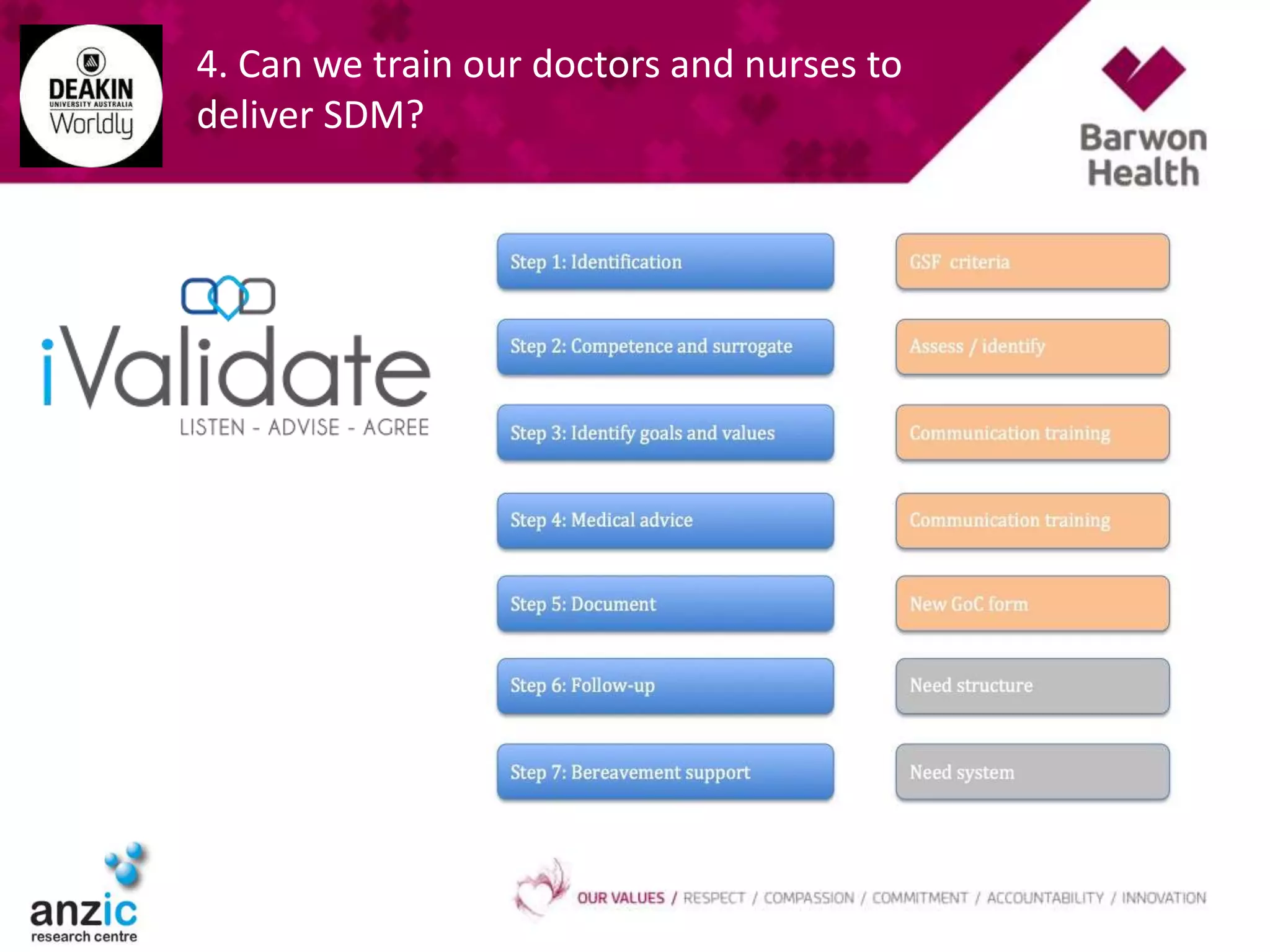
4. Can we train our doctors and nurses to deliver SDM?
5. Will SDM improve health care utilisation, person-centred
outcomes?
6. Do we want SDM all the time in all situations?
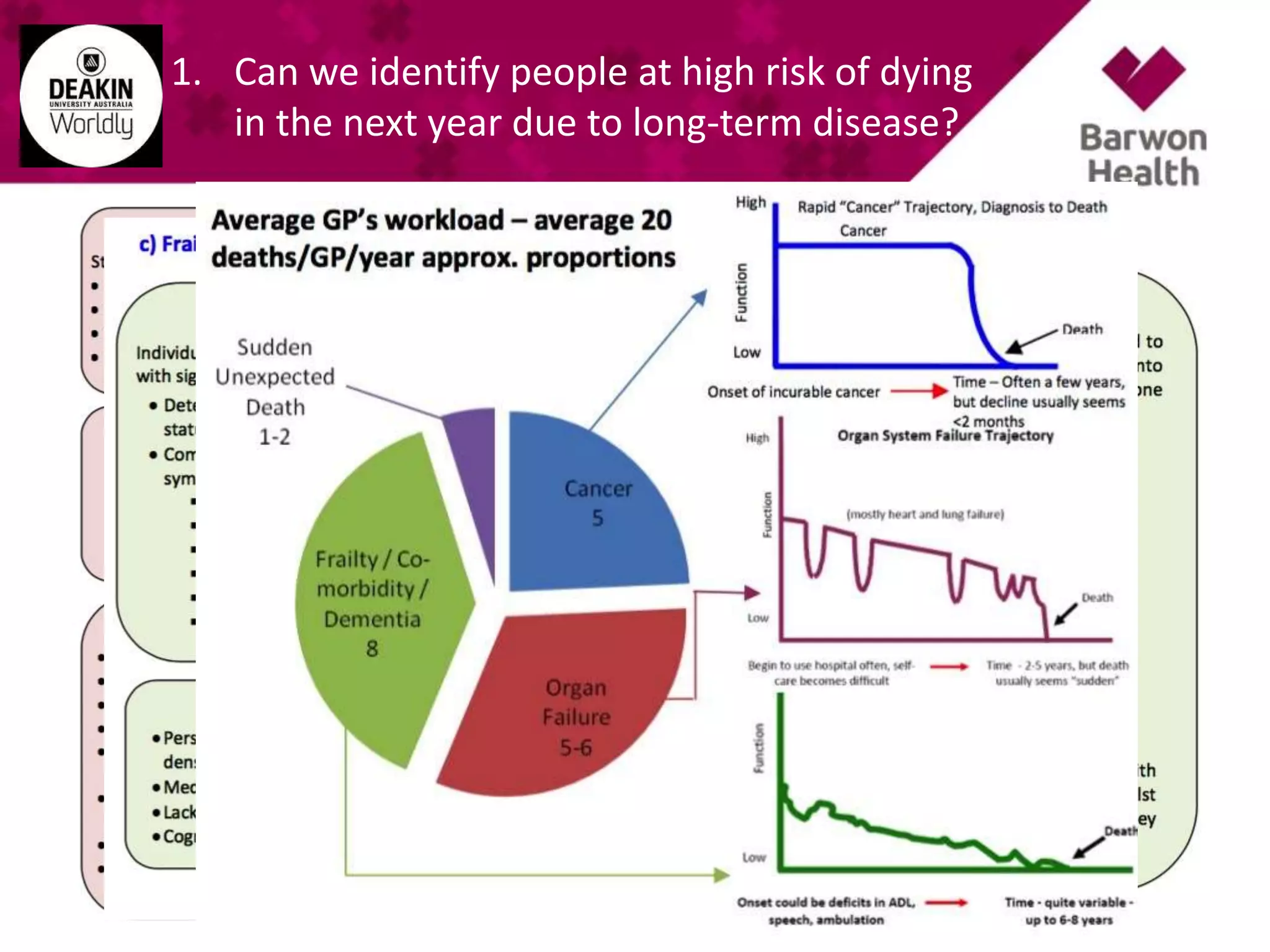
1. Can we identify people at high risk of dying
in the next year due to long-term disease?
2. Can we identify these same people in the
critical care setting?
Frailty
Cancer
None
Organ failure
Orford N, Milnes S, Lambert N, et al CCR Sep 2016;(18)3:181-8
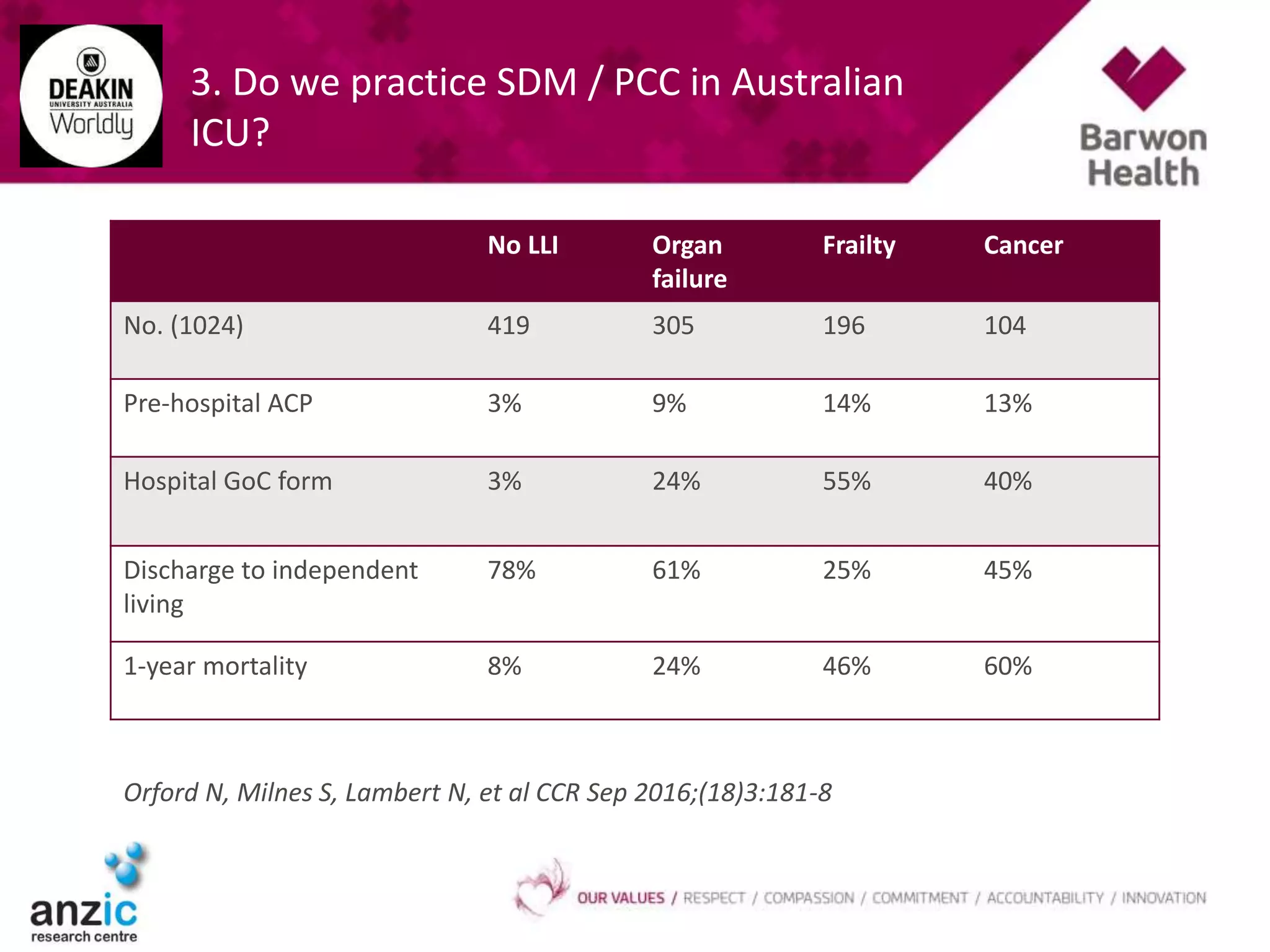
3. Do we practice SDM / PCC in Australian
ICU?
No LLI Organ
failure
Frailty Cancer
No. (1024) 419 305 196 104
Pre-hospital ACP 3% 9% 14% 13%
Hospital GoC form 3% 24% 55% 40%
Discharge to independent
living
78% 61% 25% 45%
1-year mortality 8% 24% 46% 60%
Orford N, Milnes S, Lambert N, et al CCR Sep 2016;(18)3:181-8
4. Can we train our doctors and nurses to
deliver SDM?
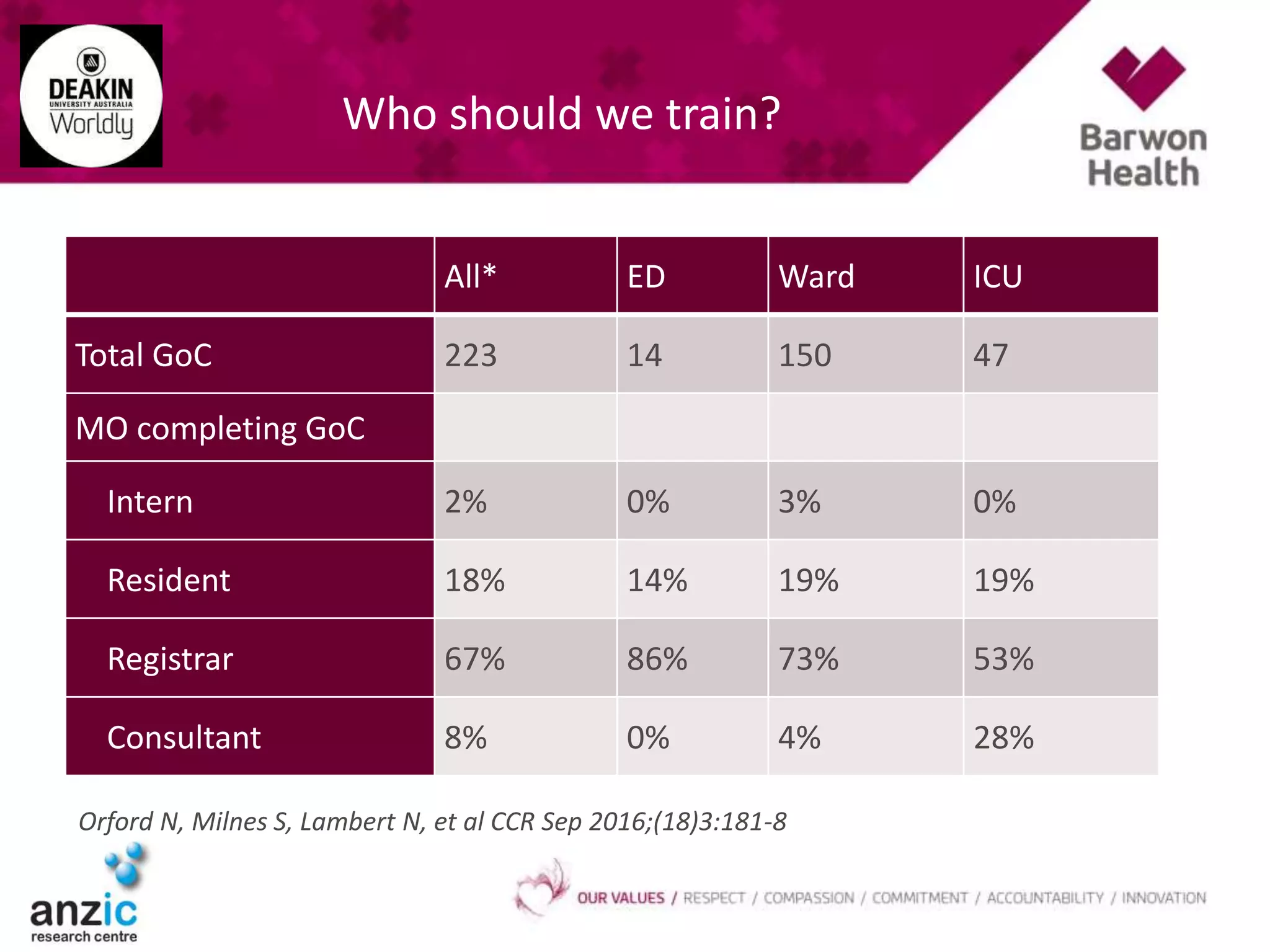
Who should we train?
All* ED Ward ICU
Total GoC 223 14 150 47
MO completing GoC
Intern 2% 0% 3% 0%
Resident 18% 14% 19% 19%
Registrar 67% 86% 73% 53%
Consultant 8% 0% 4% 28%
Orford N, Milnes S, Lambert N, et al CCR Sep 2016;(18)3:181-8
4. Can we train our doctors and
nurses to deliver SDM?
Effect of communication skills training on outcomes in
critically ill patients with life-limiting illness referred for
intensive care management – A before-and-after study
Orford N, Milnes S, Simpson N, et al, BMJSPC accepted
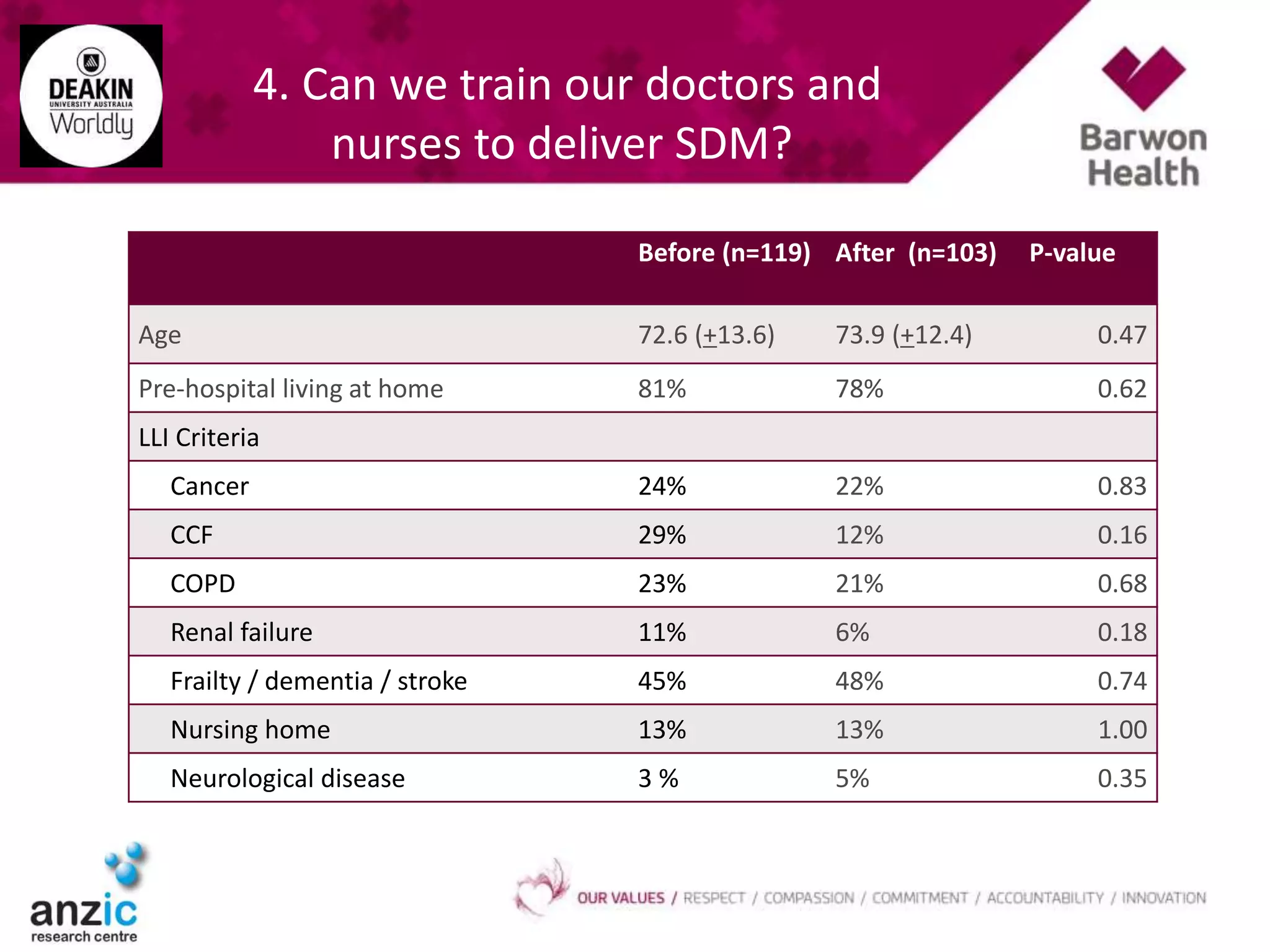
4. Can we train our doctors and
nurses to deliver SDM?
Before (n=119) After (n=103) P-value
Age 72.6 (+13.6) 73.9 (+12.4) 0.47
Pre-hospital living at home 81% 78% 0.62
LLI Criteria
Cancer 24% 22% 0.83
CCF 29% 12% 0.16
COPD 23% 21% 0.68
Renal failure 11% 6% 0.18
Frailty / dementia / stroke 45% 48% 0.74
Nursing home 13% 13% 1.00
Neurological disease 3 % 5% 0.35
4. Can we train our doctors and
nurses to deliver SDM?
Before (n=119) After (n=103) P-value
Patent-centred discussion documented 50% 69% 0.004
Competence and surrogate 31% 48% 0.01
Values and goals discussed 17% 42% <0.0001
Medical advice provided 49% 61% 0.08
PCD in cohort deceased by day-90 43% 94% <0.0001
(Documented by 48 hrs post ICU referral)
5. Will SDM improve health care utilisation,
person-centred outcomes?
5. Will SDM improve health care utilisation,
person-centred outcomes?
Before (n=119) After (n=103) P-value
Admission ICU/HDU 21% 29% 0.16
MET call incidence 88% 73% 0.009
Palliative Care referral 24% 24% 0.90
Hosp LOS 9 [4,19] 9 [5,15] 0.80
Hospital mortality 29% 24% 0.47
90-day readmit 39% 31% 0.24
90-day mortality 47% 34% 0.05
Survival for cancer before and after
5. Will SDM improve health care
utilisation, person-centred outcomes?
Survival for organ failure before and after
5. Will SDM improve health care utilisation,
person-centred outcomes?
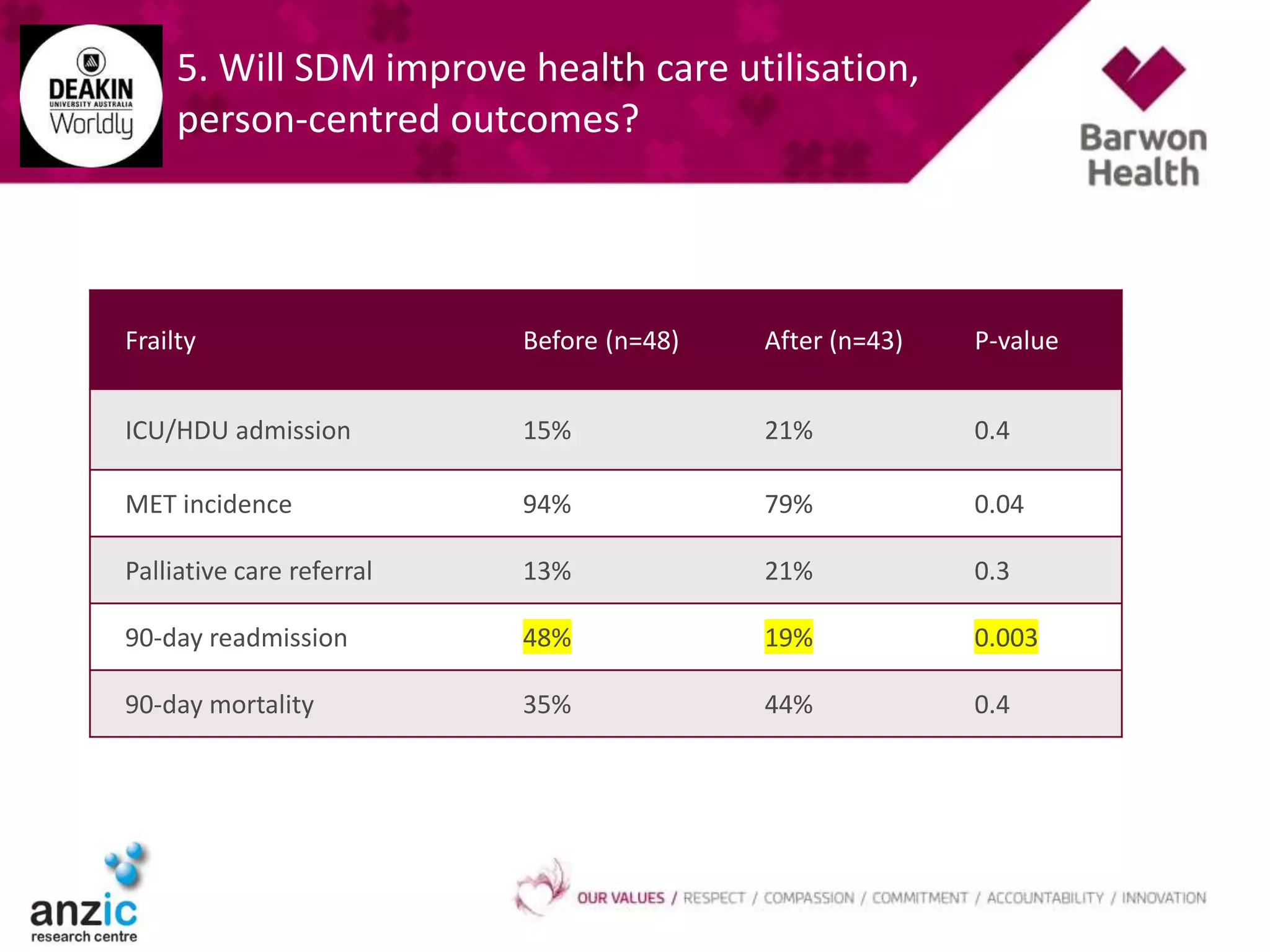
Frailty Before (n=48) After (n=43) P-value
ICU/HDU admission 15% 21% 0.4
MET incidence 94% 79% 0.04
Palliative care referral 13% 21% 0.3
90-day readmission 48% 19% 0.003
90-day mortality 35% 44% 0.4
The questions
1. Can we identify people at high risk of dying in the next year
due to long-term disease?
2. Can we identify these same people in the critical care
setting?
3. Do we practice SDM / PCC in Australian ICU?
4. Can we train our doctors and nurses to deliver SDM?
5. Will SDM improve health care utilisation, person-centred
outcomes?
6. Do we want SDM all the time in all situations?
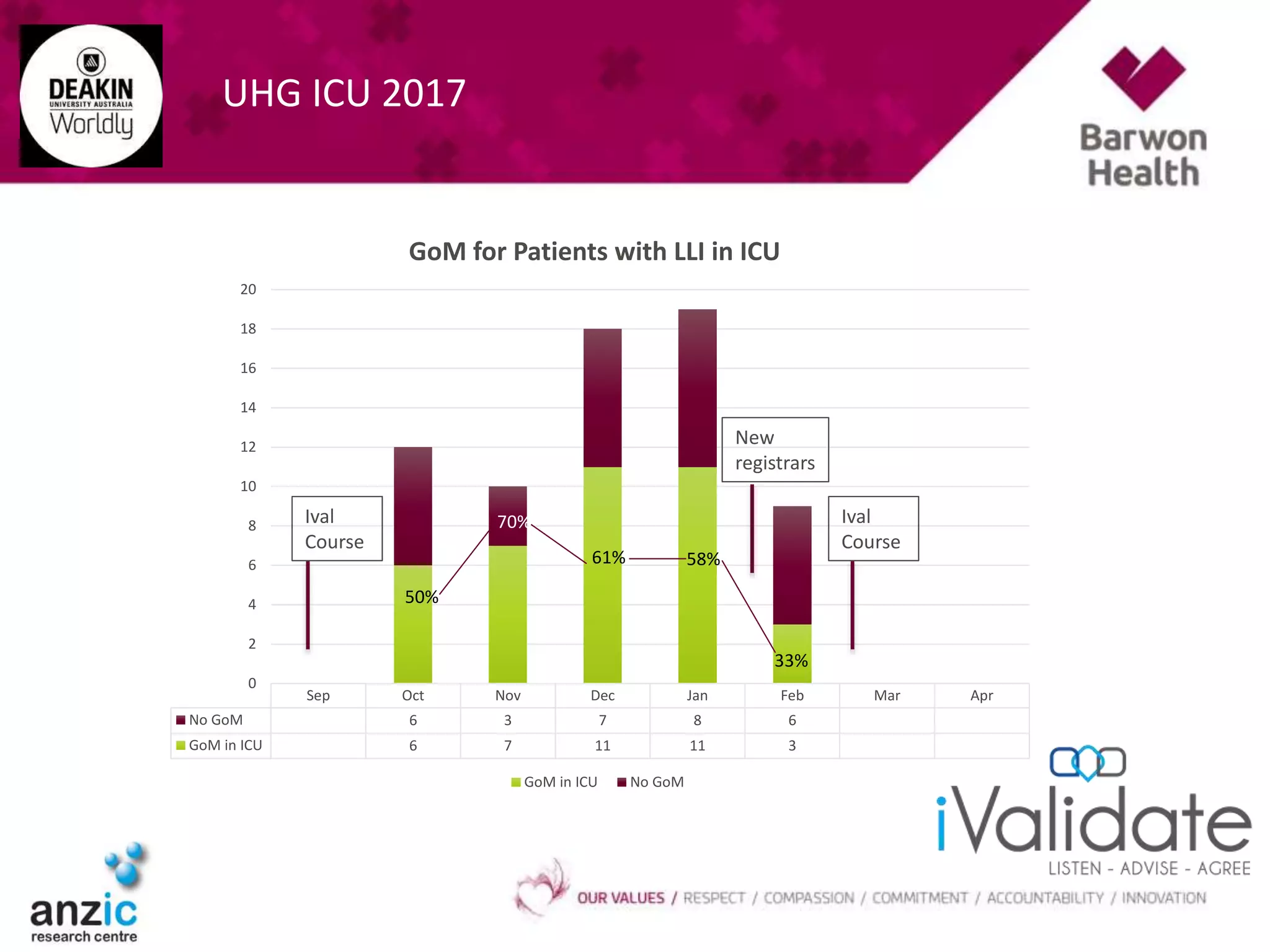
Sep Oct Nov Dec Jan Feb Mar Apr
No GoM 6 3 7 8 6
GoM in ICU 6 7 11 11 3
0
2
4
6
8
10
12
14
16
18
20
GoM for Patients with LLI in ICU
GoM in ICU No GoM
50%
70%
61% 58%
33%
UHG ICU 2017
New
registrars
Ival
Course
Ival
Course
“90% of adults in the US have no or limited knowledge of palliative care, but after
reading a definition, more than 90% would want it for them or their family” Amy
Kelley, NEJM 2015
“Everyone dies. Death is not an inherent failure. Neglect, however, is.”
(Atul Gawande, JAMA 2016)
http://barwonhealthicu.com

Orford - iValidate: Improving End of Life Care in the ICU

  • 1.
    A/Prof Neil Orford DivisionalDirector ICU University Hospital Geelong http://barwonhealthicu.com Dying for person-centred care
  • 2.
  • 3.
    Surviving critical illness K-MKaukonen, e tal , JAMA. 2014;311(13);1308-1316
  • 4.
    Is there aproblem
  • 5.
  • 6.
  • 7.
  • 8.
    The questions 1. Canwe identify people at high risk of dying in the next year due to long-term disease? 2. Can we identify these same people in the critical care setting? 3. Do we practice SDM / PCC in Australian ICU? 4. Can we train our doctors and nurses to deliver SDM? 5. Will SDM improve health care utilisation, person-centred outcomes? 6. Do we want SDM all the time in all situations?
  • 9.
    1. Can weidentify people at high risk of dying in the next year due to long-term disease?
  • 10.
    2. Can weidentify these same people in the critical care setting? Frailty Cancer None Organ failure Orford N, Milnes S, Lambert N, et al CCR Sep 2016;(18)3:181-8
  • 11.
    3. Do wepractice SDM / PCC in Australian ICU? No LLI Organ failure Frailty Cancer No. (1024) 419 305 196 104 Pre-hospital ACP 3% 9% 14% 13% Hospital GoC form 3% 24% 55% 40% Discharge to independent living 78% 61% 25% 45% 1-year mortality 8% 24% 46% 60% Orford N, Milnes S, Lambert N, et al CCR Sep 2016;(18)3:181-8
  • 12.
    4. Can wetrain our doctors and nurses to deliver SDM?
  • 13.
    Who should wetrain? All* ED Ward ICU Total GoC 223 14 150 47 MO completing GoC Intern 2% 0% 3% 0% Resident 18% 14% 19% 19% Registrar 67% 86% 73% 53% Consultant 8% 0% 4% 28% Orford N, Milnes S, Lambert N, et al CCR Sep 2016;(18)3:181-8
  • 14.
    4. Can wetrain our doctors and nurses to deliver SDM? Effect of communication skills training on outcomes in critically ill patients with life-limiting illness referred for intensive care management – A before-and-after study Orford N, Milnes S, Simpson N, et al, BMJSPC accepted
  • 15.
    4. Can wetrain our doctors and nurses to deliver SDM? Before (n=119) After (n=103) P-value Age 72.6 (+13.6) 73.9 (+12.4) 0.47 Pre-hospital living at home 81% 78% 0.62 LLI Criteria Cancer 24% 22% 0.83 CCF 29% 12% 0.16 COPD 23% 21% 0.68 Renal failure 11% 6% 0.18 Frailty / dementia / stroke 45% 48% 0.74 Nursing home 13% 13% 1.00 Neurological disease 3 % 5% 0.35
  • 16.
    4. Can wetrain our doctors and nurses to deliver SDM? Before (n=119) After (n=103) P-value Patent-centred discussion documented 50% 69% 0.004 Competence and surrogate 31% 48% 0.01 Values and goals discussed 17% 42% <0.0001 Medical advice provided 49% 61% 0.08 PCD in cohort deceased by day-90 43% 94% <0.0001 (Documented by 48 hrs post ICU referral)
  • 17.
    5. Will SDMimprove health care utilisation, person-centred outcomes?
  • 18.
    5. Will SDMimprove health care utilisation, person-centred outcomes? Before (n=119) After (n=103) P-value Admission ICU/HDU 21% 29% 0.16 MET call incidence 88% 73% 0.009 Palliative Care referral 24% 24% 0.90 Hosp LOS 9 [4,19] 9 [5,15] 0.80 Hospital mortality 29% 24% 0.47 90-day readmit 39% 31% 0.24 90-day mortality 47% 34% 0.05 Survival for cancer before and after
  • 19.
    5. Will SDMimprove health care utilisation, person-centred outcomes? Survival for organ failure before and after
  • 20.
    5. Will SDMimprove health care utilisation, person-centred outcomes? Frailty Before (n=48) After (n=43) P-value ICU/HDU admission 15% 21% 0.4 MET incidence 94% 79% 0.04 Palliative care referral 13% 21% 0.3 90-day readmission 48% 19% 0.003 90-day mortality 35% 44% 0.4
  • 21.
    The questions 1. Canwe identify people at high risk of dying in the next year due to long-term disease? 2. Can we identify these same people in the critical care setting? 3. Do we practice SDM / PCC in Australian ICU? 4. Can we train our doctors and nurses to deliver SDM? 5. Will SDM improve health care utilisation, person-centred outcomes? 6. Do we want SDM all the time in all situations?
  • 22.
    Sep Oct NovDec Jan Feb Mar Apr No GoM 6 3 7 8 6 GoM in ICU 6 7 11 11 3 0 2 4 6 8 10 12 14 16 18 20 GoM for Patients with LLI in ICU GoM in ICU No GoM 50% 70% 61% 58% 33% UHG ICU 2017 New registrars Ival Course Ival Course
  • 23.
    “90% of adultsin the US have no or limited knowledge of palliative care, but after reading a definition, more than 90% would want it for them or their family” Amy Kelley, NEJM 2015 “Everyone dies. Death is not an inherent failure. Neglect, however, is.” (Atul Gawande, JAMA 2016) http://barwonhealthicu.com

Editor's Notes

  • #4 My ICU, and our professional community,  are very very good at this, survival after ICU has steadily decreased over the last 20-years as we have developed better tools (ventilators, ECMO),  better systems, better understanding of how to apply this to our sickest patients.   We are getting closer to preventing avoidable death. We are getting so good at this that we are moving our goalposts from prevention of death to quality of life in the growing cohort of people who are post critical illness.   Preventing avoidable death is a worthy cause, and we will continue to strive to get better.
  • #5 My ICU, and our professional community,  are very very good at this, survival after ICU has steadily decreased over the last 20-years as we have developed better tools (ventilators, ECMO),  better systems, better understanding of how to apply this to our sickest patients.   We are getting closer to preventing avoidable death. We are getting so good at this that we are moving our goalposts from prevention of death to quality of life in the growing cohort of people who are post critical illness.   Preventing avoidable death is a worthy cause, and we will continue to strive to get better.
  • #13 So we devised a program
  • #17 Significant increase in prevalence of patient-centred goals of care discussions in the 48-hours after ICU referral from the before to after period (50% vs 69%, p=0.004) Significant increase in PCD in patients deceased by day 90, from 43% (24 of 56 deaths) in the before group, to 94% (33 of 35 deaths) in the after period (p < 0.0001) Significant increase in identification of patients goals and values (17% vs 42%, p<0.0001)
  • #18 So we devised a program
  • #23 All of ICU in 2017, train Docs and Nurses, with process of care embedded into our daily routine, electronic recognition of LLI patients with daily reminders from our CIS and staff, weekly feedback of performance, and transition to ward/pall care/community plan - very cool, we are trying to fix care at the bedside! The goal Do v2 for all of BH, become demonstratably person-centred Multi-centre