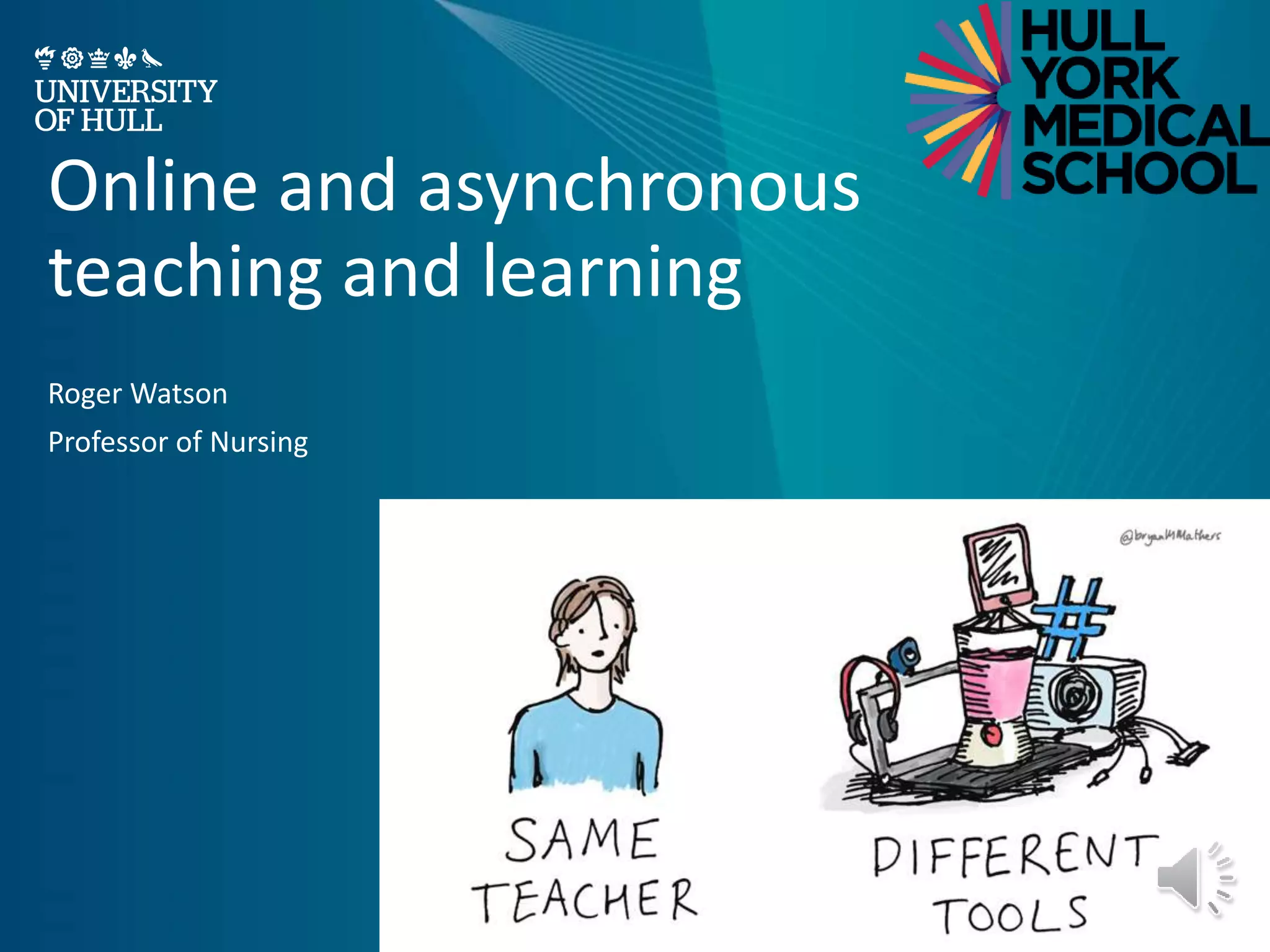
Online and asynchronous
teaching and learning
Roger Watson
Professor of Nursing
Outline
• Definitions
• Models
• Evidence
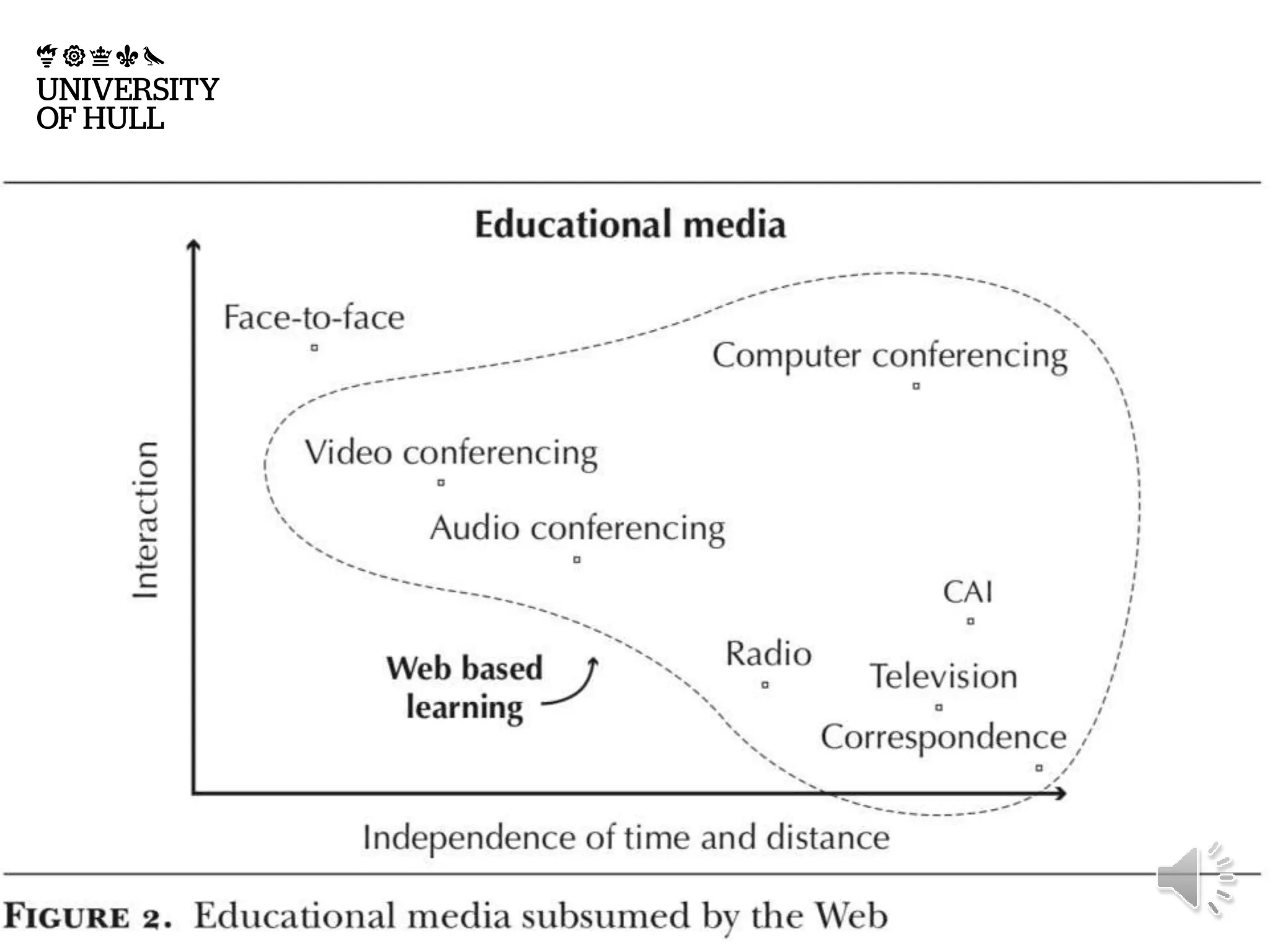
Online learning
• Online learning involves courses offered by postsecondary
institutions that are 100% virtual, excluding massively open online
courses. Online learning, or virtual classes offered over the internet,
is contrasted with traditional courses taken in a brick-and-mortar
school building. Wikipedia
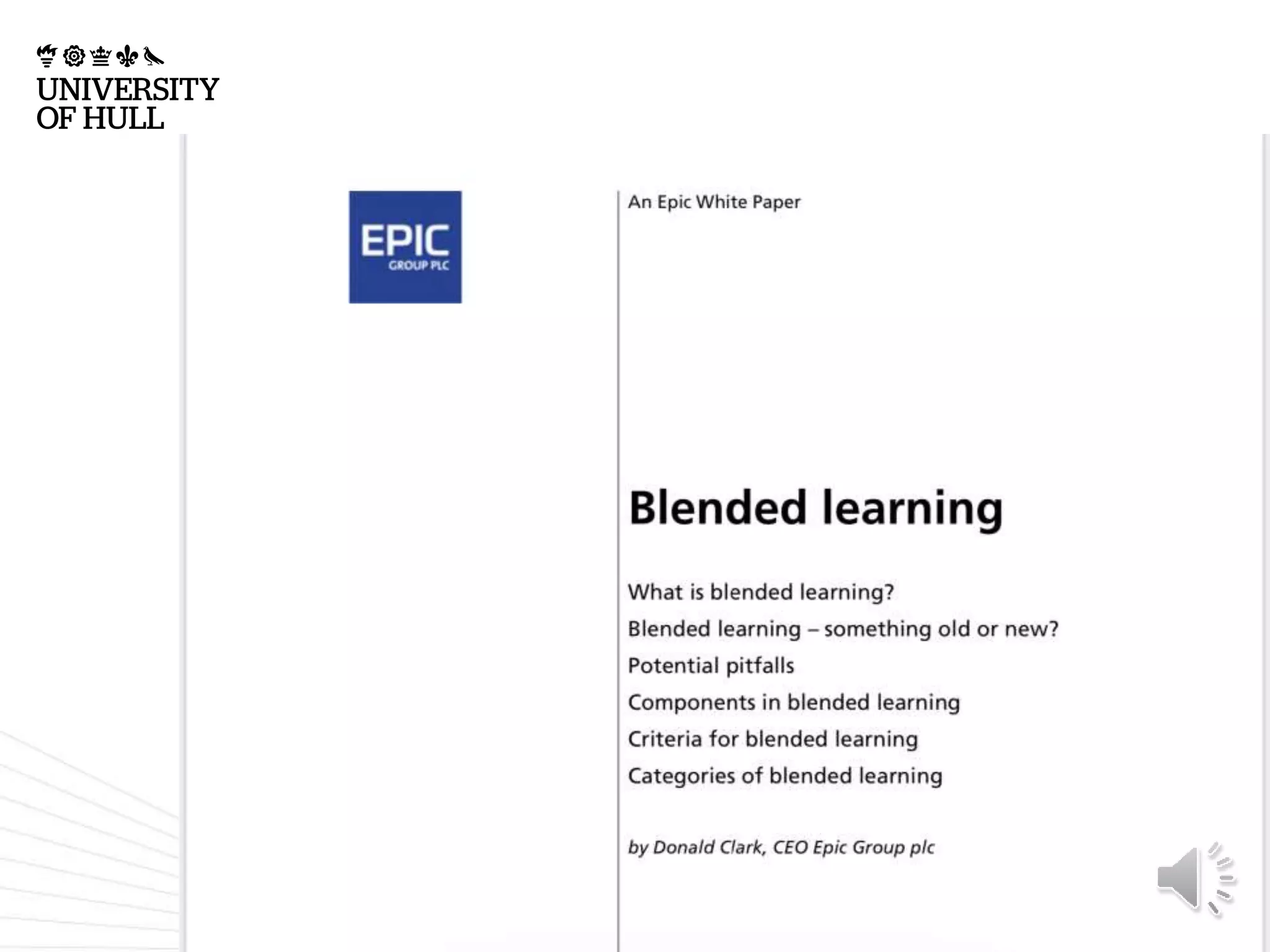
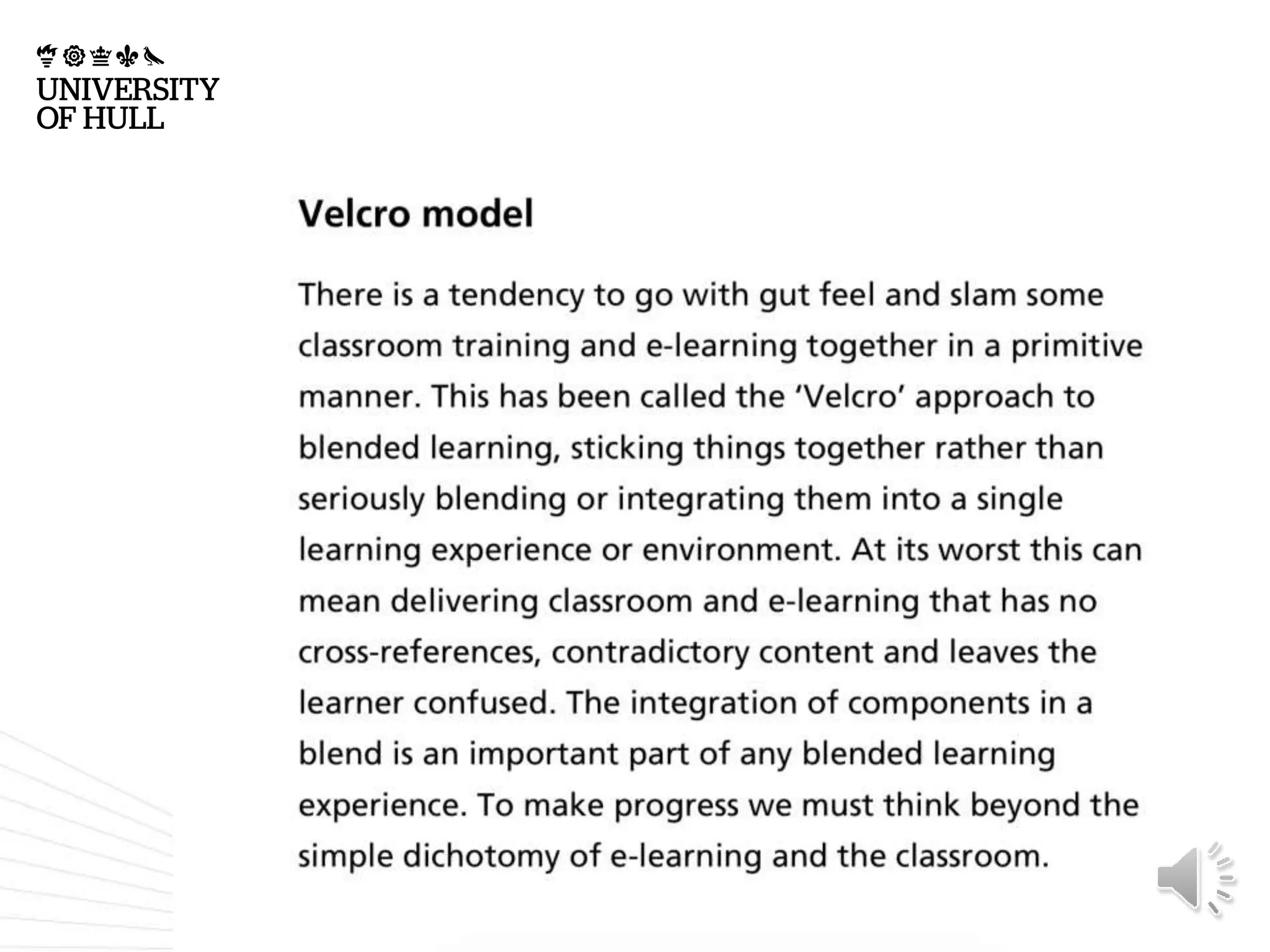
Blended learning
• Blended learning is an approach to education that combines online
educational materials and opportunities for interaction online with
traditional place-based classroom methods. It requires the physical
presence of both teacher and student, with some elements of student
control over time, place, path, or pace. Wikipedia
Asynchronous
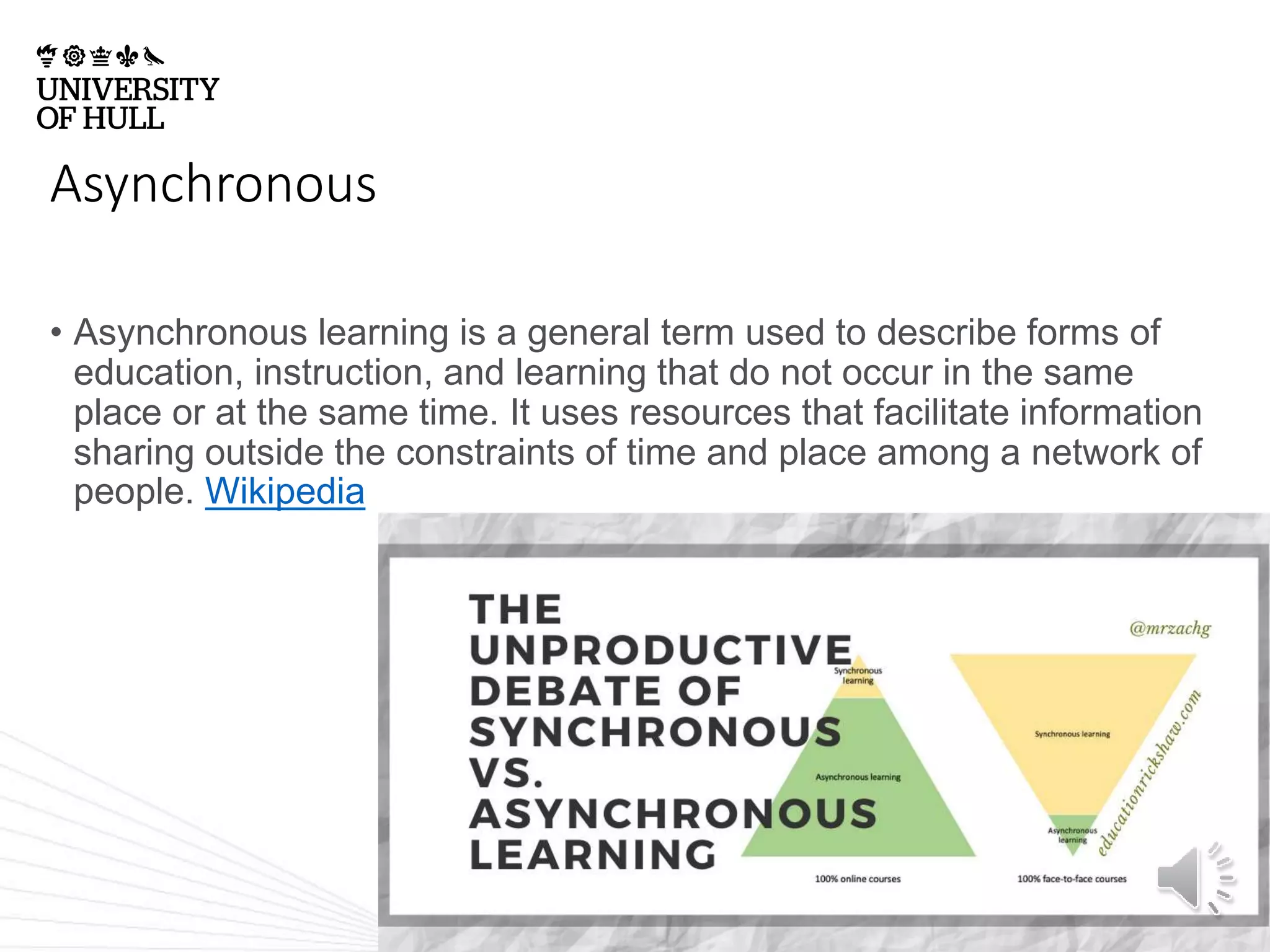
• Asynchronous learning is a general term used to describe forms of
education, instruction, and learning that do not occur in the same
place or at the same time. It uses resources that facilitate information
sharing outside the constraints of time and place among a network of
people. Wikipedia
Advantages of asynchronous learning
• Better quality
• platforms
• material
• Convenience
• Wider reach across time zones
• Rehearsal
Disadvantages of asynchronous learning
• Does not suit all learners
• Requires some maturity and independence in the learner
• Lack of immediate answers to questions
• Lack of immediate feedback to teacher
Strategies for asynchronous learning
• Make the material dynamic
• Set clear learning objectives
• Pace the material
• Create space for collaboration
• Provide formative feedback and ad hoc support
• Learn from the feedback and change what doesn’t work
• Check all your URL links at the start of the semester
Evidence
Finally…
• Online teaching is not an easy option for the teacher (or the learner)
• It is very ‘front-loaded’ and it has to be ‘right’
• You need to learn some new skills:
• YouTube
• Podcasting
• Blogging
• You should be willing to share your material
r.watson@hull.ac.uk
0000-0001-8040-7625
@rwatson1955

Online and asynchronous teaching and learning

  • 1.
    Online and asynchronous teachingand learning Roger Watson Professor of Nursing
  • 2.
  • 3.
    Online learning • Onlinelearning involves courses offered by postsecondary institutions that are 100% virtual, excluding massively open online courses. Online learning, or virtual classes offered over the internet, is contrasted with traditional courses taken in a brick-and-mortar school building. Wikipedia
  • 8.
    Blended learning • Blendedlearning is an approach to education that combines online educational materials and opportunities for interaction online with traditional place-based classroom methods. It requires the physical presence of both teacher and student, with some elements of student control over time, place, path, or pace. Wikipedia
  • 11.
    Asynchronous • Asynchronous learningis a general term used to describe forms of education, instruction, and learning that do not occur in the same place or at the same time. It uses resources that facilitate information sharing outside the constraints of time and place among a network of people. Wikipedia
  • 12.
    Advantages of asynchronouslearning • Better quality • platforms • material • Convenience • Wider reach across time zones • Rehearsal
  • 13.
    Disadvantages of asynchronouslearning • Does not suit all learners • Requires some maturity and independence in the learner • Lack of immediate answers to questions • Lack of immediate feedback to teacher
  • 14.
    Strategies for asynchronouslearning • Make the material dynamic • Set clear learning objectives • Pace the material • Create space for collaboration • Provide formative feedback and ad hoc support • Learn from the feedback and change what doesn’t work • Check all your URL links at the start of the semester
  • 15.
  • 18.
    Finally… • Online teachingis not an easy option for the teacher (or the learner) • It is very ‘front-loaded’ and it has to be ‘right’ • You need to learn some new skills: • YouTube • Podcasting • Blogging • You should be willing to share your material
  • 19.