Understanding Offer Letters:
Key Components and Best
Practices
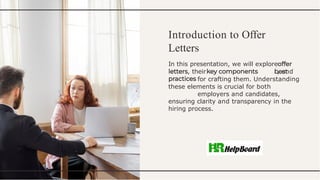
Introduction to Offer
Letters
In this presentation, we will explore
, their , and
for crafting them. Understanding
these elements is crucial for both
employers and candidates,
ensuring clarity and transparency in the
hiring process.
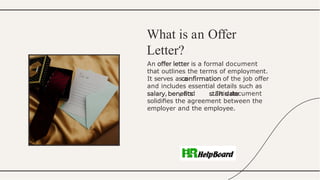
An is a formal document
that outlines the terms of employment.
It serves as a of the job offer
and includes essential details such as
, , and . This document
solidifies the agreement between the
employer and the employee.
What is an Offer
Letter?
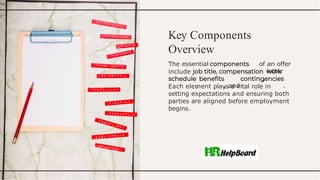
Key Components
Overview
The essential
include ,
of an offer
letter
,
, , and .
Each element plays a vital role in
setting expectations and ensuring both
parties are aligned before employment
begins.
Clearly outlining and
is crucial in an offer letter.
This includes base salary, bonuses,
health insurance, and retirement
plans.
Transparency in these areas
helps prevent misunderstandings and
builds trust between employer and
employee.
Compensation and
Benefits
Employment Terms and Conditions
Offer letters should specify
such as full-time or part-time
status, .
work hours, and any
Clearly defined terms help candidates
understand their commitments and the
expectations of the role.
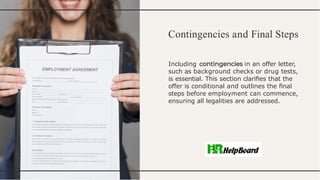
Contingencies and Final Steps
Including in an offer letter,
such as background checks or drug tests,
is essential. This section clarifies that the
offer is conditional and outlines the final
steps before employment can commence,
ensuring all legalities are addressed.
When drafting an offer letter, utilize
, avoid jargon, and ensure all
details are accurate. It's advisable to
have the document reviewed by a legal
professional to ensure compliance with
labor laws and regulations.
Best Practices for
Writing
In conclusion, a well-crafted offer letter
is pivotal in the hiring process. It should
include all , adhere to
, and foster a positive
relationship between employer and
employee. Clarity and professionalism are
paramount.
Conclusion and Key
Takeaways
Thanks!
Do you have any
questions?
info@hrhelpboard.com
www.hrhelpboard.com
@hrhelpboard

Offer Letter Format, Offer Letter Sample

  • 1.
    Understanding Offer Letters: KeyComponents and Best Practices
  • 2.
    Introduction to Offer Letters Inthis presentation, we will explore , their , and for crafting them. Understanding these elements is crucial for both employers and candidates, ensuring clarity and transparency in the hiring process.
  • 3.
    An is aformal document that outlines the terms of employment. It serves as a of the job offer and includes essential details such as , , and . This document solidifies the agreement between the employer and the employee. What is an Offer Letter?
  • 4.
    Key Components Overview The essential include, of an offer letter , , , and . Each element plays a vital role in setting expectations and ensuring both parties are aligned before employment begins.
  • 5.
    Clearly outlining and iscrucial in an offer letter. This includes base salary, bonuses, health insurance, and retirement plans. Transparency in these areas helps prevent misunderstandings and builds trust between employer and employee. Compensation and Benefits
  • 6.
    Employment Terms andConditions Offer letters should specify such as full-time or part-time status, . work hours, and any Clearly defined terms help candidates understand their commitments and the expectations of the role.
  • 7.
    Contingencies and FinalSteps Including in an offer letter, such as background checks or drug tests, is essential. This section clarifies that the offer is conditional and outlines the final steps before employment can commence, ensuring all legalities are addressed.
  • 8.
    When drafting anoffer letter, utilize , avoid jargon, and ensure all details are accurate. It's advisable to have the document reviewed by a legal professional to ensure compliance with labor laws and regulations. Best Practices for Writing
  • 9.
    In conclusion, awell-crafted offer letter is pivotal in the hiring process. It should include all , adhere to , and foster a positive relationship between employer and employee. Clarity and professionalism are paramount. Conclusion and Key Takeaways
  • 10.
    Thanks! Do you haveany questions? info@hrhelpboard.com www.hrhelpboard.com @hrhelpboard