Obstructed Labor
&
Prolonged Labur
 Determine the factors affecting normal labor
 Early diagnosis of abnormal labor
 How to manage abnormal or prolonged labor.
 Identify the complications of prolonged labor.

► Adequate Power (uterine contractions)
► Adequate Passage (maternal pelvis)
► Adequate Passenger (fetal size)
DEFINITION OF PROLONGED
LABOUR
When labor tends to be prolonged for more
than 18 hours both in primigravida and
multigravida women
►Fault in passage
►Fault in passenger
►Fault in power :
▪ Hypotonic Uterine Dysfunction (inertia)
►Can be 2ry to Epidural analgesia or
Chorio amnionitis
▪ Hypertonic / In coordinate Uterine function
 History:
 1.Age
 2.Parity
 3.Duration of labor
 4.Duration of membrane rupture
 5.Whether the patients was handle outside the hospital
 6.Whether she was treated with oxytocin drugs
 7.Previous history of difficult labor, instrumental
delivery
or stillbirth
Abdominal examination:
1. Contour of the uterus
2. Presentation & position
3. Tenderness
4. Frequency, intensity & duration of uterine
contraction
5. Lower segment distended
6. Distension of the bladder
Vaginal examination:
- The vulva usually swollen and edematous.
- The vaginal is dry, hot and occasionally
offensive and purulent discharge
- The cervix is almost fully dilated
- The presenting part is extremely molded
and jammed in the pelvis
- There is usually large caput formation
Management
A. General management :
1. NPO & i/v fluid start immediately
2. Bladder evacuation.
3. Parenteral antibiotics.
4. Intake output chart should be strictly maintain
5. Blood should be send for grouping and cross
matching
Obstetric Management
During 1st stage:
1. Role of oxytocin : hypotonic uterine contraction
2.Role of sedation : incoordinate uterine contraction use of
narcotics may lead to spontaneous correction
3.Role of amniotomy in correction of hypotonic uterine
contraction
4. Role of cesarean section: contracted pelvis, big baby,
malpresentation, malposition, severe fetal distress
 During 2nd stage:
1. Role of episiotomy: rigid / tight perineum
2. Role of instrumental delivery (Forceps or
Vacuum): in case of fetal distress,
 3. Role of cesarean section: contracted pelvis,
big baby, malpresentation, malposition, and
severe fetal distress
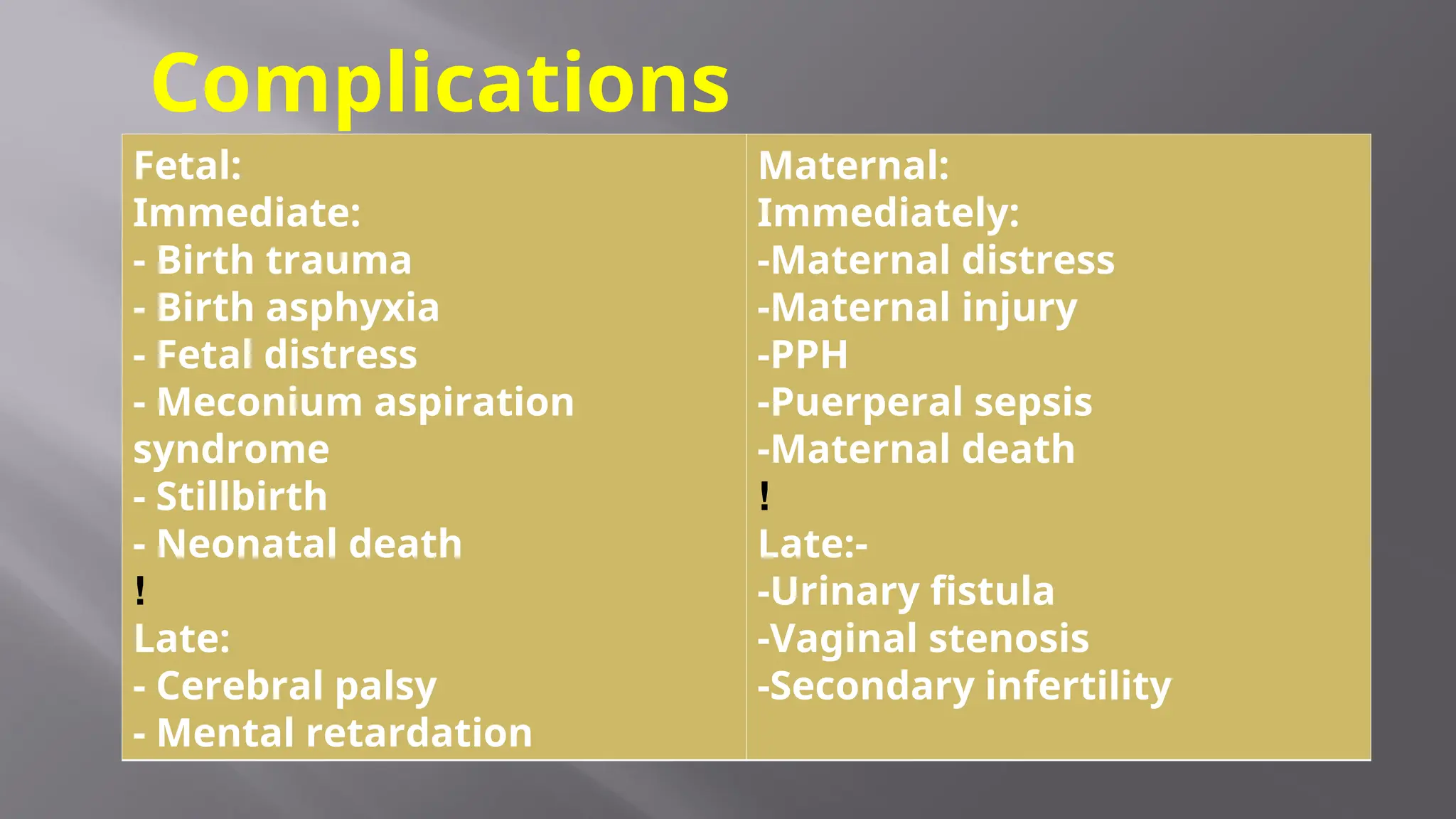
Fetal:
Immediate:
- Birth trauma
- Birth asphyxia
- Fetal distress
- Meconium aspiration
syndrome
- Stillbirth
- Neonatal death
!
Late:
- Cerebral palsy
- Mental retardation
Maternal:
Immediately:
-Maternal distress
-Maternal injury
-PPH
-Puerperal sepsis
-Maternal death
!
Late:-
-Urinary fistula
-Vaginal stenosis
-Secondary infertility
Complications
Obstructed labour
►Definition : defined as labor where there is poor or
no progress of labor in spite of good uterine
contraction!
►Incidence :- 1 -2% of cases in developing country
Causes
►Maternal condition (fault in the passage):
1. Contracted pelvis
2. Abnormal pelvis: android, anthropoid
3. Pelvic tumor: fibroid, ovarian tumor
4. Tumor of rectum, bladder or pelvic bone
5. Abnormality in uterus & vagina: scarring in cervix, vaginal
septum, rigid perineum
fetal causes
Big baby
Big head, hydrocephalus
Deflexed head, brow and face
mentoposterior.
Oblique or transverse lie

 Diagnosis
►Partogram will recognize impending
obstruction of labor
►Careful general, abdominal and vaginal
examination can detect if labor is slow or
no progress
 General examination:
 Features of maternal distress
 Dehydration
 Tachycardia >100/m
 Raise temperature
 Scanty urine
 Abdominal examination :
 -The retraction ring might appear and felt
 between the tonic contracted upper
 segment of the uterus and the distended
 lower segment
 - Distended urinary bladder
 Vaginal examination:
- The vulva usually swollen and edematous
- The vaginal can be dry and hot
- The cervix is almost fully dilated or hanging
like a curtain
- The presenting part is extremely molded
and jammed in the pelvis
- There is usually large caput formation
Maternal:
!
-Rupture of uterus
-Urogenital fistula
-Rectovaginal fistula
-Postpartum hemorrhage
-Puerperal sepsis
-Shock
-Maternal death
Fetal:
!
-Intra uterine asphyxia
-Intracranial hemorrhage
-Neonatal infection
-Metabolic Acidosis
-Fetal death
Complication
 Management
►Preventive:
- Proper assessment of pregnant woman during ANC
- Regular ANC visit
- Proper assessment in early labor to
- Use of Partogram
- Prompt and appropriate treatment
Obstetric Management
1. Delivery of fetus:
a. Vaginal delivery: if head is low and vaginal delivery
is not risky, forceps extraction may be done
b. Caesarean section:
2. Active management of 3rd stage of labor
3. Continuous bladder drainage for 2-3 days to
prevent any urogenital fistula

Obstructed labour - main managementlines.ppt

  • 1.
  • 2.
     Determine thefactors affecting normal labor  Early diagnosis of abnormal labor  How to manage abnormal or prolonged labor.  Identify the complications of prolonged labor. 
  • 3.
    ► Adequate Power(uterine contractions) ► Adequate Passage (maternal pelvis) ► Adequate Passenger (fetal size) DEFINITION OF PROLONGED LABOUR When labor tends to be prolonged for more than 18 hours both in primigravida and multigravida women
  • 4.
    ►Fault in passage ►Faultin passenger ►Fault in power : ▪ Hypotonic Uterine Dysfunction (inertia) ►Can be 2ry to Epidural analgesia or Chorio amnionitis ▪ Hypertonic / In coordinate Uterine function
  • 5.
     History:  1.Age 2.Parity  3.Duration of labor  4.Duration of membrane rupture  5.Whether the patients was handle outside the hospital  6.Whether she was treated with oxytocin drugs  7.Previous history of difficult labor, instrumental delivery or stillbirth
  • 6.
    Abdominal examination: 1. Contourof the uterus 2. Presentation & position 3. Tenderness 4. Frequency, intensity & duration of uterine contraction 5. Lower segment distended 6. Distension of the bladder
  • 7.
    Vaginal examination: - Thevulva usually swollen and edematous. - The vaginal is dry, hot and occasionally offensive and purulent discharge - The cervix is almost fully dilated - The presenting part is extremely molded and jammed in the pelvis - There is usually large caput formation
  • 8.
    Management A. General management: 1. NPO & i/v fluid start immediately 2. Bladder evacuation. 3. Parenteral antibiotics. 4. Intake output chart should be strictly maintain 5. Blood should be send for grouping and cross matching
  • 9.
    Obstetric Management During 1ststage: 1. Role of oxytocin : hypotonic uterine contraction 2.Role of sedation : incoordinate uterine contraction use of narcotics may lead to spontaneous correction 3.Role of amniotomy in correction of hypotonic uterine contraction 4. Role of cesarean section: contracted pelvis, big baby, malpresentation, malposition, severe fetal distress
  • 10.
     During 2ndstage: 1. Role of episiotomy: rigid / tight perineum 2. Role of instrumental delivery (Forceps or Vacuum): in case of fetal distress,  3. Role of cesarean section: contracted pelvis, big baby, malpresentation, malposition, and severe fetal distress
  • 11.
    Fetal: Immediate: - Birth trauma -Birth asphyxia - Fetal distress - Meconium aspiration syndrome - Stillbirth - Neonatal death ! Late: - Cerebral palsy - Mental retardation Maternal: Immediately: -Maternal distress -Maternal injury -PPH -Puerperal sepsis -Maternal death ! Late:- -Urinary fistula -Vaginal stenosis -Secondary infertility Complications
  • 12.
    Obstructed labour ►Definition :defined as labor where there is poor or no progress of labor in spite of good uterine contraction! ►Incidence :- 1 -2% of cases in developing country
  • 13.
    Causes ►Maternal condition (faultin the passage): 1. Contracted pelvis 2. Abnormal pelvis: android, anthropoid 3. Pelvic tumor: fibroid, ovarian tumor 4. Tumor of rectum, bladder or pelvic bone 5. Abnormality in uterus & vagina: scarring in cervix, vaginal septum, rigid perineum
  • 14.
    fetal causes Big baby Bighead, hydrocephalus Deflexed head, brow and face mentoposterior. Oblique or transverse lie 
  • 15.
     Diagnosis ►Partogram willrecognize impending obstruction of labor ►Careful general, abdominal and vaginal examination can detect if labor is slow or no progress
  • 16.
     General examination: Features of maternal distress  Dehydration  Tachycardia >100/m  Raise temperature  Scanty urine
  • 17.
     Abdominal examination:  -The retraction ring might appear and felt  between the tonic contracted upper  segment of the uterus and the distended  lower segment  - Distended urinary bladder
  • 19.
     Vaginal examination: -The vulva usually swollen and edematous - The vaginal can be dry and hot - The cervix is almost fully dilated or hanging like a curtain - The presenting part is extremely molded and jammed in the pelvis - There is usually large caput formation
  • 20.
    Maternal: ! -Rupture of uterus -Urogenitalfistula -Rectovaginal fistula -Postpartum hemorrhage -Puerperal sepsis -Shock -Maternal death Fetal: ! -Intra uterine asphyxia -Intracranial hemorrhage -Neonatal infection -Metabolic Acidosis -Fetal death Complication
  • 21.
     Management ►Preventive: - Properassessment of pregnant woman during ANC - Regular ANC visit - Proper assessment in early labor to - Use of Partogram - Prompt and appropriate treatment
  • 22.
    Obstetric Management 1. Deliveryof fetus: a. Vaginal delivery: if head is low and vaginal delivery is not risky, forceps extraction may be done b. Caesarean section: 2. Active management of 3rd stage of labor 3. Continuous bladder drainage for 2-3 days to prevent any urogenital fistula