Xeriscape
                                                      Front Yards
                                                                                                       Maureen McCracken


T       he best way to achieve a successful Xeriscape™ design in the front yard is
        to do a comprehensive multi-stage plan. This is particularly important
        when dealing with Homeowners Associations with their many rules,
regulations and approval requirements. Any large-scale project would most likely
require approval by the Homeowners Association. In many cases, because of
existing bylaws requiring minimum square footage for traditional turf, approval
may be difficult if not impossible. By doing a multi-stage design, you can
implement small changes over time to achieve a more water-wise front yard,
without the need to present a plan for approval. A multi-stage implementation is
also a less costly way to incorporate a Xeriscape™ into an existing landscape.

Start with all the design requirements of any good landscape plan and then add in
the       seven        Xeriscape™       principals     as      defined      by    Denver           Water.             See
http://www.ncwater.org/Water_Supply_Planning/Water_Conservation/xeriscaping.php.

1.   Planning and Design
2.   Soil Amendment and Preparation
3.   Efficient Irrigation
4.   Plant Choice and Placement
5.   Mulch
6.   Turf Choices
7.   Maintenance

Next, divide your long-term Xeriscape™ design into many small projects. The following small-steps ideas can be
incorporated into a multi stage plan:

1.   Reduce the size of your lawn. This is probably the single most important part of your Xeriscape™. Since turf
     requires significantly more water than other parts of the landscape, this is an area which should be scaled down.
     However, this does not mean you have to rip out all existing turf. It can be done in small steps too. Enlarge
     existing beds. Add a natural area around trees. Add a walkway or path. Every reduction in your turf area is a plus.

2.   Replace high water usage turf with a more drought tolerant variety.

3.   Concentrate on other high water use areas.
     a. Slopes by definition are difficult to irrigate and consequently turf does not grow well in these areas. Consider a
     rock garden, shrub border or ground cover in this space, using drought tolerant plants to replace the turf.
     b. Eliminate narrow strips of turf that are difficult to irrigate. Ground cover, small shrubs or stones can be used
     in these problem areas.
     c. Pay special attention to corners where irrigation is hard to reach without spilling onto the adjacent hardscaping
     such as driveway or street.
     d. Areas that are exposed to full sun, reflective heat, and drying winds are also good candidates for mini
     Xeriscape™ projects. Turf in these areas requires even higher water usage than normal. Consider sun-loving,
     drought tolerant alternatives.
     e. Turf areas that do poorly because of heavy, dry shade can be turned into beautiful natural areas or shade
     gardens. Rather than keep these areas in traditional grass, plant shade tolerant groundcover or shade tolerant plants
     and shrubs and lots of mulch.

4.   Amend the soil in all planting beds. Ensure existing soil is amended to provide the best environment for plants.
     Compost is an excellent source to improve existing soils. It is available in small or large quantities from
     Mecklenburg County area yard waste facilities.                 They will also provide delivery.            Visit
     http://www.charmeck.org/Departments/LUESA/Solid+Waste/Compost-Yard+Waste/Home.htm.
5.   Replace perennials and annuals with drought tolerant plants and shrubs. North Carolina has an amazing array of
     plants and shrubs that thrive here. NCSU has a good Web site that lists many drought tolerant plants at
     http://www.bae.ncsu.edu/programs/extension/publicat/wqwm/ag508_3/.

6.   Ensure the irrigation system only waters turf and beds and not
     hardscape.

7.   Mulch, mulch, mulch!

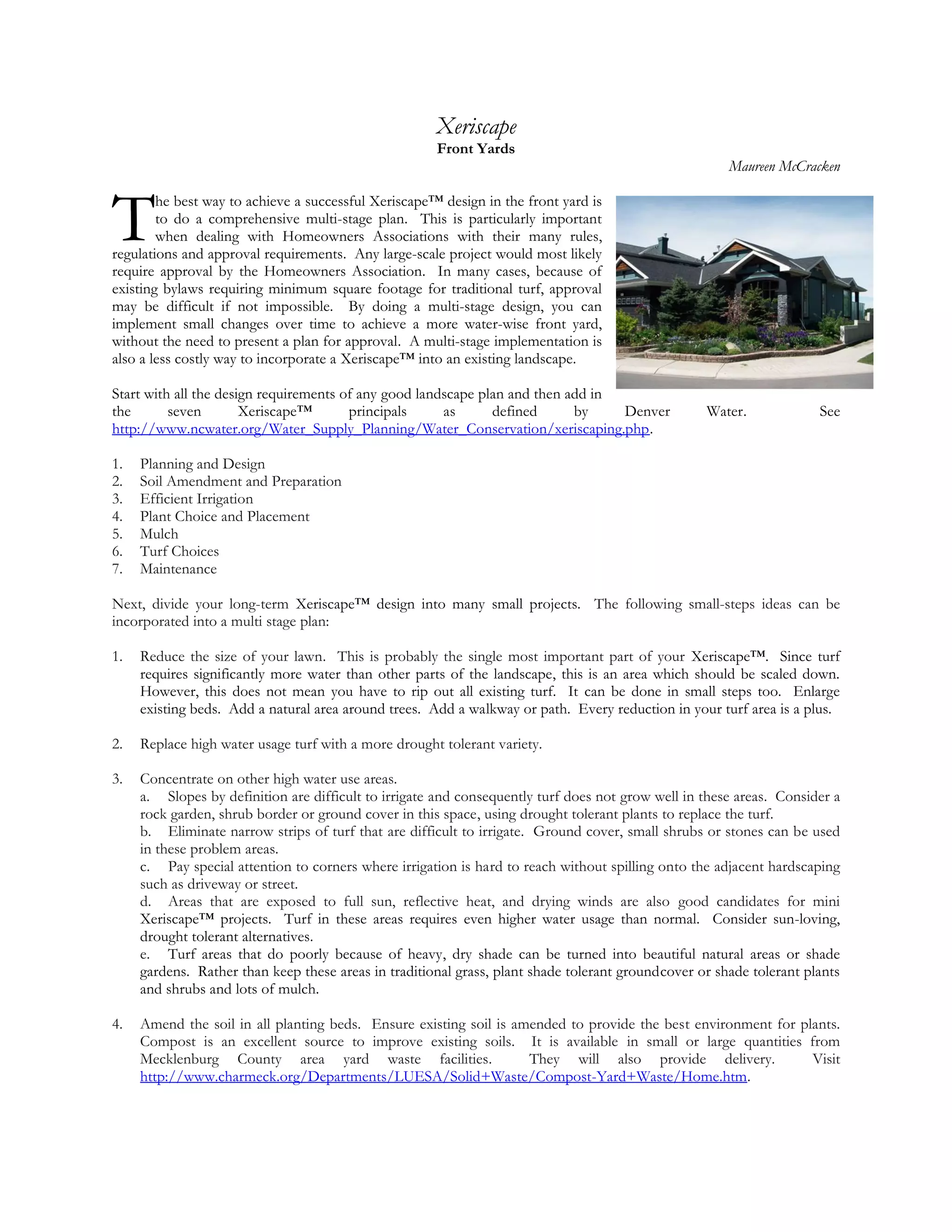
8.   Finally, have fun with your projects. Remember a Xeriscape™ doesn’t
     have to be dessert-like in appearance. It can be just as beautiful as a
     traditional front yard and it will help our environment at the same time.
     MM


______________

                                An Extension Master Gardener Volunteer with Mecklenburg County, NC, since 2006,
                                Maureen McCracken is an avid gardener. She is also a Master Composter with the
                                county. Maureen credits her love of flowers and horticulture to her grandmother, who
                                loved all plants and maintained a multi-use cottage garden with flowers, shrubs, fruits
                                and vegetables.

Xeriscape Front Yards - Mecklenburg County, North Carolina

  • 1.
    Xeriscape Front Yards Maureen McCracken T he best way to achieve a successful Xeriscape™ design in the front yard is to do a comprehensive multi-stage plan. This is particularly important when dealing with Homeowners Associations with their many rules, regulations and approval requirements. Any large-scale project would most likely require approval by the Homeowners Association. In many cases, because of existing bylaws requiring minimum square footage for traditional turf, approval may be difficult if not impossible. By doing a multi-stage design, you can implement small changes over time to achieve a more water-wise front yard, without the need to present a plan for approval. A multi-stage implementation is also a less costly way to incorporate a Xeriscape™ into an existing landscape. Start with all the design requirements of any good landscape plan and then add in the seven Xeriscape™ principals as defined by Denver Water. See http://www.ncwater.org/Water_Supply_Planning/Water_Conservation/xeriscaping.php. 1. Planning and Design 2. Soil Amendment and Preparation 3. Efficient Irrigation 4. Plant Choice and Placement 5. Mulch 6. Turf Choices 7. Maintenance Next, divide your long-term Xeriscape™ design into many small projects. The following small-steps ideas can be incorporated into a multi stage plan: 1. Reduce the size of your lawn. This is probably the single most important part of your Xeriscape™. Since turf requires significantly more water than other parts of the landscape, this is an area which should be scaled down. However, this does not mean you have to rip out all existing turf. It can be done in small steps too. Enlarge existing beds. Add a natural area around trees. Add a walkway or path. Every reduction in your turf area is a plus. 2. Replace high water usage turf with a more drought tolerant variety. 3. Concentrate on other high water use areas. a. Slopes by definition are difficult to irrigate and consequently turf does not grow well in these areas. Consider a rock garden, shrub border or ground cover in this space, using drought tolerant plants to replace the turf. b. Eliminate narrow strips of turf that are difficult to irrigate. Ground cover, small shrubs or stones can be used in these problem areas. c. Pay special attention to corners where irrigation is hard to reach without spilling onto the adjacent hardscaping such as driveway or street. d. Areas that are exposed to full sun, reflective heat, and drying winds are also good candidates for mini Xeriscape™ projects. Turf in these areas requires even higher water usage than normal. Consider sun-loving, drought tolerant alternatives. e. Turf areas that do poorly because of heavy, dry shade can be turned into beautiful natural areas or shade gardens. Rather than keep these areas in traditional grass, plant shade tolerant groundcover or shade tolerant plants and shrubs and lots of mulch. 4. Amend the soil in all planting beds. Ensure existing soil is amended to provide the best environment for plants. Compost is an excellent source to improve existing soils. It is available in small or large quantities from Mecklenburg County area yard waste facilities. They will also provide delivery. Visit http://www.charmeck.org/Departments/LUESA/Solid+Waste/Compost-Yard+Waste/Home.htm.
  • 2.
    5. Replace perennials and annuals with drought tolerant plants and shrubs. North Carolina has an amazing array of plants and shrubs that thrive here. NCSU has a good Web site that lists many drought tolerant plants at http://www.bae.ncsu.edu/programs/extension/publicat/wqwm/ag508_3/. 6. Ensure the irrigation system only waters turf and beds and not hardscape. 7. Mulch, mulch, mulch! 8. Finally, have fun with your projects. Remember a Xeriscape™ doesn’t have to be dessert-like in appearance. It can be just as beautiful as a traditional front yard and it will help our environment at the same time. MM ______________ An Extension Master Gardener Volunteer with Mecklenburg County, NC, since 2006, Maureen McCracken is an avid gardener. She is also a Master Composter with the county. Maureen credits her love of flowers and horticulture to her grandmother, who loved all plants and maintained a multi-use cottage garden with flowers, shrubs, fruits and vegetables.