Next Generation Sequencing
Methods
Mrinal Vashisth
B.Tech. -Biotechnology
Sequencing
• Sequencing is the process of determining the precise
order of nucleotides within a DNA, RNA molecule.
• In case of proteins, amino acids
• It includes any method or technology that is used to
determine the order of the four bases—adenine,
guanine, cytosine, and thymine—in a strand of DNA.
• Next-generation sequencing (NGS or high-throughput
sequencing are collectively technologies developed by:
– Illumina (Solexa) sequencing
– Roche 454 sequencing
– Ion torrent: Proton / PGM sequencing
– SOLiD sequencing (Thermo Fisher Scientific)
qPCR
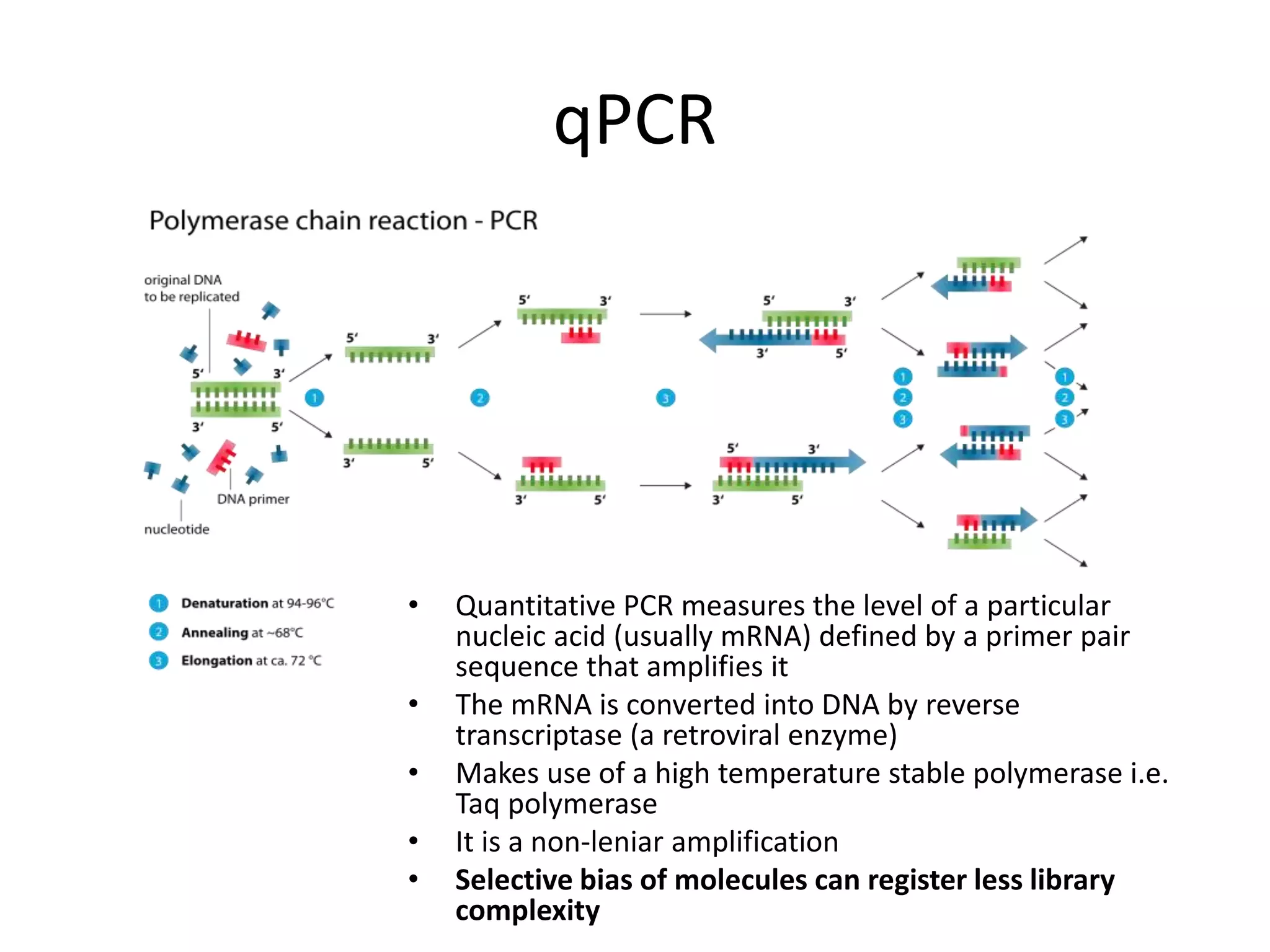
• Quantitative PCR measures the level of a particular
nucleic acid (usually mRNA) defined by a primer pair
sequence that amplifies it
• The mRNA is converted into DNA by reverse
transcriptase (a retroviral enzyme)
• Makes use of a high temperature stable polymerase i.e.
Taq polymerase
• It is a non-leniar amplification
• Selective bias of molecules can register less library
complexity
• Quantitaiveness by: measuring the no. of
cycles needed to reach a fluorescence
intensity threshold
• However, larger no. of cycles = lower original
amount of DNA i.e. less DNA available for
experimentation purposes
• It is a medium-throughput approach and is
usually limited to only being of validative use
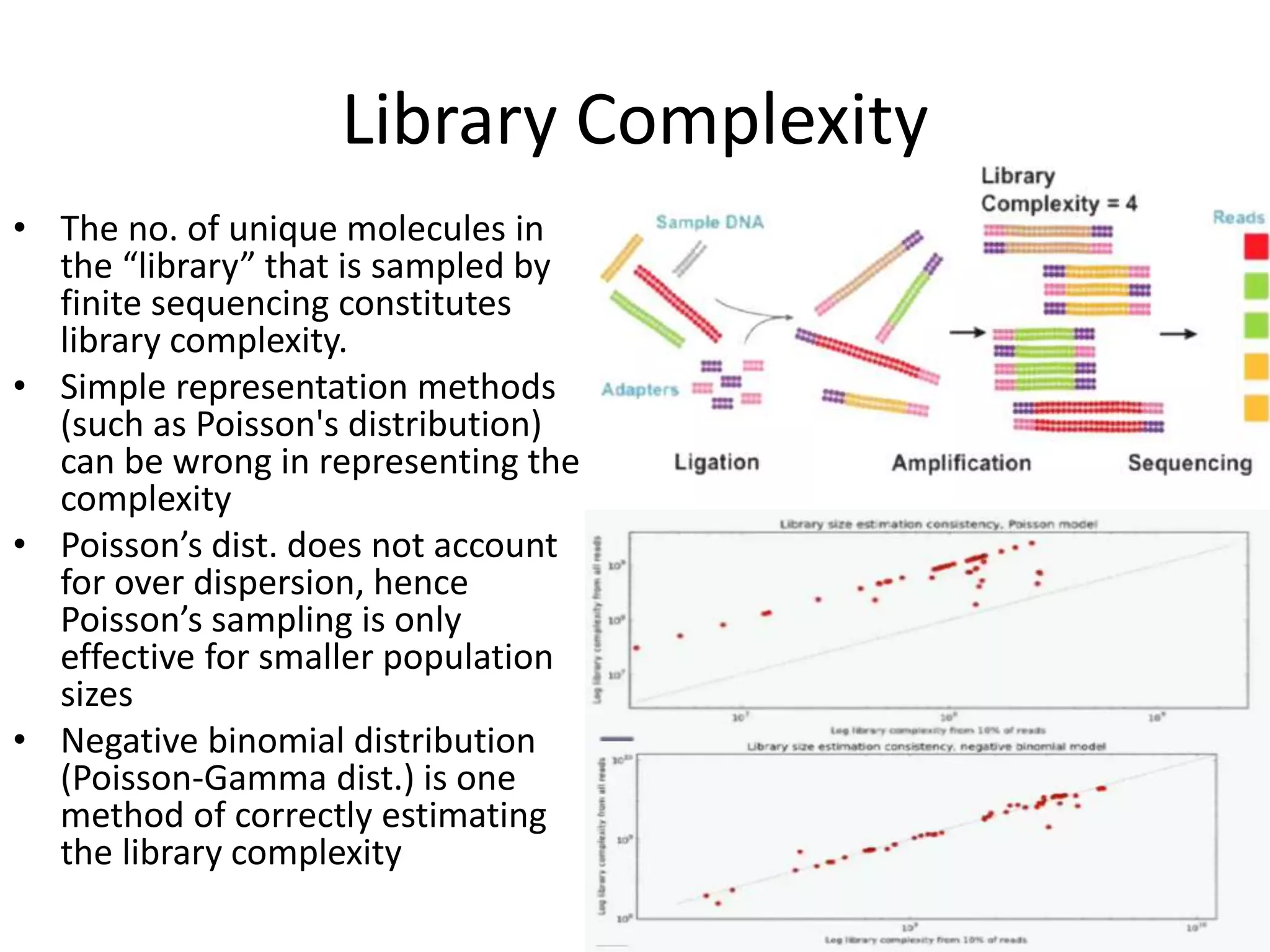
Library Complexity
• The no. of unique molecules in
the “library” that is sampled by
finite sequencing constitutes
library complexity.
• Simple representation methods
(such as Poisson's distribution)
can be wrong in representing the
complexity
• Poisson’s dist. does not account
for over dispersion, hence
Poisson’s sampling is only
effective for smaller population
sizes
• Negative binomial distribution
(Poisson-Gamma dist.) is one
method of correctly estimating
the library complexity
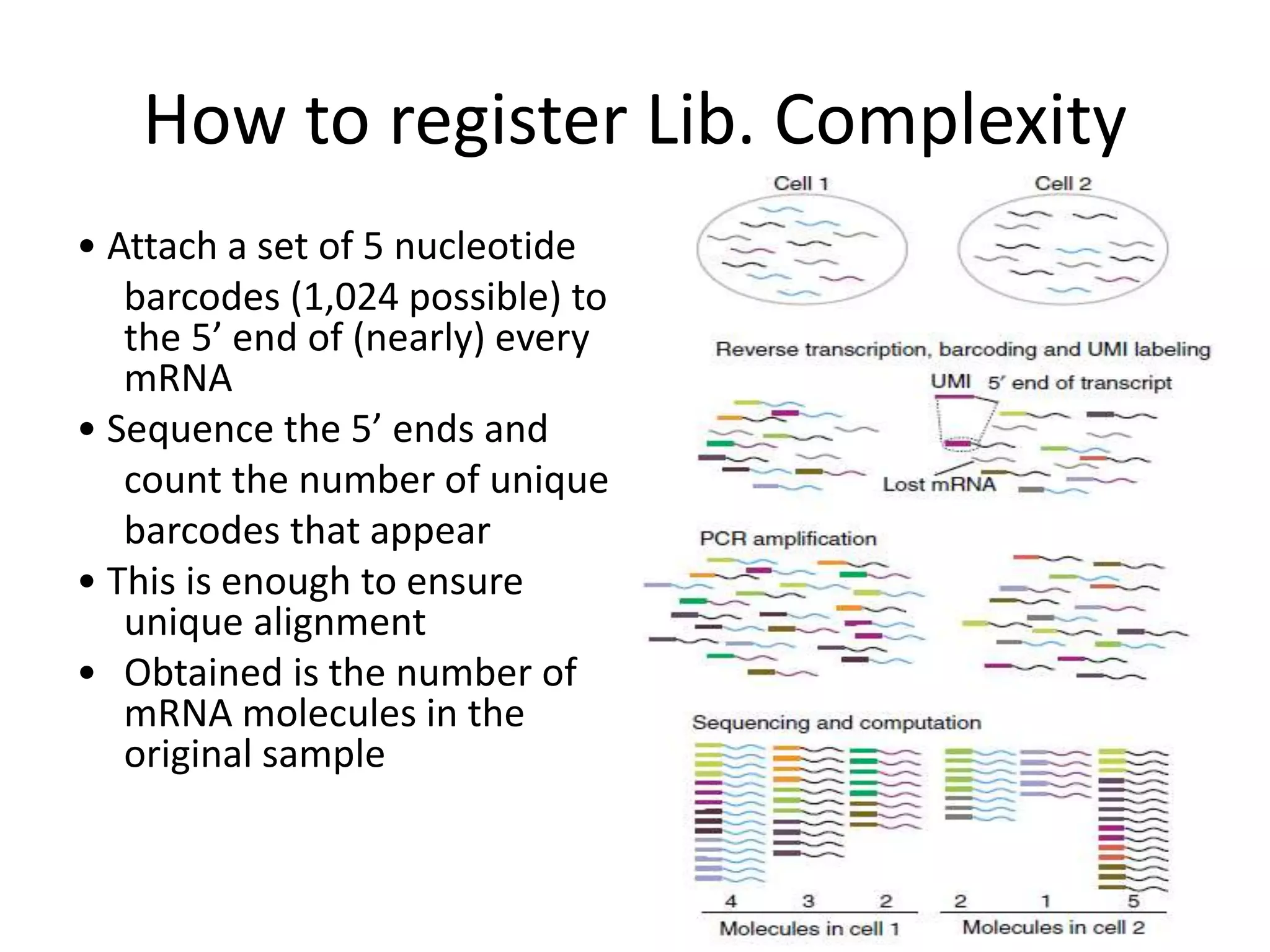
How to register Lib. Complexity
• Attach a set of 5 nucleotide
barcodes (1,024 possible) to
the 5’ end of (nearly) every
mRNA
• Sequence the 5’ ends and
count the number of unique
barcodes that appear
• This is enough to ensure
unique alignment
• Obtained is the number of
mRNA molecules in the
original sample
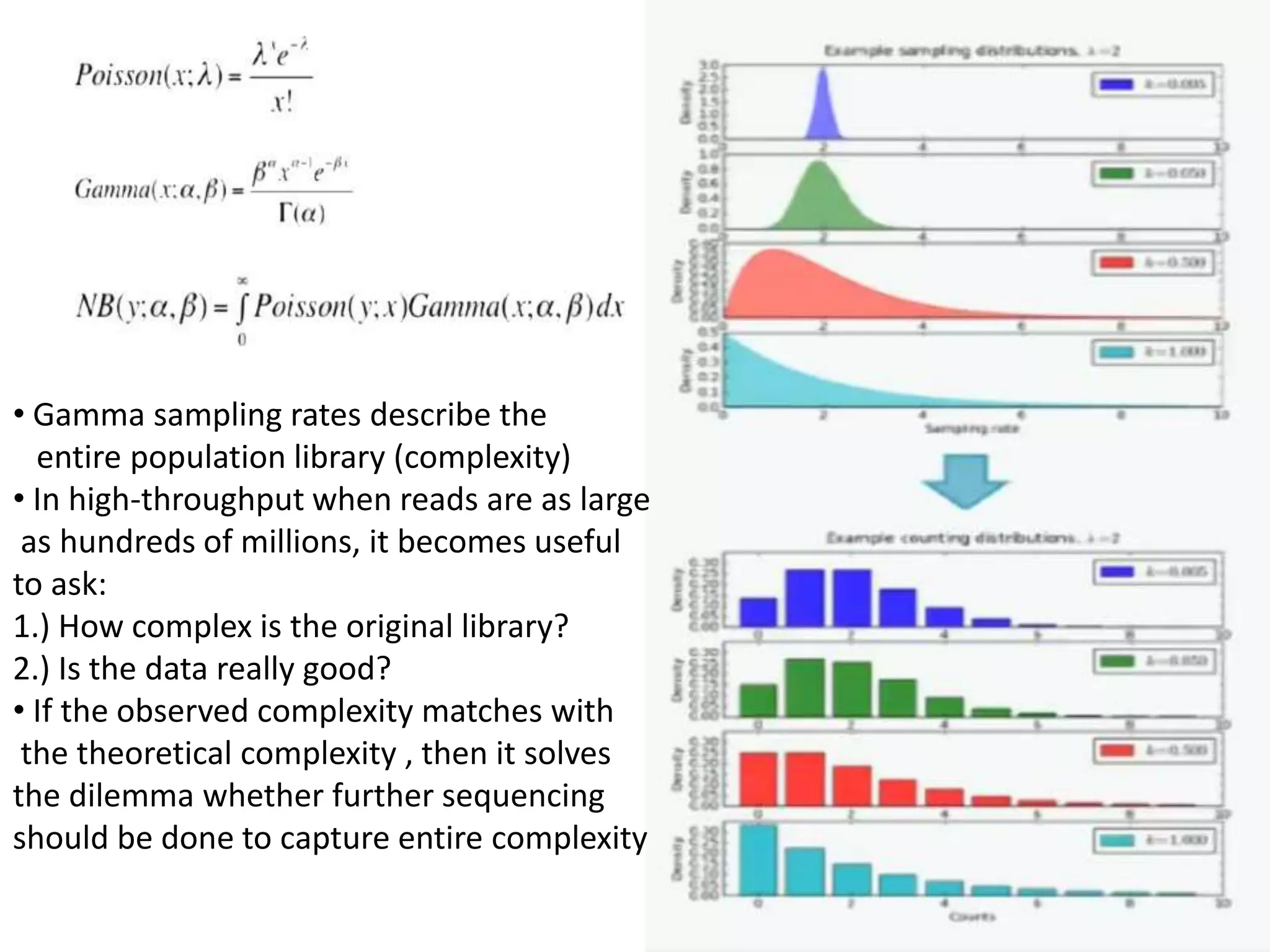
• Gamma sampling rates describe the
entire population library (complexity)
• In high-throughput when reads are as large
as hundreds of millions, it becomes useful
to ask:
1.) How complex is the original library?
2.) Is the data really good?
• If the observed complexity matches with
the theoretical complexity , then it solves
the dilemma whether further sequencing
should be done to capture entire complexity
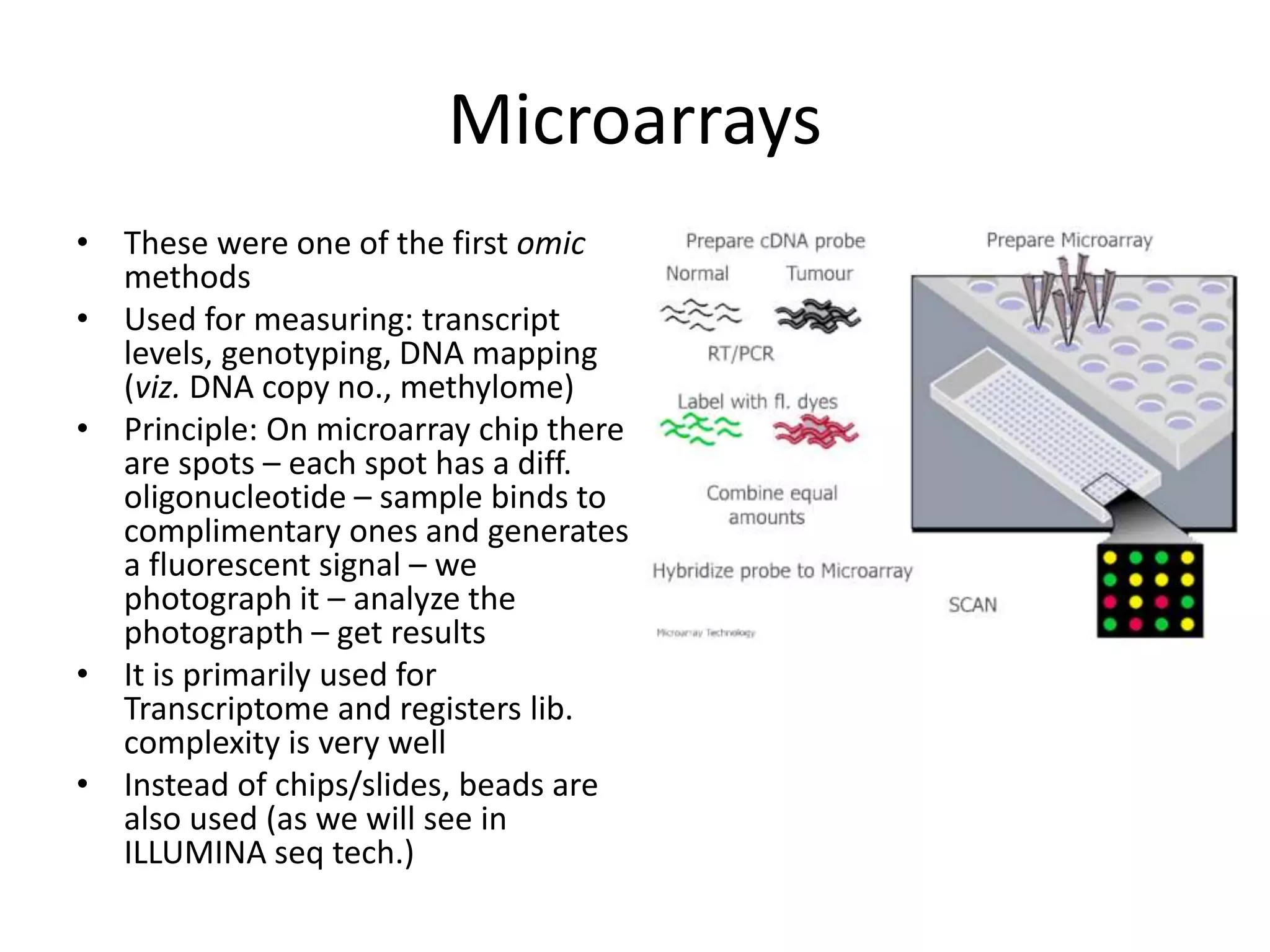
Microarrays
• These were one of the first omic
methods
• Used for measuring: transcript
levels, genotyping, DNA mapping
(viz. DNA copy no., methylome)
• Principle: On microarray chip there
are spots – each spot has a diff.
oligonucleotide – sample binds to
complimentary ones and generates
a fluorescent signal – we
photograph it – analyze the
photograpth – get results
• It is primarily used for
Transcriptome and registers lib.
complexity is very well
• Instead of chips/slides, beads are
also used (as we will see in
ILLUMINA seq tech.)
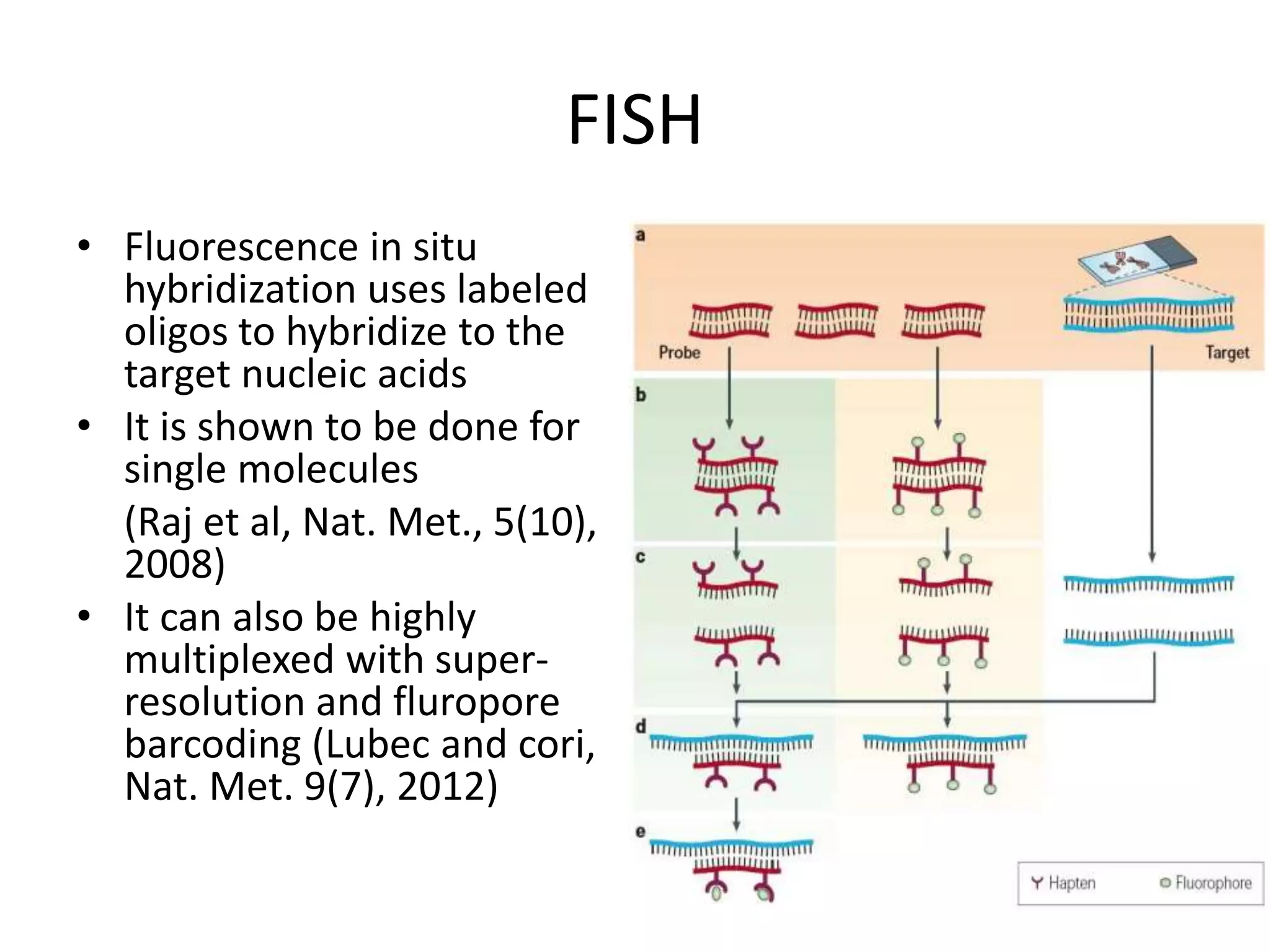
FISH
• Fluorescence in situ
hybridization uses labeled
oligos to hybridize to the
target nucleic acids
• It is shown to be done for
single molecules
(Raj et al, Nat. Met., 5(10),
2008)
• It can also be highly
multiplexed with super-
resolution and fluropore
barcoding (Lubec and cori,
Nat. Met. 9(7), 2012)
General rules of thumb
• Few different molecules (RNA): Northern
Blotting or FISH
• Medium throughput: qPCR
• High throughput: Microarrays, Next-Gen
Sequencing
Need of sequencing
• Sequencing such as that of mRNA allows for:
(a.) Quantification of expressed transcriptome (transcript library)
(b.) The ratios of splice variant levels i.e. for a gene that differentially
expresses two splice isoforms
(c.) Identification of novel splice variants
• Seq Techniques for Nucleic acids is broadly divided into two types:
(1.) Population average: Large amount of starting material
required (~1 M cells)
e.g. qPCR, microarrays, Deep Sequencing Technologies (viz. Whole
genome, Exome seq, Transcriptome, Bisulphate seq, ChIP seq) etc.
(2.) Single cell: Detecting analytes from single cell.
-> Main challenge- separating measurement noise
e.g. qPCR, FISH, RNA seq etc.
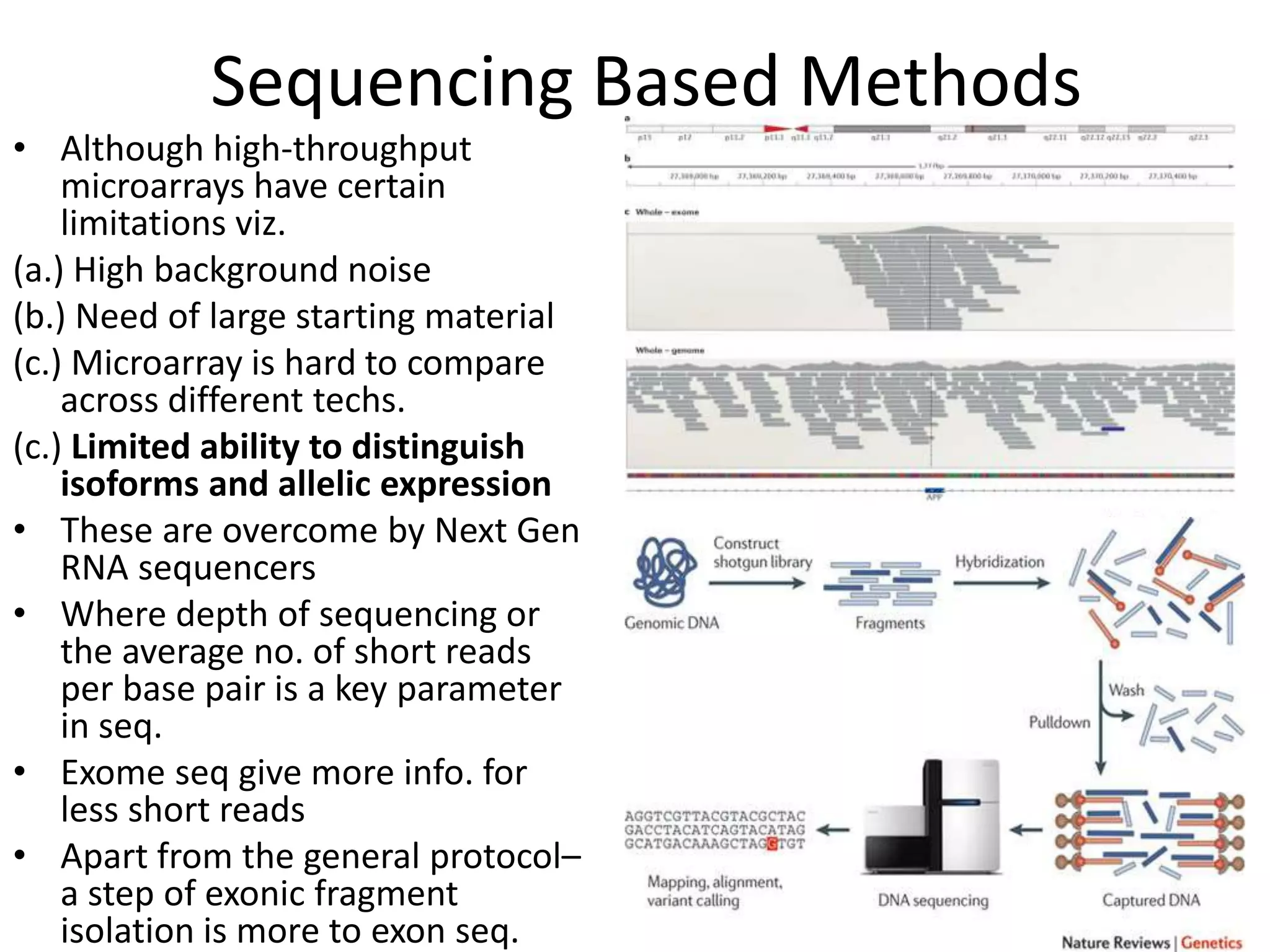
Sequencing Based Methods
• Although high-throughput
microarrays have certain
limitations viz.
(a.) High background noise
(b.) Need of large starting material
(c.) Microarray is hard to compare
across different techs.
(c.) Limited ability to distinguish
isoforms and allelic expression
• These are overcome by Next Gen
RNA sequencers
• Where depth of sequencing or
the average no. of short reads
per base pair is a key parameter
in seq.
• Exome seq give more info. for
less short reads
• Apart from the general protocol–
a step of exonic fragment
isolation is more to exon seq.
Generations of RNA sequencers
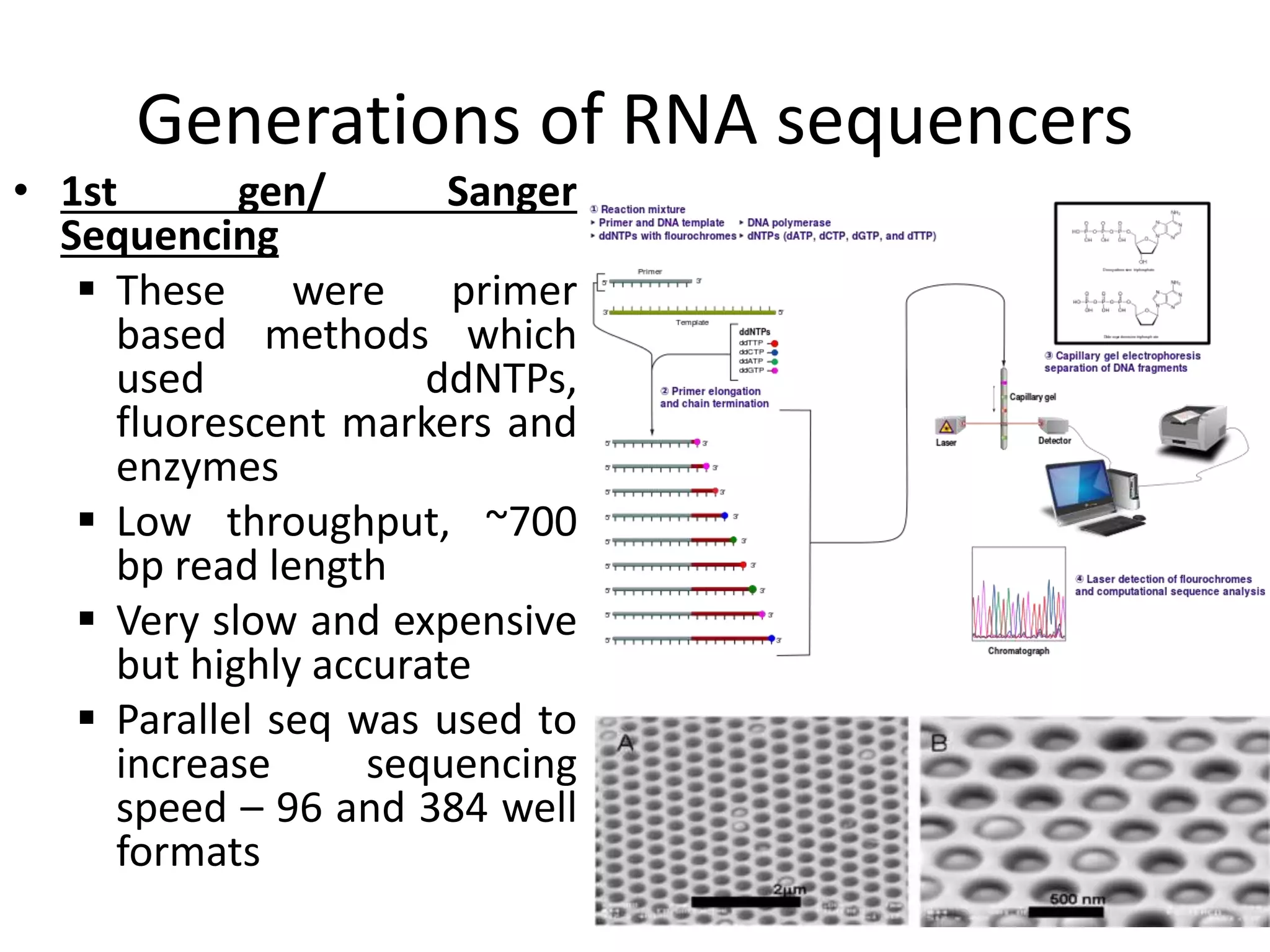
• 1st gen/ Sanger
Sequencing
 These were primer
based methods which
used ddNTPs,
fluorescent markers and
enzymes
 Low throughput, ~700
bp read length
 Very slow and expensive
but highly accurate
 Parallel seq was used to
increase sequencing
speed – 96 and 384 well
formats
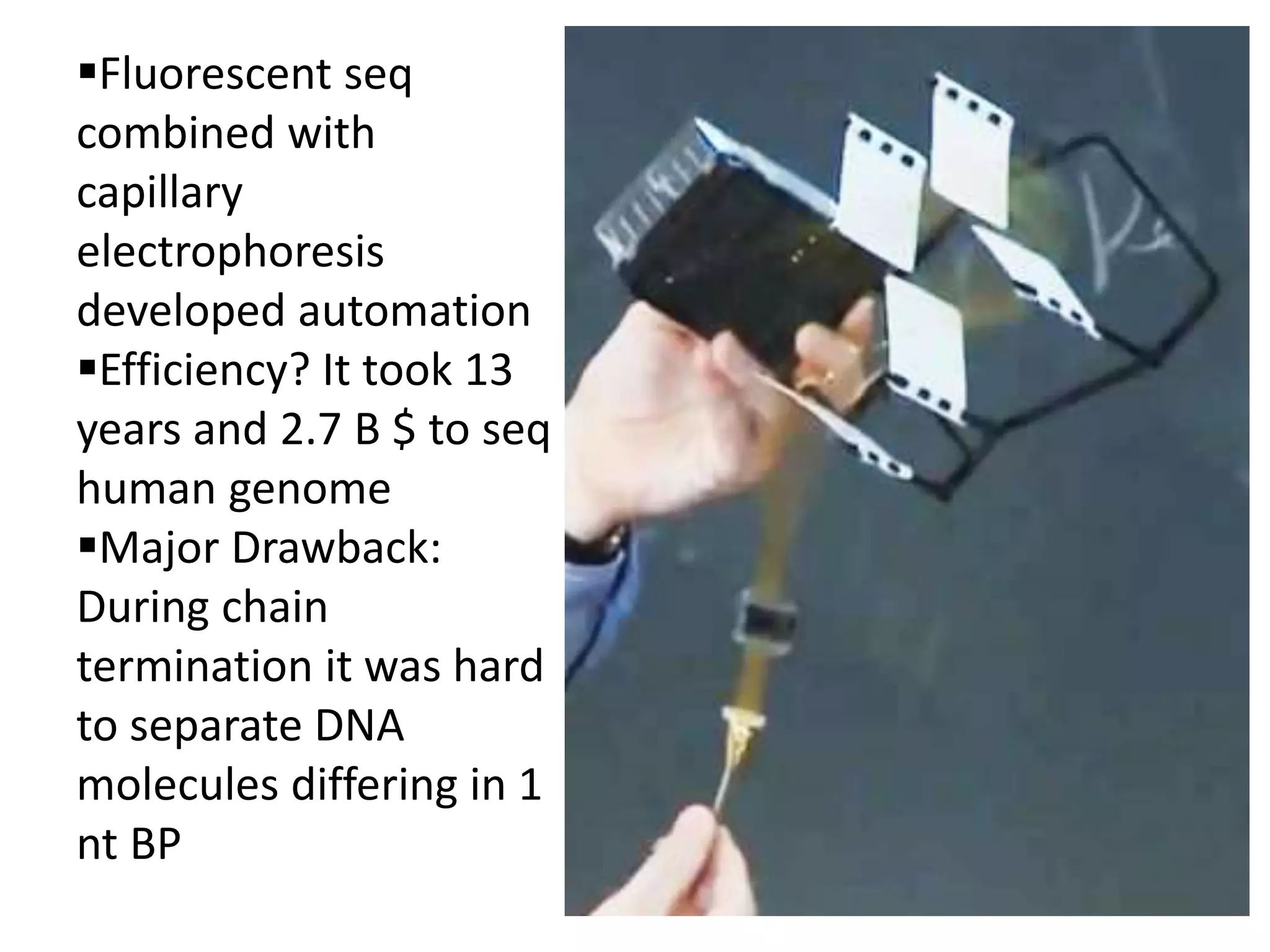
Fluorescent seq
combined with
capillary
electrophoresis
developed automation
Efficiency? It took 13
years and 2.7 B $ to seq
human genome
Major Drawback:
During chain
termination it was hard
to separate DNA
molecules differing in 1
nt BP
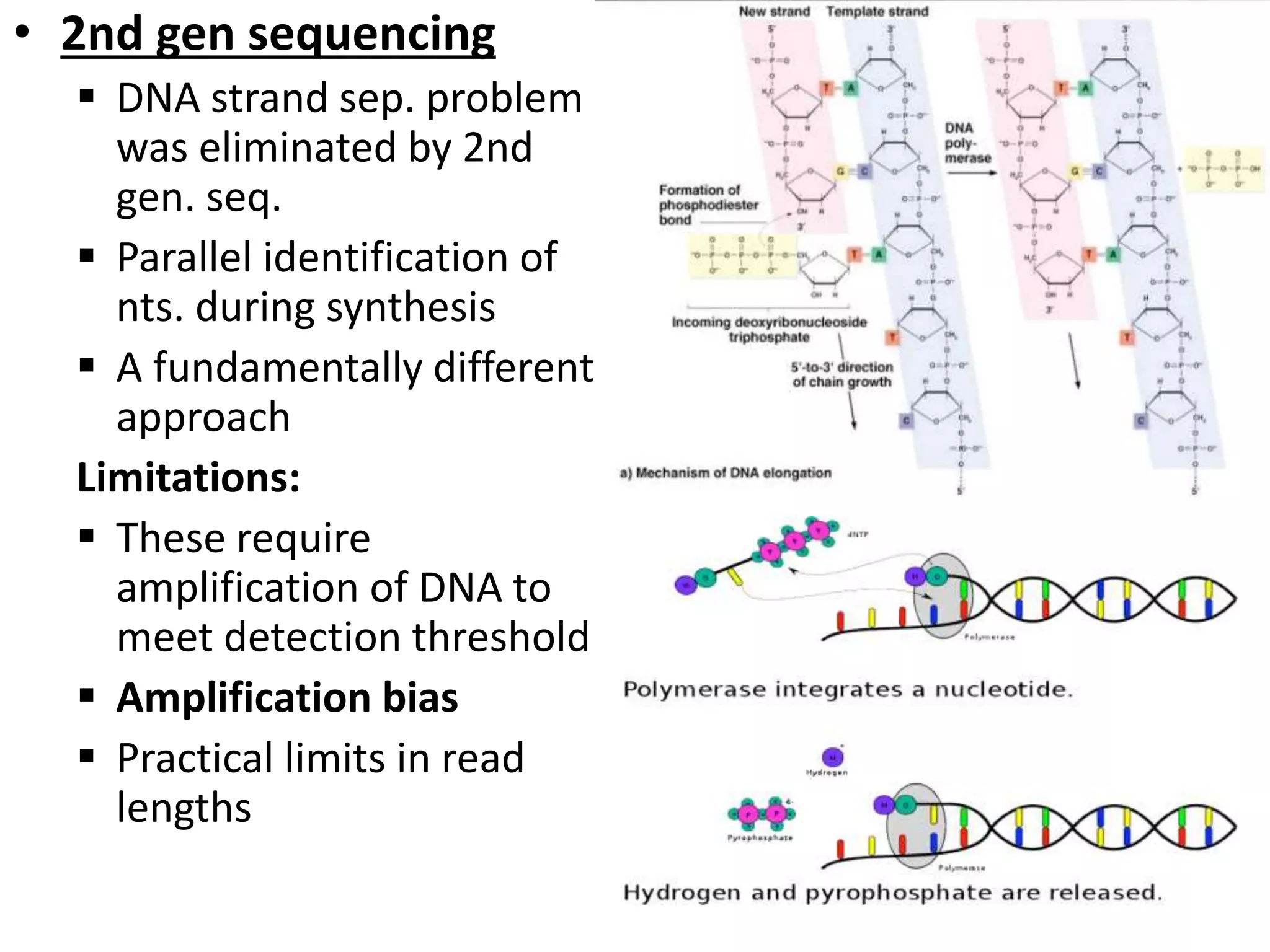
• 2nd gen sequencing
 DNA strand sep. problem
was eliminated by 2nd
gen. seq.
 Parallel identification of
nts. during synthesis
 A fundamentally different
approach
Limitations:
 These require
amplification of DNA to
meet detection threshold
 Amplification bias
 Practical limits in read
lengths
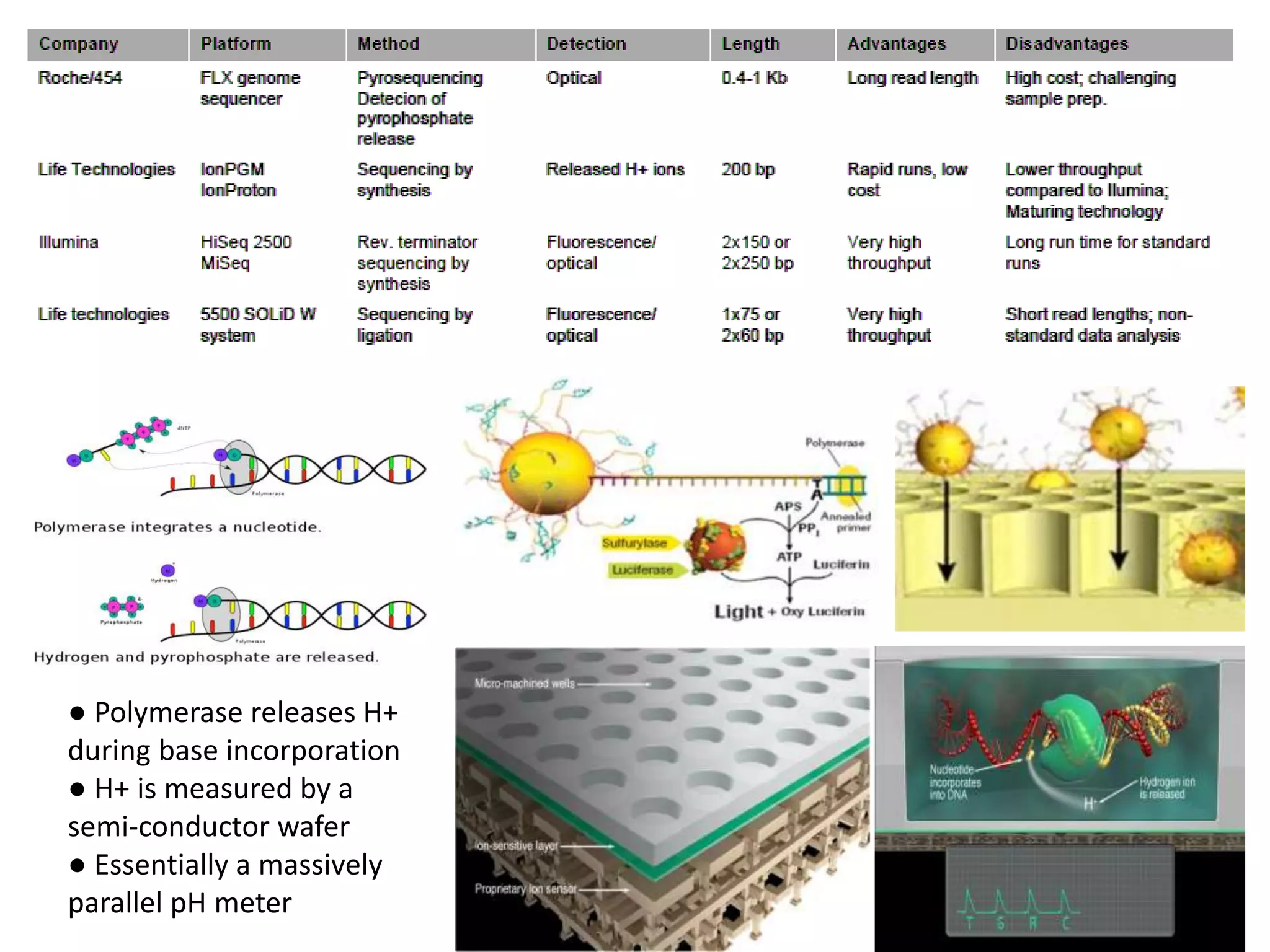
● Polymerase releases H+
during base incorporation
● H+ is measured by a
semi‐conductor wafer
● Essentially a massively
parallel pH meter
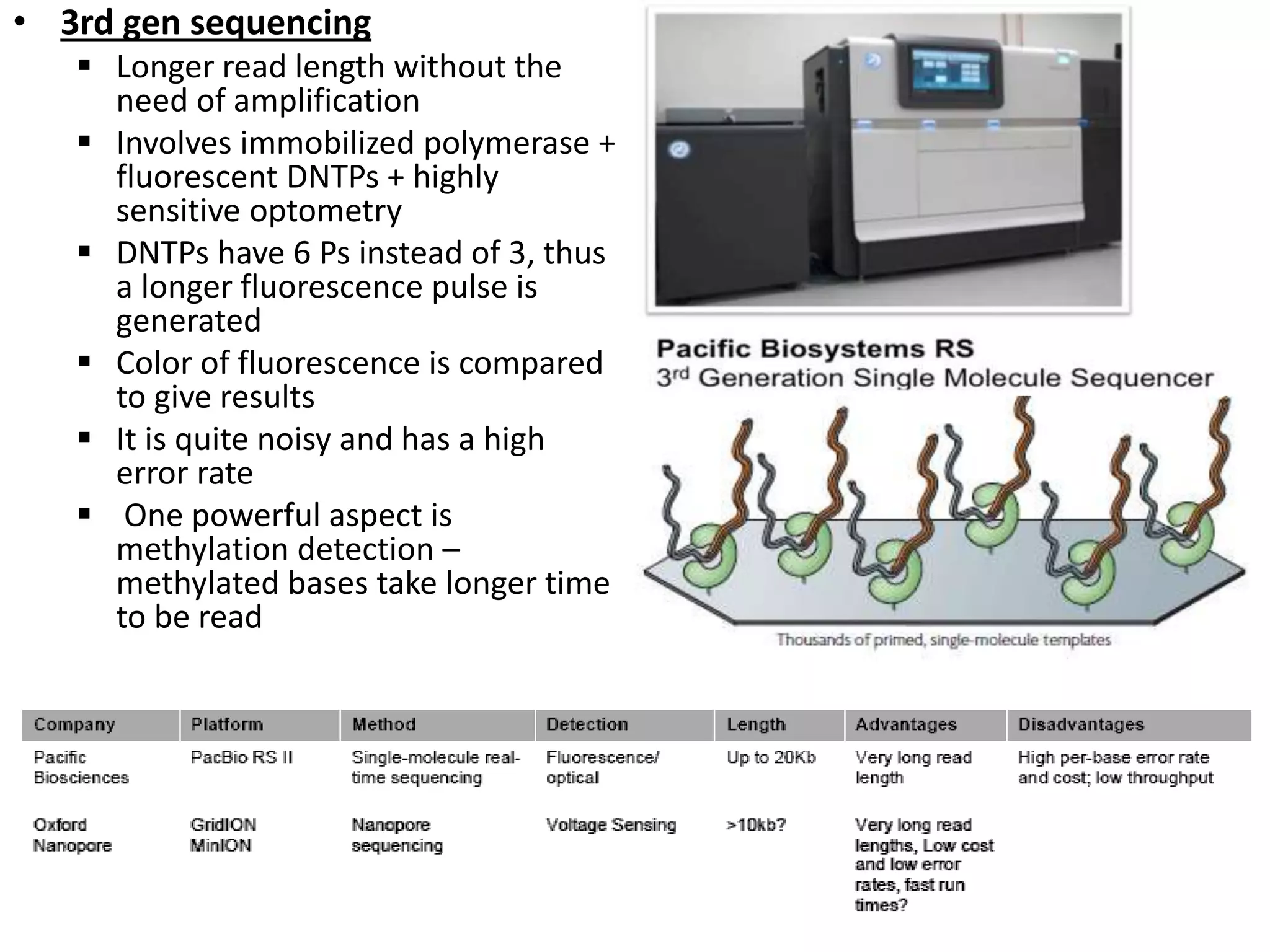
• 3rd gen sequencing
 Longer read length without the
need of amplification
 Involves immobilized polymerase +
fluorescent DNTPs + highly
sensitive optometry
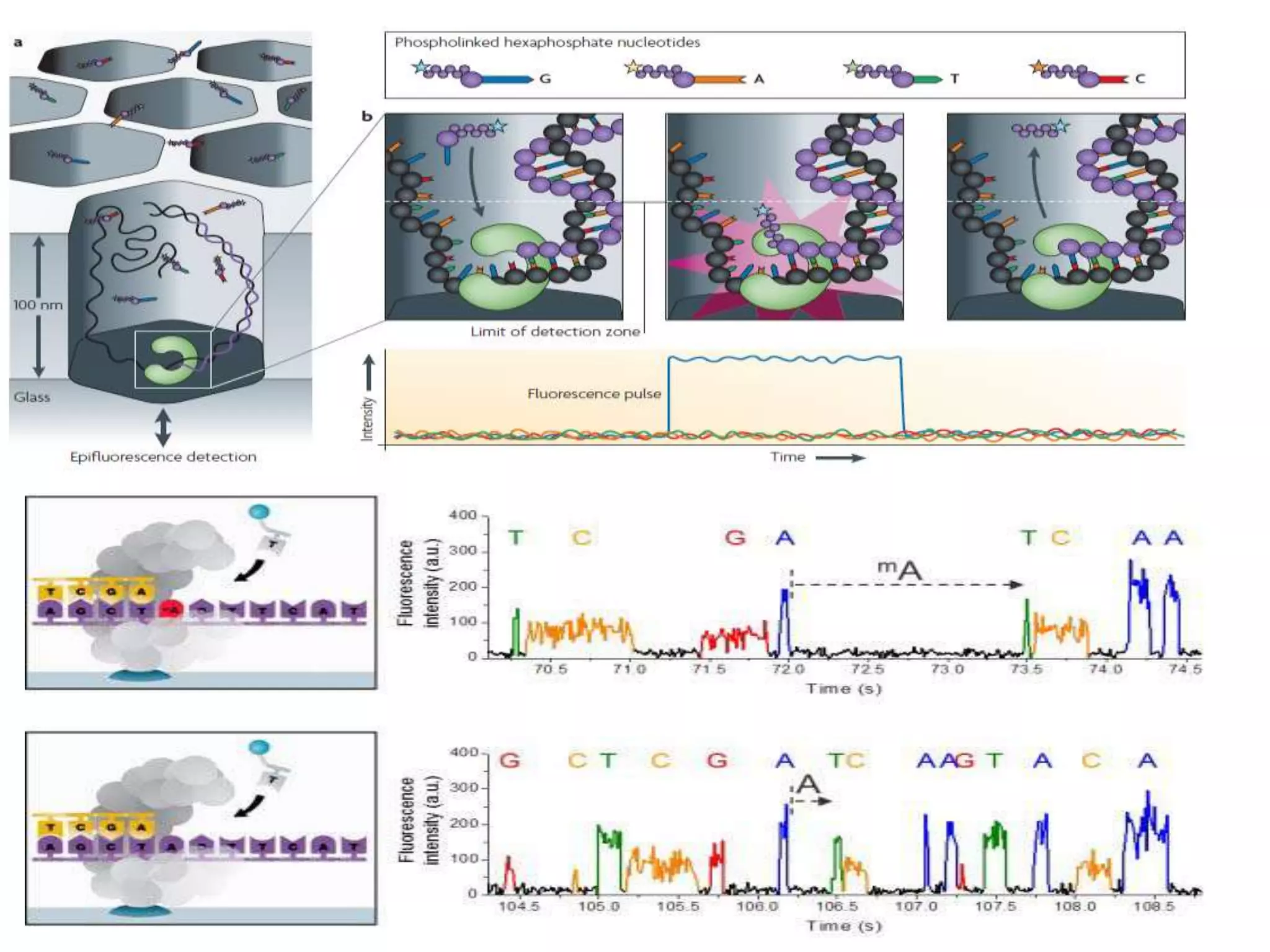
 DNTPs have 6 Ps instead of 3, thus
a longer fluorescence pulse is
generated
 Color of fluorescence is compared
to give results
 It is quite noisy and has a high
error rate
 One powerful aspect is
methylation detection –
methylated bases take longer time
to be read
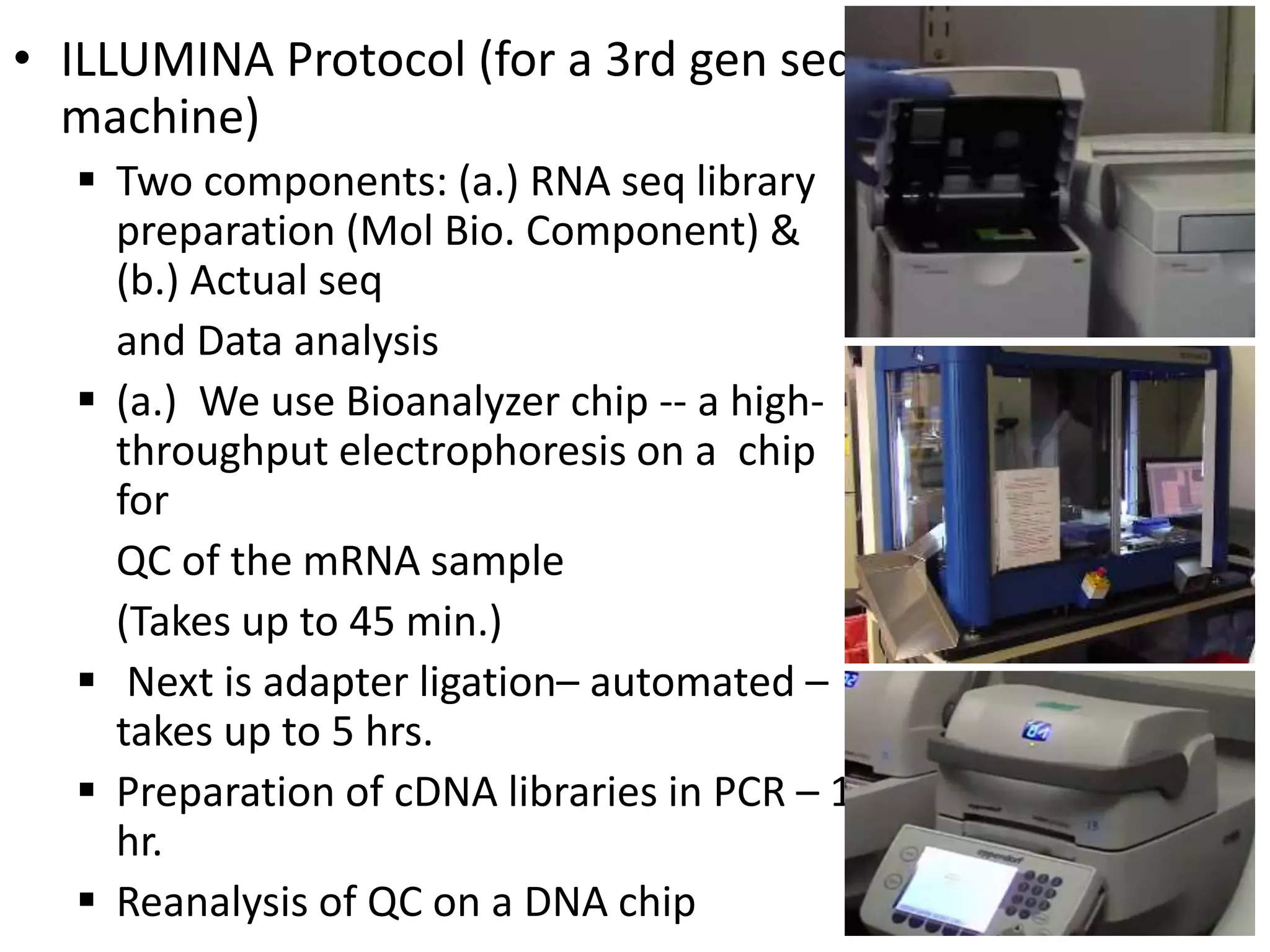
• ILLUMINA Protocol (for a 3rd gen seq
machine)
 Two components: (a.) RNA seq library
preparation (Mol Bio. Component) &
(b.) Actual seq
and Data analysis
 (a.) We use Bioanalyzer chip -- a high-
throughput electrophoresis on a chip
for
QC of the mRNA sample
(Takes up to 45 min.)
 Next is adapter ligation– automated –
takes up to 5 hrs.
 Preparation of cDNA libraries in PCR – 1
hr.
 Reanalysis of QC on a DNA chip
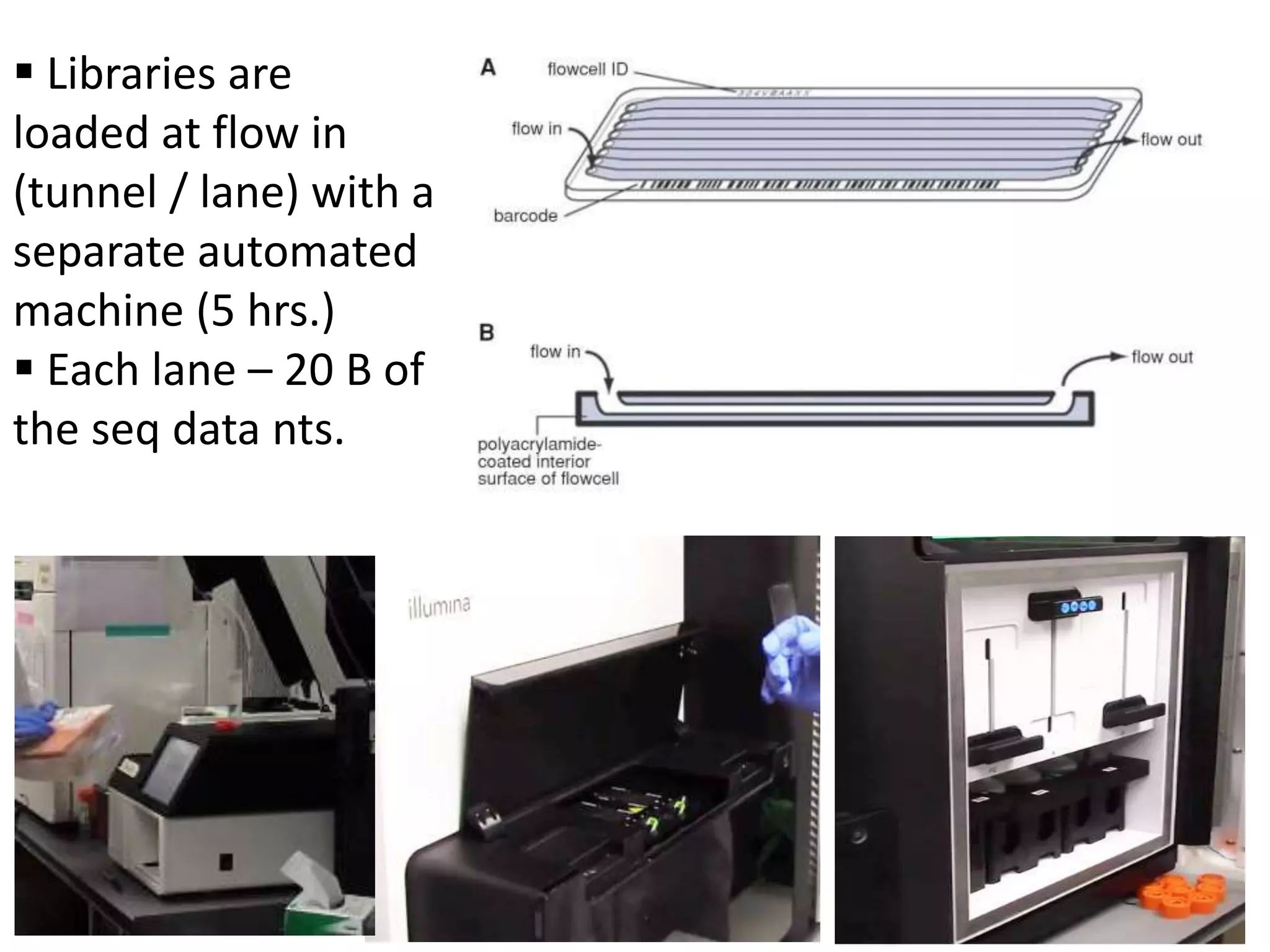
 Libraries are
loaded at flow in
(tunnel / lane) with a
separate automated
machine (5 hrs.)
 Each lane – 20 B of
the seq data nts.
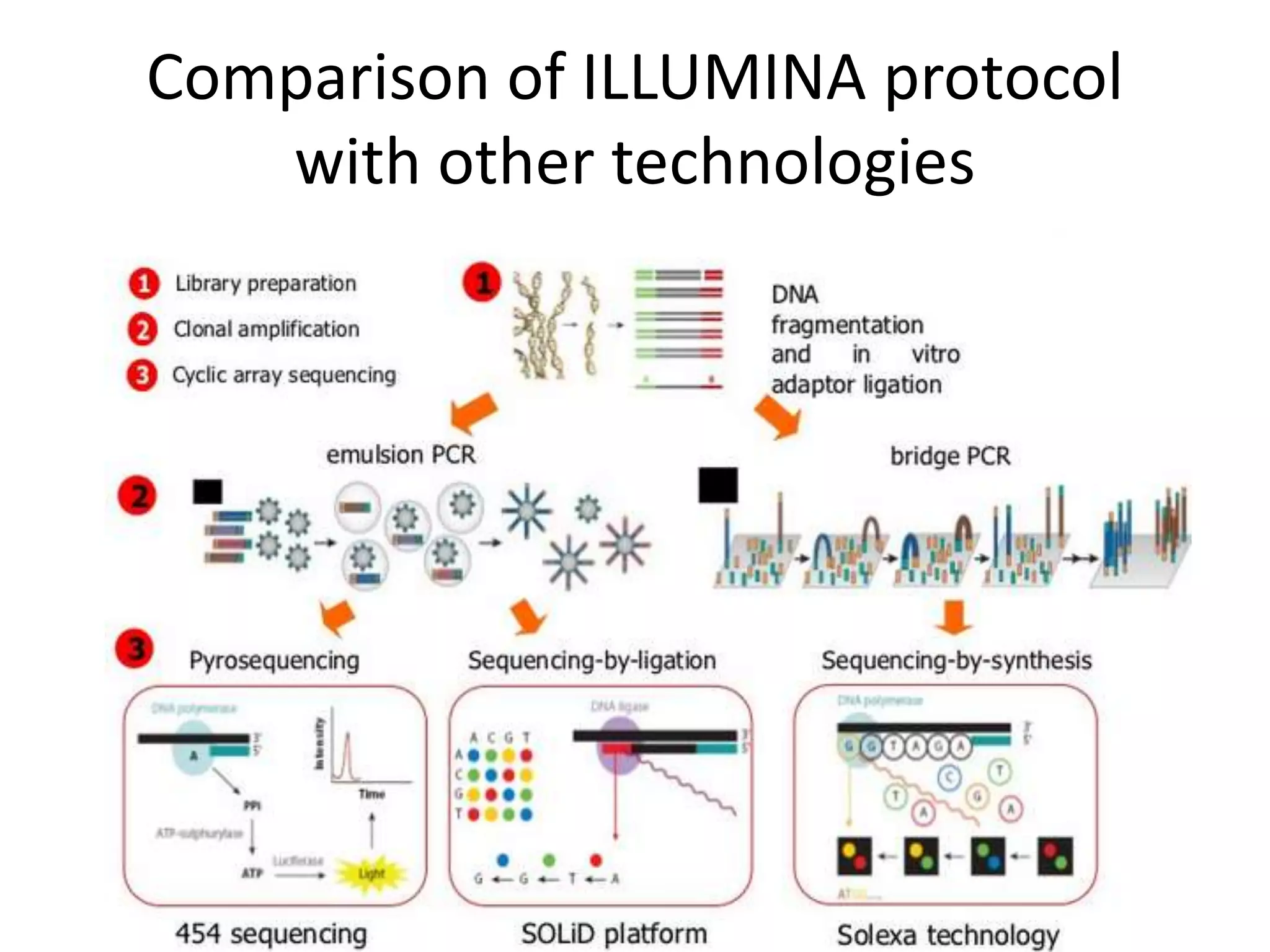
Comparison of ILLUMINA protocol
with other technologies
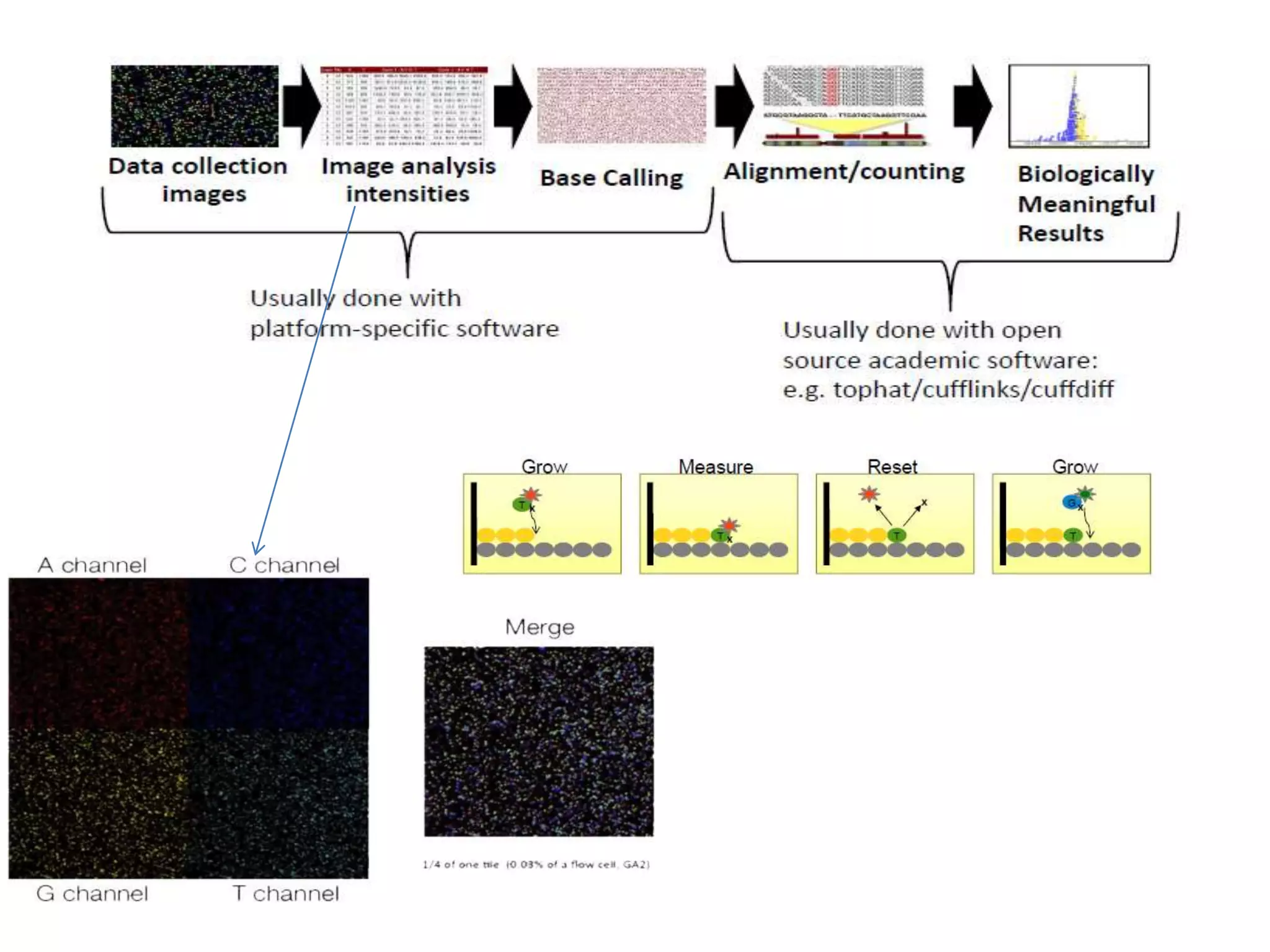
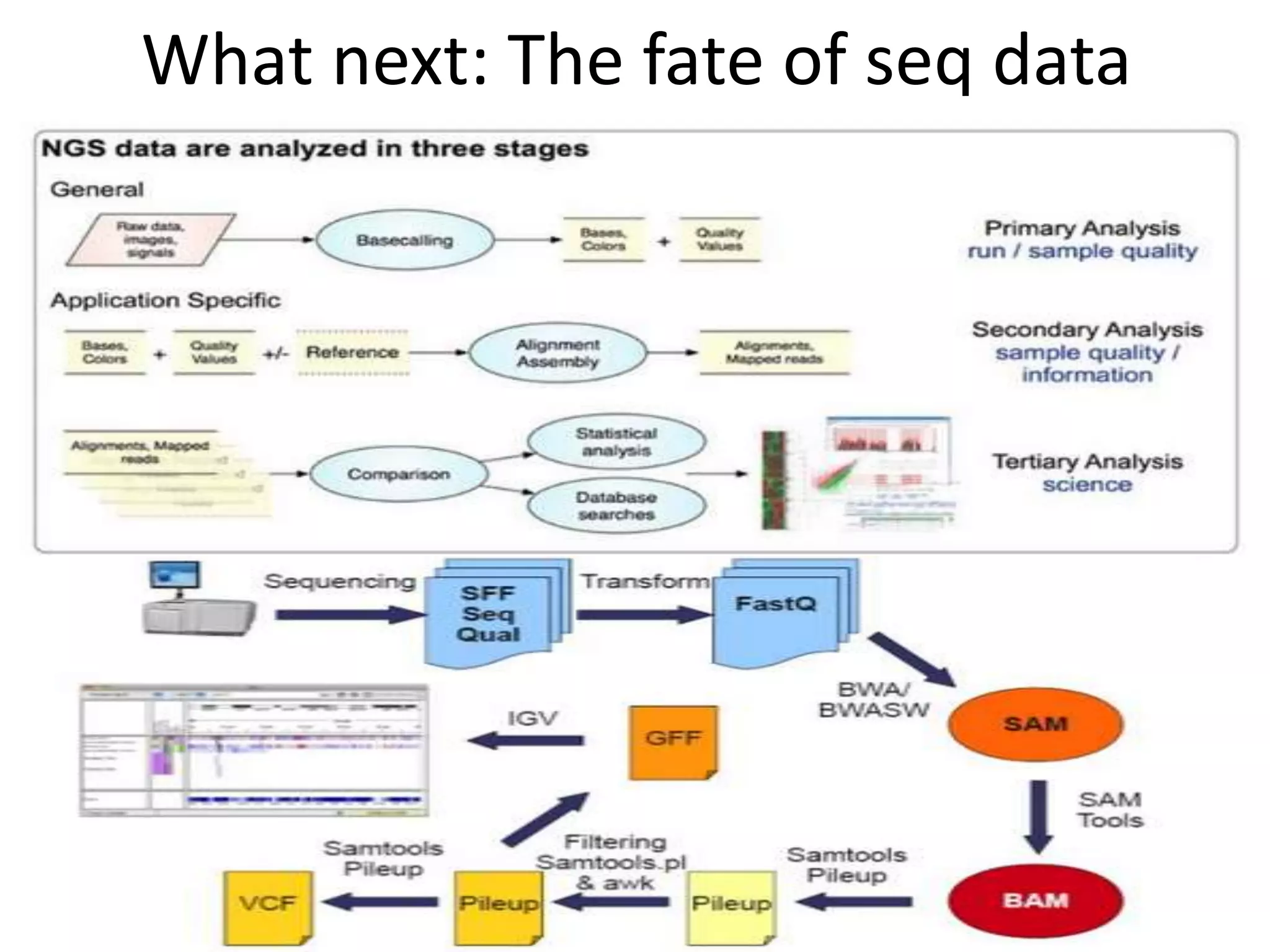
What next: The fate of seq data
Fruits of sequencing
• Answering key questions such as – are certain
SNIPs associated with diseases? What critical
mutations are there which caused the
disease?
• However, data must be quantitative and
sampling population should be large to make
any such assessment e.g. mutation
frequencies
Conclusion
• These technologies allows for sequencing of
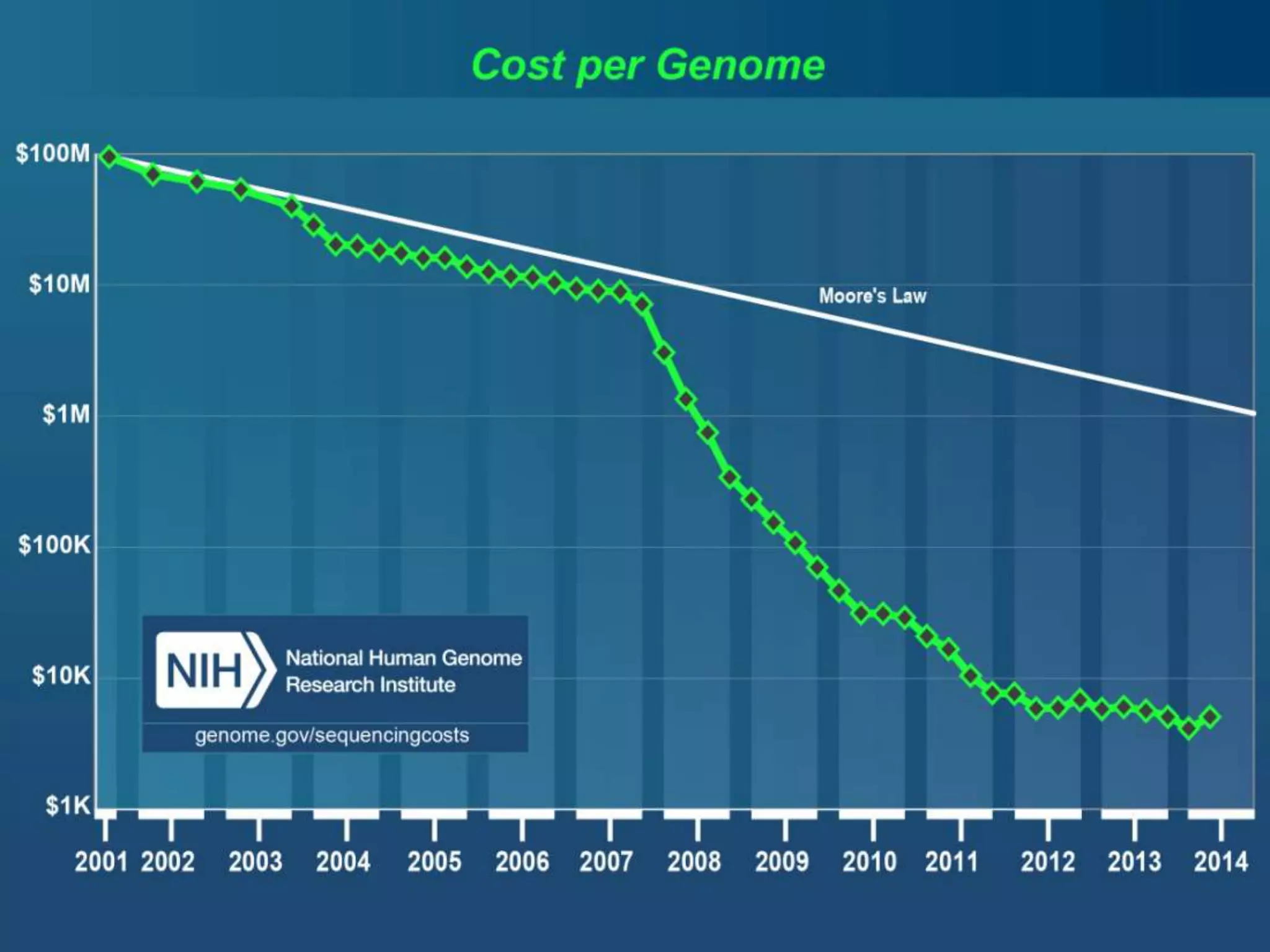
DNA and RNA much more quickly and cheaply
than the previously used Sanger sequencing,
and as such have revolutionised the study of
genomics and molecular biology
The Latest
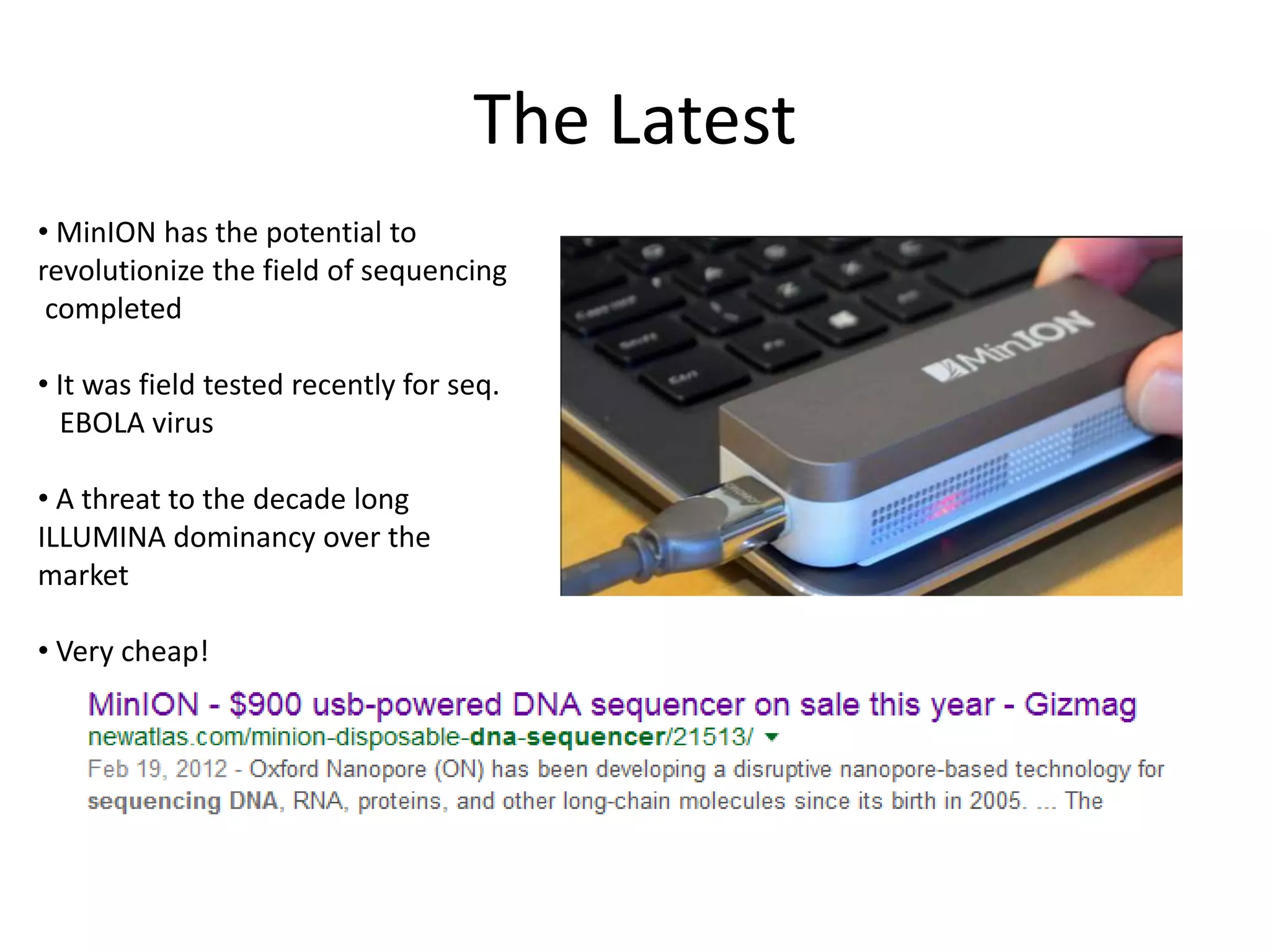
• MinION has the potential to
revolutionize the field of sequencing
completed
• It was field tested recently for seq.
EBOLA virus
• A threat to the decade long
ILLUMINA dominancy over the
market
• Very cheap!
THANK YOU FOR
YOUR PRECIOUS
TIME!
# References#Image Credits
Mostly CC0 images, FISH, microarray, ILLUMINA images from Nature reviews and ILLUMINA
site resp., in lecture images from MIT OCW lectures, Lab-based videos of SBCNY (Ic, CC0
slides from), Cost per genome image from NHGRI, MinION from google images
#Content
Goodwin S, McPherson JD, McCombie RW, Coming of age: ten years of next-generation
sequencing technologies, Nature Reviews Genetics 17, 333–351 (2016)
doi:10.1038/nrg.2016.49
Buermans HPJ, Den Dunnen JT, Next generation sequencing technology: Advances and
applications, Biochimica et Biophysica Acta (BBA) - Molecular Basis of Disease, 1842, Issue
10, 1932–1941 (2014), http://dx.doi.org/10.1016/j.bbadis.2014.06.015
Ed Yong, A DNA Sequencer in Every Pocket – The Atlantic, Apr 28, 2016
Lectures from SBCNY : ILLUMINA Protocol (Icahn School of Medicine at Mt. Sinai)
Lectures from MIT OCW: 2. Local Alignment (BLAST) and Statistics
Selected content VHIR : Introduction to next generation sequencing (VHIR (Vall d’Hebron
Institut de Recerca)

Next generation sequencing methods

  • 1.
    Next Generation Sequencing Methods MrinalVashisth B.Tech. -Biotechnology
  • 2.
    Sequencing • Sequencing isthe process of determining the precise order of nucleotides within a DNA, RNA molecule. • In case of proteins, amino acids • It includes any method or technology that is used to determine the order of the four bases—adenine, guanine, cytosine, and thymine—in a strand of DNA. • Next-generation sequencing (NGS or high-throughput sequencing are collectively technologies developed by: – Illumina (Solexa) sequencing – Roche 454 sequencing – Ion torrent: Proton / PGM sequencing – SOLiD sequencing (Thermo Fisher Scientific)
  • 4.
    qPCR • Quantitative PCRmeasures the level of a particular nucleic acid (usually mRNA) defined by a primer pair sequence that amplifies it • The mRNA is converted into DNA by reverse transcriptase (a retroviral enzyme) • Makes use of a high temperature stable polymerase i.e. Taq polymerase • It is a non-leniar amplification • Selective bias of molecules can register less library complexity
  • 5.
    • Quantitaiveness by:measuring the no. of cycles needed to reach a fluorescence intensity threshold • However, larger no. of cycles = lower original amount of DNA i.e. less DNA available for experimentation purposes • It is a medium-throughput approach and is usually limited to only being of validative use
  • 6.
    Library Complexity • Theno. of unique molecules in the “library” that is sampled by finite sequencing constitutes library complexity. • Simple representation methods (such as Poisson's distribution) can be wrong in representing the complexity • Poisson’s dist. does not account for over dispersion, hence Poisson’s sampling is only effective for smaller population sizes • Negative binomial distribution (Poisson-Gamma dist.) is one method of correctly estimating the library complexity
  • 7.
    How to registerLib. Complexity • Attach a set of 5 nucleotide barcodes (1,024 possible) to the 5’ end of (nearly) every mRNA • Sequence the 5’ ends and count the number of unique barcodes that appear • This is enough to ensure unique alignment • Obtained is the number of mRNA molecules in the original sample
  • 8.
    • Gamma samplingrates describe the entire population library (complexity) • In high-throughput when reads are as large as hundreds of millions, it becomes useful to ask: 1.) How complex is the original library? 2.) Is the data really good? • If the observed complexity matches with the theoretical complexity , then it solves the dilemma whether further sequencing should be done to capture entire complexity
  • 9.
    Microarrays • These wereone of the first omic methods • Used for measuring: transcript levels, genotyping, DNA mapping (viz. DNA copy no., methylome) • Principle: On microarray chip there are spots – each spot has a diff. oligonucleotide – sample binds to complimentary ones and generates a fluorescent signal – we photograph it – analyze the photograpth – get results • It is primarily used for Transcriptome and registers lib. complexity is very well • Instead of chips/slides, beads are also used (as we will see in ILLUMINA seq tech.)
  • 10.
    FISH • Fluorescence insitu hybridization uses labeled oligos to hybridize to the target nucleic acids • It is shown to be done for single molecules (Raj et al, Nat. Met., 5(10), 2008) • It can also be highly multiplexed with super- resolution and fluropore barcoding (Lubec and cori, Nat. Met. 9(7), 2012)
  • 11.
    General rules ofthumb • Few different molecules (RNA): Northern Blotting or FISH • Medium throughput: qPCR • High throughput: Microarrays, Next-Gen Sequencing
  • 12.
    Need of sequencing •Sequencing such as that of mRNA allows for: (a.) Quantification of expressed transcriptome (transcript library) (b.) The ratios of splice variant levels i.e. for a gene that differentially expresses two splice isoforms (c.) Identification of novel splice variants • Seq Techniques for Nucleic acids is broadly divided into two types: (1.) Population average: Large amount of starting material required (~1 M cells) e.g. qPCR, microarrays, Deep Sequencing Technologies (viz. Whole genome, Exome seq, Transcriptome, Bisulphate seq, ChIP seq) etc. (2.) Single cell: Detecting analytes from single cell. -> Main challenge- separating measurement noise e.g. qPCR, FISH, RNA seq etc.
  • 13.
    Sequencing Based Methods •Although high-throughput microarrays have certain limitations viz. (a.) High background noise (b.) Need of large starting material (c.) Microarray is hard to compare across different techs. (c.) Limited ability to distinguish isoforms and allelic expression • These are overcome by Next Gen RNA sequencers • Where depth of sequencing or the average no. of short reads per base pair is a key parameter in seq. • Exome seq give more info. for less short reads • Apart from the general protocol– a step of exonic fragment isolation is more to exon seq.
  • 14.
    Generations of RNAsequencers • 1st gen/ Sanger Sequencing  These were primer based methods which used ddNTPs, fluorescent markers and enzymes  Low throughput, ~700 bp read length  Very slow and expensive but highly accurate  Parallel seq was used to increase sequencing speed – 96 and 384 well formats
  • 15.
    Fluorescent seq combined with capillary electrophoresis developedautomation Efficiency? It took 13 years and 2.7 B $ to seq human genome Major Drawback: During chain termination it was hard to separate DNA molecules differing in 1 nt BP
  • 16.
    • 2nd gensequencing  DNA strand sep. problem was eliminated by 2nd gen. seq.  Parallel identification of nts. during synthesis  A fundamentally different approach Limitations:  These require amplification of DNA to meet detection threshold  Amplification bias  Practical limits in read lengths
  • 17.
    ● Polymerase releasesH+ during base incorporation ● H+ is measured by a semi‐conductor wafer ● Essentially a massively parallel pH meter
  • 18.
    • 3rd gensequencing  Longer read length without the need of amplification  Involves immobilized polymerase + fluorescent DNTPs + highly sensitive optometry  DNTPs have 6 Ps instead of 3, thus a longer fluorescence pulse is generated  Color of fluorescence is compared to give results  It is quite noisy and has a high error rate  One powerful aspect is methylation detection – methylated bases take longer time to be read
  • 20.
    • ILLUMINA Protocol(for a 3rd gen seq machine)  Two components: (a.) RNA seq library preparation (Mol Bio. Component) & (b.) Actual seq and Data analysis  (a.) We use Bioanalyzer chip -- a high- throughput electrophoresis on a chip for QC of the mRNA sample (Takes up to 45 min.)  Next is adapter ligation– automated – takes up to 5 hrs.  Preparation of cDNA libraries in PCR – 1 hr.  Reanalysis of QC on a DNA chip
  • 21.
     Libraries are loadedat flow in (tunnel / lane) with a separate automated machine (5 hrs.)  Each lane – 20 B of the seq data nts.
  • 23.
    Comparison of ILLUMINAprotocol with other technologies
  • 24.
    What next: Thefate of seq data
  • 25.
    Fruits of sequencing •Answering key questions such as – are certain SNIPs associated with diseases? What critical mutations are there which caused the disease? • However, data must be quantitative and sampling population should be large to make any such assessment e.g. mutation frequencies
  • 27.
    Conclusion • These technologiesallows for sequencing of DNA and RNA much more quickly and cheaply than the previously used Sanger sequencing, and as such have revolutionised the study of genomics and molecular biology
  • 28.
    The Latest • MinIONhas the potential to revolutionize the field of sequencing completed • It was field tested recently for seq. EBOLA virus • A threat to the decade long ILLUMINA dominancy over the market • Very cheap!
  • 29.
    THANK YOU FOR YOURPRECIOUS TIME!
  • 30.
    # References#Image Credits MostlyCC0 images, FISH, microarray, ILLUMINA images from Nature reviews and ILLUMINA site resp., in lecture images from MIT OCW lectures, Lab-based videos of SBCNY (Ic, CC0 slides from), Cost per genome image from NHGRI, MinION from google images #Content Goodwin S, McPherson JD, McCombie RW, Coming of age: ten years of next-generation sequencing technologies, Nature Reviews Genetics 17, 333–351 (2016) doi:10.1038/nrg.2016.49 Buermans HPJ, Den Dunnen JT, Next generation sequencing technology: Advances and applications, Biochimica et Biophysica Acta (BBA) - Molecular Basis of Disease, 1842, Issue 10, 1932–1941 (2014), http://dx.doi.org/10.1016/j.bbadis.2014.06.015 Ed Yong, A DNA Sequencer in Every Pocket – The Atlantic, Apr 28, 2016 Lectures from SBCNY : ILLUMINA Protocol (Icahn School of Medicine at Mt. Sinai) Lectures from MIT OCW: 2. Local Alignment (BLAST) and Statistics Selected content VHIR : Introduction to next generation sequencing (VHIR (Vall d’Hebron Institut de Recerca)