Presented by: KRISHNARAJ MISHRA
Roll No.:17ME038
I. Law of Inertia
II. F=ma
III. Action-Reaction
While most people know what
Newton's laws say, many
people do not know what they
mean (or simply do not believe
what they mean).
NEWTON’S LAWS OF MOTIONNEWTON’S LAWS OF MOTION
 11stst
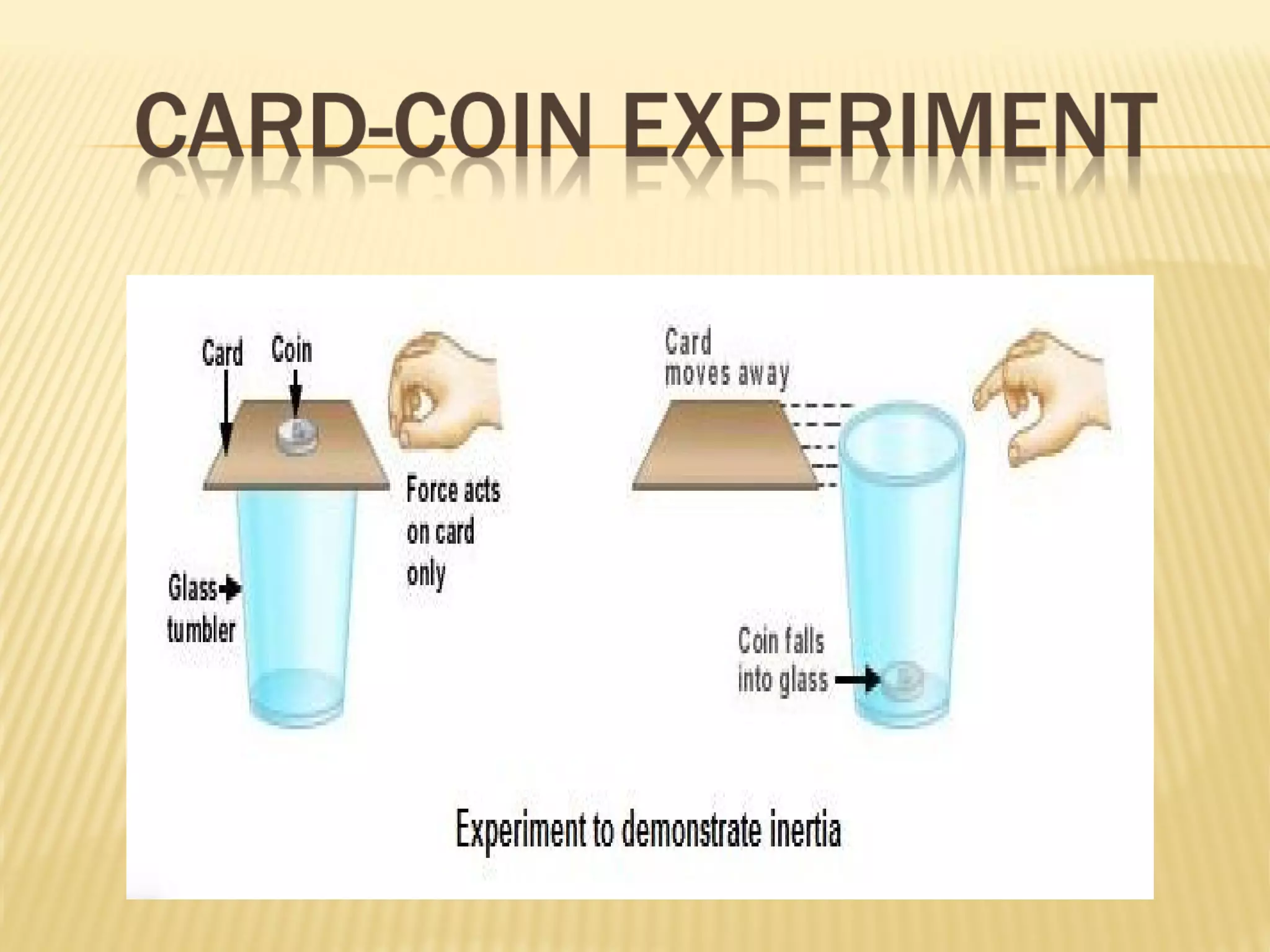
LawLaw – An object at rest will stay at rest,
and an object in motion will stay in
motion at constant velocity, unless acted
upon by an unbalanced force.
 22ndnd
LawLaw – Force equals mass times
acceleration.
 33rdrd
LawLaw – For every action there is an
equal and opposite reaction.
11STST
LAW OF MOTIONLAW OF MOTION
(LAW OF INERTIA)(LAW OF INERTIA)
An object at rest will stay at
rest, and an object in motion
will stay in motion at
constant velocity, unless acted
upon by an unbalanced force.
 Inertia is the
tendency of an
object to resist
changes in its
velocity:
whether in
motion or
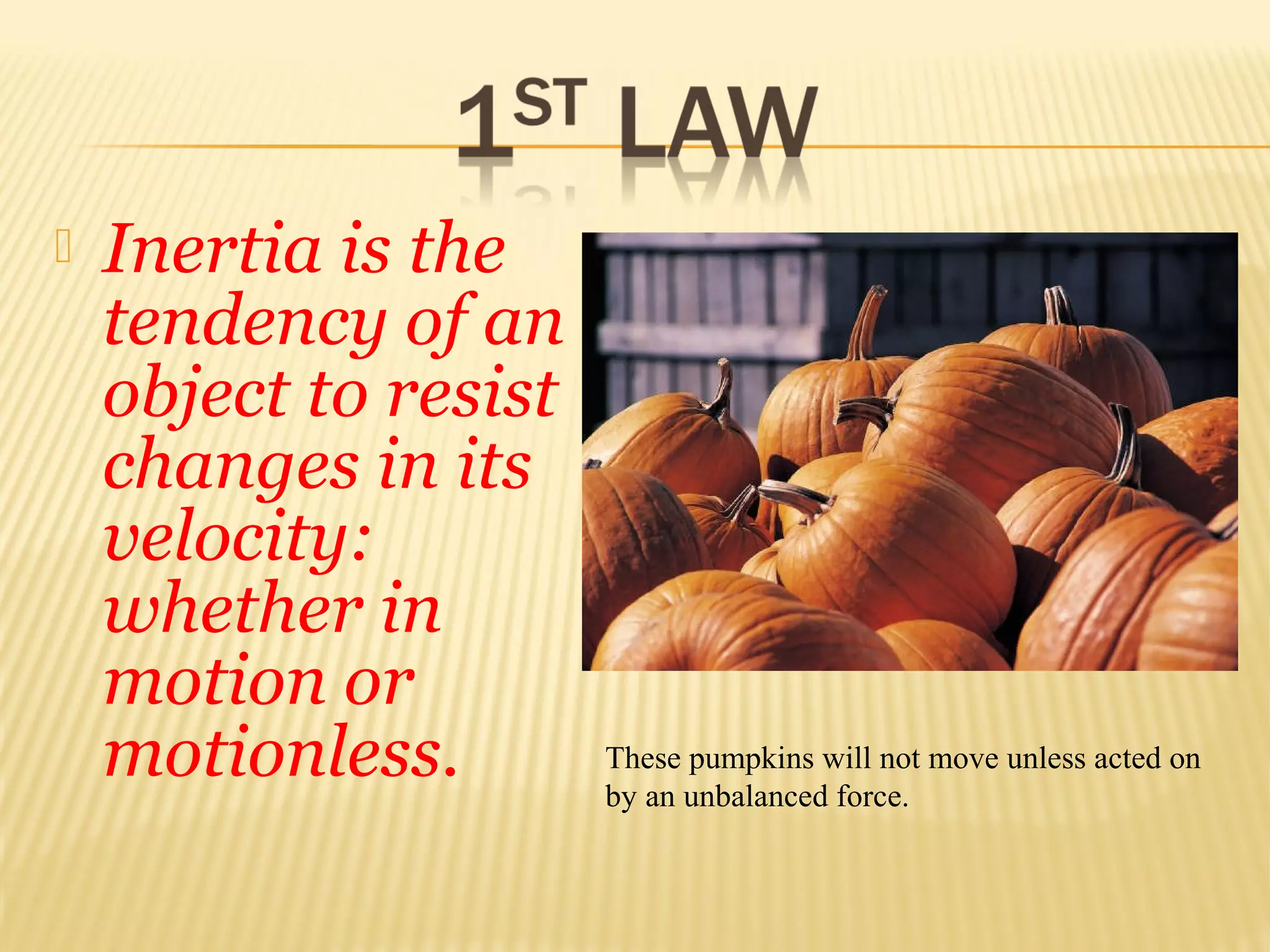
motionless. These pumpkins will not move unless acted on
by an unbalanced force.
 There are four main types of friction:
 Sliding friction: ice skating
 Rolling friction: bowling
 Fluid friction (air or liquid): air or water resistance
 Static friction: initial friction when moving an object
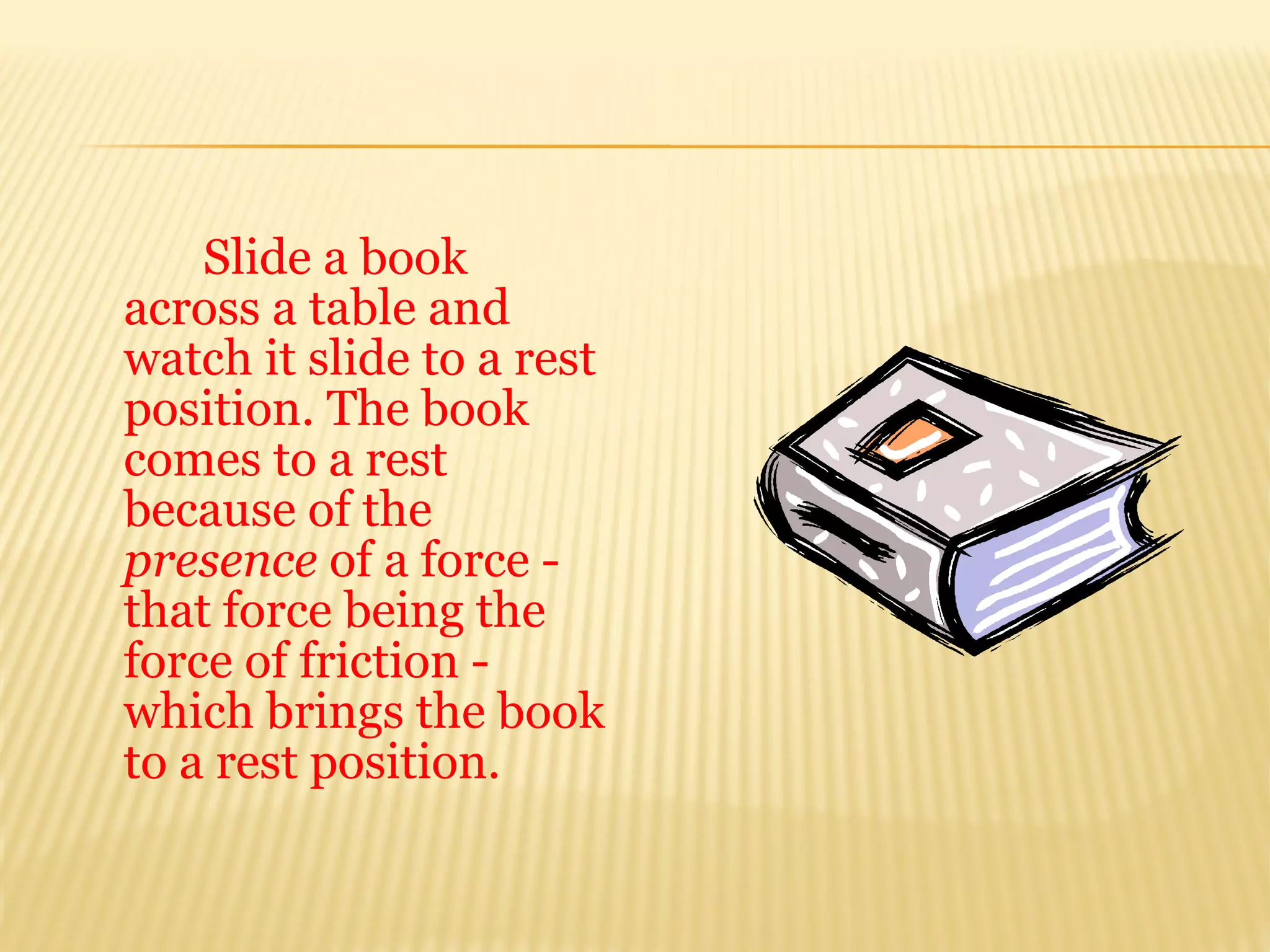
Slide a book
across a table and
watch it slide to a rest
position. The book
comes to a rest
because of the
presence of a force -
that force being the
force of friction -
which brings the book
to a rest position.
 In the absence of a force of friction, the
book would continue in motion with the
same speed and direction - forever! (Or
at least to the end of the table top.)
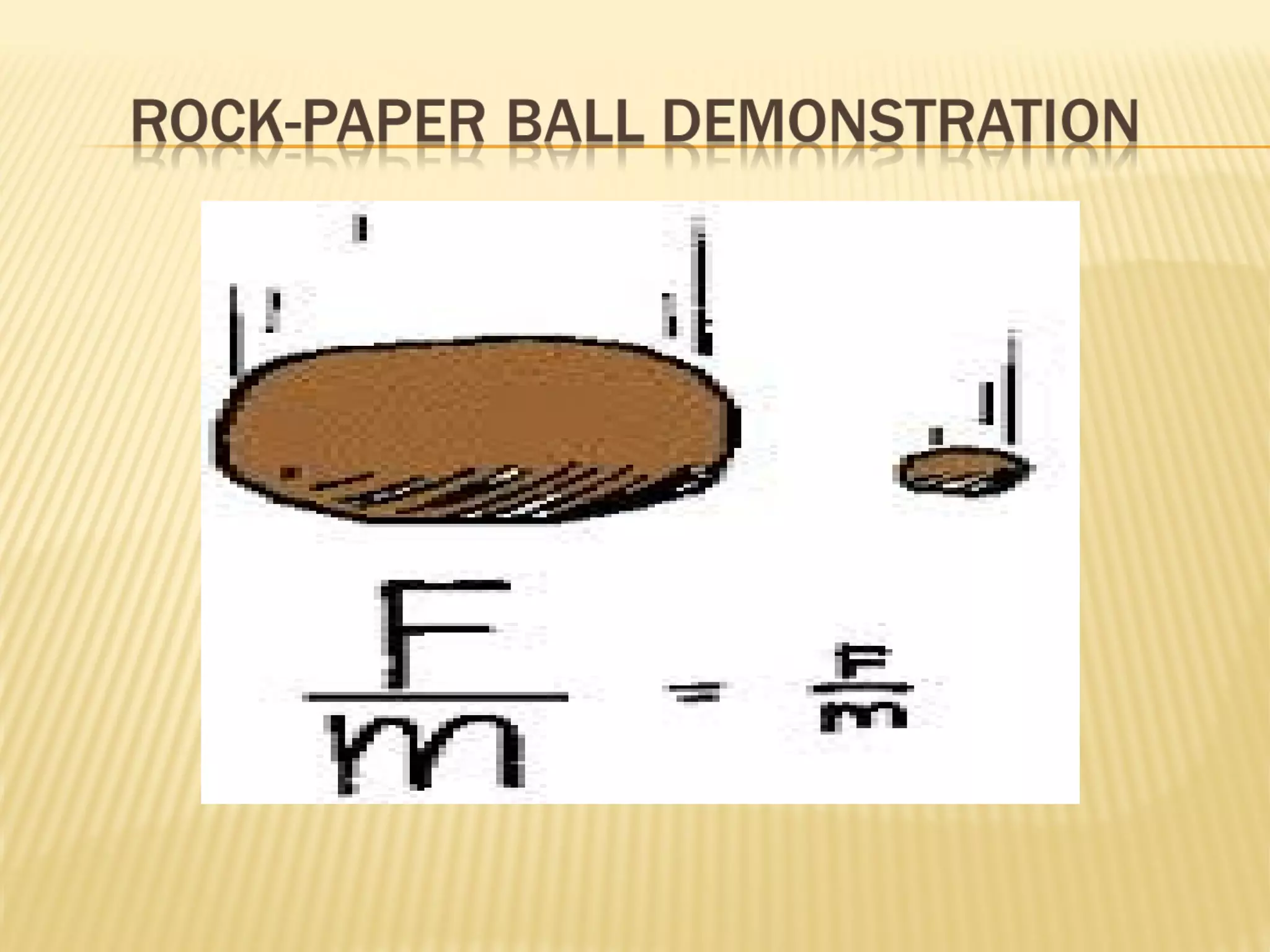
The net force of an object is
equal to the product of its mass
and acceleration, or F=ma.
 When mass is in kilograms and
acceleration is in m/s/s, the unit of
force is in newton's (N).
 One newton is equal to the force
required to accelerate one kilogram of
mass at one meter/second/second.
 For every action, there is an
equal and opposite reaction.
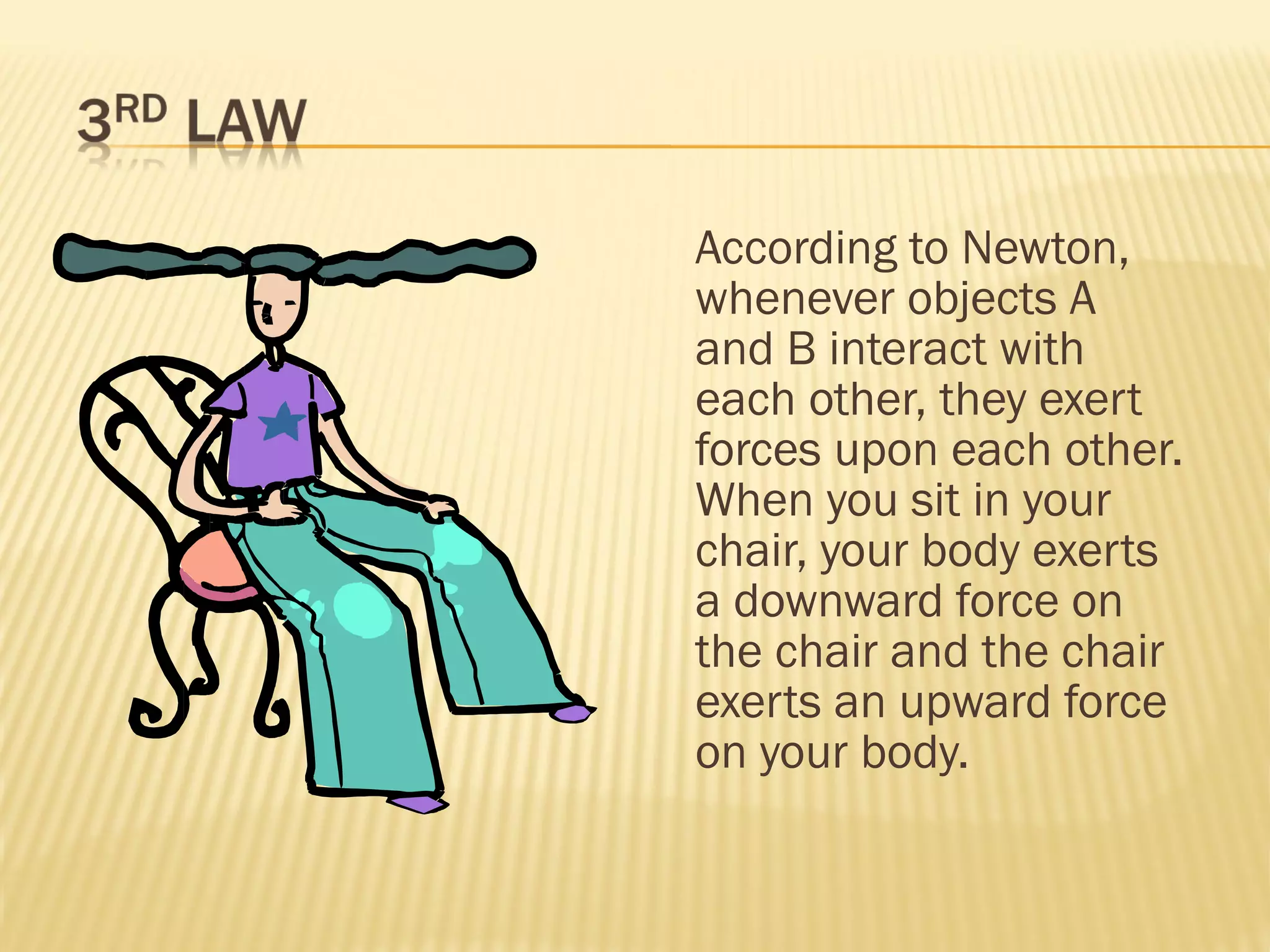
According to Newton,
whenever objects A
and B interact with
each other, they exert
forces upon each other.
When you sit in your
chair, your body exerts
a downward force on
the chair and the chair
exerts an upward force
on your body.
There are two forces
resulting from this
interaction - a force on
the chair and a force
on your body. These
two forces are called
action and reaction
forces.
Thank
You……..

Newton's laws of motion (krishnaraj)

  • 1.
    Presented by: KRISHNARAJMISHRA Roll No.:17ME038
  • 2.
    I. Law ofInertia II. F=ma III. Action-Reaction
  • 3.
    While most peopleknow what Newton's laws say, many people do not know what they mean (or simply do not believe what they mean).
  • 5.
    NEWTON’S LAWS OFMOTIONNEWTON’S LAWS OF MOTION  11stst LawLaw – An object at rest will stay at rest, and an object in motion will stay in motion at constant velocity, unless acted upon by an unbalanced force.  22ndnd LawLaw – Force equals mass times acceleration.  33rdrd LawLaw – For every action there is an equal and opposite reaction.
  • 6.
    11STST LAW OF MOTIONLAWOF MOTION (LAW OF INERTIA)(LAW OF INERTIA) An object at rest will stay at rest, and an object in motion will stay in motion at constant velocity, unless acted upon by an unbalanced force.
  • 7.
     Inertia isthe tendency of an object to resist changes in its velocity: whether in motion or motionless. These pumpkins will not move unless acted on by an unbalanced force.
  • 9.
     There arefour main types of friction:  Sliding friction: ice skating  Rolling friction: bowling  Fluid friction (air or liquid): air or water resistance  Static friction: initial friction when moving an object
  • 10.
    Slide a book acrossa table and watch it slide to a rest position. The book comes to a rest because of the presence of a force - that force being the force of friction - which brings the book to a rest position.
  • 11.
     In theabsence of a force of friction, the book would continue in motion with the same speed and direction - forever! (Or at least to the end of the table top.)
  • 12.
    The net forceof an object is equal to the product of its mass and acceleration, or F=ma.
  • 13.
     When massis in kilograms and acceleration is in m/s/s, the unit of force is in newton's (N).  One newton is equal to the force required to accelerate one kilogram of mass at one meter/second/second.
  • 16.
     For everyaction, there is an equal and opposite reaction.
  • 17.
    According to Newton, wheneverobjects A and B interact with each other, they exert forces upon each other. When you sit in your chair, your body exerts a downward force on the chair and the chair exerts an upward force on your body.
  • 18.
    There are twoforces resulting from this interaction - a force on the chair and a force on your body. These two forces are called action and reaction forces.
  • 20.