1: Understanding NetSuite Health Checks
What Is a NetSuite Health Check?
A NetSuite health check is a comprehensive assessment of your NetSuite
ERP system's health, performance, security, and overall functionality. It
involves a systematic evaluation of various components to ensure your
system is operating optimally.
Why Is It Important?
Regular health checks are vital to identify and address potential issues
before they become critical problems. This proactive approach minimizes
system downtime, enhances productivity, and ensures that your NetSuite
instance aligns with your evolving business needs.
Frequency of Health Checks
The frequency of health checks varies based on your business's size,
complexity, and the rate of change in your operations. However, conducting
a health check at least annually is recommended, with more frequent
checks for rapidly growing organizations or those with dynamic business
processes.
2: Components of a NetSuite Health Check
System Configuration Analysis
This involves reviewing your NetSuite system's configuration settings to
ensure they align with your business requirements. It includes checking
preferences, roles, permissions, and custom settings.
Data Integrity Assessment
Data is the lifeblood of your business. A thorough examination of data
quality, consistency, and accuracy is crucial to maintain data integrity.
Performance Evaluation
Assess the performance of your NetSuite instance to identify bottlenecks,
slow-running processes, or other issues that could affect user experience.
Security Audit
Security is paramount. Ensure your system is protected against threats by
evaluating user access controls, permissions, and data security protocols.
Customization Review
Review customizations to ensure they still meet business needs and are
compatible with system updates.
Integration Assessment
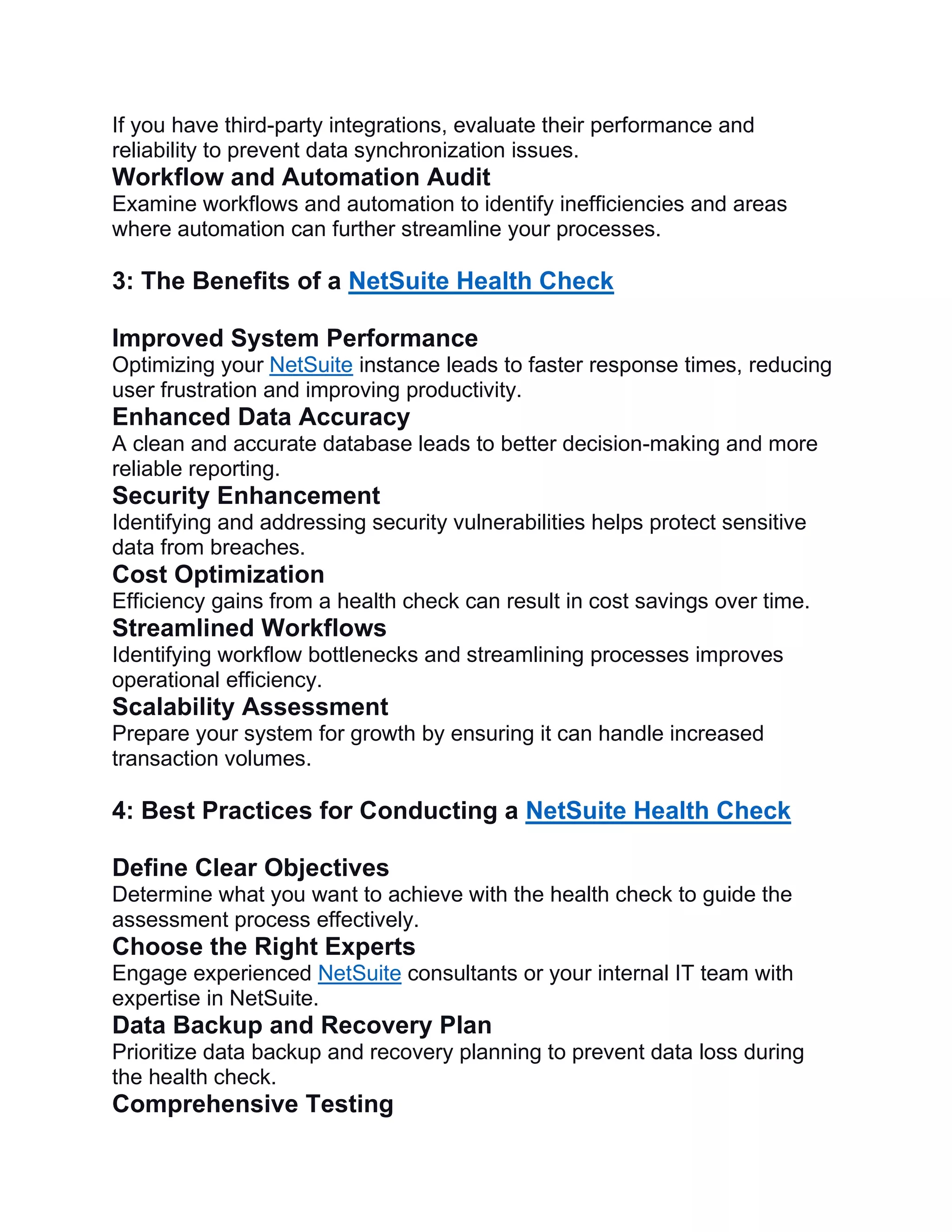
If you have third-party integrations, evaluate their performance and
reliability to prevent data synchronization issues.
Workflow and Automation Audit
Examine workflows and automation to identify inefficiencies and areas
where automation can further streamline your processes.
3: The Benefits of a NetSuite Health Check
Improved System Performance
Optimizing your NetSuite instance leads to faster response times, reducing
user frustration and improving productivity.
Enhanced Data Accuracy
A clean and accurate database leads to better decision-making and more
reliable reporting.
Security Enhancement
Identifying and addressing security vulnerabilities helps protect sensitive
data from breaches.
Cost Optimization
Efficiency gains from a health check can result in cost savings over time.
Streamlined Workflows
Identifying workflow bottlenecks and streamlining processes improves
operational efficiency.
Scalability Assessment
Prepare your system for growth by ensuring it can handle increased
transaction volumes.
4: Best Practices for Conducting a NetSuite Health Check
Define Clear Objectives
Determine what you want to achieve with the health check to guide the
assessment process effectively.
Choose the Right Experts
Engage experienced NetSuite consultants or your internal IT team with
expertise in NetSuite.
Data Backup and Recovery Plan
Prioritize data backup and recovery planning to prevent data loss during
the health check.
Comprehensive Testing
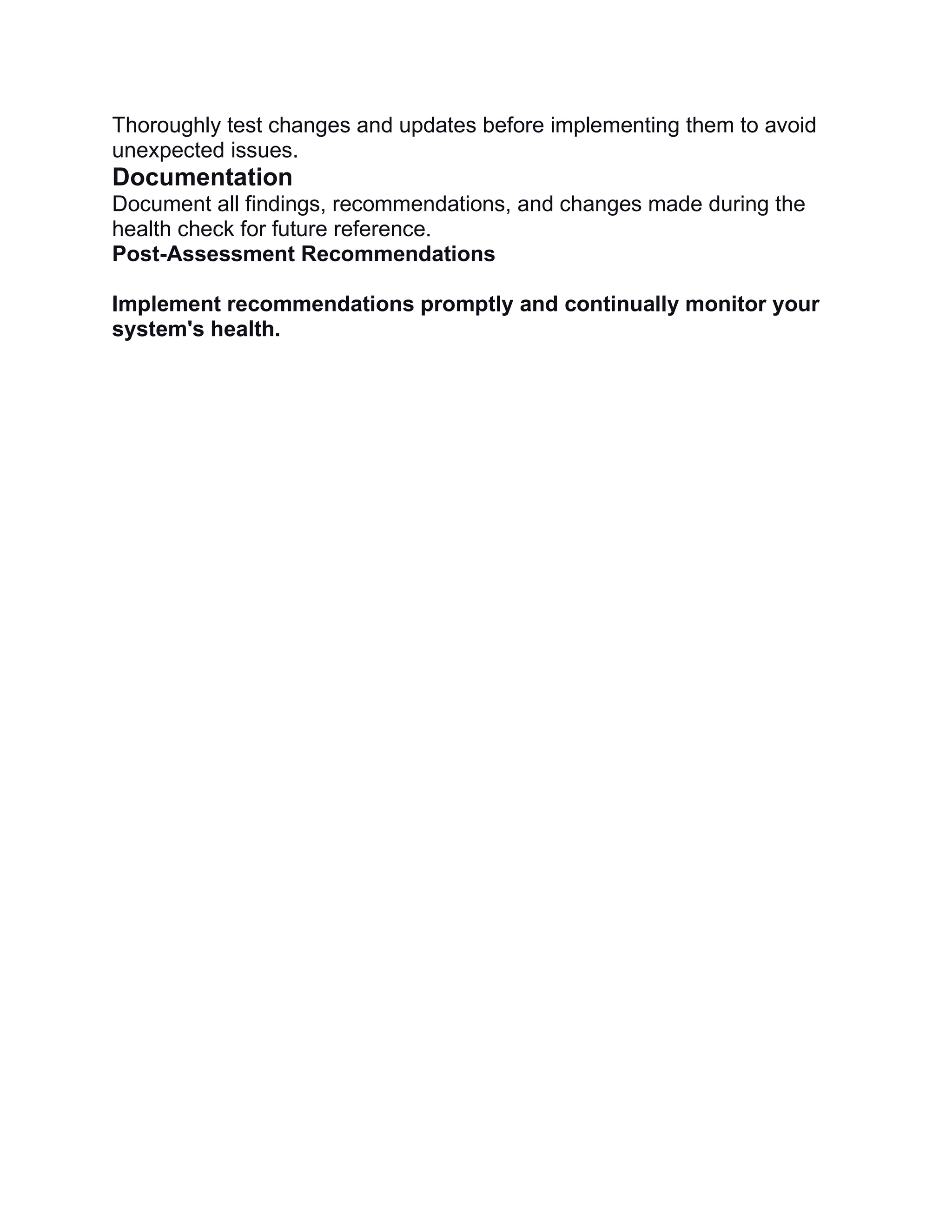
Thoroughly test changes and updates before implementing them to avoid
unexpected issues.
Documentation
Document all findings, recommendations, and changes made during the
health check for future reference.
Post-Assessment Recommendations
Implement recommendations promptly and continually monitor your
system's health.

NetSuite Health Checks

  • 1.
    1: Understanding NetSuiteHealth Checks What Is a NetSuite Health Check? A NetSuite health check is a comprehensive assessment of your NetSuite ERP system's health, performance, security, and overall functionality. It involves a systematic evaluation of various components to ensure your system is operating optimally. Why Is It Important? Regular health checks are vital to identify and address potential issues before they become critical problems. This proactive approach minimizes system downtime, enhances productivity, and ensures that your NetSuite instance aligns with your evolving business needs. Frequency of Health Checks The frequency of health checks varies based on your business's size, complexity, and the rate of change in your operations. However, conducting a health check at least annually is recommended, with more frequent checks for rapidly growing organizations or those with dynamic business processes. 2: Components of a NetSuite Health Check System Configuration Analysis This involves reviewing your NetSuite system's configuration settings to ensure they align with your business requirements. It includes checking preferences, roles, permissions, and custom settings. Data Integrity Assessment Data is the lifeblood of your business. A thorough examination of data quality, consistency, and accuracy is crucial to maintain data integrity. Performance Evaluation Assess the performance of your NetSuite instance to identify bottlenecks, slow-running processes, or other issues that could affect user experience. Security Audit Security is paramount. Ensure your system is protected against threats by evaluating user access controls, permissions, and data security protocols. Customization Review Review customizations to ensure they still meet business needs and are compatible with system updates. Integration Assessment
  • 2.
    If you havethird-party integrations, evaluate their performance and reliability to prevent data synchronization issues. Workflow and Automation Audit Examine workflows and automation to identify inefficiencies and areas where automation can further streamline your processes. 3: The Benefits of a NetSuite Health Check Improved System Performance Optimizing your NetSuite instance leads to faster response times, reducing user frustration and improving productivity. Enhanced Data Accuracy A clean and accurate database leads to better decision-making and more reliable reporting. Security Enhancement Identifying and addressing security vulnerabilities helps protect sensitive data from breaches. Cost Optimization Efficiency gains from a health check can result in cost savings over time. Streamlined Workflows Identifying workflow bottlenecks and streamlining processes improves operational efficiency. Scalability Assessment Prepare your system for growth by ensuring it can handle increased transaction volumes. 4: Best Practices for Conducting a NetSuite Health Check Define Clear Objectives Determine what you want to achieve with the health check to guide the assessment process effectively. Choose the Right Experts Engage experienced NetSuite consultants or your internal IT team with expertise in NetSuite. Data Backup and Recovery Plan Prioritize data backup and recovery planning to prevent data loss during the health check. Comprehensive Testing
  • 3.
    Thoroughly test changesand updates before implementing them to avoid unexpected issues. Documentation Document all findings, recommendations, and changes made during the health check for future reference. Post-Assessment Recommendations Implement recommendations promptly and continually monitor your system's health.