NETCENTERED MARKETINGleveraging your website for results
Objectives for TodayUnderstand the elements critical to having a successful online presence and marketing effortLearn how to create a strong online brand experience for customers and prospectsUse your website to measure online and offline marketing effortsDecide if your current online efforts can accomplish the goals you have establishedToday it’s about strategy and high-level thinking. Next three sessions will be more detail/ tactically oriented.
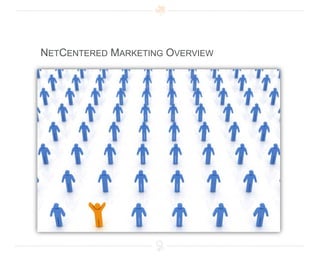
NetCentered Marketing Overview
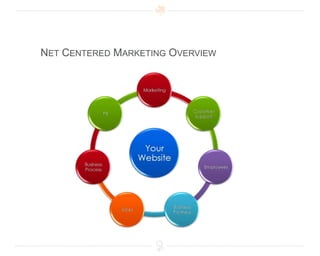
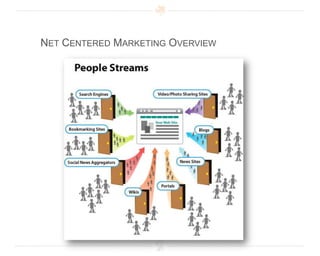
Net Centered Marketing Overview
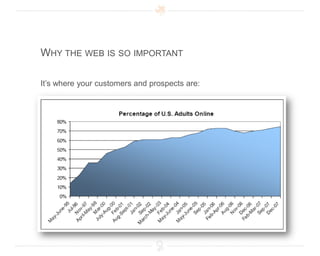
Why the web is so importantIt’s where your customers and prospects are:
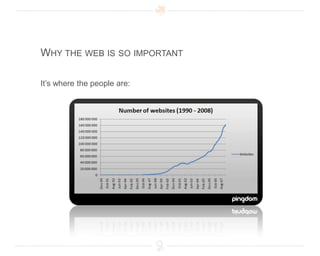
Why the web is so importantIt’s where the people are:
Why the web is so importantMore cost effectiveMass distribution of your messageThe web is an equalizer. No longer have to have big media budgets to reach the masses. Less about money, more about discipline and consistency of effortEasy to update contentReduce printing costsAllows you to be responsive to changing market conditionsMeasurement of successKnow what works and eliminate waste
Why the web is so importantIt’s Interactive Human/ Social InteractionMore timely & reliable informationVarious forms of contentVideo, audio, interactive graphics, documents, etcBusiness process functionalityi.e. online banking, account creation, purchases, etc…
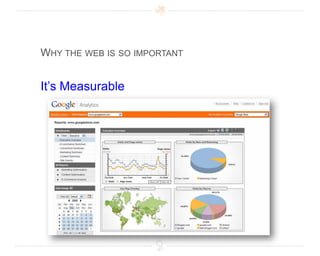
Why the web is so importantIt’s Measurable
Why Plan?"If You Don't Know Where You're Going, Any Road Will Get You There“~Lewis Carroll
Where to begin
Where to beginDefine your objectives example objectives:10 leads per month will come from our website as a result of our online marketing effortsEstablish a strong brand online, as validated by a 15% overall increase in trafficObtain top five Google search result rankings for top five industry termsAchieve 500 Facebook fans for your brand page
Profitability / Opportunity AnalysisIdentify areas of highest opportunity:Profitability
Market Size/Demand
Search Volume
Competition
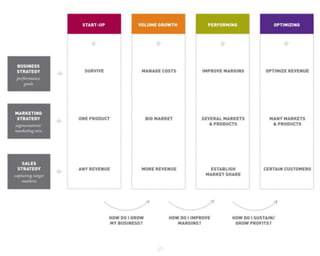
Market ConditionsProfitability / Opportunity AnalysisAction Items:Determine your place in the business growth chart
Identify objectives for your online presence
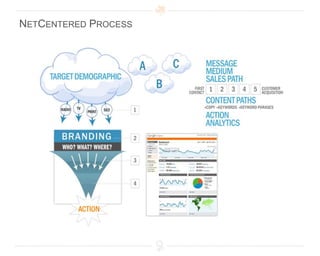
Rank your products / services by opportunity sizeNetCentered Process
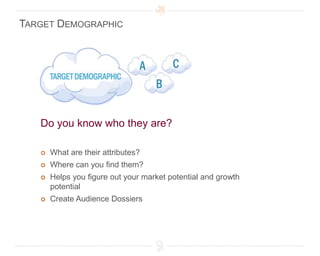
Target DemographicDo you know who they are?What are their attributes?
Where can you find them?
Helps you figure out your market potential and growth potential
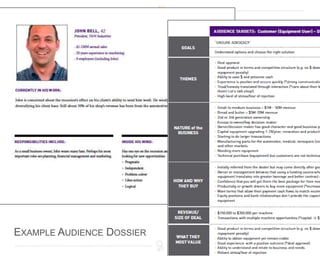
Create Audience DossiersExample Audience Dossier
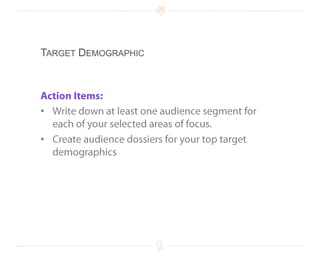
Target DemographicAction Items:Write down at least one audience segment for each of your selected areas of focus.
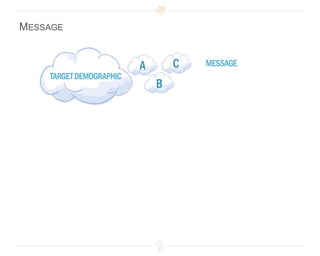
Create audience dossiers for your top target demographicsMessage
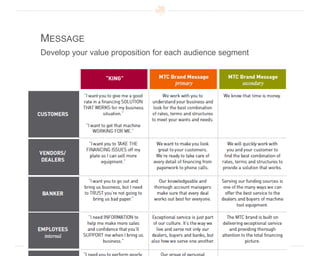
MessageDevelop your value proposition for each audience segment
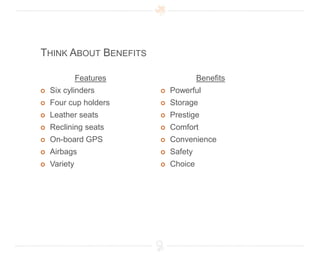
Think About BenefitsFeaturesSix cylindersFour cup holdersLeather seatsReclining seatsOn-board GPSAirbagsVarietyBenefitsPowerfulStoragePrestigeComfortConvenienceSafetyChoice
MessageAction Item: Define your value proposition for each segment. Create your own message matrix.
Medium
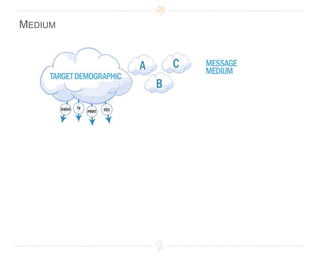
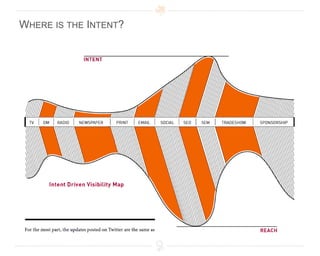
MediumHow are you going to get your message to the people who care?
What are these people looking for?
What are they interested in?
What do they read, watch, or listen to?
Can they be approached by a sales person?
Can they be mailed, emailed, called?
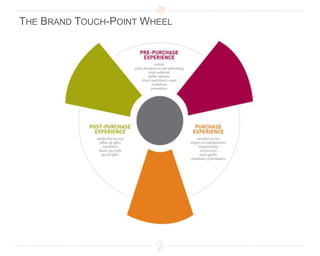
Do they meet online or offline?The Brand Touch-Point Wheel
MediumAction Item: Pick the best mediums to deliver your message for each segment (write down)Online – SEO, SEM, Email Campaigns, etc…
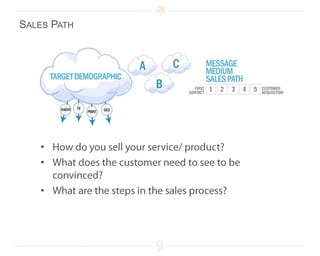
Offline – Direct Mail, Sales Person, Magazine, Newspaper, Radio, Telesales, Tradeshows, Events, etc…Sales PathHow do you sell your service/ product?
What does the customer need to see to be convinced?
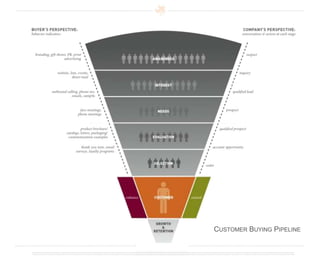
What are the steps in the sales process?Customer Buying Pipeline
Sales PathAction Item: For each segment write down information a customer needs to see to move through the buying funnel and become a customer/client.
Content Paths
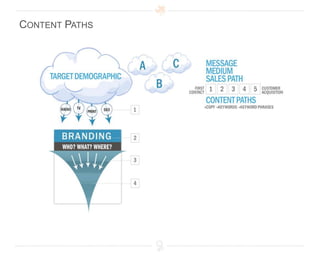
Content PathsAction Items:OnlineMake sure your website has a page on each unique piece of information identified in the sales path for each segment.
Make sure that someone from that segment can clearly navigate to the content they need.OfflineMake sure that there are landing pages to serve as a call-to-action for offline marketing efforts.Action
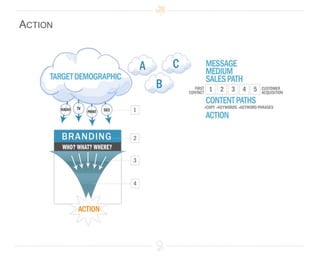
ActionAction Items:For each segment determine what you want them to do.
Make sure you have a call to action on every page.
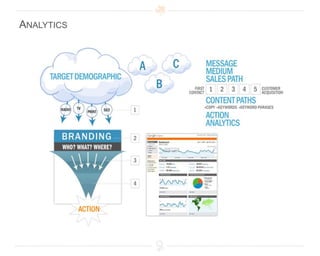
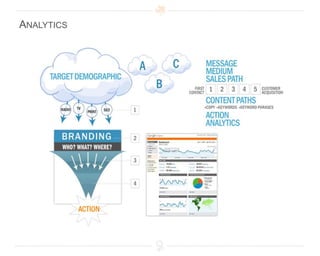
Buy online, come to your store, call me, schedule a meeting, sign-up, learn more, see how, demo sign-up download a whitepaper, free evaluation, sign-up for our newsletter, etc…Analytics
AnalyticsConstant improvement
Measure activity in online and offline marketing tactics
Tie marketing back to the business!
You cannot manage that which you do not measureAnalyticsAction Items:Install Google Analytics www.google.com/analytics
Setup Goals to measure your online and offline marketing efforts
Review your results monthly and adjust your strategy based on those resultsAnalytics
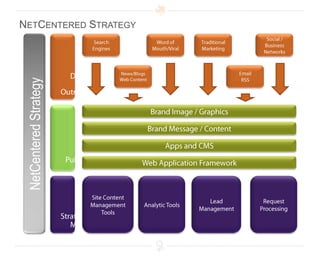
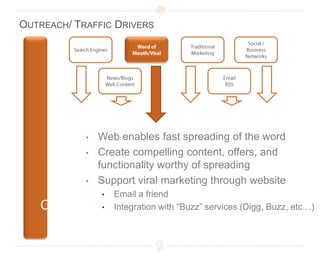
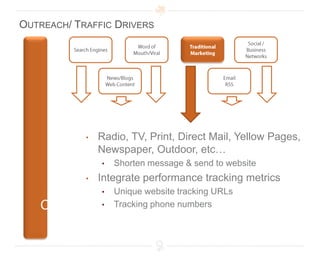
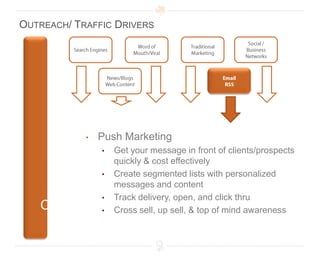
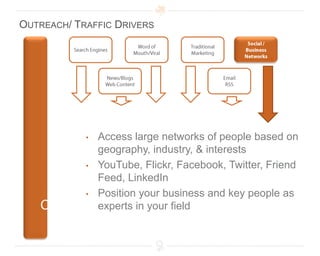
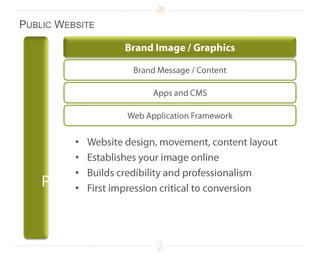
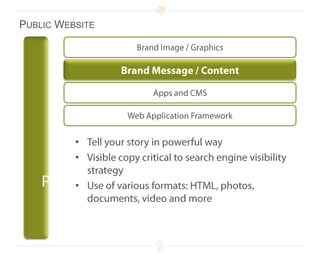
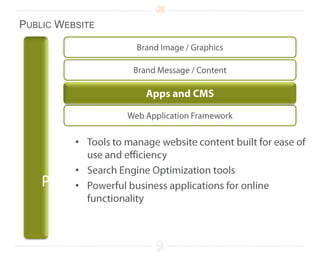
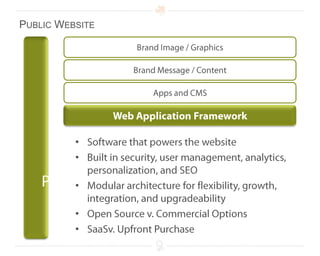
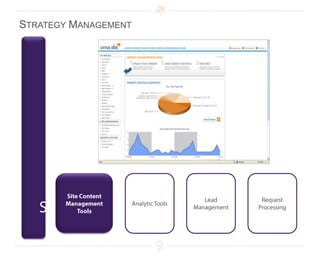
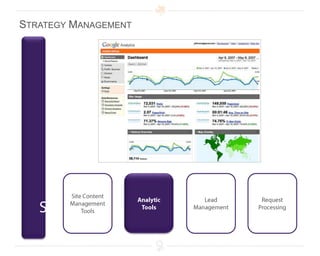
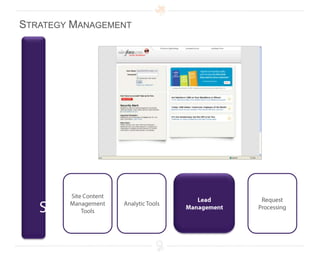
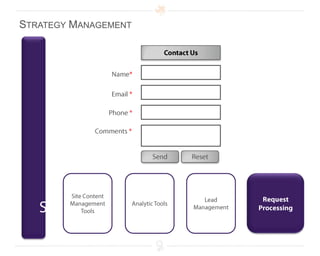
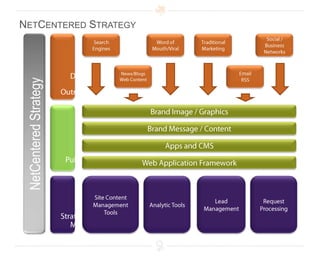
NetCentered StrategyOutreach/ Traffic DriversNetCentered StrategySearch EnginesWord of Mouth/ViralTraditional MarketingSocial / Business NetworksNews/Blogs Web ContentEmail RSSPublic WebsiteBrand Image / GraphicsBrand Message / ContentApps and CMSWeb Application FrameworkStrategy ManagementSite Content Management ToolsAnalytic ToolsLead ManagementRequest Processing
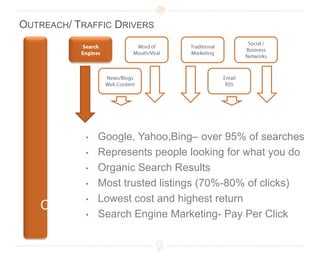
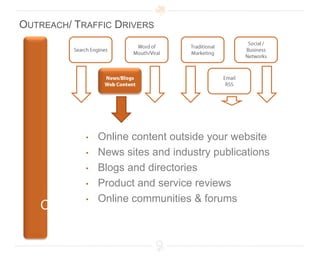
Outreach/ Traffic DriversOutreach/ Traffic DriversSearch EnginesWord of Mouth/ViralTraditional MarketingSocial / Business NetworksNews/Blogs Web ContentEmail RSSGoogle, Yahoo,Bing– over 95% of searches
Represents people looking for what you do

NetCentered Marketing

  • 1.
  • 2.
    Objectives for TodayUnderstandthe elements critical to having a successful online presence and marketing effortLearn how to create a strong online brand experience for customers and prospectsUse your website to measure online and offline marketing effortsDecide if your current online efforts can accomplish the goals you have establishedToday it’s about strategy and high-level thinking. Next three sessions will be more detail/ tactically oriented.
  • 3.
  • 4.
  • 5.
  • 6.
    Why the webis so importantIt’s where your customers and prospects are:
  • 7.
    Why the webis so importantIt’s where the people are:
  • 8.
    Why the webis so importantMore cost effectiveMass distribution of your messageThe web is an equalizer. No longer have to have big media budgets to reach the masses. Less about money, more about discipline and consistency of effortEasy to update contentReduce printing costsAllows you to be responsive to changing market conditionsMeasurement of successKnow what works and eliminate waste
  • 9.
    Why the webis so importantIt’s Interactive Human/ Social InteractionMore timely & reliable informationVarious forms of contentVideo, audio, interactive graphics, documents, etcBusiness process functionalityi.e. online banking, account creation, purchases, etc…
  • 10.
    Why the webis so importantIt’s Measurable
  • 11.
    Why Plan?"If YouDon't Know Where You're Going, Any Road Will Get You There“~Lewis Carroll
  • 12.
  • 13.
    Where to beginDefineyour objectives example objectives:10 leads per month will come from our website as a result of our online marketing effortsEstablish a strong brand online, as validated by a 15% overall increase in trafficObtain top five Google search result rankings for top five industry termsAchieve 500 Facebook fans for your brand page
  • 14.
    Profitability / OpportunityAnalysisIdentify areas of highest opportunity:Profitability
  • 15.
  • 16.
  • 17.
  • 18.
    Market ConditionsProfitability /Opportunity AnalysisAction Items:Determine your place in the business growth chart
  • 19.
    Identify objectives foryour online presence
  • 20.
    Rank your products/ services by opportunity sizeNetCentered Process
  • 21.
    Target DemographicDo youknow who they are?What are their attributes?
  • 22.
    Where can youfind them?
  • 23.
    Helps you figureout your market potential and growth potential
  • 24.
  • 25.
    Target DemographicAction Items:Writedown at least one audience segment for each of your selected areas of focus.
  • 26.
    Create audience dossiersfor your top target demographicsMessage
  • 27.
    MessageDevelop your valueproposition for each audience segment
  • 28.
    Think About BenefitsFeaturesSixcylindersFour cup holdersLeather seatsReclining seatsOn-board GPSAirbagsVarietyBenefitsPowerfulStoragePrestigeComfortConvenienceSafetyChoice
  • 29.
    MessageAction Item: Defineyour value proposition for each segment. Create your own message matrix.
  • 30.
  • 31.
    MediumHow are yougoing to get your message to the people who care?
  • 32.
    What are thesepeople looking for?
  • 33.
    What are theyinterested in?
  • 34.
    What do theyread, watch, or listen to?
  • 35.
    Can they beapproached by a sales person?
  • 36.
    Can they bemailed, emailed, called?
  • 37.
    Do they meetonline or offline?The Brand Touch-Point Wheel
  • 39.
    MediumAction Item: Pickthe best mediums to deliver your message for each segment (write down)Online – SEO, SEM, Email Campaigns, etc…
  • 40.
    Offline – DirectMail, Sales Person, Magazine, Newspaper, Radio, Telesales, Tradeshows, Events, etc…Sales PathHow do you sell your service/ product?
  • 41.
    What does thecustomer need to see to be convinced?
  • 42.
    What are thesteps in the sales process?Customer Buying Pipeline
  • 43.
    Sales PathAction Item:For each segment write down information a customer needs to see to move through the buying funnel and become a customer/client.
  • 44.
  • 45.
    Content PathsAction Items:OnlineMakesure your website has a page on each unique piece of information identified in the sales path for each segment.
  • 46.
    Make sure thatsomeone from that segment can clearly navigate to the content they need.OfflineMake sure that there are landing pages to serve as a call-to-action for offline marketing efforts.Action
  • 47.
    ActionAction Items:For eachsegment determine what you want them to do.
  • 48.
    Make sure youhave a call to action on every page.
  • 49.
    Buy online, cometo your store, call me, schedule a meeting, sign-up, learn more, see how, demo sign-up download a whitepaper, free evaluation, sign-up for our newsletter, etc…Analytics
  • 50.
  • 51.
    Measure activity inonline and offline marketing tactics
  • 52.
    Tie marketing backto the business!
  • 53.
    You cannot managethat which you do not measureAnalyticsAction Items:Install Google Analytics www.google.com/analytics
  • 54.
    Setup Goals tomeasure your online and offline marketing efforts
  • 55.
    Review your resultsmonthly and adjust your strategy based on those resultsAnalytics
  • 56.
    NetCentered StrategyOutreach/ TrafficDriversNetCentered StrategySearch EnginesWord of Mouth/ViralTraditional MarketingSocial / Business NetworksNews/Blogs Web ContentEmail RSSPublic WebsiteBrand Image / GraphicsBrand Message / ContentApps and CMSWeb Application FrameworkStrategy ManagementSite Content Management ToolsAnalytic ToolsLead ManagementRequest Processing
  • 57.
    Outreach/ Traffic DriversOutreach/Traffic DriversSearch EnginesWord of Mouth/ViralTraditional MarketingSocial / Business NetworksNews/Blogs Web ContentEmail RSSGoogle, Yahoo,Bing– over 95% of searches
  • 58.

Editor's Notes

  • #2 Introduce ourselves, give a little about our backgrounds.
  • #3 Matt
  • #4 Matt
  • #5 Matt
  • #6 Matt
  • #7 Matt
  • #8 Matt
  • #9 Matt
  • #10 Matt
  • #11 Matt
  • #12 Matt
  • #13 TiffanyYour stage in the growth lifecycle will determine what your web strategy is – it changes as you evolved and grow (local, national)
  • #14 Tiffany
  • #15 Focusing your resources on the highest impact opportunitiesSearch volumeYour ability to deliver consistently on thatMarketsize/ demandFOCUS, FOCUS, FOCUSGreat tools out there that help us know how many people are looking every month for the things that you are trying to sell. Market conditions change, how you focus your products
  • #33 Matt takes over here