Stirring the melting pot of the sciences:
Leading the way to interdisciplinary research
Mixing Social Science into Computer Science,
Bioinformatics and more.
Natalie Jane de Vries
Introduction - The University of Newcastle and CIBM
• The Newcastle region is the second most
populated area in the Australian state of New
South Wales (approx 510,000)
• Situated 162 km (2 hours) North of Sydney in
the Hunter Region
• University of Newcastle established: 1965
• Directors of CIBM:
Prof. Pablo Moscato and Co-director Prof.
Rodney Scott
The Centre for Bioinformatics, Biomarker Discovery and
Information-based Medicine – Background
• One of only 10 Priority Research Centres of The University
of Newcastle.
• Origin: The Newcastle Bioinformatics Initiative (2002-
2006) established by the work of Moscato and Berretta in
Computer Science
3
Bioinformatics
The application of Computer
Science and Information
Technology to Biology/Life
Sciences
Information-based Medicine
is a shift toward a future of
medicine that can become more
personalized, more predictive,
and ultimately more preventative
“Melting pot” of the Sciences?
• Big Data
• Data Analytics
• Consumer Insights
• Consumer Analytics
• ‘Internet of things’
• Social Media
Analysis
• Clustering/subtyping
/segmenting
• Ordering
• Ranking
• Optimization
4
• Community Detection
• Graph analysis
• Similarity Measures
• Classification
• Characterisation
• Predictive Analytics
• Etc..
5
Agenda
What will I talk about today?
• Part 1) General Introduction to the mixing of Computer Science,
Social Science, Marketing and Consumer Behaviour at out Centre
• Part 2) Clustering and Segmentation
– From Breast Cancer Subtypes to Consumer Behaviours to Social
Media Metrics data and more…
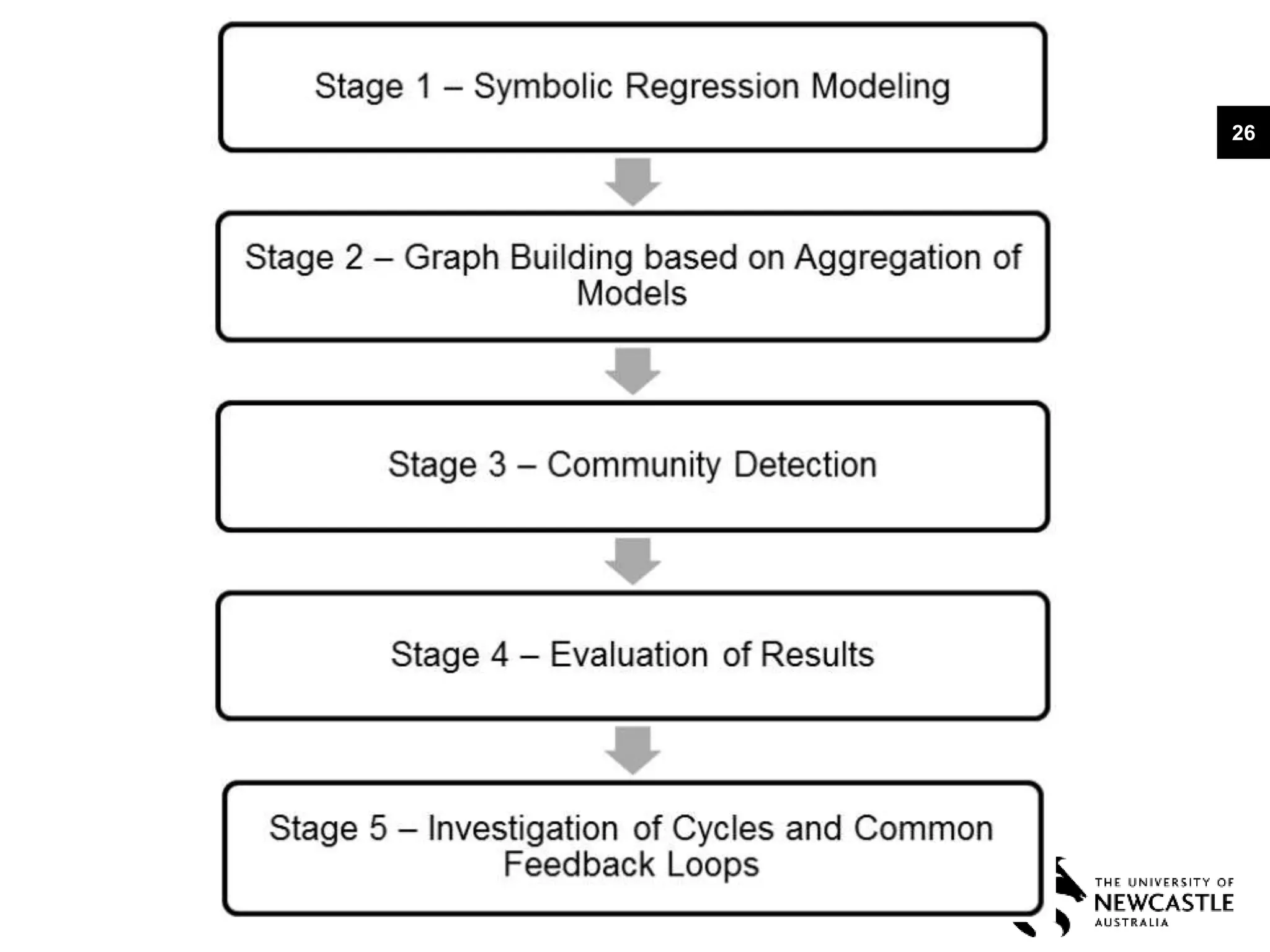
• Part 3) Reverse Engineering Consumer Behaviour Modelling
Constructs from Data
– We introduce the idea of functional constructs to model online
customer engagement behaviours through symbolic regression
• Part 4) Future Research Directions
– Future Directions, Aims, Conclusions and time for questions
6
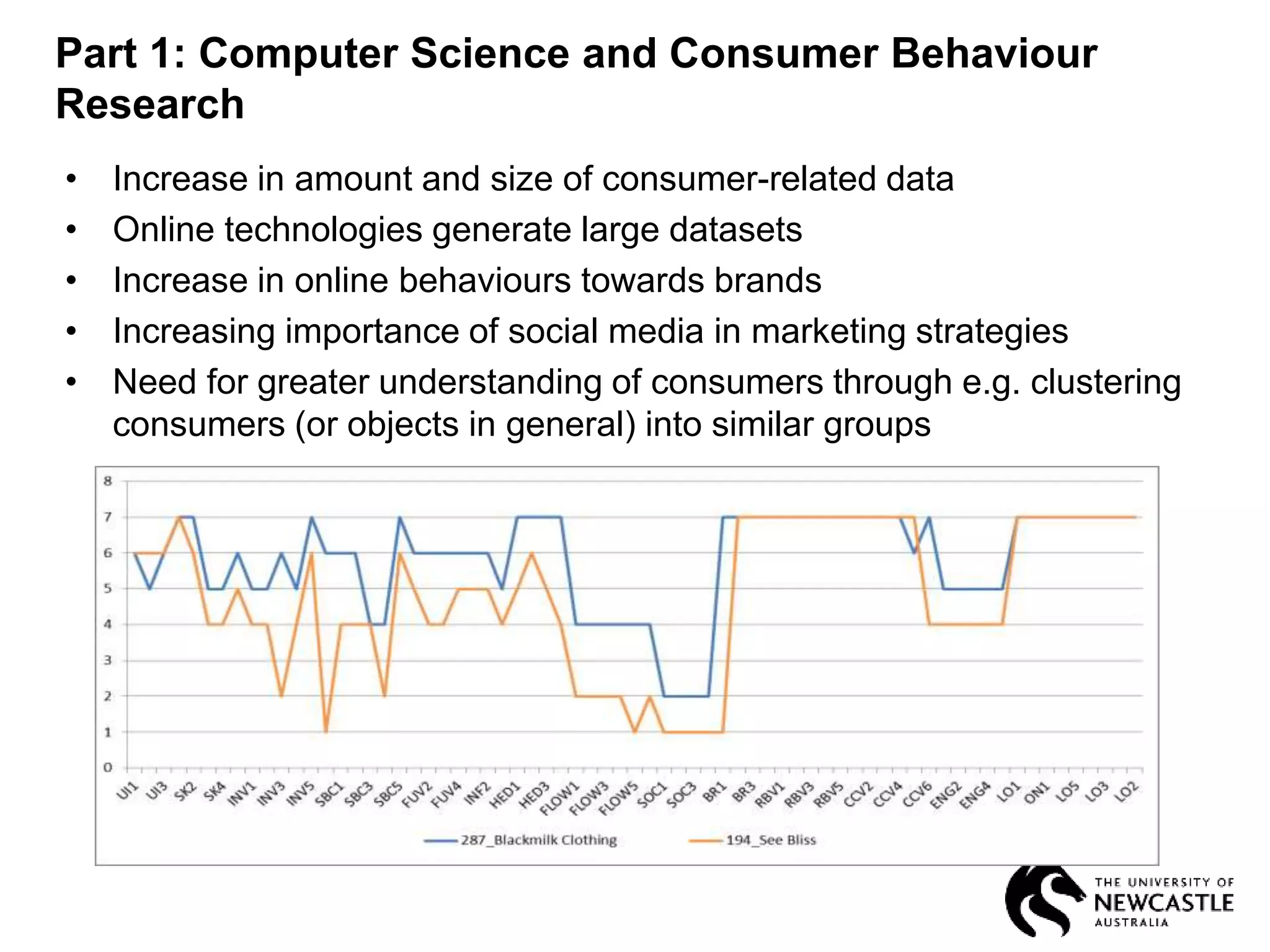
Part 1: Computer Science and Consumer Behaviour
Research
• Increase in amount and size of consumer-related data
• Online technologies generate large datasets
• Increase in online behaviours towards brands
• Increasing importance of social media in marketing strategies
• Need for greater understanding of consumers through e.g. clustering
consumers (or objects in general) into similar groups
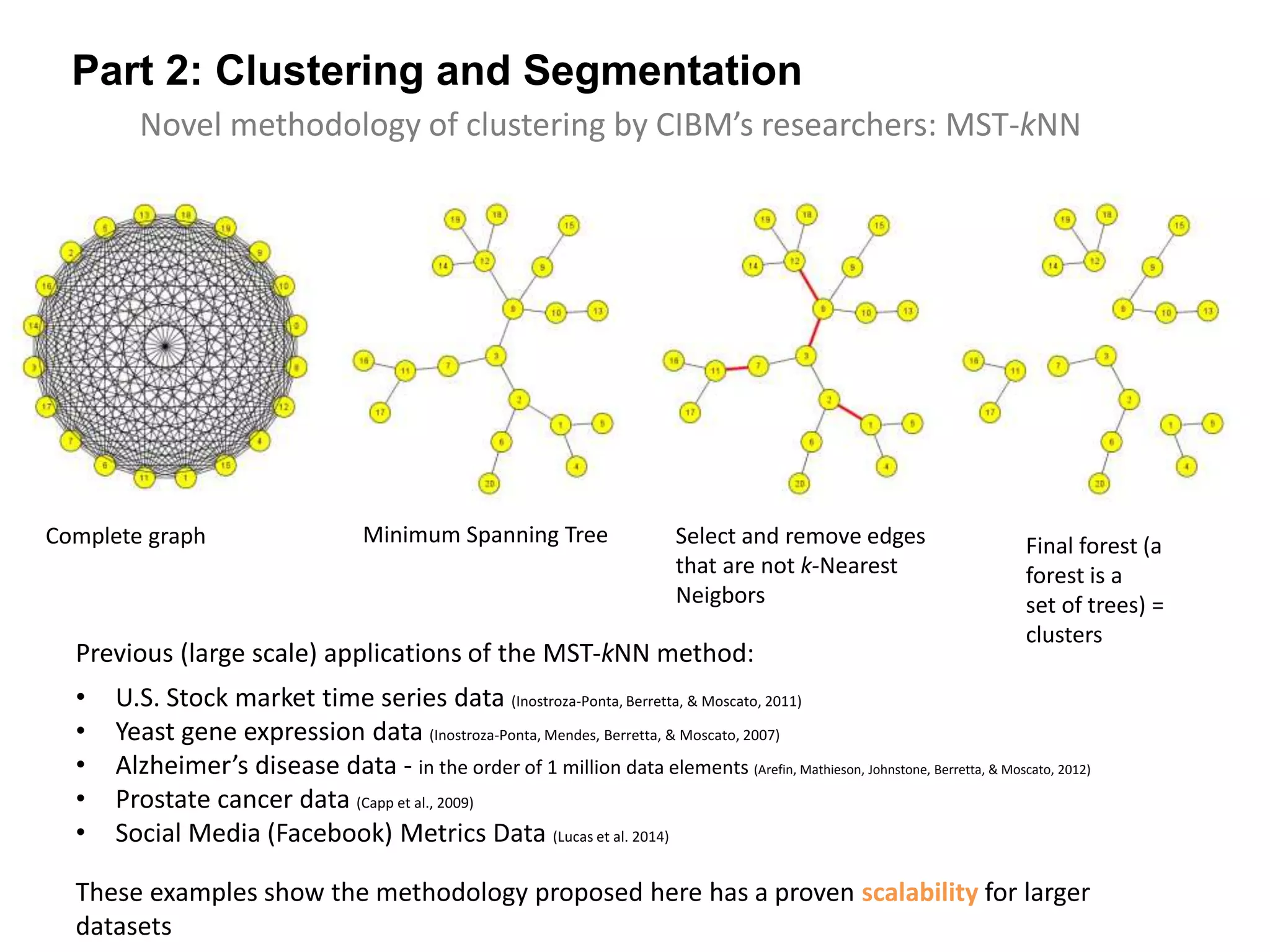
Part 2: Clustering and Segmentation
Complete graph Minimum Spanning Tree Select and remove edges
that are not k-Nearest
Neigbors
Final forest (a
forest is a
set of trees) =
clusters
Previous (large scale) applications of the MST-kNN method:
• U.S. Stock market time series data (Inostroza-Ponta, Berretta, & Moscato, 2011)
• Yeast gene expression data (Inostroza-Ponta, Mendes, Berretta, & Moscato, 2007)
• Alzheimer’s disease data - in the order of 1 million data elements (Arefin, Mathieson, Johnstone, Berretta, & Moscato, 2012)
• Prostate cancer data (Capp et al., 2009)
• Social Media (Facebook) Metrics Data (Lucas et al. 2014)
These examples show the methodology proposed here has a proven scalability for larger
datasets
Novel methodology of clustering by CIBM’s researchers: MST-kNN
Biomarker Discovery and Clustering in
Breast Cancer
9
• Incidence – In 2014, it is estimated that 15,270 women will be
diagnosed with breast cancer in Australia.
• Luminal A
• Luminal B
• HER2-enriched
• Normal-like
• Basal-like
Molecular Subtypes
Treatment
Not all patients need the same treatment or respond to the same treatment
• Surgery
• Radiotherapy
• Hormonal therapy
• Chemotherapy
10
Luminal A
Luminal B
Her2
Normal-like
Basal
Controls
METABRIC data set
PAM50 labels
Figure. MST-kNN clustering.
12
The MST-kNN Clustering Method in Consumer Behaviour Research
Customer Engagement Behaviours- behavioural manifestations
of Customer Engagement (CE) toward a firm after and beyond
purchase (van Doorn et al. 2010)
13
Online Customer Engagement Survey/Questionnaire Tool
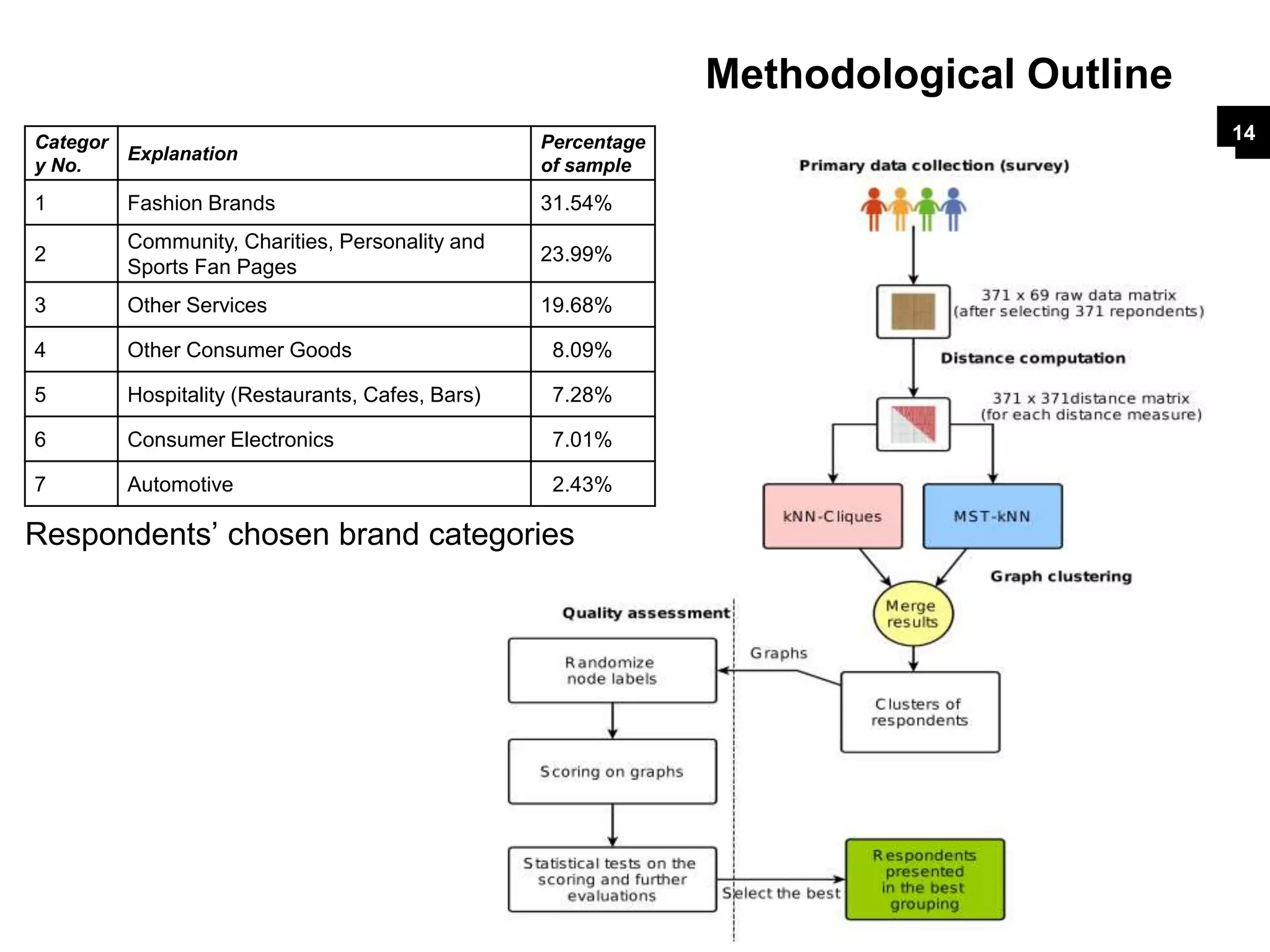
Methodological Outline
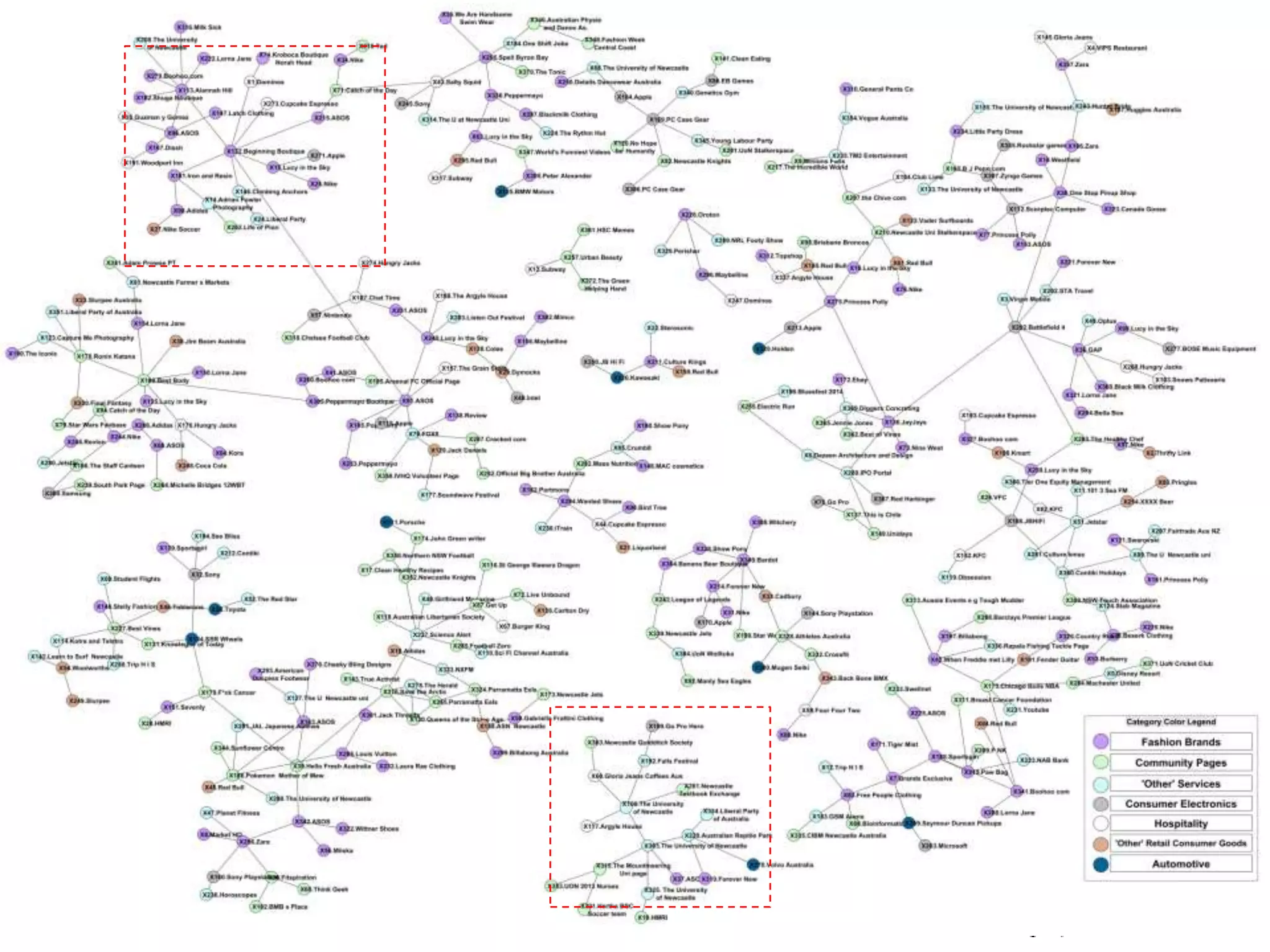
14Categor
y No.
Explanation
Percentage
of sample
1 Fashion Brands 31.54%
2
Community, Charities, Personality and
Sports Fan Pages
23.99%
3 Other Services 19.68%
4 Other Consumer Goods 8.09%
5 Hospitality (Restaurants, Cafes, Bars) 7.28%
6 Consumer Electronics 7.01%
7 Automotive 2.43%
Respondents’ chosen brand categories
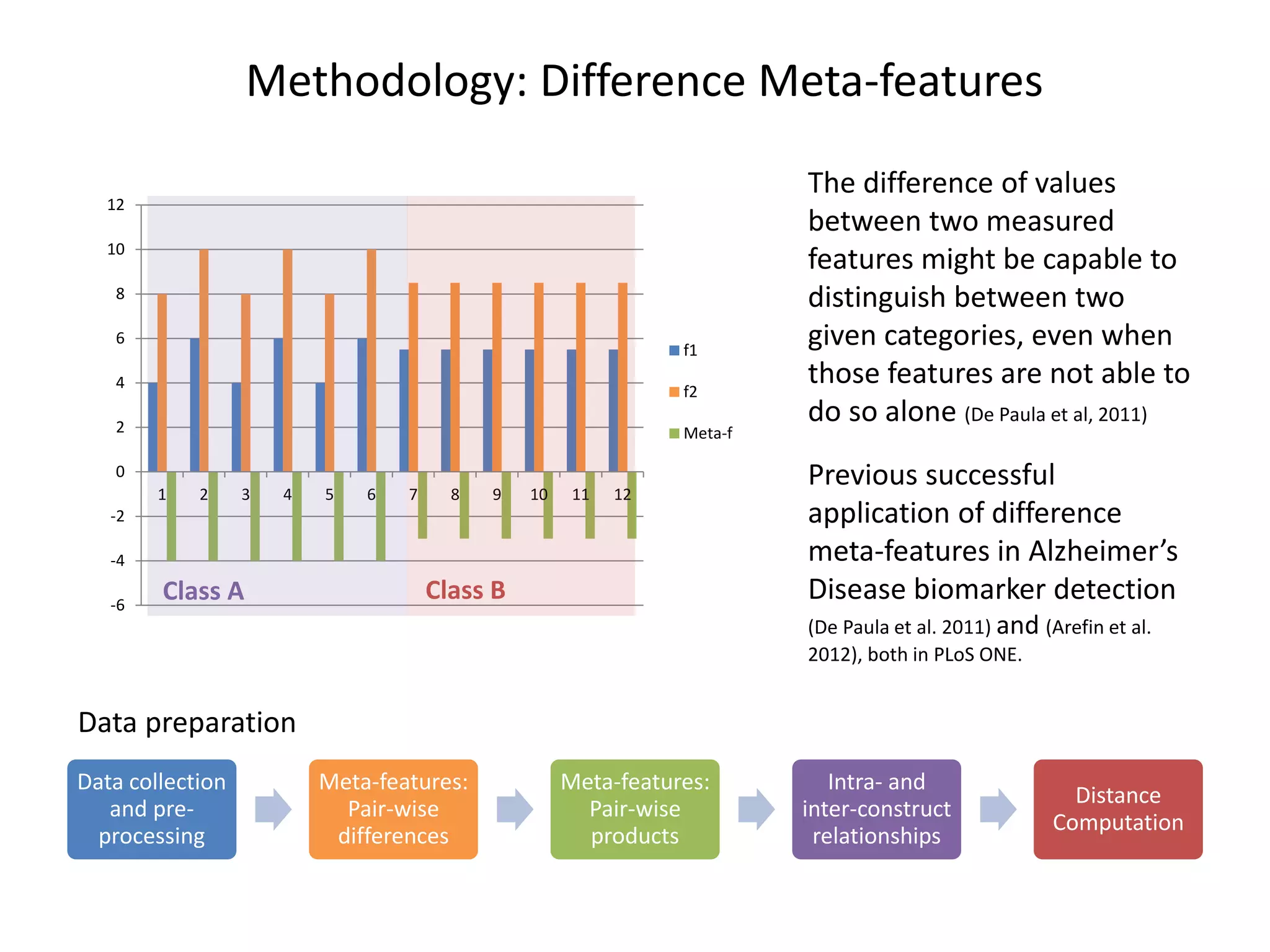
Methodology: Difference Meta-features
The difference of values
between two measured
features might be capable to
distinguish between two
given categories, even when
those features are not able to
do so alone (De Paula et al, 2011)
Previous successful
application of difference
meta-features in Alzheimer’s
Disease biomarker detection
(De Paula et al. 2011) and (Arefin et al.
2012), both in PLoS ONE.
Data collection
and pre-
processing
Meta-features:
Pair-wise
differences
Meta-features:
Pair-wise
products
Intra- and
inter-construct
relationships
Distance
Computation
Data preparation
-6
-4
-2
0
2
4
6
8
10
12
1 2 3 4 5 6 7 8 9 10 11
f1
f2
Meta-f
Class A Class B
-6
-4
-2
0
2
4
6
8
10
12
1 2 3 4 5 6 7 8 9 10 11 12
f1
f2
Meta-f
Class A Class B
Results: Clustering Highlights
Heterogeneous cluster?More homogenous
cluster?
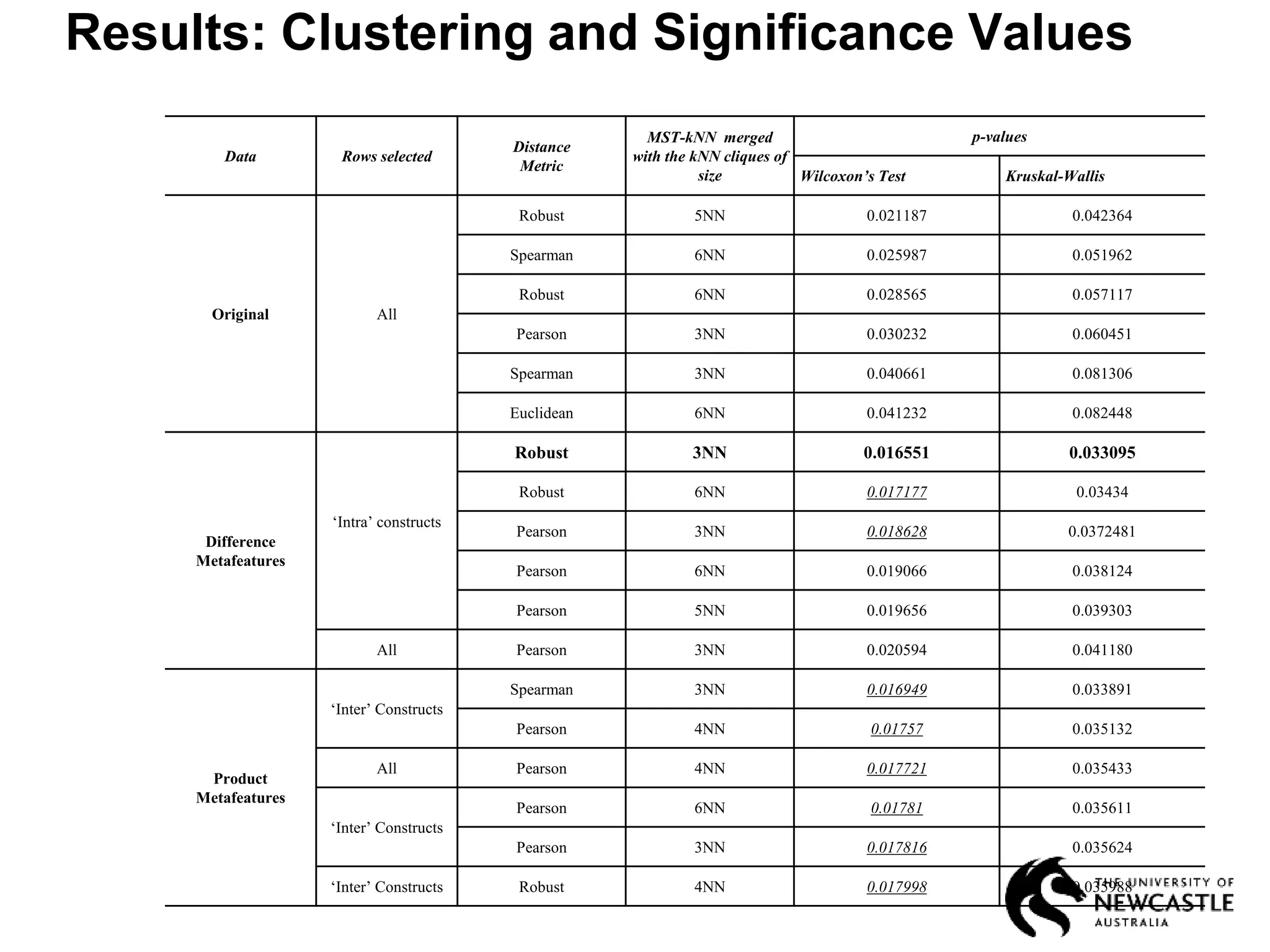
Results: Clustering and Significance Values
Data Rows selected
Distance
Metric
MST-kNN merged
with the kNN cliques of
size
p-values
Wilcoxon’s Test Kruskal-Wallis
Original All
Robust 5NN 0.021187 0.042364
Spearman 6NN 0.025987 0.051962
Robust 6NN 0.028565 0.057117
Pearson 3NN 0.030232 0.060451
Spearman 3NN 0.040661 0.081306
Euclidean 6NN 0.041232 0.082448
Difference
Metafeatures
‘Intra’ constructs
Robust 3NN 0.016551 0.033095
Robust 6NN 0.017177 0.03434
Pearson 3NN 0.018628 0.0372481
Pearson 6NN 0.019066 0.038124
Pearson 5NN 0.019656 0.039303
All Pearson 3NN 0.020594 0.041180
Product
Metafeatures
‘Inter’ Constructs
Spearman 3NN 0.016949 0.033891
Pearson 4NN 0.01757 0.035132
All Pearson 4NN 0.017721 0.035433
‘Inter’ Constructs
Pearson 6NN 0.01781 0.035611
Pearson 3NN 0.017816 0.035624
‘Inter’ Constructs Robust 4NN 0.017998 0.035988
Future Research Directions in this study
• Various domains and contexts to apply the novel process outlined in
this study
• Combine a study using survey data as well as ‘live’ behaviour data from
social networking sites (real-time interactions)
• Further exploration of meta-features in both survey data and ‘real’
online behaviour clustering studies; ‘differences’ meta-features in this
study yielded better results
• This study guides the development of future feature selection models
to identify group of consumers according to higher-order characteristics.
20
The MST-kNN Method in Social Media Metrics Data
Engagement in Motion: Exploring Short Term Dynamics in Page-
level Social Media Metrics
Benjamin Lucas1,2, Ahmed Shamsul Arefin1,3, Natalie de Vries1,3, Regina Berretta1,3, Jamie Carlson1,2, Pablo Moscato1,3
1 The University of Newcastle, Australia
2 Newcastle Business School, Faculty of Business and Law
3 The Priority Research Centre for Bioinformatics, Biomarker Discovery and Information-Based Medicine
21
Part 3: Reverse Engineering Consumer Behaviour
Modelling Constructs from Data
Consumer Behaviour Modelling is usually done by
testing hypotheses that are generated from theory
24
For example:
Source: de Vries & Carlson 2014 – Journal of Brand Management
Items (questions) make up
one theoretical construct in
Structural Equation Modelling
(Hair et al. 2014). For example:
25
26
Symbolic Regression Analysis
27
Symbolic Regression Analysis 28
Figure 2. The Figure shows the items ‘used’ by Eureqa through symbolic regression setting each of
the five ENG items as dependent variables (obtained using the whole data set).
de Vries NJ, Carlson J, Moscato P (2014) A Data-Driven Approach to Reverse Engineering Customer Engagement Models:
Towards Functional Constructs. PLoS ONE 9(7): e102768. doi:10.1371/journal.pone.0102768
http://127.0.0.1:8081/plosone/article?id=info:doi/10.1371/journal.pone.0102768
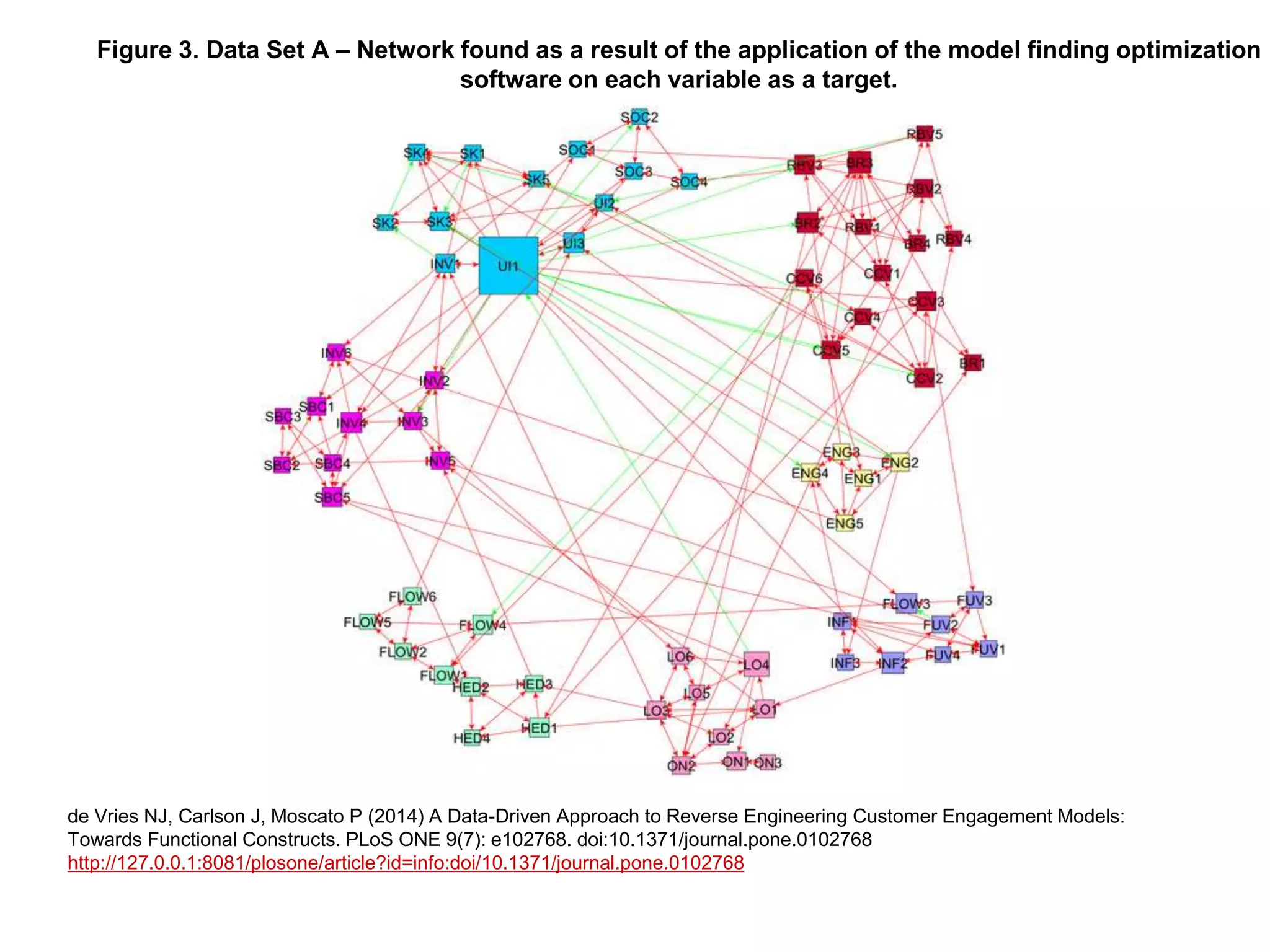
Figure 3. Data Set A – Network found as a result of the application of the model finding optimization
software on each variable as a target.
de Vries NJ, Carlson J, Moscato P (2014) A Data-Driven Approach to Reverse Engineering Customer Engagement Models:
Towards Functional Constructs. PLoS ONE 9(7): e102768. doi:10.1371/journal.pone.0102768
http://127.0.0.1:8081/plosone/article?id=info:doi/10.1371/journal.pone.0102768
Inter-rater Agreement
31
de Vries NJ, Carlson J, Moscato P (2014) A Data-Driven Approach to
Reverse Engineering Customer Engagement Models: Towards Functional
Constructs. PLoS ONE 9(7): e102768. doi:10.1371/journal.pone.0102768
http://127.0.0.1:8081/plosone/article?id=info:doi/10.1371/journal.pone.0102
768
Our Future research directions
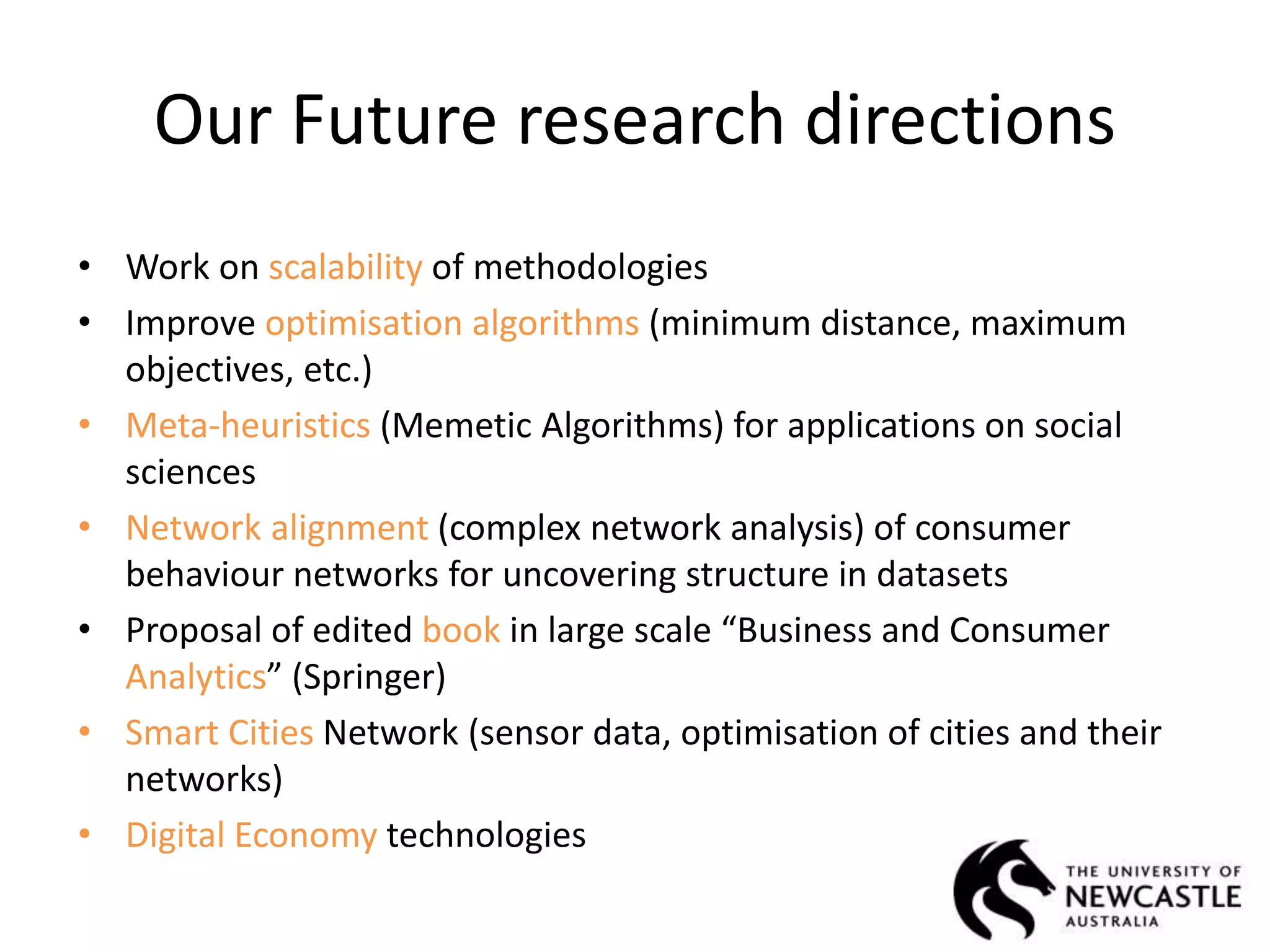
• Work on scalability of methodologies
• Improve optimisation algorithms (minimum distance, maximum
objectives, etc.)
• Meta-heuristics (Memetic Algorithms) for applications on social
sciences
• Network alignment (complex network analysis) of consumer
behaviour networks for uncovering structure in datasets
• Proposal of edited book in large scale “Business and Consumer
Analytics” (Springer)
• Smart Cities Network (sensor data, optimisation of cities and their
networks)
• Digital Economy technologies
UoN and UKM
Things to remember:
• UoN is always open for research collaborations (depending on funds – we operate on a project basis)
• At CIBM we have supercomputing capacity available for large-scale projects
• In our team we have particular strong expertise in operations research and management science
• CIBM is open to diversify into new areas (e.g. computational social science as demonstrated today)
• As Prof. Moscato says: “Do not hesitate to throw and ‘odd-ball’. Either we could be interested, or we
could put you in touch with other collaborators and colleagues”.
 Terima Kasih 
Questions?
References
• Arefin AS, A, Mathieson L, Johnston D, Berretta R, Moscato P (2012) Unveiling Clusters of RNA Transcript Pairs Associated with
Markers of Alzheimer’s Disease Progression, PLOS ONE, DOI: 10.1371/journal.pone.0045535
• Capp et al. (2009) Is there more than one proctitis syndrome? A revisitation using data from the TROG 96.01 trial, Radiotherapy
and Oncology, 90(3), 400-407
• Hair, J. F., Hult, G. T. M., Ringle, C. M. and Sarstedt, M. (2014) A Primer on Partial Least Squares Structural Equation Modeling
(PLS-SEM) Los Angelos: Sage Publications Inc.
• Inostroza-Ponta M, Mendes A, Berretta R, Moscato P (2007) An Integrated QAP-Based Approach to Visualize Patterns of Gene
Expression Similarity, Progress in Artificial Life, Lecture Notes in Computer Science, 4828, pp 156-167
• Inostroza-Ponta M, Berretta R, Moscato P (2011) QAPgrid: A Two Level QAP-Based Approach for Large-Scale Data Analysis and
Visualization, PLOS ONE, DOI: 10.1371/journal.pone.0014468
• Lucas B, Arefin AS, de Vries NJ, Berretta R, Carlson J, Moscato P (2014) Engagement in Motion: Exploring Short Term Dynamics
in Page-Level Social Media Metrics, IEEE Conference on Social Computing and Big Data and Cloud Computing (Sydney)
• de Vries NJ, Carlson J (2014) Examining the drivers and brand performance implications of customer engagement with brands in
the social media environment, Journal of Brand Management, 21, 495-515
• de Vries NJ, Carlson J, Moscato P (2014) A Data-Driven Approach to Reverse Engineering Customer Engagement Models:
Towards Functional Constructs, PLOS ONE, DOI: 10.1371/journal.pone.0102768
• de Vries NJ, Arefin AS, Moscato P (2014) Gauging Heterogeneity in Online Consumer Behaviour Data: A Proximity Graph
Approach, IEEE Conference on Social Computing and Big Data and Cloud Computing (Sydney)
• Marsden J, Budden D, Craig H, Moscato P (2013) Language Individuation and Marker Words: Shakespeare and His Maxwell's
Demon, PLOS ONE, DOI: 10.1371/journal.pone.0066813
• Naeni LM, de Vries NJ, Reis R, Arefin AS, Berretta R, Moscato P (2014) Identifying Communities of Trust and Confidence in the
Charity and Not-for-Profit Sector: A Memetic Algorithm Approach, , IEEE Conference on Social Computing and Big Data and
Cloud Computing (Sydney)
• van Doorn, J., Lemon, K. N., Mittal, V., Nass, S., Pick, D., Pirner, P. and Verhoef, P. C. (2010). Customer Engagement Behavior:
Theoretical Foundations and Research Directions. Journal of Service Research, 13(3): 253-266.
35
APPENDIX
(Extra Slides)
36
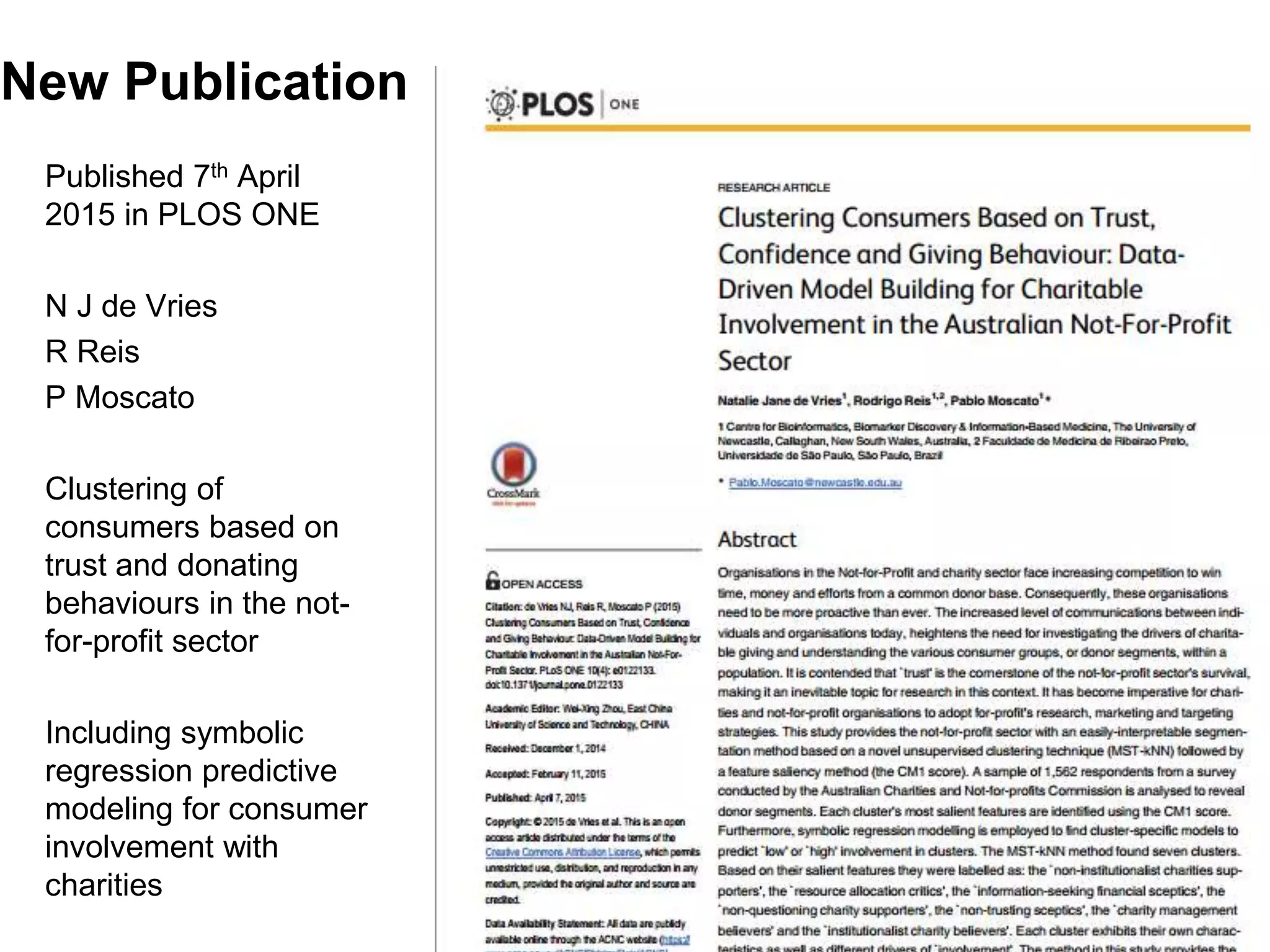
New Publication
Published 7th April
2015 in PLOS ONE
N J de Vries
R Reis
P Moscato
Clustering of
consumers based on
trust and donating
behaviours in the not-
for-profit sector
Including symbolic
regression predictive
modeling for consumer
involvement with
charities
37
38
Resulting Segments of the Australian
Market
1. Non-institutionalist charity supporters
2. Resource allocation critics
3. Information-seeking financial sceptics
4. Non-questioning charity supporters
5. Non-trusting sceptics
6. Charity management believers
7. Institutionalist charity believers
http://journals.plos.org/plosone/article?id=10.1371%2Fjo
urnal.pone.0122133
39
IEEE Conference paper
Methodology: Product Meta-features
The product of values between
two measured features might be
capable to distinguish between
two given categories, even when
those features are not able to do
so alone.
This study is the first to trial the
application of this idea.
Left, the values of f1 (blue) and
f2 (red) do not distinguish the
classes well but their product
(meta-feature in green) does.
Data collection
and pre-
processing
Meta-features:
Pair-wise
differences
Meta-features:
Pair-wise
products
Intra- and
inter-construct
relationships
Distance
Computation
Data preparation
0
2
4
6
8
10
12
14
16
18
1 2 3 4 5 6 7 8 9 10 11 12
f1
f2
Meta-f
Class A Class B0
2
4
6
8
10
12
14
16
18
1 2 3 4 5 6 7 8 9 10 11 12
f1
f2
Meta-f
Class A Class B
My publications
• A Data-Driven Approach to Reverse Engineering Customer Engagement
Models: Towards Functional Constructs (de Vries, Carlson and Moscato)
http://journals.plos.org/plosone/article?id=10.1371/journal.pone.0102768
• Examining the drivers and brand performance implications of customer
engagement with brands in the social media environment (de Vries and
Carlson): http://www.palgrave-
journals.com/bm/journal/v21/n6/abs/bm201418a.html
• Gauging Heterogeneity in Online Consumer Behaviour Data: A Proximity
Graph Approach (de Vries, Arefin and Moscato)
http://ieeexplore.ieee.org/xpls/abs_all.jsp?arnumber=7034833
• Engagement in Motion: Exploring Short Term Dynamics in Page-Level Social
Media Metrics (Lucas et al)
http://ieeexplore.ieee.org/xpls/abs_all.jsp?arnumber=7034813&tag=1
• Identifying Communities of Trust and Confidence in the Charity and Not-for-
Profit Sector: A Memetic Algorithm Approach (Moslemi et al)
http://ieeexplore.ieee.org/xpl/articleDetails.jsp?arnumber=7034835&refinem
ents%3D4251871666%26filter%3DAND%28p_IS_Number%3A7034739%29
Other Sources
First uses of ‘meta-features’:
• Differences in Abundances of Cell-Signalling Proteins in Blood Reveal Novel
Biomarkers for Early Detection Of Clinical Alzheimer's Disease (De Paula et al)
http://journals.plos.org/plosone/article?id=10.1371/journal.pone.0017481
• Unveiling Clusters of RNA Transcript Pairs Associated with Markers of Alzheimer’s
Disease Progression (Arefin et al)
http://journals.plos.org/plosone/article?id=10.1371/journal.pone.0045535
MST-kNN papers:
• An Integrated QAP-Based Approach to Visualize Patterns of Gene Expression
Similarity (Inostroza Ponta et al) http://link.springer.com/chapter/10.1007/978-3-
540-76931-6_14
• kNN-MST-Agglomerative: A fast and scalable graph-based data clustering approach
on GPU (Arefin et al)
http://ieeexplore.ieee.org/xpls/abs_all.jsp?arnumber=6295143

"Melting Pot" of the Sciences in interdisciplinary research

  • 1.
    Stirring the meltingpot of the sciences: Leading the way to interdisciplinary research Mixing Social Science into Computer Science, Bioinformatics and more. Natalie Jane de Vries
  • 2.
    Introduction - TheUniversity of Newcastle and CIBM • The Newcastle region is the second most populated area in the Australian state of New South Wales (approx 510,000) • Situated 162 km (2 hours) North of Sydney in the Hunter Region • University of Newcastle established: 1965 • Directors of CIBM: Prof. Pablo Moscato and Co-director Prof. Rodney Scott
  • 3.
    The Centre forBioinformatics, Biomarker Discovery and Information-based Medicine – Background • One of only 10 Priority Research Centres of The University of Newcastle. • Origin: The Newcastle Bioinformatics Initiative (2002- 2006) established by the work of Moscato and Berretta in Computer Science 3 Bioinformatics The application of Computer Science and Information Technology to Biology/Life Sciences Information-based Medicine is a shift toward a future of medicine that can become more personalized, more predictive, and ultimately more preventative
  • 4.
    “Melting pot” ofthe Sciences? • Big Data • Data Analytics • Consumer Insights • Consumer Analytics • ‘Internet of things’ • Social Media Analysis • Clustering/subtyping /segmenting • Ordering • Ranking • Optimization 4 • Community Detection • Graph analysis • Similarity Measures • Classification • Characterisation • Predictive Analytics • Etc..
  • 5.
  • 6.
    Agenda What will Italk about today? • Part 1) General Introduction to the mixing of Computer Science, Social Science, Marketing and Consumer Behaviour at out Centre • Part 2) Clustering and Segmentation – From Breast Cancer Subtypes to Consumer Behaviours to Social Media Metrics data and more… • Part 3) Reverse Engineering Consumer Behaviour Modelling Constructs from Data – We introduce the idea of functional constructs to model online customer engagement behaviours through symbolic regression • Part 4) Future Research Directions – Future Directions, Aims, Conclusions and time for questions 6
  • 7.
    Part 1: ComputerScience and Consumer Behaviour Research • Increase in amount and size of consumer-related data • Online technologies generate large datasets • Increase in online behaviours towards brands • Increasing importance of social media in marketing strategies • Need for greater understanding of consumers through e.g. clustering consumers (or objects in general) into similar groups
  • 8.
    Part 2: Clusteringand Segmentation Complete graph Minimum Spanning Tree Select and remove edges that are not k-Nearest Neigbors Final forest (a forest is a set of trees) = clusters Previous (large scale) applications of the MST-kNN method: • U.S. Stock market time series data (Inostroza-Ponta, Berretta, & Moscato, 2011) • Yeast gene expression data (Inostroza-Ponta, Mendes, Berretta, & Moscato, 2007) • Alzheimer’s disease data - in the order of 1 million data elements (Arefin, Mathieson, Johnstone, Berretta, & Moscato, 2012) • Prostate cancer data (Capp et al., 2009) • Social Media (Facebook) Metrics Data (Lucas et al. 2014) These examples show the methodology proposed here has a proven scalability for larger datasets Novel methodology of clustering by CIBM’s researchers: MST-kNN
  • 9.
    Biomarker Discovery andClustering in Breast Cancer 9 • Incidence – In 2014, it is estimated that 15,270 women will be diagnosed with breast cancer in Australia. • Luminal A • Luminal B • HER2-enriched • Normal-like • Basal-like Molecular Subtypes
  • 10.
    Treatment Not all patientsneed the same treatment or respond to the same treatment • Surgery • Radiotherapy • Hormonal therapy • Chemotherapy 10
  • 11.
    Luminal A Luminal B Her2 Normal-like Basal Controls METABRICdata set PAM50 labels Figure. MST-kNN clustering.
  • 12.
    12 The MST-kNN ClusteringMethod in Consumer Behaviour Research
  • 13.
    Customer Engagement Behaviours-behavioural manifestations of Customer Engagement (CE) toward a firm after and beyond purchase (van Doorn et al. 2010) 13 Online Customer Engagement Survey/Questionnaire Tool
  • 14.
    Methodological Outline 14Categor y No. Explanation Percentage ofsample 1 Fashion Brands 31.54% 2 Community, Charities, Personality and Sports Fan Pages 23.99% 3 Other Services 19.68% 4 Other Consumer Goods 8.09% 5 Hospitality (Restaurants, Cafes, Bars) 7.28% 6 Consumer Electronics 7.01% 7 Automotive 2.43% Respondents’ chosen brand categories
  • 15.
    Methodology: Difference Meta-features Thedifference of values between two measured features might be capable to distinguish between two given categories, even when those features are not able to do so alone (De Paula et al, 2011) Previous successful application of difference meta-features in Alzheimer’s Disease biomarker detection (De Paula et al. 2011) and (Arefin et al. 2012), both in PLoS ONE. Data collection and pre- processing Meta-features: Pair-wise differences Meta-features: Pair-wise products Intra- and inter-construct relationships Distance Computation Data preparation -6 -4 -2 0 2 4 6 8 10 12 1 2 3 4 5 6 7 8 9 10 11 f1 f2 Meta-f Class A Class B -6 -4 -2 0 2 4 6 8 10 12 1 2 3 4 5 6 7 8 9 10 11 12 f1 f2 Meta-f Class A Class B
  • 17.
    Results: Clustering Highlights Heterogeneouscluster?More homogenous cluster?
  • 18.
    Results: Clustering andSignificance Values Data Rows selected Distance Metric MST-kNN merged with the kNN cliques of size p-values Wilcoxon’s Test Kruskal-Wallis Original All Robust 5NN 0.021187 0.042364 Spearman 6NN 0.025987 0.051962 Robust 6NN 0.028565 0.057117 Pearson 3NN 0.030232 0.060451 Spearman 3NN 0.040661 0.081306 Euclidean 6NN 0.041232 0.082448 Difference Metafeatures ‘Intra’ constructs Robust 3NN 0.016551 0.033095 Robust 6NN 0.017177 0.03434 Pearson 3NN 0.018628 0.0372481 Pearson 6NN 0.019066 0.038124 Pearson 5NN 0.019656 0.039303 All Pearson 3NN 0.020594 0.041180 Product Metafeatures ‘Inter’ Constructs Spearman 3NN 0.016949 0.033891 Pearson 4NN 0.01757 0.035132 All Pearson 4NN 0.017721 0.035433 ‘Inter’ Constructs Pearson 6NN 0.01781 0.035611 Pearson 3NN 0.017816 0.035624 ‘Inter’ Constructs Robust 4NN 0.017998 0.035988
  • 19.
    Future Research Directionsin this study • Various domains and contexts to apply the novel process outlined in this study • Combine a study using survey data as well as ‘live’ behaviour data from social networking sites (real-time interactions) • Further exploration of meta-features in both survey data and ‘real’ online behaviour clustering studies; ‘differences’ meta-features in this study yielded better results • This study guides the development of future feature selection models to identify group of consumers according to higher-order characteristics.
  • 20.
    20 The MST-kNN Methodin Social Media Metrics Data Engagement in Motion: Exploring Short Term Dynamics in Page- level Social Media Metrics Benjamin Lucas1,2, Ahmed Shamsul Arefin1,3, Natalie de Vries1,3, Regina Berretta1,3, Jamie Carlson1,2, Pablo Moscato1,3 1 The University of Newcastle, Australia 2 Newcastle Business School, Faculty of Business and Law 3 The Priority Research Centre for Bioinformatics, Biomarker Discovery and Information-Based Medicine
  • 21.
  • 24.
    Part 3: ReverseEngineering Consumer Behaviour Modelling Constructs from Data Consumer Behaviour Modelling is usually done by testing hypotheses that are generated from theory 24 For example: Source: de Vries & Carlson 2014 – Journal of Brand Management Items (questions) make up one theoretical construct in Structural Equation Modelling (Hair et al. 2014). For example:
  • 25.
  • 26.
  • 27.
  • 28.
  • 29.
    Figure 2. TheFigure shows the items ‘used’ by Eureqa through symbolic regression setting each of the five ENG items as dependent variables (obtained using the whole data set). de Vries NJ, Carlson J, Moscato P (2014) A Data-Driven Approach to Reverse Engineering Customer Engagement Models: Towards Functional Constructs. PLoS ONE 9(7): e102768. doi:10.1371/journal.pone.0102768 http://127.0.0.1:8081/plosone/article?id=info:doi/10.1371/journal.pone.0102768
  • 30.
    Figure 3. DataSet A – Network found as a result of the application of the model finding optimization software on each variable as a target. de Vries NJ, Carlson J, Moscato P (2014) A Data-Driven Approach to Reverse Engineering Customer Engagement Models: Towards Functional Constructs. PLoS ONE 9(7): e102768. doi:10.1371/journal.pone.0102768 http://127.0.0.1:8081/plosone/article?id=info:doi/10.1371/journal.pone.0102768
  • 31.
    Inter-rater Agreement 31 de VriesNJ, Carlson J, Moscato P (2014) A Data-Driven Approach to Reverse Engineering Customer Engagement Models: Towards Functional Constructs. PLoS ONE 9(7): e102768. doi:10.1371/journal.pone.0102768 http://127.0.0.1:8081/plosone/article?id=info:doi/10.1371/journal.pone.0102 768
  • 32.
    Our Future researchdirections • Work on scalability of methodologies • Improve optimisation algorithms (minimum distance, maximum objectives, etc.) • Meta-heuristics (Memetic Algorithms) for applications on social sciences • Network alignment (complex network analysis) of consumer behaviour networks for uncovering structure in datasets • Proposal of edited book in large scale “Business and Consumer Analytics” (Springer) • Smart Cities Network (sensor data, optimisation of cities and their networks) • Digital Economy technologies
  • 33.
    UoN and UKM Thingsto remember: • UoN is always open for research collaborations (depending on funds – we operate on a project basis) • At CIBM we have supercomputing capacity available for large-scale projects • In our team we have particular strong expertise in operations research and management science • CIBM is open to diversify into new areas (e.g. computational social science as demonstrated today) • As Prof. Moscato says: “Do not hesitate to throw and ‘odd-ball’. Either we could be interested, or we could put you in touch with other collaborators and colleagues”.
  • 34.
     Terima Kasih Questions?
  • 35.
    References • Arefin AS,A, Mathieson L, Johnston D, Berretta R, Moscato P (2012) Unveiling Clusters of RNA Transcript Pairs Associated with Markers of Alzheimer’s Disease Progression, PLOS ONE, DOI: 10.1371/journal.pone.0045535 • Capp et al. (2009) Is there more than one proctitis syndrome? A revisitation using data from the TROG 96.01 trial, Radiotherapy and Oncology, 90(3), 400-407 • Hair, J. F., Hult, G. T. M., Ringle, C. M. and Sarstedt, M. (2014) A Primer on Partial Least Squares Structural Equation Modeling (PLS-SEM) Los Angelos: Sage Publications Inc. • Inostroza-Ponta M, Mendes A, Berretta R, Moscato P (2007) An Integrated QAP-Based Approach to Visualize Patterns of Gene Expression Similarity, Progress in Artificial Life, Lecture Notes in Computer Science, 4828, pp 156-167 • Inostroza-Ponta M, Berretta R, Moscato P (2011) QAPgrid: A Two Level QAP-Based Approach for Large-Scale Data Analysis and Visualization, PLOS ONE, DOI: 10.1371/journal.pone.0014468 • Lucas B, Arefin AS, de Vries NJ, Berretta R, Carlson J, Moscato P (2014) Engagement in Motion: Exploring Short Term Dynamics in Page-Level Social Media Metrics, IEEE Conference on Social Computing and Big Data and Cloud Computing (Sydney) • de Vries NJ, Carlson J (2014) Examining the drivers and brand performance implications of customer engagement with brands in the social media environment, Journal of Brand Management, 21, 495-515 • de Vries NJ, Carlson J, Moscato P (2014) A Data-Driven Approach to Reverse Engineering Customer Engagement Models: Towards Functional Constructs, PLOS ONE, DOI: 10.1371/journal.pone.0102768 • de Vries NJ, Arefin AS, Moscato P (2014) Gauging Heterogeneity in Online Consumer Behaviour Data: A Proximity Graph Approach, IEEE Conference on Social Computing and Big Data and Cloud Computing (Sydney) • Marsden J, Budden D, Craig H, Moscato P (2013) Language Individuation and Marker Words: Shakespeare and His Maxwell's Demon, PLOS ONE, DOI: 10.1371/journal.pone.0066813 • Naeni LM, de Vries NJ, Reis R, Arefin AS, Berretta R, Moscato P (2014) Identifying Communities of Trust and Confidence in the Charity and Not-for-Profit Sector: A Memetic Algorithm Approach, , IEEE Conference on Social Computing and Big Data and Cloud Computing (Sydney) • van Doorn, J., Lemon, K. N., Mittal, V., Nass, S., Pick, D., Pirner, P. and Verhoef, P. C. (2010). Customer Engagement Behavior: Theoretical Foundations and Research Directions. Journal of Service Research, 13(3): 253-266. 35
  • 36.
  • 37.
    New Publication Published 7thApril 2015 in PLOS ONE N J de Vries R Reis P Moscato Clustering of consumers based on trust and donating behaviours in the not- for-profit sector Including symbolic regression predictive modeling for consumer involvement with charities 37
  • 38.
  • 39.
    Resulting Segments ofthe Australian Market 1. Non-institutionalist charity supporters 2. Resource allocation critics 3. Information-seeking financial sceptics 4. Non-questioning charity supporters 5. Non-trusting sceptics 6. Charity management believers 7. Institutionalist charity believers http://journals.plos.org/plosone/article?id=10.1371%2Fjo urnal.pone.0122133 39
  • 40.
    IEEE Conference paper Methodology:Product Meta-features The product of values between two measured features might be capable to distinguish between two given categories, even when those features are not able to do so alone. This study is the first to trial the application of this idea. Left, the values of f1 (blue) and f2 (red) do not distinguish the classes well but their product (meta-feature in green) does. Data collection and pre- processing Meta-features: Pair-wise differences Meta-features: Pair-wise products Intra- and inter-construct relationships Distance Computation Data preparation 0 2 4 6 8 10 12 14 16 18 1 2 3 4 5 6 7 8 9 10 11 12 f1 f2 Meta-f Class A Class B0 2 4 6 8 10 12 14 16 18 1 2 3 4 5 6 7 8 9 10 11 12 f1 f2 Meta-f Class A Class B
  • 41.
    My publications • AData-Driven Approach to Reverse Engineering Customer Engagement Models: Towards Functional Constructs (de Vries, Carlson and Moscato) http://journals.plos.org/plosone/article?id=10.1371/journal.pone.0102768 • Examining the drivers and brand performance implications of customer engagement with brands in the social media environment (de Vries and Carlson): http://www.palgrave- journals.com/bm/journal/v21/n6/abs/bm201418a.html • Gauging Heterogeneity in Online Consumer Behaviour Data: A Proximity Graph Approach (de Vries, Arefin and Moscato) http://ieeexplore.ieee.org/xpls/abs_all.jsp?arnumber=7034833 • Engagement in Motion: Exploring Short Term Dynamics in Page-Level Social Media Metrics (Lucas et al) http://ieeexplore.ieee.org/xpls/abs_all.jsp?arnumber=7034813&tag=1 • Identifying Communities of Trust and Confidence in the Charity and Not-for- Profit Sector: A Memetic Algorithm Approach (Moslemi et al) http://ieeexplore.ieee.org/xpl/articleDetails.jsp?arnumber=7034835&refinem ents%3D4251871666%26filter%3DAND%28p_IS_Number%3A7034739%29
  • 42.
    Other Sources First usesof ‘meta-features’: • Differences in Abundances of Cell-Signalling Proteins in Blood Reveal Novel Biomarkers for Early Detection Of Clinical Alzheimer's Disease (De Paula et al) http://journals.plos.org/plosone/article?id=10.1371/journal.pone.0017481 • Unveiling Clusters of RNA Transcript Pairs Associated with Markers of Alzheimer’s Disease Progression (Arefin et al) http://journals.plos.org/plosone/article?id=10.1371/journal.pone.0045535 MST-kNN papers: • An Integrated QAP-Based Approach to Visualize Patterns of Gene Expression Similarity (Inostroza Ponta et al) http://link.springer.com/chapter/10.1007/978-3- 540-76931-6_14 • kNN-MST-Agglomerative: A fast and scalable graph-based data clustering approach on GPU (Arefin et al) http://ieeexplore.ieee.org/xpls/abs_all.jsp?arnumber=6295143

Editor's Notes

  • #5 We have all heard the following “buzzwords”, keywords and topics this is what ‘traditional’ and social science have in common nowadays. Analysis of large datasets and development of scalable methods.
  • #6 Note about how computational methods are highly variable (computational linguistics)
  • #19 Only talk about this briefly and quickly. The only point is to highlight that the results using some sort of meta-feature were more significant
  • #32 Just talk about general comparison – doing the process with 3 datasets means finding more solid “structure” in the dataset