Native vs Cross-platform Mobile app development_ Which one is good_.pdf
The choice between native and cross-platform mobile app development depends on a number of factors. In this blog post, we'll weigh the pros and cons of each approach to help you make the best decision for your project.
Introduction
The mobile appeconomy has experienced phenomenal growth over the past decade. According to
Statista, global mobile app revenue reached more than $365 billion in 2018, and the app market is
expected to generate more than $935 billion in revenue by 2023 through paid downloads and in-app
advertising. Businesses should have a mobile app alongside their corporate website to gain a competitive
edge in the market. However, the mobile app market is a crowded space with more than 4 million apps
available for download on the Google Play Store and Apple App Store combined. Establishing yourself in
such a competitive and relentless market will not be an easy task for businesses. And that is why you need
to come up with a unique app idea, leverage the right technologies, choose the best development
platform and create a highly engaging app to get a solid foothold in the market. With that in mind, we've
created a simple guide that goes into detail about the main approaches to mobile app development and
how to choose the most appropriate approach for your project.
4.
Native and cross-platformapps - an overview
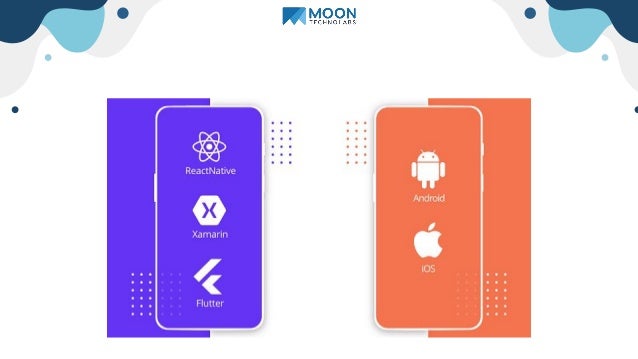
Native apps are developed to run on specific mobile platforms such as iOS, Android, and Windows Phone.
When developing native mobile devices, software development kits (Android SDK and iOS SDK) and
tools of the respective mobile OS are used. For example, native iOS apps would be written mainly in
Objective-C and Swift, while native Android apps would be written in Java, Kotlin, or C++ programming
languages. Cross-platform app development refers to "creating a mobile application that is compatible
with multiple mobile operating systems". Although cross-platform app development has suffered major
setbacks in the past, it has recently re-emerged as a powerful methodology. There are several
cross-platform frameworks available, such as Xamarin, Flutter, Phonegap, Ionic, and React Native. These
tools make it easy to develop apps that adapt and follow the design and interaction guidelines issued by
different mobile platforms.
5.
Time frame andbudget
How much money can you spend on mobile app development? Are you planning to develop a time-critical
application? To choose the best mobile app development platform, it is essential to define the budget
limit and time frame. Creating a native mobile app is a lengthy and expensive process. Because each
platform has its tools and languages, you need to involve different developers, different code bases, and
different technologies to build native apps for each mobile operating system (OS). And this approach
results in higher development costs, longer time to market, and more maintenance and support issues. On
the other hand, if you opt for cross-platform mobile development frameworks, developers can reuse code
for the iOS and Android versions of the app, greatly reducing development time and effort.
6.
Performance and userexperience
Planning to launch a high-performance mobile app for your business? Features, performance, and user
experience play a key role in choosing the most suitable mobile app development platform. If you want
your target audience to fully enjoy all the features associated with the respective device, then the native
approach is the way to go. Mobile apps that handle huge amounts of data or have heavily animated user
interfaces for game scenarios should be developed on a native mobile platform. Not only can native apps
take full advantage of device capabilities such as Bluetooth, GPS, voice recording, cameras, and
microphones, but they also keep the interface and navigation user-friendly and easy to understand. When
it comes to performance and features, the cross-platform mobile app has limitations. As the complexity of
the application increases, it would be difficult to manage all the platform-specific features from one place.
Therefore, a multi-platform application is best suited for a simpler solution. However, it is easier to
achieve a native user experience with Xamarin. Unlike traditional hybrid mobile apps, Xamarin apps are
built by sharing business logic across platforms and creating a platform-specific user interface. When the
user interface is rendered with native controls while taking advantage of the system- and
hardware-specific APIs, the user ends up with a completely native user experience.
7.
Target group
Knowing yourmarket is essential when developing a mobile app. Determining the target audience for
your app helps define functionality, user experience design, and performance. Depending on the most
popular mobile operating system among your target audience, you can choose the right one. For example,
the US has a strong user base on both iOS and Android platforms. So it would be better to use
cross-platform frameworks for maximum reach. In other markets, such as India and China, they have clear
dominance in Android platforms. In this case, it would be ideal to choose a native Android app
development strategy. Conduct comprehensive market research to understand your target audience and
market so you can make an informed decision.
8.
Testing and maintenance
Themobile app market is constantly evolving and you need to have an accurate idea of the future
strategy of the mobile app you are going to develop. If you plan to release consistent updates, then a
cross-platform approach would be ideal. Maintenance and updates are easier with the Xamarin
framework because developers can simply update the source file that will be directly applied to the
applications. And because cross-platform apps are written with less code, there is also less chance of bugs
or errors.
9.
Conclusion
To summarize, wecan say that the final choice always lies in knowing your mobile app and its target
audience. If you're building a complex, high-performance application that depends on device features,
choose a native stack. An affordable and fast cross-platform development approach would be perfect for
creating a mobile app with a reasonable level of complexity and a streamlined design.
Original Source:
https://moontechnolabs.webstarts.com/blog/post/native-vs-cross-platform-mobile-app-develo
pment-which-one-is-good